Category: Destinations

  • Big Trouble In Little Kraków

    Big Trouble In Little Kraków

    I didn’t feel like going home.

    I’d just had dinner with some friends in the main square and they’d all clocked out early; it was only 11pm. With a belly full of beer, I decided to hit the bars for a couple more, lone cowboy style.

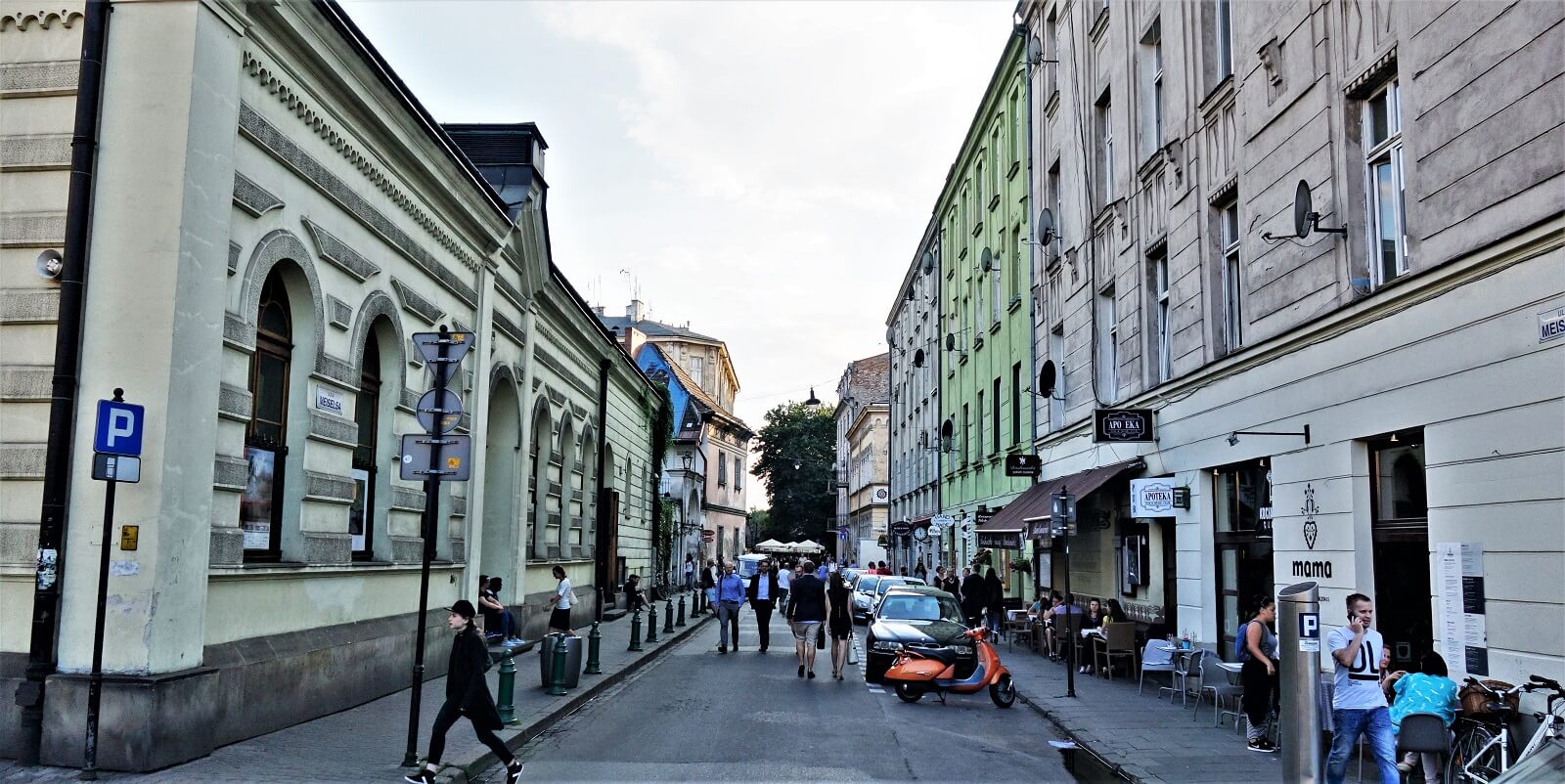
    After a twenty minute walk I was in the bar-heavy Kazimierz district, one of Kraków’s tourist favourites. I headed straight for Pies Piekny, one of my regular spots. They always had good tunes playing in there.

    My first mission was to visit the toilet.

    Someone was in there, so I leaned against the wall and waited. An old dude, maybe sixty, walked past me.

    “Do you know where the toilet is?”

    I pointed at the door in front of me. I guess if you were a first-timer, you’d walk right past it. It was unmarked, in a weird spot. He looked it over quickly, then came and waited beside me. He was shortish and stocky, and dressed casually, in a tee and sneakers, looking like a typical bar dweller.

    “Where are you from?” he asked.

    His name was Finn, from Scotland. We got chatting, while whoever was in the toilet was doing drugs or taking a shit, or something else that took a lot longer than what a normal human being should take in the bathroom. After a minute of small talk, the toilet hogger finally emerged.

    I did my business and headed to the bar. A lady sat there alone, maybe mid thirties, blonde, sipping on something girly.

    “Is someone sitting here?”

    She smiled and shook her head.

    “No, no, you can sit.”

    Her name was Monica, from Poland.

    “What brings you to drink alone at a bar on a Tuesday?”

    She laughed.

    “It’s my day off tomorrow.”

    As I ordered my first drink, Finn emerged from the bathroom and sat on the other side of her. I gave him a nod, and continued my conversation.

    We’d been talking maybe fifteen minutes when Finn decided to interject. I forget what we were talking about exactly. He offered to buy a round of drinks. I wasn’t going to say no.

    “Gin and tonic for me brother.”

    The three of us sat there talking for the next two hours. I told Finn more about myself, my travels, my blog, which he wrote down on his phone. He was a journalist himself, so despite our age difference, we had parallels to talk about. I offered to buy the next round.

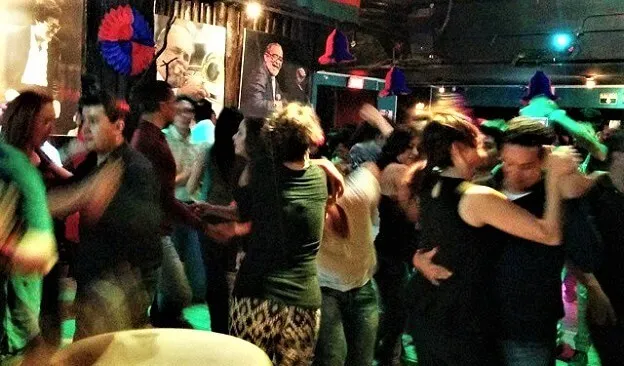
    The night drifted on to about 2 a.m, and many rounds later we’d somehow ended up on the dance floor. It was empty, so the three of us just bopped around like idiots. I showed off my salsa moves to some rock music with Monica, while Finn continued pounding drinks. But soon enough it was time to go.

    We exited the bar. Monica started talking to some guys standing outside the bar next door, while Finn stood by, enjoying the night air.

    I crossed the road to sit on a flight of steps while trying to call an Uber on my phone. As always, none were available. I put my phone away and slouched against the wall for a moment, waiting to try again in a few minutes. From there, I had a front row seat to the events that would follow.

    Monica enters the bar with the guys. I cannot tell if she knows them or has just met them. But she sits at a table inside and happily accepts a drink. Finn is standing outside, playing with his phone. I check for another Uber.

    Then some guy in an orange sweatshirt appears. He approaches Finn and starts grabbing half-heartedly at his pockets. I watch from a distance. He seems harmless enough, no different to the regular drunk encountered outside bars in early morning hours. But a lot of things are being said between them. I keep an eye on things.

    Five minutes pass.

    Then a flurry. The orange sweatshirter grabs more fiercely this time. Finn pushes him and walks away, towards me. Orange Sweatshirt Guy follows and grabs at him again. Finn throws a short backhand and connects on his chin.

    “Get lost!” he says sternly, pointing a finger in his face. The guy stares back at him, shouting something in Polish.

    “Kazimierz Kazimierz hurgh arrrh blur argh. Kazimierz arrgh blaah!!”

    Finn comes up to me, slightly flustered.

    “I’m going home. See you later.”

    We shake hands and he hurries on his way, shuffling off down the street.

    Orange Sweatshirt turns and says something to me in Polish. I shrug my shoulders, shake my head and tap my ear as if to say “I don’t understand”, and go back to checking my phone.

    Then some shouting from the bar. I look up and a can of pepper spray is mid flight. Orange Sweatshirt catches it and runs towards Finn.

    Shit.

    Adrenaline pumps. My heart starts to beat loud. Boom, boom. My eyes flicker left and right. I see everything in front of me. Four guys standing at the door of the bar, watching. I presume they’re his gang buddies. They look calm, like they’ve seen this a hundred times. Orange Sweatshirt is about twenty steps from Finn. Finn is still oblivious. No one else is around, save for a couple of parked taxis.

    I stand up and shout something. I don’t remember what. Probably just something like “Hey hey hey!!!”

    Finally Finn hears the footsteps and turns around. He takes a spray to the face. He stumbles forward. Orange Sweatshirt talks some shit, taunting. He sprays again.

    I look at the door of the bar. Still four guys watching, calmly, drinks in hand. I look at Finn. He takes a punch to the side of the head.

    I wince, hard.

    I have to protect him. This is what all those hours in the gym are for, right? To end fights. To protect ourselves and our friends.

    No. Don’t kid yourself. You’re a rookie. Find the cops.

    He takes a kick to the face. I recognise the technique. Kickboxer.

    I grimace. Five versus one. There is no way this ends well for me.

    Finn takes another kick, to the shins. He welps in pain.

    Fuck it. Go time.

    I run over, hands up. He sees me and turns, and sprays at my face. I slip it and feel it hit my neck and the back of my head. The smell is suffocating. I back up. He follows me. He sprays at me again but it doesn’t reach, although my breath catches some of it. It’s strong. I look the guy in the eyes. He’s drunk. I want to engage. I can engage. I glance at the bar. No, I can’t. There’s too many. He breaks into a sprint right for me, the can of mace out in front of him. I do a little shuffle, and sidestep him easily. He stares at me, surprised.

    I walk backwards, down the street. He’s following me, slowly, arm outstretched. I’m surprised too, that I am not afraid. My head is clear. I hold eye contact, shaking my head at him. He continues to follow. This is good. I hope Finn has picked himself up by now, and run his ass out of there.

    After half a block, Orange Sweatshirt finally turns around and runs back. I watch him, wait for him to turn the corner and then follow.

    Gotta find Finn.

    I get back to the same intersection where Finn had been smacked around. I peek around the corner. I can see the bar. They’re all sitting inside. I look around. Finn is nowhere.

    I spend the next hour walking around Kazimierz trying to find him. Secretly I also want to find Orange Sweatshirt by himself somewhere. I’m angry. But I find neither. I sit in the main square for a while. My neck is burning and hurts to touch. I try to think. I don’t have his phone number, his Facebook, his hotel, nothing. I just know his name – Finn, from Scotland.

    The sun starts to come up. I go home.

    The next morning I wake up at lunchtime. I have an email. It’s Finn.

    At first I think, how? And then I remember. He wrote down my blog on his phone.

    “Brendan, are you okay? I have been quite badly injured. The guy sprayed me and attacked me while I was defenseless. I could not see or hear anything. Nobody would help, not the taxi drivers or the police and not even the bar where we’d spent the last four hours. Please let me know how you are.”

    My heart sinks.

    “Finn, I was there, I saw the whole thing. I’m fine. The boys in the bar were his mates. They threw him the mace and he chased after you. I’m sorry I couldn’t protect you. They were just too many. What happened to you after? I looked for you everywhere.”

    We exchanged emails for the next half hour as I relayed the whole story to him. He’d been picked up by some family and had already left town, readying himself to return to Scotland. With him he’d take some cracked teeth, a broken jaw, bruising on his legs. But he was still breathing. He was going to be okay.

    I spent the rest of the day lying on the couch, feeling shitty, shadow boxing in front of the mirror, trying to convince myself I did the right thing. I ran over all the ‘what ifs’ in my head. Some of them ended with Finn and I standing over five groaning bodies. And many more ended with us both breathing out of tubes in the hospital. But it doesn’t pay to torture ourselves with such games.

    The moral we’re left with is, as beautiful as it is in Kraków – and the world – you have to be careful out there. Big trouble is always somewhere.

    Stay sharp and travel safe,

    Bren


    krakowpin
  • To Where The Northern Lights Go

    To Where The Northern Lights Go

    I stood at the window, eyes skyward.

    Nothing.

    It was my third night here in Rovaniemi; one of Finland’s smaller cities, just outside the Arctic Circle. But I wasn’t here for the sightseeing. The mornings and afternoons had been loitered through, and each night was spent lounging by the window, hoping to see the famous aurora borealis come out to play. Seeing them was the sole reason I’d braved the long journey into Lapland, but so far every night had been the the same. Rain, clouds, maybe some stars. But no lights.

    I decided I couldn’t sit around and wait anymore. It was time to go hunting.

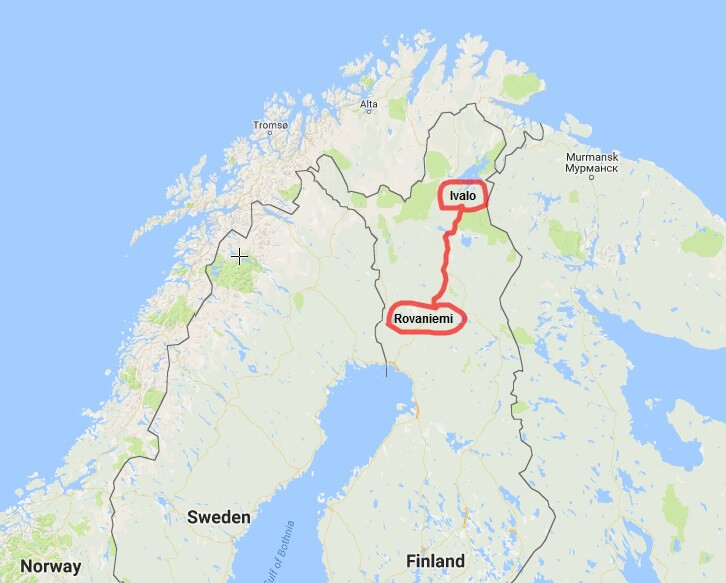
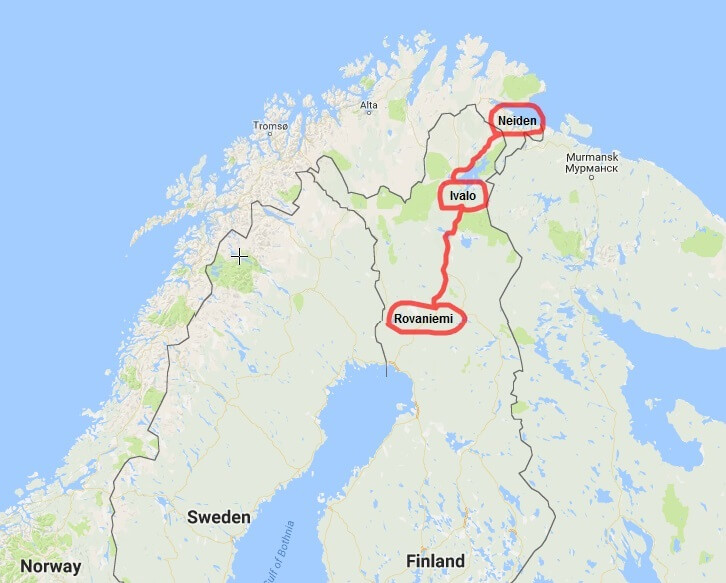
    The next morning I picked myself up a rental car and forged my battle plan. I would head north, so far north that it would be impossible for the Northern Lights to escape me. My first destination was the town of Ivalo, some 300 kilometres away.

    rovaniemi-ivalo

    I’d arranged to Couchsurf with Kaisu and Arttu, a young couple with an apartment full of animals. I arrived in the early evening, and we chilled in their lounge and got to know each other over a few Estonian beers. As I’d promised to cook dinner, we all headed to the supermarket once the sun came down, stocking up supplies for a Chinese feast. Even in this sleepy town of 1,500 in the middle of nowhere, they had not one, but two enormous supermarkets stocked with everything you could want, even uncommon Chinese ingredients you would never expect to see. But Finland has a way of surprising you like that.

    As we walked across the parking lot, to and from the car, I kept my eyes to the sky. Again it was only clouds and blackness, no different from the nights before. There would be no aurora hunting tonight. But not all was lost. Kaisu and Arttu had a ridiculously sized television, hooked up with a PS4 and Netflix. I cooked, we ate, and then the three of us boozed on wine and Finnish vodka, well into the night, until our heads and the Playstation controllers hit the floor.

    Day 2

    In the midst of inebriation the night before, Kaisu and Arttu had invited me up to their cabin in Neiden, a tiny town in Norway.

    “We’ll get some friends together, have some drinks, have a sauna.”

    It was hard to turn down such invitations. As soon as the hangovers cleared, we packed the car up and made the drive 300km north to Neiden.

    rovaniemi-ivalo-neiden

    Arttu had a charming little cabin on a small plot with around three other houses. It was so secluded he didn’t even have a lock on the front door. We just waltzed right in. There was no television or wifi inside. Just a fridge, an oven and some beds. It was perfect.

    Once night fell, Arttu’s neighbour Howard invited us to his cabin for drinks. Kaisu’s friend also came by to join us; a Norwegian girl, whose name I forget. While we sipped on local beers, Howard brought out some fresh king crab he’d caught in the river down the road. In most countries such crabs cost a small fortune, but up here they catch them by the dozen without much trouble at all. So the five of us sat there drinking, chatting, eating crab, as the Norwegians do.

    Between drinks we’d go outside to visit the bathroom, have a cigarette, run to Arttu’s cabin to refill the fridge, and each time I stepped outside I’d look at the sky, hopeful to see something. But every time there was nothing to see.

    “Tomorrow,” I told myself. “It’ll happen tomorrow.”

    Of course there was only one way for this night to end: The sauna. As usual they all disrobed completely, I followed suit. Where I’m from a bunch of guys and girls naked in the sauna is rather peculiar, but here it’s as normal as cereal for breakfast. We sat there drinking, laughing, talking, sweating, all butt-ass naked, until the early hours of the morning.

    Day 3

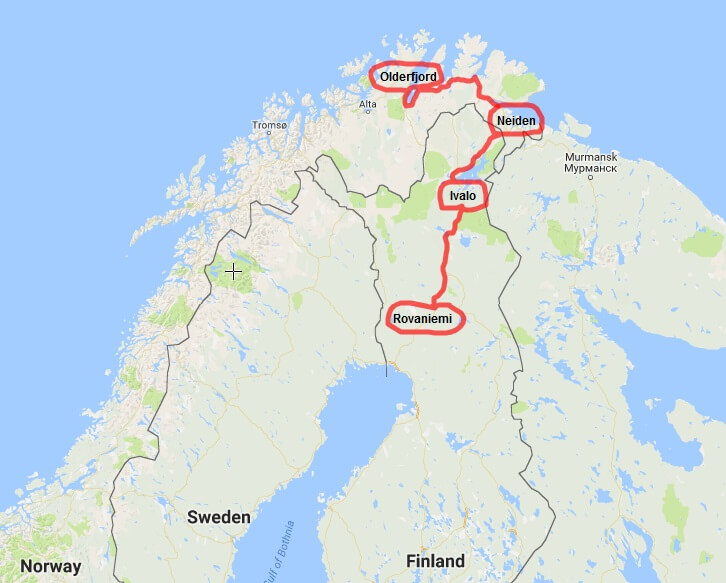
    The mission was to get north, as north as humanly possible. Or at least as far as a man with a rental car can go. Nordkapp was supposedly the most northern (driveable) point of Europe, and Google had me at seven hours away. I wasn’t sure if I’d make it in one day, but I was going to try. Because what better place to find the Northern Lights than at the very north of the world?

    My first order of business was to get supplies. I headed back to the Finnish border to stock up on snacks, gas and water (everything is cheaper in Finland), before starting the long drive up Norway’s coast. It reminded me of rural New Zealand in the autumn. Fiords, golden fields, mountains, empty roads. Who would’ve thought the north and the south of the world looked exactly the same in the fall?

    Every now and then I’d see a side road into a forest, a lake, a viewing point, a river, and I’d pull the car over to snap a few pictures and smell the cool air. Outside of New Zealand, I’d never had my own wheels to explore so freely. It was liberating, to truly follow the road to your own beat.

    By the time the sun came down, I had made it 360km west to Olderfjord.

    rovaniemi-ivalo-neiden-oldersfjord

    I found a small parking spot by the roadside, on the water’s edge, and decided to stay there for the night. It was dark now, and as I turned off the car and looked up through the windscreen the moon smacked me in the face. It was glowing, and full, far larger than I was used to, lighting up everything in the vicinity. I got out of the car and stood over the water below, admiring how majestic everything looked. How nature can make you feel so small. That night, so many miles from home, I felt completely free, invisible to anyone and everyone in the world.

    I only managed to sleep in that spot for an hour before the cold woke me up. I looked at the clock. Midnight. The clouds, once heavy, now seemed to be clearing slowly. If I was going to go aurora hunting, now was as good a time as any.

    I fired up the car and continued north. I drove slowly, hyper aware around every turn, expecting to see sleep-walking reindeers or half asleep drivers. But the roads were empty. Any time I hit a straight, I’d cock my head and stare up at the sky, hoping to see greens and blues and purples dancing around the stars. But there was nothing.

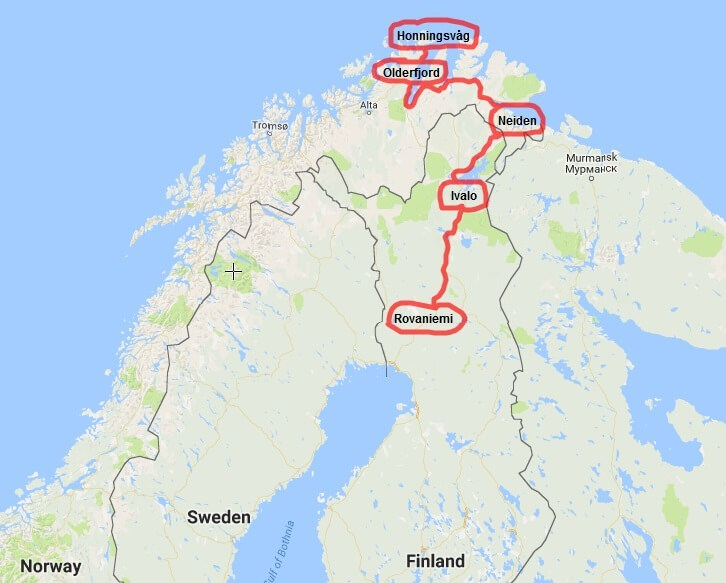
    Before I knew it I’d made it 100 kilometres north to Honningsvåg. It was Saturday night and the town was semi-lively for such a small, secluded place.

    rovaniemi-ivalo-neiden-oldersfjord-honnigsvag

    Some years ago I might’ve wandered into a bar to greet some new faces, but my eyes and body were tired from the long day’s drive. I parked outside the tourist office, jumped on the free wifi, and played some lullaby tunes to wind the night down. And as I piled on as many layers of clothes as I could, I checked the sky one last time.

    No lights.

    Day 4

    I woke up at six o’clock with a numbing cold in my feet. It felt like they were frozen, ready to snap off at first touch. I’d fallen asleep in the driver’s seat, curled awkwardly on my side with my feet tucked under me. As I came to, my whole body suddenly felt cold. It reminded me of those winter mornings as a kid, struggling to get ready for school.

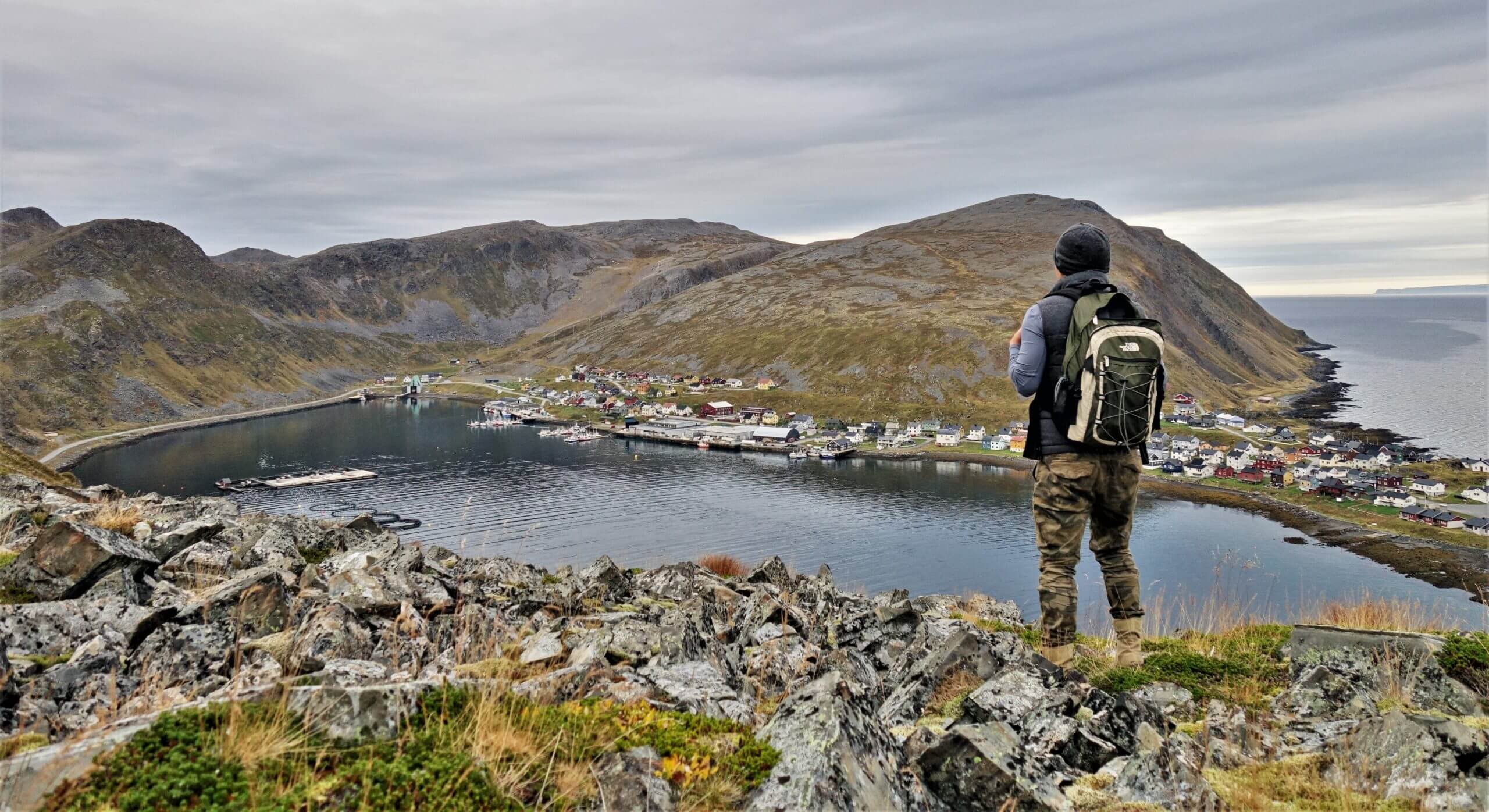
    I decided to complete the drive to Nordkapp that morning, but after a wrong turn, I ended up in Nordvågen, a sleepy village-like place about 10km away. I parked by the road to catch my bearings for a second, when I noticed the mountains around me. For some reason they looked so climbable. Something in me was just saying “Why don’t you do it?”

    I got out of the car and looked it over, trying to visualise the path. Certain places were definitely too steep, and the rock definitely too loose, but I just felt like I had to try. I stuffed my backpack with snacks and water and went to the foot. The first ten metres were easy. Lots of big rocks, the brush not too soft. And then it got tricky. The rock was loose, as I’d expected. And the brush was soft and deep. I moved slowly, hyper cautious, suddenly wary about how high I was getting. After about twenty minutes, I found a small landing and stopped. I looked down.

    Falling from up here, there was no coming back. It was high. The same voice that had told me to come up was now telling me to go back down. But the top just looked so close.

    I kept going.

    When I finally got up there unscathed, other than a few scratches, I planted myself on a rock and looked over Nordvågen for the next hour. There’s something about climbing to the top, even of the smallest mountains, that makes you feel alive. I sat there in calming silence, and felt lucky; lucky to be in this faraway place, lucky to have two healthy arms and legs. It was a moment I needed, something to remind myself of why I was here, what the purpose of this journey was, why I continued to weather the road for all these years.


    A photo posted by Bren (@brenontheroad) on

    It was still only 10 a.m. when I finally made it back to the car. Normally I’d still be in bed, but as I didn’t actually have a bed on this particular morning, I was out battling little mountains in the Norwegian wilderness. Blessings in disguise, as they say.

    It took me about half an hour to finally get to Nordkapp. The roads to get there looked new, narrow and winding, up and over empty hills. Everything was golden from the coming autumn. Every now and then I would stop by the side of the road and take a photo, but I could never quite capture the endless orange the same way my eyes did.

    As I approached Nordkapp I saw a booth, about 100 metres from the point. I drove up to the window. A young lady greeted me.

    “Hi, welcome to the North Cape. It’s 265 kroners per person.”

    If you’re wondering, that’s about 26 Euro. Most people would probably think what the heck, we’ve come this far, but I’d fallen into this trap too many times. Honestly, I didn’t even know Nordkapp was just a cape. I thought it was the name of a small town at the tip of the world. I pulled the car over and got out. I could see the people up at the point, snapping photos, at least 300 Euros worth of entry fees wandering around up there. For some reason, I just didn’t feel the tinge of photo envy that was common in my earlier years of travelling. I snapped a quick photo from the car, and headed back to Honningsvåg.

    I found another spot overlooking the ocean to sleep that night, in a small bay by the main road. There was huge rock to the left of me, which I hoped would shield the wind and keep me a little warmer than the night before. I lay for an hour or so, pounding an old blink-182 album I’d grown up listening to in high school. I must have listened to it over 500 times as a teenager, and with it came back all the memories, flashes of different feelings and faces that had shaped me during those years. I was amazed at how the songs carried so many memories, decades after I’d stopped listening to them. And of course, between songs I’d look to the sky, hoping to be amazed, and every time the sky would disappoint. I started to doubt whether I’d end up seeing the lights at all.

    Day 5

    The next morning I drove to the tourist office to use the wifi. I pulled up all the guides about the aurora borealis, something I probably should have done on Day One. It started to become clear why I hadn’t seen them yet. I was in the wrong place. I had assumed the further north you go, the better the lights. But in some ways it was the opposite. To see the lights you need crystal clear skies. The skies tend to get cloudier the more north you go. There were also various apps telling you all the best places to see the lights on any given day, which all gave terrible forecasts for Honningsvåg and its surrounds.

    Of course I felt silly, but I wasn’t upset. I was hopeful. I was now armed with all this new intel, and still had three nights to make magic happen.

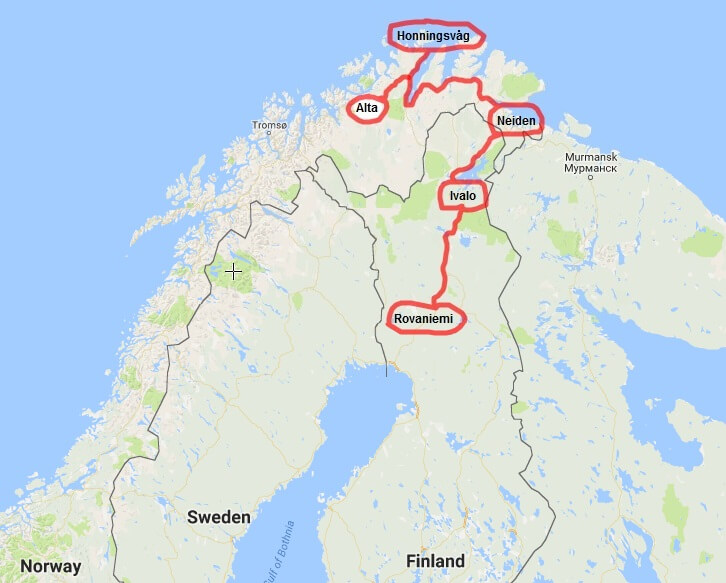
    The forecasts said that Alta, a small town a few hundred kilometres south, had the best chance of aurora action that night. I jumped on Couchsurfing and shotgun requested a few hosts in the city. A Belgian girl, Isabel, responded almost immediately. I was suddenly energised again; a shower, a bed, the lights. It was all waiting for me just a couple of hours away.

    rovaniemi-ivalo-neiden-oldersfjord-honnigsvag-alta

    When I arrived in Alta two hours later, Isabel was there to meet me in the carpark. Even from a distance I could see a glowing smile on her face. She was tallish and thin, long auburn brown hair, and her eyes a piercing blue, almost dazzlingly so. She laughed as she greeted me, and from the colour in her voice I immediately knew what a free spirited and joyful person I was meeting.

    My entire body smiled when I saw her place. Nestled in the corner of her room I had a bed, an actual bed with four legs and a mattress. A hot shower waiting. Wifi. I quickly met all of her roommates, then lay down and grinned at the ceiling. Luxury.

    “So we’re going to relax in the sauna soon. You will join us?”

    Uhhhhh. YES. It was a modest student sharehouse, but it felt like I’d checked in to the Couchsurfing Sheraton.

    Afterwards Margaux – Isabel’s neighbour – invited us over for dinner. The two of them cooked fish, mash and vegetables for the whole house, with a few slabs of chocolate for dessert. After feasting, the six of us lounged in the kitchen, full bellies, talking and playing cards as the night wound down. Moments like these, plain as they may seem, always soothe the soul when the road is long and rough.

    Come midnight we’d all saunaed, showered, eaten, and half fallen asleep, but Isabel still had one task left on the day’s to-do list. While the rest of Alta was sleeping, she rounded us up for a dumpster dive at the local supermarket. I was designated driver of the getaway car, Isabel was lead dumpster diver, Margaux and her comrades, Ali and Tom, were the bagging crew.

    The streets were empty. As we pulled into the supermarket carpark, I set the car in the shadows while the five of us shuffled over to the dumpsters with pockets full of plastic bags. Isabel opened the dumpster and jumped right in. Granted I’d only known her for six hours, but I’d never seen her look so focused. Obviously this was serious business.

    The dumpster was big, the size of a minivan, filled with six or seven full, black garbage bags. She untied the first one, yanked it open and looked inside.

    “Bread,” she said flatly as she looked over at us.

    Who wants bread?”

    Her eyes were laser focused now, the permanent laughter from earlier in the night nowhere to be seen. The bag in her hands must have had at least 25 loaves in it.

    “Just take all of it,” Tom shrugged.

    “No, we can’t eat all that!”

    Yeah. Geez Tom. We can’t eat all that.

    She offloaded five or six loaves to us, one Christmas loaf in particular catching her attention.

    “Ooooohh these ones are good,” she smiled, holding it up and admiring it before throwing it over to us.

    I laughed as I watched her tie the bag up and move onto the next one. She was a professional.

    As she pulled the next bag open, her eyes almost exploded out of her head.

    “Ohh putain! Give me the bag hurry up!”

    “What is it?”

    “Just give me the bag!”

    Tom handed over a bag, and she started digging deep.

    She pulled out a mango, some grapes, and then an endless stream of apples. Five, ten, fifteen, just slamming them into the bag, rapid fire, a huge smile on her face.

    By the end of it, we had at least fifty dollars of food, much of it in pristine condition. It was my first dumpster dive, and I was sold 110%.


    View this post on Instagram


    A post shared by Bren (@brenontheroad) on

    When we got back home I took a minute to gaze out the window while the rest of them sorted through their spoils in the kitchen. Earlier in the day the aurora forecasts had been good, but suddenly they had all changed from “Yes” to “Maybe”. And the forecast from my eyeballs was saying “No”. I saw clouds, lots of them, and nothing else. I chuckled at my bad luck. My likelihood of seeing the lights was fading rapidly; chances high that I’d be seeing nothing in the 36 hours I had left up here. But such is life.

    I got into bed and Isabel and I chatted for a while before I knocked out. We laughed about a few things happening in my life, things I usually keep to myself. But it’s funny, you tend to divulge a lot of your secrets out here. You meet people, fellow travellers, and they know the deal. There’s no judgement, no preconceptions about who you are or who you should be. You ask them for their opinion and they give it. It’s someone you’ll never see again, and that makes it very easy to trust them. Because honestly, who the hell are they going to tell?

    Day 6

    I woke up late. As expected, I slept like a mummy in a coma. Isabel spent the day at school, and I stayed in her room glued to my laptop, enjoying a little rest and relaxation. I kept a close eye on the aurora forecast – most were saying it was looking good, maybe a 60% chance to see them, but I’d learned a few things from the week gone by. I didn’t get my hopes up.

    When Isabel got home in the evening I helped her cook dinner for the house – apple cake and cauliflower soup, with the apples and cauliflowers we’d snagged from the dumpsters the night before. I mostly just cut the apples and played DJ, while she did the rest. When it’s been months on the move, it’s a priceless comfort to be welcomed into a family and do everyday things again. Moments like this aren’t exactly rare on the road, but are often far between, so we tend to cherish them more than people realise. I’ve never enjoyed cutting apples so much in my life.


    View this post on Instagram


    A post shared by Bren (@brenontheroad) on

    When dinner was finally cooked and eaten, and the table cleared, I decided to go for a quick drive, just in case the skies felt like being kind. I blasted my favourite song on the stereo, and headed out beyond the city lights, hoping to see some colours in the sky. I found a small field shrouded in darkness and parked there, just reflecting on the past week. It had been an adventure for sure, a tiring one, in some ways an unsuccessful one, but I’d loved every piece of it. In between thoughts I looked at the sky in passing glances, but it offered nothing but thick and heavy cloud. But lights or no lights, I only had the fondest memories of the week gone by. Tomorrow I would go home happy.

    Day 7

    My last day in Norway. The car was due back at the rental office the next morning, and I needed to start driving at 2 a.m. that night to get it back to Finland in time. But I still had the day to kill.

    I went hiking out in the hills just outside of Alta, searching for some grand canyon Isabel had told me about. After two hours of helpless wandering and a badly sprained ankle, I found it. She wasn’t kidding; it was enormous, long and winding, deeper than one’s mind could comprehend. I looked over the edge. Vertigo. 200 metres, at least. One trip and it was all over.

    I barely got to see half the canyon before I felt the need to head back. My ankle was starting to swell, and I was already hobbling on one foot, with a two hour hike back to the car ahead of me. I fiddled with my foot, trying to determine how bad it was. I decided I would survive. But the sun was starting to set. I had to go.

    Things got a little more complicated when I realised any trace of a path had disappeared. I looked around me, in every direction. It was all the same; stretches and stretches of orange hills, miles from any road or civilisation. There was a broken path I’d followed to get here, but after running excitedly along the canyon I’d lost all idea of where I was. The offline map on my phone, which barely loaded, was the only bearing I had. I needed to head west to find the road.

    After about ten minutes a couple called out to me.

    “Excuse me…do you know how to get back to the road?”

    I turned to face them. They were a young Finnish couple, maybe in their twenties, tricked out in fancy hiking gear and colourful jackets.

    “I’m not really sure. The map says to head west. So I’m just going to follow the sun.”

    They looked at me blankly. I showed them the map.

    “The road is to the west of the canyon. The sun rises in the east, sets in the west. If we just keep heading towards the sun, we should meet the road.”

    Old lessons from Jackie Chan movies.

    “Hmm okay, is it fine if we walk together?”

    “Yeah of course.”

    We followed the sun for two hours, ankle deep through swamps, mud and streams. Every now and then we’d come across blueberries, which I’d eat, comforted by the fact that I might be able to survive out here for a couple of days if it came to that.

    Two and a half hours passed before we finally made it back to the road. The carpark was nowhere to be seen, and the sun was moments from dipping down over the horizon. We asked a passerby where we were, who chuckled at us getting lost, and pointed us in the direction of the carpark, a half hour walk away. I hobbled on my bung ankle, cold and muddy, but my spirits were high. It was the skies. They were a bright, soaring blue, not a cloud to be found; you couldn’t have painted a clearer sky on a canvas.

    “Maybe,” I said to myself.

    “Just maybe.”

    That night one of Margaux’s housemates cooked burritos for dinner. We sat in their kitchen eating, chatting, waiting for the sky to go pitch black while I nursed my foot with a piece of frozen whale meat. But when eleven o’clock hit, it was time for aurora hunting. I had three hours left in Norway. This was the last hurrah.

    Isabel suggested we head to Komsa, a small peak not far from the town centre. It was an easy climb for the rest of them, but challenging for myself with only one foot. But a little aurora promise was all I needed to get to the top.

    The peak boasted a sprawling view of the city lights, set against the fiord, and a 360 degree view of Alta and its surrounds. We planted ourselves on a rock overlooking the water, the moon hovering behind us. The sky couldn’t have been any clearer.

    “You’re going to see them!” Isabel beamed, smiling ear to ear. She was more excited for me than I was.

    Finally, around midnight, a small tinge of green appeared on the horizon. We all perked up and eyed it closely. It was faint and distant, but slowly grew, longer and brighter. I wasn’t even sure if it was an aurora. But soon another one emerged beside it, much thicker and far-reaching. And then they both beamed, from the horizon to the centre of the sky.

    For one or two minutes they shone above us, like nothing I’ve ever seen, before slowly disintegrating back into the darkness. I spent most of those minutes fiddling with my camera, trying to catch the perfect shot, somewhat failing to enjoy the magic of my first Northern Lights moment. For some reason I had assumed they stayed out for hours at a time. But they were gone as fast as they had come.

    “Look, behind you,” Isabel nudged.

    I turned around. They were back. A scattering of green daggers littered the sky, hovering over the city.

    We both awed in silence for a moment, mouths agape, heads slowly swivelling back and forth. I felt a sudden surge of satisfaction in that moment, and in many ways, relief. The lights were right here, sitting on top of me. Have I really found them? It was one of those moments I wouldn’t truly appreciate until many days afterward.


    A photo posted by Bren (@brenontheroad) on

    The auroras continued to pop in and out of the sky for the next hour. We sat there and gawked and pointed and ogled, watching them fade in and out, braving the piercing cold as we waited for them to come back each time they vanished. But eventually the window closed, and the clouds rolled in, like a closing curtain, tucking them away for the night. Just like that, they were gone.

    “Time to go.”

    It was almost 2 a.m. when we got back to the house. I had to leave, and soon, if I was going to get my car back in time. I said my goodbyes to the roommates, and Isabel walked me out to the carpark to farewell me with a hug and a wave. Goodbyes, of course, are nothing new to me, but I was sad that night, genuinely so, to be leaving such a warm and welcoming place.

    Alta had been the ending I’d hoped for; new friends, new adventures, all the memories I’d envisioned on the morning I first stepped into that little rental car. All that remained now was a seven-hour drive against foggy roads, tired eyes and stray mooses, not to mention a throbbing ankle that made me wince each time I pushed the clutch in. But I had no qualms about any of it. I just pulled the car out of the carpark and smiled at the long road ahead. Because after the week I’d had, I could’ve torpedoed my car right into a moose’s nose and it wouldn’t have dampened my spirits for a split second. My little Skoda and I had set out on an adventure, stayed until the end, and gotten everything we came for.

    THE END


    A heartfelt thank you to Kaisu, Arttu and Isabel for being such amazing hosts. You made the adventure possible. Until next time.

    A short story of new friendships and experiences as the Northern Lights are chased through rural Finland and Norway.
  • Hitch-hiking Diaries: From Kraków to Tallinn

    Hitch-hiking Diaries: From Kraków to Tallinn

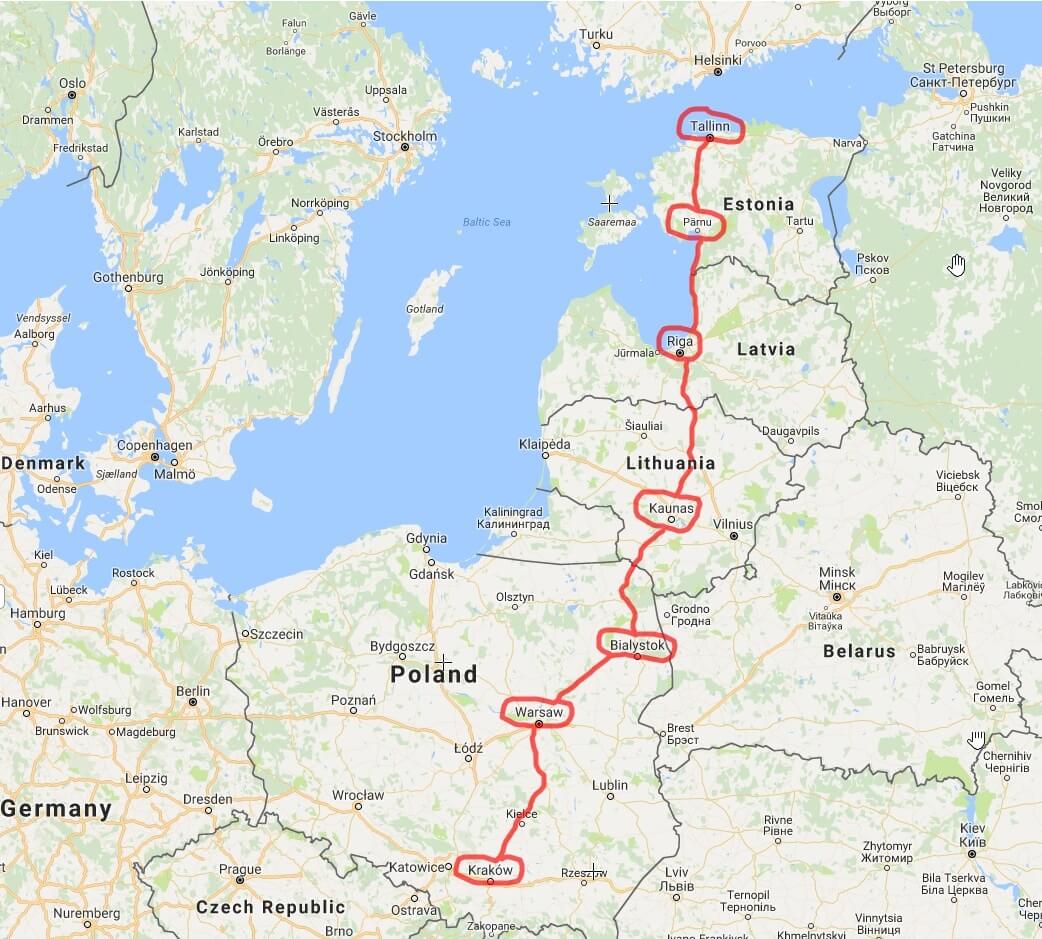
    Recently I completed my first extended hitch-hike – around 1,300km and four countries – from the south of Poland to the northern tip of Estonia.

    hitchmap

    When I tell people about this, they often seem confused about the whole idea. Who picks you up? Is it easy? Hard? What if no one stops? But hitching is actually very popular in Europe and has been for a long time.

    So here’s an inside look: A no-frills journal of all my rides from beginning to end. As you’ll see there’s nothing crazy about the whole thing, just people helping people, two strangers keeping each other company on a long drive. If you’ve thought about hitching in the past, maybe this will give you an honest glimpse into what you’re in for.

    Kraków to Warsaw

    The idea to hitch-hike comes out of nowhere, really. I initially just want to hitch to Warsaw, as the Polish bus timetable is annoying me. And then I think, why not just go all the way to Tallinn? It’s not that far. Besides, I’d stopped finding buses and trains fun a long time ago.

    So I decide that’s the mission; Krakow to Tallinn.

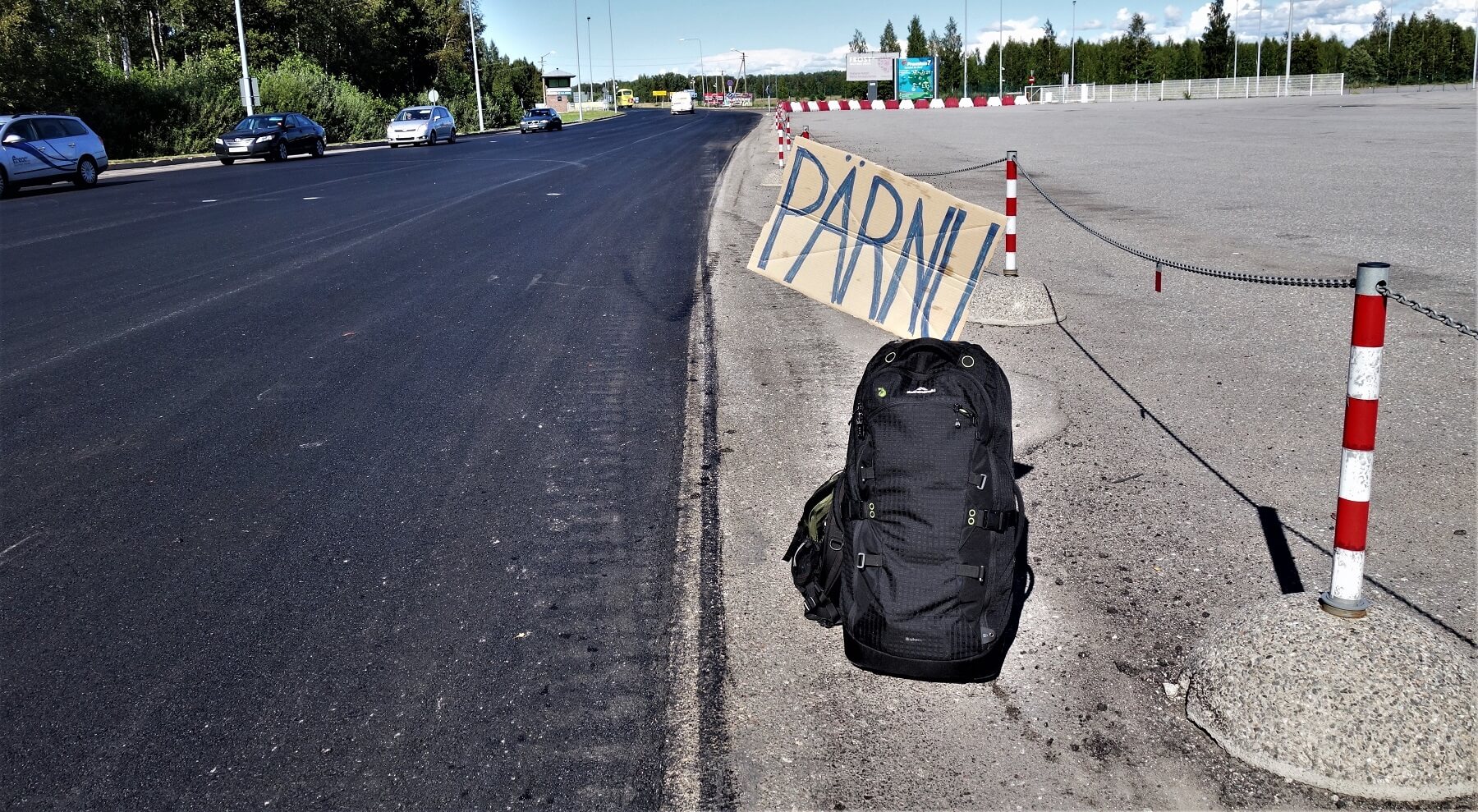
    The first day is easier than expected. I get to a gas station on the highway to Warsaw. I have a ready-made sign in my bag that I actually spent a long time on. Just need to head to the roadside and hold it up. I feel kind of nervous, to be honest. I’ve never hitch-hiked before, at least not in the traditional sense. But it couldn’t have gone any smoother.

    I pull out my sign and have barely been waiting thirty seconds before someone stops. He’s maybe in his forties, a Polish guy, drives a Honda CR-V. He gets out and helps me throw my bag in the trunk.

    “Would you like some apples?” he asks, hold out a small box of green apples. “They’re organic, from my mother’s farm!”

    I smile, and we each take one before getting in the car.

    “So you must have kids,” I say, looking around his car. There’s crap everywhere.

    He laughs and nods, taking a bite out of his apple.

    He actually lives in the UK, and has driven all the way here to visit his family. Took him two days. He tells me about his two kids, both in school, and his wife, some big-shot scientist somewhere in England.

    He has a few travel stories of his own. Says he hitch-hiked all over Europe as a kid, and asks me a lot of questions about what the backpacker scene is like today. He wants to know the gear we use, what apps on my phone, the whole deal. I get the feeling he picks up hitchers like me to repay the favour from his own journeys, but to also continue adventuring vicariously through us. I’ll probably be that guy some day.

    The drive itself is easy; main highway, three hours, give or take.

    When we get to Warsaw, he drops me at a metro station and I write down my blog and email for him. He says he’ll be in New Zealand one of these days, and I tell him I’ll be more than happy to chauffeur him around. We shake hands, give our farewells, and I head into the station to get a train to my Couchsurfer‘s place. I can’t even remember his name.

    Warsaw to Bialystok


    A photo posted by Bren (@brenontheroad) on

    I head to a bus stop on the highway north out of Warsaw. It takes me an almost an hour to find my way there. I hold up my sign.

    A lot of drivers acknowledge me with smiles and nods, but nobody stops.

    An hour passes. Then another hour. Still no ride. It’s 2pm now, and I’m already entertaining the possibility that I might not be going anywhere today.

    Finally I decide to walk about 400 metres down the road to the nearest gas station. As I do, it starts to rain softly. I try to ignore this enormous inconvenience. I get to the gas station and buy a sandwich. I’m tired and hungry. I didn’t have time to eat breakfast this morning. I ask a guy standing outside drinking a coffee if he’s heading to Białystok. He says yes. I get excited inside, and ask if he can take me. He says I need a helmet; he’s on a motorbike.

    Damn.

    I stand and chat with him for ten minutes.

    A car pulls in behind me. He looks over my shoulder and says, “That lady is going to Białystok”. I turn around. It’s a flash car, some huge BMW SUV. I ask him how he knows. He says to look at the number plate – BI is the registration for Białystok. A middle-aged lady gets out and starts pumping gas. I ask him what he thinks my chances are, as lone women don’t usually give rides to strangers, especially an enormous, rugged, imposing man like me.

    “You should ask her, she looks strong, walks with some dignity,” he chuckles.

    I laugh and walk over to her.

    “Excuse me, are you going to Białystok?”

    She turns and smiles.

    “Yes.”

    “I’m looking for a ride there, would you be able to take me?”

    I put on my warmest, friendliest smile.

    She laughs and takes a deep breath, looking me over. A few moments pass.

    “If you can’t it’s totally fine, I’ll just be waiting over here, let me know.” I smile and go back to my seat. She heads into the shop to pay for her gas.

    Two minutes later she comes out and looks at me. She shakes her head, with a smile.

    “Sorry.”

    I tell her it’s fine, and it is. I watch her drive off with four empty seats in her overpriced car, say bye to my new friend, and head back to the road. I find another spot this time, much better for hitching than the first.

    After an hour someone finally stops. He says he can take me Wyszków. I ask him where that is, and he tells me it’s nearly halfway to Białystok. I decide to take my chances; better than standing around here for another three hours.

    It’s a tiny little car, beaten up, and the guy can’t be older than 25. His phone keeps ringing and he keeps denying the call.

    “Problems bro?”

    He sighs.

    “Yeah. Ex-girlfriend. You know?”

    I laugh.

    “Yes, I know very well.”

    He works at a sushi restaurant in Warsaw, and also has his own sushi joint in Wyszków, commuting each week between the two.

    “Sushi is a big thing in Poland right now,” he tells me.

    Wyszków is only 100km away, we arrive in under an hour. He drops me at a bus stop.

    “Try here. It’s a good spot, you should get someone.”

    I thank him and jump out. It starts to rain. I head under the shelter at the bus stop and wait. There are two young girls waiting beside me. I chat with them for ten minutes while the rain dies down.

    “How long do you think before I get a car?” I ask them.

    One of them says ten minutes, with confidence. I am doubtful.

    Once the rain dies a little I head back to the sidewalk with my Białystok sign. I’ve been waiting almost an hour and it’s past 5pm now. I feel like I might be spending the night here. I take out my phone and quickly search for hostels and Couchsurfers in this tiny town. None. I may be sleeping in a bus stop tonight.

    Finally a car stops. A young lady, maybe late twenties, driving a people-mover.

    “I can take you to Ostrów. It’s about halfway.”

    I hesitate for a moment and she pulls up the map on her phone.

    “We’re here. So I can drop you just before Ostrów, here. Then I need to turn off and go in another direction.”

    I decide to go for it and stuff my backpack in the trunk. She has three kids in the back, all sitting in baby seats. The eldest can’t be older than four.

    “You’re actually the first hitch-hiker I’ve ever picked up.”

    I’m flattered. I must have a kind face.

    We talk in between her kids interrupting us and asking for chewing gum. She’s my age, so we have a lot to talk about, but we’ve obviously chosen very different lives. She looks very happy, and she looks like a great Mum. I admire her. Reminds of my Mum driving in the car with my brothers and I fighting in the back.

    “My husband is going to think I’m crazy when I tell him about this.”

    Just before Ostrów, she drops me at a small parking bay, on the main highway.

    “I think you should be able to get someone here.”

    We take a few selfies together and then say our goodbyes.


    A photo posted by Bren (@brenontheroad) on

    It’s starting to get dark, and now I’m really out on the open road with no hotels, bus stops or restaurants. I don’t feel too worried though. A lot of traffic is zooming by; surely at least one of them will pick up a stranded traveller.

    I was right. After about twenty minutes a guy pulls over. He’s driving some expensive looking Volvo. He jumps out to shake my hand and throws my backpack in the trunk. A girl, I presume his girlfriend, is sitting in the passenger seat. I jump in and introduce myself. As soon as we take off, the two of them continue their conversation like I’m not even there. It’s in Polish so I don’t understand anything. Normally I would feel awkward sitting silently in the back, but I’m so exhausted from the day it doesn’t even register.

    This guy drives fast. At least 160km/h, overtaking anyone he can. I strap myself in tight.

    Just as we arrive into Białystok he starts talking to me – asks where I’m from, if I know where I’m going. I tell him bits of my story and we get chatting for the final fifteen minutes. They’re on the way back from a holiday. Judging by his clothes and his car, the guy has some money. Really cool of him to pick me up. I ask him to just drop me anywhere central, and he drops me right in the middle of the town centre. I shake his hand, say thanks, and go on my way. After a long ten hour day, I’m finally in Białystok.

    Bialystok to Kaunas

    My Couchsurfing host drops me at the first bus stop on the highway out of the city. Good place to hitch, my sign looks beautiful. I have a good feeling about today.

    I’m actually texting on my phone when a car pulls over, I don’t even notice until they’re right in front of me. I look up and see two young guys in a super flash 4WD staring at me.

    “Hey! You going to Kaunas?” I ask.

    “Yep! Get in.”

    I throw my bag in the backseat and jump in.

    They’re both Lithuanians, coming home from a business trip. They sell security systems, or something like that. They’re heading straight to Kaunas.

    After the previous leg, I’m glad today is shaping up to be an easy hitch – straight to my destination, no changing rides, friendly guys, super nice car.

    “This is a really nice car man.”

    I run my hands over the leather linings on the door.

    “Thanks, it’s actually my wife’s car. We drove all the way to Germany to get it.”

    We have a really interesting conversation about Lithuania. He says they speak the oldest language still used today, that a quarter of Lithuanian people don’t live in Lithuania, and they’re struggling to attract immigrants, even refugees.

    “You know, we are actually trying really hard to bring refugees in. We are like out there campaigning to get them here. But they won’t come. So on one hand it’s good that we don’t have all these political problems other countries are having. But it’s also bad, because what does that say about our country if even refugees don’t want to live here?”

    They speak great English, and we have a long talk about politics and business and other good stuff. Smart guys.

    Like many people around here, the driver used to hitch-hike a lot as a kid, almost every day, to and from school.

    “I lived in a small village, man. I had a long way to walk to school each day. So I know how it feels to have cars go by and nobody pick you up.”

    There are no controls when we cross into Lithuania from Poland. No border patrol, no customs agents, nothing. Just open road and a sign saying welcome to Lithuania. But I still get that little buzz you always get when you enter a new country.

    The guys are great hosts. They tell me a whole bunch of stuff to see and food to try, and wish me well on my journey. He even drops me right outside my Airbnb in Kaunas. I can’t thank them enough for such hospitality. A perfect day of hitch-hiking and a heart-warming start to the Baltics.


    A photo posted by Bren (@brenontheroad) on

    Kaunas to Riga

    Apparently the best place to hitch is outside a mall on the outskirts of town. Seems easy enough. But I get there and have no idea where I’m supposed to hitch from. The motorway is there, but there’s hardly anywhere to stand, let alone room for a car to stop. I walk around in circles for about two hours trying to find a place, before I finally get to a bus stop on the correct highway, about 45 minutes walk from the mall.

    While waiting I see a guy with a backpack walking towards me along the highway. Traveller, obviously. He sees me holding my Riga sign and smiles. I assume he’s heading to the same place. When he finally reaches me we shake hands, and he tells me he’s also hitching to Riga. Turns out he’s actually from there, heading home from his Eurotrip. I tell him he’s welcome to wait with me.

    A car stops after half an hour. He says he can take us to Panevėžys, around halfway to Riga. We decide it’s good and jump in. The dude I’m with falls asleep almost instantly, so I chat with the driver. He’s heading out to meet a business partner somewhere. He’s got wifi in his car and everything. Really cool guy.

    We get to Panevėžys and there’s no obvious hitch-friendly spots. He offers to take us past the city, out to the highway. There’s a gas station there where we’ll find a ride a little easier. It’s at least a twenty minute detour for him but he doesn’t think twice about it. I wonder to myself, what compels someone to go so far out of their way to help a stranger? Most people struggle to put a dollar in a charity bucket.

    The gas station he leaves us at is a flawless hitch hiking spot – lots of traffic, huge off-road area for cars to stop. We thank our driver and say goodbye – I wish I had a New Zealand tiki or something to give him. I make a note to bring some on my next trip. We both head into the store to buy some food and water and use the toilet. It feels good to recharge. My travel buddy asks a couple of customers filling up their cars if they’re heading to Riga, but nobody bites. It’s okay though, we’re only standing by the road for about twenty minutes before someone picks us up. He’s a young guy, 25 maybe, also Latvian. He takes us all the way to Riga.

    Riga to Pärnu

    Unfortunately, Riga was one of the Baltic capitals I was really looking forward to, but I could only stay for one day as time was against me.

    Hitch-hiking out of Riga is a little more complicated than the previous cities. I need to take a regional bus out of the city, and hitch from one of the bus stops out there. Finding the right bus is already a challenge, but I get there. Two other Latino guys are on the bus too, they’re hitching all the way to Tallinn today. I see their cardboard sign and make some small talk with them. It’s kind of funny – with the internet all the best hitch-hiking spots are shared online, so we all end up in the same spots. I try to imagine how much more hit-and-miss things would’ve been back in the day.

    When we get to the bus stop I stand up front with my Pärnu sign, them with the Tallinn sign right behind me. A car stops after twenty minutes and picks all three of us up. He says he can take us to the border, where it will be a lot easier to find rides.

    He’s a young, married guy, maybe in his early twenties. He’s commuting every day from a border town to Riga for work, and picks up hitchers quite often. I guess he does it to make the long drives a little more interesting. All four of us have a good conversation about our home countries and our travels.


    A photo posted by Bren (@brenontheroad) on

    At the border there’s a big cafe with toilets. I consider buying some food, but Pärnu is less than an hour away. I decide to wait.

    The wait is longer than expected. I’m there for at least an hour and a half until someone finally picks me up. He’s a guy with tattoos all over him and a long ponytail. Looks like a musician or artist of some sort.

    “Hey man, you going to Pärnu?” he asks, in perfect English.

    “Yeah.”

    “Cool man, jump in.”

    I ask him about the car, which is a very expensive looking Mercedes minivan.

    “My friend has a transport company, I drive for him sometimes. People get off the cruises in Tallinn and then I drive them down to Riga.”

    I take a quick look in the back. Very roomy, slick black leather seats.

    “How much does it cost them?”

    “I don’t know exactly, but it’s several hundred Euros at least.”

    I feel so satisfied with my free ride, it’s almost embarrassing.

    I get to know him a little bit. He owns a club in Tallinn, and has his own music festival. He tells me a bit about his past – played in a few bands, travelled all over Europe and America. Now he’s just settled down with this girlfriend and living easy.

    “You know, I’ve already done all the crazy shit I need to do in my life. That stuff gets kind of boring after a while.”

    I admire what he’s done.

    He proceeds to tell me all about Estonia – the history and the language and the old medieval town in Tallinn. He might look like a tough dude, but he’s obviously intelligent, and friendly as they come.

    As we pass through Pärnu he drops me in the centre and the continues on his way. I take down his details and shake his hand.

    “Thanks for everything mate.”

    Welcome to Estonia.

    Pärnu to Tallinn

    The final leg. I catch a city bus as far as it goes, and set myself up just outside a cafe on the highway. I ask the guy inside if it’s okay to hitch in front of their store, just to be sure.

    After half an hour, two kids start hitch-hiking about fifty metres in front of me. I wonder if there’s some kind of hitch-hike etiquette that says you shouldn’t queue-jump like that. But it doesn’t bother me. They don’t even have a sign, while mine is a timeless piece of art. Surely any rational driver will choose the guy with the awesome sign over two unprepared children.

    However, I’m standing there for at least an hour. Estonia is actually not the most hitch friendly place. Both times I’ve had flawless hitch-hiking spots; lots of traffic, ample stopping space, but cars just drive on past. In other countries drivers acknowledge you with a nod or smile, or make a hand signal to tell you they’re going a different direction. But in Estonia the truck drivers stare back at you like they want to fight, and the other drivers avoid eye contact at all costs.

    But finally a guy pulls over. Old BMW. Drives straight past the kids in front of me. I see them looking back at me with sour looks on their faces.

    The driver’s a young guy, maybe my age. I ask him if I can throw my bag in the trunk, and he gets out and helps me. His trunk is full of crap, so we shuffle stuff around until it fits. Then we head on our way.

    “So were you here for the festival?” he asks.

    “Yeah man, and you?”

    “Yeah, it was awesome. I’m so hungover.”

    He’s talking about the Weekend Festival, a huge music festival in Pärnu. We talk about all the shit that happened, and then he starts telling me about his business. He owns coffee vending machines, around 300 of them, and he enlightens me on how the whole business works, how much he has to pay to people, where the machines come from. Really interesting.

    “I just always liked machines growing up,” he says.

    I take a look at this kid. He probably wakes up at 7, works 50 hours a week, does well for himself, heads down to the beach in Pärnu on the weekends to chill out and party. Eats three meals a day, fixes his hair in the morning. For some reason it always fascinates me that people on the opposite side of the world live pretty much exactly the same lives as we do back home. Weird.

    When we finally get to Tallinn, he drives me around the old town a bit and finally drops me at my friends place, where I’ve arranged to crash for a few nights.


    A photo posted by Bren (@brenontheroad) on

    “You know, my mission was to get to Tallinn from Kraków, this was my final leg. Thanks for getting me here!”

    He laughs and we shake hands, add each other on Facebook and say goodbye.

    Tallinn. Mission accomplished.

    Have you hitch-hiked before? Got any funny stories? Share them in the comments below. Also if you love hitching stories, check out Danielle’s hitch story – basically the same route, just in reverse!


    Ever wanted to hitch-hike? Check out this diary of Bren's hitch-hike through the Baltics - it's not as hard as you think!

  • A Glimpse At Morocco

    A Glimpse At Morocco

    I’d never visited the north of Africa. Turkey’s maybe the closest I’ve come to a country like Morocco, and I didn’t have much fun there.

    But of course, things are different on the mother continent.

    After a quick two week whiz around Morocco, I don’t really have too much to tell you – it was two days here, three days there, and before I knew it I was back on a boat to Spain. But I can tell you – I like it! Here’s a few scattered thoughts from my short time in the country.

    Food


    A photo posted by Bren (@brenontheroad) on

    Every major city in the world has a Moroccan restaurant (or fifty). Gotta be a reason for it.

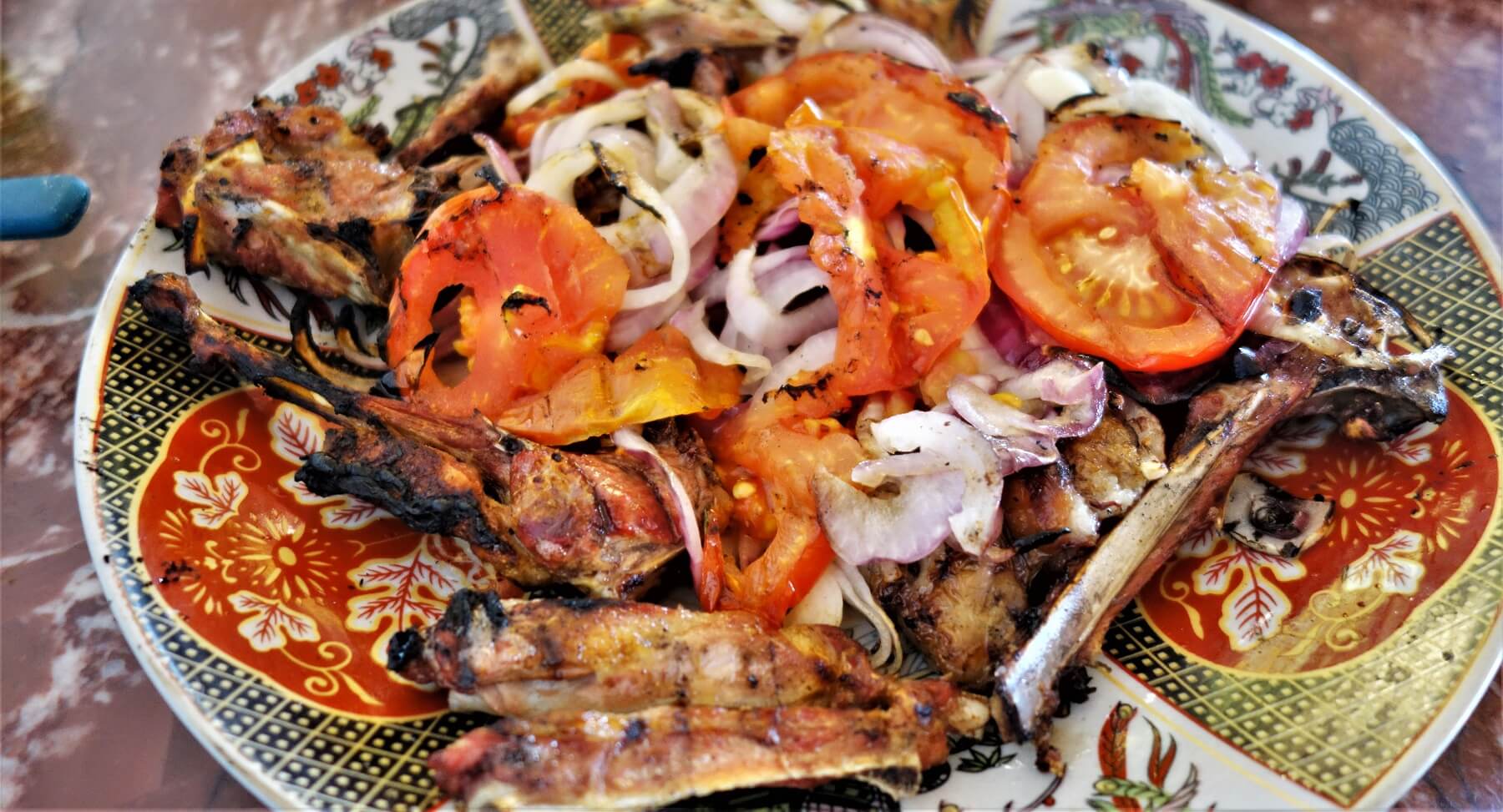
    The food in Morocco is hearty. Slow cooked meat, stews, soup, couscous, bread. I like my food cheap, filling and simple – no turning my carrots into flowers nonsense. The tanjia above is just meat (all kinds) slow cooked with spices in a big clay pot. It’s perfect.


    A photo posted by Bren (@brenontheroad) on

    The tagine is similar, but cooked in a shallower dish and usually with vegetables. You can get them with chicken, beef, lamb, maybe even fish? You’ll find them for just a few dollars in most local eateries, and they’re healthy and filling which is the perfect combo for us budget travellers.


    You want the good shit you gotta go to the source. #couscous #Morocco

    A photo posted by Bren (@brenontheroad) on

    They have a hearty harira soup, the famed couscous, shish kebabs, there’s even camel on the menu. Out near the coast, I ate one of the best fresh lobsters I’ve had in my life and it didn’t cost a fortune. The food isn’t Southeast Asia cheap, but it’s affordable and delicious. I ate well in Morocco.

    Tip: Stay out of the tourist restaurants. The price difference is ridiculous and the food is more or less the same (or worse!). You will just be paying for decor and nice tablecloths. Look for places where locals are eating and drinking. A tagine will only cost you 35-45 dirham there, versus 100+ in the more swanky joints. You can also buy a lot of fresh fruit and veges in the markets for just a few dollars. You can eat very well on a budget here!

    Diverse


    A photo posted by Bren (@brenontheroad) on

    The tourist strongholds of Marrakesh and the Sahara are great, but there’s a lot more to Morocco than that. You can head up into the mountains, out to the beaches, Casablanca, Fez, the blue city of Chefchaouen, the movie city of Ouarzazate, all the medinas and kasbahs and desert towns – it’s a pretty diverse country. In the space of a day I went from freezing my nipples off on top of the mountains to sweating like mad in the bustling city. I didn’t expect there would be so much to see there, and that the cities would be as developed as they are. It’ll surprise you!

    Tip: It’s a good idea to take tours here (I mean day tours, not big tour bus tours) – they aren’t that expensive, and you shouldn’t need to pre-book online. I’m certain you’ll get a better price on the ground. I doubt you’ll need to worry about things booking out – if you’re willing to pay for a tour, someone will be willing to take you. Get a recommendation from your riad (guesthouse), or if you’re game you can bargain with the many operators around the city.

    If you’re after a good rundown of things to do in the country, fellow blogger Andrew put together a great list during his Morocco road trip.

    A lot of history


    A photo posted by Bren (@brenontheroad) on

    Like most other dummies who visit Morocco, I thought it was populated by Arabs. Several people in Morocco were quick to point out they were not Arab, and that Morocco is not an Arab country. Our tour guide told us the Arabs came to introduce Islam (successfully), and introduced the Arabic language in the process (I don’t know the whole story, sorry). But the indigenous people of Morocco and North Africa are actually the Berbers. I suppose the Berbers had a kinder fate than most indigenous peoples, as the majority of the population is still Berber today. As you venture out of the cities, you’ll find many purely Berber small towns and cities where Berber is spoken rather than Arabic.

    I noticed many of them are also very outspoken about their history books. In school they are only taught history that dates after the French arrived, despite there being a long Berber history to learn about, and a colourful Moroccan past as a bridge between Europe and Africa. I instantly related to this, because in New Zealand it is exactly the same; we are only taught history from the date the English arrived; and any Maori history before that is never talked about. At school I was never taught about the Maori kings, but I was taught a lot about the English ones and how many wives they had. Parallels like this always fascinate me, because it shows how deeply history, no matter how long ago, still affects us today all over the world. If I do get back to Morocco, exploring more of this history would be the main reason that gets me there.

    Tip: Make an effort to get out of the cities and into these smaller Berber towns. I didn’t get much time to explore them but I’m sure there are many great stories to be found there. Just from a quick walk-around I could tell they felt very different. You’ll pass through a lot of them anyway if you’re heading towards the Sahara.

    Safe!

    I was trying to tip toe on rocks over a river, and of course I slipped, and my shoes got soaked. Then we stopped for lunch, and I asked our driver if I could leave my shoes on top of the car to dry. Since the car was parked by the road, I had to ask:

    “Will anyone take them?”

    And he looked at me like I was birdbrained.

    “Of course no one will take them.”

    So we went and had lunch. And no one took them.

    In Fez, we were warned to be a little more cautious at night, but the daytime was as safe as any city I’ve been to.

    Marrakesh was even safer. In fact, we were told the king had made it a priority to keep visitors safe, and any crime towards tourists results in a few years in prison. Even at 2 in the morning, you could walk freely through the city and police were everywhere. I’d be very surprised if any traveller with elementary-level common sense has problems in Marrakesh – it’s probably one of the safest major cities I’ve ever been to.

    Throughout the country (especially more touristy places) you’ll run into a number of petty scammers and street hustlers, but honestly it’s pretty tame by Africa standards.

    Fellow blogger Kate even road tripped herself all the way from Marrakesh to Fez! 

    The desert


    A photo posted by Bren (@brenontheroad) on


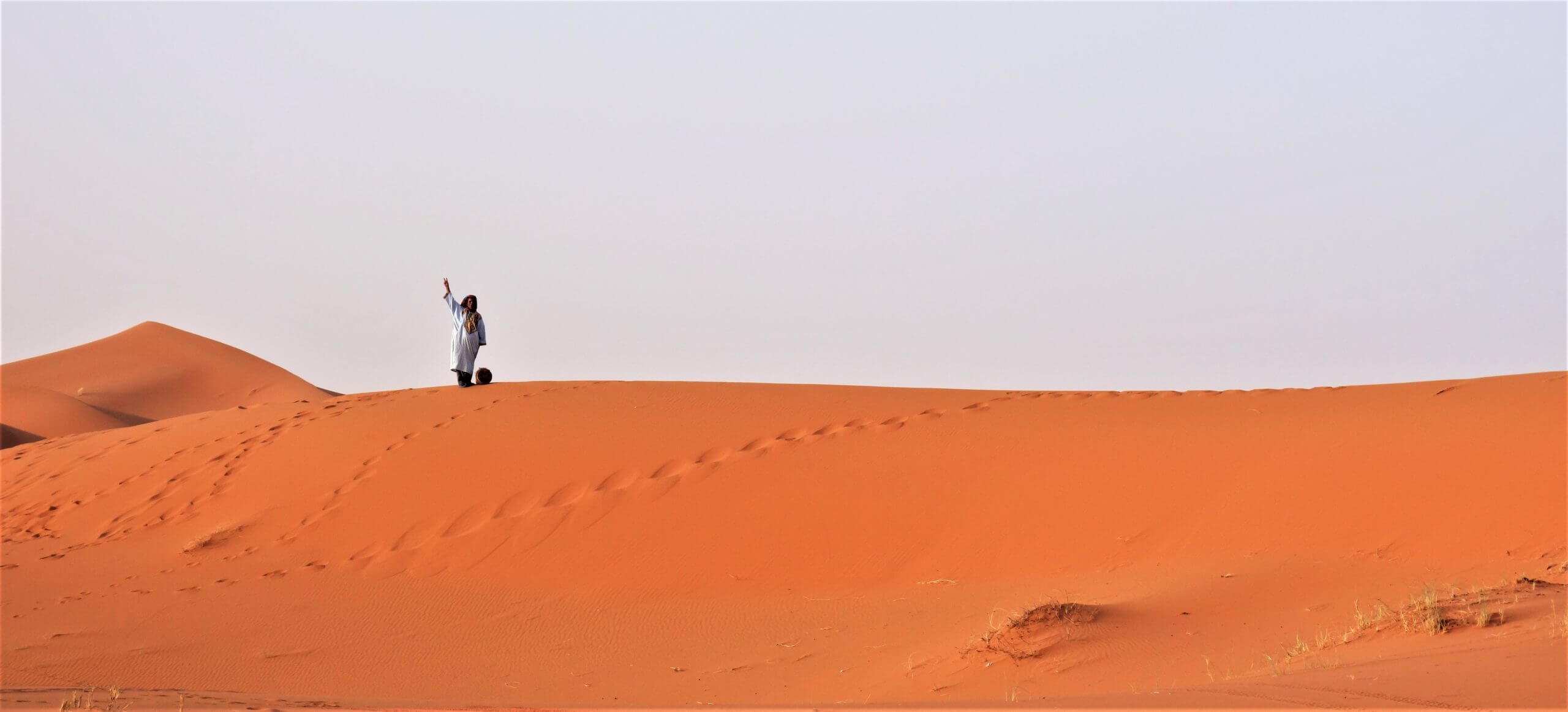
    Even though the Sahara is swamped every year with tourists doing the obligatory camel tour into the desert, it’s still pretty cool.

    It’s also cool to do a tour of more of the desert – people actually live there, there are villages and hotels and families out there. As you drive through you’ll see their intricate water systems, people riding quad bikes, maybe a little village built around an oasis. It’s pretty interesting.

    The only thing about the desert is it’s difficult to indie travel it – the towns and villages would be possible, but heading out any deeper would not. You’ll need to take a tour. The good news is that won’t be hard to find – most people come to Morocco for the Sahara, so whatever kind of tour you want should be available somewhere.

    Tip: Luckily I was there in early June, which is before the tourism onslaught. Our camel whisperers told us that come August, there’s around forty people doing the camp each night (we only had seven). Keep that in mind if you plan on going.

    Hot!


    Children of the desert. They must be tough.

    A photo posted by Bren (@brenontheroad) on

    It’s warm in the desert. And in the cities. It’s quite a dry heat, so more bearable than the likes of Southeast Asia or the tropics, but still pretty heavy. November to February should be a lot cooler; otherwise prepare to get your sweat on.

    Tip: It’s getting more liberal, especially in Marrakesh, but even in the blistering heat there will be women walking around fully wrapped from head to toe. I would suggest being respectful as possible and covering up when you can, especially the ladies. I did wear singlets a couple of times in Marrakesh, but other than that I tried to at least wear a t-shirt.

    You’ll get sold a lot of stuff


    A photo posted by Bren (@brenontheroad) on


    You’re going to get sold the same stuff throughout the country. First, the leather. In Fez, they tell you the best leather in the world is from Fez. Then in Marrakesh, they’ll say the best leather in the world is from Marrakesh. I didn’t go to Casablanca, but I’m pretty sure they have the best leather in the world too.

    Then you’ll get sold the Argan oil. The Argan tree is endemic to the south of Morocco, and you’ll hear the same story about this tree many times (they tried to plant it in Spain, it didn’t grow, they tried to plant it in the lab, it wouldn’t grow, in the north of Morocco, it didn’t grow. It only grows in a special place in Morocco). Then you’ll go into the store and see all the ladies sitting there breaking open the Argan fruit and grinding the nuts into oil. Then they’ll tell you Argan oil cures everything and get offered a few bottles for sale.

    Then you’ll get sold some hand-woven silk stuff, maybe some dates, a Moroccan rug, some spices, a photo with a snake around your neck. There is a lot of stuff that is uniquely Moroccan, so naturally there’s a big money grab selling this stuff to tourists. Take your time if you want to buy it. There’s no rush. You’re going to see it again the next day, I promise.

    Tip: Like anywhere in Africa, you have to haggle! Our riad owner told us we shouldn’t pay more than 60-100 dirham (5-9 Euro) for a good leather belt. But in the shops we were getting quoted 20-40 Euro. I don’t really buy things when I travel so I didn’t get in on it, but I would suggest haggling super hard, China/India style.


    A photo posted by Bren (@brenontheroad) on

    Affordable

    It’s actually a great place for budget travellers. Even in the cities, you can get a decent tagine for 35-45 dirham ($3.50-4.50), a taxi for 15 dirham ($1.50) and a dorm bed for about 70 dirham ($7USD). The country gets a lot of visitors so the tourist infrastructure is good, especially in Marrakesh. Even in the smaller cities, there are a lot of independent riads (guesthouses) that give you good accommodation options. This actually makes it cheaper than a lot of sub-Saharan Africa, even though it’s more developed. If you’re backpacking, 200-250 dirham ($20-$25) per day should be more than doable, excluding any tours you want to take.

    If you’ve never been to Africa, it might be a good place to get your first taste of the continent!


    Traveling to Morocco? Get expert tips on food, shopping, accommodation, budgeting, safety, and other things to expect. The north of Africa is amazing. Enjoy your trip!

  • Under Stars In The Sahara

    Under Stars In The Sahara

    This camel has big mouth.

    Seriously, you could fit a basketball inside.

    I jam my camera in his face and snap a photo. I’m sure he doesn’t mind. Or maybe he does, but after a million stupid gringos doing the same thing, he’s probably over it.

    Our Berber guides tell us, one by one, to jump on our camel’s backs. They’re kneeling in the sand, makeshift blanket saddles strewn across their backs. Like kids on a school trip, we climb on, a little too excited.

    As I steady myself, the guide gives the camel a little nudge and a pssst, and it climbs up onto its feet. It feels higher than I expected.

    We start to ride. I notice the number tag punched into my camel’s ear. It’s been bolted in, with a nail the size of a cigarette. I feel sorry for him. I feel doubly sorry that he has to cart me out here on such a nice afternoon when he could be relaxing with his bros taking sand baths and comparing the calluses on their knees. Then I see the reigns wrapped around his neck. I trace them with my eyes, up around his head and through his nose. The rope is actually threaded through his nostril, so that he has no choice but to follow the chain. And the rope is then tied to ass of the camel in front. I feel triply sorry for him. Not only is he forced to stare at that camel ass in front his entire life; he’s chained to it. Even if he wants to look away when it poops, he can’t. And they poop a lot. If that’s not bad enough, his honourable death will be getting served as a camel burger in a tourist cafe as soon as his legs give out.

    Next time, I think I’ll come out by quad bike.

    The ride out is about an hour. Riding uphill is easy, but riding downhill gives the core a bit of a workout. I see one girl up front struggling, holding on for dear life. I feel bad for laughing. She just looks so funny though.

    The guide up front leads the camel train on foot. He walks in bare feet, standing on camel pee and poop with every third step. He doesn’t care. He embraces it. He’s a man of the desert.

    Of course, there are no roads out here. It’s just orange sand in every direction. But these guys know the way somehow.

    A photo posted by Bren (@brenontheroad) on

    The sun is almost setting when we get to the camp. It’s a small site, the size of half a tennis court. The rooms are tented with heavy woollen blankets to withstand the wind, but they also keep the heat in. I go into my tent for thirty seconds, then come straight back out.

    Hot.

    Way too hot.

    While the guides cook dinner we go wandering. It’s vast, and barren. The desert is big and empty – who knew? We climb to the top of the closest dune to catch the sunset and take selfies. Out here, all you can see is orange. A big sea of hilly, wavy, endless orange. I just sit and stare at it, I don’t even know what to think. What is this place? Why is it here? Mind boggling, and scary too. We’ve only come an hour from civilisation, but if everyone disappeared now I’d have no idea how to get back. I’d be dead in three days.

    A photo posted by Bren (@brenontheroad) on

    We climb back down to camp as it gets dark. The camp is set up like a courtyard, with tents in a square and a communal eating and sitting area in the middle. I lay on one of the mats and stare at the sky. Stars are slowly coming out, but I can barely see them among the camp lights.

    Dinner is soup and tagine. It’s like a stew, with meat and vegetables, and we eat by candle light. It’s all very nice. But I want to go and feed my camel.

    One by one, people drop off. A couple go to bed. A couple more. Before long, I’m the only one left and they turn out the lights.

    It’s completely dark. The weather has cooled, and the wind is starting to pinch. But it’s okay. I lie on the mat, staring up at the sky. It’s so dark, and there are so many stars.

    So many stars.

    I put in my earphones and put my phone on shuffle. Now it’s like a soundtrack. If this were a movie, this would be the scene where the main character has his moment. Staring at the open sky in the middle of nowhere and it all becomes clear. He knows what he’s supposed to do.

    Is that what’s going to happen? Maybe. I feel energy. In fact, I have a lot of moments like this. Always when I’m alone, silent, somewhere special. It makes me think about things.

    I feel a sudden surge of appreciation. Gratitude completely engulfs me. I thank the universe for letting me be here. I thank it for keeping my family safe and healthy and happy. I thank it for the journey and this crazy moment happening right now. Stars. The middle of the Sahara desert. Silence. I take a deep breath, or two or three. I don’t know what I did to be so blessed. Nothing, probably. Just one of the lucky ones. Thank you for giving me a good life.

    I get lost in the stars. You can’t count them, it’s impossible. They’re never ending. They’re so bright, brighter than I’m used to in New Zealand. Counting Stars by One Republic comes on. Poetic, almost. My body is filled with fire. I don’t know why.

    After ten minutes, whooosh. Shooting star. Can’t even remember what that means. Make a wish? Buy a lotto ticket? I don’t do anything. I just say thank you for the shooting star.

    Everyone loves looking at stars. Why? They don’t do anything cool, they don’t even move. They just twinkle. But we love it. Maybe it’s what they represent – the unknown. We’ll never touch or smell or feel them. They just tell us how insignificant we are. Look at all these galaxies. Aliens? Are there aliens? There must be. Maybe they’re on that star over there. Or that one. I wonder if they’ll arrive soon and kill us all. What are these stars? Are they planets? Asteroids, maybe? Is one of these meteors going to come blow us up soon? Probably. And none of the aliens will care. Probably a meteor killed a whole bunch of aliens already today, and we didn’t care. Damn I’m getting kinda cold.

    Whooosh. Another one.

    I don’t know how long has gone by. Maybe an hour. Maybe two. I grab my phone to check, then quickly change my mind and put it down. Because what’s the point? The time would tell me nothing. Time is irrelevant right now.

    I think about the journey that brought me here. All the small conversations, and the big ones. All the small friendships, and the big ones. It’s all led to here. But why? Where does it end? What’s it all for? One day you’ll be gone, and it’ll be like it never happened. You gotta pay it forward – leave something behind, make it count for something. It was so clear for a moment. You gotta write your book, Brendan. Write the damn book.

    Whoooosh. That’s three.

    The stars do it to you. They’re an incubator for this type of melodramatic navel gazing. It’s these solitary moments that send us to look deep inside ourselves. We become conscious of things we secretly knew all along. Even if just for a moment.

    The cold wakes me up. I look at my phone – 3am. Not yet morning. I get up to pee. As soon as I walk outside the camp, I get the spooks. There is a port-a-loo like toilet about 25 metres away, but I just walk halfway and pee in the sand, like the camels. I don’t want to get lost. This is the middle of the Sahara in the middle of the night. The sand looks grey now, and you can hear it shuffle with the wind. It’s lit by moonlight, but cold and ashen, as far as the eye sees. I’ve never seen a place like this before. It looks so mysterious. It even feels mysterious. Like I could see ghosts and shadow warriors and I wouldn’t even be surprised. I’d just think, yep, I thought I might see some shit like that out here. I hurry back to camp.

    I tell myself I’ll stargaze just a bit longer. Just until the next shooting star. I lie back down on the mat. My mind is empty now. I just stare blankly, watching the whole sky twinkle before me, waiting for it. I wonder if it’ll ever come. But it doesn’t take long. After just a few minutes, whoooosh.

    I go to bed happy.

    I’m the last to wake up. Everyone’s already taken their photos of the sunrise and is now chilling on the dunes or packing up to leave. I get dressed and go visit my camel.

    A photo posted by Bren (@brenontheroad) on

    Hey bro, hope you slept well. Sorry but you gotta take me back, I don’t know the way.

    I stroke his head and he flinches.

    Sorry.

    I wouldn’t want to be touched on the head by me either.

    The ride back to civilisation is a sobering wake-up. It’s not every day you ride a camel in the desert before breakfast. The girl in front is still on the brink of falling off, and I still find it funny. But she makes it all the way.

    The ride feels shorter today. As we arrive back, the guide gives my camel a nudge and a pssst, and he drops to his knees in a clunky one-two. I hop off and pat him on the back, and promise to never eat a camel burger ever again. I take one last photo, thank him, and say goodbye.

    Often, we go to a place and don’t learn the things we expect to learn, or feel the things we expect to feel. But the road is fickle. There is no rule book out here. You take whatever it gives you, and embrace the journey as it happens. One day you’ll look back and think, yeah, I remember that conversation, or I remember thinking of that idea, maybe in the ocean, some town by the lake, or under stars in the Sahara. Those moments change us, whether we want them to or not. So collect them, and remember them. Because that collection of moments is called life. Happening right before your eyes.

    To the many moments and memories,

    Bren


    Magical story by Bren On The Road about star gazing in the Sahara.

  • 116 Things I Learned On The Camino De Santiago

    116 Things I Learned On The Camino De Santiago

    So I hated the Camino.

    There, I said it.

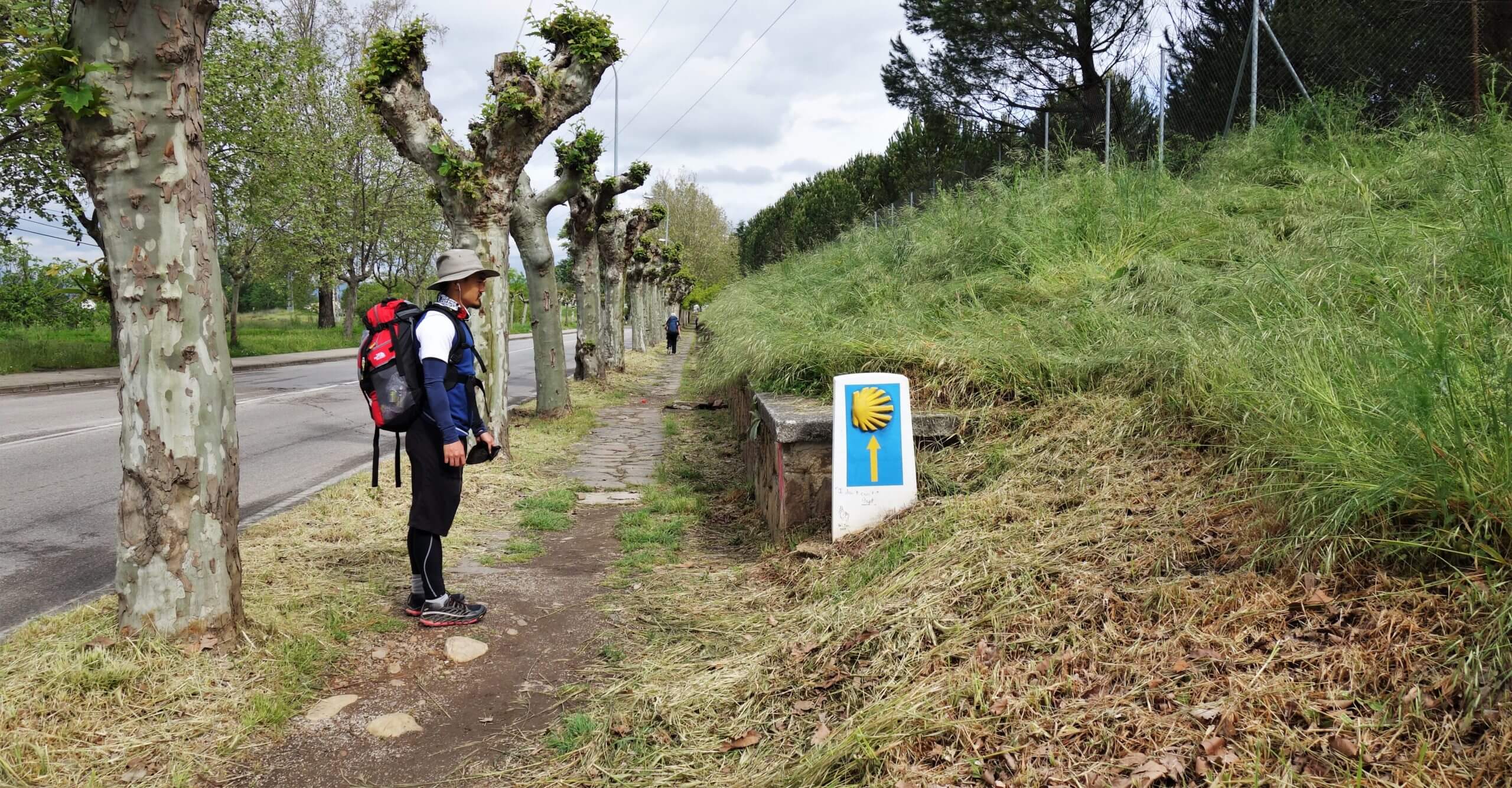
    I joined my family recently for a section of this pilgrim’s walk in Spain, from the city of León to Santiago de Compostela.

    311km, 13 days.

    As I’m not a Catholic, the history of the walk was of only passing interest to me, so it was essentially just a really long walk from A to B. I’m usually a fan of taking buses in these cases.

    If you’re a reader here, you know I enjoy challenges, but I also hope to learn things from those challenges. For the first 3 days, I tried (very) hard to find enlightenment; perhaps the walk could be meditative, or a test of willpower. But it was neither of those things to me. I even resisted putting in my earphones, attempting to embrace the disconnect. But I was simply disinterested. I learned nothing (except that my feet get sore when I walk a lot).

    To walk 311km is a long time. It’s about 8 hours a day. So on Day 3 I finally put my earphones in. The walk remained fruitless for me, but the music made it bearable.

    Then on Day 8, in the midst of Camino misery, my music shuffle blessed me with an old podcast episode. I was about to skip it (I’d already listened to it months ago), but I decided to listen to it again. “What a great way to kill an hour!” I thought.

    And it was. It was the first time I’d listened to a podcast without distractions. What a wealth of knowledge you learn just listening to smart people talk. I’d almost forgotten where I was.

    At the hostel that night I downloaded as many podcast episodes as I could. I’ve bookmarked around 50 episodes over the years, but I’ve never had the time to listen to them, so I gave up trying a while ago. I’m always reading, working, or not at the laptop. When would I ever have 50 free hours, wandering around doing nothing, to listen to podcasts?

    On the Camino!

    So my Camino de Santiago became my Camino de Podcasts. My shows of choice were The Tim Ferriss Show, The SPI PodcastBill Burr’s Monday Morning Podcast and The Joe Rogan Experience. Now instead of just walking 8 hours a day, I was walking while listening to podcasts while trying to take notes on my phone while trying to keep all my stuff dry in the rain while trying to follow the track. Camino 2.0.

    Now I can already hear you all saying, I didn’t live in the moment. So I suck, I know, whatever. But I ended up learning a lot of cool stuff and a lot of stories to draw inspiration from, which I thought I’d share with you. Maybe my Camino inspiration didn’t come from the Spanish countryside, but I found it all the same. So just be happy for me.

    Here are my notes – 116 interesting things I learned:

    P.S. If you’re actually looking for Camino tips, check out this very thorough post by my buddy Dave.

    Some notes:
    -Everything shared below is from the podcasts referenced. None of the content is from me. I take no credit for any of it.
    -I have not fact-checked the stories.
    -These are my personal notes. They are not direct quotes unless they are in quotation marks and attributed. The rest of the notes have been paraphrased or summarised.


    From The Tim Ferriss Show with Tony Robbins:

    1.

    Tony Robbins has a really interesting morning routine. He eats fish and salad for breakfast. Then he does something called priming. “To have a prime life you need to be in a prime state.” He jumps in a hot pool, then he jumps in a cold pool. That jolts his nervous system and changes his physiology with this body. Then he changes his physiology with his breath. There is a specific pattern of breathing that he does – 3 sets of 30.

    Then he does 3 simple things:

    First, 3 minutes of just being inside your body and outside your head, feeling the earth and the wind etc.

    Then he feels grateful for 3 simple things, and one of them has to be very simple, like the wind on his face. Not just feeling grateful, but he lets gratitude totally fill his soul. Because when you’re grateful, there’s no anger. When you’re grateful, there’s no fear. You can’t be grateful and fearful simultaneously. You can’t be grateful and angry simultaneously. He says there is nothing sadder than an angry rich person – someone who has everything and is angry. So he spends time every morning being grateful.

    Then he focuses on three things he wants to make happen that day, he calls it his “three to thrive.”

    He does this process every day, even if he hasn’t had any sleep. He does not miss priming.

    2.

    “The quality of your life is the quality of your questions.” Ask better questions.

    3.

    Many high performers hit slumps because they do so well that they overshoot their vision. This is sometimes called the Astronaut Syndrome. You’ve literally been to the top of the world, looked down on the earth from space, come back and shaken the president’s hand, what now? There’s nowhere left to go. Some astronauts become alcoholics or drug abusers because of that. Everyone needs something to shoot for – a compelling future, something that will get us up early and keep us up late.

    4.

    Andre Agassi was the number one tennis player in the world. Then his ranking dropped to 90 something, and nothing worked. People thought his career was over. He kept working on his swing and working on his wrist and nothing worked. He wanted to quit. Brooke Shields took him to see Tony Robbins. He told him, “Go back and visualise a time when you were hitting the ball perfectly. Were you thinking about your wrist?” He said no. “Then why would you go back to thinking about your wrist now?” If you’re in a slump, you have to go back into the state and the pattern that made you successful in the first place.

    5.

    Swap expectation for appreciation and you have a whole new life.

    6.

    Timing is so invaluable. Getting the right sequence is so invaluable. You can be doing all the right things and you’re so close to victory, but your timing is a tiny bit off so you fail and give up. “Johnny bit the dog/the dog bit Johnny” – they’re exactly the same words in a different sequence, and a very different result, especially if you’re Johnny. So say for example, you call the right person but you’re one minute too late or too early. If you do the exact same thing one minute later on you would succeed. Just a tiny shift in sequence and you would succeed. Some of it’s luck. But often you just need to find that 2mm difference and victory is there.

    7.

    When going off gold standard, Ray Dalio (one of the world’s 100 richest men) was convinced the USD would bomb and end up worthless. Instead, the Nixon rally happened. It shook him to his core. He realised that as much as you think you know, you don’t know. In a game of lifelong focus, you always want to be asking yourself what you don’t know.

    8.

    The world’s most successful investors have 5 things in common.

    • They’re all obsessed with not losing money. You don’t need to make a lot of money. You just need to not lose it.
    • They risk small to earn big. Only bet a dollar if you can make five. Even if you’re wrong, on your next bet you’ll still be up four.
    • They all know they will be wrong some day. They allocate to account for that.
    • They’re lifelong learners. They’re obsessed with knowing more. Any time you think you’re the best you can be, there’s another level.
    • They’re all passionate givers. They give very passionately with their money and their time.

    9.

    The reality is everyone’s a financial trader. Most people just trade time for money. That’s the worst trade of your life because you can never get more time. All the best investors know that.

    10.

    Only a few things influence your life. Your body, your finances, your relationships. It’s not a lot of things. Learn about these things! Invest in them. Most people know a lot, but they know a lot about the wrong things.

    11.

    Have strong opinions weakly held. Believe in something fully, but always be prepared to have your mind changed.

    12.

    A belief is nothing compared to an experience. What you think you believe is nothing compared to what you have actually experienced.

    13.

    Dips and down periods often come from inner conflicts that are hard to solve. To get out of it you need to keep asking what’s right, what’s real and trust your gut. Also stay hydrated and rest because in a lower state of energy you will break. In a high state of energy you can handle everything that’s thrown at you. Also understand that if you overcome pain, you can use that experience to help millions of others over come the same pain. Use that as motivation.

    14.

    Money is either a tool used to empower your life or a weapon to be used against you. To stop it being used against you, the only solution is to educate yourself about it.

    15.

    “What you know doesn’t mean shit. It’s what you do consistently that matters.”

    -Tony Robbins

    16.

    “In every industry there are top players and the common trait is hunger. They just always have to know more. Their energy is driven by this insatiable hunger to always know more.”

    Tony Robbins

    17.

    “There was this guy, one of the top facial surgeons in the world. The Sultan of Brunei flew this guy over for $2 million to do two of his family’s faces. Anyone in Hollywood who had the money, this was the guy, the best on earth, because he had mathematically figured out how to trigger beauty. He had 150 pictures of the most beautiful women in the world, the same for men, and he showed that he makes no more than 7 changes ever, and no change is larger than 2mm. I saw an 84 year old woman look like she was in her fifties and gorgeous. For example, he knows that the measurement of the pupil of a woman’s eye, if you measure that, and if you measure the distance from below the nose to the top of a woman’s lip; this is only for women, if the measurement is smaller than the pupil, men will be driven and sexually attracted to that face. If it’s the same size as the pupil, there’s some attraction. If it’s just 2mm more, she has an average face. If it’s more than 2mm more, her face is what he calls butt ass ugly, that was a technical term he used. So he just makes this little change and it creates that puckered feeling that men don’t even know why, it’s instinctive, it’s just a triggering device, it’s instinctual. So he knows the 7 changes, and he knows the 2mm. And this is just like in golf, 2mm is the difference between shanking way over here and hitting the green. So that’s the whole thing – victory is near, but you just need to know the sequence.”

    -Tony Robbins


    From The Bill Burr Monday Morning Podcast:

    18.

    In football place kickers are supposed to hold the ball with the laces out. That’s where the phrase “Laces out” comes from. [Bren: I had no idea].

    19.

    “To learn shit in life, you gotta have the mindset of “I’m probably going to fuck this up the first time, but that’s alright. Then I’ll get a little better.” Like when I made pasta, even just running it through the pasta maker, I already found like three fucking things I’m not going to do the next time.”

    -Bill Burr

    20.

    “When a girl wants a relationship, she comes over to your apartment and she starts leaving shit there, because it gives her an excuse to come back. That’s fucking nuts right? Like they’re thinking that far ahead. All you’re doing is sitting there like “Bah, look at those tits, baaah” and they’re sitting there plotting. It’s like you’re a head coach with no game plan, and she’s across the field like Bill Walsh calling the first 25 plays of the game! So here’s a quick Patrice story. Patrice was seeing this woman and she started leaving shit around his house, so I brought it up with him, I was like “Yeah I dated this woman, she left all this shit here, I was like what the fuck? I only see her like every two weeks, so for two weeks I’m looking at the brush she left here, and the shampoo over there, it’s annoying me.” So Patrice just goes, “Throw it out” and I’m like, “I can’t throw out her brush.” And he goes, “I would.” And he told me a story, there was a woman he was messing around with and she left these toiletries and a little bag of makeup in his bathroom, and he fucking threw it out. And then she came back like a week and a half later, and she goes in the bathroom and she’s like “Hey, what did you do with my stuff?” And he just plays dumb and he goes, “What stuff?” And she’s like, “I left shampoo here, a little makeup bag,” and he goes “Oh that was yours? Yeah I threw it out.” And she was literally beside herself, but actually on some level respected him for realising what she was doing.”

    -Bill Burr


    From The Tim Ferriss Show with Jamie Foxx:

    21.

    “Right here on this floor, I’m pointing to the carpet, a young man by the name of Ed Sheeran slept on this carpet for six weeks. He came over from London. He’d heard about a live show I do in LA. I see this kid with this red hair and I’m like, “Really? You wanna do my live show?” Because my live show is mostly black, and it’s like really music people, really hardcore music people. I’ve had Miranda Lambert one night, I’ve had Stevie Wonder on stage, I’ve had Babyface on stage, so this is the real shit we’re talking about. So I’m like, “I don’t care about the London and the accent, but you gotta really come with it.” And he’s like “I think I’ll be okay.” So I take him to my live night, 800 people there, and people are playing, black folks sweating, singing, these people would tear American Idol up, and not all these people have necessarily made it yet. And then Ed Sheeran gets up with a ukulele. Walks out onto the stage, and the brother next to me goes, “Yo Foxx, who the fuck is this dude right here with the red hair and a fucking ukulele?” And I say, “Man his name is Ed Sheeran let’s see what he does.” Within 12 minutes he got a standing ovation. From that crowd. And I said “Bro, you’re on your way.”

    -Jamie Foxx

    22.

    “When I was a kid my grandmother made sure that I took piano lessons. That’s tough for a little boy in Texas playing Fur Elise and Mozart. We’re talking Terrell, Texas. For a little boy playing at that time, kids didn’t understand, they were always saying “Yo, why you doing that?” and I’m like “My Grandma want me to do it.” So sometimes I would be belligerent and say, “Why you want me to do this?” She says, “The reason I want you to learn classical piano is because I want you to be able to go across the tracks and play your music.” The tracks in a southern city separates the city. One side is black, the other side is white. So in our city the south side was where all the black folks live. The north side was where the white folks lives. So she said, “I want you to be able to go on the white side of town and play classical music.” So I was taught how to play classical piano, and I literally would go on the other side of the tracks and start playing wine and cheese parties and so on. But my grandmother was able to see the future. And she goes, “When I say across the tracks I don’t just mean in Terrell and those people over there, I mean the metaphoric. I mean across the tracks like everywhere in the world. Music connects you to the whole world.””

    -Jamie Foxx

    23.

    “I remember meeting Ray Charles, walking down to his studio, and I said “Mr Charles, I’m just trying to do the best I can to do your movie, your biopic,” and he says, “If you can play the blues man, shit, you can do anything.” And I say, “What you mean?” He says, “Well can you play the blues, that’s what I’m asking!” And I say “Yeah, I guess so.” So we sit down and all of the hard work that my grandmother put in, all of the days that my grandfather drove me to piano lessons, here I am sitting with a legend, and I was playing the blues with Ray Charles. And as we’re playing he moved into some intricate stuff, and I was like ooh shit I gotta catch up! And I hit a wrong note. And he stopped, because his ears are very sensitive. “Now why the hell would you do that? Why you hit the note like that, that’s the wrong note man, shit!” I say, “I’m sorry Mr Charles, I just…” He says, “Let me tell you something buddy. The notes are right underneath your fingers baby. You just gotta take the time to play the right notes. That’s life.” So that was a lesson. You got across the tracks, now you got Ray Charles explaining to you; now that you’re across the tracks, what notes are you going to play?”

    -Jamie Foxx

    24.

    There’s this book called Without Sanctuary. It’s a book where a guy went around the south during slavery and documented lynchings. He would take photos and make postcards. Right now we think about lynching and go uggh, but back then it was common place in America, it was a party. People would get their food, some drinks, pack a picnic and they’d go down and watch the lynching. And so you’d have people sending postcards saying “Hey here’s the lynching of Nig*** Charlie, I hope you like it, hope all is well, how are the kids, bla bla bla…”

    25.

    We don’t control our own narratives. The media controls it. When you hear the names Bieber, Chris Brown, Jennifer Aniston, you already have an image in your mind, and it’s not from the person, it’s from the media. And the media needs to be salacious or it doesn’t get reported, because no one will read it and it won’t make any money.

    26.

    If you have writer’s block, write about what makes you angry.

    27.

    If Jamie Foxx could give advice to his 30 year old self it would be to prepare for things to move fast. 40 is going to come very fast. So start preparing for the future. And the advice he would give to his 40 year old self would be “Stay young in your body, but grow up in your mind.”

    28.

    If Jamie Foxx could put a billboard anywhere, it would say “Ball out. Have a great time. Go to church. Love somebody. Teach somebody. Get angry a little bit. Have as much fun as you can.”

    29.

    To teach 9th graders, Jamie would teach them to:

    -Interact with people. It’s tough to see young people always on their phones. Interact with real people.

    -Interact with people from all over the world. Because you become narrow when you’re just all about “my block.” And just being about your block in today’s world is going to hurt us. We don’t understand how something in the Middle East affects us in North Dakota. Get the education of people all around the world. Know your history, know why we’re here.

    -Hustle. Your hustle muscle is the most important thing. When you hustle and go get it, that alleviates your problems. When you don’t hustle or leave it to chance, and you didn’t give it your all, you start to worry about things. If you hustle, it’ll take up a lot of your time, so you won’t even have time to worry. You put that hard work in, and that takes 70% of your worry away because you gave it your all.

    -Reflect. Sit still for a minute. When you’re working, working, working, that will strain you. So you got to be able to decompress and chill. Whatever it is that you chill with – your home, your friends. Take time out. If it’s out of your hands it’s out of your hands. You’ll get a better crack at it tomorrow.


    From the Joe Rogan Experience with Eddie Huang (author of Fresh Off The Boat):

    30.

    Lifting weights affects your fine motor skills, which you use for things like pool, drawing, basketball. Because your muscles get sore and it affects that soft touch judgment.

    31.

    When you lift weights don’t go to failure. The body isn’t meant to go failure. Save it for the next rep. More is not better. And generally all things in the world follow the same principles. For example in cooking, more is not better. In music, more is not better. You need negative space. Things need room to breathe.

    32.

    Everything in moderation, including moderation. If someone says get shots, fuck yeah, let’s do it. Just don’t do it all the time.

    33.

    Social media doesn’t really register. Like 10,000 followers, a million followers. It doesn’t register. 10,000 people following you is a lot of people. That’s a college campus.

    34.

    They legalised weed in Colorado and now real estate is up 19%. Colorado is charging 39% taxes on weed and made more money this year on weed than on alcohol. It’s changing the economy over there.

    35.

    Ted Cruz wanted to pass a law that would put you in jail for owning dildos.

    36.

    If you earn more than $34,000 a year you are in the top 1% of the world.

    37.

    “If we’ve got Hillary Clinton, Ted Cruz, Donald Trump and Bernie Sanders as the only hopes to be commander-in-chief of the greatest army the world has ever known, for fuck’s sure we are doing something wrong. We’re 100% doing it wrong. These are not the great scholars and great intellectuals we need to help run this world. There’s no one amongst them that has a brilliant philosophy. When you looking at Bernie and Hillary, and Bernie as much as I love him and as much as I love some of his ideas, you see that guy and Hillary and they’re bickering back and forth during these debates, that’s so unbecoming of someone whose supposed to be president, especially some dude that’s in his sixties and some lady that covers everything except the very top of her neck, its bizarre. Like you’re supposed to be further along in this crazy journey than us if you want to be the president, you should be so far ahead that you have some lessons you can impart upon the rest of us, you have some ideas about how we can improve our policies, you have some ideas on what laws we can establish that could probably better protect us against greed and evil corporations and from people that are raping the world of all it’s natural resources.”

    -Joe Rogan

    38.

    “The really smart people have other ways to control and rule the planet. I don’t think the president is actually the most powerful person. Like Michael Bloomberg – why would Bloomberg run? He can already call shots from where he’s at, he has more money than fucking anybody…I think the people who really have power are looking at the president thinking, ha, he’s a puppet.”

    -Eddie Huang

    39.

    “People are saying that when you raise minimum wage it’s going to fuck up businesses. But you know where we also heard that argument before? Slavery. People were like, you take away slaves and all these businesses are going to fail. Well guess what, you can’t just have someone work for you all day and not pay them shit.”

    -Joe Rogan

    40.

    “Guys who can’t fuck hot girls are always mad at them. They can’t fuck them, they’re mad at them. And girls who see hot girls, wish they could be those hot girls, so they’re mad at them too. Hot girls take more heat than anybody on the planet.”

    • Joe Rogan

    41.

    “For all the boys out there listening, and girls too if you’re lesbians; if you go to a girl’s page and it’s all this stuff about love and what true love is and when you find the one you’ll know; fucking run. Run from that person. Because that person is probably never happy and they just sit around posting memes about what true love is on the internet. And they’re going to make you go to brunch. Those people like brunch. And you’re an asshole if you gotta pay someone to make eggs. If you want eggs on the weekend, just fucking make eggs. You can’t make eggs?”

    -Joe Rogan/Eddie Huang

    42.

    “The thing with a lot of these chefs that win these awards – Food & Wine Best New Chef, Michelin, James Beard – a lot of the times it’s because they can speak English, they can communicate with the writers and the writers can write a story about them. They’re not winning because it’s the best food. There’s a bit of a thing with food – the literati, the intelligence, the blogs, the magazines, they’re always electing people they can tell a story about and speak English; it’s not about the food. I think the people of ethnic cultures get upset when there’s somebody else that didn’t live the life, didn’t grow up with it and isn’t the best at it, representing it. If there’s somebody from the outside, he better be the fucking best, otherwise get somebody who lived this life and knows all the history and culture and identity attached to this food and let them speak for their own food. It’s not the fault of these white chefs that journalists want to give them these awards. If someone wants to give them award, I don’t expect them to throw it on the fucking ground. The problem is the media and the people giving these awards saying, “This is the best chef, this is the best Mexican food”, it’s really obnoxious to the people of that culture. They’re picking a guy they can communicate with easily, makes their job easy, and can tell a story that’s easily disseminated amongst the masses. If you’re going to go to a source, why don’t you just go to the source? Andy Ricker is a good friend of mine, and when people talk about Thai food in America they go to him, and he’s a white guy from Portland! But to Andy’s credit, he puts the names of the Thai people that taught him things on his menu. As much as he can, he pushes the credit, and he pushes people towards the Thai people he learned from, so they can get it from the source. But these journalists are fucking lazy. They don’t care. They don’t go talk to those people – it’s harder. It’s easier to just call a guy who speaks English and can communicate with you.”

    -Eddie Huang


    From The Tim Ferriss Show with BJ Miller (triple amputee, doctor):

    43.

    People are always searching for meaning. But what about meaninglessness? Or purposelessness? Just smelling a cookie. Watching a ball game. No meaning at all. Just doing things that feel good.

    44.

    “We are here to fart around and don’t let anyone tell you anything different.” – Kurt Vonnegut

    45.

    Ambition can be a bad word. There is a lot of bad behaviour done in the name of ambition.

    46.

    There’s a documentary called Grizzly Man which is supposed to be pretty amazing.

    47.

    Hospitals are not equipped to deal with death. It’s sterile, full of machinery, and the dead body needs to be removed quickly because someone else needs the room. For the clinician, the family, the nurses, grief cannot happen. There’s no space. The grief is actually suppressed in a way. In (some) hospices, they make room for death, so in death people can grieve, and are encouraged and given time to remember the beauty of life.


    From The Tim Ferriss Show with Josh Waitzkin (child chess prodigy):

    48.

    When you hold your breath, it’s CO2 build up that makes you want to breathe, not oxygen deprivation.

    49.

    People tend to over-steer and over-calibrate a lot. If you have a life changing experience, don’t take too big a lesson from it, and don’t take too small a lesson from it. Just take the right lessons from it.

    50.

    We can intuitively feel things way before we are consciously aware of them. The investor can sense danger or opportunity before it happens. The hunter can sense the bear or the shark, then he looks for it. The chess player can sense danger or opportunity. You sense it, then you look for it. But to sense it you have to have stilled your waters internally. Then u can sense it and start calculating a game plan before it happens.

    51.

    Dreaming Yourself Awake is supposed to be a good book about lucid dreaming.


    From The Tim Ferriss Show with Kevin Costner:

    52.

    Kevin Costner tells his kids every day that they’re special, but he ends that sentence with, “That doesn’t mean you’re better.”

    53.

    Kevin Costner would have people working in his yard and will stay there all day working with them, and the workers will say, “Is he going to stay here all day? I thought he’s a movie star?” And he stays all day. This is how he shows his kids he’s not too good to work with anyone.

    54.

    When it comes to writing, if you feel like you’re walking down the street naked incredibly nervous about what you’re about to say, you might just be getting it right.

    55.

    Coney Island was the most popular place on the planet at the turn of the century. Bigger than Paris, bigger than Chicago, because all the inventors were going there. They were allowed to do things. This guy who said “Hey, I think I know how to keep babies alive with incubation,” and they just ran him out of town. Coney Island said, “Come do it here.” And it was the most popular exhibit, you could walk in and see these babies that were kept alive. Edison, all these guys, were hanging around Coney Island. It was the place to be in the world. The documentary to watch is Coney Island, narrated by David McCullough.

    56.

    “I’m in accounting class, and it’s not happening for me. I know I’m not supposed to be there. I know I’m going to be at the wrong end when the test happens, because I don’t like it, but because of my conservative background – you graduate high school, you go to college and you get a college degree and you get a job. So what do I do? I turn off to the teacher and I open up this little student newspaper, and I’m winging through the newspaper and on the back of it is a play, an audition, for a thing named Rumplestiltskin and I just thought, “I’d like to try that.” So I closed the newspaper, I listened to the teacher drone on, I saw the latest pop quiz and I was last, but what I knew at that moment was I was going to that audition the next day. I was excited about the next day. It’d been a long time in my college life since I’d been excited about the next day.

    And I drove down and was almost killed, literally, I was going down the 55 freeway in Orange County, and in that time the freeway hadn’t been finished completely, so there were stop lights on the freeway, and as I’m going down there my accelerator broke and went to the floor on this old Datsun pickup, and all of a sudden I saw the brake lights up ahead and my speedometer’s going from 60 to 70 to 80 and it’s not slowing, and I’m probably going to hit those people at 90 miles an hour and kill them, kill myself, and I don’t know why the engine was designed this way but the floor just pulled it, shoooosh, straight down to the bottom. So I threw the clutch in and it did engage, and I was able to turn the key off and coasted to a stop, pulled over into the emergency lane, didn’t kill anybody. I jumped out of that fucking car, hopped over that fence and hitch hiked to my audition. Because I wasn’t going to miss it. I left it on the freeway. Because I had some place I wanted to be. I had a place where something was going to happen.

    Of course nothing did, I wasn’t good enough. I didn’t have enough skill. I didn’t really know about Rumplestiltskin, I didn’t really know my fairy tales, I figured there was a prince, I’ll just go out for the prince maybe. And I didn’t get it. But my imagination started to burn about the possibilities…
    I suddenly started to become the student that I wasn’t in college. I went to UCLA and took two classes in film financing and film budgeting – I had already read the book, the entire book. I was interested. I was interested in my own life the way I used to be interested in it when I was a kid…I started to fall in love with something. I somehow figured out if I didn’t make myself happy, I’d never be happy. If I didn’t pursue what was whispering to me, I’d absolutely be a failure, I’d absolutely be an unhappy person. When I could articulate that, that I didn’t care anymore what anybody thought about what I did except me, all the weight of the world came off my shoulders, and everything became possible.”

    -Kevin Costner

    57.

    “I didn’t tell a lot of people that I acted because nobody likes to be around a pining actor. But what happened was all of a sudden when I started to emerge, Big Chill moved to Fandango moved to American Flyers moved to Silverado, suddenly it seemed like it was happening very fast. And then when I decided I would direct which was about two pictures later, people thought wow he’s moving really, really fast. What they didn’t know was that I had been dreaming of this moment for 6 to 7 years before that. Then when it was starting to happen – I had already been planning for these things. So what was fast for other people wasn’t fast for me.”

    -Kevin Costner

    58.

    “I was the one person in my group that started to emerge and things started to go well for me. So I started trying to drag my friends along with me and get them interviews and so on, and Michael Blake was one of those. So I got Michael 8 or 9 interviews, and every one of them went south, I’d get a phone call saying Michael insulted us, he told us we didn’t know what we were doing, so those calls were getting difficult for me because I was trying to help him.

    Then somewhere down the line he really crossed the line with me and said some things and next thing I know I had my hands on him and had him up against the wall…I thought really our relationship was over then, because I’d put my hands on him, but Michael three weeks later says to me, like a typical writer, “I don’t have any place to live”, so I said “Okay, come live at our house.” And every night he’d be like “I’m writing something, you wanna hear it?” and I’d say no, and every night it was like, “Can I read you something?” and I’m like no, because I was sick of him. And now I’m having to look at him have cereal in my house every morning and every night, and I got one spare bedroom and my wife is even beginning to wonder about him. She’s saying, “Look he’s downstairs reading to our kids in his underwear!” And my kids are five years old they can’t understand the story he’s reading. So I just told her Michael’s fine, don’t worry, and she said “Well I’m not so fine with it after two months.” So I say Mike, you’re going to have to go.

    So Mike goes and spends some time at another one of our friend’s, and after 3 weeks he’s done and he gives me this manuscript and says, “I hope you read it.” But I just didn’t want anything to do with him for a while, he bugged me so much. So he split, he went down to Arizona and worked at a Chinese restaurant washing dishes at night and killing raccoons during the day at this ranch. And he would call me up and say “Did you read my thing?” and I’d say “No…” and this went on for about three weeks. Then I get a letter and it says, “I’m cold” so I send him sleeping bags and a stove and some stuff. And he goes “Did you read my thing?” and I say no.
    One night, I pick it up. About four months later, five months later. I start reading and I read it all that night. It was Dances With Wolves. And I was really proud of him. I was really, really proud of him. I called him up and said, “I’m going to make this into a movie. I don’t know how I’m going to do it, because I don’t have the money, but I’m gonna do it, and you’re going to write the screenplay.” We made that movie about two years later, and Mike won the Oscar.”

    -Kevin Costner


    From The Tim Ferriss Show with Mike Shinoda (from Linkin Park):

    59.

    “Every child is an artist. The problem is staying an artist when you grow up.” – Pablo Picasso

    60.

    A music magazine does not interview you because they love music. They interview you because they need fresh content to bring in ad dollars.

    61.

    Don’t benchmark what you do against your peers or competition. Compare it to something that is completely unrelated. If you’re a musician, there’s no reason you can’t learn something or get ideas from people who make cars or apps or cooking.

    62.

    Mike Shinoda’s favourite book is Zen & The Art Of Motorcycle Maintenance.

    63.

    “When we take an album it takes around 9 months from start to finish. In contrast, when we were making this most recent album, next door to us was a world-renowned pop singer’s session. And this person showed up on Day 1, and they were there for about 15 minutes. On Day 2 they showed up for less than 15 minutes. And on Day 3 they neglected to show up at all, and the song was actually done. And I was talking to their people like, “How is this even possible?” I don’t even know if I’d be able to call myself an artist if I was the one just showing up for 25 minutes and a song was done.”

    -Mike Shinoda

    64.

    “We got turned down by every label, indie and major, but eventually we worked our way into Warner Bros. The guys who signed us were kinda new, and they started to get nervous, they were like, “You guys need a gimmick. We want to dress Joe in a lab coat and a cowboy hat, and Chester you should kick a shoe off at every show.” It was stupid! Stupid record company stuff that sounds like stuff out of a movie, but it was absolutely true and these were real suggestions! Like if you went back and said something today they’d be like “Oh no I was totally joking.” I assure you they were not joking. We were sitting in the room and they were literally ready to buy Joe a lab coat, and put beakers in front of his turntables. So we got to this point making the album and we were halfway there and they tried to run away with the whole thing and change everything. They wanted to kick me out of the band, they’re talking to Chester telling him he’s the star, and he’s like “But this is Mike’s band, I’ve only been in the band for a few months.” So we all talked as a band and basically stood up to these guys. We said you can shelf us, which effectively meant we’d be in record label limbo for the rest of our career – we’d never put out a record. Or, they can just accept that this is who we are and let us make the album we want to make.”

    -Mike Shinoda


    From The Tim Ferriss Show with Luis von Ahn (founder of Duolingo):

    65.

    When your kids do something good, instead of saying “Good job, you’re really smart” say “Good job, you worked really hard on that.” The former makes them think they can do things without hard work, the latter acknowledges the value of hard work. Luis’ parents did this and he credits this for his strong work ethic.

    66.

    Around the year 2000, this guy called Udi Manber, he was some big shot at Yahoo, went to Carnegie Mellon University to talk about ten problems Yahoo didn’t know how to solve. Luis was a student at the time. Back then one of Yahoo’s problems was people creating bots to sign up for millions of free email accounts, and the people at Yahoo didn’t know how to stop this. So Luis came up with a test to see if the person was a human: it was just some distorted characters the entity had to read. And it turned out humans could read them quite well and computers couldn’t. He developed it and showed it to Udi Manber and it was up on Yahoo two weeks later, which meant it must have been a crazy big problem, because it’s a miracle for a big corporation to implement something that quickly. From then on every other website started using it. Five years later, Luis did a quick calculation to see how many people were using Capchas, by then every website was using it, and the number he came up with was 200 million. So every day 200 million people typed in a Capcha, and it takes around 10 seconds to do it, so that was 500,000 hours a day humanity was wasting going into writing Capchas. So he came up with this new version of Capcha called Recapcha, where every time people typed in a Capcha, they were also helping to digitize books. For example, Google is digitizing all the world’s books. How it worked was people would send a physical book to India and somebody in India takes a digital photograph of every page of the book. The problem was, the computer needed to be able to decipher every word, and the computer can’t do that very well. So he took the words computers couldn’t read and got people to read them as they typed in Capchas. So when you’re typing Capchas on the internet, you’re actually helping to digitize all the world’s books.

    67.

    If you are an employee of a university, or you’re a student and you’re funded by the university, like a PhD student funded by a grant, the university can take ownership of your intellectual property. They also have a licensing agreement in case you want to form a company, and the university will own a fraction of your company. This is actually what happened with Google; it was developed inside Stanford.

    68.

    Zero To One is Luis von Ahn’s favourite book.

    69.

    There are 1.2 billion people in the world learning a foreign language. Of that, 800 million satisfy 3 properties: The language they are learning is English, they’re learning it to get a job or a better job, and they’re from a low socioeconomic background. In other words, they are learning English to escape poverty. However, most ways of learning English are very expensive, for example, Rosetta Stone is between $500 – $1,000. In a poor country that’s 2-4 months salary. Language schools are even more expensive. Then, if you do manage to learn English, you need a certificate that says, “Yes, I can speak English” before anyone will give you a job or or a work visa or let you into a university. To apply for a work visa in the UK, you need this English certificate. If you want to enrol in a US university, you need this English certificate. To get a job at a multinational in a non-English speaking country, you need this English certificate. So to do that you need to do this test, which usually costs around $250-$300, this is a huge market; about 15 billion a year is spent on these tests that certify English levels. And the test is not normally held in places where people from low socioeconomic backgrounds live – you need to go to a testing centre which are only in the big cities, which means you need to travel. And this kind of travel isn’t the same as in America, where you get on a bus for 30 minutes. It’s hundreds of dollars and sometimes one or two days on a bus, sometimes to a different country. So even after you’ve learned English, you need to spend $250, a month’s salary, on a test, and you need to take a few days off work to spend even more money to travel to some big city for it. That is what someone in a developing country goes through to learn English. This was the whole idea behind Duolingo. So people could learn English completely free, then go to the Duolingo testing centre and do the test over webcam for $20 and get a certificate. It’s democratizing education.

    70.

    In Tokyo, there is a super famous sushi restaurant from this guy Jiro, from the documentary Jiro Dreams Of Sushi. But most people don’t know his son also has a restaurant in Roppongi Hills, which is the mirror image of Jiro’s, because one of them is right handed and one of them is left handed.

    71.

    In one of the first Duolingo branding meetings, one of the co-founders, this guy called Severin said, “I don’t know anything about design, so I don’t really care what you decide; I will just say that I hate the colour green.” So everyone thought it would be hilarious if they made the logo green. That’s why the Duolingo logo is green, it’s literally a practical joke on the co-founder.

    72.

    Rock climbing is very good for your posture. It requires you to do the opposite of what you do when seated at a desk or a computer. It causes you to look up and arch you thoracic spine, and use your legs.

    73.

    Tim Ferriss’ favourite podcast is Hardcore History.

    74.

    There are many tech magnates and icons, people whose name everybody would know, who cite Genghis Khan & The Making Of The Modern World as one of their favourite books.

    75.

    When you hear of an acquisition price, let’s say a company gets acquired for 100 million bucks by Facebook or Google or something. Usually the acquisition has two components; one is an upfront payment, and the second is a stay bonus. Basically you get the stay bonus over time if you stick around for a while. It makes sense for companies to do this because when they acquire another company they don’t want everybody to split. So it forces people, especially the founders to stick around – after a year you get this much, after two years you this much etc. The stay bonus is often less than 50% of the acquisition price, but not a lot less.

    76.

    If you’re following a lower carb, lower starch diet, sprinkle a little salt into your water when you drink it. When you reduce your carb intake you tend to pee a lot because the water goes straight through you. A bit of sodium helps with retention.

    77.

    “A lot of people say education is the thing that can bring equality to the different social classes. I always thought the opposite – that education actually brought inequality. Because what happens is the people who have money can buy the best education in the world, and because of that they remain having a lot of money. And the people that don’t have money barely learn how to read and write, and therefore remain without money.”

    -Luis von Ahn


    The Tim Ferriss Show with Neil Strauss (Author of The Game):

    78.

    Writer’s block doesn’t exist. It’s basically impotence or performance anxiety. If you sit there and you think “This has to be the ultimate book ever written and my whole self-esteem rests on this,” the bigger the block will get. It’s all performance anxiety. When you put pressure on yourself to write the greatest book ever that’s when you start to get writer’s block.

    79.

    Whatever you do, just write to the end. The first draft is just for you, nobody else is going to see it. Just finish it. Now within that mess, you have your book. You just need to carve it and shape it, but it’s there.

    80.

    You don’t know what the first sentence of your book will be until you know what the last sentence will be.

    81.

    If you want everyone to be your fan, nobody is going to be your fan. If nobody will have a negative response, then nobody is going to have a positive response either.

    82.

    When you’re doing something creative and you’re in a productive state, and someone interrupts you, it takes 20 minutes to get back to that state of mind. Even if you’re interrupted for just 2 seconds, it’ll take you 20 minutes to get back to where you were where everything makes sense again. So if you’re interrupted 3 times, that’s an hour of your day wasted. If you want to do something creative, work in a place where nobody can interrupt you.

    83.

    As soon as something becomes challenging you want to do something else. It’s in our nature as mammals. We just want to conserve our energy.

    84.

    If you get interviewed, don’t go on to plug or sell yourself. Just go on to represent yourself. Be the most awesome version of yourself. When someone goes on some interview and is constantly going “Visit my website, it’s www….” it makes you not even want to go to their stupid website. So don’t mention your books or your blog or anything. Just represent yourself. If your name is on the interview, people will find you.

    85.

    The biggest mistake you can make is to accept the norms of your time. By not accepting norms is where you innovate with technology, with books etc. So not accepting norms is the secret to really big steps and changing the world.

    86.

    Ayn Rand has the theory of the white tennis shoes. Basically writers will do anything they can to avoid writing. If there are white tennis shoes in your vicinity, and there is the tiniest blemish on them, a writer will rationalise cleaning those shoes before writing.

    87.

    Two of Neil Strauss’ favourite books are The Painted Bird and Life Is Elsewhere.

    88.

    “A lot of people feel like they should read self help books because that’s knowledge, we don’t want to waste any time, we want to be efficient, but people learn through metaphor; that’s how the first stories were told, that’s what the Bible is, metaphor and storytelling are how the brain actually learns information. When you just get it as data, that’s good for computers, that’s not good for human learning. So I really encourage people to read great works of fiction and literature because I’ve learned more about life from fiction.”

    -Neil Strauss

    89.

    “Whenever you are receiving criticism or feedback about yourself, use the Catcher’s Mitt philosophy. When someone gives you feedback you catch it in your catcher’s mitt. Then you look at it and one of three things are possible; if it’s true, you put it in your head. If it’s not true you throw it away. If it’s a maybe, you keep it in the mitt and you show it to a bunch of other people, ask people what they think of it. But say you get a piece of feedback, and you say nah, I don’t think that’s true. Then your wife says it, and you’re still like nah I still don’t think it’s true, and you throw it away. And then you get it from one or two other people, so you don’t throw it away, you look it. That’s when you get the real truth. It’s the piece of feedback you reject that keeps coming back to you, you re-evaluate it and you might get an epiphany that really changes you. That’s where growth is.”

    -Neil Strauss


    The Tim Ferriss Show with Arnold Schwarzenegger:

    90.

    Ivan Reitman told Arnold Schwarzzenegger he thought he could do well in a comedy, so they agreed to do a film together. And they came up with the idea for Twins (the working title was ‘The Experiment’), and they approached Danny DeVito to do the film with them. They all sat in a restaurant and wrote up a deal on a napkin; they were going to make the movie for free, no salaries, and instead they would receive a big back-end. Ivan took this deal to the studio – he took it to Tom Pollock who was running Universal Studios, and he said “This is great we can make this movie for $16.5 million if you don’t take salaries. And we’ll give you a big back-end; we’ll give you 37% to split between the three of you.” Arnold made more money on that movie than any other movie he’s ever made. And after the movie Tom Pollock said, “All I can tell you is this is what you guys did to me” and he bent over and pulled his pockets out and said, “You fucked me and cleaned me out. I’ll never make a deal like that again.” Every day over Christmas the movie made $3 or $4 million. Worldwide it made $260 million+, and cost around $18 million to make.

    91.

    “By the time I came to America and started competing over here, it was very clear when I said to someone, “Let me ask you something, do you have any knee injuries or something like that?” Then they would look at me and say, “No, why? No. I have no knee injury at all. No, my knees feel great. Why are you asking?” I said, “Well because your thighs look a little slimmer to me. I thought maybe you can’t squat or maybe there’s some problem with leg extension.” He says, “Really?” And then I saw them all for two hours in the gym always going in front of the mirror and checking out their thighs. People are vulnerable about those things. Naturally now when you have a competition, you use all this. And so you ask people were they sick for a while, they look a little leaner, or did you take any salty foods lately and they say, “Why?” and I say, “Because it looks like you have water retention and it looks like you’re not as ripped as you looked a week or so ago.” It throws people off in an unbelievable way. They walk away like this didn’t bother them at all, but then you can see, as they walk around the pump up room, and when you warm up for the competition, you can see them kind of thinking to themselves, going to the mirror and checking it out secretly and all that stuff. I always felt that sports are not just a physical thing. As a matter of fact, I felt that the mentality and the mental strength in sports and the psychology in sports is much more important than the physical thing because, in reality, when I watch a Mr. Olympia competition or Mr. Universe competition, they all look pretty much the same, the top five guys. But what makes one emerge is the way he acts. If he acts like a winner, if he seems smiling, having a great time on stage and such. So I felt one should use the psychology; one should use everything.”

    -Arnold Schwarzenegger

    92.

    You look too big, you’re too monstrous, too muscular, you will never get in the movies.” That’s what producers said in the beginning in Hollywood. That’s also what agents said and managers. “I doubt you’re going to be successful because today’s idols, I mean this is not the 70’s Arnold. Today’s idols are Dustin Hoffman, Al Pacino, Woody Allen, all little guys. Those are the sex symbols. Those are the hot stars. Look at you. You weigh 250 pounds or something like that. That time is over.” But I felt very strongly and had a very clear vision that the time would come that someone would appreciate that, and sure enough, when people saw me on talk shows, they got inspired. I did Stay Hungry and Pumping Iron the documentary, the Streets of San Francisco, and worked with Ann-Margret and Kirk Douglas in The Villain and then all of a sudden I got the contract for Conan the Barbarian. Bang, there we were with a $20M movie which today would be the equivalent of a $200M movie. So my whole plan worked and I was so right. Even John Milius said after the movie that if we wouldn’t have had Schwarzenegger, we would have had to build one because of the body. When I did Terminator, Jim Cameron said if we wouldn’t have had Schwarzenegger, then we couldn’t have done the movie because only he sounded like a machine. It was so believable that he actually played a machine. Here was the greatest compliment; that the very things that the agents and the managers and the studio executives said would be a total obstacle became an asset and my career started taking off.”

    -Arnold Schwarzenegger

    93.

    “I felt that when I grew up, even though we were very poor, I had someone there 24 hours a day for me to improve, to learn, to do sports, and to get attention and to get the love and to get the discipline. It was a tough upbringing, but it was a combination of great discipline and also love. I felt like that having someone there with you 24 hours a day from the time in the morning that you get up to the time in the morning that you go to school, there were the teachers there, there were the coaches there, there was the school principal and all of them. And then you go home and there was your mother there helping you with your homework and then in the evening your dad comes home and takes you to the soccer field and does sports with you. I traveled through all 50 states and visited one school after the next and always at 3:00 I saw half of the kids wandering around and the other half were getting picked up, and I said “what happens with those kids out there?” And I felt bad for the kids who don’t get an equal shot because the only way you can be successful is if you really get this kind of attention and don’t float around on the streets. Then you get involved with gangs and with drugs, with violence and, like I said, teenage pregnancy and juvenile crimes. You end up in jail and it doesn’t serve anybody and it costs the community a lot of money. 70% of the kids come from homes where both of the parents are working and they do not have time for the kids in the afternoon. Who is helping these kids with homework? Who is helping these kids with tutoring and with sports programs and adult supervision and giving the kid the love that the kid needs and the confidence building that the kid needs?”

    -Arnold Schwarzenegger

    94.

    When Arnold was asked who he thinks of when he hears the word “success”:

    “Mikhail Gorbachev, someone that grows up under Communism and then when he’s on the top realizes that the system doesn’t work and then dismantles it. I mean think about the chutzpah it takes to do that. Also Cincinnatus. He was a Roman Emperor in the Roman Empire. Cincinnati, the city, by the way, is named after him because he was a big idol of George Washington. The reason why he is a great example of success is because he was asked reluctantly to step into power and become the Emperor because Rome was about to get annihilated by all the wars and battles. He was a farmer. Powerful guy. He went and took on the challenge, took over Rome, took over the army and won the war. After they won the war, he felt he’s done his mission and was asked to go and be the Emperor and he gave the ring back and went back to farming. He didn’t only do this once, he did it twice. They went back later to him once again. When they tried to overthrow the empire from within, they asked him back and he came back, he cleaned up the mess through great, great leadership, which he had. He had tremendous leadership quality in bringing people together. And again he gave the ring back and went back to farming. As we all know, it’s very addictive to be powerful. It’s very hard to let that go. So imagine someone like that to let go of being the Emperor. It’s a whole different thing. So that’s very admirable. When I think about success, he’s always somebody I would think to put in that category.”

    -Arnold Schwarzenegger


    From The Joe Rogan Experience with Lance Armstrong:

    95.

    Cortisone in cycling is banned. But in the NFL a guy gets hurt, goes into the changing room at halftime, commentators are like “He took a cortisone shot, he’s gonna play!” and he rushes 100 yard and he’s a hero.

    96.

    EPO thickens your blood, increasing your red blood cell count. There was no test of EPO, no science for it, so they just screened if your blood was too thick (over 50% hematocrit). And if it was over, you couldn’t race. So people didn’t stop using it, they just juiced up to 50%.

    97.

    “Any time anybody goes through anything, people either lean in or lean out. Some people lean out, meaning they run away, and you’re surprised by that. You’re like, “What the fuck, that guy was at every champagne party we threw in Paris, now I haven’t heard from in 3 years.” But then there are the ones who lean in, and most of those people don’t surprise you, but then there are others that lean in and you’re like, “Wow, I didn’t know you had my back like that.” So you get surprised on both sides. And at the end of it all, you look around and you’re like, these are the people that are going to ride anything out with me, which is kind of cool, it’s refreshing to know. If you’re loading up a bus with all your most loyal friends, I fucking know who is on that bus now.”

    -Lance Armstrong

    98.

    “On the tour you have the yellow jersey, it’s the guy who wins, you have the polka dot jersey who is technically the best climber, and you have the green jersey who is technically the best sprinter. Those 7 years, the green jersey was won by Zabel who admitted to having doped all 7 of those years, the polka dot jersey was won by Virenque from France who admitted to having doped all those years. Those all stand. Everything is still there. But the yellow jersey has been erased. Second place, third place, all those places are still there, the years prior to me when somebody had admitted or was caught. All still there.”

    -Lance Armstrong

    99.

    “Greatness and madness are next door neighbours and they borrow each other’s sugar. There is no way you can get that good at something without almost losing you’re fucking mind. You can’t be a regular guy and get there.”

    -Joe Rogan


    From The Tim Ferriss Show with Rolf Potts (author of Vagabonding):

    100.

    There is an idea that things in excess become their opposite. Rolf has a friend that has around 10 homes around the US. Of course, he’s only at one home, or none of the homes, at any one time. But he has about 5-10 staff at each home. So he now feels like instead of them working for him, he’s the one who works for them. Because it’s almost like they own the homes, because they live in them, and he’s just continually working to pay for these homes everyone else is living in. Money that provides you with freedom actually takes away your freedom after a certain point of excess.

    101.

    Money is a tool for letting you live a time-rich and experience-rich life. Don’t let money itself be a metric for your success.

    102.

    Many young travellers know nothing but the constant connectivity of travel. They go travelling for 6 weeks and know where they’re going to sleep every single night. It’s the serendipity of travel that’s at risk. You can stumble into a bad experience as easily as you can stumble into a good experience. But it is those unplanned, unexpected good experiences that change us, to the very core of our being. If you cant unplug, you risk robbing yourself of those experiences. Unplugging is very important.

    103.

    The principles of Vagabonding apply to life in non-travel ways. The internet allows us to be experts about everything. But actually the beginner’s mind is one of the most emotionally daunting and exciting parts of travel, where you don’t try to be an expert. Allow yourself to be a child again. When you go to a new city, you’re as dumb as a five year old. You can hardly read, it’s dangerous to cross the street. This is actually a gift of travel – it allows you to have the vulnerability to be very young, but also the excitement of being very young. But it’s not exclusive to travel – you can apply this to all aspects of your life.

    104.

    Ongoing success can be as meaningless as the ongoing lack of success. There’s a point where you achieve your goals and then it’s like, now what? This is the American way of thinking, where achievement is thought of as linear. The eastern way is more circular, where achievement and then appreciating the achievement tie into each other. There comes a time where appreciating the achievement is as important as the achievement itself.

    105.

    “It is so tortured to write well. One beautiful, smooth-reading, logical, inspirational paragraph of prose is the process of a day of labor and self loathing.” [Bren: Amen]. Just because someone has a beautiful quiet place to write, don’t think they are laughing in glee with a glass of wine writing brilliant prose. It doesn’t get easier. The goal of writing is simply to make that tortured process be fruitful.

    106.

    Kurt Vonnegut says there are two types of writers – swoopers and bashers. Swoopers zoom through the first draft, finish the whole thing, then spend eternities working on draft two and draft 32 and draft 67 until they get it right. Bashers go sentence by sentence. By the time page one is done, the first paragraph has been rewritten 20 times. Women tend to be swoopers and men tend to be bashers. (Bren: I’m a swooper!).

    107.

    If you go into a coffee shop while travelling and see a bunch of old guys sitting there, they see each other every day. When they see you, it’s the most exciting thing that’s happened to them all week. Their wives have stopped listening to them, their children have stopped listening to them, so they can take you under their wing, and the things you can learn from those guys is amazing.

    108.

    A flaneur is someone who goes out in search of experience. It’s a French term. It was invented to be done in your hometown so you start seeing it again, because in your hometown you become so used to everything that you stop seeing things. But you can do it while you’re travelling too. People always say that everything’s been done, but its not true. Even in Paris where everything’s been done before, if you just walk for ten minutes out of the most popular areas you will see something that is unique to itself. Just embrace the way of the flaneur and be open to new experiences.

    109.

    Paris is like that house that’s been wallpapered so much that the only thing holding it up is the wallpaper. Everyone’s written about Paris, so you have to find a way that is against expectations, the only way to do that is to wander and find your own side of it. Some people have taken their skateboards and found a side of Paris other travellers have never seen.

    110.

    In life we talk a lot about optimizing things for efficiency. But if you’re on the beach in Thailand, do you want to optimise that for efficiency? If you are about to eat an Italian meal in Italy, do you want to optimise that for efficiency? Of course not, you want to savour every bit of it. That Italian meal can be a metaphor for so much of travel.

    111.

    Re travel: “The fears I had were is this going to be expensive? Is this going to be dangerous? Am I going to come back and be compromised professionally? And those sort of turned into the opposite – it was a lot safer than I expected, it was a lot cheaper than I expected, and I came back and for twenty years I’ve been integrating travel with a professional life that continues to diversify.”

    Rolf Potts

    112.

    “I was talking to a fellow, he was putting together an event, it was going to be twenty or thirty people, a number of billionaires in attendance, and it’s a week long retreat of sorts. And he said to me, “Of course the billionaires can’t take a week off, so they’re only going to be there for 24-36 hours.” And I thought about that – the billionaires can’t take a week off? What the hell is the point of having their billion dollars?”

    -Tim Ferriss

    113.

    “We live in a society where you have to be insane to turn down 50 million dollars. People were questioning Dave Chappelle’s mental health! But Dave Chappelle is a fit, happy guy, living on a farm in Ohio, hanging out with his friends. It feels like he is a guy who figured out what would make him happy, and 50 million dollars and being locked into a show wasn’t it. Similarly, John Hughes is a beloved guy. He was beloved for his teen movies. But there came a time where he didn’t want to be beholden to The Breakfast Club and Sixteen Candles anymore. He’s a family man, and a guy who was passionate about his creativity. And I think he chose being happy, in a city that he loved, with family members that he loved, over making The Breakfast Club 3 and another 10 million dollars. The public perception is “Oh these guys have disappeared.” They haven’t disappeared, they just realised they had the structure in place to live the lives they wanted to live, and have quietly been doing that.”

    -Rolf Potts

    114.

    “I have a quote from the ancient Sanskrit scriptures, which is the “The king only has a half a bed and the food on his plate for all the grain in his fields. Does he own the rest?” Even the kings, and they knew this 3,000 years ago – even kings only eat one meal at a time, they only sleep in one bed at a time. At the end of the day, the substance of your life is through experience. Your material wealth and your money is there to actualise your experience; to enhance your life meaning. I have nothing against material success but really know where the line is – the point at which the success you’ve achieved is getting in the way of actualising a good and meaningful and option-filled life.”

    -Rolf Potts

    115.

    “Not only are people travelling in Mexico, Colombia, Egypt and Israel and other parts of the world you think might be dangerous, you realise there are family bloggers out there travelling with five kids to these places, or with a diabetes problem, or with physical handicaps, or with money they’ve made on a job that has a fraction of what most people earn; people who simply decided to become wealthy in time regardless of the fact they work as park rangers or exotic dancers or maintenance men. Media exists in a man bites dog world; they’re going to talk about explosions and revolutions and bad things about the world. There’s that famous phrase; war is God’s way of teaching Americans geography. Because Americans are so insular, our international understanding is pegged to major world events that don’t really represent day-to-day life in the towns around the world. So if you look past the panic-driven man bites dog media and realise that Mexico is actually a giant country and the drug violence is very isolated and there are ways to travel in a very safe way and inexpensive way, then suddenly Mexico becomes a very amazing place to travel.”

    -Rolf Potts

    116.

    “Recent research shows that having a vacation that is actually a vacation is important for your creative mind. A cessation of obsessing on your creative life will allow your brain to work in ways that will make you more creative. If you go to the Andes for a week and you’re constantly attached to your smartphone it could actually be less advantageous to your creative career than if you just let go. Because your brain is working the same as it was back home, and the gift of travel is that your brain works in a new way. Even when you rest that obsessive part of your brain, it’s still working in its own way. When you reactivate it after unplugging, it will gift you with new ideas that it wouldn’t have come up with had you not rested it.”

    -Rolf Potts


    An appropriate quote to finish on, no?

    If you’re still here, I’m impressed. Thanks for reading all 13,000 words of this ramble. I hope you learned something!

    Buen camino,

    Bren

    116 Things I Learned On The Camino De Santiago

  • It Started At A Salsa Club In Quito

    It Started At A Salsa Club In Quito


    I sat at the bar nursing a beer, making small talk with the girl next to me. In front of us, the dance floor. It was lit up, like a stage at a theatre show. Couples glided effortlessly; the women twirling elegantly with their chins high and proud, the men guiding them with authority and flair.

    I examined their faces. Some concentrated fiercely, like they were solving a crossword puzzle, others in utmost calm, as if out for a Sunday jog. Some moved fast, tapping their feet in bursts; others much slower and smoother, as if winding down at the end of a long day. As each song ended the floor cleared and a new crowd of people crept on, ready for their turn to dance under the spotlight. I watched the men with envy, commanding the floor and their partners with unwavering confidence, the girls they danced with all heartbreakingly beautiful. This was Lavoe, the hottest salsa club in town. I didn’t even know what I was doing there. I couldn’t dance. Not one step.

    I looked around, uncomfortable, sad almost. How was it that everyone in this room could dance except me? So I promised myself; there on the edge of my bar stool, mesmerised by the salseros in front of me – Quito would be where I finally learned to dance.

    The following morning I asked around for dance schools. I didn’t know what I was looking for, what kind of class or teacher, what kind of style – I just looked for any school with the word bailar. I phoned a few numbers and got nothing; busy tones, no answer. The third number I called, I got someone. Lucky him. I was about to become his best customer.

    My first lesson was booked for the following day. It was a good twenty minute walk from my hostel, so I left early, careful to show up on time and leave a good first impression. It was cloudy that day, like most Quito days, and the clouds hung low, staring at you with dark grey eyes, deciding whether to rain or not. I laboured up and down the hills, into a part of Quito I’d never seen before, praying for the rain to hold until I arrived. Eventually I found it; a small studio in an old apartment complex, hiding down a grid of suburban side streets.

    I hopped up the stairs and found Frank, tucked away in a small room. Frank wasn’t exactly what I’d expected in a salsa teacher. I’d pictured a suave, long-haired 60 year-old, maybe a slight hunchback; he’d have a rusty voice from smoking too many cigarettes, and would’ve have opened a salsa school after some injury ended his promising dance career. That’s how the movies would’ve played it. Instead, Frank was a cool, young black guy, shortly cropped hair, jeans and a t-shirt, maybe only a couple of years older than I.

    We exchanged pleasantries and he showed me into the studio. Then he put on some tunes and waltzed to the centre of the room.

    “This is Cuban salsa,” he shouted over the music. He stepped gently, back and forth, his lips pulled between his teeth, moving in circles as if mopping the floor with his shoes. “And this, is rumba,” he said, tensing his arms out in front of him, swaying side to side. “On 1” he continued, moving faster, spinning up and down the floor. “On 2. New York.” He was clapping to the beats now. I watched him float around the studio, grooving effortlessly between styles, a huge smile on his face. On he went; “This one, Pachanga. This one, Son.”

    I was impressed, and confused. I’d always thought salsa was just salsa.

    Then a girl arrived. Sandy blonde hair, fair skinned, my height, more or less.

    Frank waved her over.

    “This is Ximena. Your partner.”

    I raised my eyebrows. My own partner. I was starting to feel spoiled.

    Frank ushered me to the middle of the room and faced me towards the mirror.

    “Bueno, follow me. Left foot first”.

    “Uno, dos. Back together. Tres, cuatro. Back together. Muy bien.”

    I watched his feet intensely, trying to mimic every angle, every flick. He made it look so easy. So cool.

    “Now cinco, seis. Back together. Siete, ocho. Back together. Esoooo. Muy bien Brendan. Again.”

    An hour was over before I knew it.

    As students arrived for the next class I said bye to Ximena with a beso and grabbed my things. I felt giddy, accomplished. It was that familiar rush, the joy of learning something new. I was finally learning to dance.

    I shook Frank’s hand as I passed him on the way out.

    “Can I book another class?” I asked.

    “Sure,” he nodded. “When?”

    I shrugged my shoulders.

    “Tomorrow?”

    I took class with Frank every single day from that day onward. I’d wake up, eat breakfast, write, go to the gym, and by 4pm I was at the studio. Each day I’d learn a new turn or paso – first it was the exibela. Then the enchufla. Next, enchufla doble. Then vacila, coca cola, sombrero, adios. I concentrated intensely, every movement, as if I had an exam the following morning. Each day before class I’d practise, ensuring I had everything mastered so Frank would teach me something new that day. I forgot about my travels, about sightseeing and exploring the rest of the continent. I just wanted to dance.

    A few weeks on, Frank planned a night out dancing for his students. I was sitting in the corner of the studio at the time, helping Jorge, Frank’s brother, with his English homework. Ximena came by and tapped me on the shoe.

    “Are you coming with us tonight?” she asked.

    “Where?”

    “Out. Bailando.”

    Jorge stopped tapping his pencil and looked at me, nodding, before burying his head in his book again.

    “You need to go, Brendan.”

    I looked at him, then at Ximena, then back at Jorge.

    “Why?”

    He put his book to the side and looked at me.

    “Dancing in the studio is easy,” he said.

    “You need to dance in the club. You need to practise there. It’s different, you’ll see. You need to go.”

    It was around 9pm when we got to the club. I looked up at the sign. Cafe Libro. It just looked like a regular coffee shop to me.

    As we filed through the door, the bouncer gave me a once-over, followed by a nod and a smile, as if to say, “don’t worry my Asian brother – you’ll be fine,” and waved me through. It was a small club, or cafe rather, with a few scattered tables and an open dance floor. It wasn’t quite Lavoe, but still intimidating enough for a gringo like me. As we entered, the dance floor was still empty other than a couple of kids practising in the corner. We were early.

    We grabbed a table in the back. I chatted to Ximena and the other students, who didn’t seem nervous at all, but looking around I could already tell Jorge was right. It was different dancing here; people watching you from every angle, music so loud you can’t hear each other speak. It’d been about two weeks since my first class, and I had learned a lot, but the studio was safe and private, where you could try new moves and mess up as many times as you liked, rewind the tape, have the whole dance floor to yourself. The club felt like a performance. I was nervous, but I guessed that’s what Jorge was talking about. I was supposed to be nervous.

    When the music finally came on, a couple of students jumped up to dance, like a bunch of kids waiting for a theme park ride to open. I sat back and watched, anxious but also intrigued. The dance culture seemed so polite here, so colourful and fun. There were kids as young as fifteen and grandparents probably in their seventies, tapping along the dance floor, smiling, laughing. No fights, vomiting in the corner, screaming or drowning in alcohol. Nightlife back home was so dirty and obnoxious, but here it was vibrant; beautiful even. I’d never seen anything like it.

    When the next song came on, Frank looked at me, slouched in his chair. He pointed at my chest, then at Ximena, raised his eyebrows at me and pointed to the dance floor. I smiled nervously and hesitated for a moment. Ximena laughed and grabbed my hand.

    “Bailamos.”

    As we walked towards the floor I could feel the eyes on me. Ooh look at this Asian fella, let’s see what he can do, maybe he’s like some professional from Korea or something. I chuckled inside. How disappointed they were about to be.

    Ximena and I squeezed into the crowd. I took her right hand in my left, placed my hand on her hip, starting counting the beats. I could hear Frank’s voice in the back of my head – “Uno dos! Cinco seis!” I started moving, and Ximena followed, laughing at my intense concentration. I tried a basic turn. Exibela. It worked. I tried another one. Enchufla. It worked again. I got more adventurous. Coca cola. Adios. Enchufla Doble. They all worked. I tried a move I’d just learned that day. El ocho. It didn’t work. I muffed it. I tried again and muffed it again. Ximena laughed. I did too. Nobody cared. It was only dancing.

    Later in the night, Frank took a girl to dance. I was chatting with the others and didn’t think too much of it, until the music started. I’d seen Frank dance plenty of times in the studio with Ximena, but this was clearly a different Frank. As the music started he held her close, his hands pressed against her hips, swaying melodically as the song’s energy grew. He’d always told me in class to listen and feel, but it was only seeing him now that I started to understand. As the drums started he spun her, violently almost, catching her hands and pulling her back towards him. His feet punched the floor rapidly, certainly faster than the eight beats he’d taught us, and their arms flailed wildly but always came together somehow, like a jigsaw puzzle. She’d throw her hands up and he’d catch and spin them in a split second, she’d glide across the floor and find his arm just as she fell. Finally she arched her back and swung her arm behind her; Frank grabbed it in his stride, as if he’d been waiting for it, and twirled her like a whisk, once, twice, three times, four times.

    I leaned into Ximena. “How many spins was that?”

    She laughed, hearing the awe in my voice.

    “Muchos.”

    By now half the tables were watching. The men nodded in approval, raising their eyebrows, the women pointed and smiled to their friends beside them, as if to say “I want to dance with him next.” Frank was unfazed. His feet moved fast, but in slow motion, his face emotionless and calm, but clearly having the time of his life. It was all effortless, like he was dancing alone in his own bedroom.

    When the song ended I shook my head, amazed.

    “How long will I need before I can dance like Frank?” I asked Ximena.

    Her head collapsed forward, laughing, as if I’d just asked her to marry me. She didn’t even bother to answer.

    From then on salsa became my day. I was inspired all over again. I’d wake up in the morning and practise my moves in my apartment, in the kitchen as I cooked breakfast, as I brushed my teeth, in the shower, anywhere. In the afternoon I’d head to my class, and when it was over I’d practise in the corner, watching the other classes until the studio closed at night. Frank started pulling me into the group classes, which often needed guys, adding another few hours of dancing to my day. Between classes I’d hang around the studio, practising my new moves with Ximena, teaching Frank how to build his website and helping Jorge with his English homework. Ximena often arrived late so Frank would introduce me to something new while we waited, like rumba or pachanga or cha cha cha. The songs on my phone quickly changed from Eminem and Justin Timberlake to Maykel Fonts and Los Van Van. I knew I’d never dance like Frank – he’d danced his whole life, in Cuba, New York, learned from some of the best. But it didn’t stop me from trying.

    Three or four weeks later I’d become Frank’s star pupil, or his estrella de la escuela, as he liked to say. Most people new to salsa only came once a week and gave up after ten classes or so. I, on the other hand, had been at the studio every day for over a month, often for hours, trying to cram as much salsa into my head before my impending flight home. Frank used me in his beginner classes to demo the basic pasos, and as Ximena and I danced in the corner he’d point at me and say “See that kid, only been here five weeks!” as if I were some real-life infomercial. I’d been at the studio so much I was even catching up to Ximena, and Frank was now needing to teach new moves to both of us.

    But then came the real test.

    It was a Wednesday. Frank and I were just closing up the studio when he asked.

    “You want to go dancing tonight? I’m going to Lavoe.”

    Lavoe. Wednesday was no joke at Lavoe. The first time I was there had been a Wednesday, and it seemed like every dancer on the floor was a professional. Of course I knew some salsa of my own now, but not Lavoe salsa. With Ximena there it might’ve been okay, but she’d already gone home. It was just me and Frank. He assured me I’d be fine.

    Always do what you’re afraid to do, I told myself.

    “Alright. Let’s go.”

    As we entered the club Frank and I nestled ourselves by the corner of the dance floor. I looked around. It looked different to the first time I was there, or perhaps I just noticed things differently. The women sat patiently, watching, waiting to be asked to dance. In between songs, couples shuffled off while men wandered around offering their hands to the ladies and leading them to the floor. Interestingly, the girls never said no. In the bars back home, such an approach would be met with rolled eyes and cold shoulders. Here, it was accepted with a smile. And why not? People just wanted to dance.

    Frank knew a fair amount of people and had taken off to dance before I knew it. I, however, stood there and watched – not Frank, but the others dancing around him. Everyone was brilliant, as I’d remembered, but I knew what I was looking at now – the Colombian dancers and the Cuban dancers, the linear and the circular footwork. Wednesday at Lavoe was like a professional show, and it was mesmerising to see it up close after all those hours in the studio. With so much talent on display I wasn’t sure if I planned on dancing, but eventually Frank introduced me to a friend and insist I take the floor with her. I took her hand. I wasn’t nervous, not about the club anyway, but dancing with a new partner was always difficult. It didn’t help that she was gorgeous.

    I noticed the difference immediately. She didn’t dance like Ximena, didn’t anticipate my turns like her. As I tried different pasos, she was left stuck, guessing my movements. While Frank’s lead was strong and authoritative, mine was poor and lazy. Within ten seconds I was overcome with self-doubt. After a minute I was imploding. By the end of the song, I’d been humbled back down to zero.

    Reality check, Brendan. You still can’t dance.

    We got home around 3am that night. I slumped on the couch, annoyed at my lousy performance. I put on some music and played the night over in my head, visualising my lead, drilling the turns into my head. I was frustrated and embarrassed. How could I still not dance? I refused to go to bed. While the whole of Quito slept, I stayed up and practised, in my underwear, until I danced myself to sleep in my kitchen.

    By my sixth or seventh week all the practise was paying off. The days of obsessive salsa had me dancing freely with a whole Rolodex of moves in my head. But just as I had found my feet, things were also coming to an end. My departure had crept up on me and it was now only two weeks until my flight home. I hadn’t seen much of Quito, barely any of it in fact, but through the studio, through the dancing nights, Frank and Ximena, I felt like I knew Quito, like I understood it, like it was home. I’d found friends here, a routine, a reason to stay. I didn’t want to leave. The thought of it weighed on me each day, heavy, like a collection of wet Monday mornings. During my walks home I would study the doors, the street names, every old lady selling fruit by the roadside, trying to cherish every last Quito moment. Ten days left, nine days, eight days, I’d say to myself, trying to make sure every last day was counted and appreciated. But the truth was I just needed more time. I wasn’t ready to leave.

    I spent my final Quito days just like I’d spent all my other days – dancing. I spent the afternoons with Frank and Jorge, trying to rumba, the evenings with Ximena working on my estilo. In a week we’d say goodbye, maybe for a while, maybe forever, but for my final days I didn’t allow myself to think about it. I didn’t need to. I was familiar with this feeling now, of leaving pieces of myself around the world, and through the years it had grown into something heavy and tiresome, like an evil deja vu – no longer inspiring and poetic like it used to be. I figured I was finally running out of pieces to leave.

    The Wednesday before I left we went to Lavoe one last time: Frank, Ximena, a few friends and myself. The place wasn’t new anymore, nor intimidating. As the music came on, I pulled Ximena to the floor and tried the hardest paso we knew. She laughed at my newfound confidence, as did Frank, and I could tell they were both proud of how much I’d learned from them. It wasn’t lost on me that this might be the last time Ximena and I danced here, the last time we danced anywhere, and I let my arms swing free with everything I knew.

    As the night wound down, Ximena and I sat by the bar, chatting. Naturally we’d grown close over the last two months, I suppose as dance partners do, but it had become more than that – a rare friendship, of shared stories and comfort and curiosity and respect. Every day we danced and talked and laughed together, an energy only we shared. She was the part of Quito I’d miss the most.

    “Sometimes I still get nervous dancing in here,” I told her. “There’s no gringos, I stand out so much.”

    She laughed, nodding.

    “Yeah, I see them watching you.”

    “But you can dance now,” she continued. “So what are you worrying about?”

    I looked up at the faces in front of us, all dancing free, in their own world. She was right – there was nothing to worry about. It was only dancing. I looked over at the bar stool where I’d sat months earlier; where I’d watched so enviously as everyone had danced and shouted and laughed their night away. It felt like a lifetime ago. Salsa was alien to me back then, frightening almost. Now it was just something I did in my kitchen. I looked over at Frank, laughing with his cousin, and at Ximena next to me, sipping on a mojito. There was so much I wanted to say to them; so much to thank them for, all the ways they’d helped me learn and change and grow in only a few short months. But it wasn’t the time for that. This was Lavoe, the hottest salsa club in town, and perhaps, the last time I’d ever be here. I looked at the crowd, their smiles, the lights, listened to the drums, taking a beat to appreciate it all one last time. Then I grabbed Ximena’s hand and pulled her to the dance floor.

    “Bailamos.”


  • A Bowl Of Potato Soup In Rotorua

    A Bowl Of Potato Soup In Rotorua

    “What are you cooking?”

    “It’s like a potato soup thing.”

    “Is that like, a German thing?”

    “Yeah.”

    She had a pretty smile. Really straight teeth, too. I always liked girls with straight teeth.

    I turned back to my chicken, steaming slowly in my pan. Hostel kitchens are always interesting. Everyone’s trying to cook something healthy, but with the cheapest and lowest quality ingredients. There’s a sparse selection of kitchen tools. And there’s the whole international thing, too; the Asians are always boiling stuff, the Aussies are eating like four packs of instant noodles, the Brits usually go for a quick and dirty pasta, and of course there’s that one gourmet chef trying to make gnocchi or falafels or something. It’s the most diverse kitchen in the world, only the food quality is about as good as an upside-down prison.

    I peeked into her pot as I passed by to collect some cutlery. I cracked a smile. It looked like glue. Hot, steamy, bubbly glue.

    “Are you going to let me try it?”

    “Sure, when it’s ready,” she smiled.

    She was a petite little thing, dressed in simple shorts and a tank top, with a pair of dark-rimmed glasses. The typical travelling girl’s outfit.

    When my chicken was done I scooped it onto my salad and took it out to the dining area. Five minutes later, she walked around the corner and plonked her soup on my table, along with a plate of salad, salt and pepper, a glass of water, a fork and spoon, and an apple cut into quarters, all arranged nicely in front of me. I smiled inside. Germans.

    “It’s not the best soup I’ve ever made.”

    I looked it over, grinning.

    “Alright, here we go. Do you mind if I use your spoon?”

    “No not at all.”

    I took a small scoop, blew on it lightly and slurped it down. I didn’t know what to think. It just tasted like potatoes. Soupy potatoes.

    “Yeah. It’s not bad.”

    She laughed.

    “You can be honest.”

    “I’m always honest,” I said, smiling. “If it was shit, I would’ve just said, yo, this soup is shit.”

    We chatted away like old friends as we ate our lunches. I’d known her maybe fifteen minutes, but there’s something about meeting people in hostels. It’s like you already kinda know each other – I know this girl ain’t a princess because she sleeps in a bunk bed, I know she ain’t a rich kid because she’s not at the Radisson and I know she’s cool because she’s out here travelling the world by herself. It’s easy to talk to someone after that. You already have so much in common without even knowing each other.

    I scooped the last bit of salad out of my bowl.

    “So, what are you up to today?”

    “I don’t know, I’ll just go sit in the sun probably and do nothing. Then I have to go to work.”

    “Cool. Can I join you?”

    “Yeah, of course.”

    We spent the next fifteen minutes talking about where to go. I had just spent the weekend at a friend’s wedding down south, and had stopped in Rotorua for a couple of days to break up the long drive home. I didn’t know this city at all. She, on the other hand, had supposedly been living here for a few weeks now. I bugged her to think of somewhere cool. She was the local here, at least out of the two of us.

    When we finally made it out the front door she was still clueless.

    “Okay, so how about we drive,” I suggested. “You tell me where to go.”

    We jumped in my car and headed off. She directed me left and right through the town centre, along Lake Rotorua and then off on some road out of town.

    “Where the hell are we going?” I asked.

    “I dunno. Somewhere,” she laughed.

    As we chatted away, it struck me how absurd this would’ve been to me five years ago. Going off with a complete stranger, driving to nowhere, talking as if you’d known each other since graduation. People aren’t so open in the real world. You can’t just say hello to a stranger without them thinking you’ve got Asperger’s. I guess that’s why you can’t be away from the road for too long. You miss the openness, the traveller’s spirit, the ability to just say hi for the sake of saying hi.

    “So tell me, why do all Kiwis drive in bare feet?”

    I looked down at my feet. Indeed, I was driving in bare feet. I’d tucked my flip flops under the seat before we took off. I guessed it was one of those quirks she had noticed, the same way I’d been noticing them about her. I didn’t have an answer – sometimes there aren’t reasons for these things. They just are.

    Eventually, after leading me down some winding roads we found ourselves lakeside at a place called Blue Lake. There were a few people around, but it was mostly empty. I’d never heard of this place before. I guess she was like a local after all.

    “C’mon, let’s walk down there,” I said, pointing to a small enclave by the water’s edge.

    We sat out there and talked, on the rocks, throwing pebbles into the water like little kids at the beach.

    “So, I don’t even know your name,”  I laughed.

    “Don’t tell me though. I’ll guess.”

    She looked at me, grinning.

    “Okay.”

    “But you have to tell me the first letter, at least.”

    ” J.”

    “J..is it a German name?”

    “Yeah, it’s really German.”

    I didn’t even think.

    “Julia.”

    “What the hell!”

    She looked to the sky, laughing.

    “Is that really it?”

    She nodded, still laughing. I sent my own laugh to the sky. I didn’t even know Julia was a German name.

    We sat there for over an hour, talking about nothing, looking out over the glassy lake. It was easy to talk to her; she was youthful, bubbly and free spirited, not jaded by a cubicle or dead-end job. When you meet people out on the road, there’s a certain twinkle in their eye; not a metaphorical one but a real one. You can see it. In the office, it’s nowhere to be found. Eyes are glazed, uninspired. But on the road, the eyes shine. You can’t miss it. It’s a difference as clear as night and day.

    We spent the rest of the afternoon sitting out there, talking about life. It was playful, relaxed – a reminder of the simple joy of doing nothing in the company of another human being. In the morning we’d been strangers. Now, friends. I flirted hopelessly. She laughed at my cheesy jokes.

    I didn’t see her again until the following evening. She walked into the kitchen while a few of us were sitting on the benches chatting, and gave me a smile as she came to flick on the kettle beside me.

    “Hey you. Do you want tea?”

    She was wearing all black after her shift at her waitressing job. Her dirty blonde hair was up in a small ponytail, glasses on, not a speck of makeup on her. She looked nice.

    “Sure.”

    She pulled two cups off the shelf and popped in the tea bags.

    As she passed me my cup, I noticed how short her nails were and smiled. Over the last few years I’ve developed a theory – the longer a girl’s nails, the crazier she is. I hadn’t sensed any crazy in her the day before. I guess the nails were just an affirmation.

    We stayed in the kitchen that night, tucked in the corner, chatting away until one in the morning. I have no idea what we talked about – travel, Germany, school, work, life – probably a bit of everything. I told her I’d take her on a date if she came to Auckland. She said she’d take me on a date if I went to Germany. It was fun to talk about, but we both knew neither was likely to happen. I was heading back to Auckland the next day and the sad reality was, we’d probably never see each other ever again.

    The next morning, as I handed my keys into reception and lugged my bag down into the car, I sent her a message.

    “I’m off. Come say goodbye?”

    I watched the ellipses flashing on the screen before it dinged.

    “Ok one sec.”

    She came out in her pyjamas two minutes later, still half asleep. Hair in a mess, sleepy eyes. I could only laugh.

    We sat in reception and chatted for five minutes. There wasn’t much to say. I liked her, sure, maybe she liked me too, but all we could really do was hug and say “It was nice to meet you.” As we walked our separate ways, I sent her a smile and wave. She sent one back. Then it was over.

    Five years ago, goodbye wouldn’t have been that easy. I might have dwelled on it, wondering what could have happened, where things might have gone. That’s the true challenge of life on the road. The long flights and the lost sleep and the rickety bus rides – you get over that stuff in a day. It’s the goodbyes that leave the marks. They come too soon and too often, each one chipping away at you, little by little. The road leaves you more what-ifs than you care to remember. But sooner or later, you accept this is just the way it is.

    When you travel, you don’t get to explore every story. The time between hello and goodbye will always be short, and that’s just a part of the life you chose. You can have the most epic boys’ night, and then suddenly everyone’s gone the next day. A second date with a pretty girl that never gets to happen, no matter how amazing it could be. But that’s also the reason we love it so much, because you never know what’s waiting for you at the end of the next bus ride. Perhaps a fleeting romance, a new best friend, maybe even a special someone who might just change your life. When you travel, there are stories waiting behind every bowl of potato soup. A simple hello is all you need to find them.

    To your next adventure,

    Bren


    Which hellos and goodbyes do you remember most from your travels? What short stories have made your trips memorable? Share them in the comments below!

    rotorua

  • I Found New Zealand In Ahipara

    I Found New Zealand In Ahipara

    I still remember my first surf class.

    I wriggled into a wetsuit, lathered my face up with super thick sunscreen and walked down to the beach feeling like Aquaman in my spongy suit with a rocket ship tied to my leg. They say Kiwis love to surf, but at 28 I’d never touched a surfboard in my life. That’s the Chinese side of me, I guess. Chinese people don’t surf. When’s the last time you saw a Chinese surfer?

    My first wave was tiny, the smallest splash of water. When the teacher pointed at it and lined me up, I almost thought he was joking. Yet it picked my board up and sent me flying. That’s all it took; one wave. I knew I had to learn more. I signed up for a full week of surf camp a few months later.


    Brett didn’t really look like a surfer. He was a Maori dude, maybe late 30’s or early 40’s, and he could’ve been anything really – a plumber, a lawyer, a taxi driver, but not a surfer. He didn’t have the beach blonde locks or the California slow talk, which is what you’d expect from someone who surfs for a living. But I guess stereotypes are only true until they’re broken.

    The drive up to our camp from Auckland was a long one, so we had a lot of time to talk. I noticed the Maori in his humour, the surfer in his opinions but also the wisdom from his years in the water. It was clear he lived for the ocean; he had studied the way the wind and the weather patterns affected the swell, why the waves formed in the shapes that they did, how the climate halfway around the world affected the waves that we experienced in New Zealand. He noticed small details, like when the wind changed from a north westerly to a westerly, or when it softened earlier or later than expected. Surfing, it seemed, was about a lot more than just a board and a wetsuit.

    As we made the drive north he rattled jokes off constantly about anything that came to mind – landmarks, bad drivers, the towns we passed through – like a twelve year old kid. But every now and then we’d pass the ocean and his tone would change; he’d explain the shape of the beach, the difference between a spring tide and a neap tide, and why the waves were coming in the way they were. As soon as the subject moved to surfing, it was all business.

    We arrived five hours later to our home for the week. It was a small town, and quaint, littered with weathered corner stores and clean but empty sidewalks. Every house had a small front yard, the lawns unkept and a mossed over dinghy or kayak leaning against the fence. This was Ahipara.

    “There’s the hospital,” Brett pointed out as we drove past. “Just make sure you don’t get sick after 4:30, cos ain’t nobody gonna be there,” he laughed. I wasn’t sure if he was being serious or not.

    As we pulled up to our quarters – a beautiful chic beach house right on the shore of 90 Mile Beach – I unloaded my stuff and went to look out over the ocean. Many Kiwi families own a ‘bach’ – a small beach house where they come and enjoy their weekends during the summer – but not my family. I didn’t grow up with the sand on my doorstep. I’ve lived in New Zealand almost my entire life, but my school holidays were mostly filled with video games or sports tournaments. The whole sailing, surfing, collecting shellfish thing – that was all “white people stuff” to us when I was a kid. I didn’t grow up with the ocean like a lot of other Kiwis.


    The next day we headed to Shipwreck Bay – one of Ahipara’s gems. Brett parked up on the cliff, overlooking the beach, and tried to explain how awesome these waves were, coming in one after the other in almost perfect sequence. I didn’t get it. They just looked like waves to me.

    “If you wipe out, cover your head. Then grab your board and paddle out to the side and out the back. If someone’s surfing at you and you think you’re gonna get hit, let your shit go and dive under the water. The fins are only a few inches long, so you’ll be safe down there.”

    Brett talked a lot. He kind of needed to, but a lot of it went over my head. I heard the important bits, though.

    It was standard surf class to start off with; we caught some smaller waves and whitewash, practising all the things he was teaching us. We stayed pretty close to the shore that morning, but after a couple of hours in the water I was ready for the big time. He’d shown me how to paddle in and pop up, how to watch and read the wave and stay on the board all the way into the beach. I still wiped out on pretty much every ride, but he told me it was just a matter of practise now. He sent me out the back, to where the real surfers were.

    There was a bunch of us out there, bobbing in the ocean in the afternoon sun – a loud American guy, a couple of local kids, myself, Brett also grabbed a board and got in eventually. As the waves came in everyone would turn their boards around and paddle, riding the waves into shore before paddling back out for another ride, but not me. I sat there on my board, floating in the water; watching, observing. I didn’t feel ready yet. There’s a rulebook in surfing – an unwritten one, and I was trying to decode it all. Are these guys in a queue, or just sitting wherever they want? Is there a rule of who goes and who doesn’t? Is there some sort of system, like smaller board, first wave, bigger board, second wave? I had no idea. The rules of surfing aren’t clear to the newbie like myself. You need to learn them through the grapevine.

    Between sets, everyone sat out there waiting for waves, chatting. I watched intently. It was like a secret community, detached from the world, just men and their boards, playing out in the ocean.

    “Check out all the birds around that boat,” I overheard Evan say to Brett, as we all sat around during a short lull. Evan was a local guy, a friend of Brett’s who seemed to surf a lot. I turned and looked behind me. A small boat sat bobbing in the distance, maybe 200 metres away, a flurry of birds circling overhead. “Maybe I should’ve gone fishing instead of surfing.”

    I looked over at him, laughing. Fishing instead of surfing? On Tuesday? In my house it was either study or do your homework. Maybe it would’ve been nice, to grow up in Ahipara.


    That evening Brett cooked up a feast for dinner. He seasoned a couple of chickens, stuffed them, and roasted them in the oven with a bunch of veges. Then he grabbed the rice and pulled out the rice cooker.

    “You know how these rice cooker things work, bro?”

    I turned to see if he was being serious. In a Chinese home the rice cooker is the equivalent of a toaster, so it was a question you’d expect a six year old to ask.

    “You just put in two cups of rice and then fill the water to the line marked 2,” I told him, laughing.

    He examined the inside of the pot looking for the markings, then filled it with water, fiddled with it for a while and finally turned it on.

    “That might be a bit too much rice for us,” he mumbled, as he peeked through the top of the pot.

    I shrugged.

    “Don’t worry bro, that just means fried rice for breakfast.”

    He looked at me.

    “You know how to make fried rice?”

    Err, do you know how to make toast?


    Day 3. His eyes were sharp.

    “Stop fuckin’ around. When you’re in the water it’s time to put your fuckin’ game face on.”

    He was getting angry, obviously.

    It was early morning and Brett had taken me out behind the rocks, beyond the learner waves. He figured maybe I was ready for something a little more thrilling. I still felt like a schmuck in the water, but I was up for anything if he was willing to show me.

    Things weren’t quite clicking though. Perhaps it was the early start, or my busted shoulder, but I was paddling like a nine year old girl. Eventually I made it out the back behind the breaking waves, and sat up on my board next to him waiting for the swell to come in.

    “Dude, you’ve got to get your shit together. We don’t have long out here. Plus it’s absolutely unheard of to get these waves all to ourselves. Unheard of.

    I didn’t get what he was so angry about. We’re surfing, bro. Chill out.

    After a couple more waves we paddled back into the bay. I caught a wave, got rolled completely and sat there for a moment, giving my aching shoulder a rub and catching my breath. Brett got in my ear again.

    “Dude. Seriously, you can’t fuck around when you’re in the middle of a set. If you wipe out, get your shit and paddle away. No time to fuck around.”

    I nodded.

    Chill the fu*k out, bro.

    The following wave was no better. I caught it badly, rode it for a few seconds and then got tumbled like a sock. As I plunged into the water the wave rolled over me and I came up, gasping for air.

    Mother****!” I screamed, irritated.

    I took a moment to catch my breath and figure out what I did wrong. Was I not leaning forward? Did I not get the right angle? Who knew. I gave my shoulder a little rub, looked around for my board and pulled the leash towards me. Then I saw Evan, on the wave after mine, coming towards me quickly. He was still a good 20 metres away, so I tried to gauge whether he was going to hit me or not.

    Yep, going to hit me, ooh no no, gonna go past me for sure, ooh shit maybe he might hit me, oh nah, definitely gonna go past me.

    Until he was right in front of me, and he was going to hit me.

    I let all my shit go and dived as deep under the water as I could. After two or three seconds, I felt the wave give a solid tug on the board, pulling me a metre backwards, and as the water calmed I came up to breathe. The first thing I heard was Evan swearing his face off. I looked around and found him bobbing in the water, ten metres away, clutching his leg. The wave had taken my board and flicked it out the face, smacking him on the leg as it flung out. Earlier in the day I’d dropped my board on my finger and winced, so I knew getting one thrown at your leg would’ve hurt like a mother*****r.

    I floated there, not sure what to do. Evan was still cursing and Brett didn’t look happy either. I paddled over and apologised profusely. He took it as well as he could. I knew he was dying to let loose on me, and he should’ve. Had he not been Brett’s mate, things might’ve been a little different.

    As I turned to paddle back out, Brett’s words rang through my head. “No time to fuck around! Grab your board and paddle away!” It made sense now. I’d been in my own little world out there, but it wasn’t my own little world. We couldn’t just chill out. What was I even trying to do out here? I couldn’t surf. I wasn’t a surfer. I belonged by the sand, on the baby waves.

    I spent the rest of the afternoon bobbing out the back, watching. I was done for the day. This wasn’t my ocean. I didn’t feel welcome here anymore.


    I was pretty weathered when we got back to the beach. I wriggled out of my wetsuit and massaged my shoulder. Brett was over at Evan’s car, chatting away. I knew what they were talking about.

    “You left a few marks mate,” he said as he walked back.

    I nodded, upset with myself.

    “We better get him a box of beers,” he suggested. I nodded again.

    I pulled on a shirt and Brett and I hoisted the surfboards up onto the roof. He threw me the straps.

    “Strap those bad boys on tight mate,” he said, fiddling with the rest of the gear.

    He had explained on the first day how to strap the boards on the roof, but I’d been busy eating a banana or something. I looked at the straps.

    So this clip will probably go around this bar, and then that one will go over there and then….

    Who was I kidding. I had no idea.

    Brett saw I was clueless and came over to help. He stood on the other side of the roof and threw me one end of the strap.

    “Thread that one through the front mate.”

    I threaded it through the front.

    “No, through the front.”

    I looked at him.

    “It’s through the front.”

    He laughed out loud and shook his head.

    “Man, you must be tired.”

    I still didn’t know what was wrong with the strapping, but eventually we got it all strapped down in a way he was happy with. Once we’d pulled the straps tight, he came over and asked if I could tie it down.

    “You know how to tie a bowline?” 

    I shook my head. He laughed and took the straps off me.

    Whatever bro. You don’t even know how to cook rice.


    On the way home we bought a box of beers and Brett took it around to Evan’s place that evening as a peace offering. I wanted to pay for it, but Brett insisted on splitting the bill. Even though I’d done the damage, he was the one responsible for me out there, he said.

    He got back around 11pm with a few beers under his belt. I was in the lounge reading at the time, still feeling shitty about what had happened. Brett grabbed another beer from the fridge and sat beside me on the couch.

    “There were a few people over at his place. A few opinions came out eh.”

    I smiled and nodded. I could imagine.

    “A few of them saw the whole thing and were pretty horrified, to be honest,” he laughed.

    “But I explained it to them like this, you know: you’re a 29 year old retired accountant. And they were like what? Really? And I was like yeah, he’s not an idiot. This is just a totally new world to him. They were literally laughing out loud when I told them about you strapping the boards to the roof. A lot of them were on your side after that, they kinda started to understand.

    But in the end Evan was just like, thank you so much, for the beers. He actually thought you were some foreigner dude. When he heard you say sorry in your Kiwi accent, he was all good about it.”

    That night Brett and I sat there and talked it out until 2 or 3 in the morning. I thought it was cool, how he’d stood up for me. He certainly didn’t need to. As we talked about the week, he told me he’d been disappointed watching me paddle half-heartedly that day, as those morning waves had been my chance to really surf some bombs. He said that had been my moment, to really show him what I could do; that those might be the most perfect learner waves I’ll ever see in my life. When the surf is that good, you gotta go for gold. You gotta surf until your arms fall off.

    “I knew it straight away, the very first day, when I saw you do those burpees out here on the lawn. My expectations for you have been up here, this high. That’s why I’ve been so hard on you. Your popup is effortless, you got awesome technique, awesome athleticism. For someone your age that’s crazy. People your age usually have trouble picking this up, but you don’t have that problem. You could be really, really good man, seriously. All you need to do is go out there and put your game face on, but I haven’t seen you do that.”

    I was disappointed in myself too. I hadn’t thought of surfing that way. I’d thought of it as a hobby, like playing frisbee. Not something you bring your game face to. All day he’d been saying it – get your shit together, put your game face on. But I hadn’t been hearing him.

    It wasn’t too late. I still had one day left.


    The next day before our surf we headed up the coast to collect some shellfish for dinner. Brett had asked around town for which spots were hot, so we jumped in the van and made the journey north.

    Eventually we pulled off the main road and took a side road onto the famous 90 Mile Beach. Brett parked the van up on the bank and we headed down to the water to try our luck.

    I watched him dig his toes into the sand, hunting for treasure. I copied him. I found one straight away and quickly pulled it out of the sand.

    “That’s a tuatua, right?”

    “Yeaaah bro!” he screamed.

    But that was the last one. After digging for three or four minutes, we found nothing. He looked out into the ocean and screwed his face up.

    “The tide’s too high man. We need to be down there,” he said, pointing a few metres out into the water.

    Neither of us had our swim gear, so we called it quits and headed back to the van.

    With his foot flat on the pedal, he floored it up 90 Mile Beach, 100km an hour. Every now and then he’d turn and look at the water, looking for something, and then after ten minutes or so he pulled over and parked the car.

    “This looks better. We’ll probably find some here.”

    I looked down the beach, confused. I could see at least a few hundred metres in either direction and it all looked identical to me. The tide was at the same spot, maybe even higher, the beach looked the same, so did the water. What did he see that I didn’t?

    We walked down to the water’s edge and dug our toes in again. I watched Brett wriggle his feet in and after a few seconds he smiled, bent down and dug his hands deep into the sand.

    “Look at that!” he laughed. His hands were overflowing with tuatua, literally. He couldn’t even hold them all.

    I bent down and did the same, digging my hands in the sand and rummaging around. I could feel the little suckers wriggling between my fingertips. I pulled my hands up and looked at my palms, filled with five, six, maybe seven tuatua, wriggling themselves back into their shells.

    “Go get the bucket from the car, bro!” he yelled, laughing.

    I couldn’t believe it. It was like finding hidden treasure. Maybe this guy can’t cook rice, but he can smell the shellfish in the sand 90 miles away.


    When we arrived back that afternoon Brett sent us out to surf on the beach just outside our bach, 100 metres from our backdoor. I sunscreened, suited up and headed for the water. The ocean looked different to me now. I didn’t see a playground anymore. It was more like a boxing ring, a place for battle. Me against the water.

    I spent about two hours in there getting tumble dried by the waves – paddling out, trying to catch something, getting smoked, paddling out again. I didn’t care. All I needed was a good one. Just one good wave.

    Before long the sun had started to set and my arms were about to fall off, but I was still out there fighting. I got battered by another set, but I couldn’t go in just yet. I got back on the board and paddled out again.

    I was half dead when I finally made it out the back again. My feet were freezing, I couldn’t feel my shoulder. When the set came in, I hesitated for a moment, wanting to catch my breath. The first one didn’t actually look like a good wave, but once I saw it standing up behind me I knew I had to either paddle for it or get smoked. Brett’s words rang in my head. Four strong paddles – one two three four! I paddled for my life and felt the water pick my board up, sending me flying. I jumped to my feet. I didn’t fall off.

    I looked left. The wave was breaking there. I looked right. It was breaking there too. I’d never surfed a wave that broke both ways. I had to go left. I only knew how to go left. I grabbed the rail and leaned left. The board sped up and I put a knee down and held the rail tight, my mouth wide open. I looked left again, right again, the rumble of the water roaring behind me. All of Brett’s words ran through my head; “Watch the wave, move with it, keep the board on trim, stay low, chin knee toe, always chin knee toe!” I shuffled my foot under me, trying to get a better stance. I was moving fast now. I leaned forward, and sped up even more. I took a split second to glance behind me, watching the wave crashing violently against the back of my board. But I was there. I was on it. I could see the beach, and I still hadn’t fallen off. I was surfing.

    Brett was standing outside on the porch smiling when I got back to the house. His eyes were beaming and he held his thumbs up, nodding with a grin from cheek to cheek.

    “Mate you were looking behind you, looking to the side, nice and low, leaning left and right!” he beamed, re-enacting it all on his imaginary surfboard in front of me. He’d been watching from the kitchen window.

    “Shit mate. That was real surfing right there. I was up here saying to myself, ‘Welcome to the club buddy.’”


    That night, we devoured our pot of tuatua. We must have had over 100 but we demolished it all in about ten minutes. I usually buy my tuatua in bags of ten from the supermarket – getting them fresh from the beach is like an impossible dream, at least in my neighbourhood.

    As we sat at the dinner table that night, chatting away like old friends, I thought back over the week. I’d seen a different New Zealand up here, one that I’d never seen during my years growing up in my own community. Up here, everyone knew how to strap boards to the roof. Everyone knew where to find shellfish in the sand. Everyone knew how to tie a bowline. And, everyone knew how to surf. The New Zealand I knew was different. My friends can all cook the shit out of some fried rice by their 7th birthday, but ain’t none of them ever owned a surfboard.

    New Zealand’s a funny place, really. Lots of skin colours, lots of cultures, but we’re not really thrown in a mixing bowl; we’re still stored separately in little tupperware containers in different parts of the country. Things like the All Blacks and fish and chips can bring us together sometimes, but we tend to keep to our own a lot, too. That’s New Zealand, and it’s not necessarily the New Zealand that I like or want. We pride ourselves on being multicultural and diverse, but there’s still a lot left to learn from each other. Being multicultural requires a lot more than just ‘same country, different neighbourhoods’. Being open is easy when you’re travelling the world – everything’s new and exciting – it’s easy to embrace it all. It takes a bit more effort at home. You have to go look for it. You have to want to find it. You can spend your whole life adventuring in faraway places, but sometimes the greatest travel lessons are waiting for you in your own backyard. I learned that in Ahipara.

    That was our final day. The next morning we were heading back to Auckland, but not before one final surf.

    “If you want to surf tomorrow, you’ll need to get up at around 6. You’ll have around an hour in the water. We need to be out of here by 9.”


    My alarm went off at 6am sharp. My whole body hurt and my shoulder was practically in pieces, but I wanted to shake hands with the ocean one more time, if only to say goodbye. I didn’t know if I’d ever be here again.

    It wasn’t a warm morning. The sun wasn’t out yet, and there was a classic morning chill that reminded me of the early winter mornings from my 9-5 days. Half asleep and shivering, I squirmed as I pulled on my wetsuit, still damp from the day before. I had to be quick. I only had an hour.

    As I grabbed my board and headed towards the sand, Brett came out in his underwear and gave me a few pointers.

    “Look at the waves. See how much softer they are today. You’ll have to catch them on much less of an angle. Keep that board much straighter when you paddle today.”

    I nodded and headed towards the sea.

    As I walked across the sand, I scanned the beach on either side of me. The sun was only just starting to rise, and there wasn’t a person in sight. I had the entire beach, the entire ocean, to myself.

    When I finally got to the water’s edge, I set the board on the sand and kneeled down to tie the leash around my ankle. I felt my toes sink and stopped for a moment, watching the sand swallow my foot while the ocean washed over it. It was icy cold, sending a sharp chill through my body. I welcomed it. It was refreshing, in a way.

    Wrapping my leash, I pulled it as tight as I could. As Brett said on the first day, “it’s impossible to tie your leash too tight,” so I tried two or three times, getting it a little tighter each time. When I finally stood up to head into the water, I looked back at the house one last time. The sun had half risen now and our blue roof and walls shouted against the reddish tinge in the sky. In between me and the house lay fifty metres of golden sand, empty and spotless, other than my footsteps running down the middle.

    I looked left. Nobody.

    Right. Nobody.

    I smiled. For thirty seconds, I just stood there, taking a moment to soak it all in. Peaceful. Happy. Beautiful. Doing what you love. These were the kinds of moments we live for. It was the ultimate postcard shot and I didn’t have my phone or my camera with me, but I didn’t care. I just took a deep breath, smiled, and told myself to be grateful for how fucking awesome life is.

    Then I grabbed my board, turned, and ran into the water.

  • Have You Been To Tanzania?

    Have You Been To Tanzania?

    I have a question.

    Have you been to Tanzania?

    Oh, it’s an incredible place. By the sea, the east African coast. Let me tell you about it, my friend.

    It’s a place by the equator, where the sun will hit you like an open flame. You will effortlessly tan to a golden bronze, or a lobster red, whichever one your body warms to. But you can leave your woollen socks at home. You will not need them here.

    It’s a place where men sit at their roadside carts piled with poles of sugar cane, shaving them down with a small knife and chopping them into small plastic bags. Enjoy a bag of nature’s candy for less than a dollar, cut fresh right before your eyes.

    It’s a place where the streets come to life – young men walk briskly with trays of peanuts and candy, jingling coins in their hand. You can hear the jingle from the window of your hotel, eight storeys up. The cars beep their horns relentlessly, stuck in the jam sana, and piki pikis weave through the traffic like in a video game.

    Have you been to Tanzania?

    It’s a place where the french fries are not called french fries at all. They’re called chipsi, and they’re not bought bagged from the supermarket. Oh no, sir. They’re peeled and cut every morning from the freshest potatoes, ready to be deep fried batch by batch in a tiny wok. They’re golden, crispy. They’re the most delicious fries in the world.

    It’s a place where the avocados are the size of pineapples. Cut them open and they are rich, creamy and soft, like no avocado you’ve ever seen before. And you don’t buy them for $5 in a gourmet store. No sir, many a kind lady will pull her basket of avocados off the top of her head and sell you one by the side of the street. They eat parachichi by the dozen here, and why wouldn’t you? They only cost around 25 cents.

    It’s a place where you can smell the goat being barbecued a hundred metres away, charring away on a makeshift grill over hot coals. The meat is smokey, gamey, exploding with flavour. Order a portion if you dare – that steak will never taste the same again.


    What’s for lunch? #ugali #nyamachoma, bro

    A photo posted by Bren (@brenontheroad) on

    Have you been to Tanzania?

    It’s a place where you might creep 100 metres in an hour on the gridlocked streets of Dar Es Salaam. It’ll be hot, so you’ll need some water. It’ll be long, so you’ll need a few snacks. But young boys will march through the traffic jams, coming right to your car window to sell you whatever it is you need. Once you’ve got your food and drinks, you could also buy some phone credit, a football, maybe a few pots and pans too. You can buy anything from your car window around here.

    It’s a place where fresh oranges are sold on every corner – young men run their sharp knives along the skin, peeling them meticulously and stacking them in small baskets on the back of their bikes. You can eat as many chungwa as you like, they only cost 10 cents or so.

    It’s a place where the kids run wild with muddy knees and shining smiles. Without Xboxes and Nintendos, they play rede under the banana trees, laughing infectiously with every throw. They run not in the video games, but out in the dirt, in the sunshine where kids were always meant to be.


    A photo posted by Bren (@brenontheroad) on

    Have you been to Tanzania?

    It’s a place where the women dress wrapped in the brightest fabrics, tailored perfectly to their curves, they laugh with zest and vigor, and smile with unapologetic beauty. They have some of the whitest and brightest smiles in the world.

    It’s a place where minivans are used as dalla dallas – tiny buses designed to fit 12 but often overflowing with more than 30. Arms and heads flailing out the windows, yet they still stop to collect more. If you’re lucky enough to sit at the front with some leg space, ladies will step on and drop their belongings in your lap, before squeezing into the back to find a space to stand. Depending on the day you might get a handbag, a basket of tomatoes, or even a cute little baby in your lap. Don’t worry, they trust you.

    It’s a place where the floury white sand beaches can rival the best in the world. You’ll find them everywhere – Dar Es Salaam, Pangani, Zanzibar. The ocean is warm and clear, and home to electric festivals and delicious seafood. It’s a beach paradise that most will never see, and the locals welcome you to their shores with smiles.


    Sunrise beach, Kigamboni Dar es Salaam, Wednesday afternoon. No filter bro.

    A photo posted by Bren (@brenontheroad) on

    Have you been to Tanzania?

    It’s a place where their omelettes are not made with cheese or vegetables, but with french fries. Chipsi mayai they call it, and you can eat it any time of day. Sprinkle some salt, squirt a bit of ketchup. It’s a quick and dirty treat that you’ll surely try more than once.

    It’s a place where the boda boda drivers hang on the corner, lying on their bikes, chatting the day away as they wait for passengers. Need to get somewhere fast? Pay him a dollar or two and jump on the back. They’ll get you from A to B in no time.

    It’s a place where the boys ride dragging baskets of coconuts on their bicycles. Ask him for one and watch him pull out a knife and hack it open in seconds. You want maji, or nyama? Just ask for both and slurp the whole thing down. African coconuts are something else.


    A photo posted by Bren (@brenontheroad) on

    Have you been to Tanzania?

    It’s a place where you can get lost in the winding alleys of Stone Town without a care in the world. It’s not dangerous here, nor intimidating. Children run up and down these alleys at all hours of the night. It’ll remind you of Istanbul, or Granada, this place. A tiny town of Arabian flavour on an island, with all the character you could want.

    It’s a place where ladies will sit shaded under a roadside tree, charring corn on the cob over hot coals. Grab one – they’re only a few cents, and fun to eat. It’s like popcorn, Africa style. You’ll be back for more.

    It’s a place where you don’t eat burgers or pizza after a hard night out. Oh no, after one too many Serengeti beers you indulge in a few skewers of mishkaki, perhaps goat or beef, perhaps a side of chipsi and maybe even a grilled quarter chicken. Pub food is a little different around here.

    So tell me, have you been to Tanzania?

    It’s a place where the mornings are started with donuts and tea. The mandazi are cooked fresh each morning – hot and steamy. Lather them with peanut butter and wash them down with a cup of hot chai. Your days will start deliciously here.

    It’s a place where the music is kicking, full of love and guaranteed to take you over. When you’re in a club and an Ali Kiba song comes on, you’ll know what I mean. Once you’ve rocked out to a bit of bongo flava, there’s no going back. I promise you’ll still be rocking your Tanzania jams many years from now.

    It’s a place where the ladies at the market sit behind their stacks of vegetables, piled up high in the afternoon sun. You can hear the laughter from the other end of the street. When they’re not stuffing veges into bags, they’re yammering away to the lady next to them. The market here is gossip city.


    A photo posted by Bren (@brenontheroad) on

    Have you been to Tanzania?

    It’s a place where Swahili is the tongue of the streets, and once you throw around a little mambo and hujambo, you’ll be getting smiles from every direction. Don’t be scared. Give a vipi here and there. Sign off with an asante sana. It’s a beautiful language, and you’ll surely miss it when you go.

    It’s a place where the pizza might be a little different to what you’re used to. The Zanzibar pizza, doughy and deep fried, stuffed with meat and onions and veges and cheese. Or perhaps have one for dessert, filled with gooey Nutella and banana. It’s definitely not good for the waistline, but I promise your taste buds won’t complain.

    It’s a place where the kids are full of laughter and smiles. Life is not shiny here but the sparkles in their eyes will tell you different. Kids are full of love and spirit, they greet their elders with a shikamoo, they’re taught to respect their families and communities, they walk to school with a skip in their step. It’s truly beautiful to see.


    A photo posted by Bren (@brenontheroad) on

    Have you been to Tanzania?

    It’s a place where people wear their tribal colours with pride. Sip some blood with the masais, drink some banana beer with the chagas. Family, tradition, respect. It’s something to admire here.

    It’s a place where football stickers are plastered on every bajaj and taxi. Who’s your favourite team? Liverpool? Chelsea? The boys here go nuts for it. Grab yourself a cold Serengeti and watch the game. If you’re a football fan you’ll make friends in seconds.

    It’s a place where the food is hearty and simple, no flashy red wine jus or berry compote. Enjoy a banana and beef stew, a grilled fish, a bowl of pilau, some creamy avocado. A little kachumbari on the side. Mush some fresh ugali in your hands and chow it down. Top it off with a fresh mango or coconut. There’s no way you won’t fall in love with it all.


    Cooking #beef #stew, #african style.

    A photo posted by Bren (@brenontheroad) on

    Have you been to Tanzania?

    I won’t lie, it’s a place that may bring a few tears. It’s a place that can break your heart. You can see things here you don’t want to see. But it’s a place where you’ll learn a few lessons, too. Tanzanians are strong, optimistic, resilient. You may very well be humbled here, but you’ll love them for it.

    It’s a place you won’t forget quickly. You’ll miss hearing the karibu in the streets, the smell of freshly grilled goat at lunchtime, the shouts of mzungu! followed by a smile and a wave, the kids’ laughing faces, the warm African sun, the tire sandals, the one dollar bottles of konyagi, the oddly delicious sour milk, the mosquito nets, the boda boda rides, the power cuts, the warm beer, the muddy shoes, the tip of Mount Kili peeking out over the clouds, the funky bracelets, the posters of Ludacris outside every hairdresser, the chipsi stacked in the window of every food cart, the shoes being sold on every street corner. There’s something about the place. You’ll miss the love. You’ll miss the chaos. Everyone falls in love with Tanzania.

    So tell me.

    Tanzania.

    Have you been there?


    Beautiful piece about all the small things that make Tanzania beautiful.

    Heading to Tanzania? My Dar city guide might come in helpful!