Category: Destinations

  • Is It Worth Visiting The Galapagos Islands?

    Is It Worth Visiting The Galapagos Islands?

    Before my salsa stint in Quito, I was lucky enough to join my family on a seven day cruise of Ecuador’s famous Galapagos Islands. I’d heard countless tales of this place, especially back in 2011 during my first trip to South America, and was eager to see if they lived up to the hype.

    A Galapagos Islands itinerary is pretty straightforward.

    You fly to Quito (or Guayaquil), jump on a plane to the islands, and then head out to the ship and island hop for a few days.

    Every day you wake up early, eat breakfast, and spend most of the day exploring one of the islands. After that it’s back to the boat and to bed for another early wake-up the following day.

    As for the islands themselves, they’re definitely special (a well known UNESCO heritage site), but it’s hard not to notice they’ve been tainted slightly by the immense growth in tourism over the years.

    Today, as soon as you touch down at the airport you get slapped with a $100 “tourist tax” before you can even exit the building. Merited or not, it smells of opportunism (at 150,000 visitors per year, that’s some nice pocket change).

    The larger islands have been heavily “touristified”, lined with internet cafes, tourism offices and cheeseburger restaurants. Ships are limited to 100 passengers each, but you still may find that among the amazing wildlife, you’ll need to try hard to frame your photos so they aren’t full of shorts and sandals.

    Galapagos Islands

    Of course, this is all to be expected, and I understand every popular tourist destination will eventually end up this way. But that doesn’t change the fact that your journey through these “pure and untouched islands” probably won’t be as pure and untouched as you had hoped.

    But that’s enough of the downer stuff. Galapagos still remains one-of-a-kind, a place unlike any other on earth. It is one of the most protected places in existence, and you will see things here that you cannot see anywhere else in the world. If you’re a wildlife lover, you’ll need to come here at least once, and of course, it’s only going to become more and more commercialised (and expensive) as the years go on. If you’re thinking of going, now would be the time.

    So, what can kind of animals can you expect to see during your Galapagos trip? Let’s take a look.

    Galapagos Penguin

    Galapagos penguin

    This guy is a little hard to find, and you probably won’t see him all that often. If you do catch him standing around on a rock, snap a photo asap! It took me a good few minutes out in rocky water to try and get the one above, but it was worth it.

    Marine Iguana

    Marine Iguana Galapagos Islands

    You’ll see this guy a lot. They’re on almost every island and like to hang around on the rocks (and in the water). Can get quite big too.

    Galapagos Sea Lion

    Galapagos sea lions
    These guys are very easy to find and quite playful. The only problem is they smell like shit and will also bite if you get too close. You’ll find them everywhere, and not just out in the wilderness – they sit around on the docks, on empty boats, and just in random spots around town. If you’ve been on safari, they’re kind of like the equivalent of a zebra – everywhere.

    Galapagos Fur Seal

    Galapagos seal

    One of the few mammals endemic to the islands. They are harder to find than the sea lions, as they tend to take shade in the rockier pools and out of the tourist eye. I still find it hard to tell the difference between the two.

    Galapagos Hawk

    Galapagos Hawk

    The Galapagos Hawk is quite rare and we were lucky to see it and get some good photo opportunities with it. Or guide mentioned it’s not uncommon to go entire weeks without seeing them, especially while we were there (September). Apparently it was common for them to attack livestock which led to them being hunted relentlessly by farmers in the past, and they’re now heavily endangered.

    Blue Footed Booby

    Blue footed booby

    The booby is a funny, goofy looking bird that tends to make a lot of noise. It’s easily recognisable by its bright blue feet, which it uses to tap-dance in slow motion in order to attract a mate. You will probably catch at least a few of them on most islands, and see the little mating ritual too if you’re lucky. There’s also a red-footed one, but i didn’t manage to get a decent photo of it.

    Magnificent Frigatebird

    Magnificent Frigatebird

    One of the more impressive birds you’ll see around here, the frigatebird is huge and the male has quite a neat party trick. Just like the booby does the moonwalk with his bright blue feet to attract a mate, the frigatebird does the same with his bright red neck. When the pretty girl frigatebird is in sight, he puffs it up, inflating it to a ridiculous size. What do you ladies think? Team Frigatebird or Team Booby?

    Galapagos Mockingbird

    Galapagos Mockingbird

    A tiny little bird endemic to the islands, you’ll probably see it quite often jumping around on the beach or in the trees. Moves quick so can be hard to snap photos of.

    Giant Tortoise

    galapagos tortoise

    Probably the most famous thing on the islands, which might explain why the islands are named what they are (galapago means tortoise in Spanish). About the size of an 8 year old child, these guys can live over 150 years, and are one of the most impressive things you’re going to see while you’re out here. As they are slow and meaty, they were almost hunted to extinction by humans, and are now very heavily protected in breeding grounds and conservatories. And just so you know, don’t show up like I did expecting to see Lonesome George. He died in 2012.

    Greater Flamingo

    Greater Flamingo Galapagos

    Flamingos can be found in various countries, but the Greater Flamingo is resident to Galapagos. Easily distinguished by its bright pink feathers and stick figure legs, you’ll find these mulling around and feeding in shallow pools on several of the islands.

    Waved Albatross

    Galapagos Albatross

    This is the largest of the Galapagos birds (the one in the photo is a baby). It is a unique species of albatross, and breeds exclusively in the Galapagos. You’ll find them on several of the islands.

    Land Iguana

    Land iguana

    I guess you can think of them as the estranged cousins of the marine iguanas. They’re a different colour, bigger, and prefer to live in a drier habitat, but they seem to be built the same and as far as wildlife watching goes, they pretty much do exactly the same thing – sit there motionless and stare at you.

    Some other really cool things we saw were schools of dolphins (I’m talking like 30 or 40 at least) swimming behind the cruise ship doing flips and dives, an enormous sea turtle about an arm’s length from my face while snorkelling, and a whale which we chased for about a half hour but didn’t get all that close to. All in all, there was a lot of cool stuff to see.

    So, what’s the verdict?

    As a budget traveller, my thoughts on Galapagos are mixed. I feel like it’s probably one of those places you need to go at least once, but there are also so many other amazing places on the continent that are better value for money.

    Of course Galapagos has its share of great, unique wildlife, but in all honesty, unless you’re an avid wildlife or photography enthusiast I’m not sure it’s the best place to spend your cash.

    I was on a package holiday with my family, and the cruise I was on runs around $4,000 for 7 nights. It was a nice big ship (100 passengers), the rooms were nice and the food was great (buffet breakfast and lunch, 3 course dinner) so if you have that kind of cash to burn, go for it.

    However, from a value for money perspective I would 100% not recommend it. In South America, that amount of money will easily last you 3 to 4 months elsewhere, at least.

    So how do I visit Galapagos on the cheap?

    Out of curiosity, I quizzed many people on their Galapagos tours during the odd month i spent in my hostel in Quito. I met many people there who had taken advantage of last minute cruise prices on smaller ships. Most managed to do a 7 day cruise for around $1,000-$1,500 a person, and you can book these from Quito. These were either single specials, or 2-for-1 specials which many travelling couples took advantage of. Cruises leave every day, and many have vacant rooms, so if you simply ask at the right time and have some negotiating skills you should be able to land a nice deal. Here’s a few pointers:

    • There are many companies, and by far the best way to choose one is from word of mouth recommendations. Ask other travellers who they went with, what they paid, and what it was like. This’ll give you an idea, as well as some ballpark figures to negotiate with. Your hostel is also a good source of information for this.
    • Try booking direct with the boats rather than through tour agencies. It’ll be cheaper.
    • If you don’t mind paying a little extra, you can use one of the international tour companies. It will be more expensive, but will require far less legwork. A good option would be something like G Adventures.
    • One group of travellers I met spent 3 days on the island of Santa Cruz and simply did day tours each day. Apparently, this is popular. From what I remember they cost anywhere between $80-$150 per person, including lunch and a guide. This option is great because it’s extremely cheap, and you only see the islands you want to see.

    And lastly, know that you do not need to see every island. Some are more interesting than others, and some don’t have much to offer at all. The ones that stood out for me were:

    Santa Cruz

    Galapagos Tortoise

    The tortoise centres are here, so it’s one you can’t miss. It’s also the main inhabited island, so it’s nice to see how people here live.

    Espanola Island

    Espanola Island Galapagos

    Is a little out of the way, but is a great place to see the albatrosses and easily has the most stunning white sand beach of the lot (my photo above doesn’t do it justice at all).

    Santiago Island

    Santiago Island Galapagos

    The island has some beautiful lagoons, bright blue water, and is also a good place to spot fur seals and the Galapagos Penguin.

    For something more comprehensive, Globotreks has a great guide about visiting the Galapagos on the cheap.

    Final thoughts

    I’m definitely glad I visited, but there are many, many places around the world I would visit a second time, and Galapagos isn’t one of them. It’s just too remote, touristy, and expensive, and in my opinion it’s just not on the same level as something like The Gorilla Trek, which I would do again in a heartbeat.

    Now knowing what I know, I think I would’ve been completely satisfied if I’d just visited the tortoise reserve on Santa Cruz, plus maybe one day trip out to an island and nothing more (which wouldn’t cost much at all).

    If you’re a wildlife enthusiast then that’s a different story, but if you’re simply doing it to tick it off the list, your money might be better spent elsewhere. In the end, the only way to find out is to go and see it for yourself.

    Safe travels!

    If you’re heading to Galapagos and…

    Looking for tours and activities at an affordable price? I use GetYourGuide! Always great deals and local perks.

    For travel insurance, I always use World Nomads – get protected for just a few dollars a day!

    Somewhere to stay? Booking.com gives you the biggest selection and the best rates.

    World Nomads provides travel insurance for travelers in over 100 countries. As an affiliate, we receive a fee when you get a quote from World Nomads using this link. We do not represent World Nomads. This is information only and not a recommendation to buy travel insurance.

  • An Afternoon Biking Through Manila With Smokey Tours

    An Afternoon Biking Through Manila With Smokey Tours

    After my slum tour with Smokey Tours, I was kindly offered to join them on one of their bike tours through Manila.

    At the time, I hadn’t ridden a bike in over a year, so I jumped at the chance.

    I used to live in the Philippines, so I’d already seen quite a bit of the city, and I’d never imagined the roads to be exactly cycle friendly, with the crazy traffic, potholes, and slightly insane drivers. Surely it would all make for a very interesting afternoon.

    On the day of the tour, I meet my guide Jessie at around 2pm in Gil Puyat. The clouds are hanging low, and it’s almost a certainty, especially in Manila, that the rain is going to be coming down sooner or later.

    After meeting my fellow tour buddies, we walk across some carpark to a small shed-like building in the corner, and Jessie sits us down for a quick briefing before unveiling our weapons for the day – four BMX style two wheelers ready to be thrashed:

    Smokey Tours

    Our first destination is Rizal Park. As a foursome, we cycle out single file onto the main road. At this time of day, the traffic isn’t too hectic, but there’s still enough cars whizzing around that you need to be extra careful. Without helmets on, dozing off for a second could end very badly.

    After about ten minutes of pedalling we eventually find our way into a few backstreets, and attract a few looks from the residents. Poverty is evident here, but there are an abundance of smiles nonetheless.

    After around 20 minutes we arrive at Rizal Park, named after the Philippine hero Jose Rizal, who was sent to execution by the Spanish army during the country’s Spanish rule. Despite living in Manila for several months, I had never made it out here before, and was surprised at how enormous and well kept it was. People sat around reading, playing, talking, eating, just like any other park in the world. The only difference was, Celine Dion was blasting from the various loudspeakers erected around the place. Only in The Philippines.

    Rizal Park
    Rizal Park
    Smokey Tours

    After chilling at the park for a bit, we start the long ride out to Intramuros. By this stage, the roads are getting busier, and we need eyes and ears open at all times. Manila roads are not the easiest to navigate, but our guide Jessie does a great job of directing traffic and helping us through the busier areas. He also rides out front, so if anyone is going to get hit first, it’ll be him.

    Even on crowded, four-lane roads, he attempts to direct traffic, and surprisingly, people actually listen to his hand signals and stop when we need them to. I can’t help but smirk – if he tried any of this in New Zealand, he would’ve been beeped and sworn at so many times he’d probably be in tears by now.

    As we arrive in Intramuros, the rain is setting in, and we take shelter at a nearby McDonald’s while we wait for it to die down a bit. It doesn’t take long.

    From there, we cycle around a bit and check out the famous walls of Intramuros, which were constructed several hundred years ago during the times of conflict. As it’s raining, there aren’t many people, but we still spot a few people doing parkour and the odd couple sitting around cuddling. On a sunny day, I’m sure the place is a little more lively.

    Intramuros

    Intramuros has a very colonial feel to it, with it’s historical buildings, churches and cobblestone roads. It’s not the easiest place to cycle around, but a must-see spot of Manila nonetheless.

    Intramuros

    Throughout the tour, Jessie shares stories about the city and the places we visit. Whether it’s the church that is cursed with broken marriages, or the church that no storm or war can destroy, there is a tale behind everything.

    Intramuros
    Intramuros

    My favourite part of Intramuros however wasn’t the churches, or history, or cobblestone roads. It was the street art. Throughout the area you will find some beautiful and culturally relevant artwork, which brings the streets to life:

    Intramuros
    Intramuros art
    Intramuros
    Intramuros
    Intramuros

    After Intramuros, we start the ride back towards Rizal Park, only this time, we visit the other side (it’s huge). Here we check out the Rizal monument (where the hero’s remains lie), and Jessie tells us the story of his execution and it’s significance in Filipino history. Then, a quick toilet break, a chance to shake out our legs, and we start the ride over to the Manila Bay waterfront.

    Rizal Park

    By now the sun is starting to set, and we have the pleasure (or displeasure) of riding our tiny bikes out of Rizal Park and down Roxas Boulevard in Manila’s rush hour. As expected, the traffic is crazy, but it’s not has hard as I imagined.

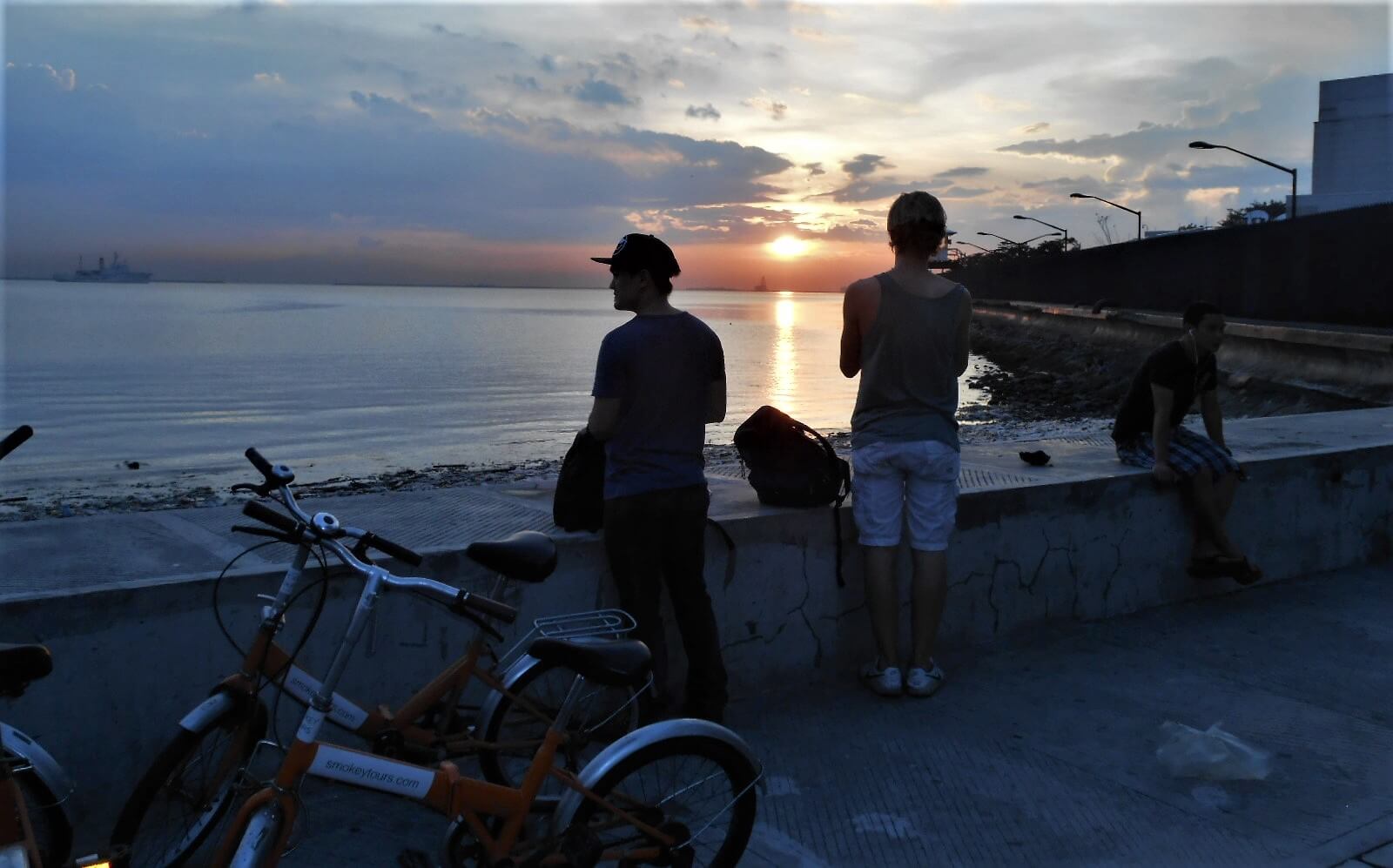
    When we finally reach the Manila Bay waterfront, we take a break and enjoy the sunset. Like many sunsets in Asia, it doesn’t disappoint.

    Manila Bay

    As the sun comes down, we enjoy a slow, leisurely ride down the waterfront. Families sit together along the water and eat, elderly ladies sell snacks and drinks and the odd person enjoys their evening jog. It’s a peaceful place, full of smiles and laughter, and the perfect end to a long afternoon. Along the way, Jessie also shares a few stories of his own, which paint a wonderful picture of Filipino culture and the way of life here.

    Eventually we find our own spot, and park the bikes to sit, relax, and enjoy one of life’s pleasures: a freshly cut coconut.

    Photo & Video Sharing by SmugMug

    From there it’s a short ride back to the bike shed where we drop off the bikes, sit and chat, and take a moment to recollect ourselves. We’re all a little tired and weary, but are definitely left with smiles on our faces.

    Just another day in Manila.

    Want to bike Manila with Smokey Tours?

    If you’re visiting the city and want to see it in bit of a different light, the tour can be a lot of fun. It’s around 3-4 hours and you’ll get see quite a few different pockets of the city, with a local to share all the tales that go along with them. Jessie is a fantastic tour guide and you’ll be very well looked after. My only recommendation is you might want to think twice if you’re not entirely comfortable riding a bike. Manila’s roads are no joke, and even though you’ll probably be ok, I wouldn’t risk it (try the Slum tour instead!). All in all, it’s a great way to spend a free afternoon, and if you love exploring and have a sense of adventure, I guarantee you’ll have a great time.

    Interested? You can get in touch with Smokey Tours on their website here.

    Heading to Manila?

    Disclosure: I was invited to write a piece on this tour by Smokey Tours. Smokey Tours covered the cost of my tour. All opinions are my own. You can read my Disclosure Policy here.

    World Nomads provides travel insurance for travelers in over 100 countries. As an affiliate, we receive a fee when you get a quote from World Nomads using this link. We do not represent World Nomads. This is information only and not a recommendation to buy travel insurance.

  • Inside Manila: A Walk Through The Slums Of The Philippine Capital

    Inside Manila: A Walk Through The Slums Of The Philippine Capital

    The mud is black.

    There’s trash everywhere.

    And the smell is…well…the smell is like a mixture of wet clothes and rotten wood. It’s not necessarily unpleasant, but definitely distinct.

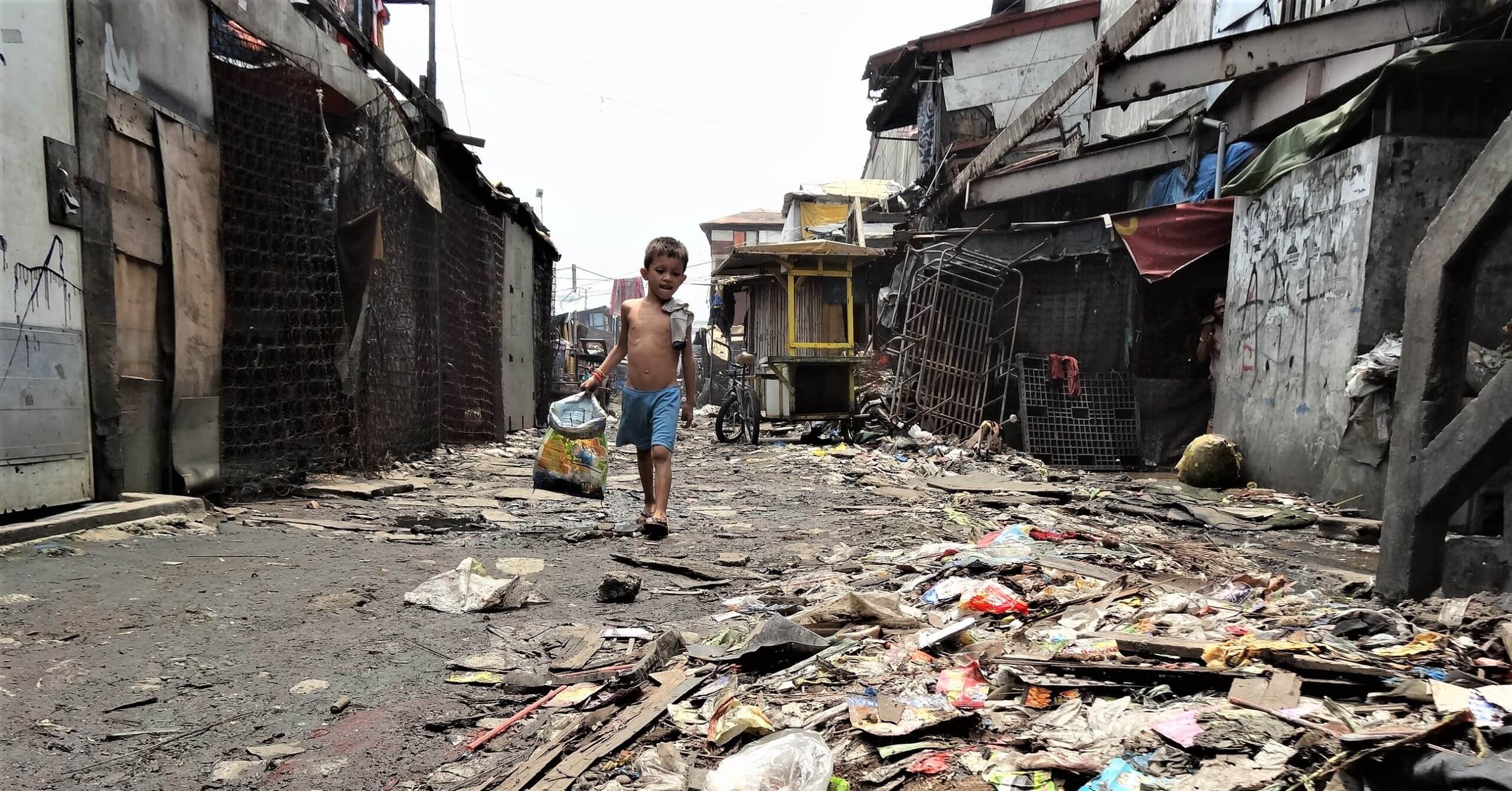
    I look around at the kids running through the alleys, the women selling ‘useful trash’ such as plastic bags and recycled paper, and the elderly lounging peacefully on their balconies, looking out over it all.

    These are Manila’s slums, where, without any provided housing, the homeless have been forced to squat. It’s a very different place to the Manila I’m used to.

    Smokey Tours

    My day in the slums starts early. I meet Remy, my guide from Smokey Tours, at 9am at Jollibee, and we jump on a jeepney out to the slums in Barangay 105.

    The first slum is actually tidier than I expect. They have rooms with beds and tables, some even televisions, the alleys are paved and running water is available. Life is not easy here by any means, but at least basic human needs of food, shelter and clothing seem to be met, if only barely.

    Smokey Tours

    In many people’s imagination, slums are lifeless places full of sick, starving people, fighting to survive, but surprisingly it’s quite the opposite here. People are up and about early, getting on with their day, cooking, washing, cleaning, working. It’s actually a rather lively place.

    As we walk through the alleys, we pass an old man cooking something on charcoal made from coconuts. I am not sure how he does it, but it works. Clearly, resourcefulness is key to survival here.

    Smokey Tours Slums

    Huddled in one of the corners, we come to a group of kids gambling for rubberbands. It’s obviously popular, as I’ve seen it getting played in a few different corners of the slum now. They laugh and scream wildly, having the time of their lives. It is always refreshing to see the innocence on a child’s face, happy and oblivious to the complicated world around them. I think about how, and why, I was given such luck in the ovarian lottery, born into a two-storey home in upper-middle class New Zealand. Compared to these kids, I grew up in a fairytale, yet their smiles are brighter than ever.

    Smokey Tours

    Eventually we get to the river Estero de Vitas, which lines the slum.

    By the riverside, I spot two ladies working on a few piles of fish. I walk over to take a closer look, and they glance up and smile at me. The fish they are processing is bangus, a Filipino food favourite, and they work through them at light speed; one does the cleaning and gutting, the other bones the fillets. Soon it becomes clear how they do it so fast – they’ve been doing it for 40 years.

    Smokey Tours

    It is jobs like these that keeps the households fed – most fish are sold, some are kept for food, and the income gives them a means to keep on surviving.

    As we come to the end of the river, Remy points out another type of slum-dweller underneath the main bridge. Here, homes hang over the water, made from tarpaulin and scrap wood, seemingly hanging in mid-air. I stare at them for several minutes, and still can’t figure out how they’ve managed to build them.

    Smokey Tours

    These homes are far more primitive than the ones I’ve just seen. The men who live here work mostly as scavengers, sorting through the river trash for useful bits of plastic, metal and other materials. This is then sold to junk or recycling shops, allowing these people to make a living.

    Smokey Tours

    As we cross over to get a closer look, a couple of girls living there come to show us around. We walk through the houses above the river, of which there are many, all made of recycled wood and other scrap materials. I feel like at any moment it’ll collapse and we’ll go plummeting into the water.

    I look inside some of the homes and see how tiny they are. Somehow, families of 7 or more manage to live together in a shack no bigger than a standard western bathroom.

    Smokey Tours

    At this point, I am not quite sure what to think. The conditions just seem so unlivable to a first-world child like myself, almost on par with some of the places in rural Africa. However, at least in those places there is land to farm and build proper housing. Inner city poverty is a different beast. There is no land, no toilets, no electricity, and to make things worse, typhoons destroy the slum each year, after which the dwellers are left to rebuild. With the comforts of the city so close by, it is hard to understand how so many people are left to live like this.

    Smokey tours

    Next, I’m taken over to the temporary housing slums over at Barangay 105. This houses the residents of the now closed Smokey Mountain slum, which sits just a few metres away.

    Smokey Tours Slums

    Again, the most common way of making a living here is by scavenging. Residents will spend the day looking through trash and collecting bottles, tyres, plastics, papers and metals.

    Smokey Tours

    Once collected, these items will be sold to junk shops who will sort and on-sell them to be processed. Most scavengers can earn around $3 a day doing this, which is usually enough to feed their families.

    Junk shop Smokey Tours
    As for the women, they are often employed as sorters rather than scavengers. Most can earn up to $3 a day, sorting trash so it can be packed up and sold.

    Smokey Tours

    Like everyone, people here need to eat, and again they depend heavily on the city trash for this. In a separate sorting area, people rummage through the trash from fast food restaurants, mostly from KFC and McDonald’s. Scavengers pick through the trash and collect leftover scraps of food to be cleaned and sold.

    Smokey Tours

    Each morning, residents of the slum come to purchase the bags of food, which have been sorted into small packages. One common item is the ‘pagpag’; leftover scraps of fried chicken, which are then re-fried and served with rice. Lots of different scraps are sold, but the pagpag is by far the most popular; usually sold out by 9am each day.

    Down the road I’m lucky enough to find a woman cooking up her pagpag for the day. As is, it hardly looks appetising.

    Pagpag

    Once it’s been washed, it’s thrown into the wok to be deep fried. It actually smells pretty good.

    Pagpag

    After a few minutes of sizzling, it’s time to eat:

    Pagpag

    Once it’s all been tipped onto the plate, she holds it up to me and gestures for me to take the first piece.

    How could I say no?

    Pagpag

    Funnily enough, it tastes just like KFC. Who would’ve thought?

    We spend the rest of the afternoon wandering through the slum in the midday heat.

    Smokey Tours

    People often stop to smile and say hi to me, or stand up and wave from a distance. Despite the warm welcome, I feel like an intruder. I feel many of them may be embarrassed at my presence, as if their home is so poor and desolate that it’s actually become a tourist attraction. If they only knew how much I admire their resilience, and it is I who feels small walking next to them.

    Smokey Tours

    Interestingly, despite the hardship, I come to the conclusion that the slum isn’t exactly a sad place. People are fed, they have water, they have shelter, and seem to go about their day with a smile on their face. It’s a hard life, definitely, but not a hopeless one. Families eat and play together, sing karaoke, and do their best to enjoy what’s been given to them. It’s a welcome lesson in gratitude that we could all use from time to time.

    Smokey Tours

    Smokey Tours runs this tour in partnership with an NGO called BYSMP (Bahay At Yaman Ni San Martin De Porres), which receives all of the tour profits (yes, all). After the tour, we go to check it out.

    smokey tours

    Here, children from the slum are provided with food, schooling, clothes and healthcare. The facility is excellent, with a fully equipped dining room, kitchen, classrooms, dentist and health clinic.

    Smokey Tours

    Smokey Tours

    Smokey Tours

    Smokey Tours

    Smokey Tours

    Smokey Tours

    It’s incredible how small NGOs like this can stay so under the radar yet make such enormous differences to people’s lives. With a little help, they’ll give many children from the slums a chance at a much brighter future than the generation before them.

    And, with the revenue from these tours, Smokey Tours is able to bring some level of awareness to Manila’s inner city poverty, while also contributing financially to the cause. It’s an excellent initiative; one that I am happy to lend my support to.

    Interested in a slum tour?

    If you’d like to get out of the Makati markets and shopping malls and get a look at the other side of Manila, I’d highly recommend a slum tour with Smokey Tours. Locals from the slums are employed as guides, and the profits from the tours all go towards providing food, schooling and healthcare for the children living there. I never recommend tours or attractions where people profit from poverty, and thankfully this is not one of them.

    To book a tour, simply head over to their website and get in touch!

    Heading to Manila?

    Disclosure: I was invited to write a piece on this tour by Smokey Tours. Smokey Tours covered the cost of my tour. Photos are not normally permitted on the tour, but I was given a pass for media purposes. All opinions are my own. You can read my Disclosure Policy here.


  • A Walk On Wall Street

    Isn’t it funny, how dreams can change.

    It was by complete accident that I ended up in New York City. In fact, I had never planned on entering the United States at all. But some horrendous travel planning and a few last minute changes was all it took to shake things up and land me in NYC for a week in transit.

    Of course, that didn’t bother me at all. It was a welcome detour actually, as I had dreamed of seeing the Big Apple for quite some time. And just like every New York first timer, I wasted no time in churning through the many glorified clichés the city had to offer. Central Park. Hot dogs. Pizza. Empire State Building. Chelsea. Yellow taxi rides. Battery Park. World Trade Center.

    And then, one lonesome afternoon, I chanced upon one of the most talked about New York icons of them all.

    Wall Street.

    Standing there on the intersection with Broadway, staring up at the street sign, it was a rather eerie feeling.

    You see, I had once dreamed of working here.

    I had dreamed of putting on the $5,000 power suit, heading up to my flashy office each morning, spending the day rubbing shoulders with high powered bankers and traders. I was obsessed with the markets and getting outrageously rich; of breaking into that inner circle of high flyers.

    I wanted to be a “Wall Street Guy”.

    And now, here I am, four years later, walking down the very street I once had idolised. But life has changed a little since then.

    After a short lived career in finance, I don’t think I ever want to wear a suit ever again. I’d probably cry if I ever needed to squeeze another meal into a ‘one-hour lunch break’. God save me if I’m ever forced to end another email with a robotic “Kind regards”.

    After wanting it for so long, I’m finally here; walking down Wall Street, but with little desire to stay. And it is this walk down Wall Street that has given me a sudden realisation of what a different and unexpected path my life has taken.

    Isn’t it funny, how dreams can change.

    Of course, in the back of my mind, I can still imagine myself in these offices, rocking the grey pinstripe suit, the skinny tie, the fancy business card and the hair slicked to one side. And part of me still whispers inside my head, “Yeah, that would be cool, right?”

    But that’s all it is now. Just another “wouldn’t that be cool”.

    My dreams have changed, grown. Standing here, it’s almost like looking back on a past life.

    A different me.

    Or as Gotye likes to say, ’Somebody that I used to know’.

    And as I continue walking, I try to ask myself, “What was it about this place that had me wanting it so bad?”

    I think, but I can’t pinpoint an answer. It wasn’t the money, obviously, because big money can be made anywhere. And by the same reasoning, it wasn’t the industry. So perhaps it was an ego thing; to be a Wall Street guy. Or maybe it was the crowd. Or maybe, I had just been enticed by the stories, the movies, by the shiny idea of it all. But whatever it was, it isn’t there anymore.

    As they say, everything comes full circle in the end. And a walk alone down Wall Street seemed to spur many emotions in me; a bit of sadness, a pinch of déjà vu, a smattering of nostalgia and, surprisingly, an odd sense of closure. Why? I’m not sure. Maybe it was just the final turn of the page. A way to finally close the chapter on one path and start moving full speed on another.

    All I know is, I probably won’t be back here for quite some time.

    Isn’t it funny, how dreams can change.


    What about your dreams? Did you chase something for a long a time, only to realise you didn’t want it in the end? Or do you still want those dreams as badly as ever? Tell me all about it in the comments below.

  • Photos of Soi 38: An introduction to Bangkok Street Food

    Photos of Soi 38: An introduction to Bangkok Street Food

    Update 2016: Much of Soi 38 has shut down to make way for a new real estate development. However, about a third of the vendors are still there in a small food court and on part of the street. It’s not as good as it once was, but still a decent place for a cheap and delicious dinner.

    While Bangkok certainly has some of the most delectable street food treats in the world, the scene itself can actually be quite intimidating. Several popular spots are hidden far from the comforts of the tourist centres, many stall owners don’t understand English, and Bangkok itself can sometimes be quite a difficult city to navigate.

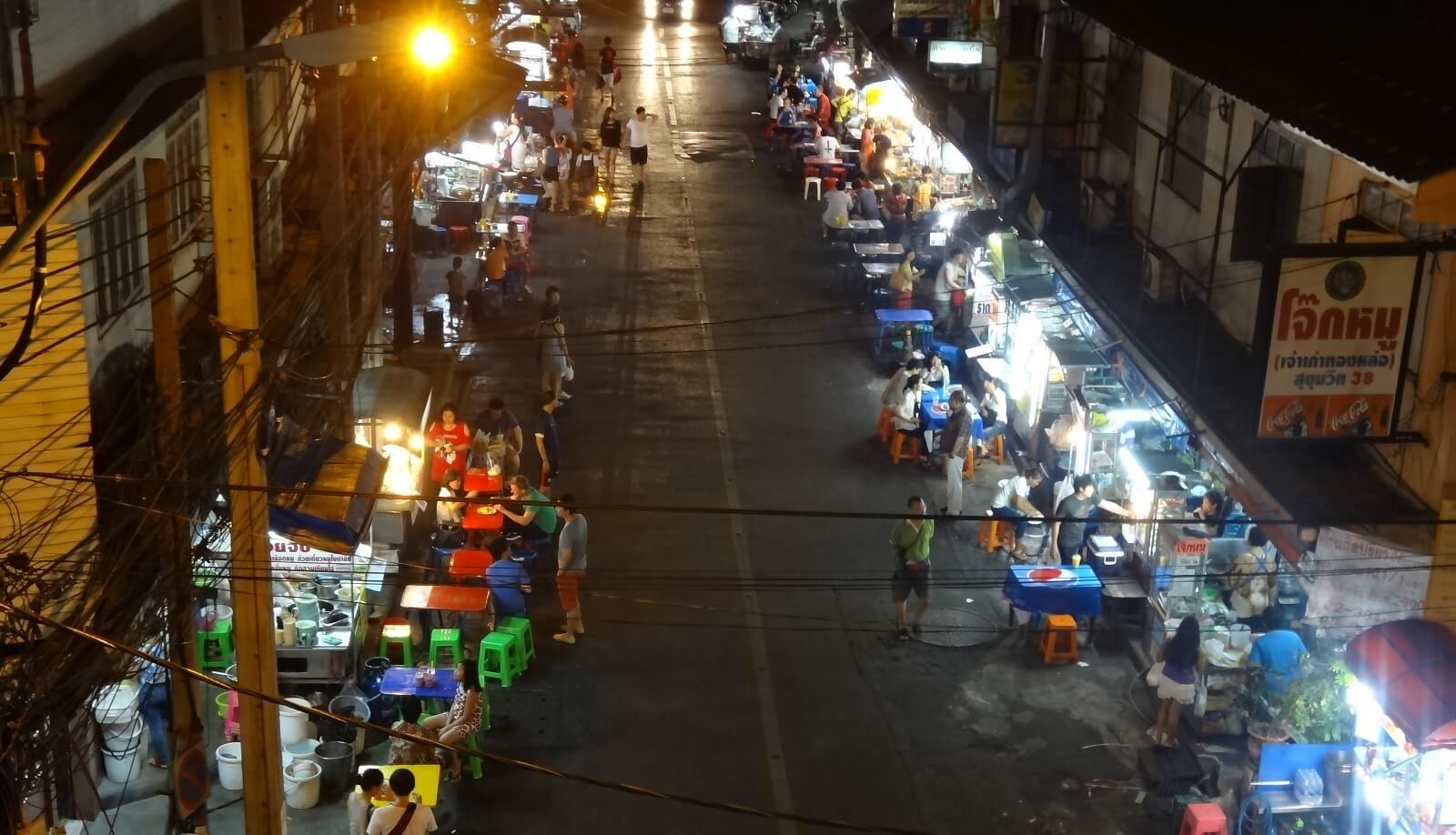
    However, there is one popular spot in town that serves as the perfect introduction to street food in Bangkok. Soi 38 in Sukhumvit is cheap, authentic, clean, easy to find, and serves some of the highest quality street food the city has to offer. If you’re a first timer in Bangkok, this is the ideal place to dip your toes into the food culture before you go wandering down alleys seeking out more adventurous eats.

    How to get there

    Sukhumvit Soi 38 is in the Thong Lo area, so if you’re staying around Ekkamai, Phrom Phong or Thong Lo you can probably just walk there.

    If you’re staying elsewhere in the Sukhumvit area, simply get on the BTS Skytrain and head to Thong Lo station. The other subway networks interlink with the Skytrain also, so if you have access to the BRT, MRT or Airport link you should be able to get there easily enough.

    In all other cases, simply get in a taxi and ask for Sukhumvit Soi 38. Every driver in town will know exactly where it is.

    When you get to Thong Lo station, head to Exit 4 (I think). You’ll know which exit is correct anyway, because you’ll be able to see this from stairs:

    Photo & Video Sharing by SmugMug

    What to expect

    I was staying just around the corner from here on my last visit to Bangkok, so after eating here several nights in a row I think I managed to try something from every single stall. I had no bad experiences, and considering there’s around 20 different stalls here that’s a good hit rate. There are tables and seats outside each stall, so it’s also a great place to go with some friends and enjoy a meal and a few beers.

    I didn’t have my camera handy every single visit unfortunately, but listed below are just a few of the delights you can expect to find here.

    No words, just photos.

    Enjoy!

    (I’m showing my ignorance here, but I don’t know the Thai names of any of these dishes. You’ll just have to tolerate the English names I’ve made up for them..)

    A few appetisers to start…

    Green mango salad – 60THB ($1.85)

    Green mango salad


    Spicy papaya salad – 60 baht ($1.85)

    Spicy Thai papaya salad


    Grilled pork salad – 60 baht ($1.85)

    Grilled pork salad


    Boiled seafood salad – 100 baht ($2.50)

    seafood salad


    Crab and papaya salad – 60 baht ($1.85)

    Crab & Papaya salad


    Cuttlefish salad – 80 baht ($2.50) 

    (This one’s my favourite!)

    cuttlefish salad


    Fresh fruit shakes – 30 baht (90 cents)

    Fresh fruit shake


    Fresh coconut juice – 45 baht ($1.40)

    coconut juice

    Onto the main course(s)…

    Roast duck on rice – 60 baht ($1.85)

    Roast duck on rice


    Chicken rice – 50 baht ($1.50)

    Chicken rice


    Fried chicken rice – 50 baht ($1.50)

    Fried chicken rice


    Grilled skewers (chicken/pork/squid/sausages) – 15 baht each (45 cents)

    bbq squid
    grilled chicken


    Chicken satay – 10 baht each (30 cents)

    Chicken satay


    Stewed pork and egg on rice – 60 baht ($1.85)

    Stewed pork and egg on rice


    Grilled river prawns (they’re enormous!) – 150 baht per half dozen ($4.80)

    Grilled river prawn

    And then it’s noodle time

    From the moment I was old enough to eat I’ve been a total noodle freak, so if you’re like me, you’re going to love Bangkok. Collected below are some of my favourites from Soi 38. All of them are 50-60 baht (1.60 – $1.85) and the servings are quite small, so you can usually fit in around 3 or 4 at least. Ready set go…

    Flat rice noodles with pork insides

    Pork and flat noodle soup


    Chicken drumstick and mushroom dry noodles

    Chicken & mushroom dry noodles


    Green noodles with pork and wontons (this one is seriously awesome).

    Roast pork green noodles


    Pork fried rice noodles in gravy sauce

    Fried rice noodles and pork in gravy sauce


    Roast duck and prawn wonton dry noodles

    Roast duck & prawn wonton dry noodles

    BBQ pork and prawn wonton dry noodles

    BBQ pork and prawn wonton dry noodle

    Shrimp pad thai

    Shrimp Pad Thai

    BBQ pork and wonton noodle soup

    BBQ pork and prawn wonton noodle soup

    Crab meat and prawn wonton dry noodles

    Crab meat and prawn wonton dry noodles

    Beef glass noodle soup

    beef glass noodles

    Shredded chicken rice noodle soup

    Glass noodle soup with beef

    Curry noodle soup with chicken

    Curry chicken noodle soup

    Beef and fish ball with thin rice noodle soup

    Beef and fish balls with thin rice noodles

    Dessert

    And then of course, the ever famous mango sticky rice for dessert. No matter how much you’ve eaten, you’ll always have room for one of these:

    Mango sticky rice

    Unfortunately, I didn’t have time to photograph all the stalls and map out the individual shops where you can find each dish (to be honest I was just too lazy), but just by walking around looking at the menus on display I’m sure you’ll be able to find whatever you’re looking for. There are no “hidden” stalls or anything like that. Otherwise, just save this post on your phone and show the photos to someone, I’m sure they’ll be happy to point you in the right direction!

    Have fun, and happy noodling.

    Heading to Bangkok? Check out my ultimate guide on where to stay in Bangkok – everything you need to know about choosing the right spot for the perfect Bangkok experience.

  • I’ve Fallen In Love With Bangkok

    I’ve Fallen In Love With Bangkok

    I still remember back in early 2013, I visited this city for the first time. I had never been to Thailand before then, yet had heard countless stories from other travellers who had fallen in love with the country. But they always spoke of Phuket, or the islands, or the small northern towns that seemed to enrapture all those who walked through them.

    Yet there’s never any love for Bangkok. More often than not, the city serves as nothing more than an inconvenient rest stop. A necessary nuisance to get access to the country’s more glamorous beaches and mountains. Some indulge in a few debaucherous nights on Khao San Road, or simply endure an overnight stay in a weathered budget hotel. But no one seems to stay here.

    And why would you?

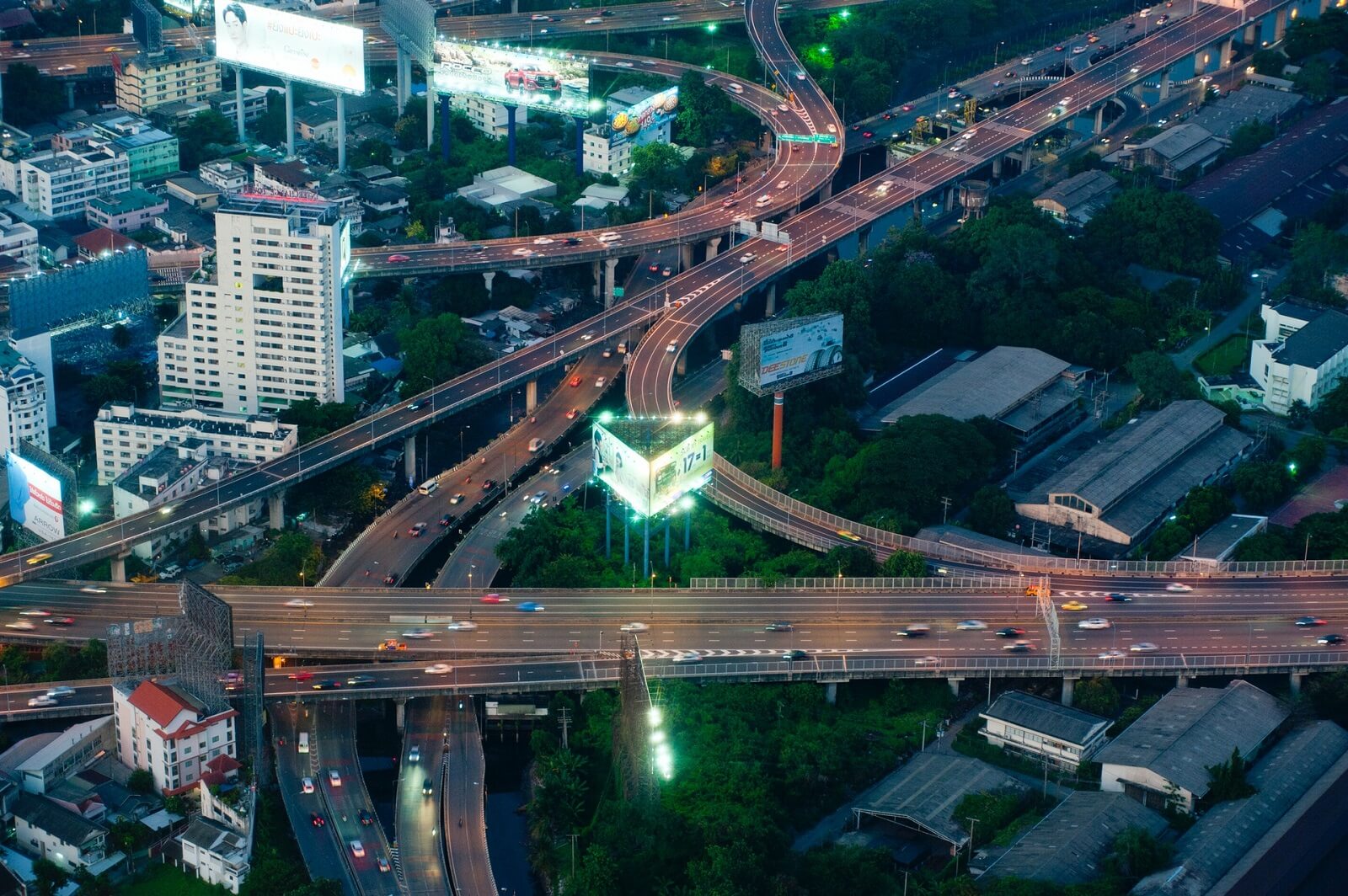
    With the pollution, the ridiculous traffic, the left and right scamming, the hoards of sex tourists that plague the upper Sukhumvit area. In a country with so much beauty to offer, there are far more inviting places than a smog filled, rat infested metropolis like Thailand’s capital.

    But that’s where it’s beauty lies. The city seems to make no sense, but then, it kinda does. Ferraris and tuk-tuks drive side by side on roads that practically stand still during rush hour. Old ladies sell the most delicious noodle soup from tiny street carts, often outside restaurants serving the same meal for 12x the price. The taxis are clean and safe, as good as any first world country, yet the meter rarely runs over $3. And despite all the chaos, the city still ticks along; perhaps a little messy, but definitely not broken.

    I wasn’t too impressed on my first ride into town. On that trip I stayed up on Sukhumvit Soi 1, where my first walk about town inevitably led me to the nearby Nana and Asok areas (both renowned for their hustlers, overpriced restaurants, and seedy gogo bar streets). A couple of nights later I ventured out to the infamous Khao San Road, which had everything you could want and expect in a backpacker street. Then I did the mandatory foot massage, muay thai fight and numerous servings of street pad thai, and left the city a few days later. As far as I was concerned, I had “done Bangkok”, and any future visits to Thailand would be spent either sleeping in a hut up in the hills, or lounging around on one of the south’s golden beaches.

    Yet a year later, something brought me back. At first, it was just a few days. That trip blessed me with the most mindblowing tom yum soup, hidden down a faraway side alley, and the most enormous and delicious fish ball I’ve ever seen.

    Giant Thai fishball

    A few days turned into a week.

    I wandered the markets and ate a weird kind of apple I still don’t know the name of. I discovered boat noodles. I learned my first Thai words.

    Boat noodles

    A week turned into a month.

    I tried every place on Soi 38. I spent a night on the riverfront. I found an office to work at and started eating every meal with nam jim jaew. Slowly I was settling in, and the city was winning me over.

    And then one night, it happened. I was sitting dazed, as my tiny masseuse pressed her forearms deep into my shoulders. I winced in pain, and heard her giggle under her breath as she caught sight of me gritting my teeth in agony. She held it there for a while, and then, as if trying to execute me, she pulled my head viciously to one side, stretched out my trapezius muscle, and pierced her elbow deep between my neck and shoulder, almost in slow motion so as to make it as painful as possible. Had the room been empty, I would’ve cried out in pain, but luckily the few other customers around me helped me refrain and preserve my dignity. For what seemed like the longest 10 seconds of my life, she held it here, overloading my brain with pain signals and surely enjoying every second of it.

    And then she let me go.

    Blood slowly flowed back to my head, and my shoulders slumped while I gradually returned to planet Earth. How amazing it felt. I’m sure many will agree; there a few things more pleasurably painful than a $9 Thai massage.

    And so I walked home that night, bruised and light headed, but smiling all the way. And I finally realised how much I was really going to miss Bangkok.

    For every city I go to, there comes a point where it starts to feel like home. Just making that one last friend, or discovering that one last amazing restaurant; just that one final experience that suddenly makes me stop and say to myself, “I think I could live here.”

    Sometimes it takes 4 weeks, sometimes it takes 6, but eventually, it happens. It happened in Cusco. It happened in Moshi. It happened in Manila. And now it’s happened in Bangkok.

    I love this city.

    Heading to Bangkok? Check out my ultimate guide on where to stay in Bangkok – everything you need to know about choosing the right spot for the perfect Bangkok experience.

  • More Than Just A Circus: The Story Behind Phare In Siem Reap, Cambodia

    More Than Just A Circus: The Story Behind Phare In Siem Reap, Cambodia

    I’ve been developing a deeper appreciation for the arts these days. Music, literature, theatre and art are things I’ve often scoffed at in the past, yet my struggles with writing have humbled me in that arena. As I’ve discovered, creating something beautiful from nothing is a talent to be admired.

    So, while travelling through Siem Reap last month I was delighted when the people of Phare: The Cambodian Circus reached out and invited me along to see their show.

    I was met by Brian, one of the Phare staff members in the early evening. Of course it’s always a bad idea to see a circus on an empty stomach, so the first thing we did was head off to a local restaurant for a curry chicken pancake.

    Curry pancake

    After a hearty meal, a little chit chat, and a bit of lounging around to let the pancake digest, we headed out to the venue. The circus is located in a large open lot, complete with cafe and art shop, just a short 10 minute scooter ride out of the town centre. We arrived a little early so wandered around for a bit, met a few folks, and I was told about the programme.

    The circus itself is a project run by an NGO named Phare Ponleu Selpak, meaning “The Brightness of the Arts”. It’s origins can be traced back to a refugee camp on the Thai border following the Khmer Rouge years. Here, 9 refugee children from a drawing class were taught, through self expression, to use art as means of recovery from the trauma they had experienced during the genocide. Years later upon return to Cambodia they founded the school, aimed at empowering other vulnerable children through art, the same way they had done in the refugee camps the years before.

    The circus is one of Phare Ponleu Selpak’s key projects, which gives students the opportunity to perform, tell their stories, and ultimately make a living through circus. It’s pretty incredible stuff.

    It was explained to me that they have a variety of shows running throughout the week, with different performers coming in from the school to vary up the programme.

    The shows of Phare

    Today’s show, named Proniap, was supposed to be a little different than most, as Khmer New Year had mixed a few things up. As a result, the show would be made up of younger, more inexperienced performers who had put together a performance at rather short notice, but were ecstatic to be performing in front of the tourist crowd. Sounded perfect.

    Proniap

    As we had a bit of time before kick-off, I was invited backstage to see how the students prepare. I had expected a tense, focused bunch, silently psyching themselves up before showtime, but it couldn’t have been more different. Just a bunch of young, smiling kids, decked out in artsy street clothes and goofing around with one another.

    Backstage at Phare

    Then, a few minutes before opening bell they spread out into a circle and started vibing, firing up a bit of energy to get their performing juices flowing.

    Backstage at Phare

    I’ve been to quite a few circuses in my life – Cirque Mother Africa, The Amazing Chinese Circus, The Peruvian Circus, and quite a few Cirque du Soleils, but the energy at Phare was on another level. It’s hilarious. They have the best clowns in the business.

    Clown at Phare

    On top of laughter, every circus needs some impressive stunts, and Phare has those in abundance. You’ll get all your somersaults, fire juggling and unicycles, only with a slight Cambodian flare.

    Phare

    Phare

    Phare

    Phare

    But what I loved most about the show was how raw the performance was. Many other circuses I’ve been to, the expensive ones in particular, always felt robotic and expressionless to me. There is such thing as ‘too perfect’ when it comes to these things.

    The young performers in this show made mistakes, didn’t wear fancy costumes and just performed with a small stage band, but the energy in their performance was electric. Sure, they dropped a few juggling pins, but there is an unmistakable passion in their performance, and that to me is what makes a show real and entertaining; much more so than the guy who just does his act flawlessly, smiles his plastic teeth and then walks off stage. And that’s not to say these guys weren’t talented, the show was filled with many ooh, ahh and wow moments.

    Phare

    When the show came to an end it was clear the crowd had loved it. Phare was a perfect example of unpolished, passionate story-telling, and once it was over, I knew I had to find out more about it. Brian explained that if I was up for it, I could visit the school itself, 3 hours away in the city of Battambang. As I didn’t have too much planned, I decided to head out there a couple of days later.

    Battambang turned out to be a wonderful escape from Siem Reap. While it’s not unknown to tourists, there’s definitely much fewer of them around, and I only saw a handful of other foreigners in my 4 days there. Many of the historical buildings are still intact, and the French influence is still quite noticeable around the township. If you’re ever in Siem Reap, I’d definitely recommend the detour out here.

    Battambang

    Battambang

    Phare itself was around 10 minutes out of the centre, nestled down the end of a local side street. I was welcomed there by one of the staff, who proceeded to show me around.

    Phare Ponleu Selpak

    The place is incredibly inspiring. From it’s humble beginnings it has grown into a thriving, internationally backed school, giving vulnerable children access to education and the opportunity to express themselves through drawing, sculpture, performing arts, music and animation. It’s name, The Brightness Of The Arts, definitely shines true here.

    Phare Battambang

    Phare Battambang
    Phare Battambang

    Despite all the different subjects to choose from, circus is said to be the most popular, because, well, what kid wouldn’t want to learn to do backflips? (and all that other cool stuff).

    Phare Circus

    Phare Battambang

    That’s not to say the other arts are forgotten; it’s clear that the school has produced some incredible talent elsewhere.

    Phare

    Phare

    Phare

    Phare

    I have always believed change is achieved through education, and was in awe of what Phare Ponleu Selpak has achieved here. I’ve felt for a long time that traditional education pigeon holes students, glorifying the kids who take maths and sciences and alienating the artsy ones. Where I’m from, schools don’t seem to understand that all students are different; not all of us want to learn algebra and physics, some of us just want to learn to draw, or dance, or paint, and at Phare Ponleu Selpak, that’s perfectly fine.

    Phare

    Phare

    Most importantly of all, the press, funding and recognition the school has received has allowed it to truly change lives with this approach, with many of the circus students having been to France to study and perform, and a small few receiving invitations to study at the prestigious National Circus School of Montreal. As opportunities like that are usually reserved for the (very) wealthy, that’s incredibly inspiring from a project dreamed up in an old refugee camp.

    Once I’d finished wandering around the school and stalkerishly taking photos of everyone, I was invited to hang around to watch a circus performance that evening, where the students performed for the local community in the school high top. While I couldn’t understand any of the story this time (it was all in Khmer), it was just as entertaining as the first one.

    Phare Battambang

    Phare Battambang

    Phare Battambang
    Phare Battambang

    Phare Battambang

    That was my last day in Battambang, and the following morning I got on my bus to Phnom Penh. However, seeing Phare’s story was definitely the highlight of my time in northern Cambodia. In a country with such a dark history, one can only admire these organisations who give under-privileged children a voice and a chance to find their way in life. If you’re ever in Siem Reap, be sure to head out to the high top, and see the magic for yourself.

    Want to go to Phare?

    Update 2017: When you get to Siem Reap, simply book a ticket through your hotel/hostel (most will be able to help you). Otherwise, book directly on their website. You can also try simply showing up, but in high season (November to April) it’s highly recommended you book in advance. It’s quickly become one of the most popular gigs in town!

    The show starts at 8pm, and during busy season there are also extra shows at 5pm.

    Tickets start at $18. It’s definitely worth every cent, and you can be confident your money is going back into a truly amazing programme.

    All details, such as location and show descriptions, can be found at their website.

    Enjoy the show!

    Heading to Siem Reap?

    • If you’re looking for affordable accommodation, I highly recommend using Agoda. They have the best rates across Asia.
    • I highly recommend getting travel insurance. Travel in Southeast Asia is unpredictable so please be prepared. For an introduction to travel insurance, why you need it and how to get it, check out my post Travel Insurance 101: Everything You Need to Know.
    • For a ton of useful information on Cambodia and Southeast Asia in general, I’d recommend checking out Travelfish – a free site covering every country in the region. Safe travels!

    Heading to Siem Reap? Don't miss this incredible circus. Run by an NGO for children orphaned by the genocide, Phare gives the vulnerable a voice through art, circus, and expression.

  • (Almost) Scammed In Phnom Penh, Cambodia

    (Almost) Scammed In Phnom Penh, Cambodia

    First morning in Phnom Penh. I wake late, as usual. My stomach curdles, yet for some reason I’m hesitant to venture out to eat. New places seem to have that effect on me, and I haven’t quite figured out why.

    After hours of flicking through TV channels, reading the news and Googling things to do in Phnom Penh, I finally I decide to leave the comforts of my hotel room. It’s around noon, but the humidity is rather mild today; certainly kinder than the usual South East Asian sweat fest.

    It’s become somewhat of a tradition of mine that when in a new city the first day is simply spent wandering the streets; a chance to move slowly and observe, taking in the sounds and the smells, the hum of local chatter and traffic. I’m situated on the riverfront, definitely a tourist hub, but rather tame compared to Siem Reap’s Pub Street or Bangkok’s Khao San Road.

    My stomach continues to grumble. I look sheepishly into the windows of each café and restaurant, searching for a place that looks inviting enough for a loner like myself. Even after all these years, I still feel a slight unease at eating alone in a crowded and lively place. Eventually I pass a corner store and purchase a pack of almonds to snack on, something to ease my hunger while my dining indecisiveness continues.

    I wander aimlessly, chewing on almonds and turning random corners, hoping to find an eatery that looks welcoming enough for me to try. I’m a little further from the riverfront now, evident by the absence of tourists and tuktuks. I slow down to a shuffle, just for a moment to try and dig the last few almonds out of the bottom of the bag. Almost on cue, a motorbike pulls up beside me.

    There’s two women on it, both around 40, and both a little, let’s say, on the heavier side. The one driving looks up at me, seeming a little flustered.

    “Excuse me, do you know where the Royal Palace is?”

    I shake my head.

    “Sorry, no,” I say smiling, still digging for almonds.

    “Oh, you’re not from here?”

    I shake my head again.

    “Oh really, where are you from?”

    “From New Zealand.”

    Her eyes light up.

    “Really, are you from Auckland by any chance?”

    I pause and look at her. I can’t quite tell where they’re from, but the accent and facial features has me guessing they’re Filipinas.

    “I am, actually!” I say with a smile.

    “Oh wow, my sister is moving to Auckland next week to be a nurse, she’s so worried about it!”

    I smile again.

    “Nothing to worry about,” I say proudly. “Auckland is beautiful.”

    “How much does it cost to stay there? Like, to rent an apartment?”

    I’m surprised by their excellent English, something you don’t hear around these parts too often.

    “I don’t know, maybe like $150 a week.”

    “Ahhh,” they groan. “That’s expensive.”

    That’s the first time the lady at the back has talked. I’d almost forgotten she was there.

    The driver jumps in again.

    “I really can’t believe we met someone from Auckland! Such a coincidence,” the driver says again with a smile. “You’re really from Auckland?” she asks again, a slight look of disbelief in her eyes.

    I nod.

    “Wow,” she laughs. She outstretches her hand and I offer mine back, which she shakes enthusiastically.

    “You know, do you think you could talk to my sister for about 15 minutes? She’s really worried, she’s never been overseas before. We’re actually just going to meet her now, just down the end of the street,” she says, pointing down the road in front of us.

    I shrug my shoulders.

    “Sure.”

    She smiles with relief.

    “Oh thank you so much! Just jump on the back, it’s just two minutes down that way.”

    I had presumed I would walk, but whatever. Without a second thought I pop on the back on the bike. Who knows, afterwards they might be able to tell me a good place to eat.

    Once on the bike, the questions are endless. I humour them, but find it odd that they can’t seem to stop talking.

    “What’s the weather like in New Zealand? How much is the flight to New Zealand? How much can you earn in New Zealand? How long do you live in New Zealand? How long have you been in Cambodia?”

    Finally, after about 2 minutes and one too many questions, I sense something a little “off”. We haven’t stopped down the street like they said we would, and we’ve now pulled onto the main road. I realise I’ve been in Asia too long, where scam artists usually pass over me for the more obvious, white-skinned targets, causing me to let my guard down. However, now it’s back up with my scam radar beeping on high alert. I do a quick recap of the events in my head and look both of the women over carefully. The lady in the middle clasps an iPhone 4 between her fingers, her nails freshly painted and a loose gold bangle sitting upon her forearm. Her hair is coloured, and her earlobes boast two golden stud earrings. They’re definitely not poor.

    I look at the driver’s face. She looks calm and weaves effortlessly through the many cars. For a foreigner, these roads seem far too familiar for her.

    Then, out of nowhere she asks me another question.

    “How long have you been in Phnom Penh?”

    She’s asked me that before. Obviously the questions are just a distraction tactic, and she must have done this routine so many times she’s on autopilot. I’m now 101% convinced I’m in scam territory. I decide it’s my turn to ask some questions.

    “So where are you from?”

    “Bangkok,” they both say in unison.

    I presume they’re lying. They don’t look or sound Thai at all, but this is good. I know Bangkok well.

    “Oh, which part of Bangkok?”

    “Ratchatewi,” they say, again in unison. “Why? Do you know Bangkok?”

    “Yes, I have been living there,” I say calmly.

    “Oh, why do you live in Bangkok?”

    I think back to scam 101 training: when being scammed, try to offhandedly mention some connection to authority or government.

    “My brother works there, he works for the embassy,” I explain.

    The driver doesn’t know it, but I can see her face slightly in one of her mirrors. Her expression changes, as if she’s suddenly deep in thought. I try not to smile.

    “Ohh, your brother works for the embassy…” she says quietly. I can’t tell if she’s asking me again or if she’s just repeating it to herself.

    “He was working for the British embassy in Bangkok, but there are problems in Bangkok right now, so because of the coup he’s been moved to Phnom Penh. He will start working here for the British embassy in a couple of weeks. Do you know where the embassy is?” I say enthusiastically.

    “No, we don’t know,” they both say, shaking their head.

    “It is just over that way,” I say, pointing out in the distance. “It is very nice, I went there with him for a welcome dinner there last night, I met the tourism minister, and the police minister, it was so nice, Cambodian people are all so nice. Actually, there was some people from Thailand there too!”

    I look in the mirror again. Her face seems expressionless, but I can only see half of it. Then, for a split second, I see her eyes. She looks confused.

    We go on driving for a couple of minutes and I sit there quietly, trying to plan my next move. Interestingly, the two of them have both gone silent as well. I notice they’re stopping at red lights every couple of minutes, and I take comfort knowing I can jump off the back of the bike any time they do.

    “Anyway, where are we going? I can’t go far, because I am going on a tour at 2pm.”

    “Ahh you’re going on a tour!” they both shout out, the middle one tapping the driver several times on the shoulder.

    “Maybe you can meet us tomorrow instead?” she asks, as she pulls the bike over to the side of the road.

    “Sure, no problem,” I say with a smile, as I slowly hop off the back of the bike.

    “You can meet us on the riverfront, do you know Dairy Queen? You can meet us there.”

    I think about it. I have no idea where Dairy Queen is.

    “Sure, I know it, I’ll meet you there. What time?”

    “You can meet us around the same time as now, 2pm, ok?”

    “Ok no problem, I’ll see you then.”

    “Let me call you a motorbike to go back,” the driver says, waving her hand at a bunch of guys on the corner. One of them perks up and hurriedly drives over.

    Before getting on the bike, I shake both their hands and bid them goodbye. Part of me is disappointed. I’m curious to see where they were taking me.

    On the way back to my hotel, I laugh out loud in bursts as I replay the whole scenario in my head. I had to give it to them, they were pretty good. It was clear they had done it countless times before; from their facial expressions to their question routine, to learning the capital cities of probably every country and every American state in their spare time. What made it even more convincing though was they were two chubby middle aged women, not trying to be cute or charming at all. It had instantly brought my guard down. Had it been two scantily clad bombshells who pulled up to me, my scam radar would’ve gone off immediately. These two had it all figured out.

    Back in my hotel room, I immediately get online and start Googling. I’m dying to know what their gameplan was.

    Google search: “Two fat women on motorbike moving to home country Cambodia scam.”

    A few results pop up, including one that runs almost like a play-by-play to what has just happened to me:

    “This is a scam which I stupidly fell for and that is one where 2 friendly fat girls ask you to come and give their other sister some information on the country you live in as she is interested to move there. I went there to help as I had a bit of time on my hand. I met their “uncle” who said he had a fail safe way to win at the casino as he was a croupier at a casino. At his home, I ended up placing bets on his behalf with his money of which he ran out, he begged and promised he would give it back after the final bet, he was the best con man I have ever seen and must admit I was the biggest dipstick for falling for this but I helped him out with mine and I finally lost a fair amount of money. I went to the Embassy but the only way I could do something about this was to go to the police. But unfortunately the police is so corrupt that I couldn’t take that chance. So if some jolly fat girls talk to you, talk but don’t go out of your way to help.” Link here.

    As I read it I roll around laughing on my bed. I cannot believe I fell for it. I’m usually on high alert when in Africa or South America, but this is the first time any of these scams has been pulled on me in Asia and my guard was down completely. My Asian face has left me far too unsuspecting around these parts. Part of me was also surprised at how elaborate it sounds. I was expecting more of a “drive you to an alley and steal your wallet” kind of thing.

    The next day I consider heading down to Dairy Queen to call them out on their act. It would surely make for an interesting blog post but I decide against it, partly because I’m busy watching the World Cup but mostly because it’s just not my style. Also, I didn’t think they were actually going to show up anyway.

    Moral of the story: Be wary of heavy, middle aged motorbike riding women in Cambodia. Or if you do talk to them, just ask them about their professional gambler Uncle.

    Good luck!

    Things to remember when being scammed:

    I’ve had a few scams attempted on me and other travel friends, even when at home in New Zealand. Some were so stupidly obvious that I went along with it just to see what they were trying to do, and some were so elaborate and well thought out that I’m sure they’ve fooled many a person. I’ll write a few more stories like this one up when I get time, but for now, keep these tips in mind if you’re ever the target.

    1. Obviously, just walk away from the beginning if you can. Don’t be afraid to look ‘rude’. Scammers are experts at making you feel bad for walking away.
    2. If it’s a little hard to walk away because, say, you’re on the back of motorbike in heavy traffic, remember to relax and stay cool. Don’t freak out. Remember, a scam is not the same as a robbery. Their plan is usually to ‘trick’ you out of money, rather than actually commit a blatant crime and rob/hurt you.
    3. Try to mention some connection to authority. This is a tip I learned from a friend in Africa, and it works really well. For example, just say something like “Can you drop me at the embassy afterwards? I need to meet my brother there at 3.” That will get the wheels spinning in their head, and the fear of messing with someone connected to government will throw them off completely. Try not to threaten, e.g. “My brother works for embassy and you guys are going to be in a lot of trouble.” It’s important to let them save face and not back them into a corner, as that’s usually when bad stuff happens.
    4. Act confident. It’s quite satisfying when they try to woo you with something and you just smile, as if you know exactly what they’re up to. It will throw them off their game a lot, and you’ll see it in their expression.
    5. Extract yourself as soon as possible. Do it tactfully, and don’t make a big fuss about calling them out or shaming them. My opinion is letting them save face is the best way to get yourself out unharmed, which is really the only goal you should have.

    Stay sharp and good luck!

    Heading to Phnom Penh? For affordable accommodation, try using Agoda, they definitely offer the cheapest rates in Asia. For things to do, you can’t go wrong with TripAdvisor. Happy travels!

  • When Broken Glass Floats: A Chilling Look Into Cambodia’s Tragic Past

    When Broken Glass Floats: A Chilling Look Into Cambodia’s Tragic Past

    I put my Kindle down and close my eyes, grimacing. It is not the first time this story has overwhelmed me.

    I sit there rubbing my eyes, taking a moment to collect my thoughts. I’m only a quarter way through it, yet this book is consuming me. Time for a break, I decide. I look around.

    A lady sits a couple of tables away, sipping on an iced coffee while tinkering with her iPad. On the far end of the cafe sit two middle aged men, laughing cheerfully about something, their palms wrapped around mugs of Angkor beer. Beyond them, a small stretch of the Phnom Penh riverfront, and the faint sounds of traffic passing on the wet road before it.

    As my mind settles, I pick up the book to continue reading. As difficult and depressing as it is, the story has captivated me, and despite all the death and suffering I am desperate to know how it ends.

    The book is Chanrithy Him’s “When Broken Glass Floats”, a gripping memoir of her life growing up under the Khmer Rouge. I am only halfway through it, but it has brought to life a period of history that, until now, I have known very little about. A genocide. One quarter of the population dead. A brutal dictatorship, an entire country forced into slavery, and the mass execution of anyone educated enough to resist. In just 4 short years (1975-79), the Khmer Rouge managed to decimate Cambodia, crippling the country almost beyond repair. I am unsure why I never learned about this in school.

    I read and read, until my battery light flashes red and finally dies. I’m relieved in a way; I’ve been sitting here for hours, my eyes hurt, and it’s already dark outside. Enough for one day.

    I wake up late the following morning. Breakfast is served at the cafe outside my room, and I continue Chanrithy’s book while waiting for it to be cooked. I manage another 20 or so pages, eat quickly, and then head back to my room to wash up and get ready. Today I am visiting Tuol Sleng, the famous S-21 genocide museum near the centre of Phnom Penh. Here lies an abandoned high school, turned into a interrogation prison where tens of thousands of Cambodians were tortured and marked for death.

    After waiting for the rain to settle, I head out and arrive around mid afternoon. The moment I enter the gate, I feel the eerie vibe it is famous for.

    Tuol Sleng Genocidal Museum

    Despite the many visitors, the place is silent. It only adds to the creepiness. I walk sheepishly into the first room; a high school classroom turned into a torture chamber. From the doorway I see an iron bed, with a photo on the wall of the torture victim found chained to it. I am not quite sure what to think. I snap a photo, and exit quickly.

    Torture beds at Tuol Sleng

    Most rooms in the first building appear the same; an iron bed with ankle cuffs, where victims were bound and tortured into confessions. As I wander through each of them, I think back to Chanrithy’s book, to the stories of people being taken and never returning. Even standing here, seeing it with my own eyes, it is difficult to believe the stories of terror are real.

    Eventually I make my way to the second building. Here lies the photo room. The Khmer Rouge were meticulous in their record keeping, photographing and profiling all 20,000 prisoners before they were tortured into confession. Once “processed”, they were taken away to be executed.

    Tuol Sleng Genocidal Museum

    The photos represent many of the country’s most wealthy and educated at the time, mass murdered in an attempt to create a completely uneducated, communist society. The immense waste of life is impossible to comprehend or understand. One can only wonder how different Cambodia would be today if these great minds were still alive.

    Among the photos are faces of children, some who look as young as 8 or 9.

    Tuol Sleng Genocidal Museum

    I think back to when I was that age, innocently riding my bike and watching cartoons. The contrast is heartbreaking.

    I spend a long time in here, maybe an hour. One by one, I study the faces of all the prisoners. Each of their eyes are sad, defeated. Their fear is unmistakable. Most appear to have accepted their fate.

    Tuol Sleng Genocidal Museum

    Yet among them, some appear defiant, refusing to be broken. I admire them, and wonder if I’d have been strong enough to do the same.

    Tuol Sleng Genocidal Museum

    Of the 20,000 that passed through here only 12 made it out alive; their stories of survival displayed on one of the classroom walls. Before I start reading I observe the 5 or 6 other visitors, staring at the wall and reading silently. Each of them stand frozen, their lips slightly apart, eyes flashing back and forth across the page in disbelief. Soon I find out why. The stories are straight out of a horror film; tales of being electrocuted to unconsciousness, forced to eat their own excrement, fingers being broken and fingernails being ripped off and covered in salt. Prisoners were tortured into confessions of being spies or conspiring against the State, justifying their execution. Yet one confession was not enough. Torture continued until the victim admitted guilt of their entire family, their parents, brothers, sisters and children, justifiying the execution of all of them.

    I read each story, wondering to myself what I would’ve done. How strong would I have been? Would I have betrayed my Mum and Dad, my brothers, to end my own suffering? It is mind numbing; too much for me to try and imagine.

    Tuol Sleng

    That night I continue reading Chanrithy’s book. My visit to Tuol Sleng has added another dimension to her story. She describes her friends and family disappearing, or being taken away to be punished and executed. I wonder if any of them were taken there, and if I had seen their faces on the wall. It is a chilling thought to think that is possible.

    Two days later, I finish Chanrithy’s book. I have never read a book so fast in my life. As I flick through the final pages I am left speechless, happy that she survives, but heartbroken at the suffering she and so many had to endure. Immediately I go to her website and email her, thanking her for sharing the story and offering my condolences, as small a gesture as it may seem. It is hard to believe I have been walking along the streets where this evil happened, only 40 years ago.

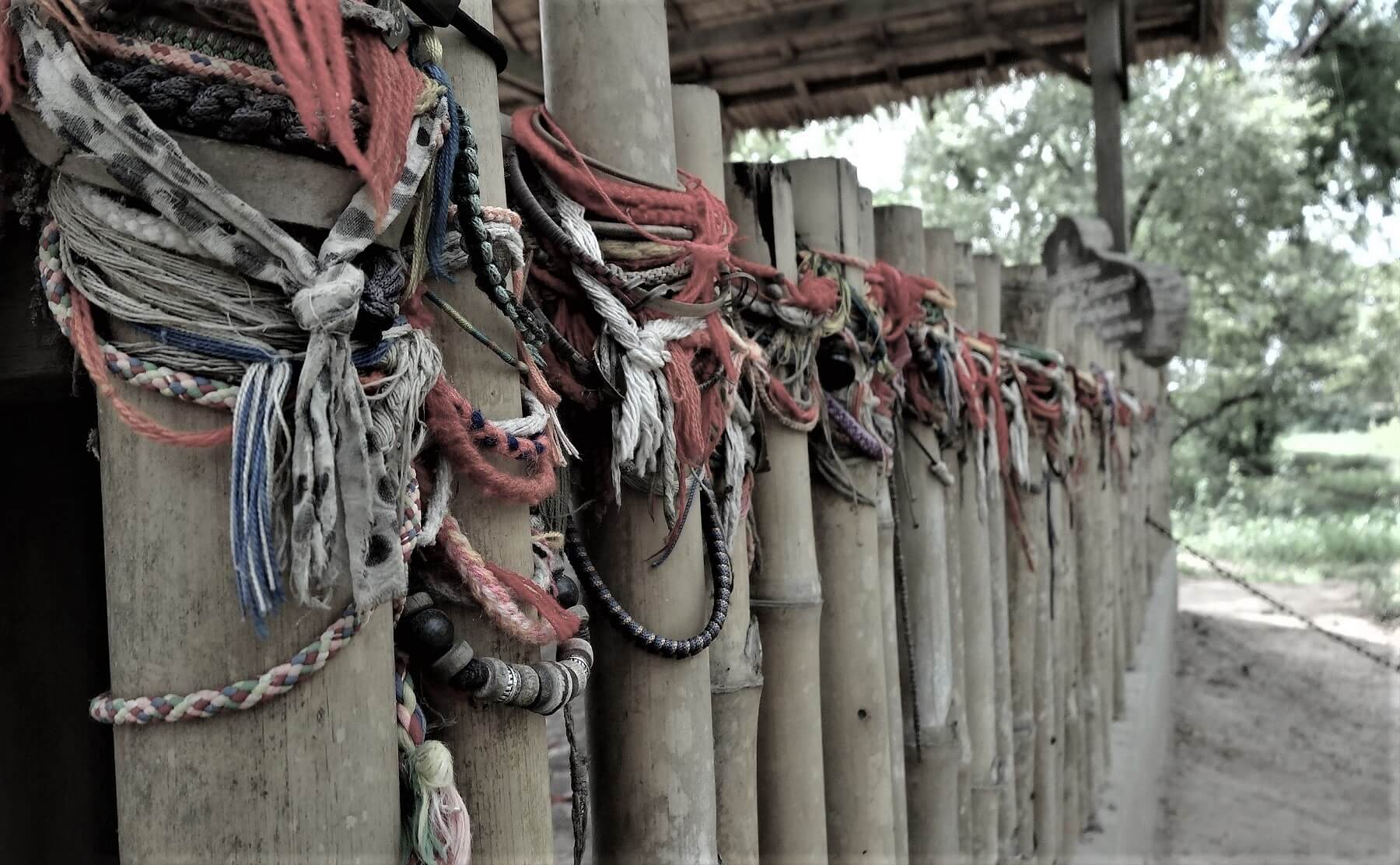
    The next day I visit Choeung Ek, the famous Killing Fields in the south of Phnom Penh. Of the 3 million Cambodians that died during the regime, 20,000 were executed here, brought from Tuol Sleng by the truckload under the cover of darkness. In order to save bullets prisoners were beaten to death with spades and tools, while loud music played in the background to ensure their screams were left unheard. Bodies were left to rot in mass graves, some piled up to 400 high.

    Even today, bits of bone and clothing are still seen lying in the dirt.

    After an hour or so I come to the infamous killing tree, where I notice many other visitors standing and staring, deep in thought. It is the tree where babies were executed, taken from their mothers and then swung from their legs, their heads smashed against the trunk. The site seems to have a stronger effect on people than most. I stand there with them, and we all stare at it in silence.

    The Killing Tree

    It takes me around 3 hours to walk through the fields. It is a sobering place, but for some reason, doesn’t trouble me as much as I’d expected. While the photos in Tuol Sleng showed people in the midst of struggle and torture, the fields themselves seem to give an odd sense of peace. For many Cambodians, this is where the horror and torture ended, and despite how brutal it was I suppose there is an inkling of closure in that. It is comforting to know the place has been preserved with the respect it deserves, and that people continue to come and pay homage to those who were taken.

    The Killing Fields

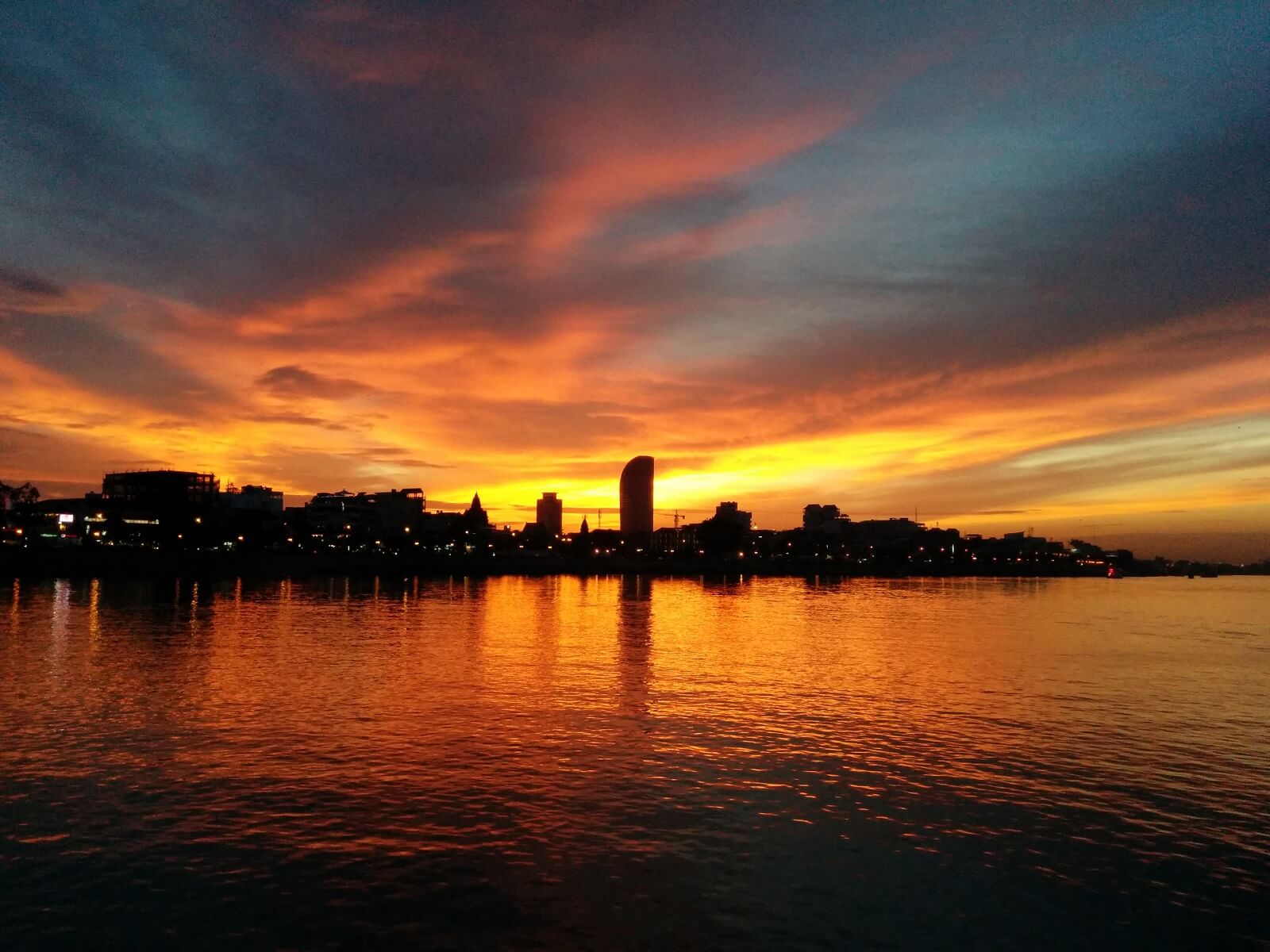
    It’s about a 40 minute drive from the fields back to my hotel. I sit in the back of my tuk tuk, trying to process everything; Charithy’s story, the prison, the fields, the survivor stories. I find it strange this story is never talked about, unlike the Rwandan or Jewish genocides. I’m actually embarrassed that I knew nothing about it until now.

    Eventually we pull out to the main road. As we drive along I see two young girls playing in an empty dirt field; one throws a tin can, the other tries to hit it with a piece of broken wood. She misses, and they laugh loudly like kids and race to retrieve it. It all seems so normal, and for some reason that’s odd to me, for a country that was massacred not so long ago.

    When we finally arrive at the hotel the afternoon rain has set in. It is pouring down, and I’m reluctant to leave the shelter of my tuk tuk’s waterproof flaps. I ask the driver to join me in the back, and ask him how old he is.

    “Me 44,” he answers.

    I need about 2 minutes to do the maths in my head.

    “You were 5 during Pol Pot’s time?” I ask him.

    “Me 7 years old for Pol Pot,” he replies.

    I tell myself to show a shred of sensitivity, but I’m too curious. I bombard him with questions.

    He answers me the best he can in his broken English, telling me about his memories during the Khmer Rouge rule; eating only rice soup a couple of times a day, eating lizards and crickets, even killing and eating the stray dogs around the villages. I’m reminded of the time I saw fried crickets for sale on the streets of Siem Reap, which now makes a little more sense to me.

    My driver’s eyes open wide as he continues his story, retelling tales of his mother and father forced to work long hours in the rice fields, and teenage boys forced to stand out in the sun and mind the cattle. Then he laughs as he recalls the big trucks coming to take away all the rice and beef, leaving all the workers to starve at the end of the harvest.

    I ask him about school, and he shakes his head.

    “But no work for me too,” he recalls. “When you turn 15, you work. I only 7 years old. I just sit in the house. Run around in the field. Play with other kids.”

    I nod in slience. It is difficult to hear him through the pounding of rain on the roof, but I do my best to digest every word.

    Finally, I build up the nerve to ask him about Tuol Sleng, if any of his family is in the photos, and if any of his family was executed under the regime.

    “No, no, not my family,” he laughs. “But my friend, they see some family there, in the photos.”

    “But my uncle is gone,” he continues. “He disappear, we don’t know where. Maybe get bang bang by Pol Pot,” he says, mimicking the shooting of a rifle with his hands.

    I’m uneasy at how calmly he talks about it. Part of me wishes he was (a lot) more angry, but he seems to be at peace with it. Luckily his mother, father, and siblings all survived, and maybe that is the reason why.

    That night I sit on the riverfront until sunset. It is filled with elderly people out walking, usually in pairs, leisurely strolling along while enjoying the evening air. The street sellers are far more passive than in the neighbouring countries, and a simple shake of the head is enough to turn them away. I watch each person walk past, studying their faces, wondering what their story is and how they survived the genocide. It is frightening to think that Chanrithy’s story is only one of many, and that almost a whole population has a similar tale to tell. Visiting Cambodia has been a sobering reminder that we should never take our freedom for granted.

    Finally as the sun sets I see two boys pass by, maybe 10 years old, riding side by side on brand new bicycles. They ride slowly, one of them holding a pack of biscuits in one hand while he steers the bike with the other. They argue with each other intensely, shouting and shaking their heads, probably about something trivial like a video game or a TV show. Until now I’ve found Cambodians to be rather docile and reserved, and this kind of energy is a little out of the ordinary; they are by far the loudest people on the riverfront. Clearly their upbringing has been very different to the generation before them. Hopefully, a sign of new beginnings in Cambodia, and a future much brighter than its past.

    Photo & Video Sharing by SmugMugPhnom Penh riverfront today

    Visiting Phnom Penh?

    • I would highly recommend reading Chanrithy Him’s “When Broken Glass Floats” before you go. It is difficult to read, but will paint a vivid picture of the Khmer Rouge regime and bring to life the historical sites you will visit. It is superbly written, and is a powerful story of one family’s loyalty and perseverance. It’s around $10 on Kindle. Another similar book that was recommended to me was “First They Killed My Father” by Luong Ung, although I haven’t read it.
    • Assuming you are staying in the city or on the riverfront, a tuk-tuk will take you to Tuol Sleng museum and back to your hotel for around $5-$7 all up. He will wait for you outside until you’re ready to leave. I have been to many museums in my life, and this is one of the few (or maybe the only) that I will remember. Entrance is $2.
    • Choeung Ek is a bit further out of the city and will cost you around $10 to get there and back. Again, the tuk-tuk driver will wait for you. Entrance is $6. I would definitely do Tuol Sleng and Choeung Ek on different days – it is a bit much to digest both at once. Best to do Tuol Sleng first, and Choeung Ek second.

    Have you visited Choeung Ek and Tuol Sleng? What did you think? Let me know in the comments below.

  • Kiwi Food Frenzy: 33 Things To Eat On Your Trip To New Zealand

    Kiwi Food Frenzy: 33 Things To Eat On Your Trip To New Zealand

    Back in 2011, I took my first solo trip overseas; a full time Spanish course in the south of Spain. Each day, the lessons would have a different underlying theme, and the class would use that theme to try and explain (in Spanish) various aspects of our life back home.

    It started with the weather, and the Swiss girl in class talked about the snow, the Swedish girls talked about the grey skies and I talked about the hot Auckland summers and rainy Auckland winters.

    Then came sports, and the Swiss girl talked about skiiing, the Russian girl talked about boxing and I of course talked about New Zealand’s obsession with rugby.

    Then one day we finally had a lesson about food. The Swiss girl talked about Switzerland’s cheesy raclette, the German girl talked about Germany’s love for sausages, and I……had absolutely no idea what to talk about.

    Lamb?

    Shellfish?

    Pies?

    What do people eat in New Zealand? I had no immediate answer, and spent much of the lesson struggling to come up with something that I could share as my country’s national dish.

    In the end, I just said we drink a lot of milk (lol). But it left me wondering; what is New Zealand food? What are our most beloved culinary inventions? And what, if anything, would be considered our national dish?

    Since then the question has remained largely unanswered, and still to this day I struggle to come up with something when people ask me, “What is the food of New Zealand?”

    However, over the last few months I think I’ve finally come up with an answer. I’ve been tripping around the country, exploring some of my country’s iconic foods and indulging in a few old childhood favourites. New Zealand cuisine is simple, but it’s also comforting, delicious, and loved. The list I’ve compiled below is a collection of those special NZ foods; things that all Kiwis seem to know and love, and things that have unarguably cemented their place in Kiwiana food history.

    What food is New Zealand known for? Let me show you!

    1. Cookie time

    Photo & Video Sharing by SmugMug

    Cookie Time’s “Original Chocolate Chunk Cookie” is a timeless Kiwi favourite and the recipe has remained unchanged from when I had my first one over 20 years ago. As kids we always used to break our cookies open and see who could find the biggest chunk of chocolate – and seriously, you can find some massive ones in these things. Another popular thing to do is nuke it in the microwave for about 10 seconds, giving you a softer, chewier cookie oozing with warm melted chocolate. Delicious.

    Get it at: Any NZ supermarket, service station or dairy (convenience store). There’s also a Cookie Time cafe you can visit. 

    2. Lamingtons

    Photo & Video Sharing by SmugMug

    Lamingtons are a sponge cake, coated in rasberry or chocolate and then sprinkled with shaved coconut. It’s common to cut them in half and fill them with cream or jam, but in most cases it’s simply eaten as is. A very popular snack enjoyed during morning or afternoon tea.

    Get it at: Any supermarket or bakery.

    3. Sausage sizzles

    Photo & Video Sharing by SmugMug

    I still remember back when I was in primary (elementary) school, we would all arrive on Friday mornings with our precious $1 coins clasped between our palms. This, of course, was for Sausage Sizzle Friday, a weekly lunch event where the school would fundraise by selling stumpy pork sausages in pieces of fresh bread, lathered with tomato sauce and if you were lucky, a handful of grilled onions. However this wasn’t unique to my school; sausage sizzles happened all over the country, and while they began as a fundraising initiative (due to the cheap ingredients) they’re now considered a classic Kiwi comfort food enjoyed at family barbecues, food markets and special events up and down the country.

    Get it at: Often sold at sports events and food markets, and quite often there are sausage sizzle fundraisers outside Bunnings and The Warehouse. Of course, the easiest thing to do is to cook them yourself. NZ sausages, onions, fresh white bread and a bottle of Wattie’s tomato sauce – all available at any NZ supermarket.

    4. Hokey Pokey ice cream

    Photo & Video Sharing by SmugMug

    Hokey pokey is one of the most popular ice cream flavours in the country; a timeless combination of hokey pokey (honeycomb) balls and rich vanilla ice cream. Plus it goes well with everything – cake, waffles, cones, banana splits. It’s the perfect ice cream! And so classically Kiwi. Once you try it, you may find it difficult to eat plain vanilla ever again.

    Get it at: This is a Kiwi favourite so any ice cream stand or supermarket will have it. If you’re looking for something special, one of the best hokey pokey ice creams is at Giapo in the Auckland CBD. Giapo does some pretty unique things with gelato and ice cream – just check out their ‘gram! Definitely put them on your bucket list when you get down here.

    5. Fish and chips

    Photo & Video Sharing by SmugMug

    Food in New Zealand often takes influence from British roots – this is one good example. This takeaway treat has become so ingrained in our culture that it would be criminal not to include it here. Every Kiwi will surely have romantic memories of ripping open a steaming hot bundle of greasy goodness; perhaps a crispy battered fillet of Hoki or Tarakihi, a handful of crinkle cut chips and maybe a few other greasy bits from the menu, all wrapped up in yesterday’s newspaper and paired with a bottle of Wattie’s tomato sauce. It doesn’t get much more Kiwi than this!

    Get it at: Any takeaway joint in the country will serve this, just ask around. My favourite fish and chip shop in Auckland has now closed (nooo!) but if you’re looking for something special, my new favourite is the Fresh Fish Market in Tauranga).

    6. Marmite

    Photo & Video Sharing by SmugMug

    You have probably heard tales of the legendary Marmite, which is a standard item in every New Zealand pantry and an absolute must eat in New Zealand. In fact it is so loved that when the Christchurch earthquake damaged the country’s lone Marmite factory in 2012, a national “Marmite shortage” was declared which resulted in a mild panic throughout the nation (call me a traitor, but I actually prefer Australia’s Vegemite anyway).

    So, what is it exactly? In very simple terms, it’s a yeast extract combined with a few different herbs and spices. The taste itself is really too hard to describe and is something you’ll just have to try yourself, but be warned, it’s a very acquired taste and if you didn’t grow up eating the stuff it probably won’t agree with you right away.

    If you’re a Marmite virgin, the best way to pop your cherry would be an extremely thin spread on toast, perhaps with a dash of butter. However if you’re a little more game you might like to try the legendary…

    7. Marmite & Chip Sandwich

    Photo & Video Sharing by SmugMug

    Traditionalists would say you need to use Salt and Vinegar chips for this, but I just say go with whatever you want (I like Kettle chips, personally). The recipe is simple enough – white bread, chips and a light spread of butter and Marmite. A common item in every Kiwi kid’s lunchbox.

    Get it at: Marmite will be found at every NZ supermarket. You should also note NZ Marmite is very different in flavour to the British Marmite.

    8. Tuatua

    Photo & Video Sharing by SmugMug

    A New Zealand delicacy! Tuatua are an indigenous New Zealand shellfish that you won’t find anywhere else in the world (as far as I know). While very similar in shape and size to pipis, tuatuas have a milder flavour than most shellfish and a softer, creamier texture as well. As New Zealand is an island country the vast amount of shoreline means we are spoiled with shellfish, and the native Maori are said to have enjoyed this one quite a bit back in the day. As I’m told, the tuatua was, and still is, one of the ultimate favourites (definitely one of mine as well!).

    Get it at: Tuatua can be collected for free during low tide at many sandy beaches around the country (ask a local about the good collection spots). However, the easiest way to get them is simply to buy them at a seafood shop, especially around Auckland where finding them on beaches is becoming increasingly difficult. A dozen will cost you around $8. If you’re cooking them yourself here’s a decent recipe to try.

    9. Hangi

    Photo & Video Sharing by SmugMug

    I still remember my first hāngi. I was around 7 years old, and was at school one morning watching a couple of guys dig a massive hole in the middle of our sports field. Later they lowered in some baskets of food, sitting them on top of hot rocks, and then filled the hole in burying our food beneath the ground. The food slowly cooked over the course of the day, and when lunchtime rolled around I was treated to my first hāngi meal: chicken, pork, potatoes, pumpkin and a few other veges, all cooked beneath the soccer field we used to play on each day. This is a traditional method of Maori cooking that dates back many generations, and is still used today in various Maori communities. If you’re looking to try traditional New Zealand food, this is about as close as it gets.

    Get it at: For hāngi food actually cooked in the ground, your best bet is to head to Rotorua; a city with a large Maori population and often considered New Zealand’s centre of Maori culture. The many Maori village tours will include traditionally cooked hāngi meals in their itinerary. Alternatively you can head to Kiwi Kai, a small kitchen in the city that offers hāngi meals, among other traditional Kiwi food and Maori food. If you’re in Auckland, try The Hāngi Shop.

    10. Steamed pudding

    Photo & Video Sharing by SmugMug

    I know absolutely nothing about this dish, other than the fact that Kiwis like it (somehow it has eluded me for the last 28 years). It was described to me as a “Christmas cake without the fruit” and it’s usually drenched in custard, milk, ice cream, or all three at once. Of course I didn’t know this when I tried it, so like an idiot (as you can see in the photo) I just ate it plain like a muffin or a cake. Still tasted fine to me!

    Get it at: Seems to be popular at the Maori/Pacific Island food stalls at the food markets. You can find microwave puddings at the supermarkets too.

    11. Fairy Bread

    Photo & Video Sharing by SmugMug

    Every kid’s birthday party in New Zealand will have three things: potato chips, cheerios and fairy bread. This party treat is made by sprinkling hundreds-and-thousands (you might better know them as ‘sprinkles’ or ‘jimmies’), over a slice of buttered bread and then cutting them into triangles. It’s also worth noting hundreds-and-thousands are not just any type of sprinkle; they refer specifically to the tiny rainbow-coloured spheres (as opposed to the many other shapes and colours available).

    As I’m told, the cool kids now use Nutella instead of butter; somewhat of a fairy bread on steroids. Stuff like this is pretty typical New Zealand food – making something out of nothing in the pantry, like the Marmite chip sandwich above. Delicious though!

    Get it at: I doubt you’ll find this for sale anywhere, so just pick up the ingredients at a supermarket and make them yourself.

    12. Mince & cheese pie

    Photo & Video Sharing by SmugMug

    Every time I eat a mince and cheese pie it instantly brings back memories of the rainy days at high school, rushing to the tuck shop (school canteen) at lunchtime to warm the senses with a steaming hot pie. And of course, like every Kiwi kid I have memories of hurriedly biting into the pastry and having the scorching mince leave a little burn on my lip as I impatiently gobbled it down.

    A good, classic mince and cheese will be served hot, filled with mince and gravy, have a generous layer of cheese under the crust and be finished with a nice, flaky pastry on top. Not all pies are created equal, but if you do find a good one it will leave you with a big fat smile on your face, guaranteed.

    Get it at: Any bakery in the country. If you want the best, try the mince & cheese from Greenland Bakery & Cafe in Auckland – the current title holder of New Zealand’s #1 pie (in photo).

    13. Whitebait fritter

    Photo & Video Sharing by SmugMug

    Whitebait is a delicacy in New Zealand and currently demands the highest price of any fish in the country. The preferred method of cooking is the whitebait fritter; a simple combination of eggs, flour and whitebait, fried like an omelette and then topped with lemon, salt and pepper. As you can see from the photo it’s a very tiny fish (as they’re not fully matured) and the the strong fishy flavour can be a little off-putting to some. However a perfectly cooked fritter with just the right amount of crisp will quickly turn you into a loyal fan.

    Get it at: During whitebait season (Aug – Sept) many cafes and restaurants will have whitebait fritters on the menu. You can also purchase fresh whitebait at seafood stores to cook your own (frozen whitebait is sometimes available in off-season but can be difficult to find). For the enthusiasts, head to the South Island’s west coast, a region famous for it’s incredible fritters.

    14. The Original Kiwi Dip

    Photo & Video Sharing by SmugMug

    The Original Kiwi Dip is a simple mixture of a Maggi Onion Soup packet and a can of reduced cream (usually a splash of vinegar, too). This dip is so loved throughout the country that both the soup and cream are marketed as official ingredients (as you’ll see in the photo above). Purists would argue that it must be enjoyed with Bluebird chips, another Kiwi favourite, however the dip tends to go well with pretty much anything.

    Get it at: Both ingredients are cheap and easy to find at supermarkets around the country (both have instructions on the side too).

    15. Chocolate Fish

    Photo & Video Sharing by SmugMug

    This chocolate covered, fish-shaped strawberry marshmallow is one of New Zealand’s most iconic pieces of confectionery. While obviously not seafood, it’s almost an icon of New Zealand food culture as we are an island and take much of our culinary influence from the ocean. Chocolate fish have always been a favourite Kiwi treat – as a kid you would sometimes get a sticker or a lollipop for being good, but receiving a chocolate fish was always the ultimate prize.

    Get it at: Any corner store, service station or supermarket.

    16. Feijoas

    Photo & Video Sharing by SmugMug

    Feijoas are actually native to South America but are commonly grown as a garden plant in New Zealand. Every summer you’ll find feijoas trees fruiting out of control, and it’s common for people to give bags full to their neighbours as a healthy tree produces far too much fruit for one family to consume alone.

    The taste and smell is extremely unique; somewhat tropical with a texture mildly similar to that of a kiwifruit. Works beautifully in juices and smoothies too.

    Get it at: The season runs from around March to June each year. Reasonably cheap from any fruit shop or supermarket.

    17. Peanut Slab

    Photo & Video Sharing by SmugMug

    Whittaker’s has been serving up chocolate to Kiwis for over a century now and are famous for their creamy, full flavoured milk chocolate. Over the years they’ve developed a wide range of different products, however their greatest creation would certainly have to be the original Whittaker’s Peanut Slab.

    Instantly recognisable from it’s bright gold wrapper and stumpy oblong shape, this block of roasted peanuts and Whittaker’s famous milk chocolate is a true Kiwi icon, and probably the most beloved chocolate bar in the country. Do try it.

    Get it at: Every supermarket, corner store and gas station will definitely have them.

    18. Bluff Oysters

    Photo & Video Sharing by SmugMug

    Down at the bottom of New Zealand lies the small town of Bluff, world famous for it’s rich, succulent oysters, which are often considered the best on the planet. If you’re an oyster freak like me you’ll go crazy for these things, however they don’t come cheap or easy; you’ll need to wait until they’re in season (March – August) and they’ll cost you around $25 a dozen.

    The taste is very different to the regular Pacific oysters; a much more intense, fishy, almost metallic flavour. I prefer them raw with just a dash of lemon, but they also fry beautifully with a light layer of flour and a sprinkle of salt and pepper.

    Get it at: Any seafood store and some supermarkets, only when in season (March – August).

    19. Griffin’s biscuits

    Photo & Video Sharing by SmugMug

    Griffin’s is a New Zealand biscuit company that has created several Kiwi favourites over the years. As a kid my biscuit of choice was always the strawberry filled Shrewsbury, however I would say either Mallowpuffs or Toffee Pops would take the title of New Zealand’s favourite. Their many other creations, such as Gingernuts, Squiggles and Macaroons all have their loyal followings as well. I guess you’ll just have to try them all.

    Get it at: Any NZ supermarket.

    20. New Zealand Mussels

    Photo & Video Sharing by SmugMug

    New Zealand green lipped mussels are native to New Zealand and can be found on restaurant menus all around the world. What better place to try them than in the motherland itself? Eating a steaming hot pot of mussels is a definitely one of New Zealand’s great pleasures – pulling apart fat juicy shellfish with mussel sauce dripping all over your hands and face and then wiping the bowl clean with a bowl of fries or a few slices of fresh bread. How can you not love that?

    Get it at: Cooking your own mussel pot is easy enough, and mussels are reasonably cheap from NZ supermarkets. If you’re in Auckland, the Belgian cafes do a mussel pot special each Monday. However, if you just look around you’ll find mussel pots on quite a few menus around the country.

    21. Pineapple Lumps

    Photo & Video Sharing by SmugMug

    Pineapple Lumps are chocolate coated, pineapple flavoured chews and were invented in the small town of Oamaru back in the 50’s. Since then they’ve become one of New Zealand’s favourite confectioneries, and because similar candies are difficult to find elsewhere they are often a popular gift to send to Kiwis expats overseas. Incredibly addictive.

    Get it at: Any NZ supermarket, corner store or service station. 

    22. Boil-up

    Photo & Video Sharing by SmugMug

    Boil-ups are particularly popular in Maori communities in NZ and are cooked by boiling different ingredients together like a soup, usually with a pork base. Popular ingredients are pumpkin, potatoes, pork and watercress. It’s also common to add Maori style dumplings, known as ‘doughboys’ into the mix. Perfect if you’re craving a bit of hearty, home cooked comfort food.

    Get it at: More of a home cooked meal, but you can buy yourself a nice little boil-up meal at Kiwi Kai in Rotorua (in photo). The Hangi Shop in Auckland also sells it, although I haven’t tried theirs (yet).

    23. Fried bread

    Photo & Video Sharing by SmugMug

    Fried bread is another treat very popular within Maori circles, in fact I’d never even heard of it before until I went down to Rotorua looking for it. Whether you partner them with a soup or stew or just lather them with butter and jam, these things will make your stomach very happy indeed. If you’re looking for a soup to try them with, I had mine with a seafood chowder and that was a near perfect combination.

    Get it at: Several stalls at Auckland’s night markets sell Pacific Island food. The fried bread in the photo is from Kiwi Kai’s stall at Rotorua’s Saturday morning market.

    24. Goody Goody Gum Drops ice cream

    Photo & Video Sharing by SmugMug

    Goody Goody Gum Drops is a NZ ice cream flavour, consisting of classic bubblegum flavoured ice cream mixed with small, gummy fruit lollies. It’s one of the iconic New Zealand desserts and will be sold everywhere. Every kid used to have a different way of eating it; some would spit the lollies out and eat them all at the end, some would spend most of the time sucking on the gumdrops from each mouthful and others would just gulp the whole thing down. Whatever your style, this flavour definitely makes dessert time a little bit more fun.

    Get it at: Any NZ supermarket.

    25. Rewena bread

    Photo & Video Sharing by SmugMug

    While tripping around the country putting this post together I stumbled upon this popular Maori bread, something I’d never heard of before. As the story goes, the Maori cooked up the receipe for rewena after the British introduced them to flour, and since then it has become a favourite among the Maori community in NZ. The bread is made with flour and potato, and follows a recipe similar to that of a sourdough. A nice, subtle difference to your regular loaf of white.

    Get it at: The bread in the photo is from Kiwi Kai in Rotorua (they also serve a great rewena burger). You’ll also find this at various food markets in Auckland.

    26. Spaghetti on toast

    Photo & Video Sharing by SmugMug

    The Italians would probably cringe at the sight of this – New Zealand’s hilarious attempt at merging two of their flagship foods. It would be sad if it wasn’t so delicious.

    Wattie’s spaghetti in tomato sauce is exactly what it sounds like – a can of spaghetti in tomato sauce. Kiwis grow up on this stuff, and one of the favourite ways to eat it is to turn it into a wannabe pizza: more commonly known as spaghetti on toast.

    Take a piece of toast, cover it with spaghetti, sprinkle it with cheese and then zap it under the grill. Seriously, I bet even the All Blacks eat this stuff.

    Get it at: All ingredients found at any NZ supermarket. 

    27. Kiwifruit

    Photo & Video Sharing by SmugMug

    Due to the name people often associate this fruit with New Zealand, even though it’s native to China and produced mostly by Italy. However you will find a lot of Kiwifruit down here in New Zealand and it’s cheap, too. Try the yellow/golden version for a milder, sweeter flavour.

    Get it at: Any supermarket or fruit shop.

    28. Lamb

    Photo & Video Sharing by SmugMug

    Yes, it’s true – we have a lot of sheep, and we eat a lot of them too.

    While lamb is enjoyed all over the world, you won’t find them much cheaper or fresher than you will down in New Zealand. Every eatery will have their own offerings of lamb chops, lamb steaks, lamb racks and lamb burgers, and you owe it to yourself to try all of them while you’re on our shores.

    Get it at: You’ll find lamb chop meals on menus all over the country. McDonald’s had a lamb burger but it was a flop so it’s gone now – you’ll need to go to a cafe to find one of those. Most cafes and restaurants will have some part of the lamb on their menu 🙂

    29. Afghans

    Photo & Video Sharing by SmugMug

    While the name might suggest a Middle Eastern origin, make no mistake – this cookie is 100% a Kiwi food original. A classic recipe afghan consists of a chocolate cookie baked with cornflakes mixed in, coated with chocolate icing and then finished off with half a walnut on top. It has quite a unique texture as it’s both crunchy and smooth, and despite all the chocolate it’s not actually as sweet as you might expect. Looking at the picture it might seem like just a regular chocolate cookie, but most Kiwis will easily be able to tell an afghan from the very first bite.

    Get it at: Every bakery in the country should sell them. If you can’t find them there, Griffin’s makes quite a decent afghan and you can buy a pack of these at any NZ supermarket.

    30. Manuka Honey

    Photo & Video Sharing by SmugMug

    Manuka honey is a New Zealand (and Aussie) produced honey, made with pollen from the manuka tree that grows throughout New Zealand. Apparently it does all sorts of magic things for your health, none of which I can vouch for.

    It has a much richer, heavier flavour than regular honey (quite a distinct smell too) and I’ve noticed that people love receiving this as a gift, probably because it’s so expensive outside NZ. If you’re looking for an edible souvenir for mama, this could be the one.

    Learn about what to look for in a good manuka honey here.

    Get it at: Any NZ supermarket.

    31. Anzac biscuits

    Anzac biscuits new zealand food

    ANZAC stands for Australian and New Zealand Army Corps, representative of our troops who fought during World War 1. The story that I know goes like this: wives and mothers used to send biscuits to their sons and husbands during the war, careful to use ingredients such as oats and golden syrup that wouldn’t spoil during the journey. After the war the biscuits were aptly named Anzac biscuits, and have been known as such ever since.

    Over the years the recipe has changed quite a bit, from a hard flat biscuit to a softer, chewier one, and these are still extremely popular throughout the country today.

    Get them at: Can be found at supermarkets, some bakeries, and are also sold for fundraising on Anzac Day (April 25). If you’d like to try baking them yourself, give this recipe a go. It’s not hard!

    32. L&P

    L&P New Zealand

    L&P is a drink that originated in the small New Zealand town of Paeroa. I don’t have the full story; all I know is there was something special about the mineral water there which eventually led to it being bottled and sold. Later it was mixed with lemon, and the drink Lemon & Paeroa was born.

    L&P is hugely iconic in New Zealand, similar to what Inca Kola is to Peru, and if the country were ever to officially name a national drink I’ve no doubt this would be the one. Make sure you try it!

    Get it at: Anywhere with a drinks fridge.

    33. Pavlova

    new zealand pavlova

    Pavlova is a New Zealand dessert best described as a big meringue cake topped with fresh fruit and cream. The inside is soft, like a marshmallow, and together with the crispy outside provides quite a special collision of different flavours and textures. Very sweet, so if you’re a dessert lover this will definitely rate highly on your list. A Kiwi icon!

    Get it at: Quite hard to find actually. You can buy undecorated ones from supermarkets but they’re not the greatest. If you have an oven handy, have a go at baking one yourself – it’s actually quite simple. A thank you to my Mum who baked the one in the photo especially for this post!

    Well, there it is; my answer to what people eat in New Zealand.

    What do you think? Have you been to New Zealand? Which of these did you try? If you’re a Kiwi, what did I miss? Let me know in the comments below!
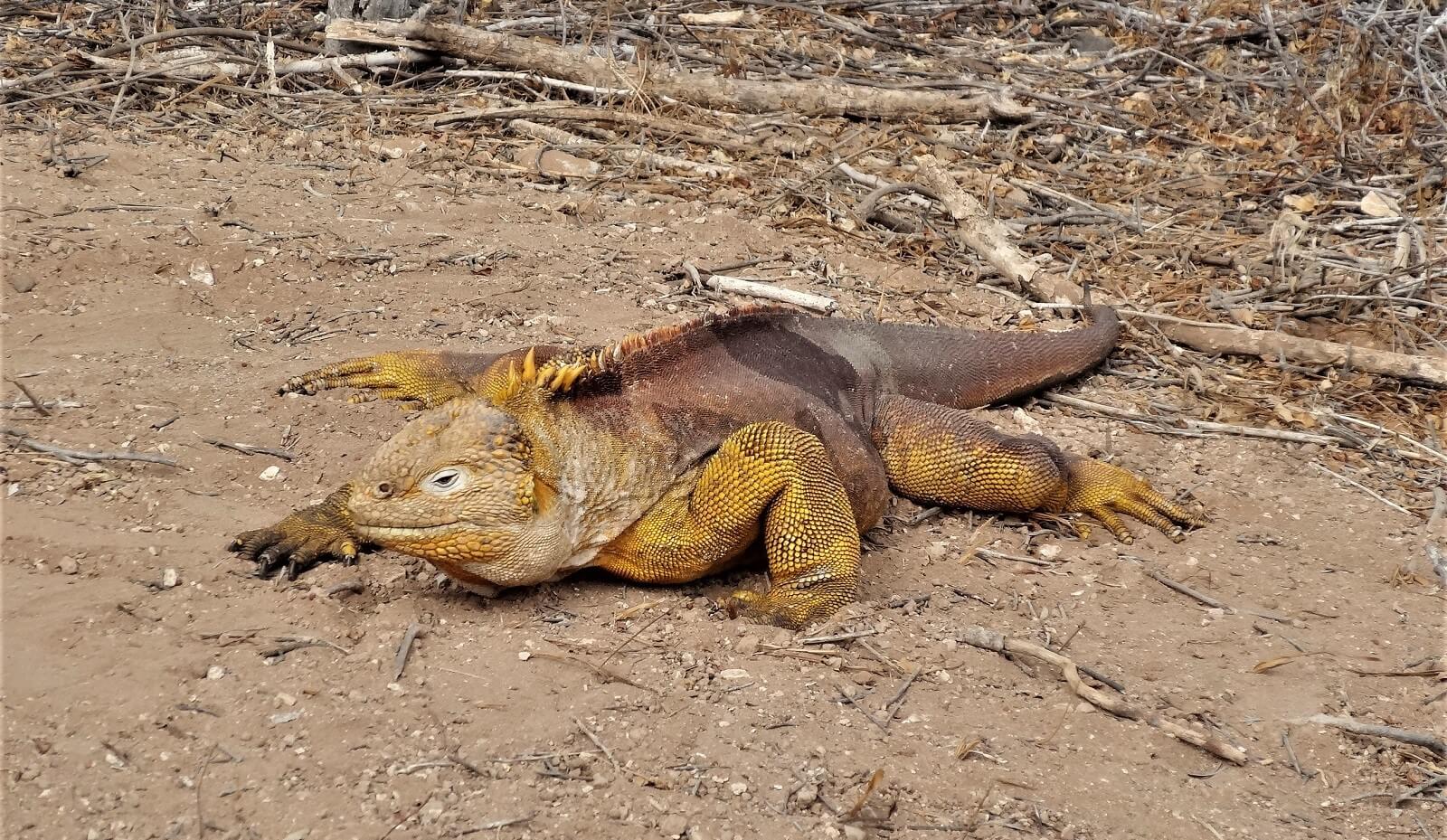
     

    Coming to NZ? Half of what we say won’t make sense to you. Brush up on your Kiwi slang before you land at the Kiwi Slang Dictionary