Sending money overseas is more complicated than it should be. Bank to bank transfers are usually expensive, and most cash-pickup services are prohibitively expensive.
This has been a large issue for me over the years, as I am constantly sending and receiving money to and from foreign countries. I’ve tried most services online, all of them work fine, but many are costly and some take longer than others. I’ve had times where more than 10% was chopped off my transfer on the other end.
I recently spent several weeks eating my way through the economic capital of Abidjan, doing my best to sample as much of the local cuisine as possible. I was expecting some similarities to east African cuisines, which generally have soft and mild flavours, but Ivory Coast food is not like that at all – it’s sharp and spicy, with extra chilis on top!
As your intro to Ivorian food, I’ve collated a list of 16 things I think you should look out for on your next visit.
Attiéké is one of the main staples in Ivory Coast cuisine and you will see it everywhere.
It’s made from fermented cassava, which is granulated so it becomes like couscous in texture. You usually eat it with your hands – just smush it into a ball and pop it in your mouth, similar to how the Indians eat rice and curry.
It can be served with almost anything; you will see it served as a side with most dishes, or sold streetside on its own in small plastic bags.
What’s it taste like? Mild, it’s a little bit sour. Really filling too, so you should never be hungry here. Out of the staples listed below it was probably my favourite, I found myself choosing it for most of my meals!
Alloco
Alloco is basically a heart attack on a plate.
It’s made from plantains (green bananas), which are cut up into bits or slices, then deep fried until they’re super brown and crispy. The serving is usually large and they’re soaked in oil, so you know eating them will make your arteries cry (but of course you do it anyway because they’re so yummmm).
They have a touch of sweetness which makes them a nice change from french fries, plus they’re softer and chewier too. You see this eaten a lot more at nights, usually with the all the chickens being grilled around town. The locals love it.
Foutou
Foutou is an interesting dish, I actually watched one of my friends make it from scratch and it took forever.
First, the cassava and the bananas are boiled.
After that they are left to cool a little, and then they get pounded in this big bowl. They need to be pounded one by one so it doesn’t come out lumpy, so it takes a long time.
Once it’s all pounded into a mush they mold it into these big balls and let them sit.
In the end they have this big lump of sticky yellow goodness, which is typically eaten with a sauce dish.
It tastes how you’d imagine (like banana) but it’s sticky and quite difficult to eat. I learned this the hard way but you need to wet your fingers first (in the sauce) before you start grabbing at it. Otherwise you’re going to be gnawing at foutou glued to your hands like a tourist dummy.
This is quite hard to find at night, so go searching for it at lunchtime if it’s what you’re looking for. Definitely something you need to try for the full west African experience 😉
Placali
Placali is another staple, this one made from fermented cassava dough.
It’s cooked slowly with water and then set aside to cool. When served it’s going to look like a huge dumpling which you pick at with your hands, similar to the foutou.
It also tastes sour, like a sourdough bread, and is normally served with sauce dishes. I remember getting served this and thinking it would definitely not be enough, but even a small portion is so filling that I was struggling to finish it.
This is also something you can only find during lunchtime – search out some local food spots around midday and it will be easy to find.
Sauce Kopè
“Sauces” are really popular in Cote d’Ivoire food and there are a lot of them.
Sauce kopè translates to “sauce okra”, which is a very gooey and spicy sauce. It’s usually eaten with placali like you see in the photo.
Common ingredients in the sauce are crab, escargot (snails) and fish or beef.
Eating this dish is labour intensive and messy; the placali is already a sticky challenge and the sauce is also a little difficult to handle. By the end of your first time eating it you should get the hang of it, but if you’re like me you might feel a bit goofy in the process, especially while dripping sauce everywhere with placali plastered all over your hands. Don’t worry, it’s all part of the fun.
How does it taste? Okra has a semi-neutral flavour to begin with, so it depends on what it gets cooked with. Seafood is popular, so if it’s crab or fish it will probably have a seafood chowder like taste, and it’s usually spicy too.
Mine had snails in it which you’ll come across a lot in Cote d’Ivoire cooking – they taste mostly like shellfish but a little firmer, nothing to be afraid of!
Overall sauce kopè wasn’t my favourite sauce but it wasn’t bad – definitely worth trying if you see it on the menu.
Sauce Arachide
Sauce arachide is a spicy peanut based sauce, this one more often eaten with rice.
I think the usual main ingredient is chicken, but the one I had (in the photo) was made with fish which was also good. If you can imagine half a fish cooked in a big bowl of spicy satay sauce, that’s pretty close to what you’ll get. Pretty good!
When it comes to sauce dishes in the Ivory Coast, the menu changes daily so it just depends on what they’re cooking that day. The two above are the ones I tried but there are lots of others too. They’re not really available in the evenings, so check out the local eateries around lunchtime, that’s when you’ll find them!
Poisson Braisé
Fish is common in Ivorian cuisine, and anything braisé in the Ivory Coast is a treat.
Put those together and you have Poisson braisé, which translates to “braised fish”, although I don’t think it’s actually “braised” as we understand the word in English.
First the fish is marinaded in some basic flavours (garlic, lemon, parsley, pepper etc) and then cooked slowly on a hot grill. Afterwards it’s topped with sauteed onions and tomatoes and served with a side of attiéké or alloco. You always get the whole fish too so it’s usually a huge meal.
Because Ivory Coast is on the coast (duh) the fish is almost always fresh. I don’t think I ever had a bad fish during my trip!
Poulet Braisé
Poulet braisé translates to braised chicken and is cooked in much the same way as the poisson braisé – marinaded in spices and then thrown on the grill for a slow cook.
This is a really popular dish at night and you’ll smell the chickens grilling as you walk around Abidjan after dark.
One thing that stands out about the poulet braisé (and many other dishes in Cote d’Ivoire) is the chili sauce they add on the side. It’s literally the spiciest sauce I’ve ever tasted and I couldn’t even touch it. Those Ivorians seem to just eat it by the spoonful. Madness.
If you’re not a spicy food guy, be careful not to mistake it for an innocent tomato sauce – it definitely is not!
Other than that this tastes like your standard grilled chicken – I ended up eating it a lot as it was easy to find and cheap, usually around 2,500 CFA ($4 USD) for half a chicken.
Choukouya
Choukouya is the west African version of flame grilled meat. It’s the classic nighttime meal and you’ll find it getting cooked all over the city in the evenings.
As far as I understand it choukouya can refer to many different kinds of meat, so you can have chicken choukouya, beef choukouya, goat choukouya and so on.
Once it comes off the grill it’s chopped up, topped with onions and served with the usual spicy-as-hell sauce on the side. Most people eat it with fries or alloco (and lots of beers).
Poisson en papillote
Poisson en papillote translates to “fish in foil”, which is exactly what it is.
When I ate this I’d just done a long day of surfing and I asked the barman what I should eat. He recommended the poisson en papillote avec riz (fish in foil and rice). I didn’t even know what that meant but it turned out to be awesome. I think I had it again the next day.
I’m not certain how they cook it, but I know they wrap the fish in foil with some kind of lemon marinade and maybe some tomatoes, then cook it until it’s saucy and delicious. Luuuurved it.
Garba
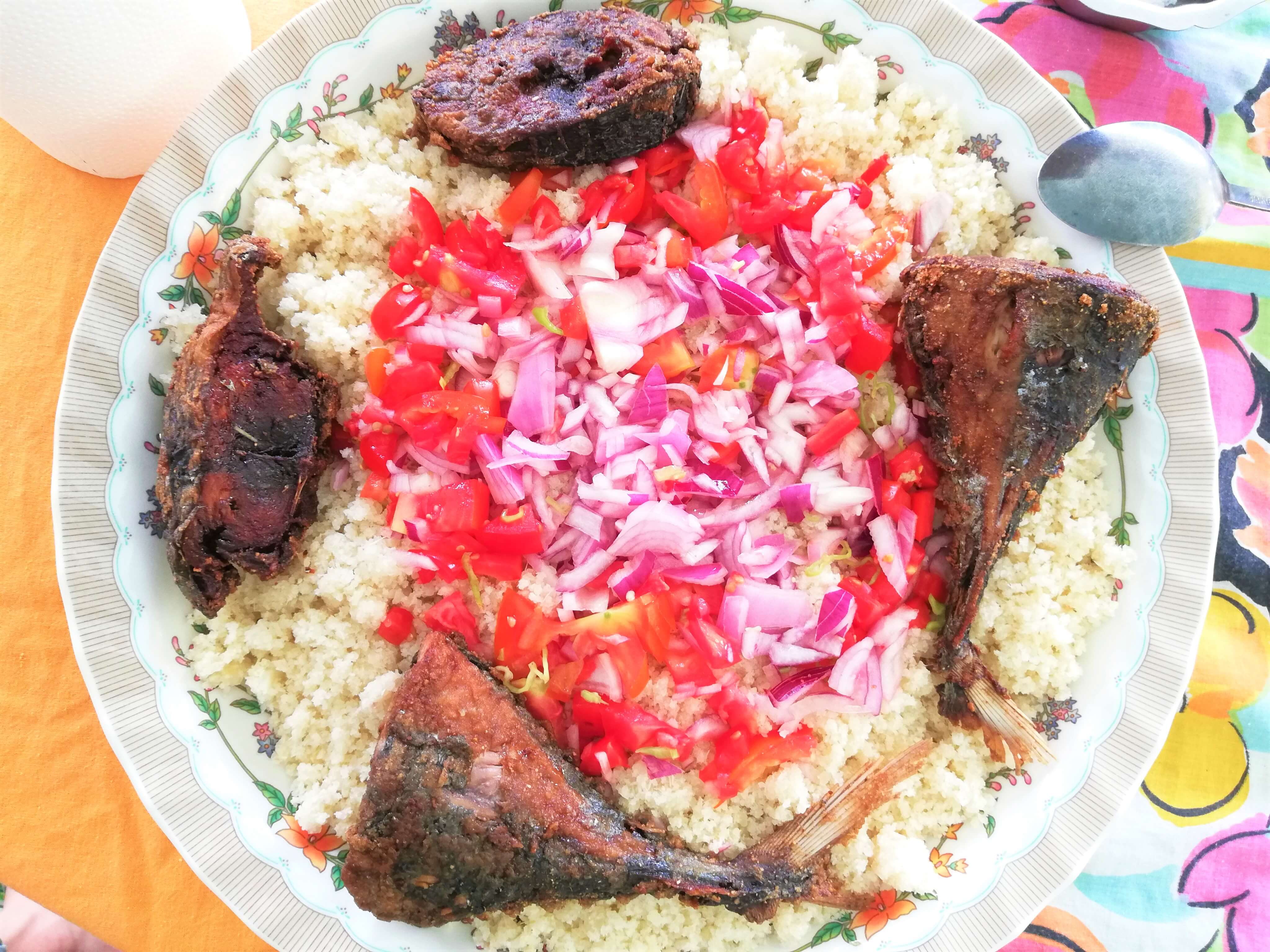
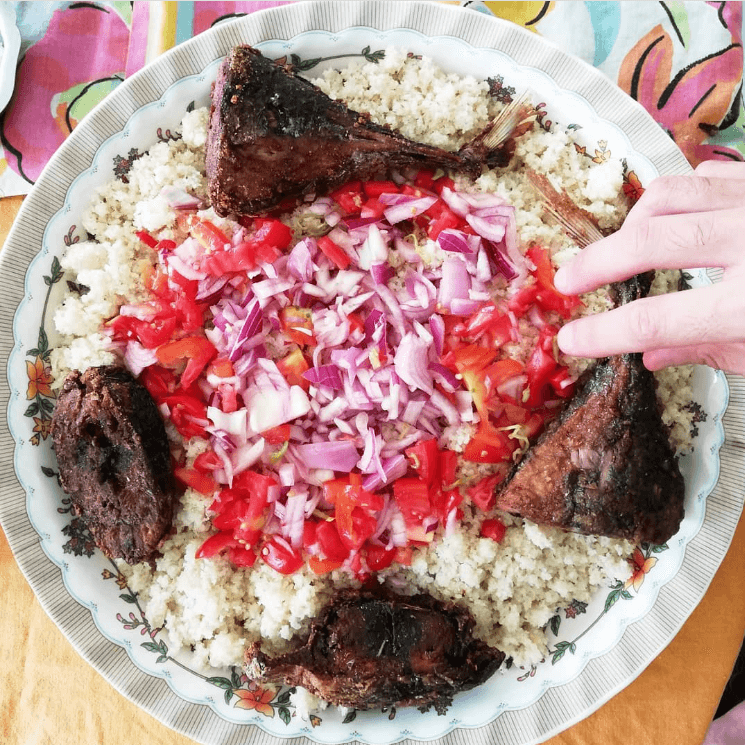
This is a very local dish, which consists of attiéké, topped with diced onions and tomatoes and several pieces of fried tuna. You can eat it with your hands – simply grab a piece of everything and pop it into your mouth. The tuna is very salty so you need to get a good chunk of attiéké and tomatoes to mellow it out. It’s a perfect combination if you get the mix right!
This is one of those classic “poor man meals”, so you’ll find it being sold streetside in many places, mostly in the mornings.
Why mornings? Because this a super popular Ivory Coast breakfast! Or at least how it was explained to me; you eat it for breakfast on a Sunday or a day you don’t need to do anything. It’s a very heavy meal so the idea is you can just overeat and then enjoy your food coma for the rest of the day.
Poulet piquet
Poulet piquet is chicken on a stake cooked over a wooded fire. You’ll notice it very quickly by the big sand/dirt pits they use for cooking outside the restaurants.
The funny thing about eating out at night in Abidjan is everywhere is so dimly lit, so often you can’t really see what you’re eating. Sometimes you see people holding their phones in one hand and eating with the other because it’s that dark! So, when I tried poulet piquet I didn’t really get a good look – I do know there were a couple of sauces on the plate, that were yum, but no idea what they were…or what they looked like.
It was noticeably less greasy than a regular grilled chicken though. That means you can have it with some greasy alloco (fried bananas) and not feel too bad! 🙂
This is pretty to easy to find, you’ll find it being served during the night in lots of food spots around town.
Kedjenou
Kedjenou is a traditional Ivorian chicken stew.
It’s cooked in a sealed dish, sometimes some vegetables are added, then it’s left to slow cook in the meat’s own juices. At the end you’re left with a very flavoursome and saucy stewed chicken, best eaten with attiéké or rice. If you’ve been to Morocco, it might remind you of the tagine. Of course they add a few chilis too, so be ready for some heat.
This one is another popular lunch dish, but I saw it served at a few places at night too.
Banane braisé
Banane braisé are plantains slow cooked over hot coals.
The end result is a hot banana which is browned on the outside but still very soft on the inside. This is a classic Ivorian snack and you’ll see it being sold roadside all throughout Abidjan.
There was a lady selling these just across the road from my apartment, 100 CFA (20 cents) for the small ones and 200 CFA (40 cents) for the big ones. Can’t find many cheaper and healthier snacks than that!
Pain Brochette
I was on the lookout for this for many weeks and didn’t find it until my last night in town. I was having ice cream with some friends very late (around midnight) when we saw a guy making pain brochettes across the street. Of course I had to go try one!
How it works is the guy will have a few beef (I think) skewers on the grill. He’ll slice a baguette in half and when the skewers are ready to chow he’ll clamp them inside the bread and pull the sticks out. Then he adds a whole bunch of stuff – mayonnaise, egg, some sauces and seasonings (I really have no idea what it was) and then it’s time to eat!
How’s it taste? It’s really just like a regular beef sandwich. Super cheap though. And tasty 🙂
However it was one of the “rougher” street foods I saw, so if you’ve got one of those sensitive stomachs try to choose your pain brochette place carefully. I’ve also got a guide that you might find useful!
Dégué
I had a friend bring me a bottle of this one morning, insisting that I try it. I just thought it was yogurt but a few weeks later I found out it’s actually a traditional Ivorian drink.
It’s made by mixing yogurt with millet flour, and they must add a lot of sugar and/or honey because it’s very sweet. Tastes like an oat smoothie or maybe even one of those Asian sago desserts and goes down super easy. It’s sold everywhere in restaurants and supermarkets so you won’t have trouble finding it. Try it – it’s different!
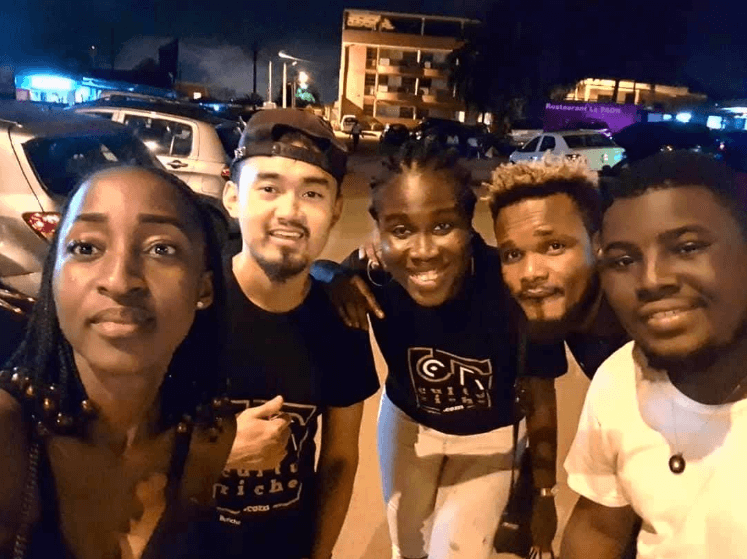
And there’s your introduction to Ivorian food. Shout out to my friends Orphelie from Culturiche and Yasmine from Afrofoodie for taking me out to some of their favourite eats in Abidjan, if you want ideas on things to do in town be sure to check out their blogs 🙂
Heading to Ivory Coast and…
Looking for tours and activities at an affordable price? I use GetYourGuide! Always great deals and local perks.
However, it does take a little while to get used to, and first timers are often intimidated by the place. The truth is, getting the most out of Bangkok is difficult if you’re unfamiliar with the city.
But with just a few pointers you can totally transform your experience. You’ll stay in a better neighbourhood, eat better food, save more money and just having a freaking awesome time.
In this guide I’m going to help you do that.
After visiting Bangkok for many years now, I’m confident I can give you all the first timer tips you’ll need to fall in love with Bangkok, just like I have.
The most amazing thing about Bangkok is, it’s a city of many colours.
You can have any kind of holiday you want in Bangkok.
If you want to party every single night and get drunk and go wild until the morning, this could be one of the best cities in the world.
But if you want to just spend the day eating delicious food and sightseeing and go to bed by 8pm, this could also be one of the best cities in the world.
If you want to shop all day and spend all your money on fancy clothes – well, this probably is the best city in the world.
And if you’re on a honeymoon and want a luxurious, relaxing holiday with beautiful sunsets…you get the point.
Where to stay in Bangkok really depends on what kind of holiday you want to have here. Obviously if you want a quiet honeymoon, you’ll be staying away from the parties on Khao San Road. If you want to shop, you’re likely staying near the malls in Siam.
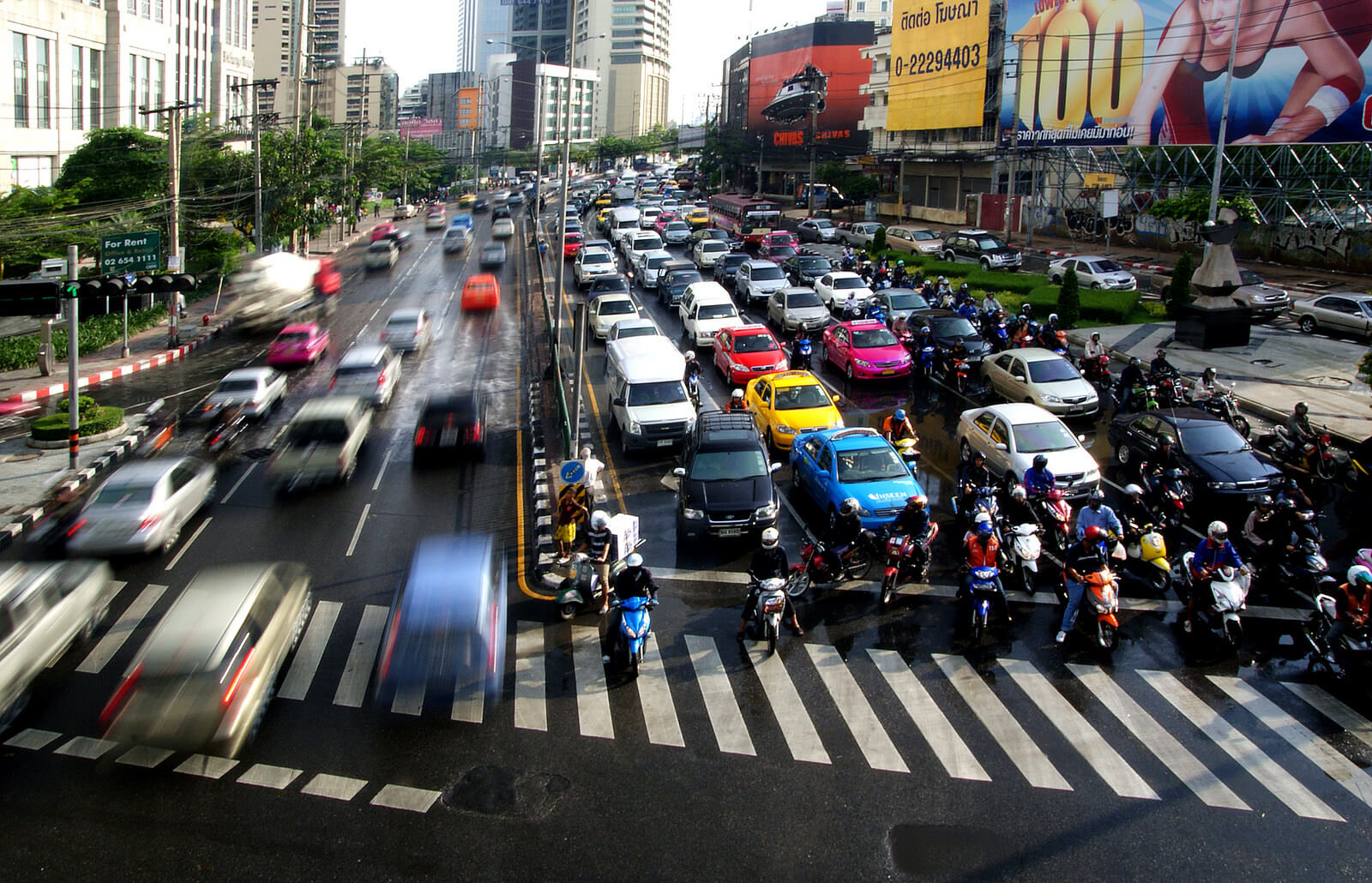
Bangkok is hot so long walks are uncomfortable and traffic jams are common. If you stay in the wrong part of town, you’re going to be spending hours per day commuting, sweating and sitting in traffic. NOT ideal.
In fact, I’d say where you stay in Bangkok is the most important thing to consider for an enjoyable trip. Therefore this section is going to be extremely detailed and the key focus of this guide.
So, what’s the best place to stay in Bangkok? There’s no right answer.
It all depends on what you’ve come to do in this great city.
Below I’m going to break down six of the main areas of Bangkok so you can decide the best place to stay in Bangkok for you. Of course there are many more areas, but these six are the main ones and for a Bangkok first timer, I highly recommend staying in one of these.
What I’ll do is give you a quick intro to what each area is about, then share some places to stay that I can vouch for. I’ve stayed all over Bangkok, and while I’m a budget traveller at heart, I’ll give you options for every price range. Whether you’re looking to pinch pennies or splurge on a fancy honeymoon, I’ve got you covered.
<
Bangkok Neighborhood Map
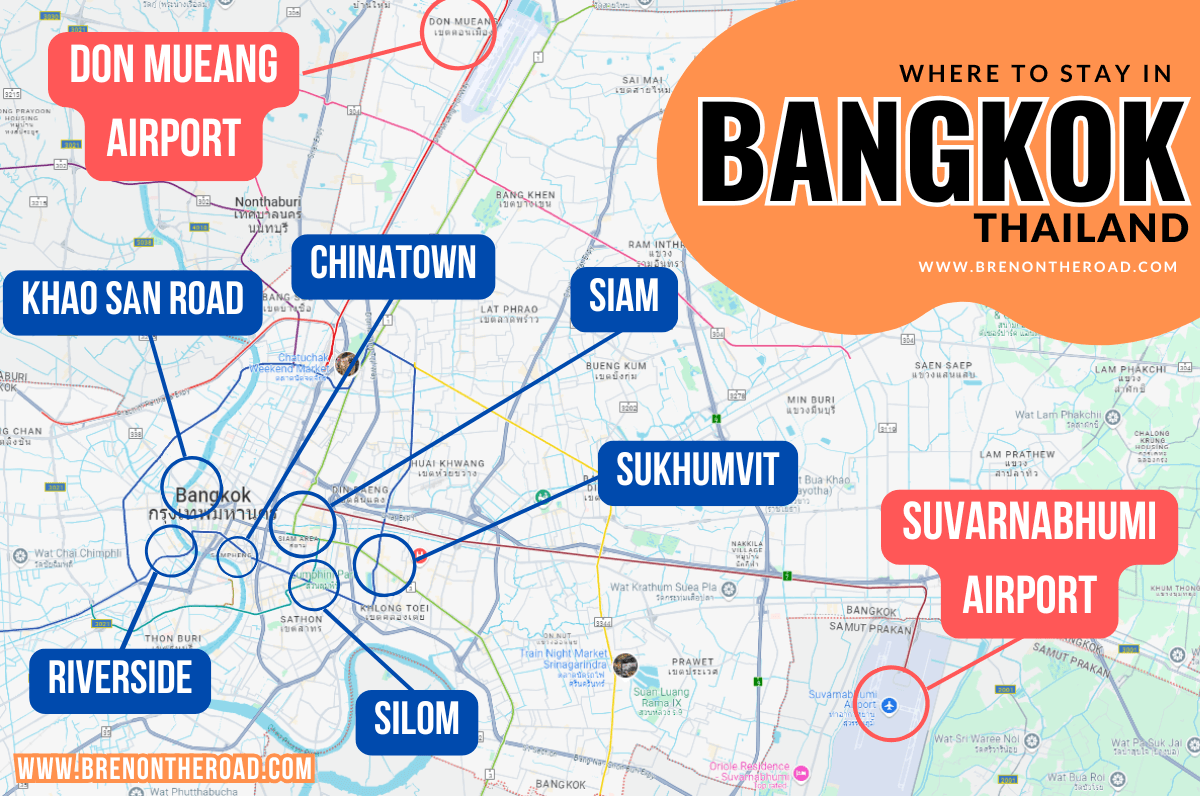
Here’s a map of Bangkok with the areas we’ll be talking about. As you can see both of Bangkok’s airports are quite a way out, but it’s easy enough to reach central Bangkok – the trains leave from right within the airport terminal and will only cost a few dollars. Super easy.
Above is a Bangkok neighborhood map marked with all the areas covered below, which I would consider the best places to stay in Bangkok for most visitors, especially first timers.
All are easy reachable once in Bangkok’s centre. Again, there is no one best place to stay in Bangkok. All have their different quirks and things to love and hate.
Let me take you through each of them:
Looking for things to do on your trip? Check out these ideas:
Sukhumvit
This is my favourite area to stay in. Sukhumvit is a developed and trendy area of central Bangkok, packed with hotels, bars, restaurants, clubs, shops, malls and everything else you could want on your doorstep. While many tourists stay in and visit this area, it’s not exactly “touristy” in the traditional sense. There are many Thais that live and work in the area too, which gives it a local feel, despite the clear western influence.
As an added bonus, the Skytrain runs right through the middle of Sukhumvit, meaning if you want to go anywhere you can simply jump on the platform and get anywhere in just a few minutes. There’s no need for taxis in Sukhumvit!
The Sukhumvit skytrain line centres around the more tourist-oriented areas, such as Nana and Asok. Here you’ll find a lot of things like massage houses, Irish pubs, western restaurants, bars, street sellers and so on. It’s pretty hectic but fun too, maybe the best place to stay in Bangkok for one or two nights.
As you move further down the line towards Thong Lor, you start to get a more high-class Thai vibe, and recently even further down to Bang Na is now full of western comforts. Beyond that it starts to more local and you’ll hear less English and have more local shops, if that’s what you want. You can stay absolutely anywhere on the Sukhumvit line, but I’d probably stay somewhere between the Asok and Thong Lor stations for max comfort, but honestly with Bangkok’s rapid development, even way up to Ari is perfectly safe and modern for a tourist. That way you’re right in the centre of the action, and just a few stops from both worlds.
You should stay in Sukhumvit if:
You want a mix of everything (nightlife, street food, western comforts)
You want easy access to public transport
You want a mix of tourist and local oriented areas.
It’s your first time to Bangkok
Where to stay in Sukhumvit?
There are lots of options between Asok and Thong Lor; in my opinion, this might be the best place to stay in Bangkok for a first timer. Here are some recommendations:
For the backpacker
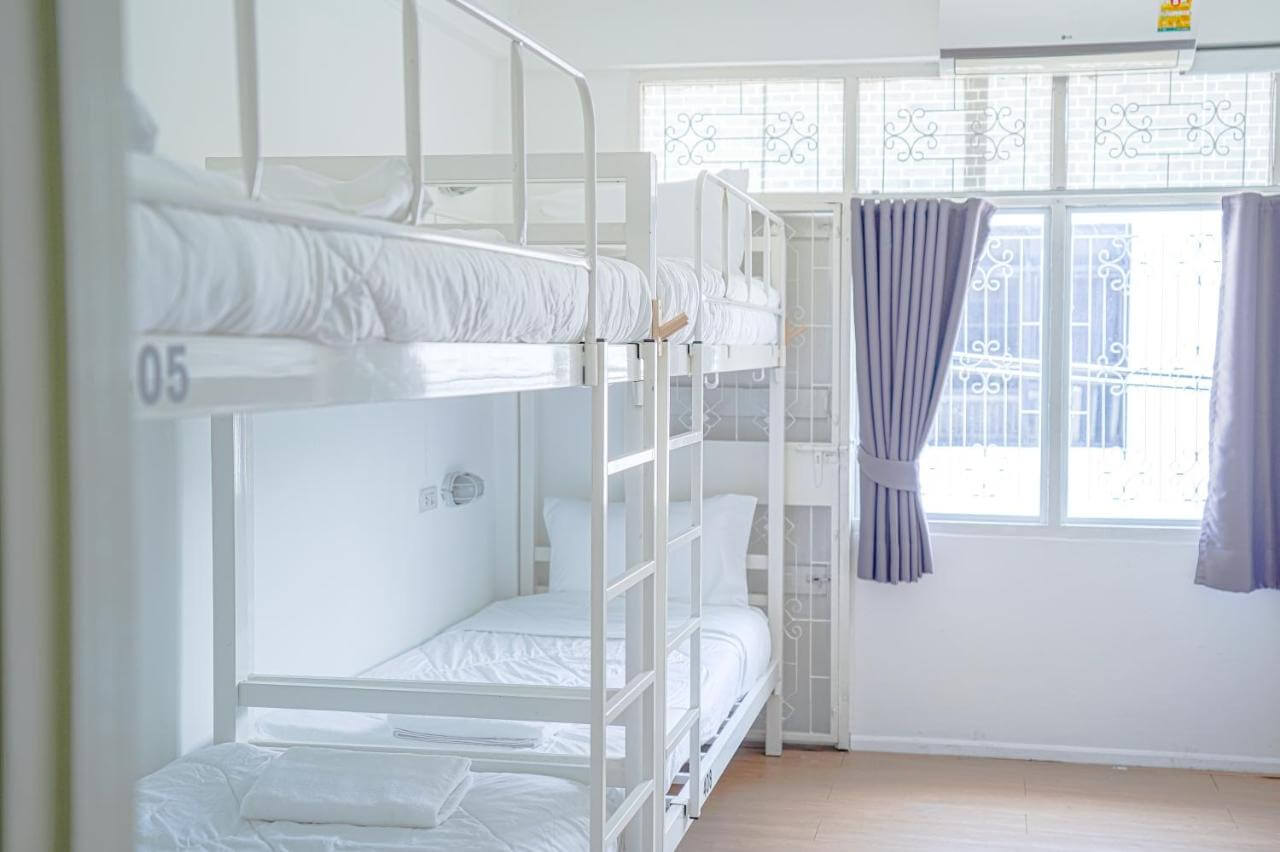
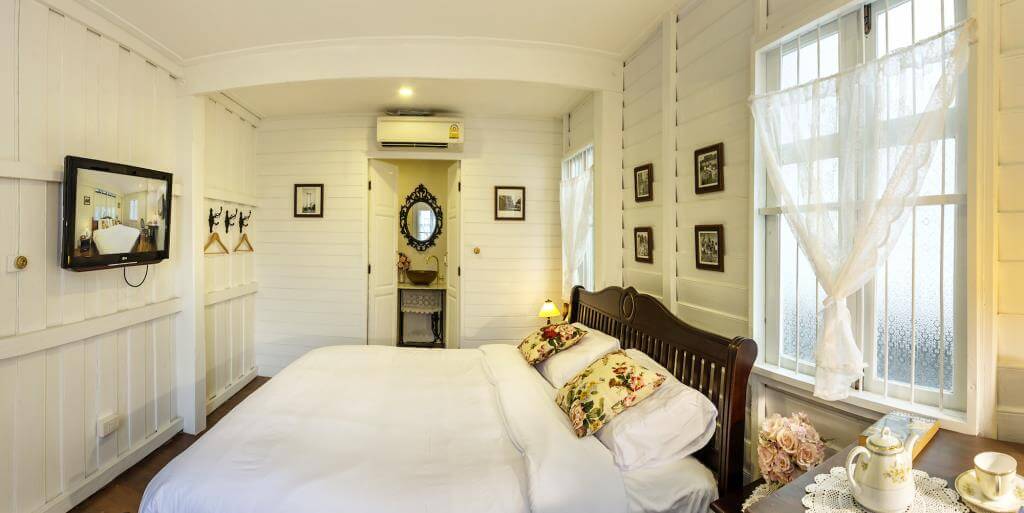
Try the Piccolo Hostel. This quirky hostel is super clean, modern, and a one-minute walk to the BTS station. For less than fifteen bucks a night in low season, it’s a total bargain. You’ll find the best rates here.
Piccolo Hostel, Bangkok
For the budget traveller
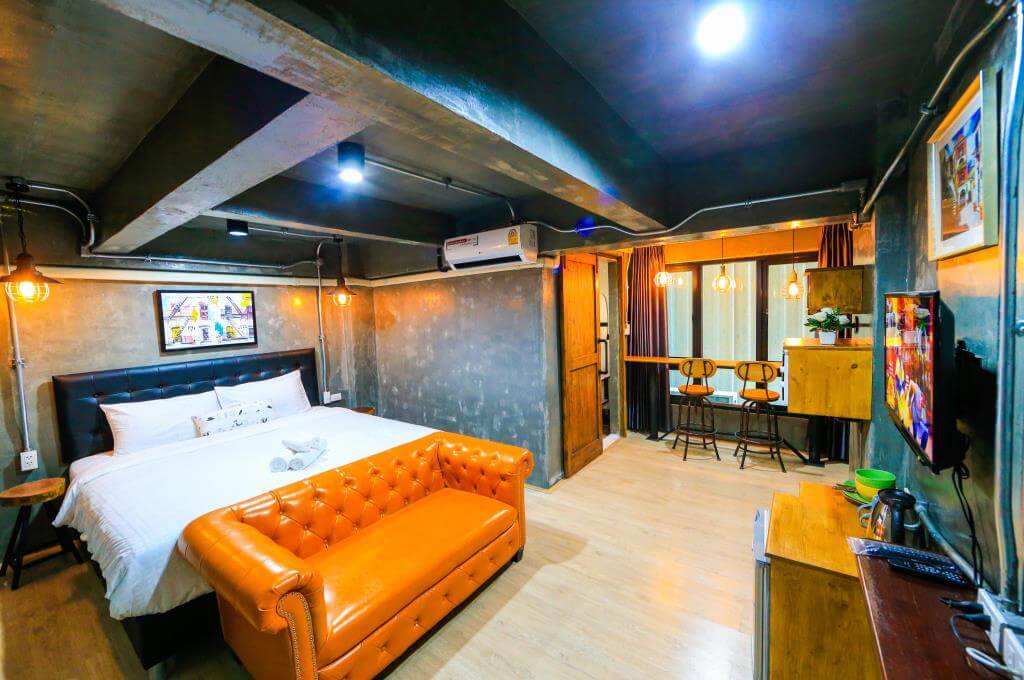
I’d stay at the Adagio Bangkok. Will only run you around $40 a night and the rooms almost feel like those of a top Bangkok hotel. Bangkok hotel prices are already great but there are very few places in the world you can get this level of flash at this price! It’s also just a few steps away from the Phrom Phong BTS station – a big bonus. You’ll find the best rates here.
Adagio Bangkok Hotel
For the high roller
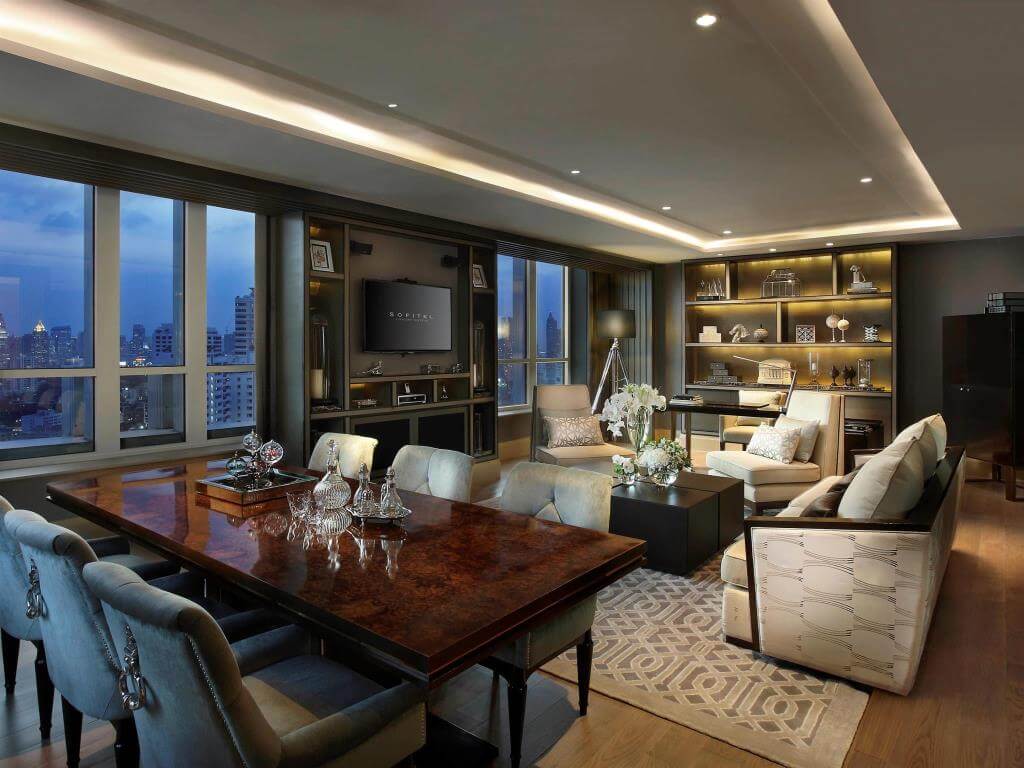
Sukhumvit is full of luxury, and the best part is, it’s not even that expensive. If you’re on a romantic holiday and looking to splurge, this is a great city to go all in. If you’re staying in Sukhumvit, I’d take the Sofitel Bangkok. It’s one of the best Bangkok hotels there is (that’s saying something) and has everything you’d expect in a lavish hotel – gym, pool, room service, a zillion floors, incredible furnishings. Will run you $150 a night and up, but it’s fit for royalty. Five minutes walk to the Nana BTS. You’ll find the best rates here.
Sofitel Sukhumvit Bangkok
Khao San Road
Khao San Road is the backpacker mecca of Bangkok, and tailored for the young, university-aged party crowd. This is hands down the best place to stay in Bangkok for backpackers: Cheap drinks, cheap food, bars and loud music, and general all night craziness. It’s also arguably the best place to stay in Bangkok for singles, especially if you’re looking to meet someone. Lots of solo travellers frequent Khao San, so you’ll be right at home.
If that sounds like you, this is your spot.
There are many backpacker hostels both on and around Khao San Road, and in all honesty you could probably just show up and find something as long as you’re not right in the middle of peak season. However it’s always a good idea to book ahead.
You should stay in Khao San road if:
You love to party
You’re a backpacker and looking to meet people
You’re looking for cheap drinks and cheap food
You’re a solo traveller
You’re on a tight budget
Where to stay in Khao San Road?
For the backpacker
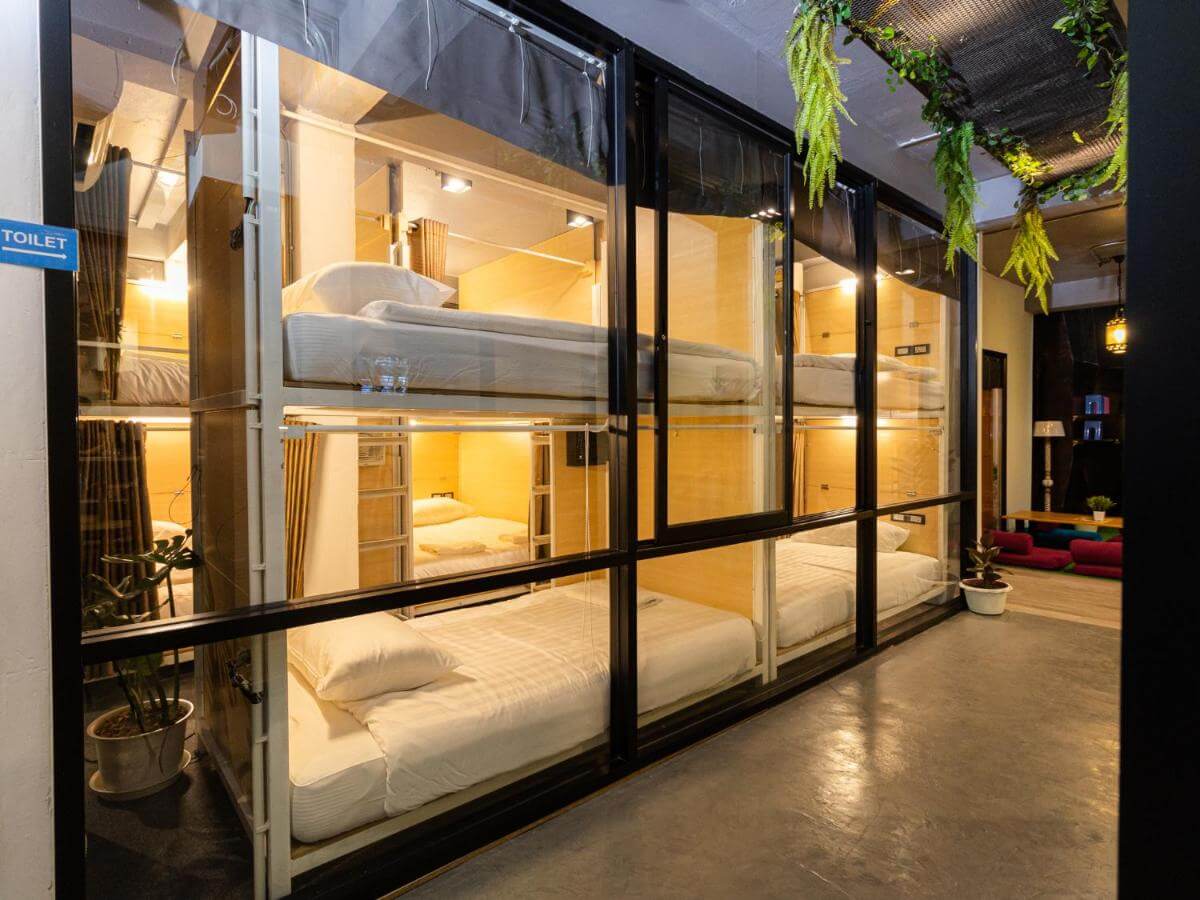
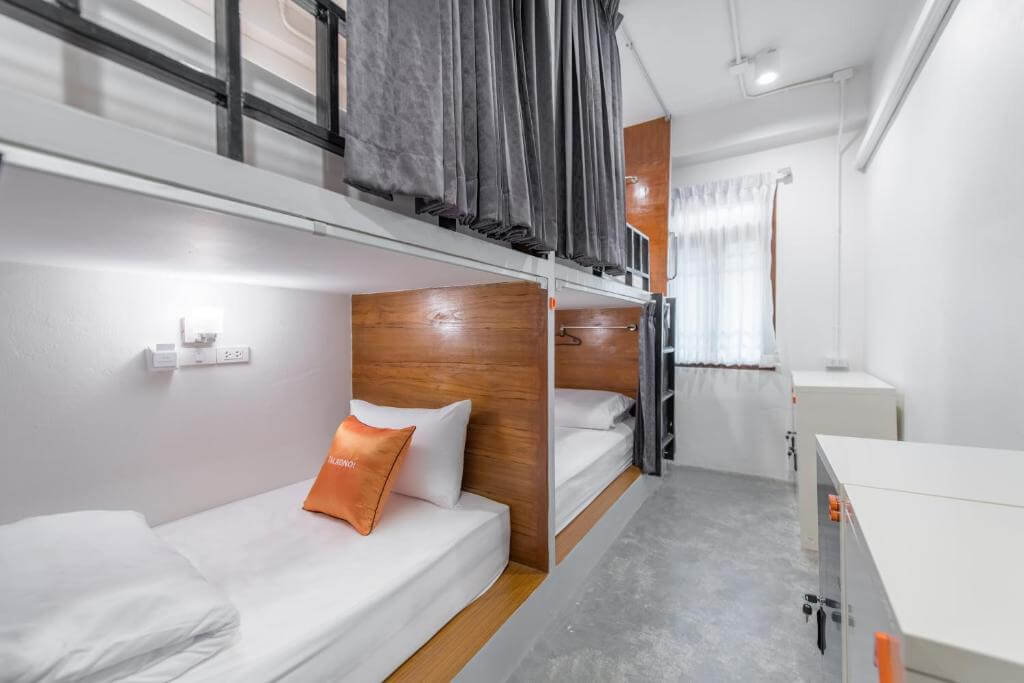
Stay at the Social Capsule Hostel. This brings a Japanese capsule living flavour to Bangkok, and they do it so well! The hostel features a bar, a terrace, free Wifi and a lounge, and best of all, the beds are cheap! Just 300m from Khao San Rd means you’re never far from the action. Best rates here.
Riverside is a slightly more trendy and expensive area, away from the hustle bustle that Bangkok is often known for. It’s full of expensive hotels and pretty views. I don’t spend much time out here personally, but it’s definitely the best place to stay in Bangkok for couples looking for flash and romance. If you’re in Bangkok on your honeymoon, this is your place! The area is also known for its many temples and shrines and other tourist attractions.
Another cool part of staying by the Bangkok riverside is the boat rides! There are ferries going up and down the river all day – the easiest place to get them is from the Central Pier. Some of the upper end hotels will offer free rides to and from the Central Pier, so look out for that.
You should stay on Bangkok Riverside if:
You’re looking for something romantic
You’re after a nice hotel with all the frills
You’re not on a tight budget
You’re looking for a quieter side of Bangkok (but still with lots to do)
Where to stay in Bangkok Riverside?
For the backpacker
Tiny Taladnoi is an absolute bargain. Maybe bucks a night in low season and all the frills of a high-end hostel. About a ten-minute walk to public transport. Best rates here.
The rooms are gorgeous and it’s on Rama VIII road, just a few minutes from the riverfront. Many popular attractions in the area are within walking distance. At $40 a night it’s a gem. Best rates here!
For the high roller
There is no better place than the riverfront to experience luxury accommodation in Bangkok. The area is overflowing with extravagance. I’m going to recommend the Riva Arun. Both the rooms and the views are going to blow you away here. At $350+ per night it’s not cheap, but if you’re in Bangkok to live large this won’t let you down. Best rates here.
Siam
Siam is Bangkok’s retail district and definitely the best place to stay in Bangkok for shopping fiends. Truthfully, even the biggest shopaholics can’t outshop Siam. Bangkok has some of the biggest and best malls in the world and many of them are clustered here on one strip – Siam Square, MBK, Centralworld, Siam Paragon, Siam Discovery and Siam Center. Get through those and you’ll still have street shopping and boutique malls to get through.
One thing I did notice about Siam is it feels a lot less “Thai” then other areas of Bangkok – meaning the malls are full of western brands, wealthy teenagers and foreigners. Things like Thai street food and regular locals are not seen as much. Nothing wrong with that of course, just something to take note of.
You should stay in Siam if:
You love shopping!
You want somewhere central
You’re looking to spend a lot of time at the malls
You want to stay in the more developed/modern areas of Bangkok
You want somewhere tourist friendly, but still with lots of locals around
It’s a newly opened hostel, fun, quirky, social, and the beds are great. Ratchatewi Station is 100m away. Private rooms available, and ten to fifteen bucks a night for a dorm bed! You’ll find those rates here.
It’s a boutique guesthouse, very modern and stylish with a great location. Rooms are excellent, five minutes walk from public transport, around $50 per night. Best rates here.
For the high roller
Lots of high-end places to choose from, but I’d recommend the Siam Kempinski. Will probably run you about $300 per night, but the rooms are absolutely lavish and the location can’t be beat. Facilities are incredible too – with the gym and pool they have, you’re never going to leave! You’ll find the best rates here.
Silom
Silom is a much more vanilla area of Bangkok. Not so wild, not too touristy, just your regular city vibe. That’s not necessarily a bad thing, there’s still plenty of beautiful places and things to do around here! I’d say it’s one of the best neighborhoods to stay in Bangkok for a long term stay.
It’s actually considered the city’s central business district, so you’ll see lots of working Thais around in office clothing, locals going about their day, elderly exercising and strolling through the enormous Lumphini park. One thing that can be a downside here is the ridiculous traffic during rush hour, but if you’re using the Skytrain you’ll be fine!
Of course one thing you should note is the infamous Patpong area is here, which is notorious for sex tourism, ping pong shows, girly bars and late night shenanigans. Of course if that’s your thing you’re in the right place! Note there’s nothing dangerous about this area at all, it’s just somewhere to steer clear of if you don’t want that sort of thing in your face, which is not hard to do at all.
You should stay in Silom if:
You want a taste of local but modern life in Bangkok
You’re ready to sample endless restaurants and bars
You want some GREAT nightlife
You want somewhere central with access to public transport
Where to stay in Silom?
For the backpacker
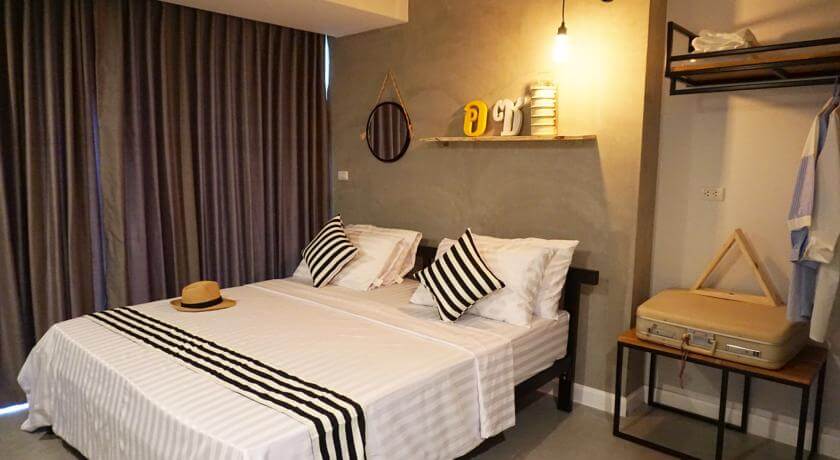
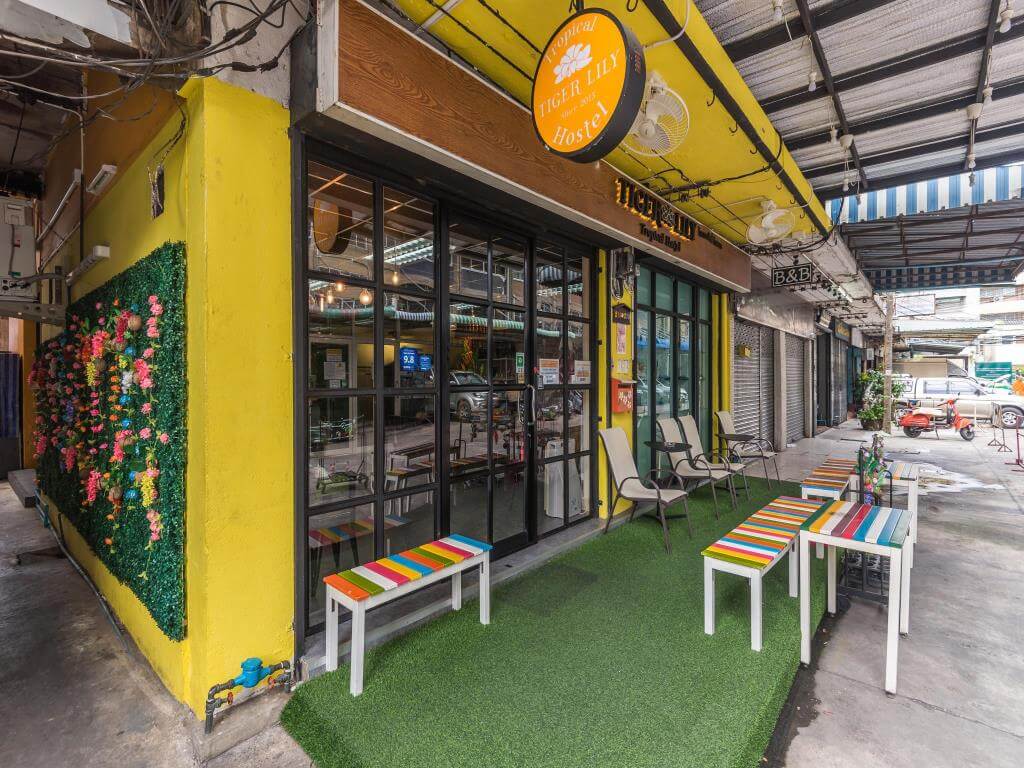
Silom is one of the best places to stay in Bangkok on a budget. If you’re strapped for cash, I’d stay at iSanook. It’s a funky, colourful, modern hostel in a great location. If you’re lucky you’ll get a room for less than eight or ten bucks a night. You should find those rates here.
For the high roller
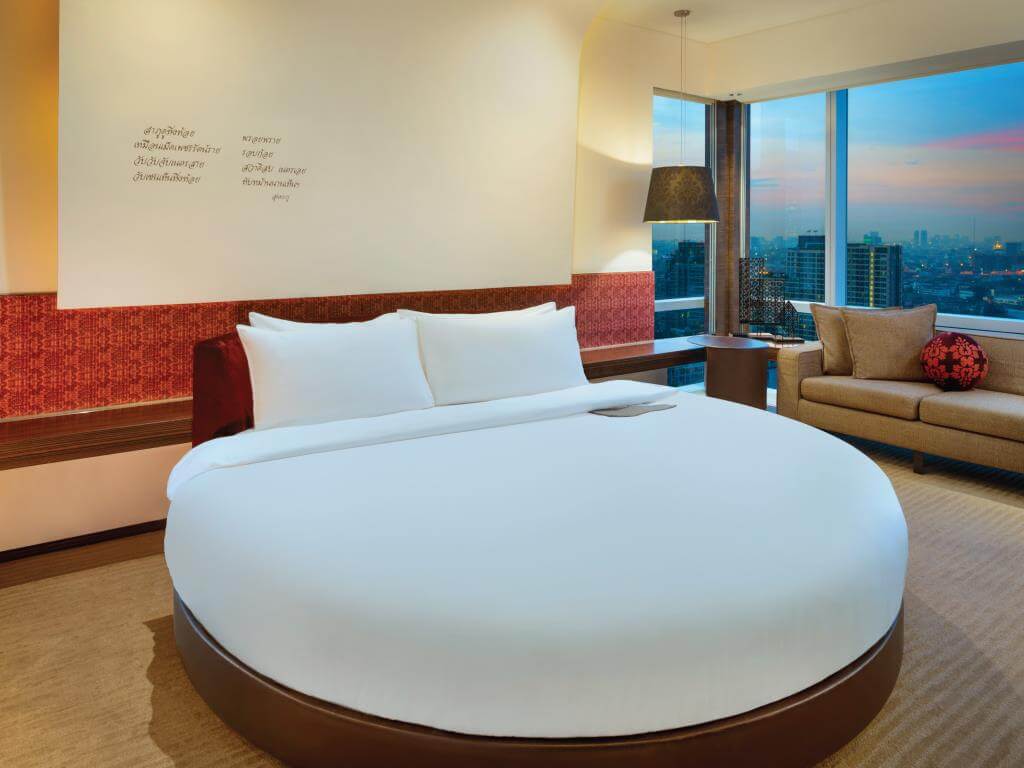
Lots to choose from in Silom, but I’d suggest the Le Meridien.
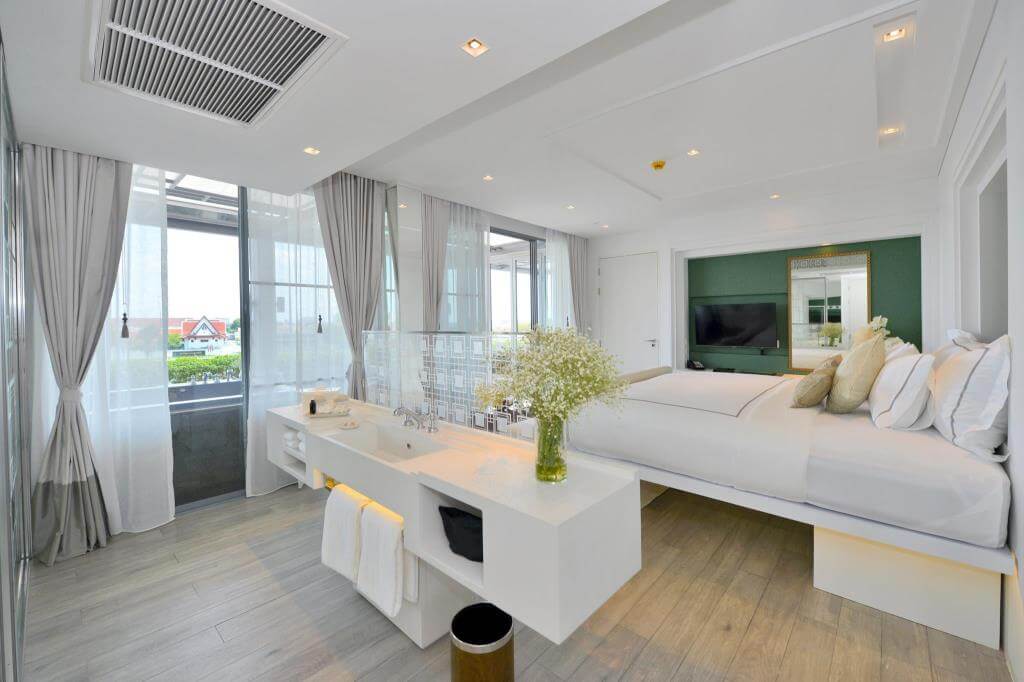
Not too expensive, but still all the flash you’d expect from a five star hotel. Get the circular bed room – might cost you, but what’s a Bangkok holiday if you don’t treat yourself a little? Splash out – you won’t regret it 😉 You’ll get the best rates here.
Chinatown
Chinatown is a good budget area of Bangkok with a lot of history.
It’s not the prettiest place in Bangkok but is completely safe and full of interesting characters, chic bars, street food, rustic streets and just good old Bangkok ruggedness.
When Khao San Road started becoming infamous for its partying ways, Chinatown became somewhat of a backpacker alternative. There are a lot of cheap places to stay around here, and a lot of cheap food and shopping too. One could even argue it’s the best area to stay in Bangkok for food (yes, really).
It tends to attract the young traveller more interested in a quiet beer and a good plate of noodles than an all night rave at the club.
You should stay in Chinatown if:
You don’t mind being out of the centre (but it’s not that far!)
You LOVE food and want to eat your face off
You’re on a tight budget
You want to a place that’s not filled with tourists
Where to stay in Bangkok Chinatown?
For the backpacker
Tian Tianis a great choice. It’s about a 3-minute walk to public transport, and is a super chic and quiet hostel, beautifully decorated and cheap! Shouldn’t run you more than $7-8 per night. Get the best rate here.
For the budget traveller
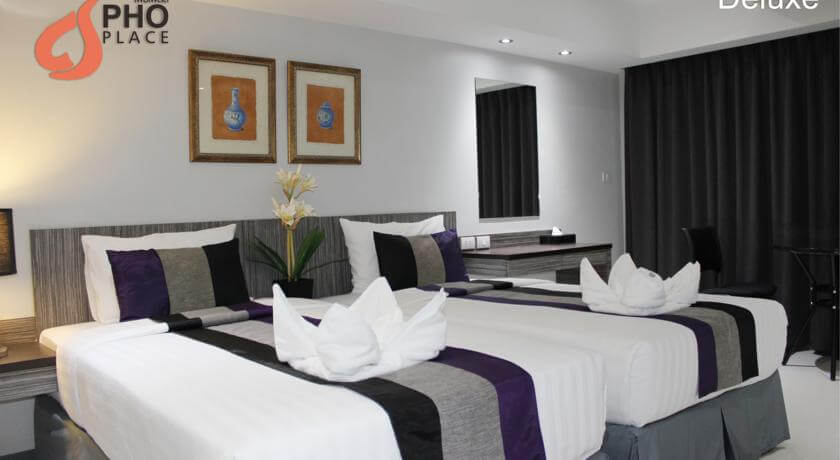
I can highly recommend Pho Place. It’s just down the road from the train, has beautiful rooms, and should cost you around $40 per night. Super value for money. Best rates here.
For the high roller
There isn’t too much flash around Chinatown, at least not compared to the rest of Bangkok, but it doesn’t mean you can’t do things in style here. The Hotel Royal has everything you’d expect in a top level hotel (gym, lap pool, beautiful reception and rooms) and will be quite a bit cheaper than the rest of Bangkok’s top selections. Around $120 per night will get you a room here. Save that extra cash for all the ridiculous food you’re going to be eating! Find the best rate here.
Bangkok Airport
If you’re only in Bangkok for a quick overnight you can still stay close to the centre, as getting to the airport is as easy as a quick BTS ride (at least from Suvarnabhumi). However, if you want to stay by the airport there are lots of good options out in those areas too.
When it comes to Bangkok airport hotels, I’d say the Amaranth Suvarnabhumi Premier is the one you’re looking for (if you’re flying from Suvarnabhumi airport). It’s very snazzy and they do free airport transfers 24 hours a day. If you’ve got a long flight the next day, this place will certainly recharge your batteries in style. Click here to get the best rate.
If you’re flying out from Don Mueang, stay at 12 The Residence. Usually the Don Mueang flights are shorter flights so you may not need something so luxurious to recharge. The rooms at 12 The Residence are very cosy and the rates are so low you might need to look twice. It’s also literally 1km from the airport, so you can even walk if you want to skimp on the 60 baht cab ride. You’ll get the best rates here.
Where to eat in Bangkok
Of all the great foodie cities I’ve been to, few (if any) come close to Bangkok. This is easily one of the best cities in the world to stuff your face.
Honestly, I probably don’t even need to recommend anything to you here, because as soon as you walk out your door you’re going to be running into delicious street food on every corner.
BUT, there are some places that are better than others. Let me introduce you to a few of the top dogs that you may not find on your own:
Victory Monument
Victory Monument is one of Bangkok’s best street food spots for foreigners due to its central location and the large variety of food available there.
There isn’t exactly one main street here for food, rather, all the sois (side streets) that run off the roundabout will have a selection of food carts for you to try.
One thing I recommend trying are the famous boat noodles, of which there are several. These are small bowls of noodle soup, which are purposely given in small servings so you can eat a lot of them! Many people challenge themselves to stack their bowls ten or twenty high, which always leads to an afternoon of satisfied stomachs.
The best area to stay in Bangkok if you plan on eating here is anywhere in Sukhumvit – the BTS line runs right through it so you’ll be linked directly to Victory Monument in a single ride 😉
How to get there: Jump on the BTS and get off at the Victory Monument stop. You’ll recognise the big roundabout immediately – make your way around it and enjoy!
Rangnam
Rangnam is also around the Victory Monument area. This is a slightly trendier street but still has an awesome selection of street food vendors to feast away on.
My advice: Search for Kuang Seafood on Google maps, then keep walking down Rangnam until you reach it. You’ll find a delicious selection of Thai food on offer there from a few different places.
Most Rangnam vendors come out later in the day, so make sure you head there in the evening to ensure you get the full lineup!
Again, best area to stay in Bangkok for Rangnam is in the Sukhumvit area, anywhere above Asok. A short BTS ride and you’ll be there.
How to get there: Head to the Victory Monument BTS stop, head to Exit #4.
Yaowarat (Chinatown)
Chinatown is one of the BEST and also most overlooked places to eat in Bangkok. The food quality is always super high; I don’t think I’ve ever had a bad meal here in all my years of visiting.
One reason people pass on Chinatown is because it’s a little far out of the main areas and isn’t serviced by the BTS. However, a short Grab ride (like Uber) should get you there and if you’re a food lover it will certainly be worth it.
My first piece of advice is to head there in the evening. This is the time for eating and all the popular vendors should be firing their woks by then. My second piece of advice is go with an empty stomach and a lot of time! Chinatown is huge and every little alley has something new to try. Chinatown is safe during the evening hours, so don’t be afraid to turn into every small alley and side street in the search for deliciousness.
How to get there: In 2019 the MRT finally opened its own station in the heart of Chinatown. Take the MRTto Wat Mangkon station on the blue line.
Ratchawat and Sriyan markets
Ratchawat and Sriyan are two separate markets that are very close together, and one that most tourists never hear about.
One reason is it’s a little difficult to get there (you’ll need to Grab or taxi) and when you arrive you’ll likely be surrounded by hungry locals without many foreigners in sight.
The road is named Nakhon Chaisri – walk down and you should come across the Ratchawat market first. This is a small and traditional food market, very different to the tourist-friendly markets you might find around the rest of the city. This particular market is well known for Thai desserts, but you should find no shortage of delicious Thai dishes as well. The famous Radna noodles are located here, which will almost always have a long queue waiting. If you’ve got time, try it, it’s amazing.
Just a few minutes walk from here is the Sriyan market. This is another very traditional market that might not look all that interesting on first glance, but take the time to explore and you’ll find many interesting Thai dishes here. It’s a good idea to go with a local as English isn’t widely spoken here, but pointing and Google translate will suffice if you’re adventurous enough. Again, these places aren’t frequented by tourists, so be ready for a very local experience!
How to get there: Head to the Victory Monument BTS stop, then take a taxi (around 6-8 minutes) to Nakhon Chaisri.
Petchaburi Soi 5
This is a very local area, which is great just to get a feel of Bangkok outside the commercial districts. And of course, there’s food everywhere.
Soi 5 is where all the action is at, where many restaurants and food carts come alive in the evenings to feed people on their way home from work. I’ve had some of the best noodle soups in my life around here, mostly from unassuming places that look like nothing more than a hole in the wall.
PA’Or is also now Youtube famous – of course I made it a point to visit and it was every bit as delicious as they said it would be!
Come in the late afternoon/evening and give yourself some time to wander, it’s an interesting spot. Best place to stay in Bangkok for this spot would be around Ratchatewi Station. P18 hotel is a great choice!
How to get there: First you need to get to the Ratchathewi BTS station. Go to Exit #3, you should be on Petchaburi Road. Head left on Petchaburi until you reach Soi 5.
Wang Lang
The Wang Lang market is situated right on the Chao Phraya River and even has its own pier (the Wang Lang Pier). That’s good news for you because if you’re in Bangkok for the food, this is one of the few must visit places in the city.
Wang Lang is huge – you can spend a whole day eating here. Definitely come with an empty stomach and empty schedule, with lots of pocket change to try all the Thai snacks you’re going to pass by.
This place does get quite a few foreigners but the crowds can also make it quite intimidating. Don’t be put off – get in there and try everything! There’s almost nothing you can’t find at Wang Lang – if you’ve seen it on a Thai food menu you’ll likely find it here somewhere.
How to get there: Go to the Saphan Taksin BTS stop. From there, you need to take the public boat from Saphan Taksin (yes, boat!). This will take you straight to Wang Lang pier.
Sukhumvit Soi 38
This is an honorary mention, as it used to be one of my favourite food spots in Bangkok. It has since been closed down due to a real estate development, but in its heyday it was one of the most accessible street food options for newcomers to the city.
There are still a dozen stalls here, located right at the foot of the soi, and the quality of food is still very good. It’s probably not somewhere you’d come just for the food, but if you’re in the area it’s a great place to have a meal.
How to get there: Head to the Thong Lor BTS stop. Head to Exit #4, it will be on the street directly underneath.
Final tip for eating in Bangkok
Some of you may be concerned about food safety when eating street food in a place like Southeast Asia. Bangkok is actually one of the safer places in the region to eat street food, and while it’s not perfect getting belly problems here is far less likely than places like India or China.
I personally have never had an upset stomach in Bangkok and I’ve eaten in ever corner of the city. As long as you take the right precautions you should have no problems. If it’s your first time in the region, I highly recommend reading my guide on preventing food poisoning and traveller’s diarrhea.
Things to see in Bangkok
There are endless guides online for things to do in Bangkok, so in this section I’ll try to throw in some offbeat places you might not hear about elsewhere. Even a year living in Bangkok wouldn’t be enough to see all the interesting things, so here are a few that the common tourist would be most likely to appreciate:
Lumphini Park
You could think of this as Bangkok’s version of Central Park – a haven of greenery in the centre of Bangkok’s concrete jungle. Pollution is a big problem in Bangkok, so Lumphini offers residents a place to enjoy a little nature and get away from the bustle and traffic.
This is actually a favourite place for runners, with paths winding all through the park. It’s also an amazing place to jog (or stroll) as you never know what you might come across – some seniors doing tai chi, kids playing basketball, families having a picnic, people meditating under the trees, even a few street food stalls near the entrances.
The place is huge, so don’t try and drop breadcrumbs. Just go enjoy yourself, and try navigate your way out with the signs when it’s time to leave.
How to get there: Grab the BTS to Saladaeng or the MRT to Lumphini, both will drop you right beside the park.
Channel 7 Fights
Channel 7 Stadium was once a traveller’s secret in Bangkok, but the secret came out quickly once Instagram arrived on the scene. Now it’s packed to the rooftops every Sunday.
Still, it’s an awesome place to catch some Muay Thai fights, which is an absolute must when in Bangkok!
Muay Thai is one of Thailand’s national sports, which is a vicious style of kickboxing, known for its relentless kicks and elbows. Muay Thai used to be a sport for poorer members of society, but has since grown into a global phenomenon with a lot of money to be made.
The Channel 7 Stadium is popular because entrance is free. The fights are televised so the aim is to get a large and enthusiastic crowd and ensure the stands are full. A few years ago it was rare to see tourists, but nowadays they make up a large percentage of the crowd. However, the fights are still of high calibre and many up-and-coming stars get scheduled to fight here. To get, come early – fights start at 2:30pm, so get there at 12 for the best seats. Alternatively you can also come late, around 3:15pm – by that time 3 fights will have finished and many tourists will have left after getting their Instagram photos.
How to get there: Head to the Chatuchak station on the MRT, or the Mo Chit station on the BTS, then catch a taxi to the stadium. Alternatively you can walk (15ish minutes).
Rod Fai Market
Rod Fai Market is insane and you’ll surely be blown away by how diverse and huge this place is. I actually chanced upon it on the way home with a friend and we spent hours walking around laughing at all the cool things they had.
Technically Rod Fai is three markets.
The Warehouse Area is for all kinds of hard-to-find household items and accessories – think old appliances, second hand clothes, collectible toys – things like that.
The Antique Area is a huge abandoned building full of legitimate antiques such as old model motorcycles, furniture, antiques and other vintage items. There’s a lot of rare and valuable stuff and a collector (with a healthy bank account) would be in heaven here.
Lastly you have the Market Area, which is the main shopping zone and selling everything you can think of. Haggling is the norm, so come prepared to drive a hard bargain. There are literally thousands of stalls here, so don’t pull the trigger too quickly – there’s lots to see!
How to get there: These days the easiest way is the new Yellow Line monorail – ride to Suan Luang Rama IX (YL15) and take Exit 1, which drops you right at the market entrance. If you’d rather taxi, just tell the driver “Seacon Square” – the market sits right behind it. Open from 5pm Thursday to Sunday.
Papaya Vintage Store
This is a store on the outskirts of Bangkok, which I’m only half recommending because it really depends on what kind of person you are. Some people will love this place and some people will wonder why on earth you’d spend that taxi money to go look at something so ridiculous.
Explained simply, Papaya Vintage is an antique store. But it’s not your usual antique store – it’s huge, and filled with many odd things that most people wouldn’t even take for free. Think broken appliances, old mannequins, and pieces of literal junk.
However, just walking through the place is an experience in itself, and you’re guaranteed to find things here you won’t find in any other shop on earth.
If you’re a collectible lover or take a liking to weird and wonderful things, make the trip out there and see what you think. Otherwise, head to Rod Fai, it’s likely to be a more enjoyable experience.
How to get there: Take the MRT to Lat Phrao, then get a taxi to Lat Phrao Soi 55. You’ll find Papaya Vintage on the intersection of Soi 55 and 55/2.
Taling Chan / Khlong Lat Mayom
There are over a dozen floating markets in and around Bangkok, but in my opinion this is the best one.
Taling Chan is 15km outside of Bangkok and has everything you’d expect in a floating market – wooden boats, shops, music, and lots of seafood! It’s not an extravagant market, but that also means it’s not crowded, expensive and glamorized like many of the more popular markets in Bangkok now are.
Spend a morning here eating som tam, some fresh seafood and taking a short boat ride around the khlongs (canals).
Just a short taxi ride from Taling Chan is Khlong Lat Mayom. This is smaller than Taling Chan but is still a very fun and charming market to wander through. Not much of the market is “floating”, it’s more of a riverside market with just a few boats, however it’s still beautifully laid out and worth visiting if you’re already in the area. One side is dedicated to produce like fruits and vegetables, the other is dedicated to cooked food where you can try all kind of Thai snacks and dishes. There are also souvenirs, clothing and other trinkets to ensure there’s something for everyone.
How to get there: Get the BTS to Wongwian Yai Station, then catch a taxi to either market. They’re very close to each other.
Rama IX Park
Rama IX Park is the largest public park in Bangkok, and is a better option than Lumphini for those who really want to escape the noise of the city.
It’s located 15km from Bangkok’s centre and costs 10 baht to enter. Inside is 200 acres of tranquility which is perfect for spending a lazy Sunday or a quiet afternoon with your significant other. There are various gardens to enjoy, usually themed after different countries, plus a giant lake to sit by and relax the day away.
Of course it has all the other things you’d expect, such as exercise areas, running paths, decorative buildings, and they also host events there from time to time.
How to get there: Catch the BTS to Udom Suk, then taxi to the park (around 15 minutes).
How to get around Bangkok
BTS Skytrain
The BTS is the fastest way to skip Bangkok’s traffic. It runs above the streets on two lines – the Sukhumvit Line and the Silom Line – which cross at Siam, the central interchange and shopping heart of the city. Between them they cover most of what a visitor wants – Sukhumvit, Silom, Siam, Chatuchak and out to Thong Lor.
Single journeys run roughly 20–65 baht depending on distance as of 2026.
If you’re planning to ride it a lot one day, they have a day pass that’s 150 baht of unlimited travel. If you’re staying longer, definitely grab a Rabbit Card (200 baht – 100 baht card fee plus 100 baht of credit) and top it up as you go, so you tap straight through instead of queuing for a ticket each time.
The MRT is Bangkok’s underground metro, and it fills the gaps the BTS misses – Chinatown (Wat Mangkon), the Old Town fringe, Lumphini Park, the Queen Sirikit convention centre – interchanging with the BTS at Asok/Sukhumvit, Sala Daeng/Silom and Chatuchak.
Fares run roughly 20–45 baht by distance. Buy the black plastic tokens for single trips (tap to enter, drop it in the slot to exit), or use a stored-value card if you’re around a while.
One 2026 heads-up: the MRT is moving to a new integrated “Mangmoom” card, but it’s Thai-ID-only for now – so as a visitor, just use tokens. They’re simple and there’s no reason to bother with a card for a short trip.
More information on the MRT can be found on their website.
A quick word on the “20-baht flat fare”
You may have read that Bangkok capped all electric-train fares at 20 baht. It’s real – it launched in September 2025 and covers the BTS, MRT and Airport Rail Link. The catch is, it’s not for tourists. You have to register through a government app with a Thai national ID, so tourists aren’t eligible. As a foreign visitor you’ll pay the normal distance-based fares above.
Airport Rail Link
If you’re landing at Suvarnabhumi (BKK), the Airport Rail Link is the cheapest way into town – roughly 15–45 baht depending on distance, about 30 minutes to Phaya Thai or Makkasan, where you connect to the BTS and MRT. It beats crawling down the airport expressway in a cab. (Note: Don Mueang, the budget-airline airport, isn’t on the rail link – from there a Grab or the airport bus is your move).
Grab
Grab operates in Bangkok and is excellent.
The fares are very cheap, rarely more than $10. It’s much safer and cheaper than using taxis, especially at night, as taxis in Bangkok are notorious for trying to inflate fares on tourists. For example, they may ask for 100 baht for a ride that should only be 40 or 50, saying that it’s the “nighttime fare” or something similar.
Grab removes all these issues and gives you a safe and cheap way to get to places the BTS can’t take you. In fact, if you’re not on a really tight budget, there’s nothing wrong with using Grab to go everywhere – it won’t be as cheap as the BTS, but it will save you a lot of walking in the hot sun, and allow you the convenience of having all your transport go to your credit card.
Taxis
Local Bangkok taxis are pink and yellow cars that are abundant everywhere. You shouldn’t be waiting more than a couple of minutes for one to drive by. They are usually clean and well maintained.
Taxis in Bangkok are usually fine to take, and I’ve never heard any horror stories like robbings or kidnappings.
However, more common are stories of drivers running up the fare by taking the “scenic route”, or like I mentioned before, trying to hustle a higher price and avoiding using the meter.
Don’t be afraid to take taxis – they are definitely convenient and inexpensive and 95% of them are good and honest drivers. Just have your wits about you.
Tuk-tuks are a fun once-per-trip novelty, but you’ll negotiate and usually pay more than a taxi, so ride one for the experience, not for actually getting around day-to-day.
If you’re game you can also use the motorbike taxis – they’re wearing orange vests and are parked at the mouth of most sois. These guys are hustlers though so make sure you agree the price first (usually 20–60 baht) and hold on tight, they whip through traffic.
Chao Phraya river boats
These are awesome! I’ll be honest – they’re a bit daunting as a tourist, and the only reason I got taken on one was because a local took me. Wasn’t that easy to find either. BUT – you are definitely welcome as a tourist, just make sure you have the cash ready and know where you’re going. What you’re looking for are the Chao Phraya Express boats – they are cheap, breezy and often faster than the roads for reaching the Riverside, the Grand Palace, Wat Arun and the Old Town because you completely dodge the traffic.
Local commuter boats (identified by coloured flags) cost around 15 – 20 baht a hop.
There is also the tourist boat (blue flag) which is more accessible four tourist dummies like us, it costs more but runs a hop-on-hop-off day pass if you’re temple-hopping. The little cross-river ferries are just a few baht.
Ride the BTS to Saphan Taksin – the pier interchange – hop on a boat, and you can reach the Old Town without touching a road.
Bus
The bus system in Bangkok is a little confusing for foreigners, and it helps to have a local advise you on which bus to take and where to get off.
Bus drivers and operators in Bangkok will most likely not speak English so you’ll need to have your destination saved on your phone or written on a piece of paper. It’s also a good idea to follow where you are on Google maps so you don’t get completely lost.
Grab and the subway usually can get you anywhere you need to go in Bangkok, so there’s not many reasons to use the bus unless you’re on an extremely tight budget or just want to do it for the experience.
Walk
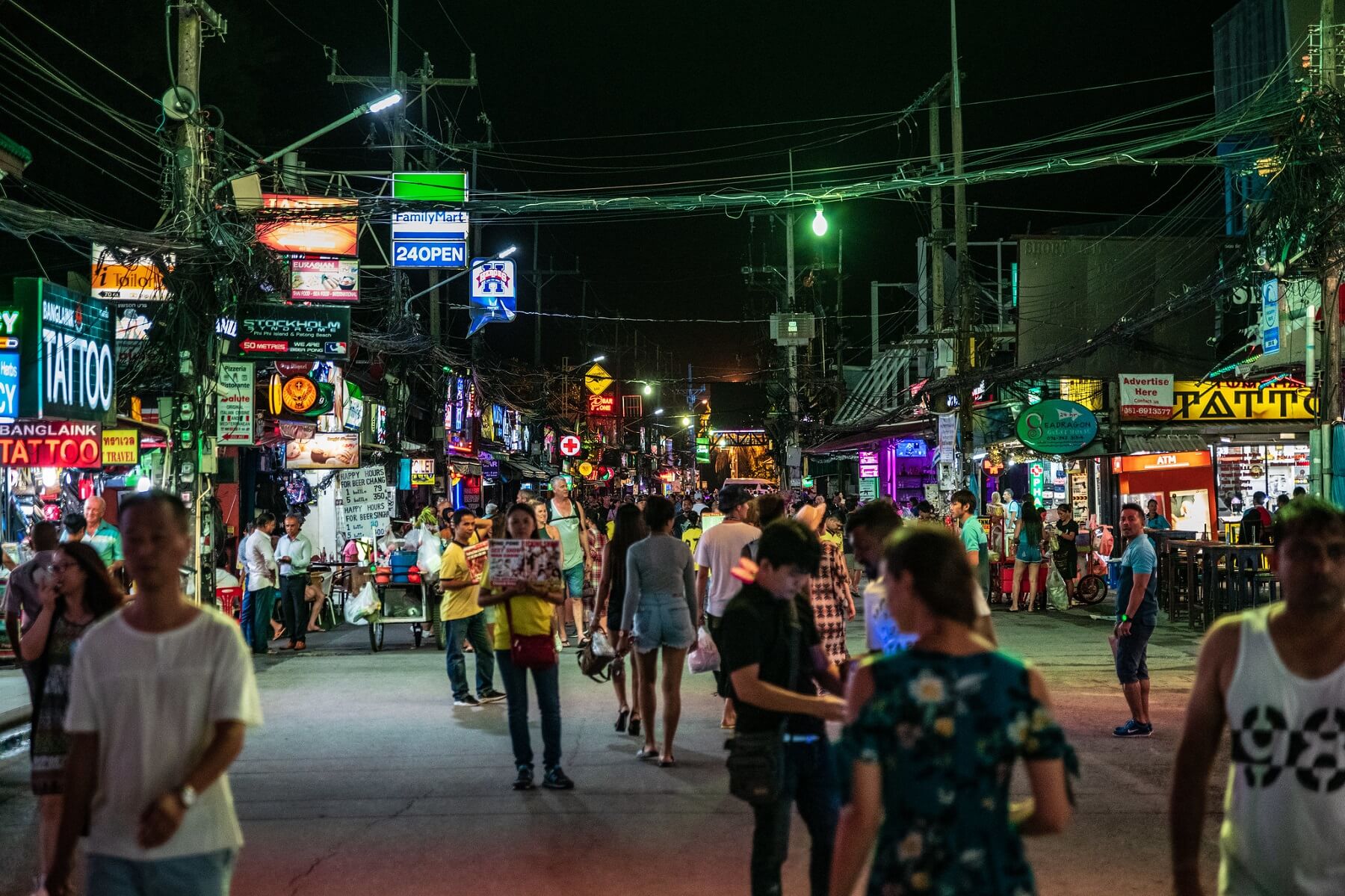
Walking around Bangkok is an experience for the senses, especially early in the morning as the city wakes up, and late at night when the madness starts. Everywhere you go will be a mix of car fumes, delicious food sizzling, beeping horns, chattering crowds – this is a Southeast Asian metropolis that never sleeps!
The one downside is the heavy humidity, which will have you sweating within minutes of stepping out your door. My advice? Bring lots of light clothing and a good pair of walking shoes and just embrace it! There’s nothing wrong with a good healthy sweat out, especially while feasting on delicious spicy Thai food and staying hydrated on mango shakes and fresh coconuts.
Getting a sim card in Bangkok
Definitely get a sim card when you land in Bangkok. You can usually get one right inside the arrivals section at the airport, and shouldn’t cost you more than $10 to get connected with internet for your trip.
I usually get the AIS traveller sim, which is a good option for up to a month. You can always just extend it later through the app or at a convenience store or AIS store if you need to. People that work in these phone stores usually speak at least elementary English, so it’s not difficult to get everything sorted.
Bangkok is a very tech-savvy city, so staying connected is very handy – think using Grab, Google maps and so on.
Where to PARTY in Bangkok
Bangkok is a fantastic place to enjoy some nightlife – some might argue it’s the best in the world. I won’t go that far, but I’m sure any party fiend will not be disappointed here.
Khao San Road
As I mentioned earlier, this is the infamous kilometre-long backpacker street where you’ll find nothing but street food stalls and bars lined up one after the other. Young travellers from all over the world come here every night, many also choose to stay on the street itself.
The nightlife style here is dominated by the “cheap drinks in plastic cups” type vibe so if you’re a backpacker or a group of young’uns on a partying trip this is going to be your ground zero.
A good way to start the night is to pick up some cheap cocktails at the drinks carts (they’re everywhere), then migrate into the bars blaring nineties pop music, and finally finish the night in the street’s most popular nightclub, aptly named THE CLUB (get in early to avoid the cover charge).
How to get there: People like to catch the boat from Sathorn pier (get the BTS to Saphan Taksin) to Phra Arthit pier, although it’s only a little more expensive and much faster to catch an Grab. Grab or taxi is your best option at night.
Royal City Avenue
Commonly known as RCA, this is probably Bangkok’s most established spot for ‘pure’ nightlife. I’m talking international DJs, concerts, huge clubs with bottle service and light shows, and many special events.
The first time I came here, I felt so out of place as everyone was dressed in their finest and the crowd was very local. It’s probably not the best place for a Bangkok first timer (especially if you can’t speak Thai) but if you’re game then I say go for it!
The two main clubs here are Route 66 and Slim and both are high end clubs that attract young, wealthy Thais and expats. Don’t come here expecting cheap drinks and shenanigans, most people come here to sit and enjoy bottle service and be seen, but with the right crew it can be an awesome experience.
How to get there: RCA is quite far out of the centre, so taxi or Grab is the way to go. It also kicks off very late – if you arrive before midnight it will be quiet.
Sukhumvit Soi 11
This might be one of my favourite nightlife streets in Bangkok as no matter what your mood, you’ll find something to suit your night.
This street is right in the heart of Sukhumvit and busy every night of the week. Wind down with the latest football game at the Australian Bar or go for a full-on night of raving at Levels or Sugar (they’re 3 minutes walk from each other).
There’s also a nice collection of restaurants and street food along the street, so if you ever get hungry some grub is never far away.
How to get there: Soi 11 is right on the doorstep of the Nana BTS station.
Silom
Silom is probably the most diverse nightlife area in Bangkok – its venues range from gay bars to strip clubs to go-go bars to high end clubs, plus many innocent bars for those just wanting to have a beer and soak in the atmosphere.
Start with a few drinks at O’Reilly’s the Irish pub, which never fails to bring in its fair share of interesting characters. I’ve spent many nights of laughs in here, usually in the early hours of the evening before it gets a little too wild.
From there you’re spoiled for choice – DJ Station is ground zero for the gay community, the Sky Bar is the bucket list item for knocking down beers 63 storeys high, Patpong is the forbidden paradise for those dreaming of pretty young Thai girls, and Maggie Choos provides a place to spend all your money on snooty but delicious cocktails.
For the grand finale, head to Twilo to mix with the young and beautiful and dance the night away.
How to get there: Get the BTS to Sala Daeng station. O Reilly’s will be right underneath it.
Soi Cowboy/Nana
Sukhumvit is also home to two of the most famous red light districts in the world:
Soi Cowboy is a short street lined with countless go-go bars and strip clubs, where young Thai girls sit outside in skimpy outfits trying to lure customers in for drinks and maybe more. You’ll notice the street instantly by the crowd of tourists, the music and a flood of neon lights, which makes this look like some kind of mini Vegas in the heart of Bangkok.
If you’d like to just see what all the hype is about, go right ahead – it’s an extremely safe and protected street and very popular with foreign visitors. It’s totally fine, even for the ladies, to go in for a drink and nothing more!
Just a short taxi ride away is Nana Plaza, which is set up more like a go-go bar shopping mall (yes, Bangkok just keeps getting stranger!). Other than the location, it’s not much different than Soi Cowboy – lots of pretty women, lots of neon lights and lots of shenanigans!
How to get there: Get the BTS to Asok station, look for the Terminal 21 mall. Look for Soi 23, Soi Cowboy is the next street over. As for Nana Plaza, head to the Nana BTS station, it’s right beside it.
Safety tips for Bangkok
Despite the wild reputation, Bangkok is a safe city.
Unprovoked crime is rare. If you’re polite and treat people with basic respect, you should have no problems at all.
Always take official taxis or Grabs. Dress modestly and keep to the populated areas at night.
If you’re a male, you’ll likely get propositioned by females if wandering around late at night, especially around Soi Cowboy, Nana, Patpong and Sukhumvit Soi 11. Always follow your gut instinct and treat every interaction with caution, especially if you’ve been drinking.
Keep a copy of your passport and visa stamp on your phone, as police can sometimes ask for it.
Most of all, just use your common sense! Bangkok is very developed and foreigner-friendly. Don’t do anything silly and you’re sure to have a great time.
Any questions? Leave them in the comments! 🙂
B
Looking for things to do on your trip? Check out these ideas:
West Africa is a place that’s been on my list for so many years. I’ve set foot on the north, the east and the south of the continent, but the west has always escaped me until now.
When my schedule and a cheap flight lined up this year, I had to go. I booked a flight from the European winter and headed down to Abidjan, where I spent nearly two months enjoying the bustling capital.
I can’t say it’s my favourite city, but it’s definitely unique and a place any traveller should experience. The francophone side of Africa is a planet of its own.
An Abidjan overview
First thing – Abidjan is not a city for Africa beginners.
If you’re on a tour or an arranged trip you’ll be fine (although those aren’t common here) but as an indie traveller it’s challenging, particularly if you don’t speak French.
The people are not hyper-friendly, things are not very cheap and barely anyone speaks English. The language barrier makes it quite difficult to navigate the city and it would be doubly so for someone new to the continent. This is a sprawling metropolis, not a little town, things move fast here and people are rather Frenchy. Even I felt timid walking around the first few days, and not many places make me feel that way.
It’s also not a city for beginner budget travellers. You will need to be rather travel savvy to stay on a tight budget here; that means staying in neighbourhoods that are quite far out of the city centre, seeking out (very local) markets and roadside stalls to get your food, and negotiating in French for every single taxi ride. Public transport is almost non-existent.
If it’s your first time in Africa, be ready to go straight in the deep end.
However that doesn’t mean you can’t do it! You will likely spend a lot of money but the city is safe by most standards and first world amenities are easily available (for a price), so it just depends on what kind of trip you’re looking for.
Two sides to a city
Abidjan is very business oriented and things move reasonably fast. It has all the modern amenities you want, such as large supermarkets, electronics stores, designer brands, Burger King and KFC, luxury hotels, fancy restaurants, European cars etc etc.
There is a lot of business here which obviously leads to a lot of money floating around. People spending big in nightclubs, driving an Audi, living in luxury apartments and so on.
Typical Abidjan supermarket
You’ll quickly see the modern side of Abidjan is extremely expensive – on par with France – the kind of places where you might pay $5 or $6 for a coffee. However, that’s only one side of the city, the side that all the expats and foreign companies come for.
The other side of the city – people living in high density housing, selling snacks on the street for 50 cents, hustling every day to get by – obviously exists too. This is the side of the city most people live on.
The gap between rich and poor here is probably the biggest I’ve seen in any major city, so you essentially have two halves of a city living completely different lives. As a human it might be disheartening, but as a traveller it sets a very interesting scene.
There is also an extremely fast growing middle class in Abidjan from all the money that’s been pouring in; this is the second fastest growing economy in the world. If there was any doubt about the changing fortunes of Africa, that will all be dusted once you set foot in this city.
Getting your Ivory Coast Visa
Unless you’re from one of the ECOWAS nations, you’re going to need a visa to enter the Ivory Coast, regardless of your reason.
There are no visas on arrival, or if there are, they are very time-consuming to get. Abidjan tourism is still not at the point where things are easy for visitors.
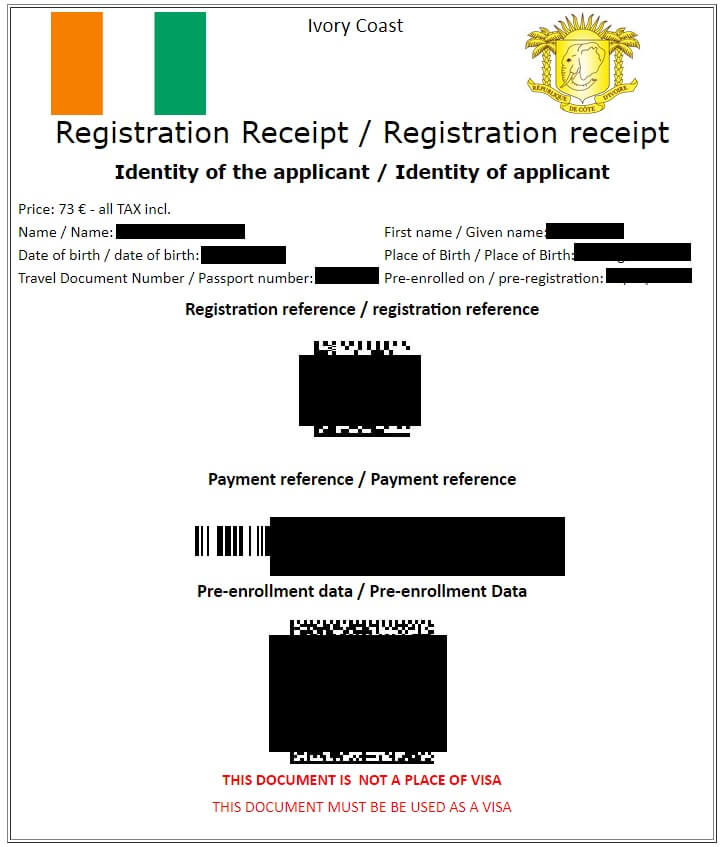
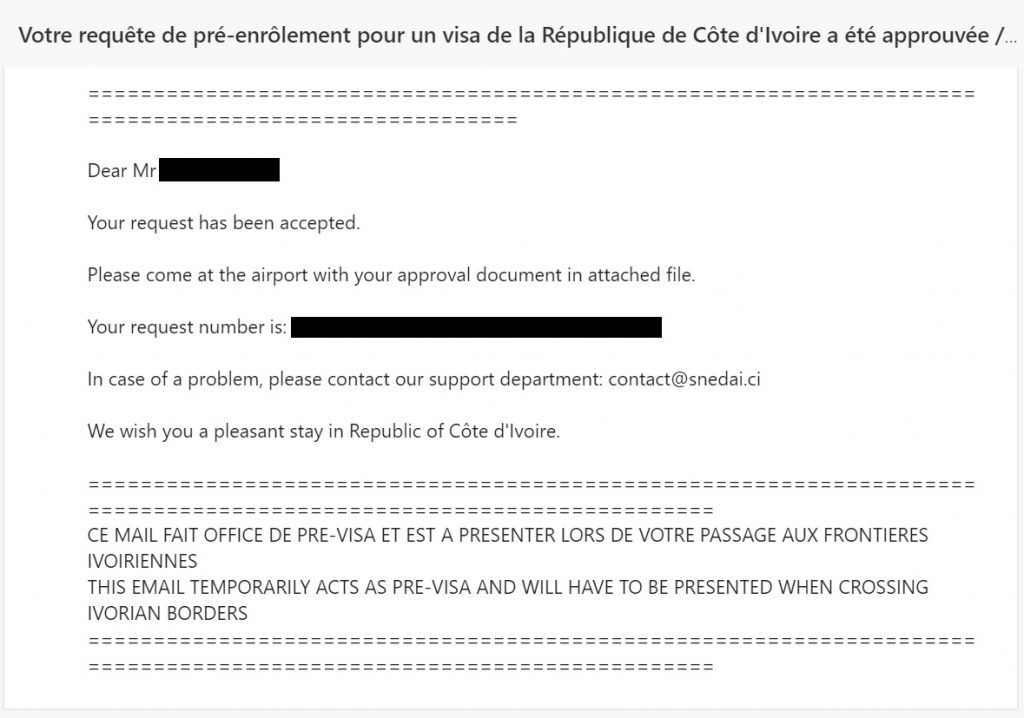
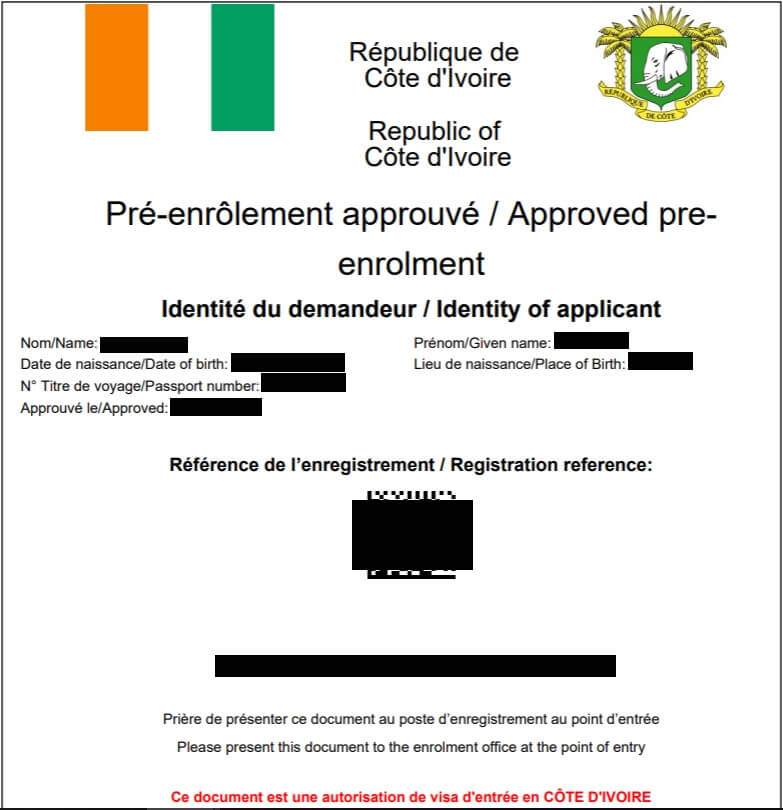
Instead, you need to get an e-visa prior to arriving. It’s straightforward and is done completely online. It takes around 48 hours and costs around $100.
You also need a yellow fever certificate – there is even a health centre right there in arrivals where (I assume) people who don’t have a certificate will need to get a yellow fever vaccination before entering. If the thought of getting vaccinated in an Ivory Coast airport doesn’t excite you, I suggest you get vaccinated at home.
Arriving at Abidjan Airport
I arrived in Abidjan in the middle of the night, around 1 a.m.
In Europe or even much of Asia, arriving in the middle of the night isn’t a problem and public transport will still get you anywhere you need to go.
Not west Africa. In fact five years ago I would’ve paid extra just to avoid this flight and the midnight airport antics. Cab drivers in African airports are some of the worst when it comes to hustling tourists.
I had a very friendly man approach me as soon as I exited the gates, as I was expecting. I went straight to the ATM and he followed me, acting like he was being my security guard and making lots of small talk.
Then I walked over to the info desk and asked the guy which taxis were safe. He chatted quickly in French with the guy following me, and then told me it would be fine to go with him.
My contact in Cote d’Ivoire had told me the correct price is 6,000 francs during the day, but during the night it could be 8,000 or slightly more. Just as I was about to start talking price he said “So you give me 20,000 okay?” and started walking off with my bag. I stopped him and laughed and told him I’ll find someone else. He offered 15,000 and I just tried to ignore him. Then he got annoyed.
“You think you know the price? You don’t know the price!” and he stormed off.
The guy at the information desk was really helpful and even called my Airbnb to double check the address, then called a taxi driver for me and gave him all the instructions. In the end I paid 10,000 to 7eme tranche, which is around $17.
You could bargain the price down more if you have the energy, otherwise just live with the few dollars extra, known in this part of the world as the “white tax” 😀
Where to stay in Abidjan
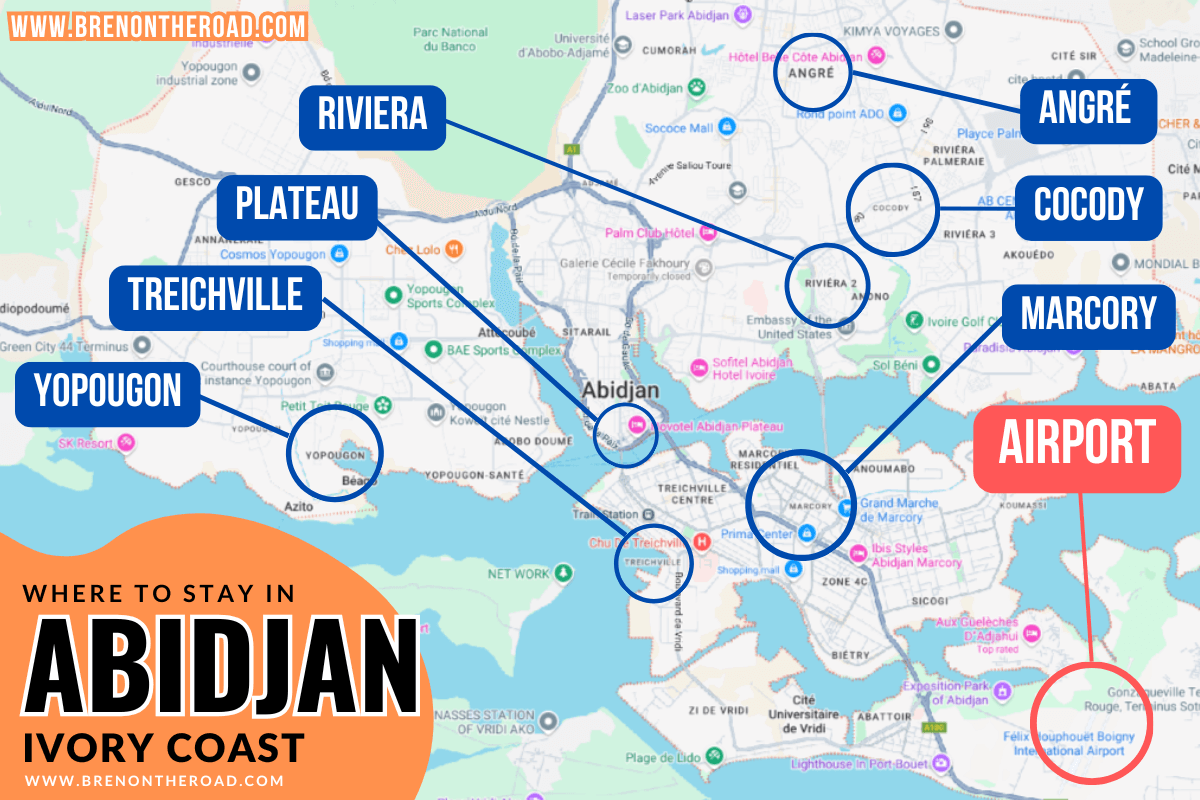
The map above shows the main areas of Abidjan, which is split into two parts – the north and the south.
As you can see it’s connected by three bridges, so in peak hour traffic getting across town is extremely slow. From Marcory to Angré might take 15 minutes late at night, but over an hour at 6pm.
A few quick one-liners about these neighbourhoods:
Marcory – Very active area with lots of malls, restaurants and bars.
Cocody – Upper class area with many expats.
Angré – Northern suburban area
Riviera – Middle upper class area with many bars, restaurants.
Plateau – Central business district with many office buildings.
Treichville – Rougher and more local side of Marcory.
Yopougon – Very large, local area.
It’s hard to choose a best neighbourhood in Abidjan, but probably the easiest way to describe it is if Abidjan was New York then Plateau would be Wall Street, Marcory would be Times Square, Treichville would be Harlem, Yopougon would definitely be Queens, Riviera and Cocody would be Brooklyn and Angré might be the Bronx. Something like that!
Staying in Marcory
Typical Marcory shopping mall
Marcory is the most central part of town where you can do everything – eat street food but also eat in nice air conditioned malls, stay in nice hotels but also cheap guesthouses etc. You will also see quite a lot of expats and foreigners around here running their businesses, shopping, and just doing daily errands. Many of them are out here eating/drinking during the nights as well.
As a tourist, you probably want to stay in and around Marcory if you’re on a short trip. It’s the central hub that connects all the different corners of the city, and many of the popular places to visit in Abidjan are around here.
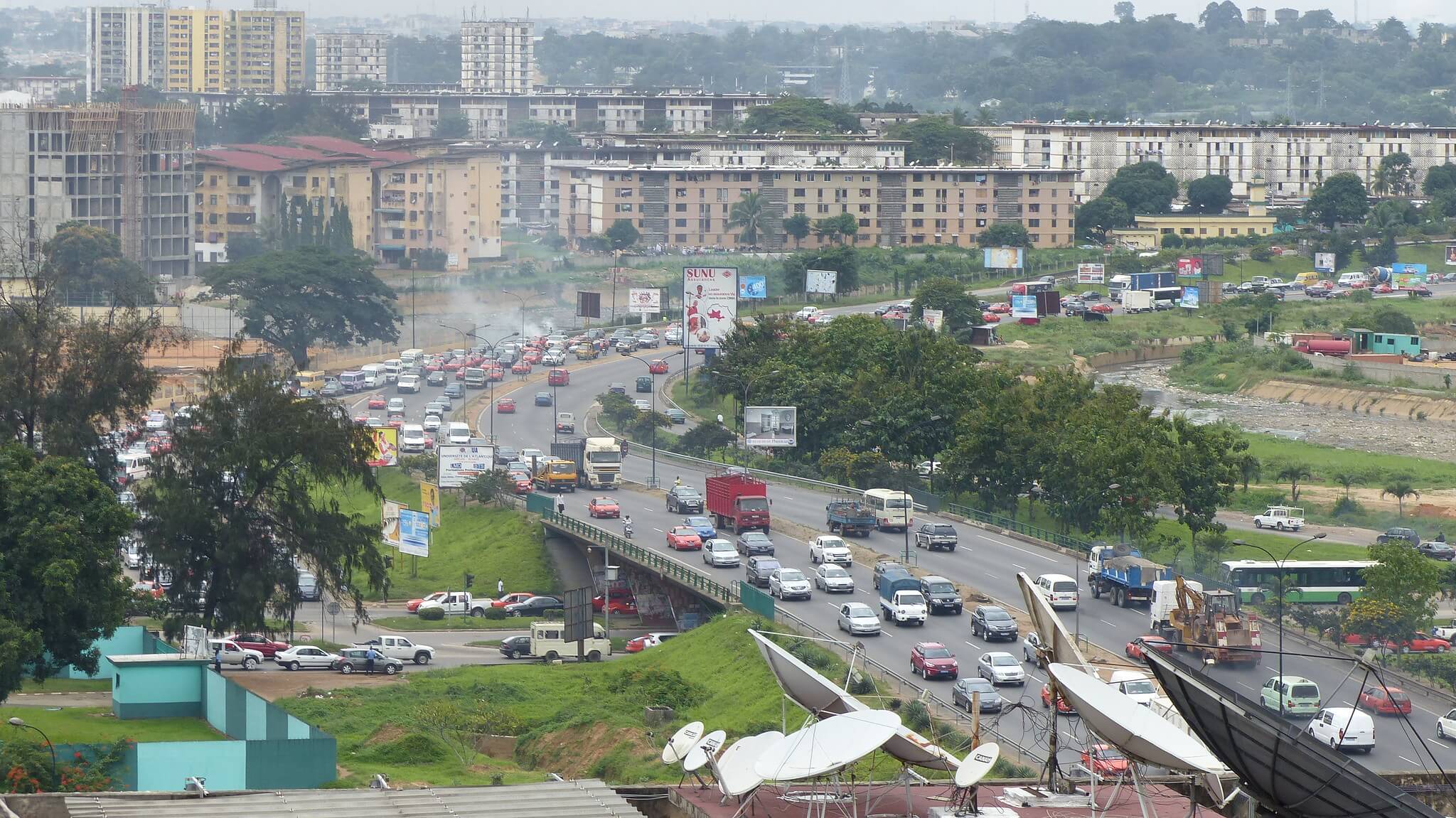
Traffic in Abidjan is not a joke and you don’t want to be spending your trip commuting down to Marcory every other day.
If you’re after a place to stay, Villa Ayaba is centrally located in Marcory and a good launching point for a tourist visit.
Staying in Cocody/Angré
Typical Angré street in 8eme tranche
If you’re staying in the city longer (more than two weeks) you might want to stay up in the northern neighbourhoods around Cocody and Angré.
Angré is where you will find most of these places, especially around 7eme tranche and 8eme tranche which is where I stayed. You won’t see many foreigners around these parts, in fact I rarely saw any at all, except for a few Lebanese that owned restaurants and shops.
Also, I got a good number of stares each day so you know they don’t see tourists too often around here!
However the area is safe and security guards are everywhere, even walking around after dark was safe and normal judging by locals’ behaviour.
A good place to stay up in that area is Villa Jaddis. It’s around the 7eme tranche and one of the top accommodations in the city, suitable for someone visiting for the first time.
For something cheaper, you could try Residence Helios. It’s lower down in Cocody around Riviera 4, but still a decent area.
Staying in other areas
The Riviera zones are also nice but it’s quieter and more spread out and harder to find tourist accommodation around there.
Plateau is also possible but it’s mostly very pricey hotels – but if that’s what you’re looking for you’ll have many quality places to choose from.
For example, I visited the Sofitel Ivoire one afternoon and it literally has the largest pool I’ve seen in my life.
As for Yopougon and Treichville, you probably don’t want to stay around there as a tourist unless you want to go full local, but those places are probably better for day visits.
Money in Abidjan
The currency in Ivory Coast is the franc, or the CFA (Communauté Financière Africaine). It’s a common currency used in all the former French colonies in west Africa. The other countries using the franc are Benin, Burkina Faso, Guinea-Bissau, Mali, Niger, Senegal and Togo.
The exchange rate is currently around 570 CFA to $1 USD.
One piece of advice here – the thing that plagued my trip was the issue of having the right change. For some reason, nobody ever has change in Abidjan.
I went to buy bread one morning which was 300 francs, and I only had a 5,000 note. They wouldn’t accept it, so I spent around two hours walking around trying to buy stuff like fruit or eggs to try and get change, but nobody had any change so they wouldn’t sell me anything.
I even asked my Airbnb security guard if he could help, so he went walking around with me to some shops and still no dice.
I never thought I’d see the day where I literally struggled to give money to people, in Africa!
Another time I bought some laundry powder from the shop down the road, it was 300 and I paid with a 1,000. The guy gave me 500 in change and told me to come back tomorrow for the other 200 (which I did).
This was practically a daily occurrence throughout my stay in Abidjan.
The point, always keep your small change! When you get money from the ATM you’re going to get a stack of crisp 10,000 franc notes, which nobody is going to want. Break them every opportunity you get and refrain from spending your small notes and coins until you really need to. It will make your days so much easier.
Getting Around In Abidjan
Most people, even locals, get around by taxi or private car.
Taxis are the red/orange cars you see in the photo above. They’re often poorly maintained (you’ll see them broken down all the time) but they are everywhere so never hard to find.
They will usually cost you around 1,000 CFA ($1.75) for a short trip, such as if you’re just going to the next neighbourhood or somewhere nearby (say 10 minutes or so). Usually you don’t even need to negotiate for these trips, just give the driver 1,000 when you get out.
Longer trips you’ll have to negotiate. If you’re going from Angré down to Marcory it will be 2,500-3,500 CFA ($4.30-$6), depending on your negotiating skills, the time of day, and how nice the driver is. If he’s cool he’ll just agree to 2,500 off the bat, if he’s a dickhead he’ll try and push you for 4,000 and make you haggle down to 3,500. But if he insists on ripping you off just wave down another taxi, there’s a new one driving past you every minute.
You can imagine this is quite draining (even local friends complained about this) but try and embrace it as part of your Abidjan experience. If anything it certainly improves your French!
There are also yellow taxis which are shared taxis and are cheaper, but they are quite complicated to use.
Again remember to keep small change for taxis, or at least ask them before the ride if they have change for a 5,000 or a 10,000. This will avoid a debacle when it finally comes time to pay.
Safety in Abidjan
Abidjan is a safe city.
There are police around quite often, but they never looked twice at me or gave me any troubles.
You can also feel from the general vibe that most areas aren’t considered dangerous. All the indicators of safety (women walking alone at night, street stalls open after dark, kids playing outside etc) could be seen in most parts of the city. Also when I walked around alone at night nobody gave me the “what are you doing!” look so overall things felt very safe. Most local contacts told me the same.
After the civil war, the military presence in the city increased significantly and is still there. My cab was even stopped and I was body searched at one in the middle of the night. The cab driver just rolled his eyes like it was standard procedure so I wasn’t too worried about it. He looked curiously at my camera tripod, but that was it. Didn’t ask for a bribe or anything.
Of course there are definitely parts of the city you shouldn’t be wandering around alone in, but I can’t imagine you have any reason to go there. Common sense should be enough to keep you out of trouble.
As for personal experiences, I didn’t experience any danger during my stay. However, my phone did get stolen and apparently this is quite common so be wary of this.
It was while I was sitting in a traffic jam at night, and I had the window down. I was scrolling through something on my phone and then suddenly – whoop! A hand reached in and snatched it. I looked out the window and saw a street kid, probably around 18 years old, running up the hill into the bushes.
The funny thing is I was actually warned about this about a week earlier – I was in a cab using my phone with the window down during the day, and the driver told me to be careful because people can reach in and steal it. One week later, someone reaches in and steals it. What a surprise…
However petty theft like this is common in almost all of the developing world and it doesn’t concern me much. I’m only concerned about violent crime, and that seems pretty rare in Abidjan (at least in the places you’re likely to visit).
Thankfully, travel insurance covered it and reimbursed me for the new phone I bought after I got home. Thanks World Nomads!
People in Abidjan
This was probably the most interesting part of my visit as I never really came to a concrete conclusion.
My first observation was Abidjanians (if that’s a word) seem to have inherited some of the French preciousness. The average person on the street can seem stand-offish or even unwelcoming. Even when you make eye contact, they won’t return or even acknowledge a smile, or at times may even ignore your bonjour or bonsoir. Sometimes they stare at you like “Why are you talking to me?”
Many middle and upper-class Ivorians have lived in Paris and other parts of France, so that’s likely part of it.
However, a good percentage of people will also greet your eye contact with warm smiles and greetings and make you suddenly feel like you’re in the heart of Africa again.
It’s two polar opposites.
Sometimes it’s hard to judge. Security guards often seem like they’re giving you the death stare as you walk past, but as soon as you smile and wave they transform into a Sesame Street character and wave back with a huge grin.
Even when you go to buy stuff at fruit stands etc, people don’t tend to welcome you with big smiles or anything. The one fruit stand around the corner from my apartment was very cold and impersonal on my first day, but on the subsequent days she greeted me with a big smile and a bonjour chinois! like she was my best friend. So it seems that you need to develop some kind of familiarity with people first before their warmth comes out. Again it feels a bit like France in that sense.
This might be partly a big-city mentality rather than specifically an Ivorian thing, but it’s what you’ll find in Abidjan.
They’ve inherited the good side of the Frenchness too, however! For example, whenever I was invited out for meals or to meet people, they always insisted on paying the bill and were super hospitable and treat you like a special guest, always asking if you need another drink and so on. Compare this to a place like maybe Tanzania, where every single time I’ve been out with a local (which is many) people have seen me as the wealthy foreigner and always expect me to pay. So seeing all the sides of the culture is very interesting.
Also, it helps to remember Abidjan is one of the major cosmopolitan cities of West Africa so there are a lot of Malians, Nigerians, Ghanaians, Guineans and so on living here, so you don’t even know who is from where. Many of the people you walk past probably aren’t even Ivorian!
Overall people are very decent here, but if you’re expecting the African mega-friendliness from strangers like you do in Uganda or Tanzania you’ll be disappointed.
English in Abidjan
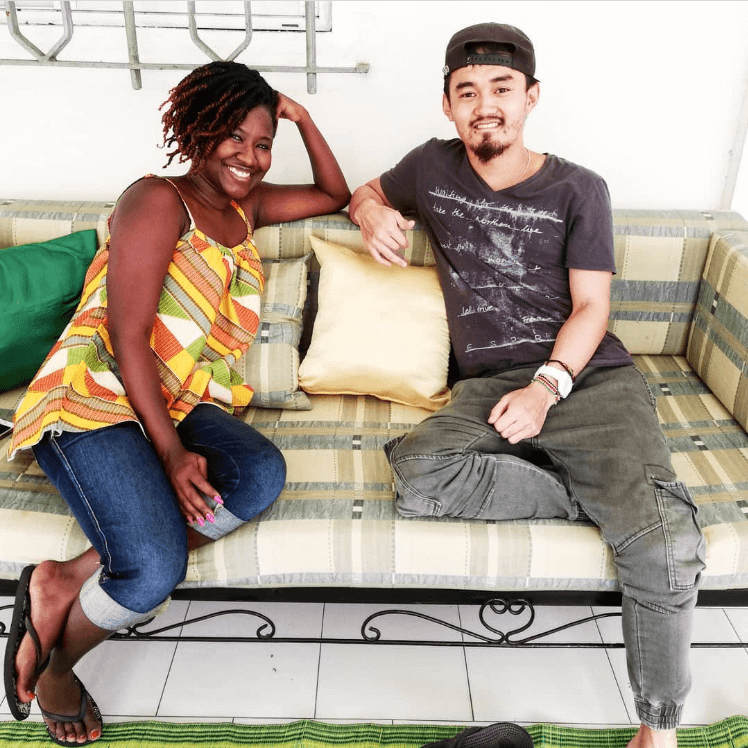
This is my buddy and fellow blogger Yasmine, one of the few people I met in Abidjan who spoke fluent English (after studying in the UK). But that’s definitely not the norm here.
Overall, English is poorly spoken in Abidjan.
Almost every taxi driver will speak no English, or very little, and even staff in shopping malls will probably only speak French.
Even very well-educated people won’t speak great English – it’s just not a priority here. The language is French and absolutely everything is done in French.
That means French is essential if you plan on staying here for more than a week or two. Even if you don’t want to put much effort into learning, you should definitely learn your numbers so you can understand prices, and learn basic phrases for food and asking directions.
What to do in Abidjan once you’ve seen everything? EAT!
Attieke – A bit like a cassava couscous, which is a staple here and you’ll see it sold all over the city.
Alloko – Deep fried chopped plantains, just think french fries, but as bananas.
Foutou – A pounded cassava and banana mash, almost like mashed potatoes.
Placali – Like foutou but without the banana.
Fufu – Like foutou but without the casava.
You can try the above with all different kinds of sauces, usually the menu changes every day, and revolves around fish, chicken, snails, crab, beef. The sauces are generally spicy.
In the night it’s all about the braises. Most popular are the chicken (poulet braise) and the fish (poisson braise), both go great with attieke or alloko!
It’s hard for me to recommend places to eat as I just walk around and pop into wherever looks good, but I will suggest checking out Yasmine’s blog afrofoodie.com and her Instagram – she’s one of the biggest food bloggers in Abidjan and knows pretty much every joint in town, you’ll find endless ideas on her feed!
Another thing you should definitely try is the fruit! The papayas, the pineapples and the cacaos are amazing in Cote d’Ivoire, some of the best I’ve ever had and they’re super cheap. A papaya or a pineapple might cost you 200 CFA (35 cents) on the street.
And lastly, make sure you get your fair share of bread and baguettes in.
Obviously, the French were here for a long time and the baguettes are as good as if not better than in France itself, 100-150 CFA (25 cents) each. Eat them while they’re hot!
Water
Always drink bottled water. It is inexpensive and safe.
Some people sell plastic sachets of water on the street, but be warned that this is simply filtered water and if you have a very sensitive stomach it may not sit well with you.
The biggest network in Cote d’Ivoire is Orange and I’d recommend getting your sim with them. You can get a sim card with around 12GB/month (changes all the time) for 10,000 CFA ($17 USD). The internet is 4G/LTE and the coverage is good.
Just find an Orange store and take your passport and they’ll set it up for you. However be warned that nobody spoke English at any of the Orange stores I went to, so be prepared!
The other networks are MTN and Moov, but everyone recommended going with Orange.
Getting out of Abidjan
While there are plenty of interesting things to do in Abidjan, getting outside the city is incredible too. The two obvious trips are to Grand Bassam, the UNESCO beach town to the east, and Assinie, the beach resort area even further to the east.
To get to Grand Bassam, the cheapest way is to get the bus. You can catch a bus from the bus stop at Adjame, or you can also catch a minibus from the bus stop at Treichville. The price will be around 500 – 1,000 CFA ($1.75).
To get to Assinie, definitely go to Treichville as it has a van that goes direct. The price will be 1,500 CFA.
You can also get asked to pay extra if you have a large bag that needs loading, around 1,000 CFA.
To get to these bus stops just ask a taxi to take you, they all know where it is. You can also negotiate with the taxi to drive you to these places himself, you might pay anywhere from 12,000-20,000 CFA for a round-trip, but you’ll need to negotiate hard.
The other way to get to these places is to make some local friends. It’s really popular to head to Bassam for the beach during the weekend, if you make the right connects you can just hitch a ride!
How Much To Budget in Abidjan
Abidjan is not cheap.
I stayed in Abidjan for around six weeks (43 days), here’s how much I spent:
Transport: 84,000 CFA Food and water: 148,000 CFA Accommodation: 623,000 CFA Misc: 59,000 CFA
Total: 914,000 CFA ($1,600 USD or around $37 per day).
Here’s how this breaks down:
Food was mostly cooked myself with stuff bought from the market and stalls like this:
Usually 2,000 CFA ($3.50) should get you enough fruit and veg for 2-3 days.
I did eat out every few days at local eateries and roadside places which are usually cheap-ish. For example this meal with a bottle of water was 2,700 CFA ($4.70):
Accommodation was all Airbnb, staying in studios around Angré 7eme and 8eme tranche. Usually around 15,000-20,000 CFA ($25-$43) per night for a place like this:
Transport was all local taxis, sometimes I went into Marcory to meet friends or just wander around, but I didn’t do that every day. Often I just stayed around Angré.
Miscellaneous includes things like cellphone, laundry, tips, and other random everyday things.
So what’s the right budget?
If you want to go hyper-budget travel and really live locally, you can get by on $10-20 USD per day. However that is going to be uncomfortable for even the super experienced backpacker.
I would say a more reasonable budget is around $40-$50 USD per day – this will include staying in an Airbnb and eating local food at local places.
If you think you will be spending more time in expat-oriented places, such as eating at shopping malls and restaurants, you’ll be at around $80-$100 USD per day, and closer to $150 per day if you’re staying in a nice hotel.
To get your visa, make sure you apply online at this page. If you need guidance, follow my guide.
Travel insurance is highly recommended when visiting Abidjan. I used World Nomads. If you’re new to travel insurance, check out my guide.
Best prices for Abidjan hotels will be found on Booking.com. Click here for the best rates.
Airbnb has many good options, especially in outer neighbourhoods. If you’ve never used Airbnb before, you can get $25 off your first booking with this link.
Disclaimer: World Nomads provides travel insurance for travelers in over 100 countries. As an affiliate, we receive a fee when you get a quote from World Nomads using this link. We do not represent World Nomads. This is information only and not a recommendation to buy travel insurance.
I most recently visited Phuket in early 2025, and it was just as spectacular as I remembered it the first time, before I even started this travel blog. It’s an incredible place, and you can spend an entire year exploring this island and never get bored.
With so many places to see though, it can be a challenge to find the right place to spend your holiday. If you’ve only got a week, where do you go? What do you do?
The thing about Phuket is, you can find everything here. Whether you want backpacking on a shoestring, ridiculous luxury, spas and massages, adventure sports, culture and architecture, surfing, history, hedonism, cuisine, non-stop partying, Muay Thai training, yoga, or just a regular beach holiday, you can get it all here on this southern Thai island.
That’s what this guide is for. Below I’ve mapped out the main areas of Phuket, so you can see which area will suit you best.
Many of the areas are quite different, so it’s important you choose the spot that’s going to give you everything you want.
If you want a quiet secluded beach and privacy, Patong is out. You want somewhere like Mai Khao, or maybe Surin or Karon. If you want a more local flavour away from the tourists, you’re looking at Rawai or maybe Phuket Old Town.
As you can see – your holiday will be very different depending on where you decide to stay.
By the end of this guide you should have a much better idea of what Phuket has to offer, and which part of the island is going to give you the Phuket adventure you want. Of course if you have any questions, you can leave them in the comments below. I’ll be here!
How to get to your destination
Your first challenge is actually getting to your accommodation in the first place.
You’re most likely going to land at Phuket Airport. From here, there’s a standard shuttle service which will take you to most major hotels on the island. I’m not actually sure that they go to the more southern destinations but they definitely hit most destinations around Patong/Kata. It should cost you between 100-200 baht door-to-door. These shuttle services are easy to find – you’ll see the desk in arrivals.
These days though, the easiest option by far is to just open a ride-hailing app. Grab, Bolt and InDrive all operate in Phuket now, and they’ve completely changed the game – no more haggling, no more getting stung. Bolt tends to be the cheapest of the three, Grab the most reliable for availability, and InDrive lets you name your own price. Personally I always use Grab around Asia – Southeast Asia – it’s one app and it works everywhere, and you can order food on it, too. This is the same “taxi mafia” that used to charge you 500 baht for a five-minute ride to the next town; the military crackdown a few years back cleaned up most of it, and the apps finished the job.
You can use them for the airport run too, though supply right by the terminal can be patchy at peak times, so the shuttle or Airport Smart Bus is a solid backup. Last time I was in Phuket I Grabbed to the airport and there it was totally seamless.
Metered taxis still exist and are perfectly fine, but honestly, an app will cover you pretty much anywhere on the island.
Lastly, you could ask your hotel what’s the best way to reach them. Many will tell you to use the airport shuttle service, but some will have their own shuttle service, and many of the luxury places may even transport you for free.
Anyway, let’s get to what Phuket has to offer.
In this guide:
Map of Phuket – The main areas of Phuket Patong– Very touristy, lots of nightlife. Kata – Beautiful beaches, lots of restaurants and hotels. Karon– Quieter, great for families and couples. Kalim – For surfers! Bang Tao – All inclusive luxury resorts. Surin– Nice beach, quiet, upper end hotels. Kamala– Very relaxed area, great for those wanting to avoid crowds. Mai Khao– Very secluded, several luxury resorts. Rawai– Opposite end of the island, more local, popular with long term stayers. Phuket Old Town– Main town centre of Phuket, very local area, not popular with tourists.
Map of Phuket
This is a map of the main places to stay on Phuket. As you can see Phuket is a standalone island, and there are little towns and centres all over.
For a closer look, click on each coloured tear drop on the map below to zoom in around the area.
Now that you’ve got an idea of the layout of the island, we’ll go through more details of each area in the guide below.
Looking for things to do on your trip? Check out these ideas:
Patong
Patong is where I first stayed when I visited Phuket – it’s easily the most popular tourist area on the island. Patong is the part of Phuket where you’re going to find a lot of massage shops, souvenir stores, tuk-tuks, street sellers, foreigner-friendly restaurants and a lot of tourists. There is also the very popular Patong beach which is nice, but gets extremely crowded during the day.
Another thing you should know about Patong is that it’s home to the island’s crazy nightlife. That means at night, particularly around Bangla Road, this place becomes a bit like the wild west. Lots of bars, flashy lights, loud music, nightclubs, street food, street performers, that sort of thing. Much of the Phuket sex industry is centred around Bangla Road too, so expect to see a lot of go-go bars, working girls etc. There is nothing dangerous about the place – it’s very busy with many tourists wandering around. Just be sure you know what to expect! If you’re here to party, this is the best part of Phuket to stay, as you’ll find many others here doing the same.
The good thing about Patong is that there are endless accommodation options. With so many visitors, there are places to suit every budget.
Points of interest around Patong:
Bangla Road – The centre of Phuket’s tourist nightlife. Go on a pub crawl to ease yourself in!
Patong Beach – One of the busier stretches of beach in Phuket, although Freedom Beach and Paradise Beach are also in the area.
Jungceylon Mall – Huge shopping complex where you’ll find everything you need.
Surf House Patong – Fun place by Patong Beach where you can learn to surf on a wave machine.
Patong Go Kart Speedway – Awesome for the family and a day away from the beach.
You should stay in Patong if you are:
A backpacker looking for cheap accommodation.
Looking for fun and nightlife.
Want to be in the centre of the action.
Where to stay in Patong:
For the backpacker:
There’s no real need to stay in a backpacker hostel in Patong, as even private rooms in hotels and guesthouses are so cheap. If you do want a hostel experience though, check out the Bed Box Hostel. It has dorms and private rooms and super affordable. Get the best rates here.
For the budget traveller:
I’d stay at the Memory Boutique. It’s a charming little guesthouse, away from the noise but still within walking distance of everything you’d want to see. Beautiful rooms. Check the latest rates here.
For the luxurious type:
Look no further than La Flora. It’s right on Patong Beach, just beside Soi Bangla and smack bang in the centre of the action. It’s also gorgeous, with a stunning pool and beautiful suites. And to be honest, it’s not even that expensive. If you want to do Patong in style, this is the place. Check out the latest rates here.
Kata
In my opinion, Kata beach is the best beach in Phuket.
It’s not far from the centre of Patong, just a short drive, and it’s a long lovely stretch of white sand. It gets crowded sometimes (but not ridiculously so) and the water has just enough swell that it’s fun to swim in. Do note that when the sea is rougher it’s not really great for kids to swim at, but otherwise it’s a great place for the family too.
The main area of Kata also has a good selection of restaurants and bars to stay nourished, there’s even a Starbucks there if I remember correctly. It’s really just an all-around great place to stay, especially for Phuket first-timers.
In my opinion, this is the best location to stay in Phuket if you want to be close to the action, but not right in the centre of it all!
Points of interest in Kata:
Karon Viewpoint – Despite the name, it’s actually located right above Kata Noi beach and gives a great view of the island
Surf House Phuket – The original wave machine house, this place is always fun, even if you don’t want to ride!
Surf Lessons – Great place to learn to surf with Beyond Surf Kata
Kata Noi – A small bay just a few minutes from Kata Beach
Kata Night Market – Large market with food court and souvenir stalls, mostly aimed at tourists.
Kata Temple – Large well-maintained temple of Patak Road (known in Thai as Wat Kittisankaram).
You should stay in Kata if:
You want a beautiful beach!
You want a good selection of places to eat and drink, without the big crowds.
You want to be near Patong, but don’t want to be staying there.
Where to stay in Kata:
For the backpacker:
Stay at OK Phuket. It’s a short walk from the beach and not far from Kata Village. Great place to meet a few partners in crime to enjoy some surf and sun! Super budget friendly too, so perfect if you’re on a vagabond budget. Get the latest rates here.
For the budget traveller:
I’d take a room at the Two Chefs Inn. It’s got sea views and is just a few steps from the beach. It’s quite a small guesthouse which gives it that cozy feel and, as the name might suggest, the food there is exceptional. Rates are amazingly cheap for what you get. Check the latest rates here.
For the luxury seeker:
You want luxury, you’ll get it at the Impiana Private Villas. It’s not cheap, but the place is absolutely lavish. It’s right on the water and nothing is unaccounted for – bar, pool, spa, gym, food – you’ll never need to leave. And you probably won’t want to. This is Thai island luxury at its best. Get the best rate here.
Karon
Karon is right beside Kata and is just a short drive from Patong. Even though it’s not that popular it actually has a lot of decent dining and accommodation options – it almost blends in with Kata as they’re so close. There is also a little nightlife, a few nice cafes – really it has most things Patong has, just on a smaller scale.
Karon beach is also pretty nice. It’s a really long white sand beach and far, far less crowded than the sand at Patong. As you can imagine, there’s a different sort of crowd at Karon – often a lot of couples and some families. As a result, there are a lot of great resorts here to choose from. If it’s your first time in Phuket and you’re not the party type, Karon’s a pretty good spot. Also the best area to stay in Phuket for families – no go-go bars or crazy backpackers at 2 a.m. – just people enjoying a good old-fashioned beach holiday!
Points of interest in Karon:
Wat Karon – Karon Temple is over 100 years old located in Karon Centre, which also hosts the Karon Market.
Phuket Beach Volleyball Club – The club has public volleyball nets up every day on Karon Beach.
ATV Karon – Right by the Best Western hotel, you can pick up an ATV and go off-roading in the forest paths behind Karon.
Karon Dragon Statue – Large statue of a golden dragon, right by Woraburi Resort.
Karon Park – Fitness oriented park with running trail, outdoor gym and a large lake.
Karon Tattoo Studios – Many popular tattoo studios are in Karon and welcome tourists.
You should stay in Karon if you are:
Wanting a nice beach that isn’t too crowded.
Wanting peace and quiet but don’t want to feel isolated.
Want to be near Patong, but don’t want to stay there.
Where to stay in Karon:
For the backpacker:
You can’t go wrong with the Fishtail Hostel. Has dorms, private rooms, all for dirt cheap prices. Great quality beds and just 400m from Karon Beach. Can’t go wrong if you’re on a backpacker budget! Check the latest rates here.
For the budget traveller:
Stay at Allstar! Allstar Guesthouse is a place of legend around Karon. It’s right on the beach and everything you need is nearby. Not to mention, the hosts are amazing and guests just keep coming back. It’s one of those places that everybody knows, and it’s a lot of fun. Check out the latest rates.
For the luxury seeker:
You’ll be more than taken care of at Le Meridien. Their Karon resort is special – ten restaurants, private beach, spa, two huge pools – pretty much everything you’d expect in an extravagant resort. If you’re after luxury in Karon you won’t find many spots more impressive than this. Best rates here.
Kalim
There’s probably only one reason you’d stay in Kalim, and that’s if you’re a surfer.
During low season (April-November) Kalim is probably the best surf beach in Phuket. Good 2-3 metre swell is not uncommon, and it’s even home to some international surf competitions.
There’s not much else to do around here besides surfing. Even outside of surf season, the beach isn’t very swimmer-friendly. There are some nice restaurants around the place, and some nice hotels too, so it can be a nice place if you’re just after some isolation and peace and quiet. It’s not far from the centre of Patong.
You should stay in Kalim if you are:
On a low budget – there are some good options.
Are a surfer!
Want something quiet but not too far from Patong.
Points of interest in Kalim:
Zorbing – Phuket zorbing is located on the hills behind Kalim Beach.
Surf – this is arguably the best surf spot in Phuket and has hosted surfing competitions in the past.
Fine dining – Several upper end restaurants are located here, including Lim’s, Acqua and Home Kitchen Bar and Bed.
Where to stay in Kalim:
Stay at Oceanfront! It’s a lavish resort a short walk from Kalim Beach. You will want for nothing here as it has absolutely everything! Pools, restaurants, gym, squash court, sea views, and more. Not cheap, but for something flashy and just a little distance from Patong for some extra peace and quiet, this is the spot. Best rates here.
Bang Tao
Bang Tao is home to Laguna Phuket, probably the largest resort complex on the island. Interestingly, it’s actually built on an old mining site that was abandoned once the land became worthless. Nowadays it’s been spruced up into a little tourist haven. Guests of the resorts at Laguna can use any of the guest amenities in the complex – restaurants, pools, spas etc.
The beach itself is also quite impressive and generally not too busy, especially further to the north. Good for sunbathing with friends and throwing a ball around.
Do be aware that other than the Laguna complex and the beach, there really isn’t anything else to do around here. That could be good or bad, depending on the type of holiday you’re after 😉
Points of interest in Bang Tao:
Layan Beach – Small and uninhabited beach in the north of Bang Tao. A good spot for sea kayaking in and around the lagoons.
Anthem Wake Park – Massive wakeboarding park, suitable for all levels.
Phuket Adventure Mini Golf – Great activity for the evenings, near Bangtao Village Resort.
Laguna Golf Club – For those looking to hit the fairway on holiday.
Phuket International Riding Club – Will arrange horse riding lessons and beach rides, located at the entrance of Laguna.
You should stay in Bang Tao if:
You want an “all in one” type holiday where you can just relax and don’t have to think!
You want a nice beach.
You enjoy resort living.
Where to stay in Bang Tao:
For the backpacker:
Bang Tao isn’t really a backpacker place but if you’re a hostel person, Chillhub Hostel is your spot. Good dorms, wifi, shared kitchen, right on the beach. Can’t go wrong. Check the latest rates here.
For the budget traveller:
Look no further than Amin Resort. This is a boutique resort about a 5 minute walk to Bang Tao Beach. All rooms are air conditioned with all standard amenities like kitchenette and minibar. It’s a bargain for the price. Best rates here.
For the luxury seeker:
Bang Tao is a great place for luxury and if you’re looking to splurge I’ve got the place for you. Banyan Tree is fit for royalty and you will certainly feel that way once you step inside your villa. Everything you could want is here – gym, private pool, golf course, private housekeeper. The rooms are mini palaces and you will certainly want for nothing. It’s not cheap, but if you’re looking to impress it will definitely be worth it. Best rates here.
Surin
Surin has changed since I was last there.
It used to the ultimate place for cocktails on the beach, mixing and mingling, bobbing your head to the random DJ a few spots down and basically having a great social day on the sand. It was (and still is, really) a place for celebrities and millionaires to come stay in their mansions or high-end resorts and soak up a few days of Phuket sun.
It’s a lot less lively now (I read there were a few plans to change it up to something more mellow) but there are still some beach chairs out where you can lay out and enjoy a day by the water. It definitely still is one of the nicest beaches in Phuket, with powdery white sand and clear turquoise waters, just like you see on the postcards!
You should stay in Surin if you are:
A fan of high-end dining and drinks.
A traveller with a taste for luxury.
Want a great beach to lay out and relax.
Where to stay in Surin:
For the backpacker:
Surin isn’t really backpacker territory but a good budget hotel in the area is the Similan Hotel. It’s got everything you’d want for basic accommodation and is super well run. Should run you around $30–$45 per night, depending on the season – prices have crept up a bit across Thailand the last couple of years. Check the latest rates here.
Easy choice – Twin Palms! This is a lush resort nestled in tropical gardens, built in traditional Thai architecture, and most suites have a view overlooking Surin Beach. It has a gym, a spa, and is just a short walk to the beach. As expected, the rooms are stunning and they have restaurants on site to cater for you 24/7. Surin is a great place for luxury, and Twin Palms does it better than most. Get the best rate here.
Kamala
Most people find themselves in Kamala to visit the famous Phuket Fantasea Park, which hosts a circus of sorts. It’s a tourist favourite, and you’ll find many Instagram pics and selfies from the place popping up from there by Thailand holiday goers.
However, Kamala actually has quite a lot more to offer. The beach is nice and there are plenty of dining options to keep your stomach happy during the day. There’s also a lot of shops, a daily market and even a little nightlife for those who fancy a drink. It’s a nice, relaxed part of Phuket that has everything you’ll need to be comfortable – a good spot for those who just want to eat some good food, lounge on the beach and head back to the resort for a good night’s rest or the odd drink.
Points of interest around Kamala:
Kamala Friday Market – Very local style market, open on Fridays.
Phuket Fantasea – Phuket’s biggest performing arts show, with dancers, animals, circus tricks and everything else. Very popular.
Wat Baan – Village style Buddhist temple, visitors welcome!
You should stay in Kamala if:
You want all the tourist comforts without the bustle.
You’re travelling with younger kids.
You want somewhere quiet but not too isolated.
Where to stay in Kamala:
For the backpacker:
Stay at the Baan Kamala Backpackers. It’s a pretty standard backpackers, but the building is reasonably new and everything is well kept. Kamala attracts a different crowd to Patong so you may meet some interesting people here too. Prices are great for the shoestring traveller – check the latest rates here.
For the budget traveller:
I’d go for Chabana Kamala. It’s quite a big hotel and offers luxury hotel amenities for a budget hotel price. There’s a gym, pool, restaurants, bar, tour desk, even babysitting services. The place itself is also quite impressive – modern design and very stylish. For the price it’s great value. Check the latest rates here.
For the luxury seeker:
There’s no better place around here than Andara Villas. This resort is stunning, built on the concepts of elegance, minimalism and style. The rooms are flawless – private pools, luxury furnishings and open views over Kamala. It’s set in a wild garden like atmosphere, an abundance of palm trees and greenery. Restaurant open 24 hours with gourmet food. Shuttle service gets you anywhere you need to go. If you want luxury, it doesn’t get much better than this. Check the latest rates here.
Mai Khao
Mai Khao is quite a unique part of Phuket. This is home to the island’s longest beach and also the most secluded. It’s part of a national park and quite often you might not even see another person here during your visit.
That makes it the ideal space for fancy resorts, of which a few have popped up over the years. The beach itself has remained largely untarnished, which makes it a great place for couples looking for a bit of privacy and quiet.
You should stay in Mai Khao if you are:
Looking for quiet luxury resorts.
A couple looking for peace and quiet.
For the budget traveller
Coriacea is a boutique resort with all the trimmings of a five-star joint. It’s not cheap cheap but for what you get here it’s certainly good value for money. Poolside bar, restaurant, coffee shop, room service, not to mention it’s beautifully designed and decorated. Rooms are beautiful too. Best rates here!
For the luxury seeker:
If you’ve got some money to spend, stay at the Maikhao Dream Villas. This is the ultimate peace-and-quiet slice of luxury: private beach, private villas, private pools, gym, sauna, watersports, golf course, poolside restaurants and bars – it’s all here. Family friendly too. You want lavish, this is it. Easily one of the top resorts in the area. Get the best rates here.
Rawai
Rawai is on the other side of the island, just by the southern tip. There are a lot less tourists here than in the previous-mentioned places, however, it is getting more popular and you will definitely see tourists around.
You’ll also find a lot of people who have decided to stay in Phuket long term are based in Rawai, and a large Russian community here.
Rawai has a more local flavour and you’ll probably notice the distinction quite quickly if you’re coming from the areas around Patong. It’s quieter and the crowd is older – there aren’t many backpackers around. The food is much more local, as are the crowds. It’s also home to the famous seafood market, and a great place to try the best seafood Phuket has to offer.
It’s also a popular launching point for many island-hopping tours off Phuket.
One thing you should know is there isn’t much of a nightlife scene or many tourist-oriented things at all. There are hotels, but not a huge selection like the west coast. You won’t have any problem finding good food though – there are endless good places to eat.
On my last visit to Phuket, I actually stayed in Chalong which is a short drive from Rawai on the same coast. That visit was meant to be a productive one, spent mostly of running, working, going to the gym and reading. It was the perfect area for that, and to get to elsewhere on the island was a short Grab ride away.
Points of interest around Rawai:
Phuket Orchid Farm – Family run orchid growers, customers can buy freshly cut orchids, locally grown and packed for travel.
Phuket Seashell Museum – Collections of rare seashells, mostly from Thai waters.
Promthep Cape – Extremely popular photo spot on the island.
Rawai Park Kids Club Phuket – Largest kid’s club on the island, great place to get the kids off your hands. Part of Rawai VIP Suites but open to non-guests too.
Wat Sawang Arom – Small community Buddhist temple.
You should stay in Rawai if:
You want a more local experience.
You want to get away from the “package holiday” crowd.
You’re comfortable in less touristy areas.
Where to stay in Rawai:
For the budget traveller:
You can’t go wrong with the Cascades Resort. This place embodies value for money, and offers great rooms in a tranquil garden setting, a pool, bar, restaurant, all for a budget hotel price. In low season you may even get a room for as little as $25. Awesome value. Check out the latest rates here.
For the luxury seeker:
If you want luxury in Rawai you need to be staying at Casabay. These styley and modern villas have private infinity pools and a gorgeous view over Rawai Bay. The villas are self contained and beautifully decorated, and they have a shuttle service to get you where you need to go. You’ll feel like a millionaire here. Perfect place for a worthy splurge – check the latest rates here.
Phuket Old Town
Phuket Old Town is the main centre of Phuket and, weirdly, is also the least visited. Most tourists stick to the beach towns that cater for tourists with massage shops, English-menu restaurants and souvenir shopping.
A lot of people will recommend that you don’t stay in Phuket Old Town, as it’s not the easiest place to navigate for a foreigner, and they’re probably right if you’re a first time visitor to Phuket or Thailand. However, if you’ve visited the island before and are looking for something a little different, I’d say this is a great place to stay.
Phuket Old Town is very local. It’s where the residents of Phuket stay and congregate and will be a lot closer to the “real” Thailand than any of the aforementioned places will. There is a lot of interesting architecture here, and walking the streets will bring you a lot of unique experiences too.
Points of interest in Phuket Old Town:
Phuket Weekend Market – Just outside town, this is a big local market where you will find everything from pirated movies to second hand collectibles.
Phuket Trick Art Museum – 3D art museum, great for couples of families.
Phuket Walking Street – Every Sunday on Thalang Road this turns into a shopping street – highly recommended.
Hanuman World – Tree ziplining course, great activity for families.
Monkey Hill – Viewing point, the highest in the Old Town.
Perankan Museum – Popular history museum in the Thalang area.
You should stay in Phuket Old Town if you are:
An experienced Thailand traveller and want to stay in a local environment.
Want to get far away from the tourist crowd.
A budget traveller looking for something simple and local.
Don’t mind not having a beach, because there isn’t one around here!
Where to stay in Phuket Old Town:
For the backpacker:
Eco Hostel gets my vote. It’s a perfectly located hostel, right near the bus terminal, and pretty funky and new-age too, like the name suggests. Has dorms and private rooms, all really well-kept. Generally brings in a fun crowd too. For the price – it’s perfect. Get the latest rates here.
For the budget traveller:
Stay at Rommanee! I’d say this is one of the best places to stay in Phuket Town, period. It’s set in an old, classic style building with very dated but styley decor and the rooms are great. The best part about it though is the location. It’s situated in the heart of Phuket Town – perfect for anyone looking to explore and wander central Phuket. You’ll love it. Not to mention the rates are an absolute steal. Get the latest rates here.
For the luxury seeker:
Hotel Verdigris your spot! This is a fancy old-fashioned classical hotel in Phuket Town. It’s a 5-minute walk from the Thai Hua Museum, and has an outdoor pool, bar, hot tubs and mini bars in rooms, and a range of breakfast choices. The attention to detail is stunning and it has all the makings of a five-star hotel. Best rates here.
There it is! Your ultimate Phuket accommodation guide. Hopefully, this has given you all the options you need to find a place to stay during your Phuket adventure. Any questions, feel free to leave them in the comments below. Otherwise, have fun and travel safely 🙂
Bren
Looking for things to do in Phuket? Check out these ideas:
Like many countries on Africa’s west coast, the Ivory Coast (Cote d’Ivoire in French) requires a visa for tourists to enter.
I’ve been blessed (or spoiled) with a New Zealand passport, so this minor inconvenience almost stopped me from visiting here. Generally I only visit countries without visa requirements or that allow visas on entry, which is why I skipped Russia and the Ukraine on my Eurotrip a few years ago.
However, West Africa has been atop my list of places to visit for many years now, so I decided this was just part of the cost of travel. Luckily, it was much easier than I anticipated.
Cote d’Ivoire e-visa
The easiest and recommended way to get an Ivory Coast visa is to use the e-visa system.
The entire process is handled online and it is actually quite fast and easy.
Here’s what you will need (in jpeg or PDF):
Copy of your passport
Copy of your flight information (both arrival and departure)
Copy of your accommodation booking, or an invitation from a local
73 euro visa fee
The obvious problem here is you have to book your flights before you apply for the visa, meaning I had to spend a small fortune on a flight in and out of Abidjan and I didn’t even know if I was getting let into Abidjan in the first place. But that is the process.
Here are the documents that I submitted:
PDF of my passport page
PDF of my flight itinerary in and out of the country
PDF of my Airbnb itinerary and receipt
Payment via Mastercard debit card
Example:
Just print this into PDF and attach it in your application. Same goes for your flight itinerary.
Note: You shouldn’t have to worry if you haven’t booked accommodation for your entire stay. I only had booked mine for the first week and it wasn’t a problem.
If you want to be doubly sure, the URL is https://snedai.com/e-visa/
While it might not look particularly flash or convincing, this is the official website you will need to use.
To start, click on begin application. There is a small British flag at the top, where you can change the language to English.
You’ll get taken through a series of five pages. The first three are where you need to fill out all your basic details, such as name, DOB, occupation etc.
After that, you’ll get taken to a page to upload your travel documents. Make sure these are all correct – remember – there are no refunds for the 73 euro fee, so if you upload incomplete documents you’ll lose your fee and you’ll need to reapply all over again.
You will be asked for:
Copy of your passport photo page.
Copy of your flight itinerary.
Copy of your accommodation confirmation or letter of invitation from a local.
The final step is to agree to the visa terms, which state you cannot work in the country and you must leave before your visa expires (90 days).
Click if you agree, and you will get taken to the payment page. You can by Visa or Mastercard.
Finally, submit your application.
Once you’ve submitted, you should receive an email within a few minutes that your application has been received. It will come from the address “noreply@zetesft.com” and will look like this:
You will also receive a payment receipt that looks like this:
Now comes the waiting game.
According to the website, you should receive your visa within 48 hours (if approved).
After a very short but nervous wait, my visa arrived after 29 hours. It comes from the same email address and is written in both English and French:
IMPORTANT: Attached to this email will be a PDF of your visa confirmation.
Make sure you print this out!
You will need it at customs when you arrive in Cote d’Ivoire.
Arriving in Abidjan airport
One of the conditions of the e-visa is you must arrive via the international airport at Abidjan. That means if you’re planning to cross at the land border with Liberia, Mali or Ghana, you will need to get a paper visa from your embassy.
As soon as you come off the plane and enter the airport, there will be a small office to your left that says “e-visa”.
Go inside and there will be a waiting room with a machine where you take a ticket number.
Weirdly I didn’t even see a screen with any ticket numbers on it, there was just some guy in a suit pointing to people and calling them to the desks with the agents.
When you get called, hand him your visa confirmation slip and your passport, he will take your fingerprints and then paste a visa into your passport.
The officers don’t seem to speak much English but the process is straightforward and we communicated mostly in sign language. The whole process takes around five minutes.
Once you have your visa, you go join your queue at customs and wait to be processed. Maybe it’s because I arrived late at night, but the Abidjan airport customs was really slow – it took three desks maybe 45 minutes to get through about 20 of us. I’m not even sure what took them so long, because when it came to my turn he just quickly looked at the visa, took my thumb print and stamped me through in about two minutes.
Outside the airport
Once in arrivals the next challenge is finding transport to your accommodation.
This was little trickier than usual for me as it was now after midnight and things are always a bit harder during the night. I had two contacts in Abidjan, one told me to pay 6,000 max, the other told me to pay 8,000 max (to Cocody).
There was a few hustlers around, one who said his name was ‘Gar’ (I think) who was very friendly and helpful, until he tried to charge me 20,000 COF. I told him I’ll take a different taxi and he wasn’t so friendly anymore.
What I ended up doing was chatting with the guy at the information desk and he found me a cab for 10,000, which I was able to live with.
From there we headed out into Abidjan, on the drive to my accommodation we actually passed no less than three military checkpoints, I was even asked out of the car and had my pockets and backpack searched at one of them, but it was respectful.
The driver said it’s totally normal – I asked if they ever ask for bribes and he said not usually. I’m told these checkpoints are a remnant of the civil war a few years back.
After a twenty minute drive I arrived at my Airbnb, had a hot shower and headed straight to bed.
There it is! How to get a Cote d’Ivoire visa and arrive safely in Abidjan.
Safe travels.
Are you heading to Abidjan and…
Looking for tours and activities at an affordable price? I use GetYourGuide! Always great deals and local perks.
Many mornings on the road begin with you lying in bed wondering what to do that day.
On this particular morning, I was in Bruges.
The thing about Bruges is it’s kind of uneventful, to be honest. Other than looking at cathedrals, most tourists tend to spend the day doing one of three things – eating Belgian fries, drinking Belgian beer, or eating Belgian waffles – usually all three.
I figured while I was here, maybe I should at least try one of them. But which?
Well fries and beer – that didn’t really excite me. But waffles…that sounded like it might be fun. Even the word itself is fun – waffles. Sounds a bit like happiness.
Deciding that I was indeed going to eat waffles took around an hour. The next two hours was about deciding which waffle to eat. I lay in my bunk bed, procrastinating about brushing my teeth, abusing Google reviews and making a shortlist of the waffle spots that were worthy of my hard earned euros.
This turned out to be a poor idea. Google, like feelings, just complicated things. By the time both my arms were numb I had a list of not one, but seven different waffle places that required attention.
Now I had to do was something I try to avoid as often as possible: Make a decision.
Or did I?
That’s when I came up with an idea – one so genius I even surprised myself. Instead of forcing myself to commit to one waffle, why don’t I just try all seven?
Thus began my day of waffle promiscuity in the wonderful city of Bruges.
It was almost 1 p.m. when I finally managed to put pants on and get out the door. I was staying deep in a corner of town, so it was a decently long walk to my first waffle. A walk through Bruges can feel somewhat odd at first glance, a bit like a theme park. I don’t even think any Belgian people live here – just hoards of tourists who came to see what Colin Farrell and Brendan Gleeson were raving on about.
So what’s the verdict? Well, there are big cathedrals and churches, and many old, medieval-looking buildings to either side of you; very pretty indeed. I’m not sure what kind of architecture it is – maybe French? Dutch? To be honest unless it’s a Japanese pagoda, I can never really tell the difference. I’m sure they’d have told me on the free walking tour – aka the tour where I tip a guy so I can follow him around and beg for it to end – but I never found the time to go.
It takes me around twenty minutes to arrive at my first waffle spot – Chez Albert(Breidelstraat 16) – which came highly recommended on the highly reliable internet.
This place looked a bit like a waffle hot dog stand – nice colourful menu and a long queue. I waited patiently while taxing my brain, trying to decide which waffle would have the honour of kicking this tour off.
In the end, my mind asked for berries but my heart asked for chocolate and fresh cream. I’m not sure what my heart was thinking, because that was the absolute last type of waffle I needed to start the day.
While delicious, eating this on an empty stomach was a terrible idea. The sudden sugar hit smacked me like a brick. And I still had a lot of waffling ahead of me.
This waffle is reasonably thick and decently fluffy inside. Not a super crunchy crust, but firm, like a well crisped French toast. You get a choice of milk or dark chocolate. Lots of cream. €4.50. Verdict? Okay.
To be honest, that was more than enough waffle to keep me satisfied for the day (maybe even the week). This is where I should tell you I don’t have a sweet tooth at all, I can barely finish a full sized Magnum. But unfortunately, in my mind I had committed to bedding seven waffles (it seemed a lot easier in my imagination). Stubbornness being one of my less savoury character traits, it was onto the next.
The next target on the hitlist was a place called Fred’s (Markt 20) which was a short five minute walk away.
That was good, because it meant I had the chance to burn eleven of the 300 calories I’d just consumed.
Fred’s is also a little takeaway booth, more like an ice cream shop with a waffle section. Or I suppose it could also be a waffle shop with a good selection of ice cream. Whichever way the prose excites you.
Not too sure what my logic was, but I figured after all that cream and chocolate, maybe a scoop of vanilla ice cream would help balance things out.
Of course I was wrong, it just made my stomach curdle like a washing machine. I still enjoyed the first bite, but the next eight had me regretting ever Googling waffles in the first place.
Chewier than the previous one with a bit more glaze. Although the flavour itself was more or less the same. Ice cream was super mild vanilla. €3.50. Verdict? Also just okay.
Now I was realising the obvious problem with trying to find the best waffle in Bruges; you need to eat a lot of waffles. And when you eat a lot of waffles, you kind of get sick of waffles.
By now I was really hurting for something healthy. The frontrunner to serve this purpose was The Gingerbread Tea Room (Sint-Amandsstraat 29), a short walk across the Old Town. How exciting. Maybe I could get a waffle with some fresh berries – an antioxidant waffle, if you like – and a hot cup of overpriced detox tea.
From the outside, Gingerbread Tea Room looked like exactly my kind of place – quiet, relaxed, not too full, lots of small tables for solo travellers trying to find themselves. The waiter, who also seemed to be the owner, was very pleasant and welcoming.
Only one thing on the menu jumped out at me – the fresh seasonal fruit waffle. I could already feel my fruity 5-a-day vitamins going to battle with all the cream in my colon.
“Does this come with cream or chocolate or anything?” I asked him.
“Yes, it does.”
“Can I have it with just fruit? Like no cream or anything else.”
“Yes, of course.”
Boom. I was only two waffles in and struggling, but I knew this one would restore the balance. I’ll get some vitamins to the brain, we’ll be three waffles down – after the next one we’ll be past halfway! Surely the guts will be hurting, but if you want to achieve big dreams, you gotta hurt a little. Nothing good in life comes easy, including diabetes.
But then the hurt really began. Words cannot express the sword I felt through the heart when my waffle arrived. It was like when you meet that Tinder date and her teeth aren’t quite as straight as she had let on. I’m not sure if there’s a secret agenda in Bruges to give everyone heart disease, but my delicious assortment of antioxidant filled fruit was violated with…icing sugar.
It took me a while to re-motivate myself, but after three deep inhalations, I counted my blessings and regained my composure. After all, they’re still kind of straight, right? Maybe there’s a great personality under that icing sugar. Give it a chance.
Luckily I had my 4 euro cup of spiced tea, like that motivating best friend, every few minutes just egging you along. In the end, we got through it, my tea and I. Despite the fact I was already on waffle overload, it actually wasn’t bad at all.
The waffle here was much lighter and crisper than the previous two. It is also quite flavoursome, tastes like a waffle smells (does that make sense?) and is quite a bit bigger too. Lots of fruit. Menu overall is great and good service as well. €9.50. Verdict? Pretty good.
Now that my tongue was feeling like an abused piece of sugar cane, I needed something savoury to inspire me into the second half of this mission.
Luckily, I was prepared for this moment.
Like a battlefield general, I had strategically placed the only savoury waffle in Bruges right in the middle of my siege. It was a moment of brilliance, a little planning tactic I learned from Sun Tzu’s Art Of War. Now it was time to reap the rewards of my foresight. It was off to House of Waffles for some savoury waffle magic.
Yet as I arrived at the door, I was stabbed through the heart for the second time in thirty minutes.
The door was closed. All the lights were off. It just so happened that on the most random day of the week (Wednesday), House of Waffles had its day off. My visions of guacamole and tomatoes melted into tears that ran down the edge of my cheeks (not really) while I contemplated this turn of events and how to best regroup.
The truth is, we all face obstacles in pursuit of our dreams. In this case, an incompetent waffle store manager who decides to only open six days a week and chooses Wednesday, of all days, to close his store in the middle of a tourist mecca. I mean, at least make it on a Sunday so you can lie and tell everyone you’re at church. That’s Deliquency 101. But let me impart an Instagram quote on you that I’m sure you’ve never heard before. Life is not about how many times you succeed. It’s about how many times you fall and pick yourself back up again.
Let me tell you how I picked myself back up again.
All I needed to do was trick my brain into telling myself I’d succeeded when I’d obviously failed. Since I had my first waffle at 2 pm, all that was required was to eat this waffle before 2 pm the next day. Technically I would still have eaten 7 waffles in one day, and could deem this mission a paper success. That would work, right? I mean Achilles probably didn’t even whoop Hector that bad at Troy, just got a lucky stab or something. Maybe even did some illegal eye gouging in the first round. But in the history books, Achilles always gives Hector an A-grade ass whooping. When I tell my kids this waffle story, I’ll be sure the technicalities get lost in the history books too.
Next on this now rubber victory mission was Oyya (Noordzandstraat 1).
I’m not quite sure why I kept Oyya on the list, because it looked just like another Chez Albert or Fred’s. In fact, I wouldn’t be surprised if they all have the same owner and just use a different wallpaper for each place.
By now I was in dire straits with my waffling ability so I ordered the bare minimum – a plain waffle with absolutely nothing. I didn’t even want the napkins or the paper bag, because they smelled like waffles and even that was giving me a migraine.
But as I took the waffle from the kind man, I tried to see the positive in this self-inflicted dilemma. I reminded myself that I’m working. I’m working. Technically, eating waffles is my job. How can you complain about that? I mean life could be so much worse.
Then again, life could also be so much better. I let out a groan and ate the damn waffle.
Interestingly, the first bite of every waffle still tastes awesome. It’s the bites that follow that start causing hypertension. But with a little pep talk I get through this one too.
This waffle seemed much softer and much more doughy than the others on the inside, but still has a decent glaze on it. Slightly sweeter too. €2.50. Verdict? Also just okay.
Next on the list was a joint called I Love Waffles (Katelijnestraat 26). Ironic, since all I could think about was how much I hated waffles. Nonetheless, my intestines and I soldiered on.
Once inside, it was refreshing to see it was a bit different from the other places.
This is more like one of those frozen yogurt places where you order your waffle and then ruin it with too many sprinkles and toppings from the goodies section. The photo of the strawberry waffle looked appetising somehow, so I ordered that. I sprinkled it with some shaved almonds and went to work.
While I was eating, one of the staff on a smoke break said hi and then told me I look like Manny Pacquiao. He asked if I’m travelling alone and told me about his recent solo trip. I’d already figured he was some kind of globetrotter when he randomly started talking to me. We talked boxing while I finished the waffle, which actually went down rather easily with the refreshing dose of fresh strawberries.
This one has bit of a crunch to it, but quite chewy inside too. They also give you a crapload of strawberries on the strawberry waffle. The free toppings are a nice touch, although it’s mostly chocolate sprinkles and stuff like that. Cool little place. €4.50. Verdict: Decent.
That was five waffles down.
The final one for the afternoon was a place called Lizzie’s (Sint-Jakobsstraat). This place had rave reviews and when I walked past earlier had been packed to the brim. This was the grand finale.
As expected, it was full when I got there. I had to awkwardly squeeze onto a table next to a mother and daughter. Luckily they were very sweet and didn’t mind at all.
As for the waffles, well, the menu looks a bit fancy for a waffle place, probably to justify the, uhh, ‘ambitious’ prices. Basically it’s 7 euros for a plain waffle, and then 3-4 euros for every topping you want.
I decided to be extravagant and went for the warm cherries and fresh cream. After clogging three arteries in a day, why not go for four and become legendary?
Speaking of legendary, the Lizzie’s waffles are big, nearly the size of a pizza. It was a generous two cups of cream and cherries too.
I knew this one was going to be a challenge.
So before starting I said grace. And then I prepared for battle, drawing my knife and fork like a sword and shield. Last round, kill or be killed. Then with kung fu determination, I wolfed the thing down with low kicks and straight rights, it didn’t stand a chance. Then I closed my eyes and drowned in self pity and a future of increased life insurance premiums.
While the waffle is certainly large and oh so Instagram friendly, it falls short on the taste side. It was a little bland/dry, and tastes similar to those no-frills ice cream cones from the supermarket. This is masked with the generous sprinkle of sugar, and the generous helping of cream and extras. €13.50. It’s not terrible but for that price I was expecting to be able to take the plate home with me. Staff were lovely though. Verdict: Overpriced.
The following morning I woke up ready for the final battle. To be honest the waffles of the day before had done minimal lasting damage and I was actually looking forward to my savoury waffle breakfast (technically lunch).
I got to House Of Waffles (Wollestraat 31) and the place was packed – there was actually a queue inside. On any other day I would have just moved on but of course, circumstances and ego prevented me from doing so.
After a twenty minute wait I finally got my table. Here’s the famous savoury waffle menu:
The Mexican sounded tantalising but in the end I couldn’t pass on the BLT.
Service is quick and it was on my table within 10-15 minutes.
This thing was delicious. It’s actually like a waffle sandwich – two waffles with a mountain of bacon, lettuce, tomatoes, mayonnaise and an egg sandwiched between it. Very satisfying.
As a side note, I also saw a guy next to me eating the cheese waffle which looked particularly good.
Because I have now run out of adjectives to describe waffles, I will simply say these particular waffles were standard tasting Belgian waffles. They are generous with the bacon, lettuce and tomato. Overall this plate was very enjoyable, but there is a waffle novelty factor to it; it would probably be better with just some nicely toasted bread. Still something fun to try if your budget affords it. Friendly service too. €14. Verdict? Satisfying.
Afterward, I sit there and bask in the joy of conquering my seven waffle challenge. At first I feel proud, an achievement I will surely share on many first dates to come. But after some signs of indigestion and a moment of self reflection, I realise I’ve just spent 52 euros on waffles in 24 hours and need to rethink my life choices. Yay Bruges.
Heading to Bruges and…
Looking for tours and activities at an affordable price? I use GetYourGuide! Always great deals and local perks.
It was so cold in Amsterdam, and for some reason, I was without a jacket.
Here’s the problem. In case you haven’t heard, I don’t buy clothes. Especially jackets.
It’s because I have so many jackets at home in New Zealand, I’m quite sure I should never need to buy another jacket, ever. In this life and the next. And probably the one after that too.
I did strongly resist this idea of a new purchase, for several days, honestly. I went out one night in three layers. Cold. Next day I had four layers. Still cold. So there was nothing to argue about after that, really. I needed a jacket.
Now Amsterdam is not a cheap city, so the obvious choice was: Thrift shop.
I actually love thrift shops. The last thing I bought second-hand shopping was a jacket in Copenhagen (very similar situation) and it was five euros…or it might have been ten, I can’t remember. But it was so good I decided to keep it, after initially planning to give it away to someone at the end of my trip. I even took it with me on my trip to the UK this year. It’s basically a part of the family.
But it was no good to me now, 10,000 miles away. I was either buying a jacket today or getting pneumonia.
Easy choice. I choose pneumonia.
Problem: That would be irresponsible, wouldn’t it? Sharing a dorm with so many other travellers and all, potentially infecting a hostel full of globetrotting young’uns for the sake of thriftiness. Some of them might even be travelling to remote destinations soon, where healthcare is sparse. Buying myself a jacket could literally save their lives. If you think about it, I’m almost obligated to do it. Just in the spirit of selflessness.
Plus, it gave me something to do in Amsterdam for the day that didn’t involve smoking plants. Exactly what I needed.
The cool thing about the thrift shops in Amsterdam is they’re everywhere, and often all clustered together in one neighbourhood. Second-hand shopping is also quite prevalent in the culture here.
I decide to carry out this mission in Waterlooplein, which has quite a few options and is near the centre of the city.
The first place on my list is the Kilo Store. It’s barely a minute’s walk from Waterlooplein station.
This place is supposedly one of those “weighing” places, where you fill up a basket of clothes and they charge you by weight. I’ve seen a similar second-hand store in Bulgaria, where I bought a scarf, and it literally cost twenty cents or something. But in this store some stuff has price tags too. So I’ve no idea how it all works.
The thing about thrift stores is, you really need to look. Every single item is different.
I wander the entire store, trying to find a jacket that I’m gonna vibe with. You know, something that fits my aura, something a brooding writer would wear, one who never actually writes. Something that says, “I don’t care what I wear, but I secretly kinda do”. Something that says “I’m on a trip around the world trying to find myself”, crossed with “I actually already did that and now I’m lost again”, crossed with “I’m not a hipster but I do drink turmeric lattes sometimes.”
I don’t really know what that looks like, but I’m sure I’ll know it when I see it.
I walk around Kilo Store three times.
I don’t see it.
The next place I go to is called Episode, a short walk away.
Episode is a little smaller, and a little more colourful. It actually has stores in a lot of places in Europe.
This particular store has a large selection of second hand sneakers, which I never see much of in shops like these, but it’s a little thin on the jackets.
I do see a bomber jacket that I could wear and not feel like a weirdo, but deep down I know it’s not the one. It’s something you wear when you’re just starting your backpacking career, not something you wear after being ranked #33 in The Expeditioner’s Top 50 Travel Blogs of October 2014.
After a short browse of the weird and wonderful in here, I move on.
The next place is about ten minutes walk away. It’s a place called BIS Army and Navy. Despite the obvious clue in the name, I didn’t actually realise it only sold army and navy clothes until I walked in the door.
Of course to be polite, I walk around, pretending to look at stuff, and then I see a very cool jacket.
Now this jacket, which I of course forget to take a photo of, really starts to smile at me. First thing I do after the obligatory glance-over is inspect the price.
59 euros!
But it’s brand new. Do I deserve a brand new jacket?
I try it on.
Fresh.
It’s super thick, like a blanket, puffed, army green, lots of cool zips. It’s so warm, you could hike to the Arctic in this jacket. You could climb Everest in this jacket. You could sled with dogs in Siberia in this jacket, probably with just a tee shirt underneath. In fact, maybe (just maybe), you could go north of The Wall in this jacket.
Only one problem. It’s big. Big like Adele. The old Adele, not the new Adele with the six pack.
Why is this a problem? It’s not usually, I’ll date any version of Adele, especially the original one. She could sing while cooking breakfast, winters would be warm, it would be heaven. But this jacket can’t fit in my backpack. That’s how fat it is. That’s also probably why it looks cool. Fat jacket swag and all.
I ponder this decision for a long time. To buy or not to buy.
This wasn’t the mission. The mission was to buy a throwaway jacket, one that was the price of a kebab. And an exception could be made if the jacket was cool enough, but this jacket…it’s not that cool. And it’s fat. It simply will not fit inside the backpack. I would need to abandon it before my next flight, and this jacket is not in the abandon-able price range.
Begrudgingly, I put it back on the rack. I walk out of the store. As I do, I get a confirmation email in my gut, telling me it was the right decision. I smile. We’ll set fire to the rain another day.
Just from the outside, I can tell my chances of meeting my perfect jacket here are slim. It’s like when you go to that bar with a friend, and you know it’s going to be terrible, but you go inside and buy a drink anyway.
I walk inside. I look around for four seconds. I walk out.
I may be a little wonky, but I don’t think I’m Time Machine Vintage wonky.
On the second rack I touch, I see something. It’s a Levi’s sherpa jacket.
This is dangerous territory. I’ve always wanted a Levi’s sherpa jacket, the one with the wool inside, especially since the Friday Night Lights era (the show, not the mixtape). I spent my whole year studying in China trying to find a cool, affordable Levi’s sherpa jacket, and it never happened, they were always $300, $400. Ever since then, this jacket has been like my Eleanor (you know, that car that Nicholas Cage…never mind).
I take it off the rack slowly, rubbing it between my fingers.
First step in thrift shopping, check the condition. Otherwise you might get attached too early, and end up convincing yourself to buy a poop stained antique.
I survey it closely for rips, stains, holes.
Clear.
Next, smell it. I give it a hearty sniff.
Minty fresh.
Actually it was more like a faded musk, but whatever.
Finally, the fit.
If you try something on at a thrift shop and it fits you perfectly, it’s usually a sign. The thrift shop gods put it there for you. If you put it back on the rack after that, you disrespect the shop, the moment, the previous owner whose old hopes and dreams live inside that garment. The experienced thrift shopper knows this.
I put my right arm in. Then my left. I give my arms and shoulders the manly “jacket flick”. It falls on me perfectly. Sleeves perfect. Collar perfect.
I look in the mirror.
I don’t see a cold guy in Amsterdam anymore. I see a vagabond. A cowboy. A guy on a trip around the world would definitely wear this jacket. A brooding writer would devour this jacket. A guy who drinks turmeric lattes would be a legend in this jacket. You couldn’t just go north of the wall in this jacket, you could do it wearing flip flops and eat a white walker for breakfast in this jacket. You would climb Everest as a warm up in this jacket. Ryan Atwood would wear this jacket. Maybe even Tim Riggins would wear this jacket. On a good day, even Hank Moody would wear this jacket.
Then I look at the price.
69 euros.
Brendan. My man. Think about this. That’s 69 bowls of roast duck dry noodles in Bangkok. 69 piles of mangoes from that fruit stall in Tanzania. It could even be 69 slices of margherita somewhere in New York. Maybe back in the day you were willing to pay hundreds of dollars for the perfect sherpa that you never found. But you’re older and wiser now. You’ve evolved, emotionally, spiritually. I mean, you’ve even learned to appreciate Adele’s grey-green eyes and artistic integrity and vulnerable sense of humour. You didn’t come all this way in life just to spend 69 euros on some jacket. Did you?
I go to the Levi’s page on my phone, praying to see a ridiculous price.
€130 brand new. This ain’teven half price.
Suddenly feeling the pressure of this decision, I panic. I hastily return the jacket to the rack and step outside. I ask for a sign.
A hipster cafe appears next door. I sigh with relief. Exactly what I need. As I panic about buying unnecessary material possessions, I decide to remedy the situation by buying unnecessarily overpriced food. I walk inside. The chicken and edamame bowl is €11.70. Sounds like a deal.
A pleasant surprise: Chicken, edamame and pineapple is actually amazing together. Highly recommended.
As I pick up every last grain of rice with my chopsticks, my mind turns back to the jacket.
It’s final decision time.
I go back to Mood Indigo.
I walk to the rack.
It’s still there.
I put it on again. I walk around the shop three times. I look at myself in the mirror.
This is it. You want to be a pneumonia-free sherpa-wearing trail blazer or not?
I pull out the Mastercard, rub it between my fingers. I walk to the counter.
Committing budget traveller sin right in broad daylight.
“I’ll take this one.”
The guy gets up off his stool.
“Cool man.”
He rings it up, I hold my N26 card against the machine.
Blip blip.
Accepted.
As he starts to bag it, I hold up a palm and smile.
“Don’t worry, I’m ‘a wear it right now.”
As I walk out the door, I feed an arm through the sleeve, swing it around, let the jacket wrap me like a Levi cloud. As it falls upon my shoulders, luxury clothing pheremones emanate from my fingertips. I pull the cuff once, tug on the lapels twice. Fresh. Walking down the street, I stare at myself in the shop windows.
That’s a Levi’s sherpa jacket, motherfu*ker.
That’s right. It is. A second hand one. Maybe even third hand. Someone probably vomited on it once. Maybe it has pee on it. And tabasco sauce. Might have even been stolen from a homeless guy.
But now it’s mine.
B
I know, I know, it’s amazing.
Heading to Amsterdam?
Check out some of these great day tours by my friends at GetYourGuide:
This hostel doesn’t feel like a hostel. It feels like a bus station. Maybe even an airport.
I sit in the corner of this enormous foyer, the size of a school assembly hall, watching people check in. It’s like a factory line, boom, boom, boom, one after the other. They hand over a passport, she fiddles with the computer, she hands them some sheets, and a key. Then they grab their bags and walk over to the elevator.
Next.
This is why I struggle to love big cities. They remind me of factory lines. I dislike seeing travel become a factory line.
I flick through my phone again. Still no vacant rooms. I don’t even know why I’m still checking. This big festival in Amsterdam has the city in shock. I saw a dorm bed yesterday for 90 euros a night, and that actually seems like a good – maybe even great – deal right now.
“Even David Guetta is coming,” a German guy had said to me in the morning.
Well if David Guetta is worth 90 euros for a dorm bed, I guess David Guetta must be a pretty awesome guy.
3 p.m now. It’s obvious I’ll need to leave Amsterdam today, but to where? If there’s one thing that’s plagued my travels, it’s my indecision. I can never decide where to go. Staring at the computer screen for six hour stretches.
“Barcelona or Madrid…Barcelona…or Madrid. Barcelona is cheaper. Oh but they don’t really speak Spanish there. Maybe Madrid. Oh but it’s more expensive. Ok Barcelona. Ah but they don’t speak Spanish there. Ok Madrid. Oh but…”
First you want total freedom, then you have it, and it almost feels like a bad thing.
8 p.m now. I’ve been sitting here staring at the same screen on my phone, flicking through the same bus tickets, staring at the same check-in line, for the whole day. Haven’t eaten. Maybe food will help.
I walk down to the station nearby. I can smell the Chinese food. I stare at the menu for five minutes. Maybe ten minutes. 13 euros for rice noodles? Really?
I go inside and pay 13 euros for rice noodles. Then I sit there and stare at my phone again. Okay, this is getting silly. Let’s see. Where do you want to go, Brendan?
And then it hits me. I don’t really want to go anywhere. And I don’t want to stay here either. I just want a nice big bed by the beach with a blender and lots of fresh fruits and a boxing gym. Is that too much to ask?
After sitting there for too long, I say thanks to the noodle guy and go on my way. I start walking. Where to? No idea. I just walk. The nights are not warm here. I dig my hands into my pockets and shrink into my jacket. I think about my last two days in Amsterdam. First, wandering around the red light district late at night staring at hookers like every other tourist in town. Second, sitting in a coffee shop getting high like every other tourist in town. Then sitting alone and freezing at a bus stop at 4 a.m. Tonight, homeless. Smelling like noodles, walking in circles.
There was a time when this would have felt invigorating, romantic even. But after this many years, it felt stale, maybe even sad. There was nothing new about this, nothing mysterious about this anymore.
There is something beautiful about young travel, and something equally beautiful about old travel. But it’s not really the same for in between travel. The 19 year old wanderer and the 75 year old wanderer are on the adventures of their lives. Wow, amazing. The 30 or 40 year old wanderer…well…he’s kind of just a wanderer, isn’t he? Maybe wandered too long, got lost, couldn’t find his way back.
It’s approaching midnight. I find myself sitting on the lone bench in the metro station, watching people walk by. A group of drunk teenagers run up the escalator. A kid in a pram drops his Pringles. Two beautiful girls hug and laugh like they haven’t seen each other since last Friday. Everyone walks with purpose, somewhere to be, somewhere to go.
Except me of course. I’ve been everywhere and yet I’ve got nowhere to go. Maybe I’ll just sit here. This isn’t so bad. In six hours it will be morning. I can handle sitting here for six hours. It’s warm enough, there’s a kiosk right there, I’ll buy a smoothie and a donut. In six hours I would’ve saved 90 euros. That’s like getting paid 15 euros an hour just to sit here on this bench. Better than minimum wage. Just think of it as working the night shift. Glass half full, all that shit. Any way you slice it, it’s still twice as a fun as an accounting job. And nearly pays the same.
My phone burps. It’s a message on Instagram. It’s Eka.
“Bren, you’re in Amsterdam! Come to Breda!”
Breda? Where the feck is Breda?
A little adrenaline runs through my fingers. I scroll through the map on my phone.
Breda…where is Breda…
There. It’s two hours away.
I text her back and ask if I can come right now. She says of course.
I manage a grin. Power walking back to my hostel, the wind ices my face. I grab my bags out of the storage room. Power walk back to the station. Where’s the ticket machine? There. Is this the right ticket? Don’t think so. Try again. This must be the right ticket. Twenty euros. Buy it. Blip blip through the gate. Wrong platform. Ask a pretty girl. She shows me the right platform. On the train. One hour gone. Swap trains. Which one? This one says Breda. Get on. Get off. Two hours gone. No wifi at Breda station. Middle of the night. Ask a guy. He shows me the map on his phone. Walk through the park. Took a wrong turn. Turn around. Found her house. Ring the bell. Climb the stairs. Door’s open.
“Hey bro!”
I laugh and give her a hug.
Eka is an old friend from the road, from Bulgaria. We met a few years ago. Now we meet again. Her roommates are still awake, smoking something. I meet them both. They’re both cool. Eka brings me sheets and a pillow. This is where the night brought me. To this orange couch in Breda.
It’s morning. I like waking up on a couch. It feels…adventurous. Eka’s friend Maria is also crashing in the lounge, since apparently there’s nowhere to sleep in Breda, either. So we wake, and spend the morning chatting about what things I could do around town.
I feel refreshed stepping out on the street. Walking around Breda is soothing. The sun’s out, the air is cool. The first place on my list is a small teahouse in the main park. I go and order pancakes. Apple and bacon pancakes. Something new.
The owner comes by after and takes my plate.
“Did they taste well?” she smiles.
I nod and thank her.
After gazing out the window for an hour, I go to pay. My card declines.
“Do you have another card?” the waitress asks.
I shake my head.
“Cash?”
I shake my head again.
She smiles nervously.
“I can go get some cash and come back…”
She nods and calls the owner out of the kitchen, who pulls off her apron, and smiles at me.
“We sometimes have problems with foreign debit cards,” she starts explaining.
“Are you staying in Breda today?”
I nod.
“So not to worry! Just go and enjoy your day. Whenever you have time, today, tomorrow, just whenever you are free, you can come back and pay.”
I don’t know if she saw it on my face, but I walked out of there floating. Every now and then on the road, you experience kindness, trust, or generosity, often it’s the tiniest act or gesture, but it leaves a mark on you. It’s times like these when you think, this is why I’m here, this is why I came all this way, this is what I was hoping to find. Amsterdam was fascinating, but it wasn’t the place I needed. Breda might be.
Next on my list of Breda sights, there’s a secret garden. I walk across town to go find it. As I enter through the arch, I notice a young guy, maybe 25, sitting there on a bench, among the plants, talking to himself. British accent. He sees me looking at him and his voice fades.
“What’s going on man,” he says to me.
“Nothing really, how you doing?”
“Not good man.”
“You want to talk about it?”
He looks up at me.
“I do actually.”
I sit down next to him and he starts telling me lots of…interesting things. There’s some kind of device in his brain, people are talking to him, saying terrible things.
“They’re talking about my son, they’re talking about bad things they want to do to me!”
“Why?”
“I don’t know man. It’s because I know all their secrets. That’s why they broke into my house, stole my laptop, stole my iPad. Now I’m homeless. I’m an author, I was going to write books about them mate, you understanding that? They’re afraid of me.”
He has a nice bike beside him, a pack of cigarettes in his hand, a can of orange soda. Very well spoken. Something seems odd about it all, like he shouldn’t be here.
“It’s this quantum computing they have these days, I’m telling you, it’s so simple. They could be using it for good! But they’re using it to do stuff like this to me. Their time is coming, I’m telling you that.”
After a long conversation, I get up to leave.
“Where are you from anyway, Australia or something?”
“New Zealand.”
“Ahh New Zealand, what’s that like?”
“You know, it’s a place.”
“Yeah I’m sure.”
“Nice to meet you anyway man. I’m Brendan.”
“Demetrius.”
I offer my hand. He shakes it. Doesn’t ask for money, nothing. Just smiles and gives me a nod, as if to say, thanks.
“Wish you all the best brother.”
“And you.”
That night Eka cooks salmon and potatoes for dinner. The cool thing about sleeping on couches is, people always seem to feed you well.
“So I met this homeless guy today. He said there’s this device in his brain and people are tormenting him.”
Maria sighs, sadly.
“Sounds like he might be schizophrenic, or something.”
“That’s a bit sad,” Eka says. She gets up to walk into the kitchen. Then she walks out again.
“What if…”
“What if he’s part of a government experiment and it’s true and none of us believe him?”
I look up at her, thinking about it.
“Yeah…what if…”
Later that night, after plans for one of Netherlands’ infamous underground raves fall through, the four of us lounge around and watch random videos on Youtube. I’m so tired from wandering that I fall asleep on the couch, in the same clothes I left the house in, jacket and everything.
When I wake up, it’s morning.
I knock on Eka’s bedroom door.
“I think I’m gonna take off. I’m heading to Zeeland.”
“Like right now?”
“Yeah.”
“Oh shit. Let me get dressed.”
We snap some selfies, swap hugs, say goodbye. As I walk to the station, I’m reminded; this is why I love the road. It’s a feeling you get, of adding a new experience, one that teaches you something, shows you the good in people, gives you something to remember. Amsterdam didn’t have it, but Breda did. Everything made sense again.
Let me set this next chapter up for you. In the west of the Netherlands, there’s a place, known as Zeeland. When the Dutch discovered my home country – Aotearoa – they needed a Dutch name for it. They had already found and named a New Holland (Australia), so their next namesake was the country’s next largest province, Zeeland. Which gave the world Nieuw Zeeland, later anglicised by the British to New Zealand.
When I saw how close it was on the map, I had to go. After all, that is why we’re out here, isn’t it? To set foot in the places we always hear about but never see. I didn’t even Google it, didn’t want to know what was there. I just knew I had to go.
Two hours later, I arrive in Vlissingen, one of Zeeland’s seaside cities, in the mid-afternoon.
Sometimes, when you visit a new place, you can sense its vibe instantly, its energy, its mood. As I exit the station, I feel it. To the left, boats on the water, big ones, to the right, a road leading to somewhere. For a moment, I feel like that guy in the movies, getting off the docks at that little town to start a new life. It’s peaceful, this place, nonchalant, faraway. Like nobody even knows it’s here.
The hostel is a 36 minute walk away. I start moving.
Vlissingen in a word? Quiet. The streets are immaculate, empty, save for a few walkers and the odd bicycle. It’s a Sunday, the shops are all closed. As I get to the hostel, even the owner looks like the classic small town guy, straight out of the movies – scraggly grey hair, running his little guesthouse, still using a pen and a pad.
In my dorm there is only one other guy. The first thing I notice about him is he’s chosen a top bunk, even though every bed in the room is empty. Very odd. I even ask him about it, and he just shrugs.
He’s French.
I can’t remember his name, so we’ll call him Marc.
Marc is a bicycle guy, from Paris, who’s riding his mountain bike around Europe. We shake hands, do the usual chit chat. Then I head out for a walk.
Vlissingen might be isolated, but it’s not forgotten. A few steps from my hostel is a plaza, filled with pricey looking restaurants, sided by ample outdoor seating. Everything is very tidy, very clean, very modern. I figure, maybe this is where the Dutch come in the summer, to spend all their money.
As I wander the streets, I tell myself, something feels good about this place. Like things were bad for a moment a few days ago, but here, they’ll be good. I can feel it. Sometimes the ocean does that. In the distance, I hear the water. I start to head that way, through a few side alleys, up some stairs, down some stairs.
When I finally get there, I’m not prepared for what I see.
Laid out in front of me, an endless beach, basking in a pink sunset. It stretches farther than I can see. The sand is soft, and golden. It’s empty. Spotless. And it’s confusing. How is it that the most beautiful beaches are always hidden, never talked about, even though they’ve been here for thousands of years, free for everybody to see?
I hurry down to the water. A few kids scream and play, a few fishermen stand at the shoreline, rods in the sand, a few people walk their dogs. I sit and talk with the ocean for a while. This is what I wanted. I just never thought I’d find it here. I had been trying so hard to stay in Amsterdam. Now I’m wiser. Who needs Amsterdam, when you have Vlissingen?
The next day, perhaps inspired by Marc and his cool bike shorts, I decide to rent a bike and ride west. Maybe I’ll see something beautiful, I say. I look at the map. Zouteland is 10 kilometres away. Maybe I’ll make it there.
It’s been a while since I rode a bike. I don’t remember it being so tiring during childhood. My legs start to burn quickly.
As I power through the sand dunes, up and down the biking trails, local oldies, fifty, sixty, maybe seventy years old, zoom past me, pedalling like Tour de France champions. I play mind games with myself to keep myself going, trying to battle the fierce ocean breeze, the sun, the fire in my thighs.
Eventually, I get lost. I look at the map. Then I get lost again. Riding in circles. Lost three times. I look at the map again. How am I riding in circles when all I can see are straight lines?
When I finally arrive in Zouteland, I don’t even realise I’ve arrived in Zouteland. It’s just holiday homes, straight out of Pleasantville, sitting in perfect grids, spotless, colourful shutters on their windows, same as all the homes I’ve been riding past for the last hour. It’s only stumbling upon the little tourist zone – a small cluster of ice cream parlours and souvenir shops – that I realise I’ve made it to Zouteland town.
I walk into one of the food joints and see a display cabinet full of fried fast food. I unload questions on the guy behind the counter; what’s this, what’s that?
“First time in the Netherlands?” he laughs.
I laugh back.
“Yeah.”
Eventually I choose two snacks, and he pops them in the deep fryer.
“And is that thing Dutch?” I ask, pointing to a drink.
“Yeah, Dutch chocolate milk,” he smirks.
“Cool I’ll have that too.”
I eat and recharge for a while. And then I just sit there, kind of bored. I guess it’s true what they say – it really is all about the journey. Time to head back.
This time, the ride is more pleasant. I’ve figured out the right pace so that my legs hurt just enough that I don’t need to stop. And I’ve figured out how to read the map. Now I just ride.
On either side of me, open yellow fields, forests, farms, stretching into infinity. I breathe deeply, consciously loving the cool air. For such a densely populated country, it feels empty. Maybe more Dutch people should move to Zeeland.
On one particular skinny trail, I pass a field of sheep.
Instinctively, I stop.
I stare at them.
I take a photo.
I stare some more.
This whole picture, it looks so familiar. These sheep really could be from up in Northland, that beach in Zouteland really could’ve been from the West Coast. This place really is a bit like an Old Zeeland.
The next hour blurs by. As I drift back into Vlissingen, something’s changed. Somehow I feel new again, curious again. One bad night in Amsterdam brought me to here, riding along green fields by the ocean and breathing crispy fresh air, to a place so pleasant but rarely seen. On my lonely night in Amsterdam, I had mused to myself that I might be tired of this, but clearly I wasn’t. It was those people, those places, those moments I didn’t need anymore, the ones I’d already seen too many times. Amsterdam had reminded me of who I once was, and Breda had reminded me of why I was here. But Zeeland had reminded me of who I wanted to be.
I left Zeeland the next morning, and the Netherlands, first catching a ferry across the channel, then boarding a short four euro bus down to Bruges. A few days on, I said to a fellow traveller that the Netherlands had healed me, laughing, like it was a joke, knowing inside that it wasn’t at all. It was the place I needed at that exact time, the place that I guess every traveller has, where you have that moment, that moves you to the next chapter. I guess the Netherlands was where I had mine.
It’s still early, and I’ve been wandering these Amsterdam streets for a couple of hours now. Before I head home, there’s one more thing left to do. Something that everyone does here in Amsterdam.
The Amsterdam red light district is probably the most famous in the world, rivalled only by Thailand’s Soi Cowboy or Patpong. We’ve all seen photos of it, we’ve all heard about it, but of course nothing is going to compare with seeing it with your own eyes.
Funnily enough, I can’t even find this notorious place on Google maps. Searching “Amsterdam red light district” sends me to all kinds of strange parts of the city. It’s only after getting on the McDonald’s wifi and asking Google that I realise it’s known by it’s Dutch name – De Wallen.
It’s a long, cold walk. I feel anxious.
Finally, after maybe half an hour, I think I see it – some pink/red lights in the distance. As I get closer I can tell it’s what I’ve been looking for – the infamous Amsterdam windows. Interestingly, these few windows are right next to a huge old church in the centre of the city, known as the Oude Kerk, or the Old Church.
Not knowing what to expect (or I suppose, knowing exactly what to expect but still not expecting it), it’s a minor shock when I walk past the first one. A skimpy girl in lingerie stares back at me. She winks and gives me a “come hither” motion with her index finger.
I continue walking, quickly shifting my glance to the next window. Another young lady is in there. She’s wearing something similar, and does something similar.
This continues, as I walk past maybe seven or eight windows, and am propositioned in sign language by seven or eight half naked women. When I reach the end, I take a moment to shake it off.
It was odd, exciting, sad, peculiar, enjoyable, all at once.
In the distance, I see even more pink lights, leading into a bunch of small alleyways and side streets. I walk briskly. I can’t wait to see what’s inside.
In this next maze of streets, there must be at least 100 windows. It’s filled with women in bikinis, lingerie, skimpy dresses. Many of them look slavic, maybe Russian or Ukrainian, Polish, at a guess. Many of them are very pretty, like supermodels. Some are simply gorgeous.
These few windows were empty, but you’ll normally find sex workers posing behind them.
But perhaps even more interesting than the women, is the crowd. There are no Dutch people here. It’s all tourists. This is a tourist attraction. Groups of friends and couples walk around, pointing at the girls, staring, laughing, I can overhear drunk teenagers egging each other to “go for it”. Old men stroll the streets like they’re in a shopping mall. Just like me. Strolling these streets like I’m in a shopping mall.
After walking down four or five streets, my mind is overloaded. I’ve never seen so many pretty women in their underwear in the flesh in such a short time – literally a buffet of female bodies. One of them is so aesthetically perfect she looks like she’s been photoshopped. As you walk by, most of them look at you with inviting eyes, trying to seduce your euros. Some just stand there like mannequins. Others just sit in their underwear, scrolling through their phones.
Still, I’m not exactly sure how this thing works. Is there a room in the back? Surely there can’t be rooms behind every one of these windows? Maybe you’re supposed to take these girls to your hotel? Behind the girls all you can see is a table, a chair, maybe a coat hanging on the wall.
But then a few windows along I see an actual bed in the window. It’s small. And then I think, guys are actually supposed to walk right in there and walk right out? In front of all these people?
Surely nobody is going to do that.
But, right on cue, somebody does it. A young guy, maybe in his twenties, walks into a door. The girl closes the curtains behind him, but not before he gets a split second glance outside to see myself and maybe thirty other people staring at him.
Does he think we’re judging him?
I’m not judging you, player. Have fun.
Eventually I come to what seems like the main street of De Wallen. There are strip/sex clubs everywhere and bright lights lining both sides of a canal. The first thing I walk past is the notorious peep show. It’s a circle of booths that surround a small room, and you pay 2 euros for a 2 minute peep of what’s happening inside.
Probably one of the weirdest things I’ve seen people actually pay for.
Of course, I go ahead and pay for it.
The booth is tiny, the size of an airline toilet. Not an Emirates one, a Ryanair one. I drop my two euros in the slot, like a video game. The shutter opens and inside there’s a small stage with a circular bed, like in Austin Powers.
On it, there’s a guy performing oral sex on a woman. Neither of them are supermodels, and neither of them look like they’re particularly enjoying it. Around the bed you can actually see the other “peepers” in the windows of the other booths, all staring at this couple, like we’re in a zoo. Everyone looks like how I suppose I look – kind of amused, kind of confused. Except for one old Japanese looking guy whose eyes are really popping out of his head.
Then the shutter drops. Time’s up.
As I exit the booth, a crowd of tourists lingers outside, intrigued as I was, reading the signs and trying to figure out how it works. This place is really going to get two euros out of every one of us.
I continue my walk around the street. The live sex show sounds interesting, and is infamous in Amsterdam, but it’s 35 euros. I tell myself I’ll think about it (I did actually go back later ready to pay, but it was about to close).
And of course in between all these weird places, more windows. More attractive half-naked women. More tourists staring at them, husbands and wives, likely thinking very different things. I walk past one who looks just like Jessica Alba. She sees me looking at her, and turns around and shows me her bum.
She’s got the type of body that makes men weep.
Why isn’t this girl a bikini model somewhere?
How did she end up behind that window?
After circling more windows through the maze of streets, like a kid in a candy store, I find myself back at the canal. Beside me is the Red Light Secrets Museum. Posted up by the door, they’ve got the TripAdvisor reviews from seemingly satisfied customers. It actually sounds interesting.
11 euros to get inside. Cheaper than a sex show.
The museum turns out to be better than I thought. They show you mock ups of the rooms behind the windows, tell you about the landlords who rent them, the prostitution laws, the lives of the girls. Many of them actually make a good living, and work for around 3-5 years before taking that money and doing something else.
There’s also lots of interesting facts and tidbits; the standard rate the girls charge is 50 euros for 15 minutes, the average booking takes 6 minutes, and the most requested service is non-sexual.
They also tell you about the history of the district, the problems they’ve had with trafficking, and other less glamorous parts of the business.
Finally, they also let you stand inside a window, so you can see what it feels like from the inside.
Right at the exit, there’s a confessions wall where visitors can anonymously write their darkest secrets and drop them in a box, and the museum posts the good ones for everyone to see. Most of them are like “I’m cheating on my husband with Bob” but there are some wild ones up there too.
It’s almost midnight when I get out. As I walk through the maze of streets one last time, the girls seemed to have gotten more aggressive in their selling. Many of them tap the windows as I and other guys walk past. After I make eye contact with a petite young blonde, she actually opens the door and loud whispers at me.
“Just to talk, quickly,” she nods, with innocent eyes.
I walk up to her window and say hello. The first thing I notice is the makeup caked heavily on her face.
“Do you speak English?”
“Yes.”
“Do you want to come inside?”
Of course part of my brain is saying yes, but the answer that comes out is no.
“No thank you.”
“Why not!?”
“Maybe another day.”
Her smile turns into a frown very quickly and she closes the door in my face.
How rude, I think to myself.
It’s late now. As I start heading back towards the bus stop to go home, I walk over one of the canal bridges and overhear a bunch of American teenagers hyping up one of their friends. I linger a little to see what the deal is.
Eventually he pats the air and says “okay okay okay”. He takes a deep breath, then walks right up to the window of a very pleasant looking lady.
From a distance I hear her ask “How old are you?”, he answers “Nineteen”.
She lets him in and pulls the curtain. His group of friends jump up and down like a bunch of 11 year old girls who have just sold three crates of Girl Guide’s cookies.
Another American girl walks past, after seeing the whole thing, and asks if he was a virgin. They all say yes with big grins. She high fives them, they all have a laugh together.
Just as I’m exiting the district, the final alley, another girl opens her door and waves me over.
“Please, come inside, come inside” she whispers, hurrying me over with her hands, as if there’s a thunderstorm coming.
I walk over to talk to her. To be honest, I really just want to sit and interview her. Ask her some terrible questions. What a great blog post it would make afterwards.
“Come inside, come on.”
I smile at her.
“Sorry.”
“Why not?”
“I don’t have money.”
“You don’t have 50 euros? I don’t believe you,” she smiles.
The funny thing is, I actually don’t have 50 euros.
“Another time,” I tell her.
This one doesn’t slam the door in my face, she actually smiles and says okay.
How nice, I think to myself. I say goodbye and walk on.
Twenty minutes later, I’m sitting at the bus stop, freezing. Over an hour to wait.
I buy a cheeseburger from McDonald’s and then sit and think about what a weird night it was. I think about the Jessica Alba lookalike and why she’s there. I think about what a balling pimp the Dutch government is, collecting 36% tax on all that tourist nookie money. I think about whether it’s really that strange, selling sex out of a window.
I guess yeah, it is kind of strange.
And then I remind myself, it’s freakin Amsterdam, man. Strange is what we came here for.
Enjoy De Wallen.
Want To Stay Near The Red Light District?
If you’re looking to stay near the red light district in Amsterdam, the absolute best choice in the area is the Sofitel Legend.
It’s a beautiful classic hotel, not outrageously expensive, and is less than five minutes walk from De Wallen.
It’s also one of the nicest hotels in the city, full of all kinds of tourists, business travellers and families, so if you’re in town specifically for De Wallen, nobody will suspect what you’re up to!
On Google maps, the Amsterdam red light district is named “De Wallen”. It’s easily searchable on Google maps.
Most likely you will be arriving at Centraal station, although you can get off at any of the stops around the Centrum area as De Wallen is quite big and Amsterdam is very walkable.
For a first timer, De Wallen is actually a little hard to find, despite being reasonably large and central. It took me a while.
The easiest way to find it is to head to De Oude Kerk, which is a massive old church in the centre of Amsterdam. Just search for it on Google maps, it is huge and very easy to find. Strangely enough this old church is right in the middle of the red light district. If you arrive at night, once you get to the church you will probably see a few red light windows glowing just a few metres away.
However, these are not the main windows of the red light district. Keep walking towards the canal opposite the church and you will see alleys crossing over it (if in doubt, follow the other guys/tourists, there will likely be many). Through those alleys will be many windows, and once you come out the other side you will be in the heart of De Wallen with red windows everywhere.
You can spend hours wandering those alleys but remember, there is a strict no photo policy, and I would strongly suggest respecting it.
Certainly don’t post any photos online.
Many of the women there come to Amsterdam just to work in the industry, and have many friends and family at home who don’t know what they do.
Other than that, enjoy!
Visiting Amsterdam and…
Looking for tours and activities at an affordable price? I use GetYourGuide! Always great deals and local perks.