Blog

  • Can New Zealanders Stay In The Schengen Area For More Than 90 Days?

    Can New Zealanders Stay In The Schengen Area For More Than 90 Days?

    This article is a part of my travel tips series for New Zealand travellers. If you’re not from NZ, this post won’t apply to you. You can see the rest of the Kiwi traveller guides by clicking here.


    If you’ve travelled to Europe, you will be familiar with the 90/180 days Schengen visa rule. Citizens of Annex 2 countries, of which New Zealand is one, can enter and stay in the Schengen Area for 90 days within a 180 day period without a visa. Your 180 day count begins from the first day you enter a Schengen Area country, and you can leave and enter as many times as you wish, as long as your total days in the region do not exceed 90 for that 180 day period. Pretty simple. Currently, the Schengen Area includes the following 26 countries:

    • Austria
    • Belgium
    • Czech Republic
    • Denmark
    • Estonia
    • Finland
    • France
    • Germany
    • Greece
    • Hungary
    • Iceland
    • Italy
    • Latvia
    • Lithuania
    • Luxembourg
    • Malta
    • Netherlands
    • Norway
    • Poland
    • Portugal
    • Slovakia
    • Slovenia
    • Spain
    • Sweden
    • Switzerland
    • Liechtenstein

    There are no border controls between these countries, and you can move freely between them without a passport.

    New Zealand’s bilateral agreements

    Important: The information below is exclusively for New Zealand passport holders, who have slightly different Schengen rules to other countries. If you are not a New Zealand passport holder, this post will not apply to you. You can read about the standard Schengen rules here.

    For New Zealanders the rules are a bit different. Before the Schengen agreement was inked, New Zealand had signed bilateral visa waivers with many European Schengen countries (as far back as the 1950’s). The visa waivers mean that the 90/180 day rule applies to each country individually, rather than the Schengen Area as a whole. This means you can stay in Spain for 90 days, then France for 90 days, then Germany for 90 days and so on.

    (Trust me, this is a big deal. Some backpackers are willing to give a left nut and a pinky for a second 90 days).

    The countries with this bilateral visa waiver agreement are as follows:

    • Austria
    • Belgium
    • Denmark
    • Finland
    • France
    • Germany
    • Greece
    • Iceland
    • Italy
    • Luxembourg
    • The Netherlands
    • Norway
    • Portugal
    • Spain
    • Sweden
    • Switzerland

    The New Zealand government confirms the European Commission still honours these visa waivers and that they override the Schengen agreement.

    You can read more here. This is an official government website.

    In case the site is down, here’s the official statement as at January 2025:

    But does it work?

    All our government websites caution that immigration officers may be unaware of these agreements. The advice was to contact the relevant embassies and get confirmation that the agreements are still recognised in the countries you plan to visit.

    Since I wasn’t quite sure where my Eurotrip would end up, and also for the sake of this blog post, and also because I have no life, I just contacted all of them.

    Using the embassy listings provided on Go Abroad, I sent an email to all of them. Here’s what I said:

    Hi!

    My name is Brendan, I’m a New Zealander travelling in Europe at the moment. I got your details from the Embassy listing on Goabroad.com.

    I’ve been told we have a bilateral agreement with [country], that allows me to spend 3 months in [country] visa-free, regardless of any time spent in other Schengen countries. I was advised to email you to confirm whether this bilateral agreement is still valid?

    From Safe Travel:

    “However, New Zealand has bilateral visa waiver agreements with many of the individual countries in the Schengen area [country included]. These visa waiver agreements allow New Zealanders to spend up to three months in the relevant country, without reference to time spent in other Schengen area countries.  The European Commission has confirmed that these agreements continue to be valid.  These agreements thus effectively override the Schengen area restriction (which would otherwise be imposed on New Zealand passport holders) of no more than 3 months out of a 6-month period in the Schengen area as a whole.”

    https://www.safetravel.govt.nz/travel-tips-travel-europe

    Thank you so much!!

    Here’s what they said:

    The short answer

    YES means they still honour the waivers. NO means they don’t. A question mark means I couldn’t find embassy details, or they didn’t reply after several tries.

    AustriaYes (kinda)
    BelgiumKinda but not really
    DenmarkYes
    FinlandYes
    FranceYes
    GermanyYes
    Greece?
    IcelandYes
    ItalyYes
    Luxembourg?
    The NetherlandsYes
    NorwayYes (kinda)
    PortugalNo
    SpainYes
    SwedenYes
    SwitzerlandYes

    The long answer

    Here’s the exact email each embassy sent me.

    Austria

    “The bilateral agreement between Austria and New Zealand is currently still in force.
    It allows you to stay in Austria for an additional 90 days, if you can prove that you have left the Schengen Area after the first 90 days, and have not had any stopovers in other Schengen countries during the second 90 days. Further please note that it is not a guarantee that the bilateral agreement will be honored by all other Schengen Member States and that you might still be fined for overstay when you leave the Schengen Area.

    Therefore, you are well advised to have proof of your stay (Hotel receipts, tickets etc) in each state of the Schengen area readily available.”
    For more information you may also want to visit the following websites:
    https://ec.europa.eu/dgs/home-affairs/what-we-do/policies/borders-and-visas/visa-policy/schengen_visa/index_en.htm

    -Austrian Consulate

    Belgium

    “Referring to your email below I can inform you that a New Zealand passport holder does not need a visa for a stay of up to 90 days in any 180 days period in the Schengen area.

    In addition the Embassy can inform you that, according to the SPF Foreign Affairs of Belgium, the actual bilateral agreement formally confirmed through an exchange of Notes on 1 November 1951 between the two countries, entitles New Zealand citizens to stay for two more months without a visa in Belgium after 90 days spent in any other Schengen country. When entering Belgium you will need to be able to prove you have not stayed in the Schengen area for more than 90 days. At the end of the 2 month period you will need to leave from Belgium and cannot visit another Schengen country.”

    -Belgian Embassy

    Denmark

    “Dear Brendan,

    Yes, this is correct and still valid. For more information, please see link below:

    https://www.nyidanmark.dk/en-us/coming_to_dk/visa/Visa_free_travel.htm

    -Danish Consulate General

    France

    “Good Afternoon,

    Yes the bilateral agreement between France and New Zealand is still in place.

    For more information :
    https://www.mfat.govt.nz/en/countries-and-regions/europe/france/new-zealand-embassy/living-in-france/travel-within-france-and-europe/

    -French Embassy

    Finland

    “Yes, you can stay in Finland for 3 months [regardless of time spent in other Schengen countries].”

    -Finnish Consulate

    Germany

    “Dear Brendan,

    New Zealand citizens can travel visa-free to Germany for visits of up to 90 days per half-year. Times spent in other Schengen member states do not count towards these 90 days. However, as there are no I internal border controls, it is up to you to prove to immigration on departure that you have not spent more than 90 days in any one country.”

    -German Embassy

    Iceland

    “Hi Brendan,

    Yes I can confirm this is correct. NZ has an old bi-lateral agreement with Iceland and a few other European countries, that the Schengen Area agreement does NOT override. This was an unintended oversight when the Schengen agreement was signed but it stands.

    So you can on a NZ passport spend up to 3 months in Iceland regardless of your other European travel.

    In the unlikely event you will have any issues about this in Iceland, you can contact the Icelandic Foreign Affairs as they know all about this and you could also show this email as a proof.

    Have a good trip to Iceland.”

    -Icelandic Consulate

    Italy

    While Italy originally told me the waivers are no longer valid, a reader has since emailed me an updated reply that says the waivers are still in fact recognised:

    “We confirm that the bilateral agreement between NZ and Italy is in place. This means that you are allowed to a 90 day tourist stay in Italy even if you have already spent 90 days in another country in the Schengen Area.”

    -Italian Consulate

    This is also confirmed on the website of the Italian embassy:

    The exchange of Notes signed on 25 January 1961 between Italy and New Zealand, entitles New Zealand citizens to stay in Italy without a visa for 90 more days irrespectively from other periods spent in other Schengen Countries.

    Netherlands

    “Once the 90 days for the Netherlands have been used up you cannot return for 180 days.

    If you wish to stay longer pleased contact the IND (www.ind.nl) from within the Netherlands to request an extended tourist/visitors visa.

    In principle, New Zealanders benefit from the short-stay visa waiver, as long as they (a) do not intend to work; (b) hold a passport valid for at least 3 months after date of return; and (c) have a return ticket. Border officials in EU countries may ask for other supporting documents such as an invitation letter, proof of lodging, return or round-trip ticket. For the precise requirements contact the local consular services of the EU country in question.

    Therefore, New Zealand passport holders can freely travel in this period to countries in the Schengen Area: Austria, Belgium, Czech Republic, Denmark, Estonia, Finland, France, Germany, Greece, Hungary, Iceland, Italy, Latvia, Lithuania, Luxembourg, Malta, Netherlands, Norway, Poland, Portugal, Slovakia, Slovenia, Switzerland, Spain and Sweden.

    On top of the overall Schengen visa waiver, New Zealand concluded bilateral visa waiver agreements with many of the individual countries in the Schengen area before the Schengen Agreement came into force. The countries with which New Zealand has bilateral visa waiver agreements are: Austria, Belgium, Denmark, Finland, France, Germany, Greece, Iceland, Italy, Luxembourg, The Netherlands, Norway, Portugal, Spain, Sweden and Switzerland.

    Persons of New Zealand nationality are, according to the Bilateral Visa Waiver Agreement, entitled to stay in the Netherlands for 90 days and consecutively go to one of the other countries (length of stay depending on the agreement of New Zealand with that country!). Or the other way around, first visit one of those countries and then the Netherlands afterwards.

    As stated before there is no border control between these countries, but there will be when you leave the Schengen area. You might be questioned about the length of your stay if it is more than 90 days. You are strongly advised to gather evidence (e.g. airline tickets, hotel bills, receipts, etc.) that show the duration of your stay in each different Schengen/EU country. That way you have the best option to prove that your stay in the entire Schengen area was legal.”

    -Dutch Embassy

    Norway

    “Dear Brendan

    New Zealand citizens travelling on New Zealand passports are exempt from the visa requirement for entering Norway. They can stay in the Schengen area for up to 90 days during a period of 180 days. Their stay can be for 90 consecutive days, or divided into several stays. The six-month period starts on the day of first entry into the Schengen area. A new six-month period starts immediately after the expiry of the previous one, thereby allowing another stay in the Schengen area of up to 90 days. However, although a stay will stretch from one six-month period to the next, they may never stay inside the Schengen area for more than 90 days each time. It is their own responsibility to make sure that they are not in breach of this requirement.

    Further information regarding visa waiver countries as well as other visa matters can be found at the Norwegian Directorate of Immigration’s website: https://www.udi.no/Norwegian-Directorate-of-Immigration/Central-topics/Visa/.

    For stays longer than 90 days, a residence permit is required. There is no way to extend the 90 days visa free period. Please note that overstaying the 90 days visa free period may lead to expulsion and a future entry ban to the Schengen area.

    However, please be advised that there is currently a separate bilateral agreement between Norway and New Zealand allowing stays for up to 90 days visa free in Norway in addition to any days spent in a non-Nordic Schengen country. As a consequence, New Zealand citizens will not be refused entry to Norway due to time spent in e.g. Spain. Whether or not non-Nordic Schengen countries will disregard time spent in the Nordic countries before entering the non-Nordic country must be confirmed with the appropriate immigration authorities.

    For more information regarding the bilateral agreement between Norway and New Zealand, please contact the Norwegian Directorate of Immigration.”

    -Norwegian Consulate General

    Portugal

    “Visa matters are handled by our Consulate General in Sydney. The Consul General has advised that, contrary to the information contained in some official websites, the Portuguese authorities are of the opinion that the Schengen Agreement superseded the earlier bi-lateral agreements.

    Tourists are permitted to stay in Portugal, without a visa, for a period not exceeding 90 days, in the aggregate for all Schengen countries. If you require further information, please contact the Consulate General in Sydney.”

    -Portugese Consulate

    Spain

    “Yes, as a NZ citizen you may stay in Spain without visa for up to 3 months regardless of the time you have spent in any other Schengen area countries.”

    -Spanish Embassy

    Sweden

    “To my knowledge and as far as I am aware – nothing has changed concerning the bilateral agreement.”

    -Swedish Consulate General

    Switzerland

    “Dear Brendan,

    Thank you very much for your enquiry.

    Please find required information on our website:

    https://www.eda.admin.ch/content/dam/countries/countries-content/new-zealand/en/Visa%20waiver%20for%20New%20Zealanders%20for%20long-term%20stays%20in%20Switzerland.pdf

    New Zealand citizens do NOT require a visa to visit Switzerland for a period of up to 90 days within a 180-days period. New Zealand citizens benefit from this short-stay visa waiver, as long as they:

    (a) do not intend to work;

    (b) hold a passport valid for at least 3 months after date of departure;

    (c) have a return ticket.

    Border officials in EU countries may ask for other supporting documents such as for example an invitation letter, proof of lodging, return or round-trip ticket.

    Moreover a bilateral visa waiver agreement signed between Switzerland and New Zealand allows holders of New Zealand passports to stay in Switzerland up to 90 days irrespectively from other periods spent in other Schengen countries. In this case, New Zealand nationals are advised to carry evidence of the period spent in Switzerland (e.g. passport stamps, accommodation receipts, ATM slips).”

    -Swiss Embassy


    What about the other Schengen countries?

    Remember we do not have bilateral agreements with every Schengen country. That means the 90/180 day rule for the Schengen region as a whole still applies to the following countries:

    • Czech Republic
    • Estonia
    • Hungary
    • Latvia
    • Lithuania
    • Malta
    • Poland
    • Slovakia
    • Slovenia

    And also Portugal, and possibly Luxembourg and Greece as we discussed above.

    Therefore, my advice for anyone visiting Europe would be to visit the above countries first, use up your 90 days, and then continue your travels into the countries with the New Zealand visa waivers. Again it is up to you to prove you have complied with all the visa restrictions, so keep your bus and train tickets and accommodation receipts. You won’t have passport stamps as there are no border controls within the Eurozone.

    It is also worth noting that Macedonia, Croatia, Bosnia and Herzegovina, Montenegro, Albania, Bulgaria, Romania, Serbia, Moldova, Ukraine, Russia, Belarus, Andorra, Monaco, San Marino and Vatican City are countries in Europe that are not a part of the Schengen zone and therefore will have their own visa/immigration rules. You can check those here.

    This means you can go to one of these non-Schengen countries for 90 days, reset your 180-day counter, and then re-enter the Schengen zone for a new 180 day clock. This is the “90 days in/90 days out” planning strategy that many long-term travellers use to stay in Europe for extended periods. Of course you only need to do this if you want to visit the Schengen countries that don’t have a bilateral visa waiver with us.

    Did it work for me?

    Here’s how it all went down:

    When it came time to leave Europe, the first task was choosing a country to leave from. I’d been in the Schengen Area for 184 days.

    I’d been told Spain and France simply do not care if you have overstayed, probably because their workday is only 20 minutes long so they don’t have time to bother with silly travellers like us. We’re all too broke to pay the stupid fine anyway.

    That wasn’t good for me because, as you know, I like to live dangerously. Like, right on the edge. I don’t even watch the safety video or turn off my phone during take off. So I made it a point to leave from the strictest country. I wanted to make sure I got checked, questioned, and see for myself whether our “special rules” checked out. For the sake of a blog post I was willing to miss my flight and risk that nasty overstayer stamp that would banish me from Europe for life. Life! (Actually I think it’s two years but whatever).

    So who is the strictest? Word on the street is: Germany and Switzerland. They apparently check everyone, every time. No surprises there.

    So I arrange to fly out from Zurich airport. Ideally the customs officer would know the deal and just stamp me through. But I had all the papers from all the websites printed out, ready to bust out on the table like Ally McBeal if things got crazy.

    Finally I get to customs. Moment of truth. I take a look at the lineup. There is an art to this, you know. It goes like this:

    Young, fun looking guys don’t give a toss when it comes to this stuff. Usually if you overstay 3 or 4 days somewhere they just stamp you through because they only care about going home to play Xbox later. And they hate paperwork. So if I’ve overstayed somewhere, I always try to choose a counter with a young smiley dude in his twenties. Young women are the next easiest. Try and look for the happy ones, hopefully they’re crazy in love with some hunk and not even thinking straight and won’t want to be mean in case it messes with their happiness. However, there’s a flipside. If you choose one that’s moody you’re gonna get it in the ass. There’s a 300% chance she’ll bust your balls and go high and mighty on you. So make sure she looks cheery. Next is the older guys. These guys are hit and miss. Sometimes they’re like your cool uncle and might just smirk at your cheeky overstay and give you a wink before stamping you through. Other times you might get that old school guy that just has to do everything by the book and will ping you. And then older ladies are usually the toughest. If you overstayed and you choose the counter with the older lady, she’s gonna smoke you. But usually she’ll be really nice about it, like a loving grandmother disciplining a toddler. Unless of course someone pissed her off that morning. Then you’re in for a long afternoon.

    So I check out the lineup, and remember, I’m trying to get pinged here. But there’s no grumpy looking girls. No meticulous looking grandmothers either. So I go for the grumpiest looking old guy.

    I rock up and he hasn’t even looked at my passport for two seconds before he asks, “And how long have you been in Europe, sir?”

    Switzerland lives up to the rep. It’s on.

    “About six months,” I tell him.

    I pull my shoulders back and smile. In these situations you gotta have confident body language and stuff, you know.

    “Mmm about six months,” he nods, flicking through my passport.

    “Says you came in on June 6, through…Algeciras?”

    “Oh yeah I entered in May but I went to Morocco for a couple of weeks and then I came back.”

    He nods again slowly, flicks through a couple more pages, and then starts talking to the young mid-twenties guy in the booth next to him. He’s waving my passport at him, and he’s talking Swiss German so I don’t understand anything, but I hear him say New Zealand a couple of times, tapping the front of my passport. He’s talking like a Dad so I figure he’s explaining the intricacies of the special visa rules we have. Of course this young guy looks like he couldn’t give two shits about it.

    Then he inks his stamp, still blabbing away, stamps my passport and says, “Have a safe flight!”

    Didn’t even take two minutes. I get a little rush of satisfaction. I’m through!

    Planning to stay in the Schengen Area for over 90 days?

    So it worked out for me, let’s make sure it works out for you too.

    In the space of six months, I’ve noticed information change on various of the websites above multiple times. As of writing – November 2016) – the information in this post is current, but if you’re planning to (legally) overstay your 90 days, I would do exactly as I did:

    • Email the embassies of the countries you want to visit
    • Print them
    • Print out the policies on their immigration websites too
    • Print out the NZ safetravel page on the bilateral waivers
    • Have them all ready at customs

    As you saw in my little story some customs officers know their shit, but I’m sure many others don’t.

    If in some strange scenario the embassy has okayed you and customs won’t accept it, at least you can show you did everything you could to comply and you may just get a warning instead of a ban and a hefty fine.

    This is annoying since New Zealanders should be able to enjoy this arrangement without all the hassle, but this is what our government recommends.

    Also note, the countries you visit isn’t actually too important. It’s the country you leave from that matters. You move freely without border checks in the Schengen Area, so it’s only when you fly out of the area that you’re going to be checked.

    If you’re really anxious about it, try and leave from a country that has expressly stated on their immigration website that the waiver is valid (Switzerland, Denmark, France).

    Hope this helps, have a safe trip and enjoy Europe!

    -Bren

    Update April 2018:

    As you can see from the comments this post has become quite popular and is now #1 on Google for this topic. While this is great, it might also mean that all the embassies now have hundreds of Kiwis emailing them each day asking to confirm waivers. As you can imagine this is eventually going to piss off the staff and that could even result in some waivers being pulled altogether.

    Let’s work together and try and make this more efficient. Here is my suggestion:

    I am suggesting you only email for waiver confirmations from the country you actually intend to leave from. That is where you will be checked and questioned, so you really only need confirmation from that particular authority. I also encourage you to please come back here and share any confirmations you get from embassies and your experiences with the waivers at customs. Teamwork makes dreamwork. Thanks!

    Update January 2025:

    This post is still very popular and while the waivers still exist the rules are ever-changing. I haven’t been to Europe for several years so I’m not familiar with many of the changes. Use the information in this post to your best judgement, and if you can, come back and update us with your recent experiences in the comments (which country you exited from, any problems you had etc). I am still actively monitoring and approving all non-spam comments. Thanks!

    Heading To Europe And…

    Looking for tours and activities at an affordable price? I use GetYourGuide! Always great deals and local perks.

    For travel insurance, I always use World Nomads – get protected for just a few dollars a day!

    Somewhere to stay? Booking.com gives you the biggest selection and the best rates.
  • If You’re Nervous About Your First Time Travelling, Read This

    If You’re Nervous About Your First Time Travelling, Read This

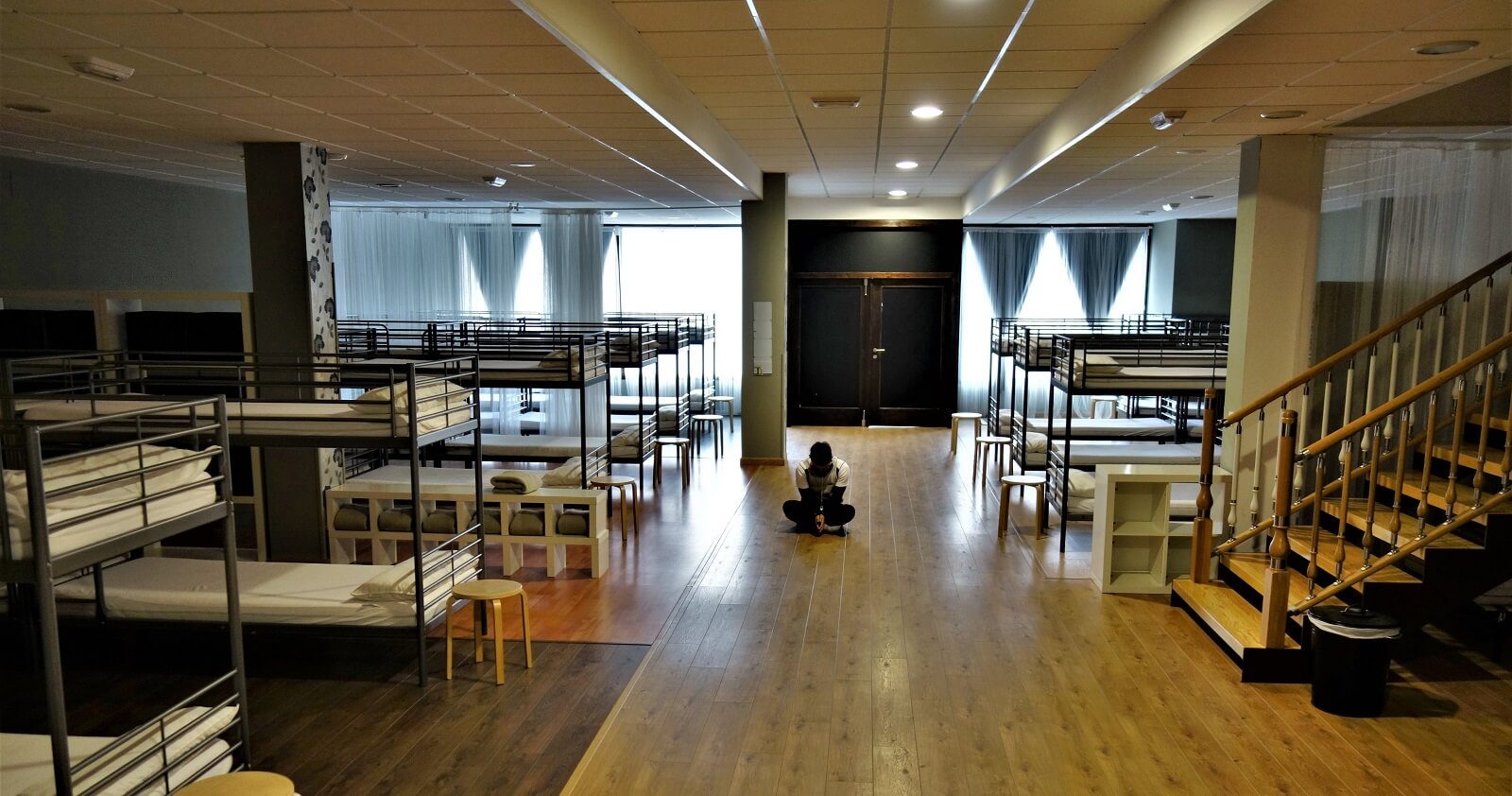
    Right now, I’m sitting on my bed in a hostel dorm in Berlin. My crap is all over the floor. The girl sleeping in the bed beside me also has her crap all over the floor. And then there’s a couple of tidy guys, with all their stuff locked and zipped up. Nobody has made their bed (why would you?). It’s 4 p.m.

    Today, living like this is perfectly normal for me. But it wasn’t always. It’s been over five years since I left my wildly exhilirating accounting job in New Zealand and set off on my world adventure. I have probably slept in over 200 beds since then, and on countless other couches, floors, trains, cars, planes, tents, beaches.

    As this has normalised for me over the years, I tend to forget how odd it might seem to others. When people appear puzzled about this lifestyle, I often shrug it off, like it’s nothing special. But I’ve noticed this can confuse people, intimidate them almost, and make it seem like the backpacking trail is reserved for these odd personalities, who like living in dirty socks and sleeping in rooms that smell like feet.

    So today I want to take you all back, to the day I checked into my first hostel. Because back then, living like this was anything but normal, and I was anything but an accomplished traveller.

    My backpacking career began in South America. I flew into Buenos Aires, and was scheduled to stay on the continent for 14 weeks.

    I showed up that afternoon with nothing but a backpack full of clothes, some toiletries, and the shoes on my feet. I hadn’t packed a laptop, nor a tablet, nor a camera. I didn’t have any warm clothes. Not even a jacket. I had no guidebook. I didn’t even take a cellphone.

    I really just thought I wouldn’t need any of it.

    Camera? The photos are in my head. Laptop? Internet cafe. Phone? To call who?

    Once I was off the plane, I changed my USD at the first airport currency exchange I saw, right at the baggage collection. I’ve since learned this was the equivalent of having the word “ROOKIE” tatted across my forehead, and I remember overhearing an English couple discussing how it “wasn’t a good rate”, but at the time I wasn’t aware of how badly rates were loaded at the airport. I didn’t know of these cool little things called ‘travel blogs‘ back then. I mean, I just needed to get pesos. This is the place to get pesos, no?

    Once clearing customs I headed straight to the taxi stand. I saw the same English couple I’d seen at the currency exchange, and asked if they wanted to share a cab to the city. They said, “Sure”, and one of them ran off to a nearby ATM to get some cash out.

    I had a hostel booked already, I still remember the name: Milhouse Avenue. Initially I gave the driver the wrong address, so we drove around in circles until I actually got the booking printout from my backpack and double-checked it. When we arrived, the driver asked for a tip. I didn’t know how much to give him, so I gave him a 20 peso bill, which at the time was around $5 USD. He grinned a huge grin and slapped me on the shoulder, and then probably took off to splurge on some empanadas.

    I was in an eight bed dorm, mixed with guys and girls. Jet lagged, I slept the rest of the day, only heading out briefly that evening to eat a burger with a couple of my roommates. I thought it was so cool – making new friends like that. There were literally hundreds of people in the hostel, all drinking, watching movies, cooking, playing pool, chatting at the bar. As a lifetime introvert, I remember being a little overwhelmed by it all. I just went upstairs and lay on my bed.

    The next morning I woke up and most of my dorm had already started their day. Some were out, a few were around brushing their teeth, that sort of thing. I remember one of the staff coming into the room to take some dirty sheets and open the curtains.

    “It’s a beautiful day guys, get out of here!”

    My heart jumped a little.

    Get out of here?

    But…

    To where?

    I felt all this pressure suddenly, like when you were a kid and you weren’t listening in class and now everyone is working and you have no idea what’s happening. Around the hostel I could hear all these people shuffling maps and talking about buses and different places they were going to visit. But I didn’t get it. How does everyone know what they’re doing? Was there like a presentation I missed in the morning or something?

    Of course it only lasted a couple of seconds before it clicked; we were just supposed to look after ourselves. But I had never been in an environment like this before. It was always catch the bus at 7, eat lunch at 12, go home, do your homework, go to soccer practice. Wake up, iron your shirt, file your timesheet. Even my two previous travel experiences were no different: On my volunteering trip in Tanzania, I got told what my job was, which bus to catch, what time to show up, what time to go home. My language course in Spain – get to class at 8, go home at 2, do my homework, go to sleep. For my entire life I had woken up in the morning and had someone else tell me what to do. And now, in this foreign country, it felt odd that people didn’t follow a programme. I mean, don’t we need to have a group meeting so everyone knows what they’re doing?

    There was this guy in the bunk above me. He was from Serbia, I remember him only as Z. He came out of the bathroom and I asked him meekly:

    “So, what are you going to do today?”

    “Oh I’m just going to head to the train station and buy a ticket for next week.”

    Just looking at me, he must have known I was a new kid.

    “You can…uhh…come with me if you want?”

    I nodded. Yes, I really do want.

    Because I had no idea what else to do.

    We got to the subway and headed to the ticket machine.

    “How much is it?” I asked him.

    “One twenty.”

    “One twenty….” I mumbled.

    “Yeah, pretty cheap huh?”

    I thought about it. 1.20 would have been…25 cents? No way.

    “So like, one hundred and twenty?”

    He laughed at me.

    “No man that’s crazy. One peso twenty cents.”

    Look, guys, I’m really not a dumb guy. Honestly. This was just unknown territory. Out here in deep water my brain had stopped working. I was a lifelong academic. If I didn’t have a textbook to give me the answer, then…where do I find the answer? On paper I was probably one of the most educated guys in that hostel, but book smarts get you nowhere on the road.

    I walked around with Z for the rest of the day. It didn’t take long for me to shake off the shock and settle into the whole backpacking thing. He was a seasoned traveller, so just hanging out and talking with him, seeing how relaxed he was, watching how he navigated a foreign city, I finally started to “get it”. There were no teachers out here, no parents, no manager’s office to go ask questions. You simply learned from the guy beside you.

    I met some cool guys that evening in the hostel bar. I met another Kiwi in my dorm, some British guy who wasn’t shaving for a whole year, a couple of crazy Brazilians, and of course Z was there too. I did the hostel tango class that night in the bar, and sat around chatting with a few people. There was one Australian guy I remember particularly well. He had shabby blonde hair, seemed to know everyone. I asked him how long he’d been travelling.

    “Eight months,” he said without a flinch.

    “Eight months??”

    He nodded, like it was nothing. Part of me didn’t even believe him. How does somebody travel for eight months?

    He then showed off some little caps of cocaine in his pocket, and proceeded to tell us about all the beautiful girls he had sex with in Colombia and Brazil. I thought his stories were great, still unaware of what a common species of backpacker this was. On a safari, he’d be a gazelle, or a zebra. The first one is cool and you take about thirty photos. The next five hundred, you just drive right on past.

    By the time I left Buenos Aires a week later, I felt like I’d finally figured it out. Backpacking represented a lot more than just travelling. In fact, much of it wasn’t about travelling at all. It represented freedom, friendship, cultural mixing, self discovery. It was a colourless, classless community, where no one cared who was rich or who was poor, whether you were a doctor or a busboy, where people sat around and did absolutely nothing as much as they explored their destinations. There was nobody to report to, no schedules to follow, no promotions, no start time and end time. You simply woke up each day and followed your own feet. Of course, I still had much to learn. But I was on the way.

    Looking back, I never managed to fully embrace the backpacker lifestyle that entire trip. I spent ten of my fourteen weeks in Peru, enrolled in Spanish school, living in my own apartment. Back then I told myself it was because learning the language was the priority, and it was, but I also believe it was a case of being institutionalised in a rigid “Yes sir, no sir” environment, something I still carry remnants of today. As much as I hated the rules, living without them made me uncomfortable. I couldn’t be free without feeling lost at the same time.

    And that brings us full circle, five years later, to my hostel dorm here in Berlin. Because this year being a backpacker has been a completely normal, almost tame experience. I’ve grown into it, and in some ways grown out of it too. I am now comfortable without structure, without rules. But it’s taken this long to get here. And whenever I come across yet another 19 year old Australian on their first big adventure with lots of “silly” questions, I don’t dare tell them I’ve been travelling for five years or start lecturing them about life on the road. I shut up and try to be the guy that Z was; humble, encouraging, helpful, and give them the props they deserve for doing something most people never will.

    So, the moral of this ramble:

    If you’re planning a trip and have no idea what you’re doing, don’t worry. Relax. And when you do hit the road and everyone around you seems like an expert traveller, chill. We all started there, and I was the most clueless of them all. Like everything else, learning to travel takes time, so embrace it, ask the dumb questions, have fun, enjoy the journey. I won’t say it’s easy, but I do know you will figure it out. And honestly, those years of kooking on the road will probably be some of the best of your travel career.

    To all your adventures,

    Bren


    Travelling alone for the first time? You're going to be nervous. You'll make a lot of mistakes. You'll feel alone, out of place, anxious, homesick. But it doesn't matter. Here's why.
  • To Where The Northern Lights Go

    To Where The Northern Lights Go

    I stood at the window, eyes skyward.

    Nothing.

    It was my third night here in Rovaniemi; one of Finland’s smaller cities, just outside the Arctic Circle. But I wasn’t here for the sightseeing. The mornings and afternoons had been loitered through, and each night was spent lounging by the window, hoping to see the famous aurora borealis come out to play. Seeing them was the sole reason I’d braved the long journey into Lapland, but so far every night had been the the same. Rain, clouds, maybe some stars. But no lights.

    I decided I couldn’t sit around and wait anymore. It was time to go hunting.

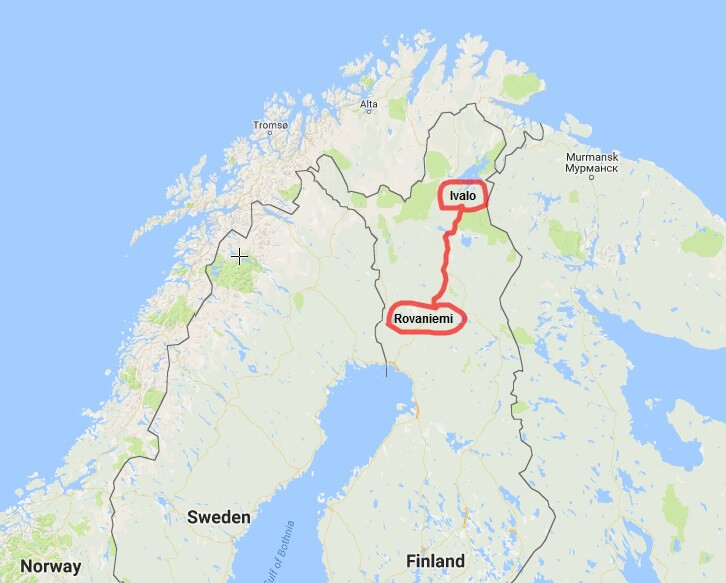
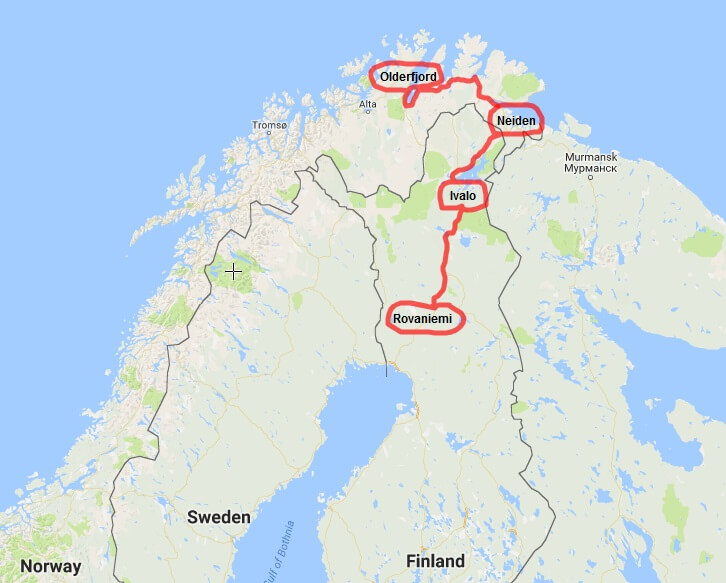
    The next morning I picked myself up a rental car and forged my battle plan. I would head north, so far north that it would be impossible for the Northern Lights to escape me. My first destination was the town of Ivalo, some 300 kilometres away.

    rovaniemi-ivalo

    I’d arranged to Couchsurf with Kaisu and Arttu, a young couple with an apartment full of animals. I arrived in the early evening, and we chilled in their lounge and got to know each other over a few Estonian beers. As I’d promised to cook dinner, we all headed to the supermarket once the sun came down, stocking up supplies for a Chinese feast. Even in this sleepy town of 1,500 in the middle of nowhere, they had not one, but two enormous supermarkets stocked with everything you could want, even uncommon Chinese ingredients you would never expect to see. But Finland has a way of surprising you like that.

    As we walked across the parking lot, to and from the car, I kept my eyes to the sky. Again it was only clouds and blackness, no different from the nights before. There would be no aurora hunting tonight. But not all was lost. Kaisu and Arttu had a ridiculously sized television, hooked up with a PS4 and Netflix. I cooked, we ate, and then the three of us boozed on wine and Finnish vodka, well into the night, until our heads and the Playstation controllers hit the floor.

    Day 2

    In the midst of inebriation the night before, Kaisu and Arttu had invited me up to their cabin in Neiden, a tiny town in Norway.

    “We’ll get some friends together, have some drinks, have a sauna.”

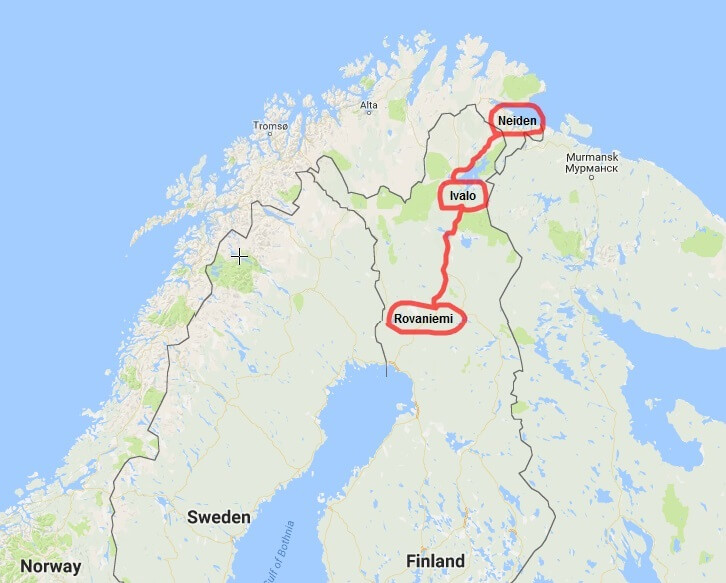
    It was hard to turn down such invitations. As soon as the hangovers cleared, we packed the car up and made the drive 300km north to Neiden.

    rovaniemi-ivalo-neiden

    Arttu had a charming little cabin on a small plot with around three other houses. It was so secluded he didn’t even have a lock on the front door. We just waltzed right in. There was no television or wifi inside. Just a fridge, an oven and some beds. It was perfect.

    Once night fell, Arttu’s neighbour Howard invited us to his cabin for drinks. Kaisu’s friend also came by to join us; a Norwegian girl, whose name I forget. While we sipped on local beers, Howard brought out some fresh king crab he’d caught in the river down the road. In most countries such crabs cost a small fortune, but up here they catch them by the dozen without much trouble at all. So the five of us sat there drinking, chatting, eating crab, as the Norwegians do.

    Between drinks we’d go outside to visit the bathroom, have a cigarette, run to Arttu’s cabin to refill the fridge, and each time I stepped outside I’d look at the sky, hopeful to see something. But every time there was nothing to see.

    “Tomorrow,” I told myself. “It’ll happen tomorrow.”

    Of course there was only one way for this night to end: The sauna. As usual they all disrobed completely, I followed suit. Where I’m from a bunch of guys and girls naked in the sauna is rather peculiar, but here it’s as normal as cereal for breakfast. We sat there drinking, laughing, talking, sweating, all butt-ass naked, until the early hours of the morning.

    Day 3

    The mission was to get north, as north as humanly possible. Or at least as far as a man with a rental car can go. Nordkapp was supposedly the most northern (driveable) point of Europe, and Google had me at seven hours away. I wasn’t sure if I’d make it in one day, but I was going to try. Because what better place to find the Northern Lights than at the very north of the world?

    My first order of business was to get supplies. I headed back to the Finnish border to stock up on snacks, gas and water (everything is cheaper in Finland), before starting the long drive up Norway’s coast. It reminded me of rural New Zealand in the autumn. Fiords, golden fields, mountains, empty roads. Who would’ve thought the north and the south of the world looked exactly the same in the fall?

    Every now and then I’d see a side road into a forest, a lake, a viewing point, a river, and I’d pull the car over to snap a few pictures and smell the cool air. Outside of New Zealand, I’d never had my own wheels to explore so freely. It was liberating, to truly follow the road to your own beat.

    By the time the sun came down, I had made it 360km west to Olderfjord.

    rovaniemi-ivalo-neiden-oldersfjord

    I found a small parking spot by the roadside, on the water’s edge, and decided to stay there for the night. It was dark now, and as I turned off the car and looked up through the windscreen the moon smacked me in the face. It was glowing, and full, far larger than I was used to, lighting up everything in the vicinity. I got out of the car and stood over the water below, admiring how majestic everything looked. How nature can make you feel so small. That night, so many miles from home, I felt completely free, invisible to anyone and everyone in the world.

    I only managed to sleep in that spot for an hour before the cold woke me up. I looked at the clock. Midnight. The clouds, once heavy, now seemed to be clearing slowly. If I was going to go aurora hunting, now was as good a time as any.

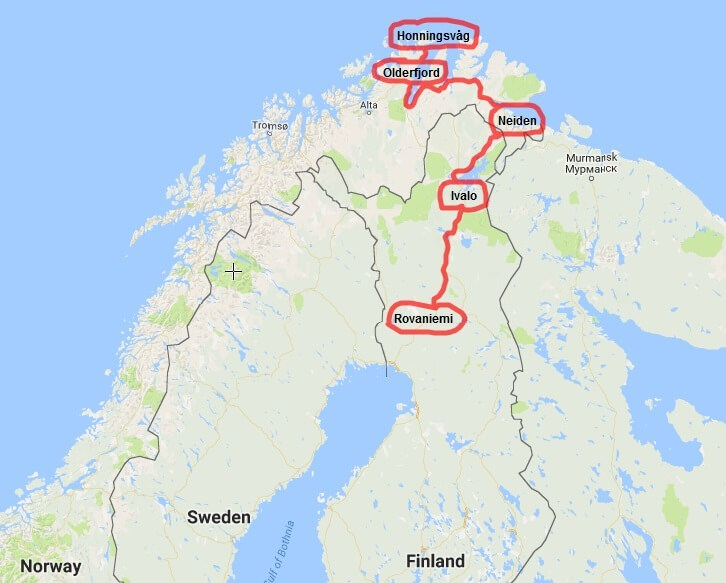
    I fired up the car and continued north. I drove slowly, hyper aware around every turn, expecting to see sleep-walking reindeers or half asleep drivers. But the roads were empty. Any time I hit a straight, I’d cock my head and stare up at the sky, hoping to see greens and blues and purples dancing around the stars. But there was nothing.

    Before I knew it I’d made it 100 kilometres north to Honningsvåg. It was Saturday night and the town was semi-lively for such a small, secluded place.

    rovaniemi-ivalo-neiden-oldersfjord-honnigsvag

    Some years ago I might’ve wandered into a bar to greet some new faces, but my eyes and body were tired from the long day’s drive. I parked outside the tourist office, jumped on the free wifi, and played some lullaby tunes to wind the night down. And as I piled on as many layers of clothes as I could, I checked the sky one last time.

    No lights.

    Day 4

    I woke up at six o’clock with a numbing cold in my feet. It felt like they were frozen, ready to snap off at first touch. I’d fallen asleep in the driver’s seat, curled awkwardly on my side with my feet tucked under me. As I came to, my whole body suddenly felt cold. It reminded me of those winter mornings as a kid, struggling to get ready for school.

    I decided to complete the drive to Nordkapp that morning, but after a wrong turn, I ended up in Nordvågen, a sleepy village-like place about 10km away. I parked by the road to catch my bearings for a second, when I noticed the mountains around me. For some reason they looked so climbable. Something in me was just saying “Why don’t you do it?”

    I got out of the car and looked it over, trying to visualise the path. Certain places were definitely too steep, and the rock definitely too loose, but I just felt like I had to try. I stuffed my backpack with snacks and water and went to the foot. The first ten metres were easy. Lots of big rocks, the brush not too soft. And then it got tricky. The rock was loose, as I’d expected. And the brush was soft and deep. I moved slowly, hyper cautious, suddenly wary about how high I was getting. After about twenty minutes, I found a small landing and stopped. I looked down.

    Falling from up here, there was no coming back. It was high. The same voice that had told me to come up was now telling me to go back down. But the top just looked so close.

    I kept going.

    When I finally got up there unscathed, other than a few scratches, I planted myself on a rock and looked over Nordvågen for the next hour. There’s something about climbing to the top, even of the smallest mountains, that makes you feel alive. I sat there in calming silence, and felt lucky; lucky to be in this faraway place, lucky to have two healthy arms and legs. It was a moment I needed, something to remind myself of why I was here, what the purpose of this journey was, why I continued to weather the road for all these years.


    A photo posted by Bren (@brenontheroad) on

    It was still only 10 a.m. when I finally made it back to the car. Normally I’d still be in bed, but as I didn’t actually have a bed on this particular morning, I was out battling little mountains in the Norwegian wilderness. Blessings in disguise, as they say.

    It took me about half an hour to finally get to Nordkapp. The roads to get there looked new, narrow and winding, up and over empty hills. Everything was golden from the coming autumn. Every now and then I would stop by the side of the road and take a photo, but I could never quite capture the endless orange the same way my eyes did.

    As I approached Nordkapp I saw a booth, about 100 metres from the point. I drove up to the window. A young lady greeted me.

    “Hi, welcome to the North Cape. It’s 265 kroners per person.”

    If you’re wondering, that’s about 26 Euro. Most people would probably think what the heck, we’ve come this far, but I’d fallen into this trap too many times. Honestly, I didn’t even know Nordkapp was just a cape. I thought it was the name of a small town at the tip of the world. I pulled the car over and got out. I could see the people up at the point, snapping photos, at least 300 Euros worth of entry fees wandering around up there. For some reason, I just didn’t feel the tinge of photo envy that was common in my earlier years of travelling. I snapped a quick photo from the car, and headed back to Honningsvåg.

    I found another spot overlooking the ocean to sleep that night, in a small bay by the main road. There was huge rock to the left of me, which I hoped would shield the wind and keep me a little warmer than the night before. I lay for an hour or so, pounding an old blink-182 album I’d grown up listening to in high school. I must have listened to it over 500 times as a teenager, and with it came back all the memories, flashes of different feelings and faces that had shaped me during those years. I was amazed at how the songs carried so many memories, decades after I’d stopped listening to them. And of course, between songs I’d look to the sky, hoping to be amazed, and every time the sky would disappoint. I started to doubt whether I’d end up seeing the lights at all.

    Day 5

    The next morning I drove to the tourist office to use the wifi. I pulled up all the guides about the aurora borealis, something I probably should have done on Day One. It started to become clear why I hadn’t seen them yet. I was in the wrong place. I had assumed the further north you go, the better the lights. But in some ways it was the opposite. To see the lights you need crystal clear skies. The skies tend to get cloudier the more north you go. There were also various apps telling you all the best places to see the lights on any given day, which all gave terrible forecasts for Honningsvåg and its surrounds.

    Of course I felt silly, but I wasn’t upset. I was hopeful. I was now armed with all this new intel, and still had three nights to make magic happen.

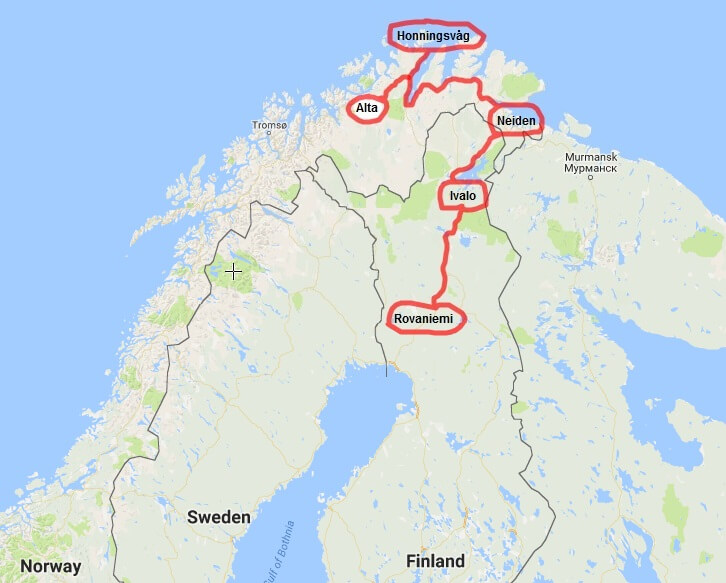
    The forecasts said that Alta, a small town a few hundred kilometres south, had the best chance of aurora action that night. I jumped on Couchsurfing and shotgun requested a few hosts in the city. A Belgian girl, Isabel, responded almost immediately. I was suddenly energised again; a shower, a bed, the lights. It was all waiting for me just a couple of hours away.

    rovaniemi-ivalo-neiden-oldersfjord-honnigsvag-alta

    When I arrived in Alta two hours later, Isabel was there to meet me in the carpark. Even from a distance I could see a glowing smile on her face. She was tallish and thin, long auburn brown hair, and her eyes a piercing blue, almost dazzlingly so. She laughed as she greeted me, and from the colour in her voice I immediately knew what a free spirited and joyful person I was meeting.

    My entire body smiled when I saw her place. Nestled in the corner of her room I had a bed, an actual bed with four legs and a mattress. A hot shower waiting. Wifi. I quickly met all of her roommates, then lay down and grinned at the ceiling. Luxury.

    “So we’re going to relax in the sauna soon. You will join us?”

    Uhhhhh. YES. It was a modest student sharehouse, but it felt like I’d checked in to the Couchsurfing Sheraton.

    Afterwards Margaux – Isabel’s neighbour – invited us over for dinner. The two of them cooked fish, mash and vegetables for the whole house, with a few slabs of chocolate for dessert. After feasting, the six of us lounged in the kitchen, full bellies, talking and playing cards as the night wound down. Moments like these, plain as they may seem, always soothe the soul when the road is long and rough.

    Come midnight we’d all saunaed, showered, eaten, and half fallen asleep, but Isabel still had one task left on the day’s to-do list. While the rest of Alta was sleeping, she rounded us up for a dumpster dive at the local supermarket. I was designated driver of the getaway car, Isabel was lead dumpster diver, Margaux and her comrades, Ali and Tom, were the bagging crew.

    The streets were empty. As we pulled into the supermarket carpark, I set the car in the shadows while the five of us shuffled over to the dumpsters with pockets full of plastic bags. Isabel opened the dumpster and jumped right in. Granted I’d only known her for six hours, but I’d never seen her look so focused. Obviously this was serious business.

    The dumpster was big, the size of a minivan, filled with six or seven full, black garbage bags. She untied the first one, yanked it open and looked inside.

    “Bread,” she said flatly as she looked over at us.

    Who wants bread?”

    Her eyes were laser focused now, the permanent laughter from earlier in the night nowhere to be seen. The bag in her hands must have had at least 25 loaves in it.

    “Just take all of it,” Tom shrugged.

    “No, we can’t eat all that!”

    Yeah. Geez Tom. We can’t eat all that.

    She offloaded five or six loaves to us, one Christmas loaf in particular catching her attention.

    “Ooooohh these ones are good,” she smiled, holding it up and admiring it before throwing it over to us.

    I laughed as I watched her tie the bag up and move onto the next one. She was a professional.

    As she pulled the next bag open, her eyes almost exploded out of her head.

    “Ohh putain! Give me the bag hurry up!”

    “What is it?”

    “Just give me the bag!”

    Tom handed over a bag, and she started digging deep.

    She pulled out a mango, some grapes, and then an endless stream of apples. Five, ten, fifteen, just slamming them into the bag, rapid fire, a huge smile on her face.

    By the end of it, we had at least fifty dollars of food, much of it in pristine condition. It was my first dumpster dive, and I was sold 110%.


    View this post on Instagram


    A post shared by Bren (@brenontheroad) on

    When we got back home I took a minute to gaze out the window while the rest of them sorted through their spoils in the kitchen. Earlier in the day the aurora forecasts had been good, but suddenly they had all changed from “Yes” to “Maybe”. And the forecast from my eyeballs was saying “No”. I saw clouds, lots of them, and nothing else. I chuckled at my bad luck. My likelihood of seeing the lights was fading rapidly; chances high that I’d be seeing nothing in the 36 hours I had left up here. But such is life.

    I got into bed and Isabel and I chatted for a while before I knocked out. We laughed about a few things happening in my life, things I usually keep to myself. But it’s funny, you tend to divulge a lot of your secrets out here. You meet people, fellow travellers, and they know the deal. There’s no judgement, no preconceptions about who you are or who you should be. You ask them for their opinion and they give it. It’s someone you’ll never see again, and that makes it very easy to trust them. Because honestly, who the hell are they going to tell?

    Day 6

    I woke up late. As expected, I slept like a mummy in a coma. Isabel spent the day at school, and I stayed in her room glued to my laptop, enjoying a little rest and relaxation. I kept a close eye on the aurora forecast – most were saying it was looking good, maybe a 60% chance to see them, but I’d learned a few things from the week gone by. I didn’t get my hopes up.

    When Isabel got home in the evening I helped her cook dinner for the house – apple cake and cauliflower soup, with the apples and cauliflowers we’d snagged from the dumpsters the night before. I mostly just cut the apples and played DJ, while she did the rest. When it’s been months on the move, it’s a priceless comfort to be welcomed into a family and do everyday things again. Moments like this aren’t exactly rare on the road, but are often far between, so we tend to cherish them more than people realise. I’ve never enjoyed cutting apples so much in my life.


    View this post on Instagram


    A post shared by Bren (@brenontheroad) on

    When dinner was finally cooked and eaten, and the table cleared, I decided to go for a quick drive, just in case the skies felt like being kind. I blasted my favourite song on the stereo, and headed out beyond the city lights, hoping to see some colours in the sky. I found a small field shrouded in darkness and parked there, just reflecting on the past week. It had been an adventure for sure, a tiring one, in some ways an unsuccessful one, but I’d loved every piece of it. In between thoughts I looked at the sky in passing glances, but it offered nothing but thick and heavy cloud. But lights or no lights, I only had the fondest memories of the week gone by. Tomorrow I would go home happy.

    Day 7

    My last day in Norway. The car was due back at the rental office the next morning, and I needed to start driving at 2 a.m. that night to get it back to Finland in time. But I still had the day to kill.

    I went hiking out in the hills just outside of Alta, searching for some grand canyon Isabel had told me about. After two hours of helpless wandering and a badly sprained ankle, I found it. She wasn’t kidding; it was enormous, long and winding, deeper than one’s mind could comprehend. I looked over the edge. Vertigo. 200 metres, at least. One trip and it was all over.

    I barely got to see half the canyon before I felt the need to head back. My ankle was starting to swell, and I was already hobbling on one foot, with a two hour hike back to the car ahead of me. I fiddled with my foot, trying to determine how bad it was. I decided I would survive. But the sun was starting to set. I had to go.

    Things got a little more complicated when I realised any trace of a path had disappeared. I looked around me, in every direction. It was all the same; stretches and stretches of orange hills, miles from any road or civilisation. There was a broken path I’d followed to get here, but after running excitedly along the canyon I’d lost all idea of where I was. The offline map on my phone, which barely loaded, was the only bearing I had. I needed to head west to find the road.

    After about ten minutes a couple called out to me.

    “Excuse me…do you know how to get back to the road?”

    I turned to face them. They were a young Finnish couple, maybe in their twenties, tricked out in fancy hiking gear and colourful jackets.

    “I’m not really sure. The map says to head west. So I’m just going to follow the sun.”

    They looked at me blankly. I showed them the map.

    “The road is to the west of the canyon. The sun rises in the east, sets in the west. If we just keep heading towards the sun, we should meet the road.”

    Old lessons from Jackie Chan movies.

    “Hmm okay, is it fine if we walk together?”

    “Yeah of course.”

    We followed the sun for two hours, ankle deep through swamps, mud and streams. Every now and then we’d come across blueberries, which I’d eat, comforted by the fact that I might be able to survive out here for a couple of days if it came to that.

    Two and a half hours passed before we finally made it back to the road. The carpark was nowhere to be seen, and the sun was moments from dipping down over the horizon. We asked a passerby where we were, who chuckled at us getting lost, and pointed us in the direction of the carpark, a half hour walk away. I hobbled on my bung ankle, cold and muddy, but my spirits were high. It was the skies. They were a bright, soaring blue, not a cloud to be found; you couldn’t have painted a clearer sky on a canvas.

    “Maybe,” I said to myself.

    “Just maybe.”

    That night one of Margaux’s housemates cooked burritos for dinner. We sat in their kitchen eating, chatting, waiting for the sky to go pitch black while I nursed my foot with a piece of frozen whale meat. But when eleven o’clock hit, it was time for aurora hunting. I had three hours left in Norway. This was the last hurrah.

    Isabel suggested we head to Komsa, a small peak not far from the town centre. It was an easy climb for the rest of them, but challenging for myself with only one foot. But a little aurora promise was all I needed to get to the top.

    The peak boasted a sprawling view of the city lights, set against the fiord, and a 360 degree view of Alta and its surrounds. We planted ourselves on a rock overlooking the water, the moon hovering behind us. The sky couldn’t have been any clearer.

    “You’re going to see them!” Isabel beamed, smiling ear to ear. She was more excited for me than I was.

    Finally, around midnight, a small tinge of green appeared on the horizon. We all perked up and eyed it closely. It was faint and distant, but slowly grew, longer and brighter. I wasn’t even sure if it was an aurora. But soon another one emerged beside it, much thicker and far-reaching. And then they both beamed, from the horizon to the centre of the sky.

    For one or two minutes they shone above us, like nothing I’ve ever seen, before slowly disintegrating back into the darkness. I spent most of those minutes fiddling with my camera, trying to catch the perfect shot, somewhat failing to enjoy the magic of my first Northern Lights moment. For some reason I had assumed they stayed out for hours at a time. But they were gone as fast as they had come.

    “Look, behind you,” Isabel nudged.

    I turned around. They were back. A scattering of green daggers littered the sky, hovering over the city.

    We both awed in silence for a moment, mouths agape, heads slowly swivelling back and forth. I felt a sudden surge of satisfaction in that moment, and in many ways, relief. The lights were right here, sitting on top of me. Have I really found them? It was one of those moments I wouldn’t truly appreciate until many days afterward.


    A photo posted by Bren (@brenontheroad) on

    The auroras continued to pop in and out of the sky for the next hour. We sat there and gawked and pointed and ogled, watching them fade in and out, braving the piercing cold as we waited for them to come back each time they vanished. But eventually the window closed, and the clouds rolled in, like a closing curtain, tucking them away for the night. Just like that, they were gone.

    “Time to go.”

    It was almost 2 a.m. when we got back to the house. I had to leave, and soon, if I was going to get my car back in time. I said my goodbyes to the roommates, and Isabel walked me out to the carpark to farewell me with a hug and a wave. Goodbyes, of course, are nothing new to me, but I was sad that night, genuinely so, to be leaving such a warm and welcoming place.

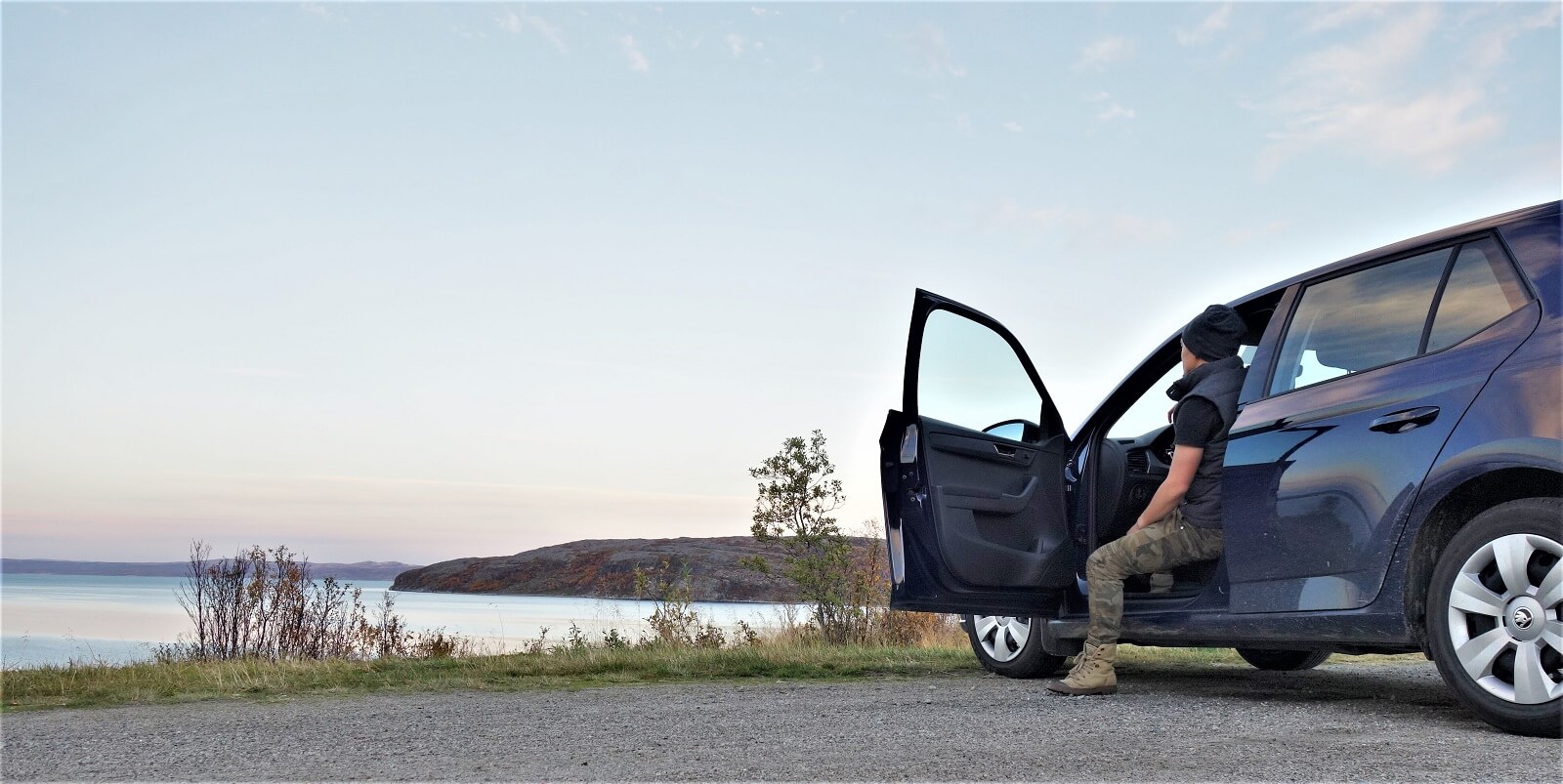
    Alta had been the ending I’d hoped for; new friends, new adventures, all the memories I’d envisioned on the morning I first stepped into that little rental car. All that remained now was a seven-hour drive against foggy roads, tired eyes and stray mooses, not to mention a throbbing ankle that made me wince each time I pushed the clutch in. But I had no qualms about any of it. I just pulled the car out of the carpark and smiled at the long road ahead. Because after the week I’d had, I could’ve torpedoed my car right into a moose’s nose and it wouldn’t have dampened my spirits for a split second. My little Skoda and I had set out on an adventure, stayed until the end, and gotten everything we came for.

    THE END


    A heartfelt thank you to Kaisu, Arttu and Isabel for being such amazing hosts. You made the adventure possible. Until next time.

    A short story of new friendships and experiences as the Northern Lights are chased through rural Finland and Norway.
  • Hitch-hiking Diaries: From Kraków to Tallinn

    Hitch-hiking Diaries: From Kraków to Tallinn

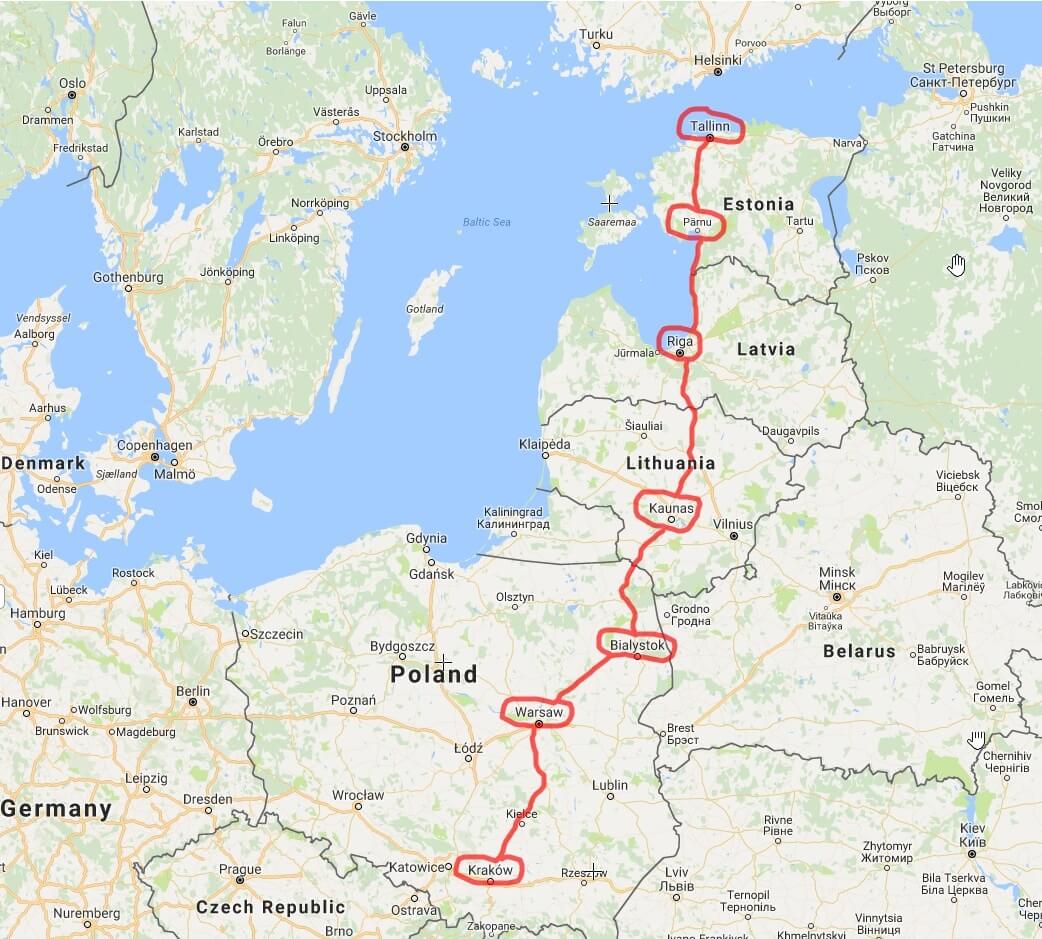
    Recently I completed my first extended hitch-hike – around 1,300km and four countries – from the south of Poland to the northern tip of Estonia.

    hitchmap

    When I tell people about this, they often seem confused about the whole idea. Who picks you up? Is it easy? Hard? What if no one stops? But hitching is actually very popular in Europe and has been for a long time.

    So here’s an inside look: A no-frills journal of all my rides from beginning to end. As you’ll see there’s nothing crazy about the whole thing, just people helping people, two strangers keeping each other company on a long drive. If you’ve thought about hitching in the past, maybe this will give you an honest glimpse into what you’re in for.

    Kraków to Warsaw

    The idea to hitch-hike comes out of nowhere, really. I initially just want to hitch to Warsaw, as the Polish bus timetable is annoying me. And then I think, why not just go all the way to Tallinn? It’s not that far. Besides, I’d stopped finding buses and trains fun a long time ago.

    So I decide that’s the mission; Krakow to Tallinn.

    The first day is easier than expected. I get to a gas station on the highway to Warsaw. I have a ready-made sign in my bag that I actually spent a long time on. Just need to head to the roadside and hold it up. I feel kind of nervous, to be honest. I’ve never hitch-hiked before, at least not in the traditional sense. But it couldn’t have gone any smoother.

    I pull out my sign and have barely been waiting thirty seconds before someone stops. He’s maybe in his forties, a Polish guy, drives a Honda CR-V. He gets out and helps me throw my bag in the trunk.

    “Would you like some apples?” he asks, hold out a small box of green apples. “They’re organic, from my mother’s farm!”

    I smile, and we each take one before getting in the car.

    “So you must have kids,” I say, looking around his car. There’s crap everywhere.

    He laughs and nods, taking a bite out of his apple.

    He actually lives in the UK, and has driven all the way here to visit his family. Took him two days. He tells me about his two kids, both in school, and his wife, some big-shot scientist somewhere in England.

    He has a few travel stories of his own. Says he hitch-hiked all over Europe as a kid, and asks me a lot of questions about what the backpacker scene is like today. He wants to know the gear we use, what apps on my phone, the whole deal. I get the feeling he picks up hitchers like me to repay the favour from his own journeys, but to also continue adventuring vicariously through us. I’ll probably be that guy some day.

    The drive itself is easy; main highway, three hours, give or take.

    When we get to Warsaw, he drops me at a metro station and I write down my blog and email for him. He says he’ll be in New Zealand one of these days, and I tell him I’ll be more than happy to chauffeur him around. We shake hands, give our farewells, and I head into the station to get a train to my Couchsurfer‘s place. I can’t even remember his name.

    Warsaw to Bialystok


    A photo posted by Bren (@brenontheroad) on

    I head to a bus stop on the highway north out of Warsaw. It takes me an almost an hour to find my way there. I hold up my sign.

    A lot of drivers acknowledge me with smiles and nods, but nobody stops.

    An hour passes. Then another hour. Still no ride. It’s 2pm now, and I’m already entertaining the possibility that I might not be going anywhere today.

    Finally I decide to walk about 400 metres down the road to the nearest gas station. As I do, it starts to rain softly. I try to ignore this enormous inconvenience. I get to the gas station and buy a sandwich. I’m tired and hungry. I didn’t have time to eat breakfast this morning. I ask a guy standing outside drinking a coffee if he’s heading to Białystok. He says yes. I get excited inside, and ask if he can take me. He says I need a helmet; he’s on a motorbike.

    Damn.

    I stand and chat with him for ten minutes.

    A car pulls in behind me. He looks over my shoulder and says, “That lady is going to Białystok”. I turn around. It’s a flash car, some huge BMW SUV. I ask him how he knows. He says to look at the number plate – BI is the registration for Białystok. A middle-aged lady gets out and starts pumping gas. I ask him what he thinks my chances are, as lone women don’t usually give rides to strangers, especially an enormous, rugged, imposing man like me.

    “You should ask her, she looks strong, walks with some dignity,” he chuckles.

    I laugh and walk over to her.

    “Excuse me, are you going to Białystok?”

    She turns and smiles.

    “Yes.”

    “I’m looking for a ride there, would you be able to take me?”

    I put on my warmest, friendliest smile.

    She laughs and takes a deep breath, looking me over. A few moments pass.

    “If you can’t it’s totally fine, I’ll just be waiting over here, let me know.” I smile and go back to my seat. She heads into the shop to pay for her gas.

    Two minutes later she comes out and looks at me. She shakes her head, with a smile.

    “Sorry.”

    I tell her it’s fine, and it is. I watch her drive off with four empty seats in her overpriced car, say bye to my new friend, and head back to the road. I find another spot this time, much better for hitching than the first.

    After an hour someone finally stops. He says he can take me Wyszków. I ask him where that is, and he tells me it’s nearly halfway to Białystok. I decide to take my chances; better than standing around here for another three hours.

    It’s a tiny little car, beaten up, and the guy can’t be older than 25. His phone keeps ringing and he keeps denying the call.

    “Problems bro?”

    He sighs.

    “Yeah. Ex-girlfriend. You know?”

    I laugh.

    “Yes, I know very well.”

    He works at a sushi restaurant in Warsaw, and also has his own sushi joint in Wyszków, commuting each week between the two.

    “Sushi is a big thing in Poland right now,” he tells me.

    Wyszków is only 100km away, we arrive in under an hour. He drops me at a bus stop.

    “Try here. It’s a good spot, you should get someone.”

    I thank him and jump out. It starts to rain. I head under the shelter at the bus stop and wait. There are two young girls waiting beside me. I chat with them for ten minutes while the rain dies down.

    “How long do you think before I get a car?” I ask them.

    One of them says ten minutes, with confidence. I am doubtful.

    Once the rain dies a little I head back to the sidewalk with my Białystok sign. I’ve been waiting almost an hour and it’s past 5pm now. I feel like I might be spending the night here. I take out my phone and quickly search for hostels and Couchsurfers in this tiny town. None. I may be sleeping in a bus stop tonight.

    Finally a car stops. A young lady, maybe late twenties, driving a people-mover.

    “I can take you to Ostrów. It’s about halfway.”

    I hesitate for a moment and she pulls up the map on her phone.

    “We’re here. So I can drop you just before Ostrów, here. Then I need to turn off and go in another direction.”

    I decide to go for it and stuff my backpack in the trunk. She has three kids in the back, all sitting in baby seats. The eldest can’t be older than four.

    “You’re actually the first hitch-hiker I’ve ever picked up.”

    I’m flattered. I must have a kind face.

    We talk in between her kids interrupting us and asking for chewing gum. She’s my age, so we have a lot to talk about, but we’ve obviously chosen very different lives. She looks very happy, and she looks like a great Mum. I admire her. Reminds of my Mum driving in the car with my brothers and I fighting in the back.

    “My husband is going to think I’m crazy when I tell him about this.”

    Just before Ostrów, she drops me at a small parking bay, on the main highway.

    “I think you should be able to get someone here.”

    We take a few selfies together and then say our goodbyes.


    A photo posted by Bren (@brenontheroad) on

    It’s starting to get dark, and now I’m really out on the open road with no hotels, bus stops or restaurants. I don’t feel too worried though. A lot of traffic is zooming by; surely at least one of them will pick up a stranded traveller.

    I was right. After about twenty minutes a guy pulls over. He’s driving some expensive looking Volvo. He jumps out to shake my hand and throws my backpack in the trunk. A girl, I presume his girlfriend, is sitting in the passenger seat. I jump in and introduce myself. As soon as we take off, the two of them continue their conversation like I’m not even there. It’s in Polish so I don’t understand anything. Normally I would feel awkward sitting silently in the back, but I’m so exhausted from the day it doesn’t even register.

    This guy drives fast. At least 160km/h, overtaking anyone he can. I strap myself in tight.

    Just as we arrive into Białystok he starts talking to me – asks where I’m from, if I know where I’m going. I tell him bits of my story and we get chatting for the final fifteen minutes. They’re on the way back from a holiday. Judging by his clothes and his car, the guy has some money. Really cool of him to pick me up. I ask him to just drop me anywhere central, and he drops me right in the middle of the town centre. I shake his hand, say thanks, and go on my way. After a long ten hour day, I’m finally in Białystok.

    Bialystok to Kaunas

    My Couchsurfing host drops me at the first bus stop on the highway out of the city. Good place to hitch, my sign looks beautiful. I have a good feeling about today.

    I’m actually texting on my phone when a car pulls over, I don’t even notice until they’re right in front of me. I look up and see two young guys in a super flash 4WD staring at me.

    “Hey! You going to Kaunas?” I ask.

    “Yep! Get in.”

    I throw my bag in the backseat and jump in.

    They’re both Lithuanians, coming home from a business trip. They sell security systems, or something like that. They’re heading straight to Kaunas.

    After the previous leg, I’m glad today is shaping up to be an easy hitch – straight to my destination, no changing rides, friendly guys, super nice car.

    “This is a really nice car man.”

    I run my hands over the leather linings on the door.

    “Thanks, it’s actually my wife’s car. We drove all the way to Germany to get it.”

    We have a really interesting conversation about Lithuania. He says they speak the oldest language still used today, that a quarter of Lithuanian people don’t live in Lithuania, and they’re struggling to attract immigrants, even refugees.

    “You know, we are actually trying really hard to bring refugees in. We are like out there campaigning to get them here. But they won’t come. So on one hand it’s good that we don’t have all these political problems other countries are having. But it’s also bad, because what does that say about our country if even refugees don’t want to live here?”

    They speak great English, and we have a long talk about politics and business and other good stuff. Smart guys.

    Like many people around here, the driver used to hitch-hike a lot as a kid, almost every day, to and from school.

    “I lived in a small village, man. I had a long way to walk to school each day. So I know how it feels to have cars go by and nobody pick you up.”

    There are no controls when we cross into Lithuania from Poland. No border patrol, no customs agents, nothing. Just open road and a sign saying welcome to Lithuania. But I still get that little buzz you always get when you enter a new country.

    The guys are great hosts. They tell me a whole bunch of stuff to see and food to try, and wish me well on my journey. He even drops me right outside my Airbnb in Kaunas. I can’t thank them enough for such hospitality. A perfect day of hitch-hiking and a heart-warming start to the Baltics.


    A photo posted by Bren (@brenontheroad) on

    Kaunas to Riga

    Apparently the best place to hitch is outside a mall on the outskirts of town. Seems easy enough. But I get there and have no idea where I’m supposed to hitch from. The motorway is there, but there’s hardly anywhere to stand, let alone room for a car to stop. I walk around in circles for about two hours trying to find a place, before I finally get to a bus stop on the correct highway, about 45 minutes walk from the mall.

    While waiting I see a guy with a backpack walking towards me along the highway. Traveller, obviously. He sees me holding my Riga sign and smiles. I assume he’s heading to the same place. When he finally reaches me we shake hands, and he tells me he’s also hitching to Riga. Turns out he’s actually from there, heading home from his Eurotrip. I tell him he’s welcome to wait with me.

    A car stops after half an hour. He says he can take us to Panevėžys, around halfway to Riga. We decide it’s good and jump in. The dude I’m with falls asleep almost instantly, so I chat with the driver. He’s heading out to meet a business partner somewhere. He’s got wifi in his car and everything. Really cool guy.

    We get to Panevėžys and there’s no obvious hitch-friendly spots. He offers to take us past the city, out to the highway. There’s a gas station there where we’ll find a ride a little easier. It’s at least a twenty minute detour for him but he doesn’t think twice about it. I wonder to myself, what compels someone to go so far out of their way to help a stranger? Most people struggle to put a dollar in a charity bucket.

    The gas station he leaves us at is a flawless hitch hiking spot – lots of traffic, huge off-road area for cars to stop. We thank our driver and say goodbye – I wish I had a New Zealand tiki or something to give him. I make a note to bring some on my next trip. We both head into the store to buy some food and water and use the toilet. It feels good to recharge. My travel buddy asks a couple of customers filling up their cars if they’re heading to Riga, but nobody bites. It’s okay though, we’re only standing by the road for about twenty minutes before someone picks us up. He’s a young guy, 25 maybe, also Latvian. He takes us all the way to Riga.

    Riga to Pärnu

    Unfortunately, Riga was one of the Baltic capitals I was really looking forward to, but I could only stay for one day as time was against me.

    Hitch-hiking out of Riga is a little more complicated than the previous cities. I need to take a regional bus out of the city, and hitch from one of the bus stops out there. Finding the right bus is already a challenge, but I get there. Two other Latino guys are on the bus too, they’re hitching all the way to Tallinn today. I see their cardboard sign and make some small talk with them. It’s kind of funny – with the internet all the best hitch-hiking spots are shared online, so we all end up in the same spots. I try to imagine how much more hit-and-miss things would’ve been back in the day.

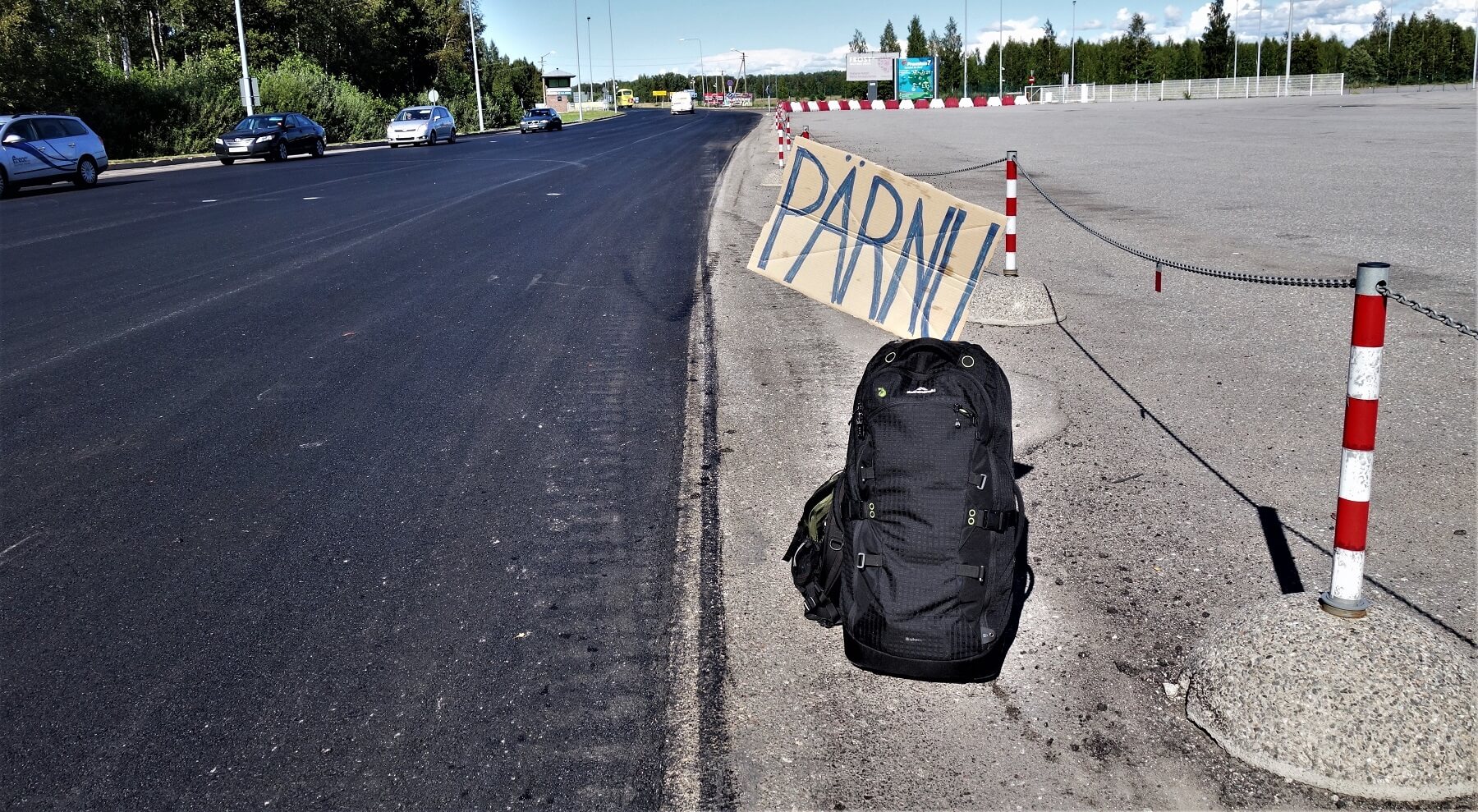
    When we get to the bus stop I stand up front with my Pärnu sign, them with the Tallinn sign right behind me. A car stops after twenty minutes and picks all three of us up. He says he can take us to the border, where it will be a lot easier to find rides.

    He’s a young, married guy, maybe in his early twenties. He’s commuting every day from a border town to Riga for work, and picks up hitchers quite often. I guess he does it to make the long drives a little more interesting. All four of us have a good conversation about our home countries and our travels.


    A photo posted by Bren (@brenontheroad) on

    At the border there’s a big cafe with toilets. I consider buying some food, but Pärnu is less than an hour away. I decide to wait.

    The wait is longer than expected. I’m there for at least an hour and a half until someone finally picks me up. He’s a guy with tattoos all over him and a long ponytail. Looks like a musician or artist of some sort.

    “Hey man, you going to Pärnu?” he asks, in perfect English.

    “Yeah.”

    “Cool man, jump in.”

    I ask him about the car, which is a very expensive looking Mercedes minivan.

    “My friend has a transport company, I drive for him sometimes. People get off the cruises in Tallinn and then I drive them down to Riga.”

    I take a quick look in the back. Very roomy, slick black leather seats.

    “How much does it cost them?”

    “I don’t know exactly, but it’s several hundred Euros at least.”

    I feel so satisfied with my free ride, it’s almost embarrassing.

    I get to know him a little bit. He owns a club in Tallinn, and has his own music festival. He tells me a bit about his past – played in a few bands, travelled all over Europe and America. Now he’s just settled down with this girlfriend and living easy.

    “You know, I’ve already done all the crazy shit I need to do in my life. That stuff gets kind of boring after a while.”

    I admire what he’s done.

    He proceeds to tell me all about Estonia – the history and the language and the old medieval town in Tallinn. He might look like a tough dude, but he’s obviously intelligent, and friendly as they come.

    As we pass through Pärnu he drops me in the centre and the continues on his way. I take down his details and shake his hand.

    “Thanks for everything mate.”

    Welcome to Estonia.

    Pärnu to Tallinn

    The final leg. I catch a city bus as far as it goes, and set myself up just outside a cafe on the highway. I ask the guy inside if it’s okay to hitch in front of their store, just to be sure.

    After half an hour, two kids start hitch-hiking about fifty metres in front of me. I wonder if there’s some kind of hitch-hike etiquette that says you shouldn’t queue-jump like that. But it doesn’t bother me. They don’t even have a sign, while mine is a timeless piece of art. Surely any rational driver will choose the guy with the awesome sign over two unprepared children.

    However, I’m standing there for at least an hour. Estonia is actually not the most hitch friendly place. Both times I’ve had flawless hitch-hiking spots; lots of traffic, ample stopping space, but cars just drive on past. In other countries drivers acknowledge you with a nod or smile, or make a hand signal to tell you they’re going a different direction. But in Estonia the truck drivers stare back at you like they want to fight, and the other drivers avoid eye contact at all costs.

    But finally a guy pulls over. Old BMW. Drives straight past the kids in front of me. I see them looking back at me with sour looks on their faces.

    The driver’s a young guy, maybe my age. I ask him if I can throw my bag in the trunk, and he gets out and helps me. His trunk is full of crap, so we shuffle stuff around until it fits. Then we head on our way.

    “So were you here for the festival?” he asks.

    “Yeah man, and you?”

    “Yeah, it was awesome. I’m so hungover.”

    He’s talking about the Weekend Festival, a huge music festival in Pärnu. We talk about all the shit that happened, and then he starts telling me about his business. He owns coffee vending machines, around 300 of them, and he enlightens me on how the whole business works, how much he has to pay to people, where the machines come from. Really interesting.

    “I just always liked machines growing up,” he says.

    I take a look at this kid. He probably wakes up at 7, works 50 hours a week, does well for himself, heads down to the beach in Pärnu on the weekends to chill out and party. Eats three meals a day, fixes his hair in the morning. For some reason it always fascinates me that people on the opposite side of the world live pretty much exactly the same lives as we do back home. Weird.

    When we finally get to Tallinn, he drives me around the old town a bit and finally drops me at my friends place, where I’ve arranged to crash for a few nights.


    A photo posted by Bren (@brenontheroad) on

    “You know, my mission was to get to Tallinn from Kraków, this was my final leg. Thanks for getting me here!”

    He laughs and we shake hands, add each other on Facebook and say goodbye.

    Tallinn. Mission accomplished.

    Have you hitch-hiked before? Got any funny stories? Share them in the comments below. Also if you love hitching stories, check out Danielle’s hitch story – basically the same route, just in reverse!


    Ever wanted to hitch-hike? Check out this diary of Bren's hitch-hike through the Baltics - it's not as hard as you think!

  • Travel Has Ruined My Love Life

    Travel Has Ruined My Love Life

    Love.

    What a strange word.

    For some it’s a prison. Others, bliss. And for some of us, we just really love pizza.

    Love happens. Everywhere. It makes the world spin, and it’s universal. We’ve all seen it. Beautiful, horrible and a real pain in the A, all at the same time.

    I remember the first time I fell in love overseas. Intoxicating. That hispanic accent can make any man’s knees wobble. I used to see those eyes and think, “Gosh, you’re amazing.” Now if I see those eyes I’ll scramble to the nearest bunker. That girl was Level 10 crazy to the moon and back.

    The more I travelled, the more women I met. Short relationships, long relationships, friend-zonifications, platonic friendships and wild flings – they happened all over the world. The attention-seeking Frenchie, the magnetic but insane Filipina, the cute red-head with the horrible accent, the single mom who was impossibly sweet, the California girl who I wasn’t sure if I was dating or not, the charming half Tanzanian who I had to leave far too soon. On it went.

    I didn’t seek those relationships. They just kind of happened. Meeting them was just so…interesting. A first date was like a wild adventure.

    “What is this place?”

    “Is this what you normally eat for dessert?”

    “How do I ask for a cup of tea in Bulgarian?”

    Everything was new. Everything was amusing. Even if the date was terrible, it wasn’t. It was always funny and memorable, and at the very least, a great story to tell the boys back at the hostel. It was impossible to have a boring date on the road.

    And soon I learned, every country breeds amazing women. Some are demure and sweet, others wild and adventurous, but all were unique and beautiful in their own way. To date a foreign girl was the ultimate culture shock; sometimes good, sometimes horrific, but always worth it.

    However, the road isn’t a place where love blossoms into a mighty tree that lasts a lifetime. At most, it sprouts into half a flower, then it’s ripped out of the ground once your visa expires or your return flight comes around.

    Such is the love life of a travelling man.

    When I finally came home, it was time for reality check number two. Dating was impossible.

    On the road every single conversation was fun.

    “What did you eat for breakfast?”

    “Katogo.”

    “Katogo! What’s that? How do you cook it? Can we go eat it? Is it good?”

    Laughs all around. Endless conversation.

    Home was different.

    “What did you eat for breakfast?”

    “Toast.”

    It became impossible to date at home again. There was nothing to talk about. They didn’t get me. I didn’t get them. It was just so…boring.

    I couldn’t have a relationship with the girls at home. I couldn’t have a relationship with girls on the road. It was either underwhelming, or fleeting, or both.

    So what did I do? I did what any man would do.

    Nothing.

    I simply endured my terrible, annoying, up and down love life.

    And then I realised, it wasn’t because of the girls. It’s not you, it’s me (no seriously…) It was simply because my heart was somewhere else. I couldn’t give any connections the attention they deserved. I couldn’t truly let them into my life. And that was all because I couldn’t give up my true love. My real mistress.

    The road.

    You meet a girl. She’s amazing. But hey, this can only go on for a couple of months because I’m going to Europe in March.

    You go on a date. She’s really sweet. And I’d love to spend more time with you, but I’m heading off to Africa next week.

    If they ask if I’ll change my travel plans for them, they usually don’t like the answer.

    So I’m selfish. Maybe that makes me a dick. But when your heart is telling you to go, are you really not going to go?

    Because I hurt too. Those awful, gut-wrenching goodbyes that still make my stomach echo when I think about them today. But at the end of the day, I need to keep moving. It’s who I am. When I need to go, I need to go. I don’t expect you to understand.

    When you’ve tasted the joy of travel, life changes quick. There’s always more to see, more to explore. Endless adventure is always waiting. Where do you stop? How can love compete? Every now and then a special someone comes along, but it doesn’t matter how fast she makes your heart spin, because the road is always there, calling your name.

    I don’t know if that’s a love that ever dies.

    Perhaps, this is the double-edged sword of worldly curiosity. Lives of colourful adventures and crippled romances. But is it worth it?

    I hope so.

    Because despite the battered backpack and the heart to match, this train keeps on rolling. My clunky love life will just have to tag along with me.


    Travel has ruined my love life.

  • Dreams, Love, Fear & Pride: A Letter To Everyone In Their Twenties (And Beyond)

    Dreams, Love, Fear & Pride: A Letter To Everyone In Their Twenties (And Beyond)

    Thirty is a funny age. You’re old, but not really. And you’re still young, but not really.

    But I am here.

    I thought on the day I might have some infinite wisdom for you, but it didn’t turn out that way.

    I sat down to write. Blank page.

    Next day, same thing.

    Two weeks later, still blank.

    So I tried to make it simple. “Thirty things I’ve learned by thirty.” And I thought, maybe that’s too much. Nobody will read that. So perhaps it could be “Twenty things I learned in my twenties”. And even then, I could only think of five or six really good ones off the top of my head.

    So I’m just going to write. An old fashioned letter from me to you.

    Let me start by talking about: Life.

    When I look back on thirty years, they have flashed by. Boom, boom, boom, like an E! True Hollywood Story. It’s just a mush of experiences, squeezed into a mental photo album. Most of it is lost in memory, like a movie you saw when you were a kid; you only remember a few scenes. But that’s my life. Almost half my life has gone, and I feel like I’ve barely started figuring things out.

    Life is short. We all know this.

    But I’m not sure we all really know this. None of us believe it. None of us respect the shortness.

    Why is that?

    For some strange reason, we all expect to be here for a long time. We believe we are owed a long life. But we are not. We think about our final days and we all imagine ourselves sitting in a lazyboy in a cosy lounge with grandchildren jumping up and down around us. The reality is, many of us won’t live long enough to see that. Life does not owe us X amount of years. Death can happen at any time, and often it happens sooner rather than later.

    Death is as natural as life. It is not only inevitable, but necessary. For life to mean anything, we must eventually die. I think most of us know that. But we don’t respect it.

    Do you know what the life expectancy is for someone in New Zealand? It’s 80.2 years.

    Even that I find a little hard to believe. I’ve been to a lot of funerals. A couple made it to 80.2. The majority did not.

    Even if all the cards are played right, that’s only 50 more years for me.

    50 more summers, 50 more birthdays, 50 more NBA Finals, 50 more blueberry seasons.

    If someone told you, you would only eat 50 more slices of pizza for the rest of your life, how different would they be?

    I would make sure every slice had only the freshest mozzarella, imported from Italy. It would need to be wood fired, of course, thin crusted and served fresh out of the oven. On the side I would have the crispiest garlic bread, steaming hot, oozing with butter. On the other side, an ice cold vanilla milkshake, made with New Zealand ice cream and real vanilla bean. And I would eat it in complete silence, on a sunny day, in my underwear, on an empty stomach.

    In other words, I would make sure every slice was perfect.

    For some reason, we don’t think about our lives the same way.

    “50 more summers? Well, I’ll spend this one holed up at the office, and maybe next year I’ll be able to spend a few more days at the beach.”

    Next year? What makes you think there will be a next year?

    You are not owed a next year. Next year is not guaranteed.

    So the first thing I will say is; respect the shortness of life. Respect the fragility of life. There is no rewind button here. There is no pause button either. We are here for a very short time, it is gone in a blink, and it can be taken from us at any time.

    Life is short. What do you do with a short life?

    Have a dream.

    Our dreams die in our twenties. When you’re 16 or 17, you think about your future and believe you’re going to take over the world. Ambition brews inside of you. That’s where all that teenage zest comes from – dreams. But then 21 comes along and your dreams slowly die. You take a job “just for a couple of years.” A couple turns into five, and then ten. You never start the clothing label. You never write the album. Time to be a grown up now.

    That word – dreams – it often intimidates people. Maybe that’s why we let them die. Because there is a tendency to associate realising dreams with uprooting your entire life, winning the life lottery and achieving the impossible. But that is not what dreams are.

    Dreams are simply things you want to do that will make you happy.

    Your dream may be as simple as having a family, or travelling the world for a year.

    Dreams are not grand victories bestowed upon the richest and the luckiest. They are unglamourous victories bestowed upon the persistent.

    Our lives, are just a collection of days. Think about what you did today. And what you did yesterday. Think about what you will do tomorrow. That is your life.

    Somebody who exercises and is healthy every day, lives a healthy life. Someone who writes and plays music every day, becomes a great musician. It is the same for dreams. The people who see their dreams are the people who work on their dream every day.

    This is good news. It means dreams are not complicated. There is no need to quit your job and find a sanctuary and live off sardines to chase your dream. It is simply a matter of doing something every day. It doesn’t matter how slow you go. You can start today, fifteen minutes a day, thirty minutes a day, waking up ten minutes early, saving an extra dollar. The journey is long and ugly, but if you believe in it, if you chip away at it slowly, if you don’t let it die, it will come. I am still chasing mine. I hope you will be chasing yours. Because what else is life for? To chase after the things you want. Your fancy job and college degree are all secondary to the real reason you are here. That means there will never be regret in chasing a dream. It is, after all, exactly what a living human being is supposed to do.

    Life is short. Chase a dream. Now let’s talk about love.

    When people talk about love, they think about an everlasting, Romeo & Juliet, happily-ever-after love. This is a Disneyland version of love. Sure, it is crazy and beautiful. But it is not the love I want you to think about.

    There is a much more boring version of love. It is a dysfunctional, uninteresting version of love. But it is also the strongest, and the most important.

    Think about your family. Nothing is more important than those few precious people. They are why you are here. I see it all the time, all over the world. Best friends do nice things for each other, sure. Business partners and lovers and so on, they can care about each other too. But love between family is unrivalled and universal. It is the only unconditional love you will receive in your life. It cannot be broken by a one night stand and an ugly divorce. Girlfriends and boyfriends, husbands and wives, old friendships – they come and go. But blood is always forever. It is the most powerful thing in the world.

    It is easy for us to forget this. Life happens, and we take this love for granted.

    Don’t take it for granted.

    One of the saddest things I see today is parents who never see their kids. Your parents may be 60, 70 years old. They may only have another ten years on this planet. Then they’re gone forever. All a parent wants to do is spend time with the children they gave their lives to. Yet often we are too cool – out trying to become senior assistant regional finance manager so we can buy a new jet ski, or living the high life in London town. I already hear my clock ticking at 30. I cannot imagine how loud the clock ticks at 60. To watch the years count down – from ten to nine to eight, wanting to spend your final years with the children that no longer have time for you. What is more heartbreaking than that?

    We think ten years is a long time to have left. It is not. Being gone forever – that is a long time. So the third thing I would say to you is – make time for the people you love and the people who love you. You may think your twenties is your time to break free, but it is not. It is your time to give back. Your family will not be here forever. You will not be here forever. You can spend too much time working, you can spend too much time with a lover or a hobby, but you can never spend too much time with family. Wherever you go in life, never forget where you came from and the people who loved you from the beginning.

    My next piece of advice is: Love your fear.

    Most of us go through life doing absolutely nothing every day. Maybe you go to work, you eat some lunch, punch a few numbers into the computer. That’s what I call doing absolutely nothing.

    What is better about the world because of what you did today? What did you learn? Which part of it improved your life? How much fun did you have?

    Nothing, nothing, nothing and nothing.

    And I believe I know the reason we do nothing. Because we are afraid of doing something.

    Everything you want is waiting on the other side of fear. Fear is the reason we don’t have the things we want. The dream you chase is still only a dream because of fear.

    We need to love our fears. That churning feeling in your guts before you’re about to do something that scares you – that’s a beautiful feeling. You need to learn to love that feeling. It’s a feeling that is saying to you, “Something awesome is about to happen.” It’s like going on a roller coaster for the first time. At the beginning you’re almost ready to shit your guts out. And you’re going up, up, up and you’re mind is spinning and you would get off this fucking ride if you could, but you can’t, you’re strapped in. And finally you go over the hump and your stomach falls out and you curse and wonder what the hell you were thinking. But then the ride ends and you feel alive. And after a few more times you’re not even afraid anymore. In fact, you start to love the feeling. You want a bigger and better rollercoaster this time. You start to crave it. That’s what can happen if you love your fears.

    Turn your life into the rollercoaster. Love your fear so you can stop going through life doing nothing. Love your fear and do something today.

    When you love your fear, there is nothing difficult about doing something today. It can be as big or as small as you like. Maybe you wanted to ask a girl on a date, or go bungee jumping. So go out your front door and do it? Is it that difficult? I’ll do it later is the most cowardice, idiotic phrase of our generation. And I have been a coward and an idiot many times. You’re afraid. Great. But if you can love your fear, if you can face your fears for just five seconds, something amazing will happen. The whole world is waiting on the other side of fear. Choose something you want and do it today. If it goes well, congratulations. If it goes badly, you’re dead in fifty years anyway. So who cares.

    Lastly, and perhaps most importantly, I want you to be proud.

    Many of us go through life wishing we were someone else. We want to be taller like him, richer like them, prettier like her. There is no end to this game, and no winners. It is a loveless and foolish game to play.

    You cannot go through life not wanting to be you. This is a one way ticket to misery. Perhaps 1% of us get dealt a perfect hand in life. The other 99% of us need to live with our imperfections. We often look in the mirror and we don’t see what we want to see. But if we focus on our envy of others we lose focus of our own journey.

    The world is screwed up. You get told to act and look a certain way and then get shamed when you don’t become a millionaire. Fuck that.

    Perfection is an illusion. When you see the shiny photos of the pretty girl on Instagram, know that she has a totally screwed up life beneath the glitter, just like you. Trust me, I know. Nobody has it figured out.

    Be proud of who you are. Be proud of where you come from. Be proud to be different. Be proud of your struggle. Be proud of your success.

    I am not advocating arrogance. I am advocating self-belief. Nor am I advocating laziness. I am advocating authenticity. You don’t need to be a movie star or millionaire to validate your existence; being yourself is more than enough. But strive to be the very best version of yourself. If you’re a nerd, be a nerd. But be the best fucking nerd you can be.

    If you can do that, every single day, and if you express yourself honestly and represent yourself honestly and never pretend to be somebody you’re not, the world will love you. The real and the genuine is so rare in this world of pretenders. Blaze in your own trail and you will never need or want to be anyone else. It is a difficult thing to do. You may spend your entire twenties trying to find that person. But know that the person in the mirror is exactly the person you want to see. Be unshakeably proud of who you are. Because that is exactly who you need to be to realise your dream and make your mark on this world.

    Finally, let me say this: Have fun.

    Where did we come from? Who put us here? And why? What is this place? I think about this every day. But the truth is, we will never know. What I do know is we weren’t put here to spend our lives being worried, sad, stressed, angry, jealous and hateful. But that’s what we do. We spend so much of our lives drowning in negative emotions.

    Life is far too short to spend in such ways. If you experience negativity, don’t let it consume you. Let it run through you for ten seconds, twenty seconds, feel every part of it, and then kill it. Wave it goodbye. It doesn’t deserve any more than that.

    In its place, find joy. We all know where to find joy. We all know the things that make us feel good and proud and joyful. And if there is an end game to this thing called life, it is surely to find and experience happiness. So however you decide to spend your days here, just make sure you’re having a good time.

    Life is short. Have a dream. Spend time with your family. Love your fears. Be proud. Have a whole lot of fun.

    Bren


  • Should I Go To College? Americans, Please Read This

    Should I Go To College? Americans, Please Read This

    I got another email today about an American buried in college debt with no job and hating their life and wondering where in the world they could go to run away from all their problems.

    I wasn’t surprised. I get this email a lot.

    Should I go to college?

    I have so much student debt.

    I’m going to be paying this off for 10 years!

    In fact, I met with a reader from the US a few weeks back who was already $100,000 in college debt, and expected to rack up $100,000 more before graduation. I didn’t really have any good advice for him at the time, but I spent a few days wondering if there were a better way for him. Surely ‘the greatest nation on earth’ can offer their youth a better start in life than this?

    Even as a non-American, I know this is far from an American Dream come true. It’s not a New Zealand Dream either, or an Australian Dream, or a Chinese one. It’s a shitty nightmare.

    So here’s a thought experiment.

    After seeing more of the world, if I was leaving high school and going up against this dilemma today, what would I do, or what would I advise my kids to do? In a country like the US, how would I maximise my freedom without sacrificing my career or education?

    Ages 18-21: Work a 9-5

    how to pay for college without loans

    Straight out of high school. I think everyone should experience this lifestyle. I think it’s good for you.

    Doesn’t matter what the job is and if it pays well – all that matters is that you must wake up early and do a morning commute, sit in an office and wear a tie. You must experience the pain of a Monday, the glee of a Friday and the depression of a Sunday night. You must iron shirts. You must see office politics in action. You must experience running to a cafe, ordering lunch, waiting for it be cooked, eating, paying the bill, and running back to your desk within one hour.

    This all needs to be experienced because the truth is, this is life for most people. You want to experience it, you want to be able to relate to the world. Who knows, you may end up liking it.

    The second reason: Money. You need money. You need to earn money. You need to learn to manage and save money, for what comes next. The one awesome thing about a regular job is the regular paycheck. By 21 or 22, some of your friends may have degrees, but they’ll be tied down in debt. You, on the other hand, should have three years of work experience and a good chunk of money in the bank.

    The third reason: You earn your freedom. When you’ve worked for something, it carries a certain value. You want that sense of accomplishment when you head off on your journey. You didn’t just win lotto and move to the Maldives. You earned this, and that keeps your head straight and your heart grateful.

    Ages 21-25: Go To University in Europe

    ways to pay for college without loans

    Most people wonder, should I go to college? Do I need a degree?

    I think so. It’s a part of adulthood. And most people want a degree. Lots of people look for alternatives to college, but sometimes it’s not even about education, it’s just about proving you’re not stupid. But like working a 9-5, it’s also a life experience. It’s about sharing in an experience that everyone else in the world has. And, for the large minority of us, we get to learn about something we’re passionate about.

    In America, they pay up to six figures for a university education. In New Zealand, we pay between $3,000-$4,000 USD per year, but a foreigner will pay five times that. This causes many of us to take on big student loans, or try to find ways to pay for college without loans, like working three jobs during weekends and summers.

    In parts of Europe however, people go to university for free. No, that’s not a joke. Even foreigners. They don’t want their country to be stupid, so they give people free education (I know, crazy right). In Denmark they take it a step further – if you’re enrolled in university, your tuition is free and you also receive a monthly allowance. Yes, students in Denmark are paid $900 a month to go to college.

    Currently Finland, Norway, Austria, Germany and Sweden offer free or very cheap tuition at their public universities, foreign students included. I know Finland is set to end this in 2017, but courses offered in Finnish will still be free, if by any chance you know the language.

    Even in France, Spain and Switzerland, international students pay as low as a few hundred Euro to a couple thousand Euro per year. Compared to other western countries, this is practically free.

    More information can be found here and here.

    While tuition is free, you still need to pay for living costs such as food and rent. As a student, that might cost you between 500-1,000 Euro ($550-$1,100 USD) per month, depending on the city you choose. But that’s just called life.

    During The Holidays: Travel The World (For Free?)

    succeeding without college

    Don’t forget when you’re a student, you get massive holidays. For most students it’s between 3-4 months per year. You’ll also be in Europe which is, without question, the easiest continent in the world to travel in.

    I believe travel is an engine of learning. It is vital to our education. It promotes understanding instead of hostility, and compassion instead of hate. The world needs this more than ever.

    Being away from home will already have shocked your culture senses, so keep going. You probably won’t have money to throw around so use my guide on travelling for free. Couchsurfing in Europe is unparalleled, and there are so many amazing opportunities on Workaway and HelpX. Go spend your holidays in the Polish mountains, a forest in Finland, a horse ranch in Italy or a beach resort in France. It won’t cost you anything, except the bus or train ticket to get there.

    Also, make time to go home and see your friends and family. That’s important too.

    Ages 25-28: Make Some Money, Keep Travelling

    alternatives to college

    You’ve graduated and now what do you want to do? See more of the world. You’ve seen every corner of Europe, but what’s life like in Asia, Africa, Latin America!? This is your quarter life crisis.

    So go for it. Keep travelling if you wish to. My budget travel advice works everywhere in the world.

    If you want to go back to university, maybe go for a China scholarship like I did. It’s pretty awesome.

    But you’re also getting older now. And you’re a graduate. It might be time to make some dosh.

    One of the most popular ways people get on their feet is teaching English in a place like Singapore, Japan, Korea or the Middle East. The cost of living is low, the salary isn’t terrible, and you get to live in some of the coolest countries in the world. You don’t need teaching experience, but you’ll need a university degree in some places (no problem, you’ve got one!)

    New Zealand and Australia are waiting down south. Their Working Holiday programmes are among the most popular in the world, and the visa is relatively easy to get if you’re under 30. NZ and Aussie also have some of the highest minimum wages in the world. In New Zealand the visa is available to about forty countries, including the USA. In Australia there are two visas available to about 35 countries, including the USA.

    The options here are really endless. Despite what you’ve been told, there are jobs everywhere in the world. Do some homework and find them. Sites like Escape The City can be a good starting point.

    You can also go at it alone by freelancing, starting a blog, launching that surf school you always dreamed of. Without buckets of debt you shouldn’t be chained to anything in particular. Go where your heart goes.

    For a full guide to these options and more, complete with resources and real-life examples, check out my post The Practical Guide To Making Money While Travelling.

    Ages 28 and up: Do whatever the hell you want and live your dream

    should i go to college

    A few more years and you’re thirty. But you’ve travelled the world, you have a degree and you’re debt free.

    Dude.

    Do whatever you want. Go home if you want. Stay abroad if you want. Write a screenplay. Get married to a nice New Zealand girl and make some rugby players. I don’t know.

    The point of this exercise was not to create your life plan or solve all your life problems. I’m not a guidance counsellor. My goal was to get you to think outside the box you’ve been given. Most of us live in a very narrow hallway of life and just keep chugging along to the finish line. We never take the time to pause and look left and right, up, down, even behind us.

    The world is big. If there is something you don’t like the sound of, stop. Think. Look before you leap into that massive pile of shit. There is almost certainly a better option out there somewhere. Search for it and you will find it. Good luck.

    To open eyes, ears, hearts and minds,

    Bren


  • An Introduction To Slow Travel

    An Introduction To Slow Travel

    Today I want to introduce you to a travel style that dominates almost all of my trips overseas.

    While I’ve always considered myself both a backpacker and budget traveller, I’ve also been a very slow traveller.

    In five years of full time travel, I’ve only visited 30+ countries. That might sound like a lot, but I know people that have done more than that in six months. In fact, some tours in Europe take you through 15 countries in 30 days. It’s crazy.

    Slow Travel is the opposite. Instead of whizzing through different cities, you just pick one or two. Then you settle down in that city, maybe for a month, maybe for three, maybe for the whole year. You find a place to stay, make friends, find your favourite bars and restaurants, buy a subway card. It’s like you’re an expat, only with a few less strings and a little more freedom.

    Why Slow Travel?

    Travel can be about a lot more than just sightseeing and taking photos and having a few drinks with some new friends at the hostel. All that stuff is awesome, but what if you want to go deeper?

    You need time. Three or four days, a week, that’s not enough. If you want to pull back all the layers of a place, you need time for that connection to grow. Think about your relationship to your own hometown. How long did it take you to find all the coolest restaurants, meet people, build friendships and relationships, find the fastest way to walk home, meet the owner of your favourite bar, join different classes and events, settle into your neighbourhood and become a part of the community? Many months. Probably years. Maybe you’re still doing those things today. A connection to a place simply cannot be built in a matter of days.

    Even mundane things like daily commutes, grocery shopping, and going to the gym will teach you so much about a city and its culture. Things you will never experience on a short two or three day trip.

    How do you choose where to go?

    It’s totally up to you, of course. I generally base my choices around three things:

    Weather

    I chase the summer. I think it will be a long time before I spend a winter in New Zealand again.

    Affordability

    I choose a place where the rent is <$500 per month, if possible. And food and transport must be cheap also. I try to aim for a budget of between $1,000-$1,500 per month.

    Language

    I try to spend time in places where I am an active student of the language. There are various languages I’m studying and finding a country where I can be immersed in one of them is important.

    Other considerations

    A few other things, like if there is surf, internet speed, if I have friends there, safety etc. are all things I think about, but they are minor considerations. I am generally open to travelling and living in any country, as long as it’s not a war zone or on the verge of a meltdown.

    Where do you stay?

    I’ve stayed in hostels for up to a month, but I generally try to find myself a small apartment. I’m a pretty simple guy, so I don’t need anything fancy – just a bathroom, kitchen, internet and a bed. Frills like air conditioning, hot water, television and a microwave are nice but not a requirement. It’s usually easy to find something like this for under $500 per month (sometimes a lot less). I use Airbnb a lot and bargain for a monthly rate, and also local rental websites (use Google), Facebook groups, and real estate agents. Also a good idea is to ask a few local friends for good websites to check once you hit the ground. I always forget to take photos, but here are some places I’ve stayed in before:

    Cuzco – $180/month:

    Krakow – $490/month:

    Manila – $550/month:

    What you see above are short-term rates (4-8 weeks). No leases were ever signed, no bonds were ever paid, no background checks were done, and most stays were between 1-2 months. All I did was show up with my backpack and hand over a wad of cash, and they gave me the keys. You pay a premium for this convenience.

    If you do stay longer term (3-6 months+) you could expect another 20-40% off the rates above. You may get asked to sign papers and pay deposits like a normal tenant, but you should come off better off in the long run.

    I have a post with my Airbnb process and also a referral link for a free $20 voucher you can grab here. As I said earlier, it also helps to talk to an agent when you land, and browse some local websites/newspapers or Craigslist.

    What do you do for money?

    The most obvious thing you can do is use your savings. I talk about this extensively in my free ebook.

    The next most obvious option is to find a job! Jobs I see people picking up regularly are teaching English, taking zumba and yoga classes, bartending, or just any odd job you can find. If you have a terrible job at home, why not find a terrible job while you travel instead. It’ll be more fun, I promise. In most cases, your biggest hurdle will be getting a work visa, rather than the job itself.

    If you have mobile skills, you can try your hand at freelancing. If you can create income flow before you arrive, you will be set from day one in your new home. I have an extensive guide on getting started in freelancing here.

    Becoming even more popular these days is remote work, where you ask your boss if you can ‘work from home’ for a period of time. Whether or not they’re cool with ‘home’ being 3,000 miles away is another story. But this is the future – more and more big companies and making remote work standard practice today. If you’re up for it, try it. Here’s a short intro to the process.

    Lastly, if you have a house or a long-term lease back home, trying renting or sub-leasing your apartment out on Airbnb while you travel. I know a lot of people doing this, including hosts I’ve been renting from. It works.

    Lastly, I discuss many of these options and more, complete with resources, in my post The Practical Guide To Making Money While Travelling. Check it out.

    What do you do all day?

    I actually get asked this question a lot. What did you do for three whole months?!

    Usually I go to a place with a goal in mind – learn a language or skill, or maybe I just have a shit ton of work to do and need to stay put for a while. Here’s a recap of some of my Slow Travel experiences:

    1-2 months:

    Five weeks in Malaga, Spain to study Spanish. Stayed in the school dorms (2010).

    Eight weeks in Moshi, Tanzania as a volunteer teacher. Stayed in a volunteer’s hostel (2011).

    One month in Boracay, Philippines to learn martial arts. Stayed in a small hotel, negotiated long term rate (2013).

    One month in Montpellier, France to learn French. Stayed in an Airbnb. (2015).

    Six weeks in Dar Es Salaam, Tanzania to self-study Swahili and work on my ebook. Stayed in a hotel, negotiated long term rate (2015).

    One month in Kampala, Uganda to work on my ebook. Stayed in an Airbnb (2015).

    Class photo, Tanzania, 2011.

    Boxing class, Philippines, 2013.

    3-6 months:

    Three months in Cuzco, Peru to study Spanish. Stayed in an apartment I found in the newspaper (2011).

    Three months in Quito, Ecudaor to study salsa. Stayed in an Airbnb (2014).

    Salsa class, Ecuador, 2014.

    6+ months:

    Ten months in Shanghai, China to study Chinese. Stayed in student accommodation on scholarship (2012).

    Six months in Manila, Philippines to build my freelance business and blog. Stayed in apartments I found online (2013).

    Chinese class, Shanghai, 2012.

    Between work, blogging, working out, sightseeing, studying the language as well as whatever other goals you’ve set for your stay, it’s pretty easy to stay busy. Sometimes you’ll find simple things like grocery shopping takes a few hours out of your day, since you can’t read or understand anything.

    The key is to go in with a mission – what do you want to learn? When you leave, what new skills or knowledge would you like to take with you? This turns your “travels” into a goal-oriented experience, rather than just a holiday.

    How do you make friends?

    This is a question I get often, and the answer is pretty simple: You make friends overseas exactly the same way you make friends at home.

    It’s actually easier overseas. As a foreigner people have a lot of questions for you and make an effort to make you feel welcome. I’ve had many people come up to me on the street and ask me where I’m from and what I’m doing, which of course, never happens in New Zealand.

    As a new kid in town, you’re forced to put yourself out there and present yourself to the community. Like I said, this is no different to when you’re at home – you join the gym, go to classes, go to bars, attend events. Of course it is harder when you know absolutely nobody in town, but that’s a challenge you need to embrace. There was a time when you couldn’t pay me to go out to a bar or an event alone, but now I attend almost everything by myself. Few travellers would disagree that travel tests your social skills to the limit, but this is a blessing – it changes every aspect of your life for the better. As a lifetime introvert, this has been doubly true for me.

    Some communities that are “easy-access” and you can join immediately are language exchanges, sports clubs, gyms (including yoga, boxing, crossfit and martial arts), pub crawls, Meetup, Couchsurfing, co-working spaces, any type of classes, expat bars. Of course you’ll meet many people in the natural course of your life too, such as your co-workers, flatmates, neighbours etc.

    Do you need to quit your job?

    The concept of Slow Travel is similar and in some ways complementary to the Mini Retirement, which I wrote about last month.

    The difference is, Slow Travel relates purely to travel, regardless of what is happening in your career or life back home. Even if you don’t plan on leaving your job and only have four weeks to travel, you can still spend that Slow Travelling in a chosen city.

    Back when I was an accountant, I took five weeks of extended leave and spent the entirety of it in Málaga, Spain, which turned out to be one of the most powerful experiences of my life. In fact, I credit it almost entirely for setting me on the journey I’m on today, and I didn’t need to quit my job to enjoy it.

    Slow Travel is not so much about spending long periods of time in a place, but more about spending whatever time you do have to appreciate the daily, the normal, the routine – this will create the deep connection that so many travellers talk about – the type of experience that opens your mind to everything the city, and the world, has to offer.

    Managing your Fomo

    One of the biggest challenges with Slow Travel is the constant Fomo (fear of missing out). Instead of spending a month or two in Spain, you might want to try and do it all – partying in Barcelona, wining and dining in Paris, sunbathing in the south of France, eating pizza in Italy and skiing the Swiss Alps. That is a much sexier story, will get a lot more high fives and dropped jaws from your co-workers, and will triple the amount of likes you get on Instagram.

    But the important thing to remember here is your ‘why’. Are you going travelling to take lots of great photos and have fun and come home with a sexy globetrotting story (which is fine), or are you going to invest your time and energy into new skills, languages, ideas, communities and a way of life? One is not better than the other, and in fact I encourage you to enjoy both modes of travel during your life, as I have.

    But you do need to commit to one, and don’t let all the other what-ifs impede your experience. There are endless places on the planet to visit. You will never see them all, so it is pointless to let your mind constantly wander elsewhere and second-guess your choices. Choose the experience that you want and embrace it.

    A word of warning

    Slow Travel is tough.

    You will suffer periods of loneliness, which is unavoidable. The plus side is you learn to enjoy the company of yourself, which will greatly curb your fear of loneliness for future trips. I’ve come to believe alone time is extremely important, both for periods of reflection, rest, and clarity of mind.

    You will doubt yourself a lot. What the hell am I doing here? Almost every time I Slow Travel I second guess myself and get the urge to go home or go somewhere else after a few days. But if you stick it out, and take the time to create a home in your new city, the doubts will evaporate quickly. For me, this adjustment period is two weeks – I know if I can just get over the two weeks of settling in, everything will come right. And it does. There is so much to learn and enjoy in Slow Travel. Good things take time, as always.

    Finally, it will be hard to say goodbye. This is a horrible feeling, and one that I don’t think I will ever get used to. When you make new friends, become enamoured with new places, start relationships, invest your time and emotions and life into a place and its people, it will never be easy to say goodbye. For some it gets easier, for some it gets harder, but it it never becomes easy. The only comfort is in knowing you can come back some day. This is one of the paradoxes of travel – such amazing experiences make us want to stay longer in our newfound homes, but they also inspire us to keep travelling. Our hearts are always pulled in both ways.

    Travel safe,

    Bren

    Ready to start travelling? My free e-book is a complete, 71-page guide to creating a life of travel. Click here for your free copy.


    Learn how to create richer relationships, learn new skills and hobbies, and create second homes all around the world. Slow Travel is here to stay.

  • A Glimpse At Morocco

    A Glimpse At Morocco

    I’d never visited the north of Africa. Turkey’s maybe the closest I’ve come to a country like Morocco, and I didn’t have much fun there.

    But of course, things are different on the mother continent.

    After a quick two week whiz around Morocco, I don’t really have too much to tell you – it was two days here, three days there, and before I knew it I was back on a boat to Spain. But I can tell you – I like it! Here’s a few scattered thoughts from my short time in the country.

    Food


    A photo posted by Bren (@brenontheroad) on

    Every major city in the world has a Moroccan restaurant (or fifty). Gotta be a reason for it.

    The food in Morocco is hearty. Slow cooked meat, stews, soup, couscous, bread. I like my food cheap, filling and simple – no turning my carrots into flowers nonsense. The tanjia above is just meat (all kinds) slow cooked with spices in a big clay pot. It’s perfect.


    A photo posted by Bren (@brenontheroad) on

    The tagine is similar, but cooked in a shallower dish and usually with vegetables. You can get them with chicken, beef, lamb, maybe even fish? You’ll find them for just a few dollars in most local eateries, and they’re healthy and filling which is the perfect combo for us budget travellers.


    You want the good shit you gotta go to the source. #couscous #Morocco

    A photo posted by Bren (@brenontheroad) on

    They have a hearty harira soup, the famed couscous, shish kebabs, there’s even camel on the menu. Out near the coast, I ate one of the best fresh lobsters I’ve had in my life and it didn’t cost a fortune. The food isn’t Southeast Asia cheap, but it’s affordable and delicious. I ate well in Morocco.

    Tip: Stay out of the tourist restaurants. The price difference is ridiculous and the food is more or less the same (or worse!). You will just be paying for decor and nice tablecloths. Look for places where locals are eating and drinking. A tagine will only cost you 35-45 dirham there, versus 100+ in the more swanky joints. You can also buy a lot of fresh fruit and veges in the markets for just a few dollars. You can eat very well on a budget here!

    Diverse


    A photo posted by Bren (@brenontheroad) on

    The tourist strongholds of Marrakesh and the Sahara are great, but there’s a lot more to Morocco than that. You can head up into the mountains, out to the beaches, Casablanca, Fez, the blue city of Chefchaouen, the movie city of Ouarzazate, all the medinas and kasbahs and desert towns – it’s a pretty diverse country. In the space of a day I went from freezing my nipples off on top of the mountains to sweating like mad in the bustling city. I didn’t expect there would be so much to see there, and that the cities would be as developed as they are. It’ll surprise you!

    Tip: It’s a good idea to take tours here (I mean day tours, not big tour bus tours) – they aren’t that expensive, and you shouldn’t need to pre-book online. I’m certain you’ll get a better price on the ground. I doubt you’ll need to worry about things booking out – if you’re willing to pay for a tour, someone will be willing to take you. Get a recommendation from your riad (guesthouse), or if you’re game you can bargain with the many operators around the city.

    If you’re after a good rundown of things to do in the country, fellow blogger Andrew put together a great list during his Morocco road trip.

    A lot of history


    A photo posted by Bren (@brenontheroad) on

    Like most other dummies who visit Morocco, I thought it was populated by Arabs. Several people in Morocco were quick to point out they were not Arab, and that Morocco is not an Arab country. Our tour guide told us the Arabs came to introduce Islam (successfully), and introduced the Arabic language in the process (I don’t know the whole story, sorry). But the indigenous people of Morocco and North Africa are actually the Berbers. I suppose the Berbers had a kinder fate than most indigenous peoples, as the majority of the population is still Berber today. As you venture out of the cities, you’ll find many purely Berber small towns and cities where Berber is spoken rather than Arabic.

    I noticed many of them are also very outspoken about their history books. In school they are only taught history that dates after the French arrived, despite there being a long Berber history to learn about, and a colourful Moroccan past as a bridge between Europe and Africa. I instantly related to this, because in New Zealand it is exactly the same; we are only taught history from the date the English arrived; and any Maori history before that is never talked about. At school I was never taught about the Maori kings, but I was taught a lot about the English ones and how many wives they had. Parallels like this always fascinate me, because it shows how deeply history, no matter how long ago, still affects us today all over the world. If I do get back to Morocco, exploring more of this history would be the main reason that gets me there.

    Tip: Make an effort to get out of the cities and into these smaller Berber towns. I didn’t get much time to explore them but I’m sure there are many great stories to be found there. Just from a quick walk-around I could tell they felt very different. You’ll pass through a lot of them anyway if you’re heading towards the Sahara.

    Safe!

    I was trying to tip toe on rocks over a river, and of course I slipped, and my shoes got soaked. Then we stopped for lunch, and I asked our driver if I could leave my shoes on top of the car to dry. Since the car was parked by the road, I had to ask:

    “Will anyone take them?”

    And he looked at me like I was birdbrained.

    “Of course no one will take them.”

    So we went and had lunch. And no one took them.

    In Fez, we were warned to be a little more cautious at night, but the daytime was as safe as any city I’ve been to.

    Marrakesh was even safer. In fact, we were told the king had made it a priority to keep visitors safe, and any crime towards tourists results in a few years in prison. Even at 2 in the morning, you could walk freely through the city and police were everywhere. I’d be very surprised if any traveller with elementary-level common sense has problems in Marrakesh – it’s probably one of the safest major cities I’ve ever been to.

    Throughout the country (especially more touristy places) you’ll run into a number of petty scammers and street hustlers, but honestly it’s pretty tame by Africa standards.

    Fellow blogger Kate even road tripped herself all the way from Marrakesh to Fez! 

    The desert


    A photo posted by Bren (@brenontheroad) on


    Even though the Sahara is swamped every year with tourists doing the obligatory camel tour into the desert, it’s still pretty cool.

    It’s also cool to do a tour of more of the desert – people actually live there, there are villages and hotels and families out there. As you drive through you’ll see their intricate water systems, people riding quad bikes, maybe a little village built around an oasis. It’s pretty interesting.

    The only thing about the desert is it’s difficult to indie travel it – the towns and villages would be possible, but heading out any deeper would not. You’ll need to take a tour. The good news is that won’t be hard to find – most people come to Morocco for the Sahara, so whatever kind of tour you want should be available somewhere.

    Tip: Luckily I was there in early June, which is before the tourism onslaught. Our camel whisperers told us that come August, there’s around forty people doing the camp each night (we only had seven). Keep that in mind if you plan on going.

    Hot!


    Children of the desert. They must be tough.

    A photo posted by Bren (@brenontheroad) on

    It’s warm in the desert. And in the cities. It’s quite a dry heat, so more bearable than the likes of Southeast Asia or the tropics, but still pretty heavy. November to February should be a lot cooler; otherwise prepare to get your sweat on.

    Tip: It’s getting more liberal, especially in Marrakesh, but even in the blistering heat there will be women walking around fully wrapped from head to toe. I would suggest being respectful as possible and covering up when you can, especially the ladies. I did wear singlets a couple of times in Marrakesh, but other than that I tried to at least wear a t-shirt.

    You’ll get sold a lot of stuff


    A photo posted by Bren (@brenontheroad) on


    You’re going to get sold the same stuff throughout the country. First, the leather. In Fez, they tell you the best leather in the world is from Fez. Then in Marrakesh, they’ll say the best leather in the world is from Marrakesh. I didn’t go to Casablanca, but I’m pretty sure they have the best leather in the world too.

    Then you’ll get sold the Argan oil. The Argan tree is endemic to the south of Morocco, and you’ll hear the same story about this tree many times (they tried to plant it in Spain, it didn’t grow, they tried to plant it in the lab, it wouldn’t grow, in the north of Morocco, it didn’t grow. It only grows in a special place in Morocco). Then you’ll go into the store and see all the ladies sitting there breaking open the Argan fruit and grinding the nuts into oil. Then they’ll tell you Argan oil cures everything and get offered a few bottles for sale.

    Then you’ll get sold some hand-woven silk stuff, maybe some dates, a Moroccan rug, some spices, a photo with a snake around your neck. There is a lot of stuff that is uniquely Moroccan, so naturally there’s a big money grab selling this stuff to tourists. Take your time if you want to buy it. There’s no rush. You’re going to see it again the next day, I promise.

    Tip: Like anywhere in Africa, you have to haggle! Our riad owner told us we shouldn’t pay more than 60-100 dirham (5-9 Euro) for a good leather belt. But in the shops we were getting quoted 20-40 Euro. I don’t really buy things when I travel so I didn’t get in on it, but I would suggest haggling super hard, China/India style.


    A photo posted by Bren (@brenontheroad) on

    Affordable

    It’s actually a great place for budget travellers. Even in the cities, you can get a decent tagine for 35-45 dirham ($3.50-4.50), a taxi for 15 dirham ($1.50) and a dorm bed for about 70 dirham ($7USD). The country gets a lot of visitors so the tourist infrastructure is good, especially in Marrakesh. Even in the smaller cities, there are a lot of independent riads (guesthouses) that give you good accommodation options. This actually makes it cheaper than a lot of sub-Saharan Africa, even though it’s more developed. If you’re backpacking, 200-250 dirham ($20-$25) per day should be more than doable, excluding any tours you want to take.

    If you’ve never been to Africa, it might be a good place to get your first taste of the continent!


    Traveling to Morocco? Get expert tips on food, shopping, accommodation, budgeting, safety, and other things to expect. The north of Africa is amazing. Enjoy your trip!

  • Under Stars In The Sahara

    Under Stars In The Sahara

    This camel has big mouth.

    Seriously, you could fit a basketball inside.

    I jam my camera in his face and snap a photo. I’m sure he doesn’t mind. Or maybe he does, but after a million stupid gringos doing the same thing, he’s probably over it.

    Our Berber guides tell us, one by one, to jump on our camel’s backs. They’re kneeling in the sand, makeshift blanket saddles strewn across their backs. Like kids on a school trip, we climb on, a little too excited.

    As I steady myself, the guide gives the camel a little nudge and a pssst, and it climbs up onto its feet. It feels higher than I expected.

    We start to ride. I notice the number tag punched into my camel’s ear. It’s been bolted in, with a nail the size of a cigarette. I feel sorry for him. I feel doubly sorry that he has to cart me out here on such a nice afternoon when he could be relaxing with his bros taking sand baths and comparing the calluses on their knees. Then I see the reigns wrapped around his neck. I trace them with my eyes, up around his head and through his nose. The rope is actually threaded through his nostril, so that he has no choice but to follow the chain. And the rope is then tied to ass of the camel in front. I feel triply sorry for him. Not only is he forced to stare at that camel ass in front his entire life; he’s chained to it. Even if he wants to look away when it poops, he can’t. And they poop a lot. If that’s not bad enough, his honourable death will be getting served as a camel burger in a tourist cafe as soon as his legs give out.

    Next time, I think I’ll come out by quad bike.

    The ride out is about an hour. Riding uphill is easy, but riding downhill gives the core a bit of a workout. I see one girl up front struggling, holding on for dear life. I feel bad for laughing. She just looks so funny though.

    The guide up front leads the camel train on foot. He walks in bare feet, standing on camel pee and poop with every third step. He doesn’t care. He embraces it. He’s a man of the desert.

    Of course, there are no roads out here. It’s just orange sand in every direction. But these guys know the way somehow.

    A photo posted by Bren (@brenontheroad) on

    The sun is almost setting when we get to the camp. It’s a small site, the size of half a tennis court. The rooms are tented with heavy woollen blankets to withstand the wind, but they also keep the heat in. I go into my tent for thirty seconds, then come straight back out.

    Hot.

    Way too hot.

    While the guides cook dinner we go wandering. It’s vast, and barren. The desert is big and empty – who knew? We climb to the top of the closest dune to catch the sunset and take selfies. Out here, all you can see is orange. A big sea of hilly, wavy, endless orange. I just sit and stare at it, I don’t even know what to think. What is this place? Why is it here? Mind boggling, and scary too. We’ve only come an hour from civilisation, but if everyone disappeared now I’d have no idea how to get back. I’d be dead in three days.

    A photo posted by Bren (@brenontheroad) on

    We climb back down to camp as it gets dark. The camp is set up like a courtyard, with tents in a square and a communal eating and sitting area in the middle. I lay on one of the mats and stare at the sky. Stars are slowly coming out, but I can barely see them among the camp lights.

    Dinner is soup and tagine. It’s like a stew, with meat and vegetables, and we eat by candle light. It’s all very nice. But I want to go and feed my camel.

    One by one, people drop off. A couple go to bed. A couple more. Before long, I’m the only one left and they turn out the lights.

    It’s completely dark. The weather has cooled, and the wind is starting to pinch. But it’s okay. I lie on the mat, staring up at the sky. It’s so dark, and there are so many stars.

    So many stars.

    I put in my earphones and put my phone on shuffle. Now it’s like a soundtrack. If this were a movie, this would be the scene where the main character has his moment. Staring at the open sky in the middle of nowhere and it all becomes clear. He knows what he’s supposed to do.

    Is that what’s going to happen? Maybe. I feel energy. In fact, I have a lot of moments like this. Always when I’m alone, silent, somewhere special. It makes me think about things.

    I feel a sudden surge of appreciation. Gratitude completely engulfs me. I thank the universe for letting me be here. I thank it for keeping my family safe and healthy and happy. I thank it for the journey and this crazy moment happening right now. Stars. The middle of the Sahara desert. Silence. I take a deep breath, or two or three. I don’t know what I did to be so blessed. Nothing, probably. Just one of the lucky ones. Thank you for giving me a good life.

    I get lost in the stars. You can’t count them, it’s impossible. They’re never ending. They’re so bright, brighter than I’m used to in New Zealand. Counting Stars by One Republic comes on. Poetic, almost. My body is filled with fire. I don’t know why.

    After ten minutes, whooosh. Shooting star. Can’t even remember what that means. Make a wish? Buy a lotto ticket? I don’t do anything. I just say thank you for the shooting star.

    Everyone loves looking at stars. Why? They don’t do anything cool, they don’t even move. They just twinkle. But we love it. Maybe it’s what they represent – the unknown. We’ll never touch or smell or feel them. They just tell us how insignificant we are. Look at all these galaxies. Aliens? Are there aliens? There must be. Maybe they’re on that star over there. Or that one. I wonder if they’ll arrive soon and kill us all. What are these stars? Are they planets? Asteroids, maybe? Is one of these meteors going to come blow us up soon? Probably. And none of the aliens will care. Probably a meteor killed a whole bunch of aliens already today, and we didn’t care. Damn I’m getting kinda cold.

    Whooosh. Another one.

    I don’t know how long has gone by. Maybe an hour. Maybe two. I grab my phone to check, then quickly change my mind and put it down. Because what’s the point? The time would tell me nothing. Time is irrelevant right now.

    I think about the journey that brought me here. All the small conversations, and the big ones. All the small friendships, and the big ones. It’s all led to here. But why? Where does it end? What’s it all for? One day you’ll be gone, and it’ll be like it never happened. You gotta pay it forward – leave something behind, make it count for something. It was so clear for a moment. You gotta write your book, Brendan. Write the damn book.

    Whoooosh. That’s three.

    The stars do it to you. They’re an incubator for this type of melodramatic navel gazing. It’s these solitary moments that send us to look deep inside ourselves. We become conscious of things we secretly knew all along. Even if just for a moment.

    The cold wakes me up. I look at my phone – 3am. Not yet morning. I get up to pee. As soon as I walk outside the camp, I get the spooks. There is a port-a-loo like toilet about 25 metres away, but I just walk halfway and pee in the sand, like the camels. I don’t want to get lost. This is the middle of the Sahara in the middle of the night. The sand looks grey now, and you can hear it shuffle with the wind. It’s lit by moonlight, but cold and ashen, as far as the eye sees. I’ve never seen a place like this before. It looks so mysterious. It even feels mysterious. Like I could see ghosts and shadow warriors and I wouldn’t even be surprised. I’d just think, yep, I thought I might see some shit like that out here. I hurry back to camp.

    I tell myself I’ll stargaze just a bit longer. Just until the next shooting star. I lie back down on the mat. My mind is empty now. I just stare blankly, watching the whole sky twinkle before me, waiting for it. I wonder if it’ll ever come. But it doesn’t take long. After just a few minutes, whoooosh.

    I go to bed happy.

    I’m the last to wake up. Everyone’s already taken their photos of the sunrise and is now chilling on the dunes or packing up to leave. I get dressed and go visit my camel.

    A photo posted by Bren (@brenontheroad) on

    Hey bro, hope you slept well. Sorry but you gotta take me back, I don’t know the way.

    I stroke his head and he flinches.

    Sorry.

    I wouldn’t want to be touched on the head by me either.

    The ride back to civilisation is a sobering wake-up. It’s not every day you ride a camel in the desert before breakfast. The girl in front is still on the brink of falling off, and I still find it funny. But she makes it all the way.

    The ride feels shorter today. As we arrive back, the guide gives my camel a nudge and a pssst, and he drops to his knees in a clunky one-two. I hop off and pat him on the back, and promise to never eat a camel burger ever again. I take one last photo, thank him, and say goodbye.

    Often, we go to a place and don’t learn the things we expect to learn, or feel the things we expect to feel. But the road is fickle. There is no rule book out here. You take whatever it gives you, and embrace the journey as it happens. One day you’ll look back and think, yeah, I remember that conversation, or I remember thinking of that idea, maybe in the ocean, some town by the lake, or under stars in the Sahara. Those moments change us, whether we want them to or not. So collect them, and remember them. Because that collection of moments is called life. Happening right before your eyes.

    To the many moments and memories,

    Bren


    Magical story by Bren On The Road about star gazing in the Sahara.