Blog

  • 116 Things I Learned On The Camino De Santiago

    116 Things I Learned On The Camino De Santiago

    So I hated the Camino.

    There, I said it.

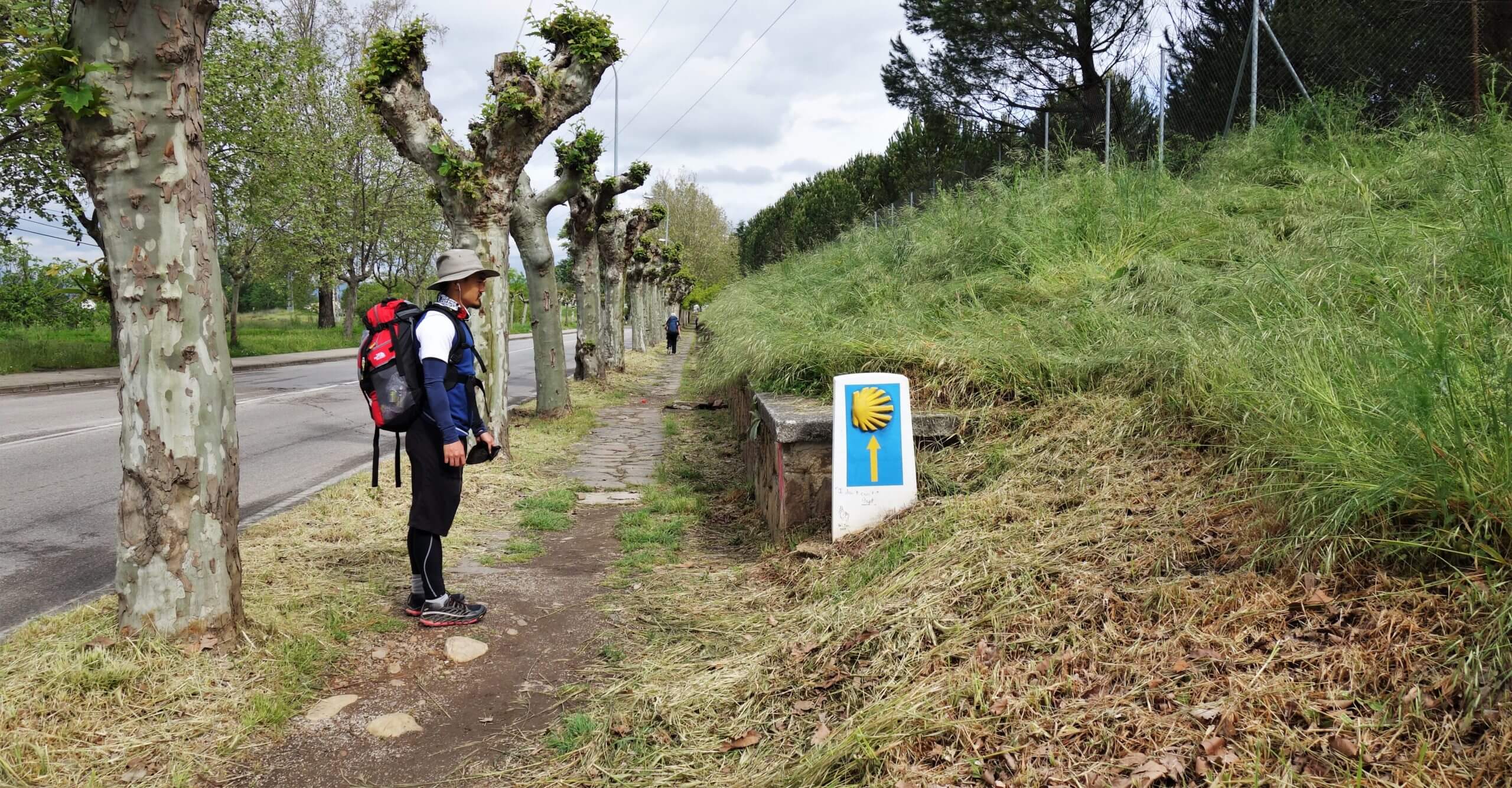
    I joined my family recently for a section of this pilgrim’s walk in Spain, from the city of León to Santiago de Compostela.

    311km, 13 days.

    As I’m not a Catholic, the history of the walk was of only passing interest to me, so it was essentially just a really long walk from A to B. I’m usually a fan of taking buses in these cases.

    If you’re a reader here, you know I enjoy challenges, but I also hope to learn things from those challenges. For the first 3 days, I tried (very) hard to find enlightenment; perhaps the walk could be meditative, or a test of willpower. But it was neither of those things to me. I even resisted putting in my earphones, attempting to embrace the disconnect. But I was simply disinterested. I learned nothing (except that my feet get sore when I walk a lot).

    To walk 311km is a long time. It’s about 8 hours a day. So on Day 3 I finally put my earphones in. The walk remained fruitless for me, but the music made it bearable.

    Then on Day 8, in the midst of Camino misery, my music shuffle blessed me with an old podcast episode. I was about to skip it (I’d already listened to it months ago), but I decided to listen to it again. “What a great way to kill an hour!” I thought.

    And it was. It was the first time I’d listened to a podcast without distractions. What a wealth of knowledge you learn just listening to smart people talk. I’d almost forgotten where I was.

    At the hostel that night I downloaded as many podcast episodes as I could. I’ve bookmarked around 50 episodes over the years, but I’ve never had the time to listen to them, so I gave up trying a while ago. I’m always reading, working, or not at the laptop. When would I ever have 50 free hours, wandering around doing nothing, to listen to podcasts?

    On the Camino!

    So my Camino de Santiago became my Camino de Podcasts. My shows of choice were The Tim Ferriss Show, The SPI PodcastBill Burr’s Monday Morning Podcast and The Joe Rogan Experience. Now instead of just walking 8 hours a day, I was walking while listening to podcasts while trying to take notes on my phone while trying to keep all my stuff dry in the rain while trying to follow the track. Camino 2.0.

    Now I can already hear you all saying, I didn’t live in the moment. So I suck, I know, whatever. But I ended up learning a lot of cool stuff and a lot of stories to draw inspiration from, which I thought I’d share with you. Maybe my Camino inspiration didn’t come from the Spanish countryside, but I found it all the same. So just be happy for me.

    Here are my notes – 116 interesting things I learned:

    P.S. If you’re actually looking for Camino tips, check out this very thorough post by my buddy Dave.

    Some notes:
    -Everything shared below is from the podcasts referenced. None of the content is from me. I take no credit for any of it.
    -I have not fact-checked the stories.
    -These are my personal notes. They are not direct quotes unless they are in quotation marks and attributed. The rest of the notes have been paraphrased or summarised.


    From The Tim Ferriss Show with Tony Robbins:

    1.

    Tony Robbins has a really interesting morning routine. He eats fish and salad for breakfast. Then he does something called priming. “To have a prime life you need to be in a prime state.” He jumps in a hot pool, then he jumps in a cold pool. That jolts his nervous system and changes his physiology with this body. Then he changes his physiology with his breath. There is a specific pattern of breathing that he does – 3 sets of 30.

    Then he does 3 simple things:

    First, 3 minutes of just being inside your body and outside your head, feeling the earth and the wind etc.

    Then he feels grateful for 3 simple things, and one of them has to be very simple, like the wind on his face. Not just feeling grateful, but he lets gratitude totally fill his soul. Because when you’re grateful, there’s no anger. When you’re grateful, there’s no fear. You can’t be grateful and fearful simultaneously. You can’t be grateful and angry simultaneously. He says there is nothing sadder than an angry rich person – someone who has everything and is angry. So he spends time every morning being grateful.

    Then he focuses on three things he wants to make happen that day, he calls it his “three to thrive.”

    He does this process every day, even if he hasn’t had any sleep. He does not miss priming.

    2.

    “The quality of your life is the quality of your questions.” Ask better questions.

    3.

    Many high performers hit slumps because they do so well that they overshoot their vision. This is sometimes called the Astronaut Syndrome. You’ve literally been to the top of the world, looked down on the earth from space, come back and shaken the president’s hand, what now? There’s nowhere left to go. Some astronauts become alcoholics or drug abusers because of that. Everyone needs something to shoot for – a compelling future, something that will get us up early and keep us up late.

    4.

    Andre Agassi was the number one tennis player in the world. Then his ranking dropped to 90 something, and nothing worked. People thought his career was over. He kept working on his swing and working on his wrist and nothing worked. He wanted to quit. Brooke Shields took him to see Tony Robbins. He told him, “Go back and visualise a time when you were hitting the ball perfectly. Were you thinking about your wrist?” He said no. “Then why would you go back to thinking about your wrist now?” If you’re in a slump, you have to go back into the state and the pattern that made you successful in the first place.

    5.

    Swap expectation for appreciation and you have a whole new life.

    6.

    Timing is so invaluable. Getting the right sequence is so invaluable. You can be doing all the right things and you’re so close to victory, but your timing is a tiny bit off so you fail and give up. “Johnny bit the dog/the dog bit Johnny” – they’re exactly the same words in a different sequence, and a very different result, especially if you’re Johnny. So say for example, you call the right person but you’re one minute too late or too early. If you do the exact same thing one minute later on you would succeed. Just a tiny shift in sequence and you would succeed. Some of it’s luck. But often you just need to find that 2mm difference and victory is there.

    7.

    When going off gold standard, Ray Dalio (one of the world’s 100 richest men) was convinced the USD would bomb and end up worthless. Instead, the Nixon rally happened. It shook him to his core. He realised that as much as you think you know, you don’t know. In a game of lifelong focus, you always want to be asking yourself what you don’t know.

    8.

    The world’s most successful investors have 5 things in common.

    • They’re all obsessed with not losing money. You don’t need to make a lot of money. You just need to not lose it.
    • They risk small to earn big. Only bet a dollar if you can make five. Even if you’re wrong, on your next bet you’ll still be up four.
    • They all know they will be wrong some day. They allocate to account for that.
    • They’re lifelong learners. They’re obsessed with knowing more. Any time you think you’re the best you can be, there’s another level.
    • They’re all passionate givers. They give very passionately with their money and their time.

    9.

    The reality is everyone’s a financial trader. Most people just trade time for money. That’s the worst trade of your life because you can never get more time. All the best investors know that.

    10.

    Only a few things influence your life. Your body, your finances, your relationships. It’s not a lot of things. Learn about these things! Invest in them. Most people know a lot, but they know a lot about the wrong things.

    11.

    Have strong opinions weakly held. Believe in something fully, but always be prepared to have your mind changed.

    12.

    A belief is nothing compared to an experience. What you think you believe is nothing compared to what you have actually experienced.

    13.

    Dips and down periods often come from inner conflicts that are hard to solve. To get out of it you need to keep asking what’s right, what’s real and trust your gut. Also stay hydrated and rest because in a lower state of energy you will break. In a high state of energy you can handle everything that’s thrown at you. Also understand that if you overcome pain, you can use that experience to help millions of others over come the same pain. Use that as motivation.

    14.

    Money is either a tool used to empower your life or a weapon to be used against you. To stop it being used against you, the only solution is to educate yourself about it.

    15.

    “What you know doesn’t mean shit. It’s what you do consistently that matters.”

    -Tony Robbins

    16.

    “In every industry there are top players and the common trait is hunger. They just always have to know more. Their energy is driven by this insatiable hunger to always know more.”

    Tony Robbins

    17.

    “There was this guy, one of the top facial surgeons in the world. The Sultan of Brunei flew this guy over for $2 million to do two of his family’s faces. Anyone in Hollywood who had the money, this was the guy, the best on earth, because he had mathematically figured out how to trigger beauty. He had 150 pictures of the most beautiful women in the world, the same for men, and he showed that he makes no more than 7 changes ever, and no change is larger than 2mm. I saw an 84 year old woman look like she was in her fifties and gorgeous. For example, he knows that the measurement of the pupil of a woman’s eye, if you measure that, and if you measure the distance from below the nose to the top of a woman’s lip; this is only for women, if the measurement is smaller than the pupil, men will be driven and sexually attracted to that face. If it’s the same size as the pupil, there’s some attraction. If it’s just 2mm more, she has an average face. If it’s more than 2mm more, her face is what he calls butt ass ugly, that was a technical term he used. So he just makes this little change and it creates that puckered feeling that men don’t even know why, it’s instinctive, it’s just a triggering device, it’s instinctual. So he knows the 7 changes, and he knows the 2mm. And this is just like in golf, 2mm is the difference between shanking way over here and hitting the green. So that’s the whole thing – victory is near, but you just need to know the sequence.”

    -Tony Robbins


    From The Bill Burr Monday Morning Podcast:

    18.

    In football place kickers are supposed to hold the ball with the laces out. That’s where the phrase “Laces out” comes from. [Bren: I had no idea].

    19.

    “To learn shit in life, you gotta have the mindset of “I’m probably going to fuck this up the first time, but that’s alright. Then I’ll get a little better.” Like when I made pasta, even just running it through the pasta maker, I already found like three fucking things I’m not going to do the next time.”

    -Bill Burr

    20.

    “When a girl wants a relationship, she comes over to your apartment and she starts leaving shit there, because it gives her an excuse to come back. That’s fucking nuts right? Like they’re thinking that far ahead. All you’re doing is sitting there like “Bah, look at those tits, baaah” and they’re sitting there plotting. It’s like you’re a head coach with no game plan, and she’s across the field like Bill Walsh calling the first 25 plays of the game! So here’s a quick Patrice story. Patrice was seeing this woman and she started leaving shit around his house, so I brought it up with him, I was like “Yeah I dated this woman, she left all this shit here, I was like what the fuck? I only see her like every two weeks, so for two weeks I’m looking at the brush she left here, and the shampoo over there, it’s annoying me.” So Patrice just goes, “Throw it out” and I’m like, “I can’t throw out her brush.” And he goes, “I would.” And he told me a story, there was a woman he was messing around with and she left these toiletries and a little bag of makeup in his bathroom, and he fucking threw it out. And then she came back like a week and a half later, and she goes in the bathroom and she’s like “Hey, what did you do with my stuff?” And he just plays dumb and he goes, “What stuff?” And she’s like, “I left shampoo here, a little makeup bag,” and he goes “Oh that was yours? Yeah I threw it out.” And she was literally beside herself, but actually on some level respected him for realising what she was doing.”

    -Bill Burr


    From The Tim Ferriss Show with Jamie Foxx:

    21.

    “Right here on this floor, I’m pointing to the carpet, a young man by the name of Ed Sheeran slept on this carpet for six weeks. He came over from London. He’d heard about a live show I do in LA. I see this kid with this red hair and I’m like, “Really? You wanna do my live show?” Because my live show is mostly black, and it’s like really music people, really hardcore music people. I’ve had Miranda Lambert one night, I’ve had Stevie Wonder on stage, I’ve had Babyface on stage, so this is the real shit we’re talking about. So I’m like, “I don’t care about the London and the accent, but you gotta really come with it.” And he’s like “I think I’ll be okay.” So I take him to my live night, 800 people there, and people are playing, black folks sweating, singing, these people would tear American Idol up, and not all these people have necessarily made it yet. And then Ed Sheeran gets up with a ukulele. Walks out onto the stage, and the brother next to me goes, “Yo Foxx, who the fuck is this dude right here with the red hair and a fucking ukulele?” And I say, “Man his name is Ed Sheeran let’s see what he does.” Within 12 minutes he got a standing ovation. From that crowd. And I said “Bro, you’re on your way.”

    -Jamie Foxx

    22.

    “When I was a kid my grandmother made sure that I took piano lessons. That’s tough for a little boy in Texas playing Fur Elise and Mozart. We’re talking Terrell, Texas. For a little boy playing at that time, kids didn’t understand, they were always saying “Yo, why you doing that?” and I’m like “My Grandma want me to do it.” So sometimes I would be belligerent and say, “Why you want me to do this?” She says, “The reason I want you to learn classical piano is because I want you to be able to go across the tracks and play your music.” The tracks in a southern city separates the city. One side is black, the other side is white. So in our city the south side was where all the black folks live. The north side was where the white folks lives. So she said, “I want you to be able to go on the white side of town and play classical music.” So I was taught how to play classical piano, and I literally would go on the other side of the tracks and start playing wine and cheese parties and so on. But my grandmother was able to see the future. And she goes, “When I say across the tracks I don’t just mean in Terrell and those people over there, I mean the metaphoric. I mean across the tracks like everywhere in the world. Music connects you to the whole world.””

    -Jamie Foxx

    23.

    “I remember meeting Ray Charles, walking down to his studio, and I said “Mr Charles, I’m just trying to do the best I can to do your movie, your biopic,” and he says, “If you can play the blues man, shit, you can do anything.” And I say, “What you mean?” He says, “Well can you play the blues, that’s what I’m asking!” And I say “Yeah, I guess so.” So we sit down and all of the hard work that my grandmother put in, all of the days that my grandfather drove me to piano lessons, here I am sitting with a legend, and I was playing the blues with Ray Charles. And as we’re playing he moved into some intricate stuff, and I was like ooh shit I gotta catch up! And I hit a wrong note. And he stopped, because his ears are very sensitive. “Now why the hell would you do that? Why you hit the note like that, that’s the wrong note man, shit!” I say, “I’m sorry Mr Charles, I just…” He says, “Let me tell you something buddy. The notes are right underneath your fingers baby. You just gotta take the time to play the right notes. That’s life.” So that was a lesson. You got across the tracks, now you got Ray Charles explaining to you; now that you’re across the tracks, what notes are you going to play?”

    -Jamie Foxx

    24.

    There’s this book called Without Sanctuary. It’s a book where a guy went around the south during slavery and documented lynchings. He would take photos and make postcards. Right now we think about lynching and go uggh, but back then it was common place in America, it was a party. People would get their food, some drinks, pack a picnic and they’d go down and watch the lynching. And so you’d have people sending postcards saying “Hey here’s the lynching of Nig*** Charlie, I hope you like it, hope all is well, how are the kids, bla bla bla…”

    25.

    We don’t control our own narratives. The media controls it. When you hear the names Bieber, Chris Brown, Jennifer Aniston, you already have an image in your mind, and it’s not from the person, it’s from the media. And the media needs to be salacious or it doesn’t get reported, because no one will read it and it won’t make any money.

    26.

    If you have writer’s block, write about what makes you angry.

    27.

    If Jamie Foxx could give advice to his 30 year old self it would be to prepare for things to move fast. 40 is going to come very fast. So start preparing for the future. And the advice he would give to his 40 year old self would be “Stay young in your body, but grow up in your mind.”

    28.

    If Jamie Foxx could put a billboard anywhere, it would say “Ball out. Have a great time. Go to church. Love somebody. Teach somebody. Get angry a little bit. Have as much fun as you can.”

    29.

    To teach 9th graders, Jamie would teach them to:

    -Interact with people. It’s tough to see young people always on their phones. Interact with real people.

    -Interact with people from all over the world. Because you become narrow when you’re just all about “my block.” And just being about your block in today’s world is going to hurt us. We don’t understand how something in the Middle East affects us in North Dakota. Get the education of people all around the world. Know your history, know why we’re here.

    -Hustle. Your hustle muscle is the most important thing. When you hustle and go get it, that alleviates your problems. When you don’t hustle or leave it to chance, and you didn’t give it your all, you start to worry about things. If you hustle, it’ll take up a lot of your time, so you won’t even have time to worry. You put that hard work in, and that takes 70% of your worry away because you gave it your all.

    -Reflect. Sit still for a minute. When you’re working, working, working, that will strain you. So you got to be able to decompress and chill. Whatever it is that you chill with – your home, your friends. Take time out. If it’s out of your hands it’s out of your hands. You’ll get a better crack at it tomorrow.


    From the Joe Rogan Experience with Eddie Huang (author of Fresh Off The Boat):

    30.

    Lifting weights affects your fine motor skills, which you use for things like pool, drawing, basketball. Because your muscles get sore and it affects that soft touch judgment.

    31.

    When you lift weights don’t go to failure. The body isn’t meant to go failure. Save it for the next rep. More is not better. And generally all things in the world follow the same principles. For example in cooking, more is not better. In music, more is not better. You need negative space. Things need room to breathe.

    32.

    Everything in moderation, including moderation. If someone says get shots, fuck yeah, let’s do it. Just don’t do it all the time.

    33.

    Social media doesn’t really register. Like 10,000 followers, a million followers. It doesn’t register. 10,000 people following you is a lot of people. That’s a college campus.

    34.

    They legalised weed in Colorado and now real estate is up 19%. Colorado is charging 39% taxes on weed and made more money this year on weed than on alcohol. It’s changing the economy over there.

    35.

    Ted Cruz wanted to pass a law that would put you in jail for owning dildos.

    36.

    If you earn more than $34,000 a year you are in the top 1% of the world.

    37.

    “If we’ve got Hillary Clinton, Ted Cruz, Donald Trump and Bernie Sanders as the only hopes to be commander-in-chief of the greatest army the world has ever known, for fuck’s sure we are doing something wrong. We’re 100% doing it wrong. These are not the great scholars and great intellectuals we need to help run this world. There’s no one amongst them that has a brilliant philosophy. When you looking at Bernie and Hillary, and Bernie as much as I love him and as much as I love some of his ideas, you see that guy and Hillary and they’re bickering back and forth during these debates, that’s so unbecoming of someone whose supposed to be president, especially some dude that’s in his sixties and some lady that covers everything except the very top of her neck, its bizarre. Like you’re supposed to be further along in this crazy journey than us if you want to be the president, you should be so far ahead that you have some lessons you can impart upon the rest of us, you have some ideas about how we can improve our policies, you have some ideas on what laws we can establish that could probably better protect us against greed and evil corporations and from people that are raping the world of all it’s natural resources.”

    -Joe Rogan

    38.

    “The really smart people have other ways to control and rule the planet. I don’t think the president is actually the most powerful person. Like Michael Bloomberg – why would Bloomberg run? He can already call shots from where he’s at, he has more money than fucking anybody…I think the people who really have power are looking at the president thinking, ha, he’s a puppet.”

    -Eddie Huang

    39.

    “People are saying that when you raise minimum wage it’s going to fuck up businesses. But you know where we also heard that argument before? Slavery. People were like, you take away slaves and all these businesses are going to fail. Well guess what, you can’t just have someone work for you all day and not pay them shit.”

    -Joe Rogan

    40.

    “Guys who can’t fuck hot girls are always mad at them. They can’t fuck them, they’re mad at them. And girls who see hot girls, wish they could be those hot girls, so they’re mad at them too. Hot girls take more heat than anybody on the planet.”

    • Joe Rogan

    41.

    “For all the boys out there listening, and girls too if you’re lesbians; if you go to a girl’s page and it’s all this stuff about love and what true love is and when you find the one you’ll know; fucking run. Run from that person. Because that person is probably never happy and they just sit around posting memes about what true love is on the internet. And they’re going to make you go to brunch. Those people like brunch. And you’re an asshole if you gotta pay someone to make eggs. If you want eggs on the weekend, just fucking make eggs. You can’t make eggs?”

    -Joe Rogan/Eddie Huang

    42.

    “The thing with a lot of these chefs that win these awards – Food & Wine Best New Chef, Michelin, James Beard – a lot of the times it’s because they can speak English, they can communicate with the writers and the writers can write a story about them. They’re not winning because it’s the best food. There’s a bit of a thing with food – the literati, the intelligence, the blogs, the magazines, they’re always electing people they can tell a story about and speak English; it’s not about the food. I think the people of ethnic cultures get upset when there’s somebody else that didn’t live the life, didn’t grow up with it and isn’t the best at it, representing it. If there’s somebody from the outside, he better be the fucking best, otherwise get somebody who lived this life and knows all the history and culture and identity attached to this food and let them speak for their own food. It’s not the fault of these white chefs that journalists want to give them these awards. If someone wants to give them award, I don’t expect them to throw it on the fucking ground. The problem is the media and the people giving these awards saying, “This is the best chef, this is the best Mexican food”, it’s really obnoxious to the people of that culture. They’re picking a guy they can communicate with easily, makes their job easy, and can tell a story that’s easily disseminated amongst the masses. If you’re going to go to a source, why don’t you just go to the source? Andy Ricker is a good friend of mine, and when people talk about Thai food in America they go to him, and he’s a white guy from Portland! But to Andy’s credit, he puts the names of the Thai people that taught him things on his menu. As much as he can, he pushes the credit, and he pushes people towards the Thai people he learned from, so they can get it from the source. But these journalists are fucking lazy. They don’t care. They don’t go talk to those people – it’s harder. It’s easier to just call a guy who speaks English and can communicate with you.”

    -Eddie Huang


    From The Tim Ferriss Show with BJ Miller (triple amputee, doctor):

    43.

    People are always searching for meaning. But what about meaninglessness? Or purposelessness? Just smelling a cookie. Watching a ball game. No meaning at all. Just doing things that feel good.

    44.

    “We are here to fart around and don’t let anyone tell you anything different.” – Kurt Vonnegut

    45.

    Ambition can be a bad word. There is a lot of bad behaviour done in the name of ambition.

    46.

    There’s a documentary called Grizzly Man which is supposed to be pretty amazing.

    47.

    Hospitals are not equipped to deal with death. It’s sterile, full of machinery, and the dead body needs to be removed quickly because someone else needs the room. For the clinician, the family, the nurses, grief cannot happen. There’s no space. The grief is actually suppressed in a way. In (some) hospices, they make room for death, so in death people can grieve, and are encouraged and given time to remember the beauty of life.


    From The Tim Ferriss Show with Josh Waitzkin (child chess prodigy):

    48.

    When you hold your breath, it’s CO2 build up that makes you want to breathe, not oxygen deprivation.

    49.

    People tend to over-steer and over-calibrate a lot. If you have a life changing experience, don’t take too big a lesson from it, and don’t take too small a lesson from it. Just take the right lessons from it.

    50.

    We can intuitively feel things way before we are consciously aware of them. The investor can sense danger or opportunity before it happens. The hunter can sense the bear or the shark, then he looks for it. The chess player can sense danger or opportunity. You sense it, then you look for it. But to sense it you have to have stilled your waters internally. Then u can sense it and start calculating a game plan before it happens.

    51.

    Dreaming Yourself Awake is supposed to be a good book about lucid dreaming.


    From The Tim Ferriss Show with Kevin Costner:

    52.

    Kevin Costner tells his kids every day that they’re special, but he ends that sentence with, “That doesn’t mean you’re better.”

    53.

    Kevin Costner would have people working in his yard and will stay there all day working with them, and the workers will say, “Is he going to stay here all day? I thought he’s a movie star?” And he stays all day. This is how he shows his kids he’s not too good to work with anyone.

    54.

    When it comes to writing, if you feel like you’re walking down the street naked incredibly nervous about what you’re about to say, you might just be getting it right.

    55.

    Coney Island was the most popular place on the planet at the turn of the century. Bigger than Paris, bigger than Chicago, because all the inventors were going there. They were allowed to do things. This guy who said “Hey, I think I know how to keep babies alive with incubation,” and they just ran him out of town. Coney Island said, “Come do it here.” And it was the most popular exhibit, you could walk in and see these babies that were kept alive. Edison, all these guys, were hanging around Coney Island. It was the place to be in the world. The documentary to watch is Coney Island, narrated by David McCullough.

    56.

    “I’m in accounting class, and it’s not happening for me. I know I’m not supposed to be there. I know I’m going to be at the wrong end when the test happens, because I don’t like it, but because of my conservative background – you graduate high school, you go to college and you get a college degree and you get a job. So what do I do? I turn off to the teacher and I open up this little student newspaper, and I’m winging through the newspaper and on the back of it is a play, an audition, for a thing named Rumplestiltskin and I just thought, “I’d like to try that.” So I closed the newspaper, I listened to the teacher drone on, I saw the latest pop quiz and I was last, but what I knew at that moment was I was going to that audition the next day. I was excited about the next day. It’d been a long time in my college life since I’d been excited about the next day.

    And I drove down and was almost killed, literally, I was going down the 55 freeway in Orange County, and in that time the freeway hadn’t been finished completely, so there were stop lights on the freeway, and as I’m going down there my accelerator broke and went to the floor on this old Datsun pickup, and all of a sudden I saw the brake lights up ahead and my speedometer’s going from 60 to 70 to 80 and it’s not slowing, and I’m probably going to hit those people at 90 miles an hour and kill them, kill myself, and I don’t know why the engine was designed this way but the floor just pulled it, shoooosh, straight down to the bottom. So I threw the clutch in and it did engage, and I was able to turn the key off and coasted to a stop, pulled over into the emergency lane, didn’t kill anybody. I jumped out of that fucking car, hopped over that fence and hitch hiked to my audition. Because I wasn’t going to miss it. I left it on the freeway. Because I had some place I wanted to be. I had a place where something was going to happen.

    Of course nothing did, I wasn’t good enough. I didn’t have enough skill. I didn’t really know about Rumplestiltskin, I didn’t really know my fairy tales, I figured there was a prince, I’ll just go out for the prince maybe. And I didn’t get it. But my imagination started to burn about the possibilities…
    I suddenly started to become the student that I wasn’t in college. I went to UCLA and took two classes in film financing and film budgeting – I had already read the book, the entire book. I was interested. I was interested in my own life the way I used to be interested in it when I was a kid…I started to fall in love with something. I somehow figured out if I didn’t make myself happy, I’d never be happy. If I didn’t pursue what was whispering to me, I’d absolutely be a failure, I’d absolutely be an unhappy person. When I could articulate that, that I didn’t care anymore what anybody thought about what I did except me, all the weight of the world came off my shoulders, and everything became possible.”

    -Kevin Costner

    57.

    “I didn’t tell a lot of people that I acted because nobody likes to be around a pining actor. But what happened was all of a sudden when I started to emerge, Big Chill moved to Fandango moved to American Flyers moved to Silverado, suddenly it seemed like it was happening very fast. And then when I decided I would direct which was about two pictures later, people thought wow he’s moving really, really fast. What they didn’t know was that I had been dreaming of this moment for 6 to 7 years before that. Then when it was starting to happen – I had already been planning for these things. So what was fast for other people wasn’t fast for me.”

    -Kevin Costner

    58.

    “I was the one person in my group that started to emerge and things started to go well for me. So I started trying to drag my friends along with me and get them interviews and so on, and Michael Blake was one of those. So I got Michael 8 or 9 interviews, and every one of them went south, I’d get a phone call saying Michael insulted us, he told us we didn’t know what we were doing, so those calls were getting difficult for me because I was trying to help him.

    Then somewhere down the line he really crossed the line with me and said some things and next thing I know I had my hands on him and had him up against the wall…I thought really our relationship was over then, because I’d put my hands on him, but Michael three weeks later says to me, like a typical writer, “I don’t have any place to live”, so I said “Okay, come live at our house.” And every night he’d be like “I’m writing something, you wanna hear it?” and I’d say no, and every night it was like, “Can I read you something?” and I’m like no, because I was sick of him. And now I’m having to look at him have cereal in my house every morning and every night, and I got one spare bedroom and my wife is even beginning to wonder about him. She’s saying, “Look he’s downstairs reading to our kids in his underwear!” And my kids are five years old they can’t understand the story he’s reading. So I just told her Michael’s fine, don’t worry, and she said “Well I’m not so fine with it after two months.” So I say Mike, you’re going to have to go.

    So Mike goes and spends some time at another one of our friend’s, and after 3 weeks he’s done and he gives me this manuscript and says, “I hope you read it.” But I just didn’t want anything to do with him for a while, he bugged me so much. So he split, he went down to Arizona and worked at a Chinese restaurant washing dishes at night and killing raccoons during the day at this ranch. And he would call me up and say “Did you read my thing?” and I’d say “No…” and this went on for about three weeks. Then I get a letter and it says, “I’m cold” so I send him sleeping bags and a stove and some stuff. And he goes “Did you read my thing?” and I say no.
    One night, I pick it up. About four months later, five months later. I start reading and I read it all that night. It was Dances With Wolves. And I was really proud of him. I was really, really proud of him. I called him up and said, “I’m going to make this into a movie. I don’t know how I’m going to do it, because I don’t have the money, but I’m gonna do it, and you’re going to write the screenplay.” We made that movie about two years later, and Mike won the Oscar.”

    -Kevin Costner


    From The Tim Ferriss Show with Mike Shinoda (from Linkin Park):

    59.

    “Every child is an artist. The problem is staying an artist when you grow up.” – Pablo Picasso

    60.

    A music magazine does not interview you because they love music. They interview you because they need fresh content to bring in ad dollars.

    61.

    Don’t benchmark what you do against your peers or competition. Compare it to something that is completely unrelated. If you’re a musician, there’s no reason you can’t learn something or get ideas from people who make cars or apps or cooking.

    62.

    Mike Shinoda’s favourite book is Zen & The Art Of Motorcycle Maintenance.

    63.

    “When we take an album it takes around 9 months from start to finish. In contrast, when we were making this most recent album, next door to us was a world-renowned pop singer’s session. And this person showed up on Day 1, and they were there for about 15 minutes. On Day 2 they showed up for less than 15 minutes. And on Day 3 they neglected to show up at all, and the song was actually done. And I was talking to their people like, “How is this even possible?” I don’t even know if I’d be able to call myself an artist if I was the one just showing up for 25 minutes and a song was done.”

    -Mike Shinoda

    64.

    “We got turned down by every label, indie and major, but eventually we worked our way into Warner Bros. The guys who signed us were kinda new, and they started to get nervous, they were like, “You guys need a gimmick. We want to dress Joe in a lab coat and a cowboy hat, and Chester you should kick a shoe off at every show.” It was stupid! Stupid record company stuff that sounds like stuff out of a movie, but it was absolutely true and these were real suggestions! Like if you went back and said something today they’d be like “Oh no I was totally joking.” I assure you they were not joking. We were sitting in the room and they were literally ready to buy Joe a lab coat, and put beakers in front of his turntables. So we got to this point making the album and we were halfway there and they tried to run away with the whole thing and change everything. They wanted to kick me out of the band, they’re talking to Chester telling him he’s the star, and he’s like “But this is Mike’s band, I’ve only been in the band for a few months.” So we all talked as a band and basically stood up to these guys. We said you can shelf us, which effectively meant we’d be in record label limbo for the rest of our career – we’d never put out a record. Or, they can just accept that this is who we are and let us make the album we want to make.”

    -Mike Shinoda


    From The Tim Ferriss Show with Luis von Ahn (founder of Duolingo):

    65.

    When your kids do something good, instead of saying “Good job, you’re really smart” say “Good job, you worked really hard on that.” The former makes them think they can do things without hard work, the latter acknowledges the value of hard work. Luis’ parents did this and he credits this for his strong work ethic.

    66.

    Around the year 2000, this guy called Udi Manber, he was some big shot at Yahoo, went to Carnegie Mellon University to talk about ten problems Yahoo didn’t know how to solve. Luis was a student at the time. Back then one of Yahoo’s problems was people creating bots to sign up for millions of free email accounts, and the people at Yahoo didn’t know how to stop this. So Luis came up with a test to see if the person was a human: it was just some distorted characters the entity had to read. And it turned out humans could read them quite well and computers couldn’t. He developed it and showed it to Udi Manber and it was up on Yahoo two weeks later, which meant it must have been a crazy big problem, because it’s a miracle for a big corporation to implement something that quickly. From then on every other website started using it. Five years later, Luis did a quick calculation to see how many people were using Capchas, by then every website was using it, and the number he came up with was 200 million. So every day 200 million people typed in a Capcha, and it takes around 10 seconds to do it, so that was 500,000 hours a day humanity was wasting going into writing Capchas. So he came up with this new version of Capcha called Recapcha, where every time people typed in a Capcha, they were also helping to digitize books. For example, Google is digitizing all the world’s books. How it worked was people would send a physical book to India and somebody in India takes a digital photograph of every page of the book. The problem was, the computer needed to be able to decipher every word, and the computer can’t do that very well. So he took the words computers couldn’t read and got people to read them as they typed in Capchas. So when you’re typing Capchas on the internet, you’re actually helping to digitize all the world’s books.

    67.

    If you are an employee of a university, or you’re a student and you’re funded by the university, like a PhD student funded by a grant, the university can take ownership of your intellectual property. They also have a licensing agreement in case you want to form a company, and the university will own a fraction of your company. This is actually what happened with Google; it was developed inside Stanford.

    68.

    Zero To One is Luis von Ahn’s favourite book.

    69.

    There are 1.2 billion people in the world learning a foreign language. Of that, 800 million satisfy 3 properties: The language they are learning is English, they’re learning it to get a job or a better job, and they’re from a low socioeconomic background. In other words, they are learning English to escape poverty. However, most ways of learning English are very expensive, for example, Rosetta Stone is between $500 – $1,000. In a poor country that’s 2-4 months salary. Language schools are even more expensive. Then, if you do manage to learn English, you need a certificate that says, “Yes, I can speak English” before anyone will give you a job or or a work visa or let you into a university. To apply for a work visa in the UK, you need this English certificate. If you want to enrol in a US university, you need this English certificate. To get a job at a multinational in a non-English speaking country, you need this English certificate. So to do that you need to do this test, which usually costs around $250-$300, this is a huge market; about 15 billion a year is spent on these tests that certify English levels. And the test is not normally held in places where people from low socioeconomic backgrounds live – you need to go to a testing centre which are only in the big cities, which means you need to travel. And this kind of travel isn’t the same as in America, where you get on a bus for 30 minutes. It’s hundreds of dollars and sometimes one or two days on a bus, sometimes to a different country. So even after you’ve learned English, you need to spend $250, a month’s salary, on a test, and you need to take a few days off work to spend even more money to travel to some big city for it. That is what someone in a developing country goes through to learn English. This was the whole idea behind Duolingo. So people could learn English completely free, then go to the Duolingo testing centre and do the test over webcam for $20 and get a certificate. It’s democratizing education.

    70.

    In Tokyo, there is a super famous sushi restaurant from this guy Jiro, from the documentary Jiro Dreams Of Sushi. But most people don’t know his son also has a restaurant in Roppongi Hills, which is the mirror image of Jiro’s, because one of them is right handed and one of them is left handed.

    71.

    In one of the first Duolingo branding meetings, one of the co-founders, this guy called Severin said, “I don’t know anything about design, so I don’t really care what you decide; I will just say that I hate the colour green.” So everyone thought it would be hilarious if they made the logo green. That’s why the Duolingo logo is green, it’s literally a practical joke on the co-founder.

    72.

    Rock climbing is very good for your posture. It requires you to do the opposite of what you do when seated at a desk or a computer. It causes you to look up and arch you thoracic spine, and use your legs.

    73.

    Tim Ferriss’ favourite podcast is Hardcore History.

    74.

    There are many tech magnates and icons, people whose name everybody would know, who cite Genghis Khan & The Making Of The Modern World as one of their favourite books.

    75.

    When you hear of an acquisition price, let’s say a company gets acquired for 100 million bucks by Facebook or Google or something. Usually the acquisition has two components; one is an upfront payment, and the second is a stay bonus. Basically you get the stay bonus over time if you stick around for a while. It makes sense for companies to do this because when they acquire another company they don’t want everybody to split. So it forces people, especially the founders to stick around – after a year you get this much, after two years you this much etc. The stay bonus is often less than 50% of the acquisition price, but not a lot less.

    76.

    If you’re following a lower carb, lower starch diet, sprinkle a little salt into your water when you drink it. When you reduce your carb intake you tend to pee a lot because the water goes straight through you. A bit of sodium helps with retention.

    77.

    “A lot of people say education is the thing that can bring equality to the different social classes. I always thought the opposite – that education actually brought inequality. Because what happens is the people who have money can buy the best education in the world, and because of that they remain having a lot of money. And the people that don’t have money barely learn how to read and write, and therefore remain without money.”

    -Luis von Ahn


    The Tim Ferriss Show with Neil Strauss (Author of The Game):

    78.

    Writer’s block doesn’t exist. It’s basically impotence or performance anxiety. If you sit there and you think “This has to be the ultimate book ever written and my whole self-esteem rests on this,” the bigger the block will get. It’s all performance anxiety. When you put pressure on yourself to write the greatest book ever that’s when you start to get writer’s block.

    79.

    Whatever you do, just write to the end. The first draft is just for you, nobody else is going to see it. Just finish it. Now within that mess, you have your book. You just need to carve it and shape it, but it’s there.

    80.

    You don’t know what the first sentence of your book will be until you know what the last sentence will be.

    81.

    If you want everyone to be your fan, nobody is going to be your fan. If nobody will have a negative response, then nobody is going to have a positive response either.

    82.

    When you’re doing something creative and you’re in a productive state, and someone interrupts you, it takes 20 minutes to get back to that state of mind. Even if you’re interrupted for just 2 seconds, it’ll take you 20 minutes to get back to where you were where everything makes sense again. So if you’re interrupted 3 times, that’s an hour of your day wasted. If you want to do something creative, work in a place where nobody can interrupt you.

    83.

    As soon as something becomes challenging you want to do something else. It’s in our nature as mammals. We just want to conserve our energy.

    84.

    If you get interviewed, don’t go on to plug or sell yourself. Just go on to represent yourself. Be the most awesome version of yourself. When someone goes on some interview and is constantly going “Visit my website, it’s www….” it makes you not even want to go to their stupid website. So don’t mention your books or your blog or anything. Just represent yourself. If your name is on the interview, people will find you.

    85.

    The biggest mistake you can make is to accept the norms of your time. By not accepting norms is where you innovate with technology, with books etc. So not accepting norms is the secret to really big steps and changing the world.

    86.

    Ayn Rand has the theory of the white tennis shoes. Basically writers will do anything they can to avoid writing. If there are white tennis shoes in your vicinity, and there is the tiniest blemish on them, a writer will rationalise cleaning those shoes before writing.

    87.

    Two of Neil Strauss’ favourite books are The Painted Bird and Life Is Elsewhere.

    88.

    “A lot of people feel like they should read self help books because that’s knowledge, we don’t want to waste any time, we want to be efficient, but people learn through metaphor; that’s how the first stories were told, that’s what the Bible is, metaphor and storytelling are how the brain actually learns information. When you just get it as data, that’s good for computers, that’s not good for human learning. So I really encourage people to read great works of fiction and literature because I’ve learned more about life from fiction.”

    -Neil Strauss

    89.

    “Whenever you are receiving criticism or feedback about yourself, use the Catcher’s Mitt philosophy. When someone gives you feedback you catch it in your catcher’s mitt. Then you look at it and one of three things are possible; if it’s true, you put it in your head. If it’s not true you throw it away. If it’s a maybe, you keep it in the mitt and you show it to a bunch of other people, ask people what they think of it. But say you get a piece of feedback, and you say nah, I don’t think that’s true. Then your wife says it, and you’re still like nah I still don’t think it’s true, and you throw it away. And then you get it from one or two other people, so you don’t throw it away, you look it. That’s when you get the real truth. It’s the piece of feedback you reject that keeps coming back to you, you re-evaluate it and you might get an epiphany that really changes you. That’s where growth is.”

    -Neil Strauss


    The Tim Ferriss Show with Arnold Schwarzenegger:

    90.

    Ivan Reitman told Arnold Schwarzzenegger he thought he could do well in a comedy, so they agreed to do a film together. And they came up with the idea for Twins (the working title was ‘The Experiment’), and they approached Danny DeVito to do the film with them. They all sat in a restaurant and wrote up a deal on a napkin; they were going to make the movie for free, no salaries, and instead they would receive a big back-end. Ivan took this deal to the studio – he took it to Tom Pollock who was running Universal Studios, and he said “This is great we can make this movie for $16.5 million if you don’t take salaries. And we’ll give you a big back-end; we’ll give you 37% to split between the three of you.” Arnold made more money on that movie than any other movie he’s ever made. And after the movie Tom Pollock said, “All I can tell you is this is what you guys did to me” and he bent over and pulled his pockets out and said, “You fucked me and cleaned me out. I’ll never make a deal like that again.” Every day over Christmas the movie made $3 or $4 million. Worldwide it made $260 million+, and cost around $18 million to make.

    91.

    “By the time I came to America and started competing over here, it was very clear when I said to someone, “Let me ask you something, do you have any knee injuries or something like that?” Then they would look at me and say, “No, why? No. I have no knee injury at all. No, my knees feel great. Why are you asking?” I said, “Well because your thighs look a little slimmer to me. I thought maybe you can’t squat or maybe there’s some problem with leg extension.” He says, “Really?” And then I saw them all for two hours in the gym always going in front of the mirror and checking out their thighs. People are vulnerable about those things. Naturally now when you have a competition, you use all this. And so you ask people were they sick for a while, they look a little leaner, or did you take any salty foods lately and they say, “Why?” and I say, “Because it looks like you have water retention and it looks like you’re not as ripped as you looked a week or so ago.” It throws people off in an unbelievable way. They walk away like this didn’t bother them at all, but then you can see, as they walk around the pump up room, and when you warm up for the competition, you can see them kind of thinking to themselves, going to the mirror and checking it out secretly and all that stuff. I always felt that sports are not just a physical thing. As a matter of fact, I felt that the mentality and the mental strength in sports and the psychology in sports is much more important than the physical thing because, in reality, when I watch a Mr. Olympia competition or Mr. Universe competition, they all look pretty much the same, the top five guys. But what makes one emerge is the way he acts. If he acts like a winner, if he seems smiling, having a great time on stage and such. So I felt one should use the psychology; one should use everything.”

    -Arnold Schwarzenegger

    92.

    You look too big, you’re too monstrous, too muscular, you will never get in the movies.” That’s what producers said in the beginning in Hollywood. That’s also what agents said and managers. “I doubt you’re going to be successful because today’s idols, I mean this is not the 70’s Arnold. Today’s idols are Dustin Hoffman, Al Pacino, Woody Allen, all little guys. Those are the sex symbols. Those are the hot stars. Look at you. You weigh 250 pounds or something like that. That time is over.” But I felt very strongly and had a very clear vision that the time would come that someone would appreciate that, and sure enough, when people saw me on talk shows, they got inspired. I did Stay Hungry and Pumping Iron the documentary, the Streets of San Francisco, and worked with Ann-Margret and Kirk Douglas in The Villain and then all of a sudden I got the contract for Conan the Barbarian. Bang, there we were with a $20M movie which today would be the equivalent of a $200M movie. So my whole plan worked and I was so right. Even John Milius said after the movie that if we wouldn’t have had Schwarzenegger, we would have had to build one because of the body. When I did Terminator, Jim Cameron said if we wouldn’t have had Schwarzenegger, then we couldn’t have done the movie because only he sounded like a machine. It was so believable that he actually played a machine. Here was the greatest compliment; that the very things that the agents and the managers and the studio executives said would be a total obstacle became an asset and my career started taking off.”

    -Arnold Schwarzenegger

    93.

    “I felt that when I grew up, even though we were very poor, I had someone there 24 hours a day for me to improve, to learn, to do sports, and to get attention and to get the love and to get the discipline. It was a tough upbringing, but it was a combination of great discipline and also love. I felt like that having someone there with you 24 hours a day from the time in the morning that you get up to the time in the morning that you go to school, there were the teachers there, there were the coaches there, there was the school principal and all of them. And then you go home and there was your mother there helping you with your homework and then in the evening your dad comes home and takes you to the soccer field and does sports with you. I traveled through all 50 states and visited one school after the next and always at 3:00 I saw half of the kids wandering around and the other half were getting picked up, and I said “what happens with those kids out there?” And I felt bad for the kids who don’t get an equal shot because the only way you can be successful is if you really get this kind of attention and don’t float around on the streets. Then you get involved with gangs and with drugs, with violence and, like I said, teenage pregnancy and juvenile crimes. You end up in jail and it doesn’t serve anybody and it costs the community a lot of money. 70% of the kids come from homes where both of the parents are working and they do not have time for the kids in the afternoon. Who is helping these kids with homework? Who is helping these kids with tutoring and with sports programs and adult supervision and giving the kid the love that the kid needs and the confidence building that the kid needs?”

    -Arnold Schwarzenegger

    94.

    When Arnold was asked who he thinks of when he hears the word “success”:

    “Mikhail Gorbachev, someone that grows up under Communism and then when he’s on the top realizes that the system doesn’t work and then dismantles it. I mean think about the chutzpah it takes to do that. Also Cincinnatus. He was a Roman Emperor in the Roman Empire. Cincinnati, the city, by the way, is named after him because he was a big idol of George Washington. The reason why he is a great example of success is because he was asked reluctantly to step into power and become the Emperor because Rome was about to get annihilated by all the wars and battles. He was a farmer. Powerful guy. He went and took on the challenge, took over Rome, took over the army and won the war. After they won the war, he felt he’s done his mission and was asked to go and be the Emperor and he gave the ring back and went back to farming. He didn’t only do this once, he did it twice. They went back later to him once again. When they tried to overthrow the empire from within, they asked him back and he came back, he cleaned up the mess through great, great leadership, which he had. He had tremendous leadership quality in bringing people together. And again he gave the ring back and went back to farming. As we all know, it’s very addictive to be powerful. It’s very hard to let that go. So imagine someone like that to let go of being the Emperor. It’s a whole different thing. So that’s very admirable. When I think about success, he’s always somebody I would think to put in that category.”

    -Arnold Schwarzenegger


    From The Joe Rogan Experience with Lance Armstrong:

    95.

    Cortisone in cycling is banned. But in the NFL a guy gets hurt, goes into the changing room at halftime, commentators are like “He took a cortisone shot, he’s gonna play!” and he rushes 100 yard and he’s a hero.

    96.

    EPO thickens your blood, increasing your red blood cell count. There was no test of EPO, no science for it, so they just screened if your blood was too thick (over 50% hematocrit). And if it was over, you couldn’t race. So people didn’t stop using it, they just juiced up to 50%.

    97.

    “Any time anybody goes through anything, people either lean in or lean out. Some people lean out, meaning they run away, and you’re surprised by that. You’re like, “What the fuck, that guy was at every champagne party we threw in Paris, now I haven’t heard from in 3 years.” But then there are the ones who lean in, and most of those people don’t surprise you, but then there are others that lean in and you’re like, “Wow, I didn’t know you had my back like that.” So you get surprised on both sides. And at the end of it all, you look around and you’re like, these are the people that are going to ride anything out with me, which is kind of cool, it’s refreshing to know. If you’re loading up a bus with all your most loyal friends, I fucking know who is on that bus now.”

    -Lance Armstrong

    98.

    “On the tour you have the yellow jersey, it’s the guy who wins, you have the polka dot jersey who is technically the best climber, and you have the green jersey who is technically the best sprinter. Those 7 years, the green jersey was won by Zabel who admitted to having doped all 7 of those years, the polka dot jersey was won by Virenque from France who admitted to having doped all those years. Those all stand. Everything is still there. But the yellow jersey has been erased. Second place, third place, all those places are still there, the years prior to me when somebody had admitted or was caught. All still there.”

    -Lance Armstrong

    99.

    “Greatness and madness are next door neighbours and they borrow each other’s sugar. There is no way you can get that good at something without almost losing you’re fucking mind. You can’t be a regular guy and get there.”

    -Joe Rogan


    From The Tim Ferriss Show with Rolf Potts (author of Vagabonding):

    100.

    There is an idea that things in excess become their opposite. Rolf has a friend that has around 10 homes around the US. Of course, he’s only at one home, or none of the homes, at any one time. But he has about 5-10 staff at each home. So he now feels like instead of them working for him, he’s the one who works for them. Because it’s almost like they own the homes, because they live in them, and he’s just continually working to pay for these homes everyone else is living in. Money that provides you with freedom actually takes away your freedom after a certain point of excess.

    101.

    Money is a tool for letting you live a time-rich and experience-rich life. Don’t let money itself be a metric for your success.

    102.

    Many young travellers know nothing but the constant connectivity of travel. They go travelling for 6 weeks and know where they’re going to sleep every single night. It’s the serendipity of travel that’s at risk. You can stumble into a bad experience as easily as you can stumble into a good experience. But it is those unplanned, unexpected good experiences that change us, to the very core of our being. If you cant unplug, you risk robbing yourself of those experiences. Unplugging is very important.

    103.

    The principles of Vagabonding apply to life in non-travel ways. The internet allows us to be experts about everything. But actually the beginner’s mind is one of the most emotionally daunting and exciting parts of travel, where you don’t try to be an expert. Allow yourself to be a child again. When you go to a new city, you’re as dumb as a five year old. You can hardly read, it’s dangerous to cross the street. This is actually a gift of travel – it allows you to have the vulnerability to be very young, but also the excitement of being very young. But it’s not exclusive to travel – you can apply this to all aspects of your life.

    104.

    Ongoing success can be as meaningless as the ongoing lack of success. There’s a point where you achieve your goals and then it’s like, now what? This is the American way of thinking, where achievement is thought of as linear. The eastern way is more circular, where achievement and then appreciating the achievement tie into each other. There comes a time where appreciating the achievement is as important as the achievement itself.

    105.

    “It is so tortured to write well. One beautiful, smooth-reading, logical, inspirational paragraph of prose is the process of a day of labor and self loathing.” [Bren: Amen]. Just because someone has a beautiful quiet place to write, don’t think they are laughing in glee with a glass of wine writing brilliant prose. It doesn’t get easier. The goal of writing is simply to make that tortured process be fruitful.

    106.

    Kurt Vonnegut says there are two types of writers – swoopers and bashers. Swoopers zoom through the first draft, finish the whole thing, then spend eternities working on draft two and draft 32 and draft 67 until they get it right. Bashers go sentence by sentence. By the time page one is done, the first paragraph has been rewritten 20 times. Women tend to be swoopers and men tend to be bashers. (Bren: I’m a swooper!).

    107.

    If you go into a coffee shop while travelling and see a bunch of old guys sitting there, they see each other every day. When they see you, it’s the most exciting thing that’s happened to them all week. Their wives have stopped listening to them, their children have stopped listening to them, so they can take you under their wing, and the things you can learn from those guys is amazing.

    108.

    A flaneur is someone who goes out in search of experience. It’s a French term. It was invented to be done in your hometown so you start seeing it again, because in your hometown you become so used to everything that you stop seeing things. But you can do it while you’re travelling too. People always say that everything’s been done, but its not true. Even in Paris where everything’s been done before, if you just walk for ten minutes out of the most popular areas you will see something that is unique to itself. Just embrace the way of the flaneur and be open to new experiences.

    109.

    Paris is like that house that’s been wallpapered so much that the only thing holding it up is the wallpaper. Everyone’s written about Paris, so you have to find a way that is against expectations, the only way to do that is to wander and find your own side of it. Some people have taken their skateboards and found a side of Paris other travellers have never seen.

    110.

    In life we talk a lot about optimizing things for efficiency. But if you’re on the beach in Thailand, do you want to optimise that for efficiency? If you are about to eat an Italian meal in Italy, do you want to optimise that for efficiency? Of course not, you want to savour every bit of it. That Italian meal can be a metaphor for so much of travel.

    111.

    Re travel: “The fears I had were is this going to be expensive? Is this going to be dangerous? Am I going to come back and be compromised professionally? And those sort of turned into the opposite – it was a lot safer than I expected, it was a lot cheaper than I expected, and I came back and for twenty years I’ve been integrating travel with a professional life that continues to diversify.”

    Rolf Potts

    112.

    “I was talking to a fellow, he was putting together an event, it was going to be twenty or thirty people, a number of billionaires in attendance, and it’s a week long retreat of sorts. And he said to me, “Of course the billionaires can’t take a week off, so they’re only going to be there for 24-36 hours.” And I thought about that – the billionaires can’t take a week off? What the hell is the point of having their billion dollars?”

    -Tim Ferriss

    113.

    “We live in a society where you have to be insane to turn down 50 million dollars. People were questioning Dave Chappelle’s mental health! But Dave Chappelle is a fit, happy guy, living on a farm in Ohio, hanging out with his friends. It feels like he is a guy who figured out what would make him happy, and 50 million dollars and being locked into a show wasn’t it. Similarly, John Hughes is a beloved guy. He was beloved for his teen movies. But there came a time where he didn’t want to be beholden to The Breakfast Club and Sixteen Candles anymore. He’s a family man, and a guy who was passionate about his creativity. And I think he chose being happy, in a city that he loved, with family members that he loved, over making The Breakfast Club 3 and another 10 million dollars. The public perception is “Oh these guys have disappeared.” They haven’t disappeared, they just realised they had the structure in place to live the lives they wanted to live, and have quietly been doing that.”

    -Rolf Potts

    114.

    “I have a quote from the ancient Sanskrit scriptures, which is the “The king only has a half a bed and the food on his plate for all the grain in his fields. Does he own the rest?” Even the kings, and they knew this 3,000 years ago – even kings only eat one meal at a time, they only sleep in one bed at a time. At the end of the day, the substance of your life is through experience. Your material wealth and your money is there to actualise your experience; to enhance your life meaning. I have nothing against material success but really know where the line is – the point at which the success you’ve achieved is getting in the way of actualising a good and meaningful and option-filled life.”

    -Rolf Potts

    115.

    “Not only are people travelling in Mexico, Colombia, Egypt and Israel and other parts of the world you think might be dangerous, you realise there are family bloggers out there travelling with five kids to these places, or with a diabetes problem, or with physical handicaps, or with money they’ve made on a job that has a fraction of what most people earn; people who simply decided to become wealthy in time regardless of the fact they work as park rangers or exotic dancers or maintenance men. Media exists in a man bites dog world; they’re going to talk about explosions and revolutions and bad things about the world. There’s that famous phrase; war is God’s way of teaching Americans geography. Because Americans are so insular, our international understanding is pegged to major world events that don’t really represent day-to-day life in the towns around the world. So if you look past the panic-driven man bites dog media and realise that Mexico is actually a giant country and the drug violence is very isolated and there are ways to travel in a very safe way and inexpensive way, then suddenly Mexico becomes a very amazing place to travel.”

    -Rolf Potts

    116.

    “Recent research shows that having a vacation that is actually a vacation is important for your creative mind. A cessation of obsessing on your creative life will allow your brain to work in ways that will make you more creative. If you go to the Andes for a week and you’re constantly attached to your smartphone it could actually be less advantageous to your creative career than if you just let go. Because your brain is working the same as it was back home, and the gift of travel is that your brain works in a new way. Even when you rest that obsessive part of your brain, it’s still working in its own way. When you reactivate it after unplugging, it will gift you with new ideas that it wouldn’t have come up with had you not rested it.”

    -Rolf Potts


    An appropriate quote to finish on, no?

    If you’re still here, I’m impressed. Thanks for reading all 13,000 words of this ramble. I hope you learned something!

    Buen camino,

    Bren

    116 Things I Learned On The Camino De Santiago

  • How To Take Your First Mini Retirement

    How To Take Your First Mini Retirement

    Most people associate retirement with walking sticks, nursing homes, grandchildren and wearing funny slippers.

    But that’s what your grandparents did.

    Times have changed.

    ‘Waiting until retirement’ was a catchphrase that benefit everyone except the actual retiree. The government got as many tax dollars out of you, with no guarantee that you’d live to get them all back in pension. Corporations got the best hours of your days during the healthiest years of your life to earn as much money off you as possible. And you were forced to wait until the very end before you actually got to do what you wanted with your life.

    Emerging today is the concept of the mini retirement. Instead of waiting until your sixties to enjoy life, people are taking their retirement in bursts, spacing it out over the course of their careers.

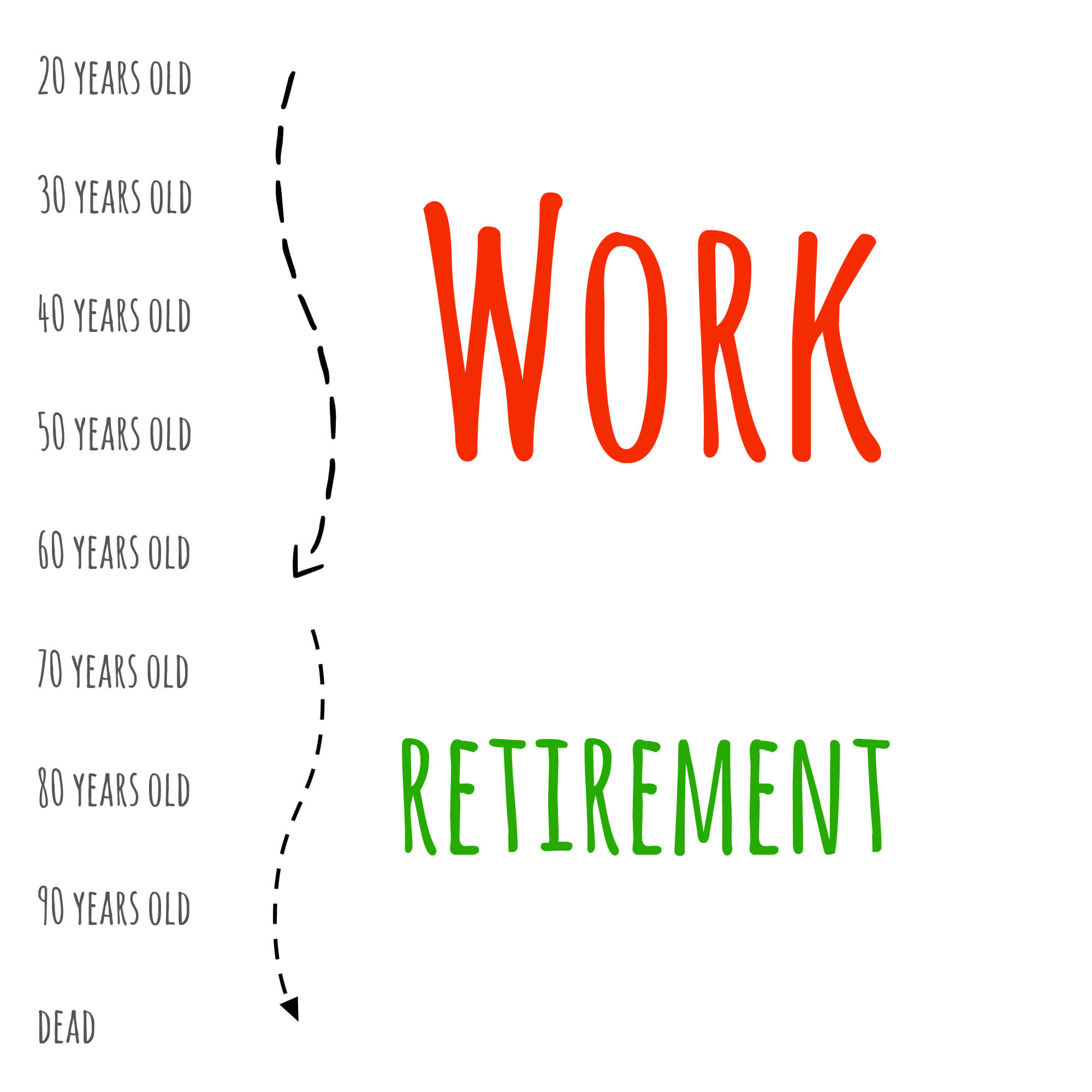
    Typically, we think of life like this:

    retirement
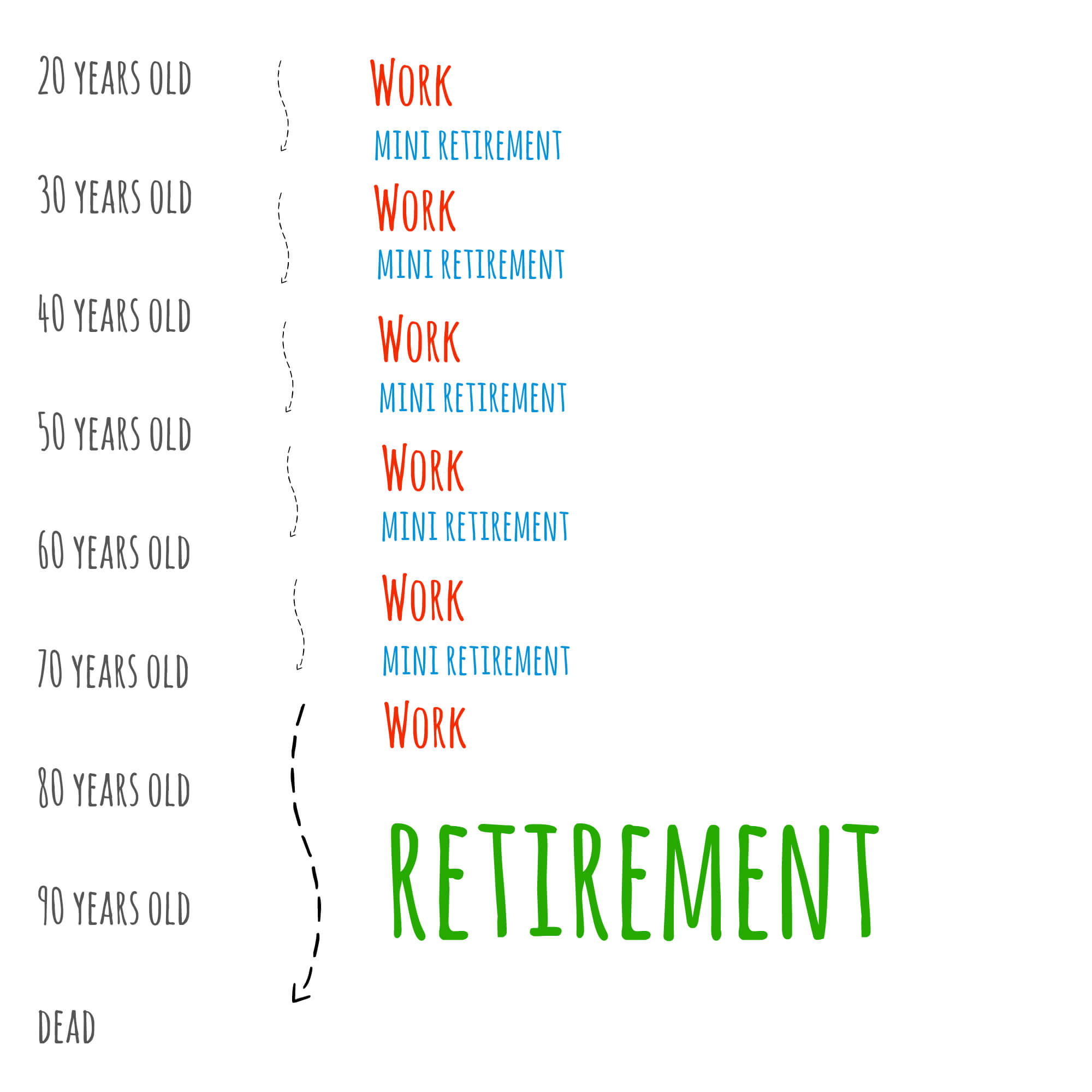
    miniretirements

    A mini retiree’s life looks more like this:

    Perhaps you earn a little less money, perhaps you don’t own an enormous house and perhaps you don’t become the CEO. But what you do get to do is enjoy the freedom of retirement in your twenties, thirties, forties and fifties, you still get to have a career and you get the chance to enjoy the world throughout all periods of life. You will likely be healthier, better travelled, less stressed. You might even enjoy your job for once. How’s that for crazy?


    Why mini retirements make sense

    I don’t want to trivialise the importance of work. I work. You work. We all need to work. But by adding this element of balance into life we can make our work more purposeful. Instead of just working until we die, we can work towards something real, something we want. Not only does it make our work meaningful but our lives, too.

    You can experience the joy of retirement during your youth

    There are certain things that you can’t do (or can’t do as well) when you’re 65 and up, especially physical things such as kite-surfing, climbing mountains, enduring 20-hour train rides, cliff jumping – the list goes on.

    When you take a mini-retirement at 30, you can still do all these things with your youthful body. Your hips won’t die on you when you sit on a bus for hours, your back won’t buckle when a wave throws you off your surfboard at 20 miles an hour. It’s not only more fun, but it’s safer and healthier.

    Your mind is also young. You learn things easier, you remember things better. You get the chance to become a student again while your brain is still fresh and clicking. I’ve met many older folk in my language classes that talk of difficulties in remembering vocabulary and conjugations, and I’ve also experienced this as the years click on.

    As the old saying goes, youth is wasted on the young.

    You open yourself up to new career paths

    When you work continuously for 40 years, you tend to stay on one career path. You study accounting, you become an accountant, you stay an accountant forever. That’s easy, it’s where your career is stable and it’s right in the centre of your comfort zone. Ask your accountant how long they’ve been an accountant. Probably their whole life. Ask your doctor how long they’ve been a doctor. Most people don’t change careers.

    When you take a break every few years, your options open up. You might take your first mini-retirement and get a job teaching English. You may love it so much that you decide to go to teacher’s college. You might do a yoga course and decide to get certified as a yoga teacher. You might spend your retirement writing poetry or a screenplay and realise you’re actually really good at it. You might even do something crazy like, I don’t know, start a blog.

    Most people don’t change careers because of the risk. You need to take the time to re-educate yourself and find your way in a whole new field. But I have never met a person who changed careers and regretted it. And I’ve met a lot.

    The job you hate becomes more bearable

    How many of you hate your job? If my old office is an accurate sample size, around 98% of you.

    However, I don’t believe it’s the job itself that is that bad. It’s the monotony of it. It’s the thought that you’re going to be doing this every day for the rest of your adult life.

    I’ve got to do this for the next 40 years?

    If my old 9-5 was just a one or two year gig, it would’ve been fine. There would’ve been light at the end of the tunnel. I just need to guts it out for a couple of months and then I’m free. That’s a bearable thought. It’s actually quite a nice thought – I’m here to earn some money for a bit, then I can go and enjoy it. Work and play.

    When you take mini retirements, the end of the tunnel is always visible. Just a few years and then I’m mini retiring. Even if you loathe your job, you’re there for 4-5 years at the most. That’s much easier to digest than 40 or 50. Put your head down, save some cash, hand in your notice and chase some dreams.

    You increase your time wealth, which leads to a life of greater balance

    Most careers are engineered towards amassing financial wealth. We don’t mind taking on more stressful roles and longer hours to fatten the paycheck and stockpile as many dollars as possible. In the midst of the hustle we tend to forget why we’re working so hard.

    By taking mini retirements throughout your career, you allow yourself to appreciate the importance of time wealth as well. As your life goes on, you’re able to see the value in having time to read, take long walks, spend an entire week relaxing with your boyfriend/girlfriend at the beach. Many of us lose sight of the value of time wealth until we’re reminded of it’s beauty, often through unexpected circumstances like a redundancy or other unexpected downtime. Mini retirements are the perfect way to ensure balance in your life – a great career but also hobbies, travel, healthy relationships and a wealth of free time to pursue your passions too.


    The Practical Side

    What kind of career will you have? What do you do during a mini retirement? How do you pay for it?

    Your career

    People think a big gap on their resumé looks bad. I have never known this to be true.

    Do you know what lands you a job after an interview? It’s not having a great report card. Any dummy can memorise a textbook. It’s not having a really nice tie and good manners. Dummies can do that too.

    It’s being interesting. Having ambition, being a risk-taker, having tenacity, thinking on your feet, embracing challenges, standing out from the crowd.

    If an employer asks what you were doing during a two year break and you tell him you were playing Xbox, then a gap on your resumé looks bad.

    If you tell him you built a motorcycle and drove it across Europe, worked in rainforest conservation in Ecuador, volunteered as a special needs teacher in Uganda and then self published a book of poetry, your resumé looks pretty good. It might go straight to the top of the pile. People want to be around inspiring and interesting people. And they know if you can do such incredible things out in the world, you’ll definitely be able to handle anything they throw at you in the office.

    Another common reason people give for not taking big breaks from work is they think it will negatively affect their career progression.

    “If I take a year off, everyone will surge ahead of me and I’ll never get that promotion.”

    “I want to take a gap year, but I’m scared I won’t find another job when I get back.”

    It’s never been true.

    When I visited my old office after coming home, I had barely been there five minutes before my old boss offered me my job back. “If I find out you’re working anywhere else in town I’ll be very disappointed!”

    This has been true for many of my friends on the road. They travel around the world for a year and walk straight back into their old job. Not only that, they get begged to take back their old job. After having to hire people for my own projects, I understand why this is. Good people are so hard to find. If you’re a star, people don’t want to see you go. They’re ecstatic when you come back.

    Lastly, you might think the gap makes you look unreliable. I can’t hire this person, they’re going to quit after two years. Want to know a secret? Everyone quits after two years. Employers know and expect this.

    The point I’m trying to make is, you will be okay. If you had a great career before your mini retirement, you’ll find or continue a great career after it. And if you had a shitty career before your mini retirement, then who cares what happens to it?

    Your finances

    The secret to a mini retirement is to be a diligent saver. Saving for your mini retirement is no different to saving for a house deposit or a new car. In that sense, you are simply transferring your savings from a new car to a mini retirement.

    I’m a little biased, but I would guess that a mini retirement will add much more to your life than a new car.

    If your mini retirement is going to be two years, maybe you’ll need about $20,000. If you plan to work for five years, you’ll need to save $4,000 a year. That’s $333 a month, or $76 a week.

    Too hard? Take a shorter mini retirement, or work another year.

    Too easy? Take a longer retirement, or work a couple of years less.

    Also, because you won’t be travelling in the tourist sense of the word, most of your expenses during your mini retirement are going to be things like rent, food and hobbies. Normal stuff. Those are the same things you buy at home.
    Thinking about it like this removes a lot of the mystery.

    And here’s your secret weapon. If you already own a car, or a house, you can lease your house and car. That gives you an income during your mini retirement. If you can’t find anyone, offer it to someone you know at way below market (even a little income will go a long way). If you don’t want to fluff around with arranging any of that, you can simply sell the car (yes, you can always buy a new one). Finding someone to rent your house shouldn’t be as difficult, and you could also do a Home Exchange as another option.

    If you’d like a blueprint on saving for a mini retirement, I cover the subject extensively in my free ebook.

    What to do

    A few ideas:

    Learning holiday

    This is actually my favourite style of travel, and I’ve done it all over the world to learn martial arts, surfing, dancing, languages and more. In fact, my first solo travel experience was a Spanish course in Spain. Obviously, the longer you have the more you will learn which makes this style of travel perfect for mini retirements. I meet many people at language schools that only get to stay for two weeks and are heartbroken when they need to leave so soon. During a mini retirement you can spend a good 3-6 months really exploring and learning your craft, whatever you choose it to be. Paired with the experience of being in another country and these really can become life-changing adventures.

    I booked my first learning holiday through STA Travel. Now I just find my opportunities independently, but their learning section is still a great place to find ideas.

    Working holiday

    Working during retirement?

    Bear with me.

    There are many working holiday opportunities out there – you can be a skydive instructor, a surf coach, a yoga teacher – pretty much any passion that you have can be turned into a job.

    Even though the pay might not be great, you will still be topping up the bank account, putting less stress on your finances and allowing you to live a little larger while you’re out there.

    There is an abundance of these opportunities – you’ll just need to ask around. I would suggest not planning your entire mini retirement around something like this, but stay open to it. Perhaps you want to extend your mini retirement from one year to two or three, and a short working holiday might be the kicker you need to make it happen.

    Caz and Craig have some good info to get you started. But Google will give you all the info you need.

    Travel

    Nothing fancy. Just go see the world.

    Volunteering

    Volunteering is an amazing experience, one that I’ve done various times. There is an element of responsibility and awareness to consider when you decide on a project, especially when working with children, and also on the organisation (if any) you affiliate yourself with. However, when done right volunteering is a magical ride.

    Do your homework on your project. If you’re paying money, make sure you know where it’s going (to a needy cause or into a corporation’s pockets?). Ask yourself if you’re doing the project for the right reasons. Would you do it if you couldn’t take your camera? Ironically volunteering can be a somewhat selfish endeavour; we do it because it makes us look good and feel good, and that’s okay. Just make sure there are many good reasons behind your work too.

    Shannon has a great grassroots project you can browse here.

    Study

    Go back to school! Educate yourself on something new, get qualified for a job you always wanted to do, or upskill in your current field without the pressure of a job to go to each day. Many people go through life wanting to try something unconventional like acting or dancing, but never find the time to dedicate to it. I wish I could learn that, but when will I find the time to go back to school and study again? During your mini retirement, bro.

    A year after I left my job, I moved to Shanghai and went back to university for a year. I was 25 at the time and it was an incredible experience.

    Even if you don’t study towards a certificate in an official university or institution, you can still dedicate time to educating yourself on your own time. Go to the library, take online courses, read books, self study, find something on Udemy. It’s all possible.

    Enjoy your retirement,

    Bren


    Ready for retirement? You don't need to wait until your sixties. Enjoy retirement in your twenties, thirties and forties with the rise of the Mini Retirement. It's here to stay! Click the pic above to learn more.
  • I Challenged Myself To 28 Days Of Discipline. Here’s What I Learned.

    I Challenged Myself To 28 Days Of Discipline. Here’s What I Learned.

    Four weeks ago I decided to end my summer with a challenge. Since I’m generally a “do it when I feel like it” kind of guy, I tried to build some discipline into my life by setting myself small tasks to work on every day.

    The tasks revolved around different areas of my life I’ve been trying to improve on – fitness, health, culture, writing, music, reading, mental. I wanted to challenge myself to spend time on each activity each day, hopefully seeing a noticeable improvement by the end of a four week (28 day) period. For example, playing the guitar. If I just practised for ten or fifteen minutes each day, hopefully by the end of the challenge I’d be able to play one or two songs. If I read a few pages of a book each day, by the end of the challenge I should have finished two or three books.

    The practical side of it was simple. Write down 10+ things to do each day of the week. As you finish a task, add a tick beside it. If you haven’t done something at the end of the day, add a cross beside it. Nothing more than a glorified to-do list. By the end of four weeks, the tasks each day will have a mixture of four ticks/crosses, representing my success/failure in completing them over the four weeks.

    Some things, such as reading, were listed every day. Others were scattered on selected days only; for example I might have jiu jitsu classes only on Mondays, and dance classes only Tuesdays and so on.

    Assuming the task was listed daily, the best possible result was 28 ticks. The worst possible result was 28 crosses.

    What tasks did I choose?

    1. Yoga

    Everyone always talks about yoga and it seems like all yogis live to 120 and beyond. I finally took my first classes last November, about 5 months ago, and enjoyed it. I thought perhaps I could try and do yoga each morning to iron out the kinks I’ve accumulated over the last 3 decades of sport, gym and travel.

    2. Mobility WOD

    Mobility “workouts of the day” are simple stretching, massage and mobilisation exercises put together by the brilliant Kelly Starrett. They are designed for athletes to help prevent injury, correct your movements and posture, and keep your muscles loose and limber. They only take about 5-10 minutes each and are really effective for someone injury prone like myself.

    3. Meditation

    I’ve been using an app called Headspace to learn how to control and calm the mind. I’ve been doing sessions rather sporadically since I subscribed, so I wanted to try and be more consistent to see if I noticed any real benefits.

    4. Duolingo / language study

    I love learning language but I’ve been slack at studying. Duolingo is good at making sure you get at least a few minutes of revision each day.

    5. Guitar

    I’m not the most musically gifted person so I wanted to at least be able to pull a tune together on a musical instrument, just as a hobby and nothing more.

    6. Writing

    I’ve been working on a book which has been going abysmally. My creative juices are dry, perhaps because I draw my creativity from travel and I’ve been grounded for quite a few months now. I put it on this list to try and force myself to get some words out each day.

    7. Blogging

    I’ve got a whole bunch of unfinished blog posts sitting in my drafts folder. There are a lot of ideas, I just need to polish them into publishable articles. An hour of writing blog posts each day will mean I have plenty of new content.

    8. Martial arts

    I’ve been spending a lot of time at my local martial arts gym, learning kickboxing, wrestling and jiu jitsu. Since I always look forward to going, I knew it wasn’t going to be a challenge to get to class. I included it anyway, as it does require a lot of my time.

    9. Salsa

    I haven’t danced since I left my salsa school in Ecuador. I enrolled in a local dance school and signed up for two classes a week, just to see if I still have moves.

    10. Juice

    Every morning I juice up a big bowl of vegetables and get my greens for the day. Sometimes I groan at the thought of driving to the vege shop, washing and cutting everything and then cleaning my juicer. Adding it to the list makes sure I’ll get it done anyway.

    11. 6am wake up

    My day always tends to fly by. I suspected it’s because I wake up quite late (between 9 and 10am). I always read about successful people waking up before sunrise and getting so much done so I thought I’d give it a try. I knew this would be tough – I’ve never been a morning person.

    12. Cold showers

    Cold showers are great for your metabolism, your skin, your testosterone, and just making you feel alive. It’s a great test in mental strength. Not everyone can do it.

    13. Reading

    I’ve been trying to read more books in recent years but I struggle. I know people that read a book a week. I’m lucky if I manage to read five pages a day. Successful people universally recommend reading as much as possible, so I’ve been trying hard to make this a habit.


    The results

    Here’s what my sheet looked like:

    IMG_20160417_112405

    And here’s the sorted data:

    Activity Ticks
    Crosses Tick %
    Cross %
    Juice 27 1 96% 4%
    Salsa class 7 1 88% 12%
    Mobility WOD 23 5 82% 18%
    Duolingo (language study) 22 6 79% 21%
    Cold shower 21 7 75% 25%
    Guitar 19 9 68% 32%
    Reading 18 10 64% 36%
    Yoga 17 10 63% 37%
    Blog writing 13 11 54% 46%
    Headspace (meditation) 8 20 29% 71%
    Book writing 6 18 25% 75%
    MMA class (martial arts) 8 24 25% 75%
    6am wake up 1 27 4% 96%
    TOTAL 190 149  56% 44%

    Out of 13 activities, I had a positive completion rate (above 50%) on 9, and a negative completion rate (below 50%) on 4.

    I scored best on making and drinking vegetable juice each morning (96%), and scored worst on waking up at 6am each morning (4%).

    I only scored above 80% on 3 tasks – juice, dancing and Mobility WODs.

    I had a total of 190 completed tasks (ticks), and missed a total of 149 tasks (crosses), for an overall score of 56%. I think in report card grades that’s around a C or C-, so coming from a Chinese family I’m basically disowned now.

    Here’s what I learned from the experience:

    I let small things get in the way and don’t face adversity well

    My martial arts numbers were among the worst. If you know me, this would be surprising to you because I love going to those classes. For most of the summer, I was at the gym almost every day and never missed a class.

    What happened was I tore a ligament in my arm during the first week of the challenge. The doc said it was a bad tear and I would be out for at least four weeks. If I really wanted to keep training there were things I could’ve done: I could have just done shadow movements at home, watched videos or gone to the gym and watched the classes and still learned a lot. I even told myself I was allowed to tick my sheet if I did something like that in place of training. But I mostly spent the rest of the challenge feeling sorry for myself and giving up.

    I also had to head out of town for three nights, and pretty much did nothing that entire time except for some reading. If I really wanted to, I could have done all the tasks required except for maybe one or two, but I didn’t. The break in my routine upset my momentum and I just went into CBF mode.

    I struggle to be adaptable and need to work on it.

    I hate mornings but I should learn to love them

    I managed to do one 6am wake up and that was at the very start of the challenge. I still remember that day. I woke up semi-inspired, took a cold shower straight away, did my yoga and MWod, made my juice and by the time I sat down at my laptop it was still only 8:30 or something. It felt really good to have ticked so much off the list before the day had even started. However, that feeling when your alarm goes off and you slam it and go back to sleep is one of the most blissful feelings in the world. During my 9-5 years I spent every single morning longing for the day when I would be able to tell my alarm clock to f*ck off and just go back to sleep. I’ve finally won that luxury and it is hard to give it back.

    I will revisit this challenge later on because I definitely see the benefit of this, but holy crap I hate waking up that early.

    I’m not really good at anything

    During the challenge, I realised how bad I am at everything. I’d pick up the guitar and struggle to play the songs in the “very easy” section. Then I’d try to meditate and fall asleep halfway through. Then I’d go to the gym and get my ass beat. I’d go out for a surf and get smoked for two hours. Then I’d fall over doing that horrible yoga pose that I hate. Then I’d sit down to write my book and still have a blank page after thirty minutes.

    There’s nothing that I’m actually good at. In the book Outliers, Malcolm Gladwell studied hyper successful people, and concluded that the average time it takes to become an expert at anything is 10,000 hours of practise. This goes for sports, instruments, arts, anything. That means to become an expert at any of these tasks, I’ll need to practise them for an hour every day for the next 27 years.

    Since I couldn’t even practise an hour a day for four weeks, 27 years feels a little far from the realm of possibility. But we can always try.

    It wasn’t long enough to build any habits

    I was thinking after doing these things every day for a month I’d have developed them into habits. It seems like the opposite is true.

    For example, every morning I’d wake up and do yoga. Although I didn’t particularly enjoy it, I could feel the benefits of it and wanted to make it a habit, especially as I’ve been injury prone recently. It also tied in nicely with meditation, which adds positives to the rest of my work and life. I hoped that doing yoga each morning would cement it into my daily routine, similar to brushing my teeth or making juice – not something I really enjoyed, but something I did because it was good for me.

    The first day after the challenge ended, the opposite happened. I was ecstatic I didn’t have to do yoga anymore. No more fucking yoga. I woke up, made some juice and went straight to my laptop to work.

    I always thought my sporadic interest in things was due to my nomadic lifestyle, but even when I’m grounded in one place I don’t fare much better. It remains a work in progress.

    Cold showers turn you into Superman in 60 seconds

    Unless you live in a tropical country, it is not easy to take cold showers. Doubly so in the dawn of Auckland’s winter. Some days I had to seriously psyche myself up before I was able to get in and turn it on. It is surprising how mentally difficult it is to do. It made me realise how weak I was. Hot water is still non existent in much of the world.

    When it hits your skin for the first time it’s an electric shock to the system. You huff and puff. If you jump around it makes it easier, but I always held my hands behind my back and stood perfectly still for maximum effect. The first ten seconds are kinda miserable.

    I count to sixty. One minute. By this time I feel great. It’s still cold, but no longer a piercing, painful cold. I might even stay in for a second minute. When I get out of the shower I feel alive and invincible.

    Challenge yourself you take a sixty second cold shower every morning for a week. It will surprise you how hard it is.

    My goals weren’t specific enough

    Make sure your goals are SMART (specific, measurable, achievable, relevant, time based).

    Yeah, whatever. I hate little quips like that. They sound like dumb shit your boss says in a performance review to sound smarter than you, right before not giving you a pay rise.

    Turns out, sometimes they’re right.

    I would look at my list and see “Guitar”. I’d pick up the guitar, play around with it for a few minutes and then tick it off the list. For me it was still an achievement just to pick it up and strum a few chords each day, since I’ve been struggling to do that my entire life, with everything.

    The problem was there was no end goal. I needed to have a song to master by the end of the challenge.  For writing, I needed to have a word count to reach. For my language study, I should’ve created a list of words to finish learning. That would’ve given me something more concrete to aim for. I believe in shooting for the stars, but I think this SMART stuff might actually help us get there.

    When I revisit these challenges I’ll be sure to set more specific targets, so instead of just working blindly I’ll know exactly what I’m aiming for.

    I have terrible time management

    I estimate it requires about 3.5 to 4 hours a day to complete everything on the list. That means if I wake up at 6am, I could have everything done by 10. If I need to drive to the gym or to dance class you can add on another two hours, which happens in the evening anyway.

    Yet most days I would get to 10 or 11 at night and still have five or six things left to tick off.

    One thing about going through the traditional education system of high school and university is you get very good at procrastinating. The nature of exam-based achievement means you can literally leave everything until the very end and still have it work out somehow. I am a professional at this.

    Clearly this has seeped into my adult life, and as someone who works from home on his laptop this is doubly troublesome. It is a test of willpower that I fail daily. I have no idea if there is a cure for this. A to-do list is just a band-aid, I need a complete mindset change. I’m working on it!

    I’m learning too many things (maybe)

    We settled earlier that I’m not very good at anything. I think that’s possibly because I’m doing too many things.

    I’m trying to learn to surf, fight, dance, speak Spanish, French, Chinese, blog, play the guitar, do yoga, write a book, and more. Even though I have a lot of fun doing (most of) it, it means I don’t really get to focus on doing one thing and my mind is always scattered. I thought meditation would help with this, but I tend to struggle with meditation because my mind drifts off to all those others things I’ve been doing. It’s chicken and eggish.

    It becomes a question of do I want to become mildly proficient at lots of different things, or become really good at one or two things. Because I don’t have any glaring natural talents at anything in particular, and I enjoy all of the things I’m doing, I think the choice that speaks to me is learning everything and just enjoying the journey. As long as I keep challenging myself and getting better each day, I’ll be proud of that.

    It’s important to be social and around others

    I know now why most artists and creatives become weirdos. Because we spend so much time alone and indoors obsessing over our projects. Similarly, most of the tasks in the challenge I was able to do alone at home. Only two things – fight class and dance class – required me to go outdoors. Because I stopped going to the gym after the first week, I was craving my dance class by the time Tuesday and Thursday rolled around. It wasn’t so much for the dancing; I can practise that at home alone too. It was just to be around some new people and enjoy other people’s energy. It’s also the reason I miss the road so much. The travel community is one of the few places where I can tell people about my life and not get looked at funny. Most people find community in their jobs or at school, travellers find that community out on the road. I don’t get that every day when I’m at home.

    I need to learn to be more present

    I found myself trying to rush through things so I could just tick them off the list and move on. This was particularly true with yoga. Just hurry up and finish these last five poses so I can get outta here. I noticed it became a common theme with most of the other activities too.

    It was constant challenge to remind myself to be present. Instead of rushing through yoga stretches, I had to tell myself to breathe and focus. It reminded of times on the road too, where you can get caught up in the travel whirlwind and forget to appreciate the moment and the amazing places you’re in.

    Now I know while I’m doing yoga, my mind needs to be 100% on yoga. When I’m reading a book, my mind needs to be 100% focused on the words. I need to forget about everything else for that moment. Instead of just things to tick off a list, they need to be experiences that I commit to and lose myself in. Otherwise, it defeats the purpose of doing them in the first place.

    I should make to-do lists a permanent part of my life

    When I interviewed for my first (and only) 9-5 job back in 2007, I remember the HR lady asked me to describe a particularly stressful situation I’d experienced and how I handled it. A friend of mine had warned me about this question and told me the best answer was to say you make a to-do list, prioritise everything and then tick off each item as you finish it. I delivered his answer almost word for word. I told her I was going through work overload at university, made a prioritised to-do list, put my head down and finished everything with ease. It was a lie, obviously. I’d never made a list like that in my life.

    She seemed to like the answer, because I got the job.

    Once I started working there my boss kept giving me little tasks to do, like “send this to that client” and “collect this information for the lawyer”. I just left her emails floating around my inbox and attended to them if/when I remembered. But I hardly ever remembered.

    One day she asked me how I keep track of her requests and I pointed to my head. Her mouth dropped open. She told me that will never work and asked me to write them all down in an Excel spreadsheet and mark them off so she could see when they were done. It actually worked. I don’t think I ever missed a task again. Still, I didn’t think much of it.

    After this challenge, I’m finally realising this to-do list thing actually works pretty well. I will be travelling soon, but I will pare it down and continue doing a shorter version of it throughout my travels. It will be interesting to see how things turn out after 6 months or a year.

    Where to from here?

    This was a personal experiment, but as I started punching the results into Excel I decided I needed to share it. It wasn’t an overwhelming task but I learned so much, so I would encourage you to all try something similar, even if your list has only one or two things such as 20 push ups or a cold shower. The completion rate to beat is 56%. Not hard, really. But your rate is 0% if you don’t even try. Get started!

    For me, as I said I’ll keep going and incorporate this into my life. I will also refine this challenge, repeat it down the line with more specific goals, and I’ll beat my own score. Stay tuned for that.

    Good luck, and don’t be afraid to get in touch and let me know how it goes!

    Bren


    I challenged myself to 28 days of Discpline. Here's what I learned.

  • 16 Ways To Travel The World For Free (Yes, Really)

    16 Ways To Travel The World For Free (Yes, Really)

    So I lied.

    It’s not really possible to travel the world for zero dollars. Eventually you’re going to spend a dollar somewhere. Maybe to buy a cocktail for that pretty Balinese girl, or to get your nails done before that Indian wedding you’re about to attend.

    But that doesn’t mean everything needs to cost money. Whether it’s flights, accommodation, transport, food or entertainment, there are ways to travel the world for free. You just need to know where to look, and have a willingness to do things a little differently.

    For you aspiring nomads on there who are looking to see the world on the cheap, here are a few zero-dollar-ideas to get you started:

    1. Travel the world for free by House sitting

    House sitting has been taking off recently in backpacker circles, especially with more long term travellers hitting the road and looking for places to base themselves for extended periods.

    House sitting is a system where you can live in someone’s home for a few weeks or months while the owner is away. Usually people seek house-sitters because they need someone to feed the pets and water the garden etc. That means as a house-sitter, a little work is involved. You’ll spend a couple hours each day walking dogs and feeding chickens, stuff like that.

    Nonetheless, it’s a pretty good gig and you can find some pretty amazing places to stay. Did I mention you stay for free?

    Get started in house-sitting by

    Checking out some of these established sites:

    Luxury House Sitting
    House Carers
    Mind My House
    Trusted Housesitters


    2. Home Exchange

    Remember that movie “The Holiday”? Yeah, the one with Jack Black and Cameron Diaz and a few others, I don’t really remember. That actually happens in real life. It’s called Home Exchange or House Swap, and it’s been around a little while.

    Basically before you go to Australia, you find someone in Australia who wants to come to your city. You exchange emails, make sure they’re not a looney, presumably they do with the same with you, and then you agree to swap house keys. You go to Aussie and stay in their home for free, they come to your city and stay in your home for free. You both get a free house-sitter, and nice home to holiday in, maybe a car to drive, and you save a ton of money. Pretty cool.

    Get started in home exchange by

    Checking out some of these established sites:

    International Home Exchange Network
    Home For Exchange
    Stay 4 Free
    Love Home Swap


    3. Couchsurfing


    A photo posted by Bren (@brenontheroad) on

    I talk about Couchsurfing a lot on here, because it’s awesome.

    Couchsurfing involves sleeping on someone’s couch (or if you’re lucky, a mattress or a bed) for free. The focus of the community is on cultural exchange and travellers helping other travellers.

    If you want to get the most out of it, don’t just use it for free couches. Really get involved in the community by joining groups, going to events and hosting other travellers in your city.

    Get started in Couchsurfing by

    Signing up at Couchsurfing.org and completing your profile! (note: as of 2020, Couchsurfing is no longer a free service. Try BeWelcome or Trustroots instead.


    4. Stay With Friends and Family


    A photo posted by Bren (@brenontheroad) on


    You’d be surprised how many people you actually know around the world. When you start travelling, that number will multiply every day.

    Don’t be afraid to ask around and see who’s got a couch free. I try to keep my house-crashing to a minimum but if I’m in uber expensive places like France, London or Hong Kong, I always try to find a friend to crash with. As you meet people on the road many will go above and beyond to help you out – don’t be surprised if you get offered to stay with the friend of the brother-in-law of the guy you shared a hostel dorm with in Argentina. It happens!


    5. Camping

    When I was in Turkey earlier last year I met a guy who had travelled all over the country, total hobo style. He’d been hitch hiking the whole way, and would pitch his tent by the side of the road at night and sleep. It sounded mad, but he said it was fine and trouble free. On that same trip, I had a Greek couple who had spent an entire summer camping on the beach in Greece, for free. Get involved in the camping community and get familiar with the rules, and you can sleep for free in many countries around the world.

    Get started by

    Reading some guides on wild camping here and here.


    6. Travel the world for free with WWOOF

    Every second backpacker I meet in New Zealand is WWOOFing. Traditionally WWOOFing refers to farm work but it’s become synonymous with any kind of work exchange these days. Recently I met a girl who is WWOOFing at a hostel down at my local surf beach – she surfs in the morning, cleans the hostel in the afternoon. Others are WWOOFing at farms and hostels across the country. Sounds fun.

    Get started in WWOOFing by

    Checking out WWOOF.net, but during your travels all you need to do is ask! Hostels, guesthouses and farms are always looking for people.


    7. Travel the world for free with HelpX

    HelpX is similar to WWOOF – it’s a network where people offer housing and food in exchange for a few hours work each day. Very common requests are for people to help renovate properties, look after children, help run B&Bs and guesthouses, cleaning, painting, sometimes people just want you around to practise English with a few hours each day. HelpX is literally all over the world and there are a ton of interesting projects on there for every type of traveller.

    Get started in HelpX by

    Checking out the endless opportunities on HelpX.net


    8. Workaway

    Workaway is another work exchange network where you can trade work for room and board. Opportunities are global and the network is very professionally run.

    Get started in Workaway by

    Checking out Workaway.info


    9. Cruise shipping

    I’ve met quite a few people who spent time working on cruise ships. The common theme is that it is hard work, but you are literally being paid to travel around the world and that makes it awesome.

    There is work for everyone on a cruise – they need cooks, waiters, IT staff, a band to play at night, personal trainers for the gym, dance teachers, cleaners, tour guides, management staff etc. The pay isn’t bad, and because room and board is provided you save around 90% of your salary.

    Get started in Cruise shipping by

    Reading Earl’s guide on getting your first cruise ship job, or browse some current cruise ship jobs here.


    10. Au pairing

    Au pairing is where you work as a live-in assistant in a foreigner’s home. Duties are standard household chores such as laundry and cleaning, as well as dropping off/picking up children from school, helping them with homework etc. Au pair work usually requires 4-5 hours of work a day, and the work is paid. This is very popular in more expensive destinations to travel/live in, such as Europe, Australia and New Zealand.

    Get started au pairing by

    Reading guides from experienced au pairs: Ashley has one here, and Yara has another here.


    11. Walking!


    A photo posted by Bren (@brenontheroad) on


    Technically you can get free transport to anywhere in town, if you’re willing to use your feet. Well, you might need to swim/climb/crawl a little too, but you get the deal. A lot of us tend to head straight for the subway or a taxi when we’re new in town, but as you get more comfortable on the road you’ll start to love walking. You get to move slowly, look around, smell the air, peek inside the windows. Some of the most interesting things I’ve encountered on the road have been a result of taking walks. These days, if I need to get somewhere and the walk is less than an hour I’ll go by foot. Being free is just a bonus!


    12. Hitch hiking


    A photo posted by Bren (@brenontheroad) on


    Hitch hiking is popular in a lot of countries and perfectly safe if you know what you’re doing. Go to the side of the road. Stick your thumb out. Get in. Get out.

    Simple, right?

    Matt hitch hiked across the States.

    Kristin hitch hiked across China.

    I hitch hiked across the Baltics.

    We’re all still alive, because we did our homework.

    Staying safe on a hitched ride is more common sense than anything else. Try to hitch hike in pairs. Don’t hitch hike at night. Do it in countries where it’s normal and accepted. If a car stops and you get a bad vibe, don’t get in. Stuff like that.

    Get started with hitch hiking by

    Checking out this detailed breakdown from Jamie at Great Big Scary World. When the time comes, you can find all the best hitching spots and seasoned advice on Hitchwiki.


    13. Free entertainment


    A photo posted by Bren (@brenontheroad) on

    There are endless ways to stay entertained for free. Start with your standard parks, plazas and markets where you wander, take photos, watch buskers and get to know a few strangers.

    During the week in big cities there are often free shows, concerts, open mics, festivals and cultural events.

    Beaches, boulevards and city squares always have interesting things going on. Hiking, regional parks and major landmarks are often free as well.

    Many major museums often have free entry days in low season.

    Couchsurfing events are free. On Meetup.com there are often casual sports gatherings and pickup games which are free.

    This is just a few of many examples – always check out your hostel noticeboards, tourist info offices and online city guides to stay informed. Or as Rolf likes to say, “When in doubt, just walk until your day becomes interesting.”


    14. Dumpster dive


    A photo posted by Bren (@brenontheroad) on


    That’s not a literal term – you don’t actually need to dive inside the dumpster (although that works too).

    It is very common for small family owned bakeries and restaurants to throw away leftover food at the end of the day. Fruit and vegetable shops will also have produce left at the end of the day which they can no longer sell. Food that is also one or two days away from expiry usually gets thrown in the bin too. It’s perfectly edible food and there’s no shame in asking for it!

    In fact, you’re actually helping reduce food wastage while saving a bunch of cash at the same time. It’s a win win.

    Just head to these places before closing time and ask if they have any food they’re going to throw away. If you let them know you’re a bunch of broke hungry backpackers they may be extra nice. I remember a friend telling me about the markets in Italy, where he would get given so much free food he was actually turning it down because he couldn’t carry it all!

    Some places may try to sell it for a nominal amount, maybe a couple of dollars, which is fine too. And of course many people still do it the traditional way – looking through the supermarket dumpsters at night – which is how we scored the bounty in the photo above!


    15. Teach (anything!)


    A photo posted by Bren (@brenontheroad) on


    This is really common and there are a lot more ways to do this than people realise. It does require you to be pro-active as not all opportunities are advertised on the likes of HelpX or Workaway, but if you have skills, chances are someone else needs them.

    Things such as zumba, yoga, surfing/skiing, dancing (all types) and personal training are some of the most in-demand skills and there are resorts, cruises, schools and tour companies always looking for people to jump in and start taking classes for clients. If you’re qualified or experienced in these kinds of things and looking to settle down for a bit, approach the big resorts and tour companies and ask! You’ll be surprised how many opportunities there are.

    Get started with teaching by

    Checking out Dave’s ESL cafe for English teaching, or read Earl’s technique for “Creative English Teaching” (which could be used for teaching anything, really).


    16. Travel hacking

    Travel hacking is the art of playing the frequent flyer and hotel points systems to your advantage.

    Frequent flyer points are free. Sign up for a credit card and you get 30,000 of them. Eat at a restaurant, get another 1,000. Put your spending on a credit card, get a few more. Most cards will waive an annual fee for a year, and waive it a second year when you tell them you want to cancel. You can rack up a tidy number of points if you’re willing to figure it out.

    Some people have dedicated their lives to this and play these frequent flyer programs full time. It’s like a game to them and they end up jetting all over the world for free. If you’re willing to invest the time, you can too.

    Get started in travel hacking by

    Great resources on the topic are Million Mile Secrets and the Flyer Talk forums, although if you’re a newbie it can be hard to understand the lingo and what they’re talking about. Good source of free information though.

    If you’re a Kiwi, check out my travel hacking guide for Kiwis. It will give you everything you need to know.


    Inspired? While there’s a lot of info here, this is really just scratching the surface. Whether it’s someone ironing linens on a rich man’s yacht or restoring ruins in rural Italy, I constantly meet people doing interesting things out here to travel the world for free. If you’re low on funds it doesn’t mean you can’t travel. It just means you need to think outside the box and do things a little differently.

    Good luck!

    Got anything to add? What are some ways you’ve managed to travel for free? Share your stories in the comments section below 🙂

    Disclaimer: World Nomads provides travel insurance for travelers in over 100 countries. As an affiliate, we receive a fee when you get a quote from World Nomads using this link. We do not represent World Nomads. This is information only and not a recommendation to buy travel insurance.


    how to travel the world for free
  • The Man’s Guide To Travelling The World

    The Man’s Guide To Travelling The World

    There’s endless information out there on helping girls travel the world. How they can stay safe, overcome their fears, dress appropriately, how many bikinis to pack, dealing with foreign men etc. I even put together a whole interview series about it.

    But what about the dudes?

    Don’t worry, fellas. I haven’t forgotten about you.

    I know as well as you do – it’s tough being a man in today’s world. And it can be tough on the road as well.

    What follows is my guide to travelling the world as a modern man. What to look out for, what to wear, how to stay safe, dealing with girls, things you should pack and so on. It’s all here.

    Ready?

    Let’s do it.

    Part 1: Safety

    It’s generally said that travelling is a lot more dangerous for women than it is for men. In my experience, that’s not true. I’ve seen far more men get mugged, become victims of violent crime, end up in hospital with injuries and get into altercations. I haven’t been able to find numbers, but I would bet good money that male tourist deaths outnumber female tourist deaths, too.

    Why is this?

    Because we’re boys. You have about twenty times more testosterone bubbling through you than your female travel buddy. Science says you’re likely to be more adventurous, take more risks, visit more dangerous destinations and do more dangerous activities. You’re more likely to try and fight someone who mugs you rather than hand over your wallet. You’re more likely to get into an argument in a bar, and you’re more likely to throw a punch. You’re more likely to walk home alone in the middle of the night, even if you know it’s dangerous. You’re more likely to do the cliff jump. You’re more likely to ride the motorbike without the helmet. You’re more likely to start prodding that weird looking snake with your hiking pole to see what it will do. You’re more likely to thrill-seek, be a daredevil, and follow your male brain into a bad situation. Man hormones are risk-taking hormones. That’s why we always get into trouble.

    So how do we stay safe?

    Avoid confrontation

    I’ve never been mugged. I’ve met a lot of guys who have, and almost all of them fight back. The funniest was the Aussie guy in Colombia who had a couple of kids pull a knife and ask for his wallet. He went into fight stance and said, “Go fuck yourself.” The most recent case was in Ecuador, where my Israeli roommate got lured to a “cool party” by two local guys who jumped him once they were out of the main streets. Of course, he fought them both, ending up in hospital with a couple of nasty wounds but, in his words, at least he “got blood from the other guy too”.

    I would like to say if this happens to me I will hand over my wallet and walk away, but I’ll never know until it happens (what were all those fighting classes for?). Either way, that’s the smart thing to do.

    Of course, avoiding confrontation is not only something that arises when you’re getting mugged. It also means you should avoid causing scenes and pissing people off, such as in restaurants and markets, at events and festivals and with taxi drivers and so on. Things can escalate fast, especially in less reserved cultures, so while you’re overseas it pays to tone things down and swallow your ego. Sometimes you need to check your pride and take a punking on the chin. Not as easy as you think.

    Easy on the drink

    If a girl is drunk in a bar and causing mischief, even shouting profanity and throwing drinks on people, it’s unlikely anything particularly terrible will happen to her. How many times have you seen an obnoxious women get knocked out? I can safely say, zero. She might get shouted at, shoved, talked to by a bouncer or thrown out, but that’s about it. If she’s alone there’s always the risk she gets taken advantage of, but as long as she’s got friends around she’ll probably be okay.

    As a man, things are different. If you behave like that, you’re getting punched in the face, bottled, or taken outside for a beat down. I’m sure you’ve seen all three. What’s more, in some countries there’s not a lot of trash talk build up before a fight – sometimes the punches come far sooner than you’re used to seeing. I see arguments and fights all the time on the road, and it’s always between drunk men. Like I said, men are more likely to throw a punch and more likely to wear a punch.

    Take extra precautions

    I know I can’t just tell you to be careful. If there’s some shady jungle walk where you might come across bears or lions and you want to do it, you’re going to do it no matter what I say.

    What I can say is take as many precautions as you can. If you’re heading somewhere iffy, make sure you tell your friends and family, and some people on the ground as well, where you’re going and when you’re expected back. Take efforts to make sure you’re contactable at all times. Take a first aid kit. Ask people about the risks and dangers of the area and get educated. You can still do cool shit out there and be safe at the same time.

    Likewise, exercise these precautions in everyday situations too. I generally leave my wallet at home and keep cash in my socks if I’m walking around somewhere shady at night. I always ask which streets I should avoid, and even though my curiosity can kill me, I do generally avoid them. If I do want to go there, I find a fixer. When heading out at night, I also wear looser jeans and shoes rather than flip flops, as it would be much easier to run fast (or throw a roundhouse) in those clothes. There’s nothing unmanly about taking an extra moment to think about safety and take easy precautions that can pay off (and maybe even save your life) in the long run.

    Body language

    Honestly, this is probably one of the best tips I can give you for staying safe. Your body language says so much about you, and people will make a judgement about you in a split second based on your body language. If you walk with your chest out, chin up, looking straight ahead and moving confidently, you’re far less likely to be bothered than if you walk with your head down, walking too fast, glancing left and right and looking uncomfortable. People, and especially bad people, can smell weakness – they can see it from miles away.

    Over the years I’ve managed to fine tune this body language, and local friends constantly comment on how comfortable and confident I look. After a night out in the outskirts of Nairobi, I was walking home with a couple of local guys in the early a.m. and they couldn’t believe I’d only been in town a week. In their words, “It looks as if I live here” and “white people are normally shitting themselves”. I’ve had similar comments in many countries and I attribute it to having good body language that doesn’t show I’m uncomfortable or scared, even when I totally am.

    Tips for good body language:

    • Body language is just good acting. Imagine you’re walking down your street in your home town. Imagine as if you’ve been walking down this street every day for your entire life. Nothing here can surprise you. Nothing here is new. You belong here. You live here.
    • Walk with your chin up, looking straight ahead. Look around casually. Sigh, like you’re bored. Nothing to see here. You walk here every day.
    • Ooze confidence (not arrogance, there’s a difference). Emit no fear. Make the shadies think twice before approaching you. If you’re generally a fearful guy, consider taking some self defense or martial arts classes to improve your self confidence. There’s a good chance you’ll never need to use those skills, but they can greatly improve your peace of mind in situations like this.
    • Walk a normal pace. The slower the better. Relax. People walk fast when they’re afraid or nervous, just like they breathe fast and talk fast. Walk slowly. Nothing to be afraid of here. You’re not rushing anywhere. You’re comfortable. You belong here.
    • If you’re lost, keep walking. Don’t look around all flustered and worried. Discretely pull out your phone and check your map. Hop into a convenience store if you need to or sit down at the bus stop. Don’t be obvious about it. Pretend like you’re just reading a text message. Just a normal day. Nothing to be afraid of.

    When you walk with that mindset, and you really go into character with that mindset, you’ll give off a strong, positive vibe. It’ll show confidence and calm, and will get you out of more trouble than you realise.

    If you do get approached and they ask if you’re a visitor, always say no. Tell them you’re working here for a short time or your brother lives here. This works well to deter hustlers and scammers. It can also make people think twice about bothering you if they know you have a few connections in town.

    Local friends

    Local friends are instant social proof. Similar to your body language, they can prevent bad situations from starting in the first place.

    During my first trip to Africa I had one afternoon where I’d spent a little too long playing with my students and lost track of time. I found myself walking home after sunset, on a main road that was pitch black and suddenly a lot more spooky than it was in the day time. I could feel people looking at me wondering what a silly Chinese boy was doing out alone at night. I knew I needed to blend in more so I caught up to a lady a few steps in front of me and asked her where she was going and if it was okay if I walked with her. Of course she said yes because I was such a polite young gentleman (i.e. she knew I was shitting myself). I could feel the difference instantly. I only got passing glances, as I now looked like the guest of a local rather than a wandering idiot.

    I have countless stories like this. In tourist zones you’re fine, but once you venture outside the Lonely Planet boundaries you’ll feel a lot more welcome if you have a local by your side. This is especially true for local nightlife, and places like slums and rural villages. It’s almost like showing you’ve been invited to the party, rather than just showing up as an obvious outsider. If you don’t have local friends, you can simply ask an independent tour guide, find a Couchsurfing buddy etc.

    Final words on safety

    Staying safe is usually just a matter of common sense. If it’s a dangerous neighbourhood, don’t go there. If you’re getting a weird vibe, leave. Be extra careful after sundown. The world is safe for the most part. I am not a big guy at all but by using simple methods like the ones above I’ve only had really minor incidents in my five years on the road. Stay aware of your surroundings and trust your instincts and I’m confident you will be fine.

    Part 2: Packing

    So, we don’t need hair straighteners, tampons or lipstick, so what do we need?

    Luckily for guys, we can buy most things we need on the road. While some girls will never use anything other than their latest edition GHD hair straightener from home, guys will generally use any razor, any shaving cream, any shampoo, wear any shoes and so on. This makes packing for us a little less complicated.

    I’m not going to write out a whole packing list for you – I’m sure you’re all capable of packing a bag. However, here are a few things to think about:

    Pack light!

    Other than specific medications, there are very few ‘important’ things you can’t rent or buy on the road. If it’s something you don’t expect to be using daily or at least a few times each week, I’d suggest leaving it at home. This includes things like sports gear, blazers, extra pairs of sunglasses and so on. If there comes a time when you really need it on your trip, you should be able to find it.

    Shoes

    This is actually my biggest packing problem (although I’m not as bad as Tyson).

    I want a pair of shoes for the gym, also a good pair of walking shoes for scouting the city, a pair of flip flops for the beach and the shower, and also a pair of nice shoes or boots for a night on the town. Although that would mean 4 pairs of shoes which is Level 10 Stupid.

    On my last trip through Europe and Africa, which lasted around 6 months, I had a tidy pair of sneakers which tripled as gym shoes, walking shoes and going out shoes, plus my trusty flip flops. That’s two items of footwear, and the sneakers were on my feet most of the time, which meant I only ever had to make room for flip flops in my backpack.

    I now try to keep to these two pairs all the time, but you could probably stretch to three if you really need to. Remember, you can always buy shoes out there if needed!

    Gym clothes

    A pair of board shorts doubles as swimming/beach shorts and gym shorts. If you surf or do water sports some good compression gear can double as a rash guard/gym top. My advice here is don’t pack clothes especially for the gym, or at least not anything you wouldn’t mind wearing on a day out sightseeing. Just make do with any t-shirt or tank top for your workouts.

    Workout stuff

    I always travel with a baseball and some bands to do my Mobility WODs. The bands are practically weightless and a baseball is just, well, a baseball. With a set of bands you can pretty much do a full body workout anywhere, regardless of whether you can find a gym or not. I’ll talk more about working out below, but this is all I pack exercise-wise.

    Dress clothes

    I’ve met guys who travel with full on blazers, dress pants and dress shoes “just in case”. Most will admit to never wearing them, or maybe using them once or twice on a 3 month trip. I don’t pack these clothes because: they’re valuable so you have to take care of them, they take up too much space, and you hardly ever wear them. Instead, in the few times I’ve needed suits on the road, I’ve borrowed or rented them (they’re usually quite easy to find).

    Condoms

    How are babies made? Unless you’re keen to find out, pack some rubber.

    Guys often think they can just buy quality condoms anywhere. If you’re heading to somewhere like Germany or Canada, sure. If you’re heading to Malawi or Haiti, maybe not?

    Condoms are not made to the same standards around the world. Many guys in places like Thailand or China complain that the condoms are much smaller and break often. A good friend of mine in Africa told me she has “living proof that African condoms do not work”. Durex is probably the most reliable brand in the world but there have been places where I didn’t see them, and I’m not even sure their manufacturing standards are the same in every country.

    We get condoms for free in New Zealand so I generally take some from home, which is exactly my advice if you’re unfamiliar with where you’re travelling – take them from home. Use ones you’re familiar with and you know are safe. If you consider yourself bit of a stud, take ten boxes. No time for jokes here bros – sex can kill you.

    Part 3: Dating

    I get it. You land in a new country and see all these exotic women floating around and you don’t know what to do with yourself. Should you talk to her? Can you say hello? What do you do on a first date? Is her mafia boyfriend going to find you and kill you?

    Honestly, the cultural differences when it comes to male/female relationships is one of the most fascinating things I’ve noticed in my travels. There are so many small differences that can be any combination of strange, funny, intimidating, pleasant and mind boggling all at the same time. In more progressive countries they insist on splitting the bill. In other countries they insist on paying the entire bill. In more conservative countries they’ll expect you to pay. There will be cultural differences in the way they talk and dress and behave. Some are full of drama and some play no games at all. But an intelligent travelling man like yourself will figure this all out on his own.

    I don’t have a lot of advice when it comes to dating. But here a few things to think about:

    • The only common trait across all countries I’ve been to is the man is expected to initiate. The guy always asks the girl out, never the other way around. Other than that, interactions between men and women can be wildly different all over the world.
    • If a pretty girl is being unusually forward with you, especially in a bar or club, she’s very likely a working girl preying on an unsuspecting tourist (i.e. you). You might like to think this is just normal of the culture, but it’s not. If it were, every man on earth would have moved there already. One of the most common (and funny) hostel stories is the guy who went home with the hot girl and got asked for money or got his wallet/laptop/phone stolen. I hear it almost every year.
    • Most fights in bars happen because someone was talking to the wrong girl. Be mindful. Not all places are like the west where you just talk to whoever you want.
    • When it comes to dating, the best advice I can give is to just be honest with your intentions and respectful to the culture. Don’t judge the differences and don’t assume or expect her to act in a way you’re used to. You’re the guest, so just enjoy the friendship or romance for what it is.

    Part 4: Health

    When hanging out with other guys on the road we usually end up looking for the same thing:

    1. Somewhere to lift weights, and;
    2. Somewhere to eat a good hearty meal afterwards.

    Why?

    TO STAY SWOLE OBVIOUSLY.

    Sometimes we manage to find both rather easily, but they’re prohibitively expensive. And sometimes we can’t find them at all.

    What to do?

    Gym

    Sometimes you’ll find a gym that will let you in on a day pass. I’m always happy to pay $5-$10 for a day in the gym. Some gyms however charge $20-$30 which is a joke. If they don’t offer day passes, or are too expensive, you can tell them you’ve just moved to town and you’d like a free day trial. This works often.

    Playgrounds

    Using the nearest playground is always a fun workout, especially if you have partner. What you’ll find varies throughout the world, but at the very least you can find a few soccer goalposts or if you’re lucky you might even find a full-fledged outdoor gym. Regardless, a few horizontal bars is all you need to for a full workout. Here are some ideas for upper body and leg day.

    Push ups

    My last trip I was away around six months and only step foot in a gym once, yet I came home in better shape than any other trip. The reason was a personal challenge I had set myself for 100 push ups a day, no matter what. I ended up doing them in all sorts of strange places like the airport and hostel corridors, but it worked. I stayed in shape the whole time and was in better health for it. When I think about it now, I’m not surprised – over six months that adds up to 18,000 push ups!

    If it gets too easy, you can try some of these variations. If you’re worried about leg day, add on some body squats to round out your workout.

    Bands

    You’ve probably seen these resistance bands popping up around your gym. They’re awesome for travellers. You can stash a couple in the front of your backpack and they weigh almost nothing. It’s like carrying around a mini gym that you can pop out in any hotel or hostel room. Here’s a good introduction.

    You don’t need the fancy ones either. I just have some elastic tubes I got from my physio.

    The M100

    The M100 has been my go-to cardio workout for years and still knocks me out every time. Can literally do it anywhere. Once I had a room so small that I could only do it in the shower. Still worked.

    The best advice I can give for staying in shape is to work out every day, no matter what. Even twenty push ups each morning is better than nothing. Over 3 months that’s 1,800 push ups. Not bad right? It’s much easier to stay in shape than to get in shape, so keep your workouts constant, no matter how short they are, and you should come home without a belly.

    Part 5: Diet

    I’m bit of a health nut, but I’m not a nutritionist or dietitian, so I don’t want to be giving advice on what you should and shouldn’t eat. Instead, I will tell you how I eat while travelling, and you can use or discard this information as you like.

    Nuts and seeds

    I almost exclusively snack on raw nuts and seeds. Raw almonds and pumpkin seeds are my favourite, but a bag of mixed nuts will do. Real easy way to get a dose of fats and protein, and won’t plump you up like a tube of Pringles. Perfect for long bus/plane rides and airport layovers.

    Fruit and veges

    Peelable fruit such as mandarins and bananas are the safest from a cleanliness perspective, and are also easy to carry around and eat on the go. I also eat a lot of carrots and cucumbers while lounging around the hostel. If I ever find a juice bar, I’ll get the biggest vegetable juice on the menu and if possible will drink one every day. As any backpacker knows, your diet goes to shit pretty quickly out there so it pays to get a hit of fruit and vegetables whenever you can.

    Yoghurt

    Great for your gut and pretty healthy in general. Try to keep it natural and stay away from the sugary ones.

    Eggs

    Classic source of protein and real easy to cook. All you need is boiling water for a breakfast (or evening snack) of hard boiled eggs.

    Tuna

    I eat a crapload of tuna while travelling, at all times of day. If I’m scrounging for cash, a few cans of tuna with some carrots, a couple of eggs and some fruit is a standard lunch for me. Why? Because it’s cheap, healthy and available. There’s not a single country in the world I couldn’t find this.

    Water

    I always stay hydrated with water or unsweetened tea. I don’t even think about touching Coke, orange juice or any of those other sugary drinks. If there are some unique local drinks to try I’ll give them a go, but otherwise it’s H20 all the way.

    Supplements

    I travel with a multivitamin and a few other supplements. It’s not necessary but it’s nice to have. There have also been times when I’ve had protein powder with me, on trips to Africa where I knew I wouldn’t be eating much meat. However generally I’m pretty light on this stuff.

    One of the many joys of travelling is eating, so I don’t suggest you hold back in that department. In fact, I’ll go absolutely nuts on the local food when I travel, regardless of how healthy it is. However, when it comes to snacking I generally stick to the stuff above and stay away from pizza, fast food and other junk. This keeps my health in check and isn’t hard on the wallet either. Backpackers always complain about getting sick and out of shape a lot during their travels, which I attribute almost entirely to diet. All the beer, burgers, fast food and skipping meals doesn’t take long to catch up to you. Stay conscious of your diet and I’m sure you’ll notice a huge difference.

    That’s it, bros

    Okay men. I hope that readies you for world domination. Interestingly we don’t see a lot of advice on man travel, so I hope this was as interesting for you to read as it was for me to write. If you’ve got any other questions, leave them in the comments below and I’ll get to ’em. Otherwise, see you on the road. Grrr.

    Bren

  • Five Questions Before You Quit Your Job To Travel

    Five Questions Before You Quit Your Job To Travel

    It sounds like the ultimate dream.

    No more ironing shirts, or rush hour traffic. No more of that fucking alarm clock.

    Man, I used to really hate that alarm clock.

    Quitting your job to travel is pretty in these days. The drudge of life after school gets onto you pretty quick, and you’re suddenly dreaming of adventuring in faraway places. All those damn travel blogs out there only fuel the fire.

    Here’s the thing though.

    This might not be for you. Just because I like it, doesn’t mean you will. Just because I can handle it, doesn’t mean you can. It’s really not for everyone.

    I try to give you the truth about living on the road. I told you why I do it. I tell you the good stuff. I tell you the bad stuff. In the end it’s a personal decision. Travel, yes. Leave your 9-5 and travel the world full time? Maybe.

    Do you really hate the 9-5?

    In my first year of travelling, I bunked with this American guy for a couple of nights. He was a third grade school teacher. We were chilling in our dorm talking about all the places we wanted to go to, and then he suddenly dropped the bomb.

    “But that would mean I’d need to leave my job, and I love my job.”

    I was in shock. He loves his job. What kind of weirdo loves their job?

    But he did. He was the first person I’d met in my entire life who loved his job – he was out here travelling the world and was actually missing going to work.

    I was an accountant. I worked in an office of accountants. None of us loved our job. In fact, all we ever talked about was how much we didn’t love our job. But I still think, possibly, there’s a 9-5 job out there I would enjoy. I just never found it.

    Ask yourself, do you really want to quit your job and travel the world, or do you just want to quit your job?

    If you hate your 9-5, maybe all you need to do is: Find a new 9-5.

    Are you really ready to jump all in?

    I started small. I suggest you do too.

    I took unpaid leave and went to Spain for five weeks. Then I went back to work.

    Then I quit my job and vegetated at home for a month.

    Then I went to Tanzania for two months, and came home.

    Then I went to South America for three months, and came home.

    Then I went to China for a year, travelled Southeast Asia for two months and came home. Only then did I know for sure that life on the road was for me.

    There are a lot more challenges to long term travel than people realise. It’s tough out here – physically tough, mentally tough, emotionally tough.

    It can be sad to see someone sell the house and car, quit the job, start an online business, buy a one way ticket and then see it all fall to pieces. They hate the road. It’s lonely. They’re wearing dirty underwear. They run out of money. Diarrhea, again. No wifi today. Another scammer. Crying. Getting fat. These are the realities of a traveller’s life.

    Quitting your job is already a big step. A multi-month trip is another. Maybe you’ll go home early. Maybe you’ll try again a few months later, and maybe you won’t. There is no shame in either.

    If it burns inside of you, go for it. There is absolutely nothing wrong with taking the risk. You just need to be prepared for it to not work out.

    Are you leaving on good terms?

    I left on good terms with everyone. My friends, family, my old boss.

    This is important.

    I gave my old boss four months notice. Four months. I went into her office on the first day back in January and told her I’ll be gone by May. She appreciated that a lot.

    Remember, you’re travelling. You’re not disappearing forever. Over the past few years I’ve visited my old office several times to say hello. The first few times my old boss even offered me my old job back. Had I hated life on the road, I would’ve really appreciated that. In fact, I’ve known many travellers who returned home and walked straight back into their old job after a few years on the road.

    This is why it’s important to leave on good terms. Bridges are valuable and can be hard to rebuild.

    Are you saving hard enough?

    You can never have enough money on the road.

    I’ve met people running out of money out there and it’s miserable. They’re eating one meal a day, looking for a work exchange, trying to hitch hike home across the Indian Ocean.

    Don’t be that guy.

    Save religiously, obsessively even. Stop buying coffee. That’s $3 a day. Don’t go out on Friday – another $50. Don’t cut your hair this month. Take lunch from home. You don’t need a new phone.

    I wore the same suit to work every day for three years. My workmates laughed at me. I didn’t care. You shouldn’t either.

    Trust me, every dollar counts out here. If you’ve budgeted a $10,000 trip, save $12,000. Save $15,000. And then a bit more. The hard work starts at home.

    Why do you want to travel?

    People often ask us, what are you running away from?

    Other than the rain, and my ex-girlfriend, not much…

    The thing is, we all travel to run away. People will tell you that’s not okay, but it is. Go wander. Find yourself out there.

    The only caveat is, you need to know what you’re running from, and why. Sometimes (usually) it’s a tough question, but you need to answer it and own it. Travel doesn’t solve all your problems. It doesn’t make everything okay again. It can give you clarity, inspiration and strength. It may spit you out an evolved version of you, strong enough to face the old demons. But whatever you’re running from won’t go away with travel.

    Travel is not an antidote. It’s a catalyst.

    I didn’t like who I used to be. I put on a shirt and tie, did tax returns for fat millionaires. I didn’t want to be an accountant. I looked in the mirror and asked, who the hell is that guy? I wanted to be someone else. So I didn’t just travel. I spent long nights studying the languages of the world, learned to fight, learned to dance, learned to surf, read books, volunteered with the poor. Travel didn’t solve my problems. It helped me solve them on my own. I used travel to become the person I wanted to be. Maybe I’m still working on it, but I’m no longer running away.

    You don’t need all the answers right now. It’s okay to drift for a while. If you want to buy the one way ticket and get lost, go for it. But remember, travel isn’t about doing nothing. It’s about doing absolutely everything. Know why you’re out there. Look for it, find it. But don’t get lost forever.

    There’s a pretty amazing journey in front of you. It can be hard to look so far ahead, but you’ll be coming home eventually. These five questions should help you leave it the right way.

    Good luck!

    Bren


    Sounds like a dream: Quit your job, travel the world. But sometimes it's not everything you thought it would be. And let's be honest - you're not really that sure about it, are you? These are the five questions you're missing.

  • Why You Still Haven’t Found Your Passion

    Why You Still Haven’t Found Your Passion

    When he was 12, he got his first guitar. With no idea how to play it, he stole a chord book from a department store and started teaching himself. By age 13, he was playing backyard parties and by high school, he was getting snuck into nightclubs to perform with his band.

    Around the age of 15 he left high school to pursue his dream of becoming a musician. Thinking he may have made a mistake, he went back to high school to re-enrol two weeks later.

    “I don’t want you to come back,” the dean said to him. “This music thing is your passion. I think you should follow it.”

    He took the dean’s advice and moved to California with his band to make it big. Flat broke, he sold pens over the phone to pay the bills as they tried to break into the local music scene. They scored a series of small opening gigs, but struggled to get the record deal they had been dreaming of.

    By now he was 21. A friend of his who worked as an actor suggested he try acting instead.

    “Why don’t you come and meet with my agent?” his friend suggested.

    At the meeting, the agent suggested he meet with a casting director, who at the time was casting for a low-budget independent horror film.

    Despite having never acted before, he went to the audition.

    He got the role.

    The movie was called Nightmare on Elm Street, and went on to become one of the most iconic horror films in history. The musician’s name was Johnny Depp, who went on to become one of the biggest movie stars of all time.

    Why am I sharing this story with you?

    It has nothing to do with acting or music or movies. You could easily replace ‘acting’ with ‘surfing’, or ‘high school’ with ‘work’, or ‘audition’ with ‘dance class’, and it would still be exactly the same story. The lesson is in the journey.

    We all want to be passionate about something.

    Our passions give us purpose. They excite us. Make us feel alive.

    Yet so many of us struggle to find it.

    They say the luckiest people in the world are those who discover their passions young. Whether it’s music or dancing or building robots, it is a blessing to discover it when you’re seven or eight years old. You have your whole life to explore it, enjoy it and master it. You can truly spend your entire life doing what you love.

    Sadly, most of us take a lot longer, or never find it at all.

    Why is that?

    Because we don’t look for it.

    When we talk about finding our passion, the word people focus on is passion. Instead, we should focus on the word finding. Because finding your passion is the same as finding anything else. You need to look for it. It takes time, effort and patience.

    Think about all the opportunities you have to find your passion. Every day people ask us to try something new. Yet we say, “I’m too tired” or “I have to go to work” or “I want to sleep in”. We’ll sleep for 8 hours, work for 8 hours, but we won’t even spend 15 minutes looking for our passion. We just expect it to fall into our lap while we’re watching television.

    When Johnny Depp wanted to learn guitar, he could have said “I have no money for lessons” instead of walking to the department store and stealing a chord book. When his band asked him to move to California, he could have said “I can’t leave my job” instead of packing up and chasing the dream. When his friend asked him to meet with his agent, he could have said “But I don’t know anything about acting” or “I want to sleep in”.

    But he didn’t. If you’re a fan of Johnny Depp, you will know his passion for acting is endless. He is obsessed. But he didn’t find his passion young. It didn’t bubble inside of him as a five year old like it does for some people. He discovered it by accident at 21. It wasn’t his first love. That was the guitar. But he kept looking for something to love, and he found it. He grew up dreaming of the Grammys and ended up at the Oscars, and he did it by saying yes to every invitation life gave him from the moment he got his first guitar.

    What about you? Do you ever say yes?

    Every day people complain their life is empty.

    “I’m so bored.”

    “There’s nothing to do.”

    But you’re not looking for anything. Of course there’s nothing to do. Finding your passion requires work. It doesn’t arrive in the mailbox. You have to put your shoes on, walk out your door and search for it. You have to move to California with your band. You need to go to the acting audition even if you have no idea how to act. You’ll never know if you love travelling unless you travel. You’ll never know if you love fighting unless you fight. You’ll never know if you love sailing unless you sail and you’ll never know if you love climbing mountains unless you climb one.

    If your friend asked you to go to their book club tonight, would you go? I already know 99% of you would give a D-grade excuse like “I’m too tired from work.” But you might read one sentence at that book club that inspires you to do something. You might meet someone amazing. You might get invited to the audition for the indie film that changes your life. But unfortunately, that will never happen for 99% of you. Because you were too tired from work.

    We all want something exciting in our lives. We want to wake up and feel alive again. So why aren’t you searching for it? Are you expecting fun to show up at your door and show you the world?

    You say you want something meaningful in your life, you say you want to do things you’re passionate about, but how many hours a day do you spend looking for them?

    Two?

    One?

    Half an hour?

    Ten minutes?

    Fifteen seconds?

    Not even that?

    Imagine if we spent just one week looking for our passion. Paint a picture on Monday. Yoga on Tuesday. Italian class on Wednesday. Tango on Thursday. Kickboxing on Friday. Drumming on Saturday. You can even take Sunday off. I guarantee you won’t even have time to read these blog posts after that. Will you find something you truly love? Maybe. Maybe not. But that’s not the point. The point is that you’re looking.

    When you stay open to new experiences, you allow your life to change. You welcome new people and places in. You allow yourself to be inspired. And most importantly, you give yourself a chance to find your passion.

    I never boxed until I was 25. Never published a blog post until I was 27. Never took a dance class until I was 28. Never surfed until I was 29. Before that, I always “wanted to sleep in” or was “too tired from work”. It took me a long time before I started saying yes, and I’m still not even sure I’ve found what I’m looking for. But the only regret I have is not starting the journey sooner.

    There are so many interesting things out there. They’re waiting for you.

    Start searching.


  • A New Bren On The Road

    A New Bren On The Road

    As you can see, things look a little different around here.

    When my old site was put together back in late 2013 I was new to blogging. I didn’t know how a blog worked or even what purpose it was really supposed to serve. The result was a clunky website that lacked personality and was difficult to navigate through. Initially that was okay. I didn’t really know how many people would be reading, or if I’d have readers at all. I simply published stories and waited.

    Two years on and this blog has turned into a central part of my life. New readers find me daily, and old ones continue to return for the stories that are shared. However, as my writing evolved and my readership grew, the blog stayed exactly the same. Needless to say it has long outgrown its original shell.

    What you see today is a complete overhaul. It has been designed from the ground up by me alone; every colour and font and line and animation. The result is a blog that I feel truly represents me and my ideas – a minimalist theme with bold fonts and simple colours. Nothing complicated or fancy – just how I like it.

    Let me give you the tour:

    The homepage

    new design

    The homepage now acts as a portal and contains direct links to all the major areas of my site.

    First-time readers instantly get an introductory blurb about myself and the site, and then can head straight to either the Start page, The Blog, my Books page or my Resources page.

    Below that you’ll see my latest blog posts, links to more popular articles and my archives, and finally a subscribe option at the very end.

    All important areas for both new and returning readers are just one click away. If you prefer, you can visit brenontheroad.com/blog to access the blog directly.

    globex3

    You may also see some of this new artwork around the place. These pieces were designed by me and sketched by my awesome illustrator who I’ve been working with for a while now. The result is a collection of imagery that aims to reflect the nature of all the things I do here – simple and unique.

    The menu

    The menu is a light grey and scrolls with you as you read. It contains links to all the main pages, my social media channels and also an animated search bar. This allows you to navigate through the site much easier than before. I originally had the menu in all black, but the grey was chosen so the menu doesn’t distract. However, it’s always there if you need it.

    Going minimalist

    Where colour has been used, it is soft. I’ve kept large amounts of white space and few elements of fancy design and animation. This is all intentional. While some sites are very ‘wow’ with a lot of bright colour and glowing photos, this site has been built to be as bare and relaxing as possible, where you can simply enjoy stories. When you come here, I want you to feel as if you’re reading by the fireplace.

    Advertising

    As before, this site and my newsletter remain completely ad-free. There are no banners, sponsored posts, advertisements or paid links. That’s how it will stay.

    If you do want to support my work in some way, you can grab a copy of my premium guide Triple Your Travel, use the affiliate links on my Resources page, or donate.

    The logo

    logo

    After much deliberation I decided to keep the same header/logo/banner/whatever that thing is. A smaller and simpler logo would make things a lot easier but so many people have complimented the current one that I decided it needed to stay. I still remember obsessing over that thing two years ago when I first launched. It’s a part of me now!

    The blog

    newblogmenu

    The heart and soul of my site is the blog, where I share stories, advice and my thoughts on life. Now that I have over a hundred published blog posts, it was important that browsing and finding articles was easy for you.

    The first step was giving the blog page its own menu. You can click straight into the main categories, browse through a category list, and search for specific terms. The blog page is also cleaner with less crap around the edges, allowing you to simply focus on the writing.

    At the bottom of the page you’ll find a ‘load more’ button, which allows you to load older blog posts in a second without having to click through different pages. A link to the full archive is always there if you prefer to browse that way.

    Each blog post now has a big, bold title, with limited imagery and a focus on the writing. There is an abundance of white space with a larger font that is easy to read. My goal is to make the reading effortless and distraction-free.

    I’ve also revamped the comments section. It was a disaster before. Now it’s far easier to follow the conversation and share your thoughts. Hopefully that will encourage more of you to share your opinions too!

    Everything else

    There’s a whole bunch of other stuff too, but nothing that really needs an introduction. I have a sexy new archives page, a popular posts page, a travel tips page and a friends page – you can browse them all at your own leisure. Everything’s a little cleaner, faster and simpler. Have a poke around and see how you like it!

    Moving forward

    Things may be prettier, but this revamp represents more than just a face lift. This blog is my bridge to the world and I want the stories here to influence and inspire. I do what I do to create change, no matter how small. The blog you see now is stripped down, without the frills, because I want people to focus on the words. Listen closer to what I’m saying. Share your comments and let me hear what you’re saying, too. This blog stopped being about travel a long time ago. It is a blog about learning, growing, challenging yourself and chasing something you believe in. Travel is my vehicle, but yours can be whatever you want it to be.

    If my message can move someone’s life forward, even by one small step, it’s all been worth it.

    Here’s to many more adventures,

    Bren

    P.S. I am absolutely welcoming all feedback. If there’s something not quite working for you, or you find bugs around the place, please don’t hesitate to tweet or email me. I suspect there are still a few niggles around the place so do help me clean them up if you find any. Thanks!

  • It Started At A Salsa Club In Quito

    It Started At A Salsa Club In Quito


    I sat at the bar nursing a beer, making small talk with the girl next to me. In front of us, the dance floor. It was lit up, like a stage at a theatre show. Couples glided effortlessly; the women twirling elegantly with their chins high and proud, the men guiding them with authority and flair.

    I examined their faces. Some concentrated fiercely, like they were solving a crossword puzzle, others in utmost calm, as if out for a Sunday jog. Some moved fast, tapping their feet in bursts; others much slower and smoother, as if winding down at the end of a long day. As each song ended the floor cleared and a new crowd of people crept on, ready for their turn to dance under the spotlight. I watched the men with envy, commanding the floor and their partners with unwavering confidence, the girls they danced with all heartbreakingly beautiful. This was Lavoe, the hottest salsa club in town. I didn’t even know what I was doing there. I couldn’t dance. Not one step.

    I looked around, uncomfortable, sad almost. How was it that everyone in this room could dance except me? So I promised myself; there on the edge of my bar stool, mesmerised by the salseros in front of me – Quito would be where I finally learned to dance.

    The following morning I asked around for dance schools. I didn’t know what I was looking for, what kind of class or teacher, what kind of style – I just looked for any school with the word bailar. I phoned a few numbers and got nothing; busy tones, no answer. The third number I called, I got someone. Lucky him. I was about to become his best customer.

    My first lesson was booked for the following day. It was a good twenty minute walk from my hostel, so I left early, careful to show up on time and leave a good first impression. It was cloudy that day, like most Quito days, and the clouds hung low, staring at you with dark grey eyes, deciding whether to rain or not. I laboured up and down the hills, into a part of Quito I’d never seen before, praying for the rain to hold until I arrived. Eventually I found it; a small studio in an old apartment complex, hiding down a grid of suburban side streets.

    I hopped up the stairs and found Frank, tucked away in a small room. Frank wasn’t exactly what I’d expected in a salsa teacher. I’d pictured a suave, long-haired 60 year-old, maybe a slight hunchback; he’d have a rusty voice from smoking too many cigarettes, and would’ve have opened a salsa school after some injury ended his promising dance career. That’s how the movies would’ve played it. Instead, Frank was a cool, young black guy, shortly cropped hair, jeans and a t-shirt, maybe only a couple of years older than I.

    We exchanged pleasantries and he showed me into the studio. Then he put on some tunes and waltzed to the centre of the room.

    “This is Cuban salsa,” he shouted over the music. He stepped gently, back and forth, his lips pulled between his teeth, moving in circles as if mopping the floor with his shoes. “And this, is rumba,” he said, tensing his arms out in front of him, swaying side to side. “On 1” he continued, moving faster, spinning up and down the floor. “On 2. New York.” He was clapping to the beats now. I watched him float around the studio, grooving effortlessly between styles, a huge smile on his face. On he went; “This one, Pachanga. This one, Son.”

    I was impressed, and confused. I’d always thought salsa was just salsa.

    Then a girl arrived. Sandy blonde hair, fair skinned, my height, more or less.

    Frank waved her over.

    “This is Ximena. Your partner.”

    I raised my eyebrows. My own partner. I was starting to feel spoiled.

    Frank ushered me to the middle of the room and faced me towards the mirror.

    “Bueno, follow me. Left foot first”.

    “Uno, dos. Back together. Tres, cuatro. Back together. Muy bien.”

    I watched his feet intensely, trying to mimic every angle, every flick. He made it look so easy. So cool.

    “Now cinco, seis. Back together. Siete, ocho. Back together. Esoooo. Muy bien Brendan. Again.”

    An hour was over before I knew it.

    As students arrived for the next class I said bye to Ximena with a beso and grabbed my things. I felt giddy, accomplished. It was that familiar rush, the joy of learning something new. I was finally learning to dance.

    I shook Frank’s hand as I passed him on the way out.

    “Can I book another class?” I asked.

    “Sure,” he nodded. “When?”

    I shrugged my shoulders.

    “Tomorrow?”

    I took class with Frank every single day from that day onward. I’d wake up, eat breakfast, write, go to the gym, and by 4pm I was at the studio. Each day I’d learn a new turn or paso – first it was the exibela. Then the enchufla. Next, enchufla doble. Then vacila, coca cola, sombrero, adios. I concentrated intensely, every movement, as if I had an exam the following morning. Each day before class I’d practise, ensuring I had everything mastered so Frank would teach me something new that day. I forgot about my travels, about sightseeing and exploring the rest of the continent. I just wanted to dance.

    A few weeks on, Frank planned a night out dancing for his students. I was sitting in the corner of the studio at the time, helping Jorge, Frank’s brother, with his English homework. Ximena came by and tapped me on the shoe.

    “Are you coming with us tonight?” she asked.

    “Where?”

    “Out. Bailando.”

    Jorge stopped tapping his pencil and looked at me, nodding, before burying his head in his book again.

    “You need to go, Brendan.”

    I looked at him, then at Ximena, then back at Jorge.

    “Why?”

    He put his book to the side and looked at me.

    “Dancing in the studio is easy,” he said.

    “You need to dance in the club. You need to practise there. It’s different, you’ll see. You need to go.”

    It was around 9pm when we got to the club. I looked up at the sign. Cafe Libro. It just looked like a regular coffee shop to me.

    As we filed through the door, the bouncer gave me a once-over, followed by a nod and a smile, as if to say, “don’t worry my Asian brother – you’ll be fine,” and waved me through. It was a small club, or cafe rather, with a few scattered tables and an open dance floor. It wasn’t quite Lavoe, but still intimidating enough for a gringo like me. As we entered, the dance floor was still empty other than a couple of kids practising in the corner. We were early.

    We grabbed a table in the back. I chatted to Ximena and the other students, who didn’t seem nervous at all, but looking around I could already tell Jorge was right. It was different dancing here; people watching you from every angle, music so loud you can’t hear each other speak. It’d been about two weeks since my first class, and I had learned a lot, but the studio was safe and private, where you could try new moves and mess up as many times as you liked, rewind the tape, have the whole dance floor to yourself. The club felt like a performance. I was nervous, but I guessed that’s what Jorge was talking about. I was supposed to be nervous.

    When the music finally came on, a couple of students jumped up to dance, like a bunch of kids waiting for a theme park ride to open. I sat back and watched, anxious but also intrigued. The dance culture seemed so polite here, so colourful and fun. There were kids as young as fifteen and grandparents probably in their seventies, tapping along the dance floor, smiling, laughing. No fights, vomiting in the corner, screaming or drowning in alcohol. Nightlife back home was so dirty and obnoxious, but here it was vibrant; beautiful even. I’d never seen anything like it.

    When the next song came on, Frank looked at me, slouched in his chair. He pointed at my chest, then at Ximena, raised his eyebrows at me and pointed to the dance floor. I smiled nervously and hesitated for a moment. Ximena laughed and grabbed my hand.

    “Bailamos.”

    As we walked towards the floor I could feel the eyes on me. Ooh look at this Asian fella, let’s see what he can do, maybe he’s like some professional from Korea or something. I chuckled inside. How disappointed they were about to be.

    Ximena and I squeezed into the crowd. I took her right hand in my left, placed my hand on her hip, starting counting the beats. I could hear Frank’s voice in the back of my head – “Uno dos! Cinco seis!” I started moving, and Ximena followed, laughing at my intense concentration. I tried a basic turn. Exibela. It worked. I tried another one. Enchufla. It worked again. I got more adventurous. Coca cola. Adios. Enchufla Doble. They all worked. I tried a move I’d just learned that day. El ocho. It didn’t work. I muffed it. I tried again and muffed it again. Ximena laughed. I did too. Nobody cared. It was only dancing.

    Later in the night, Frank took a girl to dance. I was chatting with the others and didn’t think too much of it, until the music started. I’d seen Frank dance plenty of times in the studio with Ximena, but this was clearly a different Frank. As the music started he held her close, his hands pressed against her hips, swaying melodically as the song’s energy grew. He’d always told me in class to listen and feel, but it was only seeing him now that I started to understand. As the drums started he spun her, violently almost, catching her hands and pulling her back towards him. His feet punched the floor rapidly, certainly faster than the eight beats he’d taught us, and their arms flailed wildly but always came together somehow, like a jigsaw puzzle. She’d throw her hands up and he’d catch and spin them in a split second, she’d glide across the floor and find his arm just as she fell. Finally she arched her back and swung her arm behind her; Frank grabbed it in his stride, as if he’d been waiting for it, and twirled her like a whisk, once, twice, three times, four times.

    I leaned into Ximena. “How many spins was that?”

    She laughed, hearing the awe in my voice.

    “Muchos.”

    By now half the tables were watching. The men nodded in approval, raising their eyebrows, the women pointed and smiled to their friends beside them, as if to say “I want to dance with him next.” Frank was unfazed. His feet moved fast, but in slow motion, his face emotionless and calm, but clearly having the time of his life. It was all effortless, like he was dancing alone in his own bedroom.

    When the song ended I shook my head, amazed.

    “How long will I need before I can dance like Frank?” I asked Ximena.

    Her head collapsed forward, laughing, as if I’d just asked her to marry me. She didn’t even bother to answer.

    From then on salsa became my day. I was inspired all over again. I’d wake up in the morning and practise my moves in my apartment, in the kitchen as I cooked breakfast, as I brushed my teeth, in the shower, anywhere. In the afternoon I’d head to my class, and when it was over I’d practise in the corner, watching the other classes until the studio closed at night. Frank started pulling me into the group classes, which often needed guys, adding another few hours of dancing to my day. Between classes I’d hang around the studio, practising my new moves with Ximena, teaching Frank how to build his website and helping Jorge with his English homework. Ximena often arrived late so Frank would introduce me to something new while we waited, like rumba or pachanga or cha cha cha. The songs on my phone quickly changed from Eminem and Justin Timberlake to Maykel Fonts and Los Van Van. I knew I’d never dance like Frank – he’d danced his whole life, in Cuba, New York, learned from some of the best. But it didn’t stop me from trying.

    Three or four weeks later I’d become Frank’s star pupil, or his estrella de la escuela, as he liked to say. Most people new to salsa only came once a week and gave up after ten classes or so. I, on the other hand, had been at the studio every day for over a month, often for hours, trying to cram as much salsa into my head before my impending flight home. Frank used me in his beginner classes to demo the basic pasos, and as Ximena and I danced in the corner he’d point at me and say “See that kid, only been here five weeks!” as if I were some real-life infomercial. I’d been at the studio so much I was even catching up to Ximena, and Frank was now needing to teach new moves to both of us.

    But then came the real test.

    It was a Wednesday. Frank and I were just closing up the studio when he asked.

    “You want to go dancing tonight? I’m going to Lavoe.”

    Lavoe. Wednesday was no joke at Lavoe. The first time I was there had been a Wednesday, and it seemed like every dancer on the floor was a professional. Of course I knew some salsa of my own now, but not Lavoe salsa. With Ximena there it might’ve been okay, but she’d already gone home. It was just me and Frank. He assured me I’d be fine.

    Always do what you’re afraid to do, I told myself.

    “Alright. Let’s go.”

    As we entered the club Frank and I nestled ourselves by the corner of the dance floor. I looked around. It looked different to the first time I was there, or perhaps I just noticed things differently. The women sat patiently, watching, waiting to be asked to dance. In between songs, couples shuffled off while men wandered around offering their hands to the ladies and leading them to the floor. Interestingly, the girls never said no. In the bars back home, such an approach would be met with rolled eyes and cold shoulders. Here, it was accepted with a smile. And why not? People just wanted to dance.

    Frank knew a fair amount of people and had taken off to dance before I knew it. I, however, stood there and watched – not Frank, but the others dancing around him. Everyone was brilliant, as I’d remembered, but I knew what I was looking at now – the Colombian dancers and the Cuban dancers, the linear and the circular footwork. Wednesday at Lavoe was like a professional show, and it was mesmerising to see it up close after all those hours in the studio. With so much talent on display I wasn’t sure if I planned on dancing, but eventually Frank introduced me to a friend and insist I take the floor with her. I took her hand. I wasn’t nervous, not about the club anyway, but dancing with a new partner was always difficult. It didn’t help that she was gorgeous.

    I noticed the difference immediately. She didn’t dance like Ximena, didn’t anticipate my turns like her. As I tried different pasos, she was left stuck, guessing my movements. While Frank’s lead was strong and authoritative, mine was poor and lazy. Within ten seconds I was overcome with self-doubt. After a minute I was imploding. By the end of the song, I’d been humbled back down to zero.

    Reality check, Brendan. You still can’t dance.

    We got home around 3am that night. I slumped on the couch, annoyed at my lousy performance. I put on some music and played the night over in my head, visualising my lead, drilling the turns into my head. I was frustrated and embarrassed. How could I still not dance? I refused to go to bed. While the whole of Quito slept, I stayed up and practised, in my underwear, until I danced myself to sleep in my kitchen.

    By my sixth or seventh week all the practise was paying off. The days of obsessive salsa had me dancing freely with a whole Rolodex of moves in my head. But just as I had found my feet, things were also coming to an end. My departure had crept up on me and it was now only two weeks until my flight home. I hadn’t seen much of Quito, barely any of it in fact, but through the studio, through the dancing nights, Frank and Ximena, I felt like I knew Quito, like I understood it, like it was home. I’d found friends here, a routine, a reason to stay. I didn’t want to leave. The thought of it weighed on me each day, heavy, like a collection of wet Monday mornings. During my walks home I would study the doors, the street names, every old lady selling fruit by the roadside, trying to cherish every last Quito moment. Ten days left, nine days, eight days, I’d say to myself, trying to make sure every last day was counted and appreciated. But the truth was I just needed more time. I wasn’t ready to leave.

    I spent my final Quito days just like I’d spent all my other days – dancing. I spent the afternoons with Frank and Jorge, trying to rumba, the evenings with Ximena working on my estilo. In a week we’d say goodbye, maybe for a while, maybe forever, but for my final days I didn’t allow myself to think about it. I didn’t need to. I was familiar with this feeling now, of leaving pieces of myself around the world, and through the years it had grown into something heavy and tiresome, like an evil deja vu – no longer inspiring and poetic like it used to be. I figured I was finally running out of pieces to leave.

    The Wednesday before I left we went to Lavoe one last time: Frank, Ximena, a few friends and myself. The place wasn’t new anymore, nor intimidating. As the music came on, I pulled Ximena to the floor and tried the hardest paso we knew. She laughed at my newfound confidence, as did Frank, and I could tell they were both proud of how much I’d learned from them. It wasn’t lost on me that this might be the last time Ximena and I danced here, the last time we danced anywhere, and I let my arms swing free with everything I knew.

    As the night wound down, Ximena and I sat by the bar, chatting. Naturally we’d grown close over the last two months, I suppose as dance partners do, but it had become more than that – a rare friendship, of shared stories and comfort and curiosity and respect. Every day we danced and talked and laughed together, an energy only we shared. She was the part of Quito I’d miss the most.

    “Sometimes I still get nervous dancing in here,” I told her. “There’s no gringos, I stand out so much.”

    She laughed, nodding.

    “Yeah, I see them watching you.”

    “But you can dance now,” she continued. “So what are you worrying about?”

    I looked up at the faces in front of us, all dancing free, in their own world. She was right – there was nothing to worry about. It was only dancing. I looked over at the bar stool where I’d sat months earlier; where I’d watched so enviously as everyone had danced and shouted and laughed their night away. It felt like a lifetime ago. Salsa was alien to me back then, frightening almost. Now it was just something I did in my kitchen. I looked over at Frank, laughing with his cousin, and at Ximena next to me, sipping on a mojito. There was so much I wanted to say to them; so much to thank them for, all the ways they’d helped me learn and change and grow in only a few short months. But it wasn’t the time for that. This was Lavoe, the hottest salsa club in town, and perhaps, the last time I’d ever be here. I looked at the crowd, their smiles, the lights, listened to the drums, taking a beat to appreciate it all one last time. Then I grabbed Ximena’s hand and pulled her to the dance floor.

    “Bailamos.”


  • It’s Not About The Money

    It’s Not About The Money

    It’s not about the money.

    It really isn’t.

    People ask me all the time, “How much money does your blog make?” as if that’s how I judge its success. Problem is, the blog has never been about money. When I write a blog post, I don’t think about how much money it will bring me. When I design the blog, I don’t think about which design will make me richest.

    This has become true with everything in life.

    When I was younger, making money affected all my decisions. Today, it affects almost none of them.

    It doesn’t mean I don’t want or need money. It just means it’s less important than it used to be. To measure success, there are now many questions that come before “How much did I make?”


    Did I have a good time?

    If my old boss offered me my accounting job back on a million dollar salary, I would turn it down. Honestly.

    What am I going to do with a million dollars? I am happy with the things I have. I am happy with the way I travel and live. I don’t earn much money, but I don’t spend much either. A million dollars would have very little effect on my happiness.

    On the other hand, working at a job I dislike for a year would have a huge impact on my happiness. I would have less time to do the things I love, my health would deteriorate, I would be tired and unsatisfied every day, I probably wouldn’t even have time to write these blog posts. Most importantly, I would’ve spent a year of my life doing something I didn’t want to do. Can a million dollars buy you back a year of your life?

    Money comes and goes, but time is something you never get back.

    So the first measure of success is, did you have fun? Did it excite you? Is this what you want to do? Because if you spend every single day doing something you enjoy, it will be impossible to consider anything you do a failure.


    Was it good for my health?

    Like your time, your body is irreplaceable. Think of all the rich and famous that have died young. Despite the endless zeroes on the end of their bank statements, they weren’t able to buy another day.

    So when a decision presents itself, ask yourself – will it be good for me? Will it improve my health? Will it make me fitter, stronger, healthier? Or, will it stress me out? Will it make me tired and unhappy?

    These are decisions we’re faced with all the time.

    Go drinking on Friday night, or rest up for an early workout on Saturday?

    Take the promotion and the 12 hour days, or live with less and take a job I enjoy?

    When you put your health before your money decisions will change quickly. You might not drive a nice car, but you’ll be able to scale mountains, surf from high to low tide, live without drowning in pills and enjoy your days without the poison of stress.

    The poor healthy man always beats the rich sick man in the end.


    Did I help someone?

    I believe the things you do should be bigger than yourself. The things you do today – how do they help the world? Do you create a positive influence in people’s lives? Have you created positive change? Have you inspired someone? Did you prevent pain and suffering? Have you made someone smile?

    You don’t need to be building orphanages – things like being a good parent, sharing knowledge, recycling, giving good advice – these are all examples of creating positive change.

    The things I am most proud of and consider my biggest successes were things that had nothing to do with me. To be selfless is difficult, but will also come back to you in ways you never foresaw. However, this is also the measure where I probably fail the most. I like my work to help people, but I spend a lot of time doing things for me – surfing, meditating, reading, working out. Many of the things I do have very little direct impact on the people around me. Indirectly, however, they give me the peace and clarity of mind to work on more important things that do matter.


    Did I learn anything?

    Many of you, especially my email subscribers, are probably sick of hearing me talk about the importance of always learning and challenging yourself. But it is a mantra I live by and will always continue to push.

    Think about your life’s work. Are you learning something new each day? More importantly, are you learning the things you want to be learning?

    We start dying the moment we stop growing. Everybody has the capacity to challenge themselves and learn something new. If we get better each day, it allows us to pass that knowledge on and be a positive influence in other people’s lives.

    On the other hand, if you spend your entire day as a robot, never trying anything new, never finding new challenges, you start to slip away. It’s a negative feedback loop, causing you to rot and deteriorate instead of learning and growing.

    If your job doesn’t provide new challenges, find them elsewhere – at the gym in the morning, in French class at night, in your meditation at lunch time.

    Have I learned something new? Am I learning things I want to learn? Can I do something now that I couldn’t do before? These are the questions that are important.


    Did I stick to my values?

    If you become a billionaire by selling drugs to children, can you really consider yourself a success?

    That’s an extreme example, but hopefully you get the point.

    What values are important to you?

    I want my work to be honest. It doesn’t need to be squeaky clean, or politically correct, or even agreeable, as long as it’s real and represents how I really feel.

    Along with honesty, I need to ask if I believe in what I’ve done? Did I do it for the right reasons? Is it helpful? Did I sell out? Did I work with people I endorse and support? Did I stand by my own ideas?

    I’ve pushed the ideas of budget travel and minimalism here since the beginning. I would never endorse luxury cruises, flying first class or six star hotels, no matter how many fat checks those companies continue to offer me.

    Similarly, I would never want to own a crappy food or weapons company, no matter how many billions of dollars they earn. Those things do not help us. They hurt us. It’s not good for the world.

    We all have our own values, but most of us know in our gut whether something is right or wrong. Listen to that first. You’ll never enjoy the money if you didn’t earn it the right way.


    Be about more than money

    For most people, “How much money did I make?” is the only question. Many will agree this rarely leads to anything fulfilling, and often results in decisions that add stress and unhappiness to your life, even though we expect the contrary.

    How much fun did you have? How good did it make you feel? How many people did you help? How much did you learn? Are you proud of what you did?

    These are the more important questions. Apply them to your life’s work, use them to set your priorities and make your decisions. If you answer these well, the money may follow. If you answer them poorly, the money will be irrelevant anyway. Regardless, it can’t only be about the money.

    To your continued success,

    Bren