Blog

  • Things Are Nice In Switzerland

    Things Are Nice In Switzerland

    I arrived in Switzerland on a cold morning. I forget which day exactly, Friday I think. I’d just stepped off an overnight bus from Berlin, still a little sleepy, and hovered around the bus station trying to find my bearings. A Starbucks was nearby, so I stood outside, praying to the travel gods for a free wifi.

    It worked.

    I logged in and GPS’d myself. I wasn’t far from the centre of Zurich, a couple of kilometres. Feeling a sniff coming on, I looked for a juice bar – a carrot and ginger juice always kept the flu running scared. Like your usual OCD traveller, I stood shivering in the cold, op-shop jacket and H&M discount beanie, reading the reviews of every single juice bar in Zurich’s centre. Then I walked.

    It took me twenty minutes to get there, lugging my bag along Zurich’s streets. They were surprisingly empty. It was only 7 a.m., but I’d envisioned a more bustling centre for a city as prominent as this. Often I would turn a corner, and not a single soul in sight.

    I found the juice bar without trouble. There was nobody in there, of course, I was the first. I ordered the standard vege juice, extra ginger, extra lemon. The guy spoke perfect English. The juice was perfect too. What wasn’t perfect was the price. Backpacker dollars don’t go so far when converted into Swiss francs.

    My friend Lara, who I had arranged to stay with, was going to meet me after her classes that evening. I had around 11 hours to kill. What does one do in a Zurich autumn for 11 hours?

    Sit in the juice bar and charge my phone, first of all. I did that for an hour. Then, exploring.

    Zurich is extremely slick. Streets are picture perfect, trees groomed, buildings all clean and full of character, expensive looking cars everywhere. It’s like a rich people suburb, but the size of a whole city.

    I wandered over to the river first, which remains nameless in my head. It looked cleaner and more polished than the rivers running through other European cities. At least the surrounds did. I remember seeing a young couple sitting on some stairs by the river’s edge. They were laughing about something. I wondered why they’d choose to sit outside on such a cold morning.

    I went to the supermarket next. I’m not sure why, but I expected Swiss supermarkets to be spectacular. They’re actually quite ordinary. I wandered through the produce section, wondering what I wanted to eat. Silly, because I already knew what fruits I would be buying before I went inside: The cheapest ones.

    One thing that’s funny about supermarkets around the world is the rules are always different, which is expected, but the problem is they don’t display the rules anywhere; you’re just expected to know. So in some countries you weigh your own apples, in others you take them over to a special counter and they’ll weigh them for you, and other countries they just weigh them at the checkout. Sometimes there will be a weighing machine but it doesn’t work, which leads to even more questions. Are you supposed to weigh your own apples, and the machine just happens to be broken today? Or is it broken because they stopped using it five years ago? Of course you don’t want to get it wrong, because you might end up getting to the checkout and then the lady tells you, you need to weigh your fruit. Now you’re that silly gringo running back to the produce section while everyone waits for you. Luckily there was no guesswork this time, the supermarket had a nice big weighing machine in the middle of the floor, with all these Swiss grandmas tagging their vegetables.

    After wandering the isles for too long, I got to the checkout and panicked after realising one of the weighing stickers had fallen off my cucumber. I rummaged through the basket, trying to find it. Not there. I shrugged at the checkout lady, and she shrugged back at me.

    “You need to weigh it again.”

    So there I was – law of attraction – the dumb tourist with a cucumber running through the supermarket.

    My next stop was a small park, perched on a hill high above the city. It was actually a pretty tough hike up there, with my bags and all. I found a bench and spread out, picnic style. My bounty from the supermarket consisted of some tomatoes, a cucumber, a couple of apples, a pack of salami, a pot of yoghurt and a baguette the size of my arm. I lounged up there for almost an hour, relaxing, listening to music, eating breakfast. Or was it lunch? When you’re on the road those words become meaningless sometimes, as does the clock; you just eat when you’re hungry.

    Looking over Zurich

    The rest of the afternoon escapes me – just blind wandering, probably. I suppose one thing travel makes you good at, sitting in all those airports, is killing time. People watching, wandering in and out of shops, listening to your own thoughts. It was five o’clock before I knew it. I headed to the train station and sat under the big clock. Lara showed up five minutes later.

    Lara was an old friend I’d met on my travels a few years back. We studied French together in Montpellier, and struck up an unexpected friendship over the short month we knew each other. She was only 16 at the time, me 28. Bizarre in regular life, for sure; not so much on the road. Two years later, we were here, meeting again in the middle of Zurich central station. We hugged, and laughed. It was like we didn’t really know each other, yet we did.

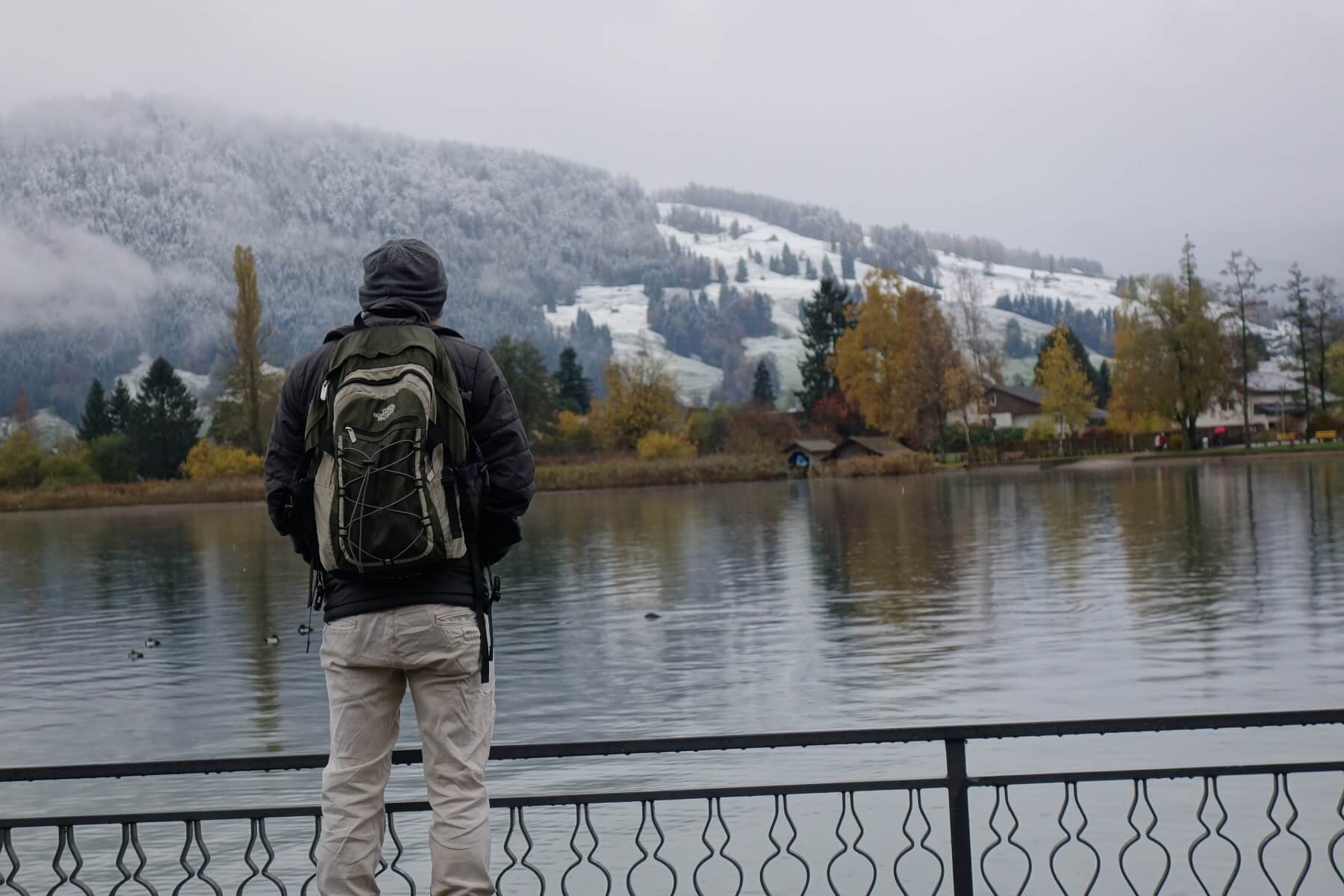
    After a quick Zurich dinner we jumped on the train, and arrived at her home late at night. The neat thing about Switzerland is it’s so tiny. You can jump on a train and be anywhere in the country in a matter of hours. Lara’s family lived in a tiny town called Unterägeri, in the middle of who-knows-where. We walked from the bus stop, through picture-perfect streets and snow capped mountains, like a winter Pleasantville. An oddly bright moonlight gave everything – houses, trees, cars – a fitting glow. The roads were empty and damp from the earlier rain, and I remember a silence, so sharp I was cringing listening to my broken backpack wheels squeaking against the pavement.

    Of course, their home turned out to be beautiful. Anything less would have looked out of place in that neighbourhood. Floor to ceiling glass windows opened out to the massive plains outside, the size of thirty football fields, green and white covered mountains sitting behind them. Her parents warmly welcomed me in like an old family friend and showed me to my bed downstairs. Guest room, ensuite. Luxury. I dropped my things and flopped on the bed like a toddler.

    For the next few mornings I woke up to fresh snow falling on the fields and hills outside, breakfasts of freshly baked bread, fresh fruit and Swiss cheese. Her mother washed and dried all my dirty underwear as if I were her own son, her father indulged me in long conversations each night at the dinner table long after the plates were cleared. They were a family who couldn’t have been more welcoming to this backpacking stranger; one who had nothing to share but smiles and a few old stories. One might not always have money to travel, but one can always afford to say hello, stay in touch, be polite and giving to whomever he meets on any given day. That in itself seems to end up paying for more than any paycheck in many places around the world.

    Lara’s backyard looks like this…

    That Sunday morning Lara took me for an early walk around Unterägeri. First we visited a small townhouse, where people were selling arts, homewares and crafts, all very Swiss and shiny, and then she showed me the lakes where she swam as a kid, now lined by autumn trees and carpets of orange leaves, the summer spots where families came together to enjoy the short windows of sun. People often are hesitant to show me small towns, “Mr. Traveller”, thinking I may be bored or unimpressed, but I always find them heartwarming and satisfying. Big cities usually just remind me of alarm clocks, ironing shirts and miserable people. Small towns are always a little closer to humanity. When I see one, I’m always relieved that places in the world like them still exist.

    For the rest of my stay, like a perfect host, Lara showed me around her tiny country. The old town of Zug, the little bars and restaurants of Luzern, the perfectly polished streets of Aarau. Everywhere we went, it was always clean, always quiet, always beautiful. Everyone wore those boots with the fur, and the expensive looking coats with fluffy collars. Between the intricate cocktails and the Swiss pastries in fancy shapes, everything in this tiny country just felt nice. Switzerland may not be the place for wild adventure, but if it’s pleasantness, pretty places, tranquility, and a parade of impossibly shiny towns lined up one after the other, there may be no better place in the world than this.

    Things are nice in Unterägeri

    The night before I left, Lara and I had dinner at a tiny restaurant in Aarau. It was a place telling of the Switzerland I had pieced together in my head, hidden away on the second floor of some building, somewhere, in some street. Surprisingly it was almost full; we picked up one of the last free tables in the joint. The waiter kindly greeted me in English, and between a mini splurge on snacks and drinks, I remember watching the streets outside the window, literally barren, not a single person in sight. Aarau was silent, on first glance one would think “Nothing happens here”. Yet sitting around us were groups of young girls chatting, a few older couples, and some younger ones too, all dressed in nice clothes, eating fancy food. As many places as I’ve seen in my life, this still amazes me – all these tiny inconspicuous spots around the world – most people will never even hear the name, let alone visit – yet there are people born here, living here, making friends here, working, falling in love, raising grandkids – living a good life, just like you and me. How can you not be curious about that? I guess that’s what travelling is, in its purest form: Curiosity about the people we never know and never meet.

    The streets of Aarau are silent

    The following morning Lara dropped me at the train station, my backpack and I headed back to Zurich. I would be on a plane the next day, my six month jaunt of Europe finally over, this goodbye a fitting finale. I told her once again to stop smoking, like a big brother, she rolled her eyes at me, like a rebellious little sister. We didn’t know when we’d see each other again. It didn’t matter. Travel friendships are simply that way. If you meet again, you pick up where you left off. And if you don’t, you don’t. A mini globetrotter herself, she knew it as well as I did. We hugged, I thanked her for everything, and we smiled goodbye. No tears or drama or weird stuff. Just a farewell nod, until next time.

    So, what is the moral of this story?

    Nothing.

    Travel doesn’t always need to be wow. Nothing incredible or or story-worthy needs to happen. Sometimes it’s just wandering a city, catching up with an old friend, drinking some Ovaltine in a fancy cup and then heading on your way. You came. You were there. You left. Nobody said it needed to be crazy. If anything, travel should teach us to see the beauty in the small moments like these. Walking a new street. Breakfast with some new faces. Conversations. If we can appreciate all of that, our travels – and our lives – will always be something to remember.

    Travel safe. Be kind to each other.

    Bren
  • Ten Cool Travel Websites You Probably Haven’t Heard About, Ed. 2

    Ten Cool Travel Websites You Probably Haven’t Heard About, Ed. 2

    One thing you’ll notice if you’re on the road a lot is the scene changes and develops very quickly. Sometimes you’re telling a fellow traveller how you “Wish there was a way to do so-and-so” and a month later there’s a site to do exactly that.

    Every year I try out as many of these sites as possible, sometimes for research, sometimes just out of simple curiosity. A lot of newcomers make it onto my bookmarks list and this past year has been no exception. Below I’ve listed ten of the more interesting ones. Enjoy!

    Missed the last roundup? Check it out here.


    1. Kiwi

    This is the new flight search engine that everybody has been talking about. They have all the frills of the regular favourites like Skyscanner and Kayak, but their search algorithm is a little different to most. You might remember in my cheap flights guide I suggest breaking up long-haul flights into individual legs and searching them manually, as many sites only search connections within alliances or codeshares. The cool thing is, Kiwi does this for you. The result: CHEAP FLIGHTS.

    The risk is it’s much more likely to miss a connecting flight as you need to self transfer. What makes Kiwi even cooler is they have guarantees to cover you for this. Here are a few of them:

    • Overnight accommodation if your flight is missed/delayed more than 8 hours.
    • Food and drinks for any delays over 4 hours.
    • A refund if your connection is missed due to delay or cancellation.
    • A new ticket if your flight is missed due to delay or cancellation.

    While I’ve noticed some other sites are including self-transfer flights in their results, none that I know of offer the guarantees that Kiwi does. Definitely one to keep in your bookmarks.


    2. Travelers Box

    You know when you’re at the airport and you have a few dollars in change that you need to spend before you leave? Then you go around all the stores looking for packs of Skittles or breath mints before you need to board your flight. And even when you do find something, you’re still left with fifty cents in change that you can’t buy anything with.

    Travelers Box is here to solve that. I heard about them a few years back and had the chance to try them in Turkey. What they do is plant kiosks in airports where you can deposit your leftover change. Just drop your coins in and enter a Paypal address to send it to. I threw some old change in there last time I saw one and it showed up without any problems:

    You can also redeem Amazon or iTunes credit if you prefer. Pretty cool!


    3. Flyonward

    If you travel long term, you are probably familiar with the onward ticket rule: When you must have a return flight or proof of onward travel before you can board the plane.

    The problem is there’s a good chance you haven’t yet decided how long you will stay in the country (because how do you know until you actually get there?) but they will still make you guess and buy a ticket anyway. To get around it I would just buy a cheap Air Asia ticket and take the hit.

    Other loopholes some of us have used is to buy a first class refundable ticket (and wait months for your refund), or just forge a booking confirmation in Photoshop (and risk an eye-stabbingly long rendezvous with airport mall cops if you’re ever caught).

    FlyOnward has come up with a solution. For a ten dollar fee they will book a fully refundable ticket in your name – long enough for you to flash it at the check-in lady for 2 seconds – then they will cancel it once you land. All the hoo-ha that goes on with getting your ticket refunded will be dealt with by them. Because it’s actually a real ticket, with a real booking number in the airline’s system, you are not forging anything and it’s completely legal. Ten bucks and you’re done. Check-in lady gets to tick her box, FlyOnward makes some money, you get on the plane. Win win win.


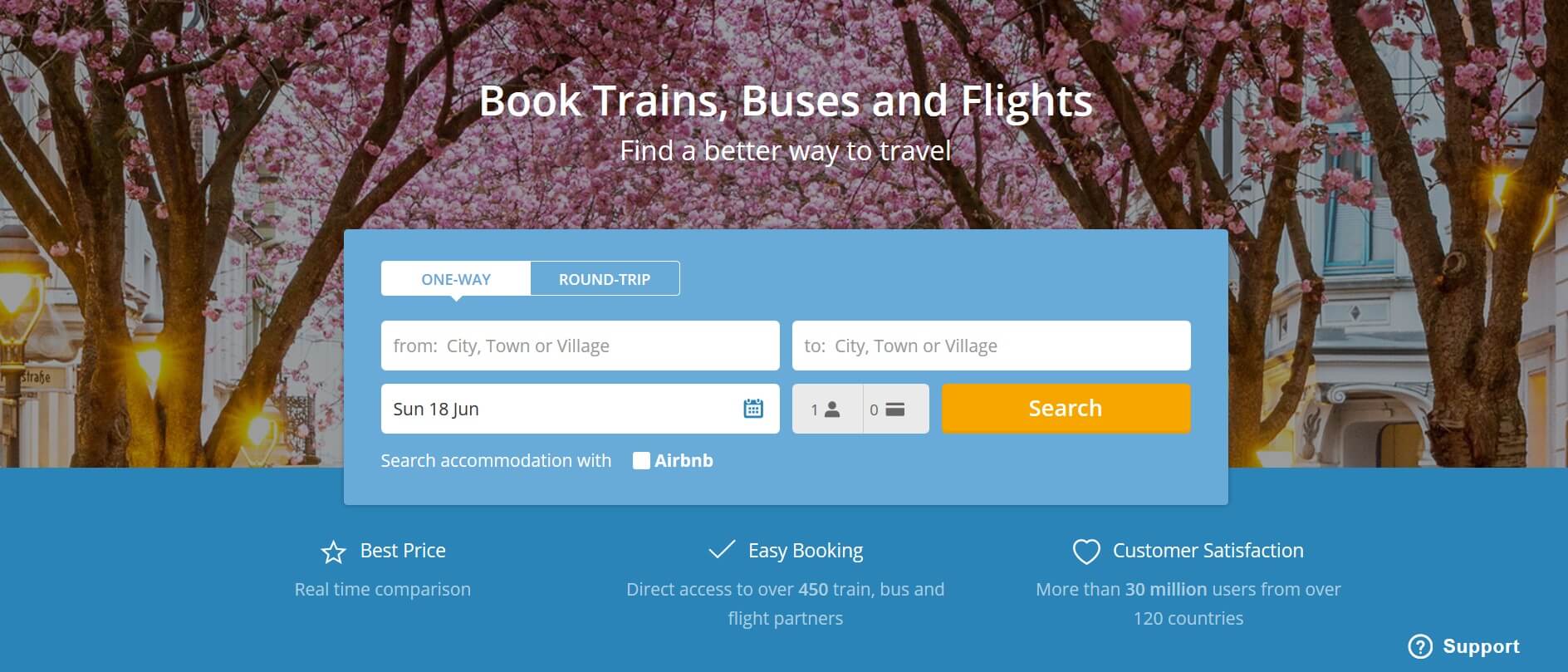
    4. Omio

    If you’ve ever backpacked through Europe, you’ll know what it’s like having a bunch of tabs open searching through all the different buses, trains and flights to get between cities. Which one is fastest? Cheapest? Most reliable? Should I take a ten dollar bus or a fifty euro flight?

    Omio is a free app designed to make this side of Euro travel super fast and simple. They’re partnered with most of the major rail, bus and airline companies in Europe, meaning you can compare all of these with one simple click. It’s a huge time saver, the app is lightning quick and you can even book your tickets within the app as well! If you’re backpacking Europe any time soon keep this one handy on your phone, especially if you’re hopping countries.

    You can grab it here for both Android and iOS.


    5. Secret Flying

    There are quite a few flight deals websites out there, but I’ve never used any of them as most are geared towards the North American market. Secret Flying has changed that.

    You might be wondering exactly what a flight deals website does. It’s like this; airfares are changing all the time. Specials come and go in hours, airlines post error fares offering business class fares for just a few hundred bucks, things like that. Secret Flying collates all these and brings them to you, meaning you get crazy flight deals delivered right to your inbox. The cool thing about Secret Flying is it covers ports worldwide, meaning even down in New Zealand they have flight deals regularly (I’ve never seen that before). Best of all, the site is 100% free. Awesome.


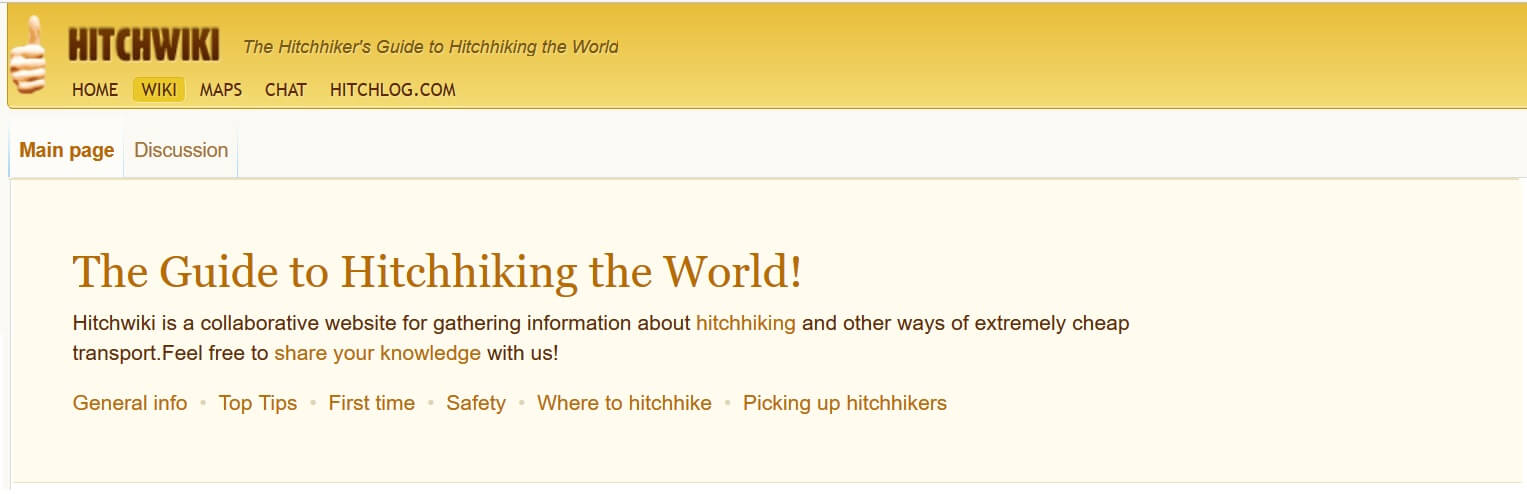
    6. Hitchwiki

    For the aspiring hitch-hiker Hitchwiki is the best resource available on the web.

    Enter the name of a country and Hitchwiki will give you a background of hitch-hiking in that country (legality, social acceptance, frequency) and what to expect when trying to hitch-hike today. If there are certain customs or unwritten rules you should observe, you’ll find it there.

    Enter the name of the city you’re in and it will give you all the options for hitching out to the surrounding cities. If there are things you should know, such as visa issues or checkpoints, it will likely be written there too. It will also have directions (and sometimes GPS coordinates and photos) for the best places to hitch your ride.

    An awesome free resource, one I used religiously during my Baltic hitch last year.


    7. Too many adapters

    Too Many Adapters is a travel tech website run by fellow travel blogger and supergeek Dave Dean. Dave constantly keeps us at the forefront of travel tech and the blog is always filled with interesting updates, whether it’s about using data overseas, new travel gadgets, co-working spaces or whatever else people are nerding out on. He’s also my go-to guy for getting advice on a new purchase – whether it’s a new laptop or just a software I’m looking for, I don’t even bother reading reviews anymore. I just tweet Dave and ask what’s on his hot list. If you’re interested in grass-roots tech advice, rather than big company press releases and product placements, Too Many Adapters is your spot.


    8. Prey

    Prey is awesome. If you’re heading overseas with your phone or laptop, download Prey and install it on both. It’s a tracking software that will protect your devices in the event of loss or theft.

    Just recently I hit the road again and turned off my laptop as I packed it away. Prey emailed me while I was at the airport and told me my laptop had gone “off the radar”. When I arrived and booted up again, it emailed me and told me my laptop had reappeared in Tanzania (my destination). Pretty nifty!

    The basic account is free, and you can geo-locate, lock your phone, use the camera to take screenshots and more. A premium upgrade with even more features is available too. Essential for any long term traveller.


    9. Transferwise

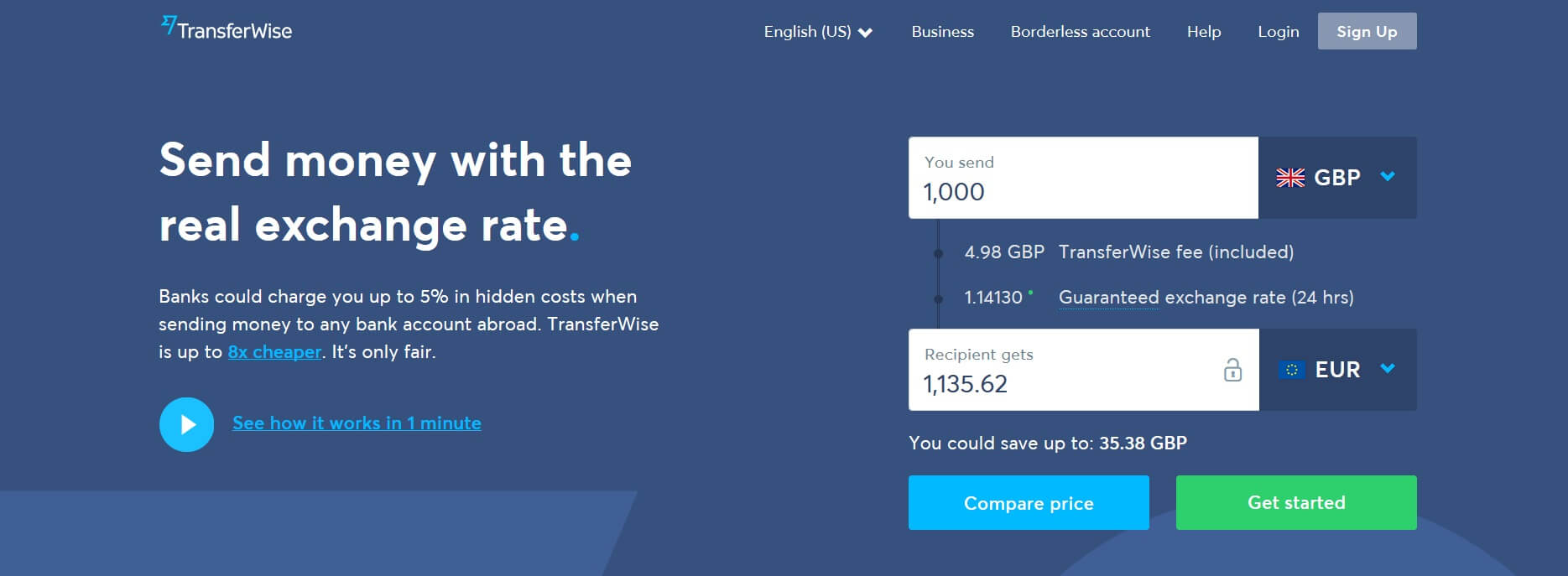
    I love sites that allow me to circumvent big corps like banks and telcos, and Transferwise is one of them. What they offer is a super fast and simple way to transfer funds between countries, using a fair exchange rate and super low fees. If you’re an expat or have bank accounts in different countries, Transferwise is going to save you a fortune.

    Not sure about you, but New Zealand banks charge me around $15 to both send and receive an international payment. Plus the exchange rate is loaded with a spread of around 3 points. Transferwise gives you a neutral rate, and a fee of 0.7%. Plus since you’re not making an international payment (it’s all done through Transferwise’s domestic accounts) you don’t get charged any international payment fees by your bank.

    I recently used it to transfer about $2,000 NZD to AUD, and saved about $16 NZD on fees and $21 NZD on the exchange rate (that’s about $27 USD in total). Do that a few times and you’ll be able to buy yourself a new pair of shoes. You can get your first transfer free using this link!

    On a side note, I recently upgraded to N26, which is amazing. Check out my review here.


    10. Couchsurfing Hangouts

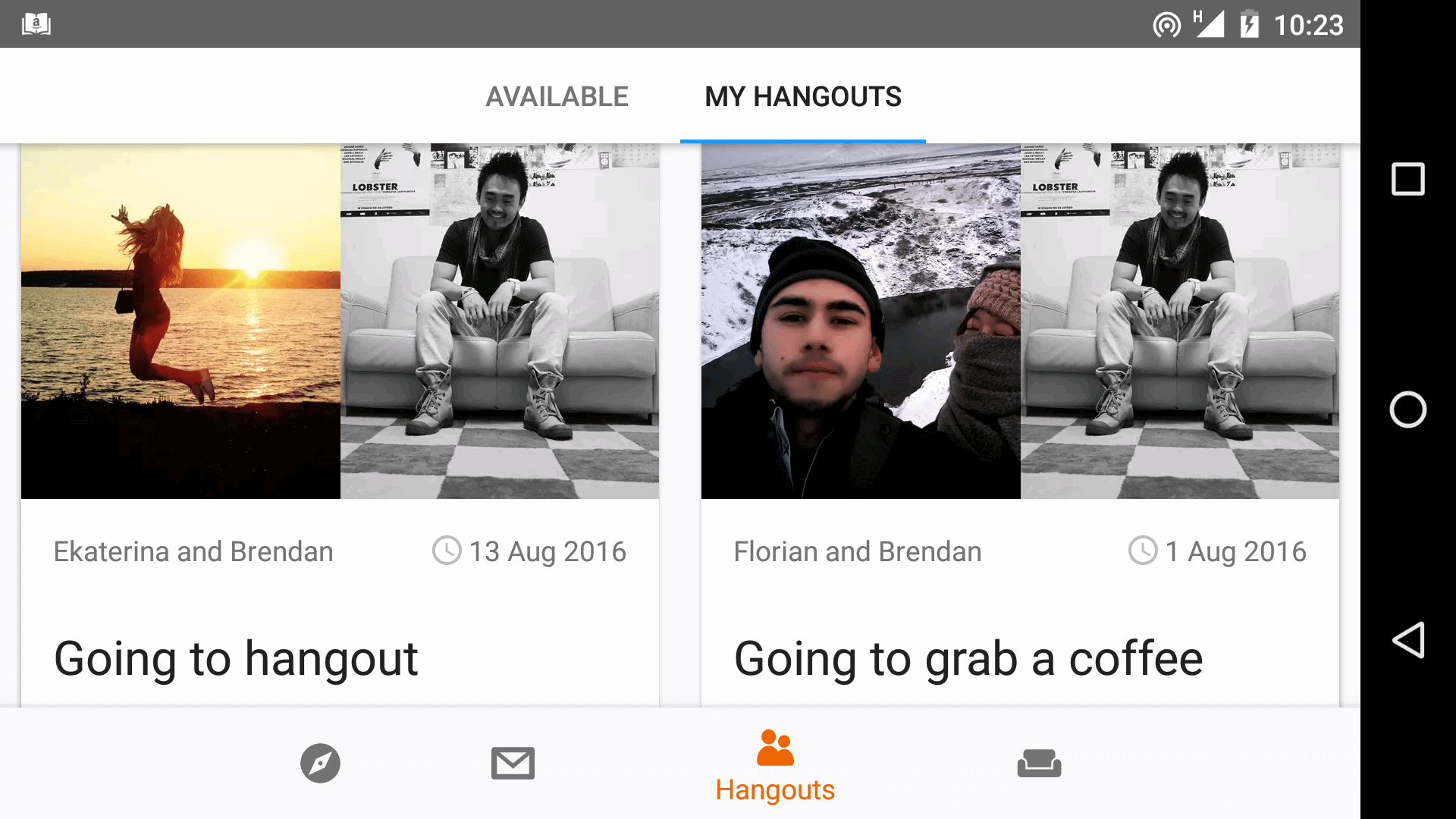
    “Hangouts” is a new addition to the Couchsurfing app that helps you meet locals and travellers in whichever city you’re visiting. Simply mark yourself as “Available to hangout” and you’ll get shown all the other Couchsurfers in the area looking for people to meet. It’s a good way to get involved in the community if you’re not yet ready to stay with a stranger or host travellers in your home. I tried it out a few times on my last trips through Europe and Thailand and while you get your regular mix of weird and crazy I met some pretty cool people. Just use the same precautions I go through in my beginners Couchsurfing guide and you should be fine.

    If you want to try it out, just log in to the Couchsurfing app and you’re good to go. If you don’t have an account yet, sign up! You can register for a free account here.

    That’s ten! Any other cool travel websites you’ve been using recently? Let me know in the comments.

    Cheaper flights? A place for your leftover coins? Goodbye banks? Hacking Europe? After another year on the road I bring you the sites that have helped me travel better, safer, cheaper and longer. Check out these hot new travel websites to stash in your bookmarks this year.

    Note: This post contains affiliate links. Omio compensated me for their review. I have used their service and recommend it honestly. For more information, please check out my Disclosure Policy.

  • 5 Ways To Stay Healthy While Travelling (In Less Than 15 Minutes A Day)

    5 Ways To Stay Healthy While Travelling (In Less Than 15 Minutes A Day)

    If you’ve ever travelled for any longish period of time, you’ll know it goes something like this:

    You spend months prior to your trip at the gym (because you’re going to meet your soulmate and fall in love out there, of course).

    You spend the first week of your trip eating shitty food like pizza and kebabs and loaded fries – basically whatever is on the corner by your hostel.

    You meet some mates and start getting friendly with the booze, because you’re on holiday, duh.

    After one month you’ve put on 5kg but it’s cool, you’ll start running every morning now.

    You go for one run.

    After two months you’ve put on 10kg but it’s cool because you’re seriously going to start running now.

    You don’t start running.

    You get a cold.

    Now you’re feeling better and you could start running, but you decide to just start eating salad for dinner, because you uh, don’t have good running shorts or something.

    You eat one salad.

    Now you decide it’s too late, you’re just going to binge eat and drink beer because you should just enjoy the rest of your holiday.

    Six months later, welcome home. You’re officially a fat ****.

    IT DOESN’T HAVE TO BE THIS WAY.

    After many jaunts on the road, I’ve finally learned how to kick this “traveller’s disease” of beer bellies, pimply skin, runny noses and sore throats.

    In fact on my last couple of trips, both six months long with a lot of sleeping on floors, long buses and trains, sleepless nights and a super tight budget, I didn’t get sick at all. Maybe a few sniffles for a day. Compared to my first few years on the road where I spent entire weeks in bed coughing up gunk, I felt invincible.

    The best part is, it doesn’t require anything fancy and expensive. Fifteen minutes every morning and you’ll be returning home in better shape than when you left. Promise. Detailed below is my (patent-pending) Bren On The Road Don’t Be A Sick Fatty Wasting-Your-Trip-In-Bed Traveller Five-Step Plan:

    1. Get your Daily Greens

    It’s not a secret (or maybe it still is for some) that vegetables are what keep us sexy. Unfortunately on the road it’s not always possible to be eating healthy home-cooked meals every night. Honestly – what do you do when you’ve just gotten off a 12 hour bus ride and it’s after midnight? You go to the 7 Eleven for a hot dog and a Milo.

    Luckily in the 21st century it’s possible to get a serving of daily greens without a vegetable garden and a kitchen. I’ve been using green powders (even while not travelling) for the last year and they’ve been awesome. Dried and powdered veges are certainly not as good as fresh greens pulled from the ground, but they’re definitely better than a few shreds of lettuce in a Family Mart sandwich.

    stay healthy while travelling

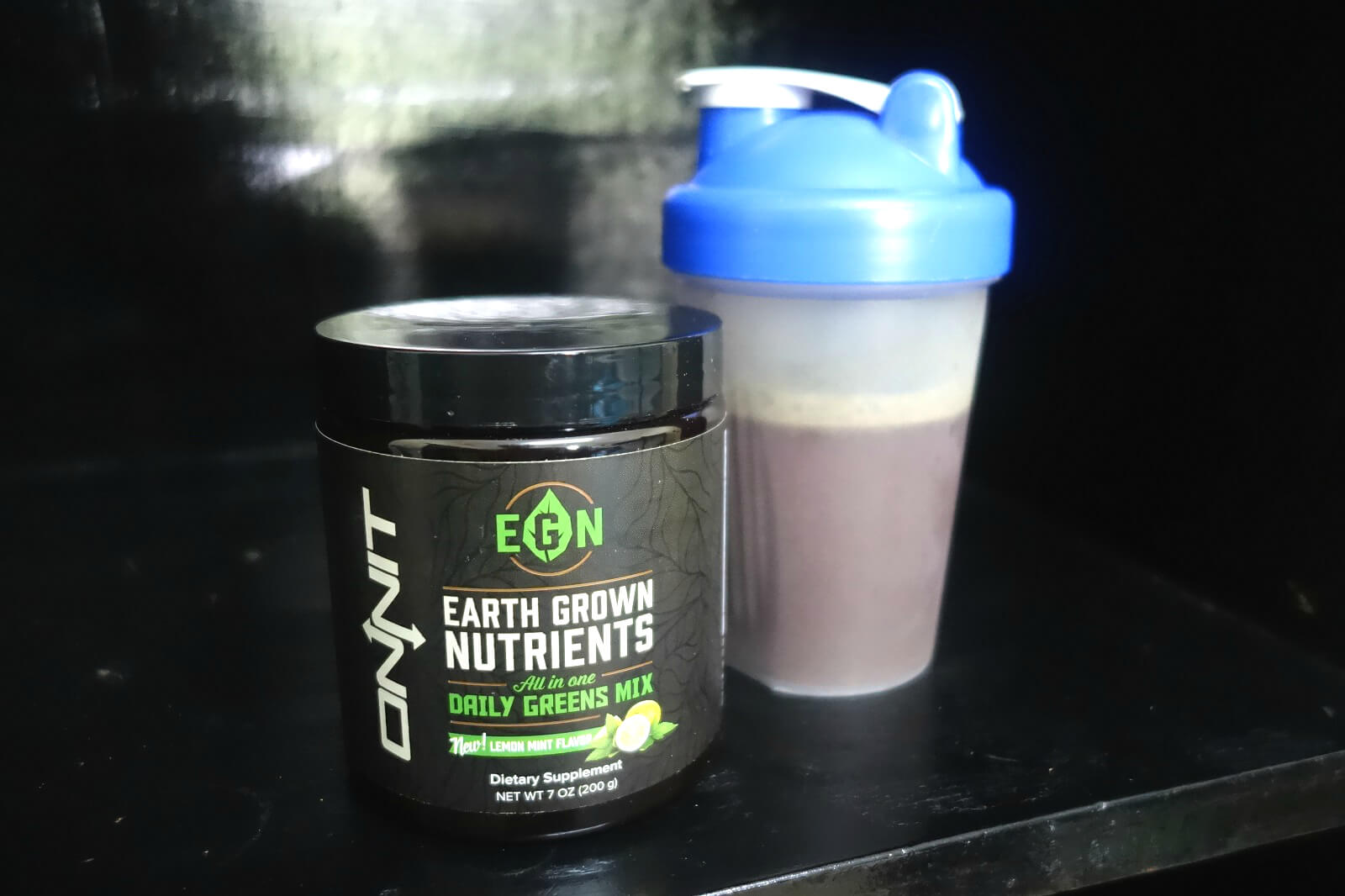
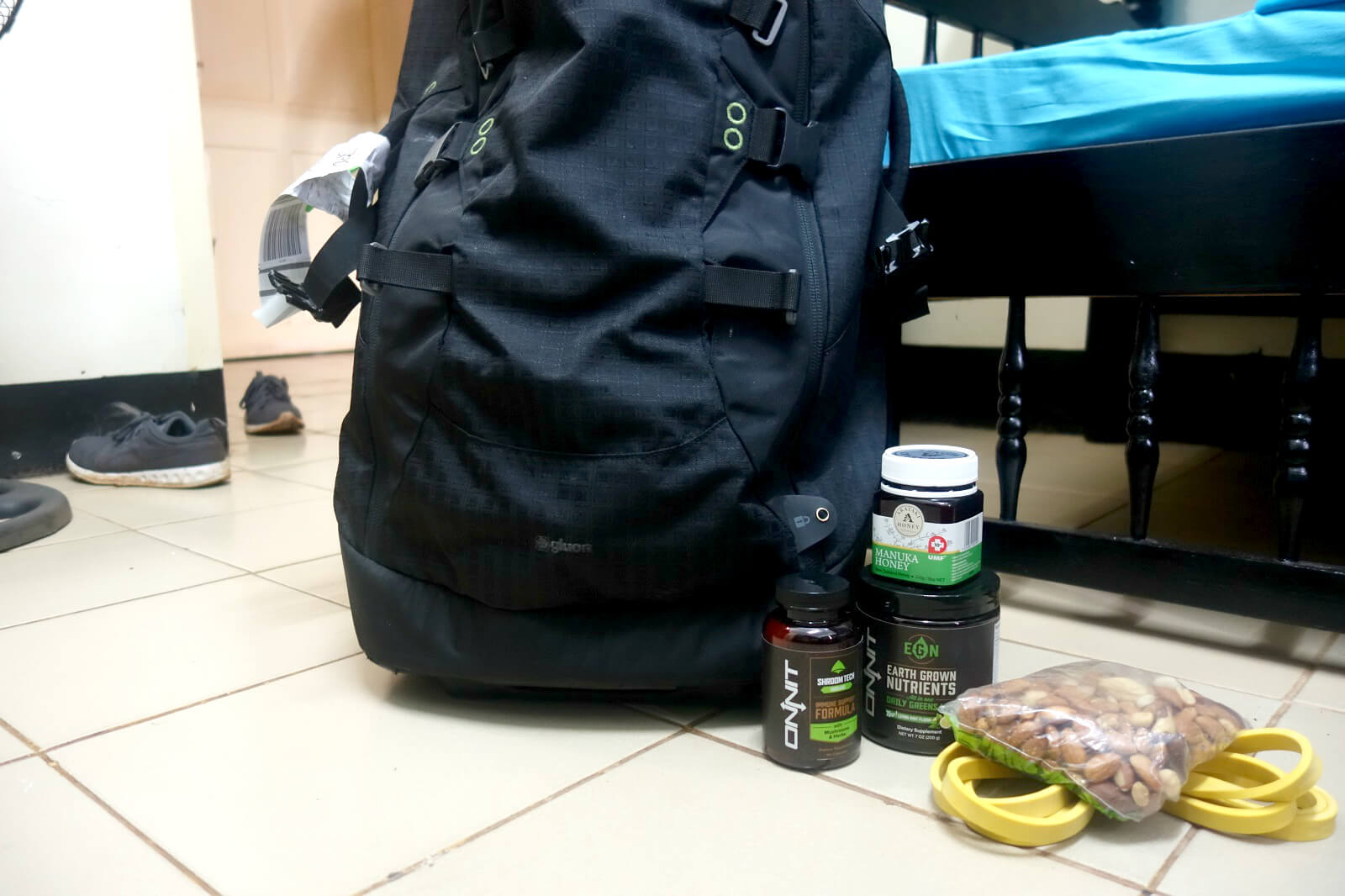
    There are many brands out there so do your homework and find a reputable brand available in your country. The powder I always travel with is Earth Grown Nutrients by Onnit – one of my favourite brands. I drink it daily on short trips, every other day on longer ones. It comes in small, easy-to-pack containers and the ingredients mix is just awesome. Mix it up in a glass and knock it down in five. Got your greens for the day and so, so easy.

    2. Snack smart and healthy

    Most of us are not used to spending the whole day wandering around cities and taking photos for hours, so we tend to get hungrier and thirstier than usual. That means on the road, we tend to snack hard.

    One bit of cookie dough won’t hurt, right?

    It’s even worse in the hostel when people are passing around M&M’s and bottles of wine.

    Try and flip the script and eat snacks that actually give your health a boost rather than a drag.

    stay healthy while travelling

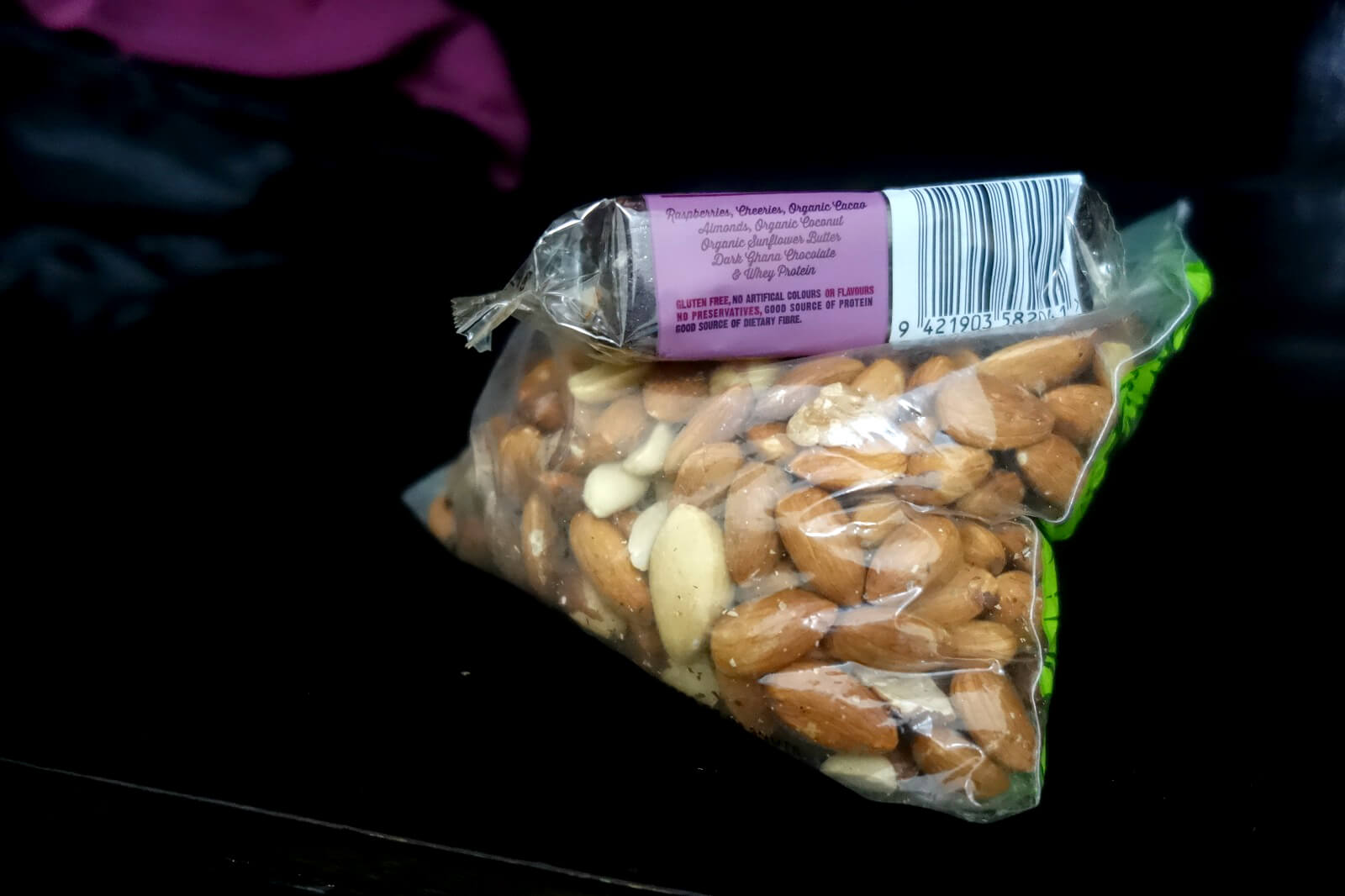
    My favourite snacks – nuts, carrots and protein bars. I used to eat Burger King at the airport as a treat for the long flight ahead (isn’t it weird how there’s always a Burger King by your gate?). Now I always have a few bars and a bag of nuts on any flight. If I pass a supermarket, I buy a few carrots and apples and eat those if I’m hungry at night or looking for breakfast. I still eat all the good stuff I find on the street, but I balance it out with something good. And I always drink a lot of water.

    You may think this is needle-in-a-haystack type stuff, but if you’re snacking every day that’s going to add up to maybe fifty or a hundred carrots on your trip. Ask your doc – it makes a difference!

    3. Get Spiced

    stay healthy while travelling

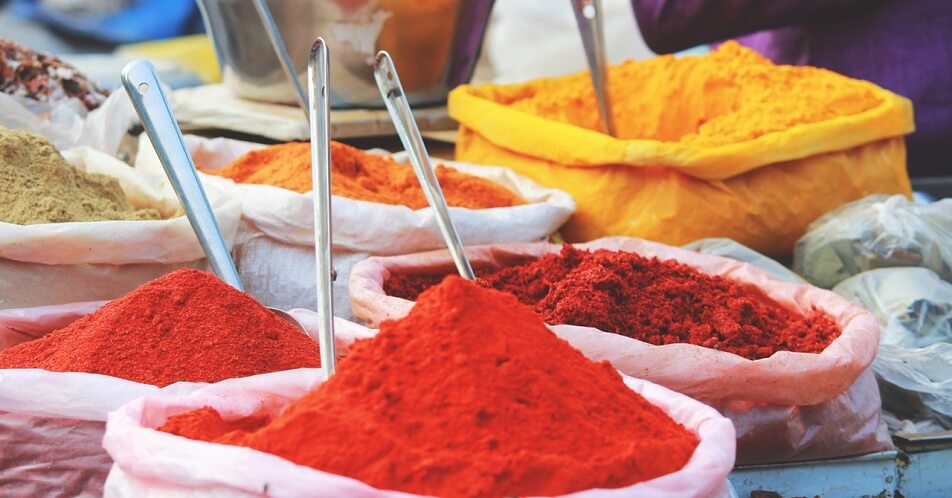
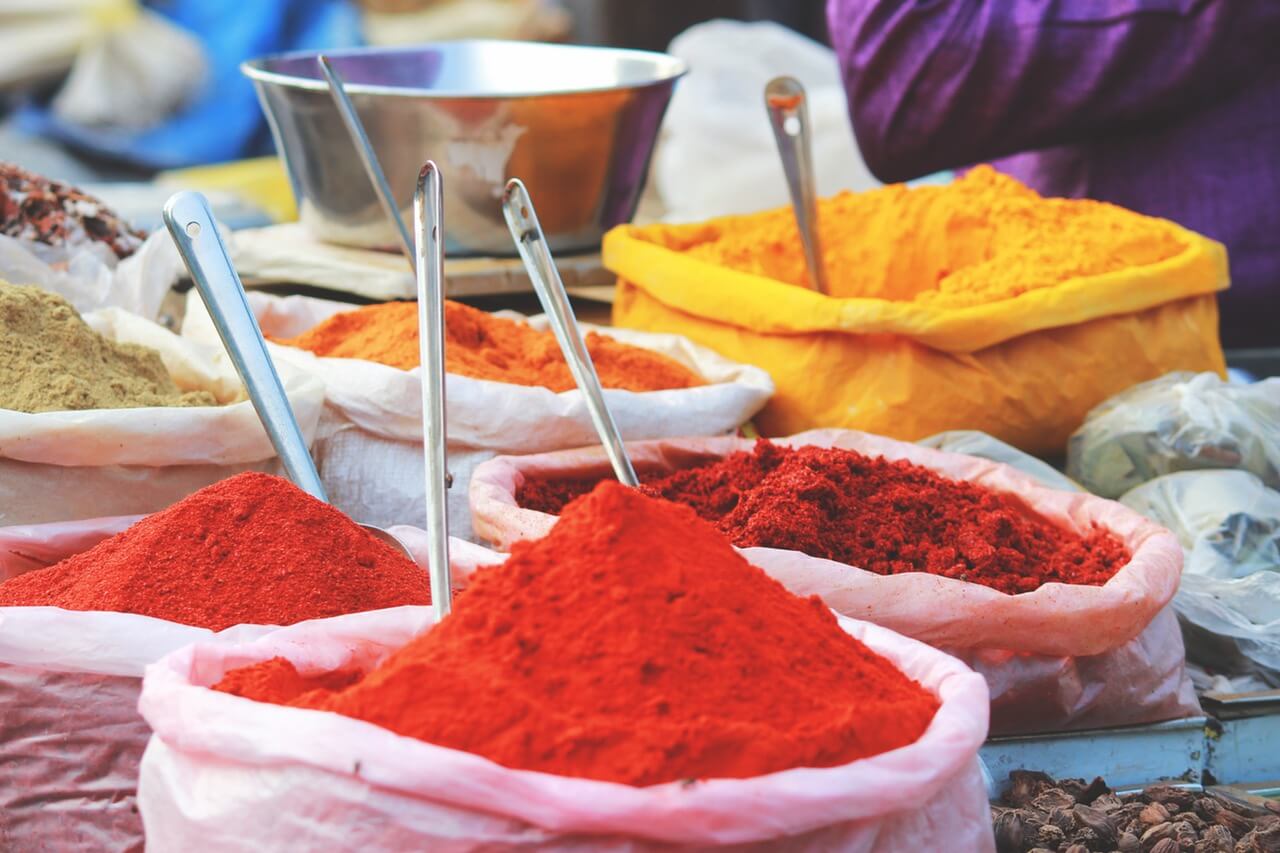
    Spices are huge right now. Turmeric, ginger, cinnamon – we’re finally learning what many ethnic communities have known forever – spices are one of nature’s best medicines.

    When I first revamped my diet I spent months travelling with actual spices – little bottles of turmeric and slabs of ginger, trying to cook and make tea with them whenever I could. Inconvenient obviously, but it worked.

    Then the guys at Onnit came out with their spices-based supplement which was the answer to all my backpacking prayers.

    What’s in it?

    A blend of immune-boosting mushrooms, turmeric, ginger root, oregano leaf, lemon peel and a bunch of other good stuff. I take a few supplements on trips but this is by far my favourite; completely food-based, all-natural, packed with goodness and locked in an easy to take capsule. I simply throw a couple of bottles in my backpack before a trip and I take it daily. I love it. You can grab a bottle for yourself here, or if you prefer just get your spices the old fashioned way. Both work!

    4. A scoop of honey

    Down in New Zealand and Australia, we grow up with Manuka honey. It’s not until we hear people raving about it across the world that we realise how awesome it actually is.

    stay healthy while travelling

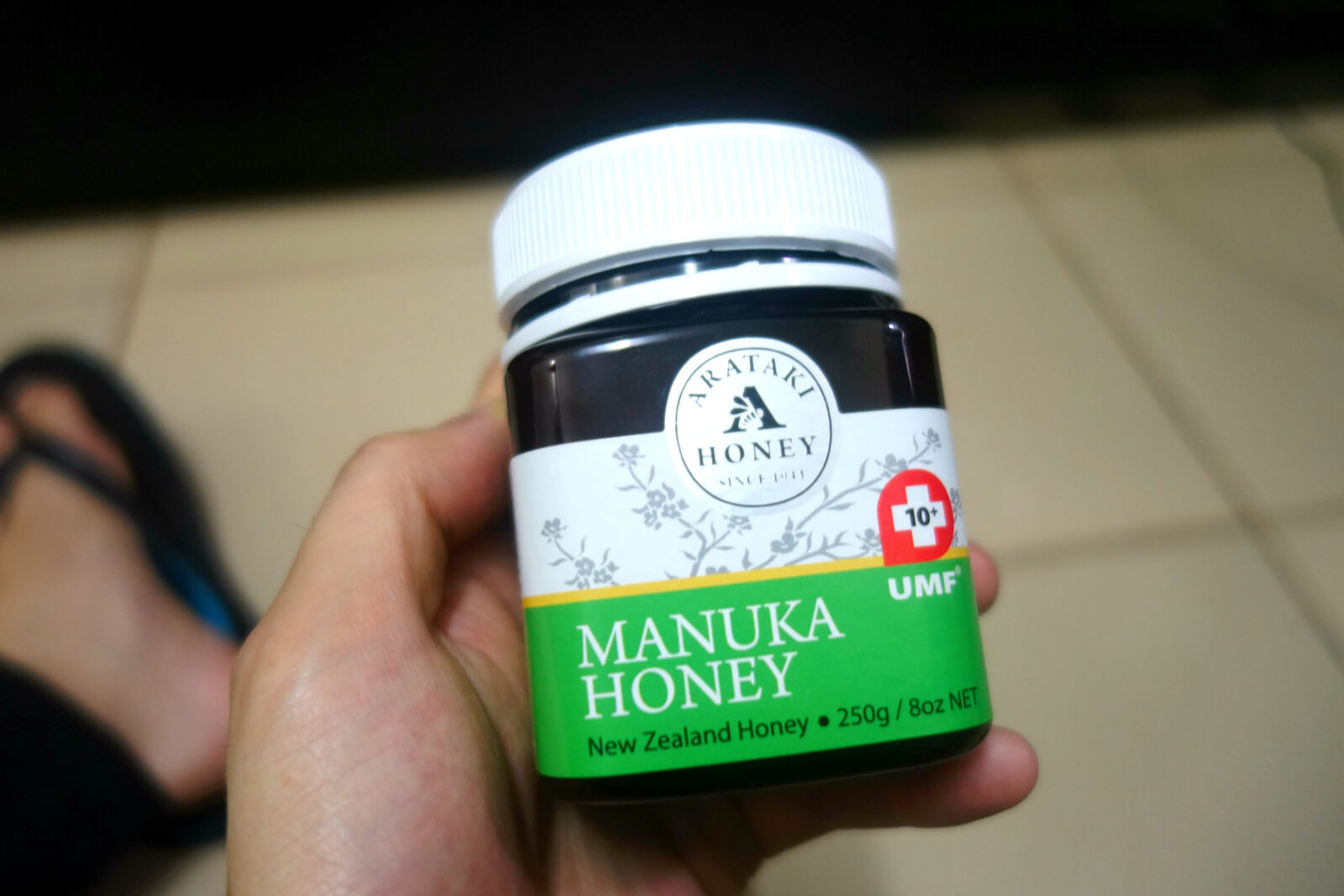
    The health benefits of honey are not a secret, but Manuka is honey on steroids. Across the interwebs you’ll hear people raving about using Manuka honey to kick colds, cure the most stubborn staph infections, heal up wounds (all of which I’ve done myself too, by the way) and you wonder why more people don’t know about it. Well today I’m telling you about it. I won’t list all the studies – you can browse them for yourself.

    So what do you do with it? While a lot of people use it for dressing wounds and so on, I mostly just eat it. I travel with a jar of it wherever I go and take a teaspoon most days, or a few teaspoons if I’m feeling a little weak.

    It can be expensive if purchased overseas, but you can grab some decent brands on Amazon like this one. If you’re travelling through Australia or New Zealand, just pick up a jar at the supermarket. I don’t have any preferred brand; just grab anything with a UMF rating of 10 or more. Ooh honey.

    5. Fifteen minutes of sweat

    The one you were dreading.

    How do you exercise on the road? Sometimes you’re sharing a dorm with 10 other people, and unless you’re flush and splurging on a nice hotel, there won’t be a gym you can get swole at either. Here’s a secret: To exercise on the road you just need your arms and legs and fifteen minutes. And I know sometimes you just can’t be arsed, but I’m sorry I cannot hear all your excuses over all these great ideas I’m about to give you. These are things you can do that are fast, free and as good as any gym workout:

    • Plank for as long as you can. Then do it again. Then again one last time. You’ll go home with rock hard abs. I plank in the airport all the time.
    • Do a set number of push ups every day. My number is 100 but start at whatever you want. Even if it’s just 20 – you can do 10 in the morning and 10 at night. Over a month that’s 600 push ups. Takes less than five minutes.
    • Do squat jumps. Aim for a set number each day. All you need is two legs and a chair.
    • If there’s a washing line or soccer goal or children’s playground, do some pull ups.
    • Do a HIIT workout. Takes less than five minutes and burns massive calories. This one is my favourite.
    • Yoga. Learn some basic poses, then get your yoga on for 5-10 minutes. Easy.
    • Shadow box.
    • Skipping. If you don’t have a rope, shadow skip.
    • Lift. You can do it anywhere with resistance bands. I travel with these bands and use them all the time for both working out and rehab. You can get a full lift with them (for example), and you can do it anywhere, even when sitting in a train station (yeah I’m that guy). They literally weigh as much as a sock and will fit in your pocket. You can grab them on Amazon for 30 bucks. Be warned though, everyone in your dorm is going to want to use em!

    There it is friends. Drink your greens. A spoonful of honey. Pop a spiced up pill. Pack a bag of nuts. Sweat for fifteen minutes.

    HOW EASY IS IT. And it all fits in your backpack like a pair of shoes:

    stay healthy while travelling

    Catch you on the road with your six pack.

    Bren
  • 30 Free Things To Do In New Zealand!

    30 Free Things To Do In New Zealand!

    It’s true – New Zealand is a great place to visit.

    However, people always seem to have one major complaint about my home country – it’s too expensive.

    And this, is also true. After many years of travel, I can confirm that New Zealand, particularly the big cities, are some of the most expensive places in the world. But that doesn’t mean you can’t squeeze through these places on a budget. All you need is an insider to tell you where to go 😉

    The great thing about New Zealand is, it’s full of nature, it’s full of artsy fartsy stuff and it’s got a lot of small communities around the place. Those are all nesting places for fun activities that don’t really cost a lot of money, or anything at all.

    So, that’s what I’m going to show you. Thirty things you can do in New Zealand for 100% free. Scroll down for a list of things to do in all New Zealand’s major cities, for no money at all.

    Enjoy!

    Free things to do in Auckland

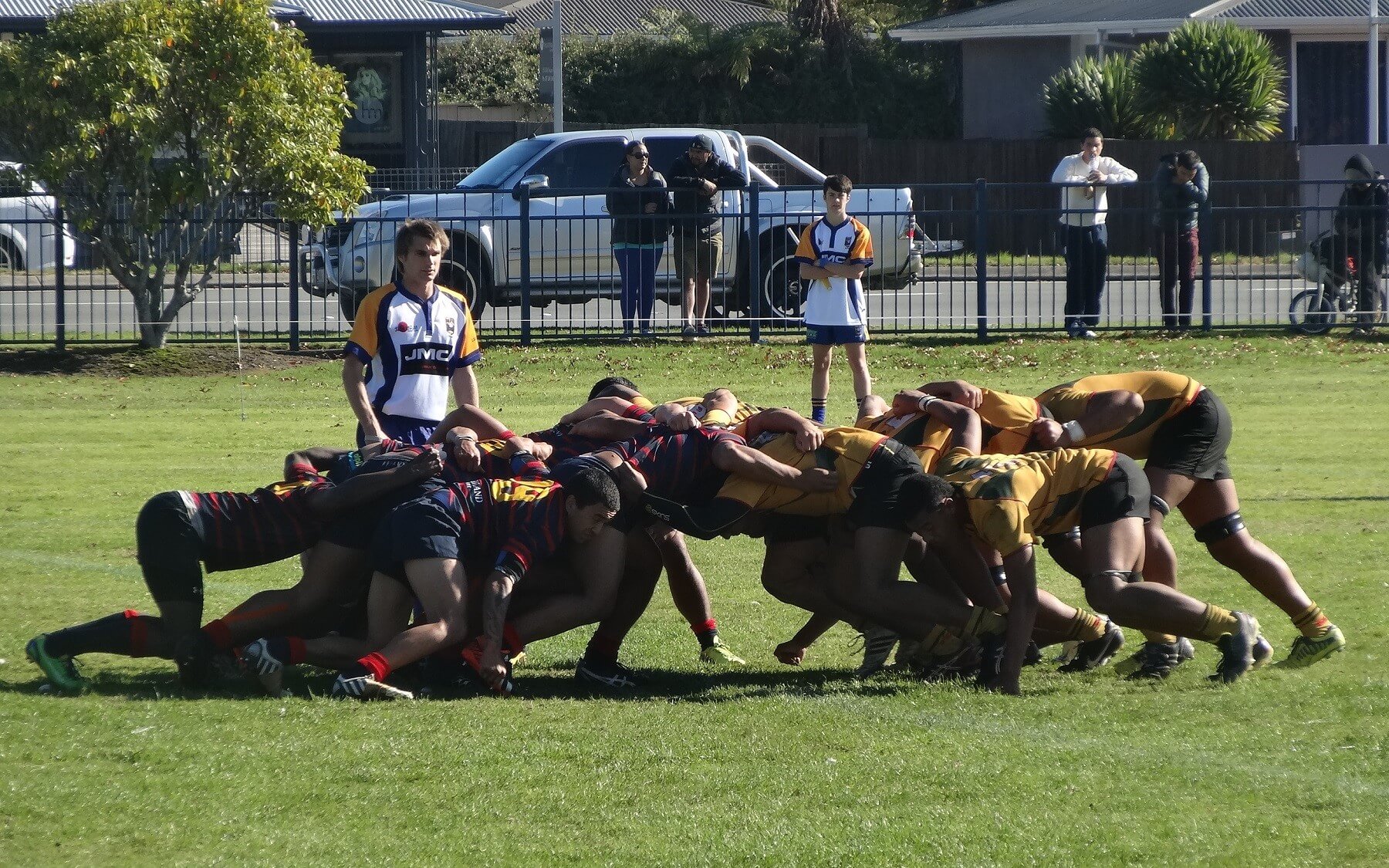
    1. Watch a high school rugby game, a great alternative to buying tickets to a pro game and fighting the crowds. You’ll be standing right on the sideline, will witness grassroots rugby at its finest and, if you’re lucky, might even witness a high school haka. For a visitor, this might be one of the most fun things to do in Auckland for free.
    2. Walk through the Parnell Rose Gardens, a small but charming garden in the centre of Auckland. Rose lovers especially will enjoy the many different colours and varieties on display.
    3. Drive or walk up to Bastion Point, a memorial lookout spot where you can enjoy an incredible view of the Auckland skyline and Rangitoto Island. Just below sits Mission Bay, a popular Auckland beach where you can relax in a café or walk along the beachfront.
    4. Spend a day wandering through the Waitakere Ranges, a beautiful rainforest with an incredible coastline, barely an hour’s drive out of Auckland. One of the best free things to do in Auckland – you can easily spend a couple of days out there! Also a great place to surf if you’re a wave junkie.
    5. Visit Cornwall Park, a huge reserve in central Auckland with walking tracks, free picnic and barbeque areas and some exceptional native trees and flora. The park lies at the base of the iconic One Tree Hill, which you can climb to enjoy an incredible 360 degree view of the city.

    Need a place to stay in Auckland? Check out my insider’s guide here.


    Free things to do in Hamilton

    Hamilton Farmers' Market Cake and Loaf

    1. Visit the Hamilton Gardens. It’s one of Hamilton’s most popular sites, with beautifully themed gardens where you can relax with friends, have a picnic or simply enjoy the scenery.
    2. Take a morning walk along the Waikato River. This is the largest river in New Zealand, runs right through the middle of Hamilton, and is conveniently paved giving you the perfect spot to take your morning stroll.
    3. Visit Artspost, a branch of the Waikato Museum which showcases the talent of local artists. It is housed in a beautiful heritage building and entry is free.
    4. Enjoy your Sunday morning at the Hamilton Farmer’s Market, a great place to check out the local produce, have a Kiwi breakfast and mingle with some of the locals.
    5. Head out to Kawhia Hot Water Beach. It’s a little hard to find, but is a beautiful place to spend the day fishing, sunbathing, or digging your own hot water pool.

    Free things to do in Wellington

    Cuba St Night Market

    1. Watch the sunrise at Te Ahumairangi Hill Lookout, an incredible spot to start your day looking out over the city.
    2. Visit The Beehive, New Zealand’s uniquely designed central parliament building. Entry is free.
    3. Enjoy a day at the Wellington Botanic Gardens, filled with native plants and gorgeous sculptures. If you’re around during summer you may be able to catch one of the free concerts that take place there.
    4. Enjoy the great cuisine, artsy décor and the talented buskers around Cuba Street, one of the most happening spots in town. A perfect place to spend a night soaking up the fun and the culture of the country’s capital.
    5. Head to Te Papa, New Zealand’s most famous museum. Most of the museum is free to enter and you’ll find a lot of New Zealand history and nostalgia in here. Plenty of distractions for the kids, too.

    Free things to do in Christchurch

    Christchurch Botanic Gardens FZ200

    1. Visit the New Zealand Air Force Museum, the only one of its kind in the country. The museum aims to preserve the history of the Royal NZ Air Force, with the display of old military aircraft, medals and other memorabilia.
    2. Enjoy a day at one of the many parks throughout the city, such as Hagley Park, The Botanic Gardens or Groynes Park (this one’s great for dogs). Christchurch isn’t nicknamed “The Garden City” for nothing!
    3. Visit the Christchurch Farmers’ Market, a great place to enjoy local music, fresh produce, good coffee and beautiful food. Open every Saturday. An Artisan market is also now open on Sundays.
    4. Go enjoy some local live music at the new hotspot in town, Dux Live. Many of the gigs are free, although the food and drinks are not, of course.
    5. Visit RE:Start on Cashel Street, an innovative mall built to help the city bounce back from the devastating earthquakes of 2011 and 2012. Retailers and restaurants serve customers out of shipping containers, while street stalls and buskers add to the scene’s character. A must see.

    Free things to do in Dunedin

    Yellow Eyed Penguin. (Megadyptes antipodes)

    1. Visit the Otago Museum, one of the better free museums in New Zealand with various free exhibits and many quirky displays. A great place for kids to spend the day.
    2. Take the walk to Tunnel Beach, a short drive from the centre of Dunedin. You’ll walk through the hand carved tunnel to reach the sand, and enjoy some stunning views along the way.
    3. Make a visit to Baldwin Street, officially recognised as the steepest residential street in the world. If you’re around in July you may be lucky enough to witness the world famous Jaffa Race, where 25,000 Jaffas (New Zealand candies) are rolled down the street to raise money for various charities.
    4. Head out to the Otago Peninsula where you can see the famous yellow-eyed penguin, one of the rarest in the world. Viewing is best done from a viewing box or a ‘hide’, as penguins generally do not like human company.
    5. Visit Dunedin’s public art gallery, which houses a stunning collection of old and contemporary paintings by both local and overseas artists. It is situated in The Octagon, Dunedin’s city centre.

    Free things to do in Queenstown

    Arrowtown

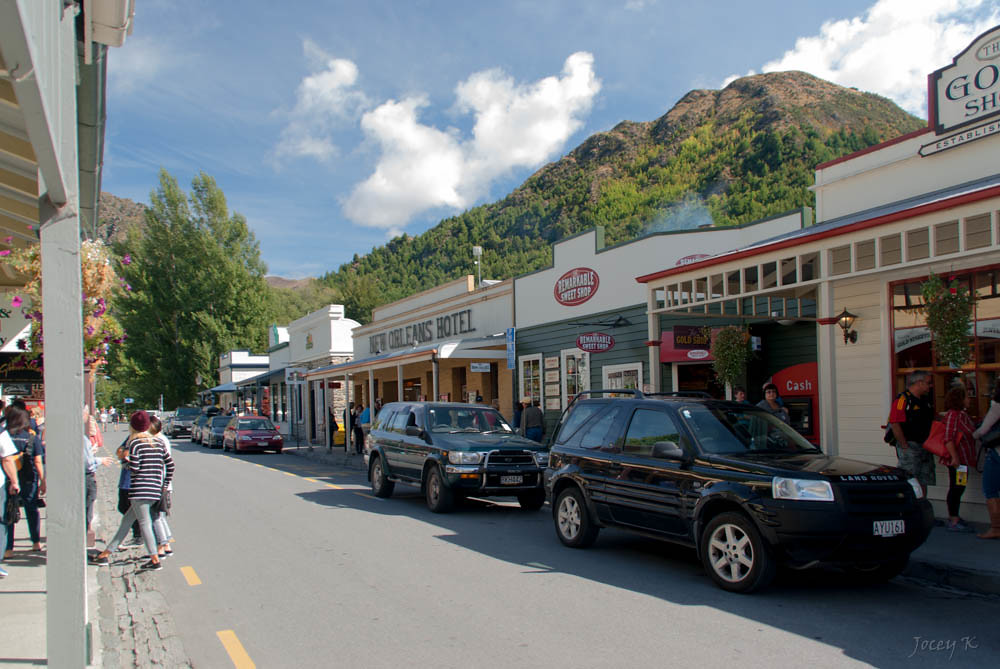
    1. Take a day trip to Arrowtown, about a half hour drive from Queenstown centre. This quaint, charming little town deserves at least a half day visit and is so neat and polished it may feel like you’re walking through a movie set. You can also visit the old Chinese gold mining settlement, a flashback to the town’s glory days as a gold mine darling.
    2. Walk the Gibbston River Trail, a purpose built walk suitable for cyclists, walkers of all ages, and families. Various wineries, cafes and picnic spots can be found along the way.
    3. Do the Queenstown Time Walk, a 2-3 hour walk up Queenstown Hill. It is lined with panels that will give you a look into the town’s history, and a glorious view of Queenstown once you finally reach the top.
    4. Visit The Earnslaw Park Market on Saturdays down on Queenstown’s lake front. A great place to enjoy the afternoon people watching, wandering the market stalls and enjoying the many talented buskers that frequent the area.
    5. Take the walk out to Bob’s Cove, a scenic reserve where you can see native plant and birdlife, look at the old limestone limekilns and enjoy a breathtaking swim when you finally reach the cove itself.

    Enjoy New Zealand!

    Photo credits: 1, 2, 3, 4, 5, 6

  • This Is What’s Wrong With Auckland City

    This Is What’s Wrong With Auckland City

    Auckland is a city that raised me. I grew up here – playing soccer on these fields, stealing sour bears out of the supermarket bins, catching those never-on-time buses to school.

    I am an Aucklander.

    Yet every year I come back to this city and become more disenchanted. There are a few new restaurants, a few refurbished parks, maybe a new stadium. The city is being given love. It’s improving. But for some reason it feels emptier every time.

    After visiting a bunch of cities across the globe, I have to say it:

    Auckland might be one of the most disappointing cities in the world.

    If you took a stroll through this city, you’d probably be impressed. Living in Auckland gives you everything. Countless beaches, in every direction. Weekend markets. Clean. Endless good cafes and restaurants to try. A big stadium for Adele to come and sing. All the nature you could want. Four seasons. Admittedly the wifi is barely fast enough to load a 1992 web page, but everything else is pretty close to perfect.

    So why is it so uninspiring? Why is everyone in such a bad mood? Why do so many people leave?

    A little while ago, I found the answer. I was in Rotorua for the weekend. It was late, dark, I needed some dinner. I rolled up to the Pak N Save, bought myself a chicken, some yoghurt (you tried that Raglan yoghurt yet? Pretty good stuff), a couple of Up N Go’s for the following morning.

    As I unloaded the basket, the checkout girl started talking.

    “Heeey. How’s your night going?!!”

    I pulled back with shock. Not because she was talking to me – that happens everywhere. It was the energy. This was actually a proper How’s your night going. Not a they-told-me-to-say-this-at-training-or-I’ll-get-fired How’s your night going.

    “Uhh…yeah. It’s going good. How’s your night going?”

    “Good! Almost time to close up. I’m soooo tired oh my goshh.”

    “Yeah can’t be fun working this late.”

    “I know right! Hey are these Up N Go things any good? I always mean to try them.”

    She let out a hearty laugh.

    I walked out of that supermarket totally bemused. You might be thinking that sounds like a pretty normal conversation, but that just doesn’t happen in Auckland supermarkets.

    And that was the final piece of the puzzle. After a short 2.5 decades, I finally figured it out.

    It’s not Auckland that’s the problem.

    It’s the people.

    Yeah, Aucklanders. It’s you.

    Take a walk around Auckland city on and given night and you’ll be forgiven for thinking you’re not even in New Zealand. The streets are mostly empty, and the ones who are out and about are foreigners.

    Why?

    Because they’re the only people who actually make an effort to enjoy this city.

    Everyone else is at home. They’re watching The Bachelor. Nobody wants to see new things. Nobody wants to meet new people. Aucklanders live in a bubble. Them and their little circle. No strangers allowed.

    This is not new to the world. It’s a pretty normal big city mentality. You’ll see it in Tokyo, Paris, LA. But here’s the catch. Auckland isn’t a big city. It’s not even a medium city. It’s barely even a small city (about the size of Porto, or Cincinnati, if that helps).

    Yet everybody seems to be rocking a New York ego. These PWC Tower dwellers walk around like they’re on Wall Street. As if Queen Street is the new Manhattan.

    You know that guy – he works in the mailroom, did a couple of touch typing courses, now he swags around the office like he’s the CEO?

    If he were a city, he’d be Auckland.

    I drove through the city the other day. I noticed all these new little community areas with benches and whatever. Beautiful summer night. It was all empty. I went to an open mic night. There were seven people there. Thinking it might be an off night, I went to another one a couple of days later. There were four people there. Because why would anyone in Auckland want to go see their fellow citizens play music? The Bachelor’s on, man. And they got a big New York life to live tomorrow.

    Auckland is my home. I grew up here. I left. I’ll come back. But I want to see this city blossom. When people ask me about my hometown, I shrug and tell them it’s alright. When people ask me how many days they should spend in Auckland, I wince and tell them the truth. One. Maybe two. Probably zero. How can I tell them to fly 18,000km to the bottom of the world to visit a city of couch kumaras?

    Most great cities around the world polarise people. They have lovers and haters in equal measure. Oh my gosh, London is amazing! No it’s not, it sucks balls. New York is awesome woop! Pfft, New York? More like Poo York.

    But Auckland has neither. No one loves it, no one hates it. It’s just there, like a pound cake. No icing. No gooey centre. Have you ever heard somebody say, “OMG, Auckland totes amazing!”

    Don’t lie, you haven’t.

    But you also haven’t heard them say, “Auckland, totes shithole.”

    (Am I using totes correctly here? Tryin to stay hip).

    And this is a problem, because the worst thing isn’t love or hate. It’s indifference. And that’s where Auckland is. This city makes me feel nothing. It’s flat. Boring. So when people ask me about my city, I have to say it’s just alright. That’s the truth.

    But I don’t want to say that. I want to be proud of my city. I want to tell them we have the coolest, funnest, friendliest people in the world. I want to tell them to be careful about visiting, because they may never leave. I want to tell them our energy is going to blow them away. I want to talk about this city the way I talk about the other magical cities I’ve seen. I want to rave about it. I want to tell them Auckland is one of the greatest cities in the world. But I can’t say that. Not with a straight face. Can you?

    The sad thing is: We can be one of those great cities. We have everything here. Our beaches would make us the envy of any world metropolis. Our summer sun is perfect. Our beach parties could be legendary. We have every exotic cuisine you can think of, made three times better with our famous New Zealand produce. Our morning air is minty crisp, like an Oddfellow. We have the space, the infrastructure, the stability, the chic factor. And we have blood from every corner of the planet here. Pacific Islanders, Chinese, Africans, Middle Easterns, Chileans, Southeast Asians, Europeans, Brazilians, Brits, Americans. Imagine if we brought all that energy together. If we actually became the melting pot we always claim to be (even though all we do is ignore each other). We could be the new-age happening city that people fawn over. The next Berlin, the new Barcelona. The clean green version. The Kiwi version. We could have cities around the world trying to be the next Auckland.

    Yeah, you’re laughing right? That’s our problem right there. Nobody sees it. Nobody wants to see it. But I’m telling you, this city has all the potential in the world.

    How do we make a better Auckland?

    Community:

    There’s really only two reasons you try to befriend someone new in Auckland. You think they can get you a new job, or…you think they can get you a new job (which is why everyone in Auckland keeps changing jobs). Aucklanders don’t know each other. If you ask any Aucklander about their social life, they’re still hanging out with their friends from high school. They haven’t made any new friends since they were 16. Except for maybe their workmates, since they have to see them every day.

    How do you change this? I have no idea. People just need to stop being dickheads, I guess.

    Transport:

    Two things Aucklanders complain about at least six times a day: Housing and Traffic. Honestly, these two things wouldn’t even matter if we had a decent transport system. The reason everybody needs to live so central is so they don’t need to wake up at 4am to get to Wall Street work on time. It shouldn’t take two hours to get from eastern suburbs to the North Shore. In any other city you’d jump on a subway and cover that distance in twenty minutes. This is probably the reason the city is so segregated. Nobody is going to drive for an hour to see some pop-up market across town, especially when petrol costs half a testicle and parking is $300 per minute.

    So here’s what we should do. Someone tell the mayor to stop building new roads (you hear that Phil? Stop building new roads). Build a bloody transport system instead. Make the cost of registering a car $5,000. Why not make it $10,000. Watch how fast your rush hour disappears. Then use all that money to build more stupid monuments around town subsidise public transport so we can whiz across town for one gold coin.

    There! I just solved Auckland’s traffic problem. (I know it’s not that easy but it probably is actually that easy).

    Activity:

    I  will admit the city does an okay job at this. If you jump on Eventfinda there’s actually a lot of cool shit to do. The new night markets was the kind of thing the city was missing, and the Silo markets and movies in the park and the dance floor thing in Aotea Square – all pretty cool.

    The only problem is, nobody shows up.

    Auckland city is a ghost town 5 nights per week. We need to un-sanitise the place. Our sidewalks are huge and empty. Bring back the food carts and the street performers and the buskers and the street sellers. I’d love to buy a sausage sizzle on the street (with overcooked onions) and watch some dude play the saxophone. Make the city fun again.

    Of course, the second part of the equation is getting Auckland’s people moving. What can we do to get people out of their homes and make this place great? I know the Bachelor is cool watching these girls fart and all, but we got a great city out here to enjoy. What can we do to get people out there? I darno bro. Tell me.

    Tourism:

    Honestly, if Auckland didn’t have an airport most tourists wouldn’t even come here. It’s expensive and difficult to get around, and then you get to the city and there’s nothing to do. But tourists are great things to have, because they bring energy, curiosity, activity, and money. That means we need some real tourist shit. We need a backpacker zone (Fort Street doesn’t count). Some free walking tours. Food tours. More cycle lanes or something. I don’t know, I’m just mental diarrhoea’ing here.

    Attitude:

    And finally. Can we all just stop being so fucking snobby anti-social? If you’re going to the bar tomorrow can you actually, I don’t know, say hello to somebody, instead of sitting there on your stool talking to the same people you’ve been hanging out with every single day for the last six governments? What is wrong with Auckland? We go to school, make our friends, and then we just live in that little bubble all the way until our Kiwisaver gets released. JAFAness is real. I didn’t notice it growing up here, but I definitely notice it coming home. And I’m not sure where the clique factor comes from, because when you do meet someone here, they’re usually pretty cool. But everyone seems to have their curtains drawn. It’s as if people like the city this way.

    Is that it? Do Aucklanders actually like their city this way? Why am I the only one ranting about this (at 3am on a Thursday in my underwear?) I’ll admit, I never said hi to anyone last time I went out either. But at least I thought about it. How about we all start thinking about it. Maybe then we’ll become known as more than just a city with shit traffic and nice coffee and boats that nobody uses. Now wouldn’t that be cool.

    Go Blues ✌️

    Bren

    Photo credit: russellstreet

  • 7 Things You Can Do This Year To Be More Awesome

    7 Things You Can Do This Year To Be More Awesome

    I recently watched a TED talk by a French neuroscientist about brain cells. She discussed the idea that even as adults, we can continue to grow new brain cells and expand our minds, if only we stimulate our brains in the right way. It’s actually being discussed in a lot of podcasts and articles these days – people who are in their seventies and eighties but have brains that function as if they’re 25. It’s a new field of research but the general theory is – people who keep their brains active and constantly “growing” are most likely to have perfectly working brains at 80.

    Think about this. It makes sense. When you are young, you’re learning all the time. You’re learning to eat, smell, talk to people. You go to school. Your brain is stimulated in every way – socially, intellectually, emotionally, physically. Even if the stuff you’re learning isn’t always interesting, you’re still testing your brain to understand new concepts, new ways of thinking. One of my math teachers even admitted that the stuff we were learning was in fact useless – we would probably never need it. He said the real purpose of school was to test our learning capacity, our intelligence. Can you learn Year 10 maths? Okay great. Now try Year 11. You passed? Now try Year 12. That was the idea. As kids, we needed to push our brains to grow.

    This stopped as I got older. Once I left university, it was rare for me to learn new things with any regularity. When I worked as an accountant, we did the same thing every day. First year on the job? Do taxes. Second year? Taxes. Third year? More taxes. Can you remember a time in school where you did the exact same thing three years in a row?

    Never.

    Coming to think of it now, I even ate the same breakfast and lunch every day, so I could go through the entire work day thinking about my life as little as possible.

    This backs up early research with super aging brains – that if we don’t use them, they die. In fact, the best advice they have for us at the moment is, if you want your brain to keep ticking well into your eighties and nineties, use it (a lot). Work really hard at something. Test it every day, like you did back in school.

    The beauty of it is, we live in an age of unlimited information. And not just unlimited information, but unlimited free information. If you have Google, you can learn literally anything. And it works, you can feel it. When you read, or spend a lot of time struggling with something, like a language, your brain actually hurts, like it’s been lifting weights. Now I’m reminded that’s actually a good thing. We need that.

    The problem is, not all of us can just start doing crazy interesting challenging jobs. If I had asked my boss to give me something really interesting and challenging, she just would’ve made me do ten tax returns instead of five. So what else can we do to stimulate and super age our brains?

    Learn a new language

    I actually think is the best thing you can do for your brain, because it hits you from so many different angles. Learning vocabulary tests your memory. Learning grammar tests your logic and understanding. It tests your ability to connect many of your senses and actions (reading, writing, listening, speaking). Plus, it’s hugely practical. In fact, our ability to speak and read and write is probably one of the most defining characteristics of being a human being.

    How to do it:

    You can use sites like Babbel or Duolingo, which are both free, you can use any number of free apps for specific languages. Usually when I land in a new country I just search “Learn insert language” in the App store and download one of the top free apps. Youtube is also a great place for free lessons. Once you’ve picked up some basic words and phrases, start watching foreign movies in your new language, or listen to your favourite movies with voiceovers, to mimic an immersion environment.

    If you’re into hacks, this blog post has some good concepts for learning languages quickly. I’d say it’s more suited to experienced language learners but newbies will find some good tips in there too.

    Pro tip: If you’re a Netflix junkie, listen to your favourite shows in voice over and/or with subtitles. Makes watching TV semi-productive.


    Play a sport


    A post shared by Bren (@brenontheroad) on


    Sports are amazing because they test your brain not only physically but also emotionally and intellectually. Understanding new rules, tactics, strategies, hand eye coordination, and also things like motivation, perseverance, mental toughness. Competitive sport multiplies these effects. Things like running and lifting weights are good but are repetitive and don’t test things like quick-thinking, reflexes and analysing different situations, so it’s good to mix it up. If you have any sort of physical disability, ‘mental’ sports like chess and poker are good brain trainers too.

    How to do it:

    Just join a club and start! Even social sport is beneficial.

    Bonus points: Take up a sport you’ve never tried before in your life. You’ll be surprised what you might learn.


    Learn to dance


    A post shared by Bren (@brenontheroad) on


    Dancing is amazing because it’s social, fun, and it connects physical movement with music, which is great for brain stimulation. In fact, in Think & Grow Rich, Napoleon Hill identifies music as the fourth most potent stimuli to generate activity in the brain (in case you’re wondering, the first is sex, followed by love, followed by desire for fame and power).

    Dancing is also great because it’s something you can learn either alone, with a partner, or with a group, making it possible for everyone, and you can literally learn how to do every single dance in the world on Youtube. It’s also really challenging, particularly if you’re not musically inclined, and to connect rhythm and music with steps, while coordinating with a partner or group, and also learning to improvise, is something that will certainly test you. The greatest dancers spend a lifetime mastering their craft.

    How to do it:

    I learn to dance at a proper studio, with a proper teacher – obviously this costs money. If that’s not an option but you still want to learn, you can learn choreography on Youtube, or many bars have free dancing nights with free classes where you can just show up and have a go – I sometimes do this while travelling.


    Read books about whatever you want to learn


    A post shared by Bren (@brenontheroad) on


    Elon Musk, the super genius that is basically taking over the planet, was once asked how he learned to build rocket ships and his answer was simple:

    “I read books.”

    The beauty about reading as an adult is, you get to choose what you read. In high school, I hated reading because they kept giving me stuff I wasn’t interested in. And of course nobody likes reading textbooks either, yet during my school years I must have read hundreds of them. Slowly, after a 10 year reading hiatus, I’ve started to slowly enjoy books again.

    When you read a book, you are literally stuffing knowledge into your brain. It’s as if the author is just sitting there talking to you, telling you everything he knows. The kicker is, there’s a good chance the author is one of the richest/smartest/most interesting people in the world. You can learn anything in the world, and often you can learn it from some of the greatest minds in history. Just read a book.

    How to do it:

    Download the Kindle app on your phone and you have almost every book in the world available to you within 10 seconds. If you’re a voracious reader you could get Kindle Unlimited, which lets you read unlimited books for ten bucks a month (get a free trial here!), or if you can’t afford to drop any cash at all, join your local library. In fact you don’t even have to join, you can just sit in there and read all day for free. Knowledge is unlimited and everywhere.


    Study something new


    A post shared by Bren (@brenontheroad) on


    Upskilling is always important, but ask yourself, what do you really want to do? Because whatever it is, you can probably start learning it today, and you don’t need to go to a $20,000 per year college to do it. Like we said before, Elon Musk learned to build freaking rocket ships by reading books off Amazon (if you’re curious, the books were Rocket Propulsion Elements, Fundamentals of Astrodynamics, and International Guide To Space Launch Systems). Pretty gnarly huh.

    So what do you want to learn? How to make video games? You can do a 70 hour course on Udemy for fifty bucks. In fact, you can learn pretty much anything on Udemy, like how to trade forex or how to take wedding photos. Or again, just find a book. My surfing teacher knows near damn everything about swell, wind patterns, moons and tides, wave dynamics, ocean currents, and I asked him if he studied all that somewhere. He nodded and when I asked him where, he said “the library”. I felt stupid. We often think that to learn something we need to get a certificate from some expensive school. We don’t. Free information is everywhere.

    How to do it:

    Google it. Buy a book on Amazon. Do a course on Udemy. Sign up for night class. Ask a friend to teach you. Watch a tutorial on Youtube. Go to the library.


    Learn a musical instrument


    A post shared by Bren (@brenontheroad) on


    In a study at Northwestern, neuroscientists found that kids learning a musical instrument showed larger improvements in how their brains processed speech and had higher reading scores than their non-musical peers. Translation: Playing an instrument makes you smarter.

    Remember how Napoleon Hill identified listening music as one of the strongest brain stimuli? When you’re the one actually creating the music, the effect multiplies. And not only does it test your brain to coordinate your ears, eyes and hands with rhythm and tune, it is also expressive, creative and recreational. Basically, instruments are awesome.

    How to do it?

    Udemy has classes, or you can learn to play guitar or piano for free on Yousician. There is also a ton of different teachers with free content on Youtube. Or do it the old fashioned way and just take classes. Or do it the really, really old fashioned way and just try and figure it out yourself.


    Take on a super challenge


    A post shared by Bren (@brenontheroad) on


    Since the best way to test your brain is to do something really hard you could try and, you know, do something really hard. Run a half marathon. Run a full marathon. Do a triathlon. An ironman. Lose 30 kilos. Double your personal best in the gym. Climb a really big mountain. Kayak down a really long river. Hitch hike across the country. Build a motorcycle. Write a book. Translate a book. Publish a research paper. Start a clothing label. Sail to an island. Make a movie. Paint a self portrait.

    How to do it

    1. Decide what you want to do.
    2. Google how to do it.

    3. Prepare to do it.

    4. Do it.

    This blog post on creating a system to achieve big goals is a great place to start.


    Seven ways to expand your brain. All of them free. All of them you can start today.

    Bren

    Feeling uninspired? Check out this list of things you can do this year to learn new skills, challenge yourself, make new friends, and just feel and be more awesome in general.
  • When In Berlin

    When In Berlin

    It was taking me a while to find the bar. It was supposedly atop the fifth storey of this shopping mall carpark, yet when I got to the fifth storey, all was silent. I wandered for a minute or so, trying to find signs of life. Bars usually aren’t hard to find – lots of drunk shouting, laughter, lights, loud music. But this just looked like what you’d expect a carpark to look like at night; dead quiet, and empty. Maybe this girl I was meeting was just setting me up for a kidney robbery. I mean, if this was a scene in Breaking Bad, you’d already know someone was going to die in the next few minutes.

    I got in the elevator for the third time. A girl was in there, heading up to 5. I asked her if she knew where the bar was.

    “Yeah I think we’re going to the same place,” she said. Her accent was thick, German.

    The elevator doors opened. As we stepped out, she pulled out a knife, stabbed me and proceeded to extract my kidneys.

    Just kidding.

    I followed her across to the other end of the carpark, where we came to a small off ramp. We walked between a few parked cars, like going through a Narnia closet, up a winding slope and eventually around to a little booth that stood guard of a huge open air courtyard. The courtyard was empty, of course. It was freezing outside. Except for one girl on her lonesome. She was sitting on the benches by the doors, long dark hair, wrapped up from head to toe. I knew her face only from her Whatsapp picture, but I recognised her straight away. I smiled, and she pointed at me, almost shyly. I guess it can be a little nerve-wracking meeting the 337th coolest blogger in the world.

    As I walked towards her she stood and outstretched her hand.

    “No let’s hug!” I laughed, opening my arms. Handshakes were for job interviews.

    We opened the doors and stepped inside. Immediately I felt a gush of music and warm air. It was packed, noisy, smoky. I stepped over to the bar.

    “What are we drinking?” I asked her.

    She smiled.

    “Do you drink wine? We can get a bottle of…that tempranillo is really good.”

    Within seconds a bottle was plonked in front of me, and with wine in hand, we looked around for a place to sit. There wasn’t a single spare seat in the joint.

    “Do you mind sitting outside?” she asked. “It’s a little cold though.”

    I pursed my lips, making my best “pffft, cold” face and followed her out onto the terrace. It was empty out there, and silent, and we sat alone by the railings, overlooking Berlin in the night.

    “So tell me about your trip!” I asked.

    Fernanda was a long time reader of mine, who I’d chatted with on email over the years. She, too, had wanted to quit her job and see the world, and naturally had had many questions for me. When she finally made the leap, she’d kept me updated at most stages of her trip – when she started saving, when she hit the road, moving to Germany. And now we were here, meeting halfway across the world in a Berlin carpark.

    I sat there for the next half hour listening to her stories from the road – through Asia, India, Europe. The funny thing about travel is, you always end up with all these stories, but nobody ever wants to hear them. Most people judge, or just don’t care, and you end up telling your tales to nothing but a pair of glazed over eyes. You can only rant about that lady at work with your closest work colleagues, you can only talk all day about your car with another petrolhead. It was the same with travel. Only another road junkie will sit there and listen to all your stupid stories. I listened to every word.


    I woke up late the next day. Fernanda had left a text on my phone, asking if I’d got home okay. It was only my second day in town, I still barely knew how to buy a subway ticket. I texted her back quickly, my head pounding, and told her we should never drink tempranillo again. Then I headed into the hostel kitchen.

    I sat in front of my laptop working on the blog for most of the morning, being anti-social, until a Greek girl came and sat next to me. Her name was Athena. She was very…chatty. Eventually I gave up trying to work and just sat there talking to her. As you do in hostels, we told each other our life stories, and then went to the supermarket together. You’ll be surprised how often you sit in a hostel lounge with someone and then go to the supermarket together. It sounds odd, but it’s almost a daily occurrence. If you’re not sightseeing, what else is there to do other than talk and eat?

    The moment I walked into the supermarket I had to do a double-take. The first thing I saw was vegan cheese, then vegan sausages, then vegan yogurt. I quickly sniffed my basket to see if that was made of tofu as well. Logic would tell you we’d just walked into a vegan supermarket, but sure enough there was real bacon in there – it was just hidden away in the far corner, where the dirty omnivores congregate. I’d soon learn this was standard Berlin practice. Land of the tofu eaters.

    I don’t know how we decided to bake cookies that day. Maybe we were just overexcited that the hostel had an oven (that’s rare). And it was cold. So cookies. We came back to the hostel that afternoon and baked cookies. Then it became a thing for the next few weeks at the hostel. Wake up late. Do nothing. Bake cookies.

    Athena wasn’t actually a traveller. She was planning to move to Berlin, and was in town for a few days trying to find an apartment. Over the following week, I learned this wasn’t unusual. In fact, it was the norm. Half the people in my hostel weren’t travellers. They were people trying to live in Berlin who couldn’t find anywhere to stay. Every day they were going to interviews with landlords, and scouring through Facebook groups and websites, trying to find a room. And they couldn’t find one.

    But even stranger was, these people didn’t need to live in Berlin. They didn’t have families here, or jobs, or chains of any sort. They could’ve gone to Amsterdam, or Madrid, or anywhere else in Europe. But they wanted to live in Berlin. Just because. And it seemed like half of Europe was trying to do the same. One girl in my dorm said there were two hundred other applicants to the room she went to interview for. Two hundred.

    The natural question was, why the eff do all these people want to live in Berlin?


    A few nights later, a Berlin regular checked into the hostel and offered to take us out. Late in the night we got to this one club, no idea what it was, it looked like a 1980’s haunted house. Before we arrived, he turned and rounded us up, like kids on a school camp.

    “Okay, to get into this club, we have to go in pairs. They won’t let us in as a group.”

    Weird. Maybe some kinky Berlin thing. Anyway. We paired off. Weirdness elevated as the bouncer looked at me very seductively for five long seconds, but the first four of us got in without any trouble. The others, however, seemed to be dragging. After ten minutes we went out to see what the deal was and found them all standing outside, looking pissed off.

    “They won’t let us in.”

    “Why not?”

    “They said we won’t fit in here.”

    Over lots of angry chatter the next morning I’d learn this was another of Berlin’s trademarks. If you want to get into the club in Berlin, you can’t dress up. If you’re in khakis and a button down, you’re getting bounced. If you’re a supermodel dolled up in makeup and high heels, you’re getting bounced too. You won’t fit in here. Have you ever seen a nightclub turn away a pair of magazine-model looking ladies? You’ll see it every night of the week in Berlin. Of course, some people groaned about it. I thought it was funny.

    By now I was starting to figure out this swarm of Berlin’s loyalists. It was like a little counter-culture oasis, for people who were sick of the pretty girls and the rich boys eating all the cake. Nice suits and pretty faces didn’t get you a free pass here. In fact, they almost sent you to the back of the line. And people in Berlin liked that. They loved it. They loved it so much they were all uprooting their lives and moving to Berlin. Berlin was the anti-Hollywood. It wanted something different.


    The following day I decided to stick around in Berlin for a week or two. I’d been on the road non-stop for months and, after my tour of Europe’s north and east, I felt ready to just be a hostel bum for a while. Our hostel, the U Inn Berlin, felt like the perfect place. There are two types of hostels really. There’s the family hostel, where everyone knows each other and it’s like a summer camp. And there’s the factory hostel, where everyone is just there to sleep and nobody gives a shit. U Inn was a family hostel.

    Over the days that followed I got to know all the other drifters that had made the hostel home. Tatiana was some Belgian girl who made tote bags. Julien was a Quebecer who studied some political thing. Mitch was an Aussie who was just around all the time. Billy was the Irish guy who worked reception. Natalia was a Portugese girl who…I actually have no idea what she was doing. She was in school, I think.

    Collectively, they were the perfect picture of the typical Berlin expat; chilled out, liberal, kinda doing something with their life (but not really), trying to find an apartment with no success, vegetarian (but not really), trying to learn German, smoked the odd joint, and of course, just barely on the right side of bankrupt.

    I had no trouble fitting right in.


    A few days later, Fernanda offered to give me a tour of her Berlin.

    I headed out to meet her at one of Berlin’s many subway stops. Now, the Berlin subway is kind of interesting. There are no controls or gates, you just wander straight onto the platform. It all runs on the honesty system. And sometimes (sorry Berlin), you just can’t afford to pay three euros for a two minute ride. So every other day, if I was only going one or two stops, I’d sneak onto the train and be on edge for the entire ride, examining every middle-aged man’s face, wondering if he might be a ticket inspector ready to pull my pants down.

    On this day though, tour guide Fernanda had told me to buy the day pass, as we’d be roaming around a lot. So my trip out to meet her was calm, and peaceful. Every middle aged man who stepped on the subway had me hoping he’d pull out a badge and start checking tickets. If one buys a ticket on the Berlin subway and doesn’t get checked, did he really buy a ticket at all?

    It was still quite early in the morning when we met. Well, around 10 or 11 – early is a relative term when you’re travelling. I followed her around a few corners, into a neighbourhood that was quiet, and polished, filled with wide roads and decorated with street art. The name was Kreuzberg, I think.

    “See how they actually paint on paper, and then they paste it up?” she said, scratching at a piece of street art.

    “That’s because you’re not allowed to paint on the buildings, so that’s how they get around it.”

    Sure enough, it was pasted up, like wallpaper. I wondered how the hell she knew that. Surely a guidebook, or a local friend. It was too covert to be noticed just walking along.

    As we wandered, and chatted, Berlin felt very grey to me. Very slow. Very cold. Every now and then a small pocket of colour and energy would pop up somewhere, maybe a congregation of food trucks, or a bustling intersection. And then it was back to grey and quiet. I guess that was expected of such a large, sprawling city. Or maybe just a symptom of the winter.

    One of these colourful and energetic pockets popped up when we got to Dead Chicken Allee. It was pretty inconspicuous; I would have never found it on a lone walkabout. Obviously it was no secret though – it was filled with visitors wandering up and down, many with cereal box sized cameras around their necks. If you were a street art fan, this would’ve surely been your first stop in town. We spent the next hour loitering through the alley, examining the pieces people had left on the walls. Some had painted murals that took up entire sections, others just little doodles hidden amongst the noise. I always loved street art – examining what people felt compelled to leave behind. Sometimes a painting only takes a few minutes to make, but it’s an entire lifetime that hides behind it. Where that person came from, her beliefs, her pain, her regrets – it’s in that little picture, if you look hard enough.

    By the end of the afternoon we’d walked a double marathon around Berlin. On and off the subway, some market exploring, all sorts of monuments that I can’t remember right now. Eventually the evening start to set in, sun fading, and rain had started to fall.

    “Let’s eat?”

    Fernanda already had a place in mind. We jumped on a bus, packed from top to bottom, and hunted down some favourite restaurant of hers. It was a Vietnamese place, small and chic, dimly lit with a fusion like decor. Berlin’s Asian food scene, and just the food scene in general, would surprise me over the coming weeks. There was a bit of everything, all cheap, all trendy, all delicious. In true Berlin style this particular place had veganised all my Vietnam favourites, but after days of hostel eating, I let loose and gladly splurged on some hippie Vietnamese food. When in Berlin, do as the people-trying-to-live-in-Berlin do.

    After chowing we decided to hit a free comedy gig across town. Comedy is big in Berlin. It’s big in all the artsy cities. Almost every night there’s a free gig happening somewhere. As a comedy fan, I was pumped.

    We got there just as the place was packing out, and nabbed two of the last seats in the joint. A roster of comedians came up and did their thing – some okay, some really good. Of course none of the performers were from Berlin. None of them were even German. And of course, they told jokes about this. Nobody speaks German to you in Berlin, because nobody in Berlin is German. Nobody knows what’s inside a Berlin nightclub, because nobody has ever been let inside one.

    If you ever want to see what’s really under the layers of a culture, have a listen to the comics. They tell the abstract better than anyone.


    On my final Sunday in Berlin, Fernanda and I hit up the famous Karaoke Sundays at Mauerpark. We arrived early, with a lot of scattered seats still free. This had been at the top of my Berlin bucket list.

    Mauerpark Karaoke goes like this. There’s a huge outdoor auditorium by the Sunday market, Roman-esque, ringed by a concrete grandstand, at least twenty rows high. It fills with a couple thousand people, at least. Some dude sets up speakers and a Macbook with a bunch of karaoke songs on it, and then from early afternoon until sundown, anybody who wants to sing just puts up their hand. They get called down, do the suspenseful walk to the stage. Then for 3 minutes, they’re a superstar.

    Things move slowly at the start. He opens up the mic, the crowd is silent.

    “Anyone?”

    Nope.

    And then someone.

    “Ahh we got one! Yes, sir, come on down.”

    Everyone turns to look at him. He’s a middle aged guy, fifty something, looks like a dentist, red hiking jacket, hispanic. There are a lot of smiles, whispers, as he makes the walk. He reaches the stage and he and the host have a private giggle while they scroll through the songs. Everyone waits, intrigued. Who is this brave dentist looking guy? Then the music comes on.

    Brown Eyed Girl.

    He starts singing. A little nervous, but he’s good. Lullaby voice. The crowd cheers. He warms up a bit. A minute in and people are bopping. The chorus comes on. The crowd sings along. Everybody’s smiling. Then out of nowhere, he busts a little riff. Sha la la la. The crowd goes wild. For three minutes, the guy’s a rock star. And then the song ends. The crowd farewells him with love and applause, and he wanders back to his seat.

    “Who’s next?”

    It’s an English guy, a sober one, maybe thirty. It’s his wife’s birthday. He sings her a love song. I don’t know what it’s called, but it has the words “I love you” in abundance. The crowd melts. Love is in the air at Mauerpark.

    Next is an Australian guy. Lanky, blonde, kinda goofy looking. I can’t pick this guy. Could be a dud, could be legendary. Music comes on. Born to Run, Springsteen. The crowd grins as soon as he opens his mouth. He might be the worst singer I’ve ever heard. But his energy. Electric. He’s possessed. He bangs his head. The crowd cheers him on. He goes harder. This isn’t even music. It’s a train wreck. But it’s the best kind of train wreck. He starts working the crowd. It’s painful. The crowd is roaring with laughter. They love him. We love him. I look around, thousands of faces are painted with smiles and happiness. This is what Mauerpark is about. The song softens a bit. He’s building up to Springsteen’s famous 1,2,3,4. He screams it so loud he nearly breaks the mic. It’s totally off beat. The crowd erupts. The song winds down and we’re in awe of what we’ve just seen. This guy’s officially become a legend. Cemented in Mauerpark history forever.


    A few days later, I boarded a night bus to Switzerland. Three weeks in Berlin was refreshing, charming, unexpected. But I left still unsure of what the place really represented. On the surface Berlin felt like a place of all love and all acceptance. A place for everyone. But I don’t think it’s for everyone. It’s a place for the ultra liberal, the ultra free, the ultra open-minded. Backpackers will love it to its core. Accountants will wonder what planet they’re on. The Wall Street guy will flee and require daily therapy to recover. Despite what the Berlinites will tell you, not everyone fits in here. But what Berlin offers is identity. Uniqueness. A place for the other guy. It’s not for everyone. But if it is for you, there’s a good chance you will fall in love and never leave. Just like the rest of them.

    To a beautiful Berlin, and all the memories,

    Bren

  • The Real Reason You’re Afraid To Chase Your Dreams

    The Real Reason You’re Afraid To Chase Your Dreams

    I still remember that day.

    We’d just finished our Christmas holidays. It was the first week back at work – a Tuesday morning, January 11th, 2011, 9:06am. Not to be specific or anything.

    I walked into my boss’s office and asked if I could have a minute. We sat down and I just told her.

    “I’m going to leave this year. I think by April or May – I’ll be gone.”

    She could see my decision was pretty concrete, and didn’t bother trying to change my mind.

    “Well thank you for letting me know. What are you going to do?”

    Funny thing was, I didn’t actually know. Travel was at the top of my list, but I still had thoughts of maybe finding a new job overseas, volunteering or going back to study. I was still weighing all my options. But I walked out of my boss’s office that morning feeling really good. Confident. I knew this was the right thing to do.

    In a lot of the emails I get, people use the word “brave”. “Oh you were so brave to quit your career like that!  How brave of you to leave all that work behind and travel the world. I wish I could be brave like you.

    But braveness was never part of the picture. I wasn’t lying in bed thinking, C’mon, be brave Brendan, just quit. It was a relatively easy decision. I didn’t like my job. I quit. And I don’t think it was my job in particular that I hated. It was the whole idea of a job. I’m pretty sure if I had worked in any other accounting firm in any other country on any other planet, I would have hated it just the same.

    Quitting, then, had nothing to do with braveness. Braveness is only required when you’re afraid. I wasn’t afraid of quitting. I was afraid of staying. How could I wake up every morning, be totally unexcited about every single thing I was going to do that day, spend eight hours doing it, spend two sitting hours in traffic, sleep too little, wake up the next day knowing this was going to be my life for the next 35 years, and not be afraid? That terrified me. Staying was a lot scarier than quitting.

    One thing many of you don’t know is, I wasn’t actually allowed to quit my job back then. When you go through the Chartered Accounting programme, there are a lot of fees. You have membership fees, application fees, exam fees. I had just completed my qualifying year – workshops, tests, a big six hour qualifying exam, which had cost around $5,000. The company covered it, but also made me sign a 12 month bond. At the time I still had six months left, but I couldn’t stay there any longer. I handed in my resignation and agreed to pay them back. I ended up paying my boss $2,500 to let me quit. She chopped it right off my final paycheck. $2,500. Poof.

    But for me that was worth every cent. $2,500 or six months of my life? I’ll take life. Sometimes I wonder if I’m really seeing things so differently to everyone else. Maybe I’m just more impatient than them. Or intolerant. Entitled. I don’t know. It baffles me how people can spend decades in careers they don’t like. Why can’t we see that it’s a prison? You have to wake up at a certain time each day or you get in trouble. You have to show up on time or you’ll get in trouble. You have to do work you don’t like every day or you get in trouble. You have to eat lunch when your boss tells you or you get in trouble. You can’t go on holiday or you get in trouble. You have to say the right things or you get in trouble. You have to wear the same clothes as everyone else or you get in trouble (I guess you at least get to choose the colour, sometimes). And for all your trouble you get paid just enough so you can afford a roof and food and a car to get you to the office and back. Then if you wait your turn and stay in line and smile, you might get a day off every ten years. Rewarded for good behaviour.

    We all have somewhere else we’d rather be. So why aren’t we there? For some reason we’d rather stay in prison. But the real the crazy thing is, we can leave! We can leave any time we want. But we stay. We show up again on Monday and we stay.

    Why do we stay?

    I wish I could be brave like you.

    We’re all afraid of what’s outside the box. But we can’t be afraid forever. We owe ourselves something better. All these other things we want to do – we owe it to ourselves to at least try. Maybe you want to open a surf shop. So, go. Open it. Go bankrupt in three days. Great. Now go back to prison. At least you tried. Didn’t you ever get told that as a kid? It doesn’t matter if you don’t win. As long as you tried your best.

    That still applies as an adult: Try your best. Staying in the job you don’t like because you’re scared – that’s not trying your best. Opening a bankrupt surf shop – much closer to trying your best than sitting in your cubicle thinking about it. And you know what? Even if it was a crappy surf shop, you can still try again and do better next time. I’m sure you got told that one too.

    We tend to live in a world of scarcity. I’m not sure why we do this, because the world is abundant in everything we’ll ever need. Go to the supermarket. Look at all that food. Take a guess at how many years it would take you to eat every single thing in that supermarket. Five? Ten? And that’s just one supermarket out of hundreds of millions on the planet. How is it possible to starve in a world with so much food?

    Think about how many dollars are out there. How many trillions upon trillions of dollars are floating around. You don’t need trillions. You only need like fifty bucks a day. Out of all those bazillions of dollars in the world, you only need like 1 or 2 million and you’d be set for life.

    Then people worry about jobs. All the time. What if I can’t get another job? Do you know many jobs are out there? I’ll tell you exactly how many. A lot. You don’t need a lot. You just need one.

    In a world of abundance, quitting your job isn’t scary. It’s only scary because you focus on the negative. You focus on the scarcity. What if you focused on the positive? Instead of visualising yourself opening a bankrupt surf shop, envision yourself opening a good one. Maybe not even a good one, just an okay one. Might even turn a profit. Then your profit gets bigger, and you need to hire employees. Then you hire someone to manage it for a month while you go on holiday. Where are you going on holiday? I don’t know, Morocco. You go surfing in Morocco, and you realise there’s no surf shop here. Maybe you can open one. You open one. You rent out all your boards on the first day, you need to buy more. You call the manager at your shop back home, give him a payrise on the spot and tell him to manage the shop for six months – you’re staying in Morocco. Five years later you have surf shops in California, New Zealand, Morocco, Australia, Portugal. Your business has expanded to include hostels and tours. You’re thinking about opening in Norway next, or Denmark. Maybe Denmark. Someone told you they have really good hot dogs in Denmark. Days after your Denmark shop opens, a big tourism conglomerate offers to buy your company for 3 million dollars. You decline. You want 8 million. They say, sure. Well give you 8. You sell and get married to a sexy Moroccan and open a mint tea shop in the middle of Casablanca.

    Why can’t you envision that? Why is that impossible? In a world of abundance, quitting your job is not scary. Not giving yourself the chance to get your mint tea shop ending? That’s scary. Sitting there at 75 thinking, man, what if I had just tried to open that surf shop when I was 31? That’s terrifying.

    Maybe your surf shop does do miserably and you go begging for your job back. I agree, that doesn’t sound like fun. But is that really what you’re afraid of? You’re staying in your cubicle because you’re afraid you might fail and end up in a cubicle? Hmm. In the English language, I believe that’s what we like to call an excuse.

    Maybe what you’re afraid of is the success. Maybe you’re scared of being more successful than you ever imagined. Your mega insane surf shops means you now have to be an employer, you have to hire an accountant and a lawyer and worry about your customers smacking themselves in the face with their boards and suing you, you have to negotiate multi million dollar deals with big companies and learn how to register companies in foreign countries and pay taxes in five different currencies and actually make decisions that affect other people’s lives.

    People often say they’re afraid of failure. That’s why they stay in the cubicle. But what they’re really afraid of is the success. That’s why they stay in the cubicle.

    “Our deepest fear is not that we are inadequate. Our deepest fear is that we are powerful beyond measure.”

    There is nothing to fear out here. At least, nothing scarier than the things you already face every day. Stop being afraid. Stop living in scarcity. Because living in scarcity means you only ever see obstacles. Oh I have to pay $2,500 to quit. Oh I might not find another job. Oh my idea is stupid. Oh everyone will think I’m dumb. Oh I have asthma. Oh I saw a donkey fall over back in February and that means I’m going to fall over too.

    Everything you’ve ever wanted is out here. In abundance. You want a million dollars? It’s here. Just floating around. A million dollars probably goes through your local supermarket every week. You want a new job? Great. There’s billions of them. You want to travel? Cool. Lots of planes taking off today. Lots of countries with airports.

    When you think of the bad things, that creates fear. That’s why you’re afraid. Instead, think of the good things that could happen. Imagine yourself succeeding. Imagine yourself happy. That creates excitement, energy, motivation. And that’s how you should always be thinking, because if you pursue something real, nothing bad is going to happen. Life is not going to get worse. It only gets better.

    I can prove it.

    Over the years I’ve conducted a study. Super scientific. Peer reviewed by my left eye and my right eye. Here are my super scientific results:

    • The number of people I’ve heard say “I quit my job as a lawyer to go travelling and my boss keeps begging me to come back but I can’t because I just started my own art store and now I’m writing a book and life is so cool.” – A lot.
    • The number of people I’ve heard say “I quit my job at the store and I went travelling and then I came home and now I have another job at the store.” – Quite a lot.
    • The number of people I’ve heard say “I quit my job as a nurse to go travelling and I hated it so I went home and tried to get another job as a nurse but every single nursing job in the whole world is taken and now I’m homeless and going to die.” – Zero.

    I get it. It’s safe to stay in the nest. It’s easy. You can’t fail there. You can’t succeed there. Life is worry-free, nobody knows who you are, nobody cares, you can just hum along peacefully until zero. But one day, and I can guarantee you this with every single damn tax return I’ve ever done (and I’ve done a lot), you will wonder why you didn’t reach for the stars. You will wonder why you didn’t write your story when you had the chance.

    Don’t let your fears become chains. Don’t let your dreams become regrets.

    Live in abundance.

    Try your best.

    Don’t be afraid of failure.

    Don’t be afraid of success.

    Think of the good things that will happen.

    Make your ****ing dreams come true.

    Bren

  • 7 Tips For Staying Safe On Free Wifi While Travelling

    7 Tips For Staying Safe On Free Wifi While Travelling

    Take a moment to think about your phone. 

    Think about how much stuff is on there.

    How much personal stuff.

    How much stuff you would never want anyone else to see.

    The angry email you sent your ex boyfriend ten years ago. All the flirty text messages from Jessica at reception. Your artistic naked selfies. The dirty jokes you send to your work colleagues, photos of your grandparents, probably even your credit card and passport and tax information.

    When it comes to your phone, it’s all just a swipe or two away. 

    If you gave your phone to a stranger for an hour, imagine how much they would know about you. They would know more about you than your mother and your best friend combined.

    And your laptop?

    Shiver. Don’t even think about it.

    But here’s the scariest part:

    Every time you connect to free wifi, you may be giving somebody an invitation to all of it.

    Yes, really.

    As travellers, we’re suckers for free wifi. At a cafe, a hostel, an airport, sometimes, we don’t even know who the wifi belongs to. If it’s free and has no password, we’re on it like rats. I mean, we gotta post those hilarious snaps from the beach yesterday, right?

    But wifi is a network. That means computers, phones, providers – they all become connected. If the security isn’t up to date, or someone shady set up the network, you may have a few uninvited guests looking through your devices. And it can turn out a lot worse than you think.

    The truth is, you can only do so much to protect yourself online. There is always going to be a chance of you getting targeted, but there are still many things you can do to minimise the risk.

    Follow the tips below, and hopefully the only person browsing your naked selfies on your next trip will be you.

    1. Stick to secure websites

    It’s always important to check that the website you’re using is secure. You can do this simply by checking the security information in a trusted browser like Chrome of Firefox. If a website’s connection is safe, it will be indicated by a green lock to the left of the URL, like so:

    stay safe on free wifi while travelling, private internet access review, best vpn for travelers

    If you’re on a public network (or any network!) try to avoid entering any sensitive information on a non-secured website. This includes things like passwords, credit card numbers, and other personal details.

    2. Avoid using apps

    App security is less stringent than browser security. If you are using apps from well known brands, such as Paypal, you’ll probably be okay. But try to avoid entering any sensitive information into apps from lesser known companies. This is particularly important if you use the same password for various websites – even if you’re willing to risk a casual forum or game account, hackers can start trying those login details for every other website, including emails and social media. Stick to using your browser rather than apps, and only on secure websites.

    3. Turn off file sharing

    Make sure your files are secure. Often when using our laptops on a home network we share folders with our friends and sisters and parents. This is fine, as long as you remember to turn it off when you connect to public wifi. If you forget to turn off file sharing, that means every other person connected to the same wifi network (yes, everyone) has an open pass to see what’s on your computer.

    Some newer computers are smart and will automatically turn this off for you when you connect to a public wifi, but you should double check anyway. To turn off file sharing, simply search for “Advanced Sharing Settings” in the Windows search bar, and you’ll come to a window like this:

    stay safe on free wifi while travelling, private internet access review, best vpn for travelers

    Simply turn off discovery and file sharing and you’re good. For you Mac users, you can find the same options under “Sharing” in your System Preferences.

    4. Choose your wifi wisely

    Let’s say you’re in a shopping mall. The shopping mall advertises free wifi throughout the mall, just connect and accept the terms and conditions. Sounds great, right? And it might be great for your social media addiction, but not so good for security. The easier it is to connect to a wifi network, the easier it is for bad stuff to be happening on it.

    A better option is to look for a coffee shop or restaurant inside the mall, and use their private wifi network instead. If the network is hidden and/or you need to ask the staff for the password – even better.

    5. Update your antivirus

    Never connect your devices to any free wifi network without an up to date antivirus. Most laptops these days come with a built in software, like Windows Defender, which should be sufficient for most people. Of course, you can step up and download a software like Avast, which is free and gives you an extra layer of protection.

    6. Use a VPN

    If you’re like me and just want a set-and-forget option, I’d recommend using a VPN. A VPN is a “Virtual Private Network”, which acts as your own private internet bodyguard.

    The way a VPN works is it hides your IP address and encrypts your connection, so that everything you send over the internet is hidden. Think of it like a ninja connection – whenever you send information, nobody knows what it was or where it came from. You may be familiar with using a VPN for work; often a requirement if you work for government or handle sensitive information. However, your personal details are just as, if not more, important than your work stuff, so you should be using a VPN on your personal devices too.

    Luckily VPNs are cheap and accessible these days, so there really is no excuse to not be using one. The VPN I use is called Private Internet Access and I have been using them for many years. They’re affordable, allow multiple devices, and are super fast and user friendly. You can click here to look at their plans.

    If you’d like to learn more about VPNs, why they’re important and how to use them, you can check out my beginner’s guide here.

    7. Don’t use it at all

    While I generally don’t have a problem using wifi in restaurants and cafes with secure passwords, I try to avoid connecting to large open wifi networks in airports and malls. Instead, I purchase a local sim card with data, and will use that on my phone and/or tether to my laptop any time I need to get connected. Even with a VPN, I tend to take the ‘better safe than sorry’ route, especially as I’m constantly checking bank accounts and other important information. Data is usually cheap these days, and for around $20 a month you can get more gigabytes than a normal human being should need. Alternatively, you can invest in a pocket wifi to keep you connected 24/7. The best way to stay safe on public wifi is to not use it at all.

    Like I said these steps will not make you bulletproof, but will definitely reduce your chance of being a target.

    Safe travels!!


    Using free wifi? Whenever you connect to a network unsecured, everything on your phone and laptop is open season. Emails, text messages, photos, tax information, bank accounts. Use these 7 simple tips to protect yourself and your infomation next time you connect to that free wifi network.

  • Where to Stay in The Gili Islands: A Guide To Paradise

    Where to Stay in The Gili Islands: A Guide To Paradise

    The Gilis are a trio of islands in Indonesia, famous for their beautiful beaches, chilled vibes and stunning scenery. Once a hotspot for partying backpackers, the islands have developed in recent years and while it still retains its old school charm, there’s now something here for everyone.

    This guide is designed to be a quick reference guide for those trying to find somewhere to stay. All the options in the Gilis can be overwhelming, so I’ve consolidated the best choices into this easy to use list. Each island into this Each island offers something unique, so if you’re heading to the Gilis keep reading – I’ll run through each island and the best Gili islands hotels and hostels available on each.

    Let’s gooooo.

    An introduction

    gili islands hotels

    The Gili Islands is made up of three main islands.

    Gili Meno – a honeymooner’s dream, with secluded white sand beaches, total tranquillity and flowers draped across every pathway.

    Gili Trawangan (codename Gili T!) is the spot – host to an array of fun bars, beach-clubs and great music. Expect hostels teeming with backpackers ready for ‘gram-worthy nights out.

    Gili Air offers something in the middle – serenity amidst live bands on the beach, all tied up with amazing diving and yoga.

    Each island is car-free, making them little hubs of health and calm. There’s the occasional moped (normally driven by several children!) but the main method of transport are horse-drawn carts or bare feet!

    If you’re after a detachment from hustle bustle life, this is your spot.


    Gili Meno

    best hotel in gili trawangan

    This little island is probably one of the most romantic areas of Indonesia, with crystal waters, long stretches of white sand and stunning natural surroundings.

    It’s popular among honeymooners for this exact reason, and the slow-paced life offers an escape from it all. Expect total peace and quiet, flowers at every turn and utter relaxation. As such, there isn’t a huge backpacker scene, with most solo travellers heading to Gili T’s party vibes.

    For those travelling with children, there are options – head to the bigger hotels to avoid the swarms of couples.

    Where to stay on Gili Meno?

    For the Backpacker

    Stay at the Rabbit Tree Hostel.

    This is a classic island hostel and the perfect spot to mingle with other backpackers.

    Breakfast is available and the hostel features a bar where you can congregate and socialise, along with many other social areas which are very tastefully done. It’s obvious the hostel has been made with solo travellers in mind!

    It’s a short walk from the beach, and free wifi is provided.

    Best rates here.

    For the Budget Traveller

    Stay at Meno Dream.

    This is a boutique resort that gets all the essentials right for a reasonable price.

    The rooms are modern and spacious, free wifi is provided throughout the property, there is an outdoor pool, and a great restaurant is on-site.

    The location is excellent and you’re only a few minutes walk from the beach.

    Best rates here.

    For the High Roller

    Stay at Villa Pulau Cinta.

    If you’re after paradise within paradise, this is it.

    This resort is made up of boutique villas that cater to your every wish. A terrace, private pool, sea views, room service, and all the other bells and whistles.

    The rooms are gorgeous and decorated like mini-mansions, the way it should be.

    Of course, restaurants are available on site as well as a bar, and room service is always available so you never have to leave the villa.

    Truly luxurious.

    Best rates here.


    Gili Trawangan

    best hotel in gili trawangan

    ‘Gili T’, as the island is affectionately known, is the party hub of the trio. Expect the same beautiful beaches as Meno, just dotted with plenty more late-night bars and live music nights.

    This island tends to be most popular with solo travellers who want to meet other people, make the most of the cheap beer and party late into the night. But fear not, there’s a quieter side to the island for those who want the choice of a night in!

    There are heaps of low-priced hostels on the island for backpackers, as well as some luxury options if you’re here for the paradise-vibe more than the tequila. 

    Where to stay on Gili T?

    For the Backpacker

    For a second option, you’ve got Jati Village Hostel. Hostels with pools are a bit like unicorns, really, but Jati Hostel brings that and much more. The tidy garden is home to a large pool area as well as plenty of space to relax and meet people. There’s also a bar in the hostel, so you don’t have to wander far to find a nice cold Bintang. The dorms are clean and each comes with a private bathroom. Jati also offers an on-site restaurant, bike hire and tennis-playing facilities. What more do you need? Best rates here!

    For the Budget Traveller

    Stay at Gili Flush Harmony.

    This guesthouse matches affordability and comfort, with modern, air-conditioned rooms, a beautiful pool, and free wifi. This mini-resort is well-located, so you’ll be within walking distance from some of the best dive shops on the island. For this price, it’s one of the best options available. Often booked out, so reserve early.

    Best rates here.

    For the High Roller

    Stay at Kuno Villas!

    Easily one of the top villas in the Gili Islands, Kuno is known for its stylish build and luxurious service.

    Set in a tropical garden, all villas here come with a private pool, enormous television, and daily yoga classes or other activities.

    Breakfast is served daily inside your villa, so you don’t even need to get out of bed.

    Built and finished with class wooden architecture, the resort is not only a delight to stay in but beautiful as well.

    Not cheap, but you won’t be disappointed.

    Best rates here.


    Gili Air

    gili air accommodation

    My favourite of the Gilis, this island is the perfect blend of activity and relaxation. With excellent dive schools, Gili Air is a great place to get into holiday mode.

    This reef here is also wonderful for snorkelling, a good alternative for young children.

    In fact, the island itself is very family-friendly, with loads of outdoor pools, horse-riding and beaches that are safe to swim on. Not to mention, this island is home to some of the best Gili islands hotels!

    Spend your days barefoot-wandering and enjoying the sunshine before a night of fresh seafood and live music on the beach. The nightlife might not be as lively as Gili T’s, but there’s always something going on on this little island…

    Where to stay on Gili Air?

    For the Backpacker

    Captain Coconuts is probably the best hostel across the three islands. It’s set just back from one of the best beaches on the island, in a field of palm trees. There’s a large outdoor pool with sun-loungers and shady cabanas. You can choose from a cheap dorm room (picture hammocks, mosquito nets and a super airy wooden treehouse) or mini-bungalows with private bathrooms. There’s an incredible restaurant, too, offering vegan and veggie food. Just an awesome place overall, you won’t be disappointed. Best rates here.

    For the Budget Traveller

    Mowies on the Beach quickly became my second home, mainly thanks to the staff and the delicious food offerings. The hotel is set just off the beach, with a large outdoor pool available to guests. The roomy bungalows are kitted out with speedy WiFi and TVs. Cross the sandy path to the restaurant and enjoy their huge menu – it’s packed with veggie, vegan and healthy options, as well as huge burgers! A stunning ocean view from your window tops it off as a small piece of paradise. Best rates here.

    For the High Roller

    Slow Gili Air Villas are every dream come true.

    When I say we’ve saved the best best ’til last, I mean it.

    Tucked down a shady, sandy lane just off the beach, this collection of ten private villas will have you weak at the knees.

    Stepping stones lead you across tranquil waters to the reception area, before you’re taken to your private villa, complete with private swimming pool, half-outdoor bathroom, and fully equipped kitchen.

    Breakfast is served in your room daily.

    The on-site spa is a stunning bamboo chapel-style building, offering the best treatments on the island.

    There’s an airy, outdoor yoga shala with regular classes, as well as an in-house travel agent service.

    It doesn’t get any better than this.

    For the best rates, click here.

    Enjoy the Gilis 😉

    Bren

    Photo Credits: 1, 2, 3, 4, 5, 6, 7, 8, 9, 10, 11, 12, 13Featured Image