I was blessed to visit Cairo last month as I was competing in the Egypt International.
Unfortunately, I didn’t play well and was knocked out easily in the first round.
However … that meant I also had a lot of free time to wander around Cairo and see a few things.
Of course, top of the list was to see the Pyramids of Giza, possibly the most talked about landmark in the world? The only two I can think of that might take the title are the Eiffel Tower and the Great Wall Of China. I’ve been lucky to see both of those in my travels, so was time to see how the pyramids stacked up (get it?!)
In my old age, I suppose I have gotten lazy and was lacking the energy to do things backpacker style. Ten years ago I would have jumped on a public bus to Giza, waited in line to buy the cheapest ticket possible, and bought water and snacks from the supermarket.
This time, I was happy to pay someone to arrange everything for me.
This was supposed to be a shared tour, but when I was picked up from my guesthouse the driver told me I’d be getting a private tour as there were no other bookings. Cool!
We drove down to Giza which took around 45 minutes.
It was early am so I was snoozing most of the way, but the driver pointed into the distance and said, “Look over there.”
Indeed, there in the skyline were the peaks of the Great Pyramids.
Once we arrived I was introduced to my guide. His name was Mohamed, like half of the other men I had met in Egypt by then. Mohamed was a short, chunky guy – he told me he was the top weightlifter in Egypt some years ago, which wasn’t hard to believe.
As we walked up to the entrance we chatted – he was an easy, chilled-out guy (most tour guides are). He told me he’d been taking pyramids tours for twenty years, so I was definitely with the right guy.
The best part about going with an experienced guide became apparent in the first two minutes. There was a long line waiting to buy tickets and go through security, but Mohamed walked us right to the front, shook hands with the security guard and walked us through. It does say on the tour listing that you’ll get to “skip the queues”, so I’m guessing this is an arrangement all the guides have with the complex.
It was the same thing entering the pyramid. There was a short queue but we headed straight to the front and I went right in.
What do I mean by “entering the pyramid?”
This is an extra add-on, which lets you walk into the passage built inside the pyramid (obviously heavily refurbished).
It’s a short but semi-difficult climb and a very narrow passage so you’ll be constantly squeezing past people. Many people were taking breaks and sweating like dogs, mostly because it’s not only tiring but hot inside. Once you get to the top, there’s a small room where there isn’t anything to see (as far as I could tell) other than an empty room with a stone box. A casket? Treasure chest? Dunno. Then you turn around and climb back down, the same way you came.
Is it worth it? I guess if you’ve travelled all the way to Cairo, you might as well do it. It’s a pretty cool thing to say you’ve done.
Once I’d come back out, Mohamed took me for a little walk around the five pyramids.
There are three big ones – built for three generations of kings, and then some smaller ones built for wives and mothers.
If you don’t want to look dumb like me, don’t ask which pyramid was for King Tut, since he wasn’t buried here! (he’s in Luxor). The pyramids are for King Khufu, his son Khafre, and his grandson Menkaure.
Mohamed obviously knew all the best photo spots and angles, so we walked around and snapped photos at all of them. Another bonus of having a guide – he can be your photographer too!
As I was there in October, it wasn’t the busiest. There were a few school groups around, and then your regular tourists from America, Europe etc (I know the accents).
As we’re walking around, I asked, “When you were in school did you also come here for a trip?”
He says “Of course, but not really to see the pyramids. Just to ride a camel and have fun with friends.”
Yep – sounds exactly like my school trips to the Auckland Museum as a kid!
Once we’d wandered around and taken all the classic photos, he gave me some free time to wander and look at things myself.
By then I’d already seen everything, but I took ten minutes to stroll around a second time (the place isn’t that big).
Other than being offered many scarves and camel rides and ice creams, there wasn’t much else to see.
After that, we headed to the Sphinx. Unfortunately, we didn’t spend much time at the Sphinx, we just drove past and took a photo and that was it.
I saw people walking around the statue and touching it, so if you want to do that there’s a way to, but it wasn’t offered and I didn’t ask.
In hindsight, I probably should have, since after that we left the complex and the tour was pretty much over.
On the way to lunch, we stopped at a Papyrus gallery.
I thought it was going to be the usual souvenir-selling spiel, but it was quite interesting.
The Egyptian papyrus is a type of paper that “lasts forever” made out of the papyrus plant.
I was introduced to a guy who showed me the process from start to finish, peeling away layers of a papyrus stem, wetting it and then stamping it into paper. Then he demonstrated how it’s nearly impossible to rip it and you can dunk it in water and it never damages.
I was left to roam the gallery and asked if I wanted to buy anything – there were hundreds of papyrus painted with everything from Egyptian legends to family trees to celebrity portraits. So in the end it was indeed a souvenir-selling spiel, but at least an interesting one.
I noticed an ATM machine inside the gallery right next to the cashier, and interestingly, many tourists lined up to take out cash.
The desk was also super busy processing purchases, so I asked the guy how many they sell in a day and he smiled and said “A lot!”
He also told me many tourists come to Egypt specifically to buy papyrus since it’s the best quality in the world and it lasts forever. True or false? No idea.
Finally, it was off to lunch.
The lunch was a classic mixed grill with some chicken, meatballs, bread, rice, salad, and a million different dips and condiments, like every other meal in Egypt!
I was hoping “local Egyptian lunch” might be a bit more interesting, but it was a standard (good) meal, nothing spectacular.
Evidently, the Cairo heat was starting to wear on me as I forgot to take photos of the papyrus gallery or the lunch…maybe I’m just getting old, hah!
Should you take an organized tour or go solo to the Pyramids?
I think it’s easy enough to go solo, since they have Uber in Cairo and it works pretty well.
Including Ubers to and from Cairo to Giza, and your entry ticket, you’ll probably pay half as much, but things will just require a bit more time and energy to figure out and you’ll spend some time waiting in lines.
If you want to pay an extra $40 or $50 to make things easier, an organized tour is the way to go. For me personally, it was definitely worth the extra! I booked mine through Get Your Guide, but you can also ask your hotel/guesthouse if they can arrange something for a better price, or even just ask at the various tour agencies around Cairo.
Final verdict on the pyramids?
Certainly a cool thing to see, and if you’re in Egypt or the region in general, definitely go! But… also kind of underwhelming.
Maybe the best way to put it is this – if I was still working as an accountant, and I had my two weeks of vacation time, and I’m wondering “Where should I go to spend my two weeks off this year?? Maybe I’ll go to Egypt to see the pyramids!”
Then I fly 25 hours to Egypt, just to see the pyramids, get really excited about it … and I finally see them.
I think I’d be disappointed.
However, if I was on a trip around the region, maybe visiting Jordan, the Emirates, Abu Dhabi, maybe even Morocco, then decided to add on Egypt for a couple of days to visit the pyramids – I would definitely think it was worth it.
In other words, they’re cool, but I don’t think they’re not soooo cool that you’ll rave about them to your friends and stare at the photos for weeks afterwards. Probably like most famous sights, to be honest.
Still – part of the coolness isn’t just whether they look cool, but how they’re such a big part of history, and so much mystery still surrounds them, and they’re a symbol of the ancient Egyptian Empire that still fascinates scholars to this day. In that sense, I hope everyone gets the chance to see them at least once in their lives!
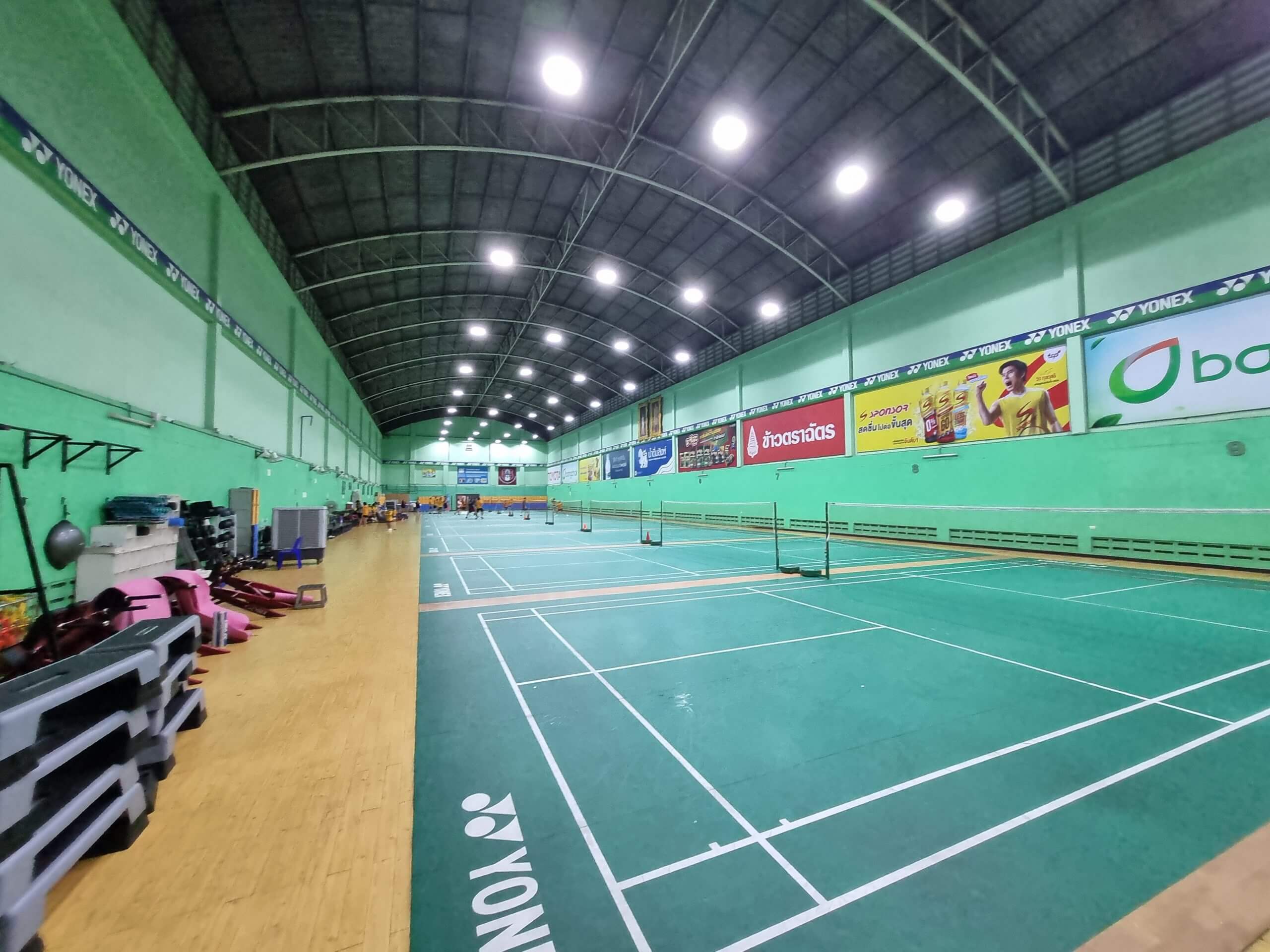
Life recently brought me to Bangkok for a few months and I was lucky to spend one of those months training at Ban Thong Yod.
Ban Thong Yod is a world-famous badminton school, known for producing both a male and female world champion over the years (Ratchanok Inthanon in 2013 and Kunlavut Vitidsarn in 2023).
The school sits around an hour from the city centre, in the Bang Khae area.
Arranging it was easy. I sent a message to the Whatsapp number and someone was available to answer all my questions and organize everything. They have a dedicated staff member who speaks English to take care of this stuff, so that was helpful.
I hadn’t pre-planned anything, so while chatting I asked her when I could come and she said “you can come today if you want”, so I did!
I showed up that afternoon with my bags and moved into the BTY House, just in time for the afternoon training session.
What’s A Typical Day Look Like?
When I arrived, I was introduced to the head coach who watched me hit around for a few minutes to see which group I would be in.
There seem to be around 4 different groups, but I’m unsure exactly how the system works.
Anyway, I was put in one of the middle groups where I was training with mostly young teenagers.
There is five hours of training per day.
The first session is the 7-9 am session, which is a conditioning session.
After that, you go back to bed if you hate early mornings like me, or maybe go to the restaurant and eat some breakfast.
Then you relax until the 1-4pm session, which is an on-court session.
After that, you’re free! Go eat some dinner at the restaurant.
A lot of players also order food on Grab (the Uber Eats of Thailand) if they get sick of the school food.
What’s The Training Like?
If you’ve trained for badminton competitively, there will likely be nothing new. Pretty standard drills like multi-feeds, footwork, sequence drills, sparring and so on.
There does seem to be more focus on fitness/consistency, compared to Smash Travel where we spent lots of time on technical things.
I think in the whole month of there we only did one or two drills focusing on learning/honing new techniques, the rest was more on footwork and repetition.
However, the school has produced two world champions, so obviously they have a good idea of what to teach you and when!
The morning session is things like footwork, skipping, weights, calisthenics – no rackets or hitting. I actually missed this session quite often because I couldn’t wake up that early. But the few times I did go it was pretty good and not too hard. For the older players, you generally get put in the gym with the weight training session. For younger players, they do more footwork-type conditioning on court.
At 1 pm you are back on court and it’s drills for the first two hours. The third hour you usually do some sparring to finish out the session. The drills are nothing revolutionary, but they have 6 or 7 coaches to feed, so you get quite a lot of time on court.
Saturday and Sunday the schedule is quite different – the afternoon session is 3pm-6pm, and consists of only sparring and games.
This sounds fun but they turned out to be the days I enjoyed the least. The class is bigger than usual, and there’s no real structure to it. The coach just points to a few of you randomly and says “go play doubles, go play singles”, then when you’re done he points to some others for their turn. So half the time, you’re just sitting around waiting for your turn to be told to play. I had my skipping rope and spent a lot of time skipping while I was waiting. Quite a few times I actually considered just leaving the class and going to the gym instead. But also for a lot of players, it’s good to get an easier day, especially those who train 3x a day during the week.
Is the training hard?
I was coming off a 5-6 week break, having not been on court since the Mauritius International.
The training at my first court session was not that intense, but somehow I was almost dead before we reached halfway. Badminton is funny like that. Even 1-2 weeks off and you feel like you haven’t played in years.
However, the next day the body had adjusted and things were much better.
It’s kinda hard but nothing crazy. Some days are harder than others.
Overall if you play badminton regularly you will probably be fine. If you’ve never “trained” like some of the people there, will probably be a shock to your system. But still fun! And since you’re training every day, you should adjust quickly.
Who Else Trains There?
The group I was in had about 25 students.
When I arrived, the class was mostly Thais, but there were a lot of foreigners too. We had players from Canada, France, USA, England, and also a big group from Taiwan. Over the month I was there, the turnover was quite big as most people stay 2-4 weeks, but we also had players from Philippines, Malaysia, Poland, Korea, Japan and maybe a few others I’m forgetting.
What is unique about BTY is anyone can train there – they have 18 courts and run training all day for everyone from beginner to elite (world champion level, literally).
This is why many people come here to train – because although Japan, Korea, Malaysia etc might have good schools, they’re not open to everyone. They’re usually exclusive and you need to be selected.
At BTY, you can train even if you’re still a newbie, as long as you don’t mind being put in the class with 5-year-olds! (and of course, if you can afford it 😉
There are lots of local Thais training here, I would guess over a hundred, from kids to adults.
It’s called a badminton school but most people don’t realise it’s literally a school, as in school-age kids live there and this is their education.
I figured this out when I noticed my 1pm session was filled with 14 year olds. From what I can gather from chatting with them (their English isn’t perfect) they do some online schooling, but the priority is badminton.
They all train 3x daily and I guess they probably do some online maths lessons during their rest time or something, but they don’t seem to worried about it. Also, I’m just guessing here, maybe it’s different.
What Are The Facilities Like?
It’s a big facility which is like a mini badminton campus. It has:
Dorms where most players live (local and foreigners)
BTY House which is a more expensive option for foreigners
Very well-equipped gym
18 courts
Restaurant
Small Yonex shop to buy gear (shoes, rackets, grips etc)
7-Eleven right outside
Staying in the dorms is free, or rather it’s included in the training price.
However I chose to stay in the BTY House, because I’m working and also skin issues, so I need my accommodation set up in a certain way. You pay extra to stay in BTY, it gets you a private room with an ensuite and a fridge and desk. There’s also a little lounge in the house with a big TV that nobody really uses, and a small yard to hang your laundry and sit around if you want. If you can afford it, it’s worth it!
Unfortunately I forgot to take a photo of my room, but it’s a pretty standard small hotel-style room.
The gym is available to you whenever you want (except while the squads are using it for training) and has everything you would need in a gym – treadmills, spin bikes, machines, free weights, kettles etc.
The restaurant is pretty good and the prices are regular Thailand prices.
You can pay maybe $2 for a meal. Not bad.
What Can You Do On Your Off Days?
On Mondays, school is closed!
People usually use this time to go visit some things around Bangkok or just relax at the mall.
I’m familiar with Bangkok so I didn’t do much on Mondays other than eat and maybe get a massage. However, for many, it’s their first time in Thailand so the trip doubles as both a training trip and a vacation!
Unfortunately there’s no beach in Bangkok, but there are many cool things to do like watch some muay Thai fights, go shopping, visit the markets, eat some street food, temples, floating markets, and plenty of amazing restaurants, cocktail bars, cafes and so on to spend some time at. My Bangkok guide can give you a few ideas!
How Would I Rate My Experience?
Me and head coach!
I think the school is probably too expensive for most, but it’s a well-established school and as far as badminton training goes I think it’s great.
Why is it expensive?
The facilities are all top of the line – Yonex courts, Yonex shuttles, an excellent gym, lots of coaches, and unlimited good players to spar with. You also play with new Yonex shuttles daily (they must go through hundreds of tubes a day!) so it’s easy to see why the cost is high compared to other camps.
It’s probably too much for casual players, but if you’re competing at national/international level (or aspiring to) then it’s a good place to get some intensive training and lift your game. Some players who are serious about doing well on the BWF circuit come and train here for months or years at a time. For context – I think it was perfect level for me, and I compete internationally and my world ranking was around 520 at the time.
Overall – had a lot of fun, and met some cool people. Some say my game improved a lot in a month, I don’t know about “a lot” but I definitely did learn some new skills and started winning more by the end of my stay. So overall, great experience and can happily recommend going! I would love to go back!
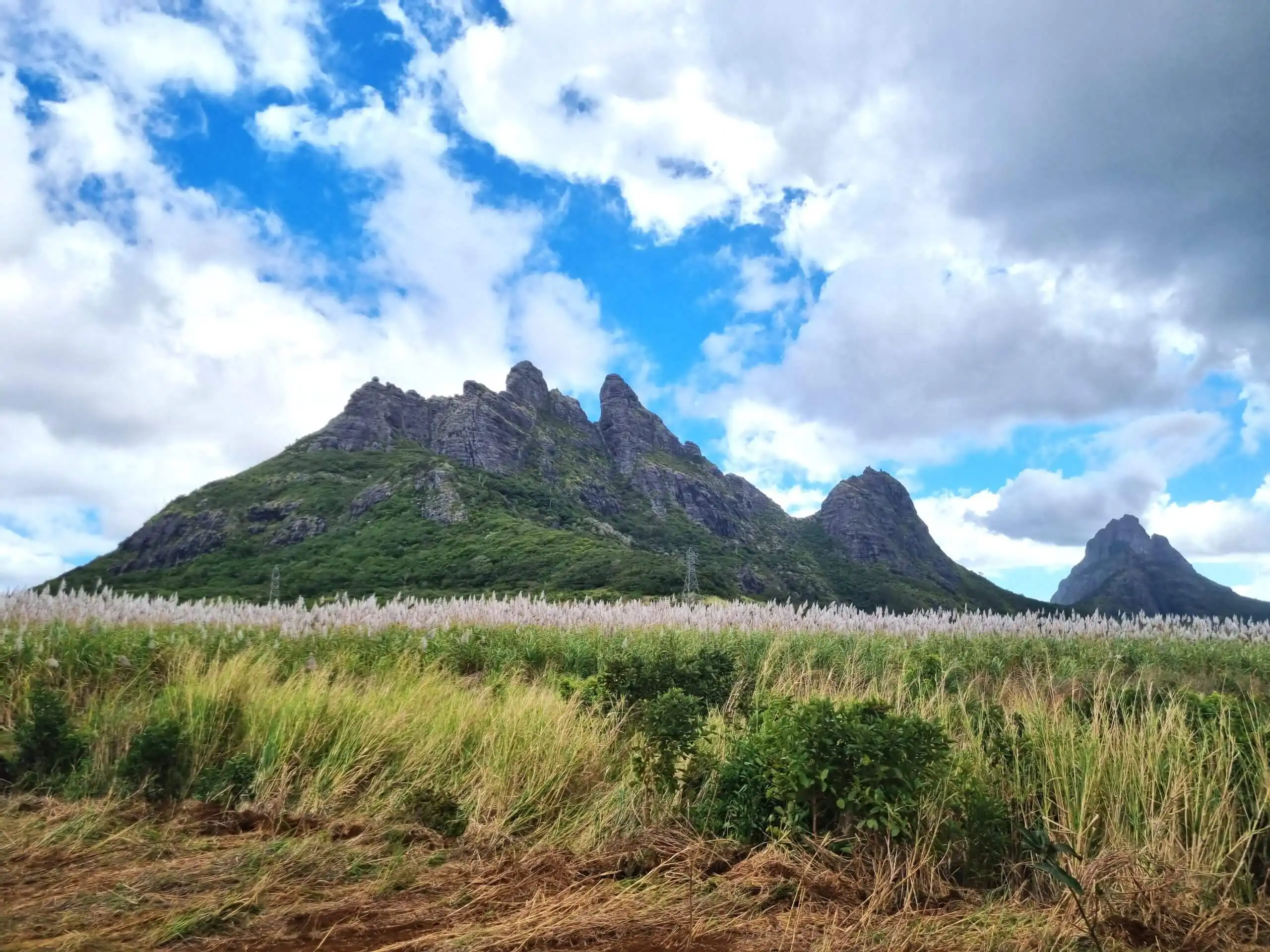
I was recently lucky enough to visit Mauritius and had a blast.
Mauritius is an island country off the coast of East Africa, about four hours from Nairobi.
The island is small and you can drive the circumference in around six hours.
I was here for a badminton tournament so I spent most evenings at the stadium training, but otherwise, I was able to spend most mornings enjoying the beach and exploring.
When I landed I was met at the airport and delivered my rental car. And this will be my first travel tip for Mauritius – rent a car!
I hired my car using DiscoverCars and there are many good vendors to choose from. I chose the cheapest one and it all worked out great.
I had been hesitant because I’ve travelled much of Africa and (for me at least) driving on this continent is a big NO, but Mauritius was totally fine and felt more like driving in small-town Europe. As my trip progressed it became clear I’d made the right choice, as the car allowed me freedom to explore more of the island versus relying on the metro/buses. The roads are good quality and if you’re a comfortable driver back home you shouldn’t have any issues:
The drive from the airport to my accommodation was about an hour – longer than I expected. I chose to stay at the beach in Flic en Flac, and again, it was a great choice and I highly recommend it.
I visited three or four beaches during my trip and Flic en Flac was the best in terms of convenience, restaurants, safety and the beach itself. Several locals I met from the tournament also lived in Flic en Flac.
If you want a recommendation on where to stay in Flic en Flac, I stayed here. It’s a short 3-4 mins walk from the beach and very reasonably priced!
The first few days I spent lounging around the beach and checking out the area. The beach at Flic en Flac is large and stretches for at least half a kilometre and probably more.
There are street food shops all along the beachfront and you can get anything from noodles to ice cream to fresh coconuts for a few dollars.
One of the funny things about Mauritius is when they say “kebab” they actually mean a baguette/sub.
They call their kebabs “wraps” which I guess is normal, but beware that if you order a kebab you’ll actually be getting a sandwich.
Shout out to my friend Lauren at Never Ending Footsteps who posted about this semi-hidden roti stall called Farota aka Vinoda which sells classic Indian rotis for less than a dollar each!
I tried the fish, the chicken and the veg, all were delicious!
I also pumped out a solid amount of kilometres on the roads around Flic en Flac.
If you’re a runner, Flic en Flac is amazing. The streets are straight, flat and empty. You can run either beachfront or around the residential back roads. Both are great.
On my first fully free day, my mission was to knock off some tourist spots.
One popular one is the Chamarel Park which is toward the south of the island. There were a few beaches down that way I wanted to visit too.
It was a long drive from Flic en Flac, so I broke up the trip with a short detour to one of the waterfalls.
The Tamarind Falls are in the centre of the island and looked like a good target. I’m guessing there are a few other viewpoints for these particular falls, but the one I stopped at was underwhelming. If there’s a way to get closer though, they would be quite impressive.
Onto the famous Chamarel Geopark.
It’s quite a drive through long winding hilly roads, but not too hard to find.
It will cost you $12 USD to get in and within the park there’s a waterfall, some turtles, and the well-known Chamarel “7 Coloured Earth” Hills.
The waterfall is the first stop.
It’s a nice enough waterfall. You can’t swim in it, but you snap a photo at a few different viewing decks.
Then you drive down to the coloured sand dunes.
Let me be honest – when I saw the dunesI just thought they looked like piles of dirt on a construction site.
Okay, they’re all different colours but vaguely. Otherwise, you’re literally looking at piles of sand.
It’s supposed to be a showcase of different coloured volcanic sands, and if it was something you saw on the roadside it would be pretty cool, but to build a whole tourist park around it seems kind of OTT.
That’s nothing new in tourist attractions I guess, but it’s my job to be honest so there you go.
I didn’t spend much longer in the park, there’s a few things you can pay extra to see but I had a feeling they weren’t going to be my kind of thing.
Instead, the afternoon was still young so I took a cruise down to two nearby beaches in the south – Le Morne and La Gaulette.
Le Morne is a flashier beach with nice resorts and aimed at higher-end tourists. The beach itself is quite nice (at least the one I saw) but Flic en Flac is definitely better. Le Morne feels kind of far away from everything though, so I wouldn’t like staying down here if your goal is to explore the island.
La Gaulette is a short drive away and is aimed more at backpackers/budget travellers, but I saw some nice-looking restaurants around there too.
I ended up stopping into one for a quick curry and calamari to fuel up.
Is Mauritius cheap? I wouldn’t say cheap, but not expensive either. The above cost me 700 MUR, which is about $14 USD.
I would say that’s average for a budget restaurant. Obviously street food will be cheaper, and nicer restaurants more expensive.
The beach at La Gaulette is not as nice as Le Morne, in fact I wasn’t able to find an actual beach on Google maps.
I did manage to find the water and took this photo from a boat ramp.
Beautiful sunset, but definitely not a place for a day of sunbathing!
After the drive home it was time for a short walk at the beach and some dinner – I got myself a grilled fish on the Flic en Flac waterfront:
Overall, pretty fun day. Again – rent a car! Makes a huge difference in where you can go and what you can see.
My next free afternoon I had just finished training in the middle of the island and wanted something traditional and local.
Google led me to this traditional creole restaurant which was a mission to find (it’s up some winding residential back roads) but once I was inside it was beautiful!
It’s set in a big backyard garden and they serve a set menu of creole dishes.
The first course was fried plantain chips, fried eggplants, chili coconut dip and what seemed to be a bhuja/nut mix.
Next came the main course which was rice, lentils, radish (I think), potato curry, salted fish and cabbage, sausage stew, octopus stew, deer stew, and eggplant dip and chili dip on the side. As you can see – a pretty serious spread!
I’m sure you agree this looks epic, but how did it taste?
A few things were a little too salty, but overall it was great. The waitress explained that there was a specific order to eat things in (I’ve forgotten now) which I followed and I finished everything easily.
Finally, dessert.
It was a papaya jelly, a coconut tart and a cake (almond, I think?), and a shot of local flavoured rum.
Believe me when I say all three desserts were freaking delicious and I could have gone another round easily.
I tasted the rum but didn’t drink it, it was mild and sweet. I’m sure anyone who drinks alcohol would love it.
If you would like to visit this place, it’s called Escale Creole Restaurant. Bill was 1400 MUR ($28 USD) for one.
During my second week in the country, I was finally due to compete in the Mauritius International.
As you can tell I hadn’t been taking my preparation too seriously and had been more preoccupied with my holiday, but when in Mauritius, can you really blame a travel junkie for enjoying himself?
The tournament was at the Cote D’Or Stadium, which is the biggest sports complex on the island.
I lost (badly) in the first round. Not that I expected to go very far, but would have been nice to score more points!
Anyway, had an awesome time training with the Mauritian squad and meeting some athletes from around the world.
Now that I was truly on vacation, I had time to spend a day exploring the town centre!
Port Louis is in the centre northwest of the island, and looks like what you’d expect from a classic island city. Driving into Port Louis is a bit more busy than other parts of the island, obviously, but traffic is well behaved and not too stressful to navigate.
Walking around my first impressions were, in a word – dated.
Everything works, everything is clean and functioning, but there’s a lot of wooden architecture and it has an old, weathered look.
This is the central market, not far from downtown:
Another interesting thing you might not know about Mauritius is the population is more than 50% Indian. This comes through in a lot of the things you see in town. A lot of Indian style shops, Indian restaurants, Indian-inspired food etc.
One of the places I really wanted to see is Chinatown so I headed that way and spent a good hour walking around.
The Chinese population is not that big in Mauritius, so Chinatown is not huge either.
To be honest, there is not much to see there, but it’s cool to wander around and see what an African Chinatown is like.
Of course I needed to eat something, so I stopped into this noodle joint which smelled good and it delivered!
Another interesting observation – in every country I’ve been to where there are Chinese and Indian communities, they still speak to each other in their native languages. So Chinese people in New Zealand or Australia or South Africa speak to each other in Mandarin or Cantonese (not all the time, obviously, but it’s common). In Fiji you’ll always hear the Indian population speaking to each other in Hindi, same as the Indians in Kenya, Canada and so on.
However, in Mauritius, they all speak to each other in French!
The first few days was a surprise seeing Indian and Chinese families conversing with each other in fluent French. Then I met about five or six Chinese Mauritians at the tournament and learned none of them can speak Chinese, they all speak French at home.
I found that really interesting and it’s not something I’ve seen before.
I’m telling you that story because in this particular noodle restaurant, I noticed the owners talking to each other in Mandarin! So I knew the noodles would be on point and authentically Chinese Chinese (and they were)! I could’ve been on the streets of Shanghai and not known the difference. The place is called Soup Queen.
On my final day in the country, I went out for an easy lunch – an octopus salad, Mauritian-style fried rice, and then relaxed in the sand.
This kind of day sums up Mauritius nicely. There’s really not much to do except for eat and sit in the sun. But is that so bad?
I’d say it’s the best thing about the place 🙂
That brought my trip to a close and I was back at the airport the next day to fly out.
Overall, I loved my time in Mauritius and would love to go back. It’s safe, easy to get around, affordable, sunny, developed, and you can even practice your French!
Verdict from me: Rotten Tomatoes 10/10 highly recommended.
Heading to Mauritius and…
Looking for tours and activities at an affordable price? I use GetYourGuide! Always great deals and local perks.
While preparing for the Oceania Champs earlier this year, I was fortunate to get a week of training at Smash Travel in Bali!
I had been in Bali over the New Year period doing my annual fast, and after a short training camp in Jakarta with some friends of mine, I found myself back in Bali before heading back to Australia for the tournament.
My friends actually knew the head coach at Smash Travel (Ajay) and told me he’s great to train with.
So – I fired off a Whatsapp message and asked if they could take me in for a week.
Toni is a player from Sweden who lives in Bali and runs everything. Everything was super smooth and easy to book and after a few minutes of chatting I was ready to get training!
Arriving in Bali
I arrived in Bali a few days later and was picked up from the airport (included in the camp) and taken to the accommodation (also included in the camp).
The accommodation is a local guesthouse about three minutes walk from the badminton hall – it’s run by a local family who are wonderfully friendly and I was settled in quickly.
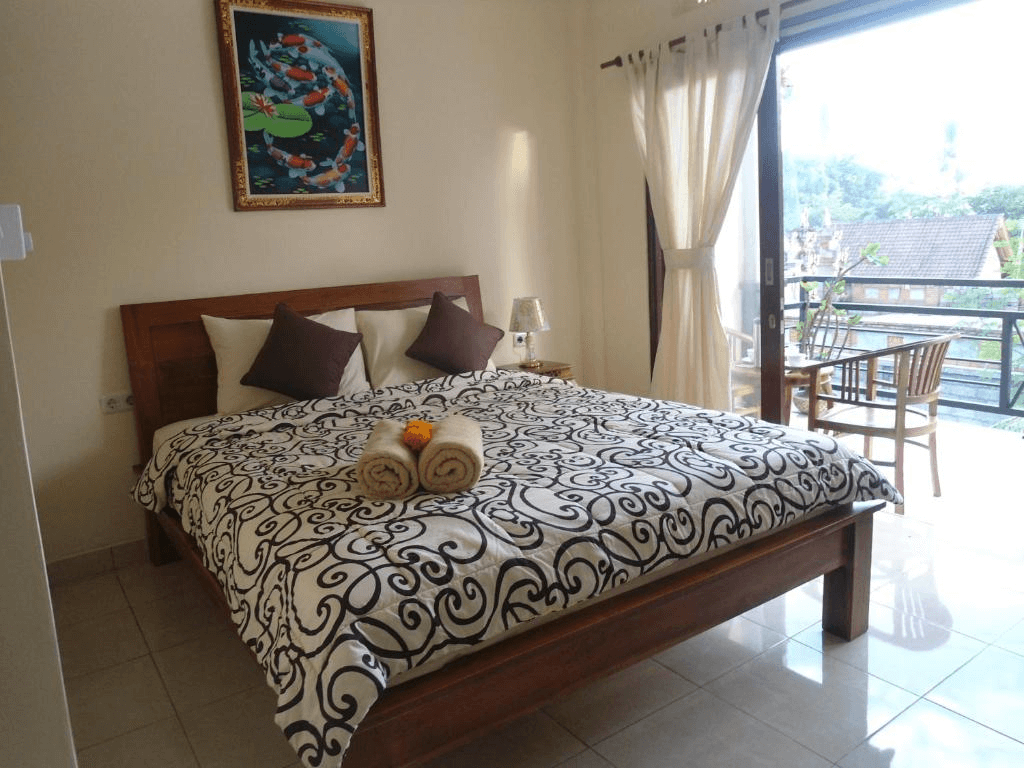
The guesthouse has spacious rooms with a balcony on each, air conditioning, a fridge and kettle, and also a semi-indoor pool for guests. For me, it was more than comfortable.
The only thing you should know is there’s no kitchen access, so it’s not possible to cook your own meals.
This meant I was ordering my meals from GrabFood, but that was totally fine for me.
Especially since it’s Bali, so you have many delicious things to choose from and it’s easy to stay healthy!
The training
It’s an intense schedule but nothing more than you would expect at other camps.
Monday – 8am to 11am Tuesday – 8am to 11am, 3pm to 5pm
Wednesday – 8am to 11am
Thursday – 8am to 11am, 3pm to 5pm
Friday – 9am – 11am
Saturday – 1pm to 4pm
Sunday – OFF
So basically you train twice a day on Tuesdays and Thursdays, every other day is one 2-3 hour session except for Sunday.
There’s also the chance to add in some private sessions with Ajay, which I did do ($50USD/hr) and thought it was valuable.
Of course, the camp will be slightly different for everyone, depending on how many players are there at the time and the levels. During my week there was only one other (foreign) player at training, but some local players join in the training too, including Ajay’s son who is still a young kid but can seriously play!
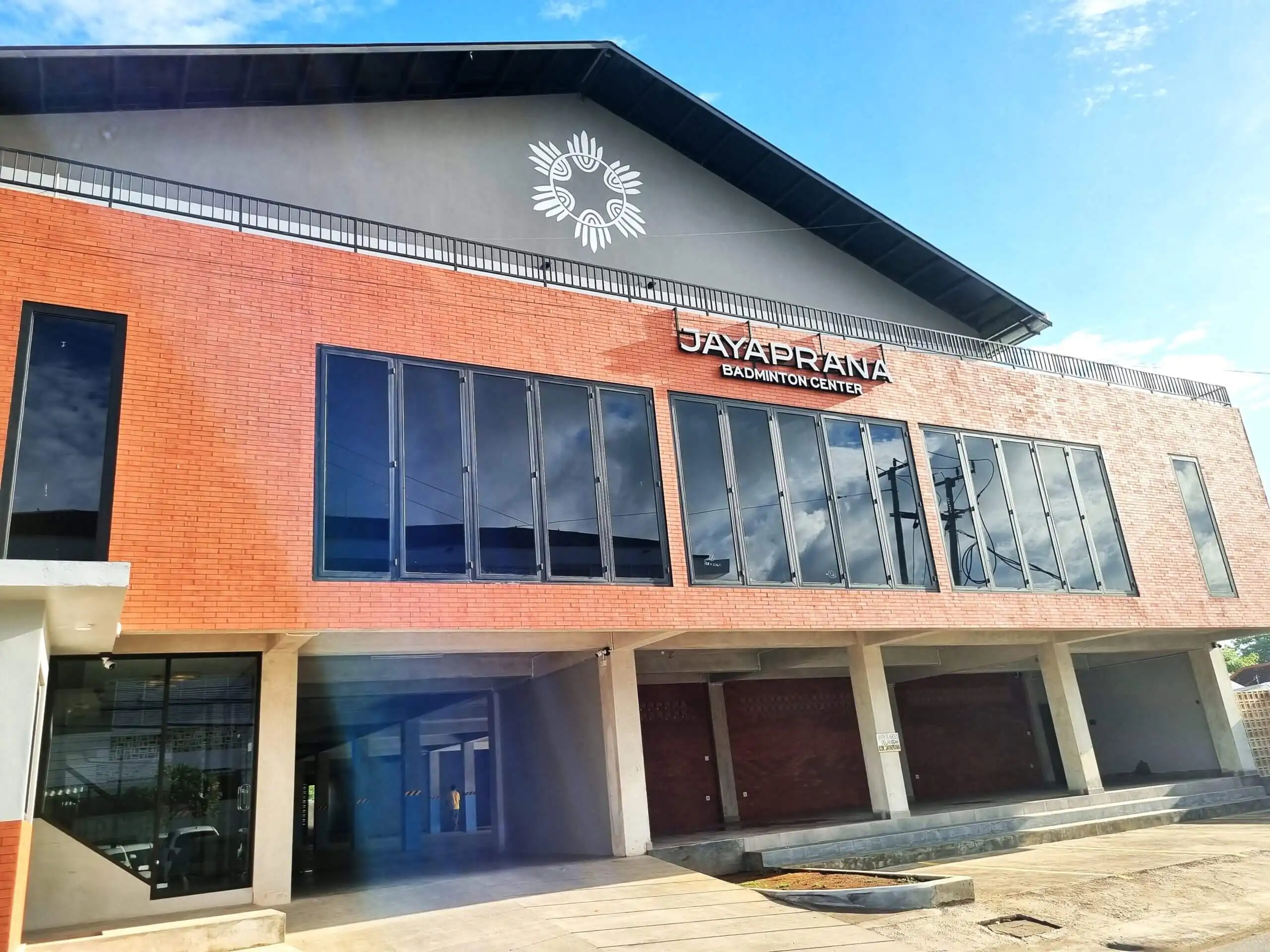
The training is held at a newly built badminton complex called Jayaprana, just around the corner from the guesthouse.
As for what we did while I was there, it was mostly the same format every day.
Sparring with Toni and the local Bali players
Drills with Ajay – sometimes he will drill a new shot with you, sometimes focus on footwork, sometimes he works on technical things. Some specific things him and I worked on were – backhand technique, improving smash power, deception at the net, reverse slicing, and various tweaks to my footwork.
Fitness and conditioning drills
Ajay’s coaching style is very relaxed and there is no real structure to it – by that I mean it’s not like there’s a daily schedule where you do 20 minutes of warmups, 30 minutes of footwork, 30 minutes of drills, 30 minutes of sparring etc etc.
He kind of just watches you play and picks out different things for you to work on. Some days you spar a lot, some days not much. Some days you will do lots of conditioning work, some days you won’t do any.
Warm ups, warm downs and stretching you mostly do on your own – so it helps to get there a little early and stay a bit later so you don’t waste your court time on that.
I know some people prefer really structured training, but I personally don’t mind either/or. I think it kind of suits the Balinese vibe anyway that things are a bit more freestyle and keeps it interesting!
What are the facilities like?
Jayaprana has five courts and it’s built for badminton, so the ceilings are high and there is no wind.
The courts are mats but I don’t think they’re Yonex or Victor mats but some local brand. This means they’re not tournament quality, but still pretty good, and certainly better than wooden courts.
As for shuttles, they use a local brand of shuttles, again not the same quality as Yonex/Victor/Yangyang shuttles but still fine to train with and I had no complaints about the quality.
Inside the courts they also have a little drinks shop where you can buy smoothies/juices and also regular stuff like water and Pocari Sweat or Nescafe.
There are showers too if you want to rinse after training.
Overall it’s a small but good quality facility.
As for stringing, luckily you’re in Indonesia, which is a badminton crazy country! So finding badminton shops to string isn’t an issue. Unfortunately, they don’t do it at the hall, but some local stores can do it and they’re not too far away.
It’s also cool that since you’re in Indonesia you can find lots of cool badminton gear you might not always find at home.
I bought tons of gear that I can’t find easily at home, including playing kit, a bag, wristbands etc.
All my teammates are jealous of my new shoes!
What does a typical day look like?
First, you wake up at 7:30 am, get all your crap together and run to the hall.
Then when you arrive ten minutes late, you realise you can relax because it’s Bali and nobody is going to yell at you.
Train for three hours.
Walk back to the room and order some food on Grab.
Eat.
Go to sleep.
Wake up again at 1:30pm for afternoon training.
Train for two hours.
Get back to the room at 5:30pm.
Do some laundry and think about what to eat for dinner.
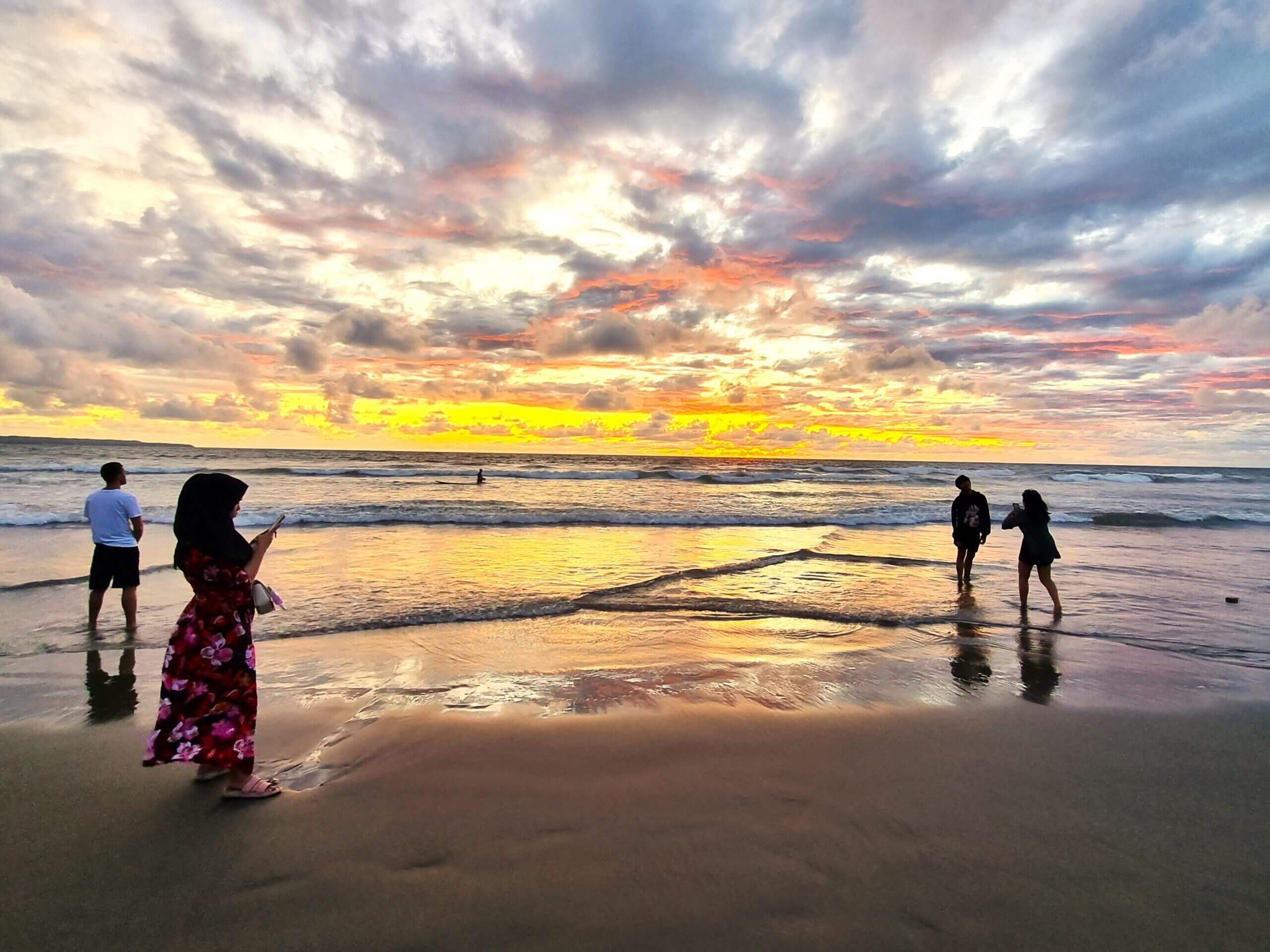
If you’re tired, just order Grab. If you have energy, you can head out to Seminyak beach and eat at one of the nice restaurants, or eat at one of the local places around.
Go to sleep.
Wake up and do it again!
Would I recommend it?
The short answer is yes. I had a great time and would recommend it.
Now for the fine print:
It’s a small camp. Like I said, the hall has five courts and there is one coach.
If you’re an elite-elite player (as in, you are aiming to compete with world-ranked #500+ players, national level players in your country, advance far into Future Series/International Series tournaments), then it might be a bit small for you. You are not going to find a big squad of elite sparring partners from around the world like you would in the big camps in Dubai and Thailand. For context – I compete internationally and my world ranking at the time was around 600.
Ajay is a high-level coach so of course, working with him will still be great, and I’m sure they’ll bring in whatever top players they can to spar with you. For example, Toni knew I was prepping for the Oceania Champs so he arranged one of Bali’s top players to come in and give me some games (he was waaay better than me). But also remember Smash-travel accepts beginners, which is fantastic, but it means it’s also not catered specifically to top-level players.
UPDATE 2024: Ajay is no longer the coach there, I can’t vouch for the new coaches but Indo coaches are generally high level.
Still, if you’re not preparing for elite-level international competition (which is 99% of us) and you simply want to get better at badminton, I think Smash Travel is a great camp and tons of fun. For anyone B grade and under it would definitely be beneficial.
I paid for the all-inclusive package for one week. The price is reasonable and personally I thought it was very fair value for money.
Booking is easy, just hit them through their website smash-travel.com.
Are you in Bangkok and want to extend your stay past the allowed 60 days?
If you entered Thailand on a visa exemption on arrival, you would have received 60 days to enjoy the kingdom, but you have the option to extend this for a further 30 days, and it’s very easy to do!
In this guide I’ll show you step-by-step how to get your 30-day extension.
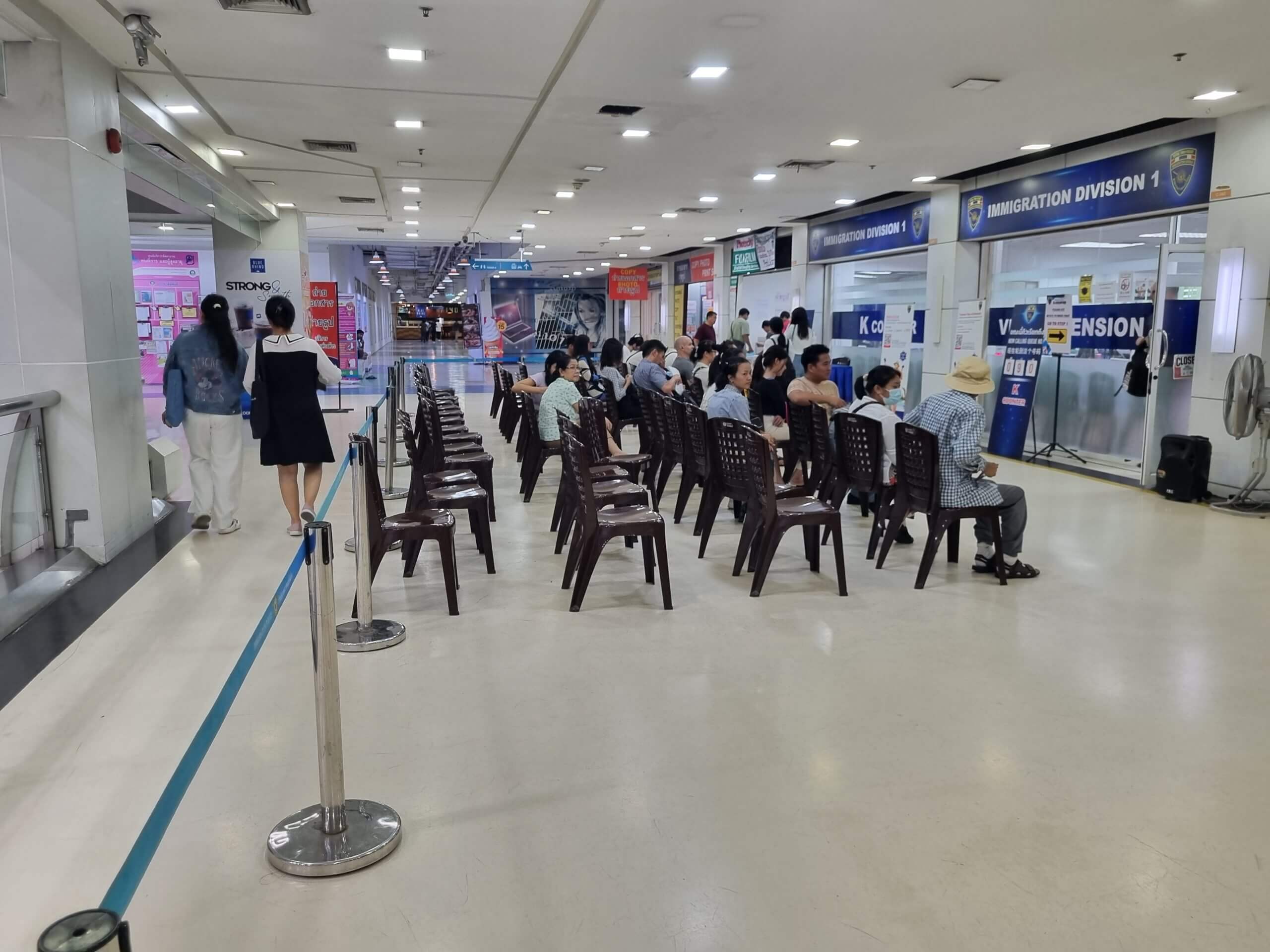
The first thing you need to do is get yourself to the immigration office at IT Square in Lak Si (third floor). The Google Map address is here.
It is not hard to find, in fact, it is literally right outside the Lak Si subway station (red line).
Here’s what you will need to take with you:
Your passport
1,900 baht for the extension
104 baht for some printing
A pen (very important!)
The office is open Mon-Fri from 8:30 am to 3:30pm (they close at 12-1 for lunch).
My suggestion is to get there at 8:30 a.m. because the crowd will be far less and the staff will also be less grumpy before they start dealing with clueless tourists all day.
As soon as you reach the third floor and find the office you’ll walk past these photocopy shops:
Give them your passport and they’ll make a photocopy of your bio page and your visa stamp page. You shouldn’t need to tell them what you need, they do this thousands of times per week.
Then they’ll ask if you need photos. If you don’t have a passport photo handy (a physical copy, not on your phone) then say yes! They’ll quickly take your photo and print some for you.
All this should cost you 104 baht or thereabouts.
Once you’ve got your documents, head to step one (everything is signposted).
At Step 1, there will be three forms you need to fill out.
You don’t need to print them beforehand, they are all provided:
The forms are all straightforward, it’s the usual things like your name and address and favourite ice cream flavour (just kidding).
For those of us who are a bit slow they even have written examples posted on the wall for you to copy:
Make sure you fill everything out properly because if you don’t, the ladies will just send you back to fix it and you’ll need to rejoin the queue again.
When I was last there, I saw three people get sent back to correct their forms. Don’t think you can just get to the desk and they’ll let you fill in all your gaps there. They won’t! You’ll get banished back to the form-filling station, so do it right the first time.
As i said the forms are straightforward, but you will need to put a full address for your accommodation so make sure you have this handy. You can’t just write “Sheraton Hotel” you actually need to write the street name, district, country, city, postcode etc.
Once you finish your forms, you’ll join the queue at this station where someone will check you completed all the paperwork correctly.
This is also where you will hand over your passport photo and your photocopies of your passport.
If everything is peachy, you’ll get your forms stamped and be sent to the processing room which looks like this:
Wait for your number to be called, the staff here will collect your 1,900 baht extension fee and take a photo of you for their biometrics.
I believe they only take cash (and they give change).
Once that’s all done, you’re done! Just head back to the waiting area and take a seat.
If they’re busy you might wait a while, but usually your passport comes back within 15-30 minutes. A staff member will come out of the room with a pile of passports and call your number.
If the crowds are not too big, this whole process from start to finish can usually be done in less than an hour.
If the queues are long and you need to wait over the lunch break, you might take 3-4 hours.
This is why it’s advisable to arrive early, but in most cases, you should be in and out within one day.
Also, this extension service is only for people who entered Thailand on a visa exemption.
If you have a different type of visa that you acquired as an e-visa or from a Thai embassy, you will need to extend it at the immigration department in Chaengwattana (Building B).
Do I need a TM30 form?
You might have read around the interwebs that you need a TM30 form.
The TM30 form is used for your accommodation provider to register you online with the immigration department.
I asked if my accommodation had registered me before I went, and they said they had.
I am actually not sure if they checked this on their systems while I was doing my extension, it’s possible they did. However, they definitely did not ask me for a physical copy of the TM30 form, nor did I see it mentioned anywhere at any of the stations.
If you want to be safe, you can ask your accommodation provider if they’ve registered you with a TM30 before you go (I think they’re all supposed to do it regardless of whether you’re extending or not).
Do I need a return ticket?
No, this was never asked for, nor is it mentioned anywhere in the requirements.
They did not even ask for a leaving date.
When given my passport back they just told me the date I had to leave by.
Can I book an appointment online?
Yes, this is possible, however I have not looked into it nor do I know anyone that’s actually used the service.
If you go early, the process is easy enough that you can be in and out within an hour, so I don’t see any need to try book appointments online and complicate the process more than it needs to be.
However, you can try it. If you do – come back and let me know how it goes!
When trotting around Canggu, you might see a piece of wall art on the side of a restaurant that reads “Bali is never a bad idea.”
Bali is full of wonders and treasures and it’s no wonder it’s been a favourite holiday destination for decades.
Here’s one thing you may not know about Bali, though.
The island is huge.
For example, are you trying to decide between Ubud and Kuta?
Choose well, because I can promise you will not be spending a lot of time in both. Driving between the two is over an hour, and since traffic in Bali can be horrendous, it will be even longer during rush hour.
How do you know where’s the best place to stay for you?
This guide! Below I’ve mapped out the main areas of the island, and not only are they quite distant from each other they’re all very different as well.
By the end of this guide you should have a much better idea of what Bali has to offer, and which part of the island is going to give you the Bali experience you’re looking for .Of course, if you have any questions, you can leave them in the comments below. I’ll be here!
How to get to your destination
Your first challenge is getting to your accommodation in the first place.
Most likely you’ll arrive via Denpasar Airport.
Luckily, buying a tourist sim at the airport is extremely easy (they’ll all be hounding you as soon as you exit baggage collection). Once you have data on your phone you can simply use the Grab app (similar to Uber) to order a ride.
You can also pre-book your ride with Klook, but in my experience that’s not really necessary.
Expect to pay between $20-$40 to get from the airport out to the beaches, depending on which one you’re going to.
Sanur – Smaller beach area – quiet but not much happening, a few nice restaurants/hotels though.
Denpasar – Central area with less tourists, more local living
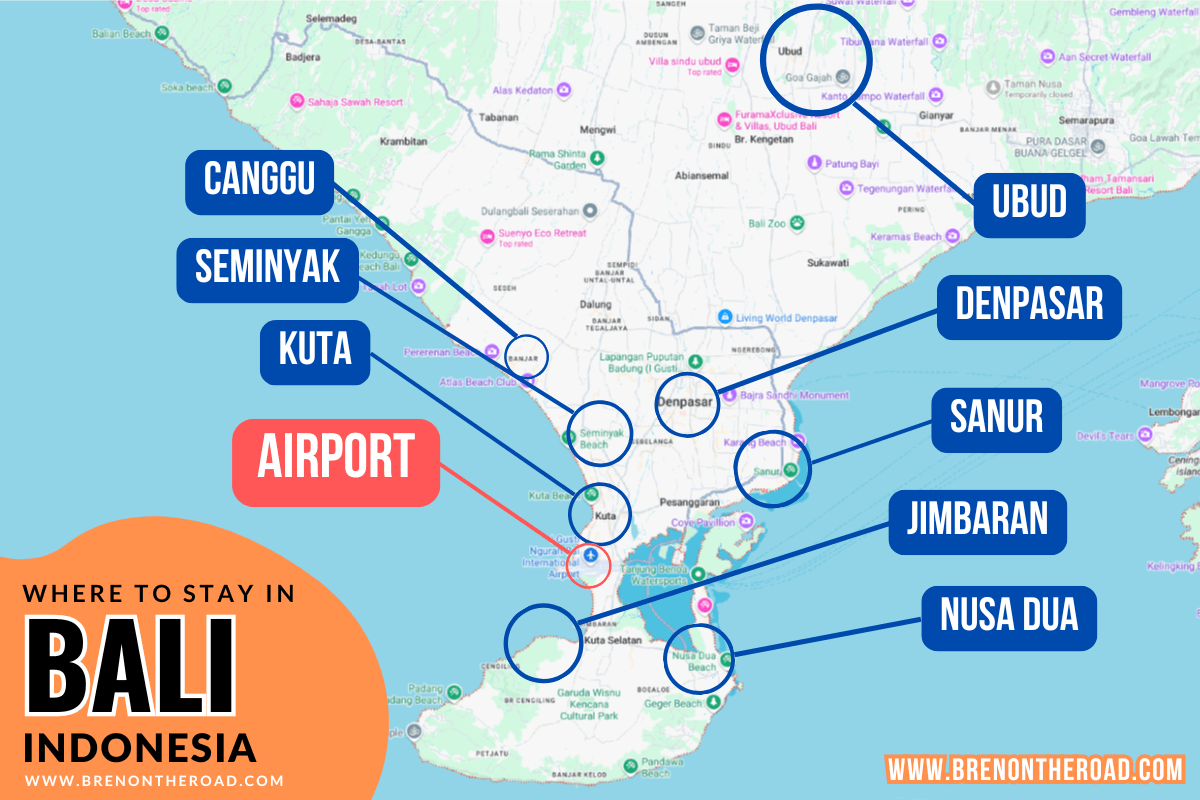
Map of Bali
This is a map of the most popular areas to stay in Bali.
As you can see, all the areas people typically stay are in the south of the island (where the airport is).
Of course, the north of the island can be visited too, but as a tourist you’re probably coming to Bali for nice restaurants, some shopping, live music on the beach, a comfy hotel, maybe a massage and a few fun activities, and the north isn’t really the place to find all that (it can make a great day trip, though!)
Click on each coloured tear drop to see the name of a place and a screenshot.
We’ll go through more details of each of them in the guide below.
Where To Stay In Bali
Kuta
Kuta is probably the most common area for tourists in Bali.
Bali frequenters tend to hate the place, but I think it’s not a bad spot for first-timers or people who aren’t accustomed to travelling in Asia.
Things might be a little more expensive here but it’s basically an entire beach town set up for tourists, so everything is accessible and you will never have trouble finding a place to stay or something to eat.
Do be aware that it’s a favourite for backpackers and younger travellers and a lot of partying goes on here – that means drinking during the daytime and noisy nightclubs after dark.
However, it’s easy enough to stay away from those areas if you want – though if you’re trying to avoid that kind of thing my recommendation would be to simply stay in another area (discussed below!)
Points of interest around Kuta:
Waterbom Bali – A huge waterpark, great for kids
Discovery Mall – Huge mall with all your favourite brands
Kuta Beach – most popular beach in Kuta (maybe all of Bali?!)
Bombing Memorial – The Ground Zero Memorial in remembrance of the Bali bombings
Beachwalk Mall – Big, sprawling mall in Kuta
You should stay in Kuta if you are:
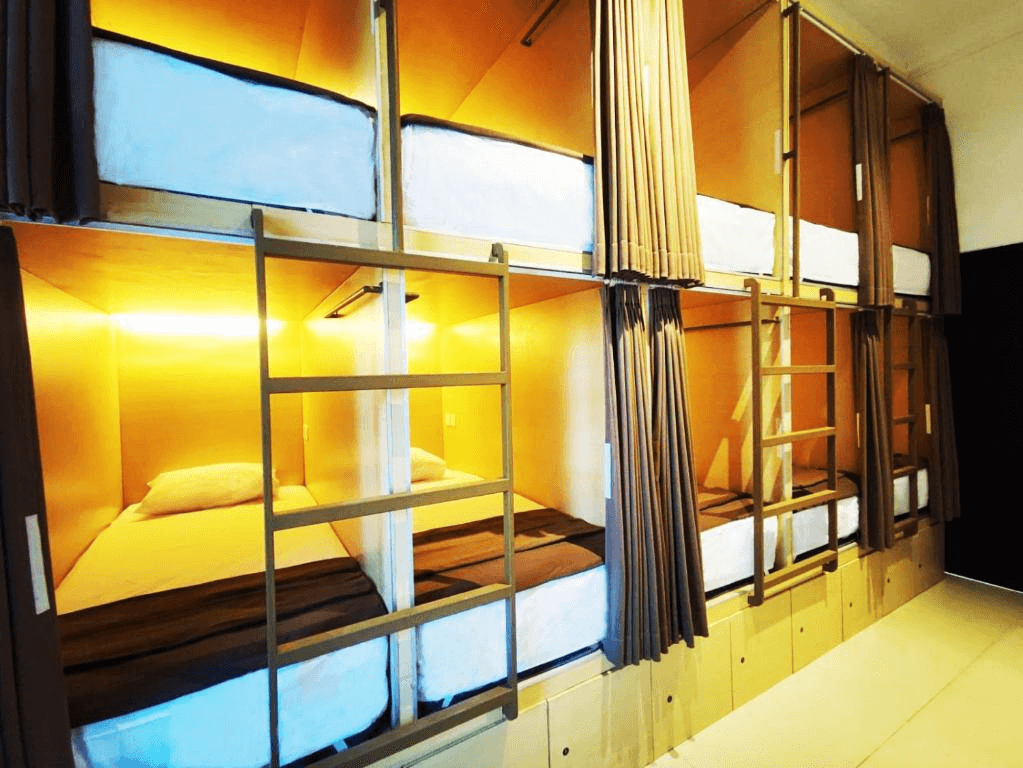
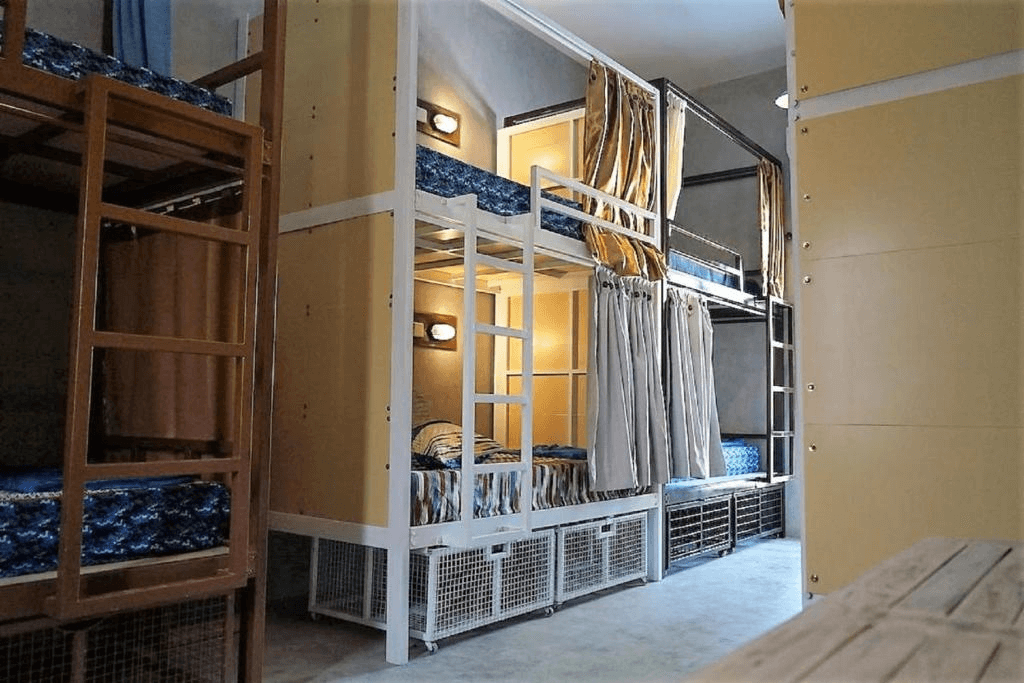
A backpacker looking for hostels/budget accom and trying to save money.
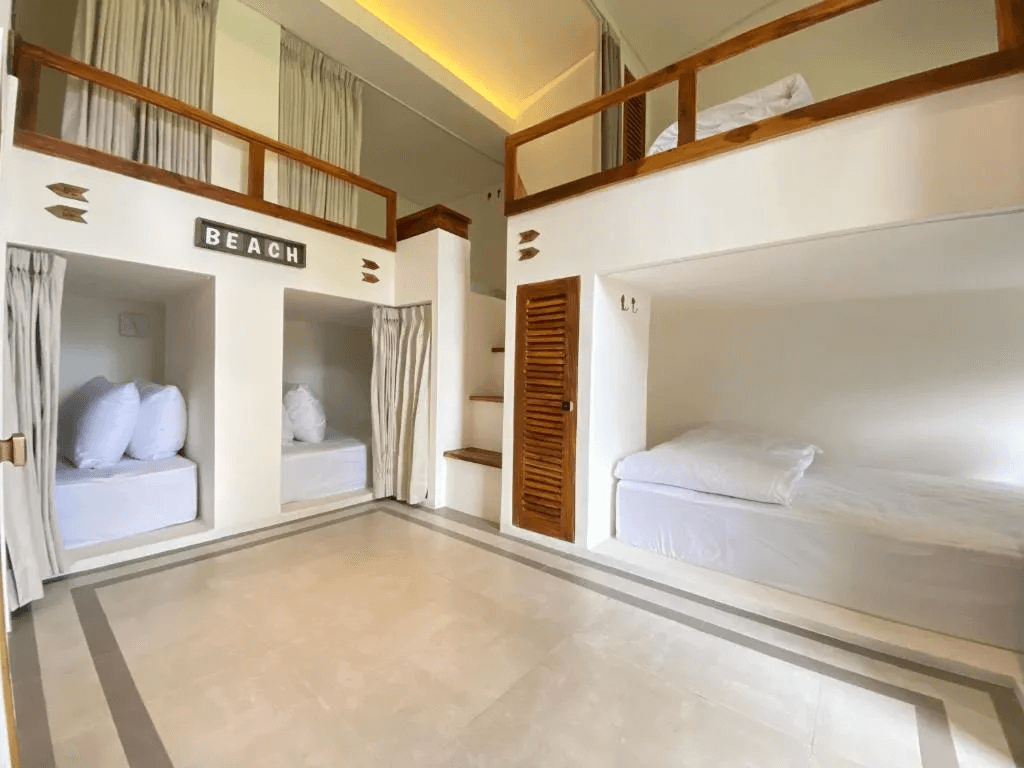
It’s about a 10 minute walk from the beach, and the facilities are super modern and clean. Capsule beds means you get to enjoy your privacy while still being able to socialise with other backpackers.
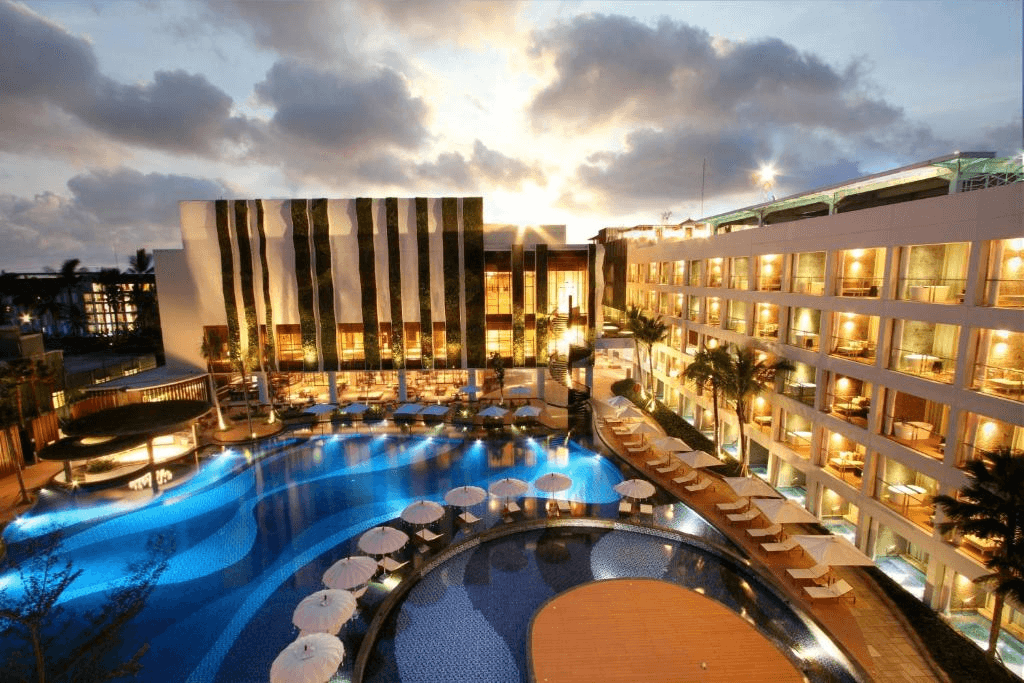
Beachfront on the wonderful Legian Beach, the resort is fully equipped with an amazing pool, spa, gym, plus a kid’s club for you to leave the little ones while you go for a cocktail.
Three fantastic restaurants serving everything from local fare to steaks and seafood means you never have to leave!
You can think of Seminyak as the calmer baby brother of Kuta.
You can still find clubs, parties and cocktails on the beach here, but the vibe is much more mellow. Think beanbags on the sand, listening to live acoustic music, rather than raving and tequila shots.
It’s also very tourist-oriented so very suitable for first-timers and inexperienced travellers. A lot of the area around Seminyak is walkable, so it’s quite nice in the evenings to just walk around, maybe buy a few souvenirs and look for somewhere to eat.
If you love a more laid back beach where you can chill with a drink and some lunch, this is also the spot for you. Seminyak is home to a yuuuuuge stretch of beaches consisting of Petitenget Beach, Kayu Aya Beach, Seminyak Beach, Double Six Beach and Legian Beach. This stretch of white/golden sand beaches is lined with restaurants and beach clubs and is perfect for taking long walks, or having a drink and laying out on the sand for an evening. Yes, good for swimming too!
There’s also a diverse mix of accommodation so whether you want a 5-star hotel or a hostel dorm, you’ll find it here no problem.
Points of interest in Seminyak:
Eat Street – Long street with lots of great restaurants! (mostly international food)
Seminyak Beach and others – a beautiful stretch of beaches with beautiful sunsets!
Shopping – many boutique stores for clothes/souvenirs
Nia Cooking School – Popular cooking classes in Bali
Seminyak Flea Market
Nyaman Gallery – Well-known local art gallery
You should stay in Seminyakif:
You want a beautiful beach!
You want a good selection of places to eat and drink, without the big crowds.
You want to be near Kuta, but not in the centre of the action.
Modern hostel with both female and mixed dorms, shared kitchen and an on-site restaurant. Fantastic location makes it a 5-minute walk to the beach and surrounded by many great bars and restaurants to choose from.
Not the cheapest hostel, but great value for money for what you get.
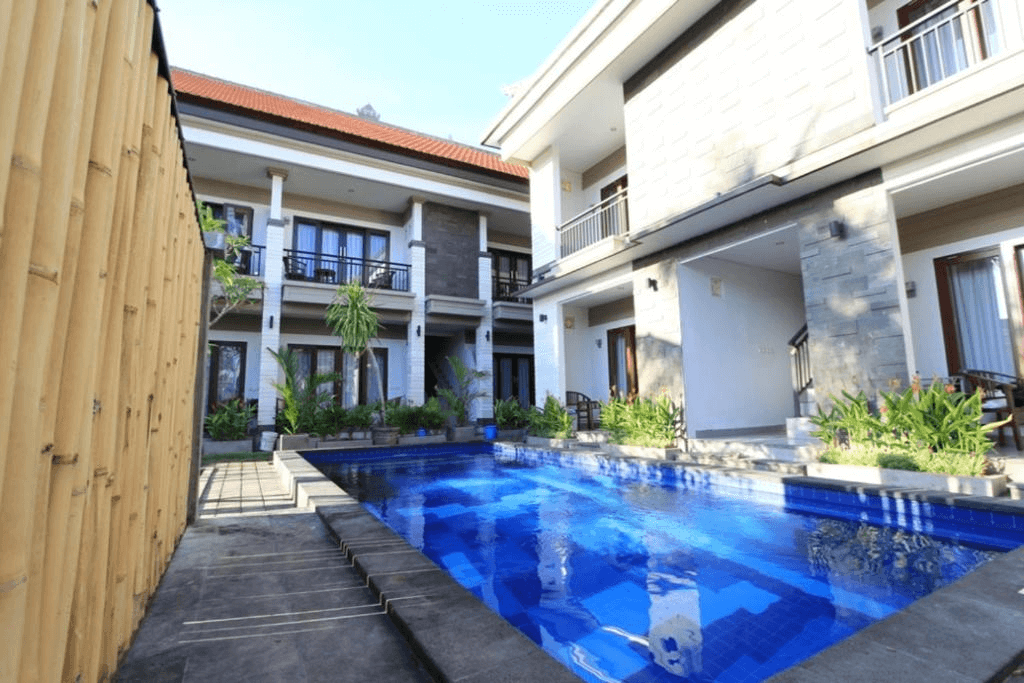
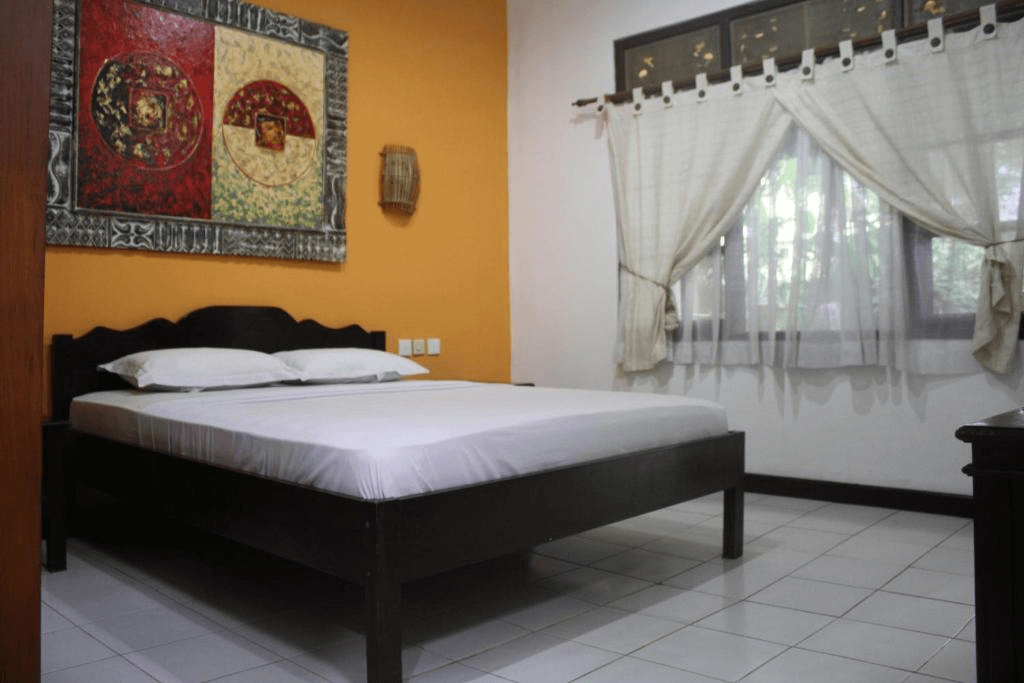
A local guesthouse offering basic accommodation but they do all the basics right.
Private rooms with private bathroom, a beautiful garden setting, and well managed. Upgrading to a room with kitchen is possible. Five minutes walk to the beach makes it a perfect choice.
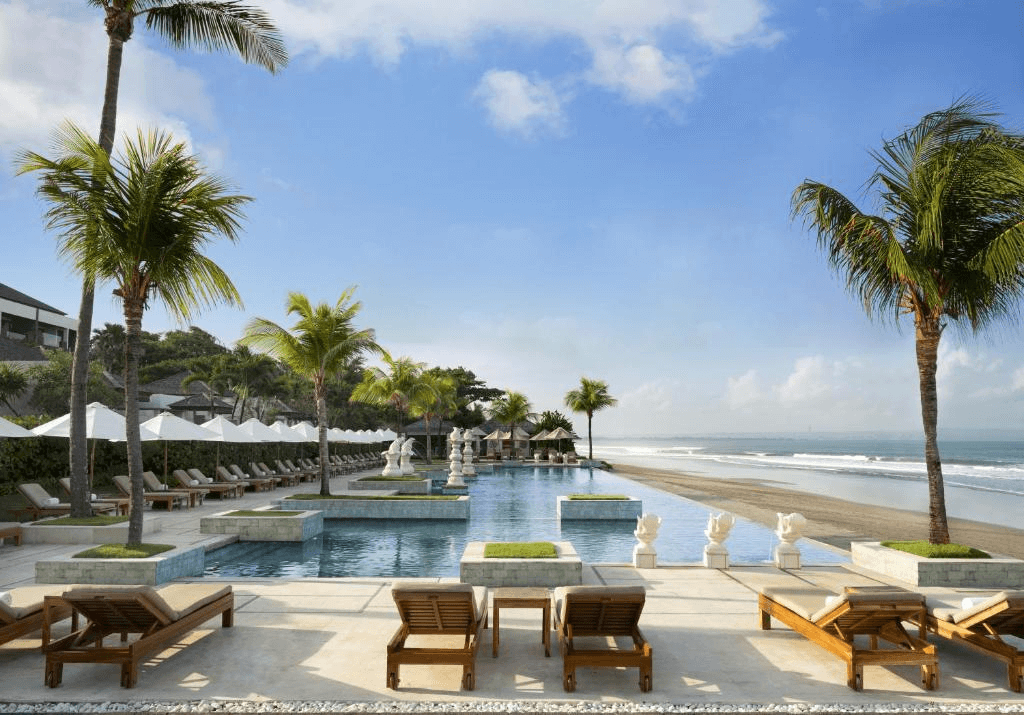
Hands down the best hotel in Seminyak, it features a beautiful infinity pool that opens right onto the sand. The rooms are equipped with huge TVs and beautiful bathrooms with rainshowers, and if you feel like splurging, you can upgrade to a villa with your own hot tub over ocean views.
A fully equipped spa and fitness centre, not to mention two fantastic restaurants to cater to your holiday cravings.
It’s hard to pinpoint exactly who the target market is for Canggu – people say it’s for backpackers, but I don’t think that’s accurate.
Here’s what Canggu has to offer:
The best gyms on the island
Many health-focused restaurants – on menus you’ll find things like “tropical smoothie bowls”, “pumpkin protein brownies” and “liver and marrow patties”
A few vegan restaurants
A pretty good surf beach
Lots of coffee
Many shirtless gym bros and girls working out in bikinis
I love the area, but I think it’s quite pricey and is aimed at a slightly higher budget than what a backpacker can afford. I usually spend about $100 a day in Canggu on food and accom, and that’s when staying in a budget guest house. Not to mention, I joined the most expensive gym of my life while I was there (about $110 USD per week).
Points of interest in Canggu:
Canggu Beach – Great for surfing lessons
La Brisa Farmers Market – Every Sunday!
The Lawn – Popular beach club in Canggu with huge parties every Friday
FINNS – Infamous party spot in Canggu – 11 bars/4 pools, nowhere else like it!
Pura Tanah Lot – Famous sea temple in the ocean
Bali Body Factory – Amazing gym for those looking to stay fit! Day passes available.
LOTS of great restaurants
You should stay in Cangguif you:
Want to party! (but – peace and quiet can also be enjoyed in Canggu)
Want surf lessons.
Looking to get healthy (many healthy restaurants and gyms)
This small hostel does everything right – clean rooms, nightly social activities, many areas to mingle including the pool and lounge, and a short walk to the beach.
This is where I stayed on my first trip to Canggu. It’s a very basic guesthouse but has an excellent location, right across from Bali Body Factory gym and surrounded by great restaurants.
It’s about a ten minute walk to the beach, and the management is wonderful.
Nothing flashy but if you’re on a budget, it’s everything you need!
Ubud is famous for being Bali’s “hipster/yogi/vegan/spiritual” retreat where you can get away from the clubs and the parties and instead meditate yourself into a new you.
Up in the north of the island, where quiet roads among rice paddies is the norm, here you will find many vegan/whole foods/healthy restaurants, meditation and breathing classes, yoga schools, fasting and cleansing retreats and the like.
It is quite a distance from the beaches, but don’t worry – you will definitely be enveloped in enough greenery and nature to keep you happy!
Even if you don’t want to stay here, it’s a fantastic place to head for a day trip and enjoy a bike ride in the paddies or a stroll through Ubud town.
You should stay in Ubudif you are:
Wanting peace and quiet
Wanting to get healthy
Looking a spiritual/relaxing experience
Want to enjoy the “Eat Pray Love” type of Bali trip.
Points of interest in Ubud:
Sacred Monkey Sanctuary – Famous monkey conservation sanctuary
Campuhan Ridge Walk – The most popular walk in Ubud
Tegenungan Waterfall – Beautiful falls where you can swim a short drive from Ubud
Ubud Art Market – One of the best markets in Bali!
Tegalalang Rice Terraces – The most famous paddies in Ubud
Ubud Water Palace – Hindu water temple in the centre of Ubud
This boutique hostel is stylishly designed and sits within a a local Balinese housing compound. A few activities are put on during the week and free wifi is available throughout.
If you like small tasteful hostels, this is a great choice for your stay in Ubud.
If you’d like to indulge in daily fresh pastries, sweets, champagne, while relaxing in your own private pool in your private villa overlooking Ubud, this is the spot you’re looking for.
There is also an on-site spa a wellness centre where you can get a massage or take a yoga class to ensure you stay vibrant and healthy during your stay.
Whatever you need, the staff will attend to your every need.
I have not spent much time in Jimbaran personally, but it’s a spot that is popular with surfers due to the many unique surf breaks, and has some beautiful beaches.
It’s also a popular honeymoon spot, as the area is more targeted towards luxury vacationers rather than backpackers and young people.
You will find many luxury resorts here, and some of the best beaches on the island.
It’s not far from Kuta but is significantly less touristy and crowded.
Points of interest in Jimbaran:
Kedonganan Fish Market
Jimbaran Beach – One of Bali’s best!
Dreamland Beach – Very popular!
Padang Padang Beach – Famous surf beach
Balangan Beach – Another famous surf beach
Pura Ulun Siwi – Black stone temple
You should stay in Jimbaran if:
You’re on a honeymoon and want a bit of liveliness, but nothing too crazy.
You love good beach.
You looking for upper-end accommodation.
Where to stay in Jimbaran:
For the backpacker:
Personally I don’t think Jimbaran is the greatest spot for a backpacker, but if you’d like to stay around here I’d go with the Bali Bobo Hostel.
It’s a little far from the beach, but as far as hostels go it does all the basic things well and is decent value for money.
Set right on the sand of Jimbaran Bay, this beachfront resort has everything you could desire.
Your own Balinese villa set in a tropical garden, three on-site restaurants to cater to all your cravings, a gym to get your morning workout in, a spa to relax and rejuvenate in the afternoon, and a stroll on the beach outside to close out your evening.
Nusa Dua is Bali’s luxury corner, and widely considered the most flashy place on the island.
Home to countless luxury resorts and villas, and the island’s best golf course, this is the part of Bali designed for people who have money to spend.
A 7km beach walk that runs along the coastline which is beautiful to stroll along in the evenings.
The nightlife is very subdued, and most evenings you will simply see couples and families (of all ages) enjoying meals in up-market restaurants and strolling in the sand.
It is significantly more flash than Jimbaran and if you’re on a honeymoon, this would be my choice.
You should stay in Nusa Dua if you are:
Money is no issue.
You want a luxury vacation.
You want to be away from parties, noise, and nightclubs.
You’re on honeymoon and want to impress.
Where to stay in Nusa Dua:
For the budget traveller:
Nusa Dua isn’t really the place you want to be staying on a budget (try Seminyak, Kuta or Canggu instead).
However, if you need to stay around here for whatever reason, a good choice is Amaris Hotel.
It’s a no-frills hotel quite close to the beach that goes for around $25 a night.
Where do I start with this beautiful property!? Located on your own private beach in Nusa Dua, the villas at The Royal Santrian will feel like a home you never want to leave.
Private pool, outdoor seating area, separate dining and sleeping/living areas, indoor and outdoor showers, bath tub, and once you step inside I’m sure you’ll agree – immaculately furnished and designed.
An on-site restaurant serves both western and local dishes, and a classy bar to ensure your champagne or cocktail glass is always full.
In my opinion, the best beachfront offering in Nusa Dua, perfect for a honeymoon or a romantic getaway.
Sanur Beach is around 15 minutes from the centre of Denpasar by taxi and is a much quieter and smaller version of Kuta or Seminyak.
The crowd here is usually couples or families and you won’t find many nightclubs or bars, but rather lots of good restaurants, bakeries and boutique stores.
Sanur is not very popular, but personally I enjoy hanging out here and do so quite often when I’m in Bali. There are a few good restaurants on the beach where you can spend the evening enjoying good food and drink, reading a book and digging your feet into the sand. Luxury!
Points of interest around Sanur:
Blanjong Pillar – the oldest historical site in Bali
Sanur Beach – has a great promenade running along the coast perfect for walks
Sindu Night Market – street food!
Massimo Gelato – the line is always huge, but worth it
You should stay in Sanur if:
You want all the tourist comforts without the bustle.
You’re a couple wanting a quieter beach.
Where to stay in Sanur:
For the backpacker:
Stay at Suwardika Homestay.
A basic hostel that has everything you’d expect in a decent backpackers. 10 minute walk from the beach and one of the cheapest in the area. Great value for money.
Best rates here.
For the budget traveller:
Stay at Sekar Waru.
A very typical Balinese guesthouse with basic rooms with big beds and a small outdoor seating area (you see this a lot in Bali).
Close to the beach (about ten minutes) and all rooms come with a TV and private bathroom. Free wifi and bike rentals also available.
If it’s your first time in Bali – I probably wouldn’t bother with Denpasar.
It’s a very local area and the things people come to Bali for – beaches, shopping, food and fun – is not really abundant around Denpasar.
Last time I stayed in Denpasar, I found myself catching a Grab almost every night to Sanur Beach to eat and hang at the beach.
If you want to be near the airport – choose one of the places in Kuta. It’s only a short drive away.
There it is! Your ultimate Bali accommodation guide. Hopefully, this has given you all the info you need for your perfect Bali adventure. Any questions, feel free to leave them in the comments below. Otherwise, have fun and travel safely 🙂
Stuck in Auckland for a few months, I had to get away to some warmth.
Just for a little while.
I landed in Port Vila late. Did the standard airport haggle with the taxi drivers.
2,600 vatu to get to town.
Ripping me off?
Probably.
Too tired to care.
We settle on 2,000.
I am staying at a place called Tropicana. The taxi driver is slightly mad, driving like he’s in a video game, tailing the car in front literally within inches. I put on my seatbelt.
Thankfully, we get there in one piece.
It’s a charming place, smallish, right on the lagoon. I’m greeted by the owner, a small, docile Australian lady. She walks me to my room.
Spacious, small kitchen, big bed. Opens out onto the water. Exactly what I needed.
Day 2
We’re not here to rest. We’re here to run.
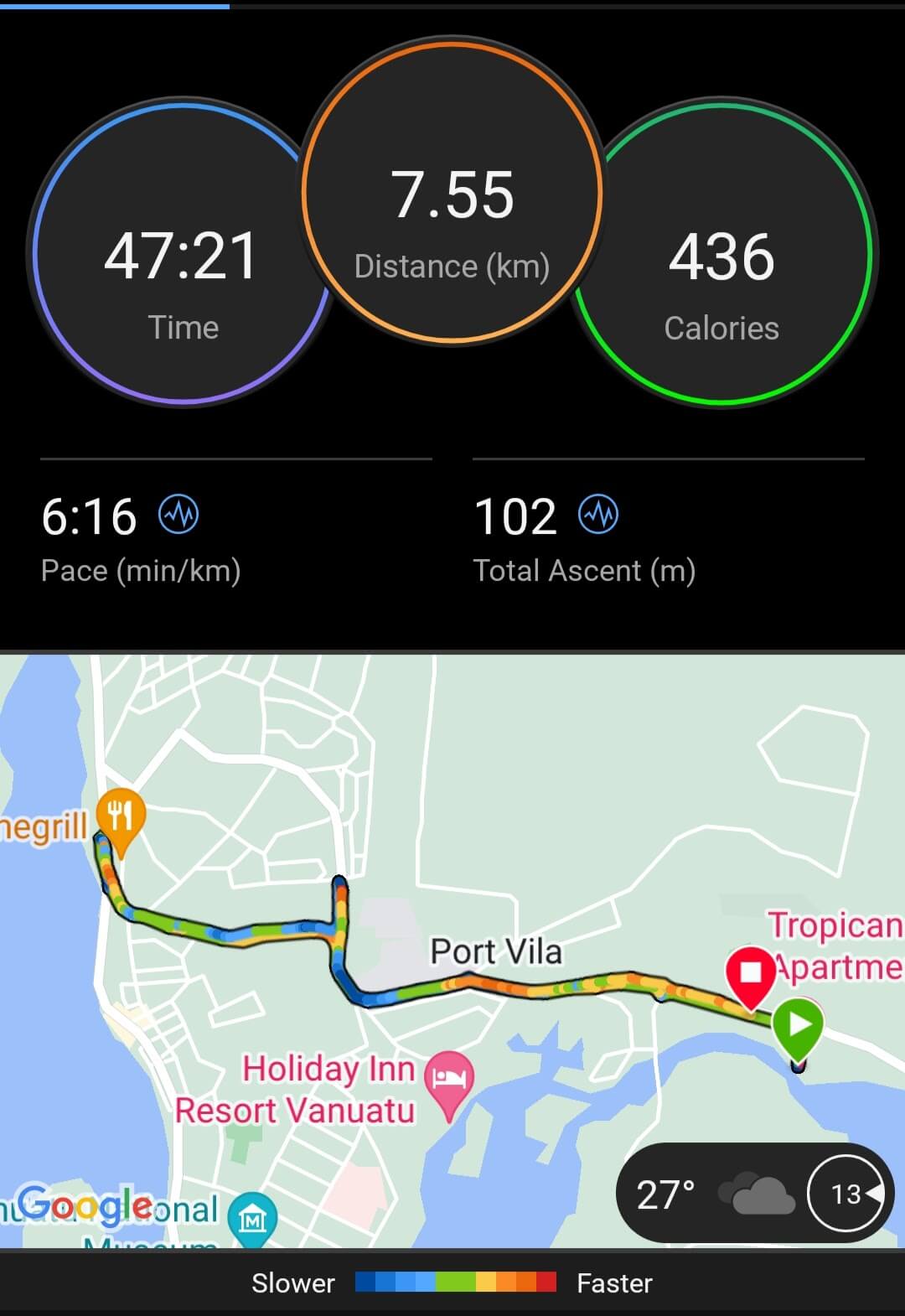
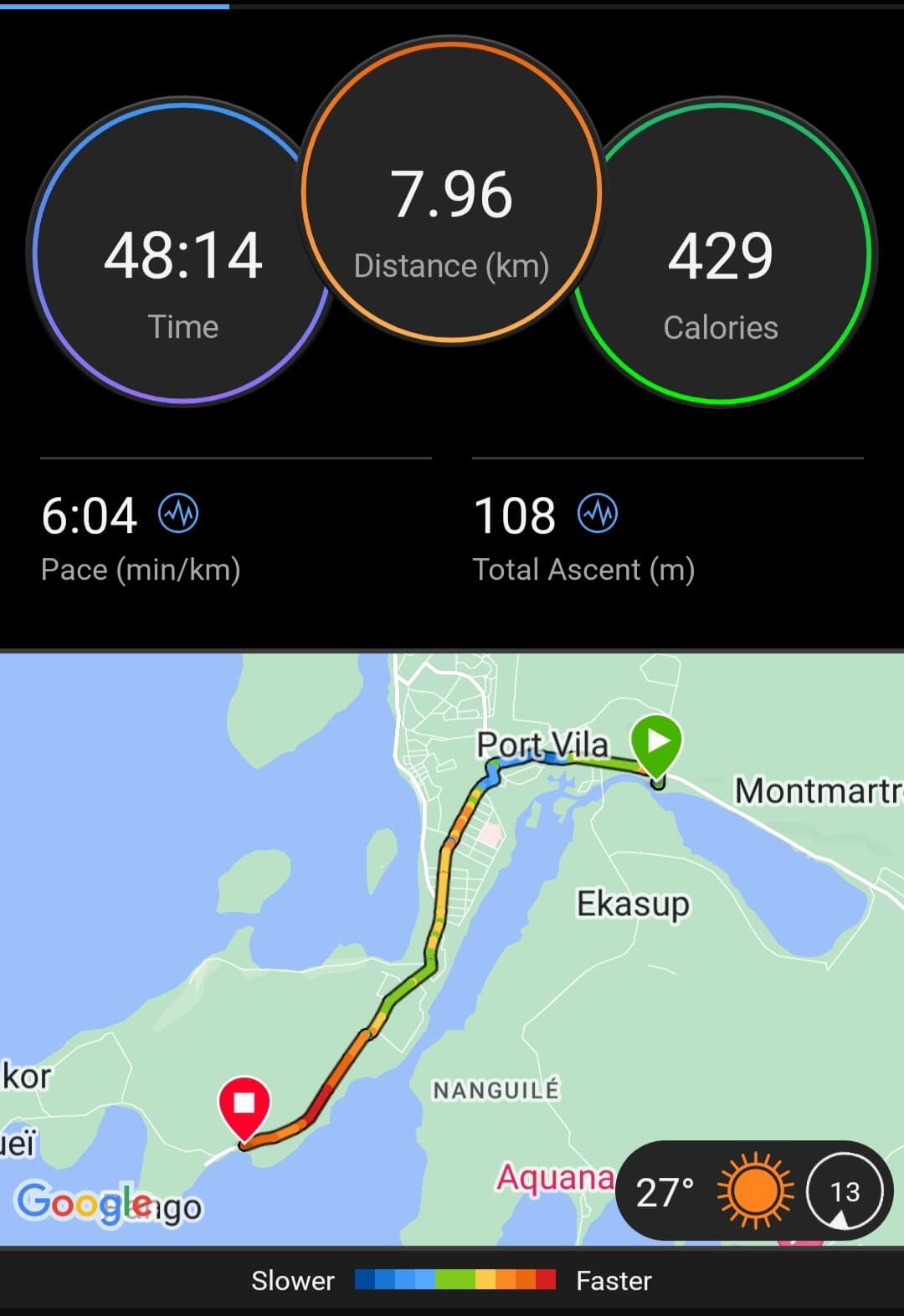
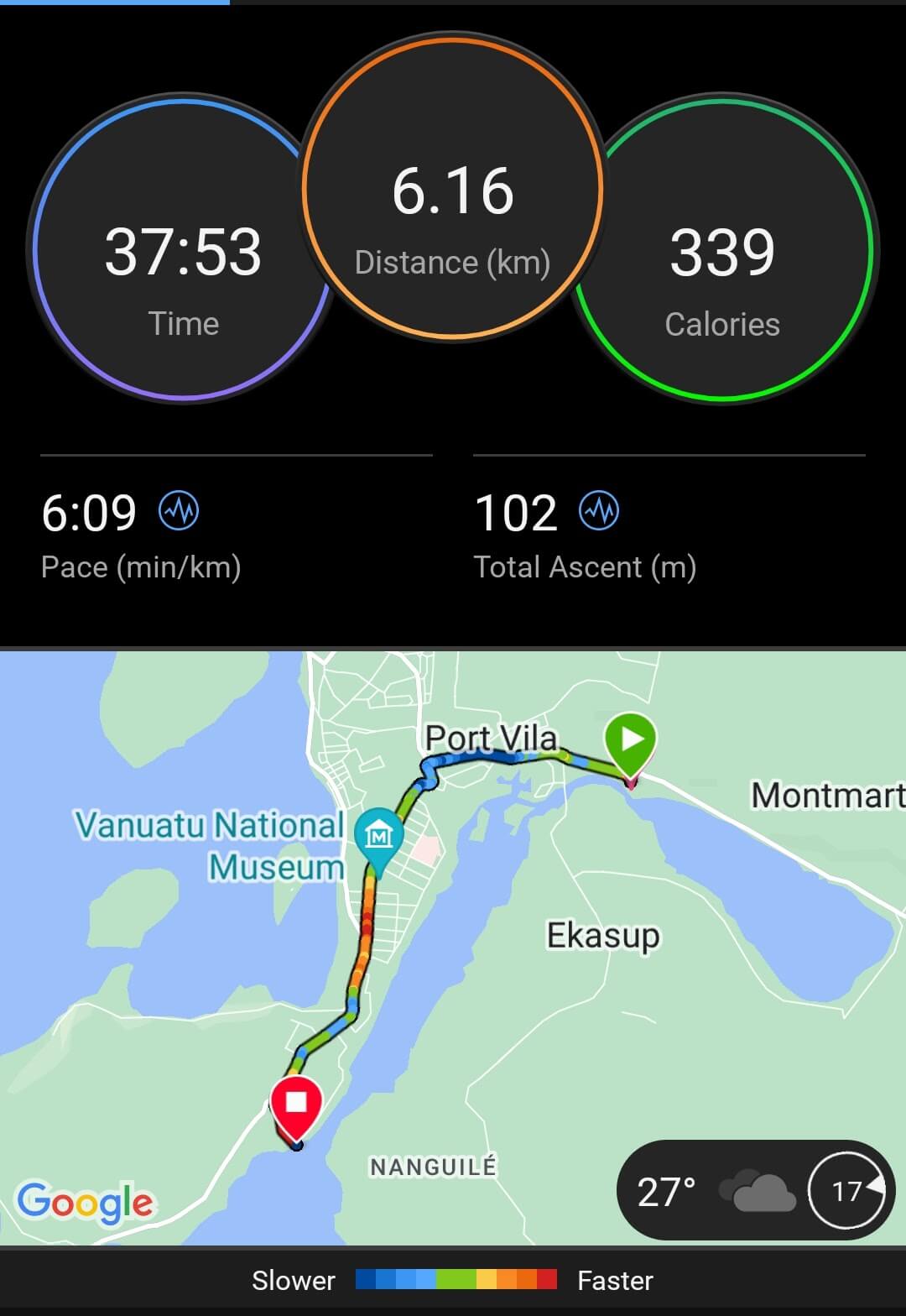
There is a mall on the far edge of town, about 4km from my hotel.
I need to visit the pharmacy, so this will be the perfect combo – run to the mall, buy my stuff, run home.
I head out around lunchtime – the sun is high and screaming.
I decide to leave my phone at home, so I’ve memorised the directions in my head: First roundabout straight, second roundabout right, third roundabout left, then straight all the way until you see the mall.
I run past the supermarket. Au Bon Marche. Past the bus stop.
There are stares. Lots of stares.
Then I hit the first roundabout. Straight.
Next I’m greeted by a hill, an enormous one. As I’m climbing it, rain starts to drizzle.
I’ll soon learn this is normal in Port Vila – rain in the middle of a perfectly sunny day.
At the top of the hill, some schoolkids are walking around. They smile and wave.
I see the bakery. That’s good. I’m supposed to run past the bakery. A strip mall. A fancy supermarket.
Then I see it, the second roundabout. Right.
I tumble down the hill that follows. The third roundabout isn’t far, I can almost see it right away. Left.
Now all I need to do is run straight, and have faith that I remembered this map correctly.
It feels like forever, but I finally see the ocean, and know I’m in the right place. I follow the road as it merges slowly with the waterfront, and then I see the mall.
It’s small, but well kept, clean, and spacious. I see the pharmacy right in front of me on the ground floor. Feeling slightly guilty walking in dripping with sweat, I browse the shelves quickly and get what I need. Stuff it in my pockets, and hit the road again.
When I get back to the hotel, I lounge on the bank of the water, outside my room.
Port Vila is interesting, in that it’s built around a long lagoon that stretches past town and all the way inland, maybe twenty kilometres or more. It’s like a river that runs through the town. While sitting on the edge, you can see the locals on the other side, fishing, swimming, washing. It’s narrow here at Tropicana, and I could swim across in maybe five minutes.
Whether it’s safe to swim in it, that’s a mixed bag. Some say yes, some no. Even on a good day, it looks green.
I cup a handful. Smell it.
I think I’ll stay out.
Day 4
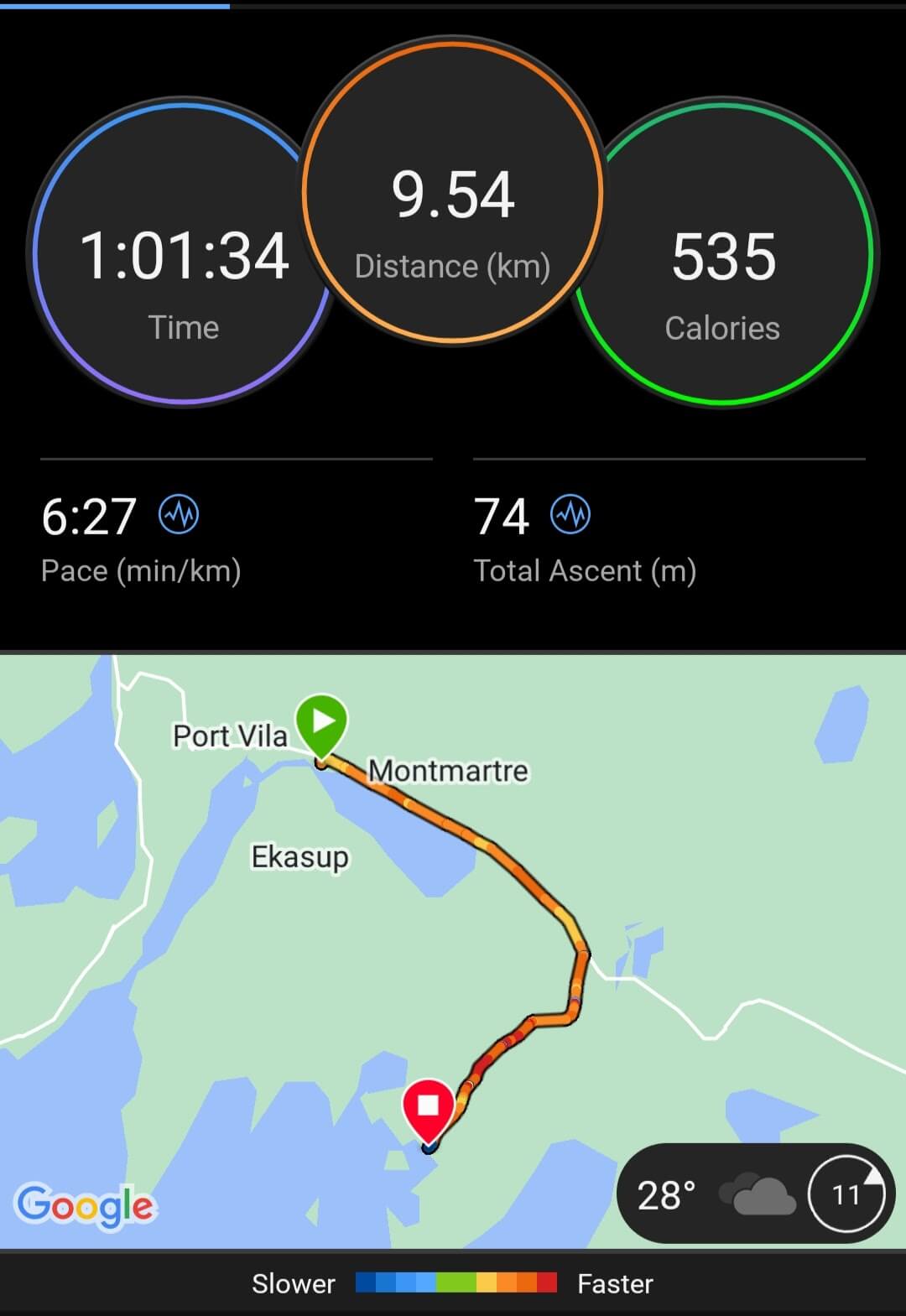
Here’s the plan: I’m gonna pick a resort, run there, chill out, have lunch, then run home.
I browse the map all morning making a shortlist of targets, then decide on Breakas Resort.
It’s a run through town, all the way down to where the lagoon meets the ocean.
I step out my door and look at the sky. Clouds. Heavy ones.
As I walk past reception, I ask “Do you think it’s going to rain?”
She smiles.
“You never know.”
Doesn’t matter. Rain or shine, we run.
I click my watch and go.
Along the same road, past the bus stop, past the supermarket. This time when I get to the first roundabout, I take a left.
The hill that follows is winding and enormous, towered by trees and brush on both sides.
As I hit the top, I see a long, gradual downhill, stretching all the way into town.
I run it slowly, and people stare, just like yesterday. I guess they don’t see many runners in Port Vila. In fact, I haven’t seen a single one since I got here.
I run past places I recognise from the map, Litchees Takeaways, the gas station, the hardware store. There’s more people around, too.
I guess I’m in town now.
It looks … uneventful.
Finally I come to a junction. Three roads. I don’t remember which one goes where.
I pull my phone from my running belt. Wait for the GPS.
Okay, that one.
I take off again, and I can sense the ocean in the distance. The footpath crumbles into nothing, so I run on the road. We’re out of the town centre now, there are fewer cars, emptier streets. A few kids loiter on the corner, kicking a bottle around.
Then I see the first resort. Tourist territory now. I keep running. These are beach roads now, sandy sidewalks, empty, quiet.
I run past another resort. If I remember right, the next one should be Breakas.
It is.
I wander in and find my way to the pool. A waiter greets me.
“You serving lunch?”
“Yes, yes!”
I point to the beach.
“I’ll sit on the sand.”
He nods and waves me down.
I take off my shoes and shirt, sit in the water.
After 8km in the Vanuatu sun, it’s bliss.
The waitress comes.
Pork wrap, fries, fruit smoothie.
It’s my first meal of the day. I inhale it.
The Breakas beach is pleasant.
Probably not postcard quality, but the sand is soft and the water is warm.
There is a small village nearby, and local kids play in the ocean.
As I lounge for an hour in the sun, I ask the waitress for a tonic water.
“We don’t have tonic water, but we have something called Cascade water, it is similar.”
“Sure.”
She brings me a bottle and I take a sip.
Sparkling water.
I spin the bottle in my hands, admire the design. Very nice.
After one more swim, I can see the sun on its way down.
Better get home before dark.
I head back out to the road and wonder how to get home.
I could run, but I really don’t want to.
I start walking, and hope a bus drives by.
By bus, I mean a 12-seater van, which is what the locals use as buses. There’s no set route, you just tell them where you’re going and if they’re heading in your direction, they’ll take you.
It only takes five minutes before one drives by. I wave him down.
“Can you take me to town?”
He nods.
We head back along the route I ran earlier, then into another side of town, by the water. It’s busier here.
He drops me right in the centre, by the main market.
“How much, bro?”
“150.”
That’s about a dollar.
I give him all my coins.
“Keep the change.”
While the sun is still yet to set, I decide to wander a little around town.
I walk through the market, which is now closing and almost empty. There’s a takeaway joint overlooking the sea which is popular. I get myself a chicken and chips and sit by the water, watch the sun come down.
It’s supposedly rush hour here in Port Vila, but it’s peaceful. I like it.
Sun sets.
I’m not sure how safe Port Vila is to walk at night, but my spidey senses tell me it will be fine.
I decide to walk home. 3km.
I criss cross through side streets until I’m back on the route I ran. Down the big winding hill. To the first roundabout. Past the bus stop and the supermarket.
Home.
As I walk past reception she asks, “What did you do today?”
“I ran to Breakas.”
She stares at me.
“You ran to Breakas? Gosh that’s … far. Isn’t it?”
I shrug.
Compared to where I came from, not very far at all.
Day 5
Today, it’s time to explore the other side of the island.
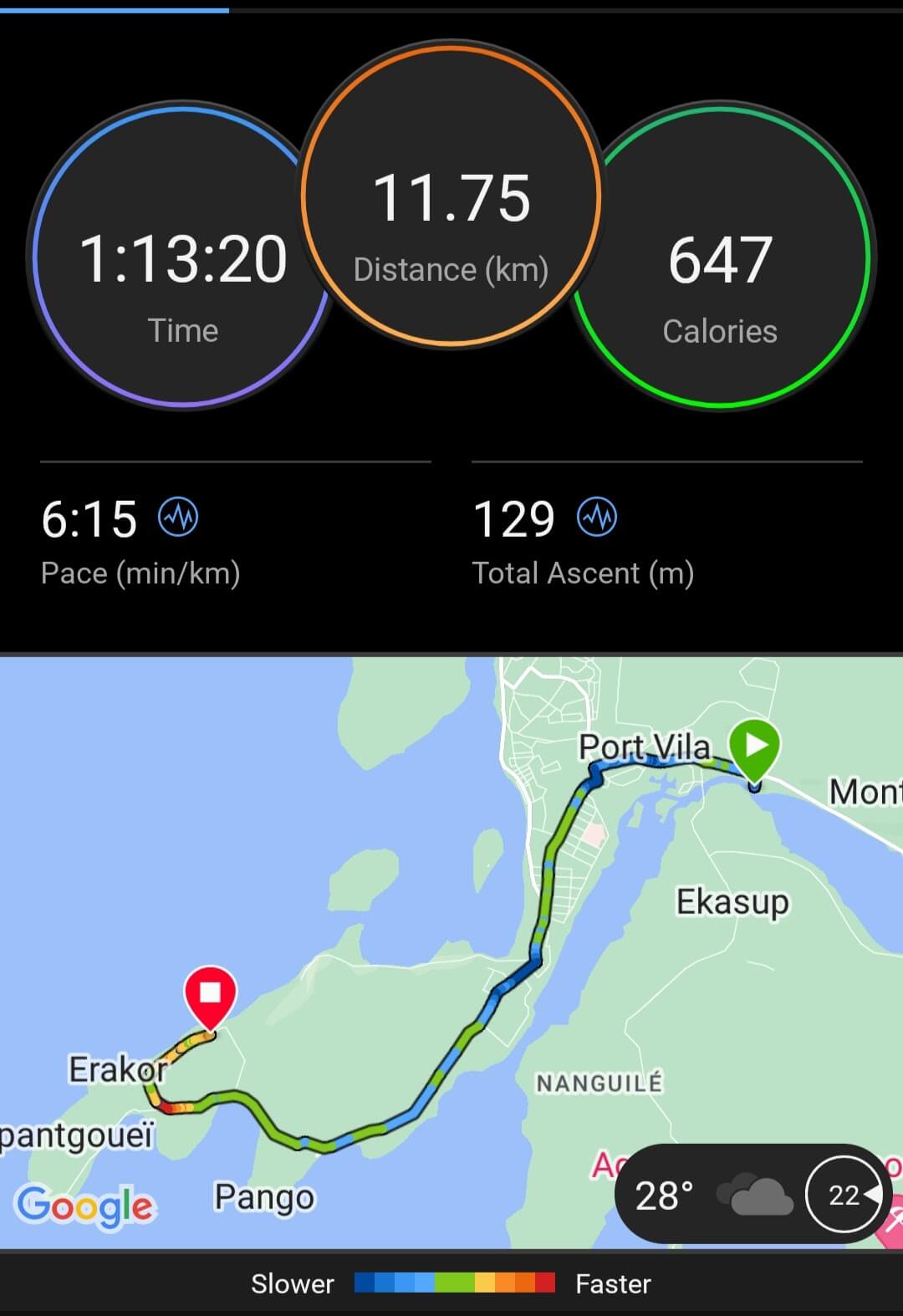
There’s a bunch of resorts at a beach, around 10km away.
I go sit in reception and lace up my shoes, say hello again to the owner.
“Tell me again where you ran yesterday?” she asks.
“Breakas.”
She turns to her staff member standing nearby – “He ran from here to Breakas.”
“I’m going the other way today,” I tell her. “I think it’s called Aquana?”
She turns to her staff again.
“Today he’s running to Aquana!”
They both look at me, shake their heads and laugh.
Yeah, I know. I wish I didn’t have to, either.
I say bye, take a look at the sky.
Gonna rain?
Probably.
Let’s go.
Normally I come out of the hotel and turn left, towards town.
Today we’re turning right.
Immediately I know this run will be different.
The roads are wider, emptier, straighter.
The sun is beating down, and after the first couple of kilometres my legs are already heavy.
This one’s gonna be tough.
Thankfully, it’s hard to get lost on this one. The first 5km is one long road, straight all the way.
There’s no sidewalk, so I’m running with the cars. Luckily there isn’t many of them, and the roads are wide.
It’s a hard slog in the heat, a few hills thrown in, but I get to the turn-off. I see the big Aquana Resort sign.
Halfway there.
The second half is a 5km run along sandy roads heading to the ocean. Locals live here. Every few hundred metres I pass clusters of small houses, kids riding bikes, small corner shops, mixed with stretches of empty road.
When the ocean gets near, I can smell it. The air changes, the road changes, even the trees change.
When I finally reach the Aquana sign, my legs sing a sigh of relief.
That was a tough one.
I pass reception as soon as I enter.
“Serving lunch?”
He’s surprised to see me. He hesitates.
“Well … yes … I mean … well … “
I wait for him to catch his words.
“We just might not have the full menu.”
I smile.
“As long as you have food.”
He smiles back.
“We do have food.”
I head down to the restaurant by the water. The resort is completely empty (Covid has turned the resorts in Port Vila into ghost towns).
I order the surf and turf. And my new favourite drink – Cascade water.
Then I go sit in the ocean while I wait. It’s not a beach to write home about. But the water is calm, and warm.
I close my eyes. Meditate. Give thanks.
Life is not perfect right now, but these moments – a reminder to be grateful.
The waitress calls.
Chow time.
I sit down by the water on my lonesome and feast. The food is superb.
After a little more lounging in the water, it’s time to head home.
I head to reception to pay my bill.
“Do you stay around here?” the lady asks.
I’m guessing she’s the owner.
“No, I’m staying at Tropicana.”
“And what are you doing around here?”
“I ran here.”
“You ran here from Tropicana?!”
I nod.
“Wow! You must be fit!”
“Triathlon season soon,” I say, smiling.
“How long did that take you?”
“About an hour.”
“Gosh,” she says, shaking her head. “Well, best of luck!”
I say farewell and head back to the road.
Now … how to get home.
There are no buses along this road.
I could run, but I really don’t want to.
I’m guessing I’ll need to walk the 5km back to the main road before I can hitch a ride.
The walk is calming. On the way in, I was just trying to keep my legs moving. Now on the way out, I get to enjoy it. I admire the little houses, the kids rolling in the grass, the people lounging under the trees.
Barely ten minutes passes before a pickup truck pulls over beside me.
It’s an old guy, with a big smile, in overalls.
He shouts at me through the window, points down the road.
‘Yeah, I’m going that way,” I reply, nodding, pointing into the distance.
He waves me inside enthusiastically.
I jump in.
My lucky day.
“Where you go?”
“Tropicana.”
“Ahhhhhhhhh Tropicana. Okay.”
Although his English is broken, we somehow manage to talk. He used to live in Tahiti. He speaks French, and Bislama, a kind of local Pidgin English. He loves drinking Kava. No, it doesn’t make him drunk. It’s good for you, he insists. He caught Covid. Didn’t feel anything.
When we finally hit the main road, he stops the car and points.
“Me this way. You this way.”
I shake his hand and thank him several times before getting out. As he drives off, he smiles and waves me goodbye.
I get home to a much needed hot shower and lie down.
In fact, the route is almost the same, except for the last kilometre or so.
I head out onto the roads and run comfortably this time. Port Vila is starting to feel familiar. I know the market is in that direction, there’s a supermarket coming up here, it will probably rain in an hour. Bearings. I have them.
When I finally get to Warwick, I still feel fresh. A shorter run today. How nice.
Warwick is a flashier resort – two restaurants, three pools, a really long driveway.
Unfortunately, the sun is hiding today, and it’s not a great day to swim or lounge around.
After a short dip in the ocean and a wander, I sit by the pool and have a pizza.
Cascade water too, of course.
With the weather being dull, I decide to head back early.
I get the bus to drop me at the market just down the road from the hotel.
It’s a smaller fruit range than I’d have expected – papaya, banana, coconut – that’s about it.
I buy a stash of coconuts for my fridge, then head home.
Once I get there, somehow the sun has found its way out again.
I cook myself some eggs, relax by the water outside my room.
The first 8km are easy – it’s the same run to Breakas. This is the third time I’ve done it, I know the way by heart now, and run slowly, mindful that I’ll be running ninety minutes in the Vanuatu heat with no water.
I get to Breakas.
From here, it’s another 4km along the coastline.
It’s an interesting area here. Nice holiday homes mixed with local villages, sandy roads and not many cars.
When cars do appear, they’re generally expensive ones, 4x4s presumably owned by someone rich.
At the 10km mark, I start to slow down.
The sun is tough, and my legs are battered from the prior days.
Every few minutes some locals watch me run past and wave. Probably wondering where I’m running to, or running from. There’s nothing around here.
Then I finally hit the resort road.
I see the Paradise Cove sign in the distance.
Made it!
Paradise Cove is charming.
Not obnoxious, just nice.
Full of green, spaciously laid out, clean stone paths winding through private bungalows.
I head straight down to the ocean, and as soon as I get there, rain starts to pour.
I don’t care.
I jump in the water and float as raindrops pellet me in the face.
Few things are more beautiful than a warm ocean in the rain.
After my ocean therapy, I head up to the restaurant to eat.
Again, courtesy of Covid, the resort is completely empty.
Even the waitress looks surprised to see me.
I order the local spring rolls and a coconut.
Sitting on my lonesome, I’m soaking wet, with no dry clothes, somehow shivering in the Pacific islands.
I ask the waitress for a towel.
She brings one.
As I finish my food I sit there and daydream.
It’s my last day in Vanuatu.
Do I like it?
It’s a little quiet, even for me. But that’s exactly what I needed.
Now all I need to do is figure out how to get back home.
But I’m sure it will work itself out, just like every day before it.
I park the car. Look out the window. At the crowd.
A jolt of anxiety.
I hate these things.
No, I don’t.
Yes, I do.
I really don’t.
Yes, I really do.
Well, what are you going to do? Just drive back home and read all night? Again?
Live a little.
Besides, you told Mike you’re going to come.
I get out. It’s a standard Rarotonga night. Humid, warm, aromatic. As I cross the road I feel jitters as I get closer to the crowd. They’re all seated on the lawn, drinking, eating, listening to the band. I put on my extrovert face, get into character.
I really do hate these things.
I see Ox standing at the edge of the lawn. Away from everyone. Perfect.
“Hey, Ox.”
“Hey man!”
Ox is a guy I met at a beach bar one night. I see him around the island now and then.
Handshake, bro hug.
“How’s the night going?”
“Oh mate! We’re on the beers, live music, making friends!”
Sounds wonderful.
I walk over to the kitchen. Auntie is there. I never remember her name, so I just call her Auntie.
“Hi, Auntie.”
“Hey! You’re here!”
Yes I am.
This is Gallery Tavioni. Most people just know it as “Mike’s gallery”. I come here every Thursday for Maori class.
“Come on Saturday,” Mike had said to me after class. “It’s opening night, the new exhibition. Free food and drink. Will be lots of fun.”
Sure, I’ll be there.
It’s hard to say no to Mike.
The lawn is showered in Christmas lights. There’s fifty people, maybe. All sipping on booze. Band in full swing. I head towards the gallery, to get away from the everyone, more than anything. There’s far less people in there. And you don’t have to talk. Just look at paintings.
I step inside. The gallery is long and narrow. Chairs are lined down the middle. People are sitting and watching the walls, like they’re watching TV.
Kamil is inside. Of course he’s here. Good thing too, haven’t seen him in about a month.
“Hey stranger.”
“Hey! Come, come. I need your help.”
He pulls me to the far wall.
“What do you think of this one?”
I nod.
It’s cool.
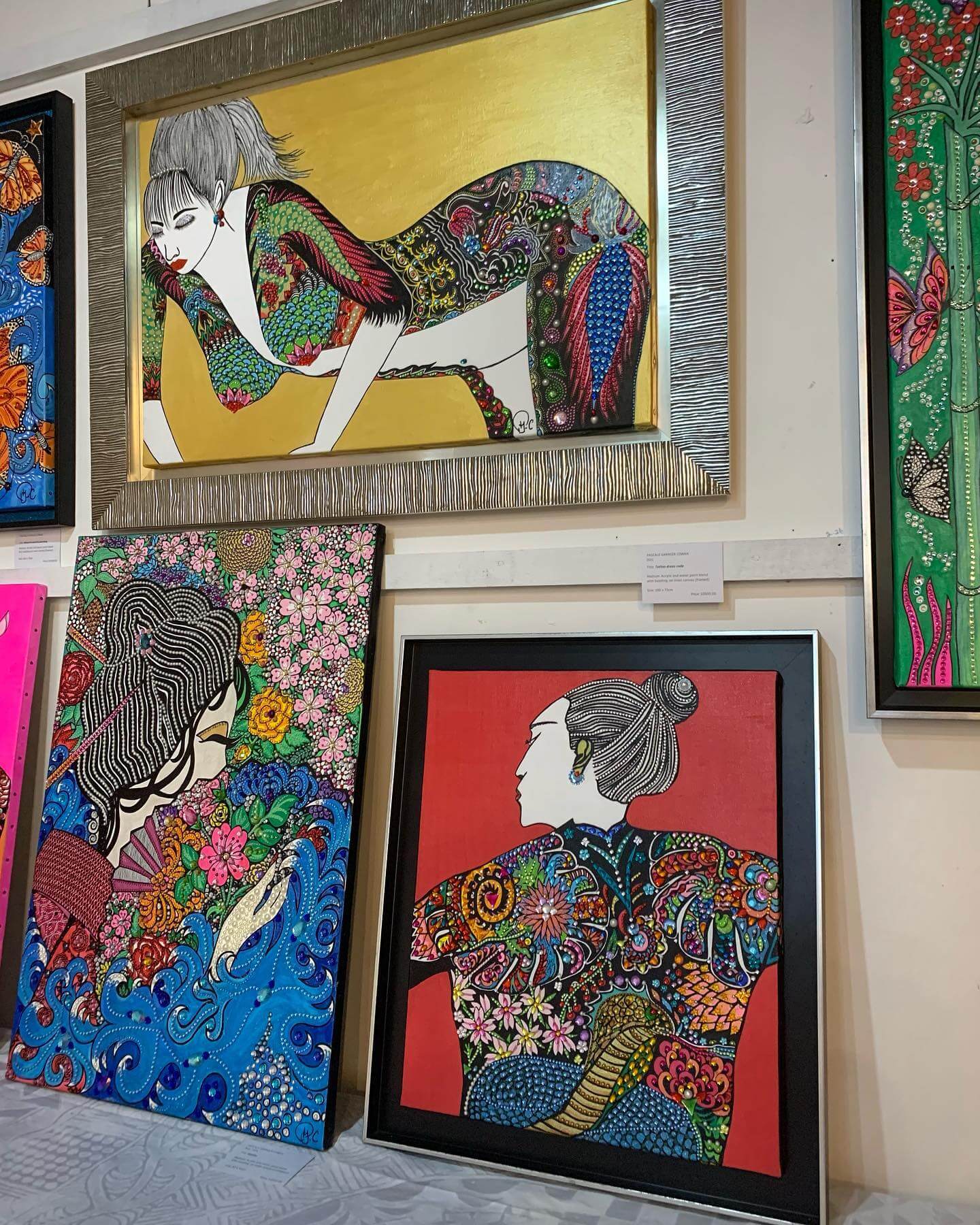
Then I look closer. It’s a painting of a Yakuza, his tattoos lined with gemstones. Very intricate.
“You know what? It actually is cool. Very cool. Wow.”
I look at the tag.
Pascale Garnier Cowan. Yakuza. $3,500.
Kamil shows me another one, on the other side of the gallery. It’s a skull with a bandana, the face tattooed with flowers and waves and animals.
I admire it for a moment.
“Dude … I love it. This is killer.”
“But I’ll show you which one I really want,” he smiles.
He drags me to the middle of the gallery. There’s a small painting of two sea horses. Then beside it, another painting of one sea horse.
“I can’t decide,” he says. “What do you think, that one, or that one?”
I point to the solo sea horse.
That one.
“Hmmm,” he hums. “I like the other one. Though I feel like the drawings are a bit naiive. But the technique … is amazing.”
I shrug, and don’t say anything. I don’t know what a naiive drawing looks like. And don’t know what amazing technique looks like either.
Mike is sitting in the middle of the gallery, in front of the flagship piece, a bunch of people around him. Mike is a smiley, bold grandfather with a booming voice and a fantastic head of long white hair. I go rest a hand on his shoulder. He turns around.
“Kia orana, koe.”
“Hey, Mike.”
“So, who’s this artist,” I ask. “Pascale?”
He points behind me.
She’s singing.
“Oh!”
I look out onto the lawn, see her fronting the band.
I was thinking Pascale was a guy’s name.
On the wall I see a short write up about her, the exhibition. I walk over. It’s a small photo, lots of words.
“I travelled the world …
Decades …
Gathered all the treasures my eyes could hold …
My life was rich …
I was diagnosed with an illness …
I was in a nightmare …
I struggled with the terrible side effects of treatment …
I needed something positive …
I started to paint …
I threw colours on a canvas …
All the beautiful things I pictured in my mind …
The softest therapy I’ve known …
It healed me from the inside …”
My heart jolts.
I can finish her sentences before I read them.
Her story is my story.
I walk a full lap of the gallery alone. The first section is all skulls. Ten, twenty. The next section is nature. Then the ocean. Then the world.
I admire them all, and there’s a few pieces that I love. But by the end I already know. There’s one, that needs to belong to me.
Red. Always red.
Gianni wanders by. Another familiar face. I bump into him nearly every week, in some restaurant or another. We shake hands. He’s in a suit. Madness. It’s thirty degrees in here.
He starts telling me about the exhibition.
“We had that hanging in our kitchen,” he says, pointing. “That one was in my office. That one was my favourite.”
“Wait. Pascale is your wife?!”
He grins.
He points to the turtle painting.
“That one, I always loved that one. I’ll tell you the amazing thing about art,” he says. “It’s like love. You don’t need to think. You just look, and within a split second it’s either, I feel nothing, or I feel everything.”
No kidding.
He wanders off.
I sit. Stare up at the canvases in front of me.
Now I know why they’ve put chairs down the middle, from wall to wall. Because after you’ve seen everything, you just want to sit down, digest it all.
Kamil finds me.
“Anything you like?”
I point to the red face on the far wall.
“How much is it?”
I tell him.
“Well. It’s amazing. You should get it. Will be something to remind you, of your time on Rarotonga.”
Of course, I don’t need anything to remind me. What this island has given me. Rarotonga has become a small miracle in my story. I already know I’ll take this island with me everywhere, forever.
I go outside to the food table. I fill a plate with fruits. Watermelon, pineapple, papaya. I sit out on the lawn, watch Pascale sing for a while.
I guess I don’t hate these things. At least not all the time.
After I’ve had my moment, I go back inside and sit down, stare at my painting from across the room. Gina is in the chair beside me. Gina is Mike’s niece, I think. She does all his admin stuff. She’s the person I called to sign up for Maori lessons.
“How’s class?” she asks.
I shrug.
“It’s good.”
“You’re his favourite student, you know.”
“Huh?”
“He always tells me about you. That guy. I really like that guy. Very smart. Always asks lots of questions. Very good questions.“
Hah.
“See anything you like?”
I point to the red.
“Ahh,” she nods. “Those ones, she painted those while going through chemo, after she lost her hair. Everything on that wall – skinny faces, no hair.”
Skinny face. No hair. Red.
Yeah. Been there.
I think about buying it. I don’t know. Then I think about leaving the island without it, and that’s when I do know. There’s no way. It’s mine. I have to take it.
I go and find Shane, the host. He’s sitting in the middle.
He grins at me.
“How’s it going?”
“That one,” I say, pointing to the far wall.
“The red one?”
“Yeah. I’ll take it.”
“Nice choice.”
He walks me over to it, takes down my details.
Hands me the red dot sticker.
“Here you go.”
I stick it on the price tag.
Sold.
He holds his hand out.
“Congratulations!”
I go sit back down. Gina is beside me.
“I’m curious,” she says. “Why that one?”
We both look at it.
I tell her the story.
“I travelled the world …
Gathered all the treasures my eyes could hold …
My life was rich …
I was diagnosed with an illness …
I was in a nightmare …
I struggled with the terrible side effects of treatment …
“Aboslutely! I’ll ask her for you, when she’s done singing.”
The gallery is emptying out. Just a few of us now. Everyone is on the lawn, eating, drinking, dragging out the last hours of their Saturday.
On the far end is a girl, scanning all the paintings with a gadget.
I walk over.
“Got a favourite?”
She turns around, smiles, points to the far wall.
“That one. The blue and orange.”
It’s the fish. Yes, many of us liked the fish.
I nod with approval.
Good choice.
I sit down.
She sits beside me.
“What about you?”
I point to the red, and she looks over at it.
“Ah, nice! Someone’s bought it, though.”
“Yeah.”
I point to her hands.
“What’s that scanner thing you got?”
“Oh, my camera.”
She pulls it out, shows it to me.
“I work for the news.”
“Ahhhh. And this is today’s big story?”
She laughs.
“Yeah.”
We sit there and talk, staring at the wall. First about the paintings in front of us. Did you see that one had a cat on the forehead? Hey, there’s butterflies on that one. Then about the island. The news. My broken shoulder. Her broken ankle. Ten minutes, twenty, thirty. An hour. Shane starts stacking the chairs. The band finishes.
“I think we better go.”
“Yeah.”
Gina catches me as we exit.
“Your photo!”
She brings Pascale over.
“This is Brendan,” she says. “He’d love a photo.”
We go back into the gallery. Pull the red off the wall. Photos, photos. Then Pascale walks me around the gallery.
“I painted these during chemo. You can see here, I wore bandanas for a while. Then wigs. Then I just let myself be free.”
As we walk, I tell her my story. I tell her why I chose the red. Her eyes soften.
“So that’s why this speaks to you.”
We keep walking.
“How did you learn to paint?”
“I didn’t! I just did it. I never once thought I would sell any of these.”
She stops at the dragon painting. Explains to me how she did the colours on the scales, the gems, the patterns. All the things we’d never notice on our own.
We get to the end.
“Congratulations,” I tell her. “On everything.”
“And you.”
We hug.
She disappears back to the crowd outside.
I say bye to Gina. Shane. Mike. Auntie. News girl.
As I drive home on the empty and silent Rarotonga road, I smile. My soul is full.
One more night to remember on this magical island.
It feels strange writing this post. Partly because I haven’t written here in so long, partly because I have big news and don’t quite now how to share it. If you’ve been wondering what I’ve been doing for the last two years, I’m about to tell you, but getting to this point has been such a long journey, now we’re finally at the end (or in some ways, the beginning).
As you may have guessed from the title, I’ve finally finished a book, and it releases to the world today.
The interesting thing about this book is it wasn’t the book I was supposed to write. For years I’ve been working on a travel memoir which I’ve talked about many times on this blog and in my newsletter. I even completed a first draft a few years ago, but never managed to turn it into a piece of work I was proud of.
Then in 2019 my battle with TSW started. It upended my life so suddenly that everything instantly took a backseat to my healing. When people say life can change overnight, now I know what they mean – shit really can change just like that. From living the dream, to suddenly finding myself in a struggle where I thought I might never live a normal life again.
Of course, I didn’t realise this at the time. It was only after days and weeks and months that I started to understand I was in a battle that I might be fighting for a very long time. I found a TSW group on Facebook, which possibly (definitely) saved my life. I was in there every day, sharing my progress – what was working, what wasn’t, asking for help, sharing my pain. Sometimes, all I needed was to be able to tell people, I’m breaking, I’m crying every day. And for them to reply, that’s okay, I am too. I wrote stories to share, each step of the way; little triumphs I was making week after week, running 1km, 2kms, to the emotional news of my first marathon, and then my second.
Looking back now, I realise I wasn’t writing those stories for them, I was writing them for me. The emotional journey was so violent I couldn’t keep it in, but it was also too personal and upsetting to share with anyone I knew. Of course I didn’t suspect at the time that this little series of Facebook posts would eventually become the inspiration for a book, which is what I have in front of me today.
To be honest, the book practically wrote itself. Once the idea was born, I sat down to write and couldn’t get the words out fast enough. The rollercoaster of emotions vomited itself onto the screen amid recurring bouts of tears and laughter, and within a few months I had a draft. What I hadn’t yet learned was, that was the easy part. Writing a book and then turning into an actual book is a long (loooooong) and painful process that I wasn’t prepared for. There is a finality about a book that’s never existed with other things I’ve written, such as the stories on this blog. Usually, spelling mistakes are whatever and even months or years later, I just go in and rewrite things I don’t like and correct mistakes. The idea of having hundreds of copies of a book printed and then finding a typo, or a sentence I didn’t like and couldn’t change, haunted the perfectionist in me. This led to six months of reading the book every day, agonising over colons versus semicolons, italics versus no italics. Each reading I found myself adding new paragraphs and rearranging sentences, I wasn’t sure if I’d ever be happy enough with it to publish. For those months, I spent endless hours sitting in carparks, waiting rooms, benches in the gym, reading the latest draft on my phone, trying to get paragraphs to sing the way I wanted.
Then came judgement day. Is it even worth publishing? I arranged a beta read. The final draft got sent to a few volunteers from my support group and a few old readers from the blog (thank you all, again!). Big sighs of relief and joy when the feedback came in and was so overwhelmingly positive. One reader, a close friend, tried her best to convince me it was good enough to shop around to publishers, but I knew that would be another drama I couldn’t handle, and that this story was too close to me to sell to anyone else. But it was the green light I needed, to tell me yes, the story was powerful for everyone, and deserved more than just a bunch of blog posts online – I needed to publish.
I hired a cover designer, editor and proofreader to finally help me get it into print. That was all another headache that lasted four or five months which I don’t really want to write about. If you follow many writers, you’ve probably read tons of posts of them talking (whining) about getting a book to print and how much of a pain in the ass it is. Well, I can now confirm that yes, it is a super pain in the ass. It was only a month ago that, after two long years, after finishing a final proof in the middle of the night at my dining table, I finally had a stack of paper in front of me that I could sign off and say, it’s ready!
Of course, it has all been worth it. I received the proof copies of the book last week and I’ve never felt so proud and grateful seeing the real thing in my hands. In our Facebook group we always talked about how we felt forgotten, that it was important for us to remember that our stories matter, even though our lives were becoming invisible while we were sick, and the world continued to pass us by. That feeling alone motivated me enough to get this story written, to ensure it lived forever in its own way, for the people who had been fighting alongside me, and those who would inevitably come after me.
Allow me to finally introduce you to my first published book. It is the memoir of the past two years of my life, battling a demon I never thought I’d beat – part healing memoir, part childhood memoir, part travel memoir – a story of reaching rock bottom, climbing your way black, the power of a dream, the power of family, of believing in the impossible, and of all the miracles that can happen when you find the strength to just take one more step. After all the places I’ve been and the things I’ve experienced in the blessed life I’ve had wandering the globe, this is the story I am most proud to share with you – a story that proves even in our darkest moments, we are more powerful than we could ever imagine. My new book is titled Iron Skin: A Memoir, and I’d be honoured for you to read it, love it, share it, gift it, and find your inspiration from it to conquer whatever life decides to put in front of you.
Thank you so much for being here. After ten years of writing stories of bus rides and noodles and hostel lounges, here is one that’s a little longer and a little more special. I hope you love it.
Iron Skin: A Memoir is available on Amazon in all major locales in paperback, hardcover and Kindle ebook versions.You can order directly at the links below.
Auckland’s an interesting city. It’s a cosmopolitan metropolis of 1.4 million people, and it has everything, but on a small scale. Designer shops, shopping malls, beaches, concerts, all cuisines, festivals – it’s all here – just not everywhere and just not all the time.
Each part of Auckland is quite different in many ways. The east has a heavy Asian influence with many Chinese and Vietnamese restaurants, the north shore is full of much wealthier suburbs and communities, the south is considered a rougher part of town (but it’s not really) and has strong cultural and Polynesian roots and the west is a mixture of sorts.
Another thing about Auckland is that transport is not the best. Traffic is heavily jammed during peak hours, and public transport is slow, unreliable and expensive. On many days it can take you over an hour sitting in traffic to get across town.
This means choosing where to stay in Auckland is important to get the experience you’re looking for. Do you want long days of epic beach time? Good food? Affordable? Central? All these things will determine where you should stay, and what your Auckland experience will be like.
Luckily for you, Auckland was the city I called home for 25 years. I know each corner of the city, I grew up here! And in this guide I’m going to break down each part of the city, the best accommodation in Auckland for each area and each budget, what each area is like, plus some insider tips on each Auckland neighbourhood to make sure you have an awesome time in my little home city. Let’s go!
As you can see, Auckland lies on an isthmus. It’s narrow and surrounded by ocean, which makes it unique for a big city, as it has all the big city comforts but the beach is never far away.
The map above doesn’t include everywhere, but it does show the key areas. There are many areas I haven’t mapped, as they’re mostly suburban and there would be no reason for a tourist to stay there. Instead, I’ve plotted what I believe are the best areas to stay in Auckland for tourists and visitors. These are the areas we’ll be breaking down below.
In each I’ve listed budget and backpacker options along with more luxurious choices. In fact one of the most common questions I get is where to stay in Auckland on a budget, and the truth is cheap accommodation in Auckland isn’t the easiest to find. However, it’s there if you know where to look. I’ll help you!
On the other end of the scale, there’s also plenty of flash places to stay looking out over our beautiful beaches and harbours, so if that’s your jam, I’ll introduce you to some of the top Auckland hotels and high-end places too.
1. Auckland CBD
The Central Business District (CBD) is where most people will stay, and is probably the best area to stay in Auckland for first-timers.
As I said, Auckland is not an easy city to get around. I recommend people stay in Auckland CBD because it’s the most accessible to public transport and buses and trains to most areas will run from here.
The other great thing about Auckland CBD is that it’s very walkable and there is everything within the main area. The central street is Queen Street, and there are nightclubs, bars, supermarkets, restaurants of all cuisines, medical, shopping and more all along that one avenue.
Popular tourist attractions like the Skytower, Civic Theatre, Albert Park and Viaduct are also just a few minutes walk away.
Interestingly, this is also where you’ll find the cheapest accommodation in Auckland. Most of the backpacker hostels are situated in or around here, and during low season you can sometimes find a bed for less than $20 per night. The quality is not great but if you’re after cheap places to stay in Auckland this is your best bet.
One thing to note is much of Auckland CBD has been “under construction” for the better part of the last ten years, as the government has been trying to build a subway throughout the city. As I write this (end of 2023) it is still heavily under construction in many parts of the city. While it is still a fine place to stay and explore, just be aware you will come across many closed roads and construction sites!
You should stay in the Auckland CBD if:
It’s your first visit to Auckland.
You don’t have your own car.
You plan on using public transport a lot.
You’re not in Auckland for any specific reason other than to visit and sightsee.
Where to stay in Auckland CBD?
For the backpacker:
Stay at Metro Adventurer Backpackers. Hostels in Auckland CBD are not particularly great in terms of quality, but this one is a reasonable price and one of the better maintained ones. You should be able to get a room for $20 during low season. Get the latest rates here.
For the budget traveller:
Stay at City Lodge. It offers private rooms and for a good price and in my opinion is one of the best choices of cheap accommodation in Auckland CBD. Not far from the central Aotea Square too which is nice. You’ll get the best rate here.
For the luxury seeker:
There’s one obvious choice –The Skycity Grand. Skycity is a casino and entertainment complex that is a central landmark of Auckland city. It’s filled with restaurants, bars, clubs, theatres, and of course, the casino itself. Of course the attached hotel is absolutely lavish, and where many celebrities and mega-wealthy stay when in town. The best hotel to stay in Auckland, hands down. Get the best rate here.
Insider tip: The Asian population in Auckland is large, and Lorne Street is the new up-and-coming spot for delicious eats, especially if you’re an Asian cuisine lover. For something fun, check out a play at the Basement Theatre.
2. Viaduct
The viaduct is one of the more posh areas in Auckland, definitely a spot everyone should visit and a great place to stay too if you can afford it.
If you’re unaware, Auckland hosted the America’s Cup many years back, and the entire waterfront was developed for the event. Development continued with luxury apartments, bars, clubs and some high-profile office buildings after the event finished. This area is now known as The Viaduct and is one of the higher-end areas of the city.
It’s quite a nice and peaceful place to stay, while still within walking distance of the CBD (around ten minutes). It’s also one of the best places to stay in Auckland if you’re after bars and nightlife, the waterfront area at the Viaduct is central to Auckland’s party scene.
It’s also the perfect place to stay in Auckland for couples if you want to be near the centre – the views are beautiful and there’s good food and plenty of great places to take long walks just outside the city.
You should stay on the viaduct if:
You want ocean views.
You want to be near the CBD but not in the CBD itself.
You want a central but quiet area, with plenty of space to walk and relax (good for couples).
You want a more upper-class and exclusive area of the city.
You’re after nightlife, bars and upper end restaurants.
Where to stay in the Viaduct?
For the budget traveller:
Not really anywhere for backpackers down on the viaduct, but if you’re on a budget you could try Fort Street Accommodation. Rooms are private and it’s about a ten minute walk from the viaduct. Great value for money if you’re looking for something close to the water but don’t want to pay top dollar – check the latest rates here.
For the luxury seeker:
Plenty to choose from down here, but I’d go with M Social. This stylish and modern hotel had all kinds of buzz around it when it opened up. The rooms are lavish, the location is perfect, it’s probably one of the top Auckland hotels and it’s not even that expensive. Luxury living at its best. Get the latest rates here.
Insider tip for the Viaduct: Head over to Jellicoe Street for a fun place to start the evening with snacks and cocktails. Right behind it is the Auckland Fish Market in Wynyard Quarter, where you’ll find some of the best fish and chips in town.
3. Ponsonby
When thinking of cool places to stay in Auckland, you think of Ponsonby.
Ponsonby is Auckland’s high-society suburb, which is slowly evolving into a low-key hipster haven. Ponsonby Road is an avenue of quirky, fun and expensive restaurants, boutique shops and fancy gift stores. The road lights up on weekends as people come out to enjoy the nightlife in their high heels and open-collar shirts, sipping craft beers and pricey cocktails. If you’re after a bit of fun and glamour, this isn’t a bad place to be.
The great thing about Ponsonby is it’s quite central, maybe a twenty-minute walk to the city, making it probably the best place to stay in Auckland if you want to be near the CBD, but not right in the action.
You should stay in Ponsonby if:
You enjoy eating out at interesting places, and shopping.
You want to be around the nightlife.
You enjoy boutique cafes and coffee shops.
You want to be somewhere central but not in the CBD.
Where to stay in Ponsonby?
For the backpacker:
Ueneku Lodge is a great choice. It’s an independently run guesthouse on Ponsonby Road and perfect if you’re looking for some old-fashioned Kiwi hospitality. Has dorms but also private rooms as well. The facilities are great, the location is great, and awesome value for money. Check the latest rates here.
For the budget traveller:
Not a huge amount of “budget” accommodation in Ponsonby. I’d book at Ponsonby Manor.It’s a totally unassuming place, looks like a regular home from the outside – but flawless service and home-like comforts are waiting inside. The rooms are beautiful, many open out into the private garden, and the location couldn’t be better. Perfect for couples. Best rates here.
For the luxury seeker:
Easy choice – head toHotel Fitzroy. It’s housed in a classic Kiwi two-storey villa designed to be quiet, discrete and lavish. 24-hour room service and a continental breakfast served each morning. Rooms are furnished to five-star hotel level and all the amenities you could want and expect. Perfect place for couples looking for a getaway or a single looking for something discrete out of the centre of town. Check the latest rates here.
Insider tip for Ponsonby: Head to Ponsonby Central for an interesting dining experience. It’s a small food court set up like street food, but with more flash. The sushi there is pretty good.
4. Parnell
Parnell is an upmarket area in Auckland just outside the city skirts. It centres around Parnell Road, which hosts a collection of galleries, boutique shops and upper-end restaurants.
Often when people are heading out for dinner and drinks for a birthday or work celebration, they head to Parnell. A lot of old classic housing can be found in the neighbourhood too, and you can find one or two decent budget places to stay around those areas.
As a bonus, it’s walking distance to the CBD (about twenty minutes) and the Auckland domain and Rose Gardens aren’t far away either.
You should stay in Parnell if:
You like upmarket areas that aren’t too quiet.
You enjoy fine dining and nightlife.
You want somewhere central but don’t want to be in the CBD.
I’d recommend the Parnell Hotel & Conference Centre. It’s a 101-room budget hotel on the quieter end of Parnell. Parnell Road is about ten minutes walk away, plus you can even walk down to the water from here. If for any reason you don’t want to eat out in Parnell there’s a restaurant onsite (although Parnell has so many good foodie spots, you’d be crazy to miss them). Perfect place for a family stay. Get the latest rates here.
For the luxury seeker:
Parnell isn’t really flush with fancy accommodation, but if you’re looking for somewhere high-end I’d stay at Quest Parnell. These are serviced apartments, perfectly located just off Parnell Road, and have everything you could need – gym, pool, carpark, beautiful self-contained rooms. The price is nice too – in low season you should get a room for not much more than $100 USD. Check the latest rates here.
Insider tip for Parnell:La Cigale French Market is open every Saturday and Sunday morning. Unlike most markets which are way in the outskirts of Auckland, this one is right in the middle of Parnell, and has some of the best coffee and breakfast treats in town.
5. Newmarket
In my opinion, Newmarket is the best place to stay in Auckland outside of the CBD. Some Aucklanders might disagree with me, but hear me out.
The Newmarket area was initially designed as a shopping district, but has turned into a mini CBD of its own. Along the main street, named “Broadway” there is everything – malls, local stores, international stores, boutiques, galleries, banks, department stores, restaurants, bars, cinemas, there’s even a mini Chinatown there (just ask where the Golden Gate is, behind Rialto, and the string of Asian restaurants on lower Khyber Pass).
In 2019, the redevelopment of the Westfield mall was finished, which is very hip, and I would actually say this is now the best mall in the country.
The endless places to eat make this an ideal place for travellers. And any time you want to get out, Newmarket station will connect you to most major points in the city. It’s also very central – technically it’s walking distance from the CBD (about 45 minutes probably), and that would make quite a nice walk too! For a visitor to Auckland, it’s perfect.
You should stay in Newmarket if:
You want somewhere that has everything, but don’t want to stay in the CBD.
You want a less busy version of the CBD, but still some action.
You want a central area that makes it easy to get to other parts of Auckland.
You want lots of shopping and dining options within walking distance.
Where to stay in Newmarket?
For the backpacker:
Unfortunately, good backpacker accommodation hasn’t found its way to Newmarket yet. Try stay in other areas and you can get to Newmarket easily via the train.
For the budget traveller:
Stay at New Market Cozy Room. It’s a small B&B in a perfect location right near Broadway. The rooms are all modern and beautifully furnished. The catch with Newmarket is there aren’t many decent places to stay – this is definitely the best, if not the only, high-quality place in Newmarket central. Not the cheapest, but reasonable. Get the latest rates here.
Insider tip for Newmarket:Selera is an unassuming place you might walk right past, but serves one of the best laksa noodle soups in Auckland. Right beside it, Sunworld Chinese restaurant does fantastic dim sum until about 2 pm. Both are on the lower end of Khyber Pass.
6. Mt Eden
Mt Eden is a trendy area of Auckland just a short drive out of the CBD.
It’s known for being a historic part of Auckland which you might see in the architecture, and also known for the Mt Eden peak, which is a tourist favourite. The famous craters at the top are interesting to see, not to mention there’s a beautiful view of Auckland from the top.
Other than that, Mt Eden is well known for its many cafes, restaurants and chilled-out bars. There’s no rowdy nightlife here, but it’s a great place to go out for a quiet dessert or dinner with friends.
You should stay in Mt Eden if:
You want somewhere fashionable but not too upmarket.
You love boutique cafes and coffee shops.
You want a place that’s not too busy but has a lot of things around to see.
You want a place not too far from the CBD.
Where to stay in Mt Eden?
For the backpacker:
Oaklands Lodge is a great choice. Small, chilled-out hostel, good price and well maintained. It’s in the heart of Mt Eden, not far from the actual peak itself, and only a short bus ride to the city. Get the latest rates here.
For the budget traveller:
Consider the Bavaria Bed and Breakfast. It’s not far from Mt Eden peak and a short walk to Mt Eden Road. There are plenty of places to buy groceries and a bite to eat in the area. Bus stop is very close by also if you want to head into the city. It’s a basic B&B with everything you need for a fair price. Get the latest rates here.
For the luxury seeker:
Stay at Quest on Eden. Not exactly “luxury”, but it’s a four-star aparthotel that is very tidy and will have everything you need. Located right on Mt Eden road, it’s centrally located and you should have trouble finding the necessities. Quest is mega reliable and always for a decent price. Best rates here.
Insider tip for Mt Eden:Circus Circus might look like a toy store from the outside, but it’s actually one of Auckland’s longest-standing and adored coffee and dessert joints. Go there in the evenings for a quiet place to unwind. A short walk away is Zool Zool – one of the best noodle joints in the city.
7. Sylvia Park
Sylvia Park is a recently developed area of Auckland. Most people come here for the Sylvia Park mall, which is the biggest mall in the country.
Sylvia Park also has a train station and many bus routes, connecting it to the rest of the city. It’s not really a popular place for travellers to stay, but if you have a car it’s not a bad area to base yourself.
Where to stay in Sylvia Park?
The only reason you would really stay here is to be close to the mall. The best choice would be Waipuna Hotel – it’s a small hotel and conference centre, with a restaurant and all your homely comforts. About a ten minute walk from the mall. Reasonably priced. Bonus is the Panmure Basin is in their backyard, which is the perfect place for a morning or evening walk. Check the latest rates here.
Insider tip for Sylvia Park: There are many great places to eat within the shopping centre, but just a short drive away is Big J’s – head there to get the best burger in town.
8. Mission Bay
Mission Bay is a beach in central East Auckland, and often regarded as one of the most expensive and high-class areas in all of Auckland, with endless strings of multi-million dollar houses in the surrounding streets.
Mission Bay is a long beach with soft sand, lined with a large open park where people can picnic, a kid’s playground, and often events and indie performances too. If you’re wondering where to stay in Auckland with kids or a family, I’d say this is your spot. It’s also a pretty good place for couples; lots of young couples from the city come here on dates for dinners and ice cream and so on, so you lovebirds will fit right in!
Just across the street are endless cafes and restaurants, often high-end, that look out over the water. Mission Bay is a favourite place for people to come on weekends and enjoy a few Kiwi favourites – beach rugby, fish and chips, ice cream – that sort of thing. If you’re travelling with a family, or plan on spending a lot of time at the beach, good chance this is the best area in Auckland for you!
You should stay in Mission Bay if:
You love beach living.
You enjoy good food and fine dining.
You want somewhere more suburban but not too far from the CBD.
It’s summer!
You’re travelling as a family or with kids.
Where to stay in Mission Bay?
For the budget traveller:
Mission Bay is one of the renowned bougie areas of Auckland so there isn’t any budget-friendly accommodation nearby. If you’d like to explore Mission Bay for a day, it’s easy to reach by bus from the city.
For the luxury seeker:
Kohi Beach B&B is the perfect choice. It’s easily one of the best B&B’s in Auckland – the property is gorgeous. Self contained units are available, as well as studios, a beautiful garden, open living area, and perfectly located. It’s about five minutes walk to Kohi Beach, and a ten minute walk to Mission Bay. Everything you could want is within walking distance. Not the cheapest place but certainly worth the money. Get the latest rates here.
Insider tip for Mission Bay: When it gets too crowded, keep driving away from the city for about five minutes and you’ll come to Kohi Beach, and after a few more minutes, St Helier’s Bay. Both are less busy but equally nice places to hang out at.
9. West Coast/Piha Beach
The Waitakere Ranges is a pretty stunning national park out on the west coast of Auckland. It’s about a forty five minute drive from the city centre, but many travellers choose to spend their time out here hiking, swimming, surfing (and eating!).
The most popular area to stay is Piha Beach. It’s a popular surf beach, with many hiking trails around the area too. If you want to live by the beach away from the hustle and bustle of Auckland traffic, this is certainly the best place to do it.
Do note that this is quite a way out from most things in Auckland – usually the only people who stay out here are surfers or those who plan on hiking every day in the Ranges. It might make more sense to take day trips out here for that kind of stuff, so keep that in mind.
You should stay in Piha if:
You want to be far away from the city and in the middle of nature.
You love hiking and the beach.
You’re a surfer!
You want to stay in a smaller, close-knit community.
Where to stay in Piha?
For the backpacker/budget traveller:
Piha Beachstay is the perfect place for both backpackers and budget minded travellers. It has both dorms and private rooms, and the property itself is beautiful and just a short walk from the beach. The lounge is nice and cosy – a great place to relax in the evenings and chat with other travellers. The outside garden is also perfect when the sun is out (and it usually is!). Check the latest rates here.
For the luxury seeker:
This might be one of the most beautiful places to stay in Auckland. Romantic Piha is a private homestay with a stunning view, overlooking Piha and its surrounds. The property itself is gorgeous, beautifully furnished and themed for the west coast. It’s a slice of luxury Kiwiana that will leave you completely enamoured with the Piha community. If you’re looking for something memorable, this is it. Get the latest rates here.
Insider tip for the west coast: Piha isn’t the only place to surf. There’s another beach called Muriwai, about a half hour’s drive away, which has equally good surf, and is usually less busy.
10. Takapuna
Takapuna is an upmarket area of Auckland’s North Shore.
It’s the centre of the social scene north of the harbour, and the nightlife here kicks on the weekend. It’s also right by Takapuna beach, which is surrounded by lots of cafes and fancy coffee shops, making it the ideal place to wander and people watch during the afternoons.
You won’t find many backpackers or hostels around here. If you are planning to stay in Takapuna, value for money is what you should be looking for.
You should stay in Takapuna if:
You want something different to central Auckland.
You want an upmarket area.
You’d like a beach!
You want to get away from most of the backpacker and traveller crowd.
Where To Stay in Takapuna?
I’d highly recommend Emerald Inn on Takapuna Beach. It’s right by the water and near the centre of Takapuna – everything you could want is within walking distance. The property itself is beautiful and the rooms are all tastefully furnished to give it that beachy vibe. It’s top-notch accommodation for a reasonable price. Check out the latest rates here.
Insider tip for Takapuna: Takapuna beach might be the closest beach but it’s definitely not the best. Head out to Long Bay on a weekday – the longest beach on the shore and always beautiful. Take snacks, there’s nothing to buy around there.
11. Auckland Airport
Auckland Airport is a little out in the wilderness, but interestingly the area is very developed and you can find everything you need out there – restaurants, supermarkets, shops, and of course, hotels.
If you’re staying in Auckland any longer than one or two nights I’d definitely recommend staying closer to the city, but if you’re only overnighting a hotel by the airport is a good choice.
Where to stay near Auckland Airport
The best hotel near Auckland Airport is the Ibis Budget. It’s literally right next to the airport – you could walk there from arrivals in about fifteen minutes. It’s also perfectly located by some food options – a bunch of fast food places and a full sized supermarket. For that area it’s also very reasonably priced. Get the latest rates here.
If you want to actually stay inside the airport complex itself, you can stay at the Airport Novotel. It’s a very snazzy hotel and you’ll see it as soon as you walk out of arrivals. It’s also connected to the terminal by an overpass. More expensive than the Ibis but very comfortable and if you’re looking for places to stay near Auckland Airport – this is the one, you literally cannot find anywhere nearer!
There it is. Any questions, leave them in the comments, I’m always happy to help.