Blog

  • Running Port Vila: Ten Days In Vanuatu’s Capital

    Running Port Vila: Ten Days In Vanuatu’s Capital

    I’m allergic to cold weather.

    That’s what’s brought me here.

    Stuck in Auckland for a few months, I had to get away to some warmth.

    Just for a little while.

    I landed in Port Vila late. Did the standard airport haggle with the taxi drivers.

    2,600 vatu to get to town.

    Ripping me off?

    Probably.

    Too tired to care.

    We settle on 2,000.

    I am staying at a place called Tropicana. The taxi driver is slightly mad, driving like he’s in a video game, tailing the car in front literally within inches. I put on my seatbelt.

    Thankfully, we get there in one piece.

    It’s a charming place, smallish, right on the lagoon. I’m greeted by the owner, a small, docile Australian lady. She walks me to my room.

    Spacious, small kitchen, big bed. Opens out onto the water. Exactly what I needed.

    Day 2

    We’re not here to rest. We’re here to run.

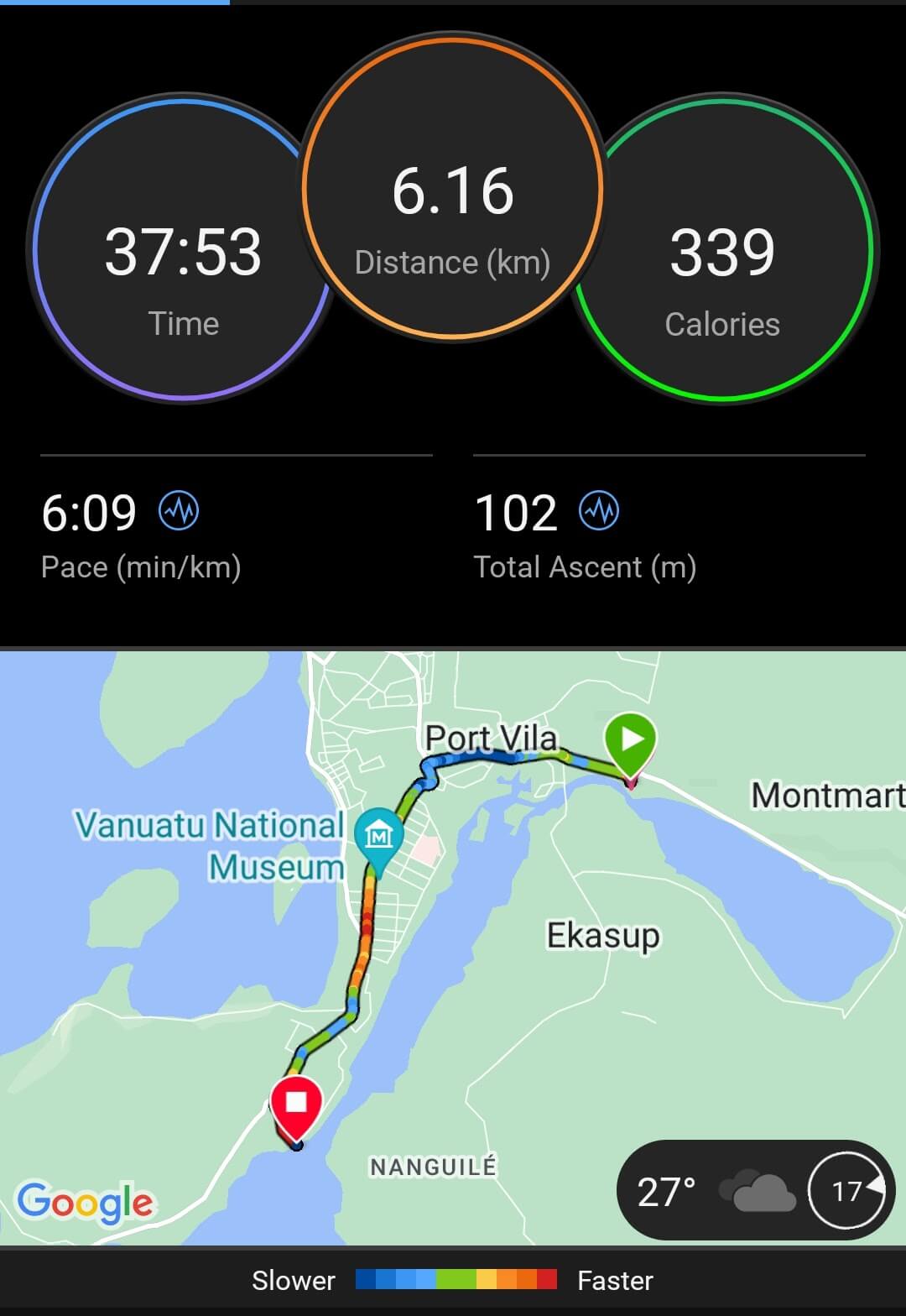
    There is a mall on the far edge of town, about 4km from my hotel.

    I need to visit the pharmacy, so this will be the perfect combo – run to the mall, buy my stuff, run home.

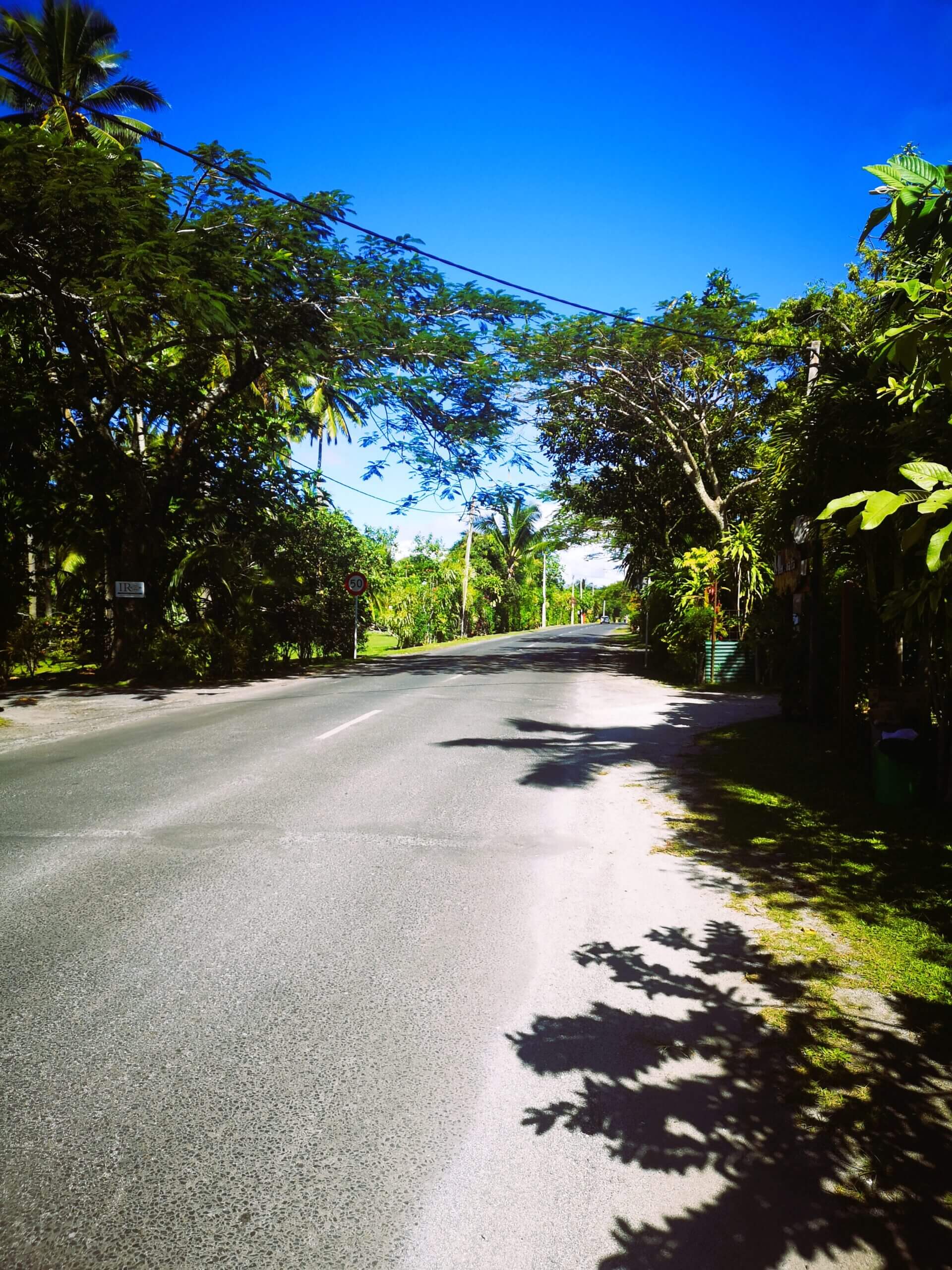
    I head out around lunchtime – the sun is high and screaming.

    I decide to leave my phone at home, so I’ve memorised the directions in my head: First roundabout straight, second roundabout right, third roundabout left, then straight all the way until you see the mall.

    I run past the supermarket. Au Bon Marche. Past the bus stop.

    There are stares. Lots of stares. 

    Then I hit the first roundabout. Straight.

    Next I’m greeted by a hill, an enormous one. As I’m climbing it, rain starts to drizzle.

    I’ll soon learn this is normal in Port Vila – rain in the middle of a perfectly sunny day.

    At the top of the hill, some schoolkids are walking around. They smile and wave.

    I see the bakery. That’s good. I’m supposed to run past the bakery. A strip mall. A fancy supermarket.

    Then I see it, the second roundabout. Right.

    I tumble down the hill that follows. The third roundabout isn’t far, I can almost see it right away. Left.

    Now all I need to do is run straight, and have faith that I remembered this map correctly.

    It feels like forever, but I finally see the ocean, and know I’m in the right place. I follow the road as it merges slowly with the waterfront, and then I see the mall.

    It’s small, but well kept, clean, and spacious. I see the pharmacy right in front of me on the ground floor. Feeling slightly guilty walking in dripping with sweat, I browse the shelves quickly and get what I need. Stuff it in my pockets, and hit the road again. 
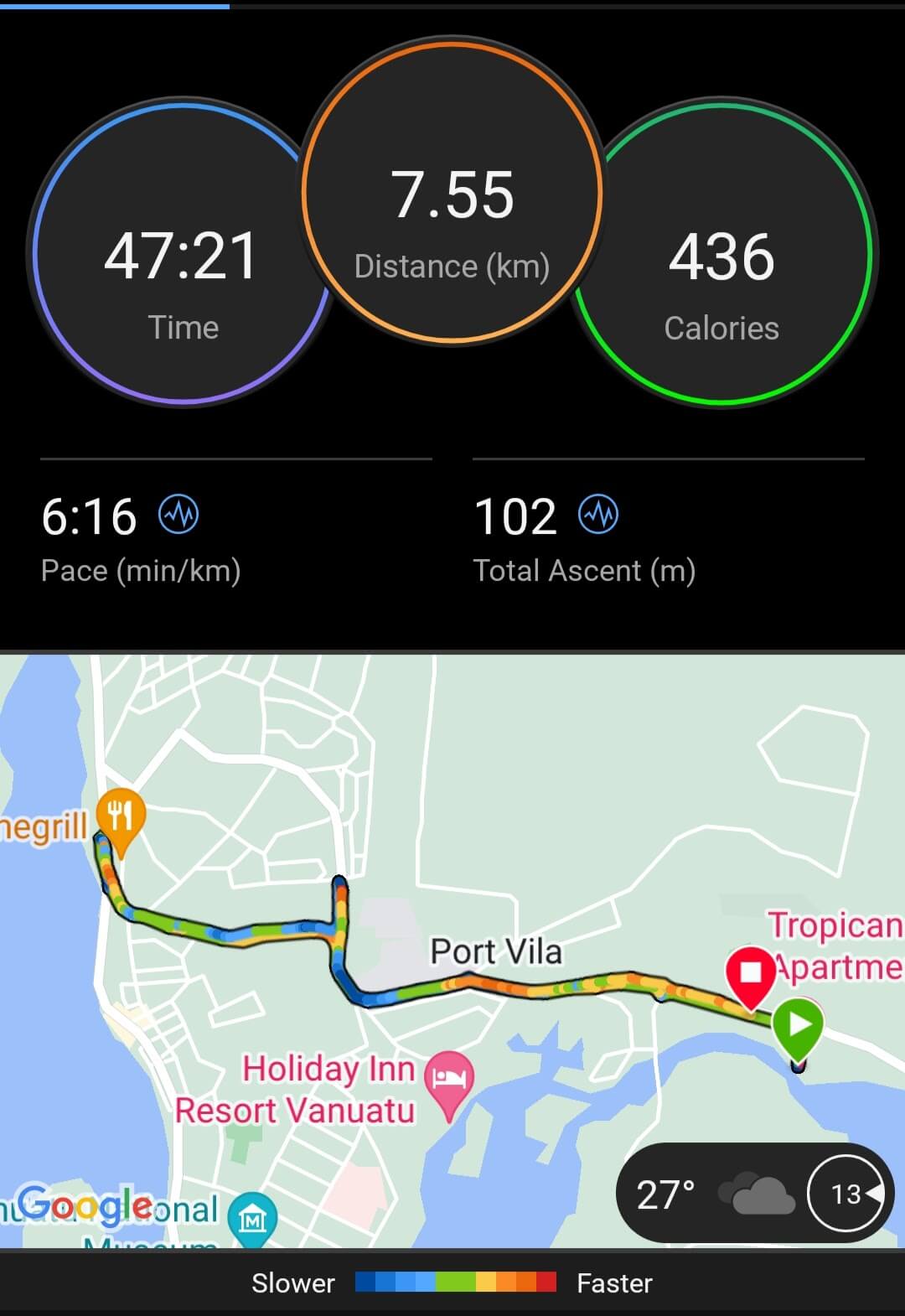
    When I get back to the hotel, I lounge on the bank of the water, outside my room.

    Port Vila is interesting, in that it’s built around a long lagoon that stretches past town and all the way inland, maybe twenty kilometres or more. It’s like a river that runs through the town. While sitting on the edge, you can see the locals on the other side, fishing, swimming, washing. It’s narrow here at Tropicana, and I could swim across in maybe five minutes. 

    Whether it’s safe to swim in it, that’s a mixed bag. Some say yes, some no. Even on a good day, it looks green.

    I cup a handful. Smell it.

    I think I’ll stay out.

    Day 4

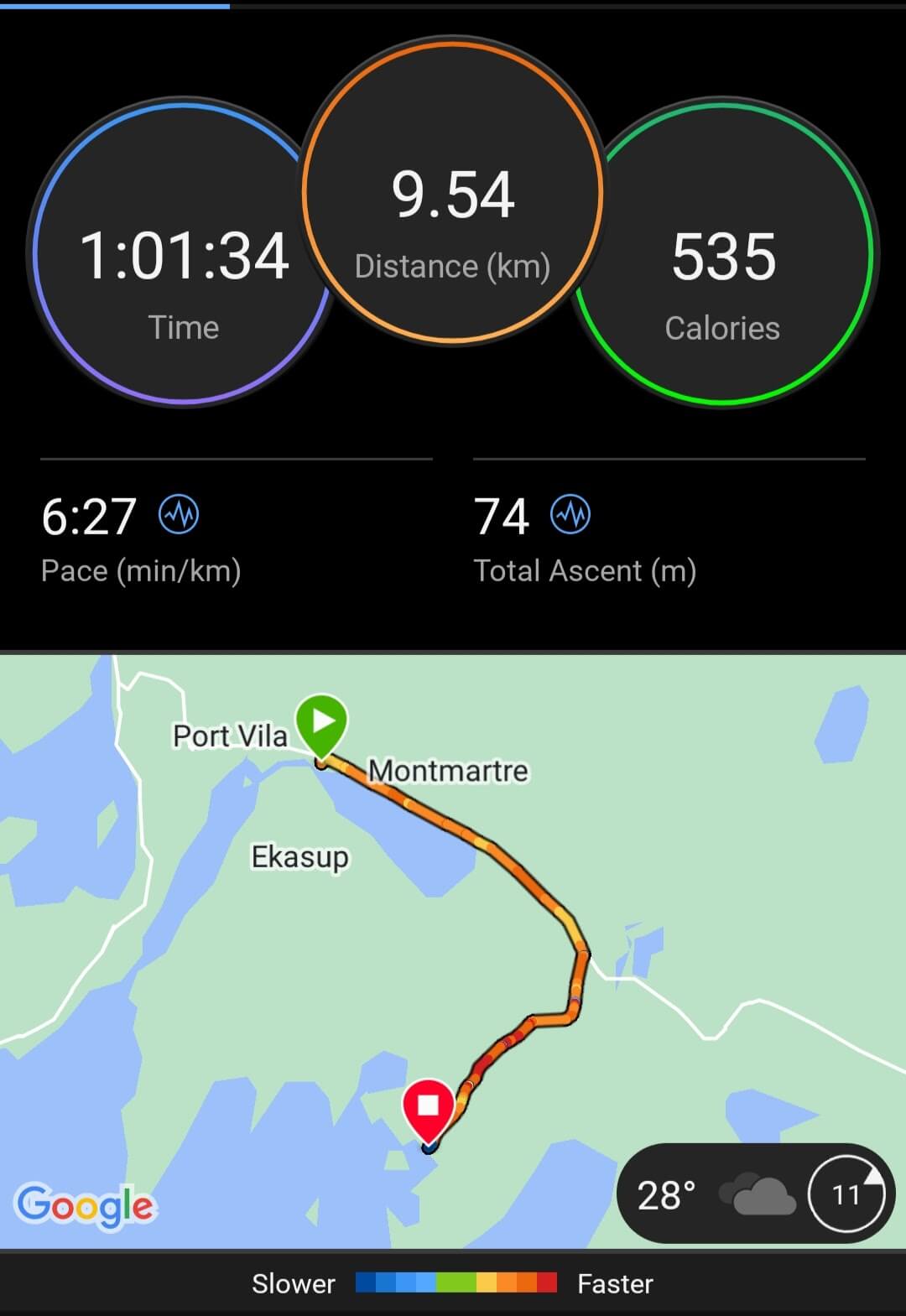
    Here’s the plan: I’m gonna pick a resort, run there, chill out, have lunch, then run home.

    I browse the map all morning making a shortlist of targets, then decide on Breakas Resort.

    It’s a run through town, all the way down to where the lagoon meets the ocean.

    I step out my door and look at the sky. Clouds. Heavy ones.

    As I walk past reception, I ask “Do you think it’s going to rain?”

    She smiles.

    “You never know.”

    Doesn’t matter. Rain or shine, we run.

    I click my watch and go.

    Along the same road, past the bus stop, past the supermarket. This time when I get to the first roundabout, I take a left.

    The hill that follows is winding and enormous, towered by trees and brush on both sides.

    As I hit the top, I see a long, gradual downhill, stretching all the way into town.

    I run it slowly, and people stare, just like yesterday. I guess they don’t see many runners in Port Vila. In fact, I haven’t seen a single one since I got here.

    I run past places I recognise from the map, Litchees Takeaways, the gas station, the hardware store. There’s more people around, too.

    I guess I’m in town now. 

    It looks … uneventful.

    Finally I come to a junction. Three roads. I don’t remember which one goes where.

    I pull my phone from my running belt. Wait for the GPS.

    Okay, that one.

    I take off again, and I can sense the ocean in the distance. The footpath crumbles into nothing, so I run on the road. We’re out of the town centre now, there are fewer cars, emptier streets. A few kids loiter on the corner, kicking a bottle around.

    Then I see the first resort. Tourist territory now. I keep running. These are beach roads now, sandy sidewalks, empty, quiet. 

    I run past another resort. If I remember right, the next one should be Breakas.

    It is.

    I wander in and find my way to the pool. A waiter greets me.

    “You serving lunch?”

    “Yes, yes!” 

    I point to the beach.

    “I’ll sit on the sand.”

    He nods and waves me down.

    I take off my shoes and shirt, sit in the water.

    After 8km in the Vanuatu sun, it’s bliss.
    The waitress comes.

    Pork wrap, fries, fruit smoothie.

    It’s my first meal of the day. I inhale it.

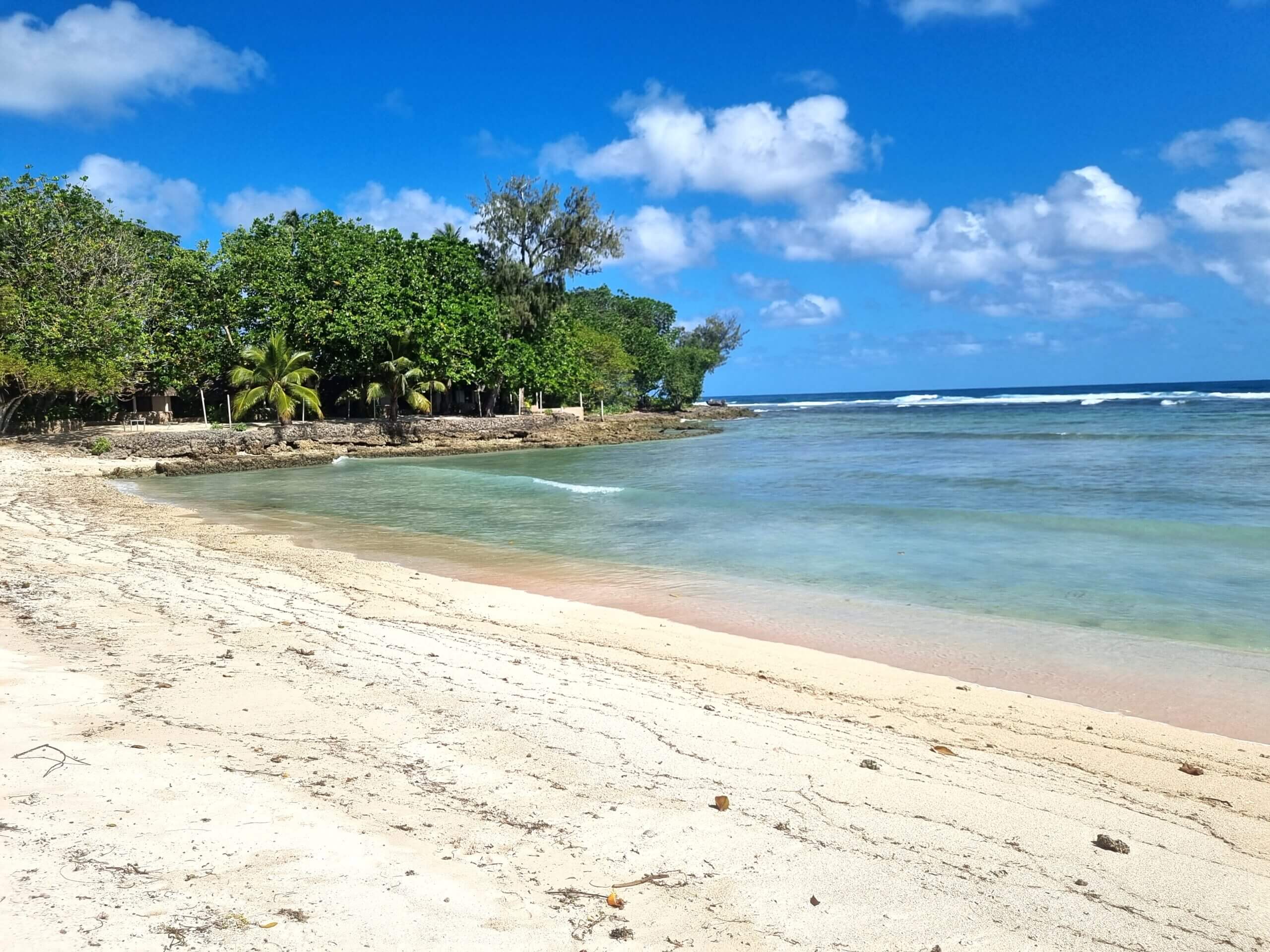
    The Breakas beach is pleasant.

    Probably not postcard quality, but the sand is soft and the water is warm.

    There is a small village nearby, and local kids play in the ocean.

    As I lounge for an hour in the sun, I ask the waitress for a tonic water.

    “We don’t have tonic water, but we have something called Cascade water, it is similar.”

    “Sure.”

    She brings me a bottle and I take a sip.

    Sparkling water.

    I spin the bottle in my hands, admire the design. Very nice.

    After one more swim, I can see the sun on its way down. 

    Better get home before dark.

    I head back out to the road and wonder how to get home.

    I could run, but I really don’t want to.

    I start walking, and hope a bus drives by.

    By bus, I mean a 12-seater van, which is what the locals use as buses. There’s no set route, you just tell them where you’re going and if they’re heading in your direction, they’ll take you.

    It only takes five minutes before one drives by. I wave him down.

    “Can you take me to town?”

    He nods.

    We head back along the route I ran earlier, then into another side of town, by the water. It’s busier here. 

    He drops me right in the centre, by the main market.

    “How much, bro?”

    “150.”

    That’s about a dollar.

    I give him all my coins.

    “Keep the change.”

    While the sun is still yet to set, I decide to wander a little around town.

    I walk through the market, which is now closing and almost empty. There’s a takeaway joint overlooking the sea which is popular. I get myself a chicken and chips and sit by the water, watch the sun come down.

    It’s supposedly rush hour here in Port Vila, but it’s peaceful. I like it.

    Sun sets.

    I’m not sure how safe Port Vila is to walk at night, but my spidey senses tell me it will be fine.

    I decide to walk home. 3km.

    I criss cross through side streets until I’m back on the route I ran. Down the big winding hill. To the first roundabout. Past the bus stop and the supermarket.

    Home.

    As I walk past reception she asks, “What did you do today?”

    “I ran to Breakas.”

    She stares at me.

    “You ran to Breakas? Gosh that’s … far. Isn’t it?”

    I shrug.

    Compared to where I came from, not very far at all.

    Day 5

    Today, it’s time to explore the other side of the island.

    There’s a bunch of resorts at a beach, around 10km away.

    I go sit in reception and lace up my shoes, say hello again to the owner.

    “Tell me again where you ran yesterday?” she asks.

    “Breakas.”

    She turns to her staff member standing nearby – “He ran from here to Breakas.”

    “I’m going the other way today,” I tell her. “I think it’s called Aquana?”

    She turns to her staff again.

    “Today he’s running to Aquana!”

    They both look at me, shake their heads and laugh.

    Yeah, I know. I wish I didn’t have to, either.

    I say bye, take a look at the sky.

    Gonna rain?

    Probably.

    Let’s go.

    Normally I come out of the hotel and turn left, towards town.

    Today we’re turning right.

    Immediately I know this run will be different.

    The roads are wider, emptier, straighter.

    The sun is beating down, and after the first couple of kilometres my legs are already heavy.

    This one’s gonna be tough.

    Thankfully, it’s hard to get lost on this one. The first 5km is one long road, straight all the way.

    There’s no sidewalk, so I’m running with the cars. Luckily there isn’t many of them, and the roads are wide.

    It’s a hard slog in the heat, a few hills thrown in, but I get to the turn-off. I see the big Aquana Resort sign.

    Halfway there.

    The second half is a 5km run along sandy roads heading to the ocean. Locals live here. Every few hundred metres I pass clusters of small houses, kids riding bikes, small corner shops, mixed with stretches of empty road. 

    When the ocean gets near, I can smell it. The air changes, the road changes, even the trees change.

    When I finally reach the Aquana sign, my legs sing a sigh of relief.

    That was a tough one.

    I pass reception as soon as I enter.

    “Serving lunch?”

    He’s surprised to see me. He hesitates. 

    “Well … yes … I mean … well … “

    I wait for him to catch his words.

    “We just might not have the full menu.”

    I smile.

    “As long as you have food.”

    He smiles back.

    “We do have food.”

    I head down to the restaurant by the water. The resort is completely empty (Covid has turned the resorts in Port Vila into ghost towns).

    I order the surf and turf. And my new favourite drink – Cascade water.

    Then I go sit in the ocean while I wait. It’s not a beach to write home about. But the water is calm, and warm. 

    I close my eyes. Meditate. Give thanks.

    Life is not perfect right now, but these moments – a reminder to be grateful.

    The waitress calls. 

    Chow time.

    I sit down by the water on my lonesome and feast. The food is superb.

    After a little more lounging in the water, it’s time to head home.

    I head to reception to pay my bill.

    “Do you stay around here?” the lady asks.

    I’m guessing she’s the owner.

    “No, I’m staying at Tropicana.”

    “And what are you doing around here?”

    “I ran here.”

    “You ran here from Tropicana?!”

    I nod.

    “Wow! You must be fit!”

    “Triathlon season soon,” I say, smiling.

    “How long did that take you?”

    “About an hour.”

    “Gosh,” she says, shaking her head. “Well, best of luck!”

    I say farewell and head back to the road.

    Now … how to get home.

    There are no buses along this road. 

    I could run, but I really don’t want to.

    I’m guessing I’ll need to walk the 5km back to the main road before I can hitch a ride.

    The walk is calming. On the way in, I was just trying to keep my legs moving. Now on the way out, I get to enjoy it. I admire the little houses, the kids rolling in the grass, the people lounging under the trees.

    Barely ten minutes passes before a pickup truck pulls over beside me.

    It’s an old guy, with a big smile, in overalls.

    He shouts at me through the window, points down the road.

    ‘Yeah, I’m going that way,” I reply, nodding, pointing into the distance.

    He waves me inside enthusiastically.

    I jump in.

    My lucky day.

    “Where you go?” 

    “Tropicana.”

    “Ahhhhhhhhh Tropicana. Okay.”

    Although his English is broken, we somehow manage to talk. He used to live in Tahiti. He speaks French, and Bislama, a kind of local Pidgin English. He loves drinking Kava. No, it doesn’t make him drunk. It’s good for you, he insists. He caught Covid. Didn’t feel anything.

    When we finally hit the main road, he stops the car and points.

    “Me this way. You this way.”

    I shake his hand and thank him several times before getting out. As he drives off, he smiles and waves me goodbye.

    I get home to a much needed hot shower and lie down. 

    Long day.

    Again tomorrow.

    Day 7

    Today, I’m running to Warwick Resort.

    It’s a big resort, not far from Breakas.

    In fact, the route is almost the same, except for the last kilometre or so.

    I head out onto the roads and run comfortably this time. Port Vila is starting to feel familiar. I know the market is in that direction, there’s a supermarket coming up here, it will probably rain in an hour. Bearings. I have them.

    When I finally get to Warwick, I still feel fresh. A shorter run today. How nice.

    Warwick is a flashier resort – two restaurants, three pools, a really long driveway. 

    Unfortunately, the sun is hiding today, and it’s not a great day to swim or lounge around.

    After a short dip in the ocean and a wander, I sit by the pool and have a pizza. 

    Cascade water too, of course.

    With the weather being dull, I decide to head back early.

    I get the bus to drop me at the market just down the road from the hotel.

    It’s a smaller fruit range than I’d have expected – papaya, banana, coconut – that’s about it.

    I buy a stash of coconuts for my fridge, then head home.

    Once I get there, somehow the sun has found its way out again.

    I cook myself some eggs, relax by the water outside my room.

    It’s not so bad, Port Vila.

    Day 9

    Final day. And saved the big one for last.

    Paradise Cove.

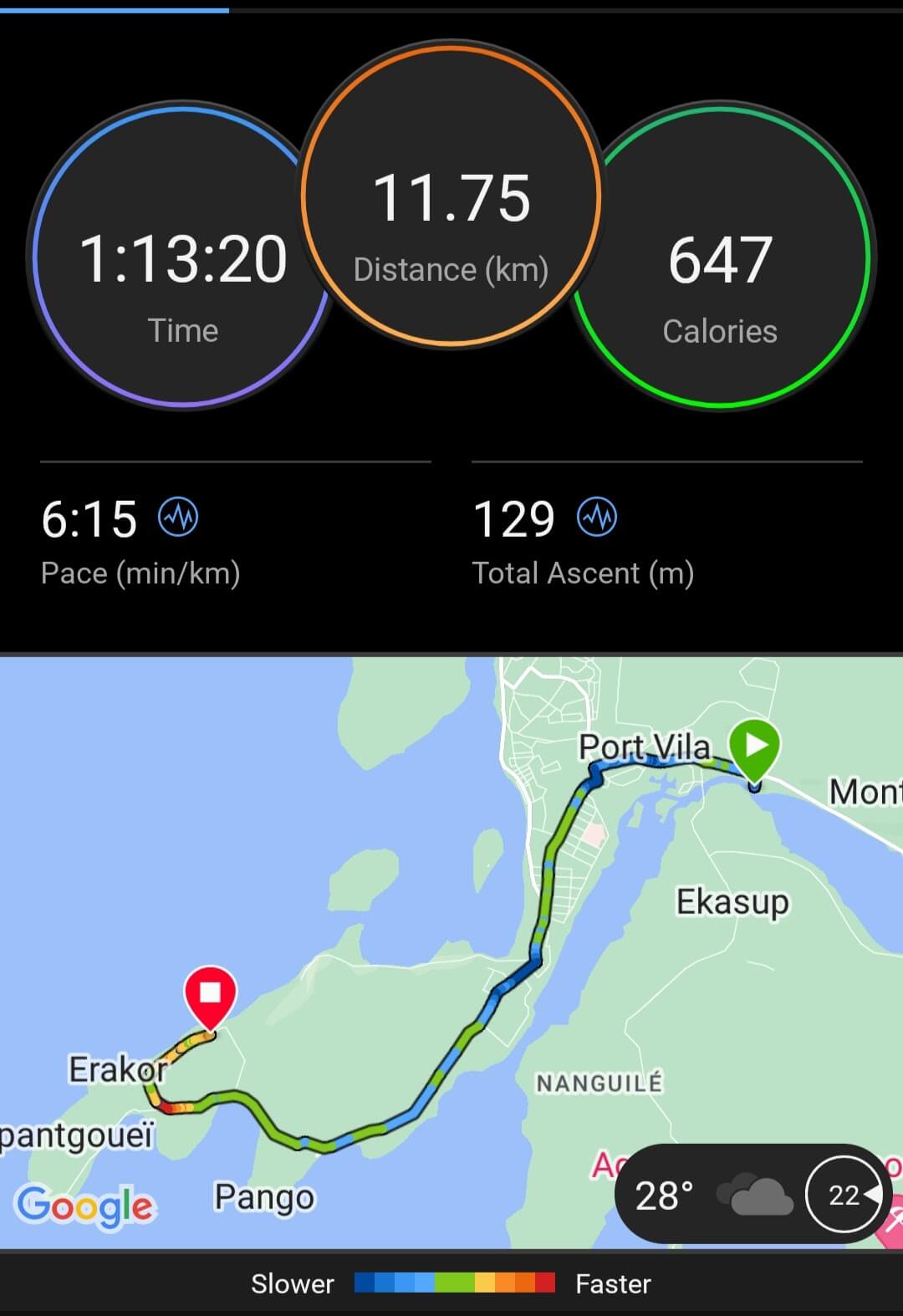
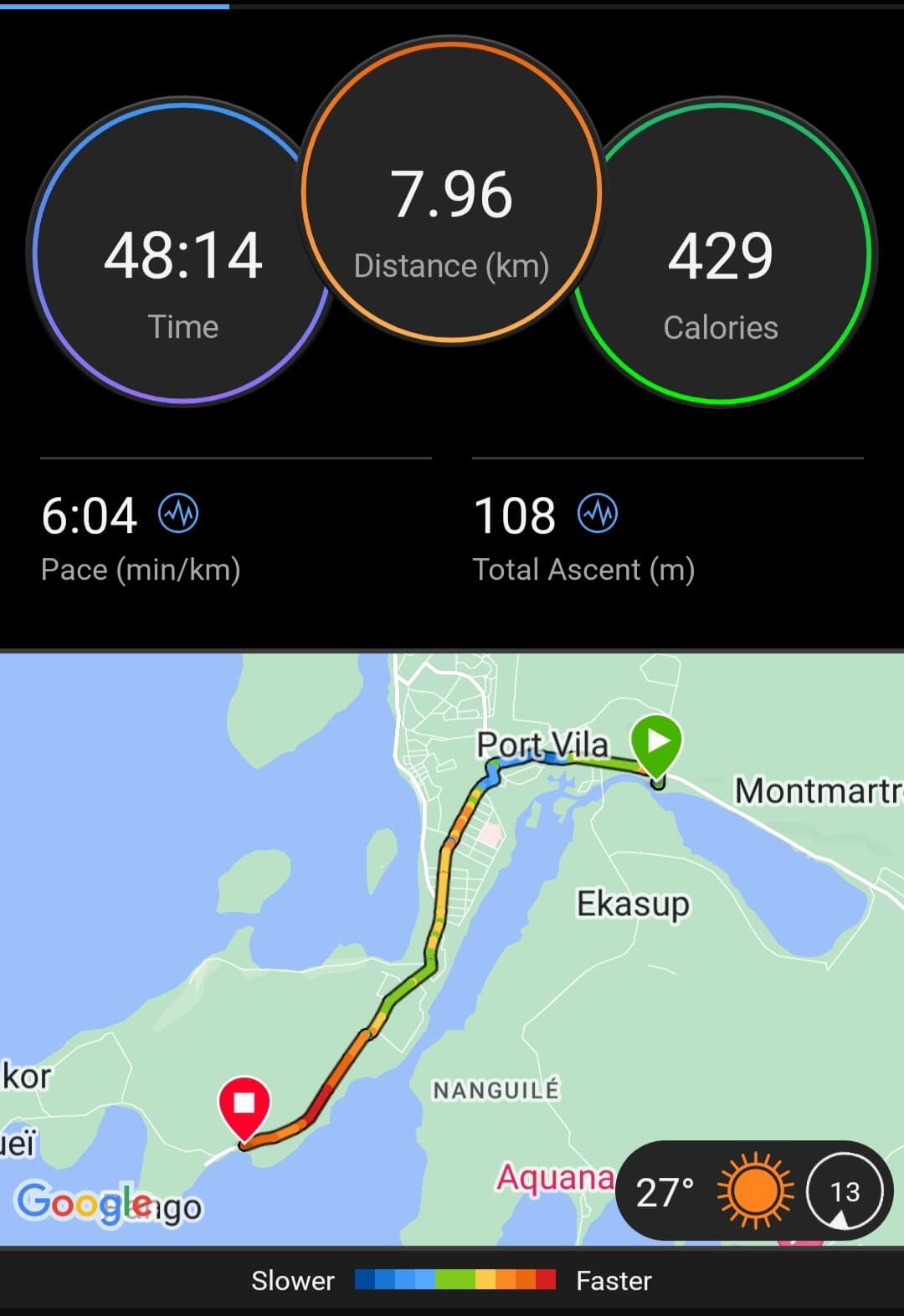
    It’s on the southern tip, far coast. About 12km.

    I get moving early.

    The first 8km are easy – it’s the same run to Breakas. This is the third time I’ve done it, I know the way by heart now, and run slowly, mindful that I’ll be running ninety minutes in the Vanuatu heat with no water.

    I get to Breakas.

    From here, it’s another 4km along the coastline. 

    It’s an interesting area here. Nice holiday homes mixed with local villages, sandy roads and not many cars.

    When cars do appear, they’re generally expensive ones, 4x4s presumably owned by someone rich.

    At the 10km mark, I start to slow down.

    The sun is tough, and my legs are battered from the prior days.

    Every few minutes some locals watch me run past and wave. Probably wondering where I’m running to, or running from. There’s nothing around here.

    Then I finally hit the resort road.

    I see the Paradise Cove sign in the distance.

    Made it!

    Paradise Cove is charming.

    Not obnoxious, just nice.

    Full of green, spaciously laid out, clean stone paths winding through private bungalows.

    I head straight down to the ocean, and as soon as I get there, rain starts to pour.

    I don’t care.

    I jump in the water and float as raindrops pellet me in the face.

    Few things are more beautiful than a warm ocean in the rain.

    After my ocean therapy, I head up to the restaurant to eat.

    Again, courtesy of Covid, the resort is completely empty.

    Even the waitress looks surprised to see me.

    I order the local spring rolls and a coconut.

    Sitting on my lonesome, I’m soaking wet, with no dry clothes, somehow shivering in the Pacific islands.

    I ask the waitress for a towel. 

    She brings one.

    As I finish my food I sit there and daydream.

    It’s my last day in Vanuatu.

    Do I like it?

    It’s a little quiet, even for me. But that’s exactly what I needed.

    Now all I need to do is figure out how to get back home.

    But I’m sure it will work itself out, just like every day before it.
  • A Night At The Gallery

    A Night At The Gallery

    I park the car. Look out the window. At the crowd.

    A jolt of anxiety.

    I hate these things.

    No, I don’t.

    Yes, I do.

    I really don’t.

    Yes, I really do.

    Well, what are you going to do? Just drive back home and read all night? Again?

    Live a little.

    Besides, you told Mike you’re going to come.

    I get out. It’s a standard Rarotonga night. Humid, warm, aromatic. As I cross the road I feel jitters as I get closer to the crowd. They’re all seated on the lawn, drinking, eating, listening to the band. I put on my extrovert face, get into character.

    I really do hate these things.

    I see Ox standing at the edge of the lawn. Away from everyone. Perfect.

    “Hey, Ox.”

    “Hey man!”

    Ox is a guy I met at a beach bar one night. I see him around the island now and then.

    Handshake, bro hug.

    “How’s the night going?”

    “Oh mate! We’re on the beers, live music, making friends!”

    Sounds wonderful.

    I walk over to the kitchen. Auntie is there. I never remember her name, so I just call her Auntie.

    “Hi, Auntie.”

    “Hey! You’re here!”

    Yes I am.

    This is Gallery Tavioni. Most people just know it as “Mike’s gallery”. I come here every Thursday for Maori class.

    “Come on Saturday,” Mike had said to me after class. “It’s opening night, the new exhibition. Free food and drink. Will be lots of fun.”

    Sure, I’ll be there.

    It’s hard to say no to Mike.

    The lawn is showered in Christmas lights. There’s fifty people, maybe. All sipping on booze. Band in full swing. I head towards the gallery, to get away from the everyone, more than anything. There’s far less people in there. And you don’t have to talk. Just look at paintings.

    I step inside. The gallery is long and narrow. Chairs are lined down the middle. People are sitting and watching the walls, like they’re watching TV.

    Kamil is inside. Of course he’s here. Good thing too, haven’t seen him in about a month.

    “Hey stranger.”

    “Hey! Come, come. I need your help.”

    He pulls me to the far wall.

    “What do you think of this one?”

    I nod.

    It’s cool.

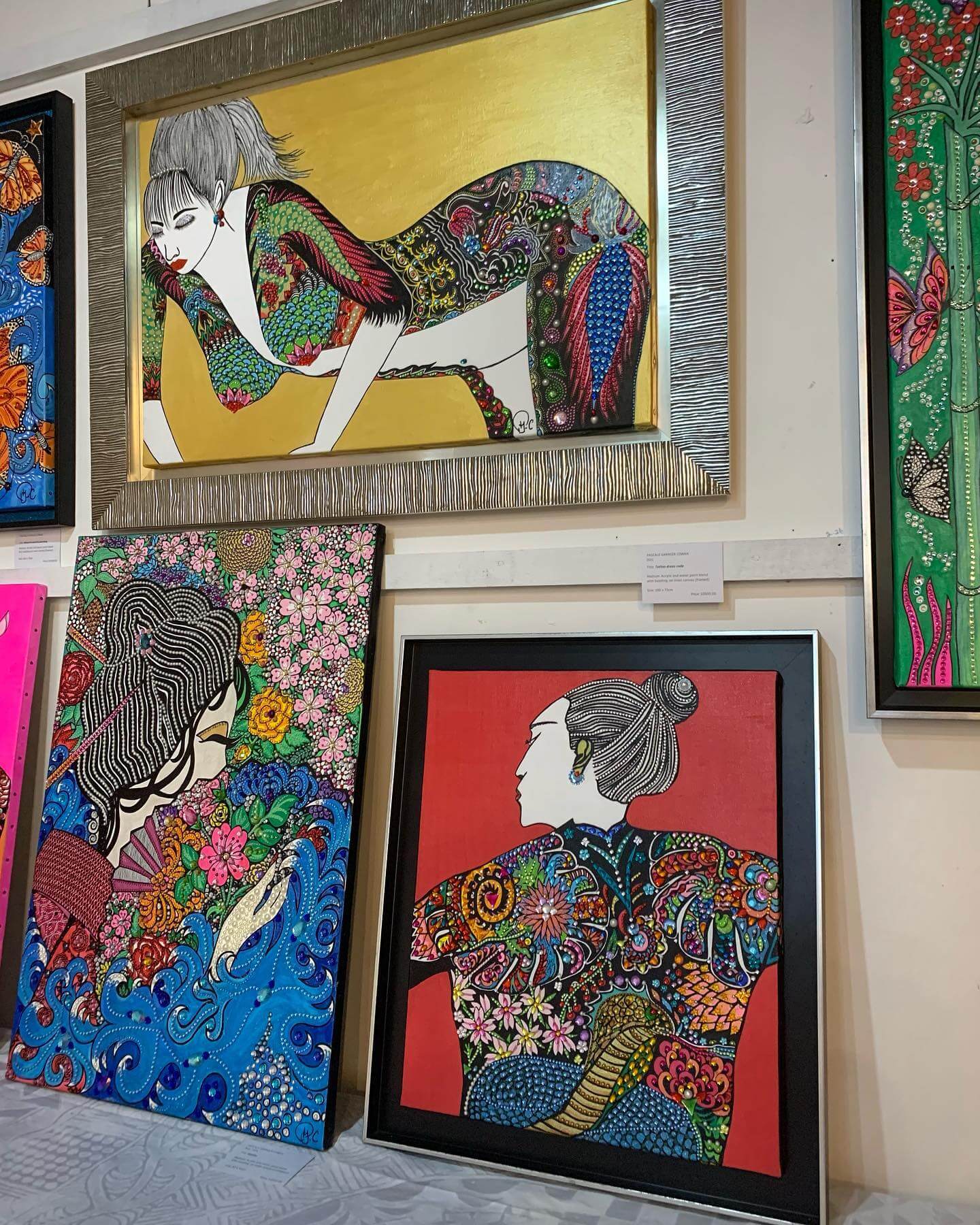
    Then I look closer. It’s a painting of a Yakuza, his tattoos lined with gemstones. Very intricate.

    “You know what? It actually is cool. Very cool. Wow.”

    I look at the tag.

    Pascale Garnier Cowan. Yakuza. $3,500.

    Kamil shows me another one, on the other side of the gallery. It’s a skull with a bandana, the face tattooed with flowers and waves and animals.

    I admire it for a moment.

    “Dude … I love it. This is killer.”

    “But I’ll show you which one I really want,” he smiles.

    He drags me to the middle of the gallery. There’s a small painting of two sea horses. Then beside it, another painting of one sea horse.

    “I can’t decide,” he says. “What do you think, that one, or that one?”

    I point to the solo sea horse.

    That one.

    “Hmmm,” he hums. “I like the other one. Though I feel like the drawings are a bit naiive. But the technique … is amazing.”

    I shrug, and don’t say anything. I don’t know what a naiive drawing looks like. And don’t know what amazing technique looks like either.

    Mike is sitting in the middle of the gallery, in front of the flagship piece, a bunch of people around him. Mike is a smiley, bold grandfather with a booming voice and a fantastic head of long white hair. I go rest a hand on his shoulder. He turns around.

    “Kia orana, koe.”

    “Hey, Mike.”

    “So, who’s this artist,” I ask. “Pascale?”

    He points behind me.

    She’s singing.

    “Oh!”

    I look out onto the lawn, see her fronting the band.

    I was thinking Pascale was a guy’s name.

    On the wall I see a short write up about her, the exhibition. I walk over. It’s a small photo, lots of words.

    “I travelled the world …

    Decades …

    Gathered all the treasures my eyes could hold …

    My life was rich …

    I was diagnosed with an illness …

    I was in a nightmare …

    I struggled with the terrible side effects of treatment …

    I needed something positive …

    I started to paint …

    I threw colours on a canvas …

    All the beautiful things I pictured in my mind …

    The softest therapy I’ve known …

    It healed me from the inside …”

    My heart jolts.

    I can finish her sentences before I read them.

    Her story is my story.

    I walk a full lap of the gallery alone. The first section is all skulls. Ten, twenty. The next section is nature. Then the ocean. Then the world.

    I admire them all, and there’s a few pieces that I love. But by the end I already know. There’s one, that needs to belong to me.

    Red. Always red.

    Gianni wanders by. Another familiar face. I bump into him nearly every week, in some restaurant or another. We shake hands. He’s in a suit. Madness. It’s thirty degrees in here.

    He starts telling me about the exhibition.

    “We had that hanging in our kitchen,” he says, pointing. “That one was in my office. That one was my favourite.”

    “Wait. Pascale is your wife?!”

    He grins.

    He points to the turtle painting.

    “That one, I always loved that one. I’ll tell you the amazing thing about art,” he says. “It’s like love. You don’t need to think. You just look, and within a split second it’s either, I feel nothing, or I feel everything.”

    No kidding.

    He wanders off.

    I sit. Stare up at the canvases in front of me.

    Now I know why they’ve put chairs down the middle, from wall to wall. Because after you’ve seen everything, you just want to sit down, digest it all.

    Kamil finds me.

    “Anything you like?”

    I point to the red face on the far wall.

    “How much is it?”

    I tell him.

    “Well. It’s amazing. You should get it. Will be something to remind you, of your time on Rarotonga.”

    Of course, I don’t need anything to remind me. What this island has given me. Rarotonga has become a small miracle in my story. I already know I’ll take this island with me everywhere, forever.

    I go outside to the food table. I fill a plate with fruits. Watermelon, pineapple, papaya. I sit out on the lawn, watch Pascale sing for a while.

    I guess I don’t hate these things. At least not all the time.

    After I’ve had my moment, I go back inside and sit down, stare at my painting from across the room. Gina is in the chair beside me. Gina is Mike’s niece, I think. She does all his admin stuff. She’s the person I called to sign up for Maori lessons.

    “How’s class?” she asks.

    I shrug.

    “It’s good.”

    “You’re his favourite student, you know.”

    “Huh?”

    “He always tells me about you. That guy. I really like that guy. Very smart. Always asks lots of questions. Very good questions.

    Hah.

    “See anything you like?”

    I point to the red.

    “Ahh,” she nods. “Those ones, she painted those while going through chemo, after she lost her hair. Everything on that wall – skinny faces, no hair.”

    Skinny face. No hair. Red.

    Yeah. Been there.

    I think about buying it. I don’t know. Then I think about leaving the island without it, and that’s when I do know. There’s no way. It’s mine. I have to take it.

    I go and find Shane, the host. He’s sitting in the middle.

    He grins at me.

    “How’s it going?”

    “That one,” I say, pointing to the far wall.

    “The red one?”

    “Yeah. I’ll take it.”

    “Nice choice.”

    He walks me over to it, takes down my details.

    Hands me the red dot sticker.

    “Here you go.”

    I stick it on the price tag.

    Sold.

    He holds his hand out.

    “Congratulations!”

    I go sit back down. Gina is beside me.

    “I’m curious,” she says. “Why that one?”

    We both look at it.

    I tell her the story.

    “I travelled the world …

    Gathered all the treasures my eyes could hold …

    My life was rich …

    I was diagnosed with an illness …

    I was in a nightmare …

    I struggled with the terrible side effects of treatment …

    I needed something positive …

    I tell her about red.

    Her eyes are wide open.

    “Wow,” she says. “That is just … wow.”

    “I should get a photo with her before I go.”

    “Aboslutely! I’ll ask her for you, when she’s done singing.”

    The gallery is emptying out. Just a few of us now. Everyone is on the lawn, eating, drinking, dragging out the last hours of their Saturday.

    On the far end is a girl, scanning all the paintings with a gadget.

    I walk over.

    “Got a favourite?”

    She turns around, smiles, points to the far wall.

    “That one. The blue and orange.”

    It’s the fish. Yes, many of us liked the fish.

    I nod with approval.

    Good choice.

    I sit down.

    She sits beside me.

    “What about you?”

    I point to the red, and she looks over at it.

    “Ah, nice! Someone’s bought it, though.”

    “Yeah.”

    I point to her hands.

    “What’s that scanner thing you got?”

    “Oh, my camera.”

    She pulls it out, shows it to me.

    “I work for the news.”

    “Ahhhh. And this is today’s big story?”

    She laughs.

    “Yeah.”

    We sit there and talk, staring at the wall. First about the paintings in front of us. Did you see that one had a cat on the forehead? Hey, there’s butterflies on that one. Then about the island. The news. My broken shoulder. Her broken ankle. Ten minutes, twenty, thirty. An hour. Shane starts stacking the chairs. The band finishes.

    “I think we better go.”

    “Yeah.”

    Gina catches me as we exit.

    “Your photo!”

    She brings Pascale over.

    “This is Brendan,” she says. “He’d love a photo.”

    We go back into the gallery. Pull the red off the wall. Photos, photos. Then Pascale walks me around the gallery.

    “I painted these during chemo. You can see here, I wore bandanas for a while. Then wigs. Then I just let myself be free.”

    As we walk, I tell her my story. I tell her why I chose the red. Her eyes soften.

    “So that’s why this speaks to you.”

    We keep walking.

    “How did you learn to paint?”

    “I didn’t! I just did it. I never once thought I would sell any of these.”

    She stops at the dragon painting. Explains to me how she did the colours on the scales, the gems, the patterns. All the things we’d never notice on our own.

    We get to the end.

    “Congratulations,” I tell her. “On everything.”

    “And you.”

    We hug.

    She disappears back to the crowd outside.

    I say bye to Gina. Shane. Mike. Auntie. News girl.

    As I drive home on the empty and silent Rarotonga road, I smile. My soul is full.

    One more night to remember on this magical island.

    Heading to Rarotonga? Check out my accommodation guide here!

  • A Raro Life Pt. 3: Sharing Souls With Strangers

    A Raro Life Pt. 3: Sharing Souls With Strangers

    A Raro Life is a chronological recollection of stories from the six months I spent living in Rarotonga during the 2021 Covid lockdown.

    We’re at Mai’i.

    “My favourite restaurant on the island,” Amandine says.

    But she also said that about Mooring Fish Cafe.

    And Nautilus.

    And OTB.

    We’ve just been to yoga with Michelle. I’m eating fish and chips. Roberta’s eating kumara fries. Amandine’s got the sashimi platter.

    Roberta isn’t doing much eating, though. She’s talking. Entertaining us with stories of her teens – when she backpacked through Brazil in the seventies or eighties, did all the crazy backpacker things. She talks and talks, and I can see Amandine zoning out, then I zone out, and it’s Roberta talking to herself, then after a few minutes, we zone back in. She’s still talking.

    So the island is like home, now? She finally asks me.

    I nod. Every day there is something.

    Tuesday and Thursday is yoga, Amandine says.

    Friday and Sunday is music at Waterline, I say.

    Saturday is the rock band.

    Just Wednesday is free …

    Wednesday you can go to Lucille’s house! Roberta says.

    Amandine perks up.

    Yes! The magazine thing!

    They start laughing.

    You want to go tomorrow? Roberta asks.

    Amandine nods. Yeah!

    She turns to me and starts explaining.

    So it’s this thing – you take all these pictures from magazines, but you don’t even think about it, you really don’t think anything about it, you just take it and then make this picture, and then when you finish you will have a card with all these pictures, then you can make like four or five cards or however many cards you want, and at the end all the pictures will tell a story about your life …

    Uhuh …

    It’s really fun!

    Uhuh …

    Even Kamil went once.

    Just once?

    Yes, he hated it.

    Why?

    Because he’s Kamil, that’s why. But we should go!

    I know I’m not even allowed to say no.

    We will goooo, Roberta says. We can leave at foouuur.


    I wake early the next day. Go to the beach. Read.

    Just before lunch, I lace up for my run.

    As I leave the house, I spot Carlo in the garden, shirtless, doing garden stuff. He grins at me.

    You run everywhere!

    Yep, I smile to myself. Seems to be all I know now.

    Carlo is so jolly. He has a permanent smile, like it’s painted on. When he talks, he lifts his eyebrows, high as he can, like he’s putting in eyedrops. His Italian accent is so thick you almost need subtitles. You can’t not love him.

    I walk down the driveway, around to the front of their house. I don’t know if he’s a carpenter, but I guess he built this house himself. It’s soulful, tropical, built in a nest of trees, straight out of an island movie. The guesthouses – where Amandine and myself stay – are on the bottom floor. Carlo and Roberta live up top, in their breezy idyllic treehouse. I’m jealous. It’s beautiful.

    I start my run, down their long gravel driveway, same as always.

    The funny thing about Rarotonga – it’s nearly impossible to get lost, because there’s only one main road, that circles the whole island. I don’t even know if it has a name – people just call it Main Road. It makes it the most beautiful place to run. Normally, in a foreign country, you need to keep a damn GPS in your head when you run, remembering every turn, every landmark so you don’t get lost. But here, you can just run and run, and when you get tired, just turn and run back. You can’t get lost when there’s only one road.

    I hit the main road and hang left.

    I run past the Edgewater Resort, where I had gone for lunch on my first week.

    Were you running this morning? The waitress had asked.

    Yes I was.

    The next day, I went back for a swim.

    The guy on duty grinned at me.

    Saw you running this morning bro. Chyeah!

    Go for a run, everyone on this island knows. No secrets here.

    I run past Alberto’s Steak House. Pretty good food, Carlo had told me on the first day, on the ride from the airport.

    Next, I pass the bakery that Amandine likes, with the one-dollar Spanish rolls.

    A few minutes down, there are roadworks.

    I run by the orange cones. The guy standing there does a little hop step.

    Wanna race, bro? He grins.

    I grin back.

    I run by Black Rock. Oceanside now. I follow the road all the way to the wall that runs along the sea. They call it the Sea Wall.

    Even though cars are zipping past, it’s soothing, running the Sea Wall. Hearing the ocean crash, tasting the fresh salt in the air.

    I look at my watch. Three kilometres.

    I turn around, start to head home.

    Along the Sea Wall again, past Black Rock again, past Alberto’s again, back to Carlo’s driveway. But I get to Carlo’s driveway and I don’t want to stop. This weather is too beautiful, this sun is too warm, the humidity is too nourishing.

    I keep going.

    I run past the Crown Resort. Then OTB. Then Beluga. Then Waterline. This stretch of resorts and restaurants, I’ve run it many times now. This part of the island is Arorangi. I know it by heart. Without even realising it, it’s become home.

    As I run this stretch of road, there is a moment when all cars have cleared the road, I see no buildings. All I see in front of me are bright green trees hanging still, piles of coconuts gathered by the roadside, and a spotless turquoise sky glowing in the sun. It sits there like it’s in a photo frame, and all I can think is how I regret not having my camera, but I know I’d never be able to capture the perfection anyway. The beauty stuns me, like a beautiful woman, or a beautiful sunset – my eyes try to take it all in, and it’s almost overwhelming, to the point I just want to stare into this blue and run forever.

    How did I not know this island existed until now?

    It’s four.

    Just as I’m locking up, I can hear Roberta and Amandine outside, walking towards my door.

    Do you think he still wants to come? I hear Amandine say.

    They pop their head around the corner and see me.

    Oh yeah, he’s here!

    It feels like a short drive to Lucille’s house. I have no idea where we are, but we pull up a long driveway which eventually opens out to a beautiful, sprawling lawn. A large house sits in the middle, immaculately kept, straight out of a Home & Garden magazine. Around the house is an L-shaped deck, lined with statues and carvings. My first thought – I’d love to live in a house like this.

    We pull up to the doorstep. There are no other cars in the driveway. Just us.

    Lucille is waiting to greet us on the deck. She’s a retired French lady with a soft voice who reminds me of a fortune teller. It’s everything – her wavy blue clothes, her shallow eyes, her pillowy voice.

    Behind her on the deck is a long table filled with stationery – glue, glitter, coloured pens, candy.

    We sit.

    She offers us tea – not normal tea, of course, but tea with turmeric or lavender or masala or some combination of these.

    Can I steal an M&M? I ask.

    She gazes at me strangely, then looks over at the bowl of M&M’s on the table. Smiles.

    “Oh, of course. They’re all for you.”

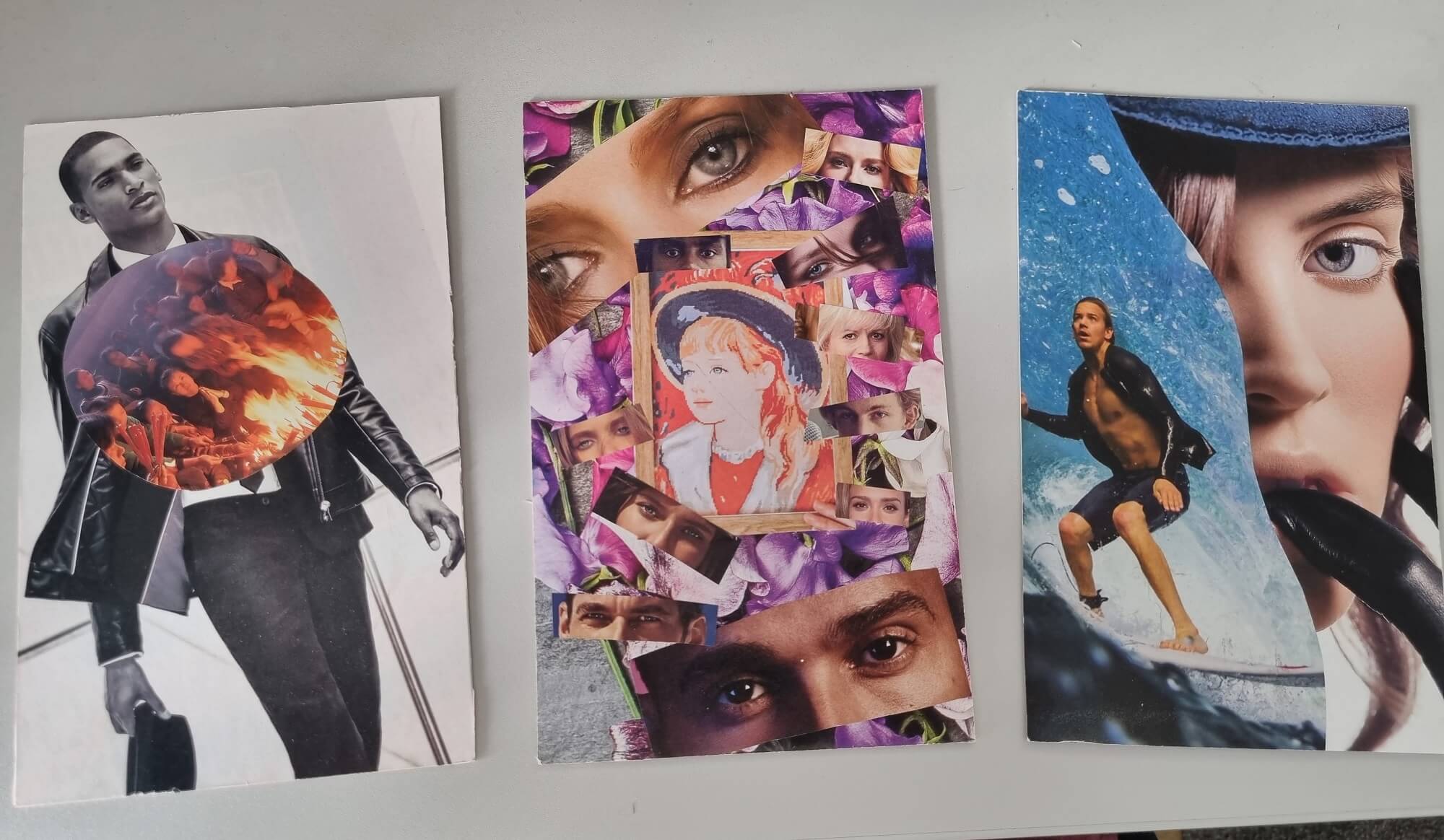
    As I chew on M&M’s, she introduces herself. She hands me a piece of paper. Across the top are the words Soul Collage. She asks me some questions. Where I’m from, what I do.

    Then she finally tells the ladies to go ahead and get started, before sitting down beside me.

    “So, Brendan, what I would like you to do is to go to that table, spend some time looking through all the pictures, and your task is to choose one, only one. I want you to choose the one that jumps out at you. You won’t need to think about it too much. You should know as soon as you see it. We’re looking for that one picture that, when you see it, you feel that ahhhhhh inside of you, you just know it’s speaking to you. Do you know what I mean?”

    I know I’m supposed to say yes.

    “Yes.”

    “Wonderful.”

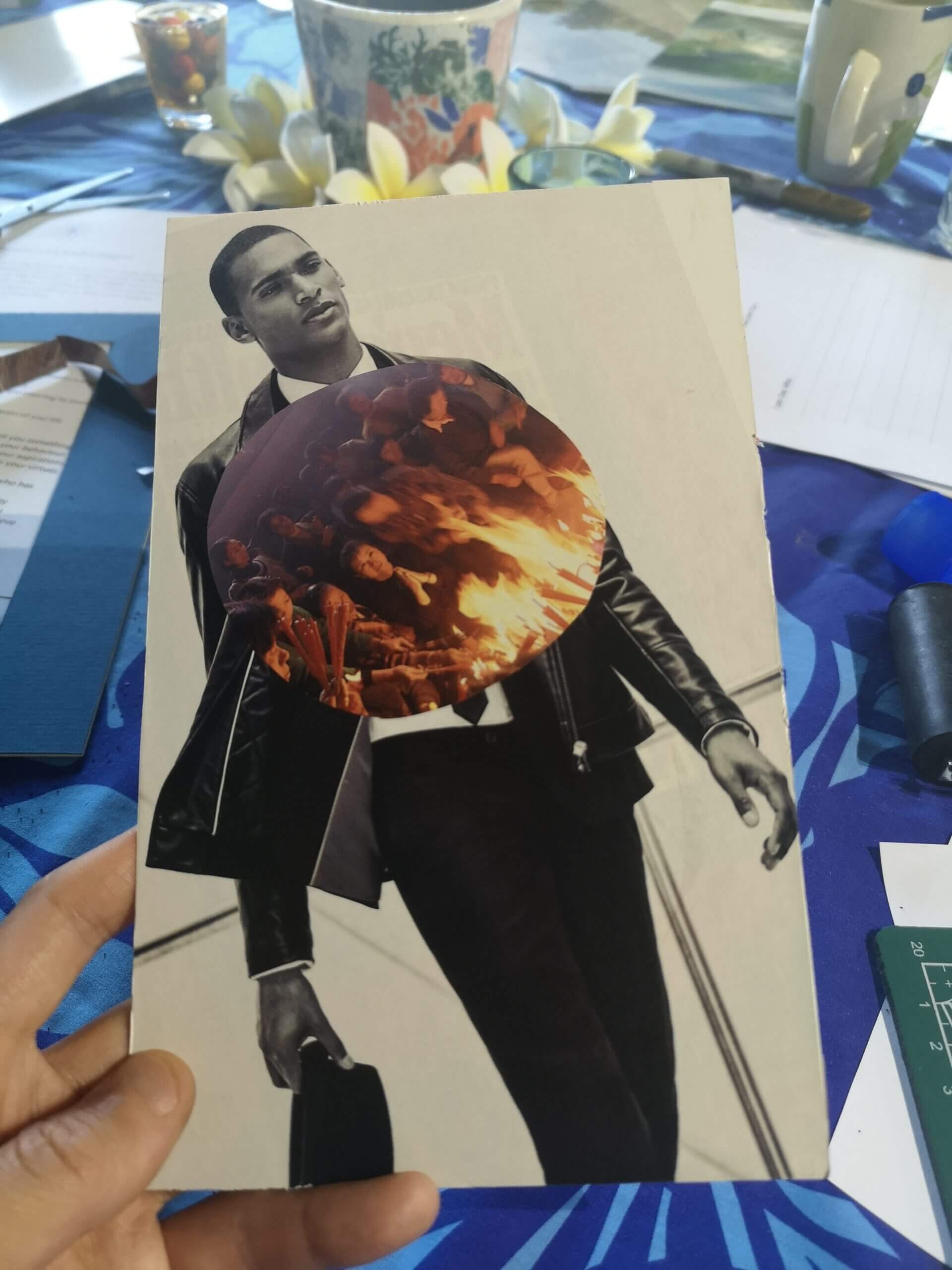
    I go to the table. There are hundreds of loose pages torn out of magazines and brochures, with pictures of everything – beaches, cars, people, plants, animals. I flick through them all quickly, and eventually I pick up a page with a small photo of a bonfire, and I stop.

    I stare at it for two, three seconds.

    It brings back memories of Afrikaburn. A happier time in my life. Right before everything changed.

    I guess this is what she was talking about.

    I take it and go and sit back down with Lucille. She looks at it.

    “Very good. This is the centrepiece of your collage. Remember, it can be anything in this photo that speaks to you – it could be the fire, it could be the people sitting around it, it could just be the colour. It’s all about what you see. Now I want you to return to the table and pick one more picture. This second picture will be your background.”

    I go back to the table. I don’t know what I’m looking for, but I find a picture of a guy. He has a leather jacket and he looks confident and focused and most importantly, at peace.

    I take it back to Lucille.

    She puts a pair of scissors and a glue stick in front of me.

    “Time to be a kid again,” she tells me.

    She’s right, it is like being a kid again. I cut around each picture meticulously, like I used to in primary school, agonising over the angle I should paste it on, over the straightness of the edges, over getting just the right amount of glue.

    I look up at Roberta and Amandine.

    Silence. Intense concentration.

    We are all kids again.

    Lucille comes over and looks at my finished piece. She smiles.

    “Fantastic.”

    She holds it up and shows the girls.

    “Che belloooo,” says Roberta.

    “It’s beautiful,” says Amandine.

    “Isn’t it?” Says Lucille.

    I try not to laugh. Am I supposed to say thank you?

    She hands it back.

    So now, I want you to do it again – look for the pieces that speak to you. But don’t limit yourself this time. Use as many pictures as you like. And remember – don’t think, just listen.

    We spend the next thirty minutes glueing pictures from magazines onto cardboard. None of us talk. None of us take a break. Somehow, it is so simple and meaningless, but so engrossing at the same time. It feels almost … sacred.

    After we’re finished, and still sitting in silence, Lucille comes out of the house. We’ve been cutting and gluing for hours.

    “Shall we share?”

    The day is dimming now. The sun has started to set. She takes us over to some couches on the edge of her deck.

    We sit in a circle, around a small coffee table. She asks Amandine to go first.

    Amandine talks a lot about loneliness. About being on this island for so long. Being away from her people. I hear her, but I’m not really listening. I’m looking at my own cards, wondering what they mean. But the truth is I know exactly what they mean. I’m just wondering if I’m courageous enough to say it out loud.

    Amandine finishes. She hasn’t looked up the whole time. How much of her soul has she bared, I don’t know. But she finally looks up at us and smiles, and suddenly it hits me how bizarre this is, how we barely know each other, yet sharing things so intimate.

    “Brendan, would you like to go next?”

    I have three cards.

    I pull out the first one.

    I stare at it, and it takes me a while to start talking.

    “When I saw this guy, I saw … confidence.”

    “I know he is living freely. He’s not afraid of anything.”

    My voice starts to quiver.

    “I miss him. Because I used to be him.”

    I pause. I didn’t expect to be this emotional, but the words catch in my throat. Tears want to collect in my eyes.

    I don’t let them.

    “I chose the fire because … I remember when I had a fire that burned bright like that …”

    “My fire is gone now. I feel like it was taken away from me.”

    “All I want is to heal, so I can have that back. I want to be this guy again.”

    I don’t look up. I’m afraid a tear might fall if I do. I don’t want to see if they’re looking at me, if they’re listening, if they even care.

    I just move on to the next card.

    But somehow, saying this out loud, looking at this card in front of me, it has moved me. I’m reminded the fire is mine, nobody can take it away. You nurture it, fight for it. It can only die if you let it.

    Suddenly, I am so grateful I am sitting here. Maybe there’s a reason I met these people. There’s a reason I ended up on this island. Around this table. I needed to do this. Maybe this is what healing looks like.


    Heading to Rarotonga? Check out my accommodation guide here!

  • A Raro Life Pt. 2: A Pizza At Midnight

    A Raro Life Pt. 2: A Pizza At Midnight

    A Raro Life is a chronological recollection of stories from the six months I spent living in Rarotonga during the 2021 Covid lockdown.

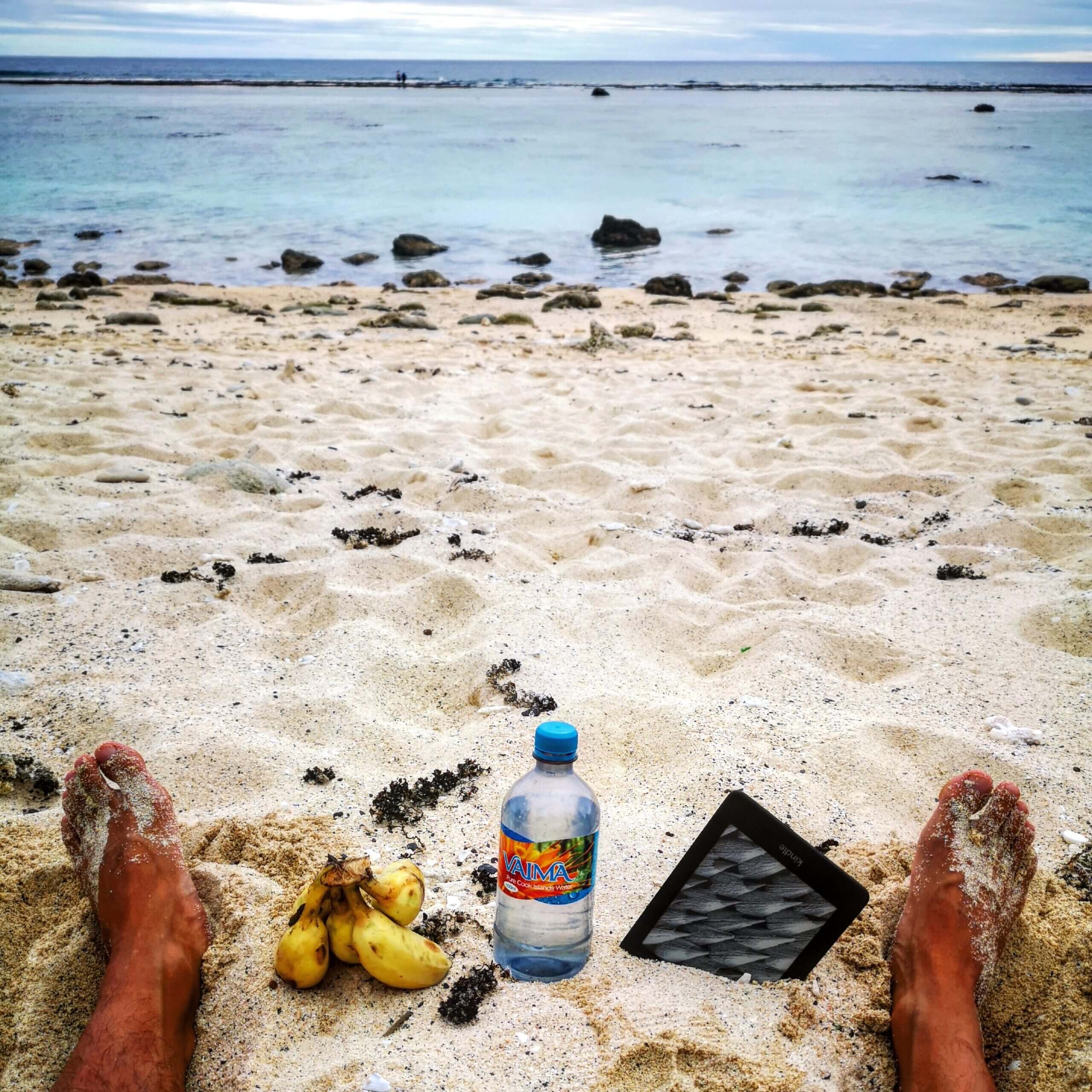
    I’m on the beach, reading.

    This is tradition now.

    Every morning.

    Bottle of water, Kindle, the sun.

    It’s not the prettiest beach, but it’s my beach. Three minutes walk. And always empty. I have the same spot each morning. Under the first coconut tree.

    Engrossed in my book, I hear a voice.

    “Hii!!!”

    I look up. A girl is waving. Sarong. Big sunglasses.

    “Oh. Hey. What’s up.”

    The Swiss girl from my kitchen.

    She walks over.

    “I’m gooood, how are you?”

    Frenchest of French accents.

    “Just…reading. What’s goin’ on?”

    “I’m going to take a little swim!”

    She stands a few metres away, looking down at me through her sunglasses. Asks what I’ve been up to. How I like the island.

    I tell her I’ve been doing … nothing. And the island’s great.

    Then, finally, as if we’re friends now, she sits down beside me.

    Her name is Amandine.

    “Like Amanda,” she tells me, “but French.”

    As we start talking, I realise she has so much to tell me. All her friends have left. Her boyfriend is in Australia, and their borders are locked. Nobody is allowed in, nobody’s allowed out. And I guess, being here for this long on this small locked down island, you don’t meet so many people. I’m the only new ears she’s had in a while.

    “Do you have plans for later?” she asks. “If you like, there is a sunset party. At Vaiana’s. Just down there. I think most people on the island will be there! So we could go there, meet some people, have a little drink, listen to some music? What do you think?”

    A party. I hate parties. Two weeks ago, you couldn’t have paid me to go to a party. But now, my skin looks half-normal. I feel okay. And I know this now – on the road, alone, you have to say yes. You have to see things, do things. Give yourself a chance to fall in love with a place.

    “Sounds fun. What time?”

    “It starts maybe two. But we can go at four! Do you have a bike?”

    “No.”

    “That’s okay! We can walk! If it’s okay for you …?”

    “Yes, sure.”

    “It will take maybe forty minutes. It’s not too far for you?”

    I laugh. She has a lot to learn about me.

    “I think it should be okay,” I smile.

    She smiles back.

    “So I’ll see you later!”

    She gets up, walks off. Into the ocean.

    Four o’clock comes.

    I go to knock on her door, but she emerges right as I get to the doorstep.

    Long, red dress. Interesting choice, for a beach party.

    “Looking lovely,” I tell her.

    The walk is pleasant. She plays tour guide the whole time.

    “Nice place to watch the sunset,” she says, as we pass the Edgewater Resort.

    We walk past the bakery. “They sell Spanish rolls for a dollar,” she smiles. “Really good!”

    We pass a little path onto the beach. She stops.

    “Have you been to Black Rock?”

    I shake my head.

    “Oh, I have to show you! Let’s go down here, we can walk along the beach.”

    After fifteen minutes of shelly beach, we get there. For some reason, I’m surprised that Black Rock is … just a big black rock.

    “People come here to watch the sunset,” she tells me. “Sometimes, you see whales. Down there, it’s a good place for a little swim!”

    That seems to be her favourite word. A little swim. A little drink. A little walk. Everything is little, just like in French, everything is petit.

    We walk another fifteen. Arrive at Vaiana’s.

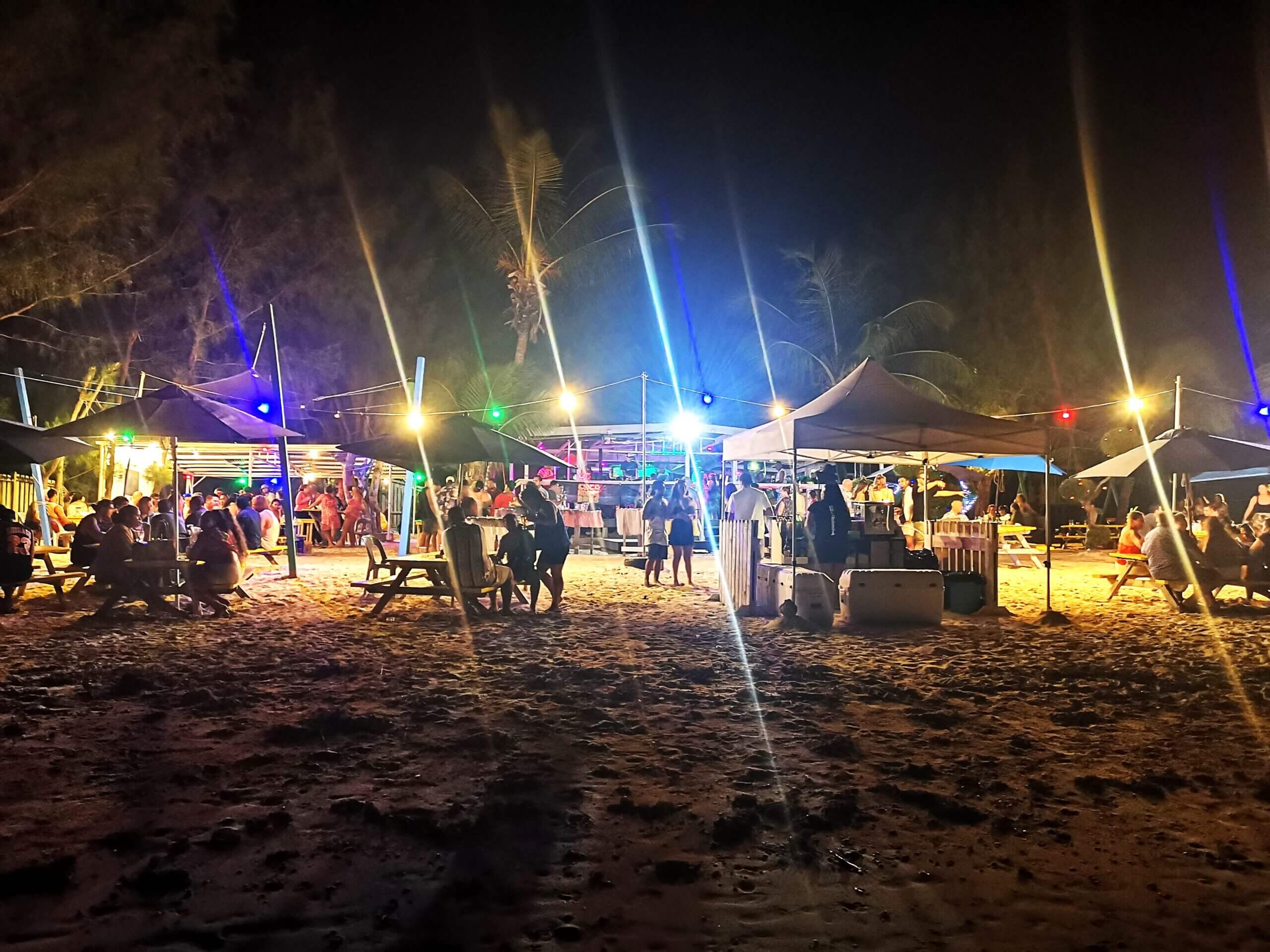
    It’s a gorgeous beach bar with tables scattered on the sand. There’s a DJ in the booth slamming tunes, so loud I can barely hear myself speak. The ocean is like glass, the sand powdery white. Postcard quality. Amandine spots a friend. He’s a thin Indian guy, dressed sharp with slicked-back hair and a friendly grin.

    We go to his table. Handshake.

    “Shanks.”

    “Brendan.”

    Shanks is an interesting guy. He’s the finance big dog at one of the resorts. Standing with him at the table, shouting at him over the music, and my island mocktail, I learn a lot about the island. Who owns what. Where the money comes from. Where it goes.

    Standing there talking about the rich people on Rarotonga, we manage to pass hours. The sun sets. Beautiful. The beach gets drunker and drunker. It’s dark. There are kids running around, among people dancing on whatever drugs, among families eating fish and chips, among people drop dead inebriated.

    Magical.

    “My friend is coming,” Amandine says to me, tinkering on her phone.

    “Yeah, who?”

    “Oh, he’s so great! You will love him.”

    An hour later, she points.

    “Here he is!”

    He’s maybe fifty, in a worn tee, long wavy hair, like Jesus. Asian Jesus. Spectacles. He doesn’t really walk, he shuffles. Small steps, like he’s making sure he doesn’t stand on anything.

    Amandine introduces us.

    “Brendan, Kamil.”

    Kamil is soft-eyed, soft-spoken. But the first thing I notice about Kamil, he’s inquisitive. Asks lots of questions. But not stupid questions. Wise questions. Well-thought-out questions. He doesn’t ask what I do, he asks why I do it. He doesn’t ask where I’ve been, he asks where I would like to return to. I also learn, he and I are not so different. Just from different eras. A man who spent his life travelling all over the world, and then again, and then again.

    I also quickly learn, he and Amandine are tight. Inside jokes. Finishing each other’s sentences. Total BFFs.

    “I want to eat,” Kamil says.

    “Here?” Amandine asks.

    “Nah.”

    “Traders?”

    “Yeah.”

    They turn to me.

    “Have you been to Trader Jack’s?”

    Trader Jack’s is a popular restaurant bar in the centre of town, right on the water. Apparently, one of the Rarotonga’s flagship spots, but with closed borders and no tourists on the island, it’s quiet. We walk in. Every table is empty. Kamil and Amandine march right to the corner table on the balcony. They know all the staff. The staff know them.

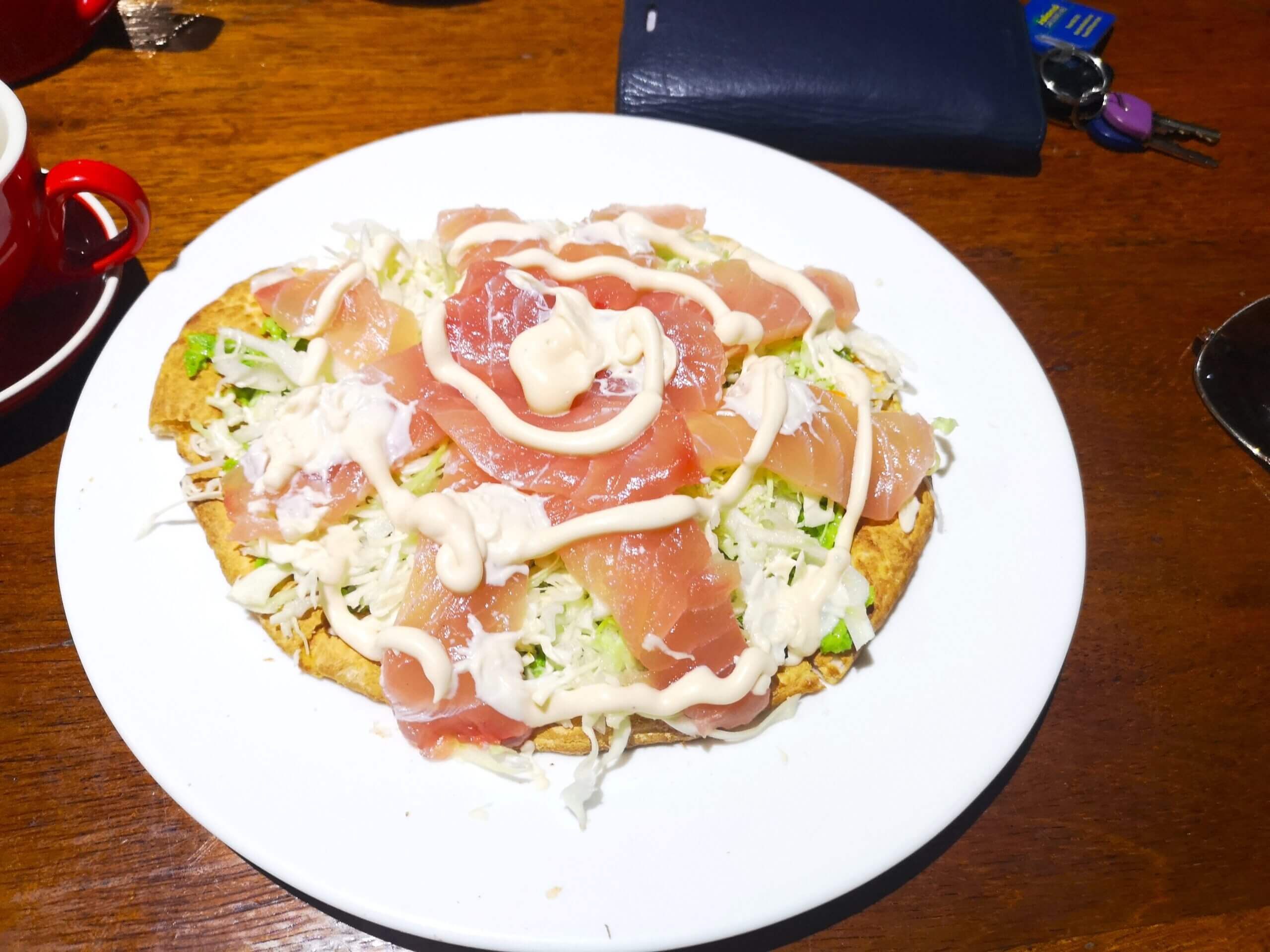
    “Try the sashimi pizza,” Amandine says.

    “Yes, it’s good,” says Kamil.

    “But it’s small,” says Amandine.

    “It’s not that small,” says Kamil.

    “Sashimi pizza?”

    “Yes,” Amandine says. “I know it sounds a little strange, but it is very good! I’m sure you will love it.”

    Because she says it in a French accent, it sounds convincing.

    The waitress comes.

    “I’ll have the sashimi pizza …”

    She nods.

    Amandine gets a drink.

    Kamil orders the nasi goreng, but then asks if he can talk to the chef.

    The waitress goes and gets the chef. The chef comes out.

    Kamil says something about more spicy, less oil, not so oily. The chef nods. Then walks off.

    I raise an eyebrow.

    Mister VIP over here.

    Finally glad to be out of the deafening party, I relax into my chair, the ocean breeze. Amandine and I both sip drinks, while Kamil talks.

    Kamil likes talking. Thankfully, after having travelled so many years, to so many places, he actually has interesting things to say. He talks about Iran, and Indian billionaires, and Malaysian banking. And then, after the nasi goreng is gone, and the sashimi pizza (delicious as promised), and an hour of Kamil’s stories, we finally get up to leave.

    Kamil covers the bill.

    “Thanks, mate.”

    It’s one a.m.

    We get into Kamil’s car.

    “Have you been to Muri, Brendan?”

    “No.”

    “Oh, we have to show you.”

    “Now?” Amandine says.

    “He’s never been!”

    “It’s dark Kamil. He won’t see anything.”

    “Okay, fine.”

    He starts heading toward home.

    On the way, we see two shadows by the side of the road. They have their thumbs out.

    “Hitchhikers,” Kamil says. “Shall we get them?”

    “Of course,” Amandine says, as we drive past.

    “Too late,” Kamil laughs.

    “No, you have to!!”

    Kamil pulls over.

    I turn and see them running towards the car.

    They lean in the window.

    “We’re heading to the backpackers. Next to Beluga.”

    They’re two young guys from Europe.

    “Yes of course,” Amandine says, as if it’s her car, and the two of them cram in beside her.

    As the five of us chat away, I find myself feeling at home once again. Five strangers from different countries, driving along in the middle of the night in a faraway place. I thought I’d never live this life again, but here I am.

    Right back where I used to be.


    Heading to Rarotonga? Check out my accommodation guide here!

  • A Raro Life Pt. 1: Coconuts & Sunshine

    A Raro Life Pt. 1: Coconuts & Sunshine

    A Raro Life is a chronological recollection of stories from the six months I spent living in Rarotonga during the 2021 Covid lockdown.

    It is exhausting to live with this skin condition. It’s exhausting to wake up and deal with it, it’s exhausting to talk about it, to have my life revolve around it, every single day. But here we are.

    It’s been one week since I came to this island.

    I’m staying in a small Airbnb, just off the beach. Since my face has been flared up and mangled, I haven’t ventured too far. I don’t want to see anybody. That’s the whole reason I’ve come here. So I don’t need to see anybody.

    The island is empty anyway. Its border has just opened with New Zealand, whose border is also closed to the world – a “Covid bubble” they’re calling it, so nobody is here. I was on one of the first flights. But I still keep to myself. I wake up, run, then go to the empty beach and read. To eat, I walk across the street to the corner store. The only foods of substance they have are eggs, bread, butter and ice cream. Sometimes papayas.

    So that’s what I’ve been eating for the last week. Egg sandwiches and ice cream. Sometimes papayas.

    But today, I look in the mirror and my face looks kinda … better. My face isn’t red. It’s brown. Just one week. Is my skin really getting better? It’s not near perfect, of course, but I look at the patches on my neck, down my arms, and my skin looks … relieved. Maybe my skin likes this place. Maybe I can show my face to the world today. Maybe I can even go for my first swim.

    Roberta and Carlo – my landlords – are the only two people I’ve talked to. They’re an old Italian couple. Very sweet. Roberta told me she’s coming by to clean my room today. I told her, not in the morning. She said it has to be before five, because she has somewhere to be. I said two o’clock. So I have the perfect day planned. I’m going to spend the morning reading by the water. Then at lunchtime, instead of walking along the beach, I’m going to swim along it. I’m going to swim to the nearest resort, have lunch, then swim back, read until sundown and go to sleep.

    I sit on the beach all morning with my best friend. His name is Kindle. Then just before two, I head for the water. The water is warm, tropical warm. I wade out until it’s shoulder height, set my watch and go. The water feels shallow, but deep enough for me to swim freely. It’s crystal clear. Fish everywhere. Sea cucumbers, blue starfish. Everywhere. As I glide through the water, I mouth a word. Paradise. This ocean is my personal fish tank, there’s nobody but me, and while submerged I can forgot about my red flaking skin, and I just swim and swim and swim.

    Six or seven minutes go past before I pass the first resort. I pull up my goggles and scope it out. It doesn’t look right. The tables are all empty. There’s nobody in sight. It looks tired.

    I keep swimming. Pass another. Not this one either.

    That’s okay. I’ll swim all day, until I find one I like.

    After about twenty minutes, I see one. Laid out on the beach, stylish, clean.

    I swim to shore, walk up to the restaurant dripping, barefoot, topless.

    A friendly lady strolls out.

    “You guys serving lunch?”

    She winces.

    “Our lunch just closed.”

    “It’s alright. I’ll try you tomorrow. What’s this place called?”

    “O-tee-bee.”

    “Oh tee what?”

    OTB. On The Beach.”

    “Oh, OTB. Cool. See you tomorrow.”

    I walk back home, along the beach. A week ago I was shivering through painful winter nights, skin flaring across my face, now, I’m drowning in Pacific island sun. TSW is a complex beast, but I’ve learned a few things – during a flare, my skin loves sunshine, loves humidity, and hates New Zealand. Especially New Zealand winter. So I bask in the sun, breathe the humidity deep into my lungs. It cooks me until sweat starts to drip from my brow and armpits. I rub the scars on my arms, my chest, see the flashbacks of the pain this skin has been through. The sun healed me back then. It will heal me again now.

    I get back to the house. From the driveway, I can already see someone scrubbing my bathroom window inside.

    It’s Roberta. Or Carlo. Adorable.

    I don’t want to get in their way, so I go sit on the lawn and work on my coconuts. I collected them yesterday. I’m terrible at husking coconuts. I wish I could blame it on Carlo’s blunt machete, but I think I’m just useless. The village idiot who hasn’t learned to husk a coconut yet. But practise makes perfect, so I line them up, four, five of them, and chop chop chop.

    Finally, I get one open, and go inside to get a spoon. Roberta is in there, scrubbing the floor, and Carlo is in the bedroom doing something. And there’s a young girl in there. Chatting away. She sees me and smiles warmly.

    “Hi!!!!”

    “Hey. Hi.”

    She’s pretty.

    I turn to Roberta.

    “This your daughter?”

    She laughs.

    “No. Well…yes.”

    I turn to the girl.

    “You’re her daughter?”

    “Their adopted daughter,” she laughs.

    Her eyes are brown. Her hair is brown. Her skin is brown. But not chocolate brown. More like a Mediterranean olive brown. She has a button nose, and a slight overbite with nice straight teeth. While standing in my kitchen, scrubbing my bench, she tells me her real story. She’s Swiss. French Swiss. French accent. Very French. Geneva, probably.

    “I was only supposed to be here for two weeks, she tells me. Then we had the pandemic. So I’ve been stuck here since then. Fifteen months.”

    “Fifteen months?”

    She smiles.

    I figure she’s told this story a million times already, so I don’t ask.

    “How do you know Carlo and Roberta?”

    She shrugs.

    “It’s a small island. And I go with her to yoga sometimes. There’s yoga tonight actually. Tuesday. You should go!”

    “You do yoga, Roberta?”

    Roberta pops her head up from under the kitchen counter.

    “Yessss! Toniiiiiight. You waaant to goooo? Fiiiive o’clock.”

    “And it’s Michelle tonight,” the Swiss girl says. “She is the best, oh! She is amazing. Amazing! You will love her. Seriously.”

    I think about it quickly. I want to stay home. Read a book. Like every other night.

    C’mon, I convince myself. Do something. It’ll be good for you.

    “Yeah, okay. I’ll go.”

    Five p.m. rolls around. I go sit outside Roberta’s door. I’m excited. Maybe anxious. My first Raro activity.

    Roberta comes down very yogi-looking, yoga pants on, yoga mats tucked under her arm.

    “Reaaady?”

    The car ride with Roberta is – how do I say – entertaining. Italian people know how to talk. Like a non-stop stream of consciousness pouring out, with an Italian drawl. Naturally, I learn a lot about Roberta and Carlo on this car ride. I learn that Carlo makes a fantastic pizza. They used to own an Italian restaurant on the island. People were sad when it closed. They met in their thirties. But only got married ten or so years ago. She can’t even remember the year, and laughs about it. And I can tell, she loves Carlo. Carlo is really good at this, he’s really good at that. This little bald Italian man with a pot belly, but with the million dollar smile, he has this lady swooning. I see it. Carlo is indeed a pretty cool dude.

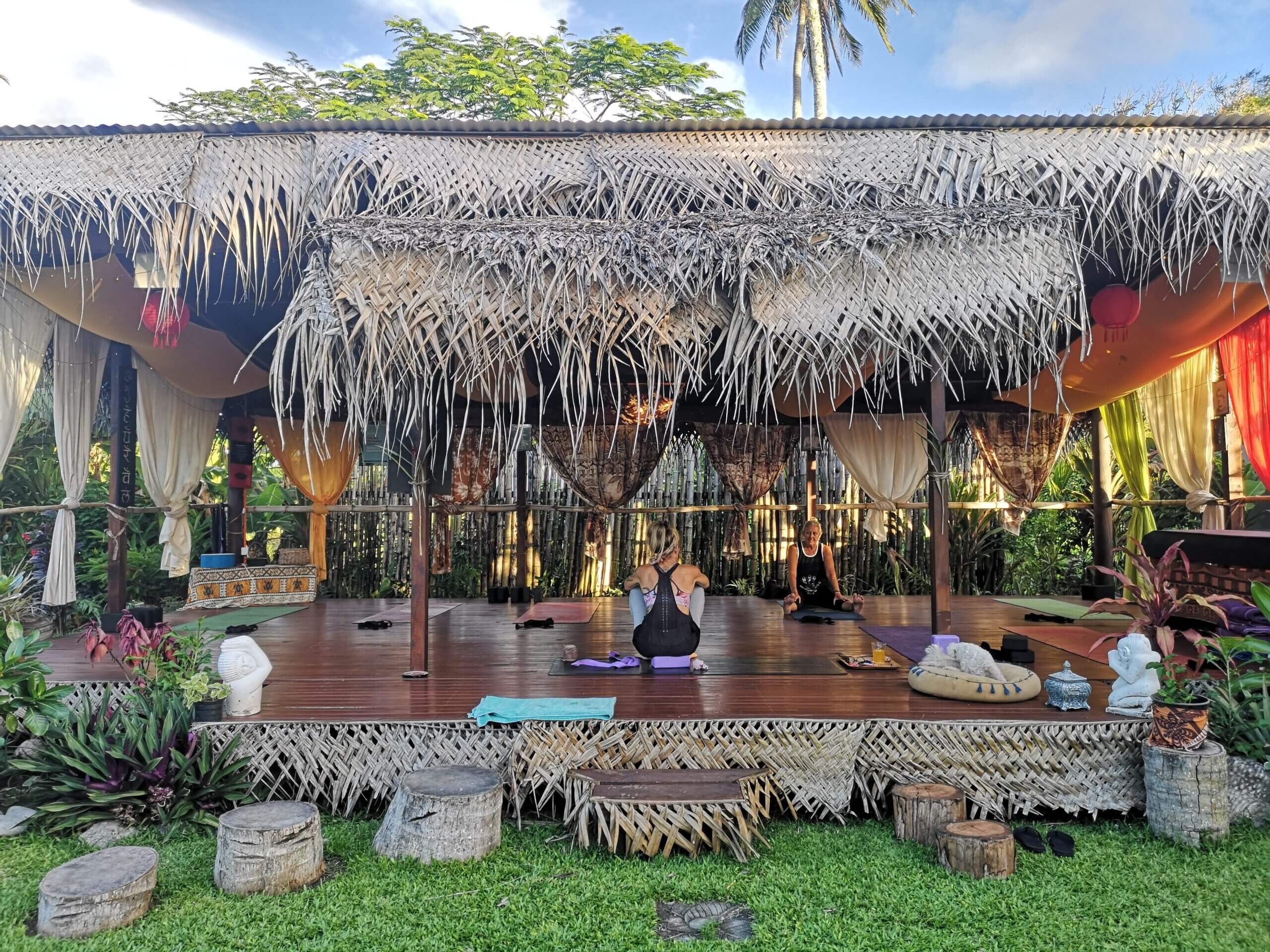
    We get to the yoga place. I have no idea where we are, which side of the island, north, south, inside, outside. But we wander down the long driveway, pass under the little arch, and emerge into a little sanctuary. There’s nice curtains and flowers and lots of green open space with fruit trees and aloe vera plants and stepping stones. We walk across the immaculate lawn to a beautiful covered deck with Christmas lights.

    “This is Brendan,” Roberta says.

    “Oh hi!!! Hi!!! I’m Michelle.”

    Michelle’s name shouldn’t be Michelle. It should be Sunshine. That’s what she is. Absolute sunshine. She’s in her forties, fifties, I don’t know, but has the body of a nineteen-year-old gymnast, long, messy blonde hair, tattoos from her feet to her shoulders, and from the moment we meet, I can feel her warm smile and soothing voice and kind eyes, her loving spirit oozing with tenderness. All I can think to myself is, she is sunshine. At a time in my life when I am desperate for sunshine, I have now met sunshine herself.

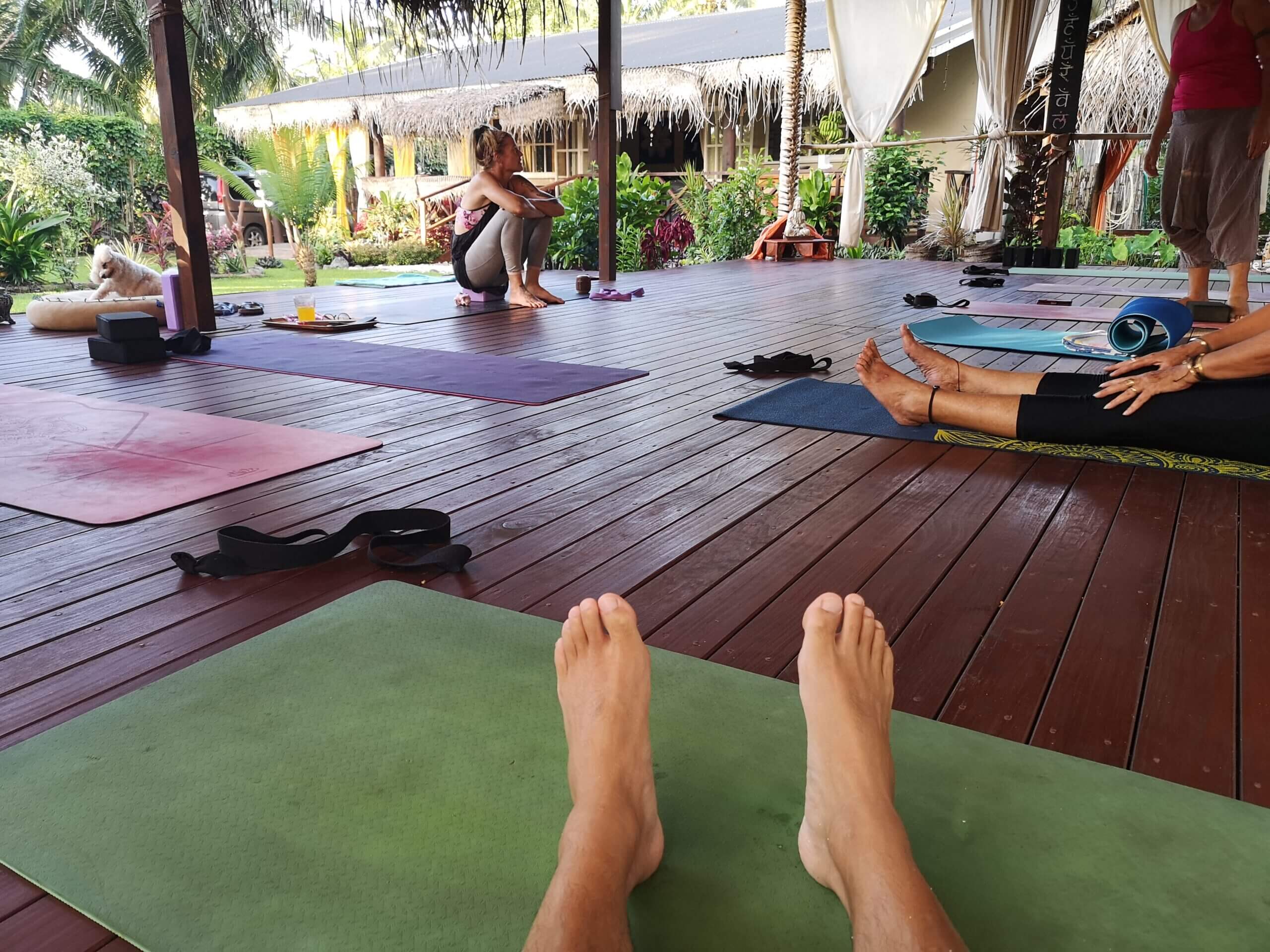
    The yoga class is small. Four of us. As the sun sets on the island, we spend an hour listening to Michelle telling us to breathe and twist and stretch and finally, once we’re all dripping with sweat, to lay down and relax. Shavasana. I lay there and make peace with the mosquitoes, and the mosquitoes make peace with me. The others swat their arms, but for some reason, I stay unbitten. Somehow, all my pain is gone. For the first time in months, I have no pain. No pain. My skin feels normal. I am at peace here. I don’t want to leave. I want to stay. Not just on this deck. On this island. I want to stay here forever.

    … to be continued.


    Heading to Rarotonga? Check out my accommodation guide here!

  • I Wrote A Book

    I Wrote A Book

    Well, where do I start.

    It feels strange writing this post. Partly because I haven’t written here in so long, partly because I have big news and don’t quite now how to share it. If you’ve been wondering what I’ve been doing for the last two years, I’m about to tell you, but getting to this point has been such a long journey, now we’re finally at the end (or in some ways, the beginning).

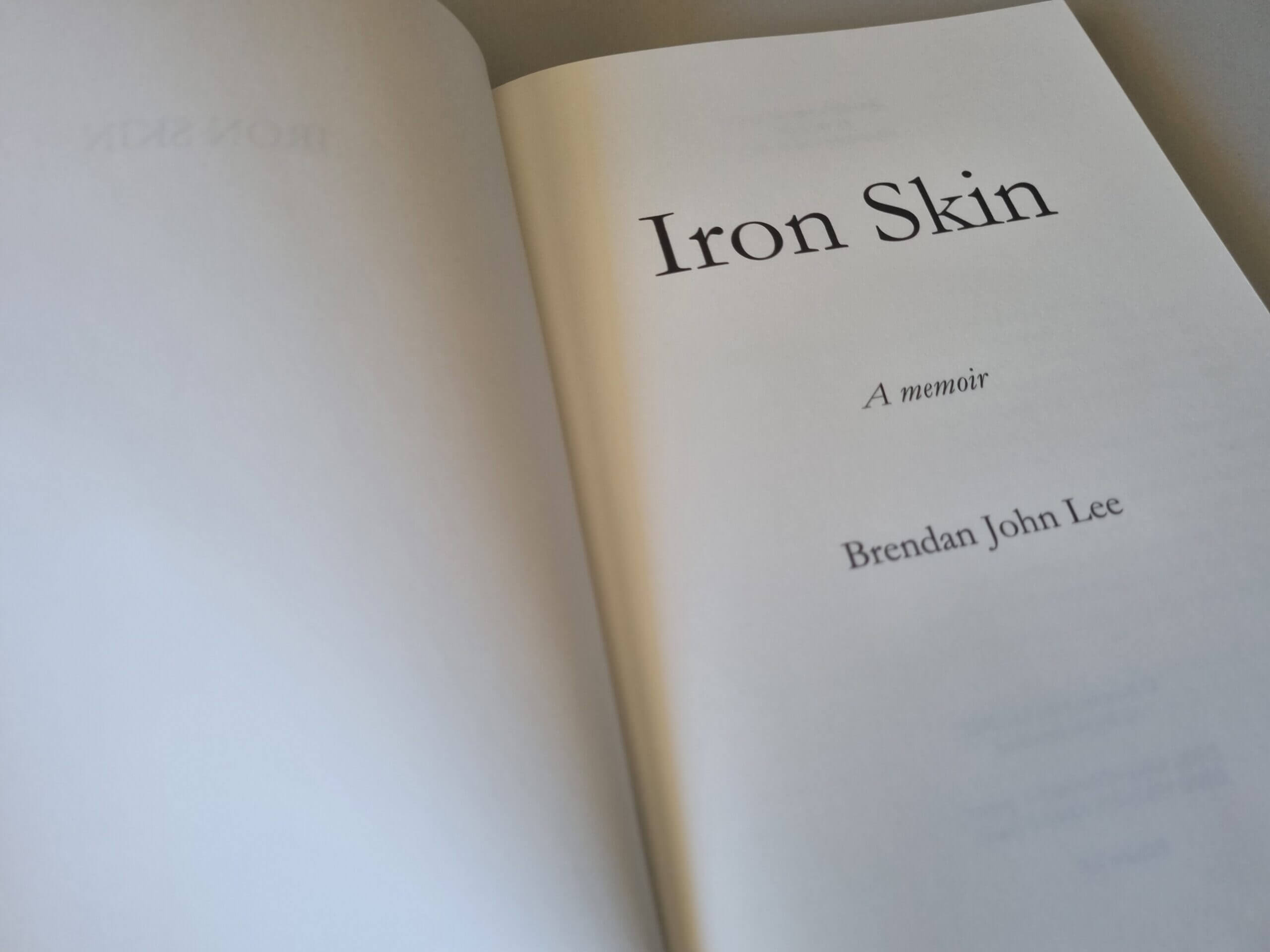
    As you may have guessed from the title, I’ve finally finished a book, and it releases to the world today.

    The interesting thing about this book is it wasn’t the book I was supposed to write. For years I’ve been working on a travel memoir which I’ve talked about many times on this blog and in my newsletter. I even completed a first draft a few years ago, but never managed to turn it into a piece of work I was proud of.

    Then in 2019 my battle with TSW started. It upended my life so suddenly that everything instantly took a backseat to my healing. When people say life can change overnight, now I know what they mean – shit really can change just like that. From living the dream, to suddenly finding myself in a struggle where I thought I might never live a normal life again.

    Of course, I didn’t realise this at the time. It was only after days and weeks and months that I started to understand I was in a battle that I might be fighting for a very long time. I found a TSW group on Facebook, which possibly (definitely) saved my life. I was in there every day, sharing my progress – what was working, what wasn’t, asking for help, sharing my pain. Sometimes, all I needed was to be able to tell people, I’m breaking, I’m crying every day. And for them to reply, that’s okay, I am too. I wrote stories to share, each step of the way; little triumphs I was making week after week, running 1km, 2kms, to the emotional news of my first marathon, and then my second.

    Looking back now, I realise I wasn’t writing those stories for them, I was writing them for me. The emotional journey was so violent I couldn’t keep it in, but it was also too personal and upsetting to share with anyone I knew. Of course I didn’t suspect at the time that this little series of Facebook posts would eventually become the inspiration for a book, which is what I have in front of me today.

    To be honest, the book practically wrote itself. Once the idea was born, I sat down to write and couldn’t get the words out fast enough. The rollercoaster of emotions vomited itself onto the screen amid recurring bouts of tears and laughter, and within a few months I had a draft. What I hadn’t yet learned was, that was the easy part. Writing a book and then turning into an actual book is a long (loooooong) and painful process that I wasn’t prepared for. There is a finality about a book that’s never existed with other things I’ve written, such as the stories on this blog. Usually, spelling mistakes are whatever and even months or years later, I just go in and rewrite things I don’t like and correct mistakes. The idea of having hundreds of copies of a book printed and then finding a typo, or a sentence I didn’t like and couldn’t change, haunted the perfectionist in me. This led to six months of reading the book every day, agonising over colons versus semicolons, italics versus no italics. Each reading I found myself adding new paragraphs and rearranging sentences, I wasn’t sure if I’d ever be happy enough with it to publish. For those months, I spent endless hours sitting in carparks, waiting rooms, benches in the gym, reading the latest draft on my phone, trying to get paragraphs to sing the way I wanted.

    Then came judgement day. Is it even worth publishing? I arranged a beta read. The final draft got sent to a few volunteers from my support group and a few old readers from the blog (thank you all, again!). Big sighs of relief and joy when the feedback came in and was so overwhelmingly positive. One reader, a close friend, tried her best to convince me it was good enough to shop around to publishers, but I knew that would be another drama I couldn’t handle, and that this story was too close to me to sell to anyone else. But it was the green light I needed, to tell me yes, the story was powerful for everyone, and deserved more than just a bunch of blog posts online – I needed to publish.

    I hired a cover designer, editor and proofreader to finally help me get it into print. That was all another headache that lasted four or five months which I don’t really want to write about. If you follow many writers, you’ve probably read tons of posts of them talking (whining) about getting a book to print and how much of a pain in the ass it is. Well, I can now confirm that yes, it is a super pain in the ass. It was only a month ago that, after two long years, after finishing a final proof in the middle of the night at my dining table, I finally had a stack of paper in front of me that I could sign off and say, it’s ready!

    Of course, it has all been worth it. I received the proof copies of the book last week and I’ve never felt so proud and grateful seeing the real thing in my hands. In our Facebook group we always talked about how we felt forgotten, that it was important for us to remember that our stories matter, even though our lives were becoming invisible while we were sick, and the world continued to pass us by. That feeling alone motivated me enough to get this story written, to ensure it lived forever in its own way, for the people who had been fighting alongside me, and those who would inevitably come after me.

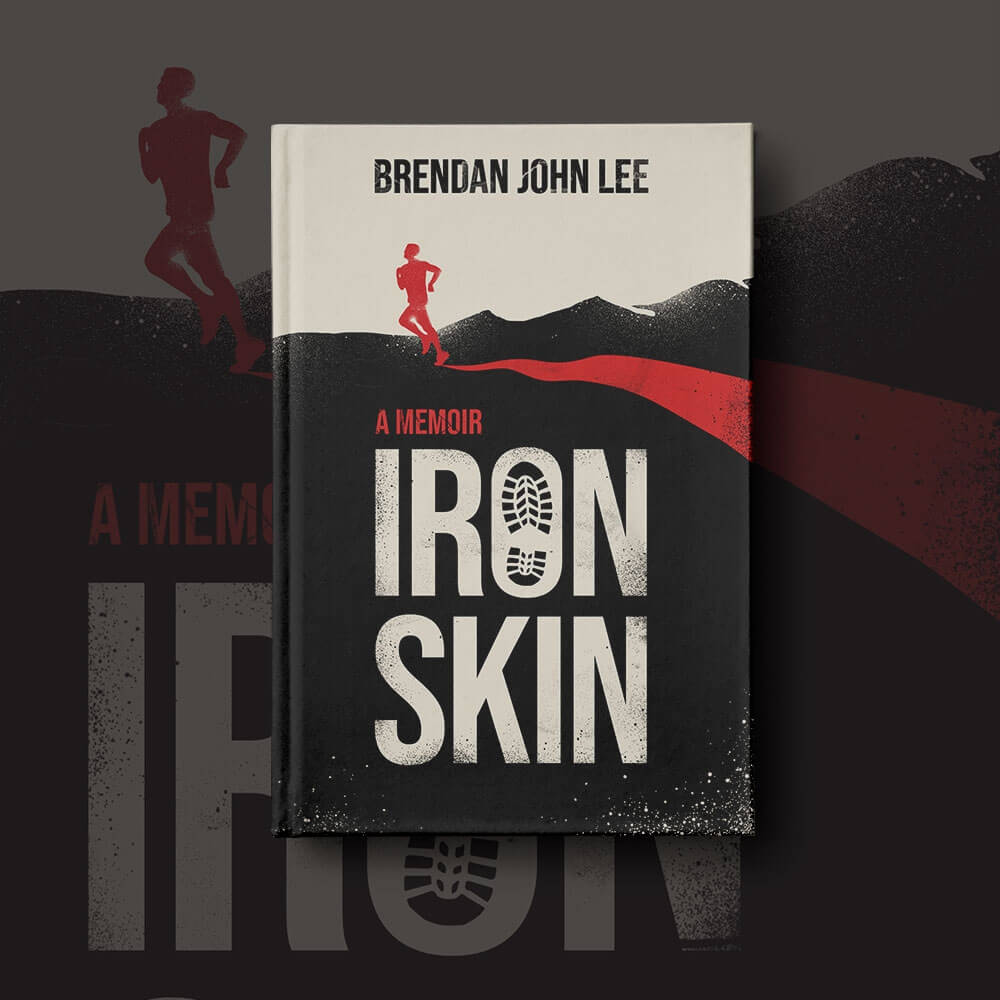
    Allow me to finally introduce you to my first published book. It is the memoir of the past two years of my life, battling a demon I never thought I’d beat – part healing memoir, part childhood memoir, part travel memoir – a story of reaching rock bottom, climbing your way black, the power of a dream, the power of family, of believing in the impossible, and of all the miracles that can happen when you find the strength to just take one more step. After all the places I’ve been and the things I’ve experienced in the blessed life I’ve had wandering the globe, this is the story I am most proud to share with you – a story that proves even in our darkest moments, we are more powerful than we could ever imagine. My new book is titled Iron Skin: A Memoir, and I’d be honoured for you to read it, love it, share it, gift it, and find your inspiration from it to conquer whatever life decides to put in front of you.

    Thank you so much for being here. After ten years of writing stories of bus rides and noodles and hostel lounges, here is one that’s a little longer and a little more special. I hope you love it.
    Iron Skin: A Memoir is available on Amazon in all major locales in paperback, hardcover and Kindle ebook versions. You can order directly at the links below.

    Amazon US

    Amazon UK

    Amazon Australia

    Amazon Germany

    Amazon Canada

    Amazon Japan

    Amazon India

    Amazon France

    Sending all my love and gratitude.

    Bren

  • Where To Stay In Auckland: An Insider’s Guide

    Where To Stay In Auckland: An Insider’s Guide

    So you’re coming to Auckland!

    Auckland’s an interesting city. It’s a cosmopolitan metropolis of 1.4 million people, and it has everything, but on a small scale. Designer shops, shopping malls, beaches, concerts, all cuisines, festivals – it’s all here – just not everywhere and just not all the time.

    Each part of Auckland is quite different in many ways. The east has a heavy Asian influence with many Chinese and Vietnamese restaurants, the north shore is full of much wealthier suburbs and communities, the south is considered a rougher part of town (but it’s not really) and has strong cultural and Polynesian roots and the west is a mixture of sorts.

    Another thing about Auckland is that transport is not the best. Traffic is heavily jammed during peak hours, and public transport is slow, unreliable and expensive. On many days it can take you over an hour sitting in traffic to get across town.

    This means choosing where to stay in Auckland is important to get the experience you’re looking for. Do you want long days of epic beach time? Good food? Affordable? Central? All these things will determine where you should stay, and what your Auckland experience will be like.

    Luckily for you, Auckland was the city I called home for 25 years. I know each corner of the city, I grew up here! And in this guide I’m going to break down each part of the city, the best accommodation in Auckland for each area and each budget, what each area is like, plus some insider tips on each Auckland neighbourhood to make sure you have an awesome time in my little home city. Let’s go!


    In this guide:

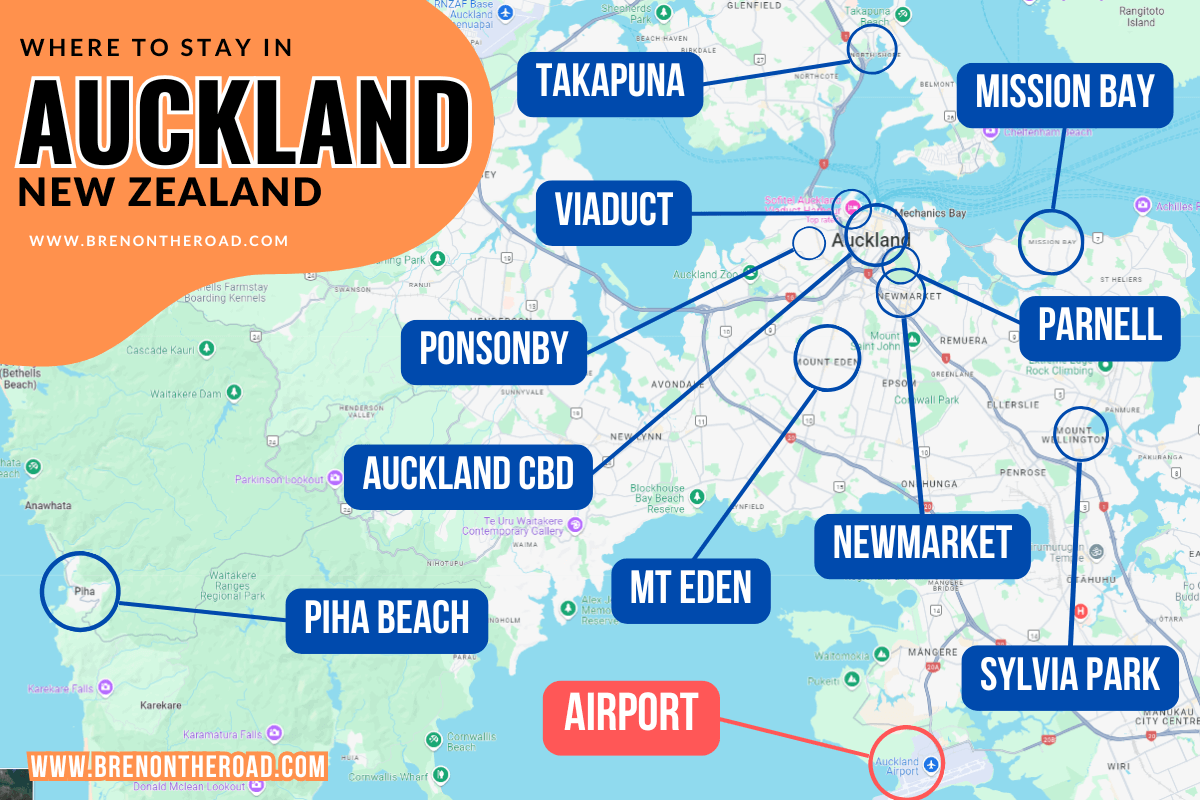
    Map of Auckland

    1. Auckland CBD – Best area for Auckland first timers.
    2. Auckland Viaduct – Upper end hotels and apartments on the harbour.
    3. Ponsonby – Hipsterish, lots of restaurants and cafes.
    4. Parnell – Upper end area on the city skirts.
    5. Newmarket – Retail area and good public transport hub.
    6. Mt Eden – Residential area with good dining options.
    7. Sylvia Park – Auckland’s biggest mall.
    8. Mission Bay – One of Auckland’s most popular beaches.
    9. Piha – Surf beach on the west coast.
    10. Takapuna – Well developed zone on the north shore.
    11. Auckland Airport


    Map of Auckland

    As you can see, Auckland lies on an isthmus. It’s narrow and surrounded by ocean, which makes it unique for a big city, as it has all the big city comforts but the beach is never far away.

    The map above doesn’t include everywhere, but it does show the key areas.  There are many areas I haven’t mapped, as they’re mostly suburban and there would be no reason for a tourist to stay there. Instead, I’ve plotted what I believe are the best areas to stay in Auckland for tourists and visitors. These are the areas we’ll be breaking down below.

    In each I’ve listed budget and backpacker options along with more luxurious choices. In fact one of the most common questions I get is where to stay in Auckland on a budget, and the truth is cheap accommodation in Auckland isn’t the easiest to find. However, it’s there if you know where to look. I’ll help you!

    On the other end of the scale, there’s also plenty of flash places to stay looking out over our beautiful beaches and harbours, so if that’s your jam, I’ll introduce you to some of the top Auckland hotels and high-end places too.


    1. Auckland CBD

    NZ Auckland City (11)

    The Central Business District (CBD) is where most people will stay, and is probably the best area to stay in Auckland for first-timers.

    As I said, Auckland is not an easy city to get around. I recommend people stay in Auckland CBD because it’s the most accessible to public transport and buses and trains to most areas will run from here.

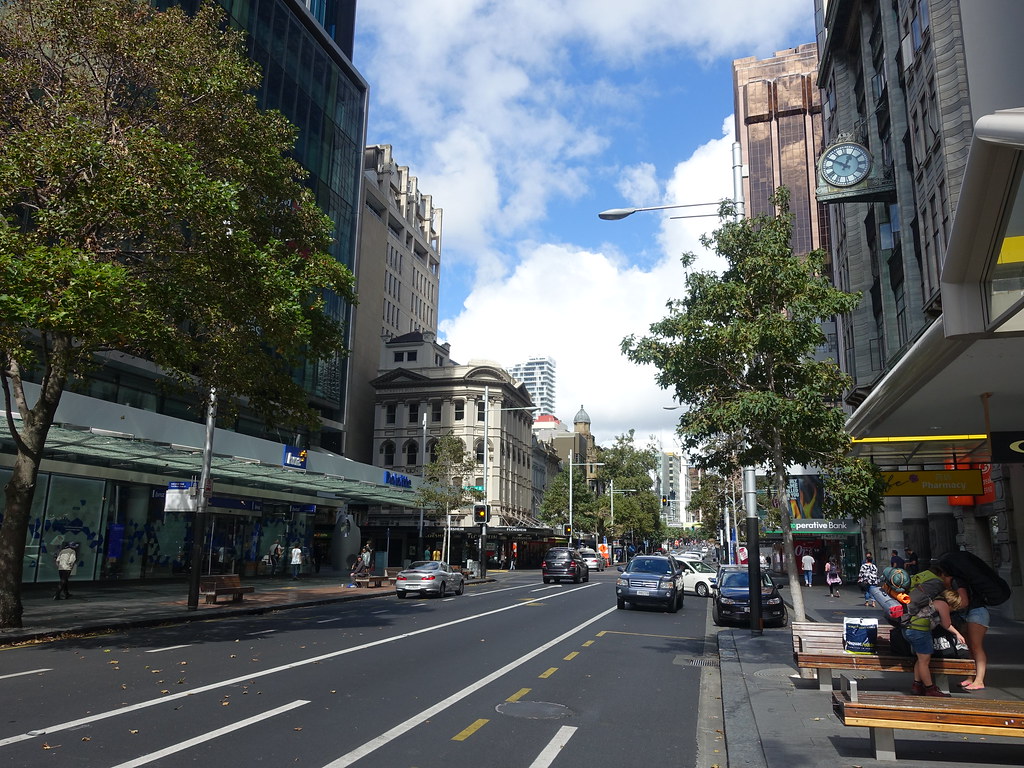
    The other great thing about Auckland CBD is that it’s very walkable and there is everything within the main area. The central street is Queen Street, and there are nightclubs, bars, supermarkets, restaurants of all cuisines, medical, shopping and more all along that one avenue.

    Popular tourist attractions like the Skytower, Civic Theatre, Albert Park and Viaduct are also just a few minutes walk away.

    Interestingly, this is also where you’ll find the cheapest accommodation in Auckland. Most of the backpacker hostels are situated in or around here, and during low season you can sometimes find a bed for less than $20 per night. The quality is not great but if you’re after cheap places to stay in Auckland this is your best bet.

    One thing to note is much of Auckland CBD has been “under construction” for the better part of the last ten years, as the government has been trying to build a subway throughout the city. As I write this (end of 2023) it is still heavily under construction in many parts of the city. While it is still a fine place to stay and explore, just be aware you will come across many closed roads and construction sites!

    You should stay in the Auckland CBD if:

    • It’s your first visit to Auckland.
    • You don’t have your own car.
    • You plan on using public transport a lot.
    • You’re not in Auckland for any specific reason other than to visit and sightsee.

    Where to stay in Auckland CBD?

    For the backpacker:

    Stay at Metro Adventurer Backpackers. Hostels in Auckland CBD are not particularly great in terms of quality, but this one is a reasonable price and one of the better maintained ones. You should be able to get a room for $20 during low season. Get the latest rates here.

    For the budget traveller:

    Stay at City Lodge. It offers private rooms and for a good price and in my opinion is one of the best choices of cheap accommodation in Auckland CBD. Not far from the central Aotea Square too which is nice. You’ll get the best rate here.

    For the luxury seeker:

    There’s one obvious choice – The Skycity Grand. Skycity is a casino and entertainment complex that is a central landmark of Auckland city. It’s filled with restaurants, bars, clubs, theatres, and of course, the casino itself. Of course the attached hotel is absolutely lavish, and where many celebrities and mega-wealthy stay when in town. The best hotel to stay in Auckland, hands down. Get the best rate here.

    Insider tip: The Asian population in Auckland is large, and Lorne Street is the new up-and-coming spot for delicious eats, especially if you’re an Asian cuisine lover. For something fun, check out a play at the Basement Theatre.


    2. Viaduct

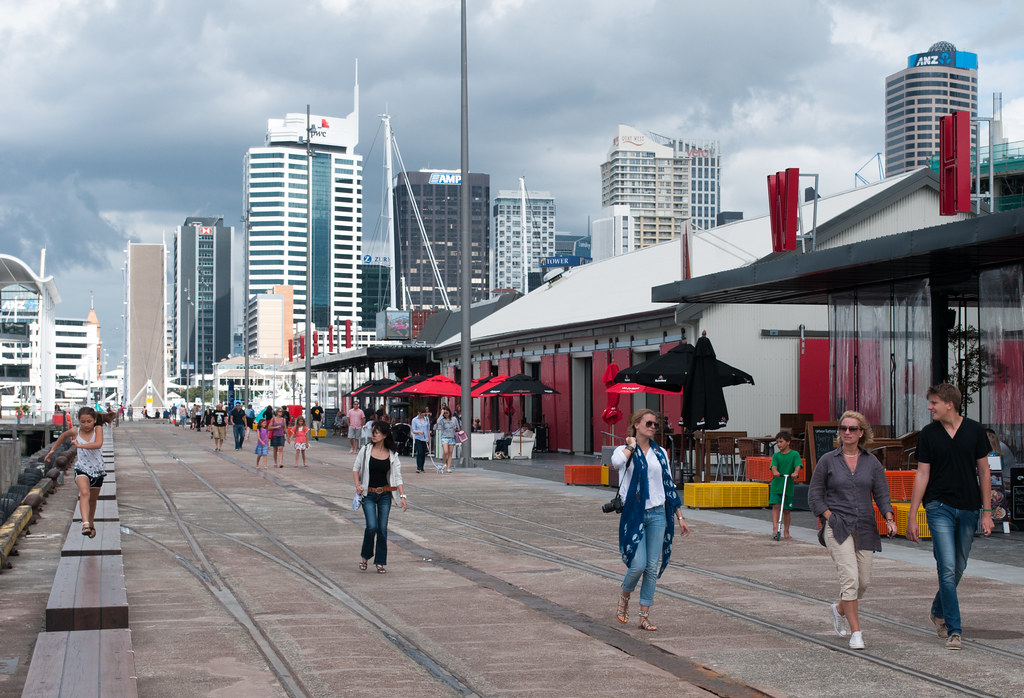
    Pedestrians on boardwalk near Silo Park - facing downtown Auckland

    The viaduct is one of the more posh areas in Auckland, definitely a spot everyone should visit and a great place to stay too if you can afford it.

    If you’re unaware, Auckland hosted the America’s Cup many years back, and the entire waterfront was developed for the event. Development continued with luxury apartments, bars, clubs and some high-profile office buildings after the event finished. This area is now known as The Viaduct and is one of the higher-end areas of the city.

    It’s quite a nice and peaceful place to stay, while still within walking distance of the CBD (around ten minutes). It’s also one of the best places to stay in Auckland if you’re after bars and nightlife, the waterfront area at the Viaduct is central to Auckland’s party scene.

    It’s also the perfect place to stay in Auckland for couples if you want to be near the centre – the views are beautiful and there’s good food and plenty of great places to take long walks just outside the city.

    You should stay on the viaduct if:

    • You want ocean views.
    • You want to be near the CBD but not in the CBD itself.
    • You want a central but quiet area, with plenty of space to walk and relax (good for couples).
    • You want a more upper-class and exclusive area of the city.
    • You’re after nightlife, bars and upper end restaurants.

    Where to stay in the Viaduct?

    For the budget traveller:

    Not really anywhere for backpackers down on the viaduct, but if you’re on a budget you could try Fort Street Accommodation. Rooms are private and it’s about a ten minute walk from the viaduct. Great value for money if you’re looking for something close to the water but don’t want to pay top dollar – check the latest rates here.

    For the luxury seeker:

    Plenty to choose from down here, but I’d go with M Social. This stylish and modern hotel had all kinds of buzz around it when it opened up. The rooms are lavish, the location is perfect, it’s probably one of the top Auckland hotels and it’s not even that expensive. Luxury living at its best. Get the latest rates here.

    Insider tip for the Viaduct: Head over to Jellicoe Street for a fun place to start the evening with snacks and cocktails. Right behind it is the Auckland Fish Market in Wynyard Quarter, where you’ll find some of the best fish and chips in town.


    3. Ponsonby

    Ponsonby/Three Lamps

    When thinking of cool places to stay in Auckland, you think of Ponsonby.

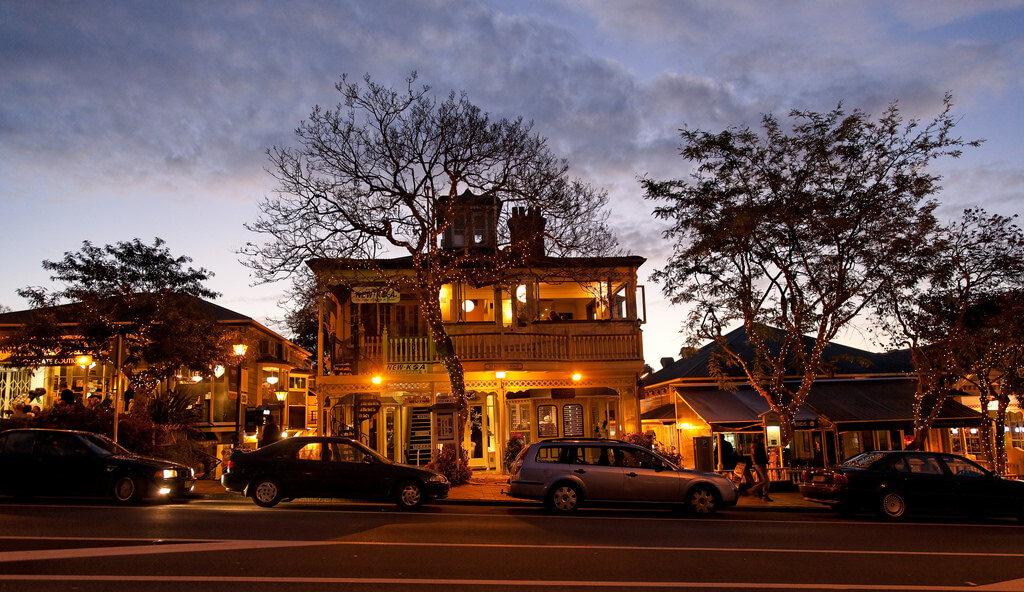
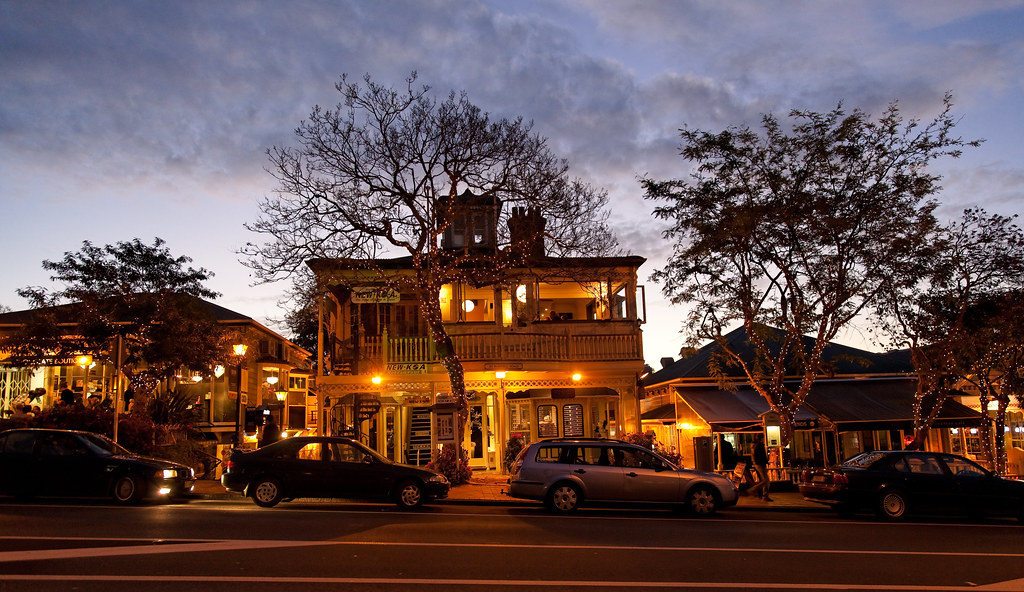
    Ponsonby is Auckland’s high-society suburb, which is slowly evolving into a low-key hipster haven. Ponsonby Road is an avenue of quirky, fun and expensive restaurants, boutique shops and fancy gift stores. The road lights up on weekends as people come out to enjoy the nightlife in their high heels and open-collar shirts, sipping craft beers and pricey cocktails. If you’re after a bit of fun and glamour, this isn’t a bad place to be.

    The great thing about Ponsonby is it’s quite central, maybe a twenty-minute walk to the city, making it probably the best place to stay in Auckland if you want to be near the CBD, but not right in the action.

    You should stay in Ponsonby if:

    1. You enjoy eating out at interesting places, and shopping.
    2. You want to be around the nightlife.
    3. You enjoy boutique cafes and coffee shops.
    4. You want to be somewhere central but not in the CBD.

    Where to stay in Ponsonby?

    For the backpacker:

    Ueneku Lodge is a great choice. It’s an independently run guesthouse on Ponsonby Road and perfect if you’re looking for some old-fashioned Kiwi hospitality. Has dorms but also private rooms as well. The facilities are great, the location is great, and awesome value for money. Check the latest rates here.

    For the budget traveller:

    Not a huge amount of “budget” accommodation in Ponsonby. I’d book at Ponsonby Manor. It’s a totally unassuming place, looks like a regular home from the outside – but flawless service and home-like comforts are waiting inside. The rooms are beautiful, many open out into the private garden, and the location couldn’t be better. Perfect for couples. Best rates here.

    For the luxury seeker:

    Easy choice – head to Hotel Fitzroy. It’s housed in a classic Kiwi two-storey villa designed to be quiet, discrete and lavish. 24-hour room service and a continental breakfast served each morning. Rooms are furnished to five-star hotel level and all the amenities you could want and expect. Perfect place for couples looking for a getaway or a single looking for something discrete out of the centre of town. Check the latest rates here.

    Insider tip for Ponsonby: Head to Ponsonby Central for an interesting dining experience. It’s a small food court set up like street food, but with more flash. The sushi there is pretty good. 


    4. Parnell

    Parnell Resturants

    Parnell is an upmarket area in Auckland just outside the city skirts. It centres around Parnell Road, which hosts a collection of galleries, boutique shops and upper-end restaurants.

    Often when people are heading out for dinner and drinks for a birthday or work celebration, they head to Parnell. A lot of old classic housing can be found in the neighbourhood too, and you can find one or two decent budget places to stay around those areas.

    As a bonus, it’s walking distance to the CBD (about twenty minutes) and the Auckland domain and Rose Gardens aren’t far away either.

    You should stay in Parnell if:

    • You like upmarket areas that aren’t too quiet.
    • You enjoy fine dining and nightlife.
    • You want somewhere central but don’t want to be in the CBD.

    Where to stay in Parnell?

    For the backpacker:

    City Garden Lodge is a good choice. Basic backpackers with everything you need, just a few minutes walk from Parnell Road. Cheap too. Get the latest rates here.

    For the budget traveller:

    I’d recommend the Parnell Hotel & Conference Centre. It’s a 101-room budget hotel on the quieter end of Parnell. Parnell Road is about ten minutes walk away, plus you can even walk down to the water from here. If for any reason you don’t want to eat out in Parnell there’s a restaurant onsite (although Parnell has so many good foodie spots, you’d be crazy to miss them). Perfect place for a family stay. Get the latest rates here.

    For the luxury seeker:

    Parnell isn’t really flush with fancy accommodation, but if you’re looking for somewhere high-end I’d stay at Quest Parnell. These are serviced apartments, perfectly located just off Parnell Road, and have everything you could need – gym, pool, carpark, beautiful self-contained rooms. The price is nice too – in low season you should get a room for not much more than $100 USD. Check the latest rates here.

    Insider tip for Parnell: La Cigale French Market is open every Saturday and Sunday morning. Unlike most markets which are way in the outskirts of Auckland, this one is right in the middle of Parnell, and has some of the best coffee and breakfast treats in town.


    5. Newmarket

    Two Double Seven, Broadway, Newmarket

    In my opinion, Newmarket is the best place to stay in Auckland outside of the CBD. Some Aucklanders might disagree with me, but hear me out.

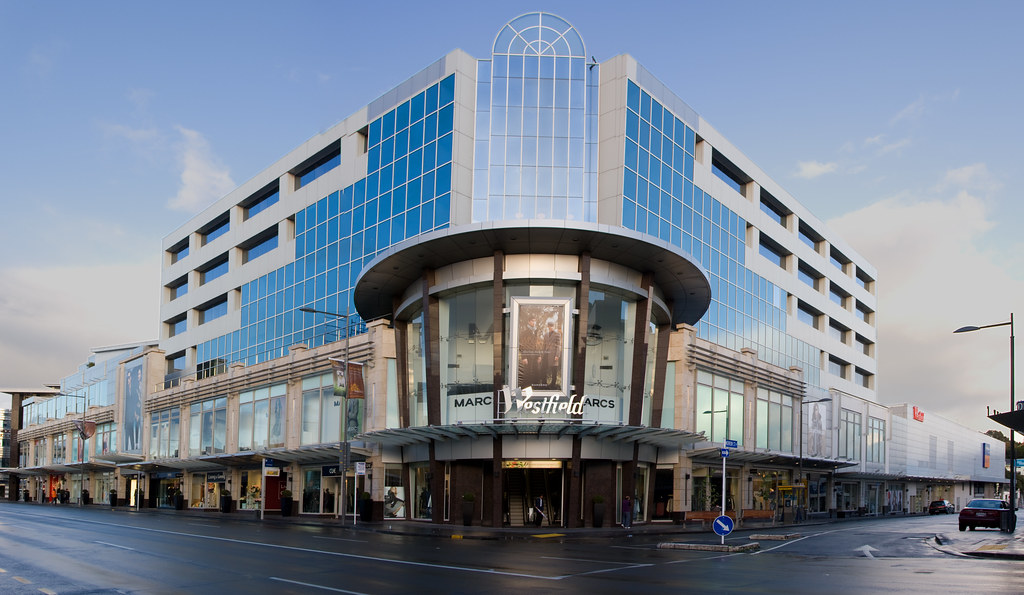
    The Newmarket area was initially designed as a shopping district, but has turned into a mini CBD of its own. Along the main street, named “Broadway” there is everything – malls, local stores, international stores, boutiques, galleries, banks, department stores, restaurants, bars, cinemas, there’s even a mini Chinatown there (just ask where the Golden Gate is, behind Rialto, and the string of Asian restaurants on lower Khyber Pass).

    In 2019, the redevelopment of the Westfield mall was finished, which is very hip, and I would actually say this is now the best mall in the country.

    The endless places to eat make this an ideal place for travellers. And any time you want to get out, Newmarket station will connect you to most major points in the city. It’s also very central – technically it’s walking distance from the CBD (about 45 minutes probably), and that would make quite a nice walk too! For a visitor to Auckland, it’s perfect.

    You should stay in Newmarket if:

    • You want somewhere that has everything, but don’t want to stay in the CBD.
    • You want a less busy version of the CBD, but still some action.
    • You want a central area that makes it easy to get to other parts of Auckland.
    • You want lots of shopping and dining options within walking distance.

    Where to stay in Newmarket?

    For the backpacker:

    Unfortunately, good backpacker accommodation hasn’t found its way to Newmarket yet. Try stay in other areas and you can get to Newmarket easily via the train.

    For the budget traveller:

    Stay at New Market Cozy Room. It’s a small B&B in a perfect location right near Broadway. The rooms are all modern and beautifully furnished. The catch with Newmarket is there aren’t many decent places to stay – this is definitely the best, if not the only, high-quality place in Newmarket central. Not the cheapest, but reasonable. Get the latest rates here.

    Insider tip for Newmarket: Selera is an unassuming place you might walk right past, but serves one of the best laksa noodle soups in Auckland. Right beside it, Sunworld Chinese restaurant does fantastic dim sum until about 2 pm. Both are on the lower end of Khyber Pass.


    6. Mt Eden

    Galbraiths

    Mt Eden is a trendy area of Auckland just a short drive out of the CBD.

    It’s known for being a historic part of Auckland which you might see in the architecture, and also known for the Mt Eden peak, which is a tourist favourite. The famous craters at the top are interesting to see, not to mention there’s a beautiful view of Auckland from the top.

    Other than that, Mt Eden is well known for its many cafes, restaurants and chilled-out bars. There’s no rowdy nightlife here, but it’s a great place to go out for a quiet dessert or dinner with friends.

    You should stay in Mt Eden if:

    • You want somewhere fashionable but not too upmarket.
    • You love boutique cafes and coffee shops.
    • You want a place that’s not too busy but has a lot of things around to see.
    • You want a place not too far from the CBD.

    Where to stay in Mt Eden?

    For the backpacker: 

    Oaklands Lodge is a great choice. Small, chilled-out hostel, good price and well maintained. It’s in the heart of Mt Eden, not far from the actual peak itself, and only a short bus ride to the city. Get the latest rates here.

    For the budget traveller:

    Consider the Bavaria Bed and Breakfast. It’s not far from Mt Eden peak and a short walk to Mt Eden Road. There are plenty of places to buy groceries and a bite to eat in the area. Bus stop is very close by also if you want to head into the city. It’s a basic B&B with everything you need for a fair price. Get the latest rates here.

    For the luxury seeker:

    Stay at Quest on Eden. Not exactly “luxury”, but it’s a four-star aparthotel that is very tidy and will have everything you need. Located right on Mt Eden road, it’s centrally located and you should have trouble finding the necessities. Quest is mega reliable and always for a decent price. Best rates here.

    Insider tip for Mt Eden: Circus Circus might look like a toy store from the outside, but it’s actually one of Auckland’s longest-standing and adored coffee and dessert joints. Go there in the evenings for a quiet place to unwind. A short walk away is Zool Zool – one of the best noodle joints in the city.


    7. Sylvia Park

    Sylvia Park is a recently developed area of Auckland. Most people come here for the Sylvia Park mall, which is the biggest mall in the country.

    Sylvia Park also has a train station and many bus routes, connecting it to the rest of the city. It’s not really a popular place for travellers to stay, but if you have a car it’s not a bad area to base yourself.

    Where to stay in Sylvia Park?

    The only reason you would really stay here is to be close to the mall. The best choice would be Waipuna Hotel – it’s a small hotel and conference centre, with a restaurant and all your homely comforts. About a ten minute walk from the mall. Reasonably priced. Bonus is the Panmure Basin is in their backyard, which is the perfect place for a morning or evening walk. Check the latest rates here.

    Insider tip for Sylvia Park: There are many great places to eat within the shopping centre, but just a short drive away is Big J’s – head there to get the best burger in town.


    8. Mission Bay

    Mission Bay at sunset

    Mission Bay is a beach in central East Auckland, and often regarded as one of the most expensive and high-class areas in all of Auckland, with endless strings of multi-million dollar houses in the surrounding streets.

    Mission Bay is a long beach with soft sand, lined with a large open park where people can picnic, a kid’s playground, and often events and indie performances too. If you’re wondering where to stay in Auckland with kids or a family, I’d say this is your spot. It’s also a pretty good place for couples; lots of young couples from the city come here on dates for dinners and ice cream and so on, so you lovebirds will fit right in!

    Just across the street are endless cafes and restaurants, often high-end, that look out over the water. Mission Bay is a favourite place for people to come on weekends and enjoy a few Kiwi favourites – beach rugby, fish and chips, ice cream – that sort of thing. If you’re travelling with a family, or plan on spending a lot of time at the beach, good chance this is the best area in Auckland for you!

    You should stay in Mission Bay if:

    • You love beach living.
    • You enjoy good food and fine dining.
    • You want somewhere more suburban but not too far from the CBD.
    • It’s summer!
    • You’re travelling as a family or with kids.

    Where to stay in Mission Bay?

    For the budget traveller:

    Mission Bay is one of the renowned bougie areas of Auckland so there isn’t any budget-friendly accommodation nearby. If you’d like to explore Mission Bay for a day, it’s easy to reach by bus from the city.

    For the luxury seeker:

    Kohi Beach B&B is the perfect choice. It’s easily one of the best B&B’s in Auckland – the property is gorgeous. Self contained units are available, as well as studios, a beautiful garden, open living area, and perfectly located. It’s about five minutes walk to Kohi Beach, and a ten minute walk to Mission Bay. Everything you could want is within walking distance. Not the cheapest place but certainly worth the money. Get the latest rates here.

    Insider tip for Mission Bay: When it gets too crowded, keep driving away from the city for about five minutes and you’ll come to Kohi Beach, and after a few more minutes, St Helier’s Bay. Both are less busy but equally nice places to hang out at.


    9. West Coast/Piha Beach

    Piha Beach

    The Waitakere Ranges is a pretty stunning national park out on the west coast of Auckland. It’s about a forty five minute drive from the city centre, but many travellers choose to spend their time out here hiking, swimming, surfing (and eating!).

    The most popular area to stay is Piha Beach. It’s a popular surf beach, with many hiking trails around the area too. If you want to live by the beach away from the hustle and bustle of Auckland traffic, this is certainly the best place to do it.
    Do note that this is quite a way out from most things in Auckland – usually the only people who stay out here are surfers or those who plan on hiking every day in the Ranges. It might make more sense to take day trips out here for that kind of stuff, so keep that in mind.

    You should stay in Piha if:

    • You want to be far away from the city and in the middle of nature.
    • You love hiking and the beach.
    • You’re a surfer!
    • You want to stay in a smaller, close-knit community.

    Where to stay in Piha?

    For the backpacker/budget traveller:

    Piha Beachstay is the perfect place for both backpackers and budget minded travellers. It has both dorms and private rooms, and the property itself is beautiful and just a short walk from the beach. The lounge is nice and cosy – a great place to relax in the evenings and chat with other travellers. The outside garden is also perfect when the sun is out (and it usually is!). Check the latest rates here.

    For the luxury seeker:

    This might be one of the most beautiful places to stay in Auckland. Romantic Piha is a private homestay with a stunning view, overlooking Piha and its surrounds. The property itself is gorgeous, beautifully furnished and themed for the west coast. It’s a slice of luxury Kiwiana that will leave you completely enamoured with the Piha community. If you’re looking for something memorable, this is it. Get the latest rates here.

    Insider tip for the west coast: Piha isn’t the only place to surf. There’s another beach called Muriwai, about a half hour’s drive away, which has equally good surf, and is usually less busy. 


    10. Takapuna

    Takapuna Beach!

    Takapuna is an upmarket area of Auckland’s North Shore.

    It’s the centre of the social scene north of the harbour, and the nightlife here kicks on the weekend. It’s also right by Takapuna beach, which is surrounded by lots of cafes and fancy coffee shops, making it the ideal place to wander and people watch during the afternoons.

    You won’t find many backpackers or hostels around here. If you are planning to stay in Takapuna, value for money is what you should be looking for.

    You should stay in Takapuna if:

    • You want something different to central Auckland.
    • You want an upmarket area.
    • You’d like a beach!
    • You want to get away from most of the backpacker and traveller crowd.

    Where To Stay in Takapuna?

    I’d highly recommend Emerald Inn on Takapuna Beach. It’s right by the water and near the centre of Takapuna – everything you could want is within walking distance. The property itself is beautiful and the rooms are all tastefully furnished to give it that beachy vibe. It’s top-notch accommodation for a reasonable price. Check out the latest rates here.

    Insider tip for Takapuna: Takapuna beach might be the closest beach but it’s definitely not the best. Head out to Long Bay on a weekday – the longest beach on the shore and always beautiful. Take snacks, there’s nothing to buy around there.


    11. Auckland Airport

    Auckland Airport is a little out in the wilderness, but interestingly the area is very developed and you can find everything you need out there – restaurants, supermarkets, shops, and of course, hotels.

    If you’re staying in Auckland any longer than one or two nights I’d definitely recommend staying closer to the city, but if you’re only overnighting a hotel by the airport is a good choice.

    Where to stay near Auckland Airport

    The best hotel near Auckland Airport is the Ibis Budget. It’s literally right next to the airport – you could walk there from arrivals in about fifteen minutes. It’s also perfectly located by some food options – a bunch of fast food places and a full sized supermarket. For that area it’s also very reasonably priced. Get the latest rates here.

    If you want to actually stay inside the airport complex itself, you can stay at the Airport Novotel. It’s a very snazzy hotel and you’ll see it as soon as you walk out of arrivals. It’s also connected to the terminal by an overpass. More expensive than the Ibis but very comfortable and if you’re looking for places to stay near Auckland Airport – this is the one, you literally cannot find anywhere nearer!


    There it is. Any questions, leave them in the comments, I’m always happy to help.

    Enjoy Auckland!

    Bren

    Photo credits: 1, 2, 3, 4, 5, 6, 8, 9, 10

  • 2020 In Review: A Surprisingly Good Year

    2020 In Review: A Surprisingly Good Year

    Hey, it’s me.

    I know, it’s been a while since I wrote here!

    It’s not that I’ve disappeared, it’s just the things I’ve been working on this year weren’t really conducive to blogging. Since travel has been off, I’ve been working on other areas of my life that have been neglected for the past, well, 10 years. And it’s also been an opportune time to take a long blogging vacation.

    But now we’ve welcomed in 2021, I’d like to continue with tradition and take a look back on the year.

    For me personally it was actually a decent year, considering everything that happened. Of course I spent a good amount in hard lockdown (locked in the house) and soft lockdown (locked in the country) but since New Zealand handled the situation reasonably well, life went back to normal within a few months.

    With most of the world’s borders closed, I finally was forced to stay put and work on building the online empire I’ve had planned for years, something I’ve never had the chance to work full time on. The year also brought a few highlights – I got to see three friends get married, and trained and completed two big races, adding a couple more medals to the collection.

    Here’s a look back on everything 2020 brought:

    Japan

    Pre-corona the year started reasonably normally. January already had me on the road, where I headed to Yokohama for a week to attend my friend’s wedding.

    I know Japan reasonably well, but this trip was kind of different as I was in the middle of Ironman training at the time. That meant instead of just noodles and shopping my trip was all about squeezing in runs in the mornings and nights.

    One thing that was cool about Yokohama is it’s actually a very fit city, and even in the freezing cold mornings there were people out jogging and cycling all around the city.

    Also my skin is still making its way through the healing process for TSW, and the winter is particularly bad for my skin so that made the trip a little more challenging. Everything worked out fine in the end. Japan’s not my favourite country, but it’s always a pleasure to visit.

    It was while in Japan that we first started to hear about corona as well, as it had just started moving out of China into the rest of Asia while I was there. However, it just seemed like another SARS 2.0 and none of us were really too worried about it. It was actually the passing of Kobe Bryant that affected me a lot at the time. I wrote about those few days in my blog post Running Yokohama: The Day Kobe Died.

    Ironman New Zealand

    Once I returned to New Zealand my whole life became about Ironman. Wake up, train, eat, sleep. Literally!

    One thing that caught me a bit off guard about this race was the amount of studying I had to do as well. After training 4-6 hours a day, I spent most of my evenings on Youtube going through swimming or biking tutorials, or reading running books. There was so much to learn, it overwhelmed me at times, but that’s also what I loved about it too.

    At the time I signed up for the race, it was only 3 months out. I wasn’t even sure if it was possible to do an Ironman on 3 months training. But when race week finally arrived in March, I was so prepared, I had never worked harder for anything in my life. Literally my entire life had just become Ironman from morning until night. I look back on it now, and I also remember it as three of the best months of my life.

    Strange, since I’m not really a big fan of running, or biking, or swimming, but somehow, I loved every second.

    Luckily, race day turned out to be a perfect day. Low winds, sunshine all day, not one drop of rain. I swam faster than I expected, biked a little slower, ran the marathon right on time.

    It was an emotional race. After the 2019 I had, the last place I expected to be one year later was in the NZ Ironman. Even now, nearly a year later, I still think about that day every day.

    You can read a full race recap in my blog post The Day I Became An Ironman.

    Quarantine Challenges

    Just a couple of weeks after Ironman finished, New Zealand went into lockdown.

    To be honest I wasn’t too sad about it, I was just super relieved we’d raced Ironman in time. Had the race been cancelled after all that work, it would’ve really crushed me. Surely my streak of bad luck can’t be that bad.

    Then of course the seriousness of the situation became apparent and New Zealand quickly went into Level 4, which meant we could barely leave the house.

    To stay productive, I started my Quarantine Challenge series, which included doing 1,000 pull ups in a week, racing a virtual half Ironman, doing a 5 day fast, reading 7 books in 7 days, and writing a novel in 4 weeks.

    Quite a few readers got in touch and told me they’d started taking on the challenges too, especially the reading and writing ones, and quite a few people were taking up running too.

    Always love to hear you guys are getting after it too!

    Auckland Marathon

    When I received the email invite for Auckland Marathon this year, my first thought was no way.

    You might remember, when I ran this race last year it was my first marathon, and was a special moment for me for reasons that had nothing to do with running.

    Also after already doing Ironman in March, I had no interest in going back into training for another big race.

    Then it kind of ate away in the back of my head for a few weeks, and I thought maybe I should do it after all. It wasn’t like I had any big trips to take, and I figured going into training might be good for my skin, as my exercise was getting lighter and lighter as I was working a lot.

    I finally signed up 13 weeks out and it was straight back into training camp. I was a much better athlete than I was the first time around, so my training was lighter and smarter, though a lot less disciplined too.

    The goal was to run sub 4 hours (4:37 was my 2019 time). I got to race day maybe 20% undertrained, but confident I could do it if I ran smart in the first half and had a good beast-mode in the last 10km.

    Unfortunately it wasn’t my day, a few rookie mistakes (which is fine, I’m still a rookie!) and the race got away from me in the last 6 or 7 kilometres. I crossed in 4:08. Overall, great race, learned lots, I’m sure I’ll get em next time!

    You can read a short race recap on Instagram here.

    Another fast!

    I finished the year with another long fast, which is becoming tradition for me in recent years. It always feels like the right way to end the year so I can start the year with a fresh mind and fresh body.

    Each fast is always different, you might remember I started with juice fasts several years ago, but this year I did 10 days of water fasting, and then 5 days of fasting on raw milk.

    The raw milk fast is something I heard about a couple of years ago and always wanted to try, though never really had the chance.

    I knew it would have to be in New Zealand, as we have a pretty well regulated raw milk industry and the chances of, well, “complications” would be a lot slimmer than elsewhere (I’ve had raw milk in a few villages around the world, it’s delicious, but not the most hygienic food usually).

    I got myself 15 litres of raw milk from Bakewell Creamery – a little farm an hour out of Auckland. The first two days was a little tough on the stomach, but after that I actually felt amazing. All the clarity and lightness from a regular fast, but without the hunger. I could’ve gone 30 days easily. Did wonders for my skin too.

    Blogging

    While I still love this blog with my heart and soul, I just didn’t feel compelled to write much on it as the year went on. This blog survived mostly on travel related content (and income) and since travel is currently dead, there wasn’t much for me to tell.

    One thing I did was a full redesign on my own, which I’ve never done before. I’ve always hired a dev to do my designs for me, but website tech has come a long way since I started this site. Now for about $100 I can get all the tools I need to custom design the site on my own!

    I wrote about the new design and how I did it in my post Redesigning Bren On The Road.

    Also, this year brought one of my most popular posts in recent years, which was the update on Couchsurfing. As I’m sure you all know (since I’ve promoted it to death) I have been a tireless ambassador of Couchsurfing throughout my travels, and some of my closest friends have come from that community.

    However, Couchsurfing is now owned by private equity, and mid way through the year they made some big changes to the site (including charging people to surf and host).

    To be honest, most of us had seen this coming several years back, but this was the year Couchsurfing and I finally broke up. I wrote about the changes, and some history for context, in my post Is This Finally The Death Of Couchsurfing? (And What’s Next?)

    I also did write one travel story to add to my collection early in the year, which was Love Cape Town. I think it’s one of my favourites so far. Not only was it a special time in my life, it was my final trip before my life got turned upside down.

    Niche sites

    I’ve been working part time on niche sites alongside my blogging for the last several years, but never really had the opportunity to give any real attention to it. It was also something I wished I had more time to do, because I had so many ideas but backpacker life always got in the way.

    Let’s be honest, it doesn’t really matter how good your ideas are – if you’re in Thailand and it’s a Thursday night what are you going to do – stay home and brainstorm keywords, or go to the market and eat endless bowls of delicious noodles?!?

    Well, corona finally took away that second choice, so I was able to finally spend all day and all night building sites from the ground up. I purchased two existing sites, and started building two new sites, and also revived one site that had been stagnant for a while. I also hired three writing assistants and a Pinterest assistant (my friend Kirsten from Sand in my Curls) and it was all engines go from there.

    These now make me a pretty good income and keep me busy – another bonus is I no longer need to rely on Bren On The Road for income, it can go back to just being where I blog for fun. Exactly how I’ve always wanted it!

    I’ve written about my process for building profitable sites in my guide How To Build A Micro Niche site. I’m not longer building micro niche sites and now focus on large niche and authority sites, but the process is mostly the same.

    Writing

    I did a lot of writing offline in 2020 – the novel from the quarantine challenge, plus other book drafts.

    I’m not going to share much more or make any announcements, because that just seems to jinx things every time I do it. I’ll just say I’ve now finished drafts of three books! (and published zero…)

    Anyway, I’m working on it…

    Reading

    I read some great books in 2020.

    There were a few classics that I really loved, including The World Of Suzy Wong and The Perks Of Being A Wallflower. Another that surprised me was The Forty Rules of Love, written by a Turkish author which is apparently super famous though I’d never heard of it.

    For money books, I read The Millionaire Next Door, which I think should be mandatory reading for everyone by age 18! I also read Money by Tony Robbins, which should be mandatory reading for everyone by the time they get their first job.

    Lifespan was an amazing introduction into the world of anti-aging by Harvard geneticist David Sinclair. Not only did it illustrate real experiments and findings, it had a lot of practical recommendations too.

    Memoir is my favourite form of writing, and Matthew McConaughey’s new memoir Greenlights was the most entertaining I’ve read in a long time. His travel stories alone were worth the price.

    But my favourite book of the year was Friday Night Lights. It’s been on my reading list for years, I loved the movie and the TV show immensely. The book turned out to better than both.

    I keep a full list of everything I read on my Books I’m Reading page.

    What’s the plan for 2021?

    There is no plan right now. I’d actually be quite comfortable travelling today, but the reason I won’t be is NZ’s borders remain closed with very limited quarantine spots. That means I’d have a lot of trouble returning home if I ever needed to. So for now I’ll be staying here and getting work done.

    Of course I miss the road, but I also think this break from travel has been really good, for us travellers and for the world too. Once we all get through this, I’m sure I’ll be one of the first back out there.

    I’ll also do my best to blog more in 2021. Promise!

    Happy new year and let’s all crush it this year.

    B

  • The Day I Became An Ironman

    The Day I Became An Ironman

    Journal entry: I have been training for this race since December, after I finished the marathon at Singapore. It has been a war. Along with keeping my TSW at bay, I had to include swimming into my regimen, which was not ideal. But like all things, we persevere. I didn’t want to just “get through” TSW. I wanted to obliterate it, to come out indestructible, and it brought me here. But this one really felt like it was the final chapter: If I could get through this one, I knew nothing would ever break me again. When TSW first started, it felt like I was crawling through the deepest valley, that there was no finish line, that this demon would keep me buried forever. But every day, I fought a little bit more, and took one step forward. Today, I finally stood on the highest of mountains.

    When I woke up on race morning I could already feel it would be a good day. I slept well, which is unusual the night before the race.

    As I arrived at the athletes village, I headed straight to the transition area to put some last touches on my bike: Load my bottles, fill my bike bag with food, check my tire pressure.

    Everything was good.

    Then I took a moment to soak it all in. It was still dark, hundreds of athletes in there, but silent. You could hear everyone’s focus. Like warriors preparing for battle before sunrise.

    Then I headed to the start line, down at the lake. I was there an hour early, but it was already alive down there. Huge crowd, TV cameras, sponsors, commentators already all over the mic.

    Ironman race week is a huge deal in Taupo.

    The half Ironman event was just getting started so I watched them start their swim to ease the nerves a bit. I sipped electrolytes and stretched. An hour zoomed by.

    Then as the lake cleared, the announcer called for Ironman athletes to the start line. Time for the main event.

    I put on my wetsuit and hugged my parents, then headed through the athletes entrance into the water.

    The Ironman is known for being the toughest one-day race in sports: A 3.8km swim, followed by a 180km bike, followed by a marathon. The time limit is 17 hours.

    For those of you who followed the story of my first marathon, you know this journey was born out of anger. Back on that winter morning in August, mid flare, running in the rain with half my face falling off, rage burning in my stomach.

    But starting this race, I wasn’t angry anymore. I finally understood, all that pain had a purpose; it was to bring me here. It was life’s way of telling me, “you’re capable of so much more – I’m going to beat you down, in the suffering, you’ll see who you really are.”

    Even two days before the race, I’d looked in the mirror, and saw parts of my face had started flaring a little. But I just looked at it and said “No” and then went about my day. It didn’t matter anymore. I was here. About to attempt the impossible.

    I waded into the water, found some space. Dunked my head in.

    In that first marathon, still fresh with TSW demons, I’d felt like a poser at the start line. I’d looked at everyone’s special running gear and shoes and thought, this is going to be a long day, I’m not even a runner, I’m not even supposed to be here. But I felt different on this start line. I looked at all the people around me and thought, I’ve fought as hard as all of you. I belong here. This is exactly where I’m supposed to be.

    Then the fucking cannon went. BOOM.

    Go time.

    I was boxed in for the opening 15 minutes or so, but managed to find some space and hit a rhythm for the first 2km. But I broke the golden “nothing new on race day” rule and used a pair of goggles I’d never worn in open water before. The glare on them was terrible! Trying to sight the buoys was impossible until they were right in front of me. I had to guess where I was swimming most of the time, or stop and sight.

    Around halfway in, I ended up swimming off course for around 5 minutes. During a race 5 minutes feels like 30 minutes, so although my race plan had been to swim easy, I panicked and turned the gas on to make up time.

    Too much gas apparently because when I finally came out of the water, I was afraid to see ~2 hours on the clock but it was 1:24!

    The goal had been to swim 1 hour 30 minutes so I was pumped. No time to celebrate though. It was straight into transition, which included a 400m run up to the bike tent. I ran it slowly, still a little dizzy from the swim.

    Also as it was my first triathlon I’d never done a transition before, so felt a little lost. There was nobody in front of me, so I found myself looking behind to me every few steps, just to make sure I was going the right way.

    Once I got to the transition tent things weren’t calm anymore. Everyone was hectic and shouting and talking to each other about the swim. But it was joyful, everyone just so amped up and feeling like superstars.

    I got handed my bike bag, a volunteer helped me strip my wetsuit and I changed into my race kit.

    When deciding what race kit to buy, I wanted everything red. Red, the colour of the blood stains that covered my sheets every morning. Red, the colour of the flares that covered every corner of my body. Red, the colour of my eyes after crying in pain on those sleepless nights. Red, the colour I never wanted to see in the mirror every morning, but it was always there. I bought a red race top, red hat, red glasses, red bike, red bike bottles, red arm band. Red, the colour that tried to conquer me, and failed. Now I had no need to run from it anymore. Red was the colour of TSW, and now I would wear it into battle, like spoils ripped from a conquered enemy.

    a

    The Ironman bike leg is 180km. A long way, and the longest part of the race. The goal was to ride really easy, 1 gear down, for 1 hour. Then up to top gear but still ride easy for the following 2 hours. Then for the remainder, just ride by feeling, turn the gas on when feeling strong, and hopefully ride under 7 hours.

    Cycling is a new sport to me, I didn’t even get my bike until 7 weeks before the race. I haven’t really developed “bike legs” yet. People were passing me the whole time. Sometimes a chubby guy or girl would zoom past me pedalling like mad and I’d be like damn! These people are strong as sh*t! Smashing me!

    It was tempting to amp up the speed as I wasn’t even breaking a sweat but the golden advice for Ironman is always stick to your gameplan. After around 3 hours I started eating, and then finally turned it on a little.

    To be honest the whole bike leg is still a blur. I remember looking at my watch and seeing I’d done 5 hours, and thought, Wow really, where did all that time go? Slowly my knees started to ache, my feet went next, but they were baby aches I knew I could handle.

    Compared to a bad skin flare, it was a 1/10.

    I did laugh out loud when I thought about how I still had a marathon to run, it felt pretty ridiculous. But I wasn’t dreading it. I was up for it. 100%.

    On the last 50km of the bike a lot of people were slowing down on the hills, but my legs were still fresh from easy riding. I powered those final hills pretty comfortably, managing to pass a few people. Then I tried to hit the gas hard on the last 30km to break 7 hours, but didn’t really come close and clocked 7 hours 22 minutes.

    Not a bad time, but at the slower end of what I had wanted.

    But as I was riding the final straight into transition, I saw tons of people already walking on the marathon. That was exactly what I needed to see. I rode calmly into transition and told myself I’d be catching all of them.

    When I finally got off the bike, everything calmed down for me.

    My race time was around 8:40 by then, so I knew I had more than 8 hours to run the marathon. All my doubts had been about the bike. Now that it was done, the doubt was over. I knew I’d be an Ironman today.

    I took my time at the transition tent and taped up my feet, had some water, hat on, glasses on, shoes on, toilet. Then slowed everything down to bring down my heart rate. As I finally left the tent I said to my shoes, Got a tough few hours ahead, how about we go make this marathon our bitch?

    Out we went onto the roads. Didn’t even look at my watch for pacing. My only rule was no walking, no stopping. 50,000 steps and I’d be home.

    The marathon at Ironman NZ is 3 laps of a 14km course.

    As I’d hoped, I saw a lot of people that had passed me on the bike. I caught a lot of them by the second lap. They were all walking by then. Every pass pumped me up a little more.

    During marathons there are always people you keep seeing over and over again. They pass you, you pass them back, you push each other along like that. Funny thing is you never see their face, you just recognise them from the back of their shirt, their shoes, their bum, their calf muscles. I had 2 rivals, one old Japanese guy, one girl with nicely tanned perfectly shaped shoulders.

    The Japanese guy I held with for about 10km, but he was a damn superhuman. He stopped to drink at aid stations, but then always came back and powered past me. At one point he stopped to talk to his wife, and I thought yes, I got him. Nah, he rocketed by me later and I never saw him again.

    By the time I started the 3rd lap the sun had gone down. It was crazy to think I’d started swimming just as the sun came up that morning, now we were heading to midnight and I was still running. But I felt strong. Of course feet hurt, knees hurt, a few blisters, running downhill was a special kind of pain, but I just told myself, “Relax, this is what you trained for” and my mind was at peace.

    In previous races, I’d used the darkness to push me through. I thought about all the worst nights, the suicidal thoughts, the times I thought I’d never survive TSW. I used that rage to unleash warrior mode and push me through any pain. But this time it never happened. Once again, the anger was gone. There was no need to unleash beast mode this time. I knew if I just relaxed and held this pace, I’d make the finish line.

    Before the race I’d hoped to run under 5 hours, and I ended up running bang on 5. It was the easiest marathon I’ve run.

    During the final 7km stretch into town, the nice shoulders girl passed me again. I put the gas on, tailed her for a while then passed her a few kms later.

    Then after the final aid station she ran by me again and I could see she was really giving her last legs to the road. I thought, sorry but I need to win this one. I lifted my legs and boosted past her to leave no doubt I wouldn’t be seeing her again.

    I held that pace all the way into town. The crowd in Taupo was spectacular, all I could hear was “Go Brendan! Running strong Brendan! You’re going to be an Ironman! All the way home Brendan! Don’t stop! Congratulations!”

    Then as I finally reached the turnaround point for the last time, the crowd saw the three coloured bands on my wrist and waved me into the finishers chute.

    All finish lines are special, but this one is different.

    It’s only when you hit the lights of the red carpet, the finish line crowd, the CHEERS, the commentators calling your name, that you realise what you’ve been a part of. All the demons you’ve vanquished to get here, all the runs you whimpered through during flares in the winter, all the times your spirit broke and you had to get back up and keep on going. Now you’re here, at an Ironman finish line. I’d been rock solid all day but I broke almost immediately, tears suddenly streamed down my face. We prepare like warriors for the race, but nothing could prepare you for that.

    “BRENDAN, YOU ARE AN IRONMAN!!”

    14 hours 13 minutes. 7th March 2020.

  • Is This Finally The End Of Couchsurfing? (And What’s Next?)

    Is This Finally The End Of Couchsurfing? (And What’s Next?)

    If you’re a part of the Couchsurfing community, you’ve no doubt heard the news.

    And you’ve certainly seen the outrage.

    If you log in to your Couchsurfing account today, this is the screen you will see:

    What’s more, everyone has been locked out of their accounts until they pay the monthly fee. All our friends lists, messages, groups, photos, profiles and references are now locked behind this paywall.

    Many of us have seen this coming, but after nearly two decades of helping people travel the world for free, it’s official. Couchsurfing is no longer free.

    To be 1,000% clear – I am not against paying fees, and I’m not at all against paying a fee for Couchsurfing.

    I prefer it actually. I already pay monthly subscriptions for Spotify, Headspace, multiple blogging tools, multiple WordPress plugins, Audible, a couple of premium newsletters – quite a lot of stuff, actually. I prefer it this way, because when you pay for things like these, they’re usually way better than the free stuff.

    What I do care about is who I pay this money to, and how they use it.

    Over the last few years there have been many “incidents” between Couchsurfing HQ and the community, and “Couchsurfing is dead” was chanted by many longtime members. But most of us let it slide. We tolerated one more stunt, because we love this community that much.

    However, I think this one is finally going to nail the coffin shut.

    Again – it’s not about the $3.

    None of us care about the $3.

    In the words of The Count Of Monte Cristo: There’s a history here that you don’t understand!

    So let me rewind and recount this Couchsurfing story from the beginning, since it’s quite a long and dirty one.

    Couchsurfing and the many “Incidents”: From 1999 until today

    The idea was born in 1999 by an American programmer named Casey Fenton. When travelling to Iceland he found it too expensive to book a hotel, so he randomly emailed 1,500 University of Iceland students from a hacked email list and asked for a couch to crash on.

    He got about 100 offers, and this sparked the idea of creating a website.

    In 2003 he founded Couchsurfing as a non-profit, and officially launched the site in 2004.

    Couchsurfing took over the travelsphere and became one of the most popular travel sites in the world. But rather than blooming because it was such a beautiful site (it wasn’t) it bloomed because of what it stood for.

    Casey Fenton regularly said the goal of Couchsurfing was to create a better world, one couch at a time. As many of you have experienced, the backpacking culture is not guided by money, but by trust and generosity and openness, so the Couchsurfing mission resonated. Everyone loved Couchsurfing.

    There was no money in it, obviously, so from 2006 to 2011, the site was built, coded and moderated entirely by volunteers. The events and groups were also moderated entirely by volunteers. Volunteers from every continent donated tens of thousands of hours of work to keep the site operational and the community growing.

    Many consider this period the golden era of Couchsurfing. Nobody made any money from the site, it was funded purely by donations and 100% a labour of love by travellers around the world. “Hosting” and “surfing” quickly became dictionary terms in the backpacker community. And the community was rich. Any time you were in a new city you could just post in the groups, who’s around this afternoon? And instantly you’d have awesome people to hang out and explore with. I started travelling full time in 2011, and was neck deep in the backpacking community. Couchsurfing was central to the culture. It was everywhere.

    Even in my hometown I used it – after a surf one morning, I felt like hanging around to enjoy the beach. Logged onto Couchsurfing and what do you know? There’s a Couchsurfing event going on. I found them and spent all day lounging on the beach chatting. For those years, the site thrived.

    In May 2011 came the first “incident” that started to split the community. Couchsurfing abandoned its non-profit status and changed to a for-profit corporation. Many of the volunteers that had dedicated much of their lives to the site protested. Why did they need to be for-profit? Where was the profit going to come from?

    But this was just a precursor to the second “incident” that happened four months later. In August 2011 the founders accepted $8 million dollars in a Series A funding round. One year later they took an additional $15 million in a Series B. The beloved site that had operated solely on volunteer hours and donations for eight years raised $23 million of venture capital in 12 months.

    I guess from here, it’s not too hard to guess how the story goes. Probably because we’ve seen this story a thousand times before. When venture capitalists put $23 million into something, they expect to get much more than $23 million back out.

    (according to former CEO Jennifer Billock’s Linkedin, the company was sold again to a private equity firm in 2015, so technically we don’t even know who the owners are right now):

    Almost the entire community was against this (except maybe the founders, and the new owners) but Couchsurfing assured the community nothing would change.

    “We are confident that we will find a way to generate money that doesn’t hinder the amazing experiences that CouchSurfers have,” they wrote on their blog.

    Yet many things started to change.

    The third “incident” was a big one, but inevitable. Couchsurfing started hiring and staffed their own team to rebuild the site, moderate the forums and events and groups, and basically told the volunteers that had dedicated the last six years of their lives to the site they weren’t needed anymore.

    Not to mention, those volunteers that had worked endless hours on the site for years got none of that big payday money. Couchsurfing was now a for-profit company, and this company now owned all the code and the site, and all the profit being made from it went into the pockets of the new owners and staff. The people who actually built the site got nothing.

    This was doubly damaging because the new staff at Couchsurfing weren’t Couchsurfers, so they had no idea how the community actually worked. After they completely rebuilt the site they emailed everyone saying “Yay, look how great the new site looks!”

    And yes it probably looked nicer, but it also damaged the community in a way that wouldn’t become clear until years later. For years Couchsurfing volunteers had built and nurtured “city groups”, with regular meetups and many years of friendships. The site was redesigned and overnight those communities were gone. To give you a comparison, imagine if Facebook rehauled their site, and overnight every single Facebook Group disappeared. That’s exactly how it was with the new Couchsurfing. In their place they built generic city pages with events and forums.

    While trying to turn it into a fancy Silicon Valley website, they destroyed the communities people had spent years building that made Couchsurfing Couchsurfing.

    Those were the foundations of Couchsurfing and looking back now at the big picture, I think this was where the downward spiral really began. Even when they turned for-profit and ads started going up everywhere, the community still survived. But once they imploded the original communities that the site had been built on, it meant the membership started to disband and finally give up on site (or become much less active), and newer, less loyal members started to make up the core membership. As we’d start to see, the site is nothing without a critical mass of loyal members.

    The fourth “incident” was when Couchsurfing tried to start charging fees to surf. This was where they really crossed the line and one of the few times I saw massive pushback from the membership.

    This was a notification I got in 2016 when a host confirmed I could stay with them:

    Again – I have no issue with paying a small fee like this.

    Hosts invest a lot of time and money into hosting. Hosts often pick surfers up from train stations or bus stops, feed them, drive them around, do laundry, provide water and internet and power and linens. I’ve done my share of hosting. It cost money. Always.

    So the fee wasn’t the problem. The problem was hosts were going to put all this effort into hosting, and then the fee wasn’t even going to the host!

    Even then, most hosts would never want to receive a fee anyway. Couchsurfing resonated with us because there was no money involved. If people wanted to pay to stay somewhere, they could go to a hostel. Couchsurfing was supposed to be different.

    To make this a double insult, we all knew exactly where those fees were going. This was 2016 and Couchsurfing were leasing some fancy new offices over in San Francisco:

    Couchsurfing offices

    We were all sleeping on floors and couches while these guys were playing nice in Silicon Valley. But that still wasn’t the worst part.

    What made the move triply bad was Couchsurfing had promised they would never do this. After taking their VC millions in 2011, they published a blog post that said (I quote):

    “CouchSurfing will never make you pay to host and surf. It’s against our vision to exclude anyone from having inspiring experiences for financial reasons, and that’s not going to change just because our methods of generating revenue do.”

    -Couchsurfing 2011

    As you can imagine, the move generated a big uproar (again) from the community, including from myself and other friends of mine on the site:

    They never replied to me or anyone I know, but to my surprise and to Couchsurfing’s credit, they pulled this idea after a month or so and surfing remained free.

    Until now.

    This fifth “incident” happened a few weeks ago where Couchsurfing suddenly locked everybody out of their accounts.

    It didn’t matter if you were one of the most active members of the community and had thousands of positive references and hosted hundreds of surfers per year, and even if you had paid for lifetime verification.

    As soon as we logged in, we were asked to pay a monthly $3 fee to access our profiles again:

    All our friends lists, photos, references, groups, were suddenly held hostage behind a paywall.

    After promising Couchsurfers would never be forced to pay to host or surf, we were now being forced to pay just to log in.

    When I saw this I was obviously disappointed (again), not because of three dollars, but because of how we got here. Because how did we get here? $23 million squandered over the years on CEO’s we never asked for and who never talked to us, fancy offices nobody needed, being bombarded with ads on every page of the site and app (which still doesn’t work properly), numerous other money grabs over the years which I won’t even go into right now, all the other “incidents” I haven’t even mentioned, and finally it had come to this. Locking us out of our beloved community for $3 per month.

    Which led to the biggest question of all…

    Where has all the money gone???

    Despite painting themselves right now as a company that has always been frugal, and all their staff are now valiantly working from home in the spirit of Couchsurfing and living on ramen, that’s not the case.

    In fact, I’m quite certain Couchsurfing has earned PLENTY of money over the years.

    Don’t forget, I’m not just a travel blogger, I’m also a Chartered Accountant. This kind of thing used to be my job (and now I also know a little about websites). So maybe I can find the money. Let’s have a look.

    How much does Couchsurfing make from verifications?

    They said on their socials last week that only 4% of active members pay to verify their profiles, which usually costs around $30 per year (it differs between countries). So let’s take a guess.

    Of its 12 million members, it’s estimated there are 400,000 active hosts, and you could guess an equal amount of active surfers, giving them ~800,000 active members.

    At 4% that’s 32,000 verified members, $30 per active member, that’s around $960,000 per year in verification fees (a guesstimate of course).

    I have also seen the 2008 financial statements, shown to me by the volunteer accountant from back when CS was a non-profit (us legacy CSers stay pretty tight 🙂 Even then they were bringing in a million per year in verification fees/donations, but with a tiny fraction of the members they have today.

    So I would say $960,000 per year is almost certainly an underestimate.

    How much does Couchsurfing make from ads?

    CS makes money from ads. Every Couchsurfer will tell you there are more ads on the site than Couchsurfers.

    In fact, I can just show you. Here’s what a Couchsurfing profile currently looks like:

    That’s pretty much as many ads as Google will allow you to put on a page (header, footer, left and right sidebars, and maybe one more in-content).

    In other words, they are maxxing their ad space allowance.

    How much is that in dollars?

    We would need to know their traffic. But we can make a rough guess using some tools.

    Here’s the current Couchsurfer Alexa score, which ranks a website’s traffic/engagement on the internet. It’s the 10,000th most popular site on the web currently:

    But you can see that 90 days ago (before Covid 19) their rank was actually 4,000 (that is very high).

    I don’t pay for Alexa premium so it’s hard to find a perfect comparison, but to give you a yardstick, that puts it significantly higher than a mainstream travel site like The Travel Channel, which ranks around #16,000:

    And a few months before Covid hit, it was ranking almost on par with the NZ Herald – New Zealand’s largest newspaper:

    That’s a lot of traffic. Millions of page views a week.

    We can cross check this with more tools (blogging tools are so much fun, hey?)

    Here’s their score in SimilarWeb, which ranks sites purely on traffic:

    Couchsurfing ranks 32,000 globally, and is the 42nd most popular travel site in the world.

    More importantly, it had 1.39 million visits in April. Look at the graph though! Before Covid when people were travelling, they were actually doing 4.5 million visits per month.

    You can also see they get ~5.5 page views per visit. Do some math, and that adds up to around 25 million page views per month.

    Just to cross check again and make sure we’re in the right ballpark, here’s the Travel Channel SimilarWeb results:

    Their traffic (very interestingly) hasn’t been affected by Covid. They’re doing around 22 million page views a month. Similar to Couchsurfing a few months ago.

    Couchsurfing said last week they will remove ads as part of their new revenue model, but up until last month, we can make a reasonable estimate that Couchsurfing was making as much (or possibly more) money in ads than The Travel Channel, one of the largest mainstream travel sites.

    (Note: Based on my own sites, SimilarWeb isn’t super accurate, but tends to underestimate rather than overestimate. So their traffic is possibly even higher).

    How much ad revenue is that, exactly?

    I know on a blog like mine, 100,000 page views brings in about $1,000 USD. And that’s not with ads in every corner of the page.

    If you really pump out the ads like CS is doing, you can get up to $2,000 per 100,000 page views pretty comfortably.

    Let’s just give a conservative $1,500 per 100,000 views.

    Over 25 million page views, that’s $375,000 per month, or $4.5 million per year.

    So where’s the money?

    $1 million a year in verification fees. $4.5 million per year in advertising. $23 million in venture capital. Nine years. Where is it?

    The only way we’ll know is if they release their financial statements. The community has asked for this numerous times (in fact, we’ve asked numerous times just to be talked to) and we’ve had nothing to date, so I don’t expect we’ll ever see them.

    But I can tell you where that money didn’t go:

    It didn’t go to hosts, who are the foundation of Couchsurfing.

    It didn’t go to volunteers who have spent thousands of hours organising events and keeping the community alive.

    It didn’t go to the volunteers who spent thousands of hours building the site for the first seven years of Couchsurfing’s life.

    It didn’t go to bloggers, influencers and unofficial ambassadors like myself, who for years recommended the site to friends, readers, fellow travellers, while also putting together beginner guides like this to grow the community.

    We can also guess it didn’t all go into the site, which is a pretty standard membership site and doesn’t (or shouldn’t) cost $5 million per year to maintain.

    So where else could it go? Our best guess is it went to the investors, staff and executives who, in all honesty, haven’t added millions worth of anything to the community since they took over in 2011.

    Of course my numbers are estimates and may be wrong; Maybe it’s only $4 million per year. Or even $2 million. Or maybe it’s way higher. Does that change anything? Not really.

    It breaks my heart to finally say it, but I have to.

    I’m breaking up with Couchsurfing

    I’ve resisted this day for a long time. For many of those years on the road, I considered Couchsurfing a part of who I was. It was like a badge we wore, we were so proud of it. The site really did give me so much, friendships, lessons, and changed me as a person. But I guess we all part ways eventually.

    Under different circumstances and different leadership, I’m sure many of us would have gladly paid $3 per month or even $5 or even $10 to support the community we have built over the years, but after this many years of second and third and tenth and eleventh chances and being let down year after year, we can’t do it anymore.

    It’s like having an ex that says they’ll change and stop treating you like ass so you keep getting back together and they’re still treating you like ass ten years later. Well, for many of us that ex is Couchsurfing.

    It’s heartbreaking because with the community we had, we really could have been something great and different, a free community that thrived and built something revolutionary like Wikipedia or Afrikaburn. In fact for a few years, that’s exactly what we were. But unfortunately it has ended up as ten years of so much hope and so many disappointments. It’s a fool me once fool me twice (or ten times) scenario now, and I don’t want to be the fool anymore.

    Let me give them some credit where it’s due. I used CS heavily up until around 2018, and met some of my closest friends on the site. I can attribute dozens of my best ever travel experiences directly to Couchsurfing.

    The site has changed my life.

    Of course we knew there were people earning huge salaries off our community, while we all slept on floors and tried to show people money wasn’t everything – that disconnect wasn’t lost on us.

    But we let it slide and stayed on board, because the site meant so much to us. To be fair, it still gave us what we needed. The site was used by us to meet people and find hosts and connect with other travellers, and in that sense it worked just fine. As long as they didn’t change things too much, we tolerated it.

    But I think now it really has changed too much.

    When Couchsurfing released the news of this latest move, I was sure it was just another money grab hiding behind the excuse of Covid 19, and this was also the word recently on reddit by a former CS employee:

    “Some time ago, I joined as an employee of CS because I was passionate about this project.

    Unfortunately, I was only able to make a small dent, as the profit incentives were quite misaligned.

    I was quite disappointed by the leadership. Don’t blame the employees. I know many of them were true couchsurfers and had real heart. (Read the glassdoor reviews, skip past the obviously fake ones). I doubt that most of the leadership has ever even couchsurfed in their life.

    The leadership sees a golden goose and doesn’t love it. That’s it. This latest thing is a cash grab.

    And bird for bird, this one needs to die so a new phoenix can rise from the ashes.

    The concept of couchsurfing has been released into the world, and like the best ideas, the idea itself will never die.

    XO. Stay Safe. Stay Curious. Stay Awesome.”

    I can’t confirm that post is actually from a CS employee, but it lines up with a lot of what we’ve heard through the grapevine. The employee reviews on Glassdoor are similar.

    Will Couchsurfing survive?

    I guess this isn’t a surprise; this is what happens when you take big investor money. Investors aren’t interested in hearing how many nice travel stories they’re creating. They’re interested in profit.

    And of course that’s not always evil – you can do it and can do it the right way.

    Couchsurfing is really just a social network after all – people connecting people. And it’s not impossible to do that for free; Facebook, Instagram, Twitter, Snapchat, Google, all do it, all are much more complicated than Couchsurfing and have never charged me a cent. For some reason, Couchsurfing just never figured it out.

    So my guess is this ends in two ways. Either CS is lying and they have plenty of money, and a few people are going to get even more rich off all the new fees. Or they’re not lying, they really are going broke, and soon they’ll disappear. Maybe a combination of the two.

    Either way, I can be certain Couchsurfing will no longer be the Couchsurfing we knew and that spirit will move elsewhere. If the site continues, it will be a different type of travel community. The entire premise of Couchsurfing was that money was irrelevant, and anybody with a free spirit could be one of us. Obviously that is no longer true, so it may become more like an upper middle class, millenial, glamping, Airbnb hybrid kind of high society place with a membership fee.

    Maybe that type of thing will thrive, I really don’t know. If it does, all my best wishes to them.

    However I am also going on record today to say:

    I will not be paying the Couchsurfing monthly fee (at least not under the current management), meaning I will no longer be using Couchsurfing and Couchsurfing is no longer a service I am recommending.

    I know I have been a champion of the Couchsurfing brand for almost a decade, have promoted them endlessly on my blog, to many thousands of people, but as always things change and it’s time to explore something new.

    The site is still active and anyone is still welcome to sign up and pay the fee and use it, but my recommendations will now move elsewhere.

    What’s comes after Couchsurfing?

    It’s important to remember Couchsurfing isn’t just a website; it’s an idea, and a set of values, and a community.

    Ironically Couchsurfing said this quite well in their lockout message:

    All of us who are members of Couchsurfing believe in something greater than money, possessions, and status.

    This is true and while Couchsurfing itself no longer embodies this ethos, the members still do and communities can be rebuilt anywhere, from the ground up, just like we did before.

    There are three active communities up and running already.

    The first is BeWelcome. This is a site very similar to Couchsurfing (pretty much the same) and is run by volunteers on a donation target of $1,500 per year. It was founded in 2007 and has around 130,000 members.

    The second is TrustRoots. Most people I’ve met talk quite highly of TrustRoots, which has about 36,000 members and is also very similar to Couchsurfing. I am unsure of their budget but they are a registered UK non profit.

    What do I think of them? They’re both great. They’re also both very anti-profit, possibly to the point it is hampering their potential. I don’t think profit is dirty, I just think obsession with it is. I think they could also use someone at the helm who can really push the site full time – something that Couchsurfing had for its early years. Regardless I think with a little push in the right direction, both have the potential to do quite well. Maybe neither of them want to be the next Couchsurfing anyway, and are happy where they are.

    A third site being developed right now is Couchers.org. They’re open about their goal of replacing Couchsurfing as the go-to site for surfing and hosting. What the team has put together so far looks great. If you’re a CSer, I’d highly recommend signing up for the beta. Watch this space – it looks promising.

    There is also a fourth option, which is Facebook Groups. I’m already a member of several Couchsurfing Facebook Groups, and a lot of activity happens in there, including finding hosts and surfers. I think this will grow as people migrate off the platform and into these groups to stay in touch. If you search for a Couchsurfing Facebook Group in your city, you’re likely to find one.

    The fifth option is your own travel network. When we Couchsurf, what are we actually trying to find? People. Usually people to stay with, or people to hang out with. And we don’t need millions of people, usually we just need one.

    In fact, in many countries I visit these days, I always have an old travel friend who is happy to let me crash, or will say “I know someone that lives there, let me hook you guys up!” And their friends become my friends, and the circle grows. This is really Couchsurfing in its purest form, travellers helping travellers connected by other travellers, and you don’t need a website with millions of members (or dollars) to do it.

    The sixth option is the space itself evolves, and it kind of already is. This is likely where I’m heading. If people actually want to pay to join a travel site, I would recommend something that gives you more than just a basic social network. The best example I know of is NomadList.

    It’s a community of people who actually live and work on the road full time, and not only do you get access to tons of useful info, you’ll be mixing with other web entrepreneurs like bloggers, Youtubers, programmers, freelancers etc too.

    Since this lifestyle is growing rapidly I think NomadList will actually become huge. You can also find people to crash with, and I’m sure a lot of the members were Couchsurfers too back in the day (CS is mostly centred around younger backpacker student types). I also love that its founder levels.io is super transparent about running it, building it, how much it earns etc. I’ve pretty much watched him build it from the ground up on Twitter over the last few years. Been very cool to see. The site is free to use, but also has a premium membership.

    Going forward I will probably use all of these resources in some way, and continue to report to you on my experiences and which ones have worked best.

    Lastly, I’ve also donated 2x the yearly subscription Couchsurfing was asking for to BeWelcome and Couchers (will do the same for TrustRoots once they’re accepting donations) and I’ve also paid for a lifetime membership at NomadList.

    Just to show that it was never about the money 🙂

    Sending love always!

    B

    Disclaimer: The figures in this article are all guesstimates. I do not have access to Couchsurfing’s financial statements and everything is a best estimate based on the information and tools mentioned.

    Photo credit: Bob Dass @ Flickr