Blog

  • Solo Female Travel: Talking India (and everywhere else) with Rachel Jones

    Solo Female Travel: Talking India (and everywhere else) with Rachel Jones

    Travel in India has been a hot topic recently, particularly when it comes to the safety of women travelling solo through the country.

    As such, I was thrilled to find an interviewee this week who has travelled extensively through India solo and is now living in the Indian beach town of Goa.

    In this week’s interview we’ll talk India, solo female travel advice, grabbing butts, and Clinique moisture surge lotion (surging lotion what?)

    Excited? Me too. Introducing you today to Rachel Jones from the blog Hippie in Heels!

    Solo female travel tips, Hippie in heels, India backpacking tips for females

    Introduce yourself! Who are you?

    Hi! I’m Rachel and I run the blog Hippie in Heels. I’ve traveled for years, but have been living in Goa, India for the last 1.5 years.

    What was the first trip you took abroad by yourself? What was your inspiration?

    I went to Western Europe with a friend I met in college. I was already planning to go, but was hesitant to go alone. She could come for only 3 weeks, so I lied to my parents and stayed a couple weeks longer. They found out eventually! The two weeks I did alone were so much fun and that’s when I really caught the travel bug.

    What’s the response been like to you going nomadic and breaking the ‘traditional’ mold of job, marriage and kids?

    I think people see it as a “pause” in my life. I recently went home for the first time in a year and the main questions were, “When will you move back”, “When are you and Ben getting married?”, and “When are you having kids?” People think what I’m doing is cool but I don’t think they see it as long term. It’s SO different than life in the Midwest back home, that I don’t know if people could understand.

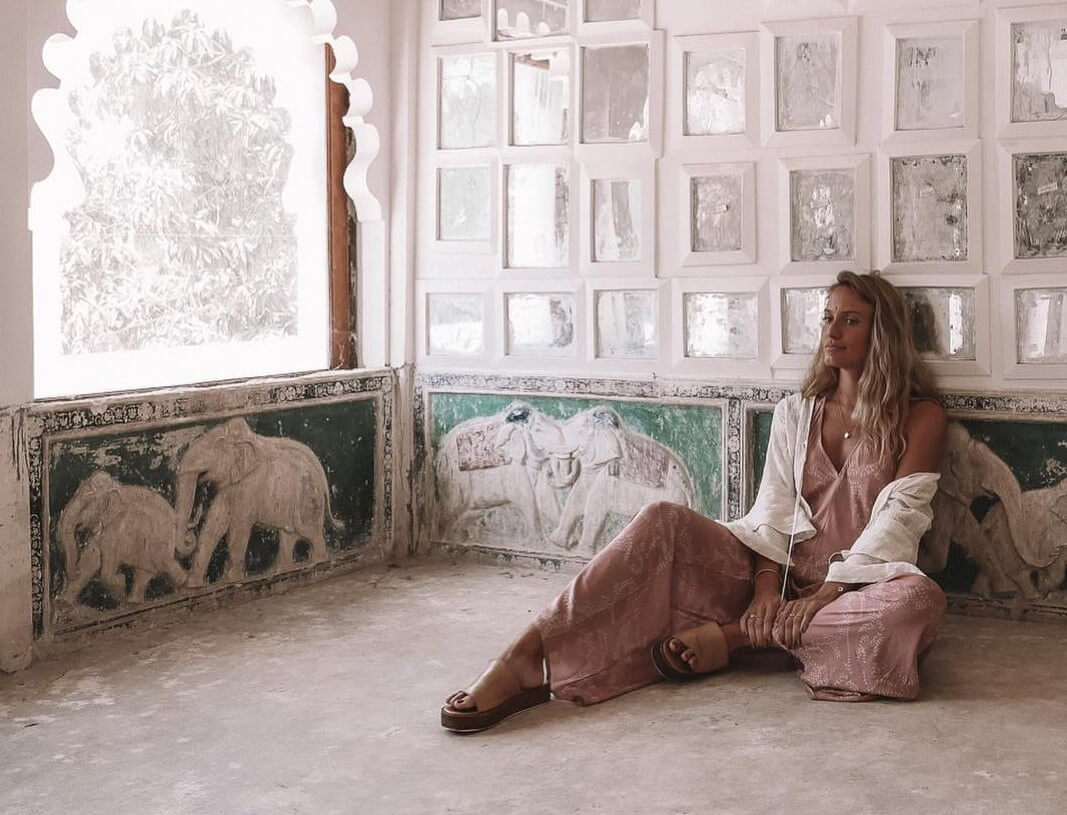
    Solo female travel tips, rajasthan, hippie in heels
    Camel riding in Thar Desert, Rajasthan

    Many people are reluctant to travel solo because they feel like they’ll be alone and won’t meet anyone. What’s your experience?

    I can totally relate to that. After budget, my second biggest fear while traveling is being alone for too long. Solo travel is great as long as you meet people. In Europe, I had no problem. Hostels are great for meeting people and you shouldn’t worry at all. In Uganda, I met no one therefore re-read all the Harry Potter books… twice. In India, I always tell people, it can be hard, but keep your chin up! There are far less backpackers. There are no hostels, only single room guesthouses. You HAVE to be an extrovert. When you are out shopping and see other travelers, talk to them. It’s that simple! While eating dinner alone, if you see another group, go up and ask to eat with them. It’s truly the best way – or you’re going to get lonely. I actually met a girl through a Couchsurfing forum and traveled with her for 3 weeks in the Himalayas!

    The biggest concern for travelling solo as a female is safety. How do you get over that fear? What steps do you take to make sure you stay safe while on the road?

    Ok, honestly I’m just either oblivious or dumb because I never think about safety! It’s dumb I guess. I suppose I have been lucky- I couchsurf with dudes (even in India) and know I can leave if I want, in Paris I did exactly what those girls from “Taken” did and left the airport with a stranger in a taxi – but ended up staying in a little palace in a spare home! When I first came to India, safety wasn’t a concern (really budget is always my biggest concern) – but I can totally see why it is to people who at least use half their brain 😉

    India currently has a terrible reputation in the media for female travellers. You’ve been on the ground there for over a year; what tips can you offer to other solo female travellers heading to India?

    Take the news reports with a grain of salt – better yet, don’t listen at all. I can say with certainty that India is not any more dangerous than any other country I’ve been to. I have no problems here. If someone does get a little too close for comfort, I tell it like it is to them and they back off. They get startled and out of shock, they back away. Actually, in more rural areas, people are excited to see you. The stories of foreigners dying here in Goa involve drugs. In the cities recently one big story involved a girl dating (sleeping with) multiple Indian men. My point is there’s always more to the story than the news provides. A couple travelers were killed in a rural town while hitchhiking. I suppose a line needs drawn everywhere and I’d say hitchhiking in India at night through a village in middle of nowhere, India, is that line. I have written 14 safety tips on solo female travel in India that I recommend checking out. Don’t go to India with fear or you won’t enjoy it. India is a peaceful nation; just use your best judgement.

    Solo female travel tips, hippie in heels
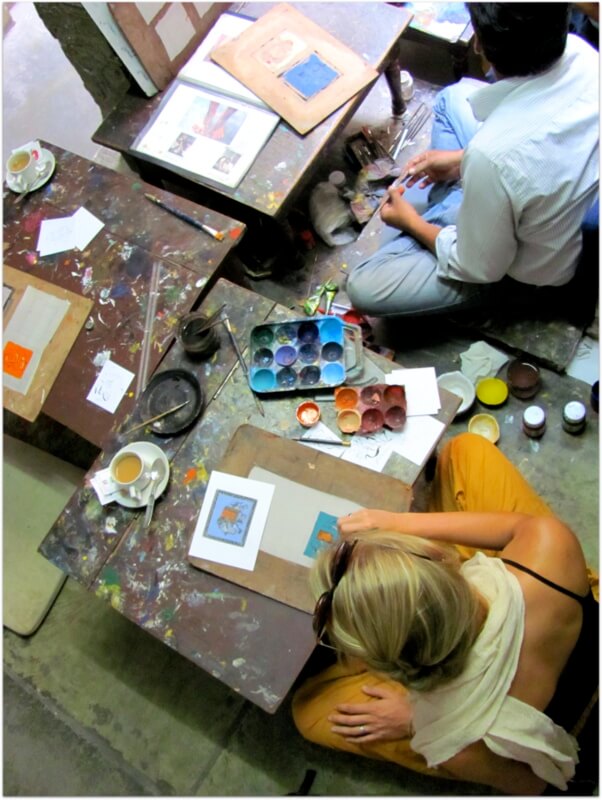
    Learning how to paint in Pushkar, India

    Where are some places you’ve had to deal with unwanted advances or harassment from men and how do you do it?

    As I said, India is safe and when men do get too close, I take care of it. One example was a man who grabbed my butt on the bus. It was crowded with both men and women; a local bus in Delhi. I made a complete scene and he was shamed into exiting the bus by other travelers. I talked about this in a post and an Indian man commented that he grabs girls butts on buses and knows it’s wrong and that my post about it made him want to try and stop. Obviously, I was speechless, as I’m sure you are reading this. Some uneducated men in India can do dumb things, just tell them to back off and be loud about it if you have to. As I said, India is safe and this happened once in almost 2 years. Men here are not used to women having a voice; use that to your advantage. Speak up!

    How do you afford your travels?

    I don’t like to pretend like I can live in this fancy villa in Goa all on my own. My boyfriend already lived here when I moved in with him which saves me hugely on my bills. His company puts him up here. I worked by bum off as a travel nurse and saved; I still use that money. I also make a small amount on my blog and I am a Thai yoga masseuse. I got certified in Thai massage while in India and started practicing here in Goa to help makes ends meet. It’s a great way to make money abroad and there is a demand for it here in Goa, as people are pretty much only here for vacation! All together I don’t make as much money as I did with nursing- not even close- but it’s enough for India, as this country has a low cost of living.

    What are some of the ways you think travelling has changed you or your view of the world?

    I have learned more traveling abroad than I did in school. I love learning history, and the tours in Europe were my some of my favorite times from all my travels. In India and Africa, I’ve learned so much about the way the world works and how self-centered it can be in America. I think travel has made me more patient and more understanding of the troubles other people face. I think everyone can benefit from travel. The world is a big beautiful place!

    What are some things every female traveller should have (and shouldn’t have) on her packing list?

    Well, I’m a little girly when I travel. I might be a budget traveler who stays in a two dollar room with no heat in freezing weather, but I still pack my Clinique moisture surge lotion. It’s my most important item! I also take a sleeping bag liner. It’s tiny and perfect for train travel. It will keep you cleaner and your belongings safer.

    Solo female travel tips, hippie in heels
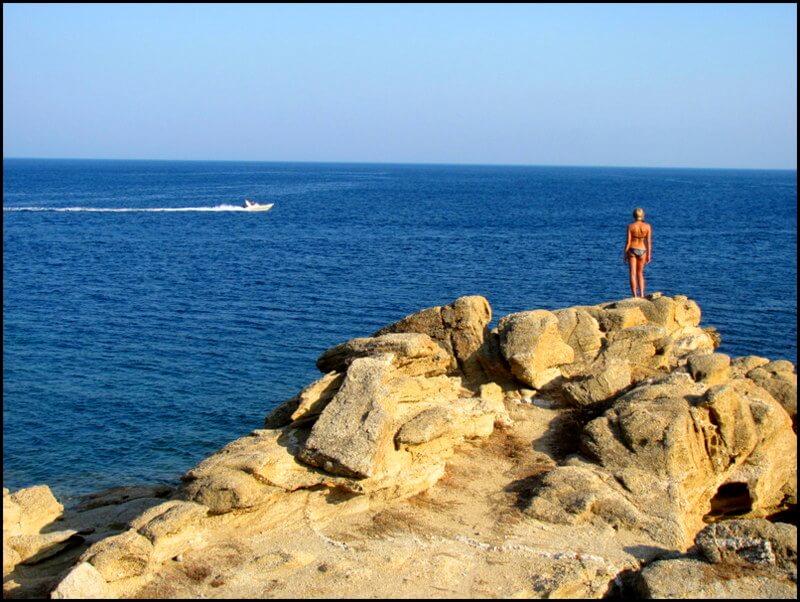
    Rachel in Mykonos, Greece

    OK, a couple of fun questions – who’s your celebrity crush?

    I like Emile Hirsch! He’s so cute and always plays cool roles.

    And, which country have you been to that, in your opinion, has the most handsome men? 

    Well my boyfriend is English so I suppose England should win…. but they don’t. He’s the exception! It’s probably Greece. Is it bad I thought the most about the answer to this question?!

    Imagine a Hollywood studio wanted to make a movie of your life. Who would play you and why?

    Leslie Mann in my dreams! She is hysterical.

    Are you a nomad for life? Why? Why not?

    I think I’ll always be a nomad, but not the same type I am now. I am a contradiction in more ways that being a Hippie in Heels. I’m a homebody who wants a handful of kids and a cute little bohemian decorated house straight out of an Anthropologie advertisement. At the same time, I want to see the whole world! Sometimes I struggle with that. I left a stable career as a nurse, to be a struggling masseuse and travel writer (who got an F on her senior paper). This last year has been a huge change but one that I needed and has brought me tons of happiness. I don’t see myself going back to my old life ever. I do need to find a balance… some day. For now, I’m just fine!

    Lastly, for those planning or considering their very first trip alone, what advice do you have for them? And where would you recommend they go?

    It’s easy for us travel bloggers who left our jobs to tell you to just “go for it”. But I can remember how it felt. It’s not easy, and I had a boyfriend to move in with abroad! You’ll need to seriously consider your options. You won’t enjoy travel if you run out of money. Plan wisely, then make your move. I’ve never heard of someone regretting traveling more!

    rachel jones, hippie in heels, india travel, solo female travel

    Rachel Jones is a former nurse who left her career to travel the world. She currently lives in Goa, India. You can follow her adventures on her blog Hippie In Heels or connect with her on Twitter at @hippie_inheels.

  • (Almost) Scammed In Phnom Penh, Cambodia

    (Almost) Scammed In Phnom Penh, Cambodia

    First morning in Phnom Penh. I wake late, as usual. My stomach curdles, yet for some reason I’m hesitant to venture out to eat. New places seem to have that effect on me, and I haven’t quite figured out why.

    After hours of flicking through TV channels, reading the news and Googling things to do in Phnom Penh, I finally I decide to leave the comforts of my hotel room. It’s around noon, but the humidity is rather mild today; certainly kinder than the usual South East Asian sweat fest.

    It’s become somewhat of a tradition of mine that when in a new city the first day is simply spent wandering the streets; a chance to move slowly and observe, taking in the sounds and the smells, the hum of local chatter and traffic. I’m situated on the riverfront, definitely a tourist hub, but rather tame compared to Siem Reap’s Pub Street or Bangkok’s Khao San Road.

    My stomach continues to grumble. I look sheepishly into the windows of each café and restaurant, searching for a place that looks inviting enough for a loner like myself. Even after all these years, I still feel a slight unease at eating alone in a crowded and lively place. Eventually I pass a corner store and purchase a pack of almonds to snack on, something to ease my hunger while my dining indecisiveness continues.

    I wander aimlessly, chewing on almonds and turning random corners, hoping to find an eatery that looks welcoming enough for me to try. I’m a little further from the riverfront now, evident by the absence of tourists and tuktuks. I slow down to a shuffle, just for a moment to try and dig the last few almonds out of the bottom of the bag. Almost on cue, a motorbike pulls up beside me.

    There’s two women on it, both around 40, and both a little, let’s say, on the heavier side. The one driving looks up at me, seeming a little flustered.

    “Excuse me, do you know where the Royal Palace is?”

    I shake my head.

    “Sorry, no,” I say smiling, still digging for almonds.

    “Oh, you’re not from here?”

    I shake my head again.

    “Oh really, where are you from?”

    “From New Zealand.”

    Her eyes light up.

    “Really, are you from Auckland by any chance?”

    I pause and look at her. I can’t quite tell where they’re from, but the accent and facial features has me guessing they’re Filipinas.

    “I am, actually!” I say with a smile.

    “Oh wow, my sister is moving to Auckland next week to be a nurse, she’s so worried about it!”

    I smile again.

    “Nothing to worry about,” I say proudly. “Auckland is beautiful.”

    “How much does it cost to stay there? Like, to rent an apartment?”

    I’m surprised by their excellent English, something you don’t hear around these parts too often.

    “I don’t know, maybe like $150 a week.”

    “Ahhh,” they groan. “That’s expensive.”

    That’s the first time the lady at the back has talked. I’d almost forgotten she was there.

    The driver jumps in again.

    “I really can’t believe we met someone from Auckland! Such a coincidence,” the driver says again with a smile. “You’re really from Auckland?” she asks again, a slight look of disbelief in her eyes.

    I nod.

    “Wow,” she laughs. She outstretches her hand and I offer mine back, which she shakes enthusiastically.

    “You know, do you think you could talk to my sister for about 15 minutes? She’s really worried, she’s never been overseas before. We’re actually just going to meet her now, just down the end of the street,” she says, pointing down the road in front of us.

    I shrug my shoulders.

    “Sure.”

    She smiles with relief.

    “Oh thank you so much! Just jump on the back, it’s just two minutes down that way.”

    I had presumed I would walk, but whatever. Without a second thought I pop on the back on the bike. Who knows, afterwards they might be able to tell me a good place to eat.

    Once on the bike, the questions are endless. I humour them, but find it odd that they can’t seem to stop talking.

    “What’s the weather like in New Zealand? How much is the flight to New Zealand? How much can you earn in New Zealand? How long do you live in New Zealand? How long have you been in Cambodia?”

    Finally, after about 2 minutes and one too many questions, I sense something a little “off”. We haven’t stopped down the street like they said we would, and we’ve now pulled onto the main road. I realise I’ve been in Asia too long, where scam artists usually pass over me for the more obvious, white-skinned targets, causing me to let my guard down. However, now it’s back up with my scam radar beeping on high alert. I do a quick recap of the events in my head and look both of the women over carefully. The lady in the middle clasps an iPhone 4 between her fingers, her nails freshly painted and a loose gold bangle sitting upon her forearm. Her hair is coloured, and her earlobes boast two golden stud earrings. They’re definitely not poor.

    I look at the driver’s face. She looks calm and weaves effortlessly through the many cars. For a foreigner, these roads seem far too familiar for her.

    Then, out of nowhere she asks me another question.

    “How long have you been in Phnom Penh?”

    She’s asked me that before. Obviously the questions are just a distraction tactic, and she must have done this routine so many times she’s on autopilot. I’m now 101% convinced I’m in scam territory. I decide it’s my turn to ask some questions.

    “So where are you from?”

    “Bangkok,” they both say in unison.

    I presume they’re lying. They don’t look or sound Thai at all, but this is good. I know Bangkok well.

    “Oh, which part of Bangkok?”

    “Ratchatewi,” they say, again in unison. “Why? Do you know Bangkok?”

    “Yes, I have been living there,” I say calmly.

    “Oh, why do you live in Bangkok?”

    I think back to scam 101 training: when being scammed, try to offhandedly mention some connection to authority or government.

    “My brother works there, he works for the embassy,” I explain.

    The driver doesn’t know it, but I can see her face slightly in one of her mirrors. Her expression changes, as if she’s suddenly deep in thought. I try not to smile.

    “Ohh, your brother works for the embassy…” she says quietly. I can’t tell if she’s asking me again or if she’s just repeating it to herself.

    “He was working for the British embassy in Bangkok, but there are problems in Bangkok right now, so because of the coup he’s been moved to Phnom Penh. He will start working here for the British embassy in a couple of weeks. Do you know where the embassy is?” I say enthusiastically.

    “No, we don’t know,” they both say, shaking their head.

    “It is just over that way,” I say, pointing out in the distance. “It is very nice, I went there with him for a welcome dinner there last night, I met the tourism minister, and the police minister, it was so nice, Cambodian people are all so nice. Actually, there was some people from Thailand there too!”

    I look in the mirror again. Her face seems expressionless, but I can only see half of it. Then, for a split second, I see her eyes. She looks confused.

    We go on driving for a couple of minutes and I sit there quietly, trying to plan my next move. Interestingly, the two of them have both gone silent as well. I notice they’re stopping at red lights every couple of minutes, and I take comfort knowing I can jump off the back of the bike any time they do.

    “Anyway, where are we going? I can’t go far, because I am going on a tour at 2pm.”

    “Ahh you’re going on a tour!” they both shout out, the middle one tapping the driver several times on the shoulder.

    “Maybe you can meet us tomorrow instead?” she asks, as she pulls the bike over to the side of the road.

    “Sure, no problem,” I say with a smile, as I slowly hop off the back of the bike.

    “You can meet us on the riverfront, do you know Dairy Queen? You can meet us there.”

    I think about it. I have no idea where Dairy Queen is.

    “Sure, I know it, I’ll meet you there. What time?”

    “You can meet us around the same time as now, 2pm, ok?”

    “Ok no problem, I’ll see you then.”

    “Let me call you a motorbike to go back,” the driver says, waving her hand at a bunch of guys on the corner. One of them perks up and hurriedly drives over.

    Before getting on the bike, I shake both their hands and bid them goodbye. Part of me is disappointed. I’m curious to see where they were taking me.

    On the way back to my hotel, I laugh out loud in bursts as I replay the whole scenario in my head. I had to give it to them, they were pretty good. It was clear they had done it countless times before; from their facial expressions to their question routine, to learning the capital cities of probably every country and every American state in their spare time. What made it even more convincing though was they were two chubby middle aged women, not trying to be cute or charming at all. It had instantly brought my guard down. Had it been two scantily clad bombshells who pulled up to me, my scam radar would’ve gone off immediately. These two had it all figured out.

    Back in my hotel room, I immediately get online and start Googling. I’m dying to know what their gameplan was.

    Google search: “Two fat women on motorbike moving to home country Cambodia scam.”

    A few results pop up, including one that runs almost like a play-by-play to what has just happened to me:

    “This is a scam which I stupidly fell for and that is one where 2 friendly fat girls ask you to come and give their other sister some information on the country you live in as she is interested to move there. I went there to help as I had a bit of time on my hand. I met their “uncle” who said he had a fail safe way to win at the casino as he was a croupier at a casino. At his home, I ended up placing bets on his behalf with his money of which he ran out, he begged and promised he would give it back after the final bet, he was the best con man I have ever seen and must admit I was the biggest dipstick for falling for this but I helped him out with mine and I finally lost a fair amount of money. I went to the Embassy but the only way I could do something about this was to go to the police. But unfortunately the police is so corrupt that I couldn’t take that chance. So if some jolly fat girls talk to you, talk but don’t go out of your way to help.” Link here.

    As I read it I roll around laughing on my bed. I cannot believe I fell for it. I’m usually on high alert when in Africa or South America, but this is the first time any of these scams has been pulled on me in Asia and my guard was down completely. My Asian face has left me far too unsuspecting around these parts. Part of me was also surprised at how elaborate it sounds. I was expecting more of a “drive you to an alley and steal your wallet” kind of thing.

    The next day I consider heading down to Dairy Queen to call them out on their act. It would surely make for an interesting blog post but I decide against it, partly because I’m busy watching the World Cup but mostly because it’s just not my style. Also, I didn’t think they were actually going to show up anyway.

    Moral of the story: Be wary of heavy, middle aged motorbike riding women in Cambodia. Or if you do talk to them, just ask them about their professional gambler Uncle.

    Good luck!

    Things to remember when being scammed:

    I’ve had a few scams attempted on me and other travel friends, even when at home in New Zealand. Some were so stupidly obvious that I went along with it just to see what they were trying to do, and some were so elaborate and well thought out that I’m sure they’ve fooled many a person. I’ll write a few more stories like this one up when I get time, but for now, keep these tips in mind if you’re ever the target.

    1. Obviously, just walk away from the beginning if you can. Don’t be afraid to look ‘rude’. Scammers are experts at making you feel bad for walking away.
    2. If it’s a little hard to walk away because, say, you’re on the back of motorbike in heavy traffic, remember to relax and stay cool. Don’t freak out. Remember, a scam is not the same as a robbery. Their plan is usually to ‘trick’ you out of money, rather than actually commit a blatant crime and rob/hurt you.
    3. Try to mention some connection to authority. This is a tip I learned from a friend in Africa, and it works really well. For example, just say something like “Can you drop me at the embassy afterwards? I need to meet my brother there at 3.” That will get the wheels spinning in their head, and the fear of messing with someone connected to government will throw them off completely. Try not to threaten, e.g. “My brother works for embassy and you guys are going to be in a lot of trouble.” It’s important to let them save face and not back them into a corner, as that’s usually when bad stuff happens.
    4. Act confident. It’s quite satisfying when they try to woo you with something and you just smile, as if you know exactly what they’re up to. It will throw them off their game a lot, and you’ll see it in their expression.
    5. Extract yourself as soon as possible. Do it tactfully, and don’t make a big fuss about calling them out or shaming them. My opinion is letting them save face is the best way to get yourself out unharmed, which is really the only goal you should have.

    Stay sharp and good luck!

    Heading to Phnom Penh? For affordable accommodation, try using Agoda, they definitely offer the cheapest rates in Asia. For things to do, you can’t go wrong with TripAdvisor. Happy travels!

  • When Broken Glass Floats: A Chilling Look Into Cambodia’s Tragic Past

    When Broken Glass Floats: A Chilling Look Into Cambodia’s Tragic Past

    I put my Kindle down and close my eyes, grimacing. It is not the first time this story has overwhelmed me.

    I sit there rubbing my eyes, taking a moment to collect my thoughts. I’m only a quarter way through it, yet this book is consuming me. Time for a break, I decide. I look around.

    A lady sits a couple of tables away, sipping on an iced coffee while tinkering with her iPad. On the far end of the cafe sit two middle aged men, laughing cheerfully about something, their palms wrapped around mugs of Angkor beer. Beyond them, a small stretch of the Phnom Penh riverfront, and the faint sounds of traffic passing on the wet road before it.

    As my mind settles, I pick up the book to continue reading. As difficult and depressing as it is, the story has captivated me, and despite all the death and suffering I am desperate to know how it ends.

    The book is Chanrithy Him’s “When Broken Glass Floats”, a gripping memoir of her life growing up under the Khmer Rouge. I am only halfway through it, but it has brought to life a period of history that, until now, I have known very little about. A genocide. One quarter of the population dead. A brutal dictatorship, an entire country forced into slavery, and the mass execution of anyone educated enough to resist. In just 4 short years (1975-79), the Khmer Rouge managed to decimate Cambodia, crippling the country almost beyond repair. I am unsure why I never learned about this in school.

    I read and read, until my battery light flashes red and finally dies. I’m relieved in a way; I’ve been sitting here for hours, my eyes hurt, and it’s already dark outside. Enough for one day.

    I wake up late the following morning. Breakfast is served at the cafe outside my room, and I continue Chanrithy’s book while waiting for it to be cooked. I manage another 20 or so pages, eat quickly, and then head back to my room to wash up and get ready. Today I am visiting Tuol Sleng, the famous S-21 genocide museum near the centre of Phnom Penh. Here lies an abandoned high school, turned into a interrogation prison where tens of thousands of Cambodians were tortured and marked for death.

    After waiting for the rain to settle, I head out and arrive around mid afternoon. The moment I enter the gate, I feel the eerie vibe it is famous for.

    Tuol Sleng Genocidal Museum

    Despite the many visitors, the place is silent. It only adds to the creepiness. I walk sheepishly into the first room; a high school classroom turned into a torture chamber. From the doorway I see an iron bed, with a photo on the wall of the torture victim found chained to it. I am not quite sure what to think. I snap a photo, and exit quickly.

    Torture beds at Tuol Sleng

    Most rooms in the first building appear the same; an iron bed with ankle cuffs, where victims were bound and tortured into confessions. As I wander through each of them, I think back to Chanrithy’s book, to the stories of people being taken and never returning. Even standing here, seeing it with my own eyes, it is difficult to believe the stories of terror are real.

    Eventually I make my way to the second building. Here lies the photo room. The Khmer Rouge were meticulous in their record keeping, photographing and profiling all 20,000 prisoners before they were tortured into confession. Once “processed”, they were taken away to be executed.

    Tuol Sleng Genocidal Museum

    The photos represent many of the country’s most wealthy and educated at the time, mass murdered in an attempt to create a completely uneducated, communist society. The immense waste of life is impossible to comprehend or understand. One can only wonder how different Cambodia would be today if these great minds were still alive.

    Among the photos are faces of children, some who look as young as 8 or 9.

    Tuol Sleng Genocidal Museum

    I think back to when I was that age, innocently riding my bike and watching cartoons. The contrast is heartbreaking.

    I spend a long time in here, maybe an hour. One by one, I study the faces of all the prisoners. Each of their eyes are sad, defeated. Their fear is unmistakable. Most appear to have accepted their fate.

    Tuol Sleng Genocidal Museum

    Yet among them, some appear defiant, refusing to be broken. I admire them, and wonder if I’d have been strong enough to do the same.

    Tuol Sleng Genocidal Museum

    Of the 20,000 that passed through here only 12 made it out alive; their stories of survival displayed on one of the classroom walls. Before I start reading I observe the 5 or 6 other visitors, staring at the wall and reading silently. Each of them stand frozen, their lips slightly apart, eyes flashing back and forth across the page in disbelief. Soon I find out why. The stories are straight out of a horror film; tales of being electrocuted to unconsciousness, forced to eat their own excrement, fingers being broken and fingernails being ripped off and covered in salt. Prisoners were tortured into confessions of being spies or conspiring against the State, justifying their execution. Yet one confession was not enough. Torture continued until the victim admitted guilt of their entire family, their parents, brothers, sisters and children, justifiying the execution of all of them.

    I read each story, wondering to myself what I would’ve done. How strong would I have been? Would I have betrayed my Mum and Dad, my brothers, to end my own suffering? It is mind numbing; too much for me to try and imagine.

    Tuol Sleng

    That night I continue reading Chanrithy’s book. My visit to Tuol Sleng has added another dimension to her story. She describes her friends and family disappearing, or being taken away to be punished and executed. I wonder if any of them were taken there, and if I had seen their faces on the wall. It is a chilling thought to think that is possible.

    Two days later, I finish Chanrithy’s book. I have never read a book so fast in my life. As I flick through the final pages I am left speechless, happy that she survives, but heartbroken at the suffering she and so many had to endure. Immediately I go to her website and email her, thanking her for sharing the story and offering my condolences, as small a gesture as it may seem. It is hard to believe I have been walking along the streets where this evil happened, only 40 years ago.

    The next day I visit Choeung Ek, the famous Killing Fields in the south of Phnom Penh. Of the 3 million Cambodians that died during the regime, 20,000 were executed here, brought from Tuol Sleng by the truckload under the cover of darkness. In order to save bullets prisoners were beaten to death with spades and tools, while loud music played in the background to ensure their screams were left unheard. Bodies were left to rot in mass graves, some piled up to 400 high.

    Even today, bits of bone and clothing are still seen lying in the dirt.

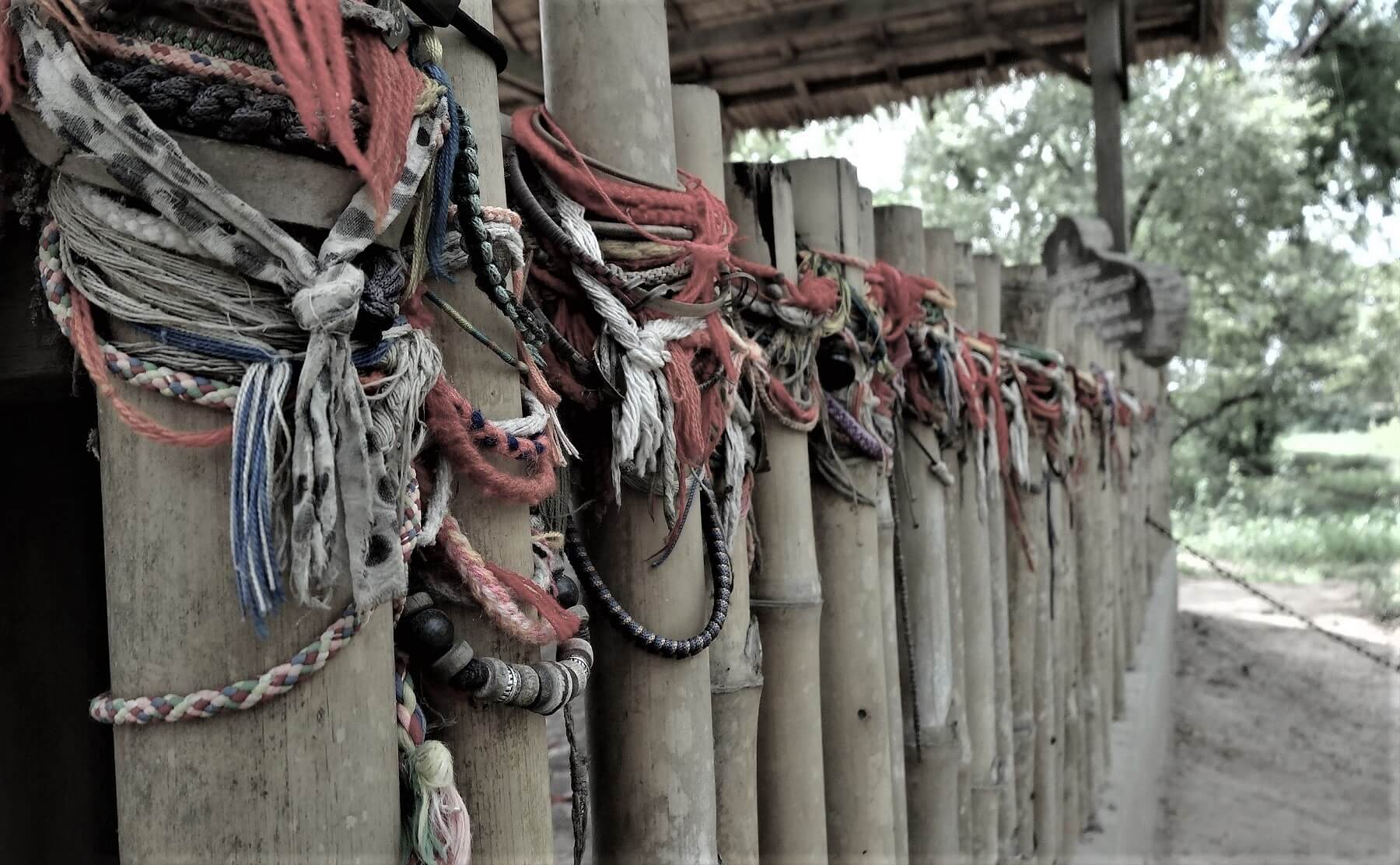
    After an hour or so I come to the infamous killing tree, where I notice many other visitors standing and staring, deep in thought. It is the tree where babies were executed, taken from their mothers and then swung from their legs, their heads smashed against the trunk. The site seems to have a stronger effect on people than most. I stand there with them, and we all stare at it in silence.

    The Killing Tree

    It takes me around 3 hours to walk through the fields. It is a sobering place, but for some reason, doesn’t trouble me as much as I’d expected. While the photos in Tuol Sleng showed people in the midst of struggle and torture, the fields themselves seem to give an odd sense of peace. For many Cambodians, this is where the horror and torture ended, and despite how brutal it was I suppose there is an inkling of closure in that. It is comforting to know the place has been preserved with the respect it deserves, and that people continue to come and pay homage to those who were taken.

    The Killing Fields

    It’s about a 40 minute drive from the fields back to my hotel. I sit in the back of my tuk tuk, trying to process everything; Charithy’s story, the prison, the fields, the survivor stories. I find it strange this story is never talked about, unlike the Rwandan or Jewish genocides. I’m actually embarrassed that I knew nothing about it until now.

    Eventually we pull out to the main road. As we drive along I see two young girls playing in an empty dirt field; one throws a tin can, the other tries to hit it with a piece of broken wood. She misses, and they laugh loudly like kids and race to retrieve it. It all seems so normal, and for some reason that’s odd to me, for a country that was massacred not so long ago.

    When we finally arrive at the hotel the afternoon rain has set in. It is pouring down, and I’m reluctant to leave the shelter of my tuk tuk’s waterproof flaps. I ask the driver to join me in the back, and ask him how old he is.

    “Me 44,” he answers.

    I need about 2 minutes to do the maths in my head.

    “You were 5 during Pol Pot’s time?” I ask him.

    “Me 7 years old for Pol Pot,” he replies.

    I tell myself to show a shred of sensitivity, but I’m too curious. I bombard him with questions.

    He answers me the best he can in his broken English, telling me about his memories during the Khmer Rouge rule; eating only rice soup a couple of times a day, eating lizards and crickets, even killing and eating the stray dogs around the villages. I’m reminded of the time I saw fried crickets for sale on the streets of Siem Reap, which now makes a little more sense to me.

    My driver’s eyes open wide as he continues his story, retelling tales of his mother and father forced to work long hours in the rice fields, and teenage boys forced to stand out in the sun and mind the cattle. Then he laughs as he recalls the big trucks coming to take away all the rice and beef, leaving all the workers to starve at the end of the harvest.

    I ask him about school, and he shakes his head.

    “But no work for me too,” he recalls. “When you turn 15, you work. I only 7 years old. I just sit in the house. Run around in the field. Play with other kids.”

    I nod in slience. It is difficult to hear him through the pounding of rain on the roof, but I do my best to digest every word.

    Finally, I build up the nerve to ask him about Tuol Sleng, if any of his family is in the photos, and if any of his family was executed under the regime.

    “No, no, not my family,” he laughs. “But my friend, they see some family there, in the photos.”

    “But my uncle is gone,” he continues. “He disappear, we don’t know where. Maybe get bang bang by Pol Pot,” he says, mimicking the shooting of a rifle with his hands.

    I’m uneasy at how calmly he talks about it. Part of me wishes he was (a lot) more angry, but he seems to be at peace with it. Luckily his mother, father, and siblings all survived, and maybe that is the reason why.

    That night I sit on the riverfront until sunset. It is filled with elderly people out walking, usually in pairs, leisurely strolling along while enjoying the evening air. The street sellers are far more passive than in the neighbouring countries, and a simple shake of the head is enough to turn them away. I watch each person walk past, studying their faces, wondering what their story is and how they survived the genocide. It is frightening to think that Chanrithy’s story is only one of many, and that almost a whole population has a similar tale to tell. Visiting Cambodia has been a sobering reminder that we should never take our freedom for granted.

    Finally as the sun sets I see two boys pass by, maybe 10 years old, riding side by side on brand new bicycles. They ride slowly, one of them holding a pack of biscuits in one hand while he steers the bike with the other. They argue with each other intensely, shouting and shaking their heads, probably about something trivial like a video game or a TV show. Until now I’ve found Cambodians to be rather docile and reserved, and this kind of energy is a little out of the ordinary; they are by far the loudest people on the riverfront. Clearly their upbringing has been very different to the generation before them. Hopefully, a sign of new beginnings in Cambodia, and a future much brighter than its past.

    Photo & Video Sharing by SmugMugPhnom Penh riverfront today

    Visiting Phnom Penh?

    • I would highly recommend reading Chanrithy Him’s “When Broken Glass Floats” before you go. It is difficult to read, but will paint a vivid picture of the Khmer Rouge regime and bring to life the historical sites you will visit. It is superbly written, and is a powerful story of one family’s loyalty and perseverance. It’s around $10 on Kindle. Another similar book that was recommended to me was “First They Killed My Father” by Luong Ung, although I haven’t read it.
    • Assuming you are staying in the city or on the riverfront, a tuk-tuk will take you to Tuol Sleng museum and back to your hotel for around $5-$7 all up. He will wait for you outside until you’re ready to leave. I have been to many museums in my life, and this is one of the few (or maybe the only) that I will remember. Entrance is $2.
    • Choeung Ek is a bit further out of the city and will cost you around $10 to get there and back. Again, the tuk-tuk driver will wait for you. Entrance is $6. I would definitely do Tuol Sleng and Choeung Ek on different days – it is a bit much to digest both at once. Best to do Tuol Sleng first, and Choeung Ek second.

    Have you visited Choeung Ek and Tuol Sleng? What did you think? Let me know in the comments below.

  • Kiwi Food Frenzy: 33 Things To Eat On Your Trip To New Zealand

    Kiwi Food Frenzy: 33 Things To Eat On Your Trip To New Zealand

    Back in 2011, I took my first solo trip overseas; a full time Spanish course in the south of Spain. Each day, the lessons would have a different underlying theme, and the class would use that theme to try and explain (in Spanish) various aspects of our life back home.

    It started with the weather, and the Swiss girl in class talked about the snow, the Swedish girls talked about the grey skies and I talked about the hot Auckland summers and rainy Auckland winters.

    Then came sports, and the Swiss girl talked about skiiing, the Russian girl talked about boxing and I of course talked about New Zealand’s obsession with rugby.

    Then one day we finally had a lesson about food. The Swiss girl talked about Switzerland’s cheesy raclette, the German girl talked about Germany’s love for sausages, and I……had absolutely no idea what to talk about.

    Lamb?

    Shellfish?

    Pies?

    What do people eat in New Zealand? I had no immediate answer, and spent much of the lesson struggling to come up with something that I could share as my country’s national dish.

    In the end, I just said we drink a lot of milk (lol). But it left me wondering; what is New Zealand food? What are our most beloved culinary inventions? And what, if anything, would be considered our national dish?

    Since then the question has remained largely unanswered, and still to this day I struggle to come up with something when people ask me, “What is the food of New Zealand?”

    However, over the last few months I think I’ve finally come up with an answer. I’ve been tripping around the country, exploring some of my country’s iconic foods and indulging in a few old childhood favourites. New Zealand cuisine is simple, but it’s also comforting, delicious, and loved. The list I’ve compiled below is a collection of those special NZ foods; things that all Kiwis seem to know and love, and things that have unarguably cemented their place in Kiwiana food history.

    What food is New Zealand known for? Let me show you!

    1. Cookie time

    Photo & Video Sharing by SmugMug

    Cookie Time’s “Original Chocolate Chunk Cookie” is a timeless Kiwi favourite and the recipe has remained unchanged from when I had my first one over 20 years ago. As kids we always used to break our cookies open and see who could find the biggest chunk of chocolate – and seriously, you can find some massive ones in these things. Another popular thing to do is nuke it in the microwave for about 10 seconds, giving you a softer, chewier cookie oozing with warm melted chocolate. Delicious.

    Get it at: Any NZ supermarket, service station or dairy (convenience store). There’s also a Cookie Time cafe you can visit. 

    2. Lamingtons

    Photo & Video Sharing by SmugMug

    Lamingtons are a sponge cake, coated in rasberry or chocolate and then sprinkled with shaved coconut. It’s common to cut them in half and fill them with cream or jam, but in most cases it’s simply eaten as is. A very popular snack enjoyed during morning or afternoon tea.

    Get it at: Any supermarket or bakery.

    3. Sausage sizzles

    Photo & Video Sharing by SmugMug

    I still remember back when I was in primary (elementary) school, we would all arrive on Friday mornings with our precious $1 coins clasped between our palms. This, of course, was for Sausage Sizzle Friday, a weekly lunch event where the school would fundraise by selling stumpy pork sausages in pieces of fresh bread, lathered with tomato sauce and if you were lucky, a handful of grilled onions. However this wasn’t unique to my school; sausage sizzles happened all over the country, and while they began as a fundraising initiative (due to the cheap ingredients) they’re now considered a classic Kiwi comfort food enjoyed at family barbecues, food markets and special events up and down the country.

    Get it at: Often sold at sports events and food markets, and quite often there are sausage sizzle fundraisers outside Bunnings and The Warehouse. Of course, the easiest thing to do is to cook them yourself. NZ sausages, onions, fresh white bread and a bottle of Wattie’s tomato sauce – all available at any NZ supermarket.

    4. Hokey Pokey ice cream

    Photo & Video Sharing by SmugMug

    Hokey pokey is one of the most popular ice cream flavours in the country; a timeless combination of hokey pokey (honeycomb) balls and rich vanilla ice cream. Plus it goes well with everything – cake, waffles, cones, banana splits. It’s the perfect ice cream! And so classically Kiwi. Once you try it, you may find it difficult to eat plain vanilla ever again.

    Get it at: This is a Kiwi favourite so any ice cream stand or supermarket will have it. If you’re looking for something special, one of the best hokey pokey ice creams is at Giapo in the Auckland CBD. Giapo does some pretty unique things with gelato and ice cream – just check out their ‘gram! Definitely put them on your bucket list when you get down here.

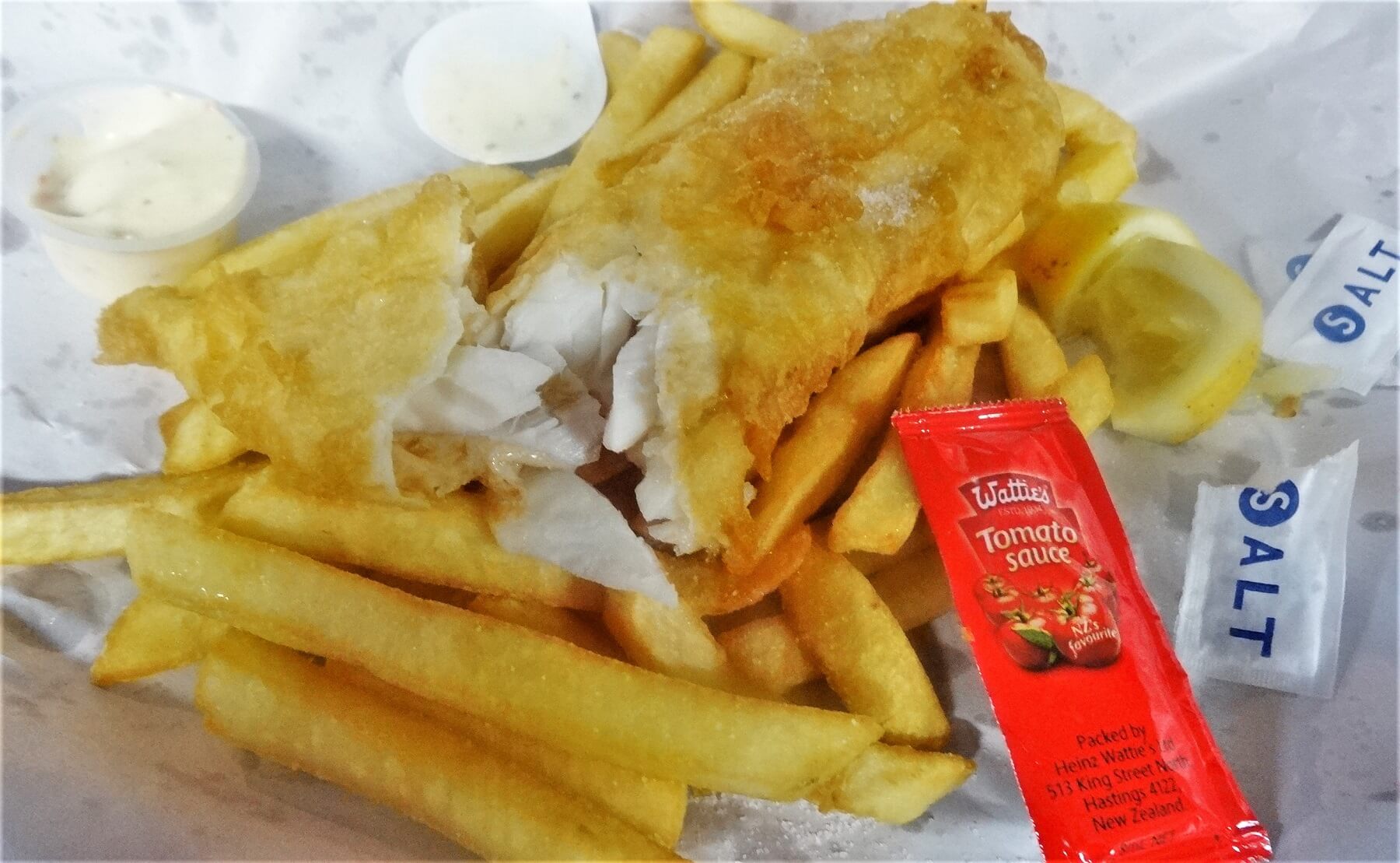
    5. Fish and chips

    Photo & Video Sharing by SmugMug

    Food in New Zealand often takes influence from British roots – this is one good example. This takeaway treat has become so ingrained in our culture that it would be criminal not to include it here. Every Kiwi will surely have romantic memories of ripping open a steaming hot bundle of greasy goodness; perhaps a crispy battered fillet of Hoki or Tarakihi, a handful of crinkle cut chips and maybe a few other greasy bits from the menu, all wrapped up in yesterday’s newspaper and paired with a bottle of Wattie’s tomato sauce. It doesn’t get much more Kiwi than this!

    Get it at: Any takeaway joint in the country will serve this, just ask around. My favourite fish and chip shop in Auckland has now closed (nooo!) but if you’re looking for something special, my new favourite is the Fresh Fish Market in Tauranga).

    6. Marmite

    Photo & Video Sharing by SmugMug

    You have probably heard tales of the legendary Marmite, which is a standard item in every New Zealand pantry and an absolute must eat in New Zealand. In fact it is so loved that when the Christchurch earthquake damaged the country’s lone Marmite factory in 2012, a national “Marmite shortage” was declared which resulted in a mild panic throughout the nation (call me a traitor, but I actually prefer Australia’s Vegemite anyway).

    So, what is it exactly? In very simple terms, it’s a yeast extract combined with a few different herbs and spices. The taste itself is really too hard to describe and is something you’ll just have to try yourself, but be warned, it’s a very acquired taste and if you didn’t grow up eating the stuff it probably won’t agree with you right away.

    If you’re a Marmite virgin, the best way to pop your cherry would be an extremely thin spread on toast, perhaps with a dash of butter. However if you’re a little more game you might like to try the legendary…

    7. Marmite & Chip Sandwich

    Photo & Video Sharing by SmugMug

    Traditionalists would say you need to use Salt and Vinegar chips for this, but I just say go with whatever you want (I like Kettle chips, personally). The recipe is simple enough – white bread, chips and a light spread of butter and Marmite. A common item in every Kiwi kid’s lunchbox.

    Get it at: Marmite will be found at every NZ supermarket. You should also note NZ Marmite is very different in flavour to the British Marmite.

    8. Tuatua

    Photo & Video Sharing by SmugMug

    A New Zealand delicacy! Tuatua are an indigenous New Zealand shellfish that you won’t find anywhere else in the world (as far as I know). While very similar in shape and size to pipis, tuatuas have a milder flavour than most shellfish and a softer, creamier texture as well. As New Zealand is an island country the vast amount of shoreline means we are spoiled with shellfish, and the native Maori are said to have enjoyed this one quite a bit back in the day. As I’m told, the tuatua was, and still is, one of the ultimate favourites (definitely one of mine as well!).

    Get it at: Tuatua can be collected for free during low tide at many sandy beaches around the country (ask a local about the good collection spots). However, the easiest way to get them is simply to buy them at a seafood shop, especially around Auckland where finding them on beaches is becoming increasingly difficult. A dozen will cost you around $8. If you’re cooking them yourself here’s a decent recipe to try.

    9. Hangi

    Photo & Video Sharing by SmugMug

    I still remember my first hāngi. I was around 7 years old, and was at school one morning watching a couple of guys dig a massive hole in the middle of our sports field. Later they lowered in some baskets of food, sitting them on top of hot rocks, and then filled the hole in burying our food beneath the ground. The food slowly cooked over the course of the day, and when lunchtime rolled around I was treated to my first hāngi meal: chicken, pork, potatoes, pumpkin and a few other veges, all cooked beneath the soccer field we used to play on each day. This is a traditional method of Maori cooking that dates back many generations, and is still used today in various Maori communities. If you’re looking to try traditional New Zealand food, this is about as close as it gets.

    Get it at: For hāngi food actually cooked in the ground, your best bet is to head to Rotorua; a city with a large Maori population and often considered New Zealand’s centre of Maori culture. The many Maori village tours will include traditionally cooked hāngi meals in their itinerary. Alternatively you can head to Kiwi Kai, a small kitchen in the city that offers hāngi meals, among other traditional Kiwi food and Maori food. If you’re in Auckland, try The Hāngi Shop.

    10. Steamed pudding

    Photo & Video Sharing by SmugMug

    I know absolutely nothing about this dish, other than the fact that Kiwis like it (somehow it has eluded me for the last 28 years). It was described to me as a “Christmas cake without the fruit” and it’s usually drenched in custard, milk, ice cream, or all three at once. Of course I didn’t know this when I tried it, so like an idiot (as you can see in the photo) I just ate it plain like a muffin or a cake. Still tasted fine to me!

    Get it at: Seems to be popular at the Maori/Pacific Island food stalls at the food markets. You can find microwave puddings at the supermarkets too.

    11. Fairy Bread

    Photo & Video Sharing by SmugMug

    Every kid’s birthday party in New Zealand will have three things: potato chips, cheerios and fairy bread. This party treat is made by sprinkling hundreds-and-thousands (you might better know them as ‘sprinkles’ or ‘jimmies’), over a slice of buttered bread and then cutting them into triangles. It’s also worth noting hundreds-and-thousands are not just any type of sprinkle; they refer specifically to the tiny rainbow-coloured spheres (as opposed to the many other shapes and colours available).

    As I’m told, the cool kids now use Nutella instead of butter; somewhat of a fairy bread on steroids. Stuff like this is pretty typical New Zealand food – making something out of nothing in the pantry, like the Marmite chip sandwich above. Delicious though!

    Get it at: I doubt you’ll find this for sale anywhere, so just pick up the ingredients at a supermarket and make them yourself.

    12. Mince & cheese pie

    Photo & Video Sharing by SmugMug

    Every time I eat a mince and cheese pie it instantly brings back memories of the rainy days at high school, rushing to the tuck shop (school canteen) at lunchtime to warm the senses with a steaming hot pie. And of course, like every Kiwi kid I have memories of hurriedly biting into the pastry and having the scorching mince leave a little burn on my lip as I impatiently gobbled it down.

    A good, classic mince and cheese will be served hot, filled with mince and gravy, have a generous layer of cheese under the crust and be finished with a nice, flaky pastry on top. Not all pies are created equal, but if you do find a good one it will leave you with a big fat smile on your face, guaranteed.

    Get it at: Any bakery in the country. If you want the best, try the mince & cheese from Greenland Bakery & Cafe in Auckland – the current title holder of New Zealand’s #1 pie (in photo).

    13. Whitebait fritter

    Photo & Video Sharing by SmugMug

    Whitebait is a delicacy in New Zealand and currently demands the highest price of any fish in the country. The preferred method of cooking is the whitebait fritter; a simple combination of eggs, flour and whitebait, fried like an omelette and then topped with lemon, salt and pepper. As you can see from the photo it’s a very tiny fish (as they’re not fully matured) and the the strong fishy flavour can be a little off-putting to some. However a perfectly cooked fritter with just the right amount of crisp will quickly turn you into a loyal fan.

    Get it at: During whitebait season (Aug – Sept) many cafes and restaurants will have whitebait fritters on the menu. You can also purchase fresh whitebait at seafood stores to cook your own (frozen whitebait is sometimes available in off-season but can be difficult to find). For the enthusiasts, head to the South Island’s west coast, a region famous for it’s incredible fritters.

    14. The Original Kiwi Dip

    Photo & Video Sharing by SmugMug

    The Original Kiwi Dip is a simple mixture of a Maggi Onion Soup packet and a can of reduced cream (usually a splash of vinegar, too). This dip is so loved throughout the country that both the soup and cream are marketed as official ingredients (as you’ll see in the photo above). Purists would argue that it must be enjoyed with Bluebird chips, another Kiwi favourite, however the dip tends to go well with pretty much anything.

    Get it at: Both ingredients are cheap and easy to find at supermarkets around the country (both have instructions on the side too).

    15. Chocolate Fish

    Photo & Video Sharing by SmugMug

    This chocolate covered, fish-shaped strawberry marshmallow is one of New Zealand’s most iconic pieces of confectionery. While obviously not seafood, it’s almost an icon of New Zealand food culture as we are an island and take much of our culinary influence from the ocean. Chocolate fish have always been a favourite Kiwi treat – as a kid you would sometimes get a sticker or a lollipop for being good, but receiving a chocolate fish was always the ultimate prize.

    Get it at: Any corner store, service station or supermarket.

    16. Feijoas

    Photo & Video Sharing by SmugMug

    Feijoas are actually native to South America but are commonly grown as a garden plant in New Zealand. Every summer you’ll find feijoas trees fruiting out of control, and it’s common for people to give bags full to their neighbours as a healthy tree produces far too much fruit for one family to consume alone.

    The taste and smell is extremely unique; somewhat tropical with a texture mildly similar to that of a kiwifruit. Works beautifully in juices and smoothies too.

    Get it at: The season runs from around March to June each year. Reasonably cheap from any fruit shop or supermarket.

    17. Peanut Slab

    Photo & Video Sharing by SmugMug

    Whittaker’s has been serving up chocolate to Kiwis for over a century now and are famous for their creamy, full flavoured milk chocolate. Over the years they’ve developed a wide range of different products, however their greatest creation would certainly have to be the original Whittaker’s Peanut Slab.

    Instantly recognisable from it’s bright gold wrapper and stumpy oblong shape, this block of roasted peanuts and Whittaker’s famous milk chocolate is a true Kiwi icon, and probably the most beloved chocolate bar in the country. Do try it.

    Get it at: Every supermarket, corner store and gas station will definitely have them.

    18. Bluff Oysters

    Photo & Video Sharing by SmugMug

    Down at the bottom of New Zealand lies the small town of Bluff, world famous for it’s rich, succulent oysters, which are often considered the best on the planet. If you’re an oyster freak like me you’ll go crazy for these things, however they don’t come cheap or easy; you’ll need to wait until they’re in season (March – August) and they’ll cost you around $25 a dozen.

    The taste is very different to the regular Pacific oysters; a much more intense, fishy, almost metallic flavour. I prefer them raw with just a dash of lemon, but they also fry beautifully with a light layer of flour and a sprinkle of salt and pepper.

    Get it at: Any seafood store and some supermarkets, only when in season (March – August).

    19. Griffin’s biscuits

    Photo & Video Sharing by SmugMug

    Griffin’s is a New Zealand biscuit company that has created several Kiwi favourites over the years. As a kid my biscuit of choice was always the strawberry filled Shrewsbury, however I would say either Mallowpuffs or Toffee Pops would take the title of New Zealand’s favourite. Their many other creations, such as Gingernuts, Squiggles and Macaroons all have their loyal followings as well. I guess you’ll just have to try them all.

    Get it at: Any NZ supermarket.

    20. New Zealand Mussels

    Photo & Video Sharing by SmugMug

    New Zealand green lipped mussels are native to New Zealand and can be found on restaurant menus all around the world. What better place to try them than in the motherland itself? Eating a steaming hot pot of mussels is a definitely one of New Zealand’s great pleasures – pulling apart fat juicy shellfish with mussel sauce dripping all over your hands and face and then wiping the bowl clean with a bowl of fries or a few slices of fresh bread. How can you not love that?

    Get it at: Cooking your own mussel pot is easy enough, and mussels are reasonably cheap from NZ supermarkets. If you’re in Auckland, the Belgian cafes do a mussel pot special each Monday. However, if you just look around you’ll find mussel pots on quite a few menus around the country.

    21. Pineapple Lumps

    Photo & Video Sharing by SmugMug

    Pineapple Lumps are chocolate coated, pineapple flavoured chews and were invented in the small town of Oamaru back in the 50’s. Since then they’ve become one of New Zealand’s favourite confectioneries, and because similar candies are difficult to find elsewhere they are often a popular gift to send to Kiwis expats overseas. Incredibly addictive.

    Get it at: Any NZ supermarket, corner store or service station. 

    22. Boil-up

    Photo & Video Sharing by SmugMug

    Boil-ups are particularly popular in Maori communities in NZ and are cooked by boiling different ingredients together like a soup, usually with a pork base. Popular ingredients are pumpkin, potatoes, pork and watercress. It’s also common to add Maori style dumplings, known as ‘doughboys’ into the mix. Perfect if you’re craving a bit of hearty, home cooked comfort food.

    Get it at: More of a home cooked meal, but you can buy yourself a nice little boil-up meal at Kiwi Kai in Rotorua (in photo). The Hangi Shop in Auckland also sells it, although I haven’t tried theirs (yet).

    23. Fried bread

    Photo & Video Sharing by SmugMug

    Fried bread is another treat very popular within Maori circles, in fact I’d never even heard of it before until I went down to Rotorua looking for it. Whether you partner them with a soup or stew or just lather them with butter and jam, these things will make your stomach very happy indeed. If you’re looking for a soup to try them with, I had mine with a seafood chowder and that was a near perfect combination.

    Get it at: Several stalls at Auckland’s night markets sell Pacific Island food. The fried bread in the photo is from Kiwi Kai’s stall at Rotorua’s Saturday morning market.

    24. Goody Goody Gum Drops ice cream

    Photo & Video Sharing by SmugMug

    Goody Goody Gum Drops is a NZ ice cream flavour, consisting of classic bubblegum flavoured ice cream mixed with small, gummy fruit lollies. It’s one of the iconic New Zealand desserts and will be sold everywhere. Every kid used to have a different way of eating it; some would spit the lollies out and eat them all at the end, some would spend most of the time sucking on the gumdrops from each mouthful and others would just gulp the whole thing down. Whatever your style, this flavour definitely makes dessert time a little bit more fun.

    Get it at: Any NZ supermarket.

    25. Rewena bread

    Photo & Video Sharing by SmugMug

    While tripping around the country putting this post together I stumbled upon this popular Maori bread, something I’d never heard of before. As the story goes, the Maori cooked up the receipe for rewena after the British introduced them to flour, and since then it has become a favourite among the Maori community in NZ. The bread is made with flour and potato, and follows a recipe similar to that of a sourdough. A nice, subtle difference to your regular loaf of white.

    Get it at: The bread in the photo is from Kiwi Kai in Rotorua (they also serve a great rewena burger). You’ll also find this at various food markets in Auckland.

    26. Spaghetti on toast

    Photo & Video Sharing by SmugMug

    The Italians would probably cringe at the sight of this – New Zealand’s hilarious attempt at merging two of their flagship foods. It would be sad if it wasn’t so delicious.

    Wattie’s spaghetti in tomato sauce is exactly what it sounds like – a can of spaghetti in tomato sauce. Kiwis grow up on this stuff, and one of the favourite ways to eat it is to turn it into a wannabe pizza: more commonly known as spaghetti on toast.

    Take a piece of toast, cover it with spaghetti, sprinkle it with cheese and then zap it under the grill. Seriously, I bet even the All Blacks eat this stuff.

    Get it at: All ingredients found at any NZ supermarket. 

    27. Kiwifruit

    Photo & Video Sharing by SmugMug

    Due to the name people often associate this fruit with New Zealand, even though it’s native to China and produced mostly by Italy. However you will find a lot of Kiwifruit down here in New Zealand and it’s cheap, too. Try the yellow/golden version for a milder, sweeter flavour.

    Get it at: Any supermarket or fruit shop.

    28. Lamb

    Photo & Video Sharing by SmugMug

    Yes, it’s true – we have a lot of sheep, and we eat a lot of them too.

    While lamb is enjoyed all over the world, you won’t find them much cheaper or fresher than you will down in New Zealand. Every eatery will have their own offerings of lamb chops, lamb steaks, lamb racks and lamb burgers, and you owe it to yourself to try all of them while you’re on our shores.

    Get it at: You’ll find lamb chop meals on menus all over the country. McDonald’s had a lamb burger but it was a flop so it’s gone now – you’ll need to go to a cafe to find one of those. Most cafes and restaurants will have some part of the lamb on their menu 🙂

    29. Afghans

    Photo & Video Sharing by SmugMug

    While the name might suggest a Middle Eastern origin, make no mistake – this cookie is 100% a Kiwi food original. A classic recipe afghan consists of a chocolate cookie baked with cornflakes mixed in, coated with chocolate icing and then finished off with half a walnut on top. It has quite a unique texture as it’s both crunchy and smooth, and despite all the chocolate it’s not actually as sweet as you might expect. Looking at the picture it might seem like just a regular chocolate cookie, but most Kiwis will easily be able to tell an afghan from the very first bite.

    Get it at: Every bakery in the country should sell them. If you can’t find them there, Griffin’s makes quite a decent afghan and you can buy a pack of these at any NZ supermarket.

    30. Manuka Honey

    Photo & Video Sharing by SmugMug

    Manuka honey is a New Zealand (and Aussie) produced honey, made with pollen from the manuka tree that grows throughout New Zealand. Apparently it does all sorts of magic things for your health, none of which I can vouch for.

    It has a much richer, heavier flavour than regular honey (quite a distinct smell too) and I’ve noticed that people love receiving this as a gift, probably because it’s so expensive outside NZ. If you’re looking for an edible souvenir for mama, this could be the one.

    Learn about what to look for in a good manuka honey here.

    Get it at: Any NZ supermarket.

    31. Anzac biscuits

    Anzac biscuits new zealand food

    ANZAC stands for Australian and New Zealand Army Corps, representative of our troops who fought during World War 1. The story that I know goes like this: wives and mothers used to send biscuits to their sons and husbands during the war, careful to use ingredients such as oats and golden syrup that wouldn’t spoil during the journey. After the war the biscuits were aptly named Anzac biscuits, and have been known as such ever since.

    Over the years the recipe has changed quite a bit, from a hard flat biscuit to a softer, chewier one, and these are still extremely popular throughout the country today.

    Get them at: Can be found at supermarkets, some bakeries, and are also sold for fundraising on Anzac Day (April 25). If you’d like to try baking them yourself, give this recipe a go. It’s not hard!

    32. L&P

    L&P New Zealand

    L&P is a drink that originated in the small New Zealand town of Paeroa. I don’t have the full story; all I know is there was something special about the mineral water there which eventually led to it being bottled and sold. Later it was mixed with lemon, and the drink Lemon & Paeroa was born.

    L&P is hugely iconic in New Zealand, similar to what Inca Kola is to Peru, and if the country were ever to officially name a national drink I’ve no doubt this would be the one. Make sure you try it!

    Get it at: Anywhere with a drinks fridge.

    33. Pavlova

    new zealand pavlova

    Pavlova is a New Zealand dessert best described as a big meringue cake topped with fresh fruit and cream. The inside is soft, like a marshmallow, and together with the crispy outside provides quite a special collision of different flavours and textures. Very sweet, so if you’re a dessert lover this will definitely rate highly on your list. A Kiwi icon!

    Get it at: Quite hard to find actually. You can buy undecorated ones from supermarkets but they’re not the greatest. If you have an oven handy, have a go at baking one yourself – it’s actually quite simple. A thank you to my Mum who baked the one in the photo especially for this post!

    Well, there it is; my answer to what people eat in New Zealand.

    What do you think? Have you been to New Zealand? Which of these did you try? If you’re a Kiwi, what did I miss? Let me know in the comments below!

     

    Coming to NZ? Half of what we say won’t make sense to you. Brush up on your Kiwi slang before you land at the Kiwi Slang Dictionary

  • Solo Female Travel: Getting A Glimpse Of Wanderland With Alexandra Baackes

    Solo Female Travel: Getting A Glimpse Of Wanderland With Alexandra Baackes

    OK you girl wanderers, we’re back!

    Today I’m excited to introduce you all to Alexandra Baackes from Alex in Wanderland. Alex is probably one of the most active bloggers I know, publishing new posts almost daily even while she’s travelling! I try to post once a week and even then I seem to struggle, so I really have no idea how she does it.

    Globetrotting full time since 2009 and certainly no stranger to going solo, Alex now has a travel blog literally overflowing with useful info about all things travel. You’ll find she writes quite candidly about her adventures and personal experiences, which is always refreshing and is really what travel is all about. Hopefully, you’ll get a little glimpse of that in our interview below.

    Ready for Wanderland?

    Let’s go.

    Alex in Wanderland solo female travel tips

    Introduce yourself! Who are you?

    I’m a New York native on the move, documenting every highlight and heartbreak on alexinwanderland.com. I wear many hats, but I consider myself above all a writer, designer, and globetrotter.

    What was the first trip you took abroad by yourself? What was your inspiration?

    When I was nineteen I spent a solo summer in Southeast Asia volunteering at an animal clinic, learning how to scuba dive, and falling head over heels with the backpacking life. I often tell people my inspiration was the movie The Beach and they laugh because they think I’m kidding, but I’m not – I too wanted to drink snake blood in the back streets of Bangkok and stumble upon a beach commune run by Tilda Swinton.

    What’s the response been like to you going nomadic and breaking the ‘traditional’ mold of job, marriage and kids?

    Thankfully I’ve never felt much pressure to do things in a way that resembles normal. I’m approaching my third anniversary of nomadic lifestyle and I definitely am starting to get a lot of questions from friends about when I’ll settle down. All I know is it won’t be anytime in 2014 – I’ve already got a fully booked travel schedule!

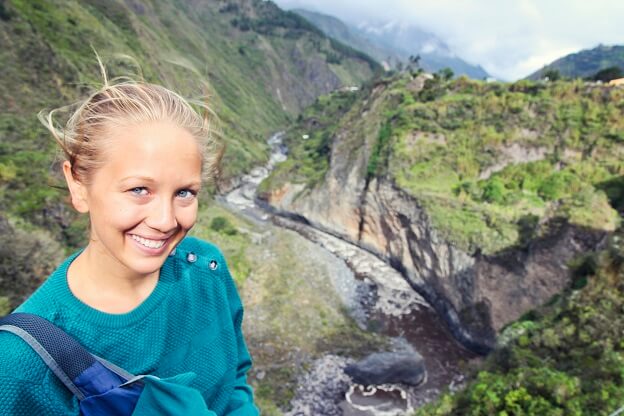
    Alex in Wanderland solo female travel tips
    Hiking in Ecuador

    The biggest concern for travelling solo as a female is safety. How do you get over that fear? What steps do you take to make sure you stay safe while on the road?

    I simply trust that the good judgment and instincts that keep me safe at home will do the same on the road. I remind myself that the majority of people in the world are out to help me, not harm me, and I just go.

    Many people are reluctant to travel solo because they feel like they’ll be alone and won’t meet anyone. What’s your experience?

    As I am always working when I travel I find that I have to make a conscious effort to be alone when I need to be. Backpacking is the world’s easiest way to meet new people and make new friends, and every aspect of it – staying in hostels, taking mass transit, signing up for activities and tours – is designed to put you in contact with like-minded people.
    I actually love solo travel as it is so much easier to meet everyone and anyone! When you travel in a group or with a partner you’re naturally less open to the world. I’ve met some of my best friends in the world on the road. I was just bridesmaid for one of them!

    Where are some places you’ve had to deal with unwanted advances or harassment from men and how do you do it?

    I have found traveling in Southeast Asia, I experience very little unwanted attention. When I arrived in Indonesia and started getting a lot of commentary based on my long blonde hair I simply started tying it up before going out and it eliminated the problem. In South America machismo culture is alive and well and in the beginning I was taken aback by some of the harassment I received. But I reminded myself it was less of a threat and more a symptom of the culture, and I just tried to ignore it.

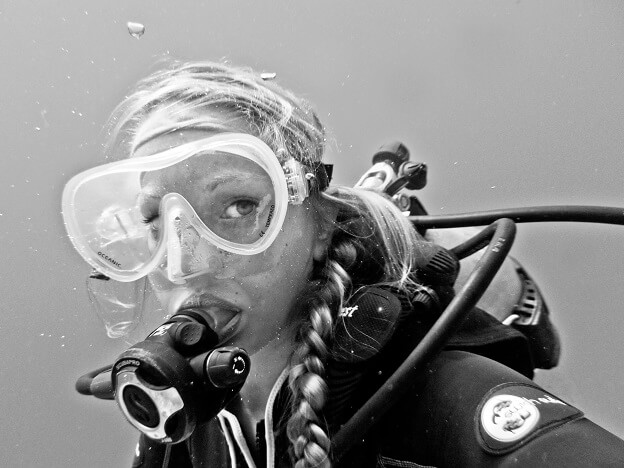
    Alex in Wanderland solo female travel tips
    Scuba diving in Indonesia

    How do you afford your travels?

    That’s a short question with a very long answer! I make money via my blog and my freelance writing and design work and I saved like a maniac before I took off.
    In general, I need very little income to sustain my lifestyle. I travel to cheap regions of the world, I move slow, I play the frequent flyer points game, and I rarely if ever buy tangible things. I break down my monthly spending in my roundup posts, but it usually hovers around $50 a day all in.

    OK, a couple of fun questions – who’s your celebrity crush?

    Channing Tatum.

    And, which country have you been to that, in your opinion, has the most handsome men?

    I haven’t been to South Africa yet but I’ve met many of its men on my travels. And I can’t get enough of that accent.

    Imagine a Hollywood studio wanted to make a movie of your life. Who would play you and why?

    Christina Applegate. I think we have similar mannerisms and she tends to play fairly neurotic characters, so I think she’d have had plenty of practice.

    Are you a nomad for life? Why? Why not?

    Jury is still out. I am slowing down considerably and often miss the routine of the real world, but the road keeps calling me back. Also, I have no idea where I’d “settle down,” even if I wanted to. New York will always feel like home, in a way, but I don’t think I could put myself through those winters ever again.
    I think in my ideal world, I’d spent a third of the year in the US with my friends and family, a third of the year in a home away from home overseas, and a third of the year traveling.

    Alex in Wanderland solo female travel tips
    Swing jumping in Panama

    Lastly, for those planning or considering their very first trip alone, what advice do you have for them? And where would you recommend they go?

    Thailand is my second home and I can’t think of a better place for a first big solo trip. It’s affordable, safe, and friendly, and the tourism infrastructure is well in place. And my advice? Build a flight change fee into your budget right off the bat – you’re never going to want to leave.

    Alexandra Baackes is a traveling writer, designer, and underwater videographer, currently in her third year of living as a full-time nomad. You can follow her adventures on her blog Alex in Wanderland.


  • A Beginner’s Guide To Studying Spanish Abroad

    A Beginner’s Guide To Studying Spanish Abroad

    For me, learning the language has always been one of the most fulfilling aspects of travelling to a new country. In fact, my first ever solo trip was a full time language course in Spain, and it’s still one of my fondest travel memories.

    Since then I’ve always made an effort to learn some of the local language wherever I am, and it never fails to add a fun and rewarding dimension to my trips. If I’m based somewhere long term I will usually take classes, however for shorter stays I still try to learn as much as possible through self teaching.

    Spanish is one language that I’ve spent a considerable amount of time studying overseas, and I’ve since learned that there are many different variables to consider when deciding to do this.

    In this post I’ll run through each of them, and hopefully by the end of it you’ll be on the verge of heading overseas to make Spanish your official second (or third or fourth) language 🙂

    Spain or Latin America?

    Every prospective Spanish student wonders the same thing – “Should I study in Spain or South America?”

    I’ve actually done both – studying Spanish for 5 weeks in a language school in southern Spain and then again for 9 weeks at a language school in Peru and also Ecuador. There’s obviously pros and cons to each, which I’ll lay out below.

    Studying Spanish in Spain

    Purists would argue that you should study in Spain because you’ll be learning the “official” Spanish (or Castilian, as it’s sometimes called). In a way that kind of makes sense – the language did originate there after all. You’ll also be situated in Europe, with France, Italy, Switzerland and Portugal just a train ride away, but keep in mind that Western Europe is one of the world’s most expensive regions.

    As for the language itself, the Spanish in Spain is slightly more complicated, the one notable difference being the extra verb form “vosotros” (basically that means you’ll have an extra form to learn for each verb – annoying, but no biggie).

    There are also small pronounciation differences, for example, the Spanish have the lisp when they pronounce their C’s and Z’s (i.e. gra-thi-as) while the Latin Americans pronounce it as an S. The letter V also varies – the Latin Americans pronounce it as a V while the Spanish pronounce it as a B. Again, not a big deal but worth noting.

    One thing you’ll definitely notice is people in Spain speak significantly faster than the Latin Americans, and I found this made them a little harder to understand. For advanced speakers it won’t matter so much, but it can make quite a difference for beginners.

    Lastly, it’s important to consider where in Spain you want to study – every region speaks a different dialect and this will impact your learning. For example, I studied in Andalusia where I was often spoken to in the Andaluz dialect. I was a beginner at the time so this wasn’t ideal for me (of course, this problem is easily avoided by studying in Madrid).

    The good

    • Situated in Europe with many travel opportunities
    • “Official” Spanish (although with many different variants and accents)
    • Beautiful weather, food, excellent tourist infrastructure

    The bad

    • More expensive
    • Many different dialects in the country
    • Spanish is slightly more complicated

    Studying Spanish in Latin America

    People argue that you should study in Latin America because their version of Spanish is more widely spoken, however this isn’t entirely true. Every country in Latin America has their own unique style of Spanish with very different accents, words, phrases and slang. For example, I studied in Peru for two months and when I visited Colombia I suddenly found it extremely difficult to understand anyone. Then when I visited Argentina it was the same thing all over again. The takeaway here is, regardless of whether you study in Spain or Latin America, the Spanish you’ll learn is going to be a little bit different to everyone else’s.

    In my opinion, the true benefit of studying here is you can travel around the continent and everyone will still be speaking Spanish, even if it is a little different. Therefore if you’re looking to study for an extended amount of time, say, 6 months or more, Latin America would definitely be the better choice. You could experience 3 or 4 countries, all the while continuing your studies and familiarising yourself with several accents and phrases.

    Also Latin America is still mostly comprised of developing countries meaning everything, including your tuition fees, will be far cheaper than in Spain. I remember my classes in Peru only cost me around $60 a week, whereas in Spain it was at least 3x that.

    As for the language – it’s simpler and easier here. They speak slower and the grammar is slightly more basic as I discussed earlier. I did come across a lot more slang here, although I’m not sure whether it’s because my Spanish improved and I just noticed it more or if that’s actually representative of the language itself. Either way – I found the people in LatAm much easier to understand.

    One last thing to note is that travel around South America isn’t exactly cheap or easy. Flights between countries are actually very expensive, and taking buses is generally long and arduous. It definitely won’t be like Spain where you can jump on a train and be across the border within a few hours. Keep this in mind if you plan on country hopping.

    The good

    • Cheaper cost of living and tuition
    • Large variety of countries to choose from
    • The Spanish is simpler and easier to learn

    The bad

    • General travel issues with developing countries (hygiene/safety/transport/tummy issues)
    • Each country speaks a slightly different Spanish, none of which are Castilian (if that matters to you).

    My opinion on studying Spanish abroad

    As you know I’m all about stretching dollars so Latin America is generally my first choice. The many different countries to experience and the the lower cost of living is just such a big plus for me. Also, much of Latin America is still developing and the continent(s) is changing quite quickly. While Spain probably won’t evolve too much over the next 10 years Latin America certainly will, and that urges me to see the continent now before it enters first world territory. Of course, that’s just me, and your priorities are bound to be very different!

    Which should you choose?

    Obviously there’s no right answer here – it largely depends on your preferences and your reasons for learning the language. I think the only real question you need to ask yourself is, where do you intend to use it?

    If you forsee yourself spending more of your life in Spain, learn it in Spain. If you intend to spend a lot of time in Latin America, learn it in Latin America. Pretty obvious, right? Of course, if funds allow it I’d definitely advocate trying to experience both – they’re each incredibly fulfilling in their own ways.

    Different options for studying Spanish

    You’ll also need to decide “how” you want to learn the language.

    Some people just show up, find a bunch of language partners on Couchsurfing and then teach themselves with a Pimsleur or Rosetta Stone course.

    Others enrol in an intense 30 hour per week course and are conversational within a month (I’m a big fan of this). So what are your options?

    Language school

    This is not affordable for everyone, particularly in Spain. Good language schools cost money, but in my opinion a good school is definitely worth every cent.

    If you’re a complete beginner, I would say a month in a language course is the best possible way to get started. This ensures you create an excellent foundation and have a good understanding of the basics. Remember – habits are easy to make and hard to break.

    To find my school in South America I used the site languagecourse.net. You can compare a large collection of schools there and also read reviews from other students, which is always helpful.

    To find my school in Spain I used STA Travel. Their programmes are a little pricier (I was working at the time so had a much bigger budget), but the school I ended up at was incredible, and I would highly recommend them.

    Things to look for in a language school

    • Location – Ensure the school is located in a central location and close to public transport. If the school is located out in the suburbs your transportation costs will skyrocket, and you’ll also be far away from the action which is never fun. Also, consider the cost of living in the city you’ve chosen – living in Madrid will obviously be more expensive than living in Cadiz.
    • Price – Price varies a lot between language schools; make sure you shop around!
    • Facilities – Some schools will come fully equipped with a gym, pool, restaurant, shuttle service, perhaps even dance and cooking classes. However, this usually results in higher fees too, so make sure you’re going to use the facilities if you’re paying for them! At the very least, make sure the school offers the essentials, such as wifi and course materials.
    • Reviews – Check sites like languagecourse.net and read through the reviews of previous students – these will give you the best idea of whether the teaching and facilities are of a decent quality.

    Private tutor

    While studying in Spain I had 1 on 1 conversation classes, and this sped up my progress exponentially. If your budget allows, I’d highly recommend some sort of private tuition.

    However, it can be quite difficult to find a “good” and affordable private tutor. I think the best way is through word-of-mouth, so ask other students, check out the notice boards in cafes etc and look on sites like Craigslist (or put up an ad of your own). It’s also common that your language school will offer this service, and while it may be more expensive you can usually be confident the teaching quality will be high.

    Self teaching

    If you’re an English speaker, Spanish is actually quite an easy language to grasp and you can get quite far with self teaching.

    I recommend the website Duolingo, which has an incredible free course that covers near everything there is to know about Spanish grammar, all broken down into small, easy to follow lessons.

    As mentioned earlier, you can also use a programme like Rosetta Stone or Pimsleur (these cost money however).

    For online dictionaries, grammar explanations and translations, SpanishDict is my go-to site.

    Language partners

    Whichever method you choose, you’ll need a language partner to practise with. I actually think the best place to find one is Couchsurfing – most countries will have a language group and you can simply post your request for a language partner there.

    You could also try a site like Interpals – another free language networking site. Of course, most language schools will also have a language partner programme to help you out with this.

    Other options

    Of course, organised study isn’t the only option. Many volunteer programmes throughout Latin America offer daily Spanish classes to assist you with your role, and the environment you’ll be in is perfect for Spanish learning (often lower socioeconomic communities where English is hardly spoken).

    Au pairing is also possible in Spain and Latin America, which will allow you to live with a local family and practise your Spanish constantly with native speakers.

    The great thing about these options is that your room and board will usually be covered, allowing you to stay in the country for a lot longer than you normally would be able to.

    How long do I need?

    People often wonder, is it worthwhile to just do a one week or two week course? My opinion is this – it depends.

    If you’re from New Zealand (like me) heading to Spain for a two week course seems like a bit much. Just getting to Spain and back is already around 3 days of travel, and you’ll probably need another week or so to beat the jet lag. In that case, I’d recommend at least a month to get your money’s worth.

    On the other hand, if you’re from the Europe then a two week trip down to Spain would work perfectly.

    As for actual learning time, you could expect to learn a lot in 2 weeks. Spanish is quite easy to grasp for native English speakers, and many of the intense courses (25-30 hours per week) are designed to have people fluent in 6 months. If you attend your classes, you can expect to move quite quickly.

    For those who are planning a big backpacking trip of Latin America, my advice would be to spend the first two weeks in an intensive Spanish course – it will change the dimension of your trip entirely!

    Good luck!

    As you can see, there’s quite a bit to think about when deciding to head overseas and study a language. To some people it can seem odd (why would you go on holiday to study?) but to others it is incredibly rewarding. In the end, just go with your gut and enjoy it. It’s a beautiful language and whichever avenue you choose I’m sure you’ll have a blast.

    Buena suerte!

  • Fresh Juice Is My New Travel Buddy

    Fresh Juice Is My New Travel Buddy

    So I kind of have a new obsession these days. Basically, I’m drinking a lot of juice.

    This has become bit of a fad in the world of late and I’ve definitely jumped on the bandwagon. I first heard of it in the film “Sick, Fat and Nearly Dead” – a documentary about an obese Australian guy who did a 60 day juice fast to lose weight. That led me to a 3 day Google-a-thon of this whole juicing thing and it wasn’t long before I knew I had to try it.

    I often struggle to consume enough fruits and veges in a day (it’s recommended you get at least 8-9 servings daily), not because I don’t like eating them but mostly because I’m just too lazy. The mere thought of peeling a bunch of fruit or heating up the pan to cook some veges can feel like running a marathon sometimes. Not to mention, you still need time to do the actual eating! Can you imagine sitting there peeling 9 carrots one after the other and then chewing away on them like a rabbit? That’s at least an hour of your day gone just eating produce, and most of us probably couldn’t eat that much anyway.

    So, until recently I’ve just ignored the whole 9+ a day advice and instead just enjoyed the odd apple and mandarin and my usual serving of veges at dinner time. However, that’s all changed. About a month ago I purchased myself a Breville Juice Fountain and have been knocking down 9-12+ servings of veges every day. And you know what? I feel awesome.

    I drink between 1 to 1.5 litres of juice a day, trying out all kinds of different recipes and tweaking each one until it’s just the way I like it. Here’s one of my favourites (which I invented myself!)

    My greatest invention ever

    1 beet, 2 apples, 1 orange, 1 lemon, 8 carrots, 1 knob of ginger (makes around 1 litre).


    juice recipe juice fast

    juice recipe breville juice fountain

    fresh juice beets lemons carrots oranges


    With my work schedule getting a little crazy lately, drinking a batch of this has been the perfect way to stay on top of my diet. When’s the last time you ate 2 apples, 1 orange, a whole beet, 8 carrots, a whole thumb of ginger and a lemon in one day?

    Worst juice in the world

    Now, here’s one that didn’t go too well. You’ve probably heard of the legendary V-8 juice, a combination of 8 different vegetables rumoured to transform any regular human into a superhero. Well, I decided to try and make my own – carrot, cucumber, spinach, parsley, ginger, green pepper, celery and tomato.


    v8 juice, v-8 juice recipe

    v8


    Let’s just say it didn’t turn out so great (in other words, it tasted like ****). Doesn’t really look too appetising either. Did I drink it? Of course! But I cheated and juiced a couple of apples in to sweeten it up. Anyway, I’m sure my body was happy to see the sudden influx of vegetables – definitely more than I’ve ever given it before!

    My first juice fast

    I have no idea why I decided to do a juice fast. It just sounded fun, I guess.

    Basically a juice fast is where you only drink juice for a set amount of time – no food and no other drink. The purpose of this is to give your digestive system a break by removing solid food from your diet. The juice provides all the nutrition you need, it goes straight into your bloodstream and your body doesn’t need to digest anything. This is then supposed to kickstart something called autolysis, which means your body will start getting rid of all the bad stuff in your body like diseased and dead tissue, fat deposits etc. Basically, it just gives your body a chance to reset and cleanse itself of all the crap you put into it.

    Sound like a big bunch of fluff? Yeah, maybe. And of course please don’t quote me on any of that – it’s all stuff I’ve just regurgitated from the blogosphere.

    Anyway, there’s only one real way to find out and that’s to try it yourself. Fasts can range anywhere from 1 day to 6 months. For me, 3 days was more than enough.

    I drank around 2 litres of juice per day, with a good mix of fruit and vegetables, and didn’t eat a single thing. The first day I distinctly remember being really tired – I slept a lot, probably an extra 5 hours, and didn’t get much work done. The next day I had normal energy levels but I felt VERY hungry, as if I hadn’t eaten for weeks. Then on the third day, I started to feel right again, a lot of energy and the stomach wasn’t really grumbling at all. Now, you’ll be surprised how hard juice fasting actually is. It’s hard to describe, but there will be times when you really want to quit. The smallest sniff of food will drive you mad – I remember one night my Dad was cooking a curry and I nearly died just smelling it. Any more than 3 days and I would’ve definitely struggled.

    Did it supercharge my body like it was supposed to? You know, I’m really not sure. I usually believe if something feels good that means it is good, and I definitely felt like my body was ticking differently. Interestingly, despite not eating any solids my body was still “disposing” of solids even on Day 3, so obviously I had something backed up in there. At the end of the day, I simply enjoyed it for the experience. I’m still kind of on the fence as far as regular fasting goes, but we shall see – might be the perfect way to recover from those stretches of super unhealthy travel eating.

    Read about my huge 10 day juice cleanse here.

    Juicing while travelling

    Probably the best part of all this is I’ve now finally found my way to keep a healthy diet on the road – I’m going to juice! Even at home I struggle to get enough fruit and veges in my diet but while I’m travelling this is doubly so. Because I’m usually without a kitchen I often go entire days or weeks without a decent meal and my body definitely notices this. I get sick quite often on the road, and I’ve no doubt that it’s to do with my crappy diet when I’m out there – lot’s of street food, lot’s of junk food, and a lot of irregular eating. Add on the late nights, long bus rides and general travel fatigue and it all takes its toll.

    This last couple of months has definitely made me a juicing believer and I’m certain that seeking out a few litres of fruit and vege juice each day will keep you in good health on the road. Obviously I can’t take my juicer with me so I’m going to need to buy it from juice bars and the like, but I can certainly live with that.

    What about you? Are you a juice fan? How do you stay healthy on your travels? Let me know in the comments below!
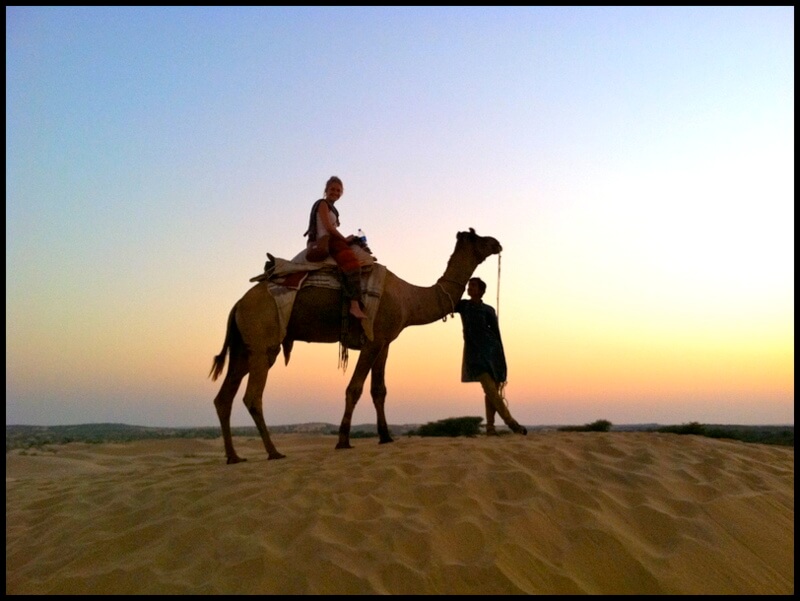
  • Solo Female Travel: Capturing a fleeting life with Christina Gmyr

    Solo Female Travel: Capturing a fleeting life with Christina Gmyr

    We’re back! This series was sparked by a question from a female reader of mine and it’s suddenly taken off – I’m losing track of the interviews in the pipeline and I’m even receiving emails from bloggers requesting to be featured. I’m very happy about this – it makes my life a whole lot easier 🙂 (more…)

  • A review of Teach and Travel China (TTC) by i-to-i

    A review of Teach and Travel China (TTC) by i-to-i

    I normally don’t publish guest posts but today I’ve made an exception. JY is a good friend of mine who recently completed TTC (Teach and Travel China) with i-to-i. I actually remember wanting to do this programme back in 2011, but couldn’t find a review of it anywhere! So, I’ve decided to publish this recap of his; hopefully it’ll be of some help to you budding ESL teachers out there.

    I first heard about TTC (Teach and Travel China) after being recommended it by a friend. There are literally hundreds of sites offering the same thing, but i-to-i is one of the more reputable ones out there (note: The TTC program is offered by various other agencies too, such as IESGlobal and Bunac, among others).

    The price I paid was a little cheaper than the listed $1,800 as I caught it on special (thinking it’d be totally worth it, since it included the $399 TEFL certificate course and a two week training course in Beijing). We were able to choose a start date in either February or August, and I decided to take the August semester.

    i-to-i calls this program a “voluntary internship”. The pay is not great, around $400 a month, but accommodation is included as well as 3 meals a day, Monday to Friday.

    The year I went (2012), there were 141 of us – 4 from NZ, about 8 from Aussie, 20ish from the US and 93 from the UK. We all met in Beijing, got split up into 5-6 groups and got put through the 2 week course. In reality, it was more like a two day course – 2 days on actual teaching methods and mock classes and the rest of the time doing things like tai chi, calligraphy and basic Mandarin classes.

    Interestingly the process went like this – while we were in Beijing, the schools in the TTC program actually chose us. We didn’t really have a say on where we went. We got to put down 3 preferences, and I chose South as my first choice, then North, then Central. In the end I got placed in Chengdu which is Central. We also were randomly given pre-school, primary, intermediate or high school (luckily I got primary, which is what I had hoped for). As for the location, it seemed like the boobie area was Inner Mongolia. I still remember on our 3rd to last day in Beijing, everyone was running to the pin board as if they were getting their exam marks, but it was just the placements. As soon as one of the girls found out she got Inner Mongolia, she cried.

    Then we were given the stats. Of the 141, 30-40% were expected to leave the internship. This was due to culture shock and homesickness, as well as many teachers getting poached by other agencies offering much higher salaries (up to $1,900 per month compared to the $400 paid by TTC).

    For the duration of the internship you get assigned a person who speaks English from your school, so if you ever have any problems or questions you have someone to talk to. This is good and ensures that you’re well looked after during the entire 5 month internship. You can also request to be placed at the same school as your girlfriend/boyfriend/husband/wife.

    As for the actual teaching part, we were required to work a maximum of 16 hours a week. Usually that worked out to around four 40 minute classes per day, and sometimes it was as little as two. That might not sound like a lot of work, but honestly, it is! We also had to plan our own lessons, so there was a fair amount of prep time too.

    There’s quite a few downsides to the TTC program. First, it’s expensive. Then there’s the uncertainty and mystery on where you’ll be placed and with which age group. Accommodation quality can be a problem too – I visited some of my friends’ apartments in Chengdu which were appalling.

    Lastly, there’s the pay situation – it’s natural to wonder how much TTC is taking of your salary considering a normal English teacher’s salary is around $1,500 a month and you’re only receiving $400. This is probably why it’s so common for interns to get poached by other agencies and in some cases people just go looking for other work themselves. However for me, it was all for the experience and never about money. I made some really good friends, had an experience I’ll never regret and definitely reconnected with my inner roots.

    In the end it was quite a costly way to experience China but luckily for me it all worked out -accommodation was awesome, school was awesome, students were awesome and teaching experience was totally awesome. Every man to his own opinion and experience. Even if I had been placed in Inner Mongolia or some place rugged, I wouldn’t have minded at all – would’ve just made the experience my own and appreciated everything.

    For those thinking about teaching in China, here’s my recommendation – get TEFL qualified by doing the i-to-i TEFL course online (around $399, click here to check it out) and then find work through your own agent (the challenge is to find a reliable one and not get scammed – do your research!) Also, travelling in China can be a scary place if you don’t know the language, so make sure you have reliable sources and a backup plan if things don’t work out. As for me, I’m adding a little detour to my next trip to visit my old school in Chengdu. I miss my kids, definitely had an experience to remember and don’t regret it one bit.

    Teach and travel China by i-to-i
    Typical day in class

    teach and travel china review
    Teachers office

    accommodation for teach and travel china
    Accommodation in Chengdu

    Got questions? Taken a Teach and Travel China internship of your own? What’s your experience? Let us know in the comments below!

    Note: This is a guest post by a friend of mine. If you have questions about the program, leave a comment below or send me an email and I’ll do my best to connect you.

    Travelling soon?

  • Volunteering in Tanzania: A flashback of my time teaching in Moshi, Kilimanjaro

    Volunteering in Tanzania: A flashback of my time teaching in Moshi, Kilimanjaro

    He looked up at me like I was an alien. He’d probably never seen a pasty, shabby haired oriental specimen like me. If I were in his shoes, I’d probably have turned and run, but he just smiled up at me with a fearless curiosity. It’s funny how kids are like that.

    His name was Joseph, a tiny 4 year old with a smile that would melt even the mightiest of men. As we sat beside each other on the concrete floor I tapped my finger on the page in front of him; my way of telling him to look down and write. My job today was to teach this one child, out of a class of 20, to write the alphabet, and we were up to the letter…..A. I guess if I had a Chinese alien sitting next to me I probably wouldn’t get much work done either.

    Finally, he looked down and attempted to mimic the perfectly scuplted ‘A’ I had written for him. I watched, almost in slow motion, as he pressed the pencil to the page with his tiny fingers, eventually pushing so hard that the lead snapped off with a blunt crack.

    He froze for a moment and then looked up at me wide-eyed, and we both smiled at each other before laughing childishly at the now broken pencil lead rolling on the paper before us. His pencil was only about 5 centimetres long anyway, perhaps the length of a toothpick, and he was holding it like a spinning top rather a writing tool.

    I turned and shouted out to the teacher.

    “Where’s the pencils?”

    She looked at me blankly.

    “Only one each.”

    I hunted the room for one and to my surprise, found nothing. Not even a sharpener. So, we sat there; a 4 year old Tanzanian kid and a Chinese accountant, staring at our broken pencil wondering how we were going to write the alphabet.

    Eventually the teacher came over with a knife, smiling, and sharpened it for us MacGyver style while we both sat there and watched like hungry children. I’m sure she must have been thinking “Geez, does this guy need some kind of magic machine to sharpen his pencil for him?”

    How sad. I actually do.

    Finally she handed it back to us, and now instead of a 5 centimetre pencil we had a 3 centimetre pencil, which I was starting to look at very differently. This wasn’t just any old pencil anymore. If anything happened to it, well, class would be over for the day. You know that adrenaline spike when you’re on the last stage of Super Mario and you’ve only got one life left? Yeah, it was something like that. Seconds later, Joseph grabbed at it blindly, obviously unaware of the severity of the situation.

    “Woah!” I screamed, holding my hands out.

    He jumped with fright, and looked up at me, startled. This kid must think I’m crazy.

    I smiled as if to say “sorry, just kidding”, and then winced as I watched him etch multiple letter A’s into the page, his fingers wrapped awkwardly around the 3cm stub of lead. I was convinced he was going to break it, but he didn’t. Perhaps he was aware we were in the 4th quarter after all. I stared at him, amazed, admiring the intense concentration on his face as he tried tirelessly to sculpt each letter perfectly, one after the other. His fingers shifted continuously, trying to find some sort of grip on his tiny stump of lead, and as impossible as it was he soldiered on, completely zoned out without a care in the world.

    As you can see, it’s a moment I remember quite vividly. But it’s not just because it was funny, or different. It’s because it was the moment that it all hit me- a cold, sudden realisation that the problems here were so much deeper than I had imagined, and that I simply did not have the power to make any real difference to the lives of these kids.

    josephandme
    With Joseph after class

    That was my first day as a volunteer in Tanzania. I sat on the bus home and thoughts bounced through my head like a pinball. I had come here to escape the world of corporate indifference, to try and do something ‘meaningful’, to give my time to something that would actually make someone’s life better. But the reality, as I was discovering, was that the problems here were far bigger than anything I could hope to solve.

    But, first things first. As soon as I got back to the hostel I dropped off my stuff, grabbed some cash and headed to the store to buy a crapload of pencils.

    The first week was the hardest. I soon learned that the kids were not afraid of me. When I told them to shut up they’d laugh and hit me, when I told them to sit down they’d stand up and run around. I quickly learned that to have any influence on them I’d first need to earn their respect. In our status-obsessed world we often have titles and money to hide behind but in their world that was all meaningless. Kids are too smart to be influenced by labels. I knew that if I were to form some kind of bond with them, I had to earn a mutual respect and trust with them based on nothing but my character, and, as they say, kids can be great judges of character. It was a frightening and humbling lesson – I’d spent my whole life working towards corporate success, but behind all that, who was I? As a person, why would a kid trust or respect me? I was forced to really look at myself, reassess who I was and what made me a person of value on the inside. It was one of the most difficult things I’ve ever experienced, and who would’ve thought it’d be put upon me by a bunch of African preschoolers.

    Volunteering in Moshi, Tanzania

    Before long the second week rolled around, and the teacher decided it was time to put me on the spot – she simply called me to the front of the room and said, “Today, you teach English”. I stood there staring at her, like, what? Really? Normally I would take care of a select 4 or 5 students, either the youngest group or the oldest group, in a corner of the room, and even that felt impossible at times. Teaching a class of 20 just seemed like a joke. I shuffled to the front while giving her a dark smile, my heart thumping like a drum. And then, I thought to myself, what would I want my weird looking Asian substitute teacher to be like if I were 5 years old – a boring guy who stood at the front and talked, or a crazy looney who did a whole bunch of stupid stuff? So, as soon as I got to the front I just ran around the room, jumping up and down and high-fiving all of them. Of course, they went crazy.

    That day I taught them three phrases:

    “Hello”

    “My name is _____________”

    “Nice to meet you” (with a handshake)

    Then I got them to walk around the room introducing themselves to each other in English, and for one hour, that’s all we did (I didn’t have time to plan, ok?)

    Funnily enough, the kids loved it. From that day on, they would greet me every single day with a handshake and a “Hello, my name is ____________, nice to meet you!” I probably should’ve told them you only say it the first time you meet someone, but they were having so much fun that I just let them roll with it. But there was a greater lesson in all that, which was the fact that they really were learning things from me. And I realised that if I could teach them that, I could teach them anything. So I wondered – what should I be filling their young little minds with?

    Finally I understood the mighty Spiderman – with great power comes great responsibility.

    Over the next couple of months we slowly built that student-teacher bond. I taught them to make paper planes, to sing “We will rock you” by Queen, and to focus a camera before taking a photo. They taught me their favourite songs, showed me their favourite games and taught me how to eat the local food. I began walking students home after class, where I would see their homes and meet their families. It was an emotional rollercoaster and in all honesty, left me feeling completely powerless. Could I really help these people? They lived in homes with no running water, no electricity, no toilets, usually sharing a bed with 2 or 3 other people and being raised by grandparents or single mothers. Where would I even begin?

    Two months flew by, and before long it was time for me to leave. Surprisingly, the goodbyes were easier than I’d imagined. There were no tears, and no last minute phone calls to try and push my departure date (which I’d already done twice). I was at peace with the decision, and although I would’ve loved to stay it felt like the right choice to leave rather than continue getting more and more involved in their lives. Besides, deep down, I knew it was only a matter of time before I returned.

    Afterthoughts

    After my experience, my feelings on voluntourism are extremely mixed, particularly when it comes to working with children. All of a sudden I was a part of their lives, and then I was gone just as suddenly as I had arrived. I can’t help but wonder if I further contributed to the abandonment issues so many of these kids already have. It’s an issue I feel strongly about, as volunteering in Africa seems to be a popular holiday choice these days, but I suppose I’ll leave that discussion for a later post. For now I think the big question to ask myself is, did I really make a difference?

    To be honest, I have no idea.

    I don’t even know if those kids will remember me 10 years from now. What did I add to their lives, other than a few laughs and distant memories? In what way did I make their lives better?

    I really do struggle to find an answer.

    In fact, I think the person who benefited most from the whole experience was…me. As kids we’ve all been told to “finish your dinner, because children are starving in Africa”, and by the time we grow up I think most of us are completely desensitised to it. For that reason I wasn’t expecting to be too shocked by what I saw, but I was. Poverty has far deeper effects than I had imagined, and is a mixture of so many different causes and problems. Solving it will be a far more complicated affair than simply buying food and feeding everyone.

    That doesn’t mean the people are any less happy, though. In fact, it was quite the opposite. Their lives were full of laughter and joy and they were all incredibly rich in spirit. While many cultures today are all about material wealth, there’s were all about community and family, and when you think about it those values seem to make a lot more sense. That was a powerful lesson for me – I realised my whole life I’d been chasing the wrong things, and there was a lot of self-reflection going on after I returned home.

    Perhaps the best part about the whole experience though was that it’s motivated me more than ever to try and make that real difference I’d been searching for. I now have an ongoing project in Tanzania, which is quite a long story and will need to wait for a later date, but I’ve been lucky enough to return to Tanzania twice since my first trip and the first thing I do is head up to the preschool and visit my old kids. Many of them have since moved on to primary school, but I still see them around and they do remember me. In fact, the first thing one of them did was run over to me, hold out his hand and say “Nice to meet you!”

    I guess they did learn something after all.

    Volunteering in Tanzania

    Have you volunteered before? What is your opinion on voluntourism? I’d love to hear your thoughts.

    There are many “pay-to-volunteer” services around that are quite expensive. My volunteering experience was free and I arranged it myself without the help of any agency. If you would like to learn more about how to do this, you are welcome to send me an email. You can also check out Grassroots Volunteering, a great online resource for ethical volunteer opportunities. My friend Dorota also has a great post on responsible volunteering here.

    Heading to Tanzania? My Dar city guide might come in helpful!