Note: This article is outdated. Flightfox is now a corporate travel management business. For tips on how to find cheap airfares, check out my hacking airfares guide.
When I posted my tips for finding cheap airfares a few months ago, many of you were surprised at how complex the process was. And, I totally agree with you. I’d estimate I could spend up to at least 20+ hours whenever I need to research and book a flight somewhere.
For me though, it’s all in good fun. I love the challenge of finding a good airfare and dreaming about the different places I can go. However I get that not all of you are quite as crazy as I am.
This brings me to a new service I recently came across. Flightfox is a relatively new venture which allows you to work closely with an airfare searching “expert” to help you find the cheapest flights available. I was definitely intrigued when I heard about it, and had to try it out.
The opportunity to finally do so arose recently, when I needed to get from Manila to New York. It’s a route I’ve never flown before, and as I was booking last minute, I figured I could use some help. Time to see what the kids at Flightfox can do!
First thing I needed to was simply describe my trip and submit it. I gave them a range of around 3 days as I was semi-flexible, and described my route. Then I paid the one-off fee: $49.
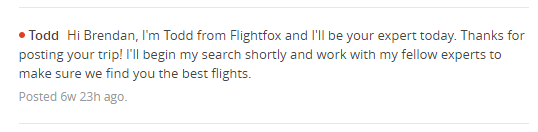
Within an hour I was introduced to my ‘flight expert’.
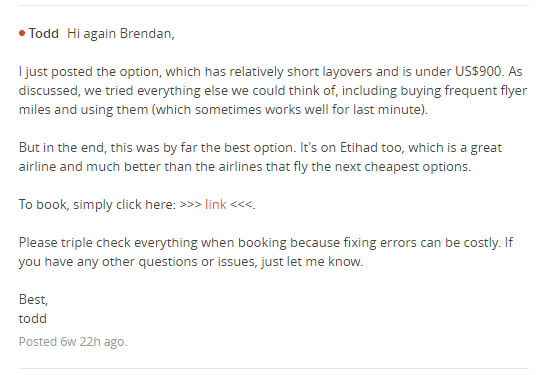
Within another hour, he had something for me:
In the end, it was just a simple Kayak search result he sent me, nothing I couldn’t have done myself. However, until that time I had been limiting my search to Skyscanner, which hadn’t actually found this option. So it was actually cheaper than what I had found myself.
And while the result itself wasn’t some super-hacked airfare, I was impressed with how thorough their search was. I would never have time to search over 100 websites, and have also never considered buying frequent flyer miles before – quite a good tip I’ll look into in the future.
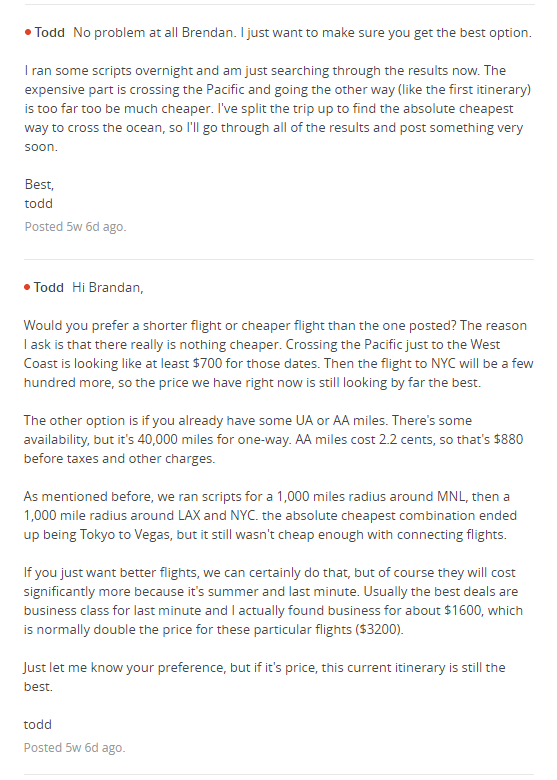
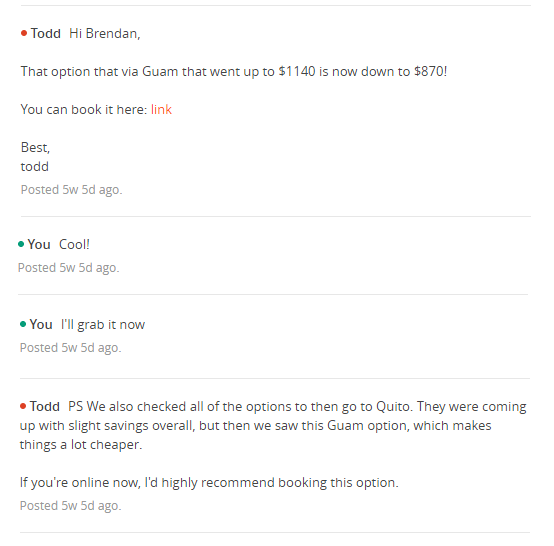
Then, I needed a date change. Luckily he was totally cool with this:
Again, despite not getting me a super cheap airfare at this stage, I was impressed with the thorough search they did, certainly more thorough than I’ve ever done, and I do my fair share of airfare searches.
After a day or so, we found something decent:
Unfortunately, the price went up before I could book it (airfare prices change very often, especially last minute fares).
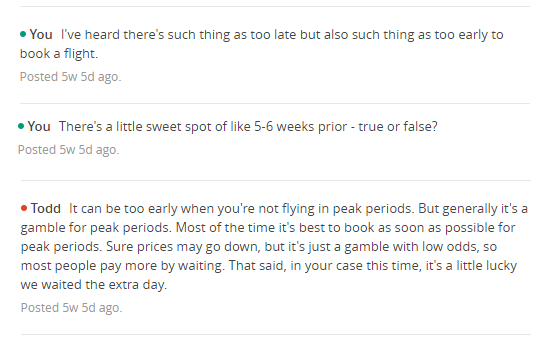
We chatted for a while about other options and the likelihood of the price coming down again (I won’t post it all here), but we concluded it would be prudent to wait a day or two. Luck was on our side:
I booked the recommended flight, and then decided to pick his brain for a bit. How often do you get to chat with an airfare hacker?
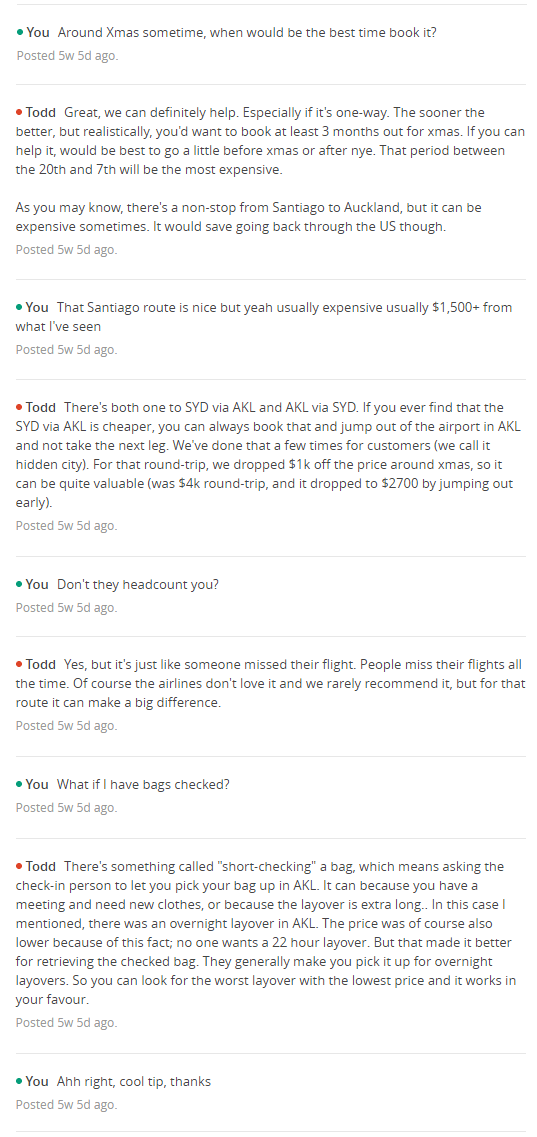
And get some expert tips for my eventual flight back to New Zealand:
As you can see, you can definitely learn a lot from these guys!
Verdict
Overall, I really enjoyed having an expert to work with. The flight they eventually found for me wasn’t anything exceptionally hard to find – it was just from a simple flight search engine, but it was a good flight and had I not had someone looking out for it, I very possibly would’ve missed it.
It was also very clear to me that these guys knew exactly what they were doing. They have scripts running so they can scour hundreds of sites within minutes, and seem to know a ton of little hacks as we saw above. I’m 99% sure I wouldn’t be able to find cheaper flights than these guys (same price maybe, but cheaper, no).
But to me, the real value in Flightfox wasn’t actually in the money saving – it was the time saving. On a flight that I probably would’ve spent 20 hours+ fiddling around to find on search engines, I needed to spend barely an hour checking in with my expert and getting updated. On top of that, there’s the comfort in knowing you have an airfare search expert working behind the scenes finding you the cheapest flight possible.
When to use Flightfox?
Using Flightfox won’t be necessary on all flights – for simple flights, such as Auckland to Sydney or Singapore to Bangkok, everyone should be more than capable of finding a cheap flight themselves. Where there are direct routes, finding hacks isn’t really possible, and you should be able to get what you need by using a simple search engine like Skyscanner. If you’re in doubt how to do it, check out my guide to using Skyscanner to find cheap flights.
Instead, consider Flightfox if you have a rather complicated itinerary that has the potential to be expensive. For example:
You’re doing multi-city trips, like Hong Kong to Rio with a stopover in Paris.
You’re flying a route that has many possible routes (e.g. Asia to South America)
You’re flying between two places with no direct flights available (e.g. Auckland to Paris)
You’re flying to a place you’ve never been and the route is expensive and/or long-haul.
You’re doing a round-the-world trip (just check out this in-house contest where they covered 6 continents for $1,700!)
The fee for using a flight expert starts at $49 (prices goes up for more destinations). I honestly think this service offers exceptional value. Spending $50-$100 on a Flightfox expert to get an itinerary for thousands less than your travel agent – seems like a no-brainer to me.
If you’ve been looking for a way to outsource your airfare search, don’t know how to search for cheap airfares, or simply can’t be bothered doing it yourself, Flightfox has a definite thumbs up from me.
It was by complete accident that I ended up in New York City. In fact, I had never planned on entering the United States at all. But some horrendous travel planning and a few last minute changes was all it took to shake things up and land me in NYC for a week in transit.
Of course, that didn’t bother me at all. It was a welcome detour actually, as I had dreamed of seeing the Big Apple for quite some time. And just like every New York first timer, I wasted no time in churning through the many glorified clichés the city had to offer. Central Park. Hot dogs. Pizza. Empire State Building. Chelsea. Yellow taxi rides. Battery Park. World Trade Center.
And then, one lonesome afternoon, I chanced upon one of the most talked about New York icons of them all.
Wall Street.
Standing there on the intersection with Broadway, staring up at the street sign, it was a rather eerie feeling.
You see, I had once dreamed of working here.
I had dreamed of putting on the $5,000 power suit, heading up to my flashy office each morning, spending the day rubbing shoulders with high powered bankers and traders. I was obsessed with the markets and getting outrageously rich; of breaking into that inner circle of high flyers.
I wanted to be a “Wall Street Guy”.
And now, here I am, four years later, walking down the very street I once had idolised. But life has changed a little since then.
After a short lived career in finance, I don’t think I ever want to wear a suit ever again. I’d probably cry if I ever needed to squeeze another meal into a ‘one-hour lunch break’. God save me if I’m ever forced to end another email with a robotic “Kind regards”.
After wanting it for so long, I’m finally here; walking down Wall Street, but with little desire to stay. And it is this walk down Wall Street that has given me a sudden realisation of what a different and unexpected path my life has taken.
Isn’t it funny, how dreams can change.
Of course, in the back of my mind, I can still imagine myself in these offices, rocking the grey pinstripe suit, the skinny tie, the fancy business card and the hair slicked to one side. And part of me still whispers inside my head, “Yeah, that would be cool, right?”
But that’s all it is now. Just another “wouldn’t that be cool”.
My dreams have changed, grown. Standing here, it’s almost like looking back on a past life.
A different me.
Or as Gotye likes to say, ’Somebody that I used to know’.
And as I continue walking, I try to ask myself, “What was it about this place that had me wanting it so bad?”
I think, but I can’t pinpoint an answer. It wasn’t the money, obviously, because big money can be made anywhere. And by the same reasoning, it wasn’t the industry. So perhaps it was an ego thing; to be a Wall Street guy. Or maybe it was the crowd. Or maybe, I had just been enticed by the stories, the movies, by the shiny idea of it all. But whatever it was, it isn’t there anymore.
As they say, everything comes full circle in the end. And a walk alone down Wall Street seemed to spur many emotions in me; a bit of sadness, a pinch of déjà vu, a smattering of nostalgia and, surprisingly, an odd sense of closure. Why? I’m not sure. Maybe it was just the final turn of the page. A way to finally close the chapter on one path and start moving full speed on another.
All I know is, I probably won’t be back here for quite some time.
Isn’t it funny, how dreams can change.
What about your dreams? Did you chase something for a long a time, only to realise you didn’t want it in the end? Or do you still want those dreams as badly as ever? Tell me all about it in the comments below.
So, you’ve finally done it. You’ve decided you’re going to quit your job (or take a shizload of leave) and set off on an adventure around the world…alone.
Exciting, right?
But being a lone traveller brings with it a huge amount of fears, doubts and second thoughts. What if you make no friends? What if you get sick? What if your bag gets stolen? What if you just hate the whole experience and want to go home?
Let me tell you, every lone traveller has the same fears running through their head, and even after several years on the road I still get nervous when heading off on a new adventure. It’s normal, and you shouldn’t let it stop you from having the most incredible experience of your life.
But, it helps to have a small idea of what you should expect, so below are my own tips for making your trip the greatest adventure possible.
1. Set a date
You need to make it real.
If you just sit at your desk and say, “Hmm, I’ll do it this year sometime, or maybe I’ll just wait and see how things go and do it next year” I can promise you, it’s never going to happen. Especially with solo travel. There is always an excuse not to do something.
Set a date, and book a ticket. That way there’s no going back.
2. Save enough money before you go
There is nothing worse than running out of money on the road. Some say you only need $5,000 to travel the world for a year. Others say $10,000 and some even say $20,000.
The truth is, there is no ‘right’ number. Every traveller is different and wants different experiences that cost different amounts of money.
My advice is, just save everything you possibly can while you’re at home. Give up all your meaningless purchases like Starbucks and shoes and sunglasses. Be the cheapest bastard you possibly can. Small change adds up, and in some countries a few dollars goes a very long way (for the price of a New Zealand coffee you could feed yourself for 3 or 4 days in some countries).
3. Don’t be cheap
As a budget traveller, I’m always mindful of where my money is going. But sometimes you just need to splurge. Your budget may be tight, but don’t miss out on those tapas in Spain, or that Peking duck in China.
When a unique experience requires some spending, do it.
There are far more forgettable things you can forgo while travelling, such as expensive taxi rides, a nice hotel room, or an expensive night out on the booze. And 5 years later you definitely won’t regret the missing $30, but you will regret missing out on something special while you had the chance.
4. Don’t sleep in
You can sleep at home. I’ve continually regretted trips where I spent a lot of time sleeping from hangovers, jet lag or just pure laziness. As a lone traveller this is even more likely, as you rarely have plans or someone keeping tabs on you.
I spent a week in Buenos Aires just drinking in my hostel and clubbing with my new roommates. I didn’t even get out to see a tango show, or try the famous steak, or watch the Boca Juniors play. A few years later, a guy in my hostel said, “You’ve been to BA? My gosh, isn’t it just the most incredible city ever?” and proceeded to tell me about all the shows and foods and places he experienced. Needless to say I hung my head in shame and told him I didn’t get the chance to see any of that.
My next trip there will definitely be a whole lot different.
5. Get a good camera and take photos!
When I started this blog, I had so many stories I wanted to share and was so disappointed that I didn’t have the photos to go along with them. Weird as it may seem, I actually spent most of my time backpacking South America without a camera, as I thought I could just collect the memories ‘in my head’.
What a fool!
Now I make sure to take photos of everything, and am excited to look back on them all when I’m an old man in a wheelchair. Do yourself a favour and take as many photos as you can! And make sure you get a lot of good ones of yourself in all those amazing destinations.
If you want to learn how to take amazing photos of yourself as a lone traveller, check out my guide here.
6. Don’t forget the people back home
I spend most of my time on the road these days, but I always make sure I go back home at Christmas and spend it with my family. I also stay in touch with my Mum and friends on Facebook/Whatsapp/Skype almost daily. I don’t buy gifts or souvenirs, because I don’t really see the point (unless I see something really special) but I always make sure to let them know where I am and that I’m ok.
Just because you’re a globetrotter now, don’t think you’re too cool to stay in touch!
7. Buy the right backpack
Let me tell you, having the wrong backpack will make your life misery. And I say backpack because you really do need a backpack.
Suitcases are clunky and and hard to move around with. Don’t think you’ll have beautifully paved concrete paths everywhere you go to seamlessly wheel your suitcase around, because you won’t. Sometimes you may unexpectedly need to walk through marsh, or floods, or muddy roads, or sand, or any other type of unfriendly terrain. So a backpack is essential, and you need to make sure you get the right one!
Go to a hiking/backpack store and ask the staff there which backpack suits your body type. You don’t have to buy from them, but do make sure you get some expert advice. I personally use a hybrid backpack (a backpack with wheels on the bottom). 90% of the time I can wheel it around, but that other 10% I am extremely happy I have those backpack straps on the back. If you prefer carry-on only, make sure you’ve got the right size! This chart will help.
Don’t forget, a backpack is like a lone traveller badge that we wear with pride! The more battered the better. So make sure you get something sturdy too.
“When preparing to travel, lay out all your clothes and all your money. Then take half the clothes and twice the money.” – Susan Heller
This might be one of the best travel quotes in history. After my last trip, I decided to “review” all the things I had packed. I realised that during my 6 month trip, I had packed around 7kg worth of stuff that I didn’t even use once. That included a pair of boots, a couple pairs of jeans, a beanie, some thermal clothing, a handful of shirts and some other miscellaneous things. Yet I’d carried these things all around Uganda, Tanzania, Ethiopia, Kenya, Singapore and The Philippines.
I’m sure they enjoyed their overseas trip, but my life on the road would’ve been so much easier had I just left all that stuff at home. Remember, as unbelievable as it sounds, other countries have shops too! If you need stuff, you can buy it.
9. Do some planning beforehand
While I don’t suggest planning your entire itinerary out to the hour, it helps to have a few things planned before you go.
Write down the cities and places you want to visit and how to get there, restaurants and dishes you want to try, the activities you want to do and also a handful of places you could stay.
There have been too many times where I’ve arrived in a country with absolutely no plans, and spent the next 3 days in the hostel doing all my destination research. It’s a huge waste of travel time which could be spent out and about experiencing the city.
Be smart and do your destination research at home!
10. Make local friends
After my first trip solo trip overseas to Spain, I was so amazed at all the new friendships I had made in such a short time. And then I realised, I didn’t make a single friend who was actually from Spain. If I ever returned, I would have no one to catch up with, no couch to crash on, no one to grab a drink with and reminisce about the ‘good old times’.
This saddened me and from then on, I made an effort to get to know at least one local person in every place I went. Of course, I didn’t always manage to, but the times I did added such a different dimension to my trip.
Just recently in Cambodia I was getting a massage and making small talk with my masseuse. She told me she was going to a birthday party later and so I just asked, “Can I come?” She looked at me with a smile and said “Of course!”
Later that afternoon I enjoyed a karaoke party with a whole bunch of Cambodian people, tried some insane Cambodian street food, and made a heap of new friends. It was all quite a fascinating insight into Cambodian culture and the first alcohol-free karaoke gig I’ve ever been to.
In the end, it’s all good fun just hanging out in the hostel meeting other backpackers, but connecting with local people can also offer a very unique experience. Couchsurfing is ideal for this, but otherwise, just say hi to people you meet around town (like whoever is sitting next to you on the train or at the bar). It may seem a little weird, but you won’t regret it.
11. Bring an unlocked phone and get a local sim
I never really understood this locking phone thing. In New Zealand there’s no such thing as a ‘locked’ phone, as far as I know, and it was only after meeting some American travellers where I learned about these phone networks hacking the phones and setting them to only be used on their networks. That’s fuarking lame.
Anyway, sim cards in many countries are cheap and it’s easy to get mobile internet on short term packages (such as 3-day, 7-day etc). I can’t tell you how many times Google Maps has saved me from spending the whole day walking around looking for things that were right in front of my face.
I used to be an advocate of just asking for directions, and still am, but quite often the local people will have never heard of what you’re looking for.
Particularly if you’re planning on staying for more than a couple of weeks, getting a local sim is a no-brainer (and usually cheaper than roaming).
12. Don’t get drunk (much)
Travelling for quite a lot of people these days just means going to the beach and getting drunk for 7 nights and then flying back home. But do you really need to come all the way to Thailand to do that? I just don’t get it.
I’m kidding. I totally get it. I’ve done that before too and it was heaps of fun.
But if that’s all you do, you’re probably going to regret it. Maybe just spend half the time drinking and half the time doing other stuff, like trying local food and visiting local markets. Otherwise a few years from now you may look back on those drunken memories and think, “Man, I wish I’d some other stuff too.”
13. Don’t be afraid to take time off
Travelling is exhausting sometimes.
Maybe it’s all the walking, or just being away from home, or not being able to walk around the hostel naked like you do at home. Often it’s just the constant meeting new people and introducing yourself that can take it’s toll.
When you get to that point, don’t be afraid to get a private room and just read/sleep/do nothing for a few days. I do it all the time, and it works.
14. Learn the local language
It helps to do this before you arrive, but it’s never too late to learn a few words. Everywhere you go, at least learn to count to ten, say hello and goodbye, please and thank you, and any other common phrases you might use.
In every single country I have been to this has put a smile on people’s faces and makes them feel inclined to treat you that much nicer. Most guidebooks have a good common phrases section, but otherwise a simple Google search will give you all the free lessons you need.
I shouldn’t even need to include this but surprisingly there are still a lot of people who leave home without insurance. Travel insurance has literally saved me thousands of dollars while travelling.
Once I had to see a throat specialist which cost around $700 in China. Insurance picked it up.
Another time my Grandma passed away while I was travelling and I had to take a last-minute $2,000 flight from Tanzania to Sydney for the funeral. Insurance picked that one up too.
Once I even got arrested by immigration on trumped up charges, and spent six weeks fighting the case. Travel insurance picked up the lawyer fees, and the “fines” I had to pay.
Don’t be a travel dummy – get insurance! I use World Nomads.
For my full guide on how to find travel insurance and why you need it, click here.
16. Cheaper is not always better
There was a time when I’d choose a $10, 25-hour bus ride over a $150, 2-hour flight any day of the week.
That’s changed.
A 25 hour bus ride is rarely just 25 hours. On a trip that long, you get exhausted. You eat shitty food. You feel worn out afterwards and want to get a good night’s sleep. The next day is spent in recovery mode. You’re lazy and sluggish from all the sitting around and sleeping. You just want to stay in and watch Game of Thrones. That 25 hours can quickly turn into 50 hours before you’re ready to jump out of bed and go exploring again.
My advice is to take that 2 hour flight. In 4 hours you’ll be checked-in to your room, feeling fresh and getting the most out of your day in whichever city is lucky to have you.
I also rarely stay in the cheapest hostel, and will happily take a $10 dorm bed over a $4 dorm bed if it means I get a good night’s sleep and am not stuck in some random place 45 minutes outside the city centre. Remember, your time is just as (if not more) important than money.
17. Slow down mister lone traveller!
A common mistake with first time travellers is they try and do too much.
For example, with a month in South East Asia they might try and do 5 days in Thailand, 3 days in Cambodia, a week in Vietnam, 5 days in Laos, 10 days in Malaysia and a couple of nights in Singapore. Now sure, that does sound cool, but here’s the problem(s).
You’re going to be exhausted.
You’ll barely scratch the surface of each country.
You’ll spend a large amount of your budget on flights/buses/trains/taxis/buses.
You’ll spend a large amount of your time on planes/buses/trains/taxis/buses.
On average, getting from your hotel in one country to your hotel in another country will take you around 24 hours of travel time (that includes packing, taxi rides, visa stations, bus/train/plane, customs, waiting for your bag and figuring out how to get to your hotel in the next country).
6 countries = 6 days, which is 20% of a one month trip.
That’s a lot of precious time spent sitting on your backside doing nothing.
For a first time traveller spending one month in South East Asia, I’d probably recommend 3 weeks in one country and a short side trip to another (and maybe one additional country if you really wanted to).
That way you’ll have the chance to really get under the skin of one country, while getting a nice little glimpse of another. Take your time. The world is not going anywhere (soon).
18. Go on a date!
One of the least talked about aspects of travelling is dating. Dating other travellers. Dating a local. Dating anyone.
While the road is not the greatest place to start a long term relationship, going on a date can be a really memorable way to experience a city. A new city also offers endless date ideas (local markets, shows, plays etc) which will all be completely new to you and interesting to talk about.
Ask out the waitress at breakfast. Or tell that girl in your dorm you’re taking her for dessert. Maybe even try and hold her hand (gasp).
19. Stay healthy
Too tired to head out for dinner. Not getting much sleep. No time to hit the gym. Drinking too much booze. Eating too much junk food.
Things like this can make my health deteriorate pretty fast when I’m out on the road, and I’m sure it’s true for other travellers too (all the coughing and sniffling in the dorm rooms will tell you that).
It can be hard, but make a concentrated effort to eat well and get enough rest. Sometimes you might just want to go to the supermarket and buy a bunch of carrots and apples and force em down. Or go for a jog. Or any other small thing that lets your body know you’re thinking about it. Look after yourself, because nothing snuffs out the excitement of travel faster than a few days fighting the flu.
Every country has traditional sports, dishes and activities that the local people love to do. Have a go at the national sport, or take a language class, or learn to cook a local dish. Why? So you can go back home and show off, of course.
And also for personal development, and all that stuff.
21. Don’t get obsessed with getting “off the beaten track”
There’s a disease in the backpacker community right now called “Too-cool Syndrome”, where some people who’ve been travelling for a while think they’re above all the cliché things to do in town.
These kinds of people won’t visit the Eiffel Tower in Paris, because of course, they’re way cooler than that. They’re going to see some other tower in some tiny city that’s way cooler instead, because no one’s ever seen it before and they’re going to be the only person on Facebook with a photo in front of this cool other tower. Similarly, they won’t drink Sangria in Spain, or visit the Colosseum in Rome, or see Angkor Wat in Siem Reap, because of course, they’re too cool.
Don’t become one of these people. There’s a reason why everyone does those cliché things, and a reason why they became cliché in the first place. It’s because they’re awesome. Don’t miss out.
22. Get off the beaten track
Of course, you should still try and do a few things off the typical tourist trail, because there’s a lot of great things to experience there too.
The absolute best way to do this is by making a few local friends and getting them to show you a few of the hidden spots around town. Otherwise you can use apps like Trover, ask other travellers (travel forums/blogs), or just ask local people such as waiters/taxi drivers/hostel staff.
Another good tip is to look for cities in the country that don’t have airports or train stations. They’re usually the ones less frequented by travellers and can give some unique experiences.
23. Stay safe at all costs
If you ever feel in danger, extract yourself immediately. You may feel stupid getting a taxi back to your hotel when it’s just a 5 minute walk away, but guess what; a whole lot of shit can happen on a 5 minute walk.
If you see some unsavoury looking characters up ahead, don’t be afraid to just turn around and walk a different way.
In many parts of the world, I never leave the hotel after dark if I don’t have a local male to walk with me, even if it’s just across the road to buy a Coke.
Similarly, don’t get peer pressured into doing stupid things; there are a lot of idiot travellers out there who think they’re invincible, some of them are even looking for trouble so they have “really cool stories” to tell when they get home. Don’t be that fool.
24. Experience everything for yourself
No matter where you go, someone is going to have an opinion.
“Don’t go to Vietnam, everyone’s unfriendly and you’re just going to get ripped off.”
“Don’t go to Colombia, there’s heaps of drug dealers and it’s not safe.”
“Don’t go to Switzerland, it’s so expensive and Berlin is cooler anyway.”
Don’t listen to any of these people. In fact, don’t listen to anyone at all.
Some of the coolest places I’ve been to are ones that other people hated and said would be crap. The only way to really know if you like a place is to go there and experience it for yourself.
If someone tells you don’t need to see the sunrise at Angkor Wat, do it anyway. Maybe that person is an idiot and the sunrise will be one of your fondest memories.
If someone tells you Thailand is overrated, go there and make up your own mind about it. When it comes to travelling, everyone’s experience is hugely different and even the bad ones are worth remembering.
The best part of being a lone traveller is you don’t need to ask permission from a travel buddy or a girlfriend or a brother or sister. You can go anywhere you want!
So ignore everyone else, including me. In fact, forget you even read this article at all. Go without fears or expectations, and enjoy your adventure for what it is.
25. Make it unforgettable
You may never be here again. Do whatever you want, as much as you want, and as long as you want. Travel is freedom. If you want to stay in Costa Rica your entire trip, do it. If you just want to lie on the beach and do nothing, do it. The world has too many rules and 99% of them are stupid. Travel is an escape. Be whoever you want. Go wherever you’ll go. Create your own adventure. In the end all that’s left are memories, so make sure they’re awesome ones.
Just be safe, and have fun. The world is your playground!
Learning how to research travel destinations efficiently is important, because not only will it probably end up taking up most of your time (unless of course, you’re booked on a tour), it also will determine how much you get to see and do during your visit.
I still meet many travellers who do the Lonely Planet guidebook thing, and there’s nothing wrong with that if you’re willing to pay for it. However, when running a tight budget it’s important you can also research your travel destinations for free.
There’s no ‘right’ way to all this of course, but if you’re wanting to learn how to research travel destinations without spending a ton, while still getting all the useful info you need, you’re talking to the right guy! I have never bought a guidebook and always leave my destinations fulfilled, and this is generally how my process goes:
How to research travel destinations for free:
Check the weather!
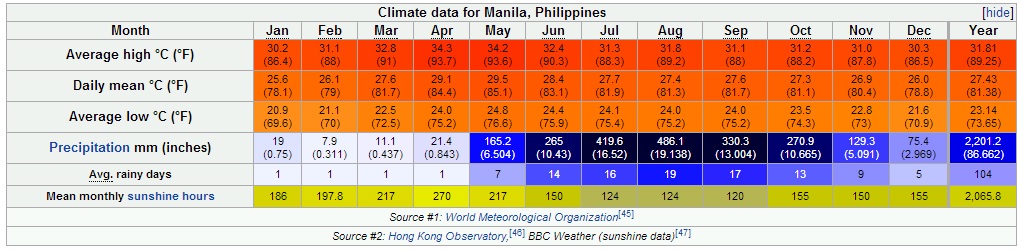
First thing I do is head to the Wikipedia page of whichever city I’m going to and check the climate figures.
I don’t like places that are intensely hot or cold, and I don’t like rain, therefore I try to avoid those seasons if I can.
Because the weather is going to affect every part of your trip – what to pack, what kind of shoes to take, what kind of activities to plan. Just ask a New Yorker how much life changes between summer and winter. It changes everything. Be prepared!
In our Manila example above, we can see the hottest months of the year are March to June, and the rain is heaviest from June to October.
If it were me, I’d be looking to visit Manila between November and February, when it’s not too hot and the rain hasn’t arrived yet. Of course, your preferences might be different, but what’s important is you know what to expect.
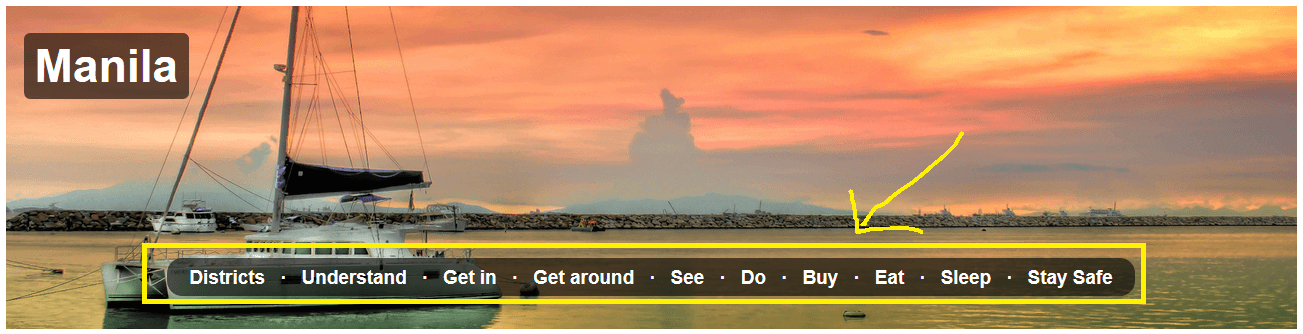
Wikitravel has crowd sourced information on pretty much every city in the world. Note: It is not always up to date (as a fun exercise, try reading the page for your hometown and see if it’s on point), but it is still helpful to read and see what other travellers are saying.
Here are the topics that a typical Wikitravel page will cover:
The section I find most helpful is the “Get in” section, which details all the different ways you can get into the city (bus, train, plane are all covered usually) and also some helpful tips on how to get from the airport to your hotel.
Also, exercise some caution with the “Eat” and “Sleep” sections. Sometimes the recommendations here are written by the owners themselves (anyone can contribute to Wikitravel).
If you’re looking for a bed, my accommodations guide has some more reliable resources you can use.
Check the TripAdvisor Page
TripAdvisor is a great resource for finding different activities and what other people thought of them. It has everything from restaurants to tours to hotels, so you’ll find most places of interest on here. As an example, here’s a list of attractions to visit in Manila.
One thing to remember here is that, like Wikitravel, the ratings are not 100% reliable. Anyone can post a review on TripAdvisor, and this inevitably leads to small guesthouses and tour companies asking all their friends and family to write a 5 star review for them.
When I started freelancing I even came across jobs where people were paying writers to post fake reviews to sites like TripAdvisor.
Generally the rule is this: if it ranks badly on TripAdvisor, it probably is bad, but if it ranks highly, it’s not necessarily good.
Google it!
Next thing I do is Google “Things to do in City X” and “Things to eat in City X”.
This will usually bring up a collection of stuff on TripAdvisor, posts by travel bloggers, articles by big media such as CNN Travel and National Geo, and perhaps a few Youtube videos as well.
Read through the more recent pages and bookmark the ones that you find informative. Don’t forget this – I always punch myself when I forget to bookmark it and then can’t find it again 2 weeks later.
Travel bloggers
Travel bloggers are one of the most overlooked resources in travel today. It doesn’t matter which country on the planet you want to go to; even if it’s North Korea, Somalia or Iraq, there’s a blogger who’s been there. What makes them so valuable though is that they’re very accessible – 99% of bloggers will have a contact page and a Twitter and/or Facebook page you can reach them on, and most will be happy to receive and answer your questions.
The first step is finding the right blogger. For example, if you’re heading to India you definitely don’t want to be emailing me, but you might get in touch with Wandering Earl, who seems to be in love with the place. I, on the other hand can probably help you with questions about New Zealand, Philippines, Tanzania, Bangkok, Singapore etc. Just flick through their blogs and see where they’ve been.
Here’s an example. Let’s say I’m planning to head to Guatemala this year. I know that Shannon from A Little Adrift used to live there, so she would be a good person to get in touch with. It can be as simple as this:
@brenontheroad The macadamia farm nearby the city has tasty food and makes for an interesting afternoon, otherwise go further outside the..
Or as another example, when my camera broke in Bangkok recently and I needed to get it cleaned up, I sought some friendly advice from the Bangkok based Mark Wiens of Migrationology…
As you can see, bloggers can be a great source of fast, expert advice. Their responses will probably be brief, as they obviously don’t have time to sit around answering tweets all day, but they’re definitely a very accessible option when you can’t find what you’re looking for or need advice on something specific. And of course, don’t forget to look through the actual blogs themselves!
Once I’ve arrived at my destination, the first thing I do is ask a staff member at my hotel/guesthouse the following questions:
Which areas of the city are not safe to go to? Is it safe to walk around this area after dark? How much should I be paying for a taxi/tuktuk/bike ride? When is the last bus/train back here at night?
And then I usually ask about sim cards, weather, and good local places to eat (food tip: instead of asking for food recommendations, ask them what they ate for lunch/dinner and where you can get it).
Ask for advice from other travellers
Airports, hostels, bus stations, hotel lobbies, cafes and coffee shops. They’re all perfect places to strike up a conversation with another traveller (we’re not exactly hard to spot, are we?) and ask questions.
Thinking about it now, so many cool things I’ve seen on the road have been the result of someone telling me about them in passing conversation.
Sometimes it’s just a simple, “Hey where did you get that hat?” or “What did you do today?” that will lead you onto some pretty crazy stuff.
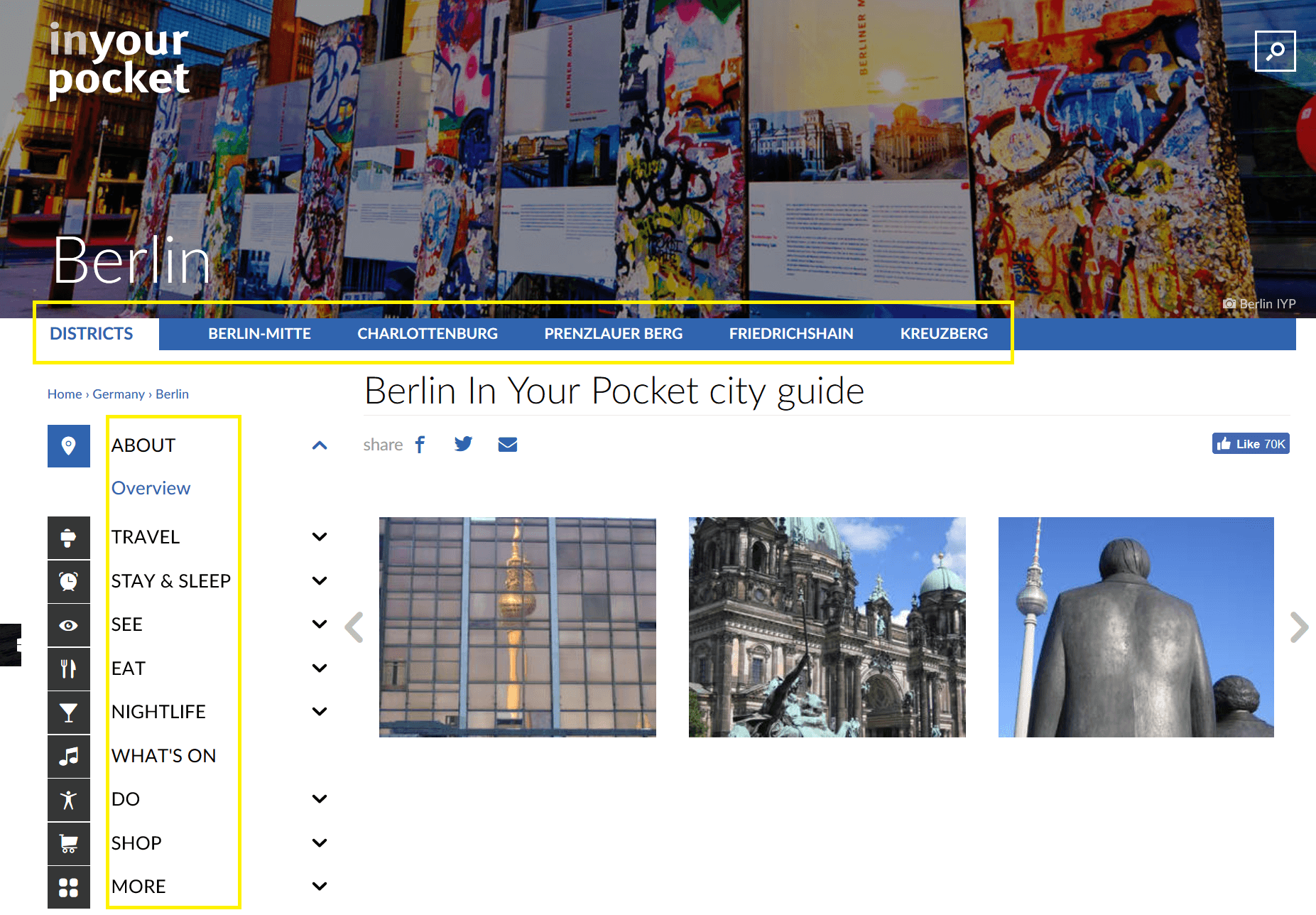
In Your Pocket
In Your Pocket is a site I’ve been using a lot because it’s very straightforward, to the point, and it’s recommendations always check out.
Almost every city in the world will now have travel videos by real travellers; things like vlogs, highlight videos, things to do videos, places to eat videos.
Youtube is the second biggest search engine in the world behind Google, so make use of it.
Hashtags!
Jump on Instagram and start searching hashtags of your destination.
Mix it up a bit too, instead of just #paris, you could try #parisfood or #parisshopping and see what’s hot on the ground.
Normally you’ll uncover many places that aren’t in guidebooks (people love to brag how “off the grid” they are in their travel photos).
This is one of my favourite ways to find interesting places to spend an afternoon.
Don’t over-research your travel destinations!
Remember, sometimes your trip will be a lot more interesting if you leave a few things unknown so you can discover them for yourself.
You don’t need to know about every restaurant and tourist attraction in town before you land.
Leave a few days in your itinerary unplanned and use them to just wander around and eat/shop/explore at whatever places you stumble across. You might find that some of the most memorable and interesting places of your trip will be found this way.
Have fun!
The most important part.
Once you’ve read the Wikitravel page, checked the attractions on TripAdvisor, Googled some things to do, got recommendations from travel bloggers, browsed through the travel forums, asked the local staff at your accommodation and flicked through an In Your Pocket guide, you really should have all the info you need to keep you busy for a few weeks.
In fact you’ll probably be over-researched, if anything.
Also remember, no resource I recommend here is going to be gospel. All of them are guides to what you can find and expect once you land. The only 1,000% accurate resource of travel info is going to be….you! Seeing the city with your own eyes and smelling it with your own nose and hearing it with your own ears is the only way you’re ever going to truly know that city.
It’s an exciting life, being a traveller. Every day you witness new things, you meet interesting people, you discover new ways of living and you eat food you never knew existed. You find yourself inspired by things you never thought you’d care about, and a new version of you is moulded with every new experience. If there’s one way to rediscover the magic in life, it’s travelling.
But there’s a dark side to travelling, too. A lot of the time, you are alone. You have no friends, you have no family. You may be sitting in an empty hotel room in a faraway town, or eating breakfast alone in a small, crowded teahouse. Sometimes, you just lie in bed and stare at the ceiling, starving painfully, but lacking the energy to wander the streets for a decent place to eat. It’s times like these when you long for company. The sound of a familiar voice. The comfort of a familiar face.
And then when you finally meet someone, it’s never long before you have to part ways. Sometimes, it’s just the guy in the bunk above you. Maybe you ate lunch together, or shared a few beers. A few days later you shake hands and say you’ll keep in touch, but of course, you never do. Other times, you meet a new best friend. It’s like you’ve found a long lost brother from Spain or Sweden. Those friendships always brew crazy memories, as if you’ve been friends since childhood. But it only lasts a week. Eventually, it’s time for them to pack up and move on too. Slowly, it weathers you. One can only handle so many goodbyes.
Then when you least expect it, you’ll fall in love. You won’t even know what hit you. But the road is not kind to love. Those goodbyes are the painful ones. They eat away at you. They’re the ones you’ll still think about, many years from now.
Somewhere along the way, you’ll need to come home. That is hard to describe. At first it’s as if nothing has changed. That old coffee shop with chipped red and white paint is still standing on the corner, and your old friends still slam tequilas at the bar every Friday night. But soon you realise, your old life has passed you by. People are married, they have children, they have houses and a DVD collection. They’ve built a life for themselves, and you weren’t there to be a part of it. Home has changed, but more subtly and slowly than you expected. Suddenly, it’s like you’re a stranger in your own town.
With this realisation, it doesn’t take long for the fragile comfort of home to wear off. Sometimes it’s just a couple of days. You find yourself itching to explore again. Maybe you’ll go to Togo this time. Or Venezuela.
Why?
No idea. Just because.
Wanderlust is like a drug. It consumes you. Once the road has a hold of you it never lets you go. You are drawn to it, you crave it. It’s an addiction. The conventional life becomes nothing but an afterthought. You might have worked hard for it once, but you threw it away, and maybe you’ll regret that one day. Or, maybe you won’t. But you didn’t really have a choice anyway. A roving foot is too hard to stop.
“Once you have tasted flight, you will forever walk the earth with your eyes turned skyward, for there you have been, and there you will always long to return.” – Leonardo da Vinci
Today’s Solo Female Travel interviewee is one hardcore backpacker. From the volunteering for free beds, to the 30 hour bus journeys, to the exploring small cities in faraway places, she’s really done it all. I thought I was quite the seasoned backpacker, but evidently I’ve still got a few unchecked things on my list.
She’s also from The Philippines, which is perfect, because I get a lot of queries about travelling for Filipinos and how they can navigate visa issues etc. So, to my Filipino readers, hopefully I’ll be introducing you to someone who can help you get those questions answered.
I am Trisha Velarmino, born and raised in Subic Bay, Philippines. Last year, I I ditched my job to travel the world but before that, I was working with the high maintenance world of fashion in Manila and Milan. I played football growing up and loved surfing and skateboards. I worked for the United Nations before and I want to do it again as a long-term endeavour. I love food and one day, I dream to work for Anthony Bourdain or be Gordon Ramsay’s apprentice for life.
What was the first trip you took abroad by yourself? What was your inspiration?
The first trip I took alone was in Europe, when I went to fashion school. I was barely 21 and knew nothing about travelling. Yeah, I guess fashion was the inspiration first. I was actually maintaining a fashion blog back then but when I had the chance to travel to different cities in Europe, my interests changed. I was even more excited to go to a different city every week than to wake up for school. I then shifted my fashion blog into travel. From then on, I told myself, “One day I will travel the world”.
What’s the response been like to you going nomadic and breaking the ‘traditional’ mold of job, marriage and kids?
So far, nothing. Yeah, with the job, there’s a lot of things. People raising their eyebrows saying, “You worked in fashion and now you’re doing some low-earning internet job?”, things like that. For some people, it’s all about having a huge house, an expensive car and a perfect career. I used to be one of them but now, I’d rather own nothing. You know how it is in the Philippines. At my age, I should have a family and raising children at home but I’ve met a lot of travellers older than me who are still pursuing their dreams. Good thing I am surrounded by a very supportive community and these norms are not applicable in our lives. They’re with me all the way! And those who are not, I made it unofficial on Facebook (aka unfriend). HAHAHAHA!
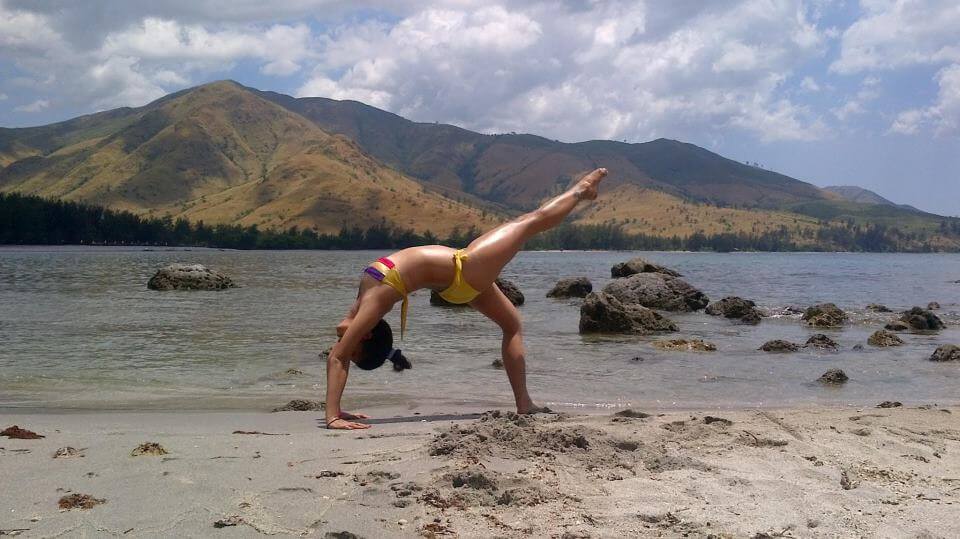
Typical Trisha pose in Zambales, Philippines
What tips do you have for packing light as a female?
I used to be very bad at this because I worked in fashion. I think I still am. I have a 90 liter backpack for a year now and believe me, it’s always full. As long as I can fit something, I will try to occupy that space. I didn’t have problems carrying it around though because I only move every 2 or 3 months. I don’t think this is a problem when you’re travelling long-term. I really don’t believe when people say “pack light.” Sure, maybe if you’re on a 2-week holiday, you can do that. Everyone I met on the road, men or women, travelling for 6-mos to 1-year has at least a 75 liter backpack and it’s full. Where I am right now, each country’s weather changes so I really have to have everything. My sole tip for the ladies: don’t bring a suitcase. Get a backpack. No matter how heavy it is, it will always come handy.
What is the biggest thing you have learned about yourself while travelling solo?
I learned that I can be my own best friend. I became very close to my inner self and have eradicated all the negative habits that I used to have, spiritually. There are a lot of things, actually but for me, self-care and knowing yourself better was the best thing that ever happened to me. And I am not just saying it, I can feel it everyday.
I see you’re a keen student of several languages. How important do you think it is to learn the local language while travelling, and which methods of learning do you find most effective?
That explains my lack of English humor in this article. HAHAHA! I’ve been speaking Spanish and Portuguese for over a year now (everyday) and it’s true, you lose the grammar sometimes. I didn’t go to any language school but then I found myself fluent in different languages. First, I think you should have the heart for it. For most places I’ve been too, I stay a long time which gives me a better chance to blend in and speak the language. I like languages. No, I love it. And you have to want to learn it. I have a friend who’s been in South America for almost a year but can’t speak anything, because he doesn’t try. How are you supposed to learn if you don’t even try? My most effective method is just speaking it, even if you’re right or wrong. Along the way, people will correct you and you’ll get by, I swear.
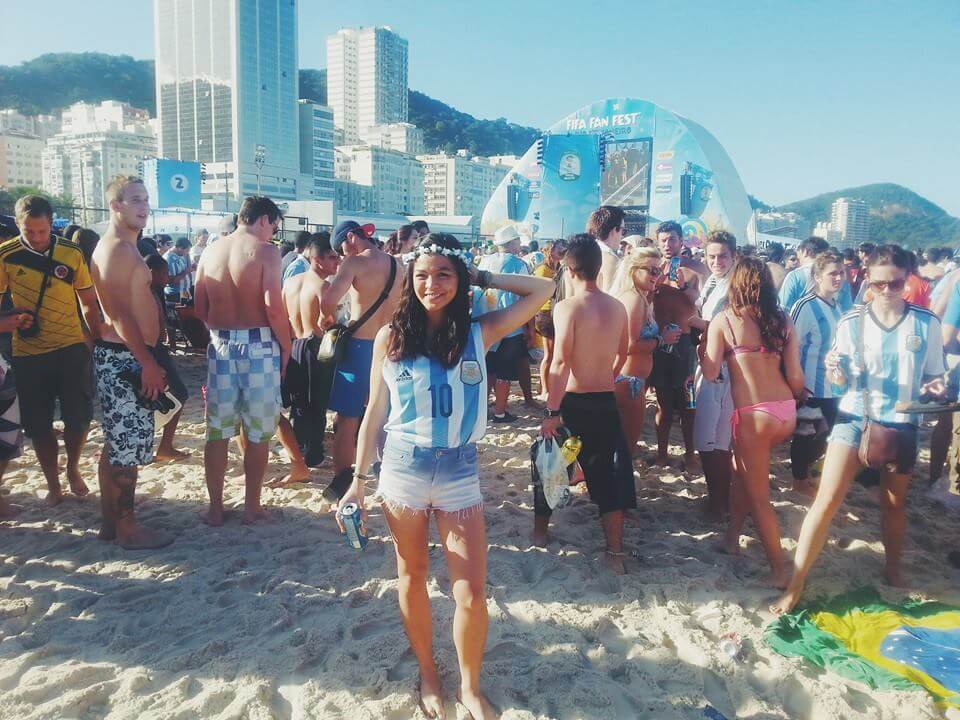
At the World Cup in Rio, Brazil
Many people are reluctant to travel solo because they feel like they’ll be alone and won’t meet anyone. What’s your experience?
You will feel alone for sure but clearly, that’s not an issue. When I volunteered in a bar in Peru, I didn’t expect it to be as amazing. The people I worked with are now my long-time friends. We even travelled to Bolivia together. But then again, we are all different people. Some prefer to be alone and others are not as talkative as I am, I guess. I can make friends with people without forcing it. You know, it just naturally comes. Come to a place with no expectations and just let it flow. Stop thinking about the future. Train yourself on how to enjoy the present.
The biggest concern with solo female travel is safety. How do you get over that fear? What steps do you take to make sure you stay safe while on the road?
Since becoming connected to my inner self I’ve never attracted harm or danger. I don’t know. I think safety is Universal and what happens to us is a product of what we do. To be honest, I don’t take any safety precautions. I just live, have a good feeling and enjoy the ride. I don’t want to tell your readers a particular way of being “safe” because we are all different. Different things happen to us, and that’s what makes us humans. However, I want to say never let your guard down but don’t be too paranoid. Breathe. Attract the positive force. All you have to do is have a relationship with the Universe.
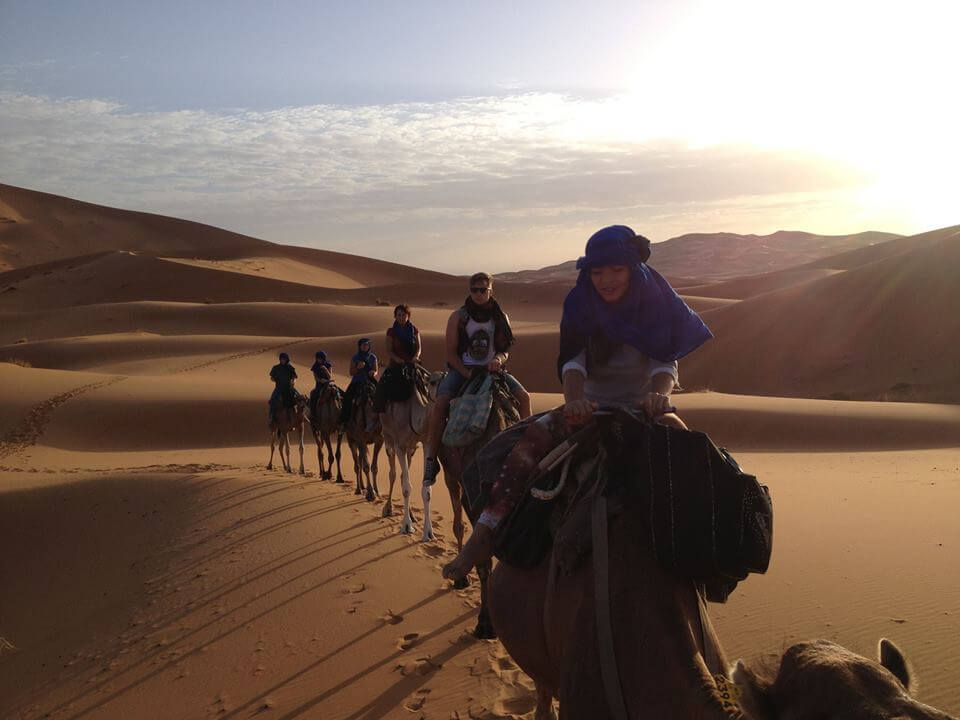
Camel riding in the Sahara
You’re from The Philippines, which is a notoriously difficult passport to travel with. How do you overcome this problem and what advice can you give to others for dealing with the travel and visa issues that stem from this?
Travel in visa-free countries. That’s the thing, Filipinos always think about going to Europe or USA and that’s their dream, I respect that. However, we Filipinos always get rejected by these man-made rules that forbid us to reach our goals. For over a year in South America, I didn’t need a single visa to any of the countries I’ve been to (except for Argentina and Chile). I think let’s just not push it. If it’s for you, it will come. Most of my friends say, “You just say that because you already went to Europe.” Well yeah, maybe. But when I went to Europe, I didn’t push it. It just happened. “When you really want something, all the Universe will conspire to help you achieve it.” Again, maybe this visa thing is a Universal experience.
(Note from Bren: The universe relationship is a reference to the book “The Alchemist”; read it!).
How do you afford your travels, and what tips can you share for keeping costs down while on the road?
I maintain a travel blog which earns me enough money to travel and also, I have an online job. I am doing audience expansion for companies (aka social media management) which lets me work anywhere in the world. No office or time requirement. I also volunteer in exchange for free bed and food which keeps the cost low. Basically, what I am earning now is only when I want to move or buy something for myself or splurge on a night out. I just realized I don’t really pay for anything because of volunteering! You can read more about that on the the volunteering and working remote sections of my blog.
What is one place you have been that was completely different to what you expected it would be?
Bolivia. I was looking forward to a 20-years ago setting (yes the place looked like it was from the 80s) but the wildest parties happened there when I was really expecting that from Europe or some countries in South America or Asia.
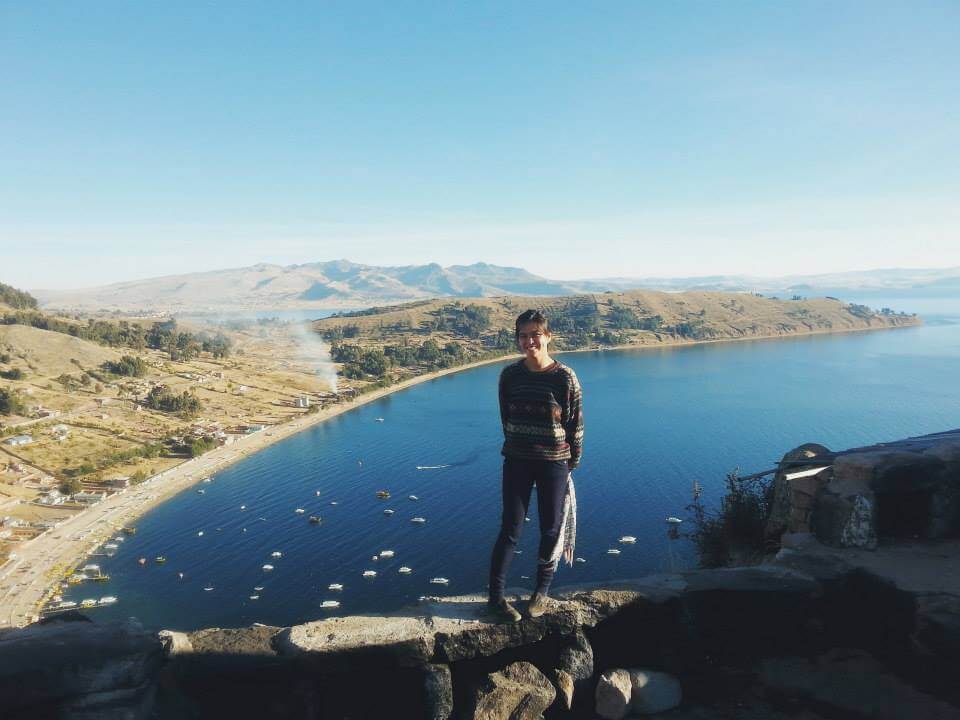
Lake Titicaca in Copacabana, Bolivia
OK, a couple of fun questions – who’s your celebrity crush?
I honestly don’t have one but I fancy football players: Andre Schuller (Germany), Ezequiel Lavezzi (Argentina) and Iker Casillas (Spain). Oh, I love the sexy Adam Levine too!
And, which country have you been to that, in your opinion, has the most handsome men?
Oh my God, I feel like you’re my friends back home! They ask me the same questions! I am not sure. In Europe, everyone has a fair share of beautiful men but generally speaking, I’d go for the French. In South America, I’d say Peru and Argentina. Oh, and Brasil too! I really don’t know. I met a handful when I was travelling and they’re all different in their ways. I just don’t look at men physically; we need to have a good vibe as well.
Imagine a Hollywood studio wanted to make a movie of your life. Who would play you and why?
Rachel Bilson. Or locally, I’d choose Lauren Young.
Are you a nomad for life? Why? Why not?
I can live this life forever! People think I come from a very rich family and that my parents are funding my travel but I guess, that’s how everyone looks at it when you’re travelling immensely. I am just living my life without regrets and thinking of the future. I don’t even miss the comfort of having my own bed! I feel spiritually rich at the moment and I’ve collected memories all over the world – ones I can share with my grandchildren while rocking on a chair and sewing mittens for them. It’s something that is addictive and when you get by, you’ll never want to stop. I was scared when I started, too scared. However, after a year, I don’t feel strange anymore. I can be anywhere and just fit. My life changed a lot in a course of a year. There were some hardships, yes, but life doesn’t come easy. I found a path where realizing my ultimate dream is possible and I wouldn’t trade that or let the opportunity slip. I don’t know what will happen tomorrow but still, I go forward because I have faith. I believe this life is for me.
Lastly, for those planning or considering their very first trip alone, what advice do you have for them? And where would you recommend they go?
Anywhere you want! If you have a good feeling about a place, it will all work out. I cannot dictate where you want to go but I can give a piece of advice for your headstart: volunteer. It will change your life. You will be a person of compassion. You will learn how to fend for yourself and live simply. These are the things you need before going on your own. Today, I look at volunteers as superheroes and being a part of this league is one of the best things that ever happened to my life.
To read more about Trisha’s adventures, head over to her blog psimonmyway.com. You can also connect with her on Facebook and Twitter.
Update 2016: Much of Soi 38 has shut down to make way for a new real estate development. However, about a third of the vendors are still there in a small food court and on part of the street. It’s not as good as it once was, but still a decent place for a cheap and delicious dinner.
While Bangkok certainly has some of the most delectable street food treats in the world, the scene itself can actually be quite intimidating. Several popular spots are hidden far from the comforts of the tourist centres, many stall owners don’t understand English, and Bangkok itself can sometimes be quite a difficult city to navigate.
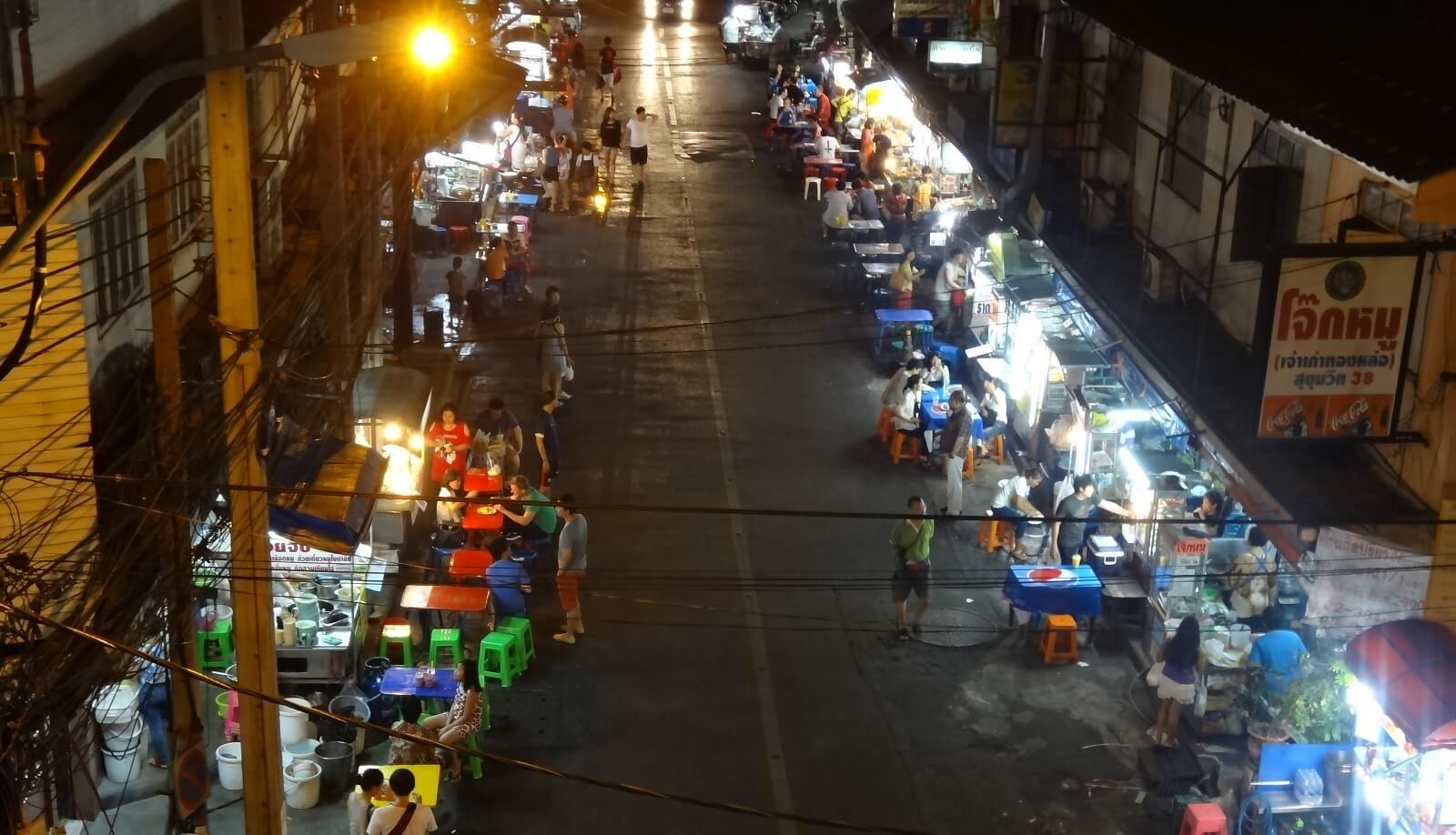
However, there is one popular spot in town that serves as the perfect introduction to street food in Bangkok. Soi 38 in Sukhumvit is cheap, authentic, clean, easy to find, and serves some of the highest quality street food the city has to offer. If you’re a first timer in Bangkok, this is the ideal place to dip your toes into the food culture before you go wandering down alleys seeking out more adventurous eats.
How to get there
Sukhumvit Soi 38 is in the Thong Lo area, so if you’re staying around Ekkamai, Phrom Phong or Thong Lo you can probably just walk there.
If you’re staying elsewhere in the Sukhumvit area, simply get on the BTS Skytrain and head to Thong Lo station. The other subway networks interlink with the Skytrain also, so if you have access to the BRT, MRT or Airport link you should be able to get there easily enough.
In all other cases, simply get in a taxi and ask for Sukhumvit Soi 38. Every driver in town will know exactly where it is.
When you get to Thong Lo station, head to Exit 4 (I think). You’ll know which exit is correct anyway, because you’ll be able to see this from stairs:
What to expect
I was staying just around the corner from here on my last visit to Bangkok, so after eating here several nights in a row I think I managed to try something from every single stall. I had no bad experiences, and considering there’s around 20 different stalls here that’s a good hit rate. There are tables and seats outside each stall, so it’s also a great place to go with some friends and enjoy a meal and a few beers.
I didn’t have my camera handy every single visit unfortunately, but listed below are just a few of the delights you can expect to find here.
No words, just photos.
Enjoy!
(I’m showing my ignorance here, but I don’t know the Thai names of any of these dishes. You’ll just have to tolerate the English names I’ve made up for them..)
A few appetisers to start…
Green mango salad – 60THB ($1.85)
Spicy papaya salad – 60 baht ($1.85)
Grilled pork salad – 60 baht ($1.85)
Boiled seafood salad – 100 baht ($2.50)
Crab and papaya salad – 60 baht ($1.85)
Cuttlefish salad – 80 baht ($2.50)
(This one’s my favourite!)
Fresh fruit shakes – 30 baht (90 cents)
Fresh coconut juice – 45 baht ($1.40)
Onto the main course(s)…
Roast duck on rice – 60 baht ($1.85)
Chicken rice – 50 baht ($1.50)
Fried chicken rice – 50 baht ($1.50)
Grilled skewers (chicken/pork/squid/sausages) – 15 baht each (45 cents)
Chicken satay – 10 baht each (30 cents)
Stewed pork and egg on rice – 60 baht ($1.85)
Grilled river prawns (they’re enormous!) – 150 baht per half dozen ($4.80)
And then it’s noodle time
From the moment I was old enough to eat I’ve been a total noodle freak, so if you’re like me, you’re going to love Bangkok. Collected below are some of my favourites from Soi 38. All of them are 50-60 baht (1.60 – $1.85) and the servings are quite small, so you can usually fit in around 3 or 4 at least. Ready set go…
Flat rice noodles with pork insides
Chicken drumstick and mushroom dry noodles
Green noodles with pork and wontons (this one is seriously awesome).
Pork fried rice noodles in gravy sauce
Roast duck and prawn wonton dry noodles
BBQ pork and prawn wonton dry noodles
Shrimp pad thai
BBQ pork and wonton noodle soup
Crab meat and prawn wonton dry noodles
Beef glass noodle soup
Shredded chicken rice noodle soup
Curry noodle soup with chicken
Beef and fish ball with thin rice noodle soup
Dessert
And then of course, the ever famous mango sticky rice for dessert. No matter how much you’ve eaten, you’ll always have room for one of these:
Unfortunately, I didn’t have time to photograph all the stalls and map out the individual shops where you can find each dish (to be honest I was just too lazy), but just by walking around looking at the menus on display I’m sure you’ll be able to find whatever you’re looking for. There are no “hidden” stalls or anything like that. Otherwise, just save this post on your phone and show the photos to someone, I’m sure they’ll be happy to point you in the right direction!
I still remember back in early 2013, I visited this city for the first time. I had never been to Thailand before then, yet had heard countless stories from other travellers who had fallen in love with the country. But they always spoke of Phuket, or the islands, or the small northern towns that seemed to enrapture all those who walked through them.
Yet there’s never any love for Bangkok. More often than not, the city serves as nothing more than an inconvenient rest stop. A necessary nuisance to get access to the country’s more glamorous beaches and mountains. Some indulge in a few debaucherous nights on Khao San Road, or simply endure an overnight stay in a weathered budget hotel. But no one seems to stay here.
And why would you?
With the pollution, the ridiculous traffic, the left and right scamming, the hoards of sex tourists that plague the upper Sukhumvit area. In a country with so much beauty to offer, there are far more inviting places than a smog filled, rat infested metropolis like Thailand’s capital.
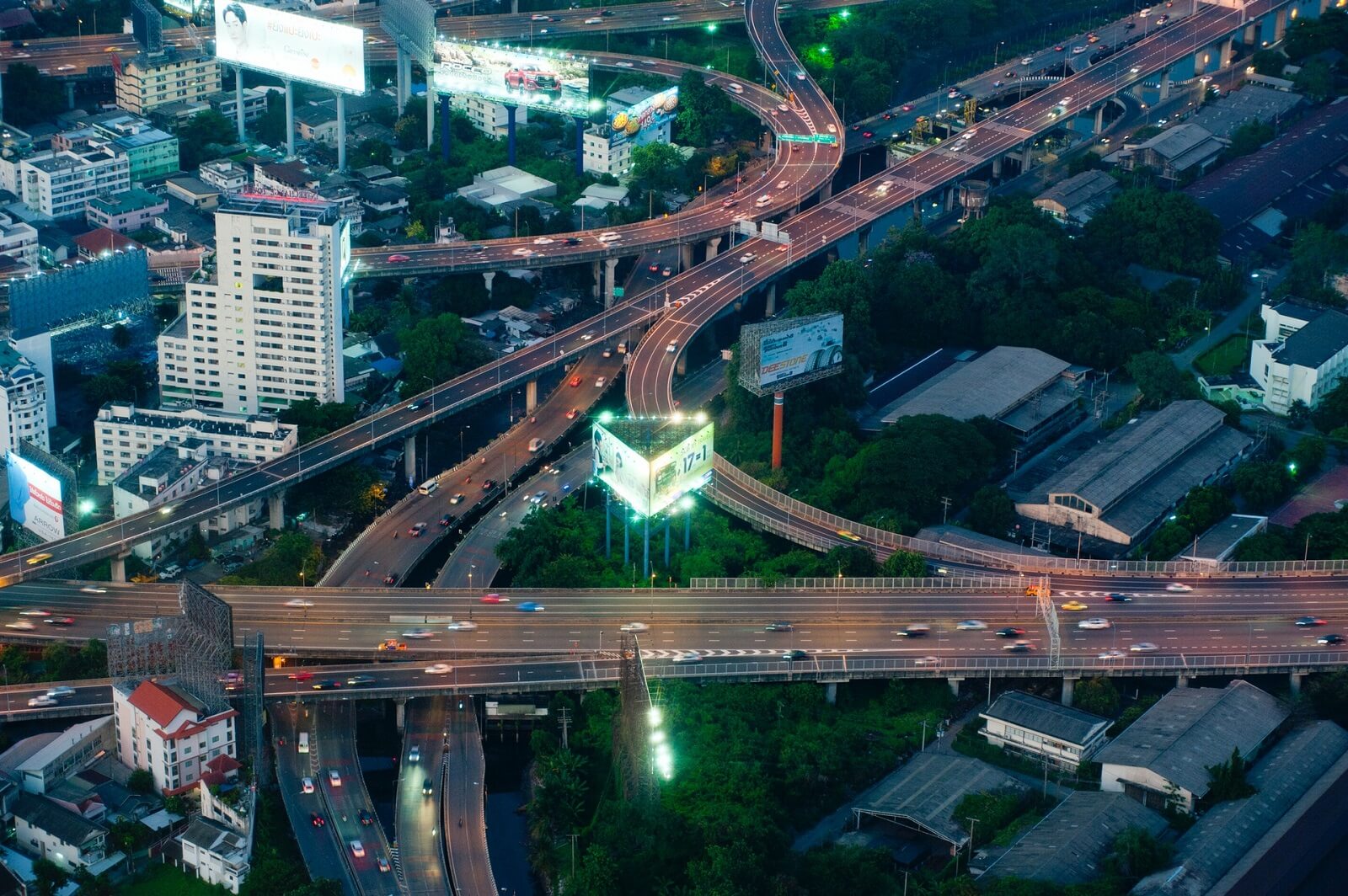
But that’s where it’s beauty lies. The city seems to make no sense, but then, it kinda does. Ferraris and tuk-tuks drive side by side on roads that practically stand still during rush hour. Old ladies sell the most delicious noodle soup from tiny street carts, often outside restaurants serving the same meal for 12x the price. The taxis are clean and safe, as good as any first world country, yet the meter rarely runs over $3. And despite all the chaos, the city still ticks along; perhaps a little messy, but definitely not broken.
I wasn’t too impressed on my first ride into town. On that trip I stayed up on Sukhumvit Soi 1, where my first walk about town inevitably led me to the nearby Nana and Asok areas (both renowned for their hustlers, overpriced restaurants, and seedy gogo bar streets). A couple of nights later I ventured out to the infamous Khao San Road, which had everything you could want and expect in a backpacker street. Then I did the mandatory foot massage, muay thai fight and numerous servings of street pad thai, and left the city a few days later. As far as I was concerned, I had “done Bangkok”, and any future visits to Thailand would be spent either sleeping in a hut up in the hills, or lounging around on one of the south’s golden beaches.
Yet a year later, something brought me back. At first, it was just a few days. That trip blessed me with the most mindblowing tom yum soup, hidden down a faraway side alley, and the most enormous and delicious fish ball I’ve ever seen.
A few days turned into a week.
I wandered the markets and ate a weird kind of apple I still don’t know the name of. I discovered boat noodles. I learned my first Thai words.
A week turned into a month.
I tried every place on Soi 38. I spent a night on the riverfront. I found an office to work at and started eating every meal with nam jim jaew. Slowly I was settling in, and the city was winning me over.
And then one night, it happened. I was sitting dazed, as my tiny masseuse pressed her forearms deep into my shoulders. I winced in pain, and heard her giggle under her breath as she caught sight of me gritting my teeth in agony. She held it there for a while, and then, as if trying to execute me, she pulled my head viciously to one side, stretched out my trapezius muscle, and pierced her elbow deep between my neck and shoulder, almost in slow motion so as to make it as painful as possible. Had the room been empty, I would’ve cried out in pain, but luckily the few other customers around me helped me refrain and preserve my dignity. For what seemed like the longest 10 seconds of my life, she held it here, overloading my brain with pain signals and surely enjoying every second of it.
And then she let me go.
Blood slowly flowed back to my head, and my shoulders slumped while I gradually returned to planet Earth. How amazing it felt. I’m sure many will agree; there a few things more pleasurably painful than a $9 Thai massage.
And so I walked home that night, bruised and light headed, but smiling all the way. And I finally realised how much I was really going to miss Bangkok.
For every city I go to, there comes a point where it starts to feel like home. Just making that one last friend, or discovering that one last amazing restaurant; just that one final experience that suddenly makes me stop and say to myself, “I think I could live here.”
Sometimes it takes 4 weeks, sometimes it takes 6, but eventually, it happens. It happened in Cusco. It happened in Moshi. It happened in Manila. And now it’s happened in Bangkok.
I’ve been developing a deeper appreciation for the arts these days. Music, literature, theatre and art are things I’ve often scoffed at in the past, yet my struggles with writing have humbled me in that arena. As I’ve discovered, creating something beautiful from nothing is a talent to be admired.
So, while travelling through Siem Reap last month I was delighted when the people of Phare: The Cambodian Circus reached out and invited me along to see their show.
I was met by Brian, one of the Phare staff members in the early evening. Of course it’s always a bad idea to see a circus on an empty stomach, so the first thing we did was head off to a local restaurant for a curry chicken pancake.
After a hearty meal, a little chit chat, and a bit of lounging around to let the pancake digest, we headed out to the venue. The circus is located in a large open lot, complete with cafe and art shop, just a short 10 minute scooter ride out of the town centre. We arrived a little early so wandered around for a bit, met a few folks, and I was told about the programme.
The circus itself is a project run by an NGO named Phare Ponleu Selpak, meaning “The Brightness of the Arts”. It’s origins can be traced back to a refugee camp on the Thai border following the Khmer Rouge years. Here, 9 refugee children from a drawing class were taught, through self expression, to use art as means of recovery from the trauma they had experienced during the genocide. Years later upon return to Cambodia they founded the school, aimed at empowering other vulnerable children through art, the same way they had done in the refugee camps the years before.
The circus is one of Phare Ponleu Selpak’s key projects, which gives students the opportunity to perform, tell their stories, and ultimately make a living through circus. It’s pretty incredible stuff.
It was explained to me that they have a variety of shows running throughout the week, with different performers coming in from the school to vary up the programme.
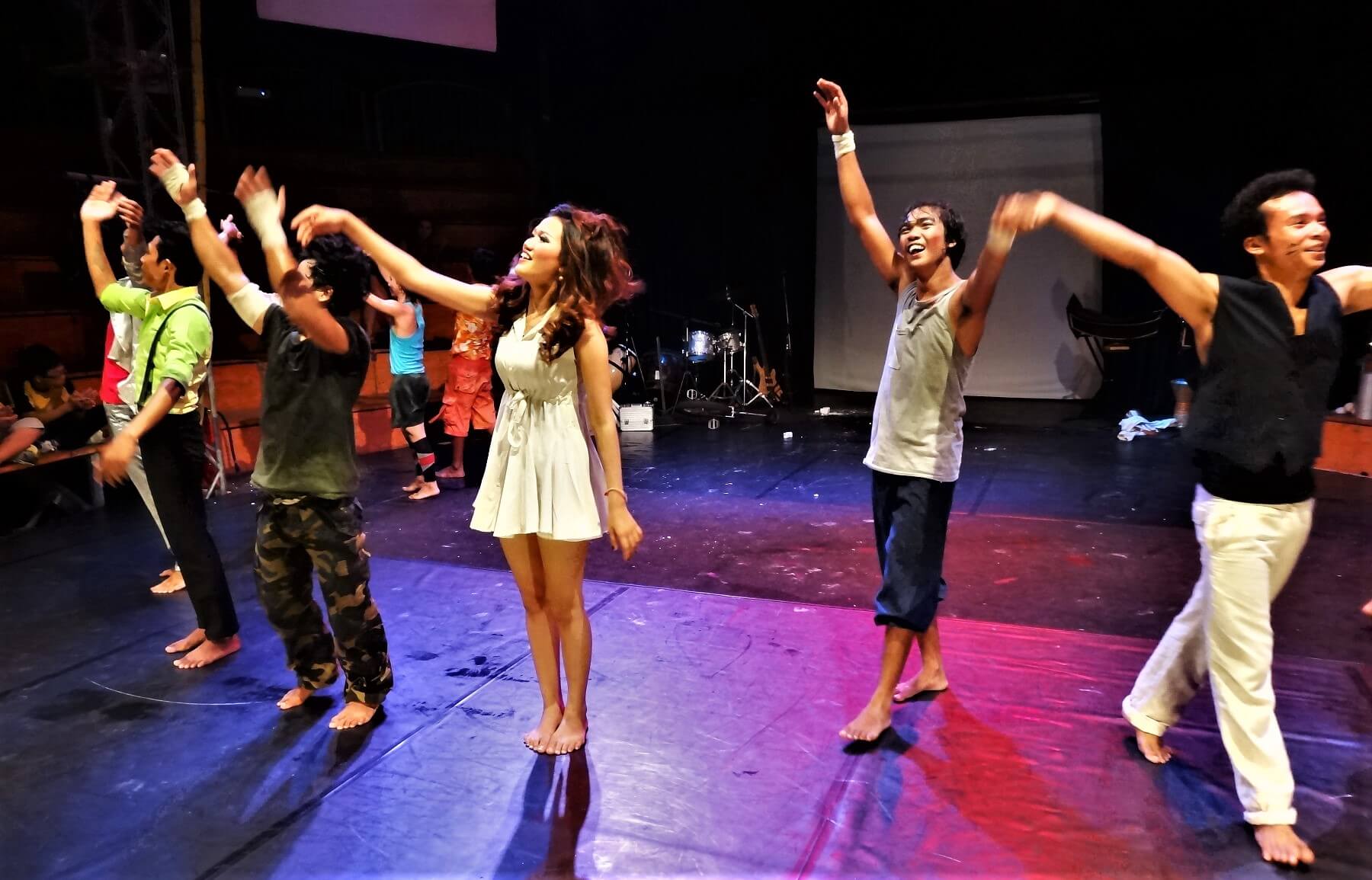
Today’s show, named Proniap, was supposed to be a little different than most, as Khmer New Year had mixed a few things up. As a result, the show would be made up of younger, more inexperienced performers who had put together a performance at rather short notice, but were ecstatic to be performing in front of the tourist crowd. Sounded perfect.
As we had a bit of time before kick-off, I was invited backstage to see how the students prepare. I had expected a tense, focused bunch, silently psyching themselves up before showtime, but it couldn’t have been more different. Just a bunch of young, smiling kids, decked out in artsy street clothes and goofing around with one another.
Then, a few minutes before opening bell they spread out into a circle and started vibing, firing up a bit of energy to get their performing juices flowing.
I’ve been to quite a few circuses in my life – Cirque Mother Africa, The Amazing Chinese Circus, The Peruvian Circus, and quite a few Cirque du Soleils, but the energy at Phare was on another level. It’s hilarious. They have the best clowns in the business.
On top of laughter, every circus needs some impressive stunts, and Phare has those in abundance. You’ll get all your somersaults, fire juggling and unicycles, only with a slight Cambodian flare.
But what I loved most about the show was how raw the performance was. Many other circuses I’ve been to, the expensive ones in particular, always felt robotic and expressionless to me. There is such thing as ‘too perfect’ when it comes to these things.
The young performers in this show made mistakes, didn’t wear fancy costumes and just performed with a small stage band, but the energy in their performance was electric. Sure, they dropped a few juggling pins, but there is an unmistakable passion in their performance, and that to me is what makes a show real and entertaining; much more so than the guy who just does his act flawlessly, smiles his plastic teeth and then walks off stage. And that’s not to say these guys weren’t talented, the show was filled with many ooh, ahh and wow moments.
When the show came to an end it was clear the crowd had loved it. Phare was a perfect example of unpolished, passionate story-telling, and once it was over, I knew I had to find out more about it. Brian explained that if I was up for it, I could visit the school itself, 3 hours away in the city of Battambang. As I didn’t have too much planned, I decided to head out there a couple of days later.
Battambang turned out to be a wonderful escape from Siem Reap. While it’s not unknown to tourists, there’s definitely much fewer of them around, and I only saw a handful of other foreigners in my 4 days there. Many of the historical buildings are still intact, and the French influence is still quite noticeable around the township. If you’re ever in Siem Reap, I’d definitely recommend the detour out here.
Phare itself was around 10 minutes out of the centre, nestled down the end of a local side street. I was welcomed there by one of the staff, who proceeded to show me around.
The place is incredibly inspiring. From it’s humble beginnings it has grown into a thriving, internationally backed school, giving vulnerable children access to education and the opportunity to express themselves through drawing, sculpture, performing arts, music and animation. It’s name, The Brightness Of The Arts, definitely shines true here.
Despite all the different subjects to choose from, circus is said to be the most popular, because, well, what kid wouldn’t want to learn to do backflips? (and all that other cool stuff).
That’s not to say the other arts are forgotten; it’s clear that the school has produced some incredible talent elsewhere.
I have always believed change is achieved through education, and was in awe of what Phare Ponleu Selpak has achieved here. I’ve felt for a long time that traditional education pigeon holes students, glorifying the kids who take maths and sciences and alienating the artsy ones. Where I’m from, schools don’t seem to understand that all students are different; not all of us want to learn algebra and physics, some of us just want to learn to draw, or dance, or paint, and at Phare Ponleu Selpak, that’s perfectly fine.
Most importantly of all, the press, funding and recognition the school has received has allowed it to truly change lives with this approach, with many of the circus students having been to France to study and perform, and a small few receiving invitations to study at the prestigious National Circus School of Montreal. As opportunities like that are usually reserved for the (very) wealthy, that’s incredibly inspiring from a project dreamed up in an old refugee camp.
Once I’d finished wandering around the school and stalkerishly taking photos of everyone, I was invited to hang around to watch a circus performance that evening, where the students performed for the local community in the school high top. While I couldn’t understand any of the story this time (it was all in Khmer), it was just as entertaining as the first one.
That was my last day in Battambang, and the following morning I got on my bus to Phnom Penh. However, seeing Phare’s story was definitely the highlight of my time in northern Cambodia. In a country with such a dark history, one can only admire these organisations who give under-privileged children a voice and a chance to find their way in life. If you’re ever in Siem Reap, be sure to head out to the high top, and see the magic for yourself.
Want to go to Phare?
Update 2017: When you get to Siem Reap, simply book a ticket through your hotel/hostel (most will be able to help you). Otherwise, book directly on their website. You can also try simply showing up, but in high season (November to April) it’s highly recommended you book in advance. It’s quickly become one of the most popular gigs in town!
The show starts at 8pm, and during busy season there are also extra shows at 5pm.
Tickets start at $18. It’s definitely worth every cent, and you can be confident your money is going back into a truly amazing programme.
I highly recommend getting travel insurance. Travel in Southeast Asia is unpredictable so please be prepared. For an introduction to travel insurance, why you need it and how to get it, check out my post Travel Insurance 101: Everything You Need to Know.
For a ton of useful information on Cambodia and Southeast Asia in general, I’d recommend checking out Travelfish – a free site covering every country in the region. Safe travels!
I’ve known about Airbnb for several years now, but haven’t gotten around to using it until my recent trip to Manila.
If you’re unfamiliar with the site, Airbnb is a place where private home owners can rent out their properties (usually apartments) to travellers. It gives hosts a platform to earn some short term rental income and travellers the chance to enjoy the comforts of a private home.
Manila is notorious for a lack of good, budget hotels (at least in comparison to the neighbouring Thailand, Vietnam and Cambodia), so I decided it would be the perfect place to enjoy my first Airbnb experience. Here’s how it all went:
Airbnb has properties available in pretty much all major cities around the world. The search function is easy enough to use, and works basically the same as the popular hotel sites.
You can search by map or by list, and can filter by price, housing type and amenities. One thing I don’t like is you can’t filter by area/suburb, or at least I couldn’t figure out how to.
For this particular booking, I set the filters to apartments costing less than $40 a night with free wifi and a gym. There was a good number of results, and I used the wishlist function to bookmark around 5 or 6 places which looked good and were within my budget.
Securing Your Airbnb Booking
Once I had a shortlist I had to decide on one to book. My priorities here were safety, price and location, in that order.
Two of them did not have any reviews from previous guests, so from a safety perspective I disregarded them from the get-go. That left with me with around 4 properties to choose from.
Now, Airbnb has an “Instant Book” function, where you can simply book using the online reservation system and secure the place instantly at the listed price. However, if you plan on staying for more than a few nights, you probably have a bit of bargaining power. I’ve noticed a lot of places on AirBnB are not heavily booked, so, at least when I was looking, supply seemed to outweigh demand. Therefore I decided to get in touch with each of them, and see if anyone could offer me a better price.
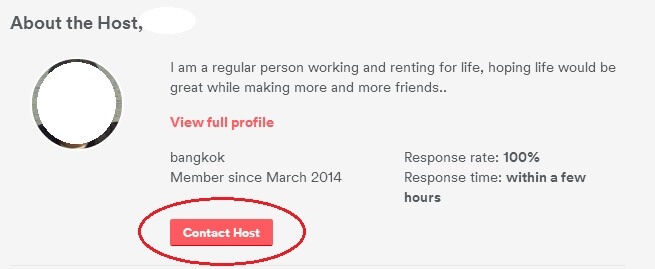
To do that I simply used the “Contact host” option. You can find this option at the bottom of each listing.
My message was along the lines of, “Hi, I’m arriving in Manila tomorrow and need a place to stay. Could you possibly offer me a better rate if I stayed for 5 nights? My budget is around $30/night. I’m a great tenant, I promise!”
I got a response from one host literally within minutes. Her listed rate was $38, but was happy to give me $30 per night for the 5 nights. That’s a 21% discount just by asking! I accepted immediately and we arranged a check-in time that would suit us both. It really was that simple.
(As for the other hosts, one got back to me the next day and counter-offered, one said she couldn’t lower her rate and one didn’t reply at all).
Payments and fees
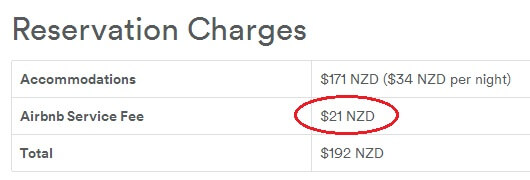
Airbnb allowed me to pay in NZD, and the rate was decent, however the fees they charge are a bit extravagant for my liking.
$21 for a $171 booking is 12%. I understand these guys need to take a cut somewhere, but 12% is getting rather hefty.
If you don’t mind being a little sneaky though, there is a way around it. Just tell the host you plan on staying for X nights but you’ll just book one night on Airbnb first so you can check the place out, and you can sort the rest out later on. This is good for three reasons:
The host also gets charged a fee by Airbnb, so will probably be happy to take the booking offline. He/she will also be more likely to give you a discounted rate.
You actually get to see the place before committing more nights to it.
By booking one night on Airbnb, you’re technically making a legitimate booking, so you’re not blatantly breaking any rules. You also still have the leverage of posting a review on the host’s profile if he/she tries any funny business on you (as opposed to removing Airbnb from the process completely).
You should note however that you won’t totally avoid fees by doing this. I did this on a subsequent booking and got charged $5 in fees for just a one night stay, which was about 20% (yikes!).
In the end though, I’m quite happy to pay Airbnb a fee for their service, so for short bookings I just plan on booking through the site. If the time comes however that I need a longer term (2 weeks+) booking, I’ll probably try to take it offline.
What does a rental on Airbnb look like?
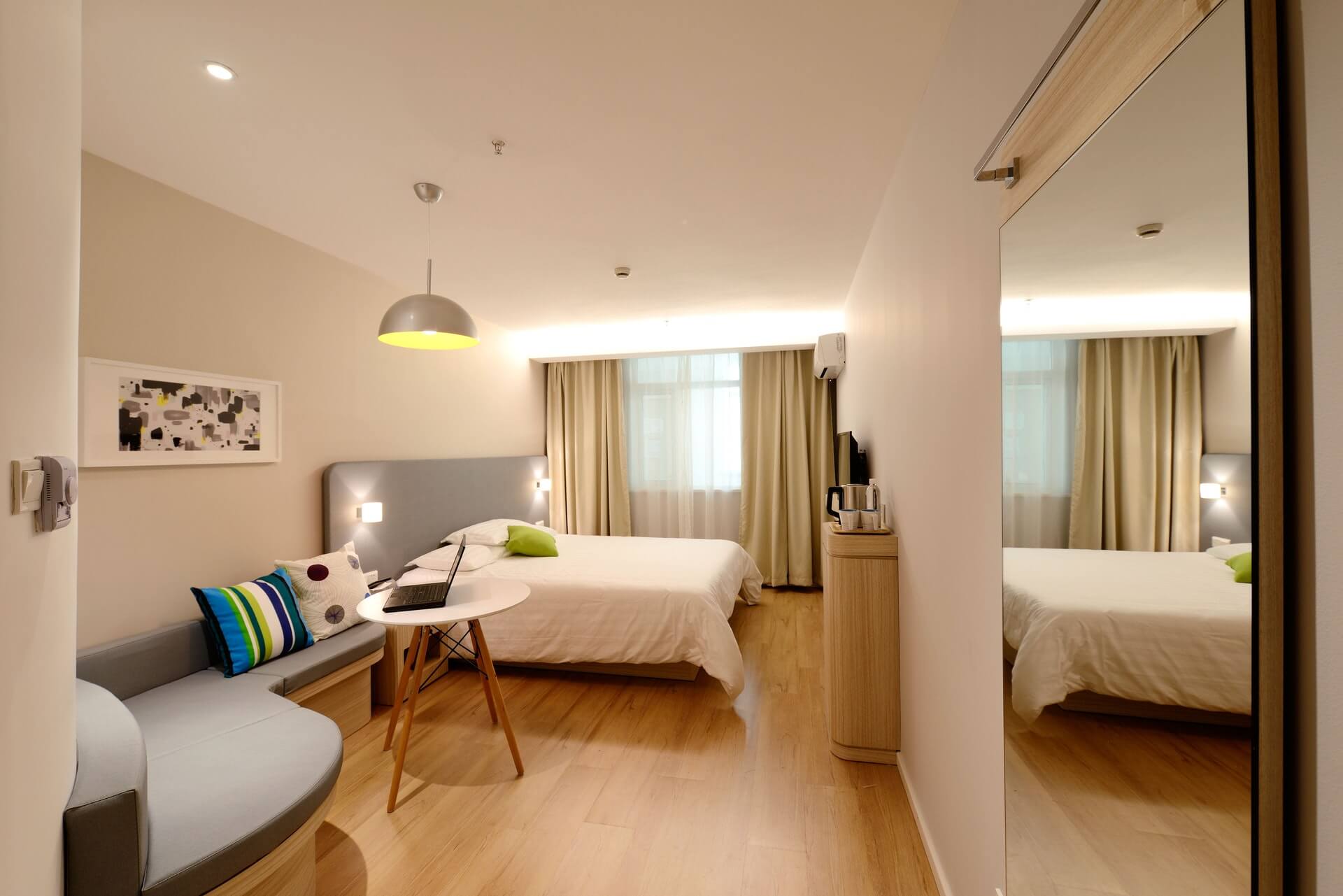
My place was what I expected. The photos were accurate and the apartment was clean with all the amenities promised. Here’s what $30 a night gets you in Manila:
For some reason I forgot to take a photo of the kitchen, which was small but sufficient.
As for the process, the host simply gave me the address and a time to check-in, we met in the lobby at the scheduled time and within 15 minutes I was all settled. If I needed anything (like towels, sheets), I just sent her a quick text message or email and it was all taken care of. It’s all very fuss-free without any filling of forms or paperwork (as Airbnb keeps all that stuff on their system).
Once my stay was over the check-out was just as easy. The host came by the apartment to take the keys and I was on my way.
Verdict on Airbnb
Airbnb definitely has my tick of approval and I plan on using it much more in future. It’s not exactly ideal for super budget travellers, as dorms and even private hostel rooms are likely to be cheaper, but for those who want a bit more privacy and flexibility it’s definitely a better option than hotels.
The fees for using the site are very high, and that’s probably because they’re one of the first sites of their kind. Several other sites have popped up, but nothing that’s really come close to knocking them from the top spot.
It is however a great service and often worth the fees for the value you can find there.
A few other tips and things you should know
Always make sure you check the reviews of the host. I, personally, wouldn’t stay with anyone who does not have at least one positive review. Remember these places are not as secure as hotels, they are individuals and you need to be a little more cautious than usual.
There’s no need to pay the listed price. As far as I can see, there are far more hosts than there are renters, so the bargaining power is in your favour. Moreover, on Airbnb you deal directly with the home owner, rather than a manager or receptionist, so the chance of negotiating a better rate are far higher.
Be mindful that when you make a booking, Airbnb will pre-authorise your credit card and charge a security deposit. If anything happens to the apartment while you’re in there, like, say, you leave the shower on and flood the place, Airbnb will be able to charge it to you.
Before you can make a booking they also will require a photo/scan of your ID to verify your identity/account, and I assume they do the same with hosts. It’s bit of a fuss but a good sign that they take security seriously.