Blog

  • Book Review: The $100 Startup by Chris Guillebeau

    Book Review: The $100 Startup by Chris Guillebeau

    “Imagine handing a letter to your boss that reads, “Dear Boss, I’m writing to let you know that your services are no longer required. Thanks for everything, but I’ll be doing things my own way now.” 

    Imagine that today is your final day of working for anyone other than yourself. What if—very soon, not in some distant, undefined future—you prepare for work by firing up a laptop (more…)

  • Solo Female Travel: Anna Zalazar Talks Life On The Road

    Solo Female Travel: Anna Zalazar Talks Life On The Road

    So often I meet girls on the road who say things like, “Gosh I wish I was a guy so I could travel alone too” or “How do you travel by yourself? I guess it’s different for you, you’re a guy.”

    It upsets me, because I’ve met many female travellers who, with a little street savvy and common sense, travel the world solo and have the time of their life. In my experience, the world is a friendly place to both guys and girls, and travelling it solo seems to bless you with some of the most unique and memorable experiences that you will have in your lifetime.

    Obviously female travel is not something I can write with authority on, so as a treat to my female readers, I’m starting an interview series where female globetrotters will share their tips and advice on solo adventuring around the world. Hopefully they can inspire you to break out of your shell, pack a backpack and hit the road on your own.

    Today I’m excited to be joined by the lovely Anna from Annzventures.

    Anna in Camiguin

    Introduce yourself! Who are you?

    I’m Anna and I’m an adventurer, storyteller and writer at Annzventures.com.

    What was the first trip you took abroad by yourself? What was your inspiration?

    I’ve always been an adventurer at heart and have always been fascinated by US National Parks. When I was a little girl, I used to just see these natural wonders in books and would day dream of one day seeing them. When I came to America, I said I’ll make my dreams come true.  So in 2008, I took a break from work and went for a long weekend of nature adventure to Jackson Hole Wyoming by myself. Nobody believed me until I came back with pictures. To date, it’s still on the top of my most memorable travel experiences.

    What is the biggest thing you have learned about yourself while travelling solo?

    That I’m always in good company. My solo travels have taught me to really enjoy not only life but also the company of myself. Fun has always been on top of my priorities and it’s something I take with me wherever I go.

    Anna in Edinburgh, Scotland
    Anna in Edinburgh, Scotland

    The biggest concern for travelling solo as a female is safety. How do you get over that fear? What steps do you take to make sure you stay safe while on the road?

    I think every female who has traveled solo, whether short term or long term will always have some fear and each one has a different approach to it.

    Here are my tips:

    Blend in  I spent a year traveling solo in Asia so I pretty much blended in. I’m naturally fair skinned which is ideal for Asians but I intentionally made myself as tanned as I can be so not to attract too much attention from locals.

    Stay present – Try to stay as present and aware of your surroundings wherever you may be. Also, I cannot stress this enough but easy on the alcohol.

    Walk tall Knowing any form of self-defense is something I recommend every woman whether she wants to travel or not. I’ve had self-defense training from my years of practicing martial arts so it’s something I will always have with me. This has given me confidence that I can protect myself if need be.

    Final tip – The best way to keep yourself safe is to avoid being seen as a target. Your posture can say so much about you and people can smell weakness from afar. But if someone sees you as a confident and strong woman, your chances of being on the safe side will always be higher. Of course anything can go wrong but knowing some form of self-defense puts you in a much better position.

    What tips do you have for packing light as a female?

    Dresses! If you’re traveling to warm or hot and humid countries, pack dresses. Not only is it one piece of clothing, it’s also a chic way to feel very feminine wherever you might be traveling.

    Many people are reluctant to travel solo because they feel like they’ll be alone and won’t meet anyone. What’s your experience?

    The beginning of a solo trip will be the most challenging, added to that the fact that you’re away from your comfort zone. But I always tell people that as long as you’re not traveling to places where no human being lives, chances are you will meet people. The truth is it will only take a few hours before you start meeting people in a similar situation and you will have instant travel friends.

    Anna in Milan, Italy

    How do you afford your travels, and what tips can you share for keeping costs down while on the road?

    I worked in the US for five years saving money before I set off to do long-term travel. I’m also a big travel hacker and have saved a ton of air miles that kept my airfare costs to the minimum. In terms of affording travel, there really is no secret to it, you work, you save then you take off.

    For keeping costs down, my number one rule is negotiate. I grew up in the Philippines so it’s something I’m naturally skilled at. But I know a lot of people are not comfortable doing this. They say you can only do it in Asia, but in my experience, I’ve also received better deals while I was traveling in Europe. Like for instance, I got free dinners included in my stay at a hostel in Portugal. Negotiating is simply just asking if they can give you a discount or maybe some freebies.

    Next to negotiating is to travel slow. Constantly moving from one place to another is not only exhausting, it’s also more expensive. Staying longer at cities and islands I loved has enabled me to enjoy my travels more and keep my costs down.

    What’s the weirdest thing you’ve eaten in your travels?

    None. Food is probably the only thing that I’m not adventurous with. I’m very picky with what I eat and try to stay as healthy as possible even on the road.

    Anna at Brighton Beach, England
    Anna at Brighton Beach, England

    What is one place you have been that was completely different to what you expected it would be?

    London. I avoided this city in my trips to Europe for the longest time because I thought it was just too expensive and too cold. Alas, a friend invited me and I was surprised to find out that you can still travel on a budget in this city and despite the erratic weather, it’s one of the most fun cities I’ve ever been to. At first I hated it, then it became one of my favorite cities.

    OK, a couple of fun questions – who’s your celebrity crush?

    Bryan Greenberg.

    And, which country have you been to that, in your opinion, has the most handsome men?

    Ha! I’m answering this one for the ladies. If we’re talking people watching and eye candies, my girlfriends, gay friends and I enjoyed it the most in Spain and England specifically Madrid and London. I can even throw in Portugal and Switzerland for the runner ups. But I’ve always found American men not only handsome but also having the most magnetic personalities even in my travels so my vote actually goes to USA. 😉

    Anna in Nevada
    Anna in Nevada

    Are you a nomad for life? Why? Why not?

    A nomad for life, no. If I want to travel forever, I can definitely do it and will for sure find ways in making it possible. But after having traveled for so long, I found myself craving having a home to build and keep my habits. I’m quite an ambitious woman so I tend to think long term. I’m working on different areas of my life and it’s more manageable for me to achieve my personal goals if I have a home base.

    For me it’s all about finding your balance, following your bliss and not what other people think you should be doing. I don’t let other people’s ideas, no matter how shiny they might seem, define what my dreams will be. It’s all about creating a life I love and the one that suits me. I found that after leaving New York to see the world, I still find it to be one of the best cities in the world and have been enjoying life back here. Also, geographically speaking, it’s the best place to have a base for my future travels, just like Manila is my base in Asia. I’m very lucky to have the best of both worlds. Nomad for life, not for me. But traveler for life, definitely!

    Lastly, for those planning or considering their very first trip alone, what advice do you have for them? And where would you recommend they go?

    My advice for them is very simple. Don’t overplan, save as much as you can, book a ticket and just go. For first timers, go to Thailand. But if you can go a little further away from your comfort zone, I’d say Philippines.

    Anna is the Chief Adventure Officer of Annzventures.com. She believes that every woman should do solo travel at least once in her life and her blog is all about inspiring women to do so. You can continue to follow her adventures at www.annzventures.com, or connect with her on Twitter at @AnnaZalazar.


    What are your experiences with solo female travel? Tips? Questions? Inspirations? Horror stories? We’d love to hear them, write them up in the comments below!

    Also be sure to check out her blog over at Annzventures. If you have a question, chances are she has already answered it!

    Until next time, travellers.


  • The Way To Cagbalete Island

    The Way To Cagbalete Island

    I love Manila. It’s a great city with great restaurants, great people, great shopping and great affordability. However there’s one big problem with Manila that is never going to change.

    It has. No. Beach!

    The good news is the Philippines has some of the best beaches on the planet, some of which are not too far from the capital. If you’re after your fix of sand and sun, a little weekend road trip is enough to have you sorted.

    The journey to Cagbalete Island starts before sunrise. A public bus leaves every morning at 5am which you cannot miss (it’s from the JAC Liner terminal in Cubao). It will take you straight to Mauban in Quezon, where you’ll jump on the ferry to the island. For reasons unbeknownst to me, we decided to take the longer, roundabout route, with a 4am bus to Lucena, followed by a second bus to Mauban. What fun is life if you don’t do things a little different now and then?

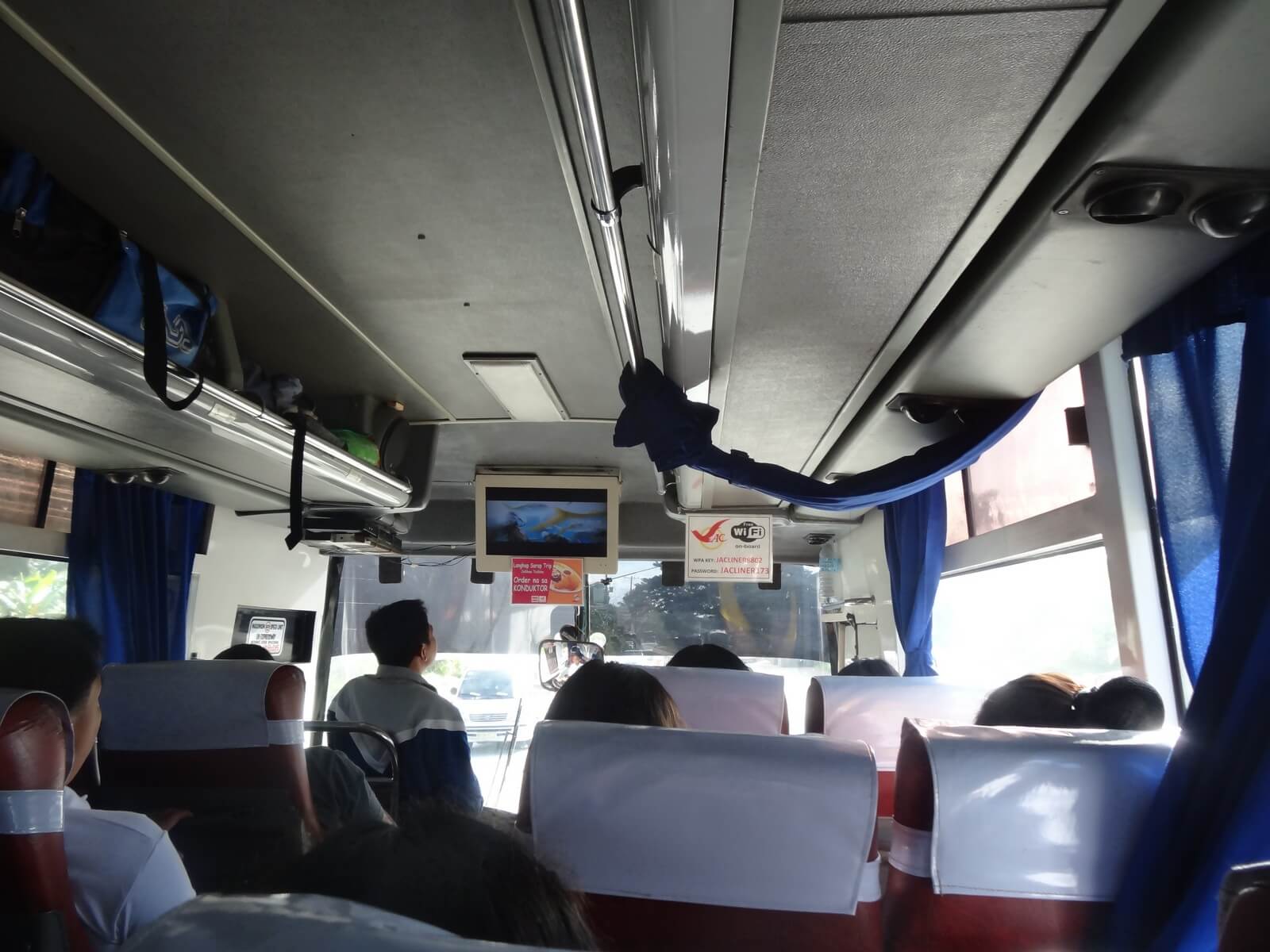
    The bus to Lucena

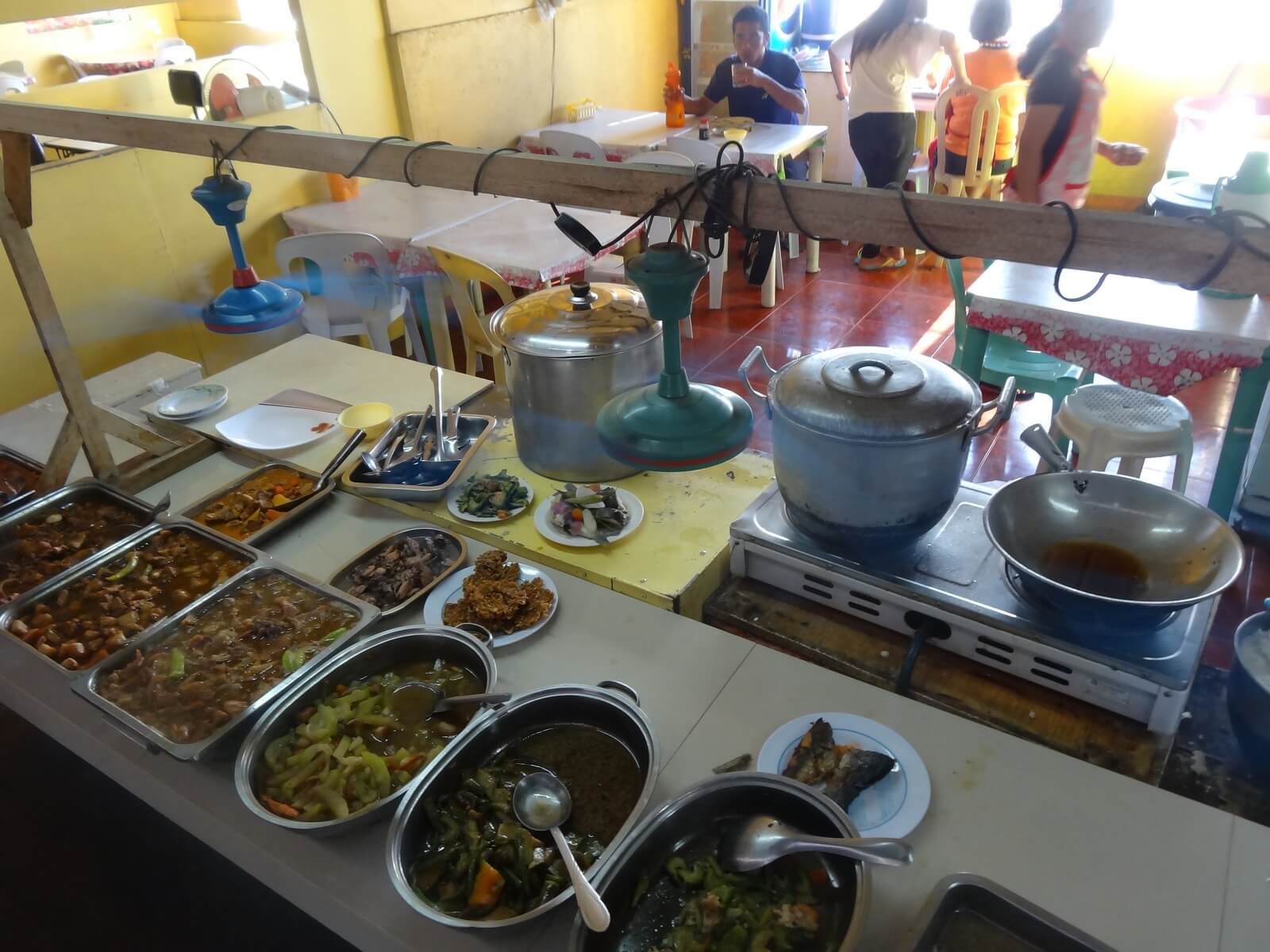
    It’s a refreshing bus ride to Lucena. The buses are modern, probably with a TV playing The Fast & The Furious, along with reclining seats and a working AC. After a short 3 hours, you’ll find yourself at the Lucena bus station, with a wealth of Filipino food to appease your growling stomach.

    One of the many eateries at Lucena bus station

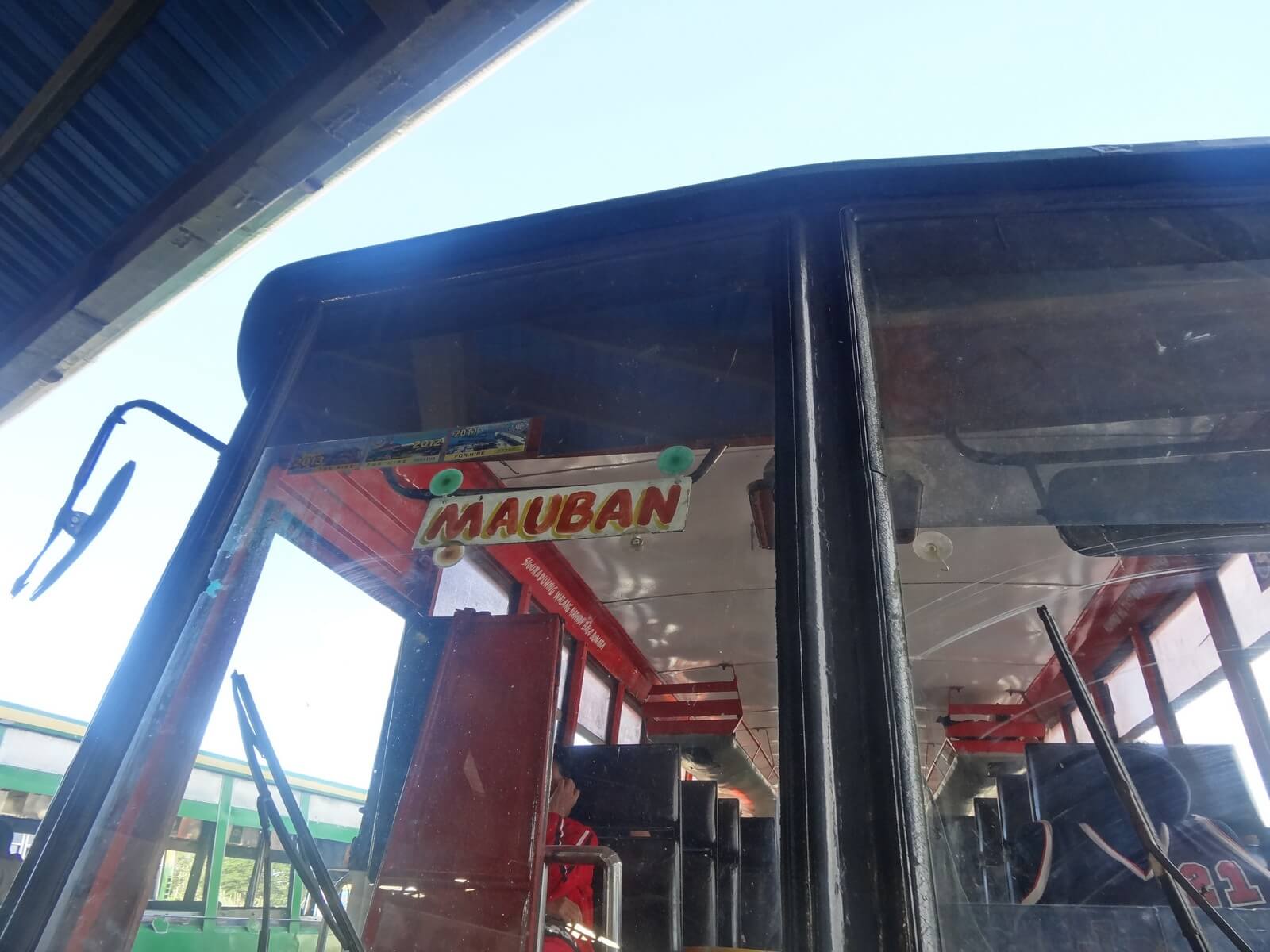
    From there it’s another 2 hour bus ride, heading to the town of Mauban. Here’s where the real journey begins. It’s an old and weathered bus, which chugs along at a snail’s pace. The seats are hard and unforgiving. The only AC is the open air windows and the panels vibrate with the rattle of the engine. But it excites you, because there’s not a single foreigner on this rickety old bus. Hell, there’s hardly any other people on it, and that alone tells you that something good lies ahead. The road less travelled is always the most rewarding one, and the road to Cagbalete Island seems to be hardly travelled at all.

    Bus to Mauban

    The bus ride offers a pleasant glimpse into rural Philippines. Staring out the window is like a filmstrip of banana trees and beautiful greenery, minimalist houses and bunches of laughing kids playing outside with nature. After a slow but easy two hours, the bus finally pulls into Mauban.

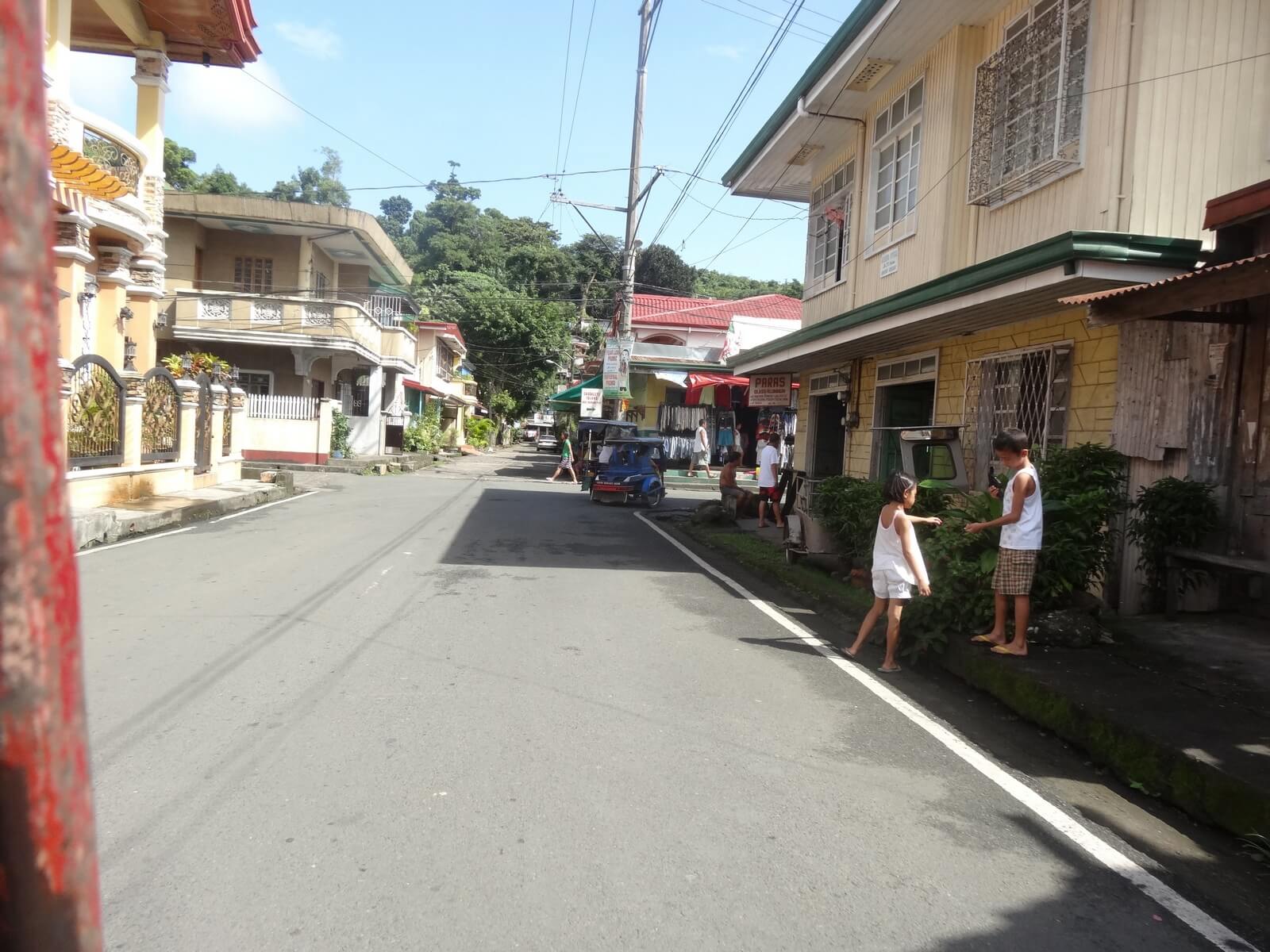
    Streets of Mauban

    Mauban is everything you expect it to be. A tranquil little town, where people live in peaceful simplicity. There are no rush hours here, no valet parking. Smiles? Yes, lots of them. Something tells me that’s not a coincidence.

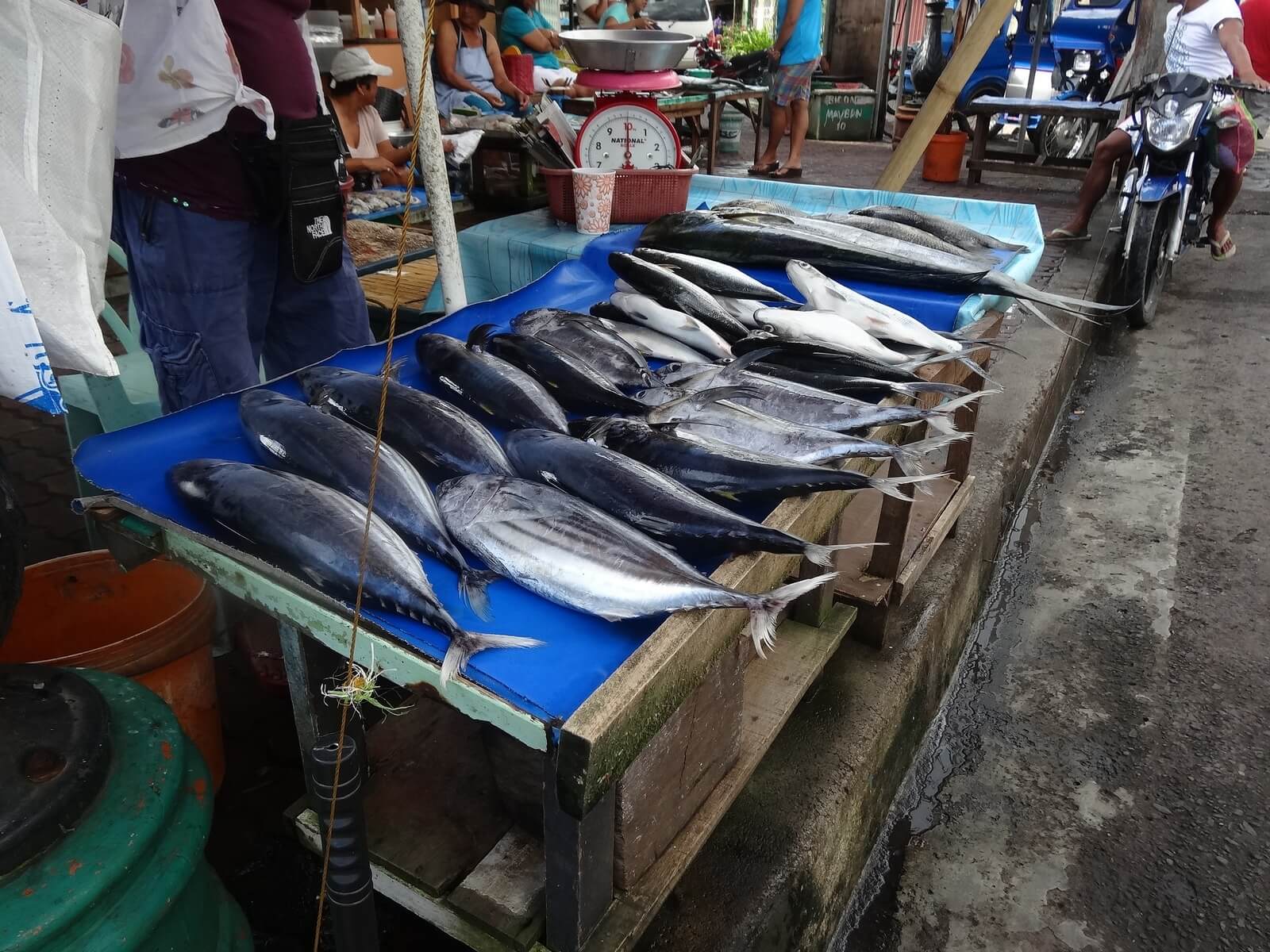
    As we make our way through the town, it seems common to buy meat, fish and vegetables at the market to take with you to the island. I’m sensing there is no McDonald’s where I’m going. However, for us there’s no time to shop; our bus has arrived late, and the boat to Cagbalete is leaving any second. For all we know, it’s already gone without us.

    Mauban markets

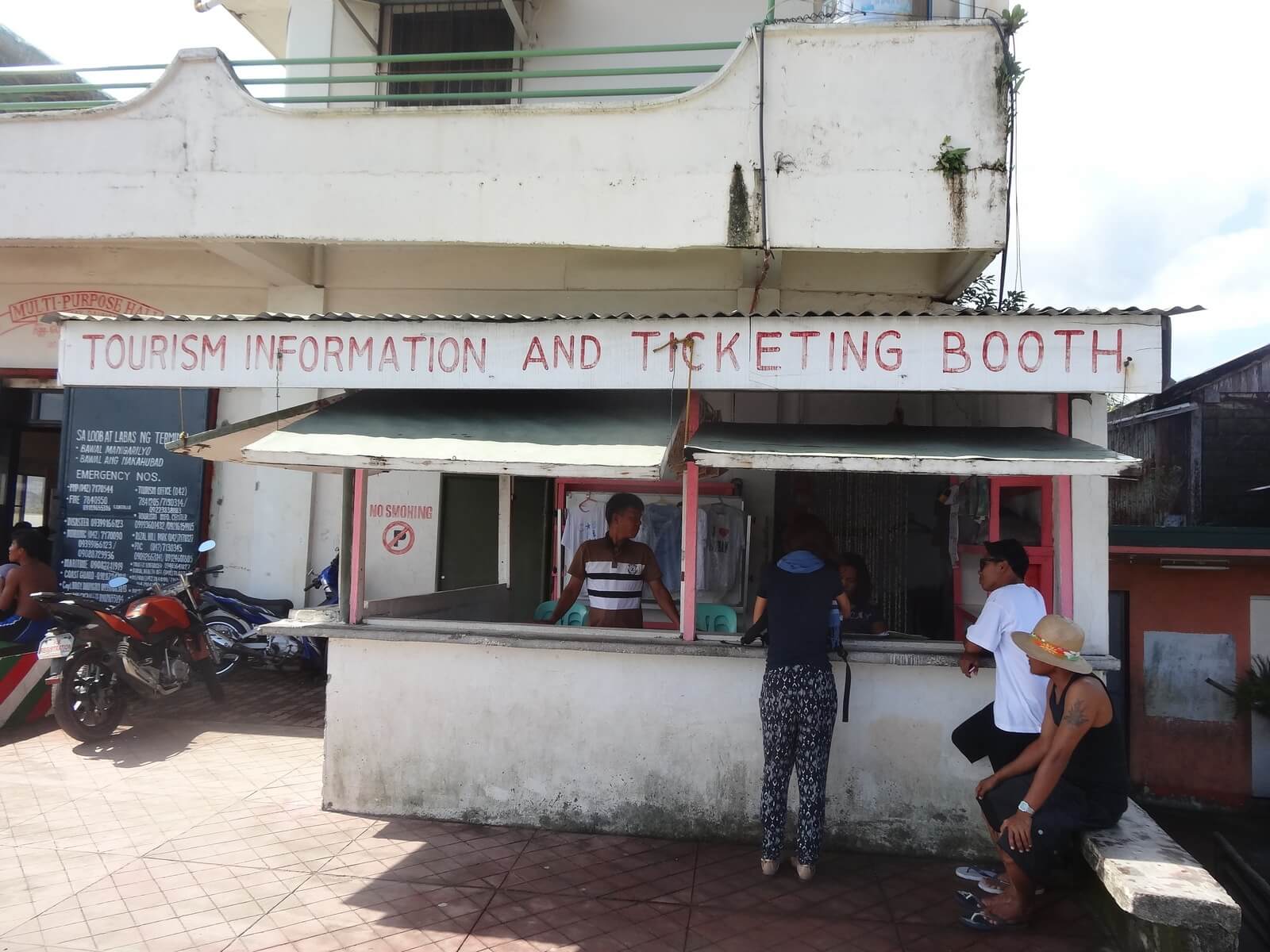
    A trike takes us to the ferry and we rush out onto the jetty, stopping at the ticketing booth to pay our fares. I scamper to the boat and hurry on board, relieved that it’s still here. After all, we’ve arrived 30 minutes past the scheduled departure time.

    Mauban ticketing booth

    I’m a fool. This is not Singapore. Things here run on island time, where 30 minutes late is not late at all. We’re on time, maybe even early. Patience is a virtue, and these people are among the most virtuous I have met.

    Boat to Cagbalete

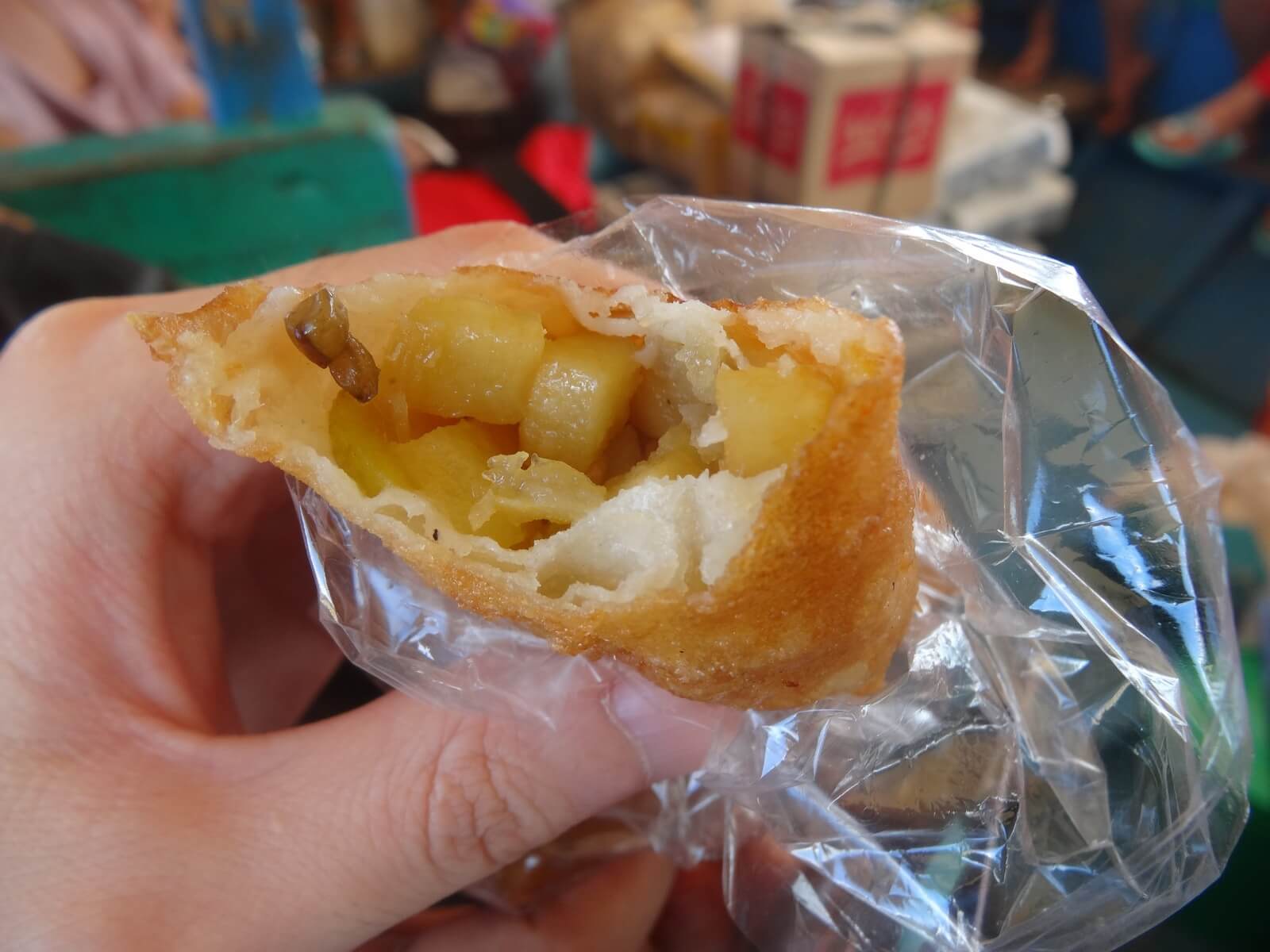
    As workers continue to load up the boat with the daily crates of food and water for the island, we indulge in some of the local treats being sold on board. The damage on a lumpia is 8 pesos (20 cents). Those $3 spring rolls at home don’t seem like such a bargain after all…

    Lumpia

    The 45 minute boat ride is wet, crowded and bumpy. I tough it out.

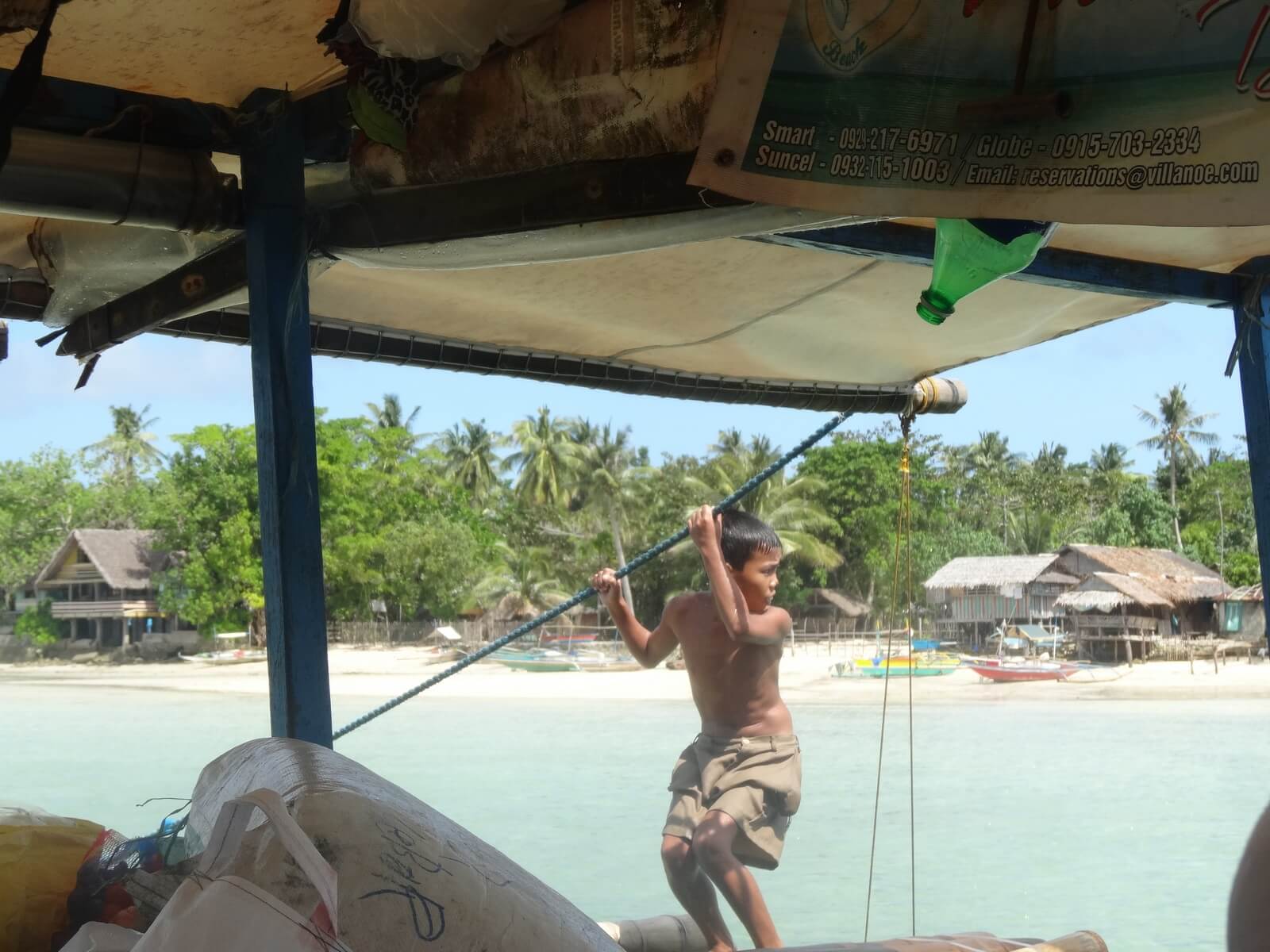
    As we pull up to shore the local kids swimming in the ocean jump onto the side of the boat and squeal at me in Tagalog. They are tanned to a chocolate brown, and talk at me with urgency. I smile and hide behind my sunglasses. I later figure out they were simply offering to hold my bags for me, perhaps for a negligible tip.

    Kids on Cagbalete
    Kids jump onto the boat as well pull up to shore

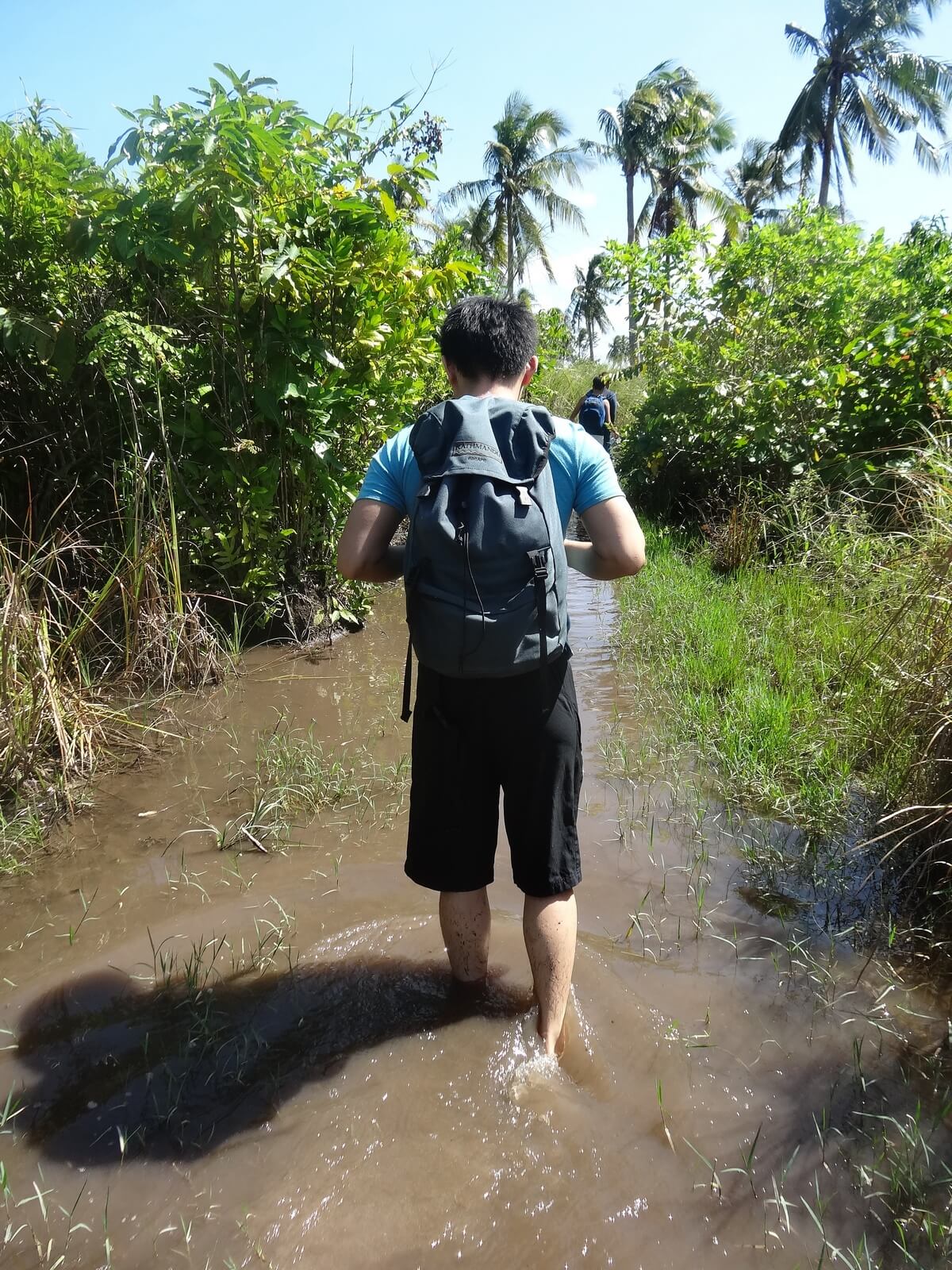
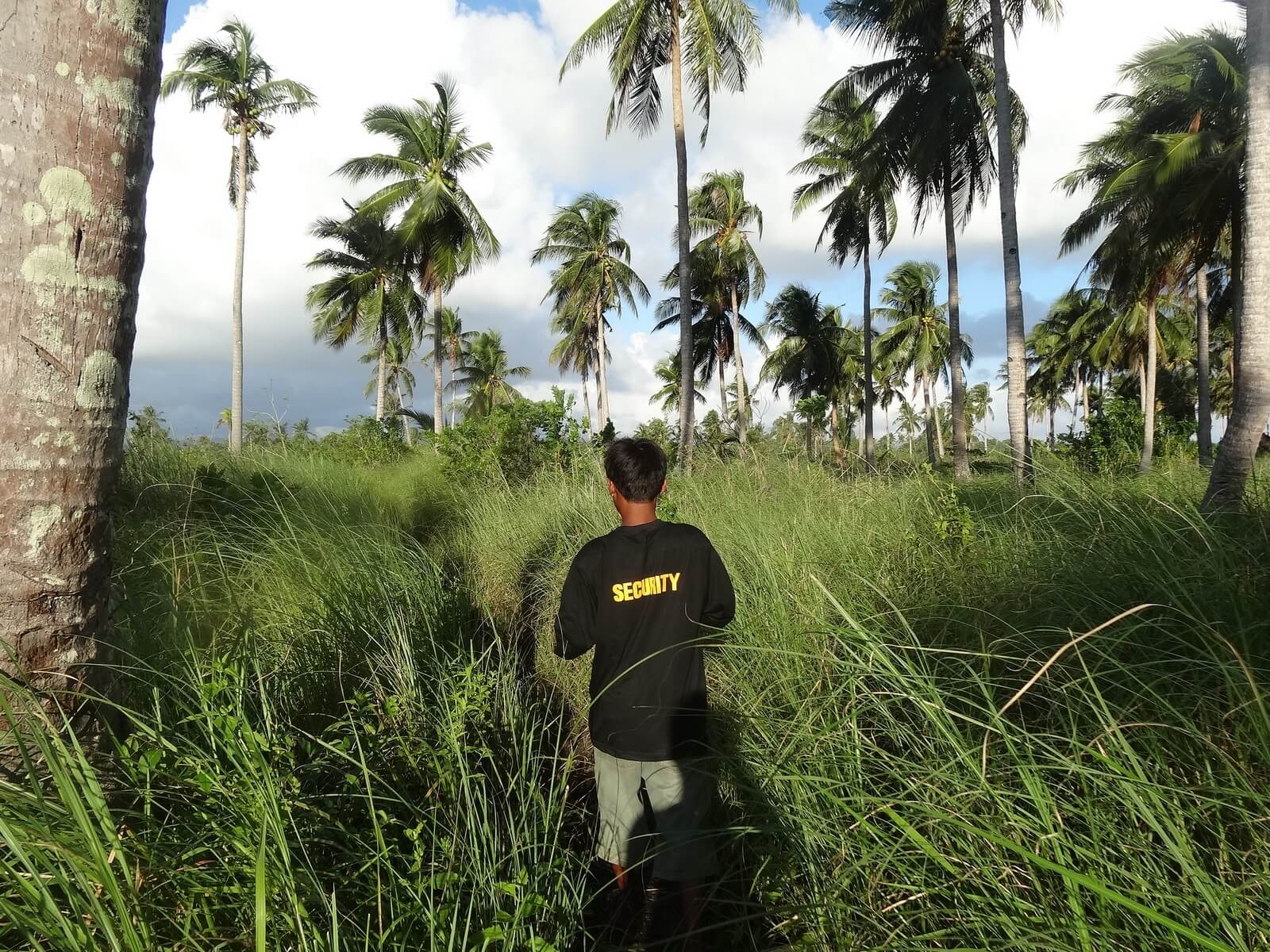
    I’ve made arrangements to stay at Dona Choleng Resort, around a 15 minute walk from the dock. Funnily enough, the owner of the resort is on board the ferry with me, so we follow him through the back alleys and out into the open brush. More than once, we need to wade through puddles of thick, sandy mud. It’s all part of the fun.

    The mud is unavoidable

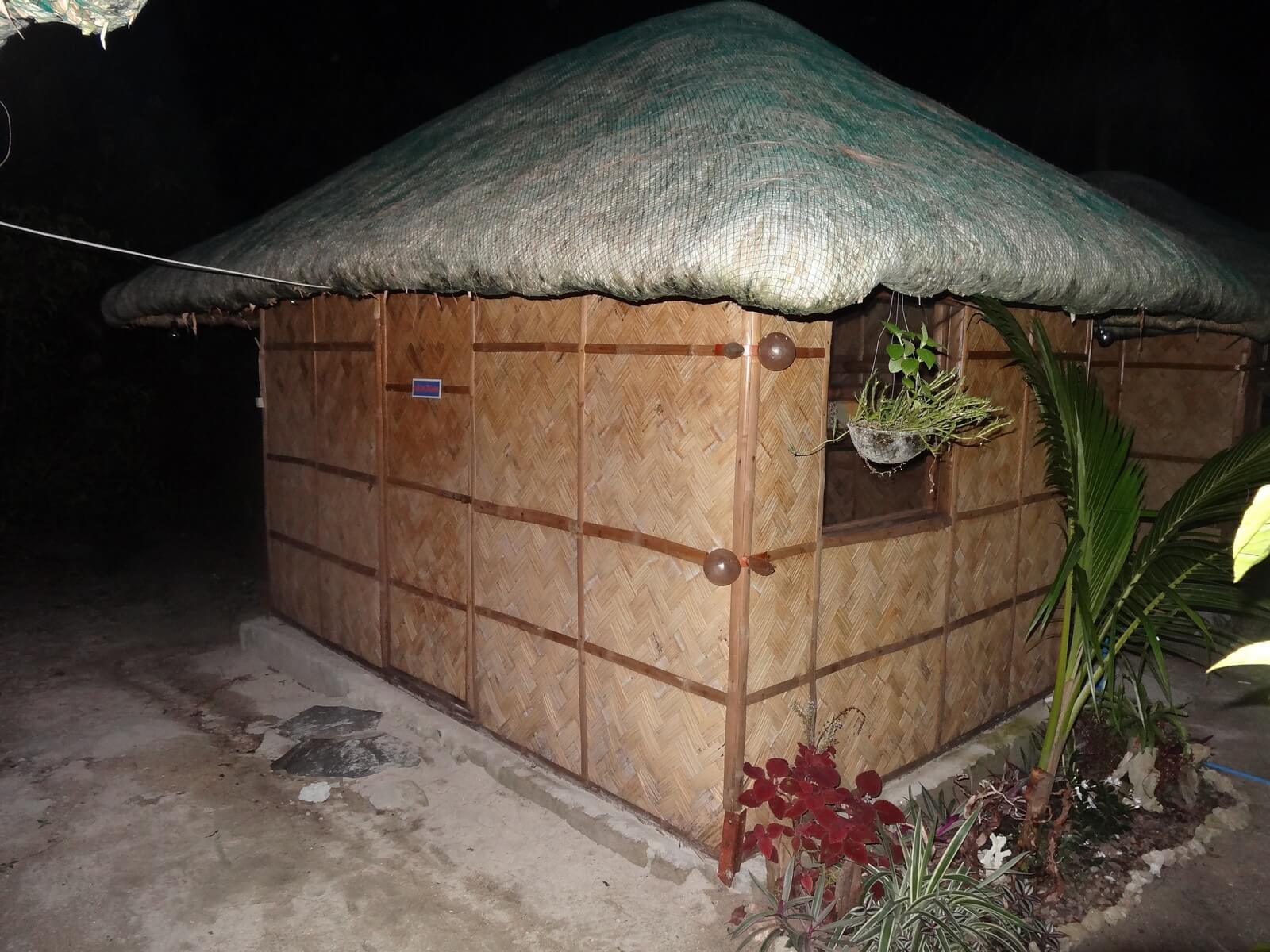
    Arriving at Dona Choleng is a refreshing change to the crash and bash of Manila. A collection of bamboo huts line the resort on one side and a handful of cabins line the other, with a private white sand beach lingering just a couple of footsteps away. A hut is 1,500 PHP ($33) for the night. I have no problems with that.

    Bali Huts at Dona Choleng

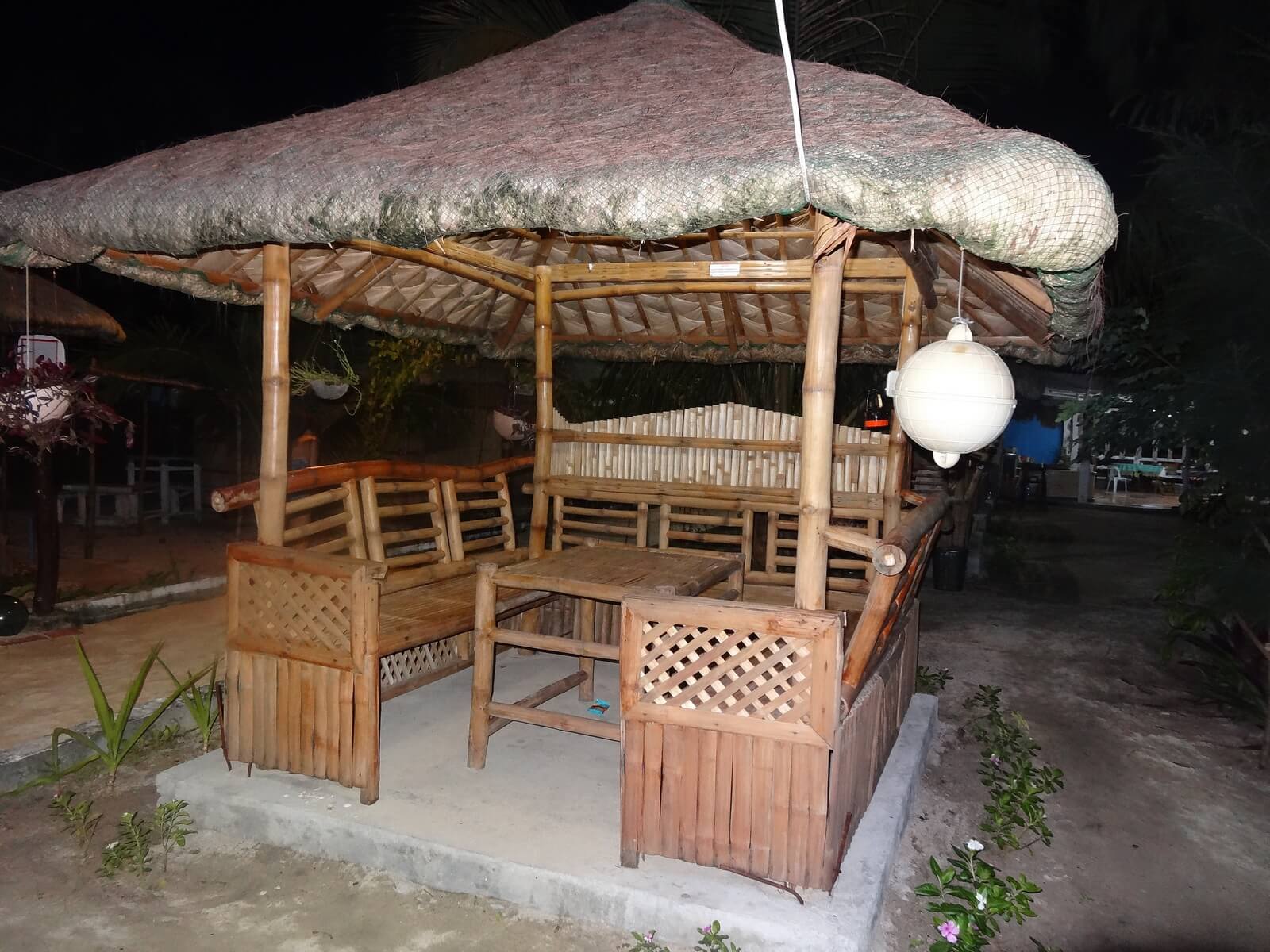
    Scattered throughout the resort are open air bamboo cabanas, where meals are served and you can relax with a drink at night. Not a bad way to enjoy the island breeze.

    Open air huts at Dona Choleng

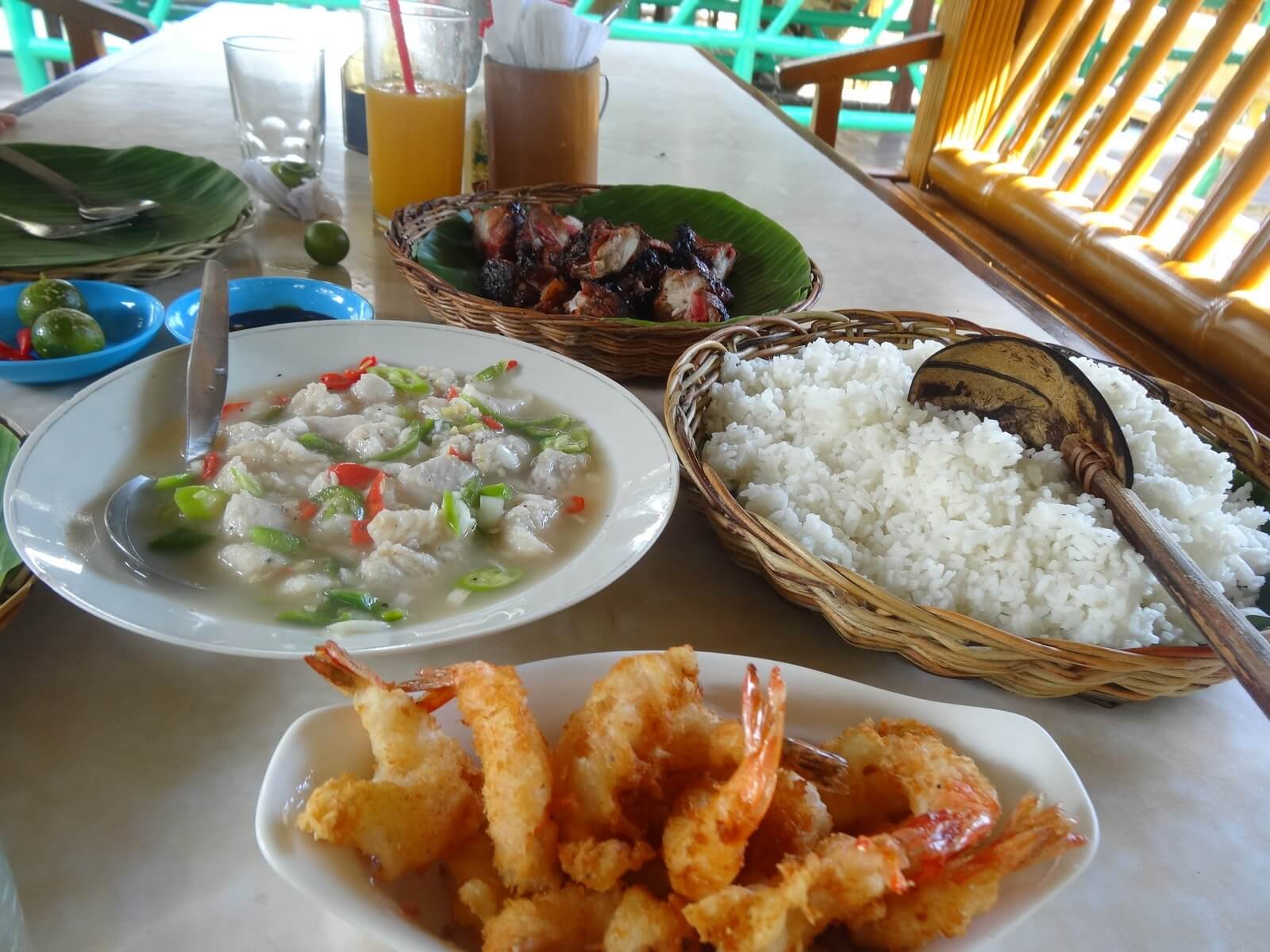
    I’m fed well at Dona Choleng. Our stay is fully catered; 800 pesos ($18) for 5 meals a day. At a resort? Yes, at a resort. I need to find more places like this. $18 at home barely gets me an uninspiring salad.

    Food at Dona Choleng

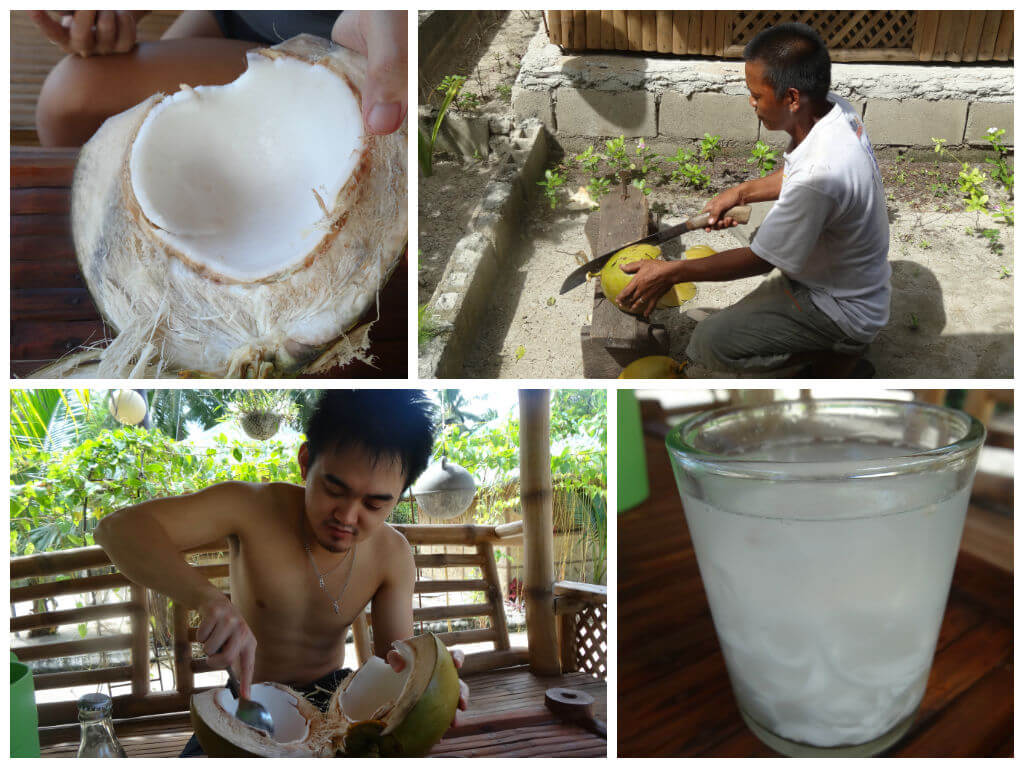
    During our first meal I start craving for coconut. In a flash, the staff hunt some down and cut them open, right before my eyes. I eagerly down the juice and devour the flesh. It’s magic. I’m convinced that a coconut a day keeps the doctor away. Apples only pale in comparison.

    Fresh Coconut!

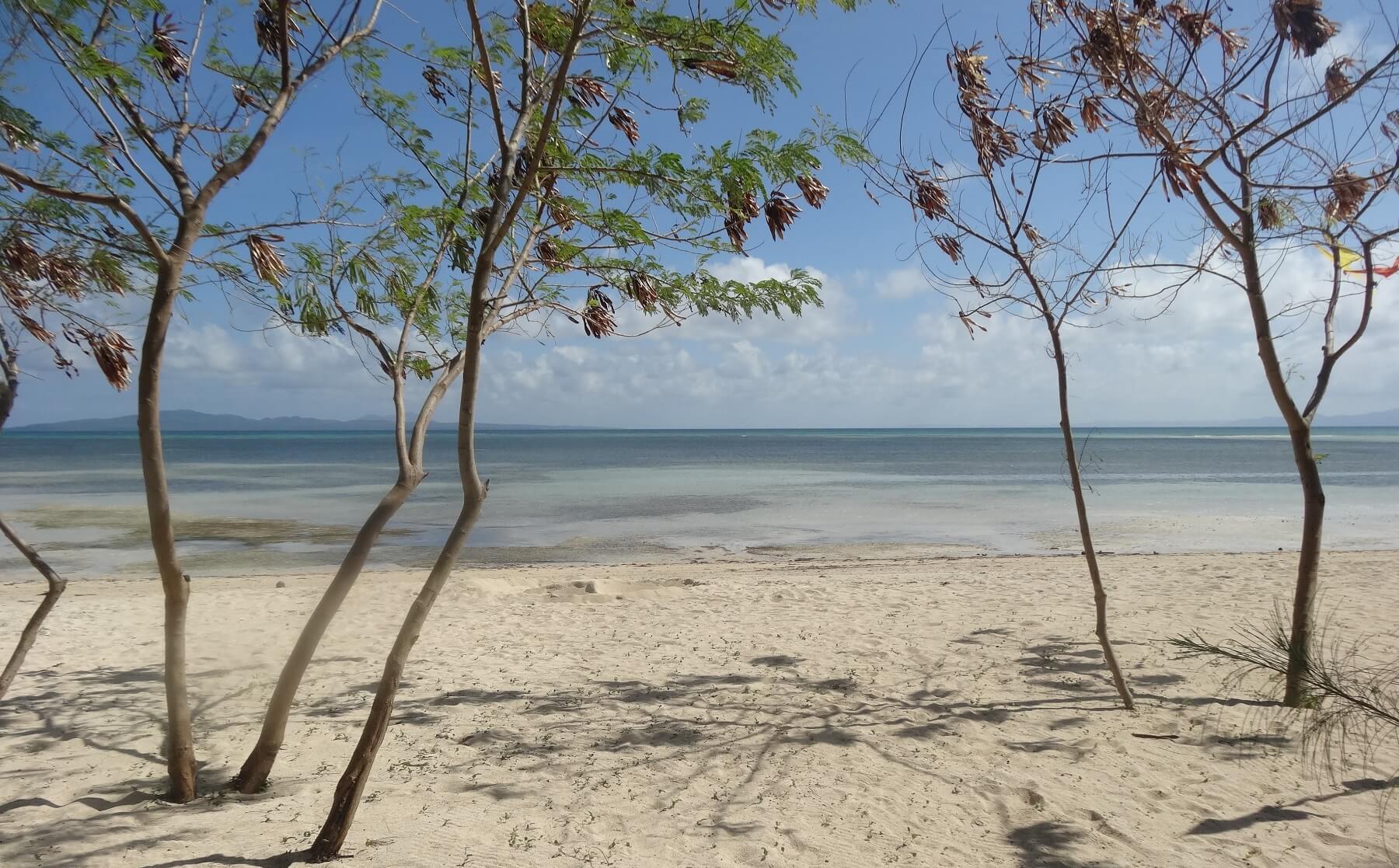
    After the gluttony it’s time to hit the beach. It’s November; high season is long gone. We literally have the entire resort to ourselves. Unsurprisingly, the beach is gorgeous. The sand a floury white, the ocean clear and warm. I float in the water and watch the clouds roll by. The freedom is intoxicating. An empty beach is good for the soul.

    The beach at Dona Choleng

    I sit down one afternoon with the owner Ryan who tells me the story of the place. Dona Choleng is the name of his Great Aunt, who more or less owns the entire island. Consequently, all the resort owners on the island are related. It’s a new resort, built in 2012. The condition of the place reflects that. He tells me I’m lucky I’ve arrived in November; earlier in the year around Holy Week (March-ish) he has over 200 guests at the resort, mostly high school students camping out along the beach. In another decade, that would’ve been heaven.

    Nothing like a warm, clear ocean

    I ask him about the local people and he explains there is an indigenous population living on the far end of the island, known as the Dumagan (I have no idea how to spell it). I’m intrigued. I ask if I could go visit them but he advises against it, mainly because they’re so far away.

    On our last day, Ryan heads back to Quezon to take care of some business, but before he leaves he offers to upgrade me to the resort’s luxury cabin for the night, for free. I make a mental note to remember his kindness, and somehow let him know it’s not forgotten (Thanks, Ryan!) Filipino hospitality is second to none.

    After two days of beaching, feasting and eating coconuts it’s time to get back on the road to Manila. However, not before a quick pit stop. Ryan recommends I stop by the town of Tayabas, to eat at a traditional restaurant known as ‘Kamayan’. I have no idea what it is, but I’m going.

    After checking out we trek back across the island, one of the resort staff leading the way. He brings us to the loading spot and bids us farewell. As he walks away I call him back and offer him a tip, to which he looks at me in utter surprise. I smile and urge him to take it. His reluctance makes me want to tip him even more.

    Time to leave...

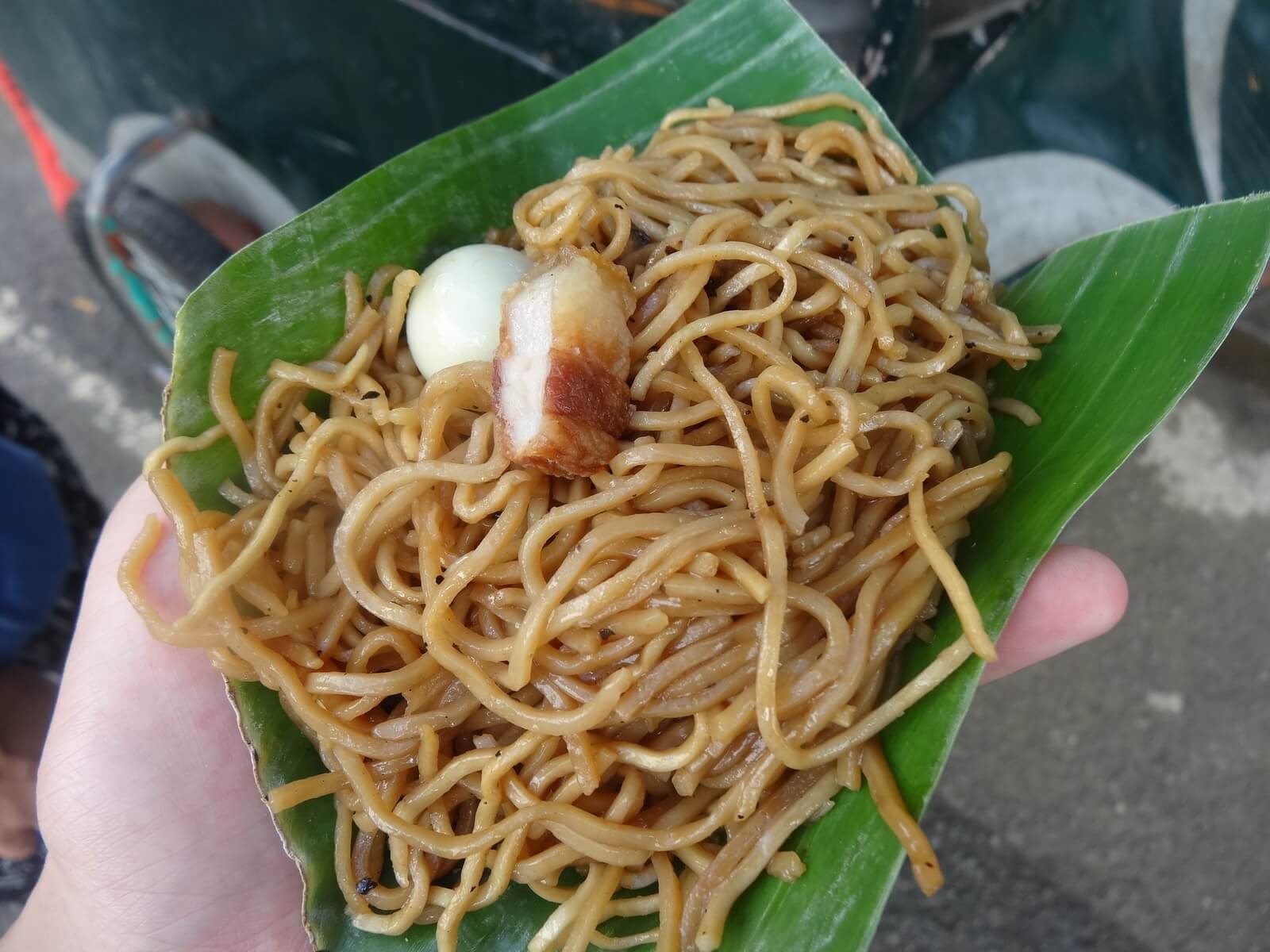
    After arriving back on the mainland I sample a local specialty on the way to the bus stop. The pancit habhab; noodles on a banana leaf, with a piece of pork and a quail egg. Easy, unpretentious food gets me every time.

    Pancit hab hab

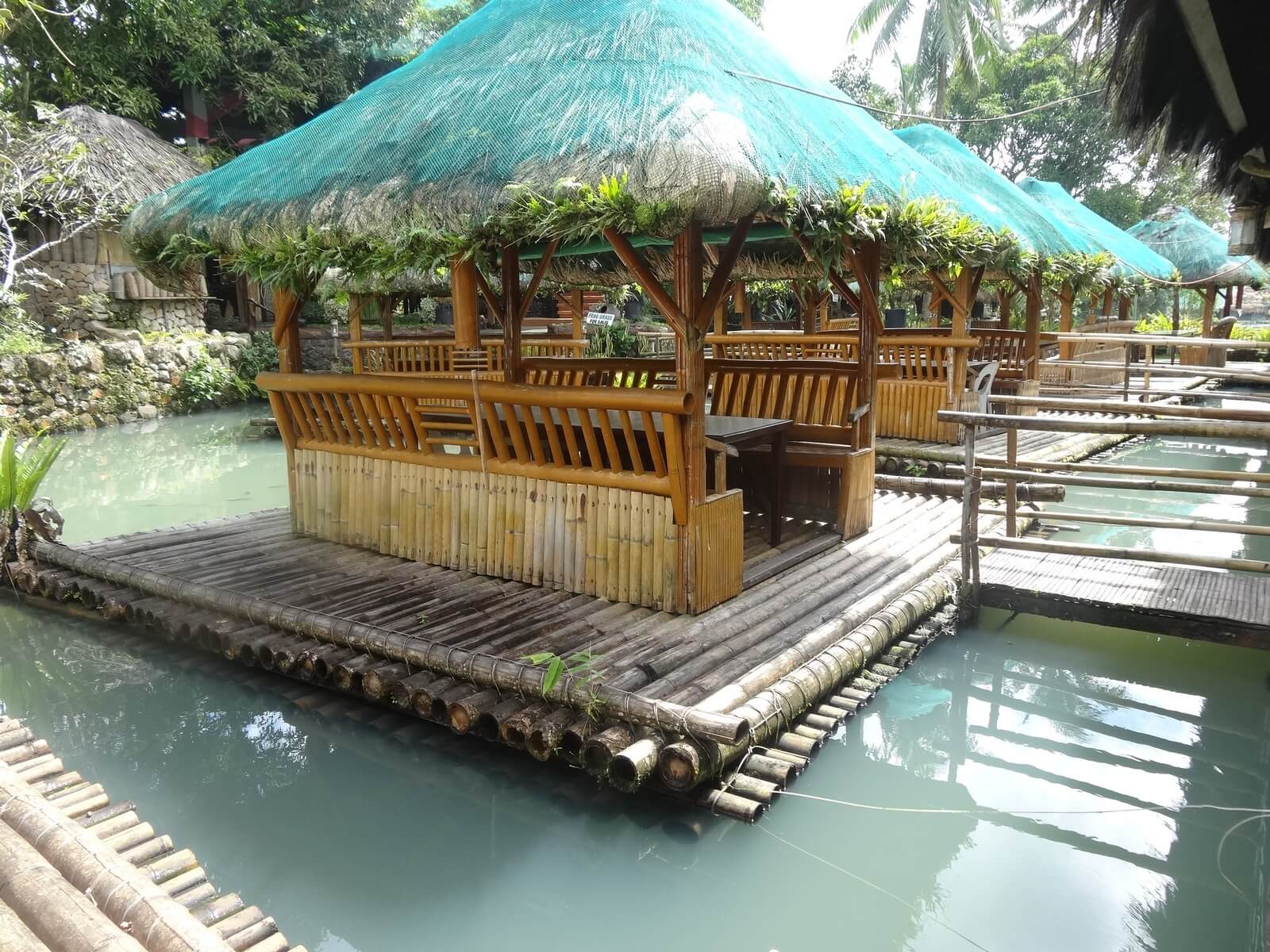
    We jump on the bus to Lucena, but alight in Tayabas to fulfill our side mission. We hail a trike and drop the name “Kamayan”. He nods as if he knows exactly where it is. A good sign. After a good 15 minutes out of the town centre we arrive at a restaurant called Palaisdaan. Despite the different names, I’m somehow convinced we’re in the right place.

    Palaisdaan restaurant

    It’s serene. Floating bamboo rafts, connected by a maze of bridges and a waterfall to watch over it all. Am I even in the right place? I don’t care. We have a shameless feast.

    A feast at Palaisdaan

    With full stomachs and happy hearts, we board the bus back to Manila, sleepy and worn, but also refreshed. Who knew two bus rides and an empty beach could be so inspiring.

    Thanks for the memories, Cagbalete Island.

    Heading To The Philippines and…

    Looking for tours and activities at an affordable price? I use GetYourGuide! Always great deals and local perks.

    For travel insurance, I always use World Nomads – get protected for just a few dollars a day!

    Somewhere to stay? Booking.com gives you the biggest selection and the best rates.

    This post is not sponsored and I paid for my trip and accommodation in full. You can read my disclosure policy here.

    World Nomads provides travel insurance for travelers in over 100 countries. As an affiliate, we receive a fee when you get a quote from World Nomads using this link. We do not represent World Nomads. This is information only and not a recommendation to buy travel insurance.

  • City Blueprint: Manila, The Philippines

    City Blueprint: Manila, The Philippines

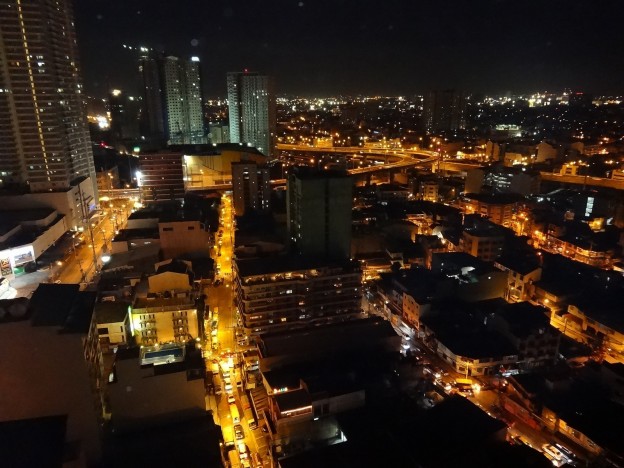
    The Philippines‘ capital is a lively, densely populated city, but with a chilled out vibe that sets it apart from the other metropolises in Asia. The Americanization of the city is in full force, from their accents to their fast food culture, but the people still retain their local charm in every way. The kindness of the Filipino people is chatted about in travel circles but it’s not until you touch down in the country that you realise how friendly and welcoming they really are. Life is not easy for many in Manila, but the smiles on their faces would tell you otherwise.

    The city itself is surprisingly modern, with world class shopping malls, hotels and apartments as well as a bustling economy that’s growing at rapid speed. However the sizeable gap between rich and poor means the city has it’s fair share of rough patches too.

    Metro Manila really is one of the forgotten gems of South East Asia. It hasn’t yet experienced the tourist floodgates but it’s not exactly untouched either. The result is a city just different enough that you’ll see one or two weird things every day but still feel right at home.

    Budget

    Bed: Decent hostel dorms start at around $10 USD. Hotels are around $30 USD upwards.

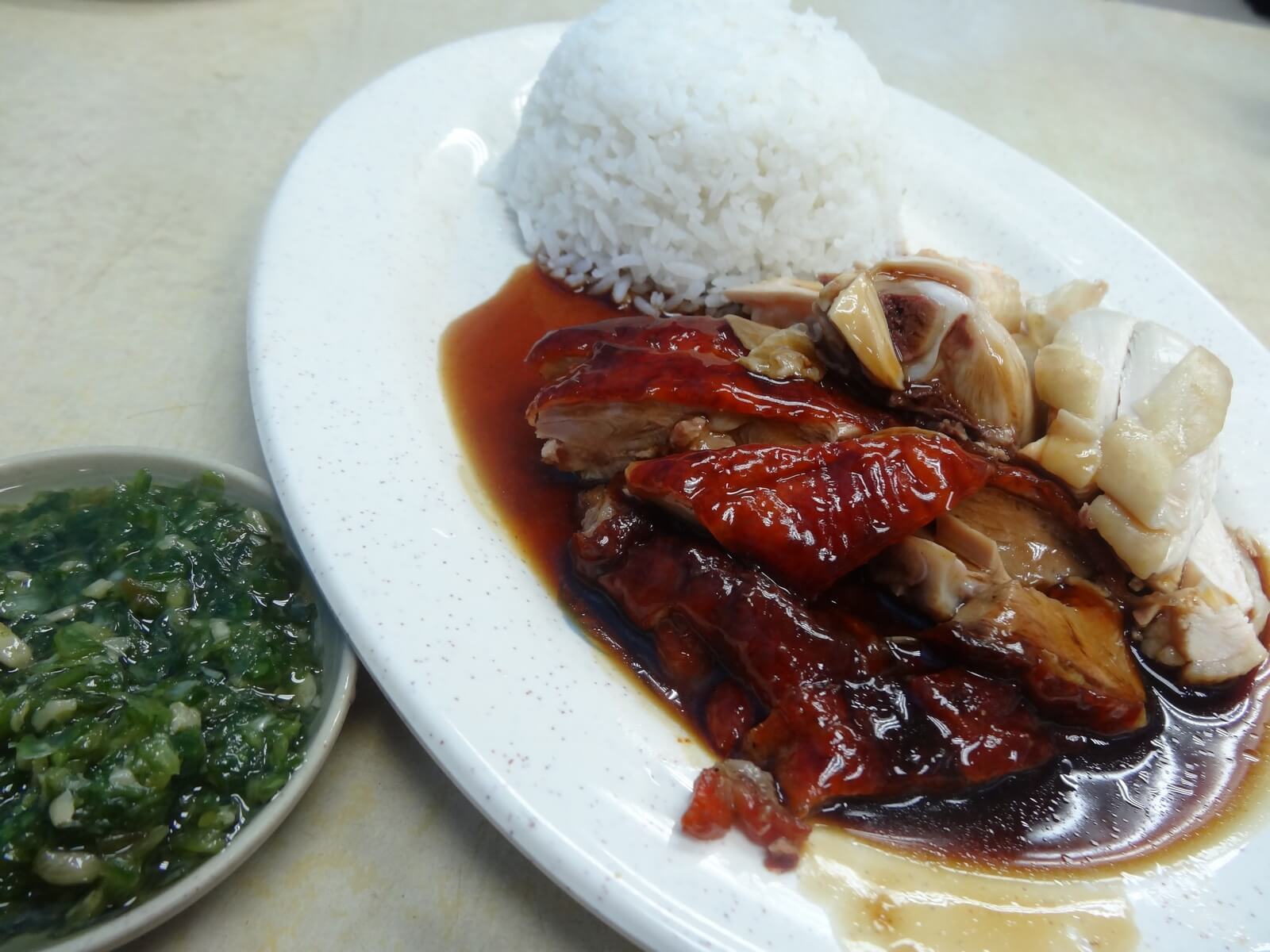
    Food: You won’t go hungry here. Jolly jeeps will feed you for around $1 and decent Filipino restaurants will set you back around $3-$5. Everything from street food to fine dining is available here.

    Drink: A bottle of water will cost around 50 cents. A beer in a bar will cost around $1.50.

    Transport: Taxi rides will cost around $3-$4 for a 20 minute ride. This should get you to most places in the city.

    First time in the Philippines? Fellow blogger Brenda has a great Philippines packing guide, with some other great tips too!

    I stayed at…

    24 Hour Apartment Hotel – This is excellent value for money and is located in Makati – Manila’s financial centre. It’s not quite in the business district but a $2 taxi ride will get you to the more happening places in the city.

    The cheapest room will set you back around $30 and comes with double bed, cable, aircon, good wifi, hot shower, daily bottled water and toiletries. There’s also a cafe/restaurant downstairs open all day that has great food at a reasonable price (around $4-$5 a meal).

    Accommodation isn’t actually that cheap in Manila. Tourism isn’t huge here and most foreigners that do visit are here on business. Upper end accommodation like Raffles Makati is much more prominent.

    If you’re staying longer term, there are plenty of condos around that you can rent. I found my place on Sulit

    If you’re heading to Manila, I would highly recommend checking out my accommodation guide.

    One thing you should eat is…

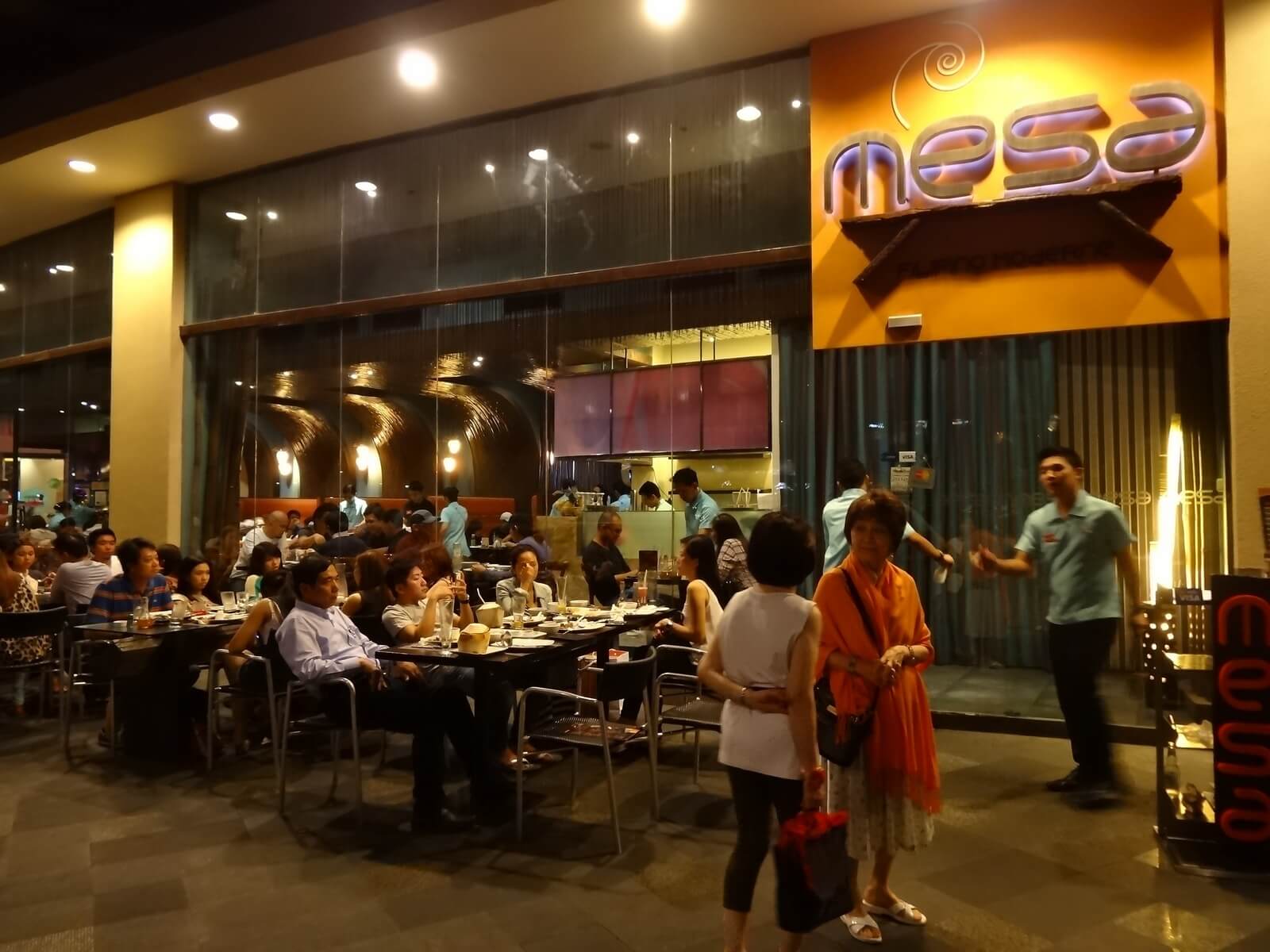
    My favourite restaurant in the city is Mesa. It serves ‘modern Filipino cuisine’, and everything on their menu just sounds ridiculously good!

    Mesa manila philippines

    It’s located in Greenbelt 3 Mall, and will quite often have a decent sized line outside. Don’t worry, it’s worth the wait!

    I loved Filipino food so much that I dedicated a whole post to it. Check it out.

    One thing you should drink is…

    A weng weng. This was the suggestion of the bartender after I asked him to make me a ‘traditional Filipino drink’. He tells me it tastes great, and is a harmonious cocktail of seven different spirits.

    Seven?

    Yes, seven.

    Of course, I say yes, knowing perfectly well that just one glass will knock me out.

    I was wrong. Half the glass was more than enough.

    Weng weng cocktail
    The mighty weng weng

    So what’s in this crazy Filipino cocktail? It’s made up of brandy, whiskey, tequila, gin, rum, grenadine, vodka, and just to be safe, a dash of fruit juice. You might think it sounds terrible, but it actually tastes pretty good (both when it goes down and when it comes back up).

    Try at your own peril.

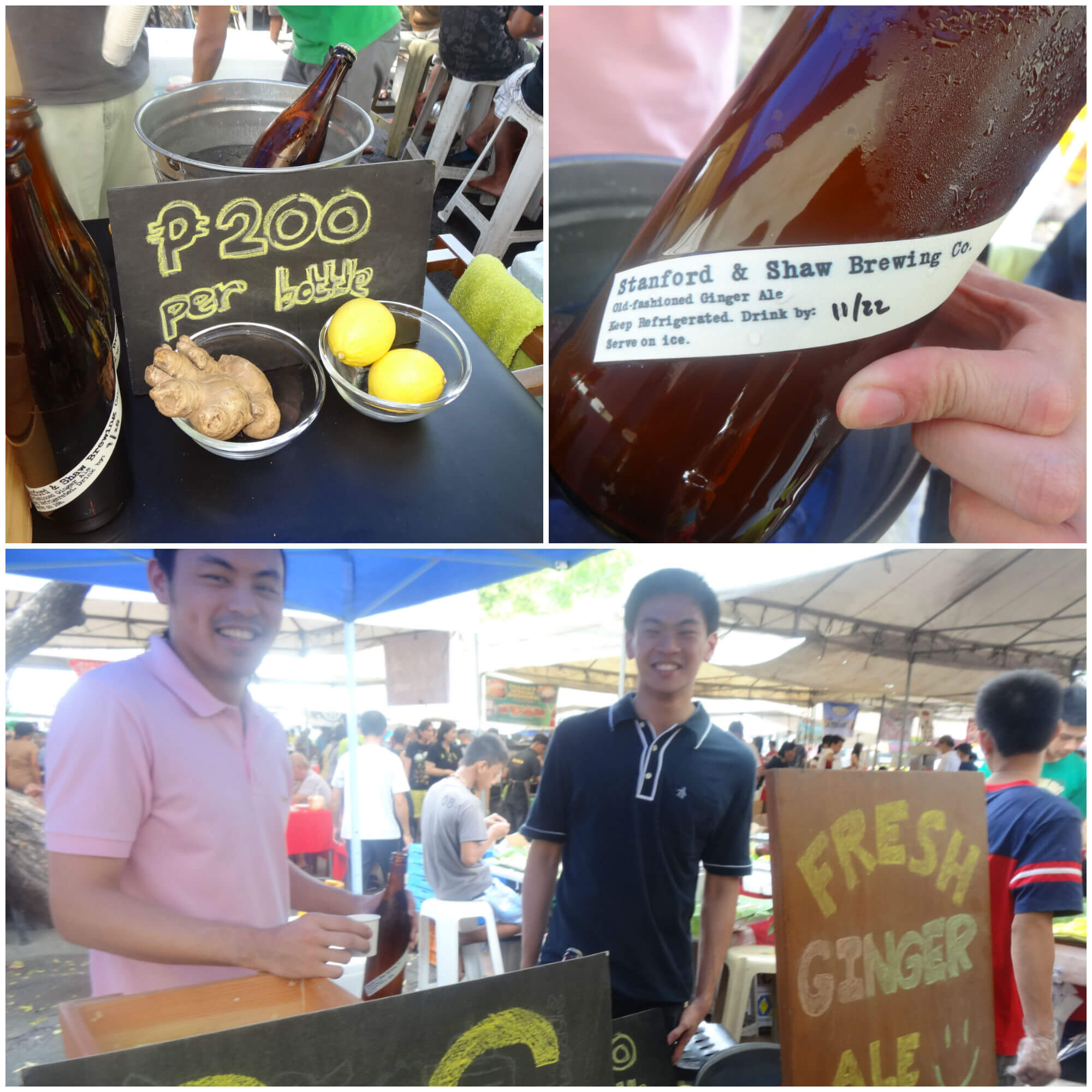
    I know I’m only supposed to choose one thing, but I’m going to make a special mention here. Make an effort to try the home made ginger ale by Stanford and Shaw, located at the Legazpi Sunday Market in Makati (corner Legazpi and Rufino Street). I remember growing up drinking Schweppes Dry Ginger Ale and every other brand just paled in comparison. Nothing even came close. When I finally found these guys in Manila they gave Schweppes a good kick in the poo hole. Their stuff is fantastic! They tell me that they brew and bottle ferment the ale fresh each week, probably in some underground science lab somewhere. If you’re a ginger ale fan, you owe it to yourself to hunt these guys down.

    S&S ginger ale

    Make sure you get there early. They sell 1L bottles for around $6 each and sell out every week! It took me 3 weeks before I finally woke up in time to get there early and snag a bottle.

    One place you should go to is…

    I was going to tell you to go to one of the shopping malls; Manila has some of the biggest and best malls in the world that rival even China and Bangkok. Then I realised you would’ve gone there anyway.

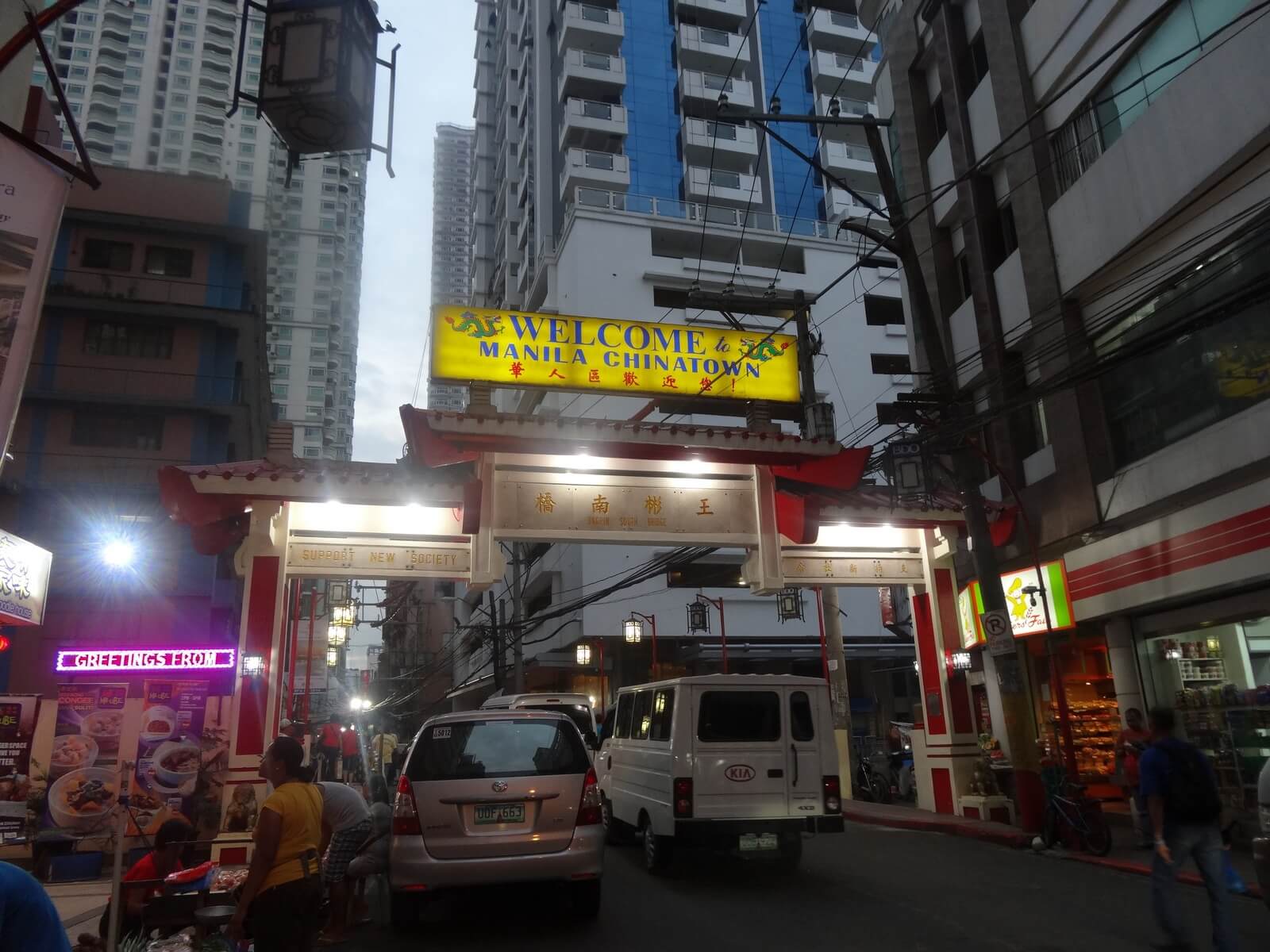
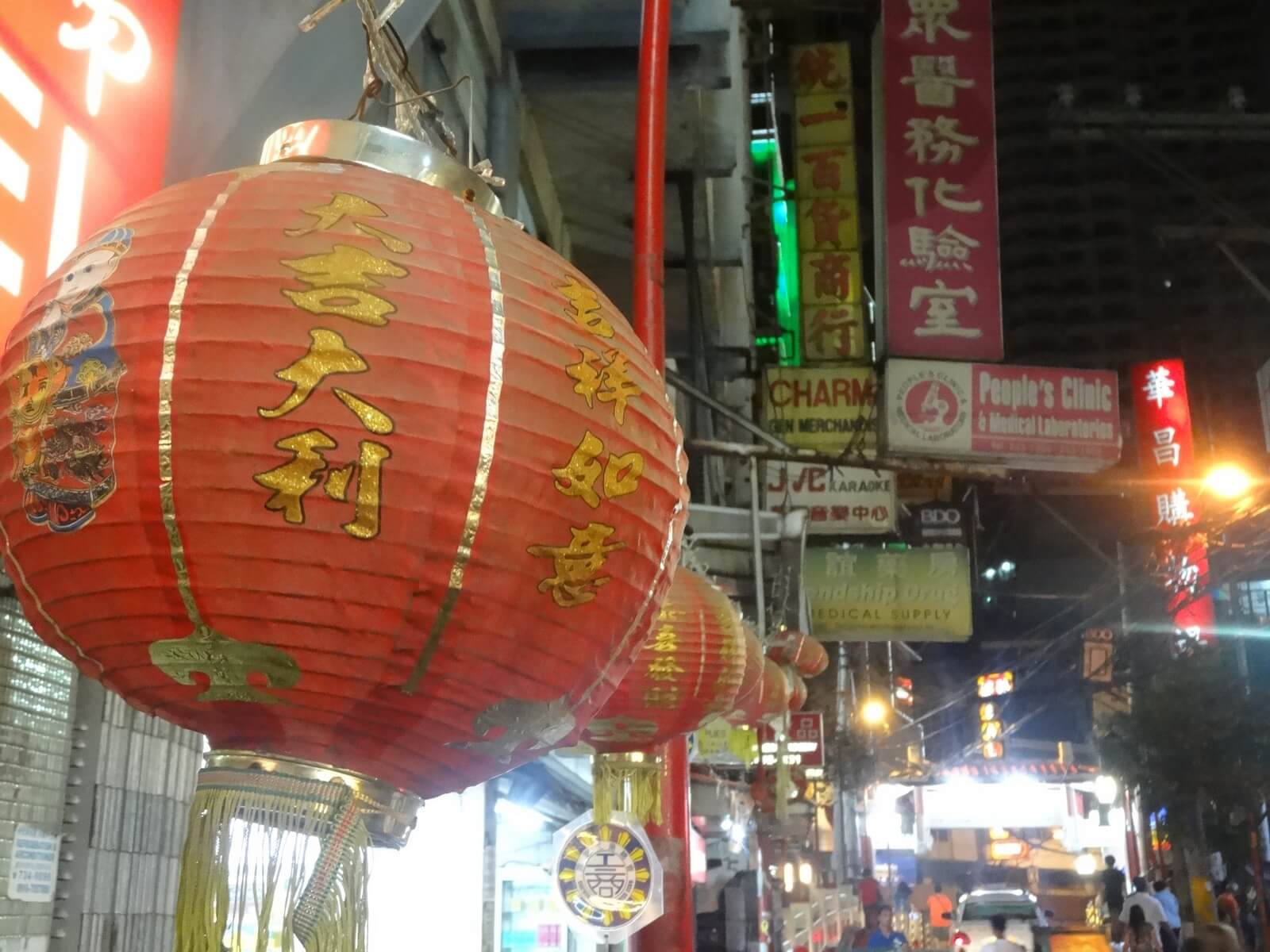
    So what else is cool? If you head out to Binondo you’ll find yourself in the first settlement in the country for Chinese immigrants. Established in 1594, this place is recognised as the world’s very first Chinatown. How’s that for original? Since then it’s served as a commercial and cultural centre for Manila’s Chinese, and has also seen it’s fair share of bloodshed while the Spanish were around, so it has a lot of history. Maybe it’s just because of my Chinese heritage, but I thought this place was pretty cool to see.

    For a full backpacking guide to the Philippines, check out this great guide by my buddy Tom.

    DSC03920
    Binondo
    Manila Chinatown

    One place you should party at is…

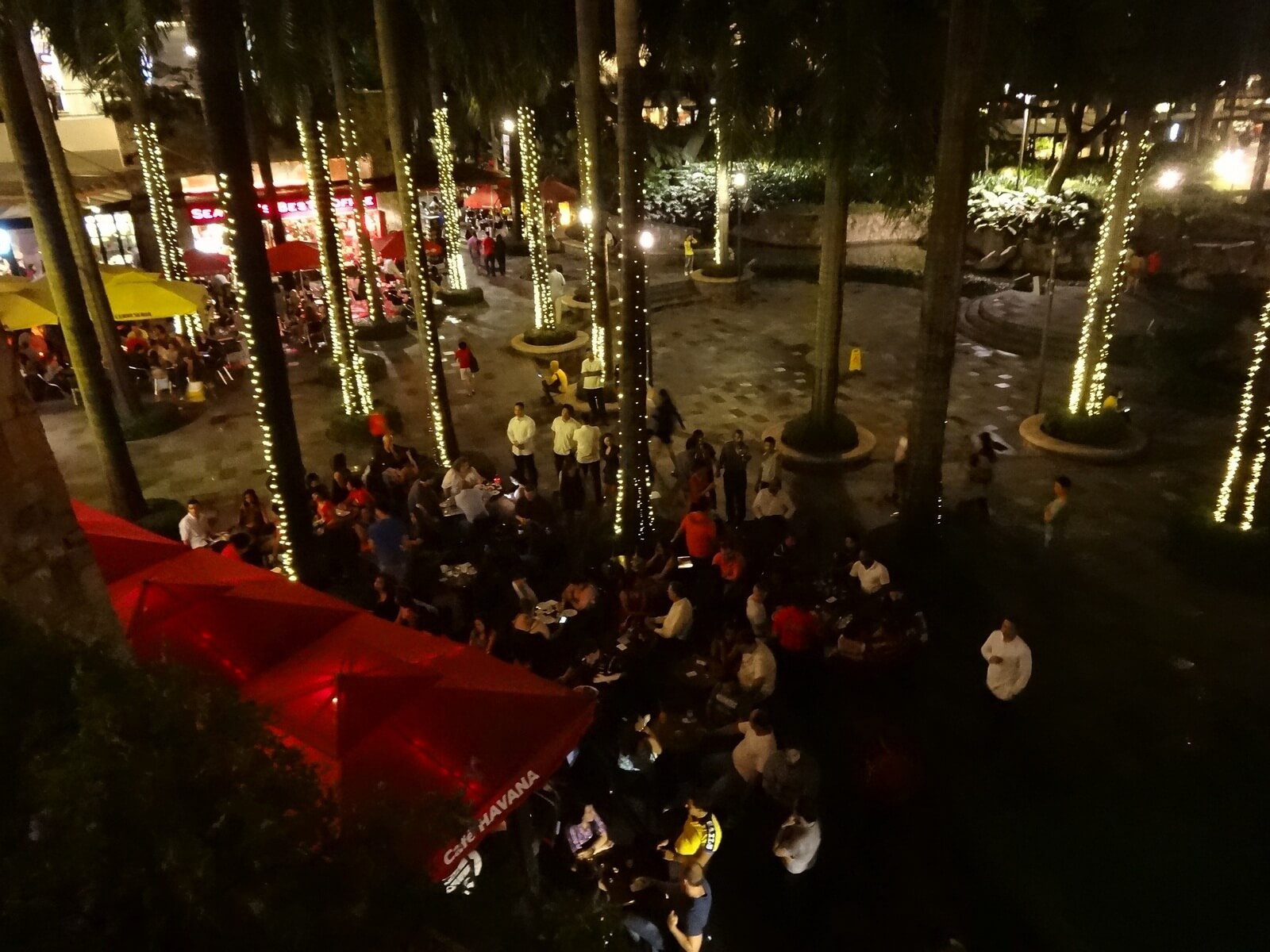
    I didn’t get to see much in the way of nightclubs, but Greenbelt 3 is a great place for a beer, mingling, some live music and a night of people watching. Club Havana and Cerveseria really pack out on Friday and Saturday nights, and the many bars around the corner are always loaded too.

    Club Havana/Cerveseria on Friday
    Club Havana/Cerveseria on Friday

    Bren’s Scorecard…

    Ease of entry 8/10
    No real visa issues and the country’s budget airlines always have great fares into the city. Flights leaving on time is a problem though.

    Food 8/10
    Local food is great and cheap, lot’s of international options and a pretty good fine dining scene too.

    Weather 5/10
    Pretty painful heat mid year but seems to be bearable outside those months. Flooding can be a problem when it rains.

    Safety 7/10
    The nicer areas like Makati and The Fort are very safe. The rougher areas might require more caution.

    Transport 8/10
    The jeepney system is a little hard to figure out, but taxis are very cheap and efficient. There’s also a rail system.

    Friendliness 10/10
    I would give an 11 if I could.

    Cleanliness 6/10
    Will vary depending on which part of the city you’re in.

    Daylife 7/10
    Incredible shopping and dining, lots of markets, and different parts of the city can make interesting day trips.

    Nightlife 7/10
    My knowledge of this is limited. Let’s go with a 7.

    Affordability 8/10
    Flights, food and transport are all extremely cheap. Accommodation is the killer, it has some of the more expensive budget hotels in South East Asia.

    Manila scores: 74/100

    I do my best to give an objective score based on my own experience of the city. If you disagree, I don’t care! Just kidding, I do 🙂 Did your experience differ to mine? Let me know in the comments below!

  • Manila Food Frenzy: The Best 29 Filipino Dishes You Need To Try!

    Manila Food Frenzy: The Best 29 Filipino Dishes You Need To Try!

    One of the first things I repeatedly heard from tourists in Manila is how much they dislike the food in The Philippines. After spending some time in the country I couldn’t have disagreed more. The food here is awesome!

    If you’re ever in The Philippines and looking to sample some local eats here’s a Filipino food list to get you started: 29 of the best Filipino dishes that I was wise enough to take a photo of and totally recommend.

    The best place to find them is in Manila, which is where I spent most of my time. The Manila foods scene is excellent and especially around Makati and Taguig, you’ll find some really great Manila cuisine and restaurants. But I also travelled up and down the country and I’m sure you can find many of these great Filipino dishes everywhere.

    1. Fresh Lumpia

    Fresh Lumpia

    The fresh version of lumpia is a bit like a spring roll crossed with a burrito. It’s big and fat and filled with meat, lettuce, carrots, peanuts, I think there was even some coconut in there. On the side there’s a sweet sauce, or you can opt for vinegar. It’s pretty awesome. Don’t forget to try the deep fried version – even more awesome.

    Get it at: The Legazpi Sunday market (corner of Legazpi St and Rufino St)

    2. Chicken Sotanghon

    Chicken Sotanghon philippines

    It kind of feels like The Philippines version of Grandma’s chicken soup. It’s got your chicken, shitake mushrooms, carrots, green onions, vermicelli noodles, who knows what else. All I know is that it’s super tasty and you need to try it.

    Get it at: Recipes at Greenbelt 3 (most other Filipino restaurants also serve it).

    3. Beef Mechado

    beef mechado

    I can’t decide if I like this. It’s prepared by taking a decent cut of beef, stuffing it with pork fat and then slow cooking it in a tomato sauce. Some potatoes and carrots are chucked in too. Sounds awesome right? I think it was a little too tomatoey for my liking, but it’ll grow on me.

    Get it at: Fely J’s in Greenbelt 5

    4. Paksiyo Baboy Bisaya (Pork and Banana Claypot)

    paksiyo baboy bisaya

    Shanks of pork simmered in a soy based sauce with bananas. It tastes as wild as it sounds. I freakin’ love it!

    Get it at: Fely J’s in Greenbelt 5

    5. Leche Flan

    leche flan

    While eating this I was trying to figure out how it was any different to creme caramel, because to me it tasted exactly the same. After some Googling I learned that the custard in this is thicker because they use condensed milk and more egg yolks. I couldn’t really taste the difference, which I guess means I’m a few years away from being a judge on Top Chef. Anyway, I had to include this on the list; it’s one of the country’s favourite desserts!

    Get it at: Any Filipino restaurant

    6. Chicharon

    chicharon

    Chicharon are like the Doritos of The Philippines.

    One of the most classic Filipino snacks, it’s eaten like corn chips or popcorn – the kind of thing you’ll open a big bag of while sitting down for a movie.

    Basically it’s deep fried pork skin, and aside from eating it on its own they also garnish various dishes with it. What’s it taste like? Well, kinda like a bag of very porky tasting cheetos. It’s a basic snack but definitely one of the country’s trademarks. The locals absolutely love it.

    Get it at: You will find it in most supermarkets and markets. 

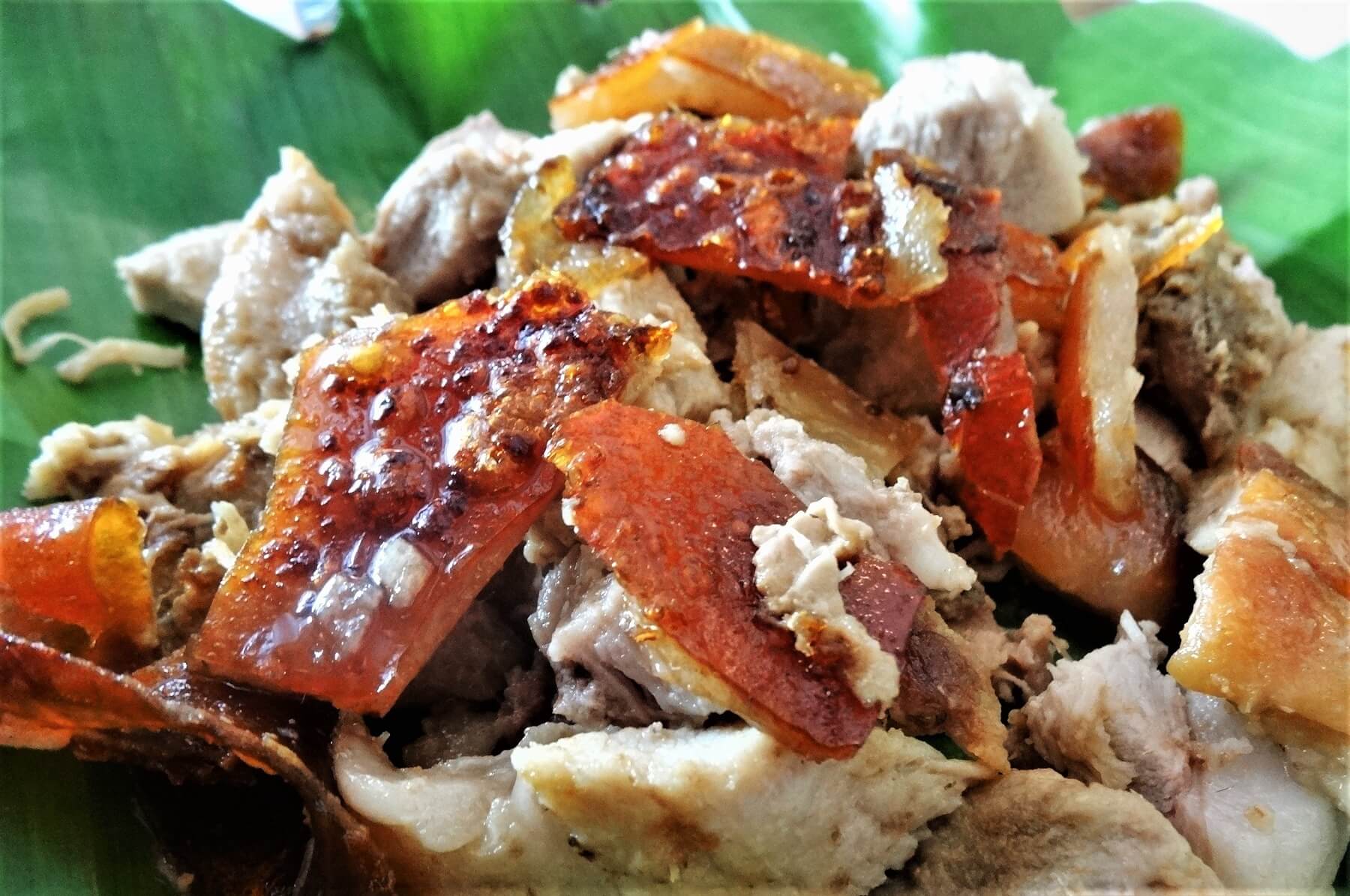
    7. Lechon

    lechon philippines

    So, I used to think the Chinese made the best pork.

    That is until I tasted lechon. Damn! Them Filipinos know how to cook a pig. This juicy, crispy masterpiece is something I won’t even try to describe. I had the privilege of attending a local baptism and they served up this freakin’ life changing roasted pig, I could’ve eaten the whole thing! Apparently the best lechon is from Cebu city, which is going to be my first stop on my next trip to The Phils. If I had to choose the best Filipino food on this list – this one would be pretty close to taking the spot.

    Get it at: Sabroso Lechon, one of my favourites (corner of E Rodriguez Ave and Tomas Morato)

    8. Bibingka

    bibingka philippines

    This is a type of cake made with coconut milk and baked in a banana leaf. I guess the idea is it’s supposed to end up tasting like coconut and banana, which it kinda does. You’re supposed to eat it hot, but not before lathering it with butter and coconut. The texture really reminded of a crumpet, especially with the melted butter seeping through it. I’m a fan.

    Get it at: A franchise called Bibingkinitan, or various street stalls around the city

    9. Kare Kare

    kare kare philippines

    This is a classic Filipino stew, consisting of oxtail, tripe, eggplant and Chinese veges. It has a strong peanut flavour and is served with shrimp paste on the side. It’s one of the flagship dishes here in The Philippines, but I can’t say I particularly enjoyed it. An acquired taste, perhaps.

    Get it at: Most Filipino restaurants

    10. Lomi

    lomi king philippines

    A classic dish from the Batangas area, this consists of flat egg noodles cooked in a very thick, eggy sauce. There’s also a whole bunch of other stuff in it depending on what variation you order (pork, seafood, chicken). It’s so thick that it’s almost like a cross between a noodle soup and a stew. On the side it’s complemented with a sauce of freshly diced onions, chili, calamansi and soy sauce. Put the two together and BAM! It’s seriously magic.

    Get it at: Lomi King in Lipa, Batangas

    11. Chami

    Chami Philippines

    After eating the Lomi I found out it had a little brother known as Chami. This is the dry version of the dish, and obviously I had to try it and see what it’s all about. It’s not really too different from a noodle stir fry, but it comes with a tasty dipping sauce/soup that I don’t remember the name of. Anyway, if we’re choosing between Lomi and Chami I’m taking Lomi any day of the week.

    Get it at: Lomi King in Lipa, Batangas

    12. Kilawin Na Tanigue

    kilawin filipino food

    Kilawin is a dish where raw fish is marinaded in vinegar and lemon/lime juice. The high level of acidity cooks the fish and it’s flavoured with a bunch of other stuff like chili, capsicum, spring onion and tomato. You’re probably thinking it sounds very similar to ceviche or the Fijian kokoda, but the taste is rather different. I found ceviche to be very fishy, kokoda to be very spicy and kinilaw to be very sour. All catered for local tastebuds I guess.

    Get it at: Most Filipino restaurants

    13. Pancit Bihon Guisado

    pancit bihon guisado filipino dish

    Bihon Guisado is a perfect example of great tasting, unpretentious Filipino food – some scallions, cabbage, celery, carrots, chicken and vermicelli tossed in soy sauce and topped with calamansi juice. Fast, cheap and awesome. Love it.

    Get it at: Most Filipino restaurants

    14. Crispy Pata

    crispy pata filipino dish

    One thing you’ll notice when eating around The Philippines is that they’re completely obsessed with their pork, which is probably why they cook it so well. Enter the crispy pata – a pork leg/knuckle deep fried to perfection and then sided with chili, calamansi and a variety of dipping sauces. I ate it a couple of times, one homemade one and one from a restaurant. Needless to say the homemade one was mouth watering but the restaurant cooked one wasn’t too bad either. If you’re a pork man it might just change your life.

    Get it at: Most Filipino restaurants. The crispy pata in the picture is from Kabila Museum Cafe at Ayala Museum, but I think it’s a little expensive for what you get. Manila food can be expensive in some areas – not that it isn’t worth it, but just make sure you’re aware!

    15. Sinigang

    sinigang filipino food

    If you’re a fan of sour soups like Thailand’s tom yum or Hong Kong’s hot and sour soup then sinigang is totally going to rock your world. I had one of these for breakfast almost every day during my month on Boracay. It’s a tamarind based soup with a whole bunch of other goodies in it, most commonly tomatoes, green beans, spinach, green mango and various other possibilities. I tried quite a few variations (pork and shrimp are the most popular), but I’d say the classic pork is probably my favourite. I can’t believe it’s taken me 27 years to try it.

    Get it at: Most Filipino kitchens. If you’re a fan go and try the Corned Beef Sinigang at Sentro in Greenbelt 3.

    16. Kaldereta

    kaldereta filipino food

    I’m always a sucker for hearty meaty stews so when I met my first Kaldereta we really got along. It’s a basic dish made by stewing cuts of meat in a tomato/liver sauce until tender, with a few carrots, potatoes and capsicums thrown in too. I’ve seen it with most meats but the lamb was easily my favourite.

    Get it at: Most Filipino kitchens. Try the lamb kaldereta at Sentro in Greenbelt 3.

    17. Adobo

    adobo filipino dish

    If you’re after Philippines traditional food, this dish might be them most traditional of them all.

    I saw this dish on pretty much every Filipino menu I set eyes on. It’s a basic meat dish which is simmered in a marinade of oil, soy sauce, vinegar and garlic, and sometimes later pan fried to give it a crispy surface.

    Like most dishes here they might often add a variation of other veges (onions, potatoes, capsicum). If you’re a budget traveler, this dish is always a tummy pleaser and usually very easy on the wallet.

    Get it at: Any Filipino kitchen or jolly jeep.

    18. Ginataang Papaya

    ginataang papaya filipino dish

    Tried this bad boy at a jolly jeep and was so pleasantly surprised. Green papaya shaved into thin slices and cooked in coconut milk and pork bits. Who knew it could taste so good?

    Get it at: You’ll have to look around the jolly jeeps and Filipino restaurants, I’m really not sure how popular it is!

    19. Bacolod Chicken

    bacolod chicken filipino dish

    Due to my fast increasing age and waistline I’ve been trying to eat grilled chicken wherever possible and turn a blind eye to KFC and Chicken McNuggets. My solidarity to this goal can waver rather easily but this wasn’t a problem in the Philippines thanks to the amazing bacolod chicken. I have no idea how they cook it, but from peeking into the kitchen I can tell you they employ a charcoal grill and probably brush some special sauce onto it, who knows. All I know is it tastes amazing. Don’t forget the soy sauce/calamansi/chili combo sauce on the side either.

    Get it at: My favourite is Bacolod Express, but there’s various chains around the city.

    20. Balut

    filipino dish balut

    After hearing about the infamous Balut over and over again I just had to try it. For those who have never heard of it, balut is a street food delicacy in the Philippines; a fertilised duck egg, boiled and eaten once the embryo is half developed. From Wikipedia:

    “In the Philippines, the ideal balut is 17 days old, at which point it is said to be ‘balut sa puti’ (“wrapped in white”). The chick inside is not old enough to show its beak, feathers or claws, and the bones are undeveloped.”

    If you’re looking for Filipino delicacies, this is the crowned jewel.

    When the guy handed it to me I nearly dropped it, it was scorching hot!

    After cracking the shell I saw a small amount of juice which you’re supposed to drink, so I did, which tasted very eggy. After that I just peeled it like a normal boiled egg and ate it. There were a few funny textures but nothing overly weird; in all honesty, it just tasted like a boiled egg. Talk about an anti climax. If you’re ever in The Philippines you should definitely try it, it doesn’t taste bad at all, and is apparently great for you.

    Get it at: At night you will hear the sellers riding around the streets on bikes screaming “Baluuuuuut!”

    21. Tablea Tsokolate

    tablea tsokolate filipino dish

    As the story goes, the Spanish colonists began this tradition of growing cocoa in The Philippines as the tropical weather was perfect for it. This tradition has continued until today with growers harvesting, drying, roasting and then grinding  fresh cocoa beans into tablea or ‘tablets’. This is used in various Filipino delicacies, including tablea tsokolate – a local style hot chocolate.

    The tablea is supposed to have a few minor differences to regular cocoa, which I did manage to find out but I’ve since forgotten. If you know, please share!

    Get it at: I got one roll at SM department store and another at the bus stop in Lipa.

    22. Bulalo

    bulalo filipino dish

    I fell in love with Bulalo the moment it touched my lips. To cook this they get a nice, fat beef shank, let it boil in a broth until all the bone marrow and fat has melted into the soup and then throw some veges in to top it all of (usually cabbage and corn). The soup is so beefy and flavoursome, probably because they leave it simmering in those massive pots all day (see pic). My mouth is actually watering furiously as I type this. It is seriously delicious.

    Get it at: Al Goto King Special Bulalo in Batangas City. It’s not as common in Manila but quite a few Filipino kitchens will have it.

    23. Buko Pie

    buko pie filipino dish

    If you travel anywhere by bus in The Philippines you will surely experience the street vendors jumping on board screaming “Buko pie Buko pie!!” After seeing a number of people buy these I came to the conclusion that this Buko pie thing must be a pretty big deal so I had to try one. This blog post on Our Awesome Planet laid out the best brands and eventually I got my hands on a Colette’s pie.

    It’s awesome, for real. I did not expect it to be that good. The texture reminded me of a really good apple pie, it had a nice firm pastry with a lovely crust, and it had that ‘freshly baked’ smell, the kind that weakens your knees as you walk past a bakery in the morning. Partner it with a scoop of vanilla ice cream and you’ll probably end up packing a suitcase of them to take home with you.

    So, what exactly is a buko pie? Just a well baked pie packed with young slivers of fresh coconut and condensed milk. How they make it taste so good, I have no idea.

    Get it at: I think it’s easiest to find the famous brands at their stores in Laguna, but you can find them at bus stops and markets too.

    24. Turon

    Photo & Video Sharing by SmugMug

    Take a few slices of banana, wrap it in a spring roll wrapper coated in brown sugar and then deep fry it. Sound delicious? That’s a turon! And yes, it tastes as good as it sounds.

    Get it at: I bought mine at a bus stop in Lipa. Also got served to me at a resort in Quezon.

    25. Ilocos Empanada

    ilocos empanada filipino dish

    Many countries have their own spin on empanadas, so it was no surprise their was a Filipino empanada too!

    This is a snack native to the Ilocos region, hence the name, but I seemed to keep running into it in the various Manila markets. The reason it kept catching my eye was the orange dough; it’s almost a neon orange before it’s cooked. However that’s not the only difference to standard empanadas.

    Inside it’s packed with sausage meat, green papaya and a whole egg, and you’ll notice from the photos that the shell is unusually thin. Once it’s deep fried and ready to eat you need to do what you do with everything else in The Philippines – splash it with vinegar!

    Get it at: Cucina Andare market outside Glorietta 3 (Fri, Sat, Sun), food market at Mall of Asia (Fri, Sat, Sun) or the Legazpi Sunday Market (cnr Rufino/Legzpi St).

    26. Longaniza

    longaniza filipino dish

    Longanisa is a type of sausage that they often eat for breakfast here. Every region of The Philippines has their own specialty, so depending on which one you choose you might get sweet, sour, garlicky, fish, chicken, beef etc. Although almost every time I ate it in Manila it was sweet and garlicky.

    Get it at: Any supermarket, food market or Filipino restaurant during breakfast.

    27. Banana Ketchup

    banana ketchup filipino dish

    Not your regular ketchup. It’s made from mashed bananas and you’ll definitely taste the subtle difference (less tang, more sweet). During WW2 there was a shortage of tomatoes and the ketchup makers decided bananas were the next best thing. Judging by it’s popularity today it seems the tomato never really made a comeback – banana ketchup is now a centrepiece of Philippines food culture.

    Get it at: Any supermarket. Restaurants will likely have it if you ask for it.

    28. Isaw

    isaw filipino dish

    Another popular street food in The Philippines, this is a grilled skewer of chicken or pig intestines. Splash some vinegar over it and away you go. I’m a fan of the flavour but the texture, not so much (it’s a bit powdery). It’s so popular here that you have to try it at least once.

    Get it at: Cucina Andare market outside Glorietta 3 (Fri, Sat, Sun), food market at Mall of Asia (Fri, Sat, Sun) or the Legazpi Sunday Market (cnr Rufino/Legzpi St).

    29. Bangus

    bangus filipino dish

    Bangus (milkfish) is the country’s national fish and I ate a lot of it!

    It’s a classic Filipino breakfast, usually paired with a side of garlic rice and egg. Before trying it I wasn’t sold on the idea of fried fish for breakfast (I’m more of a fresh fruits kinda guy), but after the first time it quickly became my breakfast of choice. With the trademark drizzle of vinegar it’s quite the kickstart to your day.

    Get it at: Any Filipino restaurant during breakfast.

    Heading to Manila and…

    Looking for tours and activities at an affordable price? I use GetYourGuide! Always great deals and local perks.

    For travel insurance, I always use World Nomads – get protected for just a few dollars a day!

    Somewhere to stay? Booking.com gives you the biggest selection and the best rates.

    Have fun and get fat! 😀

    B

    Eat like crazy in Manila! This city is an undercover hotspot for foodies, with a ton of trendy restaurants opening up all over town. Filipino food, if done right, is magnificent. Here are 29 dishes to keep on your list as you eat through the city.
  • Legacy Gym Boracay: Learning To Fight In Paradise

    Legacy Gym Boracay: Learning To Fight In Paradise

    While flicking through fun things to do in Asia I floated the idea of learning some martial arts. After all, with all that Ong Bak and Ip Man running through my head, how could I resist?

    The first genius idea that popped into my head was to join a Muay Thai camp in Thailand, spending the afternoons punching pads and getting kicked in the head and spending the evenings chowing down delicious Thai food on a secluded beach somewhere.

    After some Googling, I was already convinced this was the best idea ever and was in the process of booking my ticket when I learned of a place called Legacy Gym, a new MMA gym on the Filipino island of Boracay, who had some great boxing coaches and was run by former world Muay Thai champion Ole Laursen. A boxing camp in the Philippines? Learning Muay Thai from some of the best? I’m in.

    I had never been to The Philippines and didn’t know much about the country at all, which in itself was a great reason to go there, but the island of Boracay just didn’t sound like a good fit. Party island. Lots of tourists. Lots of bars. Lots of passed out Aussies who can’t handle their booze. I had envisioned a quiet, secluded place where I could revive myself in a Mr Miyagi like environment, and Boracay certainly wasn’t it.

    However, after reading about it I was intrigued. Here was this tiny island that was raved about online, winning award after award for best beach on the planet. I just had to see it for myself.

    It only took a few days for me to fall in love with the place. Legacy Gym’s tagline is “Train in Paradise” and I really can’t describe it any better than that. The culture is so laid back, the people are wonderful and the atmosphere has a soothing energy that makes you never want to leave. It’s incredible that it has somehow retained it’s local charm, despite the huge number of tourists that flood the island each year.

    Let me tell you about a day on Boracay. You wake up at 11am and indulge in a hearty Filipino breakfast; eggs, rice, sausages, maybe a soup. It’ll cost you around $3. Then take a seat in one of the many cafes with your Kindle and sip away at a fresh mango shake, looking out over the award winning White Beach.

    At 2pm, it’s time to head to Legacy. Spend the next 4 hours with pro fighters who will push you to get into the best shape of your life, while the Boracay heat causes you to uncontrollably sweat your demons away.

    Once training is over it’s time to walk back to your room under the amazing Boracay sunset, the floury white sand beneath you to soothe your aching feet.

    Diniwid Beach sunset

    Then to soothe the rest of your body, get a traditional Filipino ‘Hilot’ massage for $8, lying just a few metres from the ocean.

    Once that’s out of the way head to one of the beach bars and order yourself a gin and tonic. Sit back and enjoy a live acoustic set, dip your bruised toes in the sand, smoke a mint sheesha and relax the night away.

    IMG_1855

    Go to sleep, wake up, and repeat.

    If that’s not paradise, I don’t know what is!

    Training at Legacy

    Let me start off by saying you don’t need to be a “fighter” to train here. The closest I’ve ever been to a fight is when I used to try out Tekken moves in my bedroom when I was 10. The gym is simply a place where you can challenge yourself physically and learn about the many martial arts disciplines.

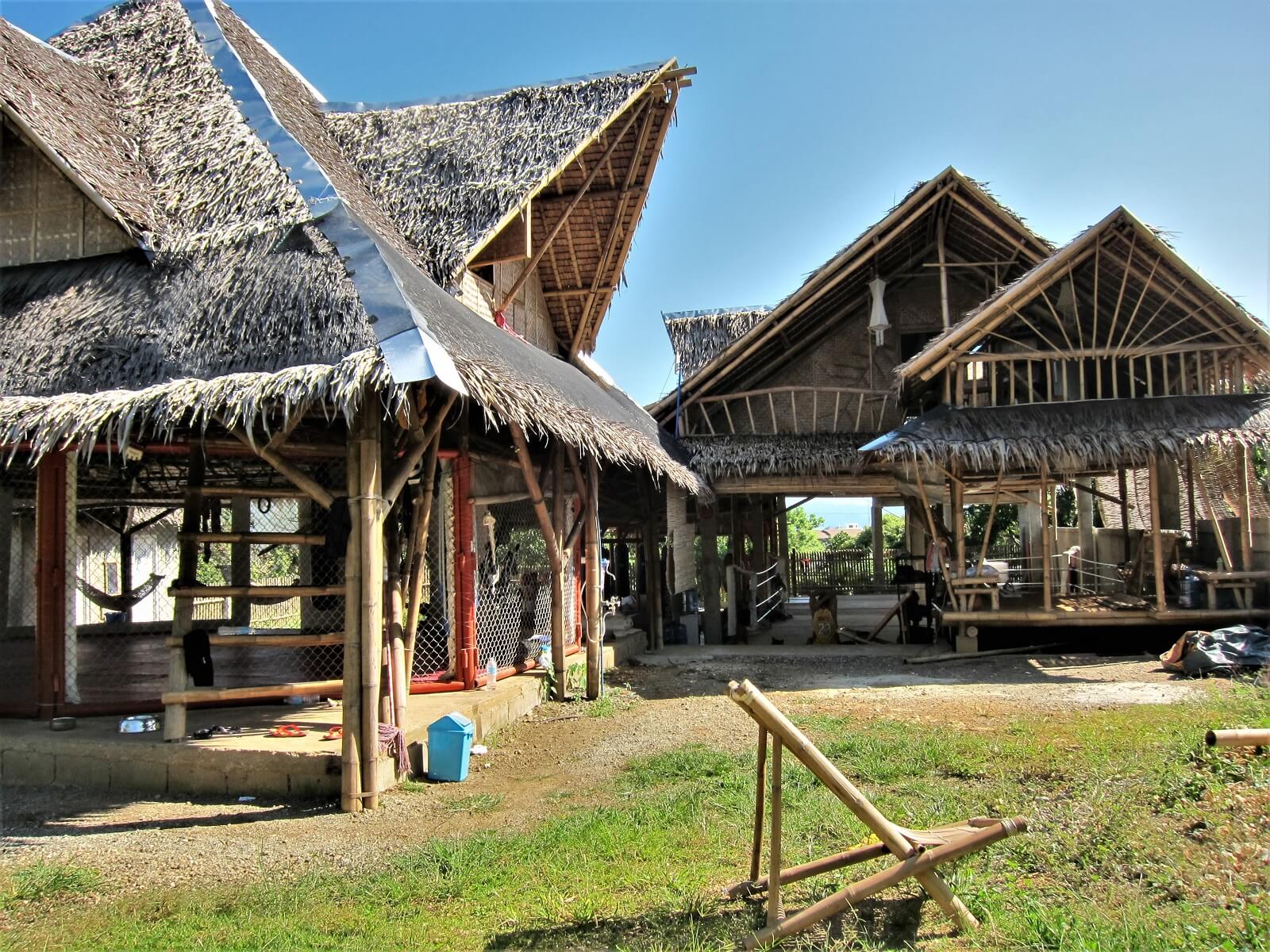
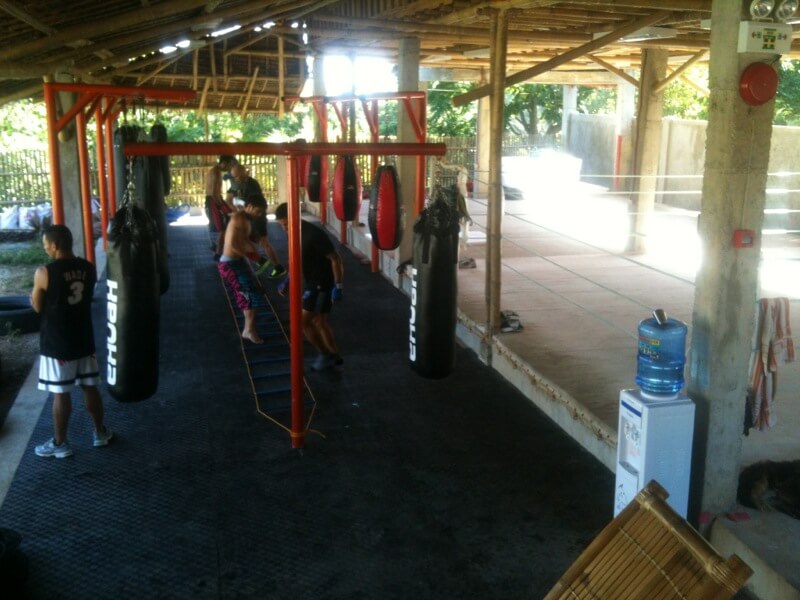
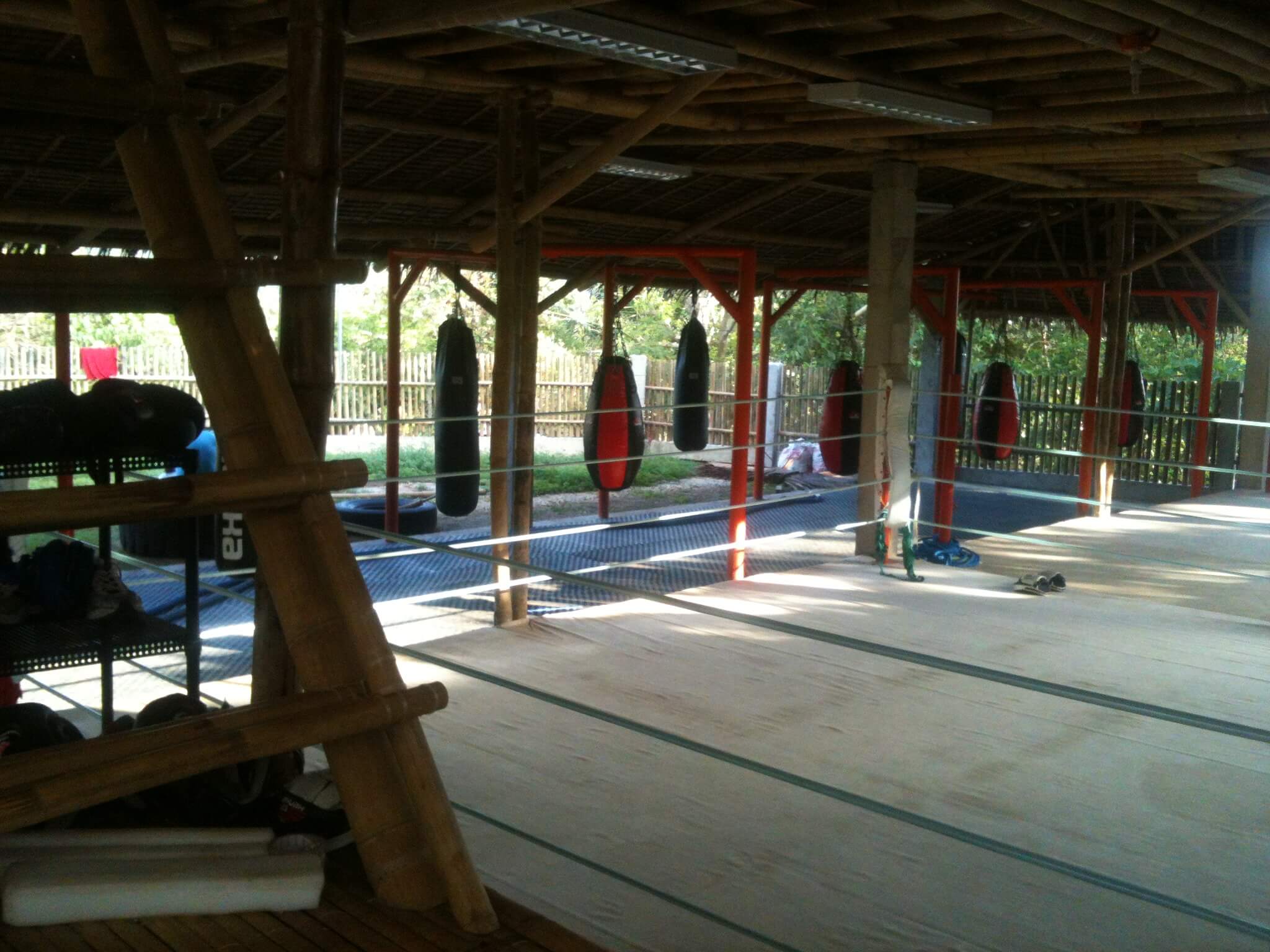
    The gym is nestled amongst a quiet Filipino village, surrounded by bamboo fencing and reminiscent of a dramatic training scene out of Kickboxer. From up here there’s a great view overlooking the island. It really is like training in paradise!

    legacy gym boracay

    The gym is founded and run by Ole Laursen, a pro MMA fighter and central figure on the Asian MMA circuit. It’s clear that a lot of time and effort has gone into putting this place together and I was pleasantly surprised at the completeness of the facilities.

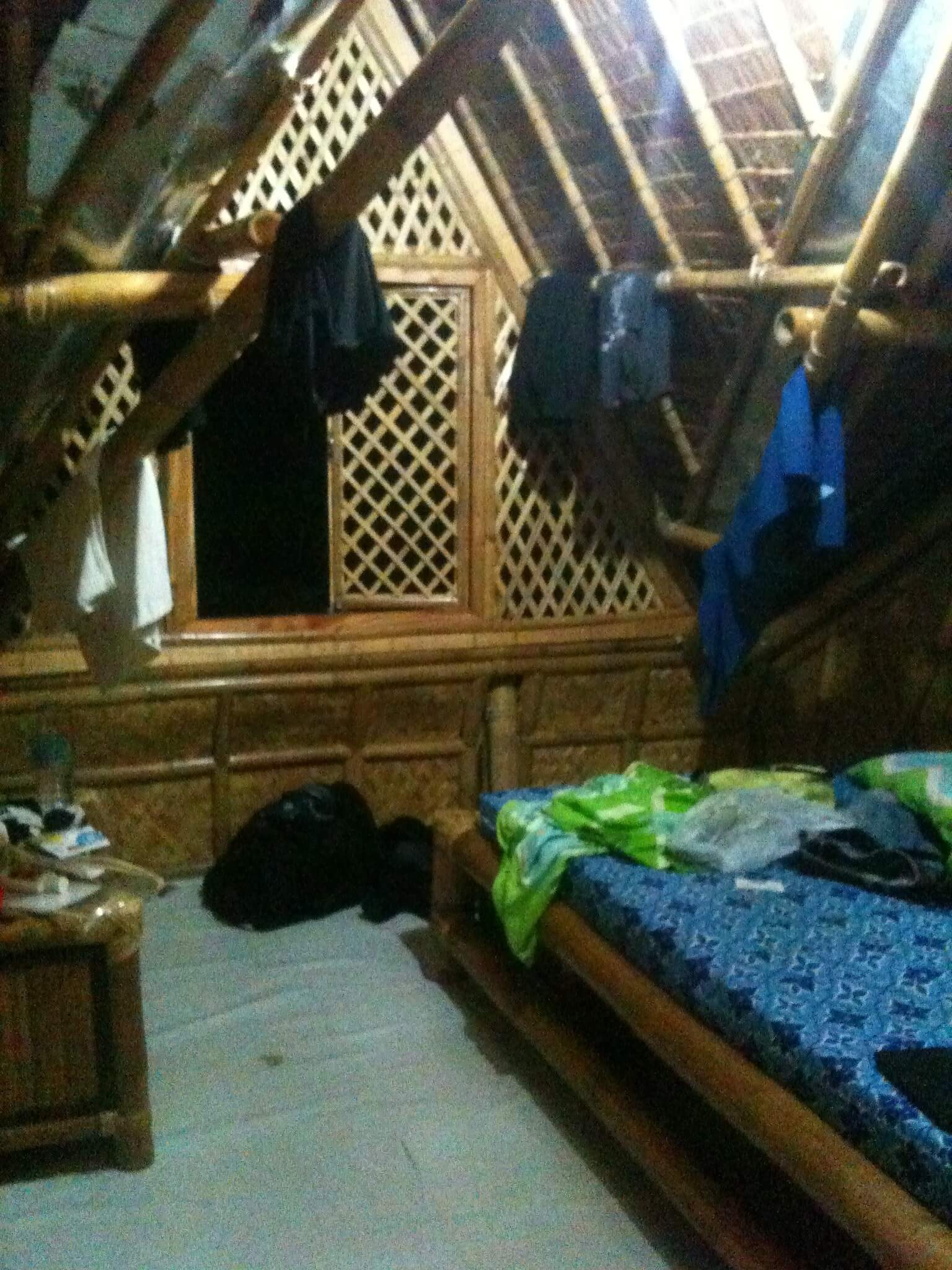
    There’s accommodation on site, consisting of private bamboo cabins up above the boxing ring. That’s where I stayed for the first week.

    legacy gym boracay accommodation

    Boxing

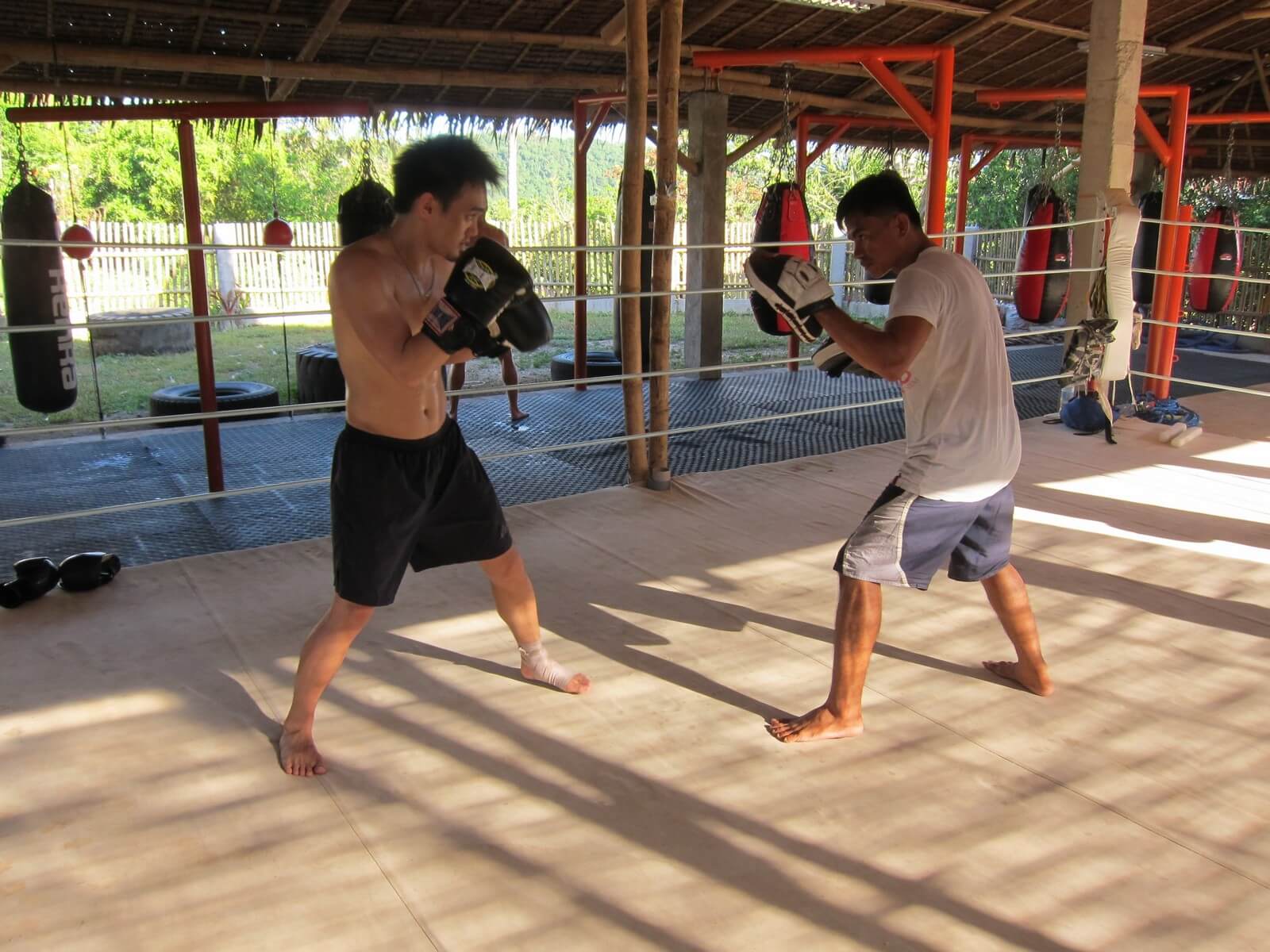
    Every day there were 2 boxing sessions (8am and 3pm) and I usually went to at least one of them.

    I’ve never boxed before, so this was a little new to me. However I have the whole Rocky collection at home which I’ve watched a fair share of times so I was extremely well prepared, in fact I was sure I was going to secretly end up being the star of the class. I lasted a whole twenty minutes before I busted my knuckle and had to box one handed for the rest of the week.

    Hey, even world champs get injuries now and then.

    legacy gym boracay

    Boxing was probably my favourite class out of all of them. When we weren’t on the pads or bags we were doing circuit training which had me breathing pretty heavy and in the Boracay heat I could feel the fat just melting off me. After the class finished the trainers lay us down and got a good 15 minutes of abs out of us. This is the place if you’re looking for a good workout while on Boracay. Beginners are welcomed with open arms – I’ve never taken a boxing class in my life and it was no trouble to just jump right in and start punching.

    legacy gym boxing
    boxing camp philippines
    Relaxing after class with the trainer Rufino

    Brazilian Jiu Jitsu

    I only took 1 jiu jitsu class here; the first I’ve ever taken in my life. Once you get over the fact that you’re hugging and wrapping your legs around another sweaty guy you can learn a lot of cool stuff in this class. The class was taken by Richie, a great teacher who is also a pro MMA fighter. After giving us a crash course in how to guard and then quickly going through the triangle and armbar submissions, he paired us up and let us loose to spar. Damn, I was not confident at all and had no idea what I was doing. Needless to say I got a serious ass whooping and was tap tap tap tap tap the whole time. As hopeless as I was, I loved it. I left with a few basic moves and a much better understanding of what fighters actually do on the ground. Whenever I watch UFC now, I actually recognise and understand some of the movements, which is cool.

    Muay Thai

    I’ve done a few weeks of Muay Thai training back home and so this was the only class where I wasn’t a complete beginner. Zebastian takes the class and is an experienced pro Muay Thai and MMA fighter.

    boxing camp philippines

    After the first few sessions Zebastian starting getting me in the ring for some light sparring. It was heaps of fun. The only problem is the dude is huge and his legs are so damn heavy that just a little tap on your thigh leaves nice tender bruises to help you along on your walk home.

    In his words: “I’m not trying to hurt you, I’m trying to teach you that you need to block.”

    It was this kind of teaching style that made me really enjoy his classes, and he taught us a lot of techniques and combos that you see him actually use in his real fights. He also taught us a cool jumping kick which I wasted no time in trying out as soon as sparring time came around. Being the gifted fighter that I am I landed super awkwardly and heard the beautiful sound of a rip through my ankle.

    I’m sure my technique was perfect, the floor was just a bit slippery that day…

    legacy gym boracay
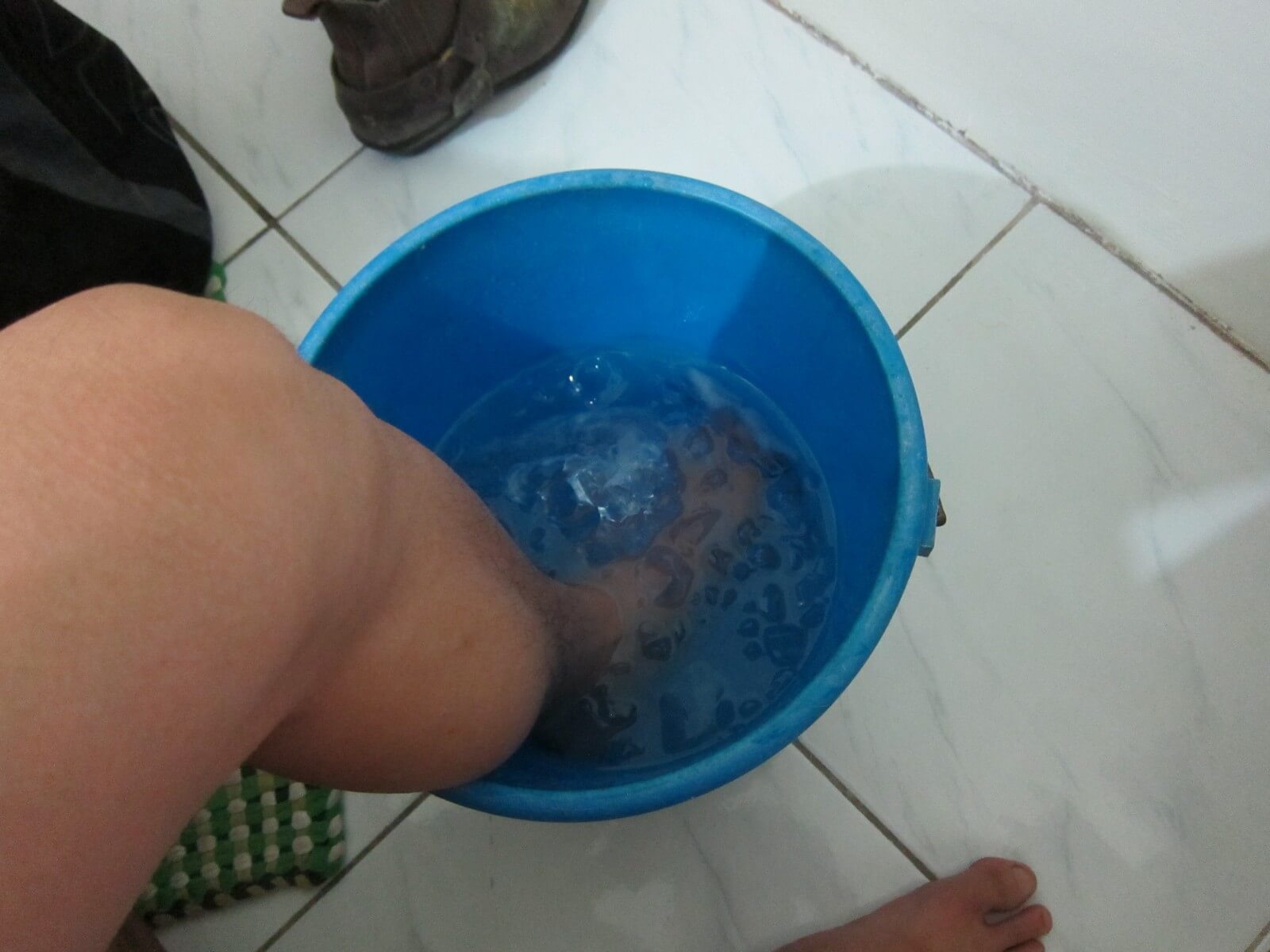
    Icing the ankle

    Strength and conditioning

    For me this was definitely the hardest session of all of them. Strength and conditioning is twice a week and takes place out on the picturesque White Beach which might have the clearest ocean you’ve ever seen. However during Richie’s session you won’t be admiring the water but rather battling to get oxygen to your brain to stop yourself from passing out. The class starts at 8am before the sun has fully risen and the beach hasn’t crowded up.

    On my first day Richie and I are the only ones there so we get to it. We head out to a small patch of sand that sits about 5 metres offshore at low tide. I take a look back along the beach and admire the early morning seascape. White sand for miles, a neverending sparkling ocean and a cloudless blue sky to watch over it all. It really does look incredible.

    legacy gym boracay
    Our patch of sand for training

    We’re doing shuttle runs. We mark out 15 or so lines 1 metre apart and get started. Sprint there, jog back. Sprint there, jog back. I feel my body struggling early on as I’m still half asleep at this hour of the morning. Before long Boracay’s scorching sun slowly starts to come out. We’re only halfway through and now the relentless Boracay sun is hitting me right on the face, I’m shrivelling up from sweating so much and I can feel my legs about to collapse under me at any minute. Yet Richie seems to be just Sunday strolling along like it’s his usual morning jog. I plod foot after foot and it’s now changed from sprint there jog back to jog there, stumble back. Running on sand f***ing sucks and I can hear my calves screaming at me, begging for mercy. Around this time we’ve probably been running 20 minutes but for me it feels like an eternity. Finally I find myself at the last couple of lines which serves as a small glimmer of light at the end of the tunnel. Just…a…few…more………..steps. The stubborn voice in my head constantly taunts me not to give up and embarrass myself at my first session, and with every kilojoule inside of me I finally manage to crawl over the final line. My legs turn to jelly and I collapse into the ocean, gasping for oxygen and swallowing a few gallons of sea water in the process.

    After a good 30 seconds of catching my breath, Richie looks at me and goes, “Ready?”

    “For what?” I ask.

    “We got one more set. Let’s go.”

    Results

    After 4.5 weeks at Legacy I was probably in the best shape of my life. I shed so much body fat and was fit, toned and feeling amazing, despite being injured a couple of times and missing around 10 days of training in total.

    I used to train 2 classes per day, usually a boxing class and a Muay Thai or MMA class. That worked out to 4 hours daily, and with a 20 minute jog to the gym and back it really got the body working. It’ll also make you feel better about knocking down some beers on the beach at night.

    As for my fighting skills, those definitely improved too.

    legacy gym boracay
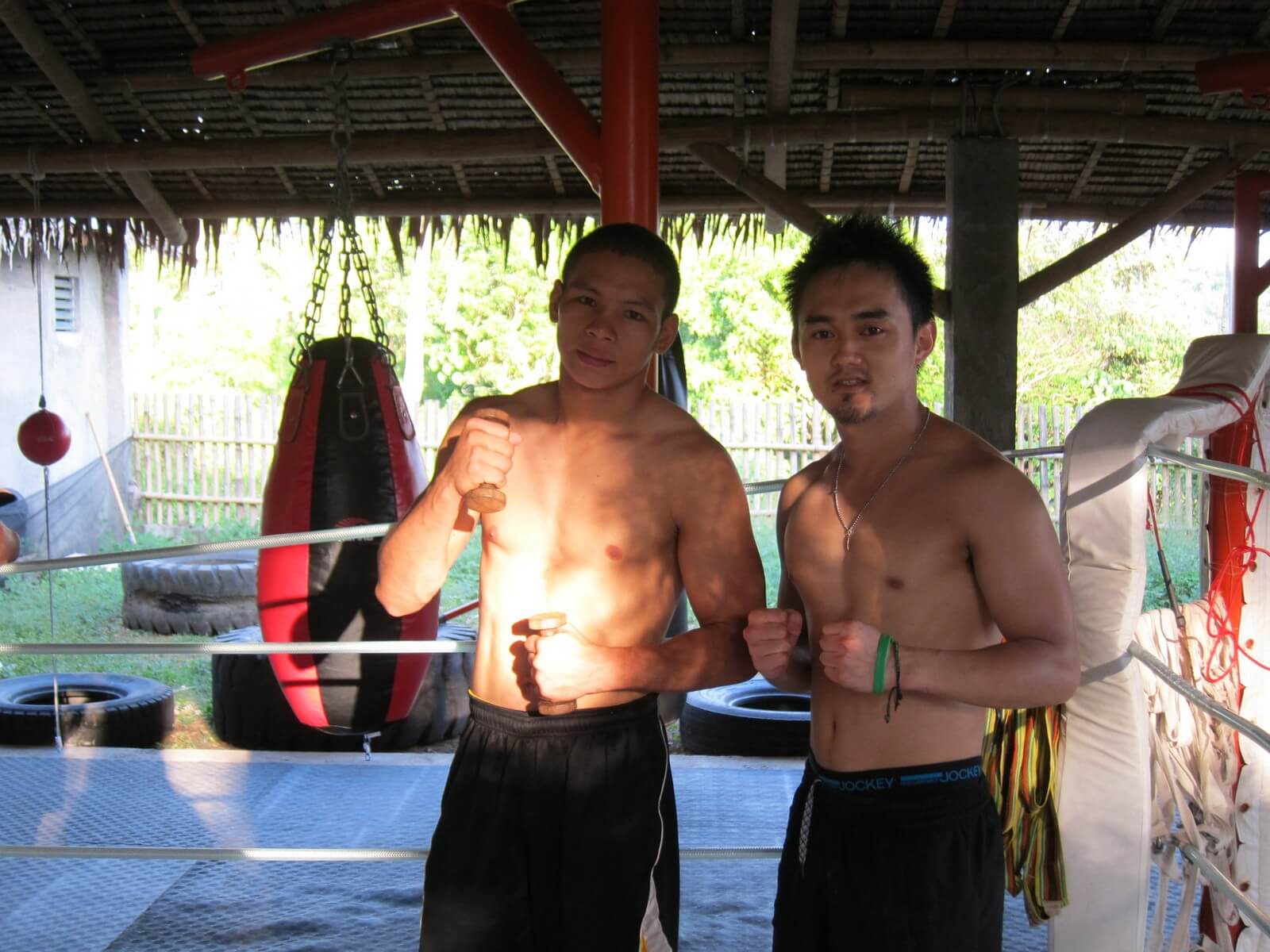
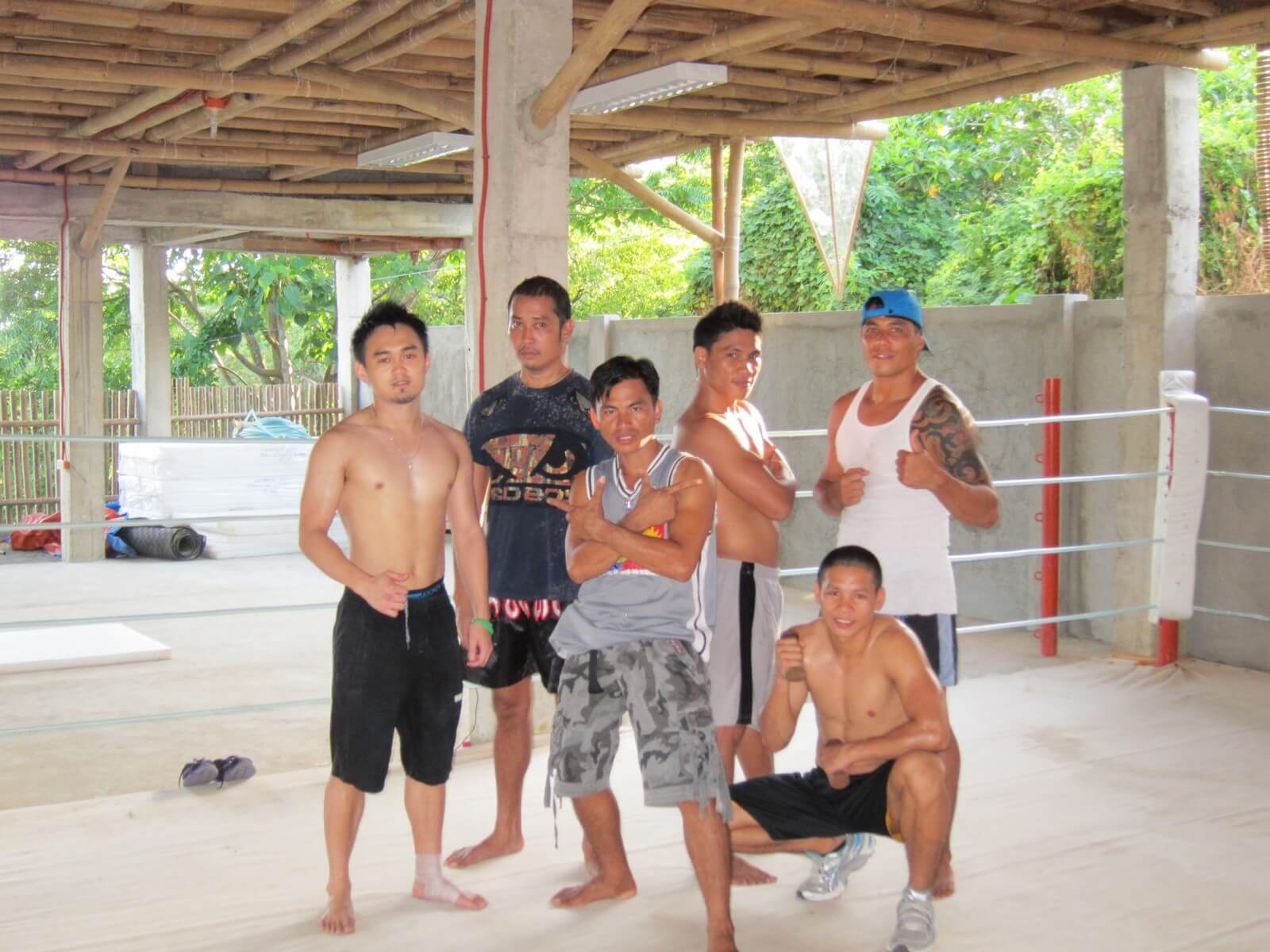
    The guys at Legacy

    One thing I learned here was that martial arts is really good for the soul. Fighting often gets a bad rep because it’s associated with hurting people. I don’t see it that way. Everyone is frustrated about something in their life. When I was an office dweller, I felt like I was forced me to lie to myself, to be someone different to who I really was. An environment like Legacy provided an outlet for me to just express myself. Whatever you’re feeling, whether it be anger, focus, or calm, you can express it through fighting. Think about the things that are bothering you and just beat the hell out of the bag. Or really focus and try and master the techniques that are being taught to you. Hit the bag as hard or as soft as you want. Push yourself until you’re about to puke, or just relax, watch and learn. I’m not a fighter, but that gym was a place for me to just be raw and uninhibited, yet still disciplined, all the while bettering myself physically and emotionally. I really felt like a different person by the time I left.

    I remember Bruce Lee once said in an interview, “Ultimately, martial arts is about expressing oneself honestly.”

    At the time I just thought, what the f*ck does that mean? Isn’t martial arts just about whooping someone else’s ass? However when I watch that interview now, it makes a whole lot more sense to me.

    Details for training at Legacy Gym Boracay:

    The gym is located about 5 minutes walk from Diniwid beach, a little way out from the main tourist strip, which is probably a good thing because it weeds out the photo tourists and keeps the classes to people who actually want to learn. From the main strip it’s around a half hour walk, otherwise a trike will get you there in 5!

    The only downside with living at the gym is the eating options are a little limited in that area. I stayed at the gym for a week and then later moved to a small hotel room on White Beach. If you’re on a tight budget, staying at the gym is a great option (it’s around $75 a week). However if your wallet is a little fatter and you want to be closer to the action, you might prefer to stay around Station 1 or 2. Still not too far from the gym and a lot more stuff to eat and do.

    When I was there we had girls, old dudes and even some kids in the class, quite a few of them beginners, but everyone had fun and took the lessons seriously which was the main thing. The trainers here are all pro fighters and some pro fighters prepare for fights here too, but everyone is welcoming to beginners who have never thrown a punch before, as long as you’re taking it seriously and not wasting their time.

    If you’re looking for something different, healthy, challenging and probably a little out of your comfort zone, I’d highly recommend heading down and trying out a class. Learn to punch and kick a bag, then some pads, and maybe end up sparring a little if you’re ready. I’m sure you’ll love it!

    For full details, check out their website here.

    Heading to the Philippines?

    Note: This is a personal review and I paid for my training camp in full. Read my disclosure policy here.

    World Nomads provides travel insurance for travelers in over 100 countries. As an affiliate, we receive a fee when you get a quote from World Nomads using this link. We do not represent World Nomads. This is information only and not a recommendation to buy travel insurance.

  • Happy Chinese New Year

    Happy Chinese New Year

    So, what’s going to be different for you this year? Have you already done your “write down all the New Year’s resolutions that you’ve already forgotten about” and the “lie on your bed and think about all the things you want to do but won’t” thing yet?

    Yeah, me too.

    Isn’t it weird how we’re all shrouded in self doubt, knowing deep down what we really want to do but for some reason we just…don’t?

    Things are getting better for me though, slowly, and I want to tell you why. I quit my job 2 and half years ago, and it’s only now that I’m finally managing to be sure of myself. I’ve finally managed to look society in the eye, throw the rulebook in it’s face and say “Nah. I think I’ll go my own way from here.”

    When 2013 started I had it in my head that sometime during the year I would finally need to resume my role as an office dwelling, salary earning, Excel tinkering, career ladder climbing accountant. It’s what was expected of me. It’s what I expected of myself. It’s what I had spent all those years studying for. And everyone’s gotta have a job, right?

    But it just didn’t seem…right. I was 24. My whole life was ahead of me. And who knew how long that ‘whole life’ was going to be. A meteor might crash through my window and reduce me to ashes tonight. Did I really want to surrender the time I had left tapping on a keyboard taking orders from some unknown suit, just because…I’m supposed to?

    And then I realised, who said that? Who said I’m supposed to?

    Nobody. Nobody important, anyway.

    Just the collective voices of society, socially conditioned voices telling me that everyone else was doing it so I had to do it too. I remember back at my old office we used to laugh about how much life sucked. Monday mornings in the elevator didn’t even require words. All that was needed was a long, defeated sigh and we would all smile and nod our heads in agreement. We were united by our misery.

    We couldn’t even complain about it, because it was accepted as the norm. All of us were miserable. We all had dreams passing us by. What made you so special that you were allowed to complain?

    That’s not a club I can be a part of anymore. I was only given one life and it didn’t come with a warranty. Miserable isn’t quite good enough when the stakes are that high. So one day I decided, maybe I just won’t follow the rules. Sue me. I don’t want to wake up and think “Wow, today is going to suck…again”. I want to love life, every day, and the only way to do that is to be free. Free yourself from all the imaginary boundaries imposed on you. Free yourself from the unwritten rules that you thought you had to follow. Once you do that, life suddenly becomes a journey of endless possibilities.

    What will you do? Where will you go? 100 years won’t be nearly enough.

    I was in a dark spot a couple years ago, completely confused about life and no idea where I was heading. I sought the advice of a mentor of mine, and as we stood out on the road in the middle of the night he looked me in the eye and gave me the best advice I’ve ever had.

    “Life is not about being an angel or a saint. Your happiness comes down to one question. You might not know the answer to it yet. And the answer to it will change all the time. But you need to keep asking yourself, what do you want?

    It was so simple, yet I had never truly understood it. After years of being told what to do by everyone around me I’d forgotten about…me.

    Why are we taught to spend 48 weeks of our year living someone else’s life in order to earn 4 weeks at the end to finally live our own? Shouldn’t it be the other way around?

    So make it that way. Make 2014 a year about you. What do you want? Who do you want to be? What do you want to achieve?

    Don’t worry about what everyone else wants. That’s their problem. Being happy is about knowing what you want, believing in yourself and chasing your own dreams. Be a little bit selfish. Nobody has to live your life except you.

    Happy Year of the Horse, friends. Make it a f*cking fantastic one.

    Photo credit: photophilde@Flickr

  • The One Speech I’ve Never Forgotten

    The One Speech I’ve Never Forgotten

    Of all the speeches I’ve heard or read, there’s one that has influenced my life far more than any other. It’s done it’s fair share of rounds through the blogosphere over the years, but even if you’ve already read it I’d suggest taking it in again. For me at least, it never seems to lose it’s power.

    The speaker is Adrian Tan, a prominent Singapore lawyer and author.

    I must say thank you to the faculty and staff of the Wee Kim Wee School of Communication and Information for inviting me to give your convocation address. It’s a wonderful honour and a privilege for me to speak here for ten minutes without fear of contradiction, defamation or retaliation. I say this as a Singaporean and more so as a husband.

    My wife is a wonderful person and perfect in every way except one. She is the editor of a magazine. She corrects people for a living. She has honed her expert skills over a quarter of a century, mostly by practising at home during conversations between her and me.

    On the other hand, I am a litigator. Essentially, I spend my day telling people how wrong they are. I make my living being disagreeable.

    Nevertheless, there is perfect harmony in our matrimonial home. That is because when an editor and a litigator have an argument, the one who triumphs is always the wife.

    And so I want to start by giving one piece of advice to the men: when you’ve already won her heart, you don’t need to win every argument.

    Marriage is considered one milestone of life. Some of you may already be married. Some of you may never be married. Some of you will be married. Some of you will enjoy the experience so much, you will be married many, many times. Good for you.

    The next big milestone in your life is today: your graduation. The end of education. You’re done learning.

    You’ve probably been told the big lie that “Learning is a lifelong process” and that therefore you will continue studying and taking masters’ degrees and doctorates and professorships and so on. You know the sort of people who tell you that? Teachers. Don’t you think there is some measure of conflict of interest? They are in the business of learning, after all. Where would they be without you? They need you to be repeat customers.

    The good news is that they’re wrong.

    The bad news is that you don’t need further education because your entire life is over. It is gone. That may come as a shock to some of you. You’re in your teens or early twenties. People may tell you that you will live to be 70, 80, 90 years old. That is your life expectancy.

    I love that term: life expectancy. We all understand the term to mean the average life span of a group of people. But I’m here to talk about a bigger idea, which is what you expect from your life.

    You may be very happy to know that Singapore is currently ranked as the country with the third highest life expectancy. We are behind Andorra and Japan, and tied with San Marino. It seems quite clear why people in those countries, and ours, live so long. We share one thing in common: our football teams are all hopeless. There’s very little danger of any of our citizens having their pulses raised by watching us play in the World Cup. Spectators are more likely to be lulled into a gentle and restful nap.

    Singaporeans have a life expectancy of 81.8 years. Singapore men live to an average of 79.21 years, while Singapore women live more than five years longer, probably to take into account the additional time they need to spend in the bathroom.

    So here you are, in your twenties, thinking that you’ll have another 40 years to go. Four decades in which to live long and prosper.

    Bad news. Read the papers. There are people dropping dead when they’re 50, 40, 30 years old. Or quite possibly just after finishing their convocation. They would be very disappointed that they didn’t meet their life expectancy.

    I’m here to tell you this. Forget about your life expectancy.

    After all, it’s calculated based on an average. And you never, ever want to expect being average.

    Revisit those expectations. You might be looking forward to working, falling in love, marrying, raising a family. You are told that, as graduates, you should expect to find a job paying so much, where your hours are so much, where your responsibilities are so much.

    That is what is expected of you. And if you live up to it, it will be an awful waste.

    If you expect that, you will be limiting yourself. You will be living your life according to boundaries set by average people. I have nothing against average people. But no one should aspire to be them. And you don’t need years of education by the best minds in Singapore to prepare you to be average.

    What you should prepare for is mess. Life’s a mess. You are not entitled to expect anything from it. Life is not fair. Everything does not balance out in the end. Life happens, and you have no control over it. Good and bad things happen to you day by day, hour by hour, moment by moment. Your degree is a poor armour against fate.

    Don’t expect anything. Erase all life expectancies. Just live. Your life is over as of today. At this point in time, you have grown as tall as you will ever be, you are physically the fittest you will ever be in your entire life and you are probably looking the best that you will ever look. This is as good as it gets. It is all downhill from here. Or up. No one knows.

    What does this mean for you? It is good that your life is over.

    Since your life is over, you are free. Let me tell you the many wonderful things that you can do when you are free.

    The most important is this: do not work.

    Work is anything that you are compelled to do. By its very nature, it is undesirable.

    Work kills. The Japanese have a term “karoshi”, which means death from overwork. That’s the most dramatic form of how work can kill. But it can also kill you in more subtle ways. If you work, then day by day, bit by bit, your soul is chipped away, disintegrating until there’s nothing left. A rock has been ground into sand and dust.

    There’s a common misconception that work is necessary. You will meet people working at miserable jobs. They tell you they are “making a living”. No, they’re not. They’re dying, frittering away their fast-extinguishing lives doing things which are, at best, meaningless and, at worst, harmful.

    People will tell you that work ennobles you, that work lends you a certain dignity. Work makes you free. The slogan “Arbeit macht frei” was placed at the entrances to a number of Nazi concentration camps. Utter nonsense.

    Do not waste the vast majority of your life doing something you hate so that you can spend the small remaining sliver of your life in modest comfort. You may never reach that end anyway.

    Resist the temptation to get a job. Instead, play. Find something you enjoy doing. Do it. Over and over again. You will become good at it for two reasons: you like it, and you do it often. Soon, that will have value in itself.

    I like arguing, and I love language. So, I became a litigator. I enjoy it and I would do it for free. If I didn’t do that, I would’ve been in some other type of work that still involved writing fiction – probably a sports journalist.

    So what should you do? You will find your own niche. I don’t imagine you will need to look very hard. By this time in your life, you will have a very good idea of what you will want to do. In fact, I’ll go further and say the ideal situation would be that you will not be able to stop yourself pursuing your passions. By this time you should know what your obsessions are. If you enjoy showing off your knowledge and feeling superior, you might become a teacher.

    Find that pursuit that will energise you, consume you, become an obsession. Each day, you must rise with a restless enthusiasm. If you don’t, you are working.

    Most of you will end up in activities which involve communication. To those of you I have a second message: be wary of the truth. I’m not asking you to speak it, or write it, for there are times when it is dangerous or impossible to do those things. The truth has a great capacity to offend and injure, and you will find that the closer you are to someone, the more care you must take to disguise or even conceal the truth. Often, there is great virtue in being evasive, or equivocating. There is also great skill. Any child can blurt out the truth, without thought to the consequences. It takes great maturity to appreciate the value of silence.

    In order to be wary of the truth, you must first know it. That requires great frankness to yourself. Never fool the person in the mirror.

    I have told you that your life is over, that you should not work, and that you should avoid telling the truth. I now say this to you: be hated.

    It’s not as easy as it sounds. Do you know anyone who hates you? Yet every great figure who has contributed to the human race has been hated, not just by one person, but often by a great many. That hatred is so strong it has caused those great figures to be shunned, abused, murdered and in one famous instance, nailed to a cross.

    One does not have to be evil to be hated. In fact, it’s often the case that one is hated precisely because one is trying to do right by one’s own convictions. It is far too easy to be liked, one merely has to be accommodating and hold no strong convictions. Then one will gravitate towards the centre and settle into the average. That cannot be your role. There are a great many bad people in the world, and if you are not offending them, you must be bad yourself. Popularity is a sure sign that you are doing something wrong.

    The other side of the coin is this: fall in love.

    I didn’t say “be loved”. That requires too much compromise. If one changes one’s looks, personality and values, one can be loved by anyone.

    Rather, I exhort you to love another human being. It may seem odd for me to tell you this. You may expect it to happen naturally, without deliberation. That is false. Modern society is anti-love. We’ve taken a microscope to everyone to bring out their flaws and shortcomings. It far easier to find a reason not to love someone, than otherwise. Rejection requires only one reason. Love requires complete acceptance. It is hard work – the only kind of work that I find palatable.

    Loving someone has great benefits. There is admiration, learning, attraction and something which, for the want of a better word, we call happiness. In loving someone, we become inspired to better ourselves in every way. We learn the true worthlessness of material things. We celebrate being human. Loving is good for the soul.

    Loving someone is therefore very important, and it is also important to choose the right person. Despite popular culture, love doesn’t happen by chance, at first sight, across a crowded dance floor. It grows slowly, sinking roots first before branching and blossoming. It is not a silly weed, but a mighty tree that weathers every storm.

    You will find, that when you have someone to love, that the face is less important than the brain, and the body is less important than the heart.

    You will also find that it is no great tragedy if your love is not reciprocated. You are not doing it to be loved back. Its value is to inspire you.

    Finally, you will find that there is no half-measure when it comes to loving someone. You either don’t, or you do with every cell in your body, completely and utterly, without reservation or apology. It consumes you, and you are reborn, all the better for it.

    Don’t work. Avoid telling the truth. Be hated. Love someone.

    -Adrian Tan, 2008.

    Photo credit: Adam D. @ Flickr

  • Study Chinese in China for a year…for free!

    Study Chinese in China for a year…for free!

    These days studying Chinese in China is like the new Macarena – everyone is doing it.

    Students from literally every corner of the world, many of them fresh out of high school are laying down around $6,000 – $10,000 a year for housing and language tuition at Chinese universities.

    But what if I told you there was a way to get all this for free?

    Actually no, what if I told you there was a way to get paid to do this?

    Well, there is. And thousands of students are doing it every year. I was one of them! Here’s how:

    Every year the Chinese government offers scholarships to foreign nationals. The idea is that you are given a year’s free study in China, after which you will hopefully decide to stay and become a valuable member of their society (you know, get a job there and marry a Chinese girl and eat heaps of wontons. Mmmm). Even if you don’t, you’ll have spent a year learning Chinese which is good for the country anyway in the sense that the language and culture spreads around the world.

    Typically the scholarship covers all university fees, all accommodation fees, health insurance, learning materials, around $250 to cover your initial visa/setup costs and then they pay you $275 a month for the whole year. All up, the entire gig was worth around $11,000 USD.

    Now before you close this page and say “Brooo. C’mon! I never learned Chinese. I’m dumb. No one’s gonna give me no dang scholarship!” just hold the phone a second. When I applied, I could say about 10 words in Chinese. My career was not China-related (I was a NZ tax accountant). I didn’t get great grades in university. I was not a Chinese language student and I hadn’t met a single person on the scholarship council. I still applied and I still got accepted. 

    There was one other NZ recipient studying at my university and she was also a beginner (we were in the same class). I’ve also already referred one friend who ended up landing a 2013 scholarship – also a beginner.

    Don’t let the word ‘scholarship’ fool you. This isn’t an exclusive deal for smart people. The Chinese government set this whole thing up because it wants to give this money away. It wants people to learn Chinese and it wants foreigners to live in and discover their great country. Getting the scholarship is about presenting yourself as a worthy suitor, that’s it.

    What I found most fascinating was the amount of students in China that just had no idea this opportunity existed. In my opinion, this is the best public study abroad opportunity I know of in the world today. It is not like other free opportunities where you get a “free” flight and “free” apartment, but with a little side deal that you have to teach English in some affiliated school for 6 hours a day. This is completely obligation free – no obligations before, no obligations after, no obligations during (other than attending class).

    OK, so, the deets. Where and how do you apply?

    Being the nice guy that I am, I went and harassed nicely asked 12 scholarship students from around the world about their scholarships and how they managed to get them. Hopefully the information here will point you in the right direction and allow you to study Chinese in China in the not too distant future!

    Enjoy!

    If you’re not interested in studying Chinese but still want to live and work in China, check out this report from my friend J, who spent a semester doing teaching English in the TTC (Teach and Travel China) program.

    Brendan, New Zealand

    Chinese level at the time of application?
    Complete newbie.

    Organisation applied through?
    Confucius Institute at the University of Auckland

    Studied at which university?
    Fudan University.

    What did the scholarship application process involve?
    Had to write a letter stating the reasons I deserved the scholarship. Also needed references from two people, one needed to be a university professor.

    Why do you think you got accepted?
    I had been very involved in the Chinese community in New Zealand, and my references reflected that. I’m also Chinese, and made it very clear I was interested in learning more about my heritage.

    What did the scholarship include?
    A private room in the university dorms, all university fees, monthly allowance of 1,700RMB (~$275USD), free books, free health insurance, some free tours to other cities.

    What were your obligations after the scholarship?
    A one page report after the scholarship detailing my experiences.

    What tips would you give to people applying for the scholarship to improve their chance of being accepted?
    1. I think all the application requirements are there to just weed out freeloaders. I think what it really comes down to is, do you want to learn Chinese? If so, can you prove it? Do you take language classes? Have you read any books on China? Do you have a Chinese language partner? If not, why are you even bothering to apply?

    2. You will still need to ensure you meet all the requirements. For my particular scholarship you needed to be a NZ citizen, and I wasn’t. Therefore I needed to fast track a citizenship application before the scholarship deadline. You also needed to have been a university student within the last 5 years. If it’s been more than 5 years since you graduated, you may need to enrol in some university language courses and get your student ID back!

    3. The make or break part of the application is your letter. You obviously want to learn Chinese, otherwise you wouldn’t be applying. So show that genuine interest and fascination with the country and the language. Most applicants are Chinese language students, so they sell themselves that way. That’s obviously not a good angle for me since I’m a Chinese illiterate. Instead, I made it clear that I couldn’t speak Chinese but I was very eager to live in the country and learn about my heritage (I’m Chinese blooded). I assured them I would take it very seriously and pass every exam (and I did!). I was very keen to learn the language and had been for a long time, so my references were able to vouch for that. Instead of focusing on my crappy Chinese I focused on my other achievements, i.e. my career, travels, community work etc. After they read your letter they need to be thinking “Yes! This is the type of guy we want to give this to.”

    Best thing about living in China?
    The crazy nightlife! And also the melting pot of cultures. Shanghai really feels like the centre of the world these days.

    Worst thing about living in China?
    The air pollution and the very oily food.


    Katie F, New Zealand

    Chinese level at the time of application?
    Minimal – simple sentences – had done a round of night classes at Wellington High.

    Organisation applied through?
    Confucius Institute at the University of Auckland

    Studied at which university?
    Fudan University

    What did the scholarship application process involve?
    Had to write a letter stating why I wanted the scholarship, needed references from two people.

    Why do you think you got accepted?
    Had a slightly different profile – working in the media as opposed to the majority of people who apply who are fresh grads, also I’d already had an internship from a related organisation in Shanghai.

    What did the scholarship include?
    Free private room in university dorms and tuition for a year, 1,700RMB (~$275USD) monthly stipend, free books, free health insurance.

    What were your obligations after the scholarship?
    Short monthly reports during the scholarship, one-page report post scholarship

    What tips would you give to people applying for the scholarship to improve their chance of being accepted?
    Make sure you have good references to vouch for you. In my opinion the most important aspect of the application letter is showing how valuable you will be in the future with this experience under your belt.

    Best thing about living in China?
    Really feeling like you live at the centre of the universe. Everything is happening there.

    Worst thing about living in China?
    Pollution, environmental degradation, poverty can be difficult to deal with.


    Fredrika W, Sweden

    Chinese level at the time of application?
    Some conversational skills, quite poor reading and writing.

    Organisation applied through?
    The Nordic Confucius Institute in Stockholm, Sweden

    Studied at which university?
    Fudan University

    What did the scholarship application process involve?
    I needed to participate in a national competition with performances in Chinese. Based on pronunciation and language skills in the competition you could win one-years language scholarship to any University in China as long as you got accepted to the University. The University application required 2 recommendation letters and a personal letter from me (in Mandarin).

    Why do you think you got accepted?
    Fudan has in the past accepted a lot of the students who won this competition in Sweden. The recommendation letters were well-written, my personal letter was translated into proper flawless Mandarin and was very complimentary towards both the university and the country.

    What did the scholarship include?
    Tuition fees, dormitory fees for the 4-bedroom rooms and a monthly allowance of 1700 Yuan (~$275) and free books at the beginning of the term.

    What were your obligations after the scholarship?
    No following obligations.

    What tips would you give to people applying for the scholarship to improve their chance of being accepted?
    Show that you’re very open-minded towards the culture, enthusiastic about the language and show your passion about your studies.

    Best thing about living in China?
    I can only comment that living in Shanghai was fantastic. Great, vibrant city with great restaurants and an exciting night-life with a lot of opportunities to meet people. Also the low living cost and good opportunities to travel in Asia.

    Worst thing about living in China?
    The pollution, the immense culture shock, the difficulty of sorting anything out in the beginning if you don’t speak Mandarin and have no one to help you.


    Elena M, Spain

    Chinese level at the time of application?
    HSK 2 (I was placed in class C and the top level is J).

    Organisation applied through?
    Confucius Institute, Madrid

    Studied at which university?
    Fudan University.

    What did the scholarship application process involve?
    I had to write a one page essay about why I wanted to obtain the scholarship, send two recommendation letters, and pass all medical exams to fill in the medical report.

    Why do you think you got accepted?
    First of all I think my chances increased for being a student of the Confucius Institute in Madrid and having studied there for two years. Also I had passed the HSK 2 with a very high mark and participated in the Chinese Bridge competition. Moreover, I had spent two summers in China studying Chinese and my final degree dissertation was about translation from Chinese to Spanish. All of this accredited my interest in China and Chinese culture, which I think is what they value the most, your background and past experiences.

    What did the scholarship include?
    Tuition for a year, private room in university dorms, month allowance of 1700 RMB (~$275 USD) plus 500RMB on the first months of the semester to cover books and school material, free health insurance, a night tour on a boat in the Huangpu river.

    What were your obligations after the scholarship?
    None. All I had to do was write a few lines every month just to confirm that everything was going OK.

    What tips would you give to people applying for the scholarship to improve their chance of being accepted?
    The most important thing is show your interest, but being interested is not enough: you need to prove it! Taking Chinese classes? Joined activities related to Chinese culture? Anything is okay but it’s always better if you have some title, especially from the Confucius Institute.

    Best thing about living in China?
    Being able to talk Chinese in your daily life and getting to know people from all over the world.

    Worst thing about living in China?
    Pollution.


    Chia L, Canada

    Chinese level at the time of application?
    Intermediate.

    Organisation applied through?
    China scholarship program through the Canadian Government

    Studied at which university?
    Fudan University.

    What did the scholarship application process involve?
    Letter on why I wanted the scholarship, references, copy of academic records and application form.

    Why do you think you got accepted?
    Had experience with China and wanted to improve my Chinese.

    What did the scholarship include?
    Tuition fees, housing and monthly stipend.

    What were your obligations after the scholarship?
    None.

    What tips would you give to people applying for the scholarship to improve their chance of being accepted?
    Follow application instructions and have a good letter.

    Best thing about living in China?
    Scooters.

    Worst thing about living in China?
    Pollution.


    Liyo G, Belgium

    Chinese level at the time of application?
    Good (HSK level 5).

    Organisation applied through?
    Confucius Institute in Brussels

    Studied at which university?
    Fudan University.

    What did the scholarship application process involve?
    A letter in Chinese, my academic records, and a reference from a Chinese teacher.

    Why do you think you got accepted?
    Because my Chinese was already at a good level and there weren’t many other applicants.

    What did the scholarship include?
    School fees, a room at the dorms, a monthly income of around 1,700RMB (~$275 USD).

    What were your obligations after the scholarship?
    There was nothing afterwards, but we had to fill forms every month during the scholarship, and of course attend classes.

    What tips would you give to people applying for the scholarship to improve their chance of being accepted?
    Maybe try and pass an HSK exam, even if it’s just the first level.

    Best thing about living in China?
    Chinese people.

    Worst thing about living in China?
    Chinese people.


    Liang C, New Zealand

    Chinese level at the time of application?
    Low. Could say hello, goodbye, eat and sleep.

    Organisation applied through?
    Confucius Institute at the University of Auckland

    Studied at which university?
    Sun Yat Sen University, Guangzhou.

    What did the scholarship application process involve?
    An application letter along with two references. One academic, one someone you know.

    Why do you think you got accepted?
    Had been involved with a conference related to Chinese New Zealanders. Had a high academic record.

    What did the scholarship include?
    Free shared twin room, monthly living allowance or 1700RMB (~$275 USD) and tuition fees. Free health insurance. Had to pay for books and transportation.

    What were your obligations after the scholarship?
    A one page report detailing my experiences.

    What tips would you give to people applying for the scholarship to improve their chance of being accepted?
    Get involved in Chinese community events and have great academic references.

    Best thing about living in China?
    The hub of all things created. You can buy anything that you are looking for.

    Worst thing about living in China?
    A lot of fake products. Bad manners of many people.


    Stephanie Z, Australia

    Chinese level at the time of application?
    Somewhere between beginner and intermediate, I had taken 3 subjects at uni.

    Organisation applied through?
    China Scholarship Council via the University of Sydney.

    Studied at which university?
    Fudan University.

    What was the process for your application?
    Two references, statement of purpose, transcript, CV.

    Why do you think you got accepted?
    Showed a demonstrated interest in Chinese studies and furthering my language skills.

    What did the scholarship include?
    Free private room in university dorms, free tuition for 6 months (1 semester), around monthly 1700RMB (~$275USD) stipend, free health insurance.

    What were your obligations after the scholarship?
    Nothing.

    What tips would you give to people applying for the scholarship to improve their chance of being accepted?
    Be authentic and thorough in your application, and try to learn some Chinese before you apply!

    Best thing about living in China?
    It’s dynamic, fast paced and always challenging.

    Worst thing about living in China?
    Pollution, traffic.


    Ambra A, Italy

    Chinese level at the time of application?
    Intermediate.

    Organisation applied through?
    Chinese Government Scholarship Council – EU window

    Studied at which university?
    Fudan University

    What was the process for your application?
    3 reference letters, online applications, health exams, statement of purpose.

    Why do you think you got accepted?
    A good statement of purpose and high grades.

    What did the scholarship include?
    School fees, a room at the dorms and a monthly stipend of 1,700 RMB (~$275 USD)

    What were your obligations after the scholarship?
    During the year I had to write a report every month.

    What tips would you give to people applying for the scholarship to improve their chance of being accepted?
    Carefully follow the application requirements and checklist.

    Best thing about living in China?
    Cheap cost of living, good food, Shanghai is a fun city to live abroad in.

    Worst thing about living in China?
    Quality of life, including the pollution.


    Daniel E, New Zealand

    Chinese level at the time of application?
    Could comfortably converse in Mandarin on a range of topics, send and receive instant messages and texts and handwrite to a basic level.

    Organisation applied through?
    Confucius Institute at the University of Auckland

    Studied at which university?
    Beijing Language and Culture University

    What was the process for your application?
    I had to write a letter outlining both my experience and interests in China and Chinese as well as my future goals and aspirations to do with China.

    Why do you think you got accepted?
    I believe it was because I could demonstrate both strong results in language learning via awards, speech competitions and a Daoming Scholarship. Also in my deliberate and driven involvement in the local Chinese language community. These in concert with a demonstrated desire to further my language ability and be involved in China in the future.

    What did the scholarship include?
    Tuition fees at one of the approved institutes for one year of language studies, course materials were provided for, accommodation (student dormitories, in most instances shared and fairly basic but can upgrade if you are happy to top up with your own money), health services/insurance and a monthly stipend of 1700 RMB (~$275 USD).

    What were your obligations after the scholarship?
    Write a mid-term and full-term report outlining our experience in China, how we found the application and administration of the scholarship and such-like.

    What tips would you give to people applying for the scholarship to improve their chance of being accepted?
    You need to do everything you can to demonstrate your dedication to China, Chinese language and culture and the people of China.

    They’ll also be looking keenly for indications of your future plans and how they involve China, obviously the stronger and more strategic the better.

    Finally, what I did and I believe it helped with my application was to write the letter in Mandarin (I of course got a friend to check grammar etc). I believe this helped leave a positive impression of my intentions and commitment.

    Best thing about living in China?
    The people, the language, the mysterious charm in the Chinese way of doing things.

    Worst thing about living in China?
    Food safety, when you don’t quite “get it” (language or cultural norms), the public toilets (always have some tissues or paper and hand sanitiser on you).


    Lydia E, Germany

    Chinese level at the time of application?
    Advanced (HSK Level 5).

    Organisation applied through?
    Confucius Institute at the Goethe University in Frankfurt

    Studied at which university?
    Fudan university

    What was the process for your application?
    I had to write a motivation letter, fill in application forms and get two references.

    Why do you think you got accepted?
    I think I got accepted because I’d participated in Hanyuqiao before and also already taken the HSK exam (I had also visited some classes in the Confucius Institute itself).

    What did the scholarship include?
    Free tuition, free room in the students dorm, 1400 RMB (~$230 USD) monthly stipend, discount for books and health insurance.

    What were your obligations after the scholarship?
    The Confucius Institute wanted me to write a report about my experiences in Shanghai and also to prepare a presentation (which was held in the Institute).

    What tips would you give to people applying for the scholarship to improve their chance of being accepted?
    Personally, I think it is important to show interest in Chinese language and culture. It would be advantageous to visit classes in the Confucius Institute in advance and if you have already studied Chinese for a certain period of time, maybe also try to take an HSK exam, even if it’s just the first level.

    Best thing about living in China?
    This was already my second time of living in China- I have lived in Beijing before. I think it was great to experience another city. (I realized that I liked both, maybe because they are so different.) And also, it was amazing to get to know so many people from different countries. Another positive point is that most of the things you can do in your spare time are so cheap and you could live rather low-budget.

    Worst thing about living in China?
    I think the worst thing about living there (and which is also the reason why I wouldn’t want to spend more time there than a year) is that you have to worry about what you eat because you could really get problems with impure food (visiting doctors there is not fun – Western doctors are quite expensive and Chinese health facilities are anything but recommendable). Also, the quality of tap water and air is really bad (whereas I have the impression that all this is better in Taiwan).


    Lisi H, Switzerland

    Chinese level at the time of scholarship application?
    Good listening comprehension (maybe HSK 4). Slow speaking due to limited vocab as I hadn’t spoken for a long time. No reading or writing skills.

    Organisation applied through?
    Swiss Chinese embassy

    Studied at which university?
    Fudan University

    What was the process for your application?
    Letters of recommendation, health examination, proof of English level, university diploma.

    Why do you think you got accepted?
    Due to my Chinese heritage (I am half Chinese), recommendation letters, maybe my personal working goals.

    What did the scholarship include?
    Free tuition fees, books, health insurance and accommodation for one year. Monthly stipend.

    What were your obligations after the scholarship?
    None?

    What tips would you give to someone applying for the scholarship to improve their chance of being accepted?
    Stress your relation to China and explain in which way you could help bring more cultural understanding/exchange between the West and China. This is why they provide scholarships.

    Best thing about living in China?
    Meeting people from around the world, experiencing Chinese traditions meeting Western modernity.

    Affordable lifestyle including taxis, food from around the world, crazy clubs, spas & massages.

    Freedom of choice about what kind of life you want to live with the difference in living costs between Chinese and Western life. In Shanghai there is something for everyone.

    Worst thing about living in China?
    Everything and everyone is extremely loud, bad traffic, food quality differs very much, very bad air quality.


    Chris H, England

    Chinese level at the time of application?
    Could have a basic conversation but not about anything complex and specific.

    Organisation applied through?
    Confucius Institute at the University of Nottingham

    Studied at which university?
    Fudan University

    What was the process for your application?
    Had to write a letter stating why I wanted the scholarship, needed references from two people.

    Why do you think you got accepted?
    I was a little surprised actually as I had originally been told they were only looking for people who’d passed at least HSK 3. I think I was chosen partly as I was in my final year of university so they knew I was more likely to accept the offer rather than reject it and continue university.

    What did the scholarship include?
    Free private room in university dorms and tuition for a year, 1,700RMB monthly stipend, free books, free health insurance.

    What were your obligations after the scholarship?
    May have been asked to submit a report but was never asked for it or told where to submit it.

    What tips would you give to someone applying for the scholarship to improve their chance of being accepted?
    Try to show why you are interested in learning the language, e.g. what you plan to do after the course in China, to show you are committed. Also, when studying in China, what you put in is what you get out, put effort into studying but also getting out and using Chinese in everyday life. Don’t hang around with people who speak English for most of the time.

    Best thing about living in China?
    The huge and interesting difference in culture and life style, also the chance to travel all over the country and elsewhere in Asia.

    Worst thing about living in China?
    The apparent difference in logic and manners but you get used to it.


    And one final tip: If your country wasn’t listed above, just Google search for a Confucius Institute in your country/city. They can probably tell you everything you need to know.

    祝你好运!

  • City Blueprint: Singapore

    City Blueprint: Singapore

    Singapore is a bit like the overachieving adopted child of South East Asia – it just really doesn’t fit in. The other countries are ridiculously cheap while Singapore is a tad expensive. The other countries have filthy streets while in Singapore you can lick the pavement. In other countries backpackers find Elysium in the cheap, available drugs while in Singapore chewing gum can add to your criminal record. As soon as you leave the plane it’ll be clear that the third world connotation of South East Asia does not ring true here. Instead you’ll find yourself in one of Asia’s most developed countries, recognised as one of the world’s major financial centres and boasting a quality of living among the best in the world. Oh, and the food is incredible too.

    Budget

    Bed: The cheapest hostel dorms are around $15 USD. Hotels are around $40 USD upwards.

    Food: The hawker centres are incredible. You can feed yourself very comfortably for $3 USD and the options are endless.

    Drink: A bottle of water will cost around $1-$2. A beer in a bar will cost upwards of $8.

    Transport: Taxi rides will be around $20 USD from the airport into the centre (20 minutes). You can get anywhere in the city on the local metro for around $2. Many choose to catch the bus into Singapore from Malaysia – here’s a great guide on how to do that.

    I stayed at…

    Vintage Inn. In terms of comfort it’s definitely the best hostel I’ve ever stayed in. It has little pod beds which offer complete privacy, fitted out with lockable draws, universal plugs and reading lights. The wifi is fast and free and each room has internet PC’s available for use. Bathrooms were always clean and showers are strong and hot, although a little small. Breakfast is great too. The only problem is the price. It’s not cheap!

    The rack rate is around $40USD per night, but I got it for $20 a night on a last minute Agoda deal. I guess the moral of the story is, check Agoda!

    Also if you’re after a party hostel this is definitely not the place. A quiet comfortable hostel to get some work done? Yes.

    Read more in my Ultimate Guide To Singapore Accommodation.

    Vintage Inn

    One thing you should eat is…

    I could not stop eating here. The food is amazing and so cheap, similar to Bangkok, which was surprising considering how expensive the transport and accommodation is. If I’m choosing one thing though, I’m going with the kaya toast.

    I landed in Singapore at around 4am and was totally wrecked. The metro wasn’t open yet so I decided to indulge in this Singapore (or Malaysian?) favourite while sitting around the airport. I can see why it’s so popular, it really is a soothing breakfast to start the day.

    It seems the standard combo is toast smothered in kaya (coconut jam), a lump of butter, a couple half boiled eggs on the side and a cup of tea or coffee. Simple yet inspiring.

    Kaya Toast

    One thing you should drink is…

    I had heard about the fabled Singapore Sling cocktail at the Raffles bar numerous times and the ridiculous $25 price tag attached to it. Of course I have to have it so before I head to the airport I decide to go to Raffles and see what the fuss is all about. It’s 10:15 am and as I open the door to the bar they inform me it opens at 11. I’m annoyed and relieved at the same time. I’m not one for waiting so I go look for the nearest hawker centre and after a lengthy search I find one, dripping in sweat. The drinks stall has a big sign for ‘fresh sugar cane juice’, which I later find out is super popular here. It really is fresh – he juices it right in front of you. Damn. It was good. Or was I just dehydrated?

    Sugar Cane juice

    One place you should go to is…

    I thought the way Singapore had been laid out was really interesting. A guy in my hostel explained how the country was split into four distinct areas.

    Our hostel was in Little India, and he explained that this was the Indian area (obviously), and historically all the Indians in the country lived there.

    The Arabs and Muslims lived over in the Arab quarter, the Chinese lived in Chinatown (surprise!), and I guess the British colonists kept the rest of the country to themselves (note: I’m no historian, I’m kinda guessing here).

    These distinct areas still exist today and it’s pretty interesting to see how they’ve retained their character. If I’m recommending one area to spend the day at it’s the Arab quarter – lot’s of good food (both cheap and expensive), cool architecture and some quirky stuff for sale. However if you want something a little more touristy, head to the Gardens By The Bay – a popular place for nature and camera fiends! Also Singapore Airport is a tourist attraction in itself.

    Haji Lane in the Arab quarter
    Haji Lane in the Arab quarter

    One place you should party at is…

    Apparently Clarke Quay is the place where all the cool kids go. I went during the week and it was still a pretty happening scene, lot’s of neat bars and restaurants where you can listen to live music and various nightclubs are scattered around there too. The catch? It’s soo expensive. The beers run around $12 and the cocktails closer to $15. If you’re planning a night out here make sure you’re feeling flush.

    Bren’s Scorecard…

    Ease of entry 10/10
    No silly visa issues, one of the most accessible places to fly into and easily the greatest airport in the world.

    Food 10/10
    I love curry, so Little India is about as good as it gets without actually being in India. The Arab quarter has lots of sexy Middle Eastern food. For everything Chinese there’s the outrageously cheap and delicious hawker centres. For everything else, there’s Mastercard.

    Weather 4/10
    I hope you like to sweat.

    Safety 10/10
    Whoever made the laws here wasn’t messing around. I was scared to sneeze.

    Transport 8/10
    Taxis are not that cheap. The metro is excellent though, similar to Hong Kong’s and the country is tiny anyway.

    Friendliness 8/10
    I asked for directions so many times and everyone wanted to help. Their accent is so friendly too.

    Cleanliness 10/10
    If you spit on the street you’re going to jail. Kidding. It’s super clean, it’s so clean that I saw cleaners cleaning the already clean streets, no joke.

    Daylife 5/10
    I’m going to be honest, I was pretty bored after 2 or 3 days. The funnest thing to do was eat.

    Nightlife 6/10
    I can’t speak with authority on this. Let’s go with a 6.

    Affordability 5/10
    Even the crappy hotels cost $50 a night, and nightlife prices are not friendly either. The cheap food makes up for it though.

    Singapore scores: 76/100

    I do my best to give an objective score based on my own experience of the city. If you disagree, I don’t care! Just kidding, I do 🙂 Did your experience differ to mine? Let me know in the comments below!