Category: Stories

  • Along Mallorca Roads

    Along Mallorca Roads

    It’s 10 o’clock when I land.

    That’s the problem with booking the cheapest flight. It always lands late.

    “Take bus number 1,” she texts. “Our stop is number 422, in front of El Corte Ingles. You know, that shop you hate.”

    I haven’t seen her for years.

    Well, two years.

    But it feels longer than that.

    I find the bus stop. Get on. Let her know I’m on the way.

    “So do we need to share a bed tonight?”

    “Why? Are you going to shower if we do?”

    “Nah, gonna eat lots of burritos.”

    “Clown. We got bunks.”

    It’s rare for me to travel with a girl. With anyone, really. Especially a girl I’m not, you know. Dating.

    “I’m guessing you’ve taken the bottom?”

    “Most definitely.”

    “How you gonna reach the stars from down there? Be ambitious.”

    I actually asked her on a date once. She said no. Of all the no’s I’ve gotten from girls over the years, hers might be the only one I agree was a good idea.

    “I was waiting for you to go eat. Super hungry now.”

    “We’ll eat late. In true Spanish style.”

    “Nothing will be open!”

    “It’s Spain, everything will be open.”

    I get off the bus at El Corte Ingles. It doesn’t take long to find the apartment. One wrong street, one wrong turn. That’s all. Often it takes a few more than that.

    She buzzes me in from upstairs. I get in the elevator, the size of a shoebox.

    Ding.

    Ding.

    The front door is already open. She appears just as I’m about to step inside, smiles like a mother when she sees me. We hug.

    “Fancy seeing you here.”

    I drop my bags in the room. It’s the cheapest Airbnb in town. Tiny. Two bunks. Both have pillows. Both have sheets. Bargain.

    “Eat?”

    Mallorca is lifeless when we step out onto the streets. Some cars. No lights. No people. Nothing open. It’s not even midnight. We walk through town to the main plaza. You always know when you’re in Spain; wide streets, stone sidewalks, old buildings, not tall, not short, rustic. When we get there it’s dead, everything closed. Except Burger King.

    I don’t have many female friends. I mean real friends, not Facebook friends. The girls I have real phone calls with, multi-hour phone calls, the girls who call, just to see how I’m doing; they’re girls I’ve been romantic with, at one stage or another. A female friend who was always just a friend? I don’t think I have any.

    Well, I have one.

    That’s why I think it was a good idea.

    I sit and watch Fernanda eat her fries. That’s her name. Fernanda. I don’t eat. Then I eat one. Then eleven or twelve. I’ve never seen anyone eat fries like Fernanda. She doesn’t dip them. She holds the fry, gets the ketchup packet, then she squirts ketchup onto the fry itself, right along the fry, from tip to tip, in a perfect line. Then she eats it. Gets another fry, does it again. I watch her do it six or seven times. People always ask about the big things – job, house, degree. But it’s the little things – how they arrange their wardrobe, if they say please, the way they eat their ketchup, that really tell you if you know someone.

    The next day, we get the tourist stuff out of the way early – do the Palma walking tour, look at some castles, try a Mallorcan ensaïmada. When evening arrives, we take a walk along the waterfront, all the way to the end, until there’s no waterfront left. We talk about a girl that’s been on my mind.

    “Really tall. And just, beautiful. Odd thing we’ve had going on.”

    It’s good having a female friend. It’s like you’ve got the other team’s offensive coordinator there, sharing all the team secrets. While a poor girl thinks you’re at the kick off you’ve already seen the next ten plays of the game.

    The next day, Fernanda suggests a day trip to Sóller. Google highly recommends it. It’s a two hour bus ride, through winding mountains, valleys, lots of green. It’s beautiful, but sometimes, when you’ve seen a good amount of the world, bus rides become a sort of limbo, the scenery becomes background noise. You need to actually stop and remind yourself, hey dickhead, this is beautiful, appreciate it.

    When we arrive in Sóller, it’s late. And it’s Sunday. Much of it is closed. Streets mostly empty, apart from the odd wanderer. The main plaza is more lively, with tourists and tapas restaurants and tables with big umbrellas. Fernanda and I walk through, explore some side streets, find ourselves back at the main plaza. Turns out, the main plaza is the only plaza.

    “That’s it?”

    “I guess so.”

    We take a seat at the emptiest restaurant, have a drink, order some vegetarian croquetas.

    “I just don’t get why he disappears, and then he starts replying for a week, and then he disappears again?”

    “Guys do that sometimes.”

    “Yeah. Why?”

    “Well. Sometimes we just don’t want to talk to you.”

    She shakes her head.

    “I mean girls do that too, right?”

    She smiles. I smile. We both nod and eat a croqueta.

    A couple of days later, after trying every vegetarian cafe in Palma, we book a rental car to explore the island. I book the cheapest car, from the cheapest company. Pick up time is 11 a.m.

    I walk down to the waterfront to pick it up, right on time. Fernanda stays at the room and mothers the bags. I almost walk right past the rental office, it’s so tiny. It’s tiny, and it’s packed with people.

    “We don’t have any cars right now,” she tells the guy at the counter. “All these people are also waiting for cars.”

    “But we’ve booked! We booked it for this time!”

    It’s some British guy with angry hair. His world is falling apart, apparently.

    “We’re overbooked sir. You’ll need to wait for two hours, the cars will be here then.”

    When he’s done, I give the lady my booking. Same story. I text Fernanda.

    “Need to wait two hours, they have no cars.”

    “What the fuck!”

    “Let’s go eat.”

    Fernanda meets me on the waterfront. We find an American diner, I have the strawberry pancakes. We’ve spent the last four days binge eating; there’s no stopping us now. The two hours zooms by. When you’ve spent your life sitting in airports, two hours is like a toilet break.

    We walk back to the rental office. It’s a different lady now. The other one is probably in court, getting sued by the British guy. I hand over the booking form.

    “Oh,” she says. “You’re an online booking. There’s no cars, you’ll need to wait an hour or so…”

    She hasn’t even finished speaking when Fernanda turns hostile.

    “He was here at 11 and you said the same thing! We’ve been waiting two hours already!”

    The lady tenses up, looks at me sheepishly.

    “Really?”

    I nod.

    “Sorry, I didn’t know.”

    She looks back down at her computer, clicks a few things.

    “I’ll need to give you a slightly bigger car, is that okay?”

    I nod again.

    “Okay, they’ll bring it right out for you. Do you want to buy insurance? It’s only 50 euros and you’re covered for everything. Otherwise any damage is an excess of €1,200.”

    We don’t buy it.

    Fernanda and I go outside to wait for the car.

    “Why you blowing up at the nice lady for?” I laugh. “She didn’t know.”

    “What, you were just going to say okay and wait for another hour?”

    “Of course not. I was just about to win her over with some charm. Then you brought the fury.”

    We get in the car. It’s been a while since I drove on the right hand side. It’s been a while since I drove, period. We’ve barely been in the car ten minutes before I krrr krrr krrrrrr the side mirror against something.

    “Brendan!”

    “It’s fucking weird! Driving on the other side.”

    We spend that morning driving out to Cala d’Or. It’s a little tourist village, on the west of the island, our new home for the next few days.

    I drive badly while Fernanda describes the map badly. Like Bonnie and Clyde. Well, not really. More like Donkey Kong and Dixie Kong. Except Fernanda is older than Dixie and can’t read a map. There’s a rumour that women aren’t good map readers. Must be true. There’s also a rumour that Asians can’t drive. Definitely not true. Well, maybe just today.

    Cala d’Or is a typical beach holiday town. Lots of hotels, tapas restaurants, supermarkets with those rotating racks of sunscreen on the footpath. Fernanda and I check in, then go in search of dinner.

    Every restaurant in Cala d’Or is the same. Pizza, pasta, tapas, seafood. Fernanda examines every menu like it’s an ancient artifact, decoding the scriptures in her head. Eventually she finds one she likes.

    “Table for two.”

    The guy smiles and walks us in.

    “Sit anywhere you want, you can choose.”

    I point to Fernanda.

    “She can choose.”

    The waiter laughs, leans in to whisper.

    “It’s always the same, huh?” 

    He gives me a giggle, a friendly shoulder pat.

    We order the unhealthiest food on the menu. Pizza, nachos, something else that we probably regretted later. Our waitress is a little blonde girl. I guess German. Wrong. Dutch.

    “Where are you guys from?!”

    We explain we’re both from New Zealand, even though our faces are Brazilian, and Chinese.

    She’s chatty, starts telling us about Cala d’Or, how long she’s lived here, some of the fun things we could do.

    “Oh, we’re not together,” I tell her.

    “Oh?”

    “You thought we were a couple? “

    Well…yeah.”

    “Nah. Fernanda’s going through a mid-life crisis. I just came out here to support her.”

    Fernanda rolls her eyes. I laugh like it’s a joke, even though it’s kind of true. Because it’s always kind of true, for everyone. Life just seems to be made up of a series of mid life crises. One after the other. Eventually you realise that’s just called life.

    The next day we drive out to a beach that will look spectacular on our Instagrams. Fernanda knows where it is, how to get there. She takes the keys, says she’s driving today.

    The roads are quiet. As we pass through the towns, I know these are the same roads we drove yesterday, but for some reason I don’t recognise them. They all look the same. Until eventually I recognise one: The road with the funny intersection, the one where it looks like you can’t turn, but the sign with the blue arrow appears just in time, and then you realise you can.

    But today we go a little further from the towns. We hit the open road, lots of fields, lots of orange and green, lots of houses with too much land, vineyards maybe, farms.

    I read the map to her, left, left, right, left. 

    Eventually we come to a dirt road.

    Left here, I tell her.

    The road is gravelly, uneven. She drives slowly.

    It gets narrower. Hedges and trees on both sides.

    Leaves brush against the car mirror.

    Slowly, I say, watching the branches tickle the side of the car.

    We keep going.

    Surely it must widen up soon.

    Nope.

    Narrower again.

    Branches drag against the car. We hear scratching. Is it really scratching?

    It’s probably alright. Keep going.

    Krrr.

    That sounded bad.

    Too late now. Can’t go back.

    Krr. Krrrrr.

    We look at each other. It might be okay, we say with our eyes. We hope.

    Eventually it clears. We get out to the main road, drive down to the beach.

    As soon as we park I jump out and check the doors.

    I start laughing. Fernanda looks at me, smiles nervously.

    “We’re so fucked,” I tell her.

    She gets out, runs her hands along the panels.

    “Oh my god.”

    Then I take a step sideways, look at it in the sun.

    “Okay, it’s not thaaaaat bad.”

    I crouch, change angles again.

    “Actually it is that bad.”

    I look at her.

    Chuckle.

    Shrug.

    “Worry about it tomorrow.”

    Eventually we find the beach we’re looking for. It’s hidden, down a long flight of stairs. But we follow the small trail of tourists to a lookout, up on a cliff where we can see the lagoon below. Fernanda looks horrified.

    “What the hell?”

    I’m not sure what she’s what the helling about.

    “This isn’t it, is it?”

    I shrug my shoulders. I’ve never seen this place, never heard of it.

    She pulls out her phone, shows me a photo.

    “This is what it’s supposed to look like.”

    I study the photo. I can recognise the boat ramp, the far cliff. But that’s all. The sand in the photo is white and perfect. The sand in real life is brown and covered in rocks. The water in the photo is turquoise and glistening, the water in front of us looks likes sewerage.

    I burst out laughing.

    “That’s hilarious.” Catfished by Instagram.

    After dinner that night, we stop at a small ice cream shop by the hotel. It’s one of those fancy ones, where they have nice tables outside with dim lighting, and overcharge two euros for each scoop.

    “I just. I don’t even think I want to work anymore. I want to be a housewife.”

    I turn my spoon upside down, suck the ice cream off like a lollipop. The same way I’ve eaten it ever since I saw someone do it in a movie when I was ten.

    “But, this is exactly what you were wanting last year.”

    She nods.

    “You wanted that apartment. And that job. And Berlin.”

    She nods again. Smiles as if she’s already had this conversation with herself last week, and the week before. And a few weeks before that.

    I think I’m just lonely.”

    I scrape at my ice cream again, not even eating anymore, just drawing patterns in the half still left.

    “Yeah, well. So am I. Sometimes. It’s not always a bad thing you know, to be lonely.”

    The following day, we try a new target. Fernanda’s found a different beach. Again, it’s supposed to look spectacular on Instagram. Again, she drives.

    Before leaving we stop and load up on snacks at the SPAR, healthy-ish ones. As we arrive back at the car, I run my hands across the side panel, seeing how deep the scratches run. Fernanda smiles anxiously as I do it. I smile back.

    “Worry about it tomorrow.”

    I fire up Google Maps and we head for the coast. I recognise these roads a little more now. I remember the double street, the one that confused me when we first drove into town. And then the big roundabout that comes after it. A few minutes on, there’s the big Santanyí sign. And then of course the funny intersection, the one where it looks like you can’t turn but you can.

    Past that, it’s new territory. It’s a new beach this time, on a different coast, with different roads to roam. On the stereo we listen to a song one of her musician boyfriends wrote for her. The same song we were listening to yesterday. The same guy she keeps talking about at meal time.

    “…what you want, what you want, doo doo doo, what you want…”

    “It’s catchy, right?”

    Yeah, it is actually.

    Like the rest of Mallorca’s beaches, this one seems to be hidden too. We park the car, wander around the little red teardrop on Google Maps. No beach. But again we follow the trickle of tourists, along the rocky cliff, up the hill, through a little wooden gate. Behind the gate the path is well trodden, a hint that it’s here. Five minutes along the path, we find it. It’s down, far, far down, in a little cove under the cliff we’re standing on.

    Fernanda shows me the photo. It kind of looks the same. But in the photo it looks majestic, the kind of place where you’d build a palace up on the cliff after winning the lottery. In real life it just looks like a cove. The kind of cove you look at for five minutes, take a photo, and leave.

    We look at it for five minutes, take a photo and leave.

    That night after dinner, Fernanda and I poke at a piece of mediocre cheesecake.

    “My Mum talked to me. She thinks I’m lost. Said I should write down some goals. Asked me if I’m…drifting.”

    Fernanda looks at me.

    “Well, are you?”

    I think about it.

    “I don’t think so. I don’t know. Maybe.”

    I scrape at the cheesecake again. Turn the spoon upside down and eat it.

    “I think I’m with your Mum a little bit. Your life’s too easy now. Not that you didn’t work for it, but…”

    I nod.

    Drifting.

    Fernanda can see it, now that we’re sitting here talking about it. But Mum can see it better, from halfway across the world. What would we do.

    The following day is our last day in Mallorca. We drive out to Mondragó National Park.

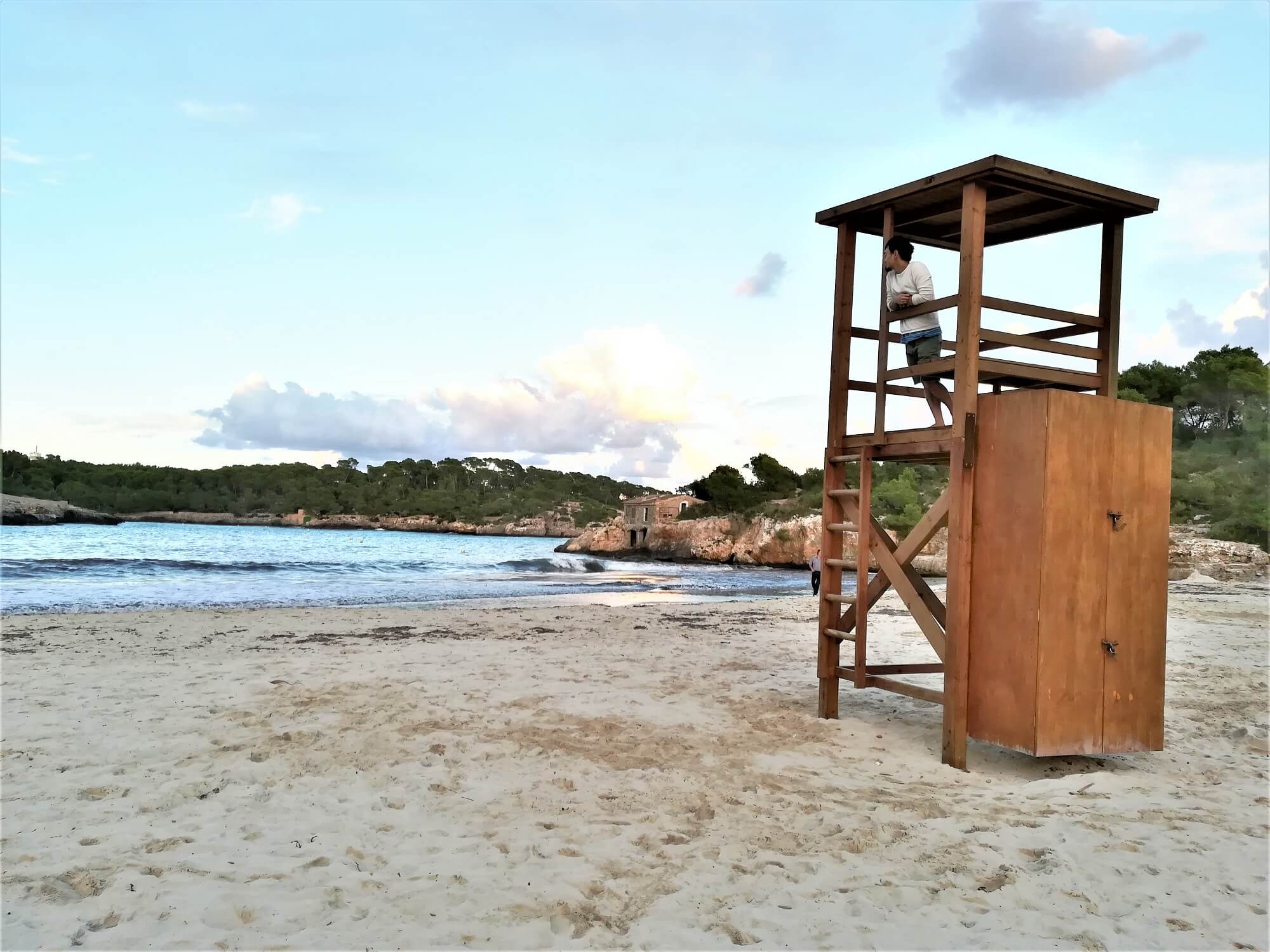
    It’s late afternoon when we finally find the beach there. It’s a medium sized bay, pretty, walled by rocks on either side. It’s empty when we arrive. I take off my flip flops. We walk along the sand.

    “There’s a seat there.”

    She points up on the rocks lining the water.

    “Where.”

    “There.”

    She stops me. Points at the rocks. Makes sure my eyes are following her finger.

    “Oh. There.”

    We climb up onto the cliff, sit on the little seat in the rocks. It’s a bit odd, like a park bench someone has hidden there, disguised. We chat for a while, then just sit in silence. The tide is coming in. I watch the swell crash against the pile of rocks below us. It comes in cycles, a few small waves, then a big one, a few smaller ones, then a bigger one.

    As they crash in and out, my mind drifts, segues, as it usually does by the water.

    Happiness. Loneliness. Mum. Fernanda.

    Each time a wave crashes on the rocks, my mind hits pause for two seconds, just to see if this one will make a splash big enough to reach me. And then straight back to wondering.

    Tanzania. Car crash. Where to go next. Why. Drifting.

    Wave. This one looks big. It’s going to splash me.

    Ooh, nearly.

    Half an hour goes by. An hour. Maybe two. No idea.

    Mallorca. How many people wait the whole year for a week in Mallorca…

    Fernanda says something.

    I flinch, ask her what she said. I’d nearly forgotten she was sitting beside me.

    “Maybe this one,” she repeats, raising her eyebrows towards the water.

    She’d been watching the waves too. This whole time. Waiting for them to splash us. Just like I was.

    The wave collapses onto the rocks, loudly. It plunges deep, then, as if launching off a trampoline, shoots up towards us. It splashes the tips of our toes, barely.

    I look up. The sun is just starting to set.

    “Let’s go?”

    The next morning Fernanda wakes up before me. Packs her stuff before me. Tells me we’ve got five hours until we fly. It’s time to worry about the car.

    “Google it. How to fix car scratches,” I say, stuffing toiletries into my bag.

    I hear the mumble of Youtube videos, her flicking through different ones.

    “Toothpaste?” she says, puzzled.

    She keeps watching. I look up at her, see her eyes fixed on the screen.

    “Oh my god,” she laughs. “Fucking toothpaste.”

    We check out and hurry down to the car. I give her my toothpaste, grab two dirty socks. She wets one, toothpastes it, starts buffing the door.

    After a few seconds she pulls her head back, examines it like an outfit she’s holding in the mirror.

    “Oh my goddd. It works.”

    She buffs harder, starts laughing.

    I take the toothpaste, start polishing the other side.

    A couple walks past, looks at us confusingly, a Latina and a Chinaman furiously polishing their rental car with socks.

    After twenty minutes we’re done. In the right light, it looks brand new. In the wrong light, it looks like we’ve tried to cover our car scratches in toothpaste.

    We laugh at each other, proudly. We did our best. It’s in fate’s hands now.

    I drive today. We barely need the map anymore. I make my way out of town, one last time. Along the confusing double road. Around the the big roundabout. Past the big Santanyí sign. Through the funny intersection, the one where it looks you can’t turn but you can. From there, it’s onto the highway, our final Mallorca road. Ample lanes all the way back to Palma.

    We pull up at the rental office an hour later. It’s the same lady at the desk, the one that got sued by the British guy. She’s gossiping with a workmate.

    I hand her the keys.

    “Any problems?”

    “None at all.”

    She glances at the car out the window for less than a second, tells me to sign a form, hands me the return slip.

    That’s it?”

    That’s it,” she smiles.

    She waits for me to walk out. As I close the door, I see her quickly go back to gossiping. I check my credit card for weeks. They never charge it.

    We share a cab to the airport. Fernanda’s going home to Berlin, me, onward to Amsterdam. She waits for me to check my bag in, we shuffle through security together. Soon we get to the end of our shared walk through the airport, the part where her gate is this way and my gate is that way.

    She drops her bag. We hug. She puts a hand on my neck, pulls my head down towards her. Kisses me on the cheek.

    I smile, wrap my arms around her.

    The last time Fernanda and I said goodbye, it was a goodbye that said maybe we’ll meet again, someday. But this time it wasn’t even a goodbye. It was a call me when you land, remember to read that book, don’t worry about the twenty euros, I’ll send you that recipe, did you give me back my toothpaste? 

    And I knew, from now on, there would be no more goodbyes between us. Only take cares, and see you next times, laughter about this holiday we took when we were kids, the beaches we couldn’t find, the food that cost too much money, all the conversations that came in between, along Mallorca roads.

    But as we broke our hug, turned to walk our own ways, I didn’t say any of that.

    Didn’t need to.

    Like the waves on the rocks at Mondragó, she already knew.

    B
  • A Day Thrift Shopping In Amsterdam

    A Day Thrift Shopping In Amsterdam

    So I needed a jacket.

    It was so cold in Amsterdam, and for some reason, I was without a jacket.

    Here’s the problem. In case you haven’t heard, I don’t buy clothes. Especially jackets.

    It’s because I have so many jackets at home in New Zealand, I’m quite sure I should never need to buy another jacket, ever. In this life and the next. And probably the one after that too.

    It’s this old minimalism thing, got me on a buying boycott.

    I did strongly resist this idea of a new purchase, for several days, honestly. I went out one night in three layers. Cold. Next day I had four layers. Still cold. So there was nothing to argue about after that, really. I needed a jacket.

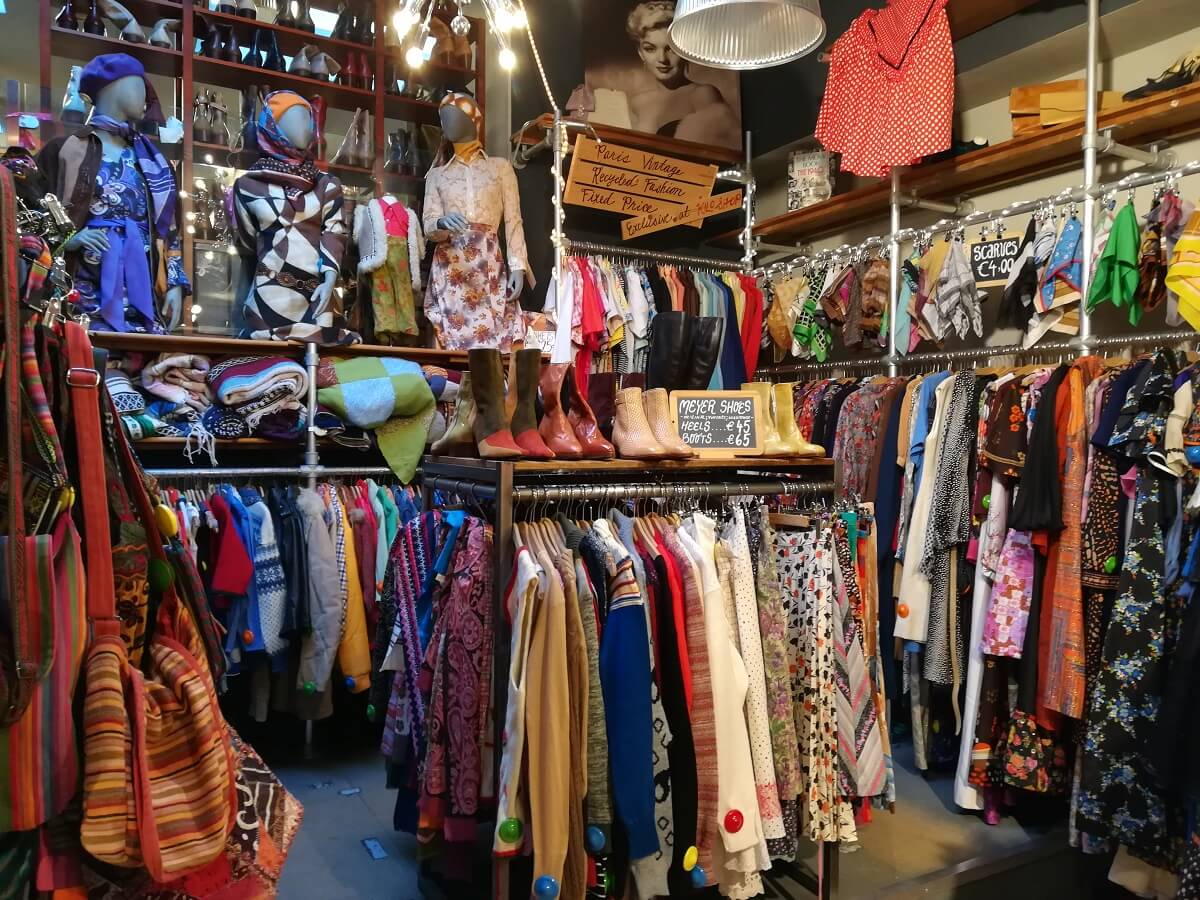
    Now Amsterdam is not a cheap city, so the obvious choice was: Thrift shop.

    I actually love thrift shops. The last thing I bought second-hand shopping was a jacket in Copenhagen (very similar situation) and it was five euros…or it might have been ten, I can’t remember. But it was so good I decided to keep it, after initially planning to give it away to someone at the end of my trip. I even took it with me on my trip to the UK this year. It’s basically a part of the family.

    But it was no good to me now, 10,000 miles away. I was either buying a jacket today or getting pneumonia.

    Easy choice. I choose pneumonia.

    Problem: That would be irresponsible, wouldn’t it? Sharing a dorm with so many other travellers and all, potentially infecting a hostel full of globetrotting young’uns for the sake of thriftiness. Some of them might even be travelling to remote destinations soon, where healthcare is sparse. Buying myself a jacket could literally save their lives. If you think about it, I’m almost obligated to do it. Just in the spirit of selflessness.

    Plus, it gave me something to do in Amsterdam for the day that didn’t involve smoking plants. Exactly what I needed.

    The cool thing about the thrift shops in Amsterdam is they’re everywhere, and often all clustered together in one neighbourhood. Second-hand shopping is also quite prevalent in the culture here.

    I decide to carry out this mission in Waterlooplein, which has quite a few options and is near the centre of the city.

    The first place on my list is the Kilo Store. It’s barely a minute’s walk from Waterlooplein station.

    This place is supposedly one of those “weighing” places, where you fill up a basket of clothes and they charge you by weight. I’ve seen a similar second-hand store in Bulgaria, where I bought a scarf, and it literally cost twenty cents or something. But in this store some stuff has price tags too. So I’ve no idea how it all works.

    The thing about thrift stores is, you really need to look. Every single item is different.

    I wander the entire store, trying to find a jacket that I’m gonna vibe with. You know, something that fits my aura, something a brooding writer would wear, one who never actually writes. Something that says, “I don’t care what I wear, but I secretly kinda do”. Something that says “I’m on a trip around the world trying to find myself”, crossed with “I actually already did that and now I’m lost again”, crossed with “I’m not a hipster but I do drink turmeric lattes sometimes.”

    I don’t really know what that looks like, but I’m sure I’ll know it when I see it.

    I walk around Kilo Store three times.

    I don’t see it.

    The next place I go to is called Episode, a short walk away.

    Episode is a little smaller, and a little more colourful. It actually has stores in a lot of places in Europe.

    This particular store has a large selection of second hand sneakers, which I never see much of in shops like these, but it’s a little thin on the jackets.

    I do see a bomber jacket that I could wear and not feel like a weirdo, but deep down I know it’s not the one. It’s something you wear when you’re just starting your backpacking career, not something you wear after being ranked #33 in The Expeditioner’s Top 50 Travel Blogs of October 2014.

    After a short browse of the weird and wonderful in here, I move on.

    The next place is about ten minutes walk away. It’s a place called BIS Army and Navy. Despite the obvious clue in the name, I didn’t actually realise it only sold army and navy clothes until I walked in the door.

    Of course to be polite, I walk around, pretending to look at stuff, and then I see a very cool jacket.

    Now this jacket, which I of course forget to take a photo of, really starts to smile at me. First thing I do after the obligatory glance-over is inspect the price.

    59 euros!

    But it’s brand new. Do I deserve a brand new jacket?

    I try it on.

    Fresh.

    It’s super thick, like a blanket, puffed, army green, lots of cool zips. It’s so warm, you could hike to the Arctic in this jacket. You could climb Everest in this jacket. You could sled with dogs in Siberia in this jacket, probably with just a tee shirt underneath. In fact, maybe (just maybe), you could go north of The Wall in this jacket.

    Only one problem. It’s big. Big like Adele. The old Adele, not the new Adele with the six pack.

    Why is this a problem? It’s not usually, I’ll date any version of Adele, especially the original one. She could sing while cooking breakfast, winters would be warm, it would be heaven. But this jacket can’t fit in my backpack. That’s how fat it is. That’s also probably why it looks cool. Fat jacket swag and all.

    I ponder this decision for a long time. To buy or not to buy.

    This wasn’t the mission. The mission was to buy a throwaway jacket, one that was the price of a kebab. And an exception could be made if the jacket was cool enough, but this jacket…it’s not that cool. And it’s fat. It simply will not fit inside the backpack. I would need to abandon it before my next flight, and this jacket is not in the abandon-able price range.

    Begrudgingly, I put it back on the rack. I walk out of the store. As I do, I get a confirmation email in my gut, telling me it was the right decision. I smile. We’ll set fire to the rain another day.

    The next stop is a place called Time Machine Vintage.

    Just from the outside, I can tell my chances of meeting my perfect jacket here are slim. It’s like when you go to that bar with a friend, and you know it’s going to be terrible, but you go inside and buy a drink anyway.

    I walk inside. I look around for four seconds. I walk out.

    I may be a little wonky, but I don’t think I’m Time Machine Vintage wonky.

    Just across the street from Time Machine Vintage is a place called Mood Indigo: Vintage Denim.

    I head over and immediately things look promising.

    Lots of cool jackets. Levi’s denim, Levi’s khaki, athletic jackets, tracksuits, leather.

    All second hand.

    This is the place.

    On the second rack I touch, I see something. It’s a Levi’s sherpa jacket.

    This is dangerous territory. I’ve always wanted a Levi’s sherpa jacket, the one with the wool inside, especially since the Friday Night Lights era (the show, not the mixtape). I spent my whole year studying in China trying to find a cool, affordable Levi’s sherpa jacket, and it never happened, they were always $300, $400. Ever since then, this jacket has been like my Eleanor (you know, that car that Nicholas Cage…never mind).

    I take it off the rack slowly, rubbing it between my fingers.

    First step in thrift shopping, check the condition. Otherwise you might get attached too early, and end up convincing yourself to buy a poop stained antique.

    I survey it closely for rips, stains, holes.

    Clear.

    Next, smell it. I give it a hearty sniff.

    Minty fresh.

    Actually it was more like a faded musk, but whatever.

    Finally, the fit.

    If you try something on at a thrift shop and it fits you perfectly, it’s usually a sign. The thrift shop gods put it there for you. If you put it back on the rack after that, you disrespect the shop, the moment, the previous owner whose old hopes and dreams live inside that garment. The experienced thrift shopper knows this.

    I put my right arm in. Then my left. I give my arms and shoulders the manly “jacket flick”. It falls on me perfectly. Sleeves perfect. Collar perfect.

    I look in the mirror.

    I don’t see a cold guy in Amsterdam anymore. I see a vagabond. A cowboy. A guy on a trip around the world would definitely wear this jacket. A brooding writer would devour this jacket. A guy who drinks turmeric lattes would be a legend in this jacket. You couldn’t just go north of the wall in this jacket, you could do it wearing flip flops and eat a white walker for breakfast in this jacket. You would climb Everest as a warm up in this jacket. Ryan Atwood would wear this jacket. Maybe even Tim Riggins would wear this jacket. On a good day, even Hank Moody would wear this jacket.

    Then I look at the price.

    69 euros.

    Brendan. My man. Think about this. That’s 69 bowls of roast duck dry noodles in Bangkok. 69 piles of mangoes from that fruit stall in Tanzania. It could even be 69 slices of margherita somewhere in New York. Maybe back in the day you were willing to pay hundreds of dollars for the perfect sherpa that you never found. But you’re older and wiser now. You’ve evolved, emotionally, spiritually. I mean, you’ve even learned to appreciate Adele’s grey-green eyes and artistic integrity and vulnerable sense of humour. You didn’t come all this way in life just to spend 69 euros on some jacket. Did you?

    I go to the Levi’s page on my phone, praying to see a ridiculous price.

    €130 brand new. This ain’t even half price.

    Suddenly feeling the pressure of this decision, I panic. I hastily return the jacket to the rack and step outside. I ask for a sign.

    A hipster cafe appears next door. I sigh with relief. Exactly what I need. As I panic about buying unnecessary material possessions, I decide to remedy the situation by buying unnecessarily overpriced food. I walk inside. The chicken and edamame bowl is €11.70. Sounds like a deal.

    A pleasant surprise: Chicken, edamame and pineapple is actually amazing together. Highly recommended.

    As I pick up every last grain of rice with my chopsticks, my mind turns back to the jacket.

    It’s final decision time.

    I go back to Mood Indigo.

    I walk to the rack.

    It’s still there.

    I put it on again. I walk around the shop three times. I look at myself in the mirror.

    This is it. You want to be a pneumonia-free sherpa-wearing trail blazer or not?

    I pull out the Mastercard, rub it between my fingers. I walk to the counter.

    Committing budget traveller sin right in broad daylight.

    “I’ll take this one.”

    The guy gets up off his stool.

    “Cool man.”

    He rings it up, I hold my N26 card against the machine.

    Blip blip.

    Accepted.

    As he starts to bag it, I hold up a palm and smile.

    “Don’t worry, I’m ‘a wear it right now.”

    As I walk out the door, I feed an arm through the sleeve, swing it around, let the jacket wrap me like a Levi cloud. As it falls upon my shoulders, luxury clothing pheremones emanate from my fingertips. I pull the cuff once, tug on the lapels twice. Fresh. Walking down the street, I stare at myself in the shop windows.

    That’s a Levi’s sherpa jacket, motherfu*ker.

    That’s right. It is. A second hand one. Maybe even third hand. Someone probably vomited on it once. Maybe it has pee on it. And tabasco sauce. Might have even been stolen from a homeless guy.

    But now it’s mine.

    B

    I know, I know, it’s amazing.

    Heading to Amsterdam?

    Check out some of these great day tours by my friends at GetYourGuide:

    Also be sure to check out my Amsterdam accommodation guide!

  • Lost And Found In The Netherlands

    Lost And Found In The Netherlands

    This hostel doesn’t feel like a hostel. It feels like a bus station. Maybe even an airport.

    I sit in the corner of this enormous foyer, the size of a school assembly hall, watching people check in. It’s like a factory line, boom, boom, boom, one after the other. They hand over a passport, she fiddles with the computer, she hands them some sheets, and a key. Then they grab their bags and walk over to the elevator.

    Next.

    This is why I struggle to love big cities. They remind me of factory lines. I dislike seeing travel become a factory line.

    I flick through my phone again. Still no vacant rooms. I don’t even know why I’m still checking. This big festival in Amsterdam has the city in shock. I saw a dorm bed yesterday for 90 euros a night, and that actually seems like a good – maybe even great – deal right now.

    “Even David Guetta is coming,” a German guy had said to me in the morning.

    Well if David Guetta is worth 90 euros for a dorm bed, I guess David Guetta must be a pretty awesome guy.

    3 p.m now. It’s obvious I’ll need to leave Amsterdam today, but to where? If there’s one thing that’s plagued my travels, it’s my indecision. I can never decide where to go. Staring at the computer screen for six hour stretches.

    “Barcelona or Madrid…Barcelona…or Madrid. Barcelona is cheaper. Oh but they don’t really speak Spanish there. Maybe Madrid. Oh but it’s more expensive. Ok Barcelona. Ah but they don’t speak Spanish there. Ok Madrid. Oh but…”

    First you want total freedom, then you have it, and it almost feels like a bad thing.

    8 p.m now. I’ve been sitting here staring at the same screen on my phone, flicking through the same bus tickets, staring at the same check-in line, for the whole day. Haven’t eaten. Maybe food will help.

    I walk down to the station nearby. I can smell the Chinese food. I stare at the menu for five minutes. Maybe ten minutes. 13 euros for rice noodles? Really?

    I go inside and pay 13 euros for rice noodles. Then I sit there and stare at my phone again. Okay, this is getting silly. Let’s see. Where do you want to go, Brendan?

    And then it hits me. I don’t really want to go anywhere. And I don’t want to stay here either. I just want a nice big bed by the beach with a blender and lots of fresh fruits and a boxing gym. Is that too much to ask?

    After sitting there for too long, I say thanks to the noodle guy and go on my way. I start walking. Where to? No idea. I just walk. The nights are not warm here. I dig my hands into my pockets and shrink into my jacket. I think about my last two days in Amsterdam. First, wandering around the red light district late at night staring at hookers like every other tourist in town. Second, sitting in a coffee shop getting high like every other tourist in town. Then sitting alone and freezing at a bus stop at 4 a.m. Tonight, homeless. Smelling like noodles, walking in circles.

    There was a time when this would have felt invigorating, romantic even. But after this many years, it felt stale, maybe even sad. There was nothing new about this, nothing mysterious about this anymore.

    There is something beautiful about young travel, and something equally beautiful about old travel. But it’s not really the same for in between travel. The 19 year old wanderer and the 75 year old wanderer are on the adventures of their lives. Wow, amazing. The 30 or 40 year old wanderer…well…he’s kind of just a wanderer, isn’t he? Maybe wandered too long, got lost, couldn’t find his way back.

    It’s approaching midnight. I find myself sitting on the lone bench in the metro station, watching people walk by. A group of drunk teenagers run up the escalator. A kid in a pram drops his Pringles. Two beautiful girls hug and laugh like they haven’t seen each other since last Friday. Everyone walks with purpose, somewhere to be, somewhere to go.

    Except me of course. I’ve been everywhere and yet I’ve got nowhere to go. Maybe I’ll just sit here. This isn’t so bad. In six hours it will be morning. I can handle sitting here for six hours. It’s warm enough, there’s a kiosk right there, I’ll buy a smoothie and a donut. In six hours I would’ve saved 90 euros. That’s like getting paid 15 euros an hour just to sit here on this bench. Better than minimum wage. Just think of it as working the night shift. Glass half full, all that shit. Any way you slice it, it’s still twice as a fun as an accounting job. And nearly pays the same.

    My phone burps. It’s a message on Instagram. It’s Eka.

    “Bren, you’re in Amsterdam! Come to Breda!”

    Breda? Where the feck is Breda?

    A little adrenaline runs through my fingers. I scroll through the map on my phone.

    Breda…where is Breda…

    There. It’s two hours away.

    I text her back and ask if I can come right now. She says of course.

    I manage a grin. Power walking back to my hostel, the wind ices my face. I grab my bags out of the storage room. Power walk back to the station. Where’s the ticket machine? There. Is this the right ticket? Don’t think so. Try again. This must be the right ticket. Twenty euros. Buy it. Blip blip through the gate. Wrong platform. Ask a pretty girl. She shows me the right platform. On the train. One hour gone. Swap trains. Which one? This one says Breda. Get on. Get off. Two hours gone. No wifi at Breda station. Middle of the night. Ask a guy. He shows me the map on his phone. Walk through the park. Took a wrong turn. Turn around. Found her house. Ring the bell. Climb the stairs. Door’s open.

    “Hey bro!”

    I laugh and give her a hug.

    Eka is an old friend from the road, from Bulgaria. We met a few years ago. Now we meet again. Her roommates are still awake, smoking something. I meet them both. They’re both cool. Eka brings me sheets and a pillow. This is where the night brought me. To this orange couch in Breda.

    It’s morning. I like waking up on a couch. It feels…adventurous. Eka’s friend Maria is also crashing in the lounge, since apparently there’s nowhere to sleep in Breda, either. So we wake, and spend the morning chatting about what things I could do around town.

    I feel refreshed stepping out on the street. Walking around Breda is soothing. The sun’s out, the air is cool. The first place on my list is a small teahouse in the main park. I go and order pancakes. Apple and bacon pancakes. Something new.

    The owner comes by after and takes my plate.

    “Did they taste well?” she smiles.

    I nod and thank her.

    After gazing out the window for an hour, I go to pay. My card declines.

    “Do you have another card?” the waitress asks.

    I shake my head.

    “Cash?”

    I shake my head again.

    She smiles nervously.

    “I can go get some cash and come back…”

    She nods and calls the owner out of the kitchen, who pulls off her apron, and smiles at me.

    “We sometimes have problems with foreign debit cards,” she starts explaining.

    “Are you staying in Breda today?”

    I nod.

    “So not to worry! Just go and enjoy your day. Whenever you have time, today, tomorrow, just whenever you are free, you can come back and pay.”

    I don’t know if she saw it on my face, but I walked out of there floating. Every now and then on the road, you experience kindness, trust, or generosity, often it’s the tiniest act or gesture, but it leaves a mark on you. It’s times like these when you think, this is why I’m here, this is why I came all this way, this is what I was hoping to find. Amsterdam was fascinating, but it wasn’t the place I needed. Breda might be.

    Next on my list of Breda sights, there’s a secret garden. I walk across town to go find it. As I enter through the arch, I notice a young guy, maybe 25, sitting there on a bench, among the plants, talking to himself. British accent. He sees me looking at him and his voice fades.

    “What’s going on man,” he says to me.

    “Nothing really, how you doing?”

    “Not good man.”

    “You want to talk about it?”

    He looks up at me.

    “I do actually.”

    I sit down next to him and he starts telling me lots of…interesting things. There’s some kind of device in his brain, people are talking to him, saying terrible things.

    “They’re talking about my son, they’re talking about bad things they want to do to me!” 

    “Why?”

    “I don’t know man. It’s because I know all their secrets. That’s why they broke into my house, stole my laptop, stole my iPad. Now I’m homeless. I’m an author, I was going to write books about them mate, you understanding that? They’re afraid of me.”

    He has a nice bike beside him, a pack of cigarettes in his hand, a can of orange soda. Very well spoken. Something seems odd about it all, like he shouldn’t be here.

    “It’s this quantum computing they have these days, I’m telling you, it’s so simple. They could be using it for good! But they’re using it to do stuff like this to me. Their time is coming, I’m telling you that.”

    After a long conversation, I get up to leave.

    “Where are you from anyway, Australia or something?”

    “New Zealand.”

    “Ahh New Zealand, what’s that like?”

    “You know, it’s a place.”

    “Yeah I’m sure.”

    “Nice to meet you anyway man. I’m Brendan.”

    “Demetrius.”

    I offer my hand. He shakes it. Doesn’t ask for money, nothing. Just smiles and gives me a nod, as if to say, thanks.

    “Wish you all the best brother.”

    “And you.”

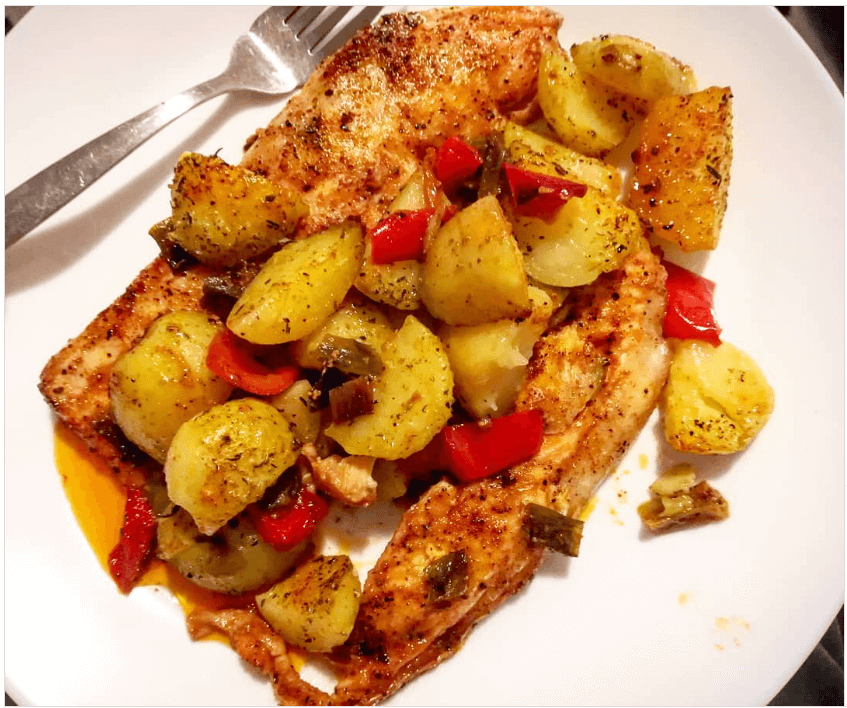
    That night Eka cooks salmon and potatoes for dinner. The cool thing about sleeping on couches is, people always seem to feed you well.

    “So I met this homeless guy today. He said there’s this device in his brain and people are tormenting him.”

    Maria sighs, sadly.

    “Sounds like he might be schizophrenic, or something.”

    “That’s a bit sad,” Eka says. She gets up to walk into the kitchen. Then she walks out again.

    “What if…”

    “What if he’s part of a government experiment and it’s true and none of us believe him?”

    I look up at her, thinking about it.

    “Yeah…what if…”

    Later that night, after plans for one of Netherlands’ infamous underground raves fall through, the four of us lounge around and watch random videos on Youtube. I’m so tired from wandering that I fall asleep on the couch, in the same clothes I left the house in, jacket and everything.

    When I wake up, it’s morning.

    I knock on Eka’s bedroom door.

    “I think I’m gonna take off. I’m heading to Zeeland.”

    “Like right now?”

    “Yeah.”

    “Oh shit. Let me get dressed.”

    We snap some selfies, swap hugs, say goodbye. As I walk to the station, I’m reminded; this is why I love the road. It’s a feeling you get, of adding a new experience, one that teaches you something, shows you the good in people, gives you something to remember. Amsterdam didn’t have it, but Breda did. Everything made sense again.

    Let me set this next chapter up for you. In the west of the Netherlands, there’s a place, known as Zeeland. When the Dutch discovered my home country – Aotearoa – they needed a Dutch name for it. They had already found and named a New Holland (Australia), so their next namesake was the country’s next largest province, Zeeland. Which gave the world Nieuw Zeeland, later anglicised by the British to New Zealand.

    When I saw how close it was on the map, I had to go. After all, that is why we’re out here, isn’t it? To set foot in the places we always hear about but never see. I didn’t even Google it, didn’t want to know what was there. I just knew I had to go.

    Two hours later, I arrive in Vlissingen, one of Zeeland’s seaside cities, in the mid-afternoon.

    Sometimes, when you visit a new place, you can sense its vibe instantly, its energy, its mood. As I exit the station, I feel it. To the left, boats on the water, big ones, to the right, a road leading to somewhere. For a moment, I feel like that guy in the movies, getting off the docks at that little town to start a new life. It’s peaceful, this place, nonchalant, faraway. Like nobody even knows it’s here.

    The hostel is a 36 minute walk away. I start moving.

    Vlissingen in a word? Quiet. The streets are immaculate, empty, save for a few walkers and the odd bicycle. It’s a Sunday, the shops are all closed. As I get to the hostel, even the owner looks like the classic small town guy, straight out of the movies – scraggly grey hair, running his little guesthouse, still using a pen and a pad.

    In my dorm there is only one other guy. The first thing I notice about him is he’s chosen a top bunk, even though every bed in the room is empty. Very odd. I even ask him about it, and he just shrugs.

    He’s French.

    I can’t remember his name, so we’ll call him Marc.

    Marc is a bicycle guy, from Paris, who’s riding his mountain bike around Europe. We shake hands, do the usual chit chat. Then I head out for a walk.

    Vlissingen might be isolated, but it’s not forgotten. A few steps from my hostel is a plaza, filled with pricey looking restaurants, sided by ample outdoor seating. Everything is very tidy, very clean, very modern. I figure, maybe this is where the Dutch come in the summer, to spend all their money.

    As I wander the streets, I tell myself, something feels good about this place. Like things were bad for a moment a few days ago, but here, they’ll be good. I can feel it. Sometimes the ocean does that. In the distance, I hear the water. I start to head that way, through a few side alleys, up some stairs, down some stairs.

    When I finally get there, I’m not prepared for what I see.

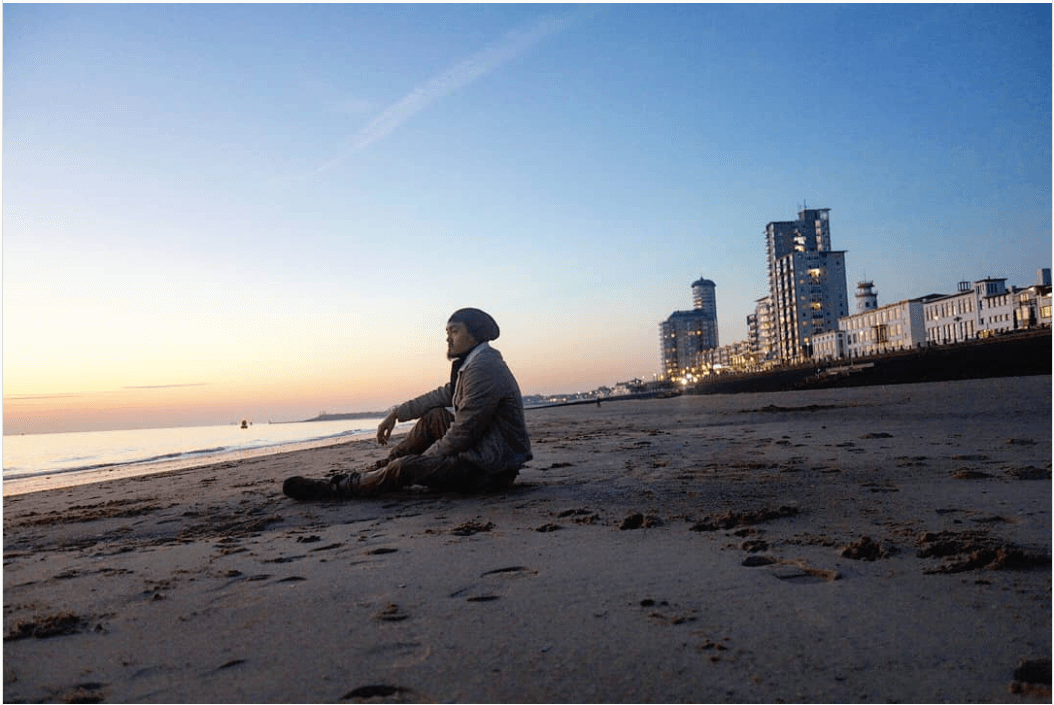
    Laid out in front of me, an endless beach, basking in a pink sunset. It stretches farther than I can see. The sand is soft, and golden. It’s empty. Spotless. And it’s confusing. How is it that the most beautiful beaches are always hidden, never talked about, even though they’ve been here for thousands of years, free for everybody to see?

    I hurry down to the water. A few kids scream and play, a few fishermen stand at the shoreline, rods in the sand, a few people walk their dogs. I sit and talk with the ocean for a while. This is what I wanted. I just never thought I’d find it here. I had been trying so hard to stay in Amsterdam. Now I’m wiser. Who needs Amsterdam, when you have Vlissingen?

    The next day, perhaps inspired by Marc and his cool bike shorts, I decide to rent a bike and ride west. Maybe I’ll see something beautiful, I say. I look at the map. Zouteland is 10 kilometres away. Maybe I’ll make it there.

    It’s been a while since I rode a bike. I don’t remember it being so tiring during childhood. My legs start to burn quickly.

    As I power through the sand dunes, up and down the biking trails, local oldies, fifty, sixty, maybe seventy years old, zoom past me, pedalling like Tour de France champions. I play mind games with myself to keep myself going, trying to battle the fierce ocean breeze, the sun, the fire in my thighs.

    Eventually, I get lost. I look at the map. Then I get lost again. Riding in circles. Lost three times. I look at the map again. How am I riding in circles when all I can see are straight lines?

    When I finally arrive in Zouteland, I don’t even realise I’ve arrived in Zouteland. It’s just holiday homes, straight out of Pleasantville, sitting in perfect grids, spotless, colourful shutters on their windows, same as all the homes I’ve been riding past for the last hour. It’s only stumbling upon the little tourist zone – a small cluster of ice cream parlours and souvenir shops – that I realise I’ve made it to Zouteland town.

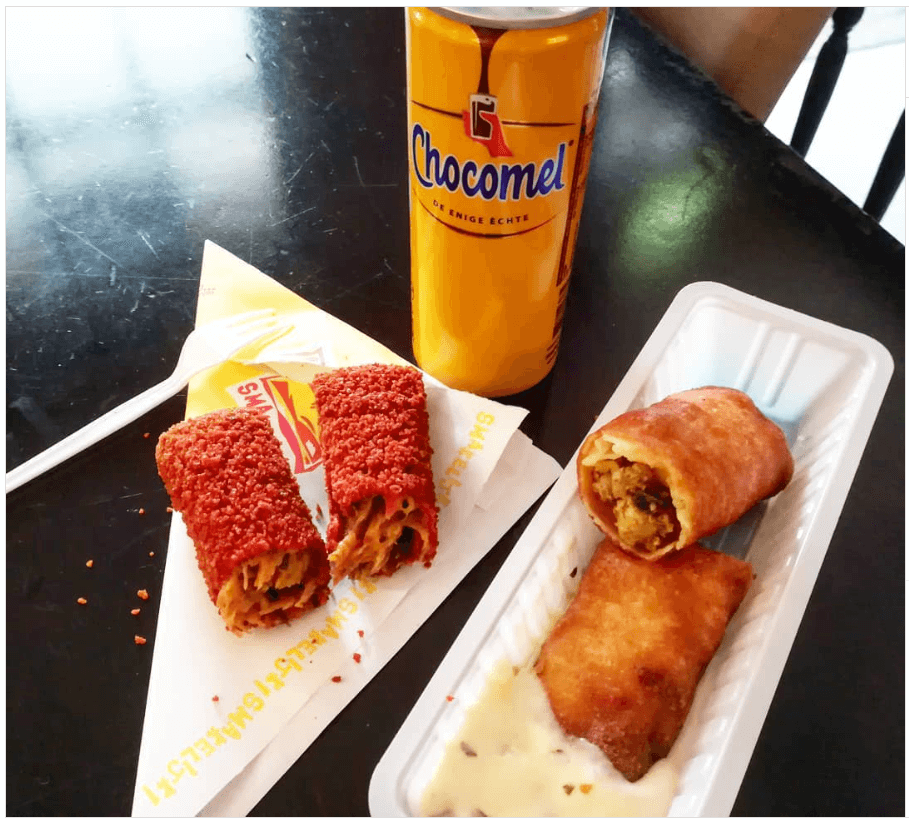
    I walk into one of the food joints and see a display cabinet full of fried fast food. I unload questions on the guy behind the counter; what’s this, what’s that?

    “First time in the Netherlands?” he laughs.

    I laugh back.

    “Yeah.”

    Eventually I choose two snacks, and he pops them in the deep fryer.

    “And is that thing Dutch?” I ask, pointing to a drink.

    “Yeah, Dutch chocolate milk,” he smirks.

    “Cool I’ll have that too.”

    I eat and recharge for a while. And then I just sit there, kind of bored. I guess it’s true what they say – it really is all about the journey. Time to head back.

    This time, the ride is more pleasant. I’ve figured out the right pace so that my legs hurt just enough that I don’t need to stop. And I’ve figured out how to read the map. Now I just ride.

    On either side of me, open yellow fields, forests, farms, stretching into infinity. I breathe deeply, consciously loving the cool air. For such a densely populated country, it feels empty. Maybe more Dutch people should move to Zeeland.

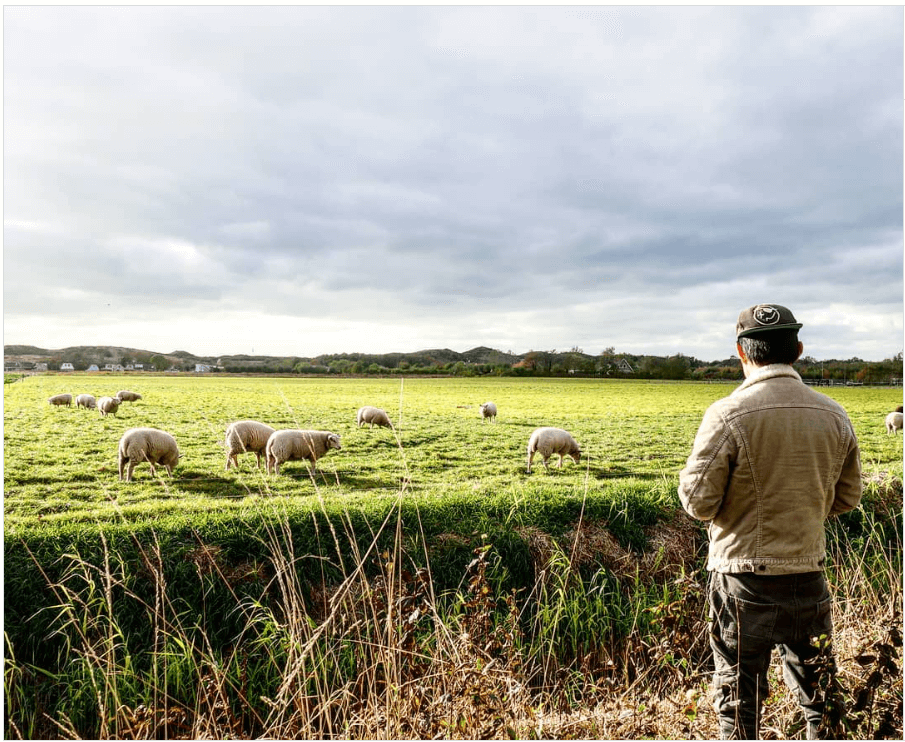
    On one particular skinny trail, I pass a field of sheep.

    Instinctively, I stop.

    I stare at them.

    I take a photo.

    I stare some more.

    This whole picture, it looks so familiar. These sheep really could be from up in Northland, that beach in Zouteland really could’ve been from the West Coast. This place really is a bit like an Old Zeeland.

    The next hour blurs by. As I drift back into Vlissingen, something’s changed. Somehow I feel new again, curious again. One bad night in Amsterdam brought me to here, riding along green fields by the ocean and breathing crispy fresh air, to a place so pleasant but rarely seen. On my lonely night in Amsterdam, I had mused to myself that I might be tired of this, but clearly I wasn’t. It was those people, those places, those moments I didn’t need anymore, the ones I’d already seen too many times. Amsterdam had reminded me of who I once was, and Breda had reminded me of why I was here. But Zeeland had reminded me of who I wanted to be.

    I left Zeeland the next morning, and the Netherlands, first catching a ferry across the channel, then boarding a short four euro bus down to Bruges. A few days on, I said to a fellow traveller that the Netherlands had healed me, laughing, like it was a joke, knowing inside that it wasn’t at all. It was the place I needed at that exact time, the place that I guess every traveller has, where you have that moment, that moves you to the next chapter. I guess the Netherlands was where I had mine.

    Safe travels.

    -B

    Visiting Amsterdam? Check out my city guide here 🙂

  • Memories of Málaga: To Where It All Began

    Memories of Málaga: To Where It All Began

    It was just happenstance that I found myself back in this city. I’d just finished the Camino with my family, and after some wandering we’d ended up here, in Málaga. After a few days in town, they’d all boarded their flights back to New Zealand, and here I was, in the middle of Plaza de la Merced, on my own again.

    I can’t lie, that’s always a funny moment when I say bye to my family on the road. First, it’s a little bit awkward. There’s a hug and another hug and then they say bye. Then the taxi drives off, and I kind of smile, like oh ok, they’re gone.

    As I walk off, it’s just numb for a while.

    And then it comes. For about fifteen seconds, an overwhelming gush of loneliness. It’s like when you say goodbye to a good travel buddy, but a million times deeper, a million times more real. That feeling of someone leaving you, of you leaving someone, in a foreign place. It can’t be described. Sometimes, I struggle to fight back tears. Because suddenly it’s not just oh, they’re gone, but it’s like oh, they’re gone.

    And then, a few seconds pass and you shake it off. You have to. And that vagabond feeling comes rumbling back. You realise it’s just you and the road once more.

    So many possibilities now.

    This is what we live for.

    This is what we do.

    The first thing I did was check into a hostel. Of course Mama always books nice guesthouses for us, but once she’s gone I’m back on the backpacker budget. I find a place pretty close by, a dorm bed is nine euros a night. Nine euros is good. I can do nine euros all day.

    When I get there, I’m greeted by a petite Italian girl, who has the most Italian accent ever. She’s the receptionist. I follow up her up the stairs, and the first thing I notice are the blackened soles of her feet. That’s the tell tale sign of a hippie girl. Always walking around barefoot, with dirty feet. Usually in short shorts or elephant pants. And messy hair. Check, check, check.

    I get to the dorm and collapse. It’s like a tradition now, when you get to a new dorm. Maybe you’re not even tired, but you just put your bags down and then just collapse on the bed. Then you lie there for a while, wondering what the hell to do.

    Eat? Nah.

    Walk around? Mmm. Nah.

    Just lie here and do nothing? Yeah. Good plan.

    The next day, I decide to go shopping. I need to buy shoes, and shorts. I head to a big department store in the centre, El Corte Ingles. Once inside, I wonder why on earth I came here. Everything is expensive and shitty. Shoes for $200 with a stupid crocodile on the side.

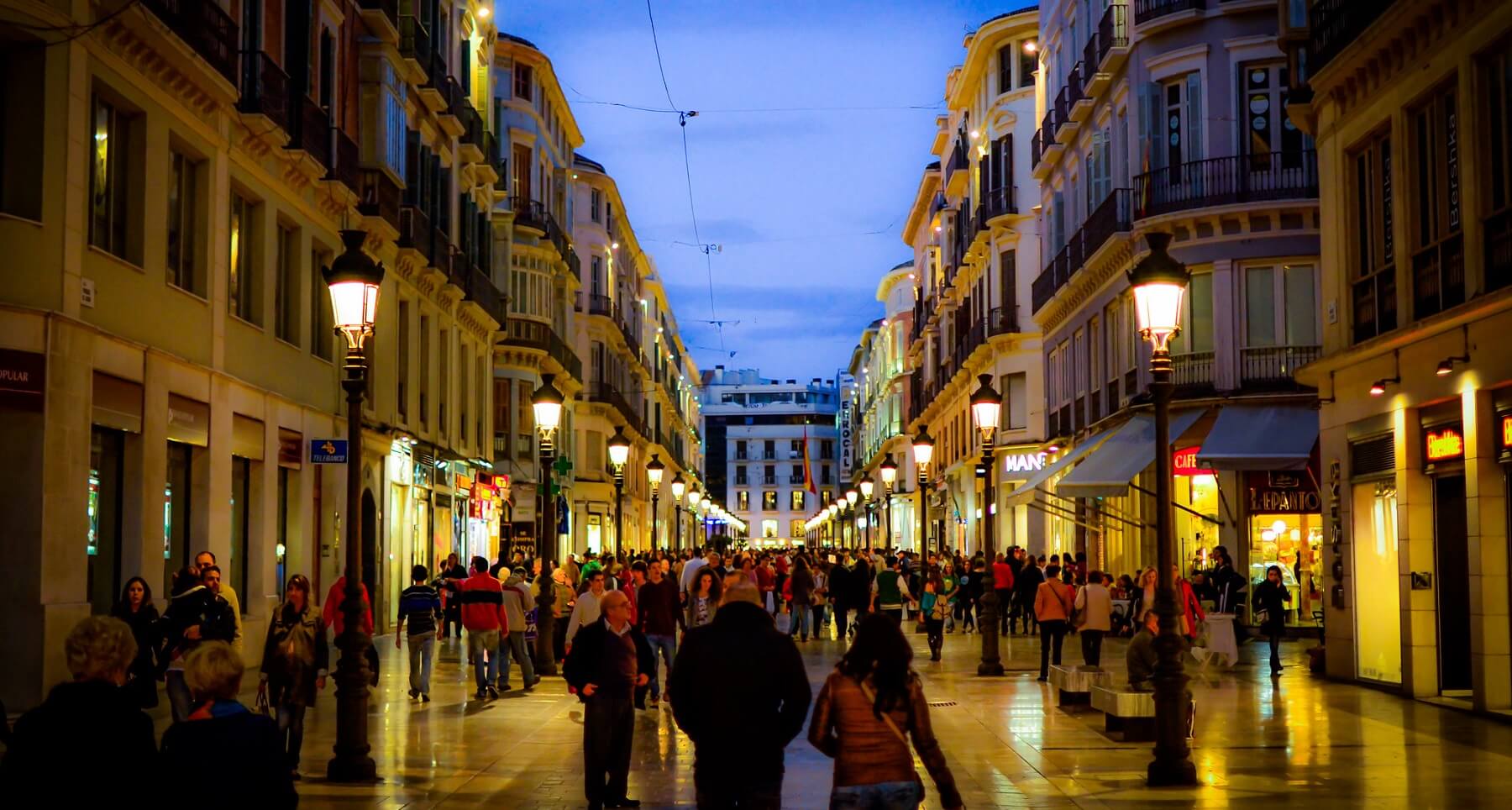
    I leave and walk around some other shops in the centre. As I walk around, I slowly rebuild the picture of these streets in my head.

    You see, this isn’t my first time in Málaga. I came here seven years ago, on my first ever solo trip, to study Spanish. That trip changed my life. The friends I made on that trip, the things I learned about myself, about the world.

    As I walk along the old streets, I realise I still remember everything.

    That’s where Philip drank two large Cokes that morning because he was so hungover.

    That’s the place we all ate tapas and the Swedes drank too much.

    That’s where I bought that blue shirt that I still wear today sometimes.

    I remember it all, how special it felt at the time. Nobody forgets their first solo trip. It was the trip that changed everything. It inspired me to see the world.

    Now here I am again, seven years later, and I’ve seen the world. As I chat in Spanish to strangers on the street – much of it learned at that school just a short bus ride away – wandering solo like it’s just an ordinary Wednesday, I think about how much life has changed. Walking these streets again is like returning home to see an old mentor. It’s like I came back, just to say thank you, and to let them know, I did it.

    That next day, I meet a French girl cooking in the hostel kitchen. Until now I’ve been the only one cooking in the kitchen. But now there’s a French girl in the kitchen. She’s using my pot. I mean it’s not really my pot, but I use it all the time, so I feel like it’s my pot. She’s a quirky, artsy girl.

    Actually, I have no idea if she has any quirk, or artistic talent. It’s probably just the dark rimmed glasses.

    Her name is Kathy.

    I can’t remember what Kathy and I talk about, but we talk for a long time. Now that I think about it, Kathy was telling me a lot about moving to Málaga, and she couldn’t find a place to stay, so she was staying here. So my pot was cooking, and I sat on the bench listening to her, while she cut up her salad, which looked like absolute shit.

    I ask her if that’s classic French food. She laughs. She knows it looks shit. From this conversation, I can already tell, Kathy is gonna be my hostel buddy.

    In every hostel you go to, you have a hostel buddy. It’s like the first person you meet, usually you arrive at the same time, and so you have this weird bond. Like hey, I met you on my first day, so we’re like, friends now.  That conversation was enough for Kathy and I to become hostel buddies.

    Later that evening, I walk into the lounge and see Kathy talking to some guy. His name is Dino.

    Dino is a short, wiry, smiley Englishman. I don’t know how old he is, but I’m going to guess early forties. He’s one of those bike guys – those guys who just ride their bicycle everywhere, and chill out at the bar in bicycle shorts. They’re actually quite common on the hostel circuit. Right now he’s riding his bike all around Spain, or something. That sounds kind of fun. I should do that some day.

    The next day I decide I need some exercise, maybe from seeing Dino’s rippled forearms the day before, so I head down to the beach. It’s a half hour walk, and there’s a public outdoor gym there, I guess for people to burn off all their late night plates of paella. I pump iron for about half an hour, then hide in the shade. Spanish sun is serious business.

    Then, in the distance I see a girl sunbathing topless on the beach.

    It’s weird.

    This isn’t a topless beach.

    She’s the only one.

    And then I get the smart idea to go and talk to her.

    Me: Brendan, don’t be stupid, leave her alone.

    Other me: No Brendan, face your fears, this will be good for you.

    Me: Seriously, you’re just going to go talk to her? She’ll think you’re a freakin weirdo.

    Other me: Who cares what she thinks bro, just go, this is how legends are made.

    This conversation goes on in my head for half an hour while I sit in the shade. My heart rate is elevated. This will be a first, I’ve never gone and talked to a girl on the beach before. When I hear myself say that, my mind changes. Because if you’ve never done something before, you have to do it. Are you really going to die having never talked to a topless girl on the beach?

    I stand up and walk up to her. I’m dripping in sweat, wearing the most homeless looking clothes ever.

    No excuses. Just go.

    [in Spanish]

    “Uhh…..hi….

    …I was just walking by, I wanted to say hello.”

    She’s actually smiling. Is she fake smiling or real smiling?

    “Oh. Hello.”

    She sits up to talk to me. This is going 300x better than I expected.

    “Do you always sunbathe without clothes?”

    “Yeah, I like it this way.”

    “You know in my country, you can’t do that. Police will come and tell you to put your clothes back on.”

    “That’s strange.”

    “Yeah, it is.”

    We continue to talk for a few minutes, about small stuff. Then I start to feel like a weirdo, so I decide it’s time to go.

    “I’ve gotta go. But shall we get a drink?”

    She looks at me.

    “Now?”

    “No, later some time!”

    “Sure.”

    I save her number, and high five her, and say bye, and walk off. My heart thumps so hard, like I’ve just survived a near death experience. Maybe I have.

    As I walk back to the hostel, I feel invincible. Everything is possible now. I’m a legend. I can already see life changing in my head. I’m going to text her, we’re gonna go to a hipster bar and have a drink. We’ll tell each other stories and she’ll laugh at my accent. We’ll go on a second date. We’ll talk about our favourite songs and our dreams and go for a long romantic walk along the beachfront. She’ll show me a secret side of Málaga I never knew. Maybe I’ll end up staying here for weeks, months. We’ll travel Spain together and create something beautiful.

    A few hours later, I text her.

    She doesn’t text back.

    That night, I cook some spinach and chicken, then go and sit in the hostel bar to do some work. There’s a bunch of locals in there. They’re all friends of the owner. The owner of this hostel is a crazy man. But he’s a friendly crazy man. The good kind of crazy man.

    One of these locals comes over to my table and greets me. She’s much older than me, maybe in her forties. Her name is Lupe. She asks me to help her paint her nails. I smile at her for a moment, trying to figure out if she’s serious. She is. I tell her I don’t know how to paint nails. She insists that I try. I try. Turns out, I’m a natural. We both have a good laugh, and then she tells me to come join the rest of them at their table.

    After I finish up on my laptop I go and sit with them. Of course, they only speak Spanish. That’s not a problem, I’ve been practicing mine on the Camino for the last month, it’s all come back to me. I sit there and chat with them. Lupe comes over and puts a beer in front of me. Her gay friend, I think his name was Miguel, eccentrically plants a cigarette in my hand. Everyone introduces themselves enthusiastically. The Spanish know how to make you feel welcome.

    Sitting opposite me is a man and his teenage son. He commends me on my Spanish, and asks where I learned. I tell him I studied in a few places, for a few months, a few years ago. I talk to the kid. Seems like a good kid. Another old guy joins in the conversation, asking me a few questions, about a few random things. It hits me, moments like these – these were the reason I wanted to study language in the first place. To be able to go to a random bar and talk to people. To hear people’s stories. To understand the world. Now I’m here, I’m really doing it.

    A few days later, I wake up and I’m nearly suffocating. There’s no air conditioning in this place, so the afternoons are lethal. The July sun in the south of Spain is a weapon of mass destruction.

    I lie on the couch, paralysed. I can’t move. I can’t eat.

    Now I know why they have siestas in Spain. In this heat, anything other than sleeping is torture.

    Later that evening, while still stuck to the couch, Kathy walks in. We sit and chat. Haven’t seen her for a few days, but she’s my hostel buddy, so we’re always cool. And she is cool. Most French girls aren’t really that cool, but Kathy is cool. She’s like that girl, who is kind of nerdy but still cute. Those kinds of girls are always cool.

    Dino comes in a bit later. Bad news. His bike’s been stolen.

    Since he’s a bike guy, I already know this is really going to screw with him. You can’t steal a bike from a bike guy, man. That’s the lowest of the low. Just evil. We sit and talk about it for a while. Dino is sad, obviously, but he’s chill. He tries to smile about it, turn it into one of those life lessons.

    Kathy asks him how much it will cost to buy another bike. Dino gives her a look.

    “That’s not the point. That bike has been with me all over Europe, I’ve been everywhere on that bike, on that bike. You know?”

    Yeah Kathy. Don’t you know?

    I feel really shitty for him. Who the fuck steals a bike from a bike guy?

    Later that night, Dino, Kathy and I sit outside in the bar with a few drinks. Nobody’s there except us. Out of nowhere, Dino pulls out possibly the fattest joint I’ve ever seen in my life and asks if I want to share it with him. I say sure. Dude just lost his bike, you know. Gotta support him and all that.

    As the night goes on we have one of those talks about life, about nothing. We talk about our travels, about Britain’s colonisation of the world (funny how that always comes up), about where we’re all heading next. I can’t remember what else we talk about, but as Dino takes off to bed, I remember thinking what a cool guy he is. Still out here, living the dream.

    There’s a new guy in my dorm today. He has a guitar. And he’s wearing old Chuck Taylor’s. Kinda like a wannabe John Mayer. As soon as he opens his mouth I know he’s British. He tells me how he just sits around all day and busks. If we were anywhere else, I’d ask him to play us something. But my ears don’t work in this heat. The only things that work are my eyes, and the only thing they can do is shut. And my sweat glands, of course. Those are definitely working.

    That night, there’s a big barbecue in the hostel bar. The owner is a grill master, firing up all kinds of different meats. I sit on the steps with the Italian hippie girl. I forget her name, but certainly not her personality. She tells me about how she’s travelling around Europe with her cat, who I’ve noticed wandering around the hostel every day. And how she kind of just got stuck here in Málaga, working at this place, getting comfortable.

    That’s a common story. Everyone who backpacks for more than a few months gets stuck somewhere. Even me. We all say we love the road, but there are always times when we crave a home as well. Getting stuck somewhere tends to give us the best of both worlds.

    The next people to check in to the hostel are these two Dutch kids. They’re young, maybe 18. They’re staying in Kathy’s room I think.

    That night, we all decide it will be a good idea to go out. We head to the plaza nearby, and order some dirty cocktails. As we sit around the table being typical drunk travellers, it hits me…I’m the old guy now. These kids aren’t even out of university, and I’m the thirty year old backpacker drinking cocktails with them. I’m finally that guy. And I mean, that guy has always been around, and that guy is always cool. But now I’m him. It never occurred to me that one day I might be him. But now I am.

    It’s a long, drunk walk back to the hostel. Kathy and I are laughing about something. That’s what happens with your hostel buddy. It feels like you’ve known each other forever. We get to the hostel and go sit in the kitchen in the pitch black and talk. It’s weird how we even have anything to talk about.

    We really don’t have anything in common.

    She’s a blonde French girl from a little town, I’m a Chinese kid from New Zealand. She’s in school, I’m like some homeless blogger writer guy. But we have the road in common. I guess that’s enough to make friends out of anyone.

    A few days later, Lupe asks me out for a drink. Since I’m just so busy, I decline.

    Just kidding. I have absolutely nothing to do. I go meet her at the bar nearby.

    I think Lupe is old enough to be my mother. I don’t know how old exactly, but she’s around there somewhere. I wondered for a moment, if she was trying to seduce me. But I think, she just wanted someone to chill with. We sit out on the terrace with a pair of gin and tonics and talk. We talk about all kinds of mature topics, like the refugee crisis and traditions and family stuff. She smashes through her pack of cigarettes like they’re Skittles. She laughs a lot. Really doesn’t seem to give a shit about much. She’s really cool, Lupe. I start to wonder what she was doing, hanging out at a hostel bar on the weekend with a bunch of backpacker kids.

    Maybe she was one of us, back in the day.

    Maybe she can’t let it go.

    Maybe that will be me some day.

    When I get back to the hostel that night, Italian girl is sitting outside on the balcony with her cat. Guitar guy is out there too. Kathy is inside on the couch. I sit with Kathy and we catch up. I notice she’s got a world peace wristband on. I ask her about it.

    “Guess how much it cost.”

    “3 euros.”

    She shakes her head.

    “7 euros.”

    She shakes her head.

    “1,000 euros.”

    She laughs.

    “It was ten euros! I got it at a festival. It was for like a fundraiser thing.”

    “Can I have it?”

    “Sure.”

    She slips it off her hand and gives it to me. I take it and put it on. I don’t know how I knew she would give it to me, but I just did. Probably because I would’ve done the same thing.

    Suddenly, I’m so grateful I met her.

    Suddenly, I feel like Kathy and I have everything in common.

    That night, I book a flight for the next day. When we find ourselves in these cities, these hostels, where we’re not here for any reason other than to be here, there comes a time when we know it’s time to go. That night, while lying in bed, I knew it was time to go.

    I check out early the next morning. I hugged Italy goodbye and took a few selfies with her. Kathy was nowhere to be seen. I didn’t get to say goodbye. Nor Dino. Nor guitar guy. Nor the Dutch kids. In fact, I don’t think I said bye to anyone. But sometimes it’s better that way. As long as the moments were good, the goodbyes can remain unsaid. Because we already know what’s being said inside. Besides, if we learn one thing out here, it’s that the road is a circle so, there’s a good chance we’ll see each other again some day. Anyway.

    To the memories of Málaga,

    B

  • A Day In Harare

    A Day In Harare

    I’m staying with a girl called Lyn. Couchsurfer. I’m sitting on her couch, relaxing with a cup of tea.

    Getting here though, was bit of an adventure.

    It was middle of the afternoon when I landed in Harare. Small flight. Lyn had already given me all the instructions the day before.

    “To get to my house you can take a combi from the airport, it’s 50 cents. Then when you get to town, take another combi to Westgate Red Roofs, it’s also 50 cents. Get off at Mopani road, the next street is mine! Or you can just take a taxi, it’ll be $30.”

    $30. Who am I, Bill Gates?

    I get to baggage collection. There’s a friendly airport guy standing around, not doing much. Looks like a security guard.

    “Excuse me, do you know where I can catch a combi?”

    He looks at me.

    “Where are you going?”

    “To Westgate Red Roofs.”

    “Ahh. Okay. You need to go to town first. Come, come.”

    He walks me out of the building.

    “Just walk out of the airport, to the big billboard there.”

    I follow his hand, pointing into the distance.

    “You can catch it right outside the gate. You need to change to another combi in town – just ask somebody where to go. Everybody is friendly!”

    His English is crisp, with the classic African accent.

    “Can I take this big bag on with me?” I ask, pointing to my backpack.

    “Of course! It’s no problem. Come I will walk you a little.”

    He walks me across the carpark, halfway to the airport gates.

    “So you see the big billboard over there. Just wait there. The combi will come.”

    I say thanks and keep walking. I realise I’ve never actually walked out of an airport before.

    I get to the main road. It’s quiet here, like empty suburban streets. The sidewalks are wide and dusty, the air is warm. I look at the different street corners, wondering where I’m supposed to wait. A man walks past.

    “Excuse me sir, is this where I wait for a combi?”

    “Yes you can wait just here. It will come. Where are you going?”

    “I’m going to town.”

    “Okay no problem, they will all go to town.”

    “And…uh…what exactly does a combi look like?”

    “A combi?!”

    He scrunches his face up.

    “It’s…like a bus!”

    “A small bus or a big bus?”

    “Just like, a small bus. When you see it, you will know!” he laughs, waving his finger. That’s a very African thing, I’ve learned – waving the finger when they say something funny.

    “So where are you coming from now?”

    “New Zealand.”

    “Ahh New Zealand! And how is New Zealand right now?”

    “It’s cold now. Not like Zimbabwe.”

    I’m actually sweating already. The sun is beating.

    “Yes, Zimbabwe is always okay!” he laughs, and I laugh with him.

    “Ok my friend, goodbye.” He shakes my hand and walks off.

    About ten minutes later the combi tumbles down the street. It’s a van, maybe a 20 seater, well loved and rusted, painted all sorts of colours. I see the doorman’s head hanging out the window. He sees me and bounces his eyebrows, as if to say, “you getting on?”

    I flick my eyebrows back at him, and the combi slows down and skids to a stop. He slides the door open. It’s packed full.

    I pat my backpack a couple of times and look at him. He grabs it without even thinking and magically finds space for it somewhere, then waves for me to get in the back. It’s times like these I’m grateful God made me a small guy. If I was one of those 6’4 Dutch guys, squeezing into a vehicle like this, it would be the most ridiculous, embarrassing moment of my life.

    I sit huddled in the back seat and watch Harare go by. CNN would make you believe this city is half burned to the ground with bodies lying the street, but it looks not too different to most other African cities I’ve been to. Gas stations, restaurants, people walking around, talking on cellphones, kids riding bikes, ladies at vegetable stands. You know, life.

    I feel a nudge in my side. The kid next to me is nudging me. Why is he nudging me? I look at him and he points to the front. The guy at the front is asking for money. I pass him the US dollar bill scrunched up in my hand. 

    About twenty minutes pass. We come to a stop and everyone starts to get off. I guess we’re in town. I do a thirty second “perimeter check”. It’s not as busy as I thought it would be. There’s traffic, but not a crazy amount. There’s people, but not a crazy amount. The roads are well worn and patchy. I’m at a big intersection. Weathered single storey buildings line every block, plastered with shop signs and advertisements. Street sellers crowd the footpaths, their little mats and stalls laid out with their trinkets. They’re offering everything from tupperware to cellphone cases to sneakers. Some African cities rumble with noise, but not this one. This one has more of a mild hum. Welcome to Harare.

    Before the combi takes off again I ask the doorman how to get to Westgate Red Roofs.

    He thinks for a second, then points somewhere in the distance.

    “Copacabana.”

    I look over to where he’s pointing and point with him.

    “That way?”

    “Yes, Copacabana.”

    He jumps back on the combi and takes off.

    I cross the road and head towards the Copacabana bus, I think.

    I feel eyes on me as I walk the streets. Asian guy in a snapback wheeling a backpack in the middle of Harare. I guess they don’t see that often around here. I look around. No white people. No Asian people. Just Africans. 

    I see a guy manning a little street stand who looks cool, and ask him for directions.

    “Excuse me…”

    He looks up.

    I smile. “How are you?”

    This is something I’ve learned in this part of the world. You always greet people before you ask them for something. Even if it’s just a question.

    “I’m fine my brother how are you.”

    “I’m cool. Can you show me where to get the combi for Copacabana?”

    “You’re going to Copacabana?”

    I nod.

    “You don’t need a combi my friend, you are already here!”

    I look at him, puzzled.

    He jumps up and points down the street.

    “You see the big red sign there?”

    I see it and nod.

    “Just walk there, and turn left on that street, you will be in Copacabana!”

    I get it now. Copacabana is the place of the bus stop. Not the name of the bus route.

    I say thanks and keep walking. He grins and goes back to his phone.

    The streets are a bit more crowded down this side of town. Some stare as I walk past. Some smile. Most just look for one or two seconds, then carry on with their day. As expected, things are slow here. People walk slowly. Talk slowly. Laugh slowly. I like it this way.

    I get to the red sign and turn left. A big crowd of combis is at the next block. I head over and ask one of the drivers.

    “Westgate Red Roofs?”

    He grabs my arm and shuffles a little so we can see around the corner.

    “There. Copacabana,” he points.

    I squint into the distance and see another crowd of people. I say thanks, he nods expressionlessly, not even a hint of a smile, and goes back to his day. He’s too busy to be dealing with silly tourists like me.

    I get to the corner, there’s another big crowd of combis here. I ask one of the guys, “Westgate Red Roofs?”

    He smiles a huge smile.

    “Copacabana! There!” He points even more blocks down.

    I smile and say thanks. He smiles back. Then he suddenly takes a karate stance and starts doing karate chops. 

    “Can you teach me?” he says, giggling. Karate chop. Another karate chop.

    “Next time,” I smile. We shake hands and I take off.

    I follow his directions, and pass through a little market, packed with people. Mats are laid out in grids, like mini streets, each one piled up with pyramids of clothes or shoes or toiletries. There’s lots of shouting and laughing. A few people smile at me, and I smile back.

    As I come out the other end, I see combis, and a guy shouting for customers. He’s built like a weightlifter, huge arms, in a green polo shirt and green shoes. He’s eating a popsicle, that’s green too. A+ for style. I ask him if he’s going to Westgate Red Roofs.

    “Westgate! Wait here,” he points beside him. “Just here. The bus is coming.”

    I sigh with relief. It’s been over an hour since I left the airport. I lean on my backpack, squashed in a crowd of combis. It’s chaos in here, there must be at least thirty of these vans all crammed in this little street, all fighting for customers, honking, shouting, laughing, sweating. I stand there like a village idiot, in the middle, boxed between them all.

    A guy walks past and shouts “Konnichiwa ni hao!” I turn and give him a smile. My face is getting sore from smiling and thanking.

    The guy standing beside me laughs, and asks where I’m going. I tell him I’m going to Westgate. 

    “Oh you going to that side, okay. You came from the airport?”

    I nod.

    “Yeah I saw you, I was on that same combi!”

    We stand there and chat for a while. 

    I feel a nudge on my thigh. I turn and see a combi ready to run me over. I guess they don’t beep horns here if they want you to move. They just hit you with their bonnet.

    I move away quickly.

    Finally the combi rolls up for Westgate. Green muscle man slides the door open and I jump in. The metal inside is worn and rusted, the seats all covered in colourful fabrics, also worn and holey. I sit there and wait for twenty minutes as it fills up. One by one all kinds of people get on. Students, ladies from the market, businessmen. When it’s finally full, we go.

    We roll out of town and into the suburbs. Everything looks…normal. Big houses with brick fences, traffic lights, bus stops, parks. Every now and then we stop and someone gets off, or someone gets on, or both. 

    One thing I always examine is people’s clothes. The ladies all wear colourful dresses, hair freshly braided. The boys usually dress a little more western – Nikes and hoodies. The men – shirts and pants, always.

    After a half hour we get to Westgate Red Roofs, so I know my stop is close. I tell the doorman I want Mopani Road. He nods at me, in that carefree African way.

    Then just a few stops later, he clicks his fingers at me.

    “Sssst. Mopani.”

    I jump out. The doorman plonks my backpack on the ground and points me to the street I’m looking for. Before I can even double check which one, the combi is gone. I get lost pretty quickly. It’s quiet. I look around, getting my bearings. There’s a few people wandering around, a little vege stand on the corner, kids playing. The roads are wide, paved and dusty. It looks like any regular neighbourhood. No street signs. I look around clueless for a few seconds, trying to make my best guess.

    Just a little lost. Relax. Done this a million times before.

    I ask a guy walking in front of me, in a fedora hat. We walk together for a few metres while he points me in the right direction. He’s friendly and has a really white smile. He sends me down a different road and continues walking on.

    I walk, walk some more, keep walking. My backpack wheels make a relentless duk-a-duk-a-duk on the pavement, drawing more attention than I want. It’s like the gringo signal, that sound. Whenever people hear it, they know some clueless foreigner is in their midst.

    I come across two kids, maybe ten years old, just loitering. 

    “Mopani Road?” I ask him.

    “Mopani?!” he shouts back. 

    Then he points at the road behind me. 

    I turn and give it a quick look, then turn back and give him a thumbs up. He bounces his eyebrows at me and walks away.

    I’m sweating hard now. Zimbabwe sun is hot and merciless.

    Finally, right down the end of the street I find her house number. I fiddle with the gate, looking for a bell, a latch, anything. But Lyn’s mother sees me and comes running out. 

    “Hello!” she smiles. As soon as the gate opens I extend a hand but she reaches her arms out for a hug. We go inside. Then we sit down for tea.

    Lyn pulls into the driveway an hour later. We meet and shake hands and hug for the first time. And then we sit and talk over tea as well. Over the next few hours I tell her a few travel stories, she tells me some funny Couchsurfer stories. It’s a lazy afternoon – my energy is low after my overnight flight and combi adventure. As the sun comes down, we start talking about dinner.

    I learn that Lyn’s mother loves KFC. Say no more! We jump in the car and head to the mall.

    Zimbabwe KFC is different. They have stuff I’ve never seen before, like sadza nuggets, and lime and chili zinger wings. I get them both. “Dinner’s on me!” I insist.

    Lyn’s mama is so joyous she takes a bunch of selfies of us all eating chicken. 

    After we’re full and smiling, we go across the road to the supermarket. I buy some yogurt and water, and then we wander through the whole supermarket, looking for KFC ingredients (we were watching Youtube videos about how to make it ourselves). It’s like a little welcome tour for me. Zimbabwean Supermarkets 101. But really, they’re no different to the supermarkets anywhere else in the world.

    After that, it’s back to the house for bed. I knock out as soon as my head hits the pillow.


    The next morning, Lyn takes me out to see the Harare Botanical Gardens. It’s $2 to get in. Nobody is there. It’s enormous, and semi-well maintained, large open fields with big trees scattered throughout. And silent. We wander around and chat. Then we sit under a tree and chat. We talk about our families. What we’re doing with our lives. Where we’re going. She tells me a lot about Harare, the Mugabe regime, the Zimbabwean people. It is always revealing to hear about this life from someone who actually lives and breathes it, rather than from some American lady in a newsroom. Those two stories, I’ve learned, are always very different.

    Lunch next. We’re both so hungry – we stop at the first Chicken Inn we see and get busy on some fried chicken and pizza. Lyn pays for it by text message, I don’t even get how it works. After that feast, I decide to wash it down with a bottle of Zimbabwe’s traditional maheu. It’s a fermented drink, from maize – I’ve been seeing it everywhere. I rip open the bottle and sip it once. Sip it twice. Sip it three times. No thank you.

    Earlier in the morning, Lyn asked if I could teach her how to swim. Sure, I said. So after lunch, we head to her local swimming pool. The sun is out, but I just know the water will be freezing, because the night was cold. I tell her, but she doesn’t believe me. We ask the guy at the desk if we can just go in and dip our hands in quickly. Lyn touches it once and walks right out.

    “I told you!”

    “Let’s just go get some snacks and chill.”

    We drive through the suburbs, talking and listening to some beats on my phone. She manoeuvres around potholes every now and then, like it’s second nature. Luckily the traffic is light out here. 

    Suddenly she pulls over by the side of the road.

    “What we doing?” I ask, looking around.

    “Getting snacks.”

    I jump out of the car and follow her to the corner. There’s an ice box and a bag of snacks just sitting on the roadside. 

    “What do you want?”

    Across the road there’s a crowd of women sitting under a tree, chatting. One of them gets up and leisurely walks over to greet us.

    Lyn grabs a bag of peanuts and Zimbabwean popcorn. 

    “Here, try this,” she says, handing it to me. I look at the packet. Peanuts and maputi.

    “You should try a Freeze-it too.”

    She opens the ice box. It’s full of little popsicles. They’re more like frozen bags of juice.

    “What flavour do you want?”

    Yellow of course! I reach in and grab one. 

    “How much is it?” she asks the lady.

    “10 and 10.”

    I hand her 20 cents and we walk off. I almost feel bad for paying so little.

    Lyn and I cruise around for the next hour, checking out street stalls for snacks while I suck on my Freeze-it. It reminds me of the ice blocks I used to eat at school. As I slouch in the passenger seat, people from the roadside get a glimpse of me and often stop and stare. Lyn and I already know what they’re thinking.

    Hey look, sister found herself a Chinese boyfriend.

    It was the same thing in the supermarket the night before. We laugh about it.

    We get home in the late afternoon. I’m flying tonight. 

    Lyn’s mama is cooking dinner. We’re eating sadza (like cornmeal/mashed potatoes), beef stew, some greens, and bugs. Yeah, bugs. They’re called mopani worms, I think. High in protein. It’s the wholesome home cooked meal I need to prep me for my flight.

    A few hours later, Lyn drives me to the airport. It’s a long drive, and we sit mostly in silence, listening to the radio. It’s two politicians arguing about Zimbabwe’s problems. Lyn keeps giggling during their talk.

    “This guy is seriously talking so much crap.”

    Lyn’s mama nods. I laugh with them. Politicians in New Zealand, politicans in America, politicians in Zimbabwe; all good at the same thing.

    We finally get to the airport. It’s dark outside, almost midnight. I haul my backpack out of the trunk and let out a smiling sigh. Farewell time.

    I give them both a long hug and thank them for everything. 

    “Keep in touch!”

    “Of course.”

    I wave at them as I walk in to the terminal.

    It used to be sad, doing this. Another hello. Another goodbye. But eventually you learn to see a little beauty in it.

    Just part of the Harare chapter in that backpacker life.

    Bren

  • Things Are Nice In Switzerland

    Things Are Nice In Switzerland

    I arrived in Switzerland on a cold morning. I forget which day exactly, Friday I think. I’d just stepped off an overnight bus from Berlin, still a little sleepy, and hovered around the bus station trying to find my bearings. A Starbucks was nearby, so I stood outside, praying to the travel gods for a free wifi.

    It worked.

    I logged in and GPS’d myself. I wasn’t far from the centre of Zurich, a couple of kilometres. Feeling a sniff coming on, I looked for a juice bar – a carrot and ginger juice always kept the flu running scared. Like your usual OCD traveller, I stood shivering in the cold, op-shop jacket and H&M discount beanie, reading the reviews of every single juice bar in Zurich’s centre. Then I walked.

    It took me twenty minutes to get there, lugging my bag along Zurich’s streets. They were surprisingly empty. It was only 7 a.m., but I’d envisioned a more bustling centre for a city as prominent as this. Often I would turn a corner, and not a single soul in sight.

    I found the juice bar without trouble. There was nobody in there, of course, I was the first. I ordered the standard vege juice, extra ginger, extra lemon. The guy spoke perfect English. The juice was perfect too. What wasn’t perfect was the price. Backpacker dollars don’t go so far when converted into Swiss francs.

    My friend Lara, who I had arranged to stay with, was going to meet me after her classes that evening. I had around 11 hours to kill. What does one do in a Zurich autumn for 11 hours?

    Sit in the juice bar and charge my phone, first of all. I did that for an hour. Then, exploring.

    Zurich is extremely slick. Streets are picture perfect, trees groomed, buildings all clean and full of character, expensive looking cars everywhere. It’s like a rich people suburb, but the size of a whole city.

    I wandered over to the river first, which remains nameless in my head. It looked cleaner and more polished than the rivers running through other European cities. At least the surrounds did. I remember seeing a young couple sitting on some stairs by the river’s edge. They were laughing about something. I wondered why they’d choose to sit outside on such a cold morning.

    I went to the supermarket next. I’m not sure why, but I expected Swiss supermarkets to be spectacular. They’re actually quite ordinary. I wandered through the produce section, wondering what I wanted to eat. Silly, because I already knew what fruits I would be buying before I went inside: The cheapest ones.

    One thing that’s funny about supermarkets around the world is the rules are always different, which is expected, but the problem is they don’t display the rules anywhere; you’re just expected to know. So in some countries you weigh your own apples, in others you take them over to a special counter and they’ll weigh them for you, and other countries they just weigh them at the checkout. Sometimes there will be a weighing machine but it doesn’t work, which leads to even more questions. Are you supposed to weigh your own apples, and the machine just happens to be broken today? Or is it broken because they stopped using it five years ago? Of course you don’t want to get it wrong, because you might end up getting to the checkout and then the lady tells you, you need to weigh your fruit. Now you’re that silly gringo running back to the produce section while everyone waits for you. Luckily there was no guesswork this time, the supermarket had a nice big weighing machine in the middle of the floor, with all these Swiss grandmas tagging their vegetables.

    After wandering the isles for too long, I got to the checkout and panicked after realising one of the weighing stickers had fallen off my cucumber. I rummaged through the basket, trying to find it. Not there. I shrugged at the checkout lady, and she shrugged back at me.

    “You need to weigh it again.”

    So there I was – law of attraction – the dumb tourist with a cucumber running through the supermarket.

    My next stop was a small park, perched on a hill high above the city. It was actually a pretty tough hike up there, with my bags and all. I found a bench and spread out, picnic style. My bounty from the supermarket consisted of some tomatoes, a cucumber, a couple of apples, a pack of salami, a pot of yoghurt and a baguette the size of my arm. I lounged up there for almost an hour, relaxing, listening to music, eating breakfast. Or was it lunch? When you’re on the road those words become meaningless sometimes, as does the clock; you just eat when you’re hungry.

    Looking over Zurich

    The rest of the afternoon escapes me – just blind wandering, probably. I suppose one thing travel makes you good at, sitting in all those airports, is killing time. People watching, wandering in and out of shops, listening to your own thoughts. It was five o’clock before I knew it. I headed to the train station and sat under the big clock. Lara showed up five minutes later.

    Lara was an old friend I’d met on my travels a few years back. We studied French together in Montpellier, and struck up an unexpected friendship over the short month we knew each other. She was only 16 at the time, me 28. Bizarre in regular life, for sure; not so much on the road. Two years later, we were here, meeting again in the middle of Zurich central station. We hugged, and laughed. It was like we didn’t really know each other, yet we did.

    After a quick Zurich dinner we jumped on the train, and arrived at her home late at night. The neat thing about Switzerland is it’s so tiny. You can jump on a train and be anywhere in the country in a matter of hours. Lara’s family lived in a tiny town called Unterägeri, in the middle of who-knows-where. We walked from the bus stop, through picture-perfect streets and snow capped mountains, like a winter Pleasantville. An oddly bright moonlight gave everything – houses, trees, cars – a fitting glow. The roads were empty and damp from the earlier rain, and I remember a silence, so sharp I was cringing listening to my broken backpack wheels squeaking against the pavement.

    Of course, their home turned out to be beautiful. Anything less would have looked out of place in that neighbourhood. Floor to ceiling glass windows opened out to the massive plains outside, the size of thirty football fields, green and white covered mountains sitting behind them. Her parents warmly welcomed me in like an old family friend and showed me to my bed downstairs. Guest room, ensuite. Luxury. I dropped my things and flopped on the bed like a toddler.

    For the next few mornings I woke up to fresh snow falling on the fields and hills outside, breakfasts of freshly baked bread, fresh fruit and Swiss cheese. Her mother washed and dried all my dirty underwear as if I were her own son, her father indulged me in long conversations each night at the dinner table long after the plates were cleared. They were a family who couldn’t have been more welcoming to this backpacking stranger; one who had nothing to share but smiles and a few old stories. One might not always have money to travel, but one can always afford to say hello, stay in touch, be polite and giving to whomever he meets on any given day. That in itself seems to end up paying for more than any paycheck in many places around the world.

    Lara’s backyard looks like this…

    That Sunday morning Lara took me for an early walk around Unterägeri. First we visited a small townhouse, where people were selling arts, homewares and crafts, all very Swiss and shiny, and then she showed me the lakes where she swam as a kid, now lined by autumn trees and carpets of orange leaves, the summer spots where families came together to enjoy the short windows of sun. People often are hesitant to show me small towns, “Mr. Traveller”, thinking I may be bored or unimpressed, but I always find them heartwarming and satisfying. Big cities usually just remind me of alarm clocks, ironing shirts and miserable people. Small towns are always a little closer to humanity. When I see one, I’m always relieved that places in the world like them still exist.

    For the rest of my stay, like a perfect host, Lara showed me around her tiny country. The old town of Zug, the little bars and restaurants of Luzern, the perfectly polished streets of Aarau. Everywhere we went, it was always clean, always quiet, always beautiful. Everyone wore those boots with the fur, and the expensive looking coats with fluffy collars. Between the intricate cocktails and the Swiss pastries in fancy shapes, everything in this tiny country just felt nice. Switzerland may not be the place for wild adventure, but if it’s pleasantness, pretty places, tranquility, and a parade of impossibly shiny towns lined up one after the other, there may be no better place in the world than this.

    Things are nice in Unterägeri

    The night before I left, Lara and I had dinner at a tiny restaurant in Aarau. It was a place telling of the Switzerland I had pieced together in my head, hidden away on the second floor of some building, somewhere, in some street. Surprisingly it was almost full; we picked up one of the last free tables in the joint. The waiter kindly greeted me in English, and between a mini splurge on snacks and drinks, I remember watching the streets outside the window, literally barren, not a single person in sight. Aarau was silent, on first glance one would think “Nothing happens here”. Yet sitting around us were groups of young girls chatting, a few older couples, and some younger ones too, all dressed in nice clothes, eating fancy food. As many places as I’ve seen in my life, this still amazes me – all these tiny inconspicuous spots around the world – most people will never even hear the name, let alone visit – yet there are people born here, living here, making friends here, working, falling in love, raising grandkids – living a good life, just like you and me. How can you not be curious about that? I guess that’s what travelling is, in its purest form: Curiosity about the people we never know and never meet.

    The streets of Aarau are silent

    The following morning Lara dropped me at the train station, my backpack and I headed back to Zurich. I would be on a plane the next day, my six month jaunt of Europe finally over, this goodbye a fitting finale. I told her once again to stop smoking, like a big brother, she rolled her eyes at me, like a rebellious little sister. We didn’t know when we’d see each other again. It didn’t matter. Travel friendships are simply that way. If you meet again, you pick up where you left off. And if you don’t, you don’t. A mini globetrotter herself, she knew it as well as I did. We hugged, I thanked her for everything, and we smiled goodbye. No tears or drama or weird stuff. Just a farewell nod, until next time.

    So, what is the moral of this story?

    Nothing.

    Travel doesn’t always need to be wow. Nothing incredible or or story-worthy needs to happen. Sometimes it’s just wandering a city, catching up with an old friend, drinking some Ovaltine in a fancy cup and then heading on your way. You came. You were there. You left. Nobody said it needed to be crazy. If anything, travel should teach us to see the beauty in the small moments like these. Walking a new street. Breakfast with some new faces. Conversations. If we can appreciate all of that, our travels – and our lives – will always be something to remember.

    Travel safe. Be kind to each other.

    Bren

  • When In Berlin

    When In Berlin

    It was taking me a while to find the bar. It was supposedly atop the fifth storey of this shopping mall carpark, yet when I got to the fifth storey, all was silent. I wandered for a minute or so, trying to find signs of life. Bars usually aren’t hard to find – lots of drunk shouting, laughter, lights, loud music. But this just looked like what you’d expect a carpark to look like at night; dead quiet, and empty. Maybe this girl I was meeting was just setting me up for a kidney robbery. I mean, if this was a scene in Breaking Bad, you’d already know someone was going to die in the next few minutes.

    I got in the elevator for the third time. A girl was in there, heading up to 5. I asked her if she knew where the bar was.

    “Yeah I think we’re going to the same place,” she said. Her accent was thick, German.

    The elevator doors opened. As we stepped out, she pulled out a knife, stabbed me and proceeded to extract my kidneys.

    Just kidding.

    I followed her across to the other end of the carpark, where we came to a small off ramp. We walked between a few parked cars, like going through a Narnia closet, up a winding slope and eventually around to a little booth that stood guard of a huge open air courtyard. The courtyard was empty, of course. It was freezing outside. Except for one girl on her lonesome. She was sitting on the benches by the doors, long dark hair, wrapped up from head to toe. I knew her face only from her Whatsapp picture, but I recognised her straight away. I smiled, and she pointed at me, almost shyly. I guess it can be a little nerve-wracking meeting the 337th coolest blogger in the world.

    As I walked towards her she stood and outstretched her hand.

    “No let’s hug!” I laughed, opening my arms. Handshakes were for job interviews.

    We opened the doors and stepped inside. Immediately I felt a gush of music and warm air. It was packed, noisy, smoky. I stepped over to the bar.

    “What are we drinking?” I asked her.

    She smiled.

    “Do you drink wine? We can get a bottle of…that tempranillo is really good.”

    Within seconds a bottle was plonked in front of me, and with wine in hand, we looked around for a place to sit. There wasn’t a single spare seat in the joint.

    “Do you mind sitting outside?” she asked. “It’s a little cold though.”

    I pursed my lips, making my best “pffft, cold” face and followed her out onto the terrace. It was empty out there, and silent, and we sat alone by the railings, overlooking Berlin in the night.

    “So tell me about your trip!” I asked.

    Fernanda was a long time reader of mine, who I’d chatted with on email over the years. She, too, had wanted to quit her job and see the world, and naturally had had many questions for me. When she finally made the leap, she’d kept me updated at most stages of her trip – when she started saving, when she hit the road, moving to Germany. And now we were here, meeting halfway across the world in a Berlin carpark.

    I sat there for the next half hour listening to her stories from the road – through Asia, India, Europe. The funny thing about travel is, you always end up with all these stories, but nobody ever wants to hear them. Most people judge, or just don’t care, and you end up telling your tales to nothing but a pair of glazed over eyes. You can only rant about that lady at work with your closest work colleagues, you can only talk all day about your car with another petrolhead. It was the same with travel. Only another road junkie will sit there and listen to all your stupid stories. I listened to every word.


    I woke up late the next day. Fernanda had left a text on my phone, asking if I’d got home okay. It was only my second day in town, I still barely knew how to buy a subway ticket. I texted her back quickly, my head pounding, and told her we should never drink tempranillo again. Then I headed into the hostel kitchen.

    I sat in front of my laptop working on the blog for most of the morning, being anti-social, until a Greek girl came and sat next to me. Her name was Athena. She was very…chatty. Eventually I gave up trying to work and just sat there talking to her. As you do in hostels, we told each other our life stories, and then went to the supermarket together. You’ll be surprised how often you sit in a hostel lounge with someone and then go to the supermarket together. It sounds odd, but it’s almost a daily occurrence. If you’re not sightseeing, what else is there to do other than talk and eat?

    The moment I walked into the supermarket I had to do a double-take. The first thing I saw was vegan cheese, then vegan sausages, then vegan yogurt. I quickly sniffed my basket to see if that was made of tofu as well. Logic would tell you we’d just walked into a vegan supermarket, but sure enough there was real bacon in there – it was just hidden away in the far corner, where the dirty omnivores congregate. I’d soon learn this was standard Berlin practice. Land of the tofu eaters.

    I don’t know how we decided to bake cookies that day. Maybe we were just overexcited that the hostel had an oven (that’s rare). And it was cold. So cookies. We came back to the hostel that afternoon and baked cookies. Then it became a thing for the next few weeks at the hostel. Wake up late. Do nothing. Bake cookies.

    Athena wasn’t actually a traveller. She was planning to move to Berlin, and was in town for a few days trying to find an apartment. Over the following week, I learned this wasn’t unusual. In fact, it was the norm. Half the people in my hostel weren’t travellers. They were people trying to live in Berlin who couldn’t find anywhere to stay. Every day they were going to interviews with landlords, and scouring through Facebook groups and websites, trying to find a room. And they couldn’t find one.

    But even stranger was, these people didn’t need to live in Berlin. They didn’t have families here, or jobs, or chains of any sort. They could’ve gone to Amsterdam, or Madrid, or anywhere else in Europe. But they wanted to live in Berlin. Just because. And it seemed like half of Europe was trying to do the same. One girl in my dorm said there were two hundred other applicants to the room she went to interview for. Two hundred.

    The natural question was, why the eff do all these people want to live in Berlin?


    A few nights later, a Berlin regular checked into the hostel and offered to take us out. Late in the night we got to this one club, no idea what it was, it looked like a 1980’s haunted house. Before we arrived, he turned and rounded us up, like kids on a school camp.

    “Okay, to get into this club, we have to go in pairs. They won’t let us in as a group.”

    Weird. Maybe some kinky Berlin thing. Anyway. We paired off. Weirdness elevated as the bouncer looked at me very seductively for five long seconds, but the first four of us got in without any trouble. The others, however, seemed to be dragging. After ten minutes we went out to see what the deal was and found them all standing outside, looking pissed off.

    “They won’t let us in.”

    “Why not?”

    “They said we won’t fit in here.”

    Over lots of angry chatter the next morning I’d learn this was another of Berlin’s trademarks. If you want to get into the club in Berlin, you can’t dress up. If you’re in khakis and a button down, you’re getting bounced. If you’re a supermodel dolled up in makeup and high heels, you’re getting bounced too. You won’t fit in here. Have you ever seen a nightclub turn away a pair of magazine-model looking ladies? You’ll see it every night of the week in Berlin. Of course, some people groaned about it. I thought it was funny.

    By now I was starting to figure out this swarm of Berlin’s loyalists. It was like a little counter-culture oasis, for people who were sick of the pretty girls and the rich boys eating all the cake. Nice suits and pretty faces didn’t get you a free pass here. In fact, they almost sent you to the back of the line. And people in Berlin liked that. They loved it. They loved it so much they were all uprooting their lives and moving to Berlin. Berlin was the anti-Hollywood. It wanted something different.


    The following day I decided to stick around in Berlin for a week or two. I’d been on the road non-stop for months and, after my tour of Europe’s north and east, I felt ready to just be a hostel bum for a while. Our hostel, the U Inn Berlin, felt like the perfect place. There are two types of hostels really. There’s the family hostel, where everyone knows each other and it’s like a summer camp. And there’s the factory hostel, where everyone is just there to sleep and nobody gives a shit. U Inn was a family hostel.

    Over the days that followed I got to know all the other drifters that had made the hostel home. Tatiana was some Belgian girl who made tote bags. Julien was a Quebecer who studied some political thing. Mitch was an Aussie who was just around all the time. Billy was the Irish guy who worked reception. Natalia was a Portugese girl who…I actually have no idea what she was doing. She was in school, I think.

    Collectively, they were the perfect picture of the typical Berlin expat; chilled out, liberal, kinda doing something with their life (but not really), trying to find an apartment with no success, vegetarian (but not really), trying to learn German, smoked the odd joint, and of course, just barely on the right side of bankrupt.

    I had no trouble fitting right in.


    A few days later, Fernanda offered to give me a tour of her Berlin.

    I headed out to meet her at one of Berlin’s many subway stops. Now, the Berlin subway is kind of interesting. There are no controls or gates, you just wander straight onto the platform. It all runs on the honesty system. And sometimes (sorry Berlin), you just can’t afford to pay three euros for a two minute ride. So every other day, if I was only going one or two stops, I’d sneak onto the train and be on edge for the entire ride, examining every middle-aged man’s face, wondering if he might be a ticket inspector ready to pull my pants down.

    On this day though, tour guide Fernanda had told me to buy the day pass, as we’d be roaming around a lot. So my trip out to meet her was calm, and peaceful. Every middle aged man who stepped on the subway had me hoping he’d pull out a badge and start checking tickets. If one buys a ticket on the Berlin subway and doesn’t get checked, did he really buy a ticket at all?

    It was still quite early in the morning when we met. Well, around 10 or 11 – early is a relative term when you’re travelling. I followed her around a few corners, into a neighbourhood that was quiet, and polished, filled with wide roads and decorated with street art. The name was Kreuzberg, I think.

    “See how they actually paint on paper, and then they paste it up?” she said, scratching at a piece of street art.

    “That’s because you’re not allowed to paint on the buildings, so that’s how they get around it.”

    Sure enough, it was pasted up, like wallpaper. I wondered how the hell she knew that. Surely a guidebook, or a local friend. It was too covert to be noticed just walking along.

    As we wandered, and chatted, Berlin felt very grey to me. Very slow. Very cold. Every now and then a small pocket of colour and energy would pop up somewhere, maybe a congregation of food trucks, or a bustling intersection. And then it was back to grey and quiet. I guess that was expected of such a large, sprawling city. Or maybe just a symptom of the winter.

    One of these colourful and energetic pockets popped up when we got to Dead Chicken Allee. It was pretty inconspicuous; I would have never found it on a lone walkabout. Obviously it was no secret though – it was filled with visitors wandering up and down, many with cereal box sized cameras around their necks. If you were a street art fan, this would’ve surely been your first stop in town. We spent the next hour loitering through the alley, examining the pieces people had left on the walls. Some had painted murals that took up entire sections, others just little doodles hidden amongst the noise. I always loved street art – examining what people felt compelled to leave behind. Sometimes a painting only takes a few minutes to make, but it’s an entire lifetime that hides behind it. Where that person came from, her beliefs, her pain, her regrets – it’s in that little picture, if you look hard enough.

    By the end of the afternoon we’d walked a double marathon around Berlin. On and off the subway, some market exploring, all sorts of monuments that I can’t remember right now. Eventually the evening start to set in, sun fading, and rain had started to fall.

    “Let’s eat?”

    Fernanda already had a place in mind. We jumped on a bus, packed from top to bottom, and hunted down some favourite restaurant of hers. It was a Vietnamese place, small and chic, dimly lit with a fusion like decor. Berlin’s Asian food scene, and just the food scene in general, would surprise me over the coming weeks. There was a bit of everything, all cheap, all trendy, all delicious. In true Berlin style this particular place had veganised all my Vietnam favourites, but after days of hostel eating, I let loose and gladly splurged on some hippie Vietnamese food. When in Berlin, do as the people-trying-to-live-in-Berlin do.

    After chowing we decided to hit a free comedy gig across town. Comedy is big in Berlin. It’s big in all the artsy cities. Almost every night there’s a free gig happening somewhere. As a comedy fan, I was pumped.

    We got there just as the place was packing out, and nabbed two of the last seats in the joint. A roster of comedians came up and did their thing – some okay, some really good. Of course none of the performers were from Berlin. None of them were even German. And of course, they told jokes about this. Nobody speaks German to you in Berlin, because nobody in Berlin is German. Nobody knows what’s inside a Berlin nightclub, because nobody has ever been let inside one.

    If you ever want to see what’s really under the layers of a culture, have a listen to the comics. They tell the abstract better than anyone.


    On my final Sunday in Berlin, Fernanda and I hit up the famous Karaoke Sundays at Mauerpark. We arrived early, with a lot of scattered seats still free. This had been at the top of my Berlin bucket list.

    Mauerpark Karaoke goes like this. There’s a huge outdoor auditorium by the Sunday market, Roman-esque, ringed by a concrete grandstand, at least twenty rows high. It fills with a couple thousand people, at least. Some dude sets up speakers and a Macbook with a bunch of karaoke songs on it, and then from early afternoon until sundown, anybody who wants to sing just puts up their hand. They get called down, do the suspenseful walk to the stage. Then for 3 minutes, they’re a superstar.

    Things move slowly at the start. He opens up the mic, the crowd is silent.

    “Anyone?”

    Nope.

    And then someone.

    “Ahh we got one! Yes, sir, come on down.”

    Everyone turns to look at him. He’s a middle aged guy, fifty something, looks like a dentist, red hiking jacket, hispanic. There are a lot of smiles, whispers, as he makes the walk. He reaches the stage and he and the host have a private giggle while they scroll through the songs. Everyone waits, intrigued. Who is this brave dentist looking guy? Then the music comes on.

    Brown Eyed Girl.

    He starts singing. A little nervous, but he’s good. Lullaby voice. The crowd cheers. He warms up a bit. A minute in and people are bopping. The chorus comes on. The crowd sings along. Everybody’s smiling. Then out of nowhere, he busts a little riff. Sha la la la. The crowd goes wild. For three minutes, the guy’s a rock star. And then the song ends. The crowd farewells him with love and applause, and he wanders back to his seat.

    “Who’s next?”

    It’s an English guy, a sober one, maybe thirty. It’s his wife’s birthday. He sings her a love song. I don’t know what it’s called, but it has the words “I love you” in abundance. The crowd melts. Love is in the air at Mauerpark.

    Next is an Australian guy. Lanky, blonde, kinda goofy looking. I can’t pick this guy. Could be a dud, could be legendary. Music comes on. Born to Run, Springsteen. The crowd grins as soon as he opens his mouth. He might be the worst singer I’ve ever heard. But his energy. Electric. He’s possessed. He bangs his head. The crowd cheers him on. He goes harder. This isn’t even music. It’s a train wreck. But it’s the best kind of train wreck. He starts working the crowd. It’s painful. The crowd is roaring with laughter. They love him. We love him. I look around, thousands of faces are painted with smiles and happiness. This is what Mauerpark is about. The song softens a bit. He’s building up to Springsteen’s famous 1,2,3,4. He screams it so loud he nearly breaks the mic. It’s totally off beat. The crowd erupts. The song winds down and we’re in awe of what we’ve just seen. This guy’s officially become a legend. Cemented in Mauerpark history forever.


    A few days later, I boarded a night bus to Switzerland. Three weeks in Berlin was refreshing, charming, unexpected. But I left still unsure of what the place really represented. On the surface Berlin felt like a place of all love and all acceptance. A place for everyone. But I don’t think it’s for everyone. It’s a place for the ultra liberal, the ultra free, the ultra open-minded. Backpackers will love it to its core. Accountants will wonder what planet they’re on. The Wall Street guy will flee and require daily therapy to recover. Despite what the Berlinites will tell you, not everyone fits in here. But what Berlin offers is identity. Uniqueness. A place for the other guy. It’s not for everyone. But if it is for you, there’s a good chance you will fall in love and never leave. Just like the rest of them.

    To a beautiful Berlin, and all the memories,

    Bren

  • Surfing New Zealand’s North With Rapu Adventures

    Surfing New Zealand’s North With Rapu Adventures

    There is a feeling you get when you surf. It’s a mixture of many feelings – the spray of salt water in your face, the thrill of zooming across an open wave, the sight of a curving ocean spreading in front of you, the sound of your heart pumping faster and faster against your rib cage, the feeling of knowing you can tumble to your demise at any moment, the head rush jolting through you when a wave finally picks you up, and maybe most thrilling of all, the adrenaline rush from all the ocean’s boundless beneath your feet, making you forget about everything else in the world for those precious few seconds.

    This feeling, is known as the stoke.

    This week is about chasing the stoke. I’m in Ahipara, a little gem hidden in New Zealand’s north, on a five day surf tour with the boys from Rapu Adventures. And I’m ready. Ready to wake up before sunrise. Ready to paddle until my arms fall off. Ready for the stoke.

    On the first morning we are at the beach by 6:30. It’s empty. Tide is low.

    I jump out of the van and stare at the ocean. It looks small. But I know better. It’s an illusion. When you get out there, it’s bigger than you ever imagined.

    This is not my first surf camp in New Zealand, nor my first time in Ahipara. I’ve surfed with Rapu quite a few times – I caught my first wave with them back in 2015.  And every day we hit the ocean together I learn something new.

    Still, I’m not a very good surfer. But if I catch one awesome wave this week, I’ll be happy. Just one. But to catch that one awesome wave, you have to chase it. I stare at the ocean, wondering where I should be chasing it today. Maybe over there? Or there? Just one metre too far to the left or the right, and your wave is going to leave you behind. Hmm. Tell me, wave. Where are you going to be today?

    Brett, the coach, sees me staring at the water and comes over. Brett is the head honcho – he runs this whole shit. He’s a scientific surfer. Everything in his camps is calculated. Which beach, what time, which board, down to the exact spot in the ocean he wants me to paddle to – he figures it all out, creates the gameplan, and then comes and divulges it all.


    A post shared by Bren (@brenontheroad) on

    “If you look closely, you can see the ocean drifting to the right. That’s called a longshore drift. That means we need to start way out over there – and then we’ll end up way out over here.” 

    His arm drifts slowly from the left to the right as he says it.

    We suit up and walk out, over the rocks. I walk as if on egg shells, my feet still soft, accountant’s feet, you could say. The others bounce along it, as if running on sand. I guess I have a few years to go before I earn my surfer’s feet.

    When we get to the paddle out spot, Brett turns and waves me over.

    “Okay look, that’s where you want to go.”

    He points into the water, about thirty metres out.

    “To get there, wait for a lull, and then just paddle full speed, right there. There’s a drift, remember. So paddle with it, 45 degrees.”

    Easy. I wait for the lull – the calm period between the swells. When it comes, I go. Paddle, paddle, paddle. After a few minutes, my arms start to burn. I look at the spot I need to get to. Still not there. I paddle harder. One wave nearly bowls me over. I turtle roll under it, and keep going. Jelly arms. Still not there. After about ten minutes, I sit up on my board. I can’t paddle any more. I look around and scream a few swear words. I’m nowhere near the spot. In fact, I’m halfway down the beach already. Miles and miles away. How the hell did I get here?

    Then I proceed to get pummelled by the ocean. I miss a bunch of waves. Get smashed by even more. I catch a grand total of…zero.

    After two hours of abuse I pick my board up and walk up to the van, breathless. Brett, and Ben – the other coach, are already up there, loading up the trailer.

    “How’d you go?” Brett asks as we drive back to the house.

    “Just got demolished the whole time.”

    I laugh, but secretly, I’m disappointed in myself.

    “That’s cool! That’s what it’s about half the time.”

    We get back to the house and have some breakfast. Everyone chooses a different fuel for the day – cereal, toast, fruit, coffee, juice. I stick with green tea and a few scrambled eggs.

    “Pack a lot of water guys, we’re at the beach for the whole day today,” Brett says.

    At around 10 o clock we get back to the beach and set up a gazebo on the grass above the sand. The surf is cranking. It feels like everybody in Ahipara is here today. I rummage through the snack box and then go lounge in the gazebo with the others. For the first hour we eat muesli bars and watch everyone else in the surf; pointing, laughing, lots of oohs, ahhs.

    Eventually Ben takes off for a surf. Then Laurissa, a Canadian girl, takes off too. We watch her for a little while. Brett pulls out his camera and takes a few photos. It’s her first time surfing, but she’s pretty resilient. Wipes out, gets back on. Wipes out, gets back on. Trooper.

    Finally, I decide to suit up. I slip the wetsuit on and grab my board. Brett always gives me this board. The magic carpet, he calls it. Apparently it really flies if you surf it right. I am yet to experience this magical ride.

    I paddle out to where Ben is waiting for me. We bob up and down on our boards, waiting for the sets to come in. I’m like his little poodle in the water. When Ben paddles left, I paddle left. When he paddles further out, I paddle further out. When he sits, I sit. Then when we’re lined up and a wave is standing up behind us, he nods at me and whispers go, go, go.

    That’s what he’s doing right now. Go, go, go. I turn around and paddle furiously. I look behind me. It’s right there, towering above me. Everything Brett has ever taught me runs through my head in a matter of seconds. Four power paddles! Lean on the inside rail! Look down the wave! Chest up! Board flat! Feet out of the water!

    In every wave, there’s a split second where you either make it or your don’t. If you were a little too slow, a little too fast, too much angle, not enough angle, leaning too left, leaning too right, the wave leaves you behind. Or swallows you up and dunks you. Either way, you missed it. On this wave, I don’t know what I did wrong. Probably everything. The wave flips me over and slams me underwater before rumbling on without me.

    When I come up, I pull my board towards me and climb back on. Next time, I tell myself. I look back and Ben is already up on a wave, zooming along. He swooshes right past me as I paddle back out. It looks like he’s out walking his dog on a Sunday morning. How does he make it look so easy?

    That night we all help put together a big feast for dinner. Brett cooks the steaks on the barbecue outside while Laurissa roasts some potatoes and makes up a big bowl of salad. Ben sets the table. Myself and the other Swiss dude on camp with us, I forget his name, we stand around and watch them. Teamwork.

    I love dinner at Rapu camps. We always eat good, and we’re always hungry. We sit around the table feasting and in between wave stories the others tell us about life in Canada and Switzerland. And then of course Brett always has a funny story or two to share. After that, I do the dishes with Switzerland, we study some photos with the coaches, and it’s off to bed to recharge. Tomorrow, another early morning surf awaits.


    A post shared by Bren (@brenontheroad) on

    Day 3. I am trying really hard to see what Brett sees. He looks out over the ocean and it’s as if he sees numbers, patterns, a secret code. He explains it to me, the swell, the drift, the period, the break, the peel, and I can see parts of it, but I can never see it as a whole picture. I always wonder, what exactly does he see that I don’t?

    This morning’s surf is better than the day before. I get up on a few waves, small ones, before we head in for breakfast. The second session is pretty much a repeat of the day before. I do something wrong. Brett tells me what I did wrong. I go out and do it right, but then I do something else wrong. Brett tells me what else I did wrong. I go out and…yeah, you get the picture. Eventually the sun starts to set. Home time.

    That night we all crowd around the laptop and look at more snaps from the day. Brett goes through a few with Laurissa and Mister Switzerland. Then it’s my turn. It goes something like this:

    “Alright Brendan’s up. Here we go, he looks good.”

    “Brendan mate, where are you supposed to look when you’re paddling in?”

    “Down the wave.”

    “Where are you looking?”

    “At my board.”

    “Why are you looking at your board bro! [giggles]. You can’t ride into the wave if you don’t look at where you’re going.”

    “Look at what’s happening here. This happens to you on almost every wave eh. This wave is going to flip you right over. I’ve told you how to stop yourself flipping over like that eh, how do you do it?”

    “Lean on the inside rail.”

    “Are you leaning on the inside rail here?”

    “Nah.”

    “Yeah. So you’re gonna get smoked eh.”

    “Boom. Got smoked. That’s happening to you a lot. You picked a good wave too, if you were leaning on the rail you would’ve been in that wave easy mate! Alright next one.”

    “Alright I can already tell you’re going to get smoked here. What’s wrong with this wave?”

    “Too late.”

    “Yeah mate. Way too late eh. Let’s take a look at what happens.”

    “So it’s just gonna swallow you. But also look at your feet! Get your feet outta the water mate – that’s a real bad habit of yours. It’s like two anchors you’re dragging along. That’s why you struggle to get speed sometimes.”

    “Where are you looking? Why are you looking at your board! Look down the wave bro!”

    “And boom. So just timing on that one. But still you can see all the things you need to work on in that wave too eh. You’re almost there! Just a few things to fix and you’ll be there.”

    And that’s pretty much how it goes for the next hour. At least for my waves. Switzerland got some good ones. Laurissa too. And Ben. But I’m amped for tomorrow now. I can’t wait to lean on the inside rail and get my feet outta the water and look down the wave.


    We wake up to a flat ocean the next morning.

    “The swell might pick up in the afternoon. Until then, there’s no surf.”

    We decide to head out to nearby Mangonui for the morning and bust out the fishing rods. Hopefully we’ll catch a few fresh ones for dinner.


    A post shared by Bren (@brenontheroad) on

    After about an hour we’ve caught 3 pieces of seaweed and an octopus which Ben somehow managed to let go, to the heckling of the small crowd watching. We leave the wharf empty handed. Well, not quite. Brett’s Maori genes give him a sixth sense for shellfish and he stops by the side of the road on the way out.

    “Look down there bro, oysters.”

    At first I just see rocks, but I look closely and I see them. Oysters. I lick my lips. We both climb down the rocks in the rain and grab a dozen. Fresh oysters right out of the ocean. Does it get any better than that?

    On the way back to the house Ben suggests we stop by the nearby waterfall to do some cliff jumping. The surf is still flat, why not? We take a little detour through a few rural backroads until we reach a mini waterfall nestled in a cliff face. The jump is eight, maybe ten metres high.

    We all slip into our wetsuits and peek over the edge. Laurissa immediately shakes her head. No way. I’m on the fence, but secretly I know I have to do it. After all the shit I’ve written about facing your fears, there’s no way I can’t jump.

    Ben goes first. My heart thumps as we watch him. He breaks into a sprint and launches himself off the edge, arms flailing. 7/10. +1 for style.

    I peek over the edge. It’s high. My guts are fluttering. I’m usually not afraid of heights, but usually you’re just looking over the edge. It’s a little different when you’re leaping off. But then I get to that point, where all my nerves are bundled into a little ball, ready to be thrown off the cliff with me. I run. Jump. Whoosh. Holy crap this is high.

    And splash.

    We spend the next hour chilling by the waterfall, jumping off some of the smaller cliffs into the river below. But soon it’s time to get moving. Swell is coming in. Time to surf.

    That night, after dinner, I catch Laurissa sitting out on the deck gazing at the view. Our house is up on a peak, we can see 90 Mile Beach stretching out into the horizon as far as our eyes will let us. The sunset is an orange blue. No cars. Other than the crash of the ocean, it’s silent. I stand behind her and take it in for a moment. Beautiful. But for me, this is home. I’ve seen this many times before. I leave her there to have her moment, and go to eat something. I check some emails. I take a shower. Read 50 pages. When I walk past the deck two hours later she’s still there, staring into nothing. At first I’m surprised. And then I’m jealous. Sometimes I wish I wasn’t from New Zealand. I wish I was from somewhere else, so I could see New Zealand through their eyes. I wish I could fly to New Zealand from halfway across the world and discover this strange country in the middle of the Pacific. I’m sure it would be the most beautiful place in the world.


    A post shared by Bren (@brenontheroad) on

    We wake up early again on our final day. The surf is booming.

    “Just stay next to me,” Ben tells me as we walk out.

    “You just need more waves. A hundred more waves and you’re going to have it down. I’ll get you into as many waves as possible.”

    I paddle out behind Ben. He paddles faster than me. A lot faster. He has long arms, like Spiderman.

    We get out to the spot I was supposed to get to on the first day. It’s easier to get here when you have someone to follow.

    Ben and I get into position and sit up on our boards. Almost instantly he looks at me. Go, go, go.

    I’m not actually fully awake yet. But I am now. I spin around and paddle. Too slow. That’s alright. That was a warm up.

    We spend the next two or three hours surfing Shipwreck Bay’s famous left-hand break. My perfect ride is so close. I can smell it. But every time something is just a tiny bit off. I’m too fast, I’m too slow, something. But it’s motivating. I keep thinking that if I paddle out one more time, I’m going to get it. But then we get the dreaded “one more” signal from Brett. One more wave. Last chance.

    Then I see it. I don’t even need Ben to tell me this wave is good. I already know. Go, go, go. I turn around and paddle. In my mind I know, this is the one.

    I paddle furiously. Everything I’ve got. As I paddle, I can hear Brett’s voice in my head. Look down the wave! I’m looking. I’m looking down the wave and I don’t even think about looking anywhere else. If you offered me a million dollars, if a thousand beautiful women were dancing naked on the beach, I still wouldn’t dare stop looking down the wave. The wave picks me up and I see myself shooting down the wave face. Wow. That’s what it looks like. Then I hear Brett again. Lean on the inside rail. I lean, just in time, just as the wave tries to flip me over. Brett was right. It really works. Then with every bit of strength left in my arms, I pop myself to my feet. Boom. I’m on it. This is it. This is my awesome ride. This what I’ve been waiting for all week. Zoom. But I only feel it for a second. Maybe less. The wave closes out on me and I drift away in the whitewash.

    Damn.

    We ride into shore and drag ourselves up to the van. Ben and Brett strap the boards on the roof while I stand there, gazing out. Who knows when I’ll be back here. Maybe next week. Maybe next year. I say goodbye, and then pile into the van with the rest of them, ready for the long drive back to the big city.

    I spend most of the trip silent, chilling in the back. Five days surfing in Ahipara feels like a month. I’m tired, hurting. But I feel energised. Refreshed. Happy. Maybe this is the stoke. Maybe it’s not about catching that one awesome wave. Maybe it’s just about smelling the ocean every morning, eating sunshine for breakfast, laughing, hearing the waves crash from your doorstep every single minute of the day. Maybe it’s about the escape. Maybe it’s about the challenge. Maybe it’s about chasing something, giving everything you’ve got, and not even catching it, yet still wishing you could go out and do it all over again.

    Because really, that’s exactly what we always do.

    To the ocean,

    Bren

    Want to take a surf camp in New Zealand??

    I did my surf camp in New Zealand with Rapu Adventures. Rapu is a local New Zealand business run by a few awesome coaches in Auckland. They’re very particular about finding the best conditions each day, and know all the best surf beaches around Auckland (and will take you there!). I’ve been on many tours with them, and my surfing has improved by a huge amount. I’ll definitely go on many more.

    If you’re interested in learning to surf, Rapu is now offering Bren On The Road readers an exclusive reader discount on all surf tours! One and two day tours are available, which are great for surf lessons in and around Auckland, as well as longer 5 and 7 day tours. Simply use the code BREN10 at checkout or mention “Brendan’s discount” during your phone booking, and you’ll receive a cool 10% discount! If you’re thinking about learning to surf or going on a surf camp in New Zealand I’d definitely recommend checking them out – they’re one of the few schools accredited by both Surfing NZ and Water Safety NZ, and easily one of the best schools in the country. I’ve got no doubt you’ll have an awesome time.

    To book a Rapu surf camp in New Zealand, simply head to their website.

    See you on the water,

    Bren

    Note: This post was not sponsored and I paid for my surf camp in full. The discount partnership has been arranged after being a happy customer of Rapu for several years now. I cannot recommend them highly enough and I’m sure you’ll have an awesome time. In the spirit of disclosure, I do receive a referral fee for anyone who uses the code above. If you have any questions, please feel free to contact me.

  • A Tammisaari Story

    A Tammisaari Story

    I didn’t even remember what this kid looked like. I mean, I could’ve picked him out of a police line-up, probably. But I didn’t have a clear image of him in my head. He had that funky haircut with the ponytail on top though – I remembered that much.

    I got off the train and headed for the exit. It was a tiny little platform, mostly empty. Only a couple of others had gotten off with me. I lugged my bag up the long, dark flight of stairs, and heard a voice come from the top.

    “What’s up, man?”

    I could only see a shadow, the sun blindingly behind it, but I knew it was him.

    “Hey. What’s up.”

    Kasper and I had met about ten days earlier, in Estonia. I’d walked into an empty Mexican cafe, and he was sitting there alone by the window. I got thrown an Estonian menu by the barman, and as I walked past, looking puzzled, he said hi and offered to translate it for me. I knew right away he was a backpacker. What other creature sits alone in a restaurant and says hi to a complete stranger? Only we do that. It’s like our secret handshake.

    I ended up sitting and eating with him that night, and we talked a bit about our travels and shared a few beers before going our separate ways.

    “If you’re ever in Finland, hit me up. You can visit my town, I’ll show you around the south.”

    Ten days on, I was in Finland, and I hit him up. He invited me to his town, to show me around the south.

    I threw my bag into the trunk. He was driving a white BMW. I would’ve picked him more for a nineties hatchback, boom stereo, hot box in the backseat kind of guy. But you never quite know on the road – it’s a time of stripped identity for many. Oftentimes, the version you meet is completely different to the one they are back home.

    It was a short drive from the train station to his hometown. Tammisaari, they called it. A small Swedish-Finnish town, by the southern archipelago, population 15,000.

    My head was on a swivel as we drove through. Empty streets, lined with small shops, polished and neat, unmarked roads and large wooden houses with big backyards. I loved it. I’d always been enamoured by small towns – so many stories and characters and small town secrets hiding behind every park bench, every schoolyard. All I wanted to do was knock on some old person’s door and ask about all the different legends and scandals and hometown heroes, like when the town jock breaks up with the town sweetheart, and then a new kid arrives in town and gets in the mix and there’s a big standoff at the soccer game on Friday. Then they end up becoming best friends and the girl ends up marrying the town nerd. I could listen to such tales for days.

    We pulled up to Kasper’s house and his mother greeted me at the door. She appeared very homely and sweet, smiling a country smile, apron on, obviously cooking something. I felt like an old family friend, being welcomed home for the holidays.

    Kasper showed me to my room. I grinned a huge grin inside. The bed was huge. A bazillion pillows, fresh towels, three layers of sheets. After months of bunk beds and couches, I’d never been so excited to sleep.

    And then came the tour of the rest of the house. I’d guessed from the BMW his family probably had a bit of money, but the place was a damn palace. Three huge flat screens, massive garden, apple trees, Michelin kitchen, dining table fit for royalty. When we first met, I’d never pictured him as a rich kid. His temperament didn’t show it, nor his clothes, nor his attitude, nor his outlook on life. He just seemed like a regular humble dude. Like most Finnish people, I guess.

    Once we’d settled in, I changed into some shorts and flip flops and we walked down to the beach. They lived only a few hundred metres from the water, and there was a nice pocket of sand where we lay out and chilled in the sun. It was a little strange being there alone with him. I didn’t know the guy well at all, we’d only talked for an hour or so that night in Estonia. I got more familiar with his story; where he was heading in his life, his newly bloomed travel career. As he was only starting university, I felt like I was playing elder brother, in a way.

    “Anyway, tonight my friends and I are going to play volleyball, if you want to go.”

    “Volleyball?”

    “Yeah we started doing that every Sunnnnday. We needed to fiiiind something to dooo around here, you know.”

    His words had that Nordic drawl, where they hold certain syllables just a little longer than usual.

    But I dunno, my friends are kinda scared.”

    “Scared?”

    “Yeah, of you.”

    I looked at him, semi laughing.

    “Me!? What did I do?”

    “Maybe because you’re from New Zealand. I dunno, Finnish people are scared of new things. New people. New anything.”

    When we got back to the house, Kasper’s mother had cooked up a huge pot of lasagne, with a garden salad, fresh bread and homemade juice. She didn’t even serve it in the house; they had some stand-alone dining cottage thing out in the garden, decked out with a fridge and dishwasher and everything. I don’t even think there’s a name for it. A garden house, let’s say. It would’ve been lavish on any day, but after months on the road, I felt like a Finnish prince dining in a private cottage in the middle of my castle orchid.

    We rolled up to the volleyball pit just before sunset. It was nestled in the corner of their old school courtyard, a lone sandpit, not far from the roadside. A couple of his friends, Ville and Ida, were already there, knocking the ball around. Ida smiled a bubbly smile and shook my hand. She had long, dark blonde hair, blue eyes, and full, rosy cheeks, which gave her a certain small town charm. Ville was a little more reserved, but gave me a friendly nod and introduced himself. He was of the famed Nordic gene pool – blue eyes, blonde hair, a sharp nose and jawline, and I suppose the famed Finnish temperament too; passive and poker faced. But even though Kasper had made it sound like they were going to scatter and hide behind trees when I arrived, they introduced themselves with smiles and handshakes like ordinary human beings. I felt stupid for expecting anything different.

    Car by car, his friends showed up, and I sat back and watched them come together with familiar smiles. It was like a small town eighties movie. The girls arrived in groups, and sat on the bench gossiping, snuggled up, sipping on bottles of Coca Cola. The boys stood around, brooding, joking, kicking the ball at each other.

    Andreas was the first to chat to me, halfway through one of the games. He was tall, with glasses, a thick combover. He had a gentle, well mannered way about him, and although he appeared the quiet type, he made small talk with me whenever there was a break in the game, like when someone ran off to fetch the ball from the trees or across the carpark. He was chatty, curious. I guessed he was probably the smart kid, who smoked all these other guys when exam time rolled around.

    Volleyball carried on well into darkness. Some games, some chit chat, some goofing around. For them it was just another Sunday, but for me, it was an interesting first peek into their life, their friendship, into this little town I didn’t even know existed a week earlier. I had seen my first glimmer of the real Tammisaari.

    We got home around 11 and I headed straight for the shower. It was pitch black in his enormous bathroom. I found the light switch and stared at it for a moment. It wasn’t a light switch. It was some Star Trek shit with a quartet of neon buttons, sitting on a touch pad. I tapped each of them, in different combinations, even clapped in front of them, like in the movies.

    “Yo Kasper, how the fuck do you turn on the lights in here.”

    He came over, laughing, and pressed the top right button at some funny angle. The lights blinked on. The bathroom was long and tiled black, a sauna on one side, a double rain shower big enough to sleep three on the other. I looked up at the shower head, laughing. It was the size of a dinner plate. I stripped down and stepped in, excitedly, fiddling with the tap – a little colder, a little warmer, until I got it just right. And then I stood there, in bliss, grinning as it rained down on me, washing away every ounce of road weariness from all the months before.

    The next day Kasper and I were on a mission. While at the beach the day before he’d mentioned that a big “crab party” was going down in a few days. Of course the obvious question for me was, “What the hell is a crab party?”

    Crab Party [krab pahr-tee]
    Noun

    1. An occassion where people gather and eat crabs, sing Swedish songs and consume large amounts of alcohol. Usually celebrated at the end of the short Swedish summer, before the long and harsh winter arrives. Dangerous. Avoid if possible.

    Fun. But I’d be long gone by the time that shindig rolled around. So I just thought out loud:

    “Why don’t we have our own? You and me.”

    Kasper hesitated for a moment, furrowing, and then nodded with approval.

    “Yeah, that’s a good idea. We’ll go buy some crabs tomorrow.”

    Only things had changed since yesterday. A few casual invitations thrown around at volleyball, some text messages, and now his whole crew had decided they were up for a crab party with the guy from New Zealand. We had some shopping to do.

    By the time we got home that afternoon we had crab plates, crab hats, crab tablecloth, crab decorations, and of course, the crabs themselves (which, lost in translation, were actually small crayfish). I’m sure if they were selling crab ice cream we would’ve bought that too. We unloaded it all into his garden cottage, ready to kick things off, but it was only early afternoon; we still had several hours to kill before party time. Wondering what to do, Kasper texted Ville, who offered to take us out on his boat for a few hours, to visit his family’s island.

    Say what?

    A little history lesson for you: In Finland you have Finnish Finns, and you have Finnish Swedes. And the Finnish Swedes are the minority for sure. And they don’t really speak Finnish, they speak Swedish, and I guess they just kinda hung around after the Swedes left Finland back in the day. So you’ve got all these Swedish speaking people living in Finland, and they’re all kind of loaded for some reason. So I ask Kasper one day while we’re walking around, “Yo Kasper, straight up, everyone in this town looks loaded as hell. Where did all this money come from?”

    And he just shrugs, and says “I don’t know.”

    But he guesses it’s all generational, passed down from some rich great grandfathers or something. So not only do they have nice cars and houses down this side of the archipelago, they own islands too. It’s normal; you own a bike, you own a toaster, you own an island. And I guess they own them because their grandfather’s grandfather’s grandfather owned them. But I have no idea how all that started.

    Anyway.

    We jumped in the BMW and went to pick up Andreas. He was chatty when he jumped in the car, like the day before. We’d only talked for maybe ten minutes that day, but we greeted each other like old friends.

    “What’s up homie,” I said as he jumped in, giving him a little fist bump.

    Ville was already there when we got to the docks. We parked beside him. By now, I’d started to figure these guys out somewhat. Kasper was the free spirit of the group. The thinker, the idealist. He was the guy who would read the book and be inspired, who would dream beyond the town. Andreas; he was more of a follow the script, study hard, put a smoke alarm in every room kind of guy. You wouldn’t see him put life on pause to go volunteer in Guatemala for a year. He was more the ‘become a hotshot engineer and start your own firm’ type. And you just knew he’d end up with a mega hot wife too, since those sensible dudes always seem to. And then Ville was like the poster boy of the group. Blue eyed blondie, crisp clothes, classic good looks. If they filmed a McDonald’s commercial in Tammisaari, Ville would’ve been the guy holding up the Big Mac at the end looking all dapper and Hollywood cheese. And he’d probably be your regular douchebag if he was from the big city. But as a Tammisaari kid he was cool, and level headed, like the rest of them.

    The four of us jumped in the speedboat. Ville threw the gas down and just legged it. We zoomed through the inlet, past endless clusters of little islands with little cottages on them. I wondered how the hell this guy knew where he was going. Everything looked the same to me. But after twenty minutes we pulled up to a little jetty in the middle of nowhere, and the three of them tied the boat up, as if they’d done it a hundred times before.

    We jumped out onto the grass, one by one. As we started walking, Ville just turned to me and threw it out there;

    “So, uhh, welcome to my island.”

    It wasn’t a small island; the size of a pair of football fields, at least. There were a couple of holiday cottages on it, and a boat shed, but most of it was covered in tall, straight trees and fallen logs, grass growing wild, terrain uneven. As we wandered around, they started unleashing the legends of the place.

    “Hey Kasper, remember when you passed out in that toilet over there and nobody knew where you were, hahahahaha. Remember when the boat broke and we paddled for like two hours, hahahahaha.”

    I could see it in their eyes, their smiles, the memories. It was those coming of age experiences, the kind that bonded people together forever. In New Zealand we had the gullies, the big Pohutakawa trees. In Tammisaari, they had the islands.

    “Man, I used to hate coming out here,” Ville started, gazing over the water. He was more talkative today, more out of his shell.

    “My parents would force me to stay out here in the summer holidays, and all my friends were having fun in the city. It was the worst…”

    His voice trailed off, as he seemed to recollect some old memories. The other two kicked around in the dirt behind us, nodding, as if they’d heard all this before.

    “But now I come out here, relax, drink a few beers. I love it here now.”

    When we finally got back to Kasper’s place the little garden house had been turned into Crab Disneyland. There were crab banners stretched across the ceiling and crab hats with crab bibs and crab songs printed out for us to sing.

    His friends arrived, one by one, two by two, until there were eight or nine of us crammed around the table. Kasper’s ex girlfriend showed up, and I giggled at the it’s-cool-but-it’s-not-that-cool friendly thing they had going on. I sat beside Ville, and Dennis. Dennis was this lanky 9 foot tall rascal who was all about the good times. If you needed your party to pop off, you invited Dennis. If you opened a beer and took one sip, Dennis threw another one in front of you with a “Hey, your beer’s almost finished, here’s another one.” And he himself could throw back beer like mineral water. I guess every group needed a Dennis.

    With my drinks sorted, Ville started teaching me how to eat the crayfish. They were piled in front of us, raw and still shelled. He threw a couple on his plate, and showed me how to crack them open and surgically pull all the meat out. I felt like a child earning wings – busting my own shells at my first crab party – like getting taught to use chopsticks for the first time. Once I fumbled through the first couple, I started tearing through them, piling shells up on my plate. And then I looked at the girls. They were doing some fancy thing where they put mayonnaise salad on toast and piled little crayfish bits on top, eating it all neat and civilised. It just looked like way too much effort. I stuck with the Chinese caveman style I knew so well.

    Then the vodka came out. It was Dennis who fetched it, of course. It was Koskenkorva; a big deal, apparently. No other vodka was worthy to be crab party vodka.

    Now when you drink with the Swedes, you have to drink a shot every time someone yells skål. So Dennis, being a Dennis, starts pouring shots for the table, and is skål’ing me every five minutes. Then the songs come out. You eat your crabs, sing a song, skål. That’s how you crab party. So the girls egg me on to sing, because they’ve got all the words printed out on these crab party sheets, but of course I don’t know the melody. Ville and Dennis to the rescue. They put together some quality Finnish beatboxing, and I blow up their Swedish crab songs like an MC Jin freestyle. And we skål all night until I can skål no more.

    I woke up early the next morning, unsure of what time, or how, I had gotten to bed. Only vague memories of Swedish songs and falling off a skateboard. Kasper would later tell me I had an early night. Those crazy kids had knocked me out before midnight. But there was no time for hangovers. I was due to leave Tammisaari in a few short hours.

    Kasper and I spent the morning cleaning up the dining cottage. We opened the door and laughed at the aroma. It smelled like a dying toilet, filled with beer and crab shells. We hustled, making quick work of it, and then I cooked us a couple of omelettes in his five star kitchen. The pepper grinder alone made me feel like a professional chef. It was battery powered, you didn’t even twist it. Just hold the button down and off it went. Nrrrrrrrrrr.

    As we lounged in his kitchen afterward, we decided there was just one thing left to do before I took off; the most Finnish thing ever.

    Sauna.

    The sauna was tucked in the corner of their downstairs bathroom. It was the traditional wood burning kind, and large, you could have fit five or six people in there easily. I watched Kasper stoke a little fire in the furnace and then throw on a bunch of firewood. After an hour it was ready.

    “We usually go in naked,” he said. “But I think…we should wear swim shorts.”

    We both changed and climbed in. It was nice and roasty, like sitting by the fireplace. Then he threw a cup of water on the stones. The steam hit my face and I collapsed forward in pain, clutching my ears. It was like being doused with a flame thrower. I grimaced hard, then looked at Kasper, who laughed, and then I grimaced again. What the hell kind of kinky ass Finnish tradition is this? Then the steam found my airways, and every breath I took cut short, as if all the oxygen had melted away too. I cupped my mouth with my hands, trying to breathe through my fingers, sip, sip, sip, seconds away from jumping out and rescuing what was left of my face. But then the heat dissipated suddenly, and I started to feel good, fresh. I sat up and breathed a little life back into me. Mmmmm. I understood now. No pain no gain. It was like the Finnish version of a Thai massage.

    “So you always come in here naked? Even with like, Ville and Dennis and stuff?”

    “Yeah.”

    He threw another cup on the stones. Psshhhh….

    I was ready for it this time, and zenned through it, breathing in sips until I could talk again.

    “Really? Like totally naked? Even with your Mum and Dad?”

    “Yeah.”

    “Like not even a towel?”

    “It’s just normal here. We grow up doing it.”

    Hmm. Weird. Although I guessed it wasn’t that weird. It’s just…bodies. Right?

    Either way, it didn’t feel real anymore. I was too proud, too purist, to enjoy it like this.

    “Alright. I need to get naked then. I feel like a fraud.”

    Kasper laughed. I pulled my shorts off and dumped them beside me. He did the same. And then we just sat there, talking about bullshit, naked, faces melting, sweating out all the sins from the night before.

    Kasper offered to drive me to Turku – my next stop – later that afternoon. Dennis, Ville and Ida decided to come along for the drive. I spent most of the way in silence, window gazing, making sense of the pieces of Tammisaari I was taking with me. Between thoughts I listened to them bicker with each other, laugh, tell each other stories, like brothers and sisters. I found myself admiring, even jealous, of their friendship. It was real, genuine, lifelong. And suddenly I realised, the lesson I was taking wasn’t in Tammisaari. It was here, sitting in the seats beside me. It wasn’t the crabs or the islands that had left me enchanted with their small town. It was their bond, and kinship, so effortless and apparent. Once childhood friends, they now sat together in this car, decades later as adults, still going through life together, still coming home each summer to walk the same streets they had as children. I thought about all my closest childhood friends, now all distant strangers, out there living a life I knew nothing about. It was different here. Tammisaari didn’t have the sporty schools where all the jocks went, and the preppy schools where all the geeks went, where everyone drifted apart, withdrawing into their own groups of similar tunes and waves. Here you all went through life together because you didn’t have anyone, or anywhere else. It didn’t matter that they were all different; Dennis, the joker, Ville, the posterboy, Andreas, the bookworm, Kasper the dreamer. They all fit together now, like a jigsaw puzzle. And as much as they took digs at their boring town – the boring town where everyone knew your business and there was nothing to do – it was the town that bonded them. One would guess, as different as they were, that they all had different hobbies, goals, loves and dreams, and anywhere else, in any big city, life would have pulled them apart. But Tammisaari held them together.

    I said goodbye to my new friends that afternoon in Turku’s central plaza, with handshakes and smiles, no different to the times I’d farewelled the hundreds of characters before them. But they didn’t know, as they drove away in the white BMW, that their story, and their town, as plain as it would seem, had inspired me, to cherish the important things we often take for granted: your roots, old friendship, family, the unique bond you share with the place you call home. The road leaves you many lessons, in many unexpected ways and places, but when I’d been welcomed into Tammisaari just 48 hours earlier, I’d never expected to take so much from their unassuming town in Finland’s unassuming south.

    I can only hope, I left something behind as well.

    To the place, and people, we call home,

    Bren

  • Big Trouble In Little Kraków

    Big Trouble In Little Kraków

    I didn’t feel like going home.

    I’d just had dinner with some friends in the main square and they’d all clocked out early; it was only 11pm. With a belly full of beer, I decided to hit the bars for a couple more, lone cowboy style.

    After a twenty minute walk I was in the bar-heavy Kazimierz district, one of Kraków’s tourist favourites. I headed straight for Pies Piekny, one of my regular spots. They always had good tunes playing in there.

    My first mission was to visit the toilet.

    Someone was in there, so I leaned against the wall and waited. An old dude, maybe sixty, walked past me.

    “Do you know where the toilet is?”

    I pointed at the door in front of me. I guess if you were a first-timer, you’d walk right past it. It was unmarked, in a weird spot. He looked it over quickly, then came and waited beside me. He was shortish and stocky, and dressed casually, in a tee and sneakers, looking like a typical bar dweller.

    “Where are you from?” he asked.

    His name was Finn, from Scotland. We got chatting, while whoever was in the toilet was doing drugs or taking a shit, or something else that took a lot longer than what a normal human being should take in the bathroom. After a minute of small talk, the toilet hogger finally emerged.

    I did my business and headed to the bar. A lady sat there alone, maybe mid thirties, blonde, sipping on something girly.

    “Is someone sitting here?”

    She smiled and shook her head.

    “No, no, you can sit.”

    Her name was Monica, from Poland.

    “What brings you to drink alone at a bar on a Tuesday?”

    She laughed.

    “It’s my day off tomorrow.”

    As I ordered my first drink, Finn emerged from the bathroom and sat on the other side of her. I gave him a nod, and continued my conversation.

    We’d been talking maybe fifteen minutes when Finn decided to interject. I forget what we were talking about exactly. He offered to buy a round of drinks. I wasn’t going to say no.

    “Gin and tonic for me brother.”

    The three of us sat there talking for the next two hours. I told Finn more about myself, my travels, my blog, which he wrote down on his phone. He was a journalist himself, so despite our age difference, we had parallels to talk about. I offered to buy the next round.

    The night drifted on to about 2 a.m, and many rounds later we’d somehow ended up on the dance floor. It was empty, so the three of us just bopped around like idiots. I showed off my salsa moves to some rock music with Monica, while Finn continued pounding drinks. But soon enough it was time to go.

    We exited the bar. Monica started talking to some guys standing outside the bar next door, while Finn stood by, enjoying the night air.

    I crossed the road to sit on a flight of steps while trying to call an Uber on my phone. As always, none were available. I put my phone away and slouched against the wall for a moment, waiting to try again in a few minutes. From there, I had a front row seat to the events that would follow.

    Monica enters the bar with the guys. I cannot tell if she knows them or has just met them. But she sits at a table inside and happily accepts a drink. Finn is standing outside, playing with his phone. I check for another Uber.

    Then some guy in an orange sweatshirt appears. He approaches Finn and starts grabbing half-heartedly at his pockets. I watch from a distance. He seems harmless enough, no different to the regular drunk encountered outside bars in early morning hours. But a lot of things are being said between them. I keep an eye on things.

    Five minutes pass.

    Then a flurry. The orange sweatshirter grabs more fiercely this time. Finn pushes him and walks away, towards me. Orange Sweatshirt Guy follows and grabs at him again. Finn throws a short backhand and connects on his chin.

    “Get lost!” he says sternly, pointing a finger in his face. The guy stares back at him, shouting something in Polish.

    “Kazimierz Kazimierz hurgh arrrh blur argh. Kazimierz arrgh blaah!!”

    Finn comes up to me, slightly flustered.

    “I’m going home. See you later.”

    We shake hands and he hurries on his way, shuffling off down the street.

    Orange Sweatshirt turns and says something to me in Polish. I shrug my shoulders, shake my head and tap my ear as if to say “I don’t understand”, and go back to checking my phone.

    Then some shouting from the bar. I look up and a can of pepper spray is mid flight. Orange Sweatshirt catches it and runs towards Finn.

    Shit.

    Adrenaline pumps. My heart starts to beat loud. Boom, boom. My eyes flicker left and right. I see everything in front of me. Four guys standing at the door of the bar, watching. I presume they’re his gang buddies. They look calm, like they’ve seen this a hundred times. Orange Sweatshirt is about twenty steps from Finn. Finn is still oblivious. No one else is around, save for a couple of parked taxis.

    I stand up and shout something. I don’t remember what. Probably just something like “Hey hey hey!!!”

    Finally Finn hears the footsteps and turns around. He takes a spray to the face. He stumbles forward. Orange Sweatshirt talks some shit, taunting. He sprays again.

    I look at the door of the bar. Still four guys watching, calmly, drinks in hand. I look at Finn. He takes a punch to the side of the head.

    I wince, hard.

    I have to protect him. This is what all those hours in the gym are for, right? To end fights. To protect ourselves and our friends.

    No. Don’t kid yourself. You’re a rookie. Find the cops.

    He takes a kick to the face. I recognise the technique. Kickboxer.

    I grimace. Five versus one. There is no way this ends well for me.

    Finn takes another kick, to the shins. He welps in pain.

    Fuck it. Go time.

    I run over, hands up. He sees me and turns, and sprays at my face. I slip it and feel it hit my neck and the back of my head. The smell is suffocating. I back up. He follows me. He sprays at me again but it doesn’t reach, although my breath catches some of it. It’s strong. I look the guy in the eyes. He’s drunk. I want to engage. I can engage. I glance at the bar. No, I can’t. There’s too many. He breaks into a sprint right for me, the can of mace out in front of him. I do a little shuffle, and sidestep him easily. He stares at me, surprised.

    I walk backwards, down the street. He’s following me, slowly, arm outstretched. I’m surprised too, that I am not afraid. My head is clear. I hold eye contact, shaking my head at him. He continues to follow. This is good. I hope Finn has picked himself up by now, and run his ass out of there.

    After half a block, Orange Sweatshirt finally turns around and runs back. I watch him, wait for him to turn the corner and then follow.

    Gotta find Finn.

    I get back to the same intersection where Finn had been smacked around. I peek around the corner. I can see the bar. They’re all sitting inside. I look around. Finn is nowhere.

    I spend the next hour walking around Kazimierz trying to find him. Secretly I also want to find Orange Sweatshirt by himself somewhere. I’m angry. But I find neither. I sit in the main square for a while. My neck is burning and hurts to touch. I try to think. I don’t have his phone number, his Facebook, his hotel, nothing. I just know his name – Finn, from Scotland.

    The sun starts to come up. I go home.

    The next morning I wake up at lunchtime. I have an email. It’s Finn.

    At first I think, how? And then I remember. He wrote down my blog on his phone.

    “Brendan, are you okay? I have been quite badly injured. The guy sprayed me and attacked me while I was defenseless. I could not see or hear anything. Nobody would help, not the taxi drivers or the police and not even the bar where we’d spent the last four hours. Please let me know how you are.”

    My heart sinks.

    “Finn, I was there, I saw the whole thing. I’m fine. The boys in the bar were his mates. They threw him the mace and he chased after you. I’m sorry I couldn’t protect you. They were just too many. What happened to you after? I looked for you everywhere.”

    We exchanged emails for the next half hour as I relayed the whole story to him. He’d been picked up by some family and had already left town, readying himself to return to Scotland. With him he’d take some cracked teeth, a broken jaw, bruising on his legs. But he was still breathing. He was going to be okay.

    I spent the rest of the day lying on the couch, feeling shitty, shadow boxing in front of the mirror, trying to convince myself I did the right thing. I ran over all the ‘what ifs’ in my head. Some of them ended with Finn and I standing over five groaning bodies. And many more ended with us both breathing out of tubes in the hospital. But it doesn’t pay to torture ourselves with such games.

    The moral we’re left with is, as beautiful as it is in Kraków – and the world – you have to be careful out there. Big trouble is always somewhere.

    Stay sharp and travel safe,

    Bren


    krakowpin