Blog

  • Melancholic In Montpellier

    Melancholic In Montpellier

    “So, are you starting to feel melancholic about leaving Montpellier?” Moritz asked.

    I took another bite from my pizza slice and smiled. It’s interesting talking to people who speak English as a second language – they tend to come up with funny ways of saying things.

    Moritz, my youngest classmate at 19, had become my comrade during class breaks, where we’d walk down to the boulangerie each day and buy a pizza slice to keep us going until lunchtime. I’d always get the vegetable, him the salami and cheese – a difference in health consciousness easily explained by the decade between us. After four weeks of French school I’d come to look forward to this time of day – a chance to rest the brain, eat, and get a little sun to help recover from the early morning wake-up. So as we stood outside in the sun putting down our pizzas before the second block of classes, I pondered his question.

    It was easy to see why I got along with Moritz – a carefree, artsy fartsy, minimalist kind of guy, who wrote and recorded rap music in his free time and only wore black and white clothes because “it’s easier to do laundry that way”. At only 19, he’d uprooted his life in Germany and after a 5 month stint in India had brought his life to France, where he was going to learn French and live here for “maybe five months, maybe a few years, or maybe forever.” While I was still chasing a six figure cubicle at 19, he was already out there putting his stamp on the world, and still had his teenage innocence to go with it. He kept telling me he wanted to “live a traveller’s life like me”, but what he didn’t realise was he was already well on the way to a life far more exciting than mine. It takes a few certain attributes to live a life on the road – you need to be open to all people and cultures, you need to be very slow to judge people, and you need to be generous and willing to welcome people into your life. It was easy to see the kid had all of that. I already knew, when this kid got to my age, he was going to have footprints around the world.


    Lara was a girl I met on my first day of school. We were somehow introduced while standing outside the school gate, and just like that, we were friends. We had lunch together that afternoon with Moritz and a few others, and during our meal I was stunned to learn she was only 16. Back in New Zealand I’d never be caught dead hanging out with 16 year olds, ever, but here I was in France and the two of us were getting along like old friends. When people say travel breaks down barriers, they often mean it on a broader, cultural level, but it also does so in a more subtle, more personal way – a way where a 29 year old from New Zealand and 16 year old from Switzerland can meet in France and be friends and there’s nothing odd about it at all.

    And so every other day, Lara and I would see each other outside school or at the bar or wherever our paths happened to cross, and we’d chat like old friends and share little pieces about our lives back home and things that were on our mind. She had a cool, unhurried vibe about her; the kind of person who always had time to stop and chat, and was genuinely curious about people and the world. Over the meals and drinks we shared I realised how much we had in common – she’d already done her first solo travel gig – a 5 month high school exchange in Canada, was now in France alone to study French, and was then to return to art school in Switzerland. I was jealous seeing all these kids getting started on their world journeys in their teens but also excited for them; happy they recognized the opportunity to use these experiences to enrich their lives with language and education rather than sleeping on Thai beaches, sunburnt and hungover. I could only imagine how many enviable adventures were waiting in front of them.


    David and Ash joined my class during my second week of school. David, a German Filipino and former pro ball player from California, and Ash, a Fijian Indian from Canada, were both in their late 30’s, had just finished culinary school and were now in the south of France to complete six month culinary internships at hotel restaurants in Nice and Antibes. I was excited to see them join us, if only to even up the gender teams in class for Moritz and I, and over the next couple of weeks I was surprised to see how well we all got along. Both still had a child-like playfulness in them and goofed around just as much as I did; whether we started playing Puff Daddy during our presentations or made jokes about Michael Jordan’s hot Cuban wife, those two were all about the goofing. On our first night out together, we sat around sipping gin and tonics and listing our top 5 rappers of all time; David backed my inclusion of Eminem while Moritz called me out for not including the Wu Tang Clan – but what I remember about that night had nothing to do with music – it was simply an affirmation that no matter what your age, you don’t need to be tucked away in some suburb battling with a mortgage. Those two were my real-life reminders that as long as you’re willing to get out there and break the mould, you can go to culinary school at 37, come to France, learn to make a crème brulee from the originals and still spill a few gin and tonics with the kids.


    I met Lorena around the same time I met Lara. A tiny, 17-year old, adorable little Swiss girl, who became another one of my friendly faces I’d bump into around school. And of course, when she claimed to make “the best pesto spaghetti ever” I had to call her on it and see if she was for real. One Thursday, her and Lara came around armed with pesto, spaghetti and mini Oreo ice-creams, and proceeded to clunk around my kitchen putting our dinner together (which was delicious, by the way). But it’s not the spaghetti I remember from that night. Lorena had mentioned before how much she loved to sing, and so naturally, as we slouched around my coffee table holding our bellies, I asked her to sing for us. Every single person I’ve met who claims to be a singer or to love to sing always scoffs at this request, so I was already expecting her to say no. But, she kind of just shrugged her shoulders and said, “Ok, close your eyes”.

    And then she sang.

    Lara and I lay there, listening to Lorena sing all her favourite songs a cappella for the next half hour, and that, along with Oreo ice creams, was the perfect end to the night. There were nervous giggles in between and she forgot a few words now and then, but that only added to the beauty – it was raw, unfiltered talent, unedited and real, echoing through my tiny studio. It was a reminder that talent is out there in every corner of the world, waiting to be appreciated, and it’s up to us to go and find it. All artists, whether they’re writers or singers or painters or dancers tend to inspire each other, and that night was a timely jolt of inspiration for me. Whatever you have, whatever you can create, put it out there. Someone will be listening.


    I had a few drinks with my classmates on my final night, and in between wines Lara and I shared a cigarette out on Moritz’s balcon. We talked about tattoos, of all things, which is strange because neither her nor I have any, but it was an easy conversation, as if we’d been friends since childhood. Slowly the conversation then weaved into starsigns, and then Switzerland, and then the Chinese zodiac, and it was apparent she was a lot more level-headed than most 16 year olds, or at least more so than the 16 year old version of me; a trait I’m sure her early solo travel career had blessed her with.

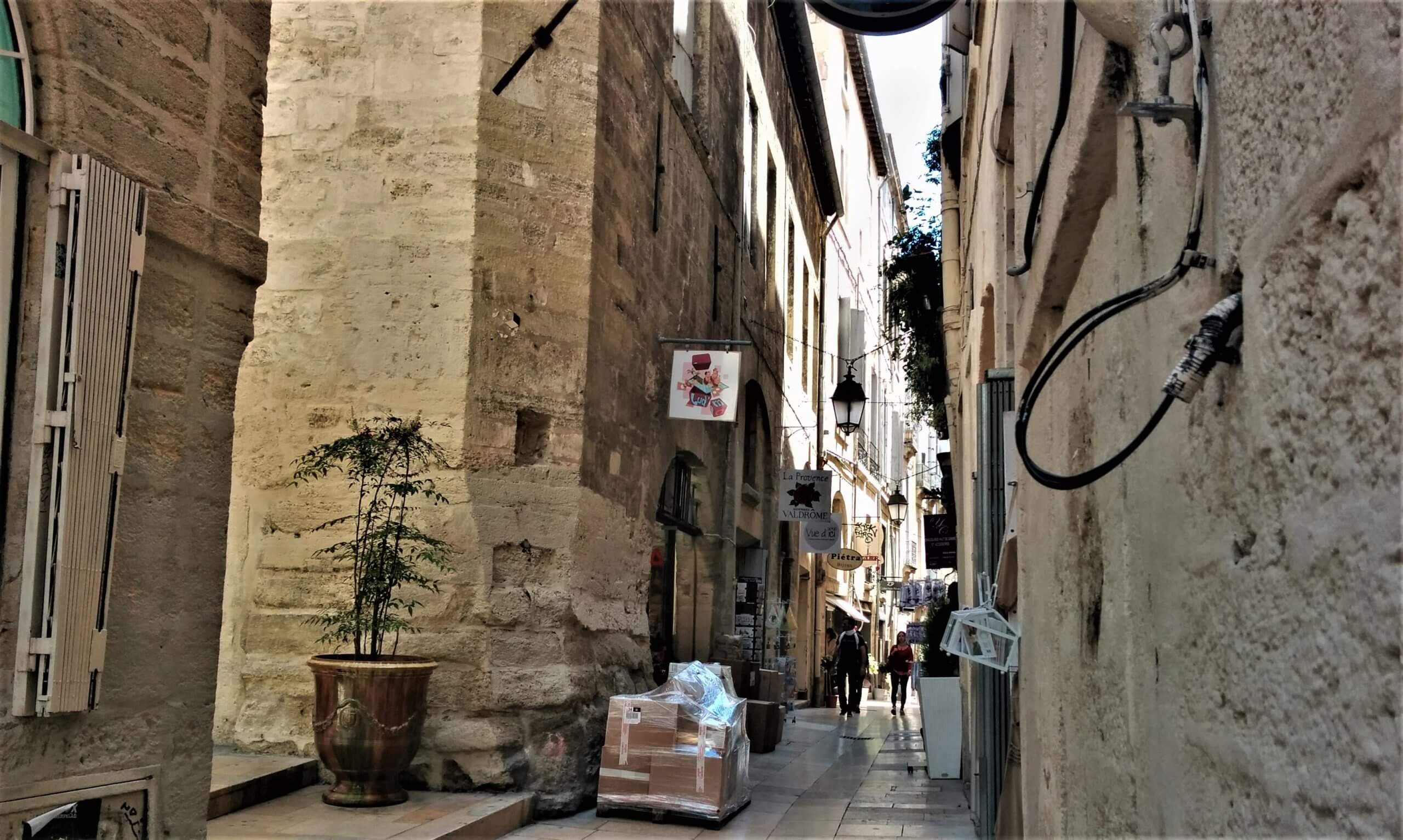
    And so the two of us sat out on that tiny balcon, chatting long after the cigarettes had burned out, and I realised that yes, I am feeling sad, or melancholic, as Moritz likes to say, about leaving Montpellier. Yet the melancholy had nothing to do with France, or French school, or even Montpellier itself. It was the thought of leaving the people this chapter had brought into my life, and the lessons they had brought with them – Lara, who taught me friendships can be born anywhere with anyone, Moritz, who reminded me to always be open to people and slow to judge, David and Ash, who taught me to never let go of my youthful curiosity and playfulness, and Lorena, who reminded me to always share your gift with the world, just in case someone out there is waiting to receive it.


    On my final day, Moritz dropped me at the bus stop to bid me goodbye. We stood in the line chatting about nothing for ten minutes, until it was finally time for me to haul my bag on board and head on my way. As we did the awkward hug and handshake, I told him to “appreciate every moment here, because they’re going to be some of the best years of your life.” – my attempt at some elder brotherly-like advice, although I doubt he really needed it. The kid doesn’t even know it, but he, along with the others, taught me so many little lessons that will and already have influenced me in this journey through the world.

    After many years on the road, I spend a lot of time trying to piece together these moments and where they fall in the bigger picture of things. When I look back on it all, what will I remember from Montpellier? What did it teach me? What part will it play in my travels and my story? I’ll remember the long mornings in French class, of course, the cheap bottles of wine, the fancy boulangeries stacked with eclairs and baguettes; but most of all I’ll remember France as a reminder that it’s not so much the place, but the people, that make the road such a magical place to be.

    A short story by Bren On The Road. Melancholic in Montpellier is a reminder that it's not always the place, but the people, that make the road such a magical place to be.
  • I Don’t Like Turkey…Yet

    I Don’t Like Turkey…Yet

    In all my years travelling I’ve never really come across a place I didn’t like.

    I think that’s changed.

    Turkey.

    When I landed in Istanbul, I didn’t really know what to expect. I’d heard in passing conversations that it was an amazing city and there was a lot to see there, but I hadn’t really researched it in any real depth. I was simply going to land, explore, and see what the city gave me.

    I ended up spending four nights in Istanbul before heading west to Gallipoli, knocking off the major sights while eating my way through the city. The Topkapi Palace, Blue Mosque, spice market, Istiklal Street, Kadikoy, all while eating as much Turkish food as my stomach would allow.

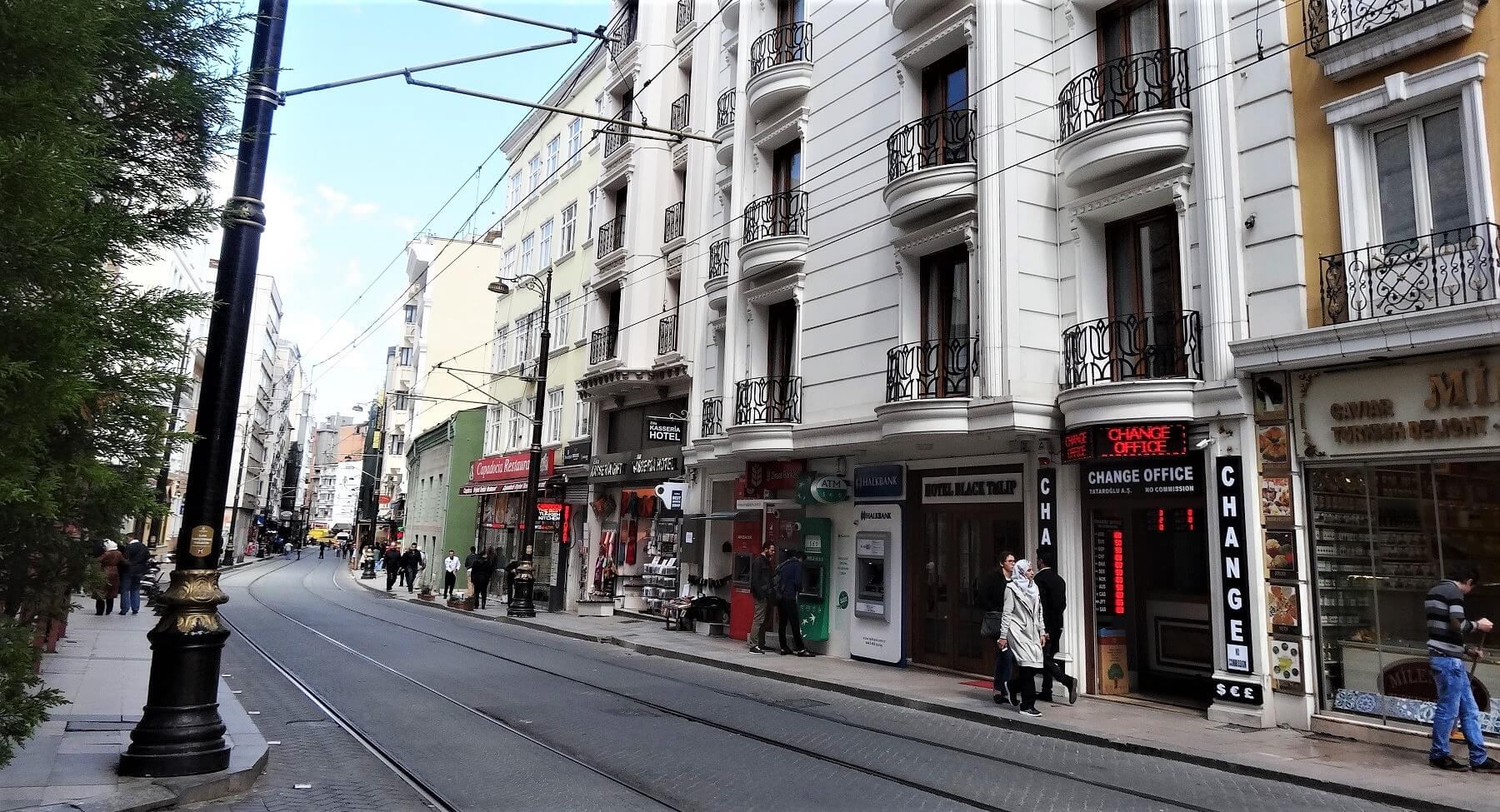
    The city itself was stunningly beautiful. Lots of little alleyways and coffee shops hidden amongst cobblestone streets, a deep history to explore, and a cheap and functioning public transport system to get you anywhere you needed to go. Regular ferries carted people between the Asian and European sides of the city for only a couple of dollars, and the food was delicious, just as I’d expected.

    What let the city down was my interactions with the local people. During my limited time in the city and the rest of the country, I found the Turkish to be quite an insular community – not hostile in any way, but just a bit cold and stand-offish. It can be easy to quickly disregard this as plain unfriendliness, so I wanted to dig a bit deeper to understand why I was getting this vibe.

    Over my remaining days in Turkey, I spent most of my time closely examining my interactions with the locals. I found the Turkish often fell between two extremes – while some showed extreme friendliness and kindness, the others were so dismissive it was as if they were offended I was even talking to them.

    One example was the man sitting next to me on the ferry, who I hadn’t spoken a word to, buying a handful of fridge magnets off some kid and then insisting I take one as a souvenir of my visit to Turkey – a completely random act of kindness that I was quite taken aback by. On the other hand, there was the guy at the bus office who gave me a look that just said “f*ck off” the moment I walked in and refused to talk to me, and his colleague who I had to practically beg to sell me a bus ticket.

    Unfortunately, I had many interactions in line with the latter. There was an indifference about them, a feeling that they really couldn’t care less that I was a visitor in their country. And of course, I never expect anything more than that. In their country, they are welcome to treat me however they please. What I still couldn’t figure out though was, why? It’s typical of most countries to welcome foreigners and try to give a positive impression of their country, but this didn’t seem to be the case in Turkey. Why?

    At first I assumed it was the lack of English spoken. Almost all locals I interacted with weren’t able to communicate in basic English, even those working in tourist-related areas, and the ones that could were people who had made the conscious effort to seek out and study the language. Perhaps I’d confused unfriendliness with them simply avoiding English interaction with foreigners. Once I learned a few Turkish words, even simple things such as “hello” and “thank you”, people did seem to warm up considerably.

    There was bit of a chicken and egg scenario here. Did they not speak English because they didn’t care to learn about the outside world, or did they only seem that way because they couldn’t speak English? Who knows.

    My next observation was that the coldness came almost exclusively from the men. I’m no Adam Levine, but the women were always extremely friendly and helpful whenever I interacted with them. If I asked questions at the restaurant, they did their best to explain. If I asked for directions, they pulled out their phones and tried their best to help. If I asked the men, they shook their heads or shrugged their shoulders and waved me away. As I walked down the street, I noticed various men give me the glare or a suspicious once-over. What was going on here?

    One interesting experience was on my bus out of Istanbul. We’d just been served our snacks and drinks, and once the guy in the seat next to me had finished he casually placed all his trash onto my tray table, folded his table up and went to sleep. I was so shocked that I started laughing. Had we been in New Zealand I would’ve kindly placed the trash back in his lap and smiled, but I’ve learned on the road it’s always wise to tread a little carefully. Besides, he did in such a blasé and casual way I started wondering if maybe this was just normal behaviour in Turkey?

    In the end, I just put it down to a symptom of the culture. Turkish people in general seemed to be very direct, no-nonsense and in-your-face, and I just accepted it as the way it is. It wasn’t something I could really figure out in my short time there, and probably never will.

    Funnily enough, my fellow travellers seem to fall between two extremes as well. Some were churning through all the sites at light speed so they could just leave the country as soon as possible, while others were in love with Turkey and were trying to extend their stays. As one girl put it, “I just need to see Cappadocia and then I can get the f*ck out of here!”, while another girl had spent 20 days in Istanbul and was already planning her next trip back.

    For me, travel has always been about the people. The most magnificent city in the world is nothing if it does not have warm and interesting people to create the kind of energy and community that a city needs to be great. And while I never really felt unsafe or threatened in Turkey, I never felt very comfortable or welcomed either.

    To be fair to the Turkish, these are all generalisations from a very short visit, and I did come across many friendly and welcoming people during my time there. For every bus driver that rolled his eyes at me, there was a waiter or waitress who did try to show some warm Turkish hospitality. Like I said, a case of two extremes, and it made for an interesting visit if nothing else.

    I ended up cutting my visit short and actually missed out on a lot in Turkey – Pamukkale, Cappadocia, the beach towns in the south and a bunch of other famous sites. But in a country where I never truly felt welcome, seven days felt like long enough.

    Have you been to Turkey? What did you think? Let me know in the comments below.

    Note: If you’re planning a trip to Turkey, don’t let my observations stop you. The country itself is beautiful and Istanbul is certainly a must-see city, unlike any other I’ve ever seen. There’s also a good chance your experience will be completely different to mine. Go with an open mind, explore and enjoy! (the food is incredible, too).

    Heading

  • A Night At The Border

    A Night At The Border

    It’s Wednesday in Cannakale. I’ve been in Turkey six days and still have so much to see, but I’m already gunning to leave. It’s just not my kind of place.

    I decide today’s the day I’m getting my bus to Bulgaria. I jump out of bed and head to the Metro Turizm office around the corner.

    The minute I walk in the door I can tell I’m going to have problems. The guy at the desk is looking at me like I’m here to steal his wife.

    “Hi, can I get a bus ticket to Bulgaria?” I ask.

    He shakes his head.

    “No bus.”

    “Would you be able to tell me where can get one?”

    He rolls his eyes.

    “Other company.”

    “Ok, could you tell me the name?”

    “No.”

    Awesome. Thanks.

    I turn and walk out. As I turn my back, I hear him condescendingly mumble something to the colleague next to him.

    Careful, ticket master. I can mumble too.

    I go back to my hostel and ask my receptionist, who tells me the company Truva should be able to sell me a ticket. Thankfully the people at the Truva office are a little more helpful, and while I can’t get a ticket to Bulgaria, I’m able to get one to the town of Edirne, which sits right on the border. They tell me I’ll need to buy another ticket from Edirne to Bulgaria with a different company.

    I head back to the hostel and jump online to try and find a ticket from Edirne to Bulgaria. It doesn’t take long to find one, however it’s with Metro Turizm. That means I’ll be going back to visit my old friend again.

    I put my game face on and head back to the Metro Turizm office. Unfortunately my old friend isn’t there anymore (I was looking forward to a round two), so I talk to his colleague.

    “Hi, I want to buy a ticket from Edirne to Plovdiv.”

    “No bus,” he says, shaking his head.

    Weird. I pull out my phone and show it him the ticket on their website.

    He sighs, sits up from his slouch and takes a look, and then looks up at me. I raise my eyebrows at him and he reluctantly starts punching away on his keyboard. Thirty seconds later I have my ticket.

    With everything now booked, my trip looks like this:

    5pm to 9pm – Cannakale to Edirne (Turkey).

    11:30pm to 4:30am – Edirne to Plovdiv (Bulgaria).

    The first trip from Cannakale to Edirne goes without incident. The bus leaves on time and arrives on time. At around 9:15pm, I step off the bus at Edirne bus station. Now it’s just a two and a half hour wait, then a bus to Plovdiv.

    No sweat.

    The bus station is a little secluded and eerie, so I sit in the small cafe there until about 10pm, after which they close and I’m forced to migrate to the benches outside. It’s around 5 degrees out here. I weather the cold the best I can.

    During my wait, I show my ticket to three different Metro staff walking around and ask if I’m in the right place. They all nod and tell me to wait.

    11pm rolls around and I start to worry. I’m clearly the only one left here waiting for a bus. A couple of people are scattered around, but they don’t appear to be waiting for a bus. To make things worse, this bus stop is getting sketchy as hell. There are wild dogs running around. Everything’s closed. It’s dimly lit, underneath a huge bridge and nobody around – the kind of scene where a bunch of thugs would emerge in an action movie and mess somebody up.

    By 11:15pm I’m sure something is off. I show another random guy my ticket, who is very smiley and seems helpful. His English is terrible, but he looks at my ticket and tells me I’m in the right place. Perhaps I’m just the only person travelling to Bulgaria tonight. I sit next to him and we continue chatting. I feel a lot less like a clueless tourist with a local to talk to.

    Almost bang on 11:30, a Metro bus arrives. I feel a jump of relief, but my hopes are quickly dashed. The bus says “Edirne” and isn’t going any further than here. My new friend jumps up, shakes my hand to say bye, and runs over to greet his kids as they get off the bus.

    Damn.

    The few other people scattered around meet their respective friends and family off the same bus, and just like that the station is empty.

    Now I’m standing alone at a sketchy bus stop at 11:30pm in rural Turkey, freezing with five or six wild dogs and waiting for a bus that probably isn’t coming. It’s almost funny.

    After five minutes or so a Metro staff emerges from the bus that’s just arrived and heads inside to the Metro office. I run after him and show him my ticket. He rubs his eyes, takes off his glasses and gives it a quick look.

    “Hmmm,” he mumbles.

    Hmm? What is he hmm’ing about? Is this a good hmm or a bad hmm?

    Of course it’s a bad hmm.

    He shakes his head at me, saying something in Turkish and pointing out into the distance somewhere.

    “I don’t speak Turkish, sorry,” I say back.

    “No bus.” he says. “Kapikule bus. No here bus. Kapikule bus.”

    Kapikule? What the hell is a Kapikule? And what do you mean no here bus?

    Two taxi drivers see us talking and come over. The guy explains something to them and they nod and try and explain it to me. Their English isn’t any better though.

    “Autobus not here!” one of them shouts, shaking his head.

    “Autobus here!”

    He plots a few imaginary points in the air with his fingers.

    What’s he trying to say? I’m at the wrong stop?

    “Come, taxi taxi, go autobus. Taxi, then autobus,” he says, ushering me to his taxi with urgency. After a few confused moments, I eventually decipher his mimes to mean the bus stopped somewhere else, and that I should take a taxi and maybe we can chase the bus and catch it at the border. I play out what I think he means with hand signals and Turklish, and he nods enthusastically.

    “Ya ya ya. Taxi, go autobus! Taxi, autobus!” he says, tapping his watch furiously.

    Translation: I need to get in a taxi to chase the bus and we don’t have much time. The bus didn’t pick me up. It’s gone without me.

    I take a deep breath and try to relax. Then I get angry. I’ve been sitting at this shitty bus stop for two and half hours and now I’m being told the bus doesn’t stop here. What do you mean the bus doesn’t stop here? My bus ticket says Edirne. Logically a bus from Edirne should stop in Edirne, no? What the actual f#ck?

    But then I tell myself, chill. This is travelling.

    I turn back to the Metro guy.

    “Is there another bus?” I ask.

    “No. Bus tomorrow.” he says, holding up five fingers.

    “5 o’clock?” I ask

    He nods.

    I survey my options, of which there are two. Wait five hours for the next bus (and who knows where that one will decide to stop), or jump in this taxi and see if I can chase down my original bus.

    I conclude I’ll probably get murdered if I sit in this bus stop for the night, so I get in the taxi.

    The driver really puts his foot down. Burning 140 km/h on an empty highway, I study the tail lights of every vehicle in front of us, hoping to see a Metro sign on the back somewhere.

    edirne

    No luck.

    After about ten minutes he pulls into a service station. It’s one of those classic middle-of-nowhere service stations you see in the road trip movies.

    “Bus stop here,” he tells me, pointing to the ground.

    The bus stops here? How the hell was I supposed to know the bus stops here? We are literally in no-man’s land, at some random gas station with a few kebab joints and nothing to be seen in any direction. Even if I had wanted to come here, I wouldn’t have any idea how. There was no bus sign or bus stop, no nearby town. I guess I would have just told my taxi to take me to “that gas station in the middle of nowhere?”

    The driver jumps out and heads over to some food joint to chat to someone. They exchange words for about 30 seconds and he runs back and nods at me.

    “Bus here 11:30.”

    Of course it was.

    Back on the road we go. Zooming down the empty highway, I cross my fingers that we’d catch my bus up ahead, but deep down part of me knows it’s long gone. It’s around midnight now, and surely the bus had hit the border a long time ago.

    When we finally get to the border it’s around ten minutes past midnight. The driver points somewhere in the distance towards border patrol and says “Go, passport, bus.”

    I squint into the distance and try and look for a bus, but it’s pretty dark and I can’t see too far ahead. I guess I’ll take my chances.

    I hop out of the cab, give the driver all the Turkish lira I have left and walk across the border. Interestingly, the border patrol don’t find it strange that some lone Chinaman is walking across the border at midnight. He just stamps my passport and goes back to his iPhone game.

    I walk for a good 3 minutes from passport patrol into the neutral zone. I’m no longer in Turkey, not yet in Bulgaria. Literally in the middle of nowhere. It’s empty and eerily silent – I see a duty free shop, a few cars, a security guard and some trucks. But no bus.

    So there I am, standing between the borders with an expired bus ticket at midnight with no one to call. The duty free shop is the only thing with signs of life, so I head inside there to get out of the cold.

    I drop my bags, slump against the wall and slide down to the ground.

    And then I start laughing. I’m exhausted and have no ideas left. I’ve got no Turkish lira, no Bulgarian lev, just a few USD that the buses may not even take. There’s no ATM. I also need to piss, but I don’t have any coins for the toilet.

    So I laugh.

    Two minutes of hysterical, uncontrollable laughter. What’s the plan of attack? I’d already resigned myself to the fact that I’d be sitting here until morning, but what next? Should I go pee on the pavement, sit here until 5 o’clock and then maybe see if the bus that’s supposed to be coming will let me on? Or wait until morning and then try and catch a taxi into town (if any taxis come past here) and catch another bus from there? Snooze until sunrise and then go stick my thumb out and try and hitchhike to somewhere, anywhere, so I can at least find a hotel and a bed? It wasn’t exactly life or death, but none of my immediate options sounded like much fun.

    At that moment a security guard comes up to me. He sees my defeated slouch and my stupid laughing and my bloodshot eyes, so understandably he approaches with caution.

    “Wait bus?” he asks, pointing towards the border.

    I nod.

    “Mmm. Couch?” he asks, gesturing to some couches on the far side of the building.

    I smile and shake my head.

    “I’m fine, thanks.”

    He gives me a smile and a nod, and walks away. This lifts my spirits a little though. After dealing with so much crap today, I appreciate the gesture.

    The next hour passes slowly. I sit and ponder my life. Passing in and out of sleep, I wonder how long I could sit here before I get reported missing. I drink a bottle of water in my bag. I even consider rationing it in case I’m out here a while.

    Finally, at around 1:45 a bus comes by. To my surprise, it’s a Metro bus.

    Didn’t the guy say the next bus was at 5am? No more buses today? First they wouldn’t even sell me a ticket, then they forget to pick me up, then they make me chase the bus across the border and now they’re sending the 5am bus at 1:45? Surely I’m being Punk’d – this is all a set up and the world is eating Doritos while watching my night play out on reality TV.

    I jump up and run over to the driver. As I pass the bus, I notice the sign on the front says “Plovdiv / Sofia”. A promising start.

    “Do you speak English?” I ask him.

    He shakes his head.

    Undeterred, I show him my ticket and try explaining the entire situation. With my best English/sign language combination, I explain how I was waiting for my bus for 2 and a half hours but my bus decided to stop at a gas station instead of the bus station (easy mistake to make) and then I got a taxi to the border to try and catch it but I was too slow and now I’ve been waiting here for 2 hours as well and I’d like to jump on his bus if possible.

    He muses over my ticket, and then shakes his head, pointing to the bus number on my ticket. It says 42XX, and then he points to the number on his bus, which says 44XX.

    In other words, it’s a different bus.

    NO SHIT.

    I try explaining it again but he doesn’t understand. Or maybe he does and he doesn’t care.

    “Please, look – I have a Metro ticket for Plovdiv. I was waiting for my bus but it didn’t come. I’ve already been waiting for 5 hours, since 9pm.”

    He shrugs his shoulders, points at his bus number again and shakes his head. I nod and try to keep explaining but he’s not interested. He pulls out his phone and walks off.

    By now, I’m about done.

    Fuck Metro Turizm. There’s no way I’m letting this bus go without me on it. I’ll pull out my Boracay scrapping skills if I have to. I don’t even care if I get arrested and thrown in jail for the night. Who knows – with a little luck, the jail might even be in Plovdiv.

    At that moment another younger guy in a Metro uniform walks past.

    “Excuse me, do you speak English?” I ask in desperation.

    He stops and looks at me.

    “Yeah.”

    Yeah?

    Yeah you speak English?

    Impossible. It was like finding a Turkish unicorn.

    I show him my ticket and give him the whole story, with a few dramatisations thrown in for good effect. He looks over my ticket and nods slowly.

    “So you want to come with us now?” he asks.

    I shrug my shoulders.

    “Well, yeah.”

    “Alright, I’ll just check with the driver but it should be ok.”

    Ten minutes later the driver returns with some shopping. The new guy starts pointing at my ticket and explaining everything while the driver looks me up and down, trying to decipher if I’m full of shit or not. They chat for a good thirty seconds before he nods again and walks away.

    “Yeah it’s ok, you can come with us.”

    I smile and scream a victory cry inside. The universe has mercy.

    While we stand around waiting for some staff to tag my bag he asks for my passport to add me to the passenger list. I hand it to him and he looks over it quizzically.

    “Wooah, New Zealand!” he smiles.

    While he takes down my details, I ask if he knows why my bus didn’t stop at the bus station. He seems surprised as I am, and tells me it should’ve stopped there. I ask if his bus stopped at Edirne station, and he says they did. I explain my little stop at the random gas station and my car chase in the taxi, which he finds hilarious. I start to see the funny side too (not).

    I compliment him on his English, which brings a smile out of him.

    “My mother always told me growing up, teach English, teach English. I never wanted to learn it, but my mother kept telling me, teach English, teach English, teach English.”

    I figure he actually means “learn English”, but I understand.

    “You’re probably the third or fourth person I’ve met in Turkey who speaks English,” I tell him.

    He laughs.

    “Yeah, actually there is not really many staff in Metro who speaks English. So I can get a good job here.”

    “What’s your name?” I ask him.

    “My name is Emil,” he says, shaking my hand. Then he hesitates for a moment and looks back at me.

    Do you think it’s okay if we be friends on Facebook?” he asks.

    I laugh.

    You rescued me from a life on Turkey’s border, bro. Facebook BFF’s for life.

    Once on the bus I knock out immediately. I sleep like a rock, and a couple of hours later I am woken up to someone shaking my shoulder. It’s Emil.

    “Here is Plovdiv,” he says.

    I quickly grab my things and get off, along with two or three others. The whole debacle feels like a dream. I’m finally in Plovdiv, with two arms and two legs. I don’t believe it.

    Emil pulls my backpack out of the storage compartment and brings it over. I shake his hand again and give him my card.

    “Here’s my email. Add me on Facebook, man. And thanks for everything.”

    He gives me a smile and a friendly nod.

    “Yeah, and one day I will see you in New Zealand!” he grins.

    I give him a salute and he jumps on the bus and takes off.

    So I’m finally in Plovdiv. I look around. No cars. No taxis. Looking pretty sketchy.

    I’m kinda stranded here, alone. At a random sketchy looking bus stop at 4am.

    Doesn’t that sound familiar.

    Luckily, this is short lived. Only a few minutes pass before a bunch of taxis roll up and stop to pick people up. I walk up to the first one and show him my hostel’s address. I’m also armed with the knowledge that a taxi to the hostel shouldn’t be more than 5-6 lev (3 euro).

    The first guy looks at the address on my phone and nods. He asks for 20 lev (10 euro). I tell him 6. He screams out “Nooo 6!” and looks away.

    I go to the next cab. He wants 10 lev. I tell him 6. He shakes his head and waves me away.

    By now, all the other cabs have gone. I’m the only one here, and I’m left with these two.

    In my stubbornness, I stand out there in the cold, leaning on my backpack. Ain’t nobody else going to dick me around today. Either I’m getting a cab for 6 lev or I’m dying here in this bus station with my backpack between my legs.

    One of the cabbies gets out and stands next to me.

    “10 lev, ok?”

    I ignore him.

    “10 lev ok? Far away. 10 lev.”

    I look at him.

    “6.”

    He shakes his head. Two minutes of silence pass.

    “Ok 8. We go.”

    I shake my head.

    “8 is ok. Old Plovdiv far away. 8 lev,” he says.

    “Look, I’m paying 6. Otherwise, I’ll sit my ass in this bus stop until morning and I’ll walk.”

    My face is so cold that my nose is about to fall off and I can barely feel my fingers, but I’m beyond the point of caring. On any other night I’d just pay the man, but I’m already so deep in misery tonight. Might as well take it to the max.

    He grabs my backpack and starts loading it into his cab.

    “Ok 6,” he says.

    The drive is short and we arrive after about ten minutes. However, he doesn’t drop me at my hostel door. He stops at some intersection and tells me he can’t drive up anymore.

    “No car here. Just walk 50 metre and hostel on left,” he says, motioning with his hands.

    I pay him, grab my backpack and get out. The Old Town here in Plovdiv is gorgeous in the dark, with dimly lit streets and cobblestone paving. The only problem is it’s impossible to wheel a bag across these roads.

    Like a crippled duck, I battle to clunk my backpack across the cobblestones looking for my hostel. I waddle fifty metres and turn left. All I see is a bookshop. I go another fifty metres and turn left again. A few restaurants, hostels, but not the one I’m looking for.

    Hungry and tired, I stop and collapse on the curb for a moment to catch my breath. It’s 4:30am, and the silence and cool morning air is actually quite refreshing. Then, as I look around it occurs to me that the place is a ghost town. There is absolutely nobody else out here. So, with no one around to rob me, I leave my bags and jacket in the middle of the street and go jogging around the alleyways trying to find my hostel. It only takes me five minutes or so to find it.

    I run back and get my stuff, and then finally get myself, with all belongings, to the hostel door. I ring the doorbell, hear a bit of shuffling inside, and finally a girl answers. She looks like Eliza Thornberry. I always liked Eliza Thornberry.

    “Are you Brendan?”

    “Yeah, hi.”

    “Hi, welcome!” she whispers.

    She moves aside so I can pull my bag through the door. As soon as I get inside, I collapse on the couch beside us.

    She closes the door and looks at me.

    “How was your trip?”

    I crack a smile.

    “Oh. It was fantastic.


    Photo credit: Ross2085@Flickr

  • Solo Female Travel: Talking Life On The Road With Lauren Juliff

    Solo Female Travel: Talking Life On The Road With Lauren Juliff

    This month in the SFT series I’ve got one of my favourite interviews to date – an awesome story of taking control of your life through travel and rolling with the punches when the road decides to make life interesting.

    On the move since 2011, our interviewee has got a heap of travel wisdom to share and a growing collection of funny stories that will surely give you a laugh or two. Now a full time digital nomad and soon-to-be published author, she’s definitely someone to get familiar with if you’re interested in a life on the road.

    Say hi to Lauren Juliff from Never Ending Footsteps!

    Lauren Juliff Never Ending Footsteps

    Introduce yourself! Who are you?

    I’m Lauren Juliff, and I’m a professional travel blogger, freelance writer, author, and full-time traveller.

    Tell us a bit about how you started a life of travel. What was your inspiration, how did you make it happen, and what were the hard things you had to leave behind? 

    I’ve always wanted to travel, but never believed it was a possibility. When I was a child, I’d head off on a family holiday to the British coast, where it would rain all week and all we did was argue. When it came to leave, though, I spent all day sobbing because I didn’t want to go home. This pattern continued until I finally decided to travel long-term.

    I spent five years saving as much money as I could, picking up part-time jobs that I could fit around my studying. I sold close to everything I owned in preparation. I moved back in with my parents to save money. I stopped buying thiings I didn’t need. I made travel my priority, I guess, and every decision I made was weighed up against that.

    The only hard thing to leave beind was my family. We’re incredibly close and saying goodbye to them was one of the hardest things I’ve had to do. That’s pretty much it! Quitting my job was a piece of cake because I didn’t care about it, I didn’t have any possessions aside from what could fit in my backpack, and my friends had been unsupportive when I told them of my dreams to travel, so I wasn’t sad about leaving them.

    On your blog you put together monthly summaries of your travels, and you often manage to visit several countries while spending under $1,000 per month. What’s your secret? 

    Visiting cheap countries – I spend a lot more time in Southeast Asia and Eastern Europe over Australia and Western Europe. I eat street food where I can, as these meals rarely cost more than $1. I take buses and trains instead of flights. I stay in hostels and guesthouses over hotels.

    Also, moving slowly helps! For example, when travelling across Thailand, you’re paying out for touristy activities, you’re paying for transport, you’re paying higher prices for accommodation because you’re staying for a short amount of time, food gets expensive because you haven’t had a chance to find the cheapest options. When I hole myself up in Chiang Mai for a few months at a time, I end up spending around half as much as I would when travelling. Accommodation can be incredibly cheap if you’re staying for months at a time in Thailand – I pay around $200 a month for a large room, with gym and pool access, and a weekly cleaner. If I was travelling from guesthouse to guesthouse, I’d likely end up paying $400 for the month, and it would be in basic rooms with just a shower and a bed.

    Airbnb is great for long-term stays as well. When I’m staying somewhere for a month, I can usually get a 50% discount on the nightly rate.


    A delicious breakfast of Shan noodle soup for less than $1!

    A photo posted by Lauren Juliff (@nefootsteps) on

    You’ve got a few stories of getting into sticky situations on the road, but you’re still alive with all your limbs, obviously. With safety being such a huge issue in travel, what advice can you share for staying safe on the road as a female? 

    While I’ve had lots of mishaps on the road, I’ve never felt like I’ve been in any kind of real danger while travelling. Make sure to behave how you would at home, stay cautious when drinking, keep your stuff locked up when you go outside, stay away from any dodgy neighbourhoods, and don’t wander around alone at night.

    What are some places you’ve had to deal with unwanted advances or harassment from men and how do you handle it?

    Morocco was the worst I can think of. I love the country but I was harrassed on a daily basis. It wasn’t just vocal, but I had guys grabbing at me, and hissing when I passed. I even had a guy throw a rock at my head at one point! If I feel uncomfortable with male attention, I leave. I walk back to my guesthouse and refuse to interact with them. That’s it, really. I don’t talk, no eye contact, and I leave.

    Have there ever been times when you’ve visited male dominated societies and had to be sensitive to “special” rules for women, such as wearing certain clothes or behaving in a certain way? How did you handle it?

    The Maldives was probably the most extreme example of this – it’s an extremely strict Muslim country. I didn’t have a problem with it, though, and I’ve never had an issue with it. I just accept that that’s a part of travelling through a country, and respect their culture. In the Maldives, I wore jeans and a long-sleeved top at all times, and I sunbathed and swam in the ocean in a t-shirt and board shorts. No alcohol, no eating pork, keep covered up. It was fine.


    Tough day at the office

    A photo posted by Lauren Juliff (@nefootsteps) on

    Many first time solo travellers are worried about being alone and the difficulty in making friends on the road. What’s your experience and what advice can you give?

    I used to be pretty shy and socially anxious before I travelled, and this was a very real concern of mine.

    Fortunately, I’ve found it to be incredibly easy to make friends on the road, which is shocking considering how lacking my social skills were at the time! The easiest thing to do is stay in a dorm. It’s impossible not to make friends in one– everyone’s there because they’re looking to meet people, and you already have something in common to talk about: travel!

    Share one of the philosophies you live your life by. When, how, and why did it become part of your life?

    To leave my comfort zone as much as possible. Before travel, I lived a very sheltered life: I’d never eaten Chinese/Thai/Indian food, and I had never even been on a bus. Everything terrified me because I had no life experience.

    Travel took me right out of my pea-sized comfort zone on an hourly basis, and it has been so incredibly transformative for me. I feel like I’m actually able to function in the world without panicking that I’m going to die.

    Now, I try to challenge myself as much as possible because I know it’ll help me be a better person. In fact, this year, I’m on a mission to try 52 new things in 52 weeks.

    People always think travel is glamorous and full of smiles all the time, but as you know that is far from the truth. Tell me the one (or two or three) things you hate most about the traveller’s life (or miss about a traditional life).

    Fortunately, a traveller’s life is full of freedom, so if there was something I hated or missed, I’d stop doing it or go do it. I’d say that my least favourite part of travel is missing my family, but when I miss them, I book a plane ticket home and go see them. So, there isn’t really anything I hate about it. If there was, I’d stop doing it.

    One of the first posts of yours I read was a really inspirational piece about your battle with anxiety and how travel helped you regain control of your life (here and here). Could you share some thoughts on why you think travel brought such a positive change to your life? Would you advise others to follow the same path?

    It took a long time for me to realise this, my anxiety stemmed from a lack of control. Once I started to have panic attacks, I felt like I had lost control of my life, and I started doing silly things to try and control it: I unintentially developed an eating disorder, for example, and I stopped going outside.

    Travel gives me full control over my life. I can go wherever I want whenever I want, do whatever I want (within reason!), and with whoever I want. It’s liberating and it calms my anxiety so much. I used to have maybe 5-10 panic attacks a day at the height of my anxiety, but it’s rare I’ll have one even once a year these days.

    I wouldn’t necessarily advise that others just throw everything in to travel because they’re dealing with anxiety. When I was at my lowest point, I couldn’t even bring myself to leave the house or eat more than an apple a day, so leaving to travel would have been the worst thing for me to do. I think if you have mild anxiety (attacks maybe once a week/month) it’s a more realistic option.


    A final glimpse of Chiang Mai from the songthaew on the way to the airport. Next stop, Sri Lanka!

    A photo posted by Lauren Juliff (@nefootsteps) on

    Let’s talk about your upcoming book. Tell us a little bit about what’s inside, your inspiration for writing a memoir, and when we can expect it!

    My book is a travel memoir titled How Not to Travel the World. I’m one of the unluckiest travellers in the world – I’ve been assaulted, robbed, and scammed, been caught up with a tsunami, had a boat start to sink with me on board, accidentally ate a cockroach, the list goes on… How Not to Travel the World is about how I managed to conquer debilitating anxiety through having these terrible things happen to me. It’s about following your dreams, no matter how many curveballs life throws at you. It’s about learning to get out of your comfort zone, finding the humour in messed up situations, and falling in love with life on the road. I decided to write it because I wanted to show that travel isn’t all rainbows and sunsets and meaningful experiences. I wanted to show that it can be transformative, and I wanted to share some of the stories I haven’t written about on Never Ending Footsteps. It’s due out in July!

    People will look at you and see that today you travel the world full time, work for yourself, and have a book deal to your name. Give some practical advice to the girls out there might aspire to quitting their jobs and following in your footsteps.

    Find a way to stand out from the crowd. There’s so many travel blogs out there that you’ll never stand out unless you do something different. Be honest, inject personality into your writing, and don’t be a sell out. If you want to work as you travel, start your business at least a year before you leave the country – some of the most time-consuming aspects are right at the start, and you don’t want to spend eighteen hours a day on your laptop when you want to be out exploring. In terms of travel, don’t plan. Have a rough idea of where you want to go, book a one-way ticket, don’t freak out, and just leave. It’s really that simple.


    Exploring the temples of Bagan. What an incredible place!

    A photo posted by Lauren Juliff (@nefootsteps) on

    Ok, some fun questions. Describe yourself in 3 words.

    Honest, disaster-prone, determined.

    Who’s your celebrity crush?

    Keith Richards.

    Which country, in your opinion, has the most handsome men?

    New Zealand, because the men are rugged and outdoorsy, and have funny accents.

    Imagine a Hollywood movie wants to make a movie of your life. Who plays you and why?

    Jennifer Lawrence, because she’s also a walking disaster.

    When’s the last time you cried?

    Last week, when I emailed my editor the final draft of my manuscript. So many emotions!

    Imagine travel has become illegal and you now have to choose one city to live in for the rest of your life. Where do you choose?

    Ljubljana, Slovenia.

    What’s one of the less popular posts on your blog that you’d like more people to read?

    And Then the Brakes Failed – one of my favourite incident posts but it never seemed to gain much traction.

    If you could invite any 3 people from history to dinner, who would it be?

    Richard Feynman, Syd Barrett, Winston Churchill

    The world is about to end in 30 minutes and you have time for one final meal from anywhere in the world. What is it?

    Honey and cumin glazed yams from Tasy N Sons in Portland, OR.

    Ok, let’s get serious again. Are you a nomad for life? Why? Why not?

    I don’t know what the future holds, but for the moment, I have no plans to stop travelling. I recently tried an experiment where I moved to Spain for four months to see if I was ready to settle. I’m two months into the stay and I spend most of my time planning trips for when my time is up.

    I’d imagine my travels might evolve until I have a base I can return to for a few months each year, but for now, travel makes me happy.

    And lastly, for the girls (and guys) out there still on the fence about their first solo trip, what advice can you give them?

    Travel is the best thing I’ve ever done, and I’ve never met anyone who’s regretted it. If you’re wondering whether to take the plunge, try it. If you hate it, you’re only a plane ticket away from home, and then you won’t have to spend the rest of your life wondering what might have been.

    Got questions for Lauren? Leave them in the comments below! You can also check out more of her story on her blog at Never Ending Footsteps and connect with her on Facebook and Twitter.

    Missed the rest of the series? Check out the previous interviews here.

  • Visiting Gallipoli: Two Sides To A Story

    Visiting Gallipoli: Two Sides To A Story

    When I landed in Istanbul, it hadn’t even really crossed my mind to visit Gallipoli until I saw the “Gallipoli Tour” flyer on the noticeboard. I’d actually forgotten the place was even in Turkey.

    My initial plan had been to see Istanbul for a few days and jump west, but I decided, as a Kiwi, Gallipoli was a place I needed to go and see with my own eyes. Besides, it was only a few hours away.

    For those that are unaware, Gallipoli is a place that every Australian and New Zealander will have learned about by the time they are potty trained. Here, in World War 1, our countries formed the Australia and NZ Army Corps (ANZACs), who fought for the Brits in the Gallipoli campaign. In what was supposedly a straightforward mission, NZ unexpectedly lost 2,500 troops and the Aussies lost around 8,000, in what became one of the Allies’ most costly expeditions.

    Gallipoli is around 7 hours from Istanbul. I travelled by bus, and stayed in the nearby town of Cannakale. Gallipoli can be easily visited on your own, but my hostel was running a Gallipoli tour which I decided to take.

    Our first stop was Brighton Beach. This was where the ANZACs were initially supposed to land, and it’s easy to see why. The beach is wide and the surrounding land is flat and open – the perfect terrain to move an army inland (this also would’ve made them vulnerable – some think casualties might have even be higher had they landed here).

    Brighton BeachBrighton Beach

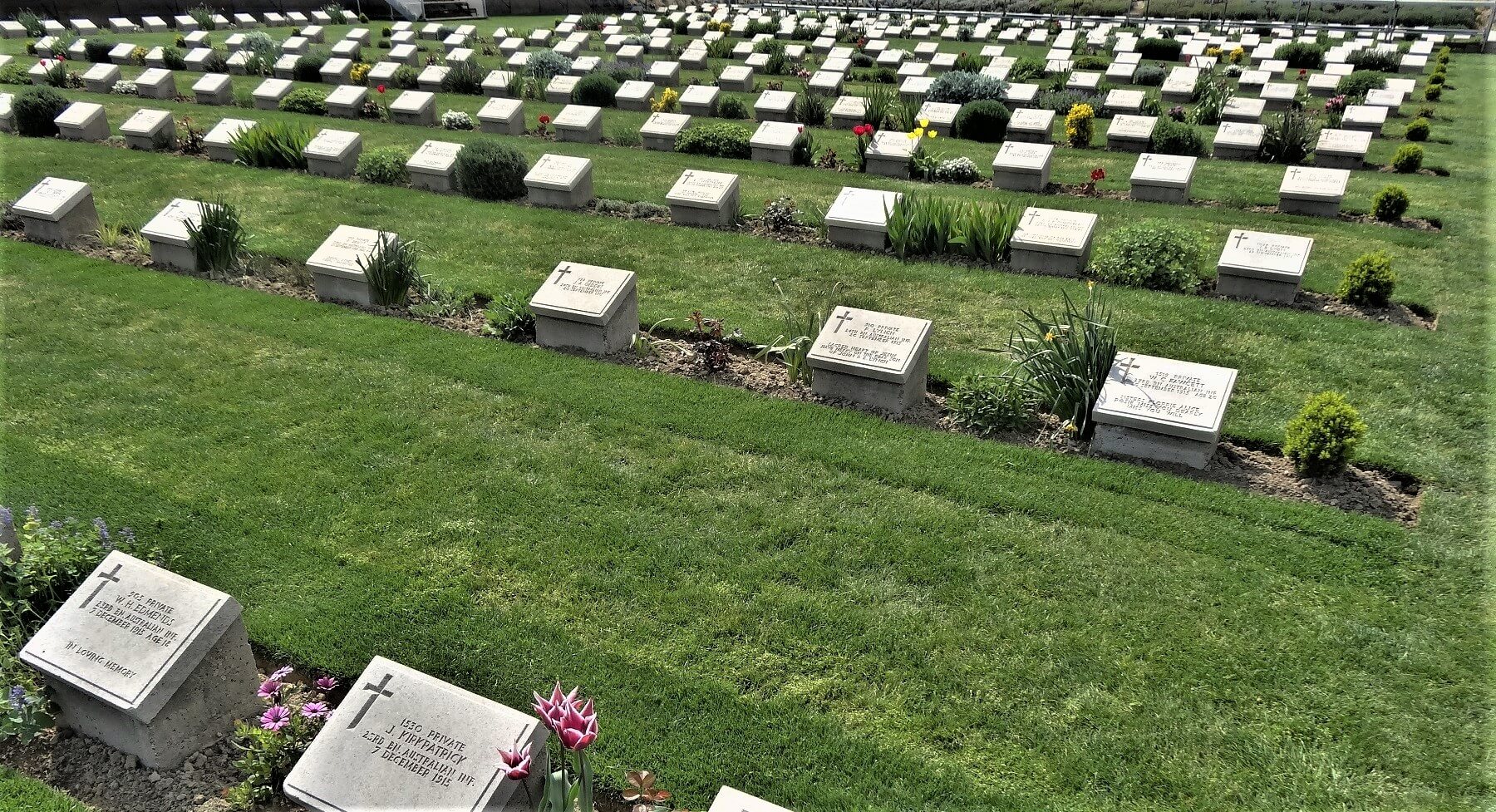
    Unfortunately, one fateful manoeuvre of the boat led them to land around 2 degrees off, to a place now known as ANZAC Cove. Here the ANZACs faced a steep cliff face filled with heavy brush and unfriendly terrain. As you look at it, it’s hard to imagine climbing it at all, let alone with a 30kg pack, a rifle, and an army of Turks shooting bullets at you.

    It was rather surreal to see this cliff face in real life – it looked absolutely nothing like I had imagined it in my head. Every year in school we get told about this cliff, and I had always imagined a vertical rock face with a field full of poppies down below, so it was nice to put a face to a name.

    Anzac CoveAnzac Cove – the beach and the cliff. It’s a lot steeper than it looks.

    I stared at that cliff for a long time. I tried to imagine Kiwi soldiers scrambling up it, dodging bullets like in paintball, seeing their best friends gunned down right beside them. I’ve always loved watching war movies, but trying to imagine those scenes happening in real life made my stomach churn.

    We spent around an hour in ANZAC Cove, walking the beach and visiting the cemeteries. While on the beach, I tried to imagine what it would’ve been like if I was in uniform back then, in a unit with my friends and my brothers, scrambling with our packs to take cover and dodge the gunfire. Could we have handled it? Which one of us would’ve been the brave guy with the pep talk and which one would’ve been the guy crying under a rock? How would it have felt to aim a rifle and shoot someone in the head – someone that you’ve never met and never had a problem with? It was impossible. Had I been drafted into that war 100 years ago as a 19 year-old, I wouldn’t have lasted five minutes.

    After the cove we headed up into the hills to see the other side of the battlefield. Due to their advantageous position upon the hill, the Turks were able to hold off ANZAC advances with a relatively small amount of troops, at least until reinforcements arrived. While the ANZACs did manage to advance inland and set up trenches, the losses were great, and they never were able to fully overcome the Turks and get to Istanbul, which was the initial plan.

    Once up on the ridge I was shown the Turkish and Allied trenches, only a few metres away from each other. Despite being enemies, our guide told of the soldiers throwing biscuits to each other and playing games like perching their helmets on a stick and waiting for enemy soldiers to shoot it off.

    “It might be strange, but in war, you can’t just be fighting all the time. Sometimes you need to have fun,” he told us. This just seemed so odd to me, but I suppose, war is impossible for anyone but a vet to understand.

    Walking in the Turkish trenches felt a little strange for me, like a betrayal, almost. I didn’t want to sympathise with their dead or see their cemeteries. Every time we hear about the ANZACs, the Turkish are spoken of as “the enemy” or “the bad guys”, so paying respects to the troops that killed our boys didn’t seem too important to me.

    So, I stayed on our side of the trenches. I walked through them and imagined our soldiers sitting in there eating Anzac biscuits and drinking tea. I imagined them writing letters and joking around with the Aussies. I thought about how much they would’ve been longing for lamb chops and hot showers.

    And then I suddenly realised, I’m not in New Zealand right now.

    I’m in Turkey.

    This isn’t our home.

    This is their home.

    I started to wonder – what the hell were we doing here, all those years ago? Why did we come here? I had travelled around 27 long and tired hours to get here, and this was in 2015. Who knows how long my fellow Kiwis travelled for back in 1915 – probably days or weeks, all for the sole purpose of coming to invade this country and take what wasn’t theirs.

    In New Zealand, we always talk about the ANZACs with overwhelming admiration and pride, but it suddenly hit me that we were the ones who came to Turkey, and we came not with passports and cameras, but with guns and grenades.

    We came here to kill people.

    We were the ones attacking someone else’s homeland. Didn’t that make us the bad guys? The Turks were only defending their country. Doesn’t that make them the good guys?

    In all my years at school, learning about the ANZACs, I’d only ever heard about how brave and noble they were, how much they sacrificed and how tragic it was that so many young New Zealanders died. But why did we never learn about all the men that they killed? What about the 50,000 Ottoman corpses we put in the ground? What about the bullets we shot and the grenades we threw that killed men and destroyed families? Should we not have been taught about that also? Were there not valuable lessons to learn in those stories, too?

    Suddenly, things weren’t so clear cut for me anymore.

    So I walked in the Turkish trenches. I sympathised with their fallen and I visited their cemeteries. I began to appreciate that there was another side of Gallipoli.

    GallipoliTurkish cemetery and memorial site

    While we consider Gallipoli a huge tragedy, Turkey sees it as a proud moment in their country’s history. To them, they defeated a foreign invader (that’s us) trying to massacre their country. They fought on their land, defended their country, and in their eyes, the right side won. And honestly, I find that pretty hard to argue with. When someone lands on your shores unannounced and tries to blow you up, you pick up a gun and defend what’s yours.

    The Allies won the war in the end, so many will take that to mean we were on the “right” side. But I’ve learned that throughout history things are never really decided by “right” and “wrong”. Things are simply decided by whoever is holding the gun. And in war, a “right” side probably doesn’t exist anyway.

    In the end I had to accept it was a different time. Back then, everyone was killing everyone and peace was overrated. Both sides believed they were doing the right thing and believed in what they were fighting for. All we can hope for is that we remember the pain of war and learn from the errors of the past (sadly, New Zealand has just sent another 150 troops into war. Perhaps some lessons are learned harder than others).

    GallipoliHeadstone of an NZ soldier – what were you doing when you were 19?

    Every year on April 25 we celebrate ANZAC Day in New Zealand, and the words “lest we forget” are often spoken. We celebrate this day because we mustn’t forget the men that died serving the country. We mustn’t forget that they bravely fought for us and died in a war that wasn’t ours. But there is more we mustn’t forget. We mustn’t forget that there is no sense in war. That perhaps we made a mistake in coming here. And that if we ever go shooting guns in someone else’s backyard again, they’re going to shoot back.

    Of course, I’m not here to point fingers, especially at our troops. They were only following orders and I doubt they enjoyed the battlefield any more than the Turks did. They gave their lives and their innocence and we will rightly honour and remember these men each year.

    However, after visiting Gallipoli I will also remember there is another side to this story – a side where we also shot bullets and we also destroyed homes. We killed husbands and fathers and brothers too.

    Perhaps, we should think about remembering those men as well.

    Gallipoli

    “Those heroes that shed their blood
    And lost their lives…
    You are now lying in the soil of a friendly country.
    Therefore rest in peace.
    There is no difference between the Johnnies
    And the Mehmets to use where they lie side by side
    Here in this country of ours…
    You, the mothers,
    Who sent their sons from far away countries
    Wipe away your tears;
    Your sons are now lying in our bosom
    And are in peace.
    After having lost their lives on this land they have
    Become our sons as well.” – Ataturk 1934

    As the saying goes, there’s always two sides to every story.

    Have you been to Gallipoli? What did you think? Let me know in the comments below.

  • Ten Awesome Travel Websites You Probably Didn’t Know About

    Ten Awesome Travel Websites You Probably Didn’t Know About

    It seems that every day a new websites pops up that aims to change the way people travel. Flights, accommodation, transport, food, entertainment can all be found online and the options out there only continue to grow – the hardest part is staying up to date!

    To help you out this week I’ve created a short list of ten websites every traveller should have in their bookmark list.

    Enjoy!


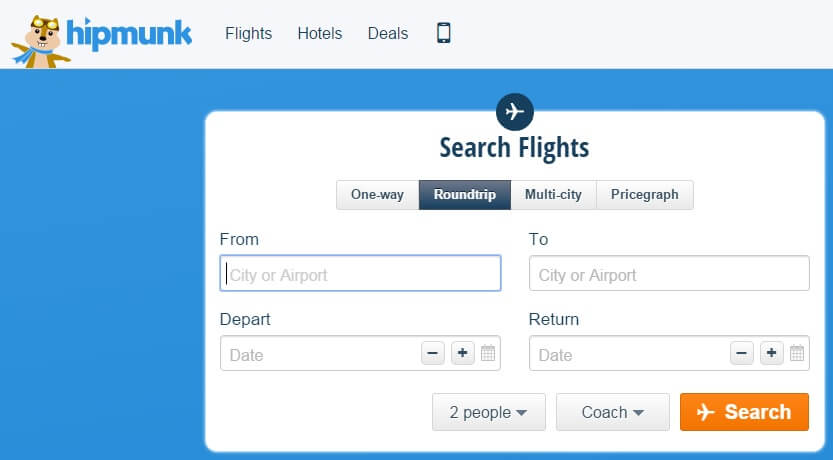
    Hipmunk

    hipmunk, best travel websites 2015

    Last year I wrote about a few of my flight search tactics using the website Skyscanner which still remains my favourite to this day. However, there are many others which I like with a recent favourite of mine being Hipmunk. The prices are always competitive and it often digs up fares other search engines haven’t found. I love the interface too. I use a few different sites when hunting for flights, and Hipmunk is now a permanent addition to my rotation.

    Similar sites: Skyscanner, Flight Network


    Vayable

    best travel websites 2015, vayable

    A few years back Airbnb shook up the hotel industry and Uber soon followed with its own shake-up of the taxi industry. Vayable is now following suit with its own shake-up of the tour-guiding industry. This fast-growing site is a place where aspiring tour-guides can offer “experiences” to tourists, normally at a fraction of the cost you would pay from a traditional tour company. Many experiences are rather niche, meaning you can find something that caters directly to your interests. Whether it’s a food tour, photography tour or your typical tour of city sights, you’ll likely find it here, offered by a local in the know.

    Similar sites: Rent-A-Guide, Sidetour

    (You can claim $10 free Vayable credit here!)


    HelpX

    helpx, best travel websites 2015

    HelpX is a site where you can find work exchange opportunities whenever your money is running low around the world. The usual arrangement is free room and board in exchange for a few hours work a day. Typical opportunities are things like farm-stays, English conversation, hostel work, construction, painting, event help and so on. Paid opportunities can also be found, so it can be a good way to lay low and recharge the body and bank account for a while. Premium membership fee is 20 Euro for two years.

    Similar sites: Workaway, Volunteer Latin America


    Travelfish

    travelfish, best travel websites 2015

    Travelfish is a site that specialises in Southeast Asia backpacking information. It has an active forums and a wealth of articles offering practical advice and tips for your journey through the region. Southeast Asia is probably the most popular backpacking destination in the world and as always the crowds of tourists tend to attract their fair share of petty scams and shady characters. Having a site like Travelfish keeps you informed and will make navigating the region a little bit easier.


    Eatwith

    eatwith, best travel websites 2015

    Eatwith is a site that allows you to book meals in the home of a chef (professional or otherwise), giving you the opportunity to experience authentic, home-cooked local cuisine during your visit. This can be a great opportunity to get out of the restaurant scene and have a dining experience closer to what a local would typically have on any given day. The quality control is rigorous – Eatwith claims hosts are all interviewed and less than 4% of applicants are approved. Prices aren’t exactly cheap but not extravagant either.

    Similar sites: Feastly, Vizeat


    Rome2Rio

    rome2rio review, best travel websites

    Rome2Rio is a planning website that gives you details of travel options between any two locations. For example, you could enter “Brisbane, Australia to Accra, Ghana” and it will give you all possible options for getting between the two. All options are searched – walking, buses, trains, ferry, driving, taxis, flying and details will be provided for each. I only use it sparingly but it’s a great tool to have in your back pocket.


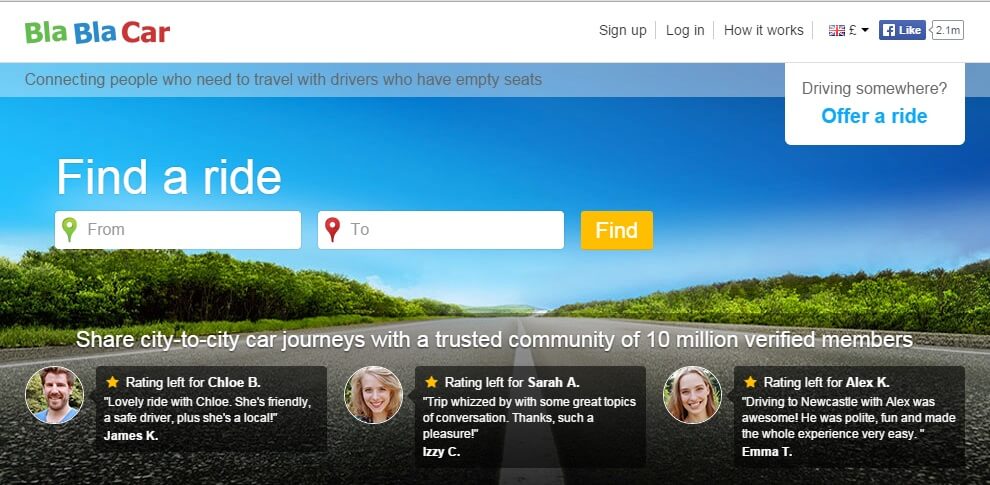
    Blablacar

    blablacar, best travel websites 2015

    Blablacar is a car-pooling website that allows you to find drivers who have empty seats and are heading in the same direction as you. If you’re heading from Berlin to Zurich, do a quick search and you might find a number of drivers going the same way. While many international cities are searchable, it seems to be used almost exclusively in Europe. You will need to pay for rides but prices are reasonable and will definitely be cheaper than a last-minute train or bus. Also a good way to make a few new friends!


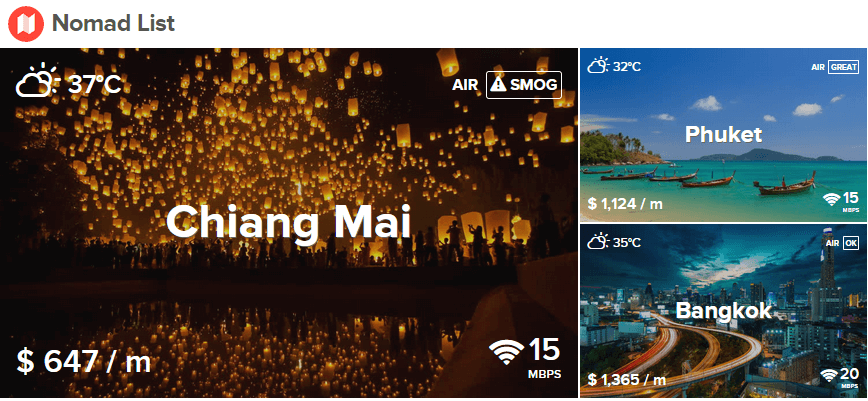
    Nomadlist

    nomadlist, best travel websites 2015

    Nomadlist is the 4th startup from @levelsio. It is a resource for digital nomads looking to find a suitable city to sit tight for a while and get some work done. As I’ve learned, this is something that can prove rather time-consuming and sometimes ends up being bit of a coin-flip decision. Nomadlist removes the guesswork and collates information about numerous suitable cities. All the important details are covered – wifi availability, internet speed, co-working space availability, food and accommodation costs, safety, English proficiency and much more. Many cities fall under the $1500/mth mark. It’s a game changer!


    Couchsurfing

    best travel websites 2015, couchsurfing

    I’m sure readers of this site are more than familiar with Couchsurfing but I’ll mention it here anyway as it’s still a favourite of mine. I’ve hosted, surfed and made so many friends off this site that I can’t recommend it enough. If you’ve never heard of it here’s a quick intro – locals offer up a couch (or some other sleeping surface) to travellers in their city. Travellers will then reach out to available hosts asking if they can “surf” their couch – if the host is cool with it they’ll exchange info and make the arrangements. Everything is free and no money changes hands. Most Couchsurfing communities also organise regular events and meetups that you can attend around the world. A similar site that has popped up recently is Trampolinn, which aims to encourage people to host by offering credits that can later be used for free stays. Not sure if it’ll take off but we shall see.

    You can start creating your Couchsurfing profile by clicking here!


    Skift

    skift, best travel websites

    Skift is a travel news website that keeps you on the cutting edge of the travel industry. Regular topics are new travel startups, airline industry news and travel trends. If you’re a serious travel enthusiast it’s a great place to stay informed and up to date on the industry. I’m a subscriber and read it often!


    What sites do you use on your travels? Anything I’ve missed? Share it in the comments below!

    Awesome list! Have you heard of all these travel websites? They could come in super handy and save you quite a few dollars on your next trip. Check em out!

  • The Real Reason I Quit My Job To Travel The World

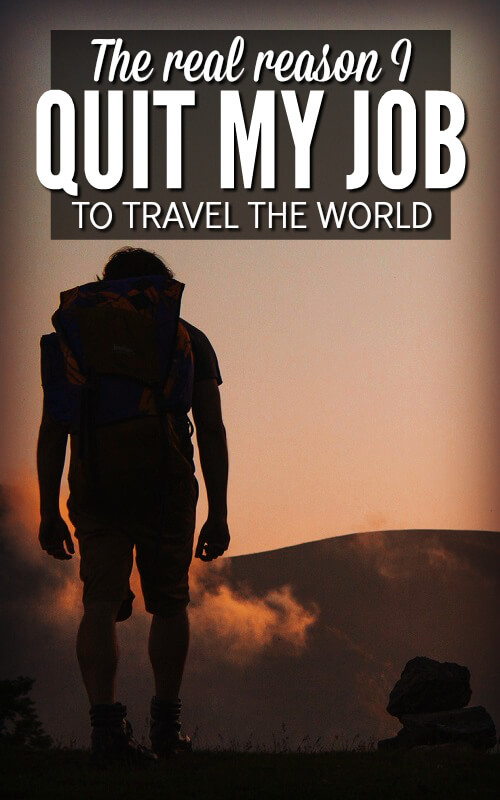
    The Real Reason I Quit My Job To Travel The World

    Back when I was a young teenager, I remember sitting in the car one morning with my Mum on the way to school. The night before I had just watched an episode of South Park, where the guys were sent a starving child from Ethiopia and then took him to a buffet, but kept stealing his food as he was about to eat it. While obviously just bad comedy, I remember being extremely angry at it, and thinking how incredible it would be to really take one of those starving children to a buffet and let them live in our shoes for a day.

    And so I blurted out to Mum, “One day, I’m going to get really rich and then go and build a village in Africa.”

    I don’t remember exactly what she said in reply, but it was probably along the lines of, “If you study really hard and come first in class, you can build as many villages as you want.”

    You might say, even at that young age, I was already dreaming of adventuring in faraway places.

    Of course those intentions were a little starry-eyed, and today I’d probably say building a village in Africa would just be a wasteful and ego-driven way to blow a bunch of money. But the point of the story has nothing to do with Africa, or villages; it’s simply to say that from my earliest years, I had never once dreamed or aspired to become an accountant.

    Nonetheless, around ten years later there I was, fresh out of university and sitting at a desk in an accounting firm. I had never planned it that way, and still to this day can’t really figure out how it happened; I just ended up taking accounting in high school, studying it at university, applying for a few jobs, and then, like clockwork, I was locked into a three year accounting contract. Funny how life can flash before your eyes like that, even when you’re not dying.

    And so I continued to drift along, following the crowd like I’d always done. Everyone signed that form, so I signed it too. Everyone joined that institute, so I joined it too. I straightened up my tie and cleaned my shoes. I paid my fees. I played the game.

    It was long, painful. Every morning I would wake up and curse relentlessly, starting every day as bitter as they come. But as much as I wanted to, I didn’t give up. My fellow comrades and I trucked along, just like we were supposed to.

    “Just one more year,” they said.

    “It’s all going to pay off,” they said.

    Three years passed slowly but I’d played all my cards right. I studied hard. I passed all the exams. My grades came back and they were “great”. It was seven years of study and tens of thousands of dollars in fees, but my efforts had finally culminated in two words – Chartered Accountant.

    Yet as I watched everyone else celebrate with such glee, I didn’t see many reasons to be happy. I hadn’t really enjoyed my time as an accountant, so I didn’t find a whole lifetime of it as something to be very excited about. I’d been told for years that accounting was an interesting and important career, yet nothing about it seemed very important or interesting to me.

    Before long, many of my colleagues had moved to London or Sydney, where they picked up six-figure salaries with relative ease. The ones that stayed in New Zealand landed jobs as managers and advisors in some of the country’s biggest companies. It wasn’t uncommon for them to be earning over $3,000 a week, and usually for doing a lot less work than we were used to. Here was the payday we had all been working towards, and finally it was sitting there in front of us, waiting to be taken.

    For several months I pondered the idea. London? New York? A fat paycheck and a sexy looking business card? It was extremely tempting.

    But it was different this time. Money didn’t entice me anymore like it did when I was 21. I was at a point where I hated my life and I hated myself, and no amount of money was going to fix that.

    People often ask me, how did you do it? Why did you do it? How did you spend all those years and all that money working for something, just to throw it away in the end?

    People assumed I just hated working, but that wasn’t necessarily true. Others thought I was just lazy. Others thought I was simply proving a point. But it was none of that.

    Instead, it was a deep-seated unhappiness, a result of spending my whole life working so hard for things I had never wanted in the first place. People used to ask me what I did, and when I had to answer “I’m an accountant”, I felt ashamed of myself. And not because there is any shame in being an accountant, or because accountants are to be looked down upon; in fact, it is considered one of the more prestigious careers in my country. It was merely because an accountant was never what I wanted to be, and that was never the life I had envisioned for myself. Each day I would stare out the window and dream of living a different life; studying Spanish in Spain, exploring my ancestry in China, volunteering in rural Africa, backpacking through South America and Southeast Asia. To say I was an accountant only upset me, because it told me that I did not have the resolve, and was too afraid, to chase after the life that I truly wanted. I was a dreamer; someone who talks big and walks small. I was that guy. And I knew if that was always how I saw myself, there was no chance of me ever being happy.

    So, after 1,165 days working as an accountant, I quit.

    It was a strange feeling at first. I felt so…free. I thought back to when I first started working, in particular to a distinct memory I had of buying some gear online for my computer. At that time, I was barely two weeks into the job, and I had wanted to go pick my stuff up from the shop warehouse. However, I couldn’t go during the week because of work, as the shop closed at 6pm, nor could I go on the weekend because the shop was only open on Saturday morning and I had sport. The sudden feeling of paralysis hit me like a brick. I felt so suffocated; shocked at the realisation that someone now had so much control over my time that I couldn’t even pick up my own shopping.

    And now, I had too much time. Where should I go? What should I do? Options were literally endless, and all that seemed to do was spurn hundreds of ideas that collided with each other. Overwhelmed, I spent a month vegetating at home, but eventually managed to pull my plans together and set out on the journey I had been dreaming of.

    First stop: Kilimanjaro.

    Fast forward three years and all those Monday morning dreams I had have come true: I’ve studied Spanish in Spain, lived for a year in China, taught for six months in Africa, backpacked South America and Southeast Asia and so much more. All the things I had so longingly lusted for in that office cubicle, each of which had seemed like highly improbable fantasies at the time, became realities, and each of them were just as fascinating and fulfilling as I had imagined them to be. It seems that dreams, no matter how extravagant, do come true, and sometimes they are much, much closer than you think.

    These days, my old life is a distant memory. Sometimes I actually look back and find it hard to believe those years ever really happened at all. They just replay in my mind like a movie I once watched, or a dream from years before. Three years in the office is just one big blur, but three years on the road has blessed me with enough memories to fill several lifetimes. I can finally say with honesty: if I died today, I would have very few regrets at all.

    People ask me all the time about my future plans, and to be honest, I don’t have too many. In terms of money, I don’t need a lot; between life as a blogger, some side projects, my freelance gigs, my savings, and the investments I made during my working years, I make enough to live quite comfortably in many different countries. I live a much simpler life than I did before, and spend far less than I used to; at my old job I used to pay $13 a day just to park my car. That amount alone is enough to get by each day in many of my favourite cities around the world.

    And then, people often ask me if I ever regret my decision. Do I miss the office life, the routine, the putting on my suit and tie each morning? And the answer is, shockling, yes. Sometimes I do. Travel is not always the glamorous lifestyle it appears to be, and sometimes, you miss the familiarity of a routine and a community. But not once have I regretted setting out to fulfill my travel dreams. Exploring the world has been a truly priceless experience, completely my own, and totally irreplaceable.

    Try to remember that life is to be enjoyed, and we usually make a habit of taking it a little too seriously. As long as you have food to eat, clothes on your back, and a roof over your head, the only thing missing from your happiness is fulfillment. Forget the shiny life you are sold on television. What do you enjoy? What makes you happy? Start chasing that today, because waiting is a fool’s game. Sooner or later, the day will come where you don’t wake up, and none of us know when that might happen. It may be today, or 50 years from now, but either way your tomorrows are numbered.

    How are you going to spend them?


  • Solo Female Travel: Musing On Travel with Kristin Addis

    Solo Female Travel: Musing On Travel with Kristin Addis

    We’re back!

    This month in the SFT series I’ll be chatting with a traveller who’s certainly covered her fair share of the globe (definitely more than me!). On the road solo since 2012, she’s no stranger to travelling alone and hopefully she’ll have a few stories and advice that you guys will find handy. Interestingly, she had a few answers that were quite different to previous interviewees, so read on to get her take on nomad’ing solo as a female.

    Psst – she also writes a great blog – one I always enjoy checking in on from time to time. Do check it out!

    Anyway, let’s get to that interview; say hello to Kristin from Be My Travel Muse.


    A photo posted by Kristin Addis (@bemytravelmuse) on

    Introduce yourself! Who are you?

    A girl from Southern California who likes to pretend she’s deep and complex by writing about traveling. I’ve been on the road solo since September of 2012.

    Tell us a bit about how you started a life of travel. What was your inspiration, how did you make it happen, and what were the hard things you had to leave behind?

    My inspiration was other travel bloggers who showed me, through their writing and stories, that a lifestyle like this is actually possible without being a trust fund baby. I saved up a chunk of cash, sold everything I had, and took off on a one-way ticket, effectively demolishing any bridges behind me. The things I left behind are still difficult to do without – my best friends and family, all of whom mean the world to me.

    What’s the response been like to you going nomadic and breaking the ‘traditional’ mold of job, marriage and kids?

    I still have a job. I don’t think traveling means you can’t have a marriage and kids. That’s a big misconception and a lot of people I meet are out there doing it, such as the family volunteering with me on a farm I’m staying on right now in South Africa. There is no ‘normal’ anymore and these days, thinking outside the box is much easier to execute with all of the opportunity online and for native English speakers who want to teach abroad.

    One of the biggest concerns about solo female travel is safety. What’s your experience with this, and what advice can you share for staying safe on the road as a female?

    I don’t think traveling alone as a female is THAT different than a male traveling alone. We do have different concerns but so much boils down to common sense and intution. I view it this way: You’ve stayed alive this long, keep doing what you’re doing on the road as well.

    Share one of the philosophies you live your life by. When, how, and why did it become part of your life?

    Compassion heals and helps us understand. It cultivates patience and removes the “us vs. them” mentality. It improves the mood and when you feel connections to people rather than differences, life becomes easier.

    Tell me the one book you’ve read that has inspired the biggest positive change in your life.

    It’s called What Makes You Not a Buddhist. The title is a bit misleading because it sounds like it’ll be a religious book but it’s largely not. It’s more about the four truths of Buddhism and how they can help us deal with loss, change, and other difficulties. It changed my entire perspective and it’s the book I always recommend to friends.

    People always think travel is glamorous and full of smiles all the time, but as you know that is far from the truth. Tell me the one (or two or three) things you hate most about the traveller’s life.

    The lack of stability, friends, and the comfort of understanding a place.


    #SCUBA diving in #Belize. Take me back A photo posted by Kristin Addis (@bemytravelmuse) on

    We always say that travel changes people. Looking back now, what is the one thing you don’t like about your old self that you managed to change through travel?

    I don’t think it changes people. I think it allows them to be who they’ve always been without the judgement and influence of people back home. Family and friends do, inevitably, have a lot of influence over how we act and behave, but without anyone who knows you from before on the road, you can be whoever you want to be in that moment.

    Where are some places you’ve had to deal with unwanted advances or harassment from men and how do you handle it?

    I got groped in the dark in Nepal by a man who foricibly grabbed me then ran away in the span of a few seconds. It left me feeling shocked and vulnerable, but I stayed for a month regardless and still think highly of the country. There are bad eggs everywhere and I’ll be more careful about walking alone at night moving forward.

    How do you afford your travels?

    I support myself from brand partnerships and advertising on my blog, freelance writing, and some freelance social media work. It took a while to get here, but now it’s a solid living and I couldn’t be happier.

    Right now you’re wandering through Africa, a continent that many would perceive as dangerous for a solo female traveller. Give us your opinion after spending some time on the ground there.

    I’ve gone to townships where some locals here won’t go, and been treated with so much kindness that it’s overwhelming. Africa is huge, there are a lot of dangerous places but that’s also true of the US.

    Are you a nomad for life? Why? Why not?

    A lot of people ask me that and it’s impossible to answer. I don’t even know what I’m doing tomorrow! Most likely traveling will always be a part of my life but at some point a home base would be nice.

    And lastly, for the girls out there still on the fence about their first solo trip, what advice can you give them? 

    This is for the girls and the guys: do it because you will meet people, you won’t be alone that much, and it will be worth it. It’s scary right now and that’s okay because it is for everyone, but most things worth doing are.

    Kristin is a former investment banker from California, who left her job to travel the world in 2012. To read more about her story, check out her blog at Be My Travel Muse, or connect with her through her social media channels on Facebook, Twitter and Instagram

    Enjoyed this interview? Check out the rest of the series here!

  • Hostelling 101: A Newbie’s Guide To Hostel Life

    Hostelling 101: A Newbie’s Guide To Hostel Life

    If you plan on spending any amount of time on the road you’re going to be introduced to hostel life sooner or later. It’s just a part of being a backpacker.

    Now, I know some of your right now are screwing your nose up at sleeping in a backpackers’ dorm room, and if that’s the case, you’ve probably got a little bit of catching up to do.

    Many hostels today are modern, clean, spacious, and are actually more comfortable and entertaining than a 3 star hotel. I’m talking pool tables, Playstations, big screen TVs, jacuzzis, swimming pools, barbecues, kitchens, tour desks, ping pong tables, bars, computer rooms – everything you could possibly need.

    If you’re new to hostel life, you’re in the right place. I’m about to break down everything you need to know for surviving the hostelling world, and give you all the tips you need to make sure your next stay is a good one.

    Why hostels?

    The main reason for staying in a hostel is price. Many of you know I preach budget travel on this blog, and other than Couchsurfing (read my Couchsurfing 101 guide here) you won’t find a better value form of accommodation on the road. In big backpacking regions like Southeast Asia and South America hostel beds will rarely cost you more than $7 or $8 a night. That’s $2,900 to cover an entire year of accommodation.

    Hostels are also a great place to network, meet new travel buddies, seek advice from fellow travellers and immerse yourself in the backpacking community. I can’t even imagine how many friendships, relationships and even marriages were born in hostel lounges and bars.

    You might also find that hostels are one of the best places to bring out your inner extrovert and develop your social skills. Let’s face it, most of us aren’t social butterflies. It’s weird for us to go up to a stranger and say hi. In a hostel this is completely normal though and I can honestly say staying in hostels has made me a much more outgoing and socially comfortable person. Just the sheer volume of different people you meet will really open your mind up to the world and make your experience that much richer.

    And lastly, travellers understand each other. Not everyone is interested in travelling the world, but when you’re in a hostel everyone is there for the same reason. You won’t need to explain why you’re travelling alone or justify your trip to anyone. We’re all on the same page and we already get it. Just having and being a part of that community is an awesome thing.

    Let’s talk about the different types of hostels. Hostels can be broken down into a few general types:

    The Party Hostel


    View this post on Instagram


    A post shared by Bren (@brenontheroad) on

    These hostels are usually easy to spot. They’ll generally have big dorm rooms available (up to 24-30 people), a bar, lots of events, and lots of reviews on Hostelworld. The rooms and drinks will be cheap and they’ll often have pub crawls throughout the week and a daily happy hour.

    The crowd at these hostels will be mostly university students and high school grads, but you’ll get a good number of 20-something travellers on career break and RTW trips too. There will also be the odd creepy old guy (crap, in a few years that’ll be me!).

    I stayed in a lot of these hostels on my first trip through South America, and honestly grew out of them pretty quickly. It’s just not my style. I’m bit of an introvert and I like time to myself, and it’s exhausting to be hyper-social all the time. However if I’d started travelling when I was 18 I probably would’ve enjoyed them more. I still stay in them from time to time, but only for a couple of nights before moving on.

    The Classy Boutique Hostel


    View this post on Instagram


    A post shared by Bren (@brenontheroad) on

    This is the classic ‘try-to-break-all-the-hostel-stereotypes’ type hostel. It’s squeaky clean, got amazing beds, a fully decked out kitchen, a comfy lounge with lots of games and books, tea and coffee on tap, and they probably even serve eggs for breakfast.

    Obviously these hostels charge more, sometimes more than double what a typical hostel charges, but you’ll find that there is a huge demand for them now as people grow out of the party hostel scene.

    Here you’ll meet a lot more travelling couples, older travellers, digital nomad types and a more laid-back crowd in general.

    The No-Frills Hostel


    View this post on Instagram


    A post shared by Bren (@brenontheroad) on

    While the party hostel can charge super low prices because of its sheer number of guests, the no-frills hostel charges low prices because it only offers the bare minimum. There are no bars or computer rooms or ping pong tables, but you should find yourself a clean bed and a working bathroom and wifi – everything a budget traveller needs.

    You tend to meet more introverted people at these places, and a lot of really interesting, well travelled people as well. It may also just seem this way because people aren’t drunk or hungover all the time. I’m a big fan of the no-frills hostel and tend to stay in these whenever I can.

    Note: “No frills” doesn’t mean “crap”. It means clean and basic. There are many crappy, dirty hostels around the world, but I won’t be bothering to talk about them.

    The Quirky Hostel


    View this post on Instagram


    A post shared by Bren (@brenontheroad) on


    Every now and then you’ll come across a hostel with something really unique – maybe it’s a big treehouse or on a horse ranch, or built in some big colonial mansion. They tend to be a little more expensive and draw a more social crowd, but not quite as rowdy as the regular party hostels.

    I find these hostels always have a very family-like atmosphere – people eat dinner around the table together and sit around sharing stories in the lounge or on the patio. You tend to meet slower, more relaxed travellers at these places, and your fair share of hippie types too. Lots of fun and friendships are made here!

    How to survive in a hostel


    Hostels are a hyper-social environment, which means you’re going to be dealing with a lot of different people. If you’re an introvert like myself, your social skills will be put to the test and you really need to make an effort to break out of your shell.

    Don’t freak out though. Travellers are a very friendly community of people – the friendliest I’ve ever known in fact. People are often shelled up in life because they have fears or memories of getting face-palmed by a girl they tried to say hi to in a bar, or a little secret society of back-stabbing ladder-climbers at their job, but this sort of behaviour does not exist in the backpacking community (or at least I haven’t seen it).

    People who enjoy travelling are naturally open people – we want to meet new people and try new things and hear new stories. While in the real world you might feel the need to have a certain social status to mix with certain people, in the travel community everyone is equal. There is no cool kids’ table. The guy who has travelled to 100 countries and the guy who’s on his first overseas trip will have no problems hanging out and sharing a beer in the hostel lounge. In fact, that’s what makes hostelling so amazing – meeting so many different people at different stages of their lives with different dreams and different stories.

    To survive in a hostel, all you need is the courage to say hi. If you see a group of people sitting in the courtyard chilling out, go up to them and introduce yourself. They won’t laugh at you or roll their eyes, I promise. This isn’t a nightclub. In fact, I can guarantee you they’ll welcome you so warmly it’ll be like you’ve known them for weeks. Will you meet a few pretentious people along the way? Yeah, maybe. But they don’t tend to last too long in a hostel anyway, so don’t worry about it.

    Remember, we’re all away from home without our friends and family, living in a hostel with a bunch of strangers. Everyone’s in the same boat. Just say hi!

    Things you don’t do in a hostel

    There’s quite a few things here, so I’m going to run them off real quick, bullet point style.

    • Don’t leave your shit all over the floor – put it in a locker or on your bed. I’m not the tidiest guy either but you need to understand dorm rooms are small and it helps to keep them tidy. You don’t get many people anal about cleanliness in hostels anyway but people still like their personal space.
    • Don’t steal beds – everyone always wants the bottom bunk but it’s first in first serve. Bed stealing goes on more often than you think!
    • Don’t take forever in the bathroom – you’ll piss a lot of people off.
    • Don’t eat other people’s food out of the fridge – I know it’s really tempting but man that shit is annoying.
    • Don’t leave dirty laundry lying around – especially socks because they smell. Plastic bag them and keep them in your locker.
    • Don’t turn the light on when it’s already off – if you come in late after a night out, don’t turn on the lights on and wake everyone up. It’s cool to come in late but use your cellphone to light your way to your bed, and be quiet about it too.
    • Don’t wake people up – please don’t be that guy at 5am in the morning screwing around with plastic bags and ruining everyone’s day. If you were crazy enough to book a bus or flight that early that’s cool, but it’s best to take your stuff into the hallway and pack your things out there.
    • Don’t leave dirty dishes – Every single hostel I’ve been to has a “do your own dishes” policy but there’s always some prick who thinks he’s above the law. Don’t be him! (or her).
    • Don’t hang laundry in the window – It’s cool that you’re trying to save money but this gets to people. I actually don’t mind to be honest, but I’m pretty hard to annoy. Just be mindful.
    • Don’t be cheap – When it comes to snacks and drinks and booze and cigarettes people are always more than happy to share, but there’s the odd guy that just leeches everything and he’s pretty easy to spot. Bring something to the table (or just don’t dig in to everyone else’s stuff).
    • Don’t hog the computers – Quite a few hostels offer computers with internet so you can check your flights and post your TripAdvisor reviews and all that other good stuff. Just don’t be that guy watching Youtube all day. I once spent a few hours watching the NBA Finals on a hostel computer, so I’m guilty too. This is becoming less of a problem now though since everyone has smartphones.
    • Don’t talk during the movie – It’s quite popular for everyone to wind down after a day of sightseeing with a movie in the lounge/TV room. Please don’t be that annoying group of friends talking throughout the movie about their day. Go outside! (you f*****g ****s)
    • Don’t speak in languages other people don’t understand – This is a big one. If I’m sitting in a group of ten people and we’re all speaking Spanish and then a couple of people join us who don’t understand, we switch to English. This is just common courtesy, and is quite a frequent scenario in travel circles. Sorry to single you out, but Frenchies – you guys are the worst at this! Some people don’t even realise the rudeness of it, but luckily most people in hostels are aware and mindful. I’ve found the Germans and Dutch to be most polite in this regard – props to them!

    At the end of the day most ground rules like this are just common sense. Remember you’re sharing living space with a lot of other people and the basic rules of respect apply. If you can’t handle it, that’s cool, just book a hotel room.

    How To Book A Hostel

    I always book my hostels using either Booking.com or Hostelworld. Hostelworld is probably slightly easier to navigate, but I prefer Booking.com as Hostelworld always requires a deposit. Either way, both are great.

    For me, the most important thing when finding a hostel is location. I want it to be as close as possible to the places I want to visit so I can spend as little time and money as possible on transportation.

    To do this, I utilise the “map view” in the search function. Here’s an example of the map function in Hostelworld when searching for hostels in Amsterdam:

    Amsterdam

    Take a look at the big cluster of accommodations – it’s safe to assume that’s where the centre is or at least it’s an area with good public transport access and the area is safe. Obviously if there’s a certain school or course I’m enrolled in, I’ll find something situated close to that. To single out the hostels from the hotels on Booking.com, simply filter the prices into the lower price ranges, or simply sort the search results by price.

    Once I’ve figured out my prime location, I’ll start filtering out the stuff I want. In the following screenshot I’ve set filters to only show hostels that have been rated 80% and above. You can also set filters for anything else you want such as breakfast, wifi etc. using the options on the left.

    Amsterdam2

    From there I will simply sift through the reviews of each hostel, look at the prices and then make a booking.You can hold your mouse over each icon and it will bring up the hostel information and rating. My criteria differs from time to time but I very rarely base it solely on price – it’s more a combination of comfort, location and price. Just from a quick browse, in this example I’d probably pick between The White Tulip, Central Station Hostel and Hostel Van Gogh. White Tulip and Van Gogh have a party hostel vibe while Central Station is more on the no-frills side. It’ll just depend on how I’m feeling at the time.

    Note: I’ve never stayed in any of these hostels, in fact I’ve never even been to Amsterdam. This is just to demonstrate the process I would go through when searching for a hostel.

    Alternatively, some people just like to show up without booking at all. This allows them to take a look at the rooms and the beds and make a more informed decision. The only downside with this is you can be left wandering around the city with all your luggage looking for a place to stay if your first few choices don’t pan out. In reality this isn’t a big deal, some people actually enjoy the spontaneity of it all. I personally prefer to pre-book.

    Ready to go hostelling?

    Well, that’s pretty much all you need to know. If you’ve never stayed in a hostel before don’t rule it out just yet – some of your best travel memories will probably be made in hostels and you might find the experience a lot more pleasant than expected. I’ve found that hostel culture is also evolving all the time and a lot more boutiques are popping up while the raving party hostel culture is dying down a bit. It’s not uncommon these days to see people sitting around the hostel lounge reading at night rather than in the bar getting loose. Whatever your vibe is, use the search tips above and you’ll find a hostel that fits with you.

    Good luck!

    Got any hostelling tips or stories? Let us hear em in the comments below.


    New to backpacking? Check out this awesome guide to hostel life. Dorms, activities, other travellers. Great introduction to the hostel and travel culture and what to expect!

  • A Beginner’s Guide To Studying Chinese In China

    A Beginner’s Guide To Studying Chinese In China

    Learning Mandarin seems to be the global craze these days. People from every corner of the world are flocking to China and many universities have entire campuses dedicated solely to the teaching of Chinese to foreigners. International students are spending thousands of dollars to live and study Mandarin in China’s top institutions, some even coming straight from high school and forgoing traditional degrees in their home countries altogether.

    But what are the real benefits of learning Chinese and what might you expect should you choose to dedicate a few years of your life to the language?

    As a foreign born Chinese, I felt compelled to return to my homeland to learn more about the people, the culture and the language of my ancestors. My reasons for moving to China were more cultural than anything else, so my experience might be coloured differently to yours. However, speaking as a student alone I believe my experiences could be very valuable to you should you find yourself thinking about an extended journey into China.

    How long will I need?

    I’ve studied a handful of languages in my time and Chinese was the most difficult by a long shot.

    If you go in as a complete beginner, most university courses will require just over 2 years for you to reach a “fluent” level, assuming you are doing a full time course (around 20 hours per week).

    The university I studied at had 9 levels, (A to I, with “A” being complete beginner and “I” being fluent) and in a semester you would complete two levels. Therefore to complete A to I would require 5 semesters. That works out to just over 2 years, assuming you pass every exam.

    Technically you can also do summer school each year which might reduce your time to 18 months, although this means you’ll be in the classroom studying Chinese full time for 18 months with no holidays which won’t be much fun.

    Here are some exceptions I’m aware of:

    1. You’re Japanese – Because Japanese people can already read and write a crapload of Chinese characters, they don’t need 2+ years. They may only need one. Probably 70% of Chinese study time relates to reading and writing, and Japanese Kanji in many cases is identical to its Chinese counterpart. The Japanese people in my beginner level class were able to read an entire Chinese menu before we’d even learned our first character.
    2. You speak Cantonese – I don’t speak Cantonese, but just from all the years listening to Cantonese chatter among my friends and family I was able to recognise the Mandarin words for quite a lot of things. I had a couple of Cantonese speakers in my beginner class and they were able to understand taxi drivers and waitresses before we’d even learned how to count to 5.

    If you fall into one of these groups, you’re lucky – you’ll learn Mandarin a lot faster than the average student. To give you an idea of what I’m talking about, it’s a bit like native English speakers learning Spanish.

    Imagine it’s the first day of Spanish class, and you see the words teléfono, restaurante, refrigerador, elefante, and television written on the board. You can’t speak one lick of Spanish but just by looking at the words you already know what they mean (if you’re a little dense, it’s telephone, restaurant, refrigerator, elephant and television).

    However a Japanese person who has no knowledge of English would not have a clue what the words mean. To him they’re just going to look like a bunch of scribbles, or perhaps a wavy, elongated piece of art.

    When you’re studying Chinese, the tables turn. You’re the one seeing scribbles, and the Japanese/Cantonese guy is the one who already knows everything.

    Read more: How To Speak A New Language In Seven Days.

    How difficult is it?

    Mandarin is a language that is both tonal and character based. This makes it unique from any other foreign language that I know of, which are often one or the other but not both. It’s for these reasons Chinese is considered one of the more difficult languages to learn for native English speakers.

    Tones

    Tonal languages are notoriously difficult and learning how to speak in tones is mostly a foreign concept to native English speakers. We use tones to convey feeling and emotion – it doesn’t matter whether we say the word hungry in an upward tone or a downward tone the end result is we’re still hungry.

    Not true in Chinese. For example, the words shúi, shuǐ and shuì mean who, water and sleep. The words are spelt exactly the same, however they are differentiated by the tone you say it in (represented by those dashes above the word). Therefore, you might be dying of thirst and telling your Chinese friend you need water, but if you say the word water in the wrong tone he might go upstairs and make up a bed for you thinking you need a nap. Or you might ask the waitress how much a water costs and she’ll end up slapping you thinking you’re asking how much it costs to sleep with her. These scenarios are not uncommon.

    The tones come easier to some people than they do to others. It’s common to find students who can recognise and reproduce each tone after a few days and some who still can’t tell the difference after several years. Whether it will prove difficult for you depends on your own ear and whether it comes naturally to you or not.

    Characters

    When learning English we need to learn to write 52 characters – 26 letters, upper and lower case. Remember how hard it was learning to write them all exactly how the teacher wanted?  However, armed with our 52 letters, we can now read and write every single word in the English language, even if we might not know the meaning.

    Chinese on the other hand has no alphabet. It’s a character based language which means it has a unique character for every single word that exists. Therefore you’ll need to learn how to read and write around 4,000 unique characters before you can read a newspaper, maybe 6,000 to read a typical university textbook and upwards of 20,000 if you want to study medicine.

    This is not difficult per se, as in you don’t need to be particularly intelligent to do it. It’s rather just very time consuming and requires a lot of dedication and study time. This can be a good or bad thing, depending on the individual learner.

    While I was studying Chinese I found that 70% of class time was dedicated to reading and writing characters. When preparing for exams, my entire study time was sitting in a café writing out pages of characters trying to memorise them. If you can’t read the characters, you can’t read the exam questions and if you can’t read the exam questions, you can’t answer the exam, and if you can’t answer the exam you can’t pass and if you can’t pass you can’t advance to the next level – do not pass Go, do not collect $200. So with no other choice I memorised them, and I didn’t enjoy it very much.

    I was told by my teacher that when primary school students learn a new character they are asked to write it out 100+ times every day. It kind of makes you understand why Chinese people have a reputation for studying so hard. They’ve been spending hours memorising these damn little pictures since the first day of school!

    Now, in my opinion studying language should be fun, and this part of studying Chinese is rarely fun. I believe a valid alternative is to forget about the writing aspect altogether. Learning to read is manageable but learning to write is where the bulk of your time will go to. I believe you can cut your learning time in half if you forgo the writing component and just concentrate on speaking, listening and reading, in that order. This approach is becoming popular, and there are now schools in China offering courses where only speaking and listening are taught and character learning is forgotten. Because I studied at a university, I had no choice. My exams needed to be passed or I would’ve lost my scholarship, and therefore I spent the hours needed to memorise all the pictureboxes so I could pass my reading and writing exams. However, I really advise that new students consider whether it’s important to them to read and write Chinese. If you think speaking and understanding Chinese is sufficient for your needs, you may find the investment required for reading and writing simply not worth it. And remember – just my opinion.

    Choosing a city

    As with every language, immersion is the key to effective learning. If you’re serious about learning Chinese you absolutely must be considering spending some time studying or at least living in China. I spent hours scouring forums and blogs trying to decide which city might be the best for me. In the end I chose Shanghai, so that is the only city I can speak about from experience, but let me say that after spending time in the country I now believe the city you choose will not matter a whole lot. Here’s why:

    While researching cities there were many common criticisms that were repeated over and over again – weather in Shanghai is shit. It’s too hot. It’s too cold. They don’t even speak Mandarin, they speak Shanghainese. You’ll end up learning Shanghainese instead of Mandarin. There aren’t even any Chinese people there, only foreigners. You’ll just speak English the whole time. It’s so expensive. Way more expensive than the rest of China. There’s no culture there. Just commerce. It’s not even the capital. Shanghai doesn’t even exist. It’s a magical world like Atlantis. You’re going to die. People are going to eat you.

    So, naturally I chose Shanghai. Yet as developed as it is, Shanghai is still very Chinese. There are certainly a few foreign dominated areas where you’ll only see white faces but the majority of the city is still yellow faced. It’s expensive if you eat at Italian restaurants, but the noodle shack on the side street will still feed you for $2. Every local speaks Mandarin unless he’s mute or over 100. You can’t speak English the whole time because 99% of locals in Shanghai don’t speak any. The point is, Shanghai is China’s most international city and it’s still a great place for immersion learning, so I’m confident every major city in China will serve you well in this regard.

    Therefore, the city you choose should depend on your other preferences – big city, small city, hot weather, cold weather etc. For this you’ll need to do your own research. But certainly don’t be put off by people saying you can only learn Chinese in Beijing because Shanghai people have shit accents and Guangzhou people can’t even speak Mandarin. It’s bad advice from silly people.

    Choosing a school

    Once you’ve chosen a city you need to choose a school. You may have already decided that you want to study at the famous Beijing Language and Culture University because everyone talks about it, or at Peking University because it’s the top ranked school in the country.

    At first I was basing my decision on which school had the best teachers and the most effective course. After having studied there for a year, I’m of the belief that it doesn’t really matter which course you’re in as the language is so systematic and cannot really be taught in too many different ways. How well you learn will mostly depend on how much time you spend practising and revising, which is obviously irrelevant to who your teacher is and which textbook you have. It’s not going to matter whether you’re writing out characters in a Beijing classroom or a Chengdu classroom. Of course not every course will be identical, but most universities model their courses around the HSK program (kind of a like a Chinese version of IELTS), which means they will all take a somewhat similar direction anyway.

    Rather than basing your decision on course quality or teaching quality, try choosing your school based on cost, facilities and location. What’s important to you? I studied at Fudan University, which had an amazing campus complete with gym, massive cafeterias, and a decent quality international students dormitory. It also had good classrooms, free wifi, fast internet in the dorms, and a large foreign student community. However, it’s obviously more expensive than some boutique schools and smaller universities.

    Fudan University Dorm Room
    Foreign student’s dorm room at Fudan

    Fudan classroomTypical Fudan University classroom

    If you want to live closer to the city centre in Shanghai, you might choose Jiaotong University, or a cheaper option might be Donghua University. For a smaller and probably cheaper school you might choose East China Normal University (ECNU) or SISU (Shanghai Intl Studies University), which both have good reputations and are a little less “cliché”.

    Scholarships

    I was lucky enough to be awarded a scholarship for my one year of study. This included:

    • All tuition fees paid
    • All accommodation paid
    • A monthly allowance of around $300 for food, transport etc.
    • A small allowance for textbooks
    • Health insurance
    • Your choice of (almost) any university in the country

    I chose to study at Fudan University in Shanghai, and all up I estimate the scholarship was worth around $10,000.

    Needless to say, my advice is to apply for this scholarship! My particular scholarship was the New Zealand – China scholarship from the Confucius Institute of the University of Auckland (link here)

    For more information, you can check out my post on how to get a Study in China scholarship here.

    What to expect

    If you’re in a university or school environment, expect to meet a lot of people from everywhere. It’s not like language schools in Spain where people are mostly from Western Europe, or down in South America where people are mostly American. China draws people from every corner of the world. My first class had one Korean, one Japanese, three French, one American, two Mexicans, one Spanish, two Brazilians, one Hungarian, one Australian, one girl from Hong Kong and one girl from the Bahamas. In comparison, my first Spanish class in Spain had ten students, and every single one of them was from Europe except for a lone Japanese guy (and me, of course).

    In class Fudan Morning class at Fudan

    As for living, China is a unique place. I won’t go into the details of living in China, but just know you won’t starve and you won’t go broke and it’s very safe. You’ll get used to it.

    In terms of class time, you’ll be mostly learning tones and basic phrases for the first couple of weeks. The speed is manageable and there is bound to be someone in your class who is having a harder time than you…hopefully. The first two weeks will start with pinyin which means using English letters to write Chinese words. For example, the word for water, can be written in pinyin as shuǐ , or in Chinese as 水. Obviously pinyin is easier, which is why you start with it, but characters will probably start being introduced within a couple of weeks.

    There is not a lot of grammar in Chinese, at least in comparison to English, so you’ll find a lot of your study will revolve around learning new vocabulary and phrases with the odd grammar point here and there. Typically you can expect to learn around 30 new characters a week on average.

    After half a semester you’ll be expected to be able to get around on your own, for example, asking which train to catch or where the bus stop is, as well as being able to read and write those phrases in Chinese. A typical writing exam question at the end of your first semester might be “write about what you did on the weekend”. You’d be expected to write (in Chinese characters) something like I woke up at 8 o clock, I had breakfast at a cafe with my friend, I did homework, I ate at a restaurant with my classmate, we ate whatever, I rode my bike to wherever, I went to sleep at 10pm etc etc. This might seem simple for a few months work but remember, it might only take you a few days to learn to say all that but it will take you a lot longer to learn (and remember) how to write it.

    You can expect to have learned the majority of basic grammar after a full semester, being able to say most basic things you would need to say (perhaps not perfectly but you’ll get your message across). After that it’s just a matter of expanding your vocab and learning the odd advanced grammar point to make your Chinese sound more ‘natural’.

    Expect to be able to complete HSK3 after a semester, HSK4 during your second semester and HSK5 after a year if you’re a good student. I only know one guy from my class who even bothered to attempt HSK5 at the 1 year mark, and he passed (he was Japanese). The rest of us sort of knew we wouldn’t pass it so we didn’t try.

    For those who don’t know, HSK5 is the level required to enter university in China as an undergraduate, i.e. to start doing a proper degree at a Chinese university.

    Visa

    China is pretty anal about visas so the visa process is basically a hoop jumping festival that lasts several months (for me anyway).

    You’ll need a medical exam completed by your doctor for the entry visa application, the university application and then the residence visa application in country. Photocopies aren’t accepted, so make sure you get three, handwritten copies of your medical exam for each application, otherwise you’ll end up paying for three seperate medical exams like I did. There’s a bunch of other crap too but it’s all explained to you once you get into the country.

    Internet

    One other thing to note is that many sites are blocked in China, such as Facebook. If you want to access those, you’ll need a VPN. I recommend using Private Internet Access.

    One Final Tip: Study To Improve Your Chinese, Not To Pass Exams

    Most students structure their study around trying to pass the HSK exams. The problem with this is it requires you to learn how to read and write a lot of words that you will never use and probably don’t even use in English. Therefore, I’d advise against this approach unless there is a real reason that you need to acquire HSK, i.e. to gain university entrance, job requirements etc. If I could do my scholarship all over again I would spend far less time writing out characters in coffee shops and instead spent it listening to audios and practising my speaking. My grades would’ve definitely slipped but in hindsight that is not important at all. You’ll find yourself in situations every day where you wish you knew how to say something, but there was not a single real life situation during my year in China that required me to write Chinese. Remember that you’re learning Chinese so you can communicate with people; not to pass an exam.

    Just do it

    I spent countless hours researching studying Chinese in China before I finally decided to do it. Some things turned out exactly as planned and some things didn’t. I can say though it was an incredible experience and one I recommend to everyone. As we all know, China is booming and it’s an incredible place in the world to be right now. If you’ve been thinking about doing something like this – just get on the plane and go.

    Questions? Feel free to get in touch or leave a comment below, I’ll be more than happy to help in any way I can!