Tag: Stories

  • Love Cape Town

    Love Cape Town

    At first glance, The Zebra Crossing was just your regular hostel. Fifty beds, small lounge, small kitchen, little courtyard for the smokers. But like all good hostels, it was operated with love. And like all hostels operated with love, it became home.

    It was Doniel who checked me in. The cheeriest of smiles, caramel skin, short shoulder length hair, a pair of warm eyes behind black rimmed glasses. As she showed me the bathrooms, she reminded me Cape Town was in a drought, and not to shower longer than two minutes. Then she showed me the kitchen, and reminded me to wash the dishes with the tap off, and use as little water as possible. And I knew she loved working in hospitality. I knew that, because when she showed me to my room she said, “I really love working in hospitality!”

    That’s how I met Doniel.

    My room had eight beds but was empty, except for one other guest, presumably female, who looked like she’d been there a while. She had those Arabian looking blankets hung around her bunk like curtains, and all her clothes folded neatly on the bed above. It’s an oddity to find someone who actually unpacks in a hostel dorm. When you see it you already know; that person is either very strange, or a first time traveller, or is living here.

    That night I learned the owner of that bed was a black South African woman, tall, skinny, an artist, maybe in her forties, very upbeat, chatty, vibrant, and I was right, she was living here in the hostel, and working here too, and had been for some time. Out in the courtyard late that evening, I sat on one end of the couch, wrestling with the wifi, and she sat on the other, puffing on a cigarette. And in between wifi signals and puffs of smoke, we started talking. An hour, and then two, and maybe three.

    That’s how I met Stephanie.

    A few mornings later, I was, as usual, on my laptop in the lounge. I’d been in Cape Town three or four days now, and spent the mornings sitting against the back wall, at the large wooden dining table, with full view of the room, and anyone in the room with a full view of me. When Doniel arrived for work that day she walked through the lounge to reception, and we exchanged good mornings. Then just after her followed a young woman, strikingly pretty, with pale skin and a sharp nose, dark straight hair that fell to her shoulders. And I wasn’t sure if I should also say good morning to her, so I just smiled, and she smiled, and then she was gone.

    A few minutes later, she was back. And Doniel was teaching her how to fold the big stack of sheets sitting on the couch, and how to make the beds.

    “Are you working, Brendan?” Doniel finally asked, in between folds.

    I nodded, and she smiled, saying, “Whenever people need to work, that’s always the spot they sit in.” Which led to a conversation about what I do, and all the questions that always follow.

    “That’s so interesting. I’d love to learn something like that, I have so much time these days.”

    “I can sit down with you some time, and show you a few things, if you want.”

    “I would love that.”

    And she turned to the pretty girl and said, like a big sister, “See! You should talk to people more often. You never know what you might learn.”

    Not long after that, Doniel left to attend to something else. And the pretty girl suddenly became chatty, asking me all sorts of things.

    “So what’s your name, by the way?”

    “Erin.”

    “Ellen?”

    “No Erin, with an R.”

    So we chatted for the morning, while she folded sheets, and wandered in and out of the rooms, making up beds for the guests who were to arrive that day.

    That’s how I met Erin.

    It was later that same day a gentleman came into the lounge to lay on the couches. I was still on my laptop, sitting in the same spot, against the back wall, at the big wooden dining table. I’d seen him wandering in and out of the hostel in the previous days, but we’d never crossed paths in a way that required me to introduce myself. But now here he was, sitting right in front of me.

    “I’m a driver,” he told me. “I drive people around for the same rates as Uber, so if you ever need to go somewhere, call me.” At first I had no intention of calling him, since using Uber was already so easy, but as we talked I learned more about him, and he explained “I tried to apply for Uber, but they rejected me because my car is too old, only people with new cars can apply. So I started my own thing with the hostels and I find my own customers. Because we need to hustle, right? We can’t let this capitalistic world keep us down.”

    And I thought to myself, this is a man with his mind right, and the right kind of energy to be around. And I decided right then I would surely call him for a ride any time I got the chance.

    That’s how I met Craig.

    It was probably after a week, at the incessant pleading of Doniel, that I finally got off my laptop. I hadn’t been further than the supermarket down the road, and Doniel convinced me to at least do the free walking tour.

    As I was sitting on the couches tying my laces and getting ready to leave, Craig went rushing out the front door, and yelled out “Sharp!” as he ran through the lounge. Then he popped his head back in and said, “You learned that yet, B?”

    “Learned what?”

    “In South Africa, when we say bye, we say sharp sharp! It means like, everything’s cool.

    So I repeated after him, “Sharp sharp” and the cleaning ladies on the couch opposite me cackled with laughter, before Craig also joined in with a giggle.

    “You got it,” he laughed. “Alright, I’ll see you guys later. Sharp.

    Cape Town is an odd kind of city; it feels big, and modern, but is built in patches of nice and not-so-nice. As I walked down to the centre I found myself on streets with cafes and juice bars thinking, “What a nice street”, but would continue onto the street right next to it and think, “Maybe I shouldn’t be here.” Luckily it didn’t take long to get to the centre, where I quickly found the cafe with the big umbrella, the words “Free Walking Tour” plastered across it, and the walking tour manager standing under it with her walking tour clipboard.

    “Is it your first time doing a tour with us?”

    She was maybe 5’1 or 5’2, plump, buxom, big round cheeks and small eyes, a little afro dyed blonde with the cheekiest smile on the street.

    “Okay just sign up here,” she said, handing me the clipboard, “And we’ll be starting in about ten minutes.”

    I overheard her say something in another language while I scribbled my name on the sheet.

    “What language is that?”

    “Xhosa.”

    “It’s cool.”

    “Yeah it is!” she laughed.

    “And your haircut is cool. Like Chris Brown’s, but cooler.”

    And she put the clipboard down and hooted with laughter.

    That’s how I met Florina.

    I did the Apartheid Tour that afternoon; we walked past the court where various Mandela trials took place, the site of apartheid founder Verwoerd’s assassination, the now demolished counter-culture hotspot of District 6. It was my first look at downtown Cape Town, and again, something struck me about its streets I couldn’t quite put my finger on; a fine city, well built, just a little neglected perhaps, like a really nice apartment that hadn’t been cleaned in a while. You’d walk past a street with a really nice hotel, and the whole street was colourful and polished, with fancy coffee shops and park benches and big tall trees, and then you’d turn the corner and it was back to the colour of old concrete.

    When we got back to the cafe, Florina was still standing there with her clipboard. It was as if she were a permanent fixture on that street, like a lamp post or a statue, always in the same spot, under the same umbrella, with the same smile on her face. It was now nearing 4pm, and she told me the Bo Kaap tour was just about to start. I thought, “How proud Doniel will be, that I did not one, but two walking tours today,” and signed up for that tour as well.

    The Bo Kaap is the Muslim quarter of Cape Town, where the Indonesian and Malaysian slaves were housed 300 years ago, the streets still lined today with the world famous colourful buildings, the old mosques, and an endless stream of tourists selfying their lives away. That tour took us right until sundown, and when the day was over and I was back at the dining room table, nursing tired legs and flicking through my photos, I thought, “Doniel was right. What a great idea that was, to finally go out into the city today.”

    The next day I was in the city again, this time to finally start my shopping for AfrikaBurn. This was why I had come to Cape Town; to attend this week-long cultural gathering in the nearby Karoo desert. I still had a few weeks to prepare, but also had an entire shopping list of supplies I hadn’t touched yet. Doniel suggested I head to the Grand Parade, where the second hand market came alive twice a week. We had walked by there during the tour the day before; it was the site of Mandela’s famous speech the day he was released from 27 years in prison.

    I got there and wandered through the square and surrounding streets, surveying the street stalls and prices, the jewellery, jackets, bags, all things I needed in abundance. I didn’t buy anything that day, but the following day I returned, a greater idea of what I was dealing with. One thing I needed was gifts, to give to the many people I would meet in the desert, so just off the Grand Parade I stopped by an old jewellery stand that had given me the cheapest prices the day before.

    I asked again, “How much for these?” and he said “Twenty rand” like he had the previous day. They were bracelets with lettered beads, that spelled out names, hometowns, quotes.

    So I asked, “Can I give you my own words to write?” and he said “Of course, I can make anything.”

    So I said “If I buy twenty, how much?” and he thought about it for a second, and said, “Fifteen rand.”

    And I nodded and said, “What about if I buy fifty. Will you do them for ten?”

    And he looked at me again to make sure I was serious, and then said, “Okay” and told me to come back in four days.

    That’s how I met Adam.

    The next day I was tent shopping in the city, and Adam’s shop wasn’t far from where I was, so I went to see him again. He had already threaded a few bracelets and showed them to me, and as I was about to show him a mistake I overheard him speaking to his friend. It was Swahili, so I asked, “Are you from Kenya?” and he said “No,” with a smile. “We are from Tanzania”. Immediately my heart lit up, Tanzania being a second home of mine, and at once I could suddenly see it in his face and hear it in his accent, and I wondered why I hadn’t noticed it before. So I introduced myself, as an adopted child of Moshi, and an Mbongo, and a Chaaga, and him and his friend laughed, as it must always be a novelty to see someone with my face speak their language.

    And from that point Adam and I were friends, and I would stop by in the afternoons almost every day, he would invite me to sit with him at the back of his stall, teach me how to thread bracelets, ask me about Moshi, and it seemed there were Tanzanians all around this street; they would stop by and say, “Hey, you’re the boy from Moshi?” and I would laugh and say “Ndio!” And they would giggle and say to their friends, “Aisee mchina anaongea Kiswahili” (Man this Chinese guy speaks Swahili!).

    The following week, I finally ventured further out from the centre. There was a local suburb called Wynberg in the city’s south, with a couple of second hand stores I wanted to visit. I hoped they would have the extravagant coats and hats and boots I wanted for AfrikaBurn, the kind the city’s shops weren’t extravagant enough to sell. I went into reception that morning to ask Doniel if there was a bus, and how to catch it, in fact I’d already started shouting my sentence, “Hey, Doniel” before I even walked in the door. But to my surprise it wasn’t Doniel sitting behind the desk, it was Erin.

    She looked up startled, then smiling, stopping my voice in its tracks.

    “Oh. Good morning,” I said.

    “Hey. You’re still here?”

    She had a thick South African accent, the rolling of her R’s extra clean and extra sharp.

    “Well, obviously.”

    “I thought you’d left.”

    And distracted by a pretty face, I ended up sitting there talking to Erin all morning. And I learned she was barely out of school, and didn’t actually have a job at the hostel, but was related to Doniel through a marriage, to a cousin, or something similar, and she had a daughter, and a boyfriend, or fiancé, I don’t quite remember. But what I noticed most was how she had seemed so painfully shy the first time I met her, and now, she literally talked non-stop, with great energy and gusto. And by the end of that morning I had become seemingly good friends with Erin.

    “So can you tell me how to get to Wynberg?” I asked finally.

    “Where?”

    “Wynberg.”

    “I’ve never heard of it, where is it?”

    “Uhh. In Cape Town.”

    “Yeah but….say it again?”

    “Wynberg.”

    She screwed her face up, and started typing something into Google.

    “Erin you can’t be a hostel receptionist if you don’t know where Wynberg is. What if a guest, who’s not as nice as me, asks how to get to Wynberg and you can’t help them. That will be such a bad Tripadvisor review.”

    I leaned over the desk as she pulled up the map, and I took the mouse from her, scrolled east, and then down, until it was bang in the middle of the screen.

    “There.”

    “That’s W-I-N-E-berg!!!!” she screamed. It was loud enough that I pulled away, thinking she might attack me, or at least continue screaming for a few more sentences.

    “But it’s spelt Winberg,” I laughed.

    “Oh my god it’s Wineberg you can’t even read.”

    “Winberg Wineberg. Same thing.”

    And so we sat there arguing about how to say Wynberg for another half hour, before I finally left to the centre to catch the bus.

    Getting around Cape Town isn’t difficult, but can get confusing for a newcomer. There’s a rapid transit system, but it’s confined to the central suburbs so most people use buses. But they use minibuses or vans as their buses, and they call these buses “taxis”. Which means they can’t call actual taxis “taxis”, so they call them “cabs”.

    On the walk down to the city, I passed by the walking tour cafe, and of course Florina was standing there, with her clipboard, under the big walking tour umbrella.

    “Hey Chris Brown.”

    She laughed her big hearty laugh and hugged me.

    “I’m heading to Wynberg,”

    I pronounced it correctly this time, feeling like a proud local.

    “Why the hell are you going to…Wynberg?”

    “To go clothes shopping.”

    “In Wynberg?”

    “Yeah there’s a second hand shop there.”

    She looked at me skeptically, and then finally nodded and said, “Okay, it’s easy, just go to Grand Parade and get a taxi.”

    “But it’ll be way too expensive,”

    “It’s only 20 rand for a taxi,” she frowned.

    But after looking at me again for a split second she figured out what was happening and said, “No baby, not a cab, a taxi.”

    It was only a flashback of a vague memory from Uganda, where I remembered having a similar confusing conversation – as in Uganda they also called their buses taxis – which made me click and I said, “Oh! A taxi is like a bus, right?”

    And Florina laughed and said, “Yes, exactly.”

    Adam’s shop was also on the way to the bus stop, so I stopped there quickly to say hello. He showed me more of my bracelets, which looked good, and as I left I said, “I’m off to catch a taxi to Wynberg” and he nodded, like there was nothing odd about that sentence. So as I left I said “Sharp!” and again he grunted like that was a perfectly normal thing for me to say. And I thought to myself, “Yes, I’m finally sounding like a real Capetonian.”

    That bus/taxi ride was like a mini tour of outer Cape Town; the streets outside the city were much rougher, much emptier, more run down, a little less welcoming on every front. A far cry from the boutique malls and cafes of upper Kloof Street where the hostel was, and what had become home. Wynberg turned out to be rather busy, and didn’t feel dangerous, though didn’t feel completely safe either. Although nobody really looked at me too funny, and I figured it was all in my mind, that I would be just fine, and I was just fine.

    When I got back to the hostel that afternoon with my bag full of steampunk clothes – furs, plaid shirts, vests, boots – Doniel, Stephanie and Erin wasted no time diving into my costume planning. I had merely gone to ask Erin for a pair of scissors, but then Doniel came in and started looking through everything, and then Stephanie joined in, and suddenly all three of them were onto those clothes like it was crack, and they couldn’t stop, and there was now nothing more important to them than dressing me up and making me look fabulous.

    “No, no, you can’t sex that one up. This one, put this one on.”

    “Yeah that one.”

    “You can definitely sex that one up.”

    “Maybe cut the sleeves off.”

    “And wear this around your wrists.”

    Snip snip snip.

    “Open the chest a bit.”

    Snip.

    “Oh yeah, that’s hot.”

    “HOT.”

    “So hot.”

    “Now I want to go to Afrikaburn too!”

    “What if you put that one on top?”

    “And then the vest.”

    “I don’t think he needs the vest.”

    “Okay there. Like that.”

    “Gotta show his arms, definitely.”

    “Of course.”

    “There we go.”

    “I love it.”

    “Hot.”

    And I thought to myself, “This is what it must be like to have sisters. Wouldn’t it have been nice, to have a sister or three.”

    From then on I found myself walking into central Cape Town almost every day. It was a fifteen minute walk from the hostel, and now that it was familiar it always felt safe, the police on each block making it feel doubly so. However, I always made sure to avoid the infamous Long Street, tourists conjugated there, and locals knew it, always roaming that street to ask people for spare change or food. The walk downtown always took me along the same route, where I would stop and have a hot chocolate with Florina, and then stop and chat for an hour with Adam, say hi to some of the other shopkeepers in the market I’d befriended – the sock lady from Cameroon with whom I practiced my French, Banks from Nigeria who sold me my jeans, the Kenyan guy on the far end of Grand Parade – then I’d do some costume hunting through a few stores before finally heading to the supermarket to buy dinner and head back home.

    One night, after cooking dinner, I went to sit in the lounge with a tea and a bag of rusks. The rusk is a South African snack, like a hard, dry, slow baked cookie. It was something I did almost every night, and this night Craig was in the lounge too, chilling with his iPad on the couch. At the time around ten exchange students from America were also staying in the hostel, and one of them was sitting on the opposite couch, chatting with him. It was dark, as we never turned the lights on in the lounge for some reason, and I couldn’t see her well, but she was tall-ish, and slender, and dark skinned, and pretty, with a young face, and sat abnormally upright, and had large bountiful hair tied in a bun atop her head. As we introduced ourselves she asked, “What are those?” and I told her they were rusks, and she should try one. She hesitated for a long time, maybe five, ten minutes, then she came over to look at the bag, but didn’t take one, and then went to sit back down. How odd, I thought to myself.

    That’s how I met Zawadi.

    The next night, while I was cooking dinner in the kitchen, I got to know Zawadi a lot better. It was somewhat serendipitous as I had found myself thinking about her that day. I was cooking steaks and avocado, and while I stood in the kitchen eating she came in and stood with me. It turned out she wasn’t so American after all, but Kenyan Ethiopian, which gave us much to talk about, and after finishing half my plate I realised I was being rude and asked if she wanted some. She smiled and she nodded, so I cut her a piece of steak and handed her my fork, and she ate it happily.

    “More?”

    “Mmm.”

    “Steak?”

    “And parachchi.

    So I cut her another piece of steak, this time with avocado, and I should’ve known as a Kenyan she would love avocado, I handed her my fork, and again she ate it happily. And we talked a lot that night, and I felt my mood lift whenever she entered the room, and sadden when she left. And I found myself thinking that night, “There’s something quite special about that Zawadi.”

    The following day I asked Craig to take me into Observatory. Observatory was an up and coming bohemian neighbourhood in Cape Town, a short drive out of the city centre. The main street was filled with chic bars with semi overpriced cocktails, cafes that served vegan burritos and turmeric lattes, op shops with funny names, but the wider area was filled with lower priced flats and apartments, so a lot of people seemed to live in Observatory too. I was heading over there for none of those things, though. My mission that day was to get a haircut, and Observatory was home to the only Korean hairdresser in town.

    Craig was already at the hostel waiting for me when I woke up. That was the thing about Craig – he took his job seriously. Never forgot an appointment, never showed up late. The other great thing about having Craig as a driver; every ride was a tour of Cape Town.

    “See that hospital, the world’s first heart transplant was done there, right here in Africa.”

    “That restaurant there, they do a huge ostrich burger for 100 rand, with fries and everything!”

    “Look up there, our three mountains, you hiked any of them yet? Lion’s Head, that’s the best one.”

    Craig was a gentle soul. Forty-ish, probably, and skinny, with cleanly cropped hair and a boyish smile. He wore glasses with large lenses, and was always dressed casual – sneakers, chinos – but always clean and crisp. But the most notable thing about him was his zen – always peaceful, always smiling, always polite – he let off such a zenful energy it made you feel zen as well.

    As we pulled up to a traffic light, he took half a chocolate bar sitting under his dashboard and held it out the window.

    “Hey, come, have some sweet,” he shouted.

    A young woman begging on the footpath jumped to her feet and ran over to take it.

    “It’s funny you know, we eat chocolate all the time, but for them it’s like such a special thing.”

    Craig was what old South Africans would describe as “coloured”; someone of mixed white and black ancestries. During the apartheid era, every person had to carry a ‘passbook’, which said which group you belonged to – coloured, white or black – and that determined whether you could enter the white areas of town, whether you could vote, and so on.

    “What about me, would I be coloured too?”

    “For you man, I think they had a separate one, like Chinese or Asian or something. But they would have treated you like a coloured.”

    “But you know what,” he continued. “Sometimes when they ask that question now on forms and stuff, I just scribble out all those boxes and write over the top in big letters, SOUTH AFRICAN.”

    That night, I had plans with Stephanie. A platonic affair, at least I’d guessed so at the time. I had been sitting in the lounge one morning, probably eating rusks and doing nothing, and Stephanie had come in looking for me.

    “Do you want to go to this with me?” she asked.

    She showed me a poster on her phone. It was for a singer named Ernestine, performing at an arts weekend that Friday.

    “She’s a friend of mine. Something South African for you to see. I think you’ll love it.”

    “Sure,” I said.

    But it was Craig that would tell me several weeks later, as he dropped me off at the airport, “You know, Stephanie had her eye on you…talked about you a lot, said she thought you would be the sweetest catch.”

    Some weeks earlier, I had been down in the city chatting with Florina and her clipboard; she was with a friend that day, and the two of us ended up going for sushi while we waited for Florina to finish work. But we ended up staying there drinking tea and eating sushi rolls until after dark, so I had to call Craig to drop her home. The next day Craig said to me when I woke up, “Got your lady friend home safe” and Erin overheard, then tried to give Craig a little grilling.

    “Craig is a proper taxi driver, and taxi drivers always keep secrets,” I said, and we both laughed, and Erin rolled her eyes and gave up. So I didn’t miss the irony, that on my final day there was Craig, the secret keeper, bending the code and divulging a little secret to me before I boarded a plane to leave.

    Of course Craig knew it was all harmless, Stephanie nor I could hardly have cared, and I was glad Stephanie asked me out that night, because it was the kind of night I loved but would never find on my own. Craig dropped us off at the theatre around six. Stephanie was a perfect lady, bought the first drink, was a delight to talk with, and she was right about the music; Ernestine performed a lengthy set with a full band, with many stories, a joy to experience. I was starting to learn this about Cape Town – it was a city rich with experiences, and a true melting pot, it had everything you needed or wanted. It was all just a little hidden. You needed a little help to find it.

    As my departure date to AfrikaBurn approached my packing list still had many things unticked. One afternoon while in the city shopping, again, I swung by the walking tour cafe to visit Florina and her clipboard.

    “Just…nobody has what I’m looking for,” I told her, exhausted.

    “Well what are you looking for?”

    “I need a bag, but like…a cool bag. And a scarf, but a cool scarf. And just, lots of cool stuff.

    She nodded and checked the time.

    “Plus everything gets wrecked in the desert, so needs to be cheap. But still cool. You know?”

    “C’mon, I’ll take you somewhere,” she said, putting down her clipboard.

    “Aren’t you working?”

    “There’s still two hours before the next tour starts. C’mon.”

    We walked downtown, past the Grand Parade and into a busy street I’d never been to before. Into a big mall, then up a pair of escalators that led to what looked like an abandoned second floor. As we strolled through a maze of empty shops – and they looked like they’d been empty a while – we came to an overpass with a few people selling jewellery and trinkets laid out on sheets on the ground. The vibe suddenly went from neutral to uneasy, I could tell we were crossing some kind of invisible territorial line, but I followed Florina across, and talked to her casually, acting like this was nothing new, like I’d been here a hundred times. But I felt so out of place there, had I been alone I would’ve turned around and walked straight back from where I’d came.

    Across the overpass, we turned a corner to what looked like an empty rooftop. It seemed like an abandoned building, but I could hear activity in the distance, and after turning behind a few walls we came to a concrete market. It was weathered but tidy, like rows of little boat sheds or storage units, all turned into market stalls and shops. And though there were many of them, seven or eight rows, maybe even ten, reasonably busy with foot traffic and chatter and laughter, they all sold mostly the same things – sunglasses, bags, denim clothes, jewellery. And hair shops. Lots and lots of hair shops.

    “This is Top Deck,” Florina said as we walked the first alley.

    “Yeah I know, I come here all the time.”

    She laughed heartily and pushed me.

    As we walked the stalls, every other person looked up and stared at me for a moment, not in a hostile way, just curiously, then looked at Florina, then went back to what they were doing.

    “Don’t ever come here without me, okay?”

    “Why?”

    “Just don’t. Well, you can if you want, but don’t cry to me when…”

    She looked at me and made a face, and then smiled.

    “You know.”

    I had been told several times that although apartheid had been abolished in South Africa for years, even though things were relatively peaceful, there were still ‘white’ areas, where black people never went, and ‘black’ areas, where white people never went. It had sounded like something problematic, something they were struggling to solve, but as I watched a group of ladies getting their hair braided, and laughing and gossiping in Xhosa, I thought, “Maybe that’s not a bad thing, or even a problem. People are different, maybe it’s good, to have our own spaces sometimes.”

    We wandered every single alley, and Florina was right, Top Deck was the spot I’d been looking for. In an hour I had the exact scarf I wanted, the exact bag I wanted, the exact sunglasses I wanted, and it had all cost less than a Kloof Street lunch. Plus, she had been exaggerating about it being a shady place, surely. We’d chatted with everyone, and everyone had been lovely.

    That evening back at the hostel, I was on the picnic benches outside the kitchen. I was eating my usual steak and avocado dinner, tinkering on my laptop between bites. It was now late April, and the nights were starting to become cool in Cape Town; though with a few layers on it was pleasant enough to spend the evenings sitting outside. Zawadi joined me and stole some of my steak again, then sat across from me and worked on her paper. In fact, all of the exchange students were working on papers furiously that night, apparently with a big deadline looming the following day.

    “Do you always travel with your laptop and your tablet?” I asked her.

    “Actually, I won this,” she said, waving her iPad.

    “How?”

    “A slam poetry contest.”

    “You do slam poetry?”

    She nodded.

    “I wanna see. Is it on video?”

    She hesitated for a moment, then grabbed her phone and pulled up an obscure video on Youtube. I didn’t recognise her at first, in that outfit, that different hairstyle, but I smiled when I saw her walk out onto the stage. She was modest in real life, gentle, harmless, but as I watched her performance unfold I knew I’d only seen a single side of her; she was fierce in front of the microphone, her words were bold, and intelligent, she drew applause from the crowd, again and again. And again I found myself thinking, “She’s really quite special, this Zawadi.”

    That night, Zawadi texted me after we’d all gone to bed. She had told me earlier in the night she hadn’t seen much of Cape Town, and I’d told her I was heading to the market to see Adam the next day and she could join me. And to my delight she said yes, she would quite like to, and messaged me to say I should let her know before I leave.

    I was awake earlier than usual the next morning. It was only a few days until I left for the desert, and I still had much to do.

    “I’m leaving soon are you awake!”

    Silence. Unfortunately, I had things to do and didn’t have a morning to waste. I headed down to see Adam without her.

    Every time I visited Adam, I learned something new about him. One day, he had a little kid, maybe six or seven, sitting in his seat. He was in school uniform, and making himself a bracelet with Adam’s tools. A while later the mother came and took him away, and they waved at each other like old friends.

    I asked, “Who’s that?” And he said, “Every day that boy was always standing around here waiting for his Mom after school, so I let him wait in here to be safe.”

    Another day, he had to go buy some glue to finish a piece, and he asked me to watch his stall for him. “What if a customer comes?” I asked, and he said, “Just tell them a price.” And I sat there for almost thirty minutes by myself, looking like a Chinese guy with an African jewellery store in one of the busiest streets in Cape Town, secretly loving it, and laughing at how trusting he was, leaving literally his entire livelihood with someone he barely knew.

    On this particular day he was showing me some photos on his phone, and he scrolled past a photo of a flashy music studio. I asked him about it.

    “You should know, me, I am a really good rapper!” he proclaimed. “And I will have a studio like that one day.”

    Immediately he scrolled through his phone to some of his songs, and proudly handed them to me to listen to. It was while I was bobbing my head to his tunes that Zawadi finally texted me.

    “Noo I slept too long. Come backkk.”

    “Hah. Just walk down and meet me.”

    An hour later I walked up to Long Street to meet her, and spent the rest of the day showing Zawadi the Cape Town I had come to love over the previous weeks. I took her down to Grand Parade, introduced her to Adam and a few other stall owners, took her past the walking tour cafe – unfortunately Florina wasn’t there – but we went on to visit the clothes shops I’d frequented on my costume shopping, then to the Bo Kaap, where I recreated for her the walking tour I’d been on several weeks before. On that tour they’d recommended a little cooking school/cafe, so we went and tried their bobotie together – a traditional South African casserole – before walking around trying to find the perfect photo spot amongst the colourful buildings. We had been talking about ice cream all afternoon, so on the way home we went hunting for a scoop. The sun was setting then, the streets a little busier, and as we turned up onto Long Street we walked by a group of people drumming furiously out on the sidewalk.

    Further up we found what might be the poshest ice cream parlour I’ve ever seen, and as we sat outside poking at our tubs, she suddenly pulled out her phone, pressed record and placed it on the table.

    “Shhh,” she gestured to me, holding her finger over her lips. I held her gaze, wondering what she was doing, and when she finally put her phone away I raised my eyebrows at her, waiting for an explanation.

    “The people talking, and the drums in the background, and the music,” she smiled. “I just wanted to remember it.”

    The next day I left for AfrikaBurn. Zawadi was also scheduled to leave two days later, for Johannesburg. I wouldn’t see her again. My bus left at midnight, so Craig picked me up around 11:30 and helped me load my gear into the car.

    “Can you just give me a minute?” I asked, before we left.

    I went back into the hostel, but the lounge was empty. The kitchen was empty. The courtyard was empty. I couldn’t find her.

    “You’re not here,” I messaged her. “I’ve gotta leave now. You’re a lovely soul, I’m glad I met you.” I poked my head in the front door one last time, looked around, perked my ears, before pulling it shut and running down to the car.

    When we got to the bus stop in Greenpoint, I gave Craig a hug goodbye, told him I’ll see him in seven days. We had talked about AfrikaBurn a lot during our car rides.

    “Just have the most amazing time, man.”

    I dragged all my stuff to the only free spot left on the sidewalk, next to a girl with an enormous suitcase sitting on her own.

    “Mind if I chill with you?” I asked.

    “Yeah of course,” she said, as she moved a few of her bags and then huddled herself back in her jacket.

    “I’m Brendan.”

    “Leslie.”

    And as we sat there on the sidewalk shivering with hundreds of other strangers, waiting to be bussed into the desert, my phone beeped.

    “Did you leave already?”

    “Yeah. I’m at the bus now.”

    “Sorry! I didn’t see this til now.”

    “Don’t worry. See you in the next life maybe.”

    “Yeah,” she replied. “Or this life.”

    I reached up and grabbed the necklace she’d given me a few days earlier, twirled the pendant between my fingers.

    “We can hope.”

    It was several weeks later, back at the Zebra Crossing, when I came across Stephanie cooking dinner in the kitchen. I had been back from AfrikaBurn for some days now, decompressing and readjusting to life back in the city. The hostel was emptier now, and it happened quite often that Stephanie and I ended up cooking at the same time, and talking way into the night.

    “So did you fall in love, at AfrikaBurn?” she asked.

    “No. Well…I don’t think so.”

    That was Stephanie’s style, straight into the good stuff.

    “Oh, why not! Love is the best!”

    “Is it really? Some people might say, love is the worst,” I laughed.

    “No no, it’s the best. Love is the best. Do you know the story of the Cape?”

    I shook my head.

    “There used to be nothing here. Nothing! And then some people started introducing different plants, and working the land. But still there was nothing, but they kept coming, and planting, and they literally built the Cape from empty desert into this. It started from nothing, and look at it today, it has more plants than anywhere, and it’s more beautiful than anywhere. Because a few people loved it enough to do that.”

    “That’s love,” she continued, a glow in her eyes. “Cape Town is love.”


    Rusks and tea at the dining room table:


    Adam making bracelets:


    At Ernestine’s concert with Stephanie:


    Roaming the Bo Kaap with Zawadi:


    The poshest ice cream parlour we ever saw:


    If you’re backpacking through Cape Town, I can highly recommend The Zebra Crossing hostel. It’s a lovely spot 🙂

    I also highly recommend Craig as a driver, no matter where you are staying. His business is called Beyond Expectations and you can reach him here. Tell him Brendan sent you. He is a great person to know in Cape Town, I promise!

    Adam’s shop is on the corner of Grand Parade, not in the parade itself but on the street, city side. Go buy some necklaces from him, he has better prices than anyone.

    Florina is still the walking tour manager at the time of writing. Tell her I said hi if you meet her!

    Hope you also love Cape Town. I’m sure you will 🙂
  • Lost And Found In The Netherlands

    Lost And Found In The Netherlands

    This hostel doesn’t feel like a hostel. It feels like a bus station. Maybe even an airport.

    I sit in the corner of this enormous foyer, the size of a school assembly hall, watching people check in. It’s like a factory line, boom, boom, boom, one after the other. They hand over a passport, she fiddles with the computer, she hands them some sheets, and a key. Then they grab their bags and walk over to the elevator.

    Next.

    This is why I struggle to love big cities. They remind me of factory lines. I dislike seeing travel become a factory line.

    I flick through my phone again. Still no vacant rooms. I don’t even know why I’m still checking. This big festival in Amsterdam has the city in shock. I saw a dorm bed yesterday for 90 euros a night, and that actually seems like a good – maybe even great – deal right now.

    “Even David Guetta is coming,” a German guy had said to me in the morning.

    Well if David Guetta is worth 90 euros for a dorm bed, I guess David Guetta must be a pretty awesome guy.

    3 p.m now. It’s obvious I’ll need to leave Amsterdam today, but to where? If there’s one thing that’s plagued my travels, it’s my indecision. I can never decide where to go. Staring at the computer screen for six hour stretches.

    “Barcelona or Madrid…Barcelona…or Madrid. Barcelona is cheaper. Oh but they don’t really speak Spanish there. Maybe Madrid. Oh but it’s more expensive. Ok Barcelona. Ah but they don’t speak Spanish there. Ok Madrid. Oh but…”

    First you want total freedom, then you have it, and it almost feels like a bad thing.

    8 p.m now. I’ve been sitting here staring at the same screen on my phone, flicking through the same bus tickets, staring at the same check-in line, for the whole day. Haven’t eaten. Maybe food will help.

    I walk down to the station nearby. I can smell the Chinese food. I stare at the menu for five minutes. Maybe ten minutes. 13 euros for rice noodles? Really?

    I go inside and pay 13 euros for rice noodles. Then I sit there and stare at my phone again. Okay, this is getting silly. Let’s see. Where do you want to go, Brendan?

    And then it hits me. I don’t really want to go anywhere. And I don’t want to stay here either. I just want a nice big bed by the beach with a blender and lots of fresh fruits and a boxing gym. Is that too much to ask?

    After sitting there for too long, I say thanks to the noodle guy and go on my way. I start walking. Where to? No idea. I just walk. The nights are not warm here. I dig my hands into my pockets and shrink into my jacket. I think about my last two days in Amsterdam. First, wandering around the red light district late at night staring at hookers like every other tourist in town. Second, sitting in a coffee shop getting high like every other tourist in town. Then sitting alone and freezing at a bus stop at 4 a.m. Tonight, homeless. Smelling like noodles, walking in circles.

    There was a time when this would have felt invigorating, romantic even. But after this many years, it felt stale, maybe even sad. There was nothing new about this, nothing mysterious about this anymore.

    There is something beautiful about young travel, and something equally beautiful about old travel. But it’s not really the same for in between travel. The 19 year old wanderer and the 75 year old wanderer are on the adventures of their lives. Wow, amazing. The 30 or 40 year old wanderer…well…he’s kind of just a wanderer, isn’t he? Maybe wandered too long, got lost, couldn’t find his way back.

    It’s approaching midnight. I find myself sitting on the lone bench in the metro station, watching people walk by. A group of drunk teenagers run up the escalator. A kid in a pram drops his Pringles. Two beautiful girls hug and laugh like they haven’t seen each other since last Friday. Everyone walks with purpose, somewhere to be, somewhere to go.

    Except me of course. I’ve been everywhere and yet I’ve got nowhere to go. Maybe I’ll just sit here. This isn’t so bad. In six hours it will be morning. I can handle sitting here for six hours. It’s warm enough, there’s a kiosk right there, I’ll buy a smoothie and a donut. In six hours I would’ve saved 90 euros. That’s like getting paid 15 euros an hour just to sit here on this bench. Better than minimum wage. Just think of it as working the night shift. Glass half full, all that shit. Any way you slice it, it’s still twice as a fun as an accounting job. And nearly pays the same.

    My phone burps. It’s a message on Instagram. It’s Eka.

    “Bren, you’re in Amsterdam! Come to Breda!”

    Breda? Where the feck is Breda?

    A little adrenaline runs through my fingers. I scroll through the map on my phone.

    Breda…where is Breda…

    There. It’s two hours away.

    I text her back and ask if I can come right now. She says of course.

    I manage a grin. Power walking back to my hostel, the wind ices my face. I grab my bags out of the storage room. Power walk back to the station. Where’s the ticket machine? There. Is this the right ticket? Don’t think so. Try again. This must be the right ticket. Twenty euros. Buy it. Blip blip through the gate. Wrong platform. Ask a pretty girl. She shows me the right platform. On the train. One hour gone. Swap trains. Which one? This one says Breda. Get on. Get off. Two hours gone. No wifi at Breda station. Middle of the night. Ask a guy. He shows me the map on his phone. Walk through the park. Took a wrong turn. Turn around. Found her house. Ring the bell. Climb the stairs. Door’s open.

    “Hey bro!”

    I laugh and give her a hug.

    Eka is an old friend from the road, from Bulgaria. We met a few years ago. Now we meet again. Her roommates are still awake, smoking something. I meet them both. They’re both cool. Eka brings me sheets and a pillow. This is where the night brought me. To this orange couch in Breda.

    It’s morning. I like waking up on a couch. It feels…adventurous. Eka’s friend Maria is also crashing in the lounge, since apparently there’s nowhere to sleep in Breda, either. So we wake, and spend the morning chatting about what things I could do around town.

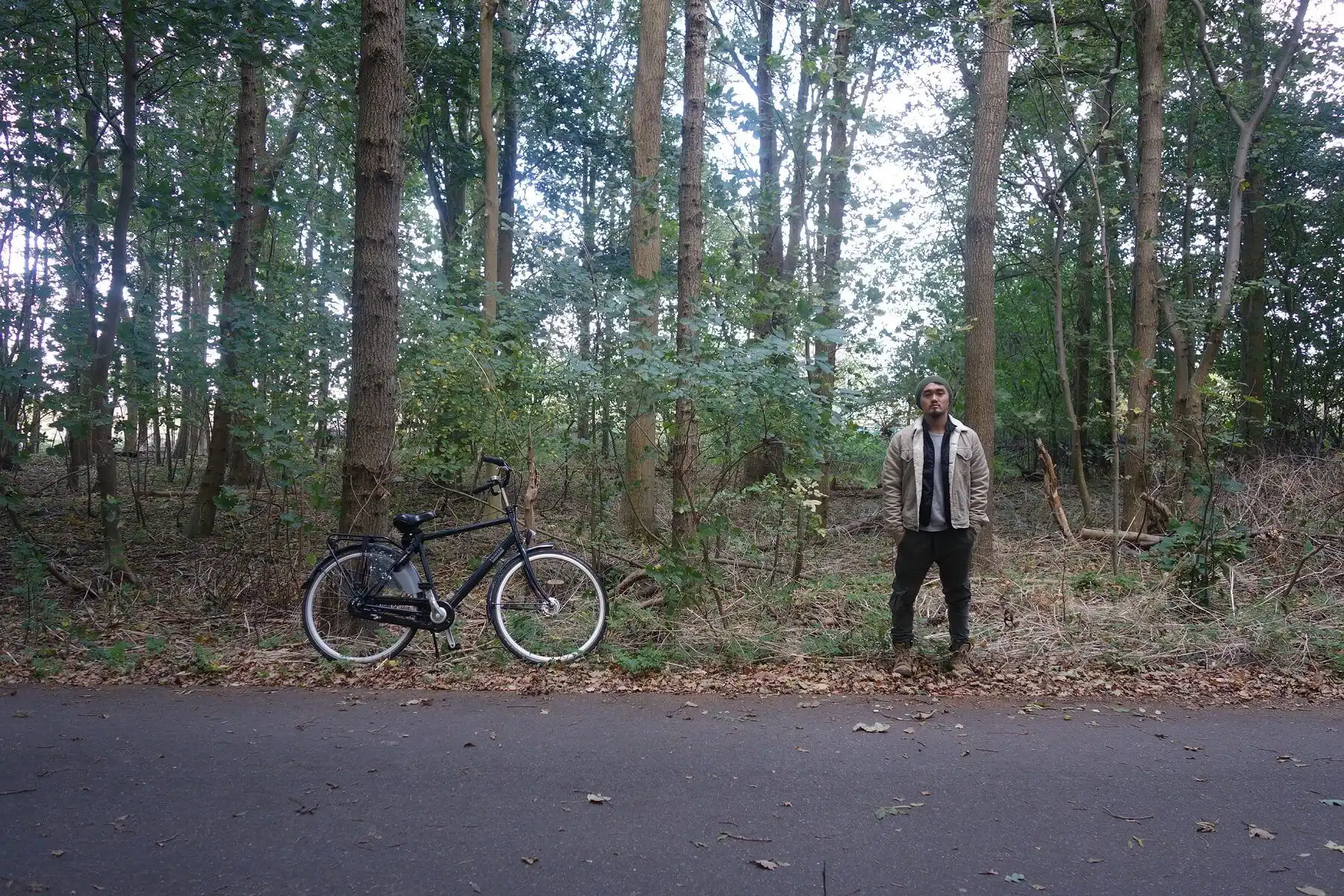
    I feel refreshed stepping out on the street. Walking around Breda is soothing. The sun’s out, the air is cool. The first place on my list is a small teahouse in the main park. I go and order pancakes. Apple and bacon pancakes. Something new.

    The owner comes by after and takes my plate.

    “Did they taste well?” she smiles.

    I nod and thank her.

    After gazing out the window for an hour, I go to pay. My card declines.

    “Do you have another card?” the waitress asks.

    I shake my head.

    “Cash?”

    I shake my head again.

    She smiles nervously.

    “I can go get some cash and come back…”

    She nods and calls the owner out of the kitchen, who pulls off her apron, and smiles at me.

    “We sometimes have problems with foreign debit cards,” she starts explaining.

    “Are you staying in Breda today?”

    I nod.

    “So not to worry! Just go and enjoy your day. Whenever you have time, today, tomorrow, just whenever you are free, you can come back and pay.”

    I don’t know if she saw it on my face, but I walked out of there floating. Every now and then on the road, you experience kindness, trust, or generosity, often it’s the tiniest act or gesture, but it leaves a mark on you. It’s times like these when you think, this is why I’m here, this is why I came all this way, this is what I was hoping to find. Amsterdam was fascinating, but it wasn’t the place I needed. Breda might be.

    Next on my list of Breda sights, there’s a secret garden. I walk across town to go find it. As I enter through the arch, I notice a young guy, maybe 25, sitting there on a bench, among the plants, talking to himself. British accent. He sees me looking at him and his voice fades.

    “What’s going on man,” he says to me.

    “Nothing really, how you doing?”

    “Not good man.”

    “You want to talk about it?”

    He looks up at me.

    “I do actually.”

    I sit down next to him and he starts telling me lots of…interesting things. There’s some kind of device in his brain, people are talking to him, saying terrible things.

    “They’re talking about my son, they’re talking about bad things they want to do to me!” 

    “Why?”

    “I don’t know man. It’s because I know all their secrets. That’s why they broke into my house, stole my laptop, stole my iPad. Now I’m homeless. I’m an author, I was going to write books about them mate, you understanding that? They’re afraid of me.”

    He has a nice bike beside him, a pack of cigarettes in his hand, a can of orange soda. Very well spoken. Something seems odd about it all, like he shouldn’t be here.

    “It’s this quantum computing they have these days, I’m telling you, it’s so simple. They could be using it for good! But they’re using it to do stuff like this to me. Their time is coming, I’m telling you that.”

    After a long conversation, I get up to leave.

    “Where are you from anyway, Australia or something?”

    “New Zealand.”

    “Ahh New Zealand, what’s that like?”

    “You know, it’s a place.”

    “Yeah I’m sure.”

    “Nice to meet you anyway man. I’m Brendan.”

    “Demetrius.”

    I offer my hand. He shakes it. Doesn’t ask for money, nothing. Just smiles and gives me a nod, as if to say, thanks.

    “Wish you all the best brother.”

    “And you.”

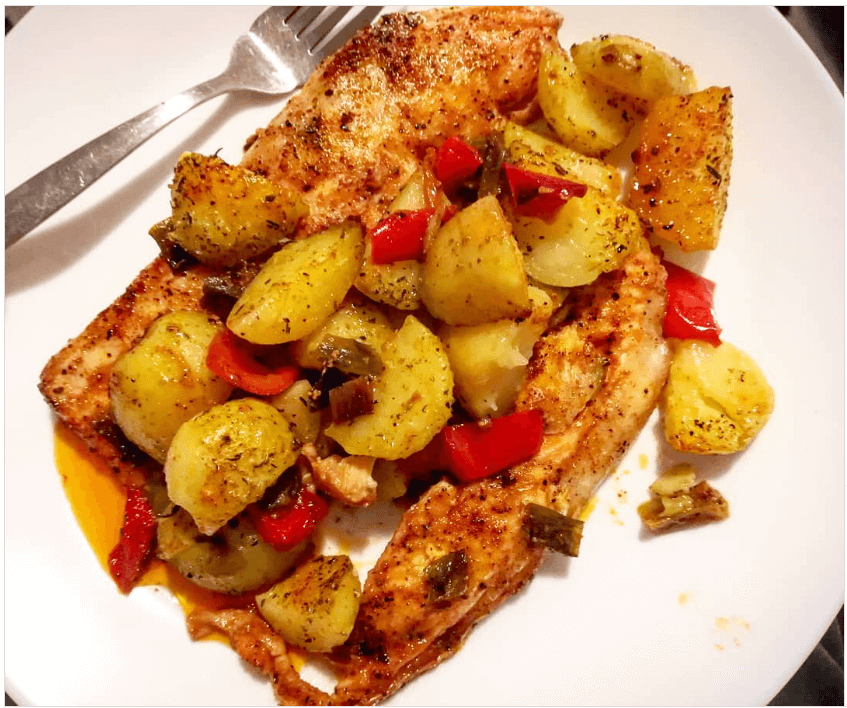
    That night Eka cooks salmon and potatoes for dinner. The cool thing about sleeping on couches is, people always seem to feed you well.

    “So I met this homeless guy today. He said there’s this device in his brain and people are tormenting him.”

    Maria sighs, sadly.

    “Sounds like he might be schizophrenic, or something.”

    “That’s a bit sad,” Eka says. She gets up to walk into the kitchen. Then she walks out again.

    “What if…”

    “What if he’s part of a government experiment and it’s true and none of us believe him?”

    I look up at her, thinking about it.

    “Yeah…what if…”

    Later that night, after plans for one of Netherlands’ infamous underground raves fall through, the four of us lounge around and watch random videos on Youtube. I’m so tired from wandering that I fall asleep on the couch, in the same clothes I left the house in, jacket and everything.

    When I wake up, it’s morning.

    I knock on Eka’s bedroom door.

    “I think I’m gonna take off. I’m heading to Zeeland.”

    “Like right now?”

    “Yeah.”

    “Oh shit. Let me get dressed.”

    We snap some selfies, swap hugs, say goodbye. As I walk to the station, I’m reminded; this is why I love the road. It’s a feeling you get, of adding a new experience, one that teaches you something, shows you the good in people, gives you something to remember. Amsterdam didn’t have it, but Breda did. Everything made sense again.

    Let me set this next chapter up for you. In the west of the Netherlands, there’s a place, known as Zeeland. When the Dutch discovered my home country – Aotearoa – they needed a Dutch name for it. They had already found and named a New Holland (Australia), so their next namesake was the country’s next largest province, Zeeland. Which gave the world Nieuw Zeeland, later anglicised by the British to New Zealand.

    When I saw how close it was on the map, I had to go. After all, that is why we’re out here, isn’t it? To set foot in the places we always hear about but never see. I didn’t even Google it, didn’t want to know what was there. I just knew I had to go.

    Two hours later, I arrive in Vlissingen, one of Zeeland’s seaside cities, in the mid-afternoon.

    Sometimes, when you visit a new place, you can sense its vibe instantly, its energy, its mood. As I exit the station, I feel it. To the left, boats on the water, big ones, to the right, a road leading to somewhere. For a moment, I feel like that guy in the movies, getting off the docks at that little town to start a new life. It’s peaceful, this place, nonchalant, faraway. Like nobody even knows it’s here.

    The hostel is a 36 minute walk away. I start moving.

    Vlissingen in a word? Quiet. The streets are immaculate, empty, save for a few walkers and the odd bicycle. It’s a Sunday, the shops are all closed. As I get to the hostel, even the owner looks like the classic small town guy, straight out of the movies – scraggly grey hair, running his little guesthouse, still using a pen and a pad.

    In my dorm there is only one other guy. The first thing I notice about him is he’s chosen a top bunk, even though every bed in the room is empty. Very odd. I even ask him about it, and he just shrugs.

    He’s French.

    I can’t remember his name, so we’ll call him Marc.

    Marc is a bicycle guy, from Paris, who’s riding his mountain bike around Europe. We shake hands, do the usual chit chat. Then I head out for a walk.

    Vlissingen might be isolated, but it’s not forgotten. A few steps from my hostel is a plaza, filled with pricey looking restaurants, sided by ample outdoor seating. Everything is very tidy, very clean, very modern. I figure, maybe this is where the Dutch come in the summer, to spend all their money.

    As I wander the streets, I tell myself, something feels good about this place. Like things were bad for a moment a few days ago, but here, they’ll be good. I can feel it. Sometimes the ocean does that. In the distance, I hear the water. I start to head that way, through a few side alleys, up some stairs, down some stairs.

    When I finally get there, I’m not prepared for what I see.

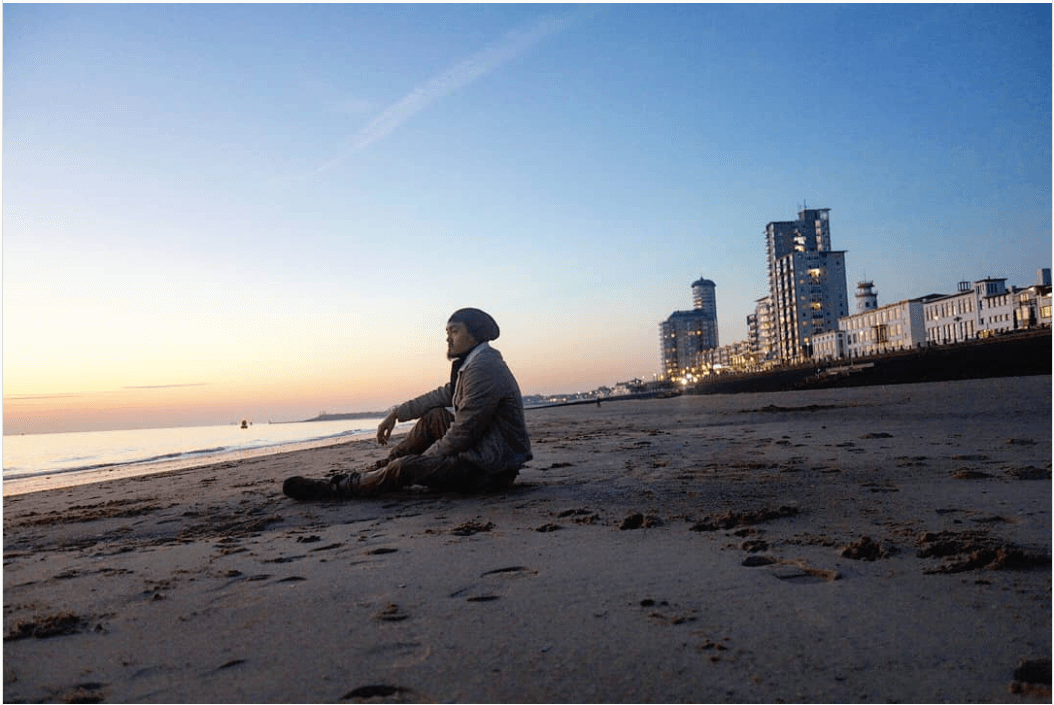
    Laid out in front of me, an endless beach, basking in a pink sunset. It stretches farther than I can see. The sand is soft, and golden. It’s empty. Spotless. And it’s confusing. How is it that the most beautiful beaches are always hidden, never talked about, even though they’ve been here for thousands of years, free for everybody to see?

    I hurry down to the water. A few kids scream and play, a few fishermen stand at the shoreline, rods in the sand, a few people walk their dogs. I sit and talk with the ocean for a while. This is what I wanted. I just never thought I’d find it here. I had been trying so hard to stay in Amsterdam. Now I’m wiser. Who needs Amsterdam, when you have Vlissingen?

    The next day, perhaps inspired by Marc and his cool bike shorts, I decide to rent a bike and ride west. Maybe I’ll see something beautiful, I say. I look at the map. Zouteland is 10 kilometres away. Maybe I’ll make it there.

    It’s been a while since I rode a bike. I don’t remember it being so tiring during childhood. My legs start to burn quickly.

    As I power through the sand dunes, up and down the biking trails, local oldies, fifty, sixty, maybe seventy years old, zoom past me, pedalling like Tour de France champions. I play mind games with myself to keep myself going, trying to battle the fierce ocean breeze, the sun, the fire in my thighs.

    Eventually, I get lost. I look at the map. Then I get lost again. Riding in circles. Lost three times. I look at the map again. How am I riding in circles when all I can see are straight lines?

    When I finally arrive in Zouteland, I don’t even realise I’ve arrived in Zouteland. It’s just holiday homes, straight out of Pleasantville, sitting in perfect grids, spotless, colourful shutters on their windows, same as all the homes I’ve been riding past for the last hour. It’s only stumbling upon the little tourist zone – a small cluster of ice cream parlours and souvenir shops – that I realise I’ve made it to Zouteland town.

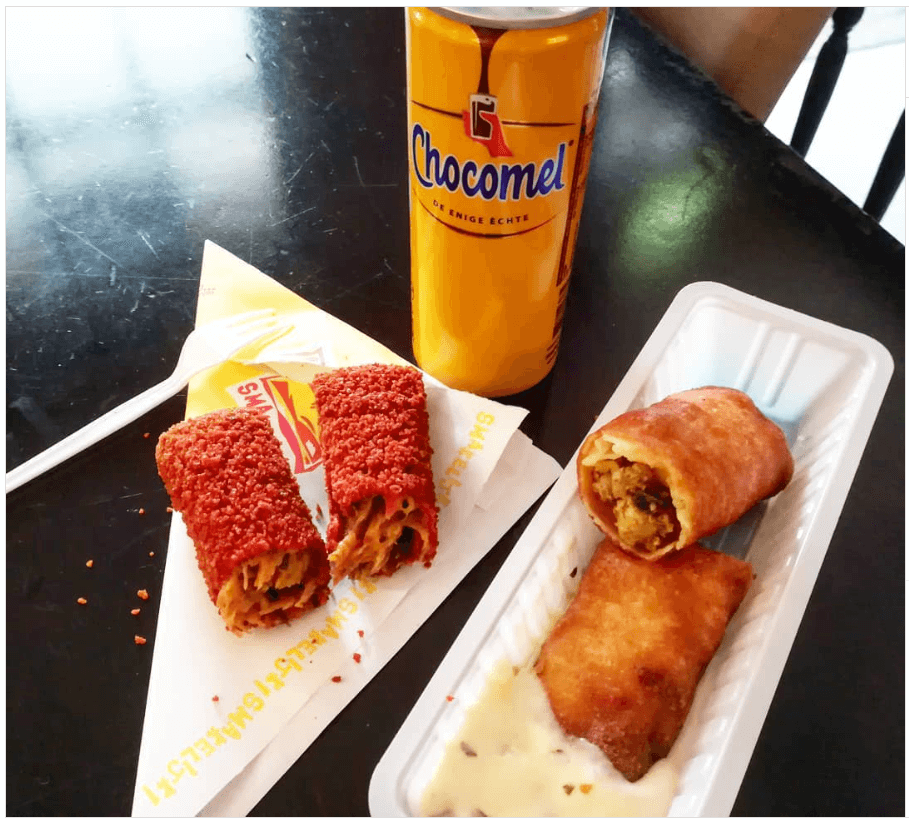
    I walk into one of the food joints and see a display cabinet full of fried fast food. I unload questions on the guy behind the counter; what’s this, what’s that?

    “First time in the Netherlands?” he laughs.

    I laugh back.

    “Yeah.”

    Eventually I choose two snacks, and he pops them in the deep fryer.

    “And is that thing Dutch?” I ask, pointing to a drink.

    “Yeah, Dutch chocolate milk,” he smirks.

    “Cool I’ll have that too.”

    I eat and recharge for a while. And then I just sit there, kind of bored. I guess it’s true what they say – it really is all about the journey. Time to head back.

    This time, the ride is more pleasant. I’ve figured out the right pace so that my legs hurt just enough that I don’t need to stop. And I’ve figured out how to read the map. Now I just ride.

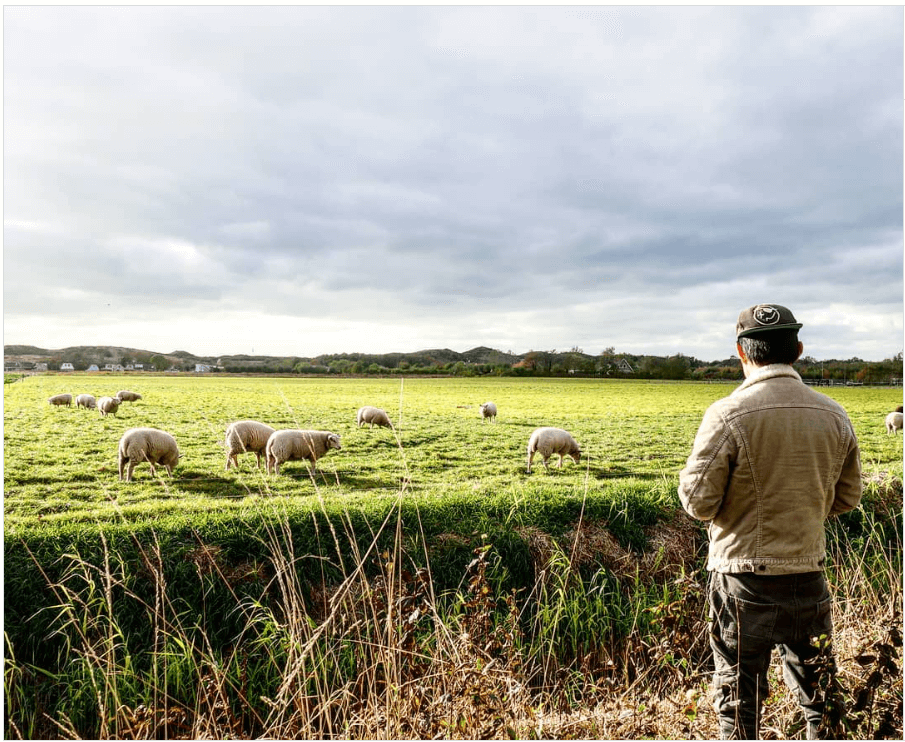
    On either side of me, open yellow fields, forests, farms, stretching into infinity. I breathe deeply, consciously loving the cool air. For such a densely populated country, it feels empty. Maybe more Dutch people should move to Zeeland.

    On one particular skinny trail, I pass a field of sheep.

    Instinctively, I stop.

    I stare at them.

    I take a photo.

    I stare some more.

    This whole picture, it looks so familiar. These sheep really could be from up in Northland, that beach in Zouteland really could’ve been from the West Coast. This place really is a bit like an Old Zeeland.

    The next hour blurs by. As I drift back into Vlissingen, something’s changed. Somehow I feel new again, curious again. One bad night in Amsterdam brought me to here, riding along green fields by the ocean and breathing crispy fresh air, to a place so pleasant but rarely seen. On my lonely night in Amsterdam, I had mused to myself that I might be tired of this, but clearly I wasn’t. It was those people, those places, those moments I didn’t need anymore, the ones I’d already seen too many times. Amsterdam had reminded me of who I once was, and Breda had reminded me of why I was here. But Zeeland had reminded me of who I wanted to be.

    I left Zeeland the next morning, and the Netherlands, first catching a ferry across the channel, then boarding a short four euro bus down to Bruges. A few days on, I said to a fellow traveller that the Netherlands had healed me, laughing, like it was a joke, knowing inside that it wasn’t at all. It was the place I needed at that exact time, the place that I guess every traveller has, where you have that moment, that moves you to the next chapter. I guess the Netherlands was where I had mine.

    Safe travels.

    -B

    Visiting Amsterdam? Check out my city guide here 🙂

  • When In Berlin

    When In Berlin

    It was taking me a while to find the bar. It was supposedly atop the fifth storey of this shopping mall carpark, yet when I got to the fifth storey, all was silent. I wandered for a minute or so, trying to find signs of life. Bars usually aren’t hard to find – lots of drunk shouting, laughter, lights, loud music. But this just looked like what you’d expect a carpark to look like at night; dead quiet, and empty. Maybe this girl I was meeting was just setting me up for a kidney robbery. I mean, if this was a scene in Breaking Bad, you’d already know someone was going to die in the next few minutes.

    I got in the elevator for the third time. A girl was in there, heading up to 5. I asked her if she knew where the bar was.

    “Yeah I think we’re going to the same place,” she said. Her accent was thick, German.

    The elevator doors opened. As we stepped out, she pulled out a knife, stabbed me and proceeded to extract my kidneys.

    Just kidding.

    I followed her across to the other end of the carpark, where we came to a small off ramp. We walked between a few parked cars, like going through a Narnia closet, up a winding slope and eventually around to a little booth that stood guard of a huge open air courtyard. The courtyard was empty, of course. It was freezing outside. Except for one girl on her lonesome. She was sitting on the benches by the doors, long dark hair, wrapped up from head to toe. I knew her face only from her Whatsapp picture, but I recognised her straight away. I smiled, and she pointed at me, almost shyly. I guess it can be a little nerve-wracking meeting the 337th coolest blogger in the world.

    As I walked towards her she stood and outstretched her hand.

    “No let’s hug!” I laughed, opening my arms. Handshakes were for job interviews.

    We opened the doors and stepped inside. Immediately I felt a gush of music and warm air. It was packed, noisy, smoky. I stepped over to the bar.

    “What are we drinking?” I asked her.

    She smiled.

    “Do you drink wine? We can get a bottle of…that tempranillo is really good.”

    Within seconds a bottle was plonked in front of me, and with wine in hand, we looked around for a place to sit. There wasn’t a single spare seat in the joint.

    “Do you mind sitting outside?” she asked. “It’s a little cold though.”

    I pursed my lips, making my best “pffft, cold” face and followed her out onto the terrace. It was empty out there, and silent, and we sat alone by the railings, overlooking Berlin in the night.

    “So tell me about your trip!” I asked.

    Fernanda was a long time reader of mine, who I’d chatted with on email over the years. She, too, had wanted to quit her job and see the world, and naturally had had many questions for me. When she finally made the leap, she’d kept me updated at most stages of her trip – when she started saving, when she hit the road, moving to Germany. And now we were here, meeting halfway across the world in a Berlin carpark.

    I sat there for the next half hour listening to her stories from the road – through Asia, India, Europe. The funny thing about travel is, you always end up with all these stories, but nobody ever wants to hear them. Most people judge, or just don’t care, and you end up telling your tales to nothing but a pair of glazed over eyes. You can only rant about that lady at work with your closest work colleagues, you can only talk all day about your car with another petrolhead. It was the same with travel. Only another road junkie will sit there and listen to all your stupid stories. I listened to every word.


    I woke up late the next day. Fernanda had left a text on my phone, asking if I’d got home okay. It was only my second day in town, I still barely knew how to buy a subway ticket. I texted her back quickly, my head pounding, and told her we should never drink tempranillo again. Then I headed into the hostel kitchen.

    I sat in front of my laptop working on the blog for most of the morning, being anti-social, until a Greek girl came and sat next to me. Her name was Athena. She was very…chatty. Eventually I gave up trying to work and just sat there talking to her. As you do in hostels, we told each other our life stories, and then went to the supermarket together. You’ll be surprised how often you sit in a hostel lounge with someone and then go to the supermarket together. It sounds odd, but it’s almost a daily occurrence. If you’re not sightseeing, what else is there to do other than talk and eat?

    The moment I walked into the supermarket I had to do a double-take. The first thing I saw was vegan cheese, then vegan sausages, then vegan yogurt. I quickly sniffed my basket to see if that was made of tofu as well. Logic would tell you we’d just walked into a vegan supermarket, but sure enough there was real bacon in there – it was just hidden away in the far corner, where the dirty omnivores congregate. I’d soon learn this was standard Berlin practice. Land of the tofu eaters.

    I don’t know how we decided to bake cookies that day. Maybe we were just overexcited that the hostel had an oven (that’s rare). And it was cold. So cookies. We came back to the hostel that afternoon and baked cookies. Then it became a thing for the next few weeks at the hostel. Wake up late. Do nothing. Bake cookies.

    Athena wasn’t actually a traveller. She was planning to move to Berlin, and was in town for a few days trying to find an apartment. Over the following week, I learned this wasn’t unusual. In fact, it was the norm. Half the people in my hostel weren’t travellers. They were people trying to live in Berlin who couldn’t find anywhere to stay. Every day they were going to interviews with landlords, and scouring through Facebook groups and websites, trying to find a room. And they couldn’t find one.

    But even stranger was, these people didn’t need to live in Berlin. They didn’t have families here, or jobs, or chains of any sort. They could’ve gone to Amsterdam, or Madrid, or anywhere else in Europe. But they wanted to live in Berlin. Just because. And it seemed like half of Europe was trying to do the same. One girl in my dorm said there were two hundred other applicants to the room she went to interview for. Two hundred.

    The natural question was, why the eff do all these people want to live in Berlin?


    A few nights later, a Berlin regular checked into the hostel and offered to take us out. Late in the night we got to this one club, no idea what it was, it looked like a 1980’s haunted house. Before we arrived, he turned and rounded us up, like kids on a school camp.

    “Okay, to get into this club, we have to go in pairs. They won’t let us in as a group.”

    Weird. Maybe some kinky Berlin thing. Anyway. We paired off. Weirdness elevated as the bouncer looked at me very seductively for five long seconds, but the first four of us got in without any trouble. The others, however, seemed to be dragging. After ten minutes we went out to see what the deal was and found them all standing outside, looking pissed off.

    “They won’t let us in.”

    “Why not?”

    “They said we won’t fit in here.”

    Over lots of angry chatter the next morning I’d learn this was another of Berlin’s trademarks. If you want to get into the club in Berlin, you can’t dress up. If you’re in khakis and a button down, you’re getting bounced. If you’re a supermodel dolled up in makeup and high heels, you’re getting bounced too. You won’t fit in here. Have you ever seen a nightclub turn away a pair of magazine-model looking ladies? You’ll see it every night of the week in Berlin. Of course, some people groaned about it. I thought it was funny.

    By now I was starting to figure out this swarm of Berlin’s loyalists. It was like a little counter-culture oasis, for people who were sick of the pretty girls and the rich boys eating all the cake. Nice suits and pretty faces didn’t get you a free pass here. In fact, they almost sent you to the back of the line. And people in Berlin liked that. They loved it. They loved it so much they were all uprooting their lives and moving to Berlin. Berlin was the anti-Hollywood. It wanted something different.


    The following day I decided to stick around in Berlin for a week or two. I’d been on the road non-stop for months and, after my tour of Europe’s north and east, I felt ready to just be a hostel bum for a while. Our hostel, the U Inn Berlin, felt like the perfect place. There are two types of hostels really. There’s the family hostel, where everyone knows each other and it’s like a summer camp. And there’s the factory hostel, where everyone is just there to sleep and nobody gives a shit. U Inn was a family hostel.

    Over the days that followed I got to know all the other drifters that had made the hostel home. Tatiana was some Belgian girl who made tote bags. Julien was a Quebecer who studied some political thing. Mitch was an Aussie who was just around all the time. Billy was the Irish guy who worked reception. Natalia was a Portugese girl who…I actually have no idea what she was doing. She was in school, I think.

    Collectively, they were the perfect picture of the typical Berlin expat; chilled out, liberal, kinda doing something with their life (but not really), trying to find an apartment with no success, vegetarian (but not really), trying to learn German, smoked the odd joint, and of course, just barely on the right side of bankrupt.

    I had no trouble fitting right in.


    A few days later, Fernanda offered to give me a tour of her Berlin.

    I headed out to meet her at one of Berlin’s many subway stops. Now, the Berlin subway is kind of interesting. There are no controls or gates, you just wander straight onto the platform. It all runs on the honesty system. And sometimes (sorry Berlin), you just can’t afford to pay three euros for a two minute ride. So every other day, if I was only going one or two stops, I’d sneak onto the train and be on edge for the entire ride, examining every middle-aged man’s face, wondering if he might be a ticket inspector ready to pull my pants down.

    On this day though, tour guide Fernanda had told me to buy the day pass, as we’d be roaming around a lot. So my trip out to meet her was calm, and peaceful. Every middle aged man who stepped on the subway had me hoping he’d pull out a badge and start checking tickets. If one buys a ticket on the Berlin subway and doesn’t get checked, did he really buy a ticket at all?

    It was still quite early in the morning when we met. Well, around 10 or 11 – early is a relative term when you’re travelling. I followed her around a few corners, into a neighbourhood that was quiet, and polished, filled with wide roads and decorated with street art. The name was Kreuzberg, I think.

    “See how they actually paint on paper, and then they paste it up?” she said, scratching at a piece of street art.

    “That’s because you’re not allowed to paint on the buildings, so that’s how they get around it.”

    Sure enough, it was pasted up, like wallpaper. I wondered how the hell she knew that. Surely a guidebook, or a local friend. It was too covert to be noticed just walking along.

    As we wandered, and chatted, Berlin felt very grey to me. Very slow. Very cold. Every now and then a small pocket of colour and energy would pop up somewhere, maybe a congregation of food trucks, or a bustling intersection. And then it was back to grey and quiet. I guess that was expected of such a large, sprawling city. Or maybe just a symptom of the winter.

    One of these colourful and energetic pockets popped up when we got to Dead Chicken Allee. It was pretty inconspicuous; I would have never found it on a lone walkabout. Obviously it was no secret though – it was filled with visitors wandering up and down, many with cereal box sized cameras around their necks. If you were a street art fan, this would’ve surely been your first stop in town. We spent the next hour loitering through the alley, examining the pieces people had left on the walls. Some had painted murals that took up entire sections, others just little doodles hidden amongst the noise. I always loved street art – examining what people felt compelled to leave behind. Sometimes a painting only takes a few minutes to make, but it’s an entire lifetime that hides behind it. Where that person came from, her beliefs, her pain, her regrets – it’s in that little picture, if you look hard enough.

    By the end of the afternoon we’d walked a double marathon around Berlin. On and off the subway, some market exploring, all sorts of monuments that I can’t remember right now. Eventually the evening start to set in, sun fading, and rain had started to fall.

    “Let’s eat?”

    Fernanda already had a place in mind. We jumped on a bus, packed from top to bottom, and hunted down some favourite restaurant of hers. It was a Vietnamese place, small and chic, dimly lit with a fusion like decor. Berlin’s Asian food scene, and just the food scene in general, would surprise me over the coming weeks. There was a bit of everything, all cheap, all trendy, all delicious. In true Berlin style this particular place had veganised all my Vietnam favourites, but after days of hostel eating, I let loose and gladly splurged on some hippie Vietnamese food. When in Berlin, do as the people-trying-to-live-in-Berlin do.

    After chowing we decided to hit a free comedy gig across town. Comedy is big in Berlin. It’s big in all the artsy cities. Almost every night there’s a free gig happening somewhere. As a comedy fan, I was pumped.

    We got there just as the place was packing out, and nabbed two of the last seats in the joint. A roster of comedians came up and did their thing – some okay, some really good. Of course none of the performers were from Berlin. None of them were even German. And of course, they told jokes about this. Nobody speaks German to you in Berlin, because nobody in Berlin is German. Nobody knows what’s inside a Berlin nightclub, because nobody has ever been let inside one.

    If you ever want to see what’s really under the layers of a culture, have a listen to the comics. They tell the abstract better than anyone.


    On my final Sunday in Berlin, Fernanda and I hit up the famous Karaoke Sundays at Mauerpark. We arrived early, with a lot of scattered seats still free. This had been at the top of my Berlin bucket list.

    Mauerpark Karaoke goes like this. There’s a huge outdoor auditorium by the Sunday market, Roman-esque, ringed by a concrete grandstand, at least twenty rows high. It fills with a couple thousand people, at least. Some dude sets up speakers and a Macbook with a bunch of karaoke songs on it, and then from early afternoon until sundown, anybody who wants to sing just puts up their hand. They get called down, do the suspenseful walk to the stage. Then for 3 minutes, they’re a superstar.

    Things move slowly at the start. He opens up the mic, the crowd is silent.

    “Anyone?”

    Nope.

    And then someone.

    “Ahh we got one! Yes, sir, come on down.”

    Everyone turns to look at him. He’s a middle aged guy, fifty something, looks like a dentist, red hiking jacket, hispanic. There are a lot of smiles, whispers, as he makes the walk. He reaches the stage and he and the host have a private giggle while they scroll through the songs. Everyone waits, intrigued. Who is this brave dentist looking guy? Then the music comes on.

    Brown Eyed Girl.

    He starts singing. A little nervous, but he’s good. Lullaby voice. The crowd cheers. He warms up a bit. A minute in and people are bopping. The chorus comes on. The crowd sings along. Everybody’s smiling. Then out of nowhere, he busts a little riff. Sha la la la. The crowd goes wild. For three minutes, the guy’s a rock star. And then the song ends. The crowd farewells him with love and applause, and he wanders back to his seat.

    “Who’s next?”

    It’s an English guy, a sober one, maybe thirty. It’s his wife’s birthday. He sings her a love song. I don’t know what it’s called, but it has the words “I love you” in abundance. The crowd melts. Love is in the air at Mauerpark.

    Next is an Australian guy. Lanky, blonde, kinda goofy looking. I can’t pick this guy. Could be a dud, could be legendary. Music comes on. Born to Run, Springsteen. The crowd grins as soon as he opens his mouth. He might be the worst singer I’ve ever heard. But his energy. Electric. He’s possessed. He bangs his head. The crowd cheers him on. He goes harder. This isn’t even music. It’s a train wreck. But it’s the best kind of train wreck. He starts working the crowd. It’s painful. The crowd is roaring with laughter. They love him. We love him. I look around, thousands of faces are painted with smiles and happiness. This is what Mauerpark is about. The song softens a bit. He’s building up to Springsteen’s famous 1,2,3,4. He screams it so loud he nearly breaks the mic. It’s totally off beat. The crowd erupts. The song winds down and we’re in awe of what we’ve just seen. This guy’s officially become a legend. Cemented in Mauerpark history forever.


    A few days later, I boarded a night bus to Switzerland. Three weeks in Berlin was refreshing, charming, unexpected. But I left still unsure of what the place really represented. On the surface Berlin felt like a place of all love and all acceptance. A place for everyone. But I don’t think it’s for everyone. It’s a place for the ultra liberal, the ultra free, the ultra open-minded. Backpackers will love it to its core. Accountants will wonder what planet they’re on. The Wall Street guy will flee and require daily therapy to recover. Despite what the Berlinites will tell you, not everyone fits in here. But what Berlin offers is identity. Uniqueness. A place for the other guy. It’s not for everyone. But if it is for you, there’s a good chance you will fall in love and never leave. Just like the rest of them.

    To a beautiful Berlin, and all the memories,

    Bren

  • A Tammisaari Story

    A Tammisaari Story

    I didn’t even remember what this kid looked like. I mean, I could’ve picked him out of a police line-up, probably. But I didn’t have a clear image of him in my head. He had that funky haircut with the ponytail on top though – I remembered that much.

    I got off the train and headed for the exit. It was a tiny little platform, mostly empty. Only a couple of others had gotten off with me. I lugged my bag up the long, dark flight of stairs, and heard a voice come from the top.

    “What’s up, man?”

    I could only see a shadow, the sun blindingly behind it, but I knew it was him.

    “Hey. What’s up.”

    Kasper and I had met about ten days earlier, in Estonia. I’d walked into an empty Mexican cafe, and he was sitting there alone by the window. I got thrown an Estonian menu by the barman, and as I walked past, looking puzzled, he said hi and offered to translate it for me. I knew right away he was a backpacker. What other creature sits alone in a restaurant and says hi to a complete stranger? Only we do that. It’s like our secret handshake.

    I ended up sitting and eating with him that night, and we talked a bit about our travels and shared a few beers before going our separate ways.

    “If you’re ever in Finland, hit me up. You can visit my town, I’ll show you around the south.”

    Ten days on, I was in Finland, and I hit him up. He invited me to his town, to show me around the south.

    I threw my bag into the trunk. He was driving a white BMW. I would’ve picked him more for a nineties hatchback, boom stereo, hot box in the backseat kind of guy. But you never quite know on the road – it’s a time of stripped identity for many. Oftentimes, the version you meet is completely different to the one they are back home.

    It was a short drive from the train station to his hometown. Tammisaari, they called it. A small Swedish-Finnish town, by the southern archipelago, population 15,000.

    My head was on a swivel as we drove through. Empty streets, lined with small shops, polished and neat, unmarked roads and large wooden houses with big backyards. I loved it. I’d always been enamoured by small towns – so many stories and characters and small town secrets hiding behind every park bench, every schoolyard. All I wanted to do was knock on some old person’s door and ask about all the different legends and scandals and hometown heroes, like when the town jock breaks up with the town sweetheart, and then a new kid arrives in town and gets in the mix and there’s a big standoff at the soccer game on Friday. Then they end up becoming best friends and the girl ends up marrying the town nerd. I could listen to such tales for days.

    We pulled up to Kasper’s house and his mother greeted me at the door. She appeared very homely and sweet, smiling a country smile, apron on, obviously cooking something. I felt like an old family friend, being welcomed home for the holidays.

    Kasper showed me to my room. I grinned a huge grin inside. The bed was huge. A bazillion pillows, fresh towels, three layers of sheets. After months of bunk beds and couches, I’d never been so excited to sleep.

    And then came the tour of the rest of the house. I’d guessed from the BMW his family probably had a bit of money, but the place was a damn palace. Three huge flat screens, massive garden, apple trees, Michelin kitchen, dining table fit for royalty. When we first met, I’d never pictured him as a rich kid. His temperament didn’t show it, nor his clothes, nor his attitude, nor his outlook on life. He just seemed like a regular humble dude. Like most Finnish people, I guess.

    Once we’d settled in, I changed into some shorts and flip flops and we walked down to the beach. They lived only a few hundred metres from the water, and there was a nice pocket of sand where we lay out and chilled in the sun. It was a little strange being there alone with him. I didn’t know the guy well at all, we’d only talked for an hour or so that night in Estonia. I got more familiar with his story; where he was heading in his life, his newly bloomed travel career. As he was only starting university, I felt like I was playing elder brother, in a way.

    “Anyway, tonight my friends and I are going to play volleyball, if you want to go.”

    “Volleyball?”

    “Yeah we started doing that every Sunnnnday. We needed to fiiiind something to dooo around here, you know.”

    His words had that Nordic drawl, where they hold certain syllables just a little longer than usual.

    But I dunno, my friends are kinda scared.”

    “Scared?”

    “Yeah, of you.”

    I looked at him, semi laughing.

    “Me!? What did I do?”

    “Maybe because you’re from New Zealand. I dunno, Finnish people are scared of new things. New people. New anything.”

    When we got back to the house, Kasper’s mother had cooked up a huge pot of lasagne, with a garden salad, fresh bread and homemade juice. She didn’t even serve it in the house; they had some stand-alone dining cottage thing out in the garden, decked out with a fridge and dishwasher and everything. I don’t even think there’s a name for it. A garden house, let’s say. It would’ve been lavish on any day, but after months on the road, I felt like a Finnish prince dining in a private cottage in the middle of my castle orchid.

    We rolled up to the volleyball pit just before sunset. It was nestled in the corner of their old school courtyard, a lone sandpit, not far from the roadside. A couple of his friends, Ville and Ida, were already there, knocking the ball around. Ida smiled a bubbly smile and shook my hand. She had long, dark blonde hair, blue eyes, and full, rosy cheeks, which gave her a certain small town charm. Ville was a little more reserved, but gave me a friendly nod and introduced himself. He was of the famed Nordic gene pool – blue eyes, blonde hair, a sharp nose and jawline, and I suppose the famed Finnish temperament too; passive and poker faced. But even though Kasper had made it sound like they were going to scatter and hide behind trees when I arrived, they introduced themselves with smiles and handshakes like ordinary human beings. I felt stupid for expecting anything different.

    Car by car, his friends showed up, and I sat back and watched them come together with familiar smiles. It was like a small town eighties movie. The girls arrived in groups, and sat on the bench gossiping, snuggled up, sipping on bottles of Coca Cola. The boys stood around, brooding, joking, kicking the ball at each other.

    Andreas was the first to chat to me, halfway through one of the games. He was tall, with glasses, a thick combover. He had a gentle, well mannered way about him, and although he appeared the quiet type, he made small talk with me whenever there was a break in the game, like when someone ran off to fetch the ball from the trees or across the carpark. He was chatty, curious. I guessed he was probably the smart kid, who smoked all these other guys when exam time rolled around.

    Volleyball carried on well into darkness. Some games, some chit chat, some goofing around. For them it was just another Sunday, but for me, it was an interesting first peek into their life, their friendship, into this little town I didn’t even know existed a week earlier. I had seen my first glimmer of the real Tammisaari.

    We got home around 11 and I headed straight for the shower. It was pitch black in his enormous bathroom. I found the light switch and stared at it for a moment. It wasn’t a light switch. It was some Star Trek shit with a quartet of neon buttons, sitting on a touch pad. I tapped each of them, in different combinations, even clapped in front of them, like in the movies.

    “Yo Kasper, how the fuck do you turn on the lights in here.”

    He came over, laughing, and pressed the top right button at some funny angle. The lights blinked on. The bathroom was long and tiled black, a sauna on one side, a double rain shower big enough to sleep three on the other. I looked up at the shower head, laughing. It was the size of a dinner plate. I stripped down and stepped in, excitedly, fiddling with the tap – a little colder, a little warmer, until I got it just right. And then I stood there, in bliss, grinning as it rained down on me, washing away every ounce of road weariness from all the months before.

    The next day Kasper and I were on a mission. While at the beach the day before he’d mentioned that a big “crab party” was going down in a few days. Of course the obvious question for me was, “What the hell is a crab party?”

    Crab Party [krab pahr-tee]
    Noun

    1. An occassion where people gather and eat crabs, sing Swedish songs and consume large amounts of alcohol. Usually celebrated at the end of the short Swedish summer, before the long and harsh winter arrives. Dangerous. Avoid if possible.

    Fun. But I’d be long gone by the time that shindig rolled around. So I just thought out loud:

    “Why don’t we have our own? You and me.”

    Kasper hesitated for a moment, furrowing, and then nodded with approval.

    “Yeah, that’s a good idea. We’ll go buy some crabs tomorrow.”

    Only things had changed since yesterday. A few casual invitations thrown around at volleyball, some text messages, and now his whole crew had decided they were up for a crab party with the guy from New Zealand. We had some shopping to do.

    By the time we got home that afternoon we had crab plates, crab hats, crab tablecloth, crab decorations, and of course, the crabs themselves (which, lost in translation, were actually small crayfish). I’m sure if they were selling crab ice cream we would’ve bought that too. We unloaded it all into his garden cottage, ready to kick things off, but it was only early afternoon; we still had several hours to kill before party time. Wondering what to do, Kasper texted Ville, who offered to take us out on his boat for a few hours, to visit his family’s island.

    Say what?

    A little history lesson for you: In Finland you have Finnish Finns, and you have Finnish Swedes. And the Finnish Swedes are the minority for sure. And they don’t really speak Finnish, they speak Swedish, and I guess they just kinda hung around after the Swedes left Finland back in the day. So you’ve got all these Swedish speaking people living in Finland, and they’re all kind of loaded for some reason. So I ask Kasper one day while we’re walking around, “Yo Kasper, straight up, everyone in this town looks loaded as hell. Where did all this money come from?”

    And he just shrugs, and says “I don’t know.”

    But he guesses it’s all generational, passed down from some rich great grandfathers or something. So not only do they have nice cars and houses down this side of the archipelago, they own islands too. It’s normal; you own a bike, you own a toaster, you own an island. And I guess they own them because their grandfather’s grandfather’s grandfather owned them. But I have no idea how all that started.

    Anyway.

    We jumped in the BMW and went to pick up Andreas. He was chatty when he jumped in the car, like the day before. We’d only talked for maybe ten minutes that day, but we greeted each other like old friends.

    “What’s up homie,” I said as he jumped in, giving him a little fist bump.

    Ville was already there when we got to the docks. We parked beside him. By now, I’d started to figure these guys out somewhat. Kasper was the free spirit of the group. The thinker, the idealist. He was the guy who would read the book and be inspired, who would dream beyond the town. Andreas; he was more of a follow the script, study hard, put a smoke alarm in every room kind of guy. You wouldn’t see him put life on pause to go volunteer in Guatemala for a year. He was more the ‘become a hotshot engineer and start your own firm’ type. And you just knew he’d end up with a mega hot wife too, since those sensible dudes always seem to. And then Ville was like the poster boy of the group. Blue eyed blondie, crisp clothes, classic good looks. If they filmed a McDonald’s commercial in Tammisaari, Ville would’ve been the guy holding up the Big Mac at the end looking all dapper and Hollywood cheese. And he’d probably be your regular douchebag if he was from the big city. But as a Tammisaari kid he was cool, and level headed, like the rest of them.

    The four of us jumped in the speedboat. Ville threw the gas down and just legged it. We zoomed through the inlet, past endless clusters of little islands with little cottages on them. I wondered how the hell this guy knew where he was going. Everything looked the same to me. But after twenty minutes we pulled up to a little jetty in the middle of nowhere, and the three of them tied the boat up, as if they’d done it a hundred times before.

    We jumped out onto the grass, one by one. As we started walking, Ville just turned to me and threw it out there;

    “So, uhh, welcome to my island.”

    It wasn’t a small island; the size of a pair of football fields, at least. There were a couple of holiday cottages on it, and a boat shed, but most of it was covered in tall, straight trees and fallen logs, grass growing wild, terrain uneven. As we wandered around, they started unleashing the legends of the place.

    “Hey Kasper, remember when you passed out in that toilet over there and nobody knew where you were, hahahahaha. Remember when the boat broke and we paddled for like two hours, hahahahaha.”

    I could see it in their eyes, their smiles, the memories. It was those coming of age experiences, the kind that bonded people together forever. In New Zealand we had the gullies, the big Pohutakawa trees. In Tammisaari, they had the islands.

    “Man, I used to hate coming out here,” Ville started, gazing over the water. He was more talkative today, more out of his shell.

    “My parents would force me to stay out here in the summer holidays, and all my friends were having fun in the city. It was the worst…”

    His voice trailed off, as he seemed to recollect some old memories. The other two kicked around in the dirt behind us, nodding, as if they’d heard all this before.

    “But now I come out here, relax, drink a few beers. I love it here now.”

    When we finally got back to Kasper’s place the little garden house had been turned into Crab Disneyland. There were crab banners stretched across the ceiling and crab hats with crab bibs and crab songs printed out for us to sing.

    His friends arrived, one by one, two by two, until there were eight or nine of us crammed around the table. Kasper’s ex girlfriend showed up, and I giggled at the it’s-cool-but-it’s-not-that-cool friendly thing they had going on. I sat beside Ville, and Dennis. Dennis was this lanky 9 foot tall rascal who was all about the good times. If you needed your party to pop off, you invited Dennis. If you opened a beer and took one sip, Dennis threw another one in front of you with a “Hey, your beer’s almost finished, here’s another one.” And he himself could throw back beer like mineral water. I guess every group needed a Dennis.

    With my drinks sorted, Ville started teaching me how to eat the crayfish. They were piled in front of us, raw and still shelled. He threw a couple on his plate, and showed me how to crack them open and surgically pull all the meat out. I felt like a child earning wings – busting my own shells at my first crab party – like getting taught to use chopsticks for the first time. Once I fumbled through the first couple, I started tearing through them, piling shells up on my plate. And then I looked at the girls. They were doing some fancy thing where they put mayonnaise salad on toast and piled little crayfish bits on top, eating it all neat and civilised. It just looked like way too much effort. I stuck with the Chinese caveman style I knew so well.

    Then the vodka came out. It was Dennis who fetched it, of course. It was Koskenkorva; a big deal, apparently. No other vodka was worthy to be crab party vodka.

    Now when you drink with the Swedes, you have to drink a shot every time someone yells skål. So Dennis, being a Dennis, starts pouring shots for the table, and is skål’ing me every five minutes. Then the songs come out. You eat your crabs, sing a song, skål. That’s how you crab party. So the girls egg me on to sing, because they’ve got all the words printed out on these crab party sheets, but of course I don’t know the melody. Ville and Dennis to the rescue. They put together some quality Finnish beatboxing, and I blow up their Swedish crab songs like an MC Jin freestyle. And we skål all night until I can skål no more.

    I woke up early the next morning, unsure of what time, or how, I had gotten to bed. Only vague memories of Swedish songs and falling off a skateboard. Kasper would later tell me I had an early night. Those crazy kids had knocked me out before midnight. But there was no time for hangovers. I was due to leave Tammisaari in a few short hours.

    Kasper and I spent the morning cleaning up the dining cottage. We opened the door and laughed at the aroma. It smelled like a dying toilet, filled with beer and crab shells. We hustled, making quick work of it, and then I cooked us a couple of omelettes in his five star kitchen. The pepper grinder alone made me feel like a professional chef. It was battery powered, you didn’t even twist it. Just hold the button down and off it went. Nrrrrrrrrrr.

    As we lounged in his kitchen afterward, we decided there was just one thing left to do before I took off; the most Finnish thing ever.

    Sauna.

    The sauna was tucked in the corner of their downstairs bathroom. It was the traditional wood burning kind, and large, you could have fit five or six people in there easily. I watched Kasper stoke a little fire in the furnace and then throw on a bunch of firewood. After an hour it was ready.

    “We usually go in naked,” he said. “But I think…we should wear swim shorts.”

    We both changed and climbed in. It was nice and roasty, like sitting by the fireplace. Then he threw a cup of water on the stones. The steam hit my face and I collapsed forward in pain, clutching my ears. It was like being doused with a flame thrower. I grimaced hard, then looked at Kasper, who laughed, and then I grimaced again. What the hell kind of kinky ass Finnish tradition is this? Then the steam found my airways, and every breath I took cut short, as if all the oxygen had melted away too. I cupped my mouth with my hands, trying to breathe through my fingers, sip, sip, sip, seconds away from jumping out and rescuing what was left of my face. But then the heat dissipated suddenly, and I started to feel good, fresh. I sat up and breathed a little life back into me. Mmmmm. I understood now. No pain no gain. It was like the Finnish version of a Thai massage.

    “So you always come in here naked? Even with like, Ville and Dennis and stuff?”

    “Yeah.”

    He threw another cup on the stones. Psshhhh….

    I was ready for it this time, and zenned through it, breathing in sips until I could talk again.

    “Really? Like totally naked? Even with your Mum and Dad?”

    “Yeah.”

    “Like not even a towel?”

    “It’s just normal here. We grow up doing it.”

    Hmm. Weird. Although I guessed it wasn’t that weird. It’s just…bodies. Right?

    Either way, it didn’t feel real anymore. I was too proud, too purist, to enjoy it like this.

    “Alright. I need to get naked then. I feel like a fraud.”

    Kasper laughed. I pulled my shorts off and dumped them beside me. He did the same. And then we just sat there, talking about bullshit, naked, faces melting, sweating out all the sins from the night before.

    Kasper offered to drive me to Turku – my next stop – later that afternoon. Dennis, Ville and Ida decided to come along for the drive. I spent most of the way in silence, window gazing, making sense of the pieces of Tammisaari I was taking with me. Between thoughts I listened to them bicker with each other, laugh, tell each other stories, like brothers and sisters. I found myself admiring, even jealous, of their friendship. It was real, genuine, lifelong. And suddenly I realised, the lesson I was taking wasn’t in Tammisaari. It was here, sitting in the seats beside me. It wasn’t the crabs or the islands that had left me enchanted with their small town. It was their bond, and kinship, so effortless and apparent. Once childhood friends, they now sat together in this car, decades later as adults, still going through life together, still coming home each summer to walk the same streets they had as children. I thought about all my closest childhood friends, now all distant strangers, out there living a life I knew nothing about. It was different here. Tammisaari didn’t have the sporty schools where all the jocks went, and the preppy schools where all the geeks went, where everyone drifted apart, withdrawing into their own groups of similar tunes and waves. Here you all went through life together because you didn’t have anyone, or anywhere else. It didn’t matter that they were all different; Dennis, the joker, Ville, the posterboy, Andreas, the bookworm, Kasper the dreamer. They all fit together now, like a jigsaw puzzle. And as much as they took digs at their boring town – the boring town where everyone knew your business and there was nothing to do – it was the town that bonded them. One would guess, as different as they were, that they all had different hobbies, goals, loves and dreams, and anywhere else, in any big city, life would have pulled them apart. But Tammisaari held them together.

    I said goodbye to my new friends that afternoon in Turku’s central plaza, with handshakes and smiles, no different to the times I’d farewelled the hundreds of characters before them. But they didn’t know, as they drove away in the white BMW, that their story, and their town, as plain as it would seem, had inspired me, to cherish the important things we often take for granted: your roots, old friendship, family, the unique bond you share with the place you call home. The road leaves you many lessons, in many unexpected ways and places, but when I’d been welcomed into Tammisaari just 48 hours earlier, I’d never expected to take so much from their unassuming town in Finland’s unassuming south.

    I can only hope, I left something behind as well.

    To the place, and people, we call home,

    Bren

  • It Started At A Salsa Club In Quito

    It Started At A Salsa Club In Quito


    I sat at the bar nursing a beer, making small talk with the girl next to me. In front of us, the dance floor. It was lit up, like a stage at a theatre show. Couples glided effortlessly; the women twirling elegantly with their chins high and proud, the men guiding them with authority and flair.

    I examined their faces. Some concentrated fiercely, like they were solving a crossword puzzle, others in utmost calm, as if out for a Sunday jog. Some moved fast, tapping their feet in bursts; others much slower and smoother, as if winding down at the end of a long day. As each song ended the floor cleared and a new crowd of people crept on, ready for their turn to dance under the spotlight. I watched the men with envy, commanding the floor and their partners with unwavering confidence, the girls they danced with all heartbreakingly beautiful. This was Lavoe, the hottest salsa club in town. I didn’t even know what I was doing there. I couldn’t dance. Not one step.

    I looked around, uncomfortable, sad almost. How was it that everyone in this room could dance except me? So I promised myself; there on the edge of my bar stool, mesmerised by the salseros in front of me – Quito would be where I finally learned to dance.

    The following morning I asked around for dance schools. I didn’t know what I was looking for, what kind of class or teacher, what kind of style – I just looked for any school with the word bailar. I phoned a few numbers and got nothing; busy tones, no answer. The third number I called, I got someone. Lucky him. I was about to become his best customer.

    My first lesson was booked for the following day. It was a good twenty minute walk from my hostel, so I left early, careful to show up on time and leave a good first impression. It was cloudy that day, like most Quito days, and the clouds hung low, staring at you with dark grey eyes, deciding whether to rain or not. I laboured up and down the hills, into a part of Quito I’d never seen before, praying for the rain to hold until I arrived. Eventually I found it; a small studio in an old apartment complex, hiding down a grid of suburban side streets.

    I hopped up the stairs and found Frank, tucked away in a small room. Frank wasn’t exactly what I’d expected in a salsa teacher. I’d pictured a suave, long-haired 60 year-old, maybe a slight hunchback; he’d have a rusty voice from smoking too many cigarettes, and would’ve have opened a salsa school after some injury ended his promising dance career. That’s how the movies would’ve played it. Instead, Frank was a cool, young black guy, shortly cropped hair, jeans and a t-shirt, maybe only a couple of years older than I.

    We exchanged pleasantries and he showed me into the studio. Then he put on some tunes and waltzed to the centre of the room.

    “This is Cuban salsa,” he shouted over the music. He stepped gently, back and forth, his lips pulled between his teeth, moving in circles as if mopping the floor with his shoes. “And this, is rumba,” he said, tensing his arms out in front of him, swaying side to side. “On 1” he continued, moving faster, spinning up and down the floor. “On 2. New York.” He was clapping to the beats now. I watched him float around the studio, grooving effortlessly between styles, a huge smile on his face. On he went; “This one, Pachanga. This one, Son.”

    I was impressed, and confused. I’d always thought salsa was just salsa.

    Then a girl arrived. Sandy blonde hair, fair skinned, my height, more or less.

    Frank waved her over.

    “This is Ximena. Your partner.”

    I raised my eyebrows. My own partner. I was starting to feel spoiled.

    Frank ushered me to the middle of the room and faced me towards the mirror.

    “Bueno, follow me. Left foot first”.

    “Uno, dos. Back together. Tres, cuatro. Back together. Muy bien.”

    I watched his feet intensely, trying to mimic every angle, every flick. He made it look so easy. So cool.

    “Now cinco, seis. Back together. Siete, ocho. Back together. Esoooo. Muy bien Brendan. Again.”

    An hour was over before I knew it.

    As students arrived for the next class I said bye to Ximena with a beso and grabbed my things. I felt giddy, accomplished. It was that familiar rush, the joy of learning something new. I was finally learning to dance.

    I shook Frank’s hand as I passed him on the way out.

    “Can I book another class?” I asked.

    “Sure,” he nodded. “When?”

    I shrugged my shoulders.

    “Tomorrow?”

    I took class with Frank every single day from that day onward. I’d wake up, eat breakfast, write, go to the gym, and by 4pm I was at the studio. Each day I’d learn a new turn or paso – first it was the exibela. Then the enchufla. Next, enchufla doble. Then vacila, coca cola, sombrero, adios. I concentrated intensely, every movement, as if I had an exam the following morning. Each day before class I’d practise, ensuring I had everything mastered so Frank would teach me something new that day. I forgot about my travels, about sightseeing and exploring the rest of the continent. I just wanted to dance.

    A few weeks on, Frank planned a night out dancing for his students. I was sitting in the corner of the studio at the time, helping Jorge, Frank’s brother, with his English homework. Ximena came by and tapped me on the shoe.

    “Are you coming with us tonight?” she asked.

    “Where?”

    “Out. Bailando.”

    Jorge stopped tapping his pencil and looked at me, nodding, before burying his head in his book again.

    “You need to go, Brendan.”

    I looked at him, then at Ximena, then back at Jorge.

    “Why?”

    He put his book to the side and looked at me.

    “Dancing in the studio is easy,” he said.

    “You need to dance in the club. You need to practise there. It’s different, you’ll see. You need to go.”

    It was around 9pm when we got to the club. I looked up at the sign. Cafe Libro. It just looked like a regular coffee shop to me.

    As we filed through the door, the bouncer gave me a once-over, followed by a nod and a smile, as if to say, “don’t worry my Asian brother – you’ll be fine,” and waved me through. It was a small club, or cafe rather, with a few scattered tables and an open dance floor. It wasn’t quite Lavoe, but still intimidating enough for a gringo like me. As we entered, the dance floor was still empty other than a couple of kids practising in the corner. We were early.

    We grabbed a table in the back. I chatted to Ximena and the other students, who didn’t seem nervous at all, but looking around I could already tell Jorge was right. It was different dancing here; people watching you from every angle, music so loud you can’t hear each other speak. It’d been about two weeks since my first class, and I had learned a lot, but the studio was safe and private, where you could try new moves and mess up as many times as you liked, rewind the tape, have the whole dance floor to yourself. The club felt like a performance. I was nervous, but I guessed that’s what Jorge was talking about. I was supposed to be nervous.

    When the music finally came on, a couple of students jumped up to dance, like a bunch of kids waiting for a theme park ride to open. I sat back and watched, anxious but also intrigued. The dance culture seemed so polite here, so colourful and fun. There were kids as young as fifteen and grandparents probably in their seventies, tapping along the dance floor, smiling, laughing. No fights, vomiting in the corner, screaming or drowning in alcohol. Nightlife back home was so dirty and obnoxious, but here it was vibrant; beautiful even. I’d never seen anything like it.

    When the next song came on, Frank looked at me, slouched in his chair. He pointed at my chest, then at Ximena, raised his eyebrows at me and pointed to the dance floor. I smiled nervously and hesitated for a moment. Ximena laughed and grabbed my hand.

    “Bailamos.”

    As we walked towards the floor I could feel the eyes on me. Ooh look at this Asian fella, let’s see what he can do, maybe he’s like some professional from Korea or something. I chuckled inside. How disappointed they were about to be.

    Ximena and I squeezed into the crowd. I took her right hand in my left, placed my hand on her hip, starting counting the beats. I could hear Frank’s voice in the back of my head – “Uno dos! Cinco seis!” I started moving, and Ximena followed, laughing at my intense concentration. I tried a basic turn. Exibela. It worked. I tried another one. Enchufla. It worked again. I got more adventurous. Coca cola. Adios. Enchufla Doble. They all worked. I tried a move I’d just learned that day. El ocho. It didn’t work. I muffed it. I tried again and muffed it again. Ximena laughed. I did too. Nobody cared. It was only dancing.

    Later in the night, Frank took a girl to dance. I was chatting with the others and didn’t think too much of it, until the music started. I’d seen Frank dance plenty of times in the studio with Ximena, but this was clearly a different Frank. As the music started he held her close, his hands pressed against her hips, swaying melodically as the song’s energy grew. He’d always told me in class to listen and feel, but it was only seeing him now that I started to understand. As the drums started he spun her, violently almost, catching her hands and pulling her back towards him. His feet punched the floor rapidly, certainly faster than the eight beats he’d taught us, and their arms flailed wildly but always came together somehow, like a jigsaw puzzle. She’d throw her hands up and he’d catch and spin them in a split second, she’d glide across the floor and find his arm just as she fell. Finally she arched her back and swung her arm behind her; Frank grabbed it in his stride, as if he’d been waiting for it, and twirled her like a whisk, once, twice, three times, four times.

    I leaned into Ximena. “How many spins was that?”

    She laughed, hearing the awe in my voice.

    “Muchos.”

    By now half the tables were watching. The men nodded in approval, raising their eyebrows, the women pointed and smiled to their friends beside them, as if to say “I want to dance with him next.” Frank was unfazed. His feet moved fast, but in slow motion, his face emotionless and calm, but clearly having the time of his life. It was all effortless, like he was dancing alone in his own bedroom.

    When the song ended I shook my head, amazed.

    “How long will I need before I can dance like Frank?” I asked Ximena.

    Her head collapsed forward, laughing, as if I’d just asked her to marry me. She didn’t even bother to answer.

    From then on salsa became my day. I was inspired all over again. I’d wake up in the morning and practise my moves in my apartment, in the kitchen as I cooked breakfast, as I brushed my teeth, in the shower, anywhere. In the afternoon I’d head to my class, and when it was over I’d practise in the corner, watching the other classes until the studio closed at night. Frank started pulling me into the group classes, which often needed guys, adding another few hours of dancing to my day. Between classes I’d hang around the studio, practising my new moves with Ximena, teaching Frank how to build his website and helping Jorge with his English homework. Ximena often arrived late so Frank would introduce me to something new while we waited, like rumba or pachanga or cha cha cha. The songs on my phone quickly changed from Eminem and Justin Timberlake to Maykel Fonts and Los Van Van. I knew I’d never dance like Frank – he’d danced his whole life, in Cuba, New York, learned from some of the best. But it didn’t stop me from trying.

    Three or four weeks later I’d become Frank’s star pupil, or his estrella de la escuela, as he liked to say. Most people new to salsa only came once a week and gave up after ten classes or so. I, on the other hand, had been at the studio every day for over a month, often for hours, trying to cram as much salsa into my head before my impending flight home. Frank used me in his beginner classes to demo the basic pasos, and as Ximena and I danced in the corner he’d point at me and say “See that kid, only been here five weeks!” as if I were some real-life infomercial. I’d been at the studio so much I was even catching up to Ximena, and Frank was now needing to teach new moves to both of us.

    But then came the real test.

    It was a Wednesday. Frank and I were just closing up the studio when he asked.

    “You want to go dancing tonight? I’m going to Lavoe.”

    Lavoe. Wednesday was no joke at Lavoe. The first time I was there had been a Wednesday, and it seemed like every dancer on the floor was a professional. Of course I knew some salsa of my own now, but not Lavoe salsa. With Ximena there it might’ve been okay, but she’d already gone home. It was just me and Frank. He assured me I’d be fine.

    Always do what you’re afraid to do, I told myself.

    “Alright. Let’s go.”

    As we entered the club Frank and I nestled ourselves by the corner of the dance floor. I looked around. It looked different to the first time I was there, or perhaps I just noticed things differently. The women sat patiently, watching, waiting to be asked to dance. In between songs, couples shuffled off while men wandered around offering their hands to the ladies and leading them to the floor. Interestingly, the girls never said no. In the bars back home, such an approach would be met with rolled eyes and cold shoulders. Here, it was accepted with a smile. And why not? People just wanted to dance.

    Frank knew a fair amount of people and had taken off to dance before I knew it. I, however, stood there and watched – not Frank, but the others dancing around him. Everyone was brilliant, as I’d remembered, but I knew what I was looking at now – the Colombian dancers and the Cuban dancers, the linear and the circular footwork. Wednesday at Lavoe was like a professional show, and it was mesmerising to see it up close after all those hours in the studio. With so much talent on display I wasn’t sure if I planned on dancing, but eventually Frank introduced me to a friend and insist I take the floor with her. I took her hand. I wasn’t nervous, not about the club anyway, but dancing with a new partner was always difficult. It didn’t help that she was gorgeous.

    I noticed the difference immediately. She didn’t dance like Ximena, didn’t anticipate my turns like her. As I tried different pasos, she was left stuck, guessing my movements. While Frank’s lead was strong and authoritative, mine was poor and lazy. Within ten seconds I was overcome with self-doubt. After a minute I was imploding. By the end of the song, I’d been humbled back down to zero.

    Reality check, Brendan. You still can’t dance.

    We got home around 3am that night. I slumped on the couch, annoyed at my lousy performance. I put on some music and played the night over in my head, visualising my lead, drilling the turns into my head. I was frustrated and embarrassed. How could I still not dance? I refused to go to bed. While the whole of Quito slept, I stayed up and practised, in my underwear, until I danced myself to sleep in my kitchen.

    By my sixth or seventh week all the practise was paying off. The days of obsessive salsa had me dancing freely with a whole Rolodex of moves in my head. But just as I had found my feet, things were also coming to an end. My departure had crept up on me and it was now only two weeks until my flight home. I hadn’t seen much of Quito, barely any of it in fact, but through the studio, through the dancing nights, Frank and Ximena, I felt like I knew Quito, like I understood it, like it was home. I’d found friends here, a routine, a reason to stay. I didn’t want to leave. The thought of it weighed on me each day, heavy, like a collection of wet Monday mornings. During my walks home I would study the doors, the street names, every old lady selling fruit by the roadside, trying to cherish every last Quito moment. Ten days left, nine days, eight days, I’d say to myself, trying to make sure every last day was counted and appreciated. But the truth was I just needed more time. I wasn’t ready to leave.

    I spent my final Quito days just like I’d spent all my other days – dancing. I spent the afternoons with Frank and Jorge, trying to rumba, the evenings with Ximena working on my estilo. In a week we’d say goodbye, maybe for a while, maybe forever, but for my final days I didn’t allow myself to think about it. I didn’t need to. I was familiar with this feeling now, of leaving pieces of myself around the world, and through the years it had grown into something heavy and tiresome, like an evil deja vu – no longer inspiring and poetic like it used to be. I figured I was finally running out of pieces to leave.

    The Wednesday before I left we went to Lavoe one last time: Frank, Ximena, a few friends and myself. The place wasn’t new anymore, nor intimidating. As the music came on, I pulled Ximena to the floor and tried the hardest paso we knew. She laughed at my newfound confidence, as did Frank, and I could tell they were both proud of how much I’d learned from them. It wasn’t lost on me that this might be the last time Ximena and I danced here, the last time we danced anywhere, and I let my arms swing free with everything I knew.

    As the night wound down, Ximena and I sat by the bar, chatting. Naturally we’d grown close over the last two months, I suppose as dance partners do, but it had become more than that – a rare friendship, of shared stories and comfort and curiosity and respect. Every day we danced and talked and laughed together, an energy only we shared. She was the part of Quito I’d miss the most.

    “Sometimes I still get nervous dancing in here,” I told her. “There’s no gringos, I stand out so much.”

    She laughed, nodding.

    “Yeah, I see them watching you.”

    “But you can dance now,” she continued. “So what are you worrying about?”

    I looked up at the faces in front of us, all dancing free, in their own world. She was right – there was nothing to worry about. It was only dancing. I looked over at the bar stool where I’d sat months earlier; where I’d watched so enviously as everyone had danced and shouted and laughed their night away. It felt like a lifetime ago. Salsa was alien to me back then, frightening almost. Now it was just something I did in my kitchen. I looked over at Frank, laughing with his cousin, and at Ximena next to me, sipping on a mojito. There was so much I wanted to say to them; so much to thank them for, all the ways they’d helped me learn and change and grow in only a few short months. But it wasn’t the time for that. This was Lavoe, the hottest salsa club in town, and perhaps, the last time I’d ever be here. I looked at the crowd, their smiles, the lights, listened to the drums, taking a beat to appreciate it all one last time. Then I grabbed Ximena’s hand and pulled her to the dance floor.

    “Bailamos.”


  • A Bowl Of Potato Soup In Rotorua

    A Bowl Of Potato Soup In Rotorua

    “What are you cooking?”

    “It’s like a potato soup thing.”

    “Is that like, a German thing?”

    “Yeah.”

    She had a pretty smile. Really straight teeth, too. I always liked girls with straight teeth.

    I turned back to my chicken, steaming slowly in my pan. Hostel kitchens are always interesting. Everyone’s trying to cook something healthy, but with the cheapest and lowest quality ingredients. There’s a sparse selection of kitchen tools. And there’s the whole international thing, too; the Asians are always boiling stuff, the Aussies are eating like four packs of instant noodles, the Brits usually go for a quick and dirty pasta, and of course there’s that one gourmet chef trying to make gnocchi or falafels or something. It’s the most diverse kitchen in the world, only the food quality is about as good as an upside-down prison.

    I peeked into her pot as I passed by to collect some cutlery. I cracked a smile. It looked like glue. Hot, steamy, bubbly glue.

    “Are you going to let me try it?”

    “Sure, when it’s ready,” she smiled.

    She was a petite little thing, dressed in simple shorts and a tank top, with a pair of dark-rimmed glasses. The typical travelling girl’s outfit.

    When my chicken was done I scooped it onto my salad and took it out to the dining area. Five minutes later, she walked around the corner and plonked her soup on my table, along with a plate of salad, salt and pepper, a glass of water, a fork and spoon, and an apple cut into quarters, all arranged nicely in front of me. I smiled inside. Germans.

    “It’s not the best soup I’ve ever made.”

    I looked it over, grinning.

    “Alright, here we go. Do you mind if I use your spoon?”

    “No not at all.”

    I took a small scoop, blew on it lightly and slurped it down. I didn’t know what to think. It just tasted like potatoes. Soupy potatoes.

    “Yeah. It’s not bad.”

    She laughed.

    “You can be honest.”

    “I’m always honest,” I said, smiling. “If it was shit, I would’ve just said, yo, this soup is shit.”

    We chatted away like old friends as we ate our lunches. I’d known her maybe fifteen minutes, but there’s something about meeting people in hostels. It’s like you already kinda know each other – I know this girl ain’t a princess because she sleeps in a bunk bed, I know she ain’t a rich kid because she’s not at the Radisson and I know she’s cool because she’s out here travelling the world by herself. It’s easy to talk to someone after that. You already have so much in common without even knowing each other.

    I scooped the last bit of salad out of my bowl.

    “So, what are you up to today?”

    “I don’t know, I’ll just go sit in the sun probably and do nothing. Then I have to go to work.”

    “Cool. Can I join you?”

    “Yeah, of course.”

    We spent the next fifteen minutes talking about where to go. I had just spent the weekend at a friend’s wedding down south, and had stopped in Rotorua for a couple of days to break up the long drive home. I didn’t know this city at all. She, on the other hand, had supposedly been living here for a few weeks now. I bugged her to think of somewhere cool. She was the local here, at least out of the two of us.

    When we finally made it out the front door she was still clueless.

    “Okay, so how about we drive,” I suggested. “You tell me where to go.”

    We jumped in my car and headed off. She directed me left and right through the town centre, along Lake Rotorua and then off on some road out of town.

    “Where the hell are we going?” I asked.

    “I dunno. Somewhere,” she laughed.

    As we chatted away, it struck me how absurd this would’ve been to me five years ago. Going off with a complete stranger, driving to nowhere, talking as if you’d known each other since graduation. People aren’t so open in the real world. You can’t just say hello to a stranger without them thinking you’ve got Asperger’s. I guess that’s why you can’t be away from the road for too long. You miss the openness, the traveller’s spirit, the ability to just say hi for the sake of saying hi.

    “So tell me, why do all Kiwis drive in bare feet?”

    I looked down at my feet. Indeed, I was driving in bare feet. I’d tucked my flip flops under the seat before we took off. I guessed it was one of those quirks she had noticed, the same way I’d been noticing them about her. I didn’t have an answer – sometimes there aren’t reasons for these things. They just are.

    Eventually, after leading me down some winding roads we found ourselves lakeside at a place called Blue Lake. There were a few people around, but it was mostly empty. I’d never heard of this place before. I guess she was like a local after all.

    “C’mon, let’s walk down there,” I said, pointing to a small enclave by the water’s edge.

    We sat out there and talked, on the rocks, throwing pebbles into the water like little kids at the beach.

    “So, I don’t even know your name,”  I laughed.

    “Don’t tell me though. I’ll guess.”

    She looked at me, grinning.

    “Okay.”

    “But you have to tell me the first letter, at least.”

    ” J.”

    “J..is it a German name?”

    “Yeah, it’s really German.”

    I didn’t even think.

    “Julia.”

    “What the hell!”

    She looked to the sky, laughing.

    “Is that really it?”

    She nodded, still laughing. I sent my own laugh to the sky. I didn’t even know Julia was a German name.

    We sat there for over an hour, talking about nothing, looking out over the glassy lake. It was easy to talk to her; she was youthful, bubbly and free spirited, not jaded by a cubicle or dead-end job. When you meet people out on the road, there’s a certain twinkle in their eye; not a metaphorical one but a real one. You can see it. In the office, it’s nowhere to be found. Eyes are glazed, uninspired. But on the road, the eyes shine. You can’t miss it. It’s a difference as clear as night and day.

    We spent the rest of the afternoon sitting out there, talking about life. It was playful, relaxed – a reminder of the simple joy of doing nothing in the company of another human being. In the morning we’d been strangers. Now, friends. I flirted hopelessly. She laughed at my cheesy jokes.

    I didn’t see her again until the following evening. She walked into the kitchen while a few of us were sitting on the benches chatting, and gave me a smile as she came to flick on the kettle beside me.

    “Hey you. Do you want tea?”

    She was wearing all black after her shift at her waitressing job. Her dirty blonde hair was up in a small ponytail, glasses on, not a speck of makeup on her. She looked nice.

    “Sure.”

    She pulled two cups off the shelf and popped in the tea bags.

    As she passed me my cup, I noticed how short her nails were and smiled. Over the last few years I’ve developed a theory – the longer a girl’s nails, the crazier she is. I hadn’t sensed any crazy in her the day before. I guess the nails were just an affirmation.

    We stayed in the kitchen that night, tucked in the corner, chatting away until one in the morning. I have no idea what we talked about – travel, Germany, school, work, life – probably a bit of everything. I told her I’d take her on a date if she came to Auckland. She said she’d take me on a date if I went to Germany. It was fun to talk about, but we both knew neither was likely to happen. I was heading back to Auckland the next day and the sad reality was, we’d probably never see each other ever again.

    The next morning, as I handed my keys into reception and lugged my bag down into the car, I sent her a message.

    “I’m off. Come say goodbye?”

    I watched the ellipses flashing on the screen before it dinged.

    “Ok one sec.”

    She came out in her pyjamas two minutes later, still half asleep. Hair in a mess, sleepy eyes. I could only laugh.

    We sat in reception and chatted for five minutes. There wasn’t much to say. I liked her, sure, maybe she liked me too, but all we could really do was hug and say “It was nice to meet you.” As we walked our separate ways, I sent her a smile and wave. She sent one back. Then it was over.

    Five years ago, goodbye wouldn’t have been that easy. I might have dwelled on it, wondering what could have happened, where things might have gone. That’s the true challenge of life on the road. The long flights and the lost sleep and the rickety bus rides – you get over that stuff in a day. It’s the goodbyes that leave the marks. They come too soon and too often, each one chipping away at you, little by little. The road leaves you more what-ifs than you care to remember. But sooner or later, you accept this is just the way it is.

    When you travel, you don’t get to explore every story. The time between hello and goodbye will always be short, and that’s just a part of the life you chose. You can have the most epic boys’ night, and then suddenly everyone’s gone the next day. A second date with a pretty girl that never gets to happen, no matter how amazing it could be. But that’s also the reason we love it so much, because you never know what’s waiting for you at the end of the next bus ride. Perhaps a fleeting romance, a new best friend, maybe even a special someone who might just change your life. When you travel, there are stories waiting behind every bowl of potato soup. A simple hello is all you need to find them.

    To your next adventure,

    Bren


    Which hellos and goodbyes do you remember most from your travels? What short stories have made your trips memorable? Share them in the comments below!

    rotorua