If you’re looking to start a backpacking career, there probably is no better place than Europe. It’s safe(ish), there’s a common currency, it is super easy to get around, most people speak English, there are so many countries, it’s packed with history and famous sights and the backpacking culture is booming.
Only one problem – money.
Europe is expensive. But if you are smart, and you look in the right places, it’s possible to do it on the cheap. When I shared my numbers with you last year, many of you were surprised at how little it cost me. Truthfully I could have done it a lot cheaper (shoulda coulda schmoulda) if I’d had a little more discipline. Europe is one of the most travellable (is that a word?) regions in the world and there’s no reason you should miss out as a budget traveller. If you want to see the historic continent, follow my tips below and money should never be an obstacle.
1. Sleep free with Couchsurfing
I’ve said it so many times already but I need to stress how beneficial it is to be active in Couchsurfing. If you’re interested in budget travel this is your secret weapon. Not only does it allow you to save thousands and thousands of dollars, it also gives you access to a community of budget travellers just like yourself who will know all the best ways and places to save money. Go to the events, find travel buddies, meet local people who can educate you about the city. It’s a no brainer.
I Couchsurfed for over 50 nights on my last trip to Europe and many of the people I met were really influential in how my trip turned out. How do you get to stay in a luxury cabin in the Norweigian wilderness for free or get invited to parties on Finnish islands? Couchsurfing.
How does it work? It’s like a cross between Facebook and Airbnb. Travellers create profiles and other travellers offer to host them whenever they’re in their home country. Couches and beds are always offered free of charge and no money ever changes hands. It is simply a community of travellers helping out travellers.
If you’re new to Couchsurfing, check out my beginner’s guide Couchsurfing 101: Everything You Need To Know.
2. Try hitch-hiking
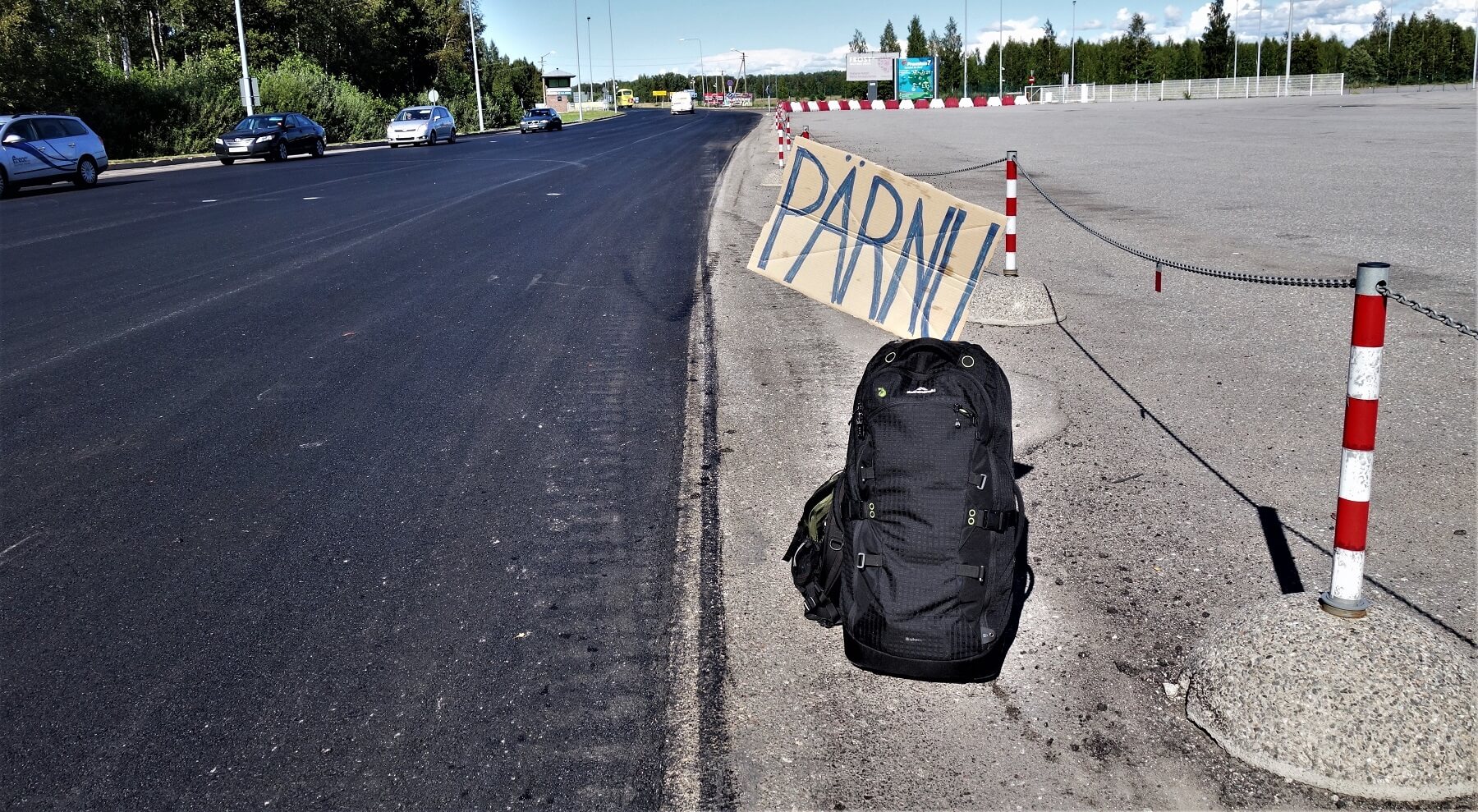
Hitch-hiking is pretty common in Europe and can add quite an interesting twist to your travels. Bonus: It’s free. Some places will be harder to hitch than others, but in most countries you can at least give it a try! There is a pretty comprehensive section on hitching in my guide Triple Your Travel, but here are a few tips to get you started:
- Try to avoid hitching at night
- Always have a back up plan (in case you don’t get a ride, it rains etc)
- If you sense something is off, don’t get in the car!
- If you’re a newbie try to hitch in pairs (Couchsurfing is a good place to find hitching buddies).
- Check the hitching situation and choose a good pick-up spot (Hitchwiki is an awesome resource for this).
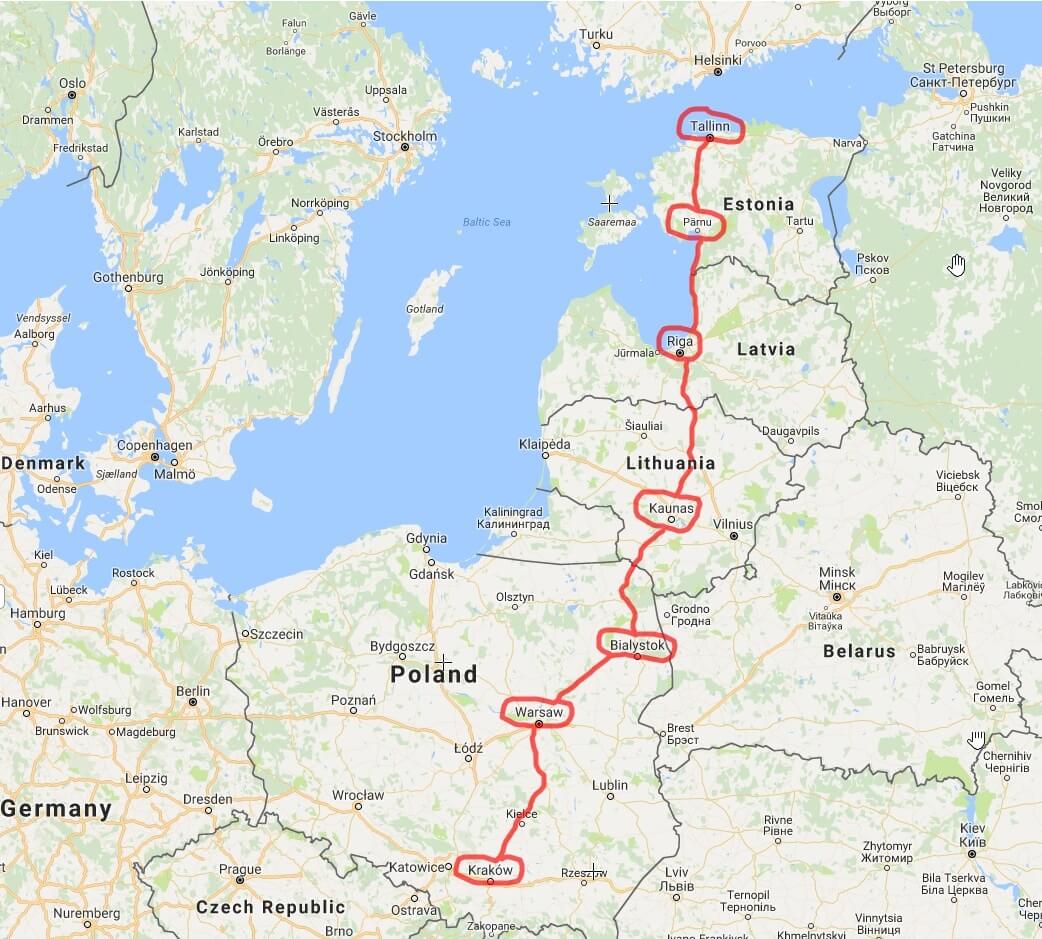
If you’re interested, the recap of my hitch through the Baltics will give you a decent look of what a typical hitch hike looks like.
3. Sign up for Bla Bla Car
Bla bla car is a ride-sharing website where you can book a seat in someone’s car for a small price. For example, if somebody is driving from Paris to Madrid, they can list their spare seats on Bla bla car and earn a little gas money, while giving others a cheaper way to get between places. I know many Europeans who rely on this regularly to get around the continent.
The price depends on the driver, but it’s always reasonable. You can click here to sign up for a free account!
4. Eat from supermarkets
Some people might consider it normal to spend upwards of 30 euros per day on food, but even in places like Norway and Switzerland, you can feed yourself comfortably for 5 euros if you shop at the supermarket. And that doesn’t mean you’ll need to survive on chewing gum and black tea. If you buy a loaf of bread, the cheaper vegetables and cheaper fruits, maybe some yogurt – that will get you through the day pretty comfortably and won’t bankrupt you. I did this in Zurich and for about 6 euros got more food than I could eat in a day. If possible try and shop at the budget supermarkets like Lidl and Aldi – there are also quite a few Chinese/Turkish fruit and vege shops around which will be even cheaper.
5. Shop at the local markets
Sunday markets and farmer’s markets are legendary budget travel allies. Even in the notoriously expensive Nordic countries you can get fruit and vegetables for 2-3 euros per kg. The cool thing about Europe is it’s actually really common to find fruit and vege sellers on the street, and they’re usually just in local plazas and shopping areas, rather than off in some random farm outside the city. In Finland, which is definitely not a cheap country, I packed up a huge bag of vegetables at one market stall and it only ran me about 4 euros. That’s almost lower than Asia prices.
6. Dumpster dive
If you’re up for it, try a dumpster dive. I know it sounds gnarly but I did it a couple of times in Norway and it’s actually pretty awesome. Countries like Norway and Denmark have insane food standards and the amount of food getting thrown out every day is crazy. In Copenhagen the lady at my hostel went through the fridges every morning (there were about 10 small fridges – it was a big hostel) and by law she had to throw out any food that guests hadn’t labelled. I watched her literally fill up 2 garbage bags of good and fresh food each morning and throw it out. I’m talking yogurt, chocolate, salami, bread, biscuits, fruit, cheese, vegetables – all of it probably bought in the last few days. The dumpsters behind that hostel would have been dumpster diver heaven.
7. Share food costs
If you have a bunch of friends at your hostel, cook a dinner together. For 10-15 euros you can get a crapload of food and cook up a pretty big feast and split between 3 or 4 people makes it super cheap as well. I do this quite often and it’s a good way to save money and make a few new friends.
8. Get the leftovers
Head to shops that pre-package food (eg. sushi, sandwiches) just before closing and see if they have any specials. Sometimes they’ll just give you the food for free. Fruit and vegetable markets are also good for this.
Too Good To Go is an app designed for this and allows restaurants to offer their leftover food for super low prices. I used it a couple of times in Denmark and thought it was pretty good. Click here to check it out.
9. Use buses!
In a lot of countries travelling by bus was my first preference. It was just as comfortable as trains, and cheaper, and often they run overnight so you save a night on accommodation too. You also have no trouble booking them last minute, even just half an hour before they leave.
I was recommended Flix Bus by quite a few travellers and used them exclusively. In fact I was just chilling in the hostel lounge when an Aussie girl suggested them to me, I downloaded their app right there and booked a ticket for that night on the spot. It was done within five minutes! Super easy. Their buses also have wifi, are comfortable and always ran on time. If you’re lucky you might catch some of their 5 euro special tickets which go on sale pretty often. You can visit their site and download their app here.
Megabus is also a good cheap option if you’re travelling in/out of the UK. I’ve never ridden with them but they are owned by Flix (or the other way around, not sure) and I assume the service is similar. If you book early you can get 1 pound tickets between cities – not bad!
10. Get a Eurail Pass (maybe)
A lot of people like to use the Eurail pass but I find it to be quite expensive. I found using Flix bus or Bla Bla Car was usually a lot cheaper and easier to figure out too. Plus it’s more suited to travelling last minute (by last minute I mean travelling without fixed plans, and booking just a few days or a week before). The only downside is the travel time is longer, but if the bus is overnight that doesn’t worry me anyway.
The thing with the Eurail passes is you need to have a large chunk of your trip planned out to determine whether it’s going to be worth the money. They’re not cheap (around 300+ euro for a 5 trip pass), and even then you still need to pay on top of that for some trains. If you tend to plan as you go, which I would recommend for a longer trip around Europe, it would be much easier to just take the cheapest bus/train/car/flight whenever you’re ready to move. The Eurail pass also has a lot of other rules and conditions. They’re not particularly complicated but it can be annoying to be constantly researching and reading what you’re allowed to do in each country. Put it this way – I’ve never heard anyone with a Eurail pass say “The Eurail pass is so amazing and so easy to understand I love it.”
My advice is to only buy one if you’re 100% certain you’re going to save money with it. That will require you to do quite a bit of forward planning and reading about how the passes work, but if you end up saving a few hundred euros it will probably be worth it. You can check out the different passes here.
11. Fly Budget Airines
Flying around Europe is not expensive and you can find a lot of cheap flights to all corners of the continent. The kicker is you’re going to get charged pretty hefty baggage fees on most budget airlines (usually more than the cost of your ticket), so if you’ve got check-in luggage with you it becomes less cheap. It can still work out very affordable though, and you can usually get from the east to the west or the north to the south for less than 100 euro. If you’re going really long distances (say, Spain to Finland) I’d definitely recommend flying – you won’t save too much travelling big distances like that overland.
There are a ton of budget airlines operating in Europe now so fares are always competitive. Ryanair, Wizzair, Norwegian, vueling and Easyjet are just a few of the options available. Shop around! You can use my cheap flying guide to learn how to find the best tickets.
12. Check all your options!
Between the buses, trains, ferries and planes, it can be hard to stay on top of all the transportation options. One site I’ve found super helpful is Omio, which summarises all the trains, buses and flights between two destinations, and you can book your tickets through them too. It’s built specifically for Europe making it the ideal tool for your Eurotrip. Sites like this will save you a lot of time checking all the different bus and train websites to compare prices, especially in a place like Europe where there are so many options. I’d recommend keeping an app like this on your phone during your trip through the continent.
13. Shop at second hand stores
These are super popular around Europe and you will find a ton of good stuff in them. After going to Europe without a jacket (duh) I found myself slowing losing parts of my body to frostbite once the winter hit. After spending an afternoon in the H&Ms and Uniqlos looking at crappy 40 euro jackets I came across a Red Cross store and bought a cool puff jacket for about 10 bucks (yeah, the one in the photo up there). Not to mention this was in the stupidly expensive Copenhagen. If you’re backpacking it’s likely your clothes are going to get abused anyway so this is the perfect way to stay geared up on the cheap.
14. Stay flexible
There are many last minute deals when travelling around Europe so it helps to stay flexible. If you want to get the $7 Ryanair flights and the $5 bus tickets, you need to be able to travel at odd and unexpected times. Don’t overplan your trip – keep things as open as possible to take advantage of these deals. It’s also important to keep checking – ticket prices change daily.
15. Travel off-season (or don’t)
This is mixed advice because off-season will give you cheaper buses, trains, hostels (basically cheaper everything) but it is also going to be FREAKING COLD. I only lasted until November until I had to skip to Asia because my nose was going to fall off.
I also was in Europe during the summer peak season, and other than some hostels being booked out I didn’t experience any problems. My transport was probably more expensive but as I hitch hiked and Couchsurfed I managed to keep most of my costs down.
One other thing to keep in mind is that a lot of Europeans are on holiday during summer, so it can mean a lot of things are closed, especially in Spain and France.
If you don’t mind the winter, travelling during off season (October to April) will definitely save you money, but Europe is still great during the summer and you can still do it on a budget without too many problems.
16. Don’t overtip
Contrary to what many think, tipping is not compulsory in Europe. If you are happy with the service you can round up the bill or leave an extra 5% if you want to, but it’s definitely not like America where you need to leave 15%+ every time to avoid getting thrown through a window. I actually remember tipping my cocktail waiter just over 10% in Zurich and his eyes popped out of his head. “You must be American” he says to me. He was actually just an awesome waiter.
It’s also pretty standard to have 10%-15% service charges included in your prices at cafes and restaurants (check the menu), so don’t feel bad for just leaving a couple of coins, or nothing at all.
17. Check out the tourists passes
These might be a good investment for you if you’re the kind of person that visits a lot of tourist attractions. A tourist pass is basically a multi-purpose ticket that allows you free entry into most of the city’s major attractions, and usually allows you free use of public transport too. Some of them even let you queue jump at the big attractions. After waiting in line for the Eiffel Tower for what felt like three lunar cycles, I started to realise why tourist passes might be a good idea, even if they don’t save you money.
I’ve looked at the tourist pass in almost every capital city I’ve been to and I’ve never bought one, because the numbers never worked out for me. You usually need to be visiting 2-3 museums, galleries, sights per day for them to be worth it, and I normally visit 1 or 2 in a week. If you’re super into sightseeing though it might be worth it. Check them out. Here are a few examples:
London Pass | Paris Pass | Berlin Pass
18. Walk!
A lot of Europe’s major cities are walkable. Stockholm, Zurich, Lisbon, Paris, Copenhagen are all good examples. If it’s less than half an hour from point to point I generally try to walk, especially in the cities in northern and western Europe where public transport is quite expensive.
Some capitals like Berlin are really spread out and you’ll probably need help to get around, but in the cities where you can save a few dollars by walking you should try to do so. It’s also a really good way to get a feel for the city’s energy, poke your head around corners you’ll never see on the subway, and will help keep you in shape too.
If places are not walkable, there’s still no need to use taxis. Stick to public transport – it’s great in most major European cities. Uber also operates in most countries in Europe, which is usually a lot cheaper than a taxi, and even if Uber isn’t operational there’s probably an Uber-like app to help you get around.
19. Rent a bike (maybe)
Some people recommend renting bikes in the bigger cities. I’m not sure why this is, because usually this costs around 10-12 euros per day and for that amount (or sometimes cheaper) you can usually get a subway day pass. If you hunt around you might get a bike for 8 euros but even then it won’t be much cheaper than a 24 hour pass on public transport. Add on the time and energy you spend actually riding and looking after the damn thing and it doesn’t seem like a very good deal.
If, however, you just really enjoy riding bikes, or there are some places hidden in hard-to-reach pockets of the city that you’re planning on visiting, then it might be worthwhile. From a saving money perspective though I never found it to be a good choice.
The one time I did rent a bike was in Copenhagen, when a Couchsurfer recommended this pretty cool rent-a-bike system – basically you register your credit card with them and then just take the bikes from the many stands around the city. The bikes all had iPads on them where you could just type in your destination and it would show you the way – it also had maps to all the destinations. I used it to ride from my hostel to Christiania and it was pretty rad. However, it wasn’t that cheap – around 3 euros an hour. A lot of countries have similar systems though as the continent becomes green conscious, so finding a bike should never be difficult.
20. Buy sim cards
There’s no need to roam in Europe. You can buy cheap prepaid sim cards in most countries and internet data is generally inexpensive. Even in Finland it was only 1 euro per day for unlimited internet, and in Sweden I got by on just using the free wifi around the place. Eastern Europe has some of the fastest wifi in the world. You shouldn’t have any trouble staying connected for cheap.
21. Stay entertained for free
If you don’t have the budget to be visiting expensive sights, know that there are countless free things to do in Europe that are just as cool. Usually Google or Facebook are good resources for simply searching “Free things to do in X” and you’ll be have more than enough to keep you busy every night of the week. Art exhibitions, open mic nights, free concerts, markets and festivals are all interesting things you can check out that won’t cost you anything. One of my favourite things in all of Europe was the Mauerpark karaoke at the outdoor auditorium in Berlin, which is hilarious and is free every Sunday in summer (the photo up there is a dude singing a love song to his wife on her birthday. Aww).
If you look in the right places you’ll find expensive sightseeing is a choice, not a necessity, to see an authentic side of Europe.
22. Workaway
If you haven’t heard of Workaway, it’s a work-exchange programme where you offer a few hours of work each day for free room and board. It’s a good resource for backpackers trying to save a bit of money or lay low for a while to recover. It’s also a really good opportunity to learn some new skills, as many hosts will be willing to teach you the skills you need to help them with their projects (it might be building a fence, training dogs, cooking etc).
Workaway is hugely popular in Europe and you will find hundreds if not thousands of opportunities in every country on the continent. I actually had a Workaway account during my last Eurotrip although I was a little too fussy and didn’t manage to get placed. Lots of really cool opportunities though.
23. Buy travel insurance
Make sure you buy travel insurance! As a budget traveller it’s doubly important to have coverage, as so many different things can go wrong when you travel indie style. Injuries, accidents, stolen bags etc are very common. In my Berlin hostel we had a situation where a (very expensive) laptop and a camera were stolen out of the lockers on the same night. I also had a pretty close call in Norway where I busted my ankle pretty badly out in the wilderness, and one inch to the left or right could have meant I was getting stretchered out of there. Travel insurance only costs a couple of dollars a day so be smart and get it.
I buy my travel insurance with World Nomads, who offer really affordable coverage for Europe. You can read my guide on buying travel insurance for a more detailed breakdown on how it works and why you need it.
Disclaimer: World Nomads provides travel insurance for travelers in over 100 countries. As an affiliate, we receive a fee when you get a quote from World Nomads using this link. We do not represent World Nomads. This is information only and not a recommendation to buy travel insurance.
24. Hostels please
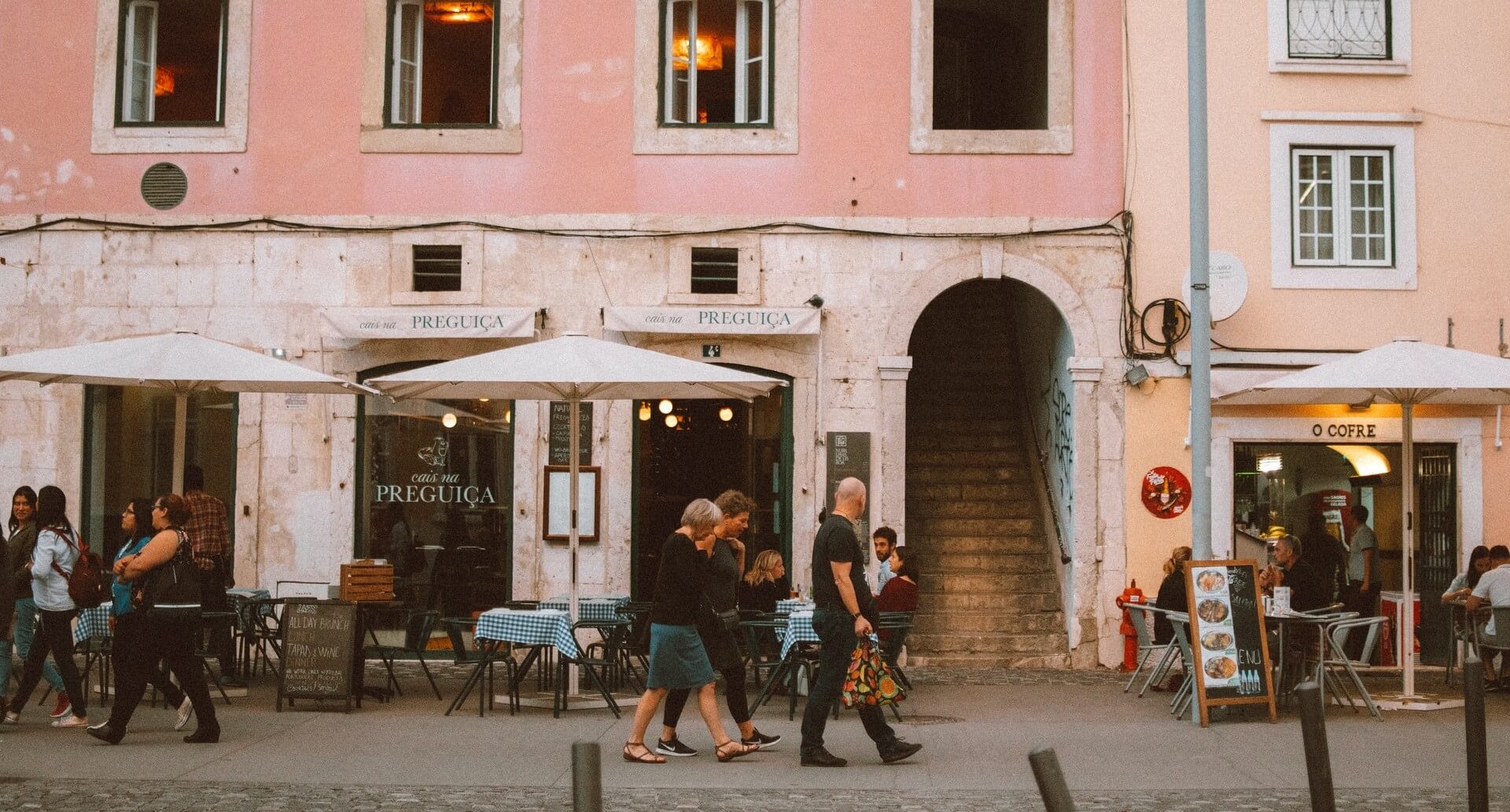
Hostelling is unparalleled in Europe and you will find tons of trendy hostels in the major cities. As hostels have modernised I’ve also noticed more families renting out rooms now and it’s not uncommon to have kids running around the hostel lounges, along with err, more “senior” tour groups and older travellers. But of course this all comes with a bump in price. In some of the bigger hostels it won’t be uncommon to be paying up to 30 or 40 euros for a dorm bed, especially on the weekends. I always like to try and support the smaller hostels, which are usually cheaper and more homely too. And you’ll still find a lot of hip and trendy places to stay in the lower price range. That photo up there is from the lounge in my Lisbon hostel – that’s nicer than my own house.
You can use Hostelworld to sort through all the options and find a place that suits.
25. Airbnb is cheaper than hotels
Airbnb has made a few waves. In some of the bigger cities, it’s almost impossible to find long-lease apartments – many landlords have decided to put their places on Airbnb instead as they tend to earn quite a bit more money that way. Of course this is bad news for locals but it means travellers have more accommodation options than ever before. In most parts of Europe you’ll probably be able to rent private rooms on Airbnb for half the price of a hotel and also entire apartments if that’s what you’re after. I’ve used Airbnb all over the world and it’s always been great. Between Couchsurfing, hostels, and Airbnb, you should never have trouble finding affordable places to sleep.
If you haven’t used Airbnb before, you can get $25 off your first Airbnb stay using my link.
26. Be smart with your currency
Depending on the length of your trip you could end up paying a small fortune in bank fees if you’re not prepared. If you’re American the solution is easy – just get a Charles Schwab card – it has no ATM fees anywhere in the world. For the rest of us, it’s a little more complicated.
I like to just take the maximum withdrawal from an ATM (usually a thousand euros), and just live off that for as long as possible. Usually one withdrawal will last me a whole month, so taking the fee hit isn’t too painful. However, my plan was obliterated in Sweden when my cash was refused (not a typo). I had real Swedish kroners in my hand and they wouldn’t accept it – they wanted a credit card. In light of these bizarre events I now think it might be a good idea to get a travel debit card for longer trips in Europe (ask your bank).
Also if you’re dealing with cash, try and exchange your currency with other travellers where possible. People are arriving and leaving from hostels every day so it’s usually not hard to find someone going to where you’ve just come from. There are no fees and you both can receive the fair rate. You might not always have the right change, but I’ll always choose to lose a few kroners or euros to a fellow traveller rather than a smelly bank.
27. Free museum days
If you’re visiting in winter (and summer for some cities) there are free museum days in most major cities. Usually it’s the first Sunday of the month, but some cities have it on Tuesdays or whatever other day they’ve chosen. Just visit the tourist information centre, Google it, or ask at your hostel reception. They will know. This will save you quite a lot of money as some of those big-time museums aren’t cheap to get into.
28. Free walking tours
Most cities have free walking tours every day. These are run on a donation basis so it’s nice to give a few euros at the end, but if you want to be that guy who walks off without giving anything nobody will arrest you. You’ll just get bad karma and everyone will give you Monopoly money on your wedding day.
I’ve done free walking tours in Sofia, Plovdiv, Tallinn, Warsaw, maybe a few other places that I don’t remember. If I’m being honest I don’t actually enjoy them much but they are a pretty good way to learn a few interesting things about the city. They usually focus heavily on the history of the city so if that interests you definitely check it out. Google’s your friend.
29. Spend your money in the east and south
The south and the east of Europe is much cheaper than the west and the north. You will save a lot of money if you spend the bulk of your time in places like Portugal, Spain, Poland, Greece and Bulgaria, rather than Sweden, Norway, Finland, Denmark and Switzerland (here’s a great list of Europe’s more underrated countries you could visit). In the more expensive countries, try and Couchsurf and eat cheap at the supermarkets, in the cheaper countries you can maybe splash out on a private room and eat in a few restaurants. Be conscious of the difference in prices in each country and adjust your travel style to suit. This means buying clothes and supplies and doing most of your tours and activities in the cheaper countries, while spending less time and money in the more expensive ones. This is just basic good travel planning and will save you thousands of dollars if you do it right.
That’s it! If you follow the tips above you should be able to comfortably travel through Europe on 35-45 euros per day, probably as low as 25 euros in some of the cheaper countries. Use all your options, be smart with your money, choose your destinations wisely and you’ll be able to enjoy every corner of the historic continent without going broke.
Good luck and travel safe,
Bren
P.S. Got tips to add? Leave them in the comments!
Disclosure: This post contains affiliate links. Every link represents a product or service I have tried or used myself, and I recommend them honestly. Omio compensated me for a mention in this article. I have used their service and recommend it honestly. For further clarification, please check out my Disclosure Policy.