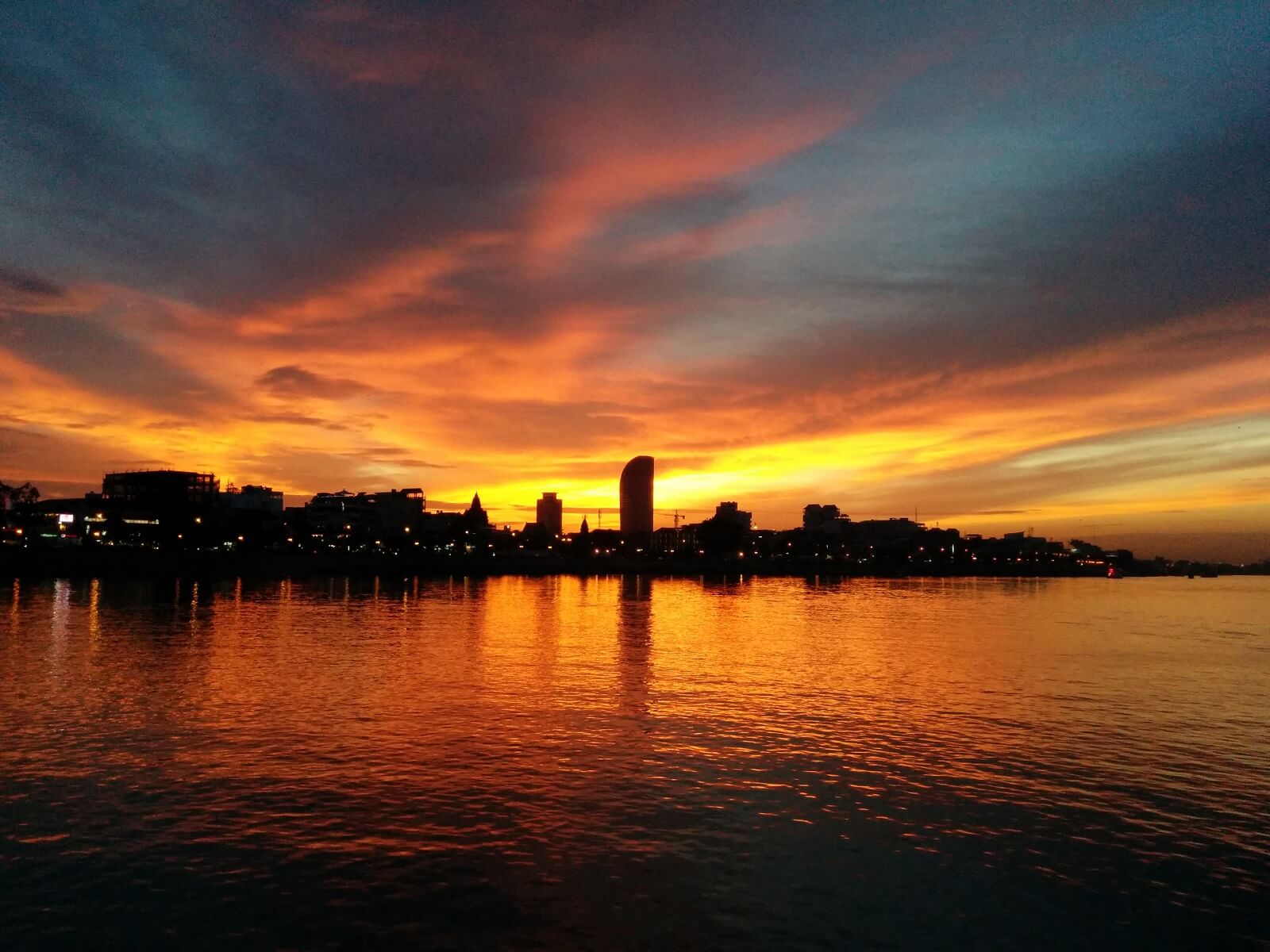
Tag: budget travel phnom penh

  • (Almost) Scammed In Phnom Penh, Cambodia

    (Almost) Scammed In Phnom Penh, Cambodia

    First morning in Phnom Penh. I wake late, as usual. My stomach curdles, yet for some reason I’m hesitant to venture out to eat. New places seem to have that effect on me, and I haven’t quite figured out why.

    After hours of flicking through TV channels, reading the news and Googling things to do in Phnom Penh, I finally I decide to leave the comforts of my hotel room. It’s around noon, but the humidity is rather mild today; certainly kinder than the usual South East Asian sweat fest.

    It’s become somewhat of a tradition of mine that when in a new city the first day is simply spent wandering the streets; a chance to move slowly and observe, taking in the sounds and the smells, the hum of local chatter and traffic. I’m situated on the riverfront, definitely a tourist hub, but rather tame compared to Siem Reap’s Pub Street or Bangkok’s Khao San Road.

    My stomach continues to grumble. I look sheepishly into the windows of each café and restaurant, searching for a place that looks inviting enough for a loner like myself. Even after all these years, I still feel a slight unease at eating alone in a crowded and lively place. Eventually I pass a corner store and purchase a pack of almonds to snack on, something to ease my hunger while my dining indecisiveness continues.

    I wander aimlessly, chewing on almonds and turning random corners, hoping to find an eatery that looks welcoming enough for me to try. I’m a little further from the riverfront now, evident by the absence of tourists and tuktuks. I slow down to a shuffle, just for a moment to try and dig the last few almonds out of the bottom of the bag. Almost on cue, a motorbike pulls up beside me.

    There’s two women on it, both around 40, and both a little, let’s say, on the heavier side. The one driving looks up at me, seeming a little flustered.

    “Excuse me, do you know where the Royal Palace is?”

    I shake my head.

    “Sorry, no,” I say smiling, still digging for almonds.

    “Oh, you’re not from here?”

    I shake my head again.

    “Oh really, where are you from?”

    “From New Zealand.”

    Her eyes light up.

    “Really, are you from Auckland by any chance?”

    I pause and look at her. I can’t quite tell where they’re from, but the accent and facial features has me guessing they’re Filipinas.

    “I am, actually!” I say with a smile.

    “Oh wow, my sister is moving to Auckland next week to be a nurse, she’s so worried about it!”

    I smile again.

    “Nothing to worry about,” I say proudly. “Auckland is beautiful.”

    “How much does it cost to stay there? Like, to rent an apartment?”

    I’m surprised by their excellent English, something you don’t hear around these parts too often.

    “I don’t know, maybe like $150 a week.”

    “Ahhh,” they groan. “That’s expensive.”

    That’s the first time the lady at the back has talked. I’d almost forgotten she was there.

    The driver jumps in again.

    “I really can’t believe we met someone from Auckland! Such a coincidence,” the driver says again with a smile. “You’re really from Auckland?” she asks again, a slight look of disbelief in her eyes.

    I nod.

    “Wow,” she laughs. She outstretches her hand and I offer mine back, which she shakes enthusiastically.

    “You know, do you think you could talk to my sister for about 15 minutes? She’s really worried, she’s never been overseas before. We’re actually just going to meet her now, just down the end of the street,” she says, pointing down the road in front of us.

    I shrug my shoulders.

    “Sure.”

    She smiles with relief.

    “Oh thank you so much! Just jump on the back, it’s just two minutes down that way.”

    I had presumed I would walk, but whatever. Without a second thought I pop on the back on the bike. Who knows, afterwards they might be able to tell me a good place to eat.

    Once on the bike, the questions are endless. I humour them, but find it odd that they can’t seem to stop talking.

    “What’s the weather like in New Zealand? How much is the flight to New Zealand? How much can you earn in New Zealand? How long do you live in New Zealand? How long have you been in Cambodia?”

    Finally, after about 2 minutes and one too many questions, I sense something a little “off”. We haven’t stopped down the street like they said we would, and we’ve now pulled onto the main road. I realise I’ve been in Asia too long, where scam artists usually pass over me for the more obvious, white-skinned targets, causing me to let my guard down. However, now it’s back up with my scam radar beeping on high alert. I do a quick recap of the events in my head and look both of the women over carefully. The lady in the middle clasps an iPhone 4 between her fingers, her nails freshly painted and a loose gold bangle sitting upon her forearm. Her hair is coloured, and her earlobes boast two golden stud earrings. They’re definitely not poor.

    I look at the driver’s face. She looks calm and weaves effortlessly through the many cars. For a foreigner, these roads seem far too familiar for her.

    Then, out of nowhere she asks me another question.

    “How long have you been in Phnom Penh?”

    She’s asked me that before. Obviously the questions are just a distraction tactic, and she must have done this routine so many times she’s on autopilot. I’m now 101% convinced I’m in scam territory. I decide it’s my turn to ask some questions.

    “So where are you from?”

    “Bangkok,” they both say in unison.

    I presume they’re lying. They don’t look or sound Thai at all, but this is good. I know Bangkok well.

    “Oh, which part of Bangkok?”

    “Ratchatewi,” they say, again in unison. “Why? Do you know Bangkok?”

    “Yes, I have been living there,” I say calmly.

    “Oh, why do you live in Bangkok?”

    I think back to scam 101 training: when being scammed, try to offhandedly mention some connection to authority or government.

    “My brother works there, he works for the embassy,” I explain.

    The driver doesn’t know it, but I can see her face slightly in one of her mirrors. Her expression changes, as if she’s suddenly deep in thought. I try not to smile.

    “Ohh, your brother works for the embassy…” she says quietly. I can’t tell if she’s asking me again or if she’s just repeating it to herself.

    “He was working for the British embassy in Bangkok, but there are problems in Bangkok right now, so because of the coup he’s been moved to Phnom Penh. He will start working here for the British embassy in a couple of weeks. Do you know where the embassy is?” I say enthusiastically.

    “No, we don’t know,” they both say, shaking their head.

    “It is just over that way,” I say, pointing out in the distance. “It is very nice, I went there with him for a welcome dinner there last night, I met the tourism minister, and the police minister, it was so nice, Cambodian people are all so nice. Actually, there was some people from Thailand there too!”

    I look in the mirror again. Her face seems expressionless, but I can only see half of it. Then, for a split second, I see her eyes. She looks confused.

    We go on driving for a couple of minutes and I sit there quietly, trying to plan my next move. Interestingly, the two of them have both gone silent as well. I notice they’re stopping at red lights every couple of minutes, and I take comfort knowing I can jump off the back of the bike any time they do.

    “Anyway, where are we going? I can’t go far, because I am going on a tour at 2pm.”

    “Ahh you’re going on a tour!” they both shout out, the middle one tapping the driver several times on the shoulder.

    “Maybe you can meet us tomorrow instead?” she asks, as she pulls the bike over to the side of the road.

    “Sure, no problem,” I say with a smile, as I slowly hop off the back of the bike.

    “You can meet us on the riverfront, do you know Dairy Queen? You can meet us there.”

    I think about it. I have no idea where Dairy Queen is.

    “Sure, I know it, I’ll meet you there. What time?”

    “You can meet us around the same time as now, 2pm, ok?”

    “Ok no problem, I’ll see you then.”

    “Let me call you a motorbike to go back,” the driver says, waving her hand at a bunch of guys on the corner. One of them perks up and hurriedly drives over.

    Before getting on the bike, I shake both their hands and bid them goodbye. Part of me is disappointed. I’m curious to see where they were taking me.

    On the way back to my hotel, I laugh out loud in bursts as I replay the whole scenario in my head. I had to give it to them, they were pretty good. It was clear they had done it countless times before; from their facial expressions to their question routine, to learning the capital cities of probably every country and every American state in their spare time. What made it even more convincing though was they were two chubby middle aged women, not trying to be cute or charming at all. It had instantly brought my guard down. Had it been two scantily clad bombshells who pulled up to me, my scam radar would’ve gone off immediately. These two had it all figured out.

    Back in my hotel room, I immediately get online and start Googling. I’m dying to know what their gameplan was.

    Google search: “Two fat women on motorbike moving to home country Cambodia scam.”

    A few results pop up, including one that runs almost like a play-by-play to what has just happened to me:

    “This is a scam which I stupidly fell for and that is one where 2 friendly fat girls ask you to come and give their other sister some information on the country you live in as she is interested to move there. I went there to help as I had a bit of time on my hand. I met their “uncle” who said he had a fail safe way to win at the casino as he was a croupier at a casino. At his home, I ended up placing bets on his behalf with his money of which he ran out, he begged and promised he would give it back after the final bet, he was the best con man I have ever seen and must admit I was the biggest dipstick for falling for this but I helped him out with mine and I finally lost a fair amount of money. I went to the Embassy but the only way I could do something about this was to go to the police. But unfortunately the police is so corrupt that I couldn’t take that chance. So if some jolly fat girls talk to you, talk but don’t go out of your way to help.” Link here.

    As I read it I roll around laughing on my bed. I cannot believe I fell for it. I’m usually on high alert when in Africa or South America, but this is the first time any of these scams has been pulled on me in Asia and my guard was down completely. My Asian face has left me far too unsuspecting around these parts. Part of me was also surprised at how elaborate it sounds. I was expecting more of a “drive you to an alley and steal your wallet” kind of thing.

    The next day I consider heading down to Dairy Queen to call them out on their act. It would surely make for an interesting blog post but I decide against it, partly because I’m busy watching the World Cup but mostly because it’s just not my style. Also, I didn’t think they were actually going to show up anyway.

    Moral of the story: Be wary of heavy, middle aged motorbike riding women in Cambodia. Or if you do talk to them, just ask them about their professional gambler Uncle.

    Good luck!

    Things to remember when being scammed:

    I’ve had a few scams attempted on me and other travel friends, even when at home in New Zealand. Some were so stupidly obvious that I went along with it just to see what they were trying to do, and some were so elaborate and well thought out that I’m sure they’ve fooled many a person. I’ll write a few more stories like this one up when I get time, but for now, keep these tips in mind if you’re ever the target.

    1. Obviously, just walk away from the beginning if you can. Don’t be afraid to look ‘rude’. Scammers are experts at making you feel bad for walking away.
    2. If it’s a little hard to walk away because, say, you’re on the back of motorbike in heavy traffic, remember to relax and stay cool. Don’t freak out. Remember, a scam is not the same as a robbery. Their plan is usually to ‘trick’ you out of money, rather than actually commit a blatant crime and rob/hurt you.
    3. Try to mention some connection to authority. This is a tip I learned from a friend in Africa, and it works really well. For example, just say something like “Can you drop me at the embassy afterwards? I need to meet my brother there at 3.” That will get the wheels spinning in their head, and the fear of messing with someone connected to government will throw them off completely. Try not to threaten, e.g. “My brother works for embassy and you guys are going to be in a lot of trouble.” It’s important to let them save face and not back them into a corner, as that’s usually when bad stuff happens.
    4. Act confident. It’s quite satisfying when they try to woo you with something and you just smile, as if you know exactly what they’re up to. It will throw them off their game a lot, and you’ll see it in their expression.
    5. Extract yourself as soon as possible. Do it tactfully, and don’t make a big fuss about calling them out or shaming them. My opinion is letting them save face is the best way to get yourself out unharmed, which is really the only goal you should have.

    Stay sharp and good luck!

    Heading to Phnom Penh? For affordable accommodation, try using Agoda, they definitely offer the cheapest rates in Asia. For things to do, you can’t go wrong with TripAdvisor. Happy travels!
  • When Broken Glass Floats: A Chilling Look Into Cambodia’s Tragic Past

    When Broken Glass Floats: A Chilling Look Into Cambodia’s Tragic Past

    I put my Kindle down and close my eyes, grimacing. It is not the first time this story has overwhelmed me.

    I sit there rubbing my eyes, taking a moment to collect my thoughts. I’m only a quarter way through it, yet this book is consuming me. Time for a break, I decide. I look around.

    A lady sits a couple of tables away, sipping on an iced coffee while tinkering with her iPad. On the far end of the cafe sit two middle aged men, laughing cheerfully about something, their palms wrapped around mugs of Angkor beer. Beyond them, a small stretch of the Phnom Penh riverfront, and the faint sounds of traffic passing on the wet road before it.

    As my mind settles, I pick up the book to continue reading. As difficult and depressing as it is, the story has captivated me, and despite all the death and suffering I am desperate to know how it ends.

    The book is Chanrithy Him’s “When Broken Glass Floats”, a gripping memoir of her life growing up under the Khmer Rouge. I am only halfway through it, but it has brought to life a period of history that, until now, I have known very little about. A genocide. One quarter of the population dead. A brutal dictatorship, an entire country forced into slavery, and the mass execution of anyone educated enough to resist. In just 4 short years (1975-79), the Khmer Rouge managed to decimate Cambodia, crippling the country almost beyond repair. I am unsure why I never learned about this in school.

    I read and read, until my battery light flashes red and finally dies. I’m relieved in a way; I’ve been sitting here for hours, my eyes hurt, and it’s already dark outside. Enough for one day.

    I wake up late the following morning. Breakfast is served at the cafe outside my room, and I continue Chanrithy’s book while waiting for it to be cooked. I manage another 20 or so pages, eat quickly, and then head back to my room to wash up and get ready. Today I am visiting Tuol Sleng, the famous S-21 genocide museum near the centre of Phnom Penh. Here lies an abandoned high school, turned into a interrogation prison where tens of thousands of Cambodians were tortured and marked for death.

    After waiting for the rain to settle, I head out and arrive around mid afternoon. The moment I enter the gate, I feel the eerie vibe it is famous for.

    Tuol Sleng Genocidal Museum

    Despite the many visitors, the place is silent. It only adds to the creepiness. I walk sheepishly into the first room; a high school classroom turned into a torture chamber. From the doorway I see an iron bed, with a photo on the wall of the torture victim found chained to it. I am not quite sure what to think. I snap a photo, and exit quickly.

    Torture beds at Tuol Sleng

    Most rooms in the first building appear the same; an iron bed with ankle cuffs, where victims were bound and tortured into confessions. As I wander through each of them, I think back to Chanrithy’s book, to the stories of people being taken and never returning. Even standing here, seeing it with my own eyes, it is difficult to believe the stories of terror are real.

    Eventually I make my way to the second building. Here lies the photo room. The Khmer Rouge were meticulous in their record keeping, photographing and profiling all 20,000 prisoners before they were tortured into confession. Once “processed”, they were taken away to be executed.

    Tuol Sleng Genocidal Museum

    The photos represent many of the country’s most wealthy and educated at the time, mass murdered in an attempt to create a completely uneducated, communist society. The immense waste of life is impossible to comprehend or understand. One can only wonder how different Cambodia would be today if these great minds were still alive.

    Among the photos are faces of children, some who look as young as 8 or 9.

    Tuol Sleng Genocidal Museum

    I think back to when I was that age, innocently riding my bike and watching cartoons. The contrast is heartbreaking.

    I spend a long time in here, maybe an hour. One by one, I study the faces of all the prisoners. Each of their eyes are sad, defeated. Their fear is unmistakable. Most appear to have accepted their fate.

    Tuol Sleng Genocidal Museum

    Yet among them, some appear defiant, refusing to be broken. I admire them, and wonder if I’d have been strong enough to do the same.

    Tuol Sleng Genocidal Museum

    Of the 20,000 that passed through here only 12 made it out alive; their stories of survival displayed on one of the classroom walls. Before I start reading I observe the 5 or 6 other visitors, staring at the wall and reading silently. Each of them stand frozen, their lips slightly apart, eyes flashing back and forth across the page in disbelief. Soon I find out why. The stories are straight out of a horror film; tales of being electrocuted to unconsciousness, forced to eat their own excrement, fingers being broken and fingernails being ripped off and covered in salt. Prisoners were tortured into confessions of being spies or conspiring against the State, justifying their execution. Yet one confession was not enough. Torture continued until the victim admitted guilt of their entire family, their parents, brothers, sisters and children, justifiying the execution of all of them.

    I read each story, wondering to myself what I would’ve done. How strong would I have been? Would I have betrayed my Mum and Dad, my brothers, to end my own suffering? It is mind numbing; too much for me to try and imagine.

    Tuol Sleng

    That night I continue reading Chanrithy’s book. My visit to Tuol Sleng has added another dimension to her story. She describes her friends and family disappearing, or being taken away to be punished and executed. I wonder if any of them were taken there, and if I had seen their faces on the wall. It is a chilling thought to think that is possible.

    Two days later, I finish Chanrithy’s book. I have never read a book so fast in my life. As I flick through the final pages I am left speechless, happy that she survives, but heartbroken at the suffering she and so many had to endure. Immediately I go to her website and email her, thanking her for sharing the story and offering my condolences, as small a gesture as it may seem. It is hard to believe I have been walking along the streets where this evil happened, only 40 years ago.

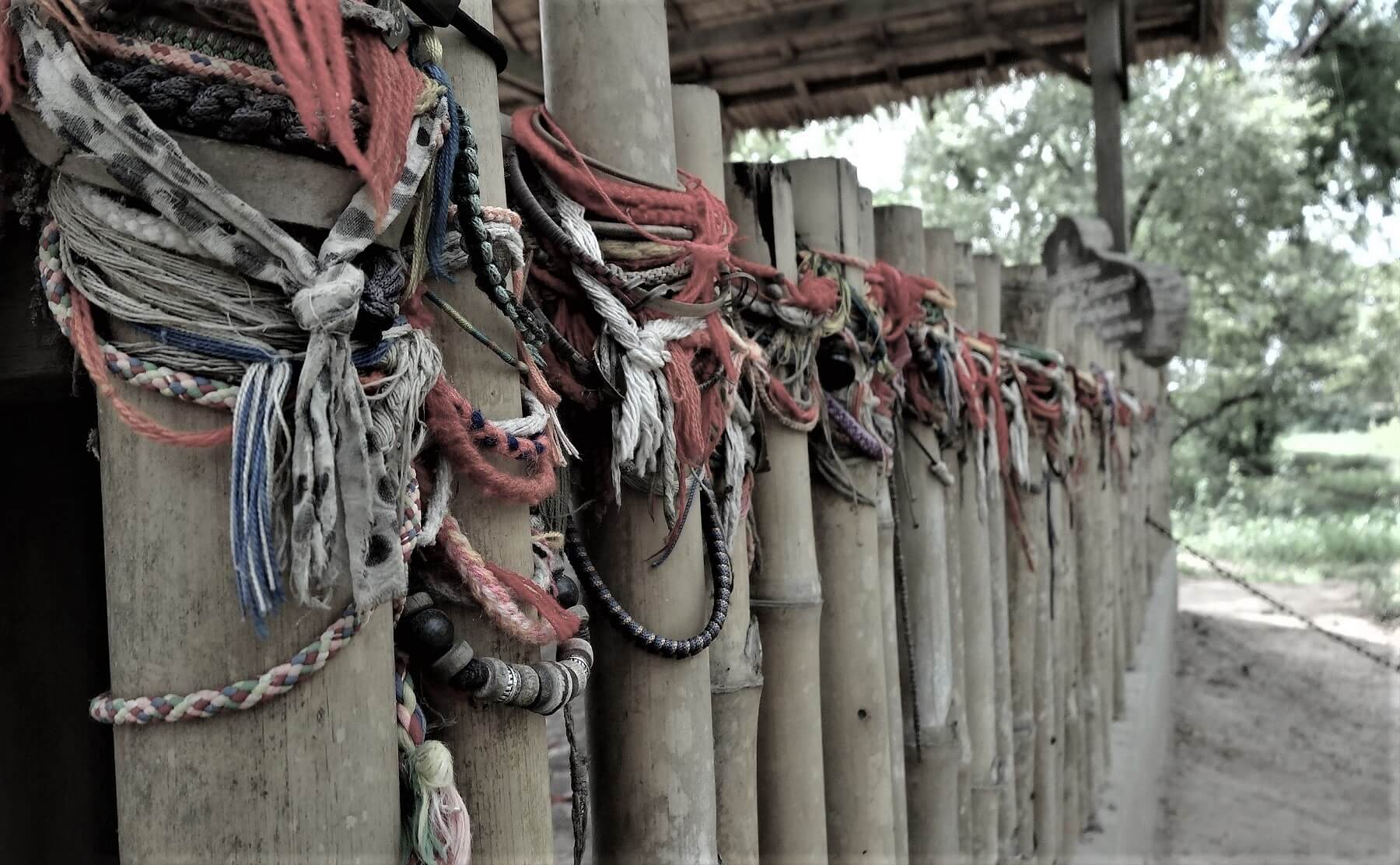
    The next day I visit Choeung Ek, the famous Killing Fields in the south of Phnom Penh. Of the 3 million Cambodians that died during the regime, 20,000 were executed here, brought from Tuol Sleng by the truckload under the cover of darkness. In order to save bullets prisoners were beaten to death with spades and tools, while loud music played in the background to ensure their screams were left unheard. Bodies were left to rot in mass graves, some piled up to 400 high.

    Even today, bits of bone and clothing are still seen lying in the dirt.

    After an hour or so I come to the infamous killing tree, where I notice many other visitors standing and staring, deep in thought. It is the tree where babies were executed, taken from their mothers and then swung from their legs, their heads smashed against the trunk. The site seems to have a stronger effect on people than most. I stand there with them, and we all stare at it in silence.

    The Killing Tree

    It takes me around 3 hours to walk through the fields. It is a sobering place, but for some reason, doesn’t trouble me as much as I’d expected. While the photos in Tuol Sleng showed people in the midst of struggle and torture, the fields themselves seem to give an odd sense of peace. For many Cambodians, this is where the horror and torture ended, and despite how brutal it was I suppose there is an inkling of closure in that. It is comforting to know the place has been preserved with the respect it deserves, and that people continue to come and pay homage to those who were taken.

    The Killing Fields

    It’s about a 40 minute drive from the fields back to my hotel. I sit in the back of my tuk tuk, trying to process everything; Charithy’s story, the prison, the fields, the survivor stories. I find it strange this story is never talked about, unlike the Rwandan or Jewish genocides. I’m actually embarrassed that I knew nothing about it until now.

    Eventually we pull out to the main road. As we drive along I see two young girls playing in an empty dirt field; one throws a tin can, the other tries to hit it with a piece of broken wood. She misses, and they laugh loudly like kids and race to retrieve it. It all seems so normal, and for some reason that’s odd to me, for a country that was massacred not so long ago.

    When we finally arrive at the hotel the afternoon rain has set in. It is pouring down, and I’m reluctant to leave the shelter of my tuk tuk’s waterproof flaps. I ask the driver to join me in the back, and ask him how old he is.

    “Me 44,” he answers.

    I need about 2 minutes to do the maths in my head.

    “You were 5 during Pol Pot’s time?” I ask him.

    “Me 7 years old for Pol Pot,” he replies.

    I tell myself to show a shred of sensitivity, but I’m too curious. I bombard him with questions.

    He answers me the best he can in his broken English, telling me about his memories during the Khmer Rouge rule; eating only rice soup a couple of times a day, eating lizards and crickets, even killing and eating the stray dogs around the villages. I’m reminded of the time I saw fried crickets for sale on the streets of Siem Reap, which now makes a little more sense to me.

    My driver’s eyes open wide as he continues his story, retelling tales of his mother and father forced to work long hours in the rice fields, and teenage boys forced to stand out in the sun and mind the cattle. Then he laughs as he recalls the big trucks coming to take away all the rice and beef, leaving all the workers to starve at the end of the harvest.

    I ask him about school, and he shakes his head.

    “But no work for me too,” he recalls. “When you turn 15, you work. I only 7 years old. I just sit in the house. Run around in the field. Play with other kids.”

    I nod in slience. It is difficult to hear him through the pounding of rain on the roof, but I do my best to digest every word.

    Finally, I build up the nerve to ask him about Tuol Sleng, if any of his family is in the photos, and if any of his family was executed under the regime.

    “No, no, not my family,” he laughs. “But my friend, they see some family there, in the photos.”

    “But my uncle is gone,” he continues. “He disappear, we don’t know where. Maybe get bang bang by Pol Pot,” he says, mimicking the shooting of a rifle with his hands.

    I’m uneasy at how calmly he talks about it. Part of me wishes he was (a lot) more angry, but he seems to be at peace with it. Luckily his mother, father, and siblings all survived, and maybe that is the reason why.

    That night I sit on the riverfront until sunset. It is filled with elderly people out walking, usually in pairs, leisurely strolling along while enjoying the evening air. The street sellers are far more passive than in the neighbouring countries, and a simple shake of the head is enough to turn them away. I watch each person walk past, studying their faces, wondering what their story is and how they survived the genocide. It is frightening to think that Chanrithy’s story is only one of many, and that almost a whole population has a similar tale to tell. Visiting Cambodia has been a sobering reminder that we should never take our freedom for granted.

    Finally as the sun sets I see two boys pass by, maybe 10 years old, riding side by side on brand new bicycles. They ride slowly, one of them holding a pack of biscuits in one hand while he steers the bike with the other. They argue with each other intensely, shouting and shaking their heads, probably about something trivial like a video game or a TV show. Until now I’ve found Cambodians to be rather docile and reserved, and this kind of energy is a little out of the ordinary; they are by far the loudest people on the riverfront. Clearly their upbringing has been very different to the generation before them. Hopefully, a sign of new beginnings in Cambodia, and a future much brighter than its past.

    Photo & Video Sharing by SmugMugPhnom Penh riverfront today

    Visiting Phnom Penh?

    • I would highly recommend reading Chanrithy Him’s “When Broken Glass Floats” before you go. It is difficult to read, but will paint a vivid picture of the Khmer Rouge regime and bring to life the historical sites you will visit. It is superbly written, and is a powerful story of one family’s loyalty and perseverance. It’s around $10 on Kindle. Another similar book that was recommended to me was “First They Killed My Father” by Luong Ung, although I haven’t read it.
    • Assuming you are staying in the city or on the riverfront, a tuk-tuk will take you to Tuol Sleng museum and back to your hotel for around $5-$7 all up. He will wait for you outside until you’re ready to leave. I have been to many museums in my life, and this is one of the few (or maybe the only) that I will remember. Entrance is $2.
    • Choeung Ek is a bit further out of the city and will cost you around $10 to get there and back. Again, the tuk-tuk driver will wait for you. Entrance is $6. I would definitely do Tuol Sleng and Choeung Ek on different days – it is a bit much to digest both at once. Best to do Tuol Sleng first, and Choeung Ek second.

    Have you visited Choeung Ek and Tuol Sleng? What did you think? Let me know in the comments below.