Journal entry:I have been training for this race since December, after I finished the marathon at Singapore. It has been a war. Along with keeping my TSW at bay, I had to include swimming into my regimen, which was not ideal. But like all things, we persevere. I didn’t want to just “get through” TSW. I wanted to obliterate it, to come out indestructible, and it brought me here. But this one really felt like it was the final chapter: If I could get through this one, I knew nothing would ever break me again. When TSW first started, it felt like I was crawling through the deepest valley, that there was no finish line, that this demon would keep me buried forever. But every day, I fought a little bit more, and took one step forward. Today, I finally stood on the highest of mountains.
When I woke up on race morning I could already feel it would be a good day. I slept well, which is unusual the night before the race.
As I arrived at the athletes village, I headed straight to the transition area to put some last touches on my bike: Load my bottles, fill my bike bag with food, check my tire pressure.
Everything was good.
Then I took a moment to soak it all in. It was still dark, hundreds of athletes in there, but silent. You could hear everyone’s focus. Like warriors preparing for battle before sunrise.
Then I headed to the start line, down at the lake. I was there an hour early, but it was already alive down there. Huge crowd, TV cameras, sponsors, commentators already all over the mic.
Ironman race week is a huge deal in Taupo.
The half Ironman event was just getting started so I watched them start their swim to ease the nerves a bit. I sipped electrolytes and stretched. An hour zoomed by.
Then as the lake cleared, the announcer called for Ironman athletes to the start line. Time for the main event.
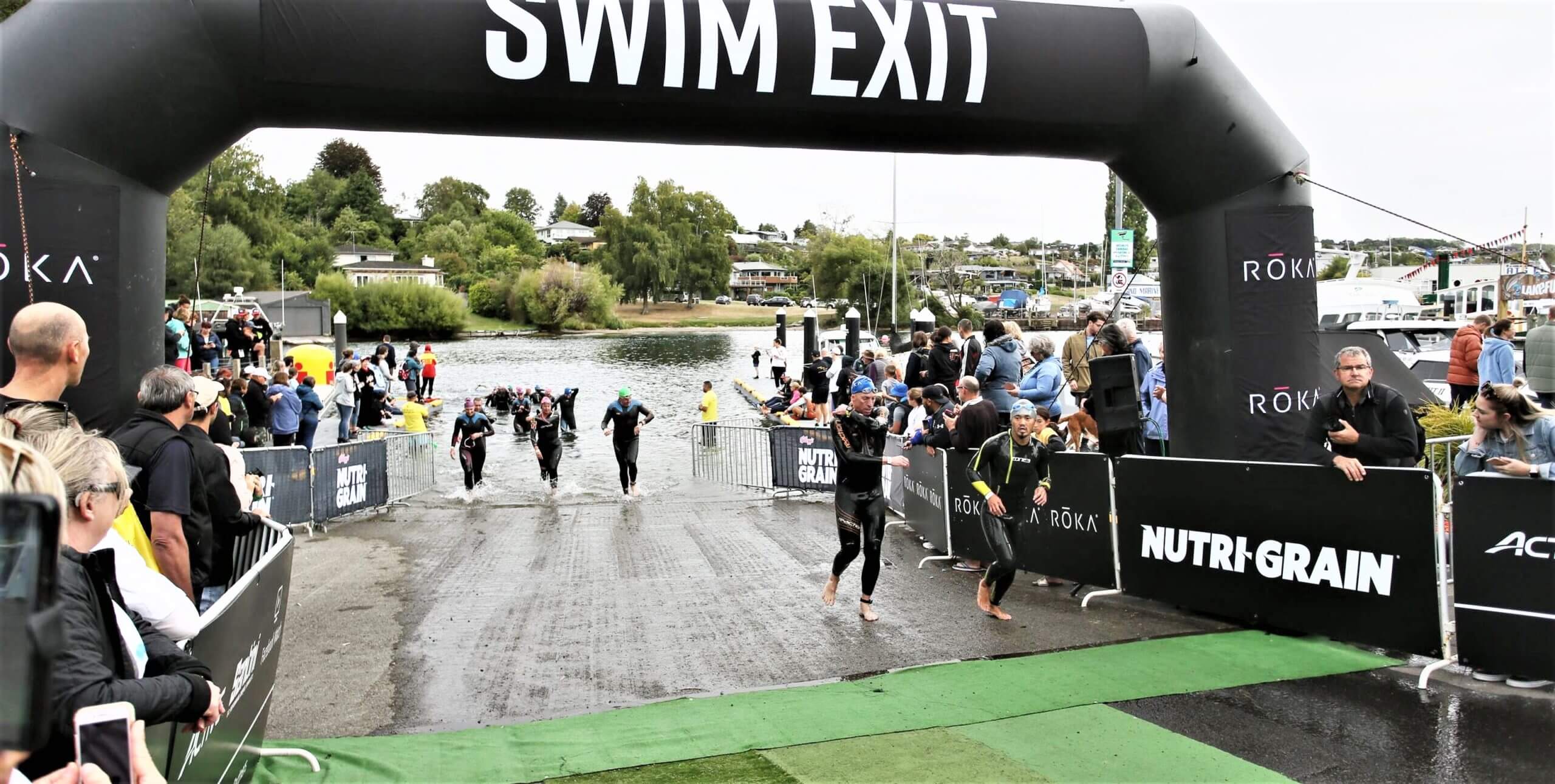
I put on my wetsuit and hugged my parents, then headed through the athletes entrance into the water.
The Ironman is known for being the toughest one-day race in sports: A 3.8km swim, followed by a 180km bike, followed by a marathon. The time limit is 17 hours.
For those of you who followed the story of my first marathon, you know this journey was born out of anger. Back on that winter morning in August, mid flare, running in the rain with half my face falling off, rage burning in my stomach.
But starting this race, I wasn’t angry anymore. I finally understood, all that pain had a purpose; it was to bring me here. It was life’s way of telling me, “you’re capable of so much more – I’m going to beat you down, in the suffering, you’ll see who you really are.”
Even two days before the race, I’d looked in the mirror, and saw parts of my face had started flaring a little. But I just looked at it and said “No” and then went about my day. It didn’t matter anymore. I was here. About to attempt the impossible.
I waded into the water, found some space. Dunked my head in.
In that first marathon, still fresh with TSW demons, I’d felt like a poser at the start line. I’d looked at everyone’s special running gear and shoes and thought, this is going to be a long day, I’m not even a runner, I’m not even supposed to be here. But I felt different on this start line. I looked at all the people around me and thought, I’ve fought as hard as all of you. I belong here. This is exactly where I’m supposed to be.
Then the fucking cannon went. BOOM.
Go time.
I was boxed in for the opening 15 minutes or so, but managed to find some space and hit a rhythm for the first 2km. But I broke the golden “nothing new on race day” rule and used a pair of goggles I’d never worn in open water before. The glare on them was terrible! Trying to sight the buoys was impossible until they were right in front of me. I had to guess where I was swimming most of the time, or stop and sight.
Around halfway in, I ended up swimming off course for around 5 minutes. During a race 5 minutes feels like 30 minutes, so although my race plan had been to swim easy, I panicked and turned the gas on to make up time.
Too much gas apparently because when I finally came out of the water, I was afraid to see ~2 hours on the clock but it was 1:24!
The goal had been to swim 1 hour 30 minutes so I was pumped. No time to celebrate though. It was straight into transition, which included a 400m run up to the bike tent. I ran it slowly, still a little dizzy from the swim.
Also as it was my first triathlon I’d never done a transition before, so felt a little lost. There was nobody in front of me, so I found myself looking behind to me every few steps, just to make sure I was going the right way.
Once I got to the transition tent things weren’t calm anymore. Everyone was hectic and shouting and talking to each other about the swim. But it was joyful, everyone just so amped up and feeling like superstars.
I got handed my bike bag, a volunteer helped me strip my wetsuit and I changed into my race kit.
When deciding what race kit to buy, I wanted everything red. Red, the colour of the blood stains that covered my sheets every morning. Red, the colour of the flares that covered every corner of my body. Red, the colour of my eyes after crying in pain on those sleepless nights. Red, the colour I never wanted to see in the mirror every morning, but it was always there. I bought a red race top, red hat, red glasses, red bike, red bike bottles, red arm band. Red, the colour that tried to conquer me, and failed. Now I had no need to run from it anymore. Red was the colour of TSW, and now I would wear it into battle, like spoils ripped from a conquered enemy.
The Ironman bike leg is 180km. A long way, and the longest part of the race. The goal was to ride really easy, 1 gear down, for 1 hour. Then up to top gear but still ride easy for the following 2 hours. Then for the remainder, just ride by feeling, turn the gas on when feeling strong, and hopefully ride under 7 hours.
Cycling is a new sport to me, I didn’t even get my bike until 7 weeks before the race. I haven’t really developed “bike legs” yet. People were passing me the whole time. Sometimes a chubby guy or girl would zoom past me pedalling like mad and I’d be like damn! These people are strong as sh*t! Smashing me!
It was tempting to amp up the speed as I wasn’t even breaking a sweat but the golden advice for Ironman is always stick to your gameplan. After around 3 hours I started eating, and then finally turned it on a little.
To be honest the whole bike leg is still a blur. I remember looking at my watch and seeing I’d done 5 hours, and thought, Wow really, where did all that time go? Slowly my knees started to ache, my feet went next, but they were baby aches I knew I could handle.
Compared to a bad skin flare, it was a 1/10.
I did laugh out loud when I thought about how I still had a marathon to run, it felt pretty ridiculous. But I wasn’t dreading it. I was up for it. 100%.
On the last 50km of the bike a lot of people were slowing down on the hills, but my legs were still fresh from easy riding. I powered those final hills pretty comfortably, managing to pass a few people. Then I tried to hit the gas hard on the last 30km to break 7 hours, but didn’t really come close and clocked 7 hours 22 minutes.
Not a bad time, but at the slower end of what I had wanted.
But as I was riding the final straight into transition, I saw tons of people already walking on the marathon. That was exactly what I needed to see. I rode calmly into transition and told myself I’d be catching all of them.
When I finally got off the bike, everything calmed down for me.
My race time was around 8:40 by then, so I knew I had more than 8 hours to run the marathon. All my doubts had been about the bike. Now that it was done, the doubt was over. I knew I’d be an Ironman today.
I took my time at the transition tent and taped up my feet, had some water, hat on, glasses on, shoes on, toilet. Then slowed everything down to bring down my heart rate. As I finally left the tent I said to my shoes, Got a tough few hours ahead, how about we go make this marathon our bitch?
Out we went onto the roads. Didn’t even look at my watch for pacing. My only rule was no walking, no stopping. 50,000 steps and I’d be home.
The marathon at Ironman NZ is 3 laps of a 14km course.
As I’d hoped, I saw a lot of people that had passed me on the bike. I caught a lot of them by the second lap. They were all walking by then. Every pass pumped me up a little more.
During marathons there are always people you keep seeing over and over again. They pass you, you pass them back, you push each other along like that. Funny thing is you never see their face, you just recognise them from the back of their shirt, their shoes, their bum, their calf muscles. I had 2 rivals, one old Japanese guy, one girl with nicely tanned perfectly shaped shoulders.
The Japanese guy I held with for about 10km, but he was a damn superhuman. He stopped to drink at aid stations, but then always came back and powered past me. At one point he stopped to talk to his wife, and I thought yes, I got him. Nah, he rocketed by me later and I never saw him again.
By the time I started the 3rd lap the sun had gone down. It was crazy to think I’d started swimming just as the sun came up that morning, now we were heading to midnight and I was still running. But I felt strong. Of course feet hurt, knees hurt, a few blisters, running downhill was a special kind of pain, but I just told myself, “Relax, this is what you trained for” and my mind was at peace.
In previous races, I’d used the darkness to push me through. I thought about all the worst nights, the suicidal thoughts, the times I thought I’d never survive TSW. I used that rage to unleash warrior mode and push me through any pain. But this time it never happened. Once again, the anger was gone. There was no need to unleash beast mode this time. I knew if I just relaxed and held this pace, I’d make the finish line.
Before the race I’d hoped to run under 5 hours, and I ended up running bang on 5. It was the easiest marathon I’ve run.
During the final 7km stretch into town, the nice shoulders girl passed me again. I put the gas on, tailed her for a while then passed her a few kms later.
Then after the final aid station she ran by me again and I could see she was really giving her last legs to the road. I thought, sorry but I need to win this one. I lifted my legs and boosted past her to leave no doubt I wouldn’t be seeing her again.
I held that pace all the way into town. The crowd in Taupo was spectacular, all I could hear was “Go Brendan! Running strong Brendan! You’re going to be an Ironman! All the way home Brendan! Don’t stop! Congratulations!”
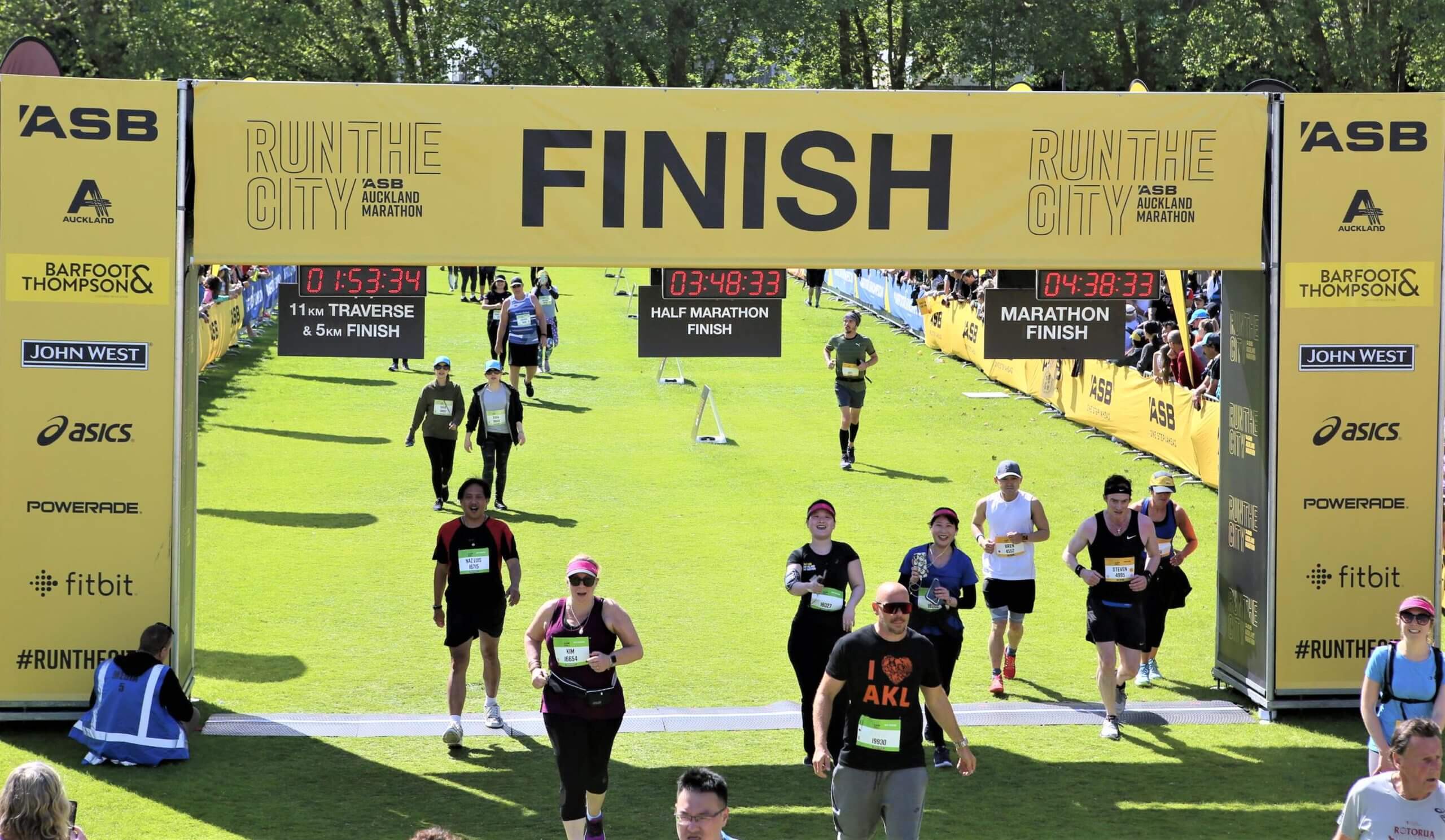
Then as I finally reached the turnaround point for the last time, the crowd saw the three coloured bands on my wrist and waved me into the finishers chute.
All finish lines are special, but this one is different.
It’s only when you hit the lights of the red carpet, the finish line crowd, the CHEERS, the commentators calling your name, that you realise what you’ve been a part of. All the demons you’ve vanquished to get here, all the runs you whimpered through during flares in the winter, all the times your spirit broke and you had to get back up and keep on going. Now you’re here, at an Ironman finish line. I’d been rock solid all day but I broke almost immediately, tears suddenly streamed down my face. We prepare like warriors for the race, but nothing could prepare you for that.
The best place to buy Bitcoin in NZ is Sywftx. Lowest fees and prices, awesome service and a registered NZ financial services provider. Click here to open a free account.
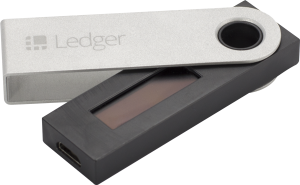
The safest way to store Bitcoin is the free wallet by Exodus, or if you own a lot of Bitcoin ($1,000+) then consider purchasing a hardware wallet. I recommend the Ledger Nano.
This is a question I’ve been getting asked a lot recently. Whenever I mention Bitcoin to people and that it’s my highest returning investment (hands down!) they always want to know how to get started themselves.
For most people I just point them to a major exchange like Binance, which is super established and easy. You can buy Bitcoin with your credit card (which I have done, and it works great).
However, things are a little more complicated for us Kiwis. Big exchanges like Binance are not easy to use for NZD deposits.
The good news is, there are options for us to buy Bitcoin in NZ, and I have used several. In this guide I’m going to break down the best options for Kiwis to buy Bitcoin in NZ safely and fairly, so you can start adding some Bitcoin to your investment portfolio.
Before you buy Bitcoin, you should know what it is. I will try to spend the next five minutes explaining this as simply as possible (of course, feel free to skip this part if you’re well versed already).
Bitcoin is a currency. Think of it as the currency of the internet. It is something you can spend, like when you buy something, or save, like when you put money in the bank. But the intended purpose of Bitcoin goes a bit wider than that.
Here are a few concepts:
Bitcoin is a global currency. It is not restricted by class, citizenship or geography. It can be sent to and received by any person, anywhere in the world. It is not controlled by any bank, government, company or person. This means, like the internet, it cannot be shut down at any central point.
When people say Bitcoin is decentralised and autonomous, this is what they mean.
Bitcoin is a digital currency. This means it does not exist in physical form. It exists only digitally. This is advantageous as digital things move much faster than physical things.
Bitcoin is a decentralised currency, as it exists only on a technology known as the blockchain. Here’s the easiest way for me to explain a blockchain:
Think about your bank account at ASB. Your information is stored on the ASB servers. The only party that can alter that database is ASB.
This is great, but also flawed. Flaws in this type of system were apparent in Cyprus not too long ago, where the country was about to go bankrupt and the government simply ordered banks to give them 20% of all citizens’ savings. If you had $1,000 in the bank, it got chopped to $800, to keep the government from going broke. The reason the banks could do this was because they have complete control over the citizens’ money. If you’re a student of history, you’ll know Cyprus was not the first. This has already happened many times before.
Blockchain solves this problem by replacing centralised databases with decentralised ones. Rather than the ASB database only being held on ASB’s servers, the ASB database would be held on the computer of every single ASB customer instead (like your phone, or laptop). In order for ASB to take any of your money like they did in Cyprus, every customer would need to agree, or they would need to hack every customer’s laptop and change the database on each one (basically impossible).
In this system, it is the holders of the currency with the power, rather than the bank.
By being decentralised in this manner, it also means that the network can operate “peer to peer”. This means that when you pay someone, instead of you giving your money to ASB, and then ASB giving your money to Fred (and taking a fee), you can just send your money directly to Fred.
This is Bitcoin: The global, decentralised, digital, peer to peer currency.
So how does this affect you and I?
Bitcoin’s purpose is to be an upgrade from the current idea of money.
Imagine you need to send $10,000 to your parents overseas. Usually, you would need to go to the bank, deposit the money, pay the bank a fee to change it to a foreign currency, then pay the bank a fee to send it.
Then three days later it would arrive at your parents’ bank and they would pay a bunch of fees to withdraw it before they finally can use the money.
With Bitcoin, this same process can be done in under an hour for less than a ten cents in fees. Remember – peer to peer. Just like the internet changed the way we send mail, messages, and information, Bitcoin wants to change the way we send money.
Since it’s beginnings in 2009 Bitcoin is now working its way into the mainstream.
Many shops worldwide now accept Bitcoin as payment for general goods and services, and it has been made an official currency of the country El Salvador (and more will surely follow!)
Now even some of the world’s most prominent billionaires, including Jack Dorsey, Paul Tudor Jones and Stan Druckenmiller and Elon Musk have said they’ve added Bitcoin to their portfolios, and some of the biggest companies in the world such as Square and Tesla now hold and accept Bitcoin.
All are positive trends for Bitcoin, and I encourage you to do your own research and make your own estimations of where it will go in the future.
If you’re interested, you can read more of my thoughts about Bitcoin here.
What’s the best place to buy Bitcoin in NZ?
When I first wrote this guide in 2017, there was one clear leader for buying Bitcoin in New Zealand and that was Independent Reserve.
The reason for this was they had the lowest rates and the lowest fees of any Bitcoin exchange available to Kiwis. My recommendation is always based on price and value – whichever service offers the best value for money always gets my vote and that is what I will recommend to you.
In 2021, Independent Reserve is still a great option and I still use them, but they are no longer my top recommendation for first time investors.
They have been toppled by a full service NZ owned and operated Bitcoin broker called Swyftx .
Best option for buying Bitcoin for Kiwis: Swyftx
Swyftx is a full service cryptocurrency broker and is almost like a New Zealand version of Coinbase. Reasons why it’s great:
Orders are filled quickly at market prices.
Very low fees.
Excellent customer service.
It has a big (maybe the biggest?) selection of coins.
NZ FSP regulated
Services NZers and works with NZD easily
How to buy Bitcoin on Sywftx in NZ?
One reason I like Sywftx because the interface is so smooth and easy. It’s literally four steps and the same as buying a pair of shoes online, and you can have your Bitcoin in literally fifteen minutes or less.
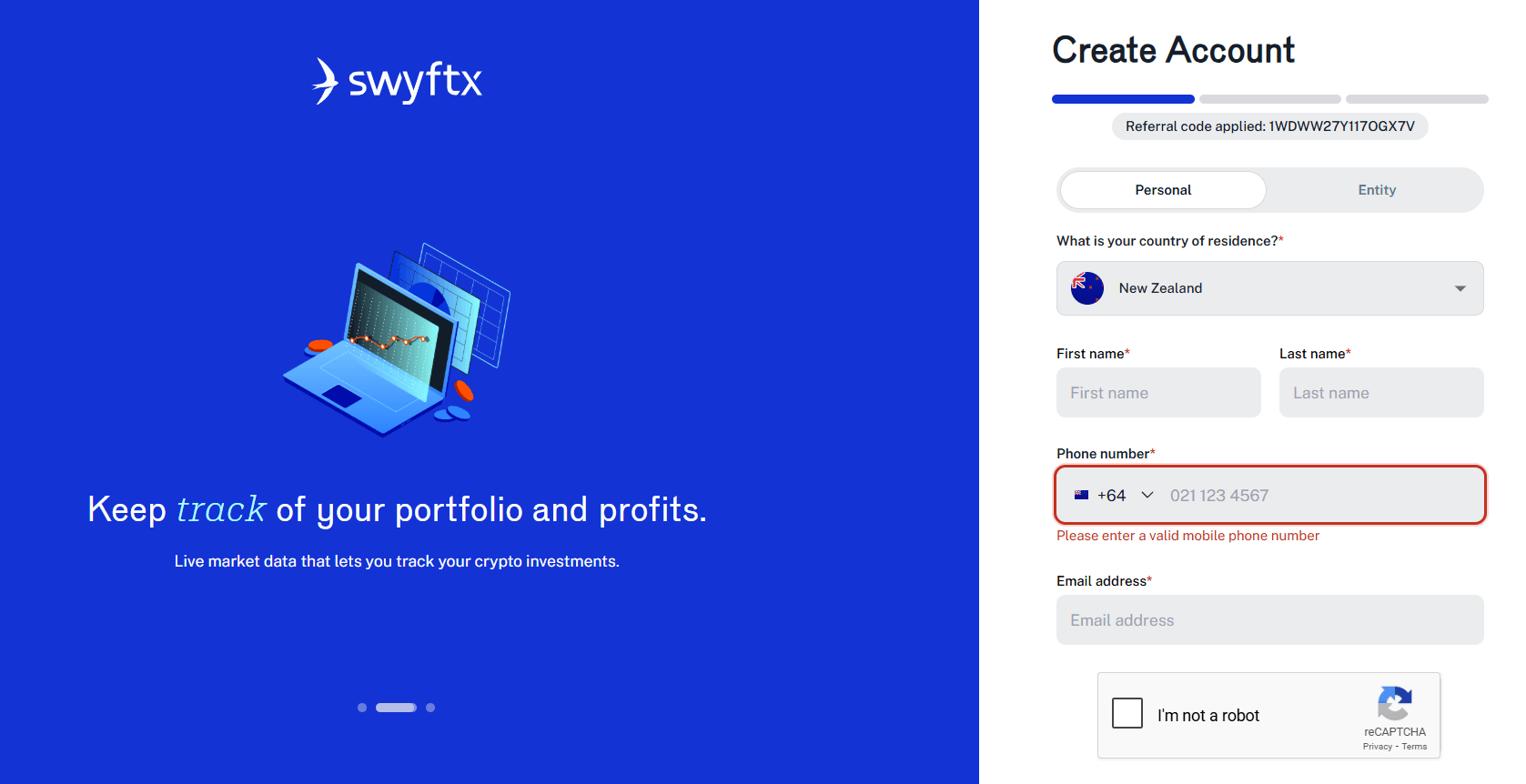
On their homepage, you’ll see an option to open an account:
That’s it! You’re in.
Verifying your account:
Because Swyftx is registered as a Financial Services Provider in NZ, they need to verify your identity.
Remember, this is a good thing! Do not buy Bitcoin (or any financial service) from anyone in NZ who isn’t registered. There’s a good chance your money will disappear and you won’t get it back.
Verifying your identity should only take a two minutes and requires a photo of your driver’s license or passport, and a selfie.
Once you’ve done that, you’re ready to buy!
Step 1: Deposit funds
Click “Transfer Funds” on the top menu.
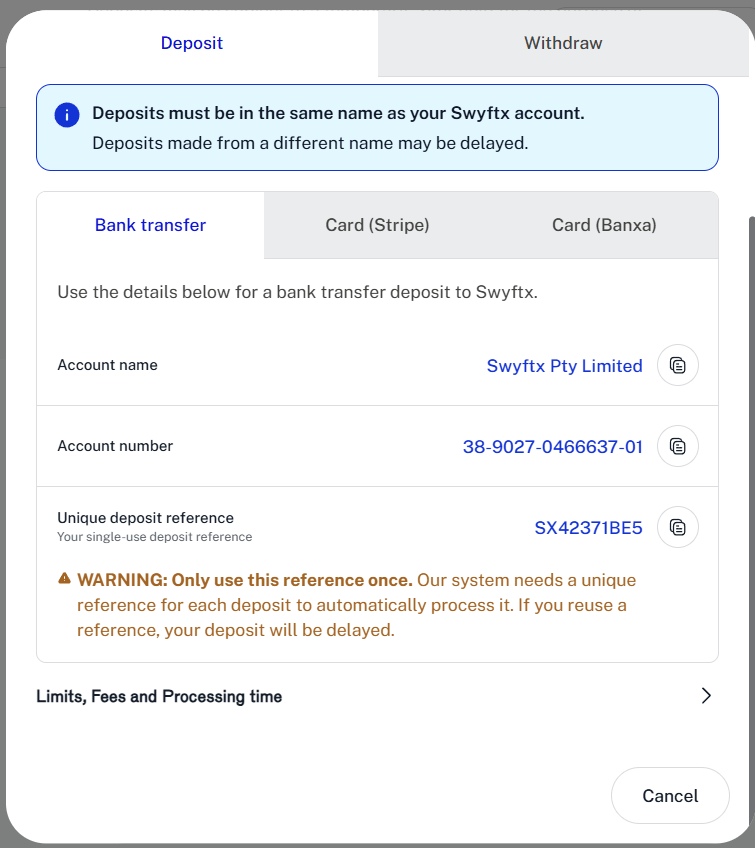
It will bring a deposit information box like so:
To get your reference number, click the “generate reference” button, and it will give you a reference to include with your deposit so it gets delivered to your account.
Then simply make an internet banking payment to the account number given, and you should have your funds ready in an hour or so.
Step 2: Choose your coins and quantity
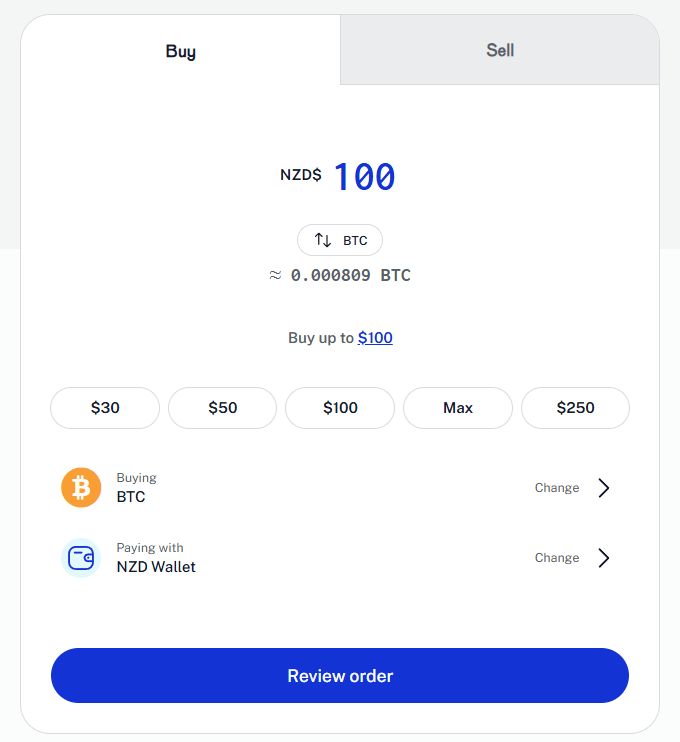
For this example, I’m going to walk you through buying $100 of Bitcoin.
You should see a “Quick Buy” button on the homepage.
This should take you to a buy screen, where you can choose your coin and the amount.
Bitcoin should be the default, so we’ll leave it at that, and in the amount we’ll put $100.
Of course you can choose to buy more or less, or a different coin, but we’ll stick with Bitcoin for now.
Then select your source of funding as your “NZD account”.
Then click buy.
THAT’S IT.
You are now the proud owner of Bitcoin!
This is actually one of the main reasons I recommend Swyftx.
They do not keep your coins in storage on their own site/servers. They actually help you set up a private wallet and help you keep your own Bitcoin.
If people had been storing their coins in their own wallets, this wouldn’t have happened.
Who should use Swyftx to buy Bitcoin?
In my opinion, Swyftx is going to be the best option for 95% of first time buyers, and for people who are new to Bitcoin.
When it comes to Bitcoin, most people are interested in buying $200 or $500 or maybe a few thousand dollars as an investment. Swyftx is absolutely perfect for this and you won’t find a service better suited for it.
As you get more involved and educated about Bitcoin, you may also become interested in purchasing other cryptocurrencies such as Ethereum or Ripple XRP or Litecoin, and many others. Swyftx allows you to buy all of these as well, and has more than seventy of the most established cryptocurrencies which you can buy directly with NZD.
They’re also one of the safest options and operate everything legally and above board as a registered provider, so you know you’re protected by NZ law, which is not the case when dealing with overseas brokers and exchanges.
What’s the best way to store Bitcoin in New Zealand?
Buying Bitcoin in NZ is the first hump, but what about storage?
You can leave your coins on Swyftx. This is common practice and exchanges like Swyftx have become much better at security and keeping your assets safe.
However, there are risks to this. Exchanges get hacked all the time and due to the “crypto” nature of the industry, your coins are almost never recovered.
Therefore, if you’re serious about your Bitcoin investment, have a significant dollar amount invested, and you plan on holding it for the long term, I would suggest using a Bitcoinwallet.
Most exchanges and services want to hold your coins for you, so they can keep them in private accounts in case they go under, or lend them out to traders and institutions and earn interest on them.
So, what is a Bitcoin wallet, you ask?
A wallet is a PRIVATE storage system for your Bitcoin, and it’s actually how Bitcoin was originally designed to be used. This is why you might hear the phrase “Be Your Own Bank” in Bitcoin circles.
A wall operates sorta like an online bank account.
It contains two keys: one public and one private.
The public key is what you give to someone so they can send you Bitcoin. If you sold a donkey for Bitcoin, you would give the buyer your public key, and he would pay you by sending Bitcoin to that address. Think of it like your Bitcoin bank account number.
The private key is something you keep secret. Think of it like your Bitcoin internet banking password. The private key is what allows you to send Bitcoin from your wallet to somebody else. Never share your private key with anyone, ever.
Now, as for the wallets themselves. There are two main types of wallet. There are hardware wallets and software wallets.
Software wallets
Software wallets are free and are generated on your computer or mobile phone.
Think of a software wallet like the wallet you carry around in your pocket each day. It’s good for storing a little bit of cash, but not for thousands and thousands of dollars.
It’s the same for Bitcoin.
If you plan on buying and selling Bitcoin regularly or actually using it to pay for things, a software wallet can be a good choice for keeping a little Bitcoin that’s easy for you to access each day.
Hardware wallets
A hardware wallet is more like a safe in your basement.
It’s a physical device (looks like a USB drive) that you can keep in your house and use to store large amounts of digital currency. Some people even lock their hardware wallets in an actual safe or a bank safety deposit box.
What’s the difference?
The usual concern with a software wallet is the private key is generated on a computer or phone and therefore can never really be considered 1,000% safe. Obviously it depends on how clean your computer is, and if you generated it offline etc etc. Remember, if someone has your private key, they have full access to your Bitcoin.
A hardware wallet is considered much safer because the private key is generated completely offline, inside the device itself, and never even touches the internet. That’s why it’s always recommended to store large amounts of Bitcoin on a hardware wallet.
In reality, if you only have a few hundred dollars in Bitcoin, a software wallet will probably be fine. If you have thousands and thousands of dollars in Bitcoin, you probably want to invest in a hardware wallet.
What do I use?
I do not currently use a software wallet. I store some of my coins on a hardware wallet, and have a small amount of coins stored on Independent Reserve in case I want to sell some.
It’s one of the most highly recommended in the community and is super easy to use. It also allows you to store Ethereum, Litecoin and about 30 other major cryptocurrencies, along with your Bitcoin. You can grab one here. They ship their Bitcoin wallets worldwide, including to New Zealand.
As I said I don’t use a software wallet, but if you are interested in one, I would recommend the wallet provided by Exodus. If you want help setting up an Exodus wallet, it’s very simple and secure, I have a free guide you can open by clicking the blue box below.
How To Set Up A Bitcoin Wallet in 2 Minutes With Exodus (click to open)
First, download the Exodus app on your phone [Android, iOS].
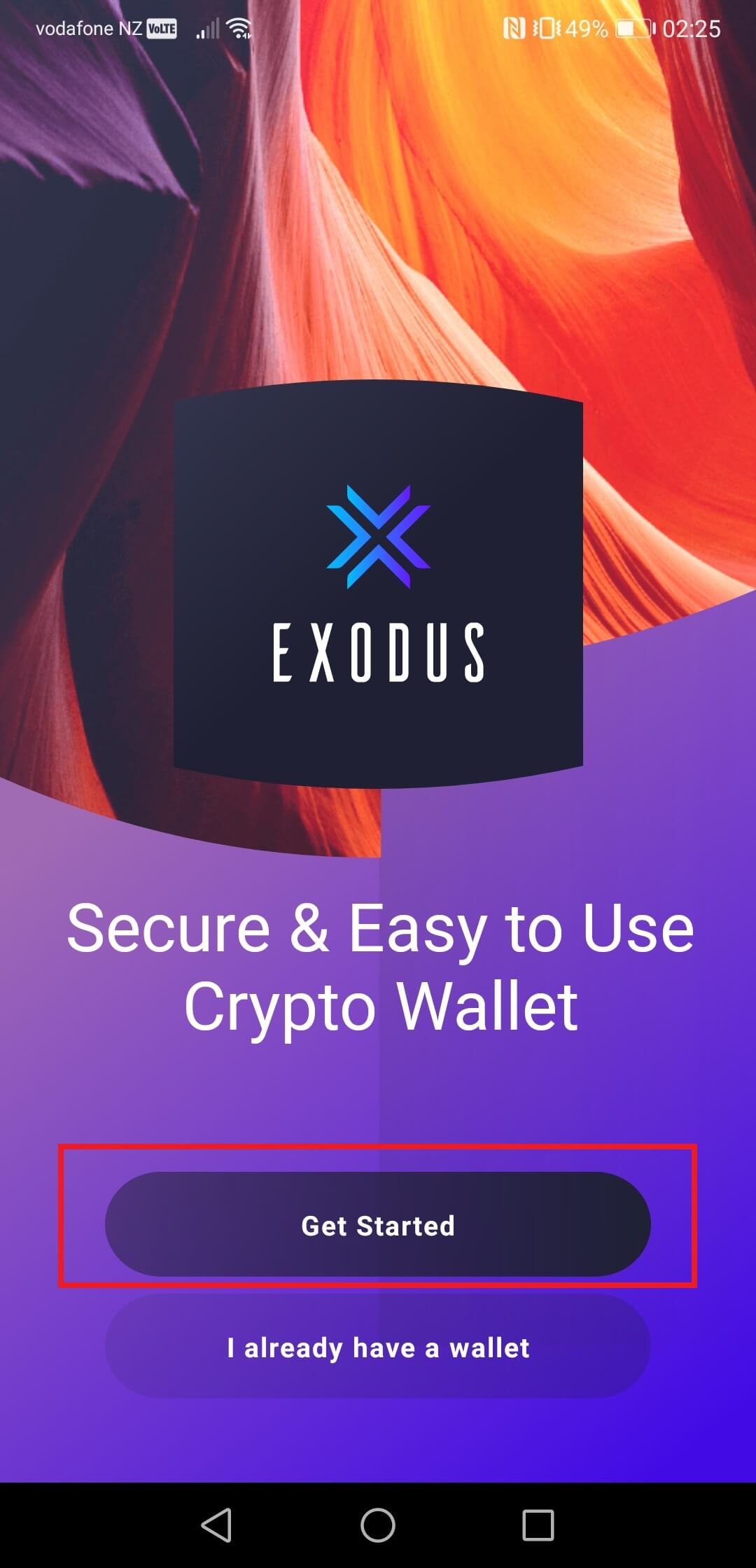
Open it up and you should come to this screen:
Tap the Get Started button and swipe through the introductory messages and you’ll get taken to your portfolio.
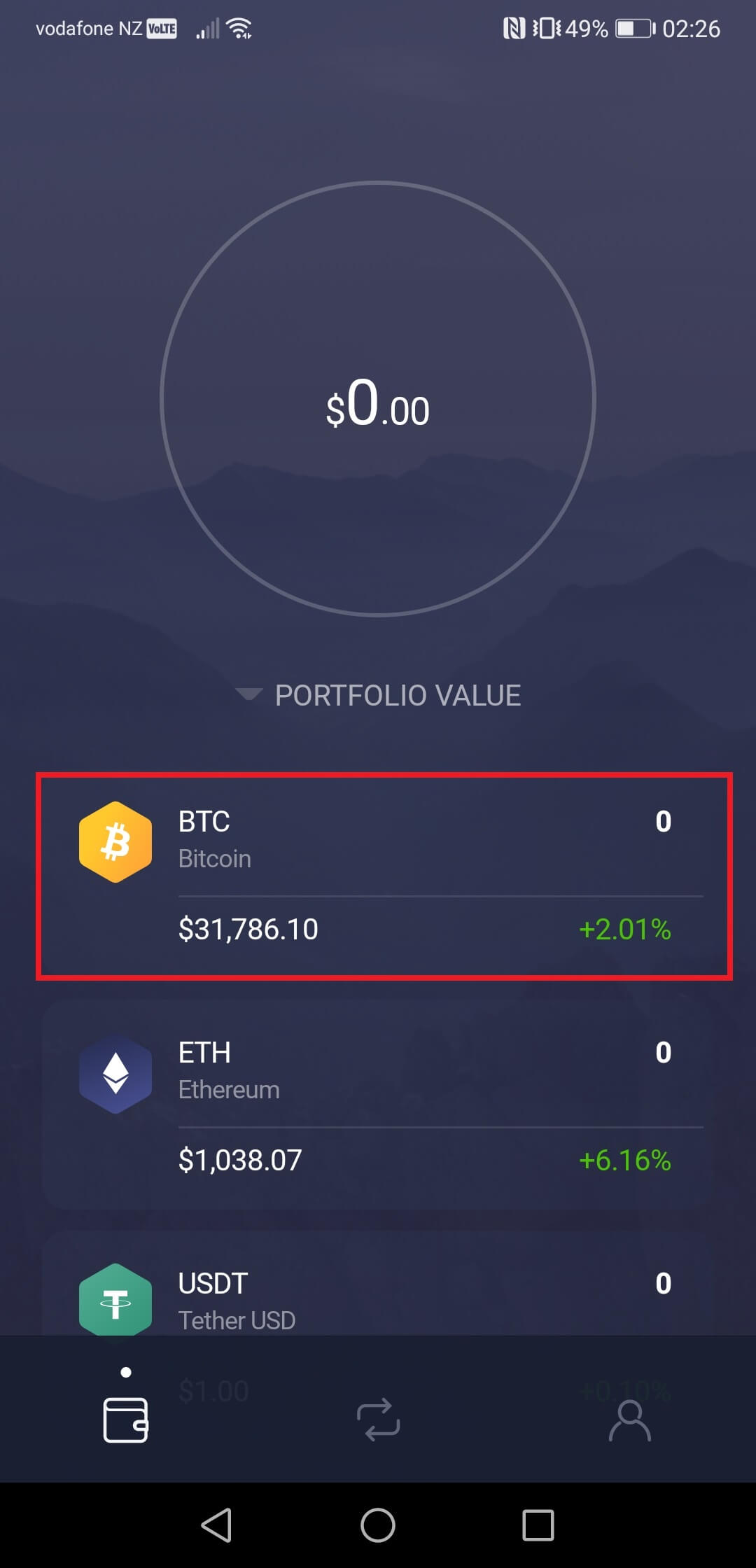
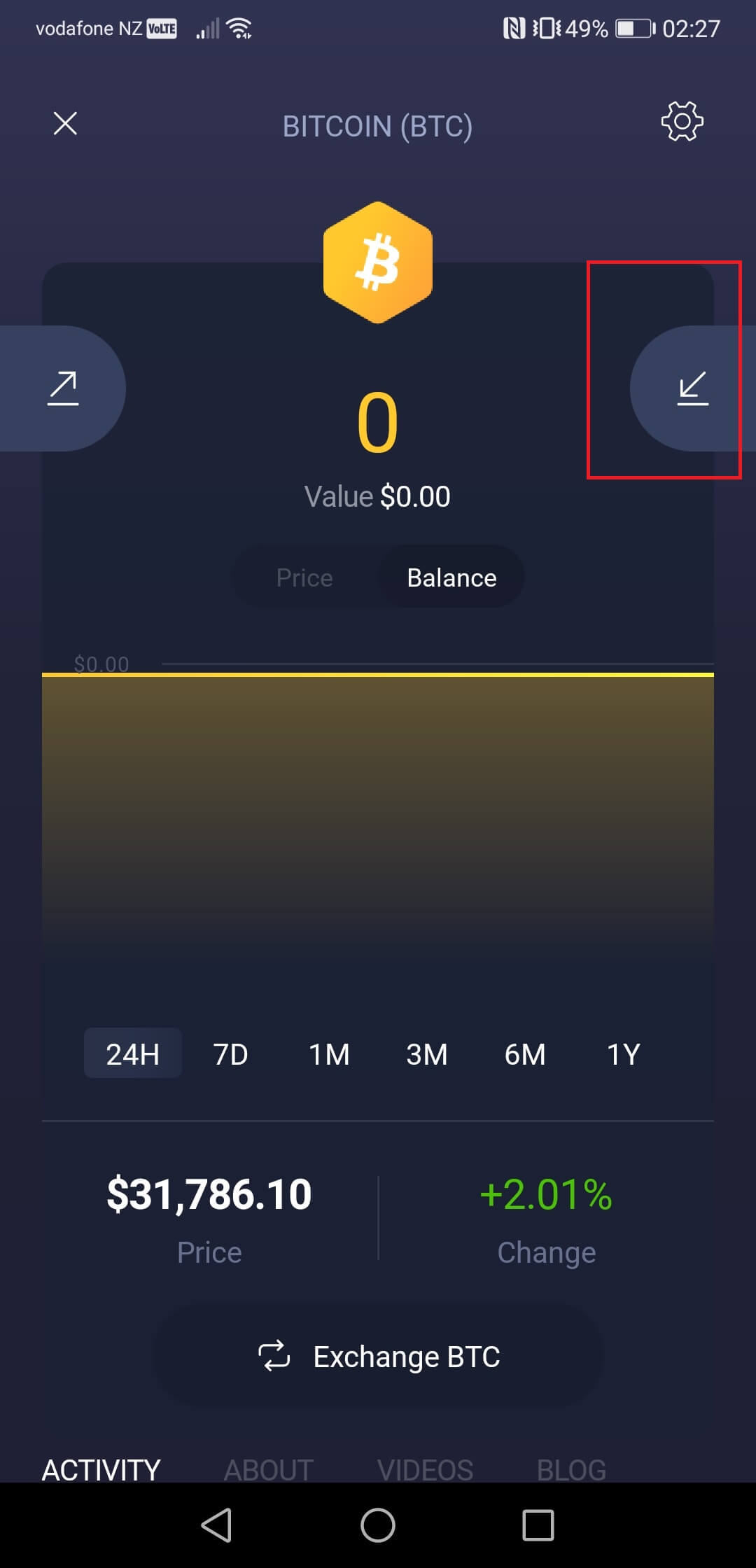
You’ll see the first line in your portfolio is Bitcoin:
Tap the Bitcoin logo and you’ll get taken to your Bitcoin holdings:
Obviously, it will show as zero right now (but we’re going to change that!)
On the left hand side you’ll see an upward arrow, which is for sending Bitcoin, and on the right hand side you’ll see a downward arrow, which is for receiving.
Tap the downward arrow:
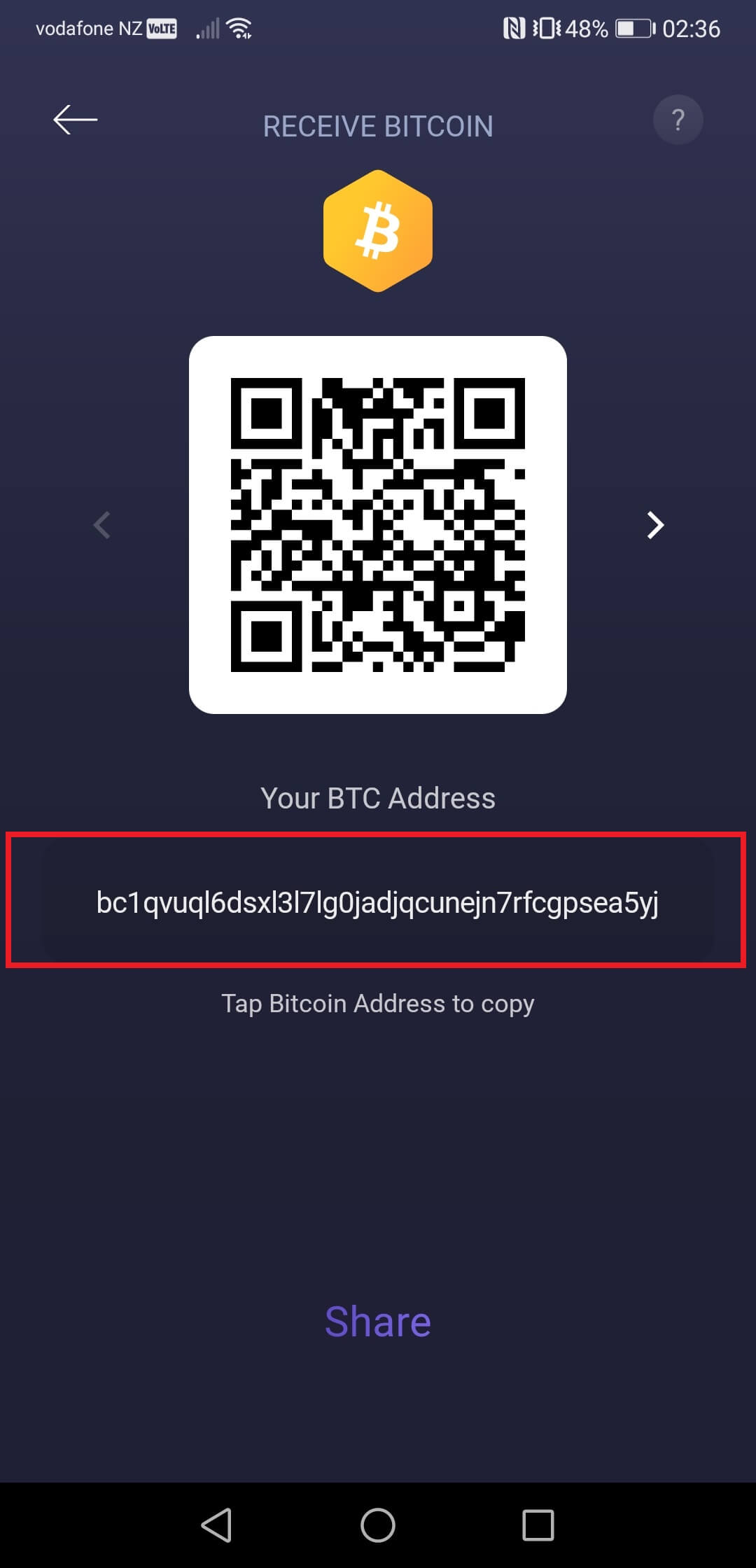
This will then show you everything you need to receive Bitcoin.
You’ll see your Bitcoin address at the bottom!
It should look like a string of letters and numbers starting with bc1qvuq……
Simply copy this string of characters and paste it into EasyCrypto when they ask for your address. Also, before you place your order, double and triple check that the address is correct!
Otherwise someone else might be getting a nice surprise when your Bitcoin gets sent to them instead 😉
In summary: If you have only have a few hundred dollars in Bitcoin, use a software wallet – I recommend Exodus. If you have thousands of dollars or more in Bitcoin, invest in a hardware wallet. I recommend the Ledger Nano S.
Other tips for buying in Bitcoin in NZ
I’m reluctant to give you any actual “tips” for investing in Bitcoin, because that’s not really my intention here. How you invest needs to be an investment decision based on your own risk profile and comfort level.
If you want to buy some Bitcoin and try and sell it in a few days for a quick profit, that’s great, and if you want to hold it until retirement that’s great too.
What I will say is to not to rush. If you have, say, $1,000 to invest, don’t throw it all in at once. Dip your toes in and get a feel for how the market behaves.
Even if you’re used to trading in commodities and financial markets, the cryptocurrency market is quite different. It is open globally, 24 hours a day, 365 days per year, and the market is still very young. There is no other market like it. Big changes are always just around the corner.
I’d also encourage you to read about what Bitcoin really is and the technology behind it. One book I highly recommend is The Internet Of Money by Andreas A.
Information is the key to investing and the more your learn and understand, the better decisions you can make. Other than that, where you go with your Bitcoin journey is up to you.
Have fun and good luck!
Questions? Leave em below. I’ll answer them the best I can! A full directory of places to buy Bitcoin in NZ can be found here.
It was late August when I signed up for the race. Nine weeks out.
Part of me didn’t really believe I could do it.
But, part of me did.
That was the only part that mattered.
There’s a long backstory to why I signed up for this race. I was battling a skin condition called Topical Steroid Withdrawal (TSW). It had destroyed me physically and mentally. I could write a book about the experience, but I’ll leave out the long version for now (you can read more here).
Because what I learned on race day is everyone has a unique reason for getting to the start line. The marathon isn’t a race for most, it’s a battle against yourself, trying to conquer your own limits and destroy your demons. The thing we all have in common is, we are in a fight.
On the back of one guy’s shirt, it said “Sudden cardiac arrest in May, but I’m still here.” Another guy’s shirt said something like “My wife said I needed to get in shape.”
To some it might seem like madness to wake up at 4 a.m and run 42 km with a bunch of strangers, but thousands of people had accepted the challenge. Marathons are particularly special, mythical even; a chance to undertake the impossible journey that Pheidippides ran from Marathon to Athens. You go out there and run the impossible race, and by doing so you take your life back. Because once you finish a marathon, you can do anything.
What’s it like running Auckland Marathon?
The marathon experience is quite special, something I didn’t expect or even think much about when I signed up. People come from all over the world to run. It’s a a life changing event for many.
Below I’d like to take you through the experience, from signing up to everything that happens on race day. If you want to run your first marathon and Auckland is on your radar, I’ll include everything you need to know. And if you have no plans of ever running a marathon, hopefully this gives you an insight to what it’s like, or better yet it might inspire you to try 🙂
Signing up for the race
Auckland Marathon is owned by Ironman and administered through Active.com, but you start your registration directly on the Auckland Marathon website.
It will cost you around $130-$190 to enter, depending on how early you sign up.
You will also need to pay an Active.com handling fee of 8%, so in total the registration fee will cost you between $140-$205 NZD.
This fee gets you entry into the race with an official race number and timing bib, a gear bag, medical support on the course, water, Powerade and Coke at aid stations, an Auckland Marathon hat, and a finisher’s medal (if you finish).
The other thing you might want to buy is your race-day transport. You don’t want to be worrying about things like parking and being late on race morning, so I’d recommend using the transport provided by the event. You can either catch the ferry from Auckland CBD, which will take you directly to the start line, or there are also buses you can take from other areas on the North Shore. The tickets cost around $10-$20.
There’s a whole bunch of other stuff you can buy during registration like photos, clothing etc. but none of it is essential. If you’re thinking about buying the photos, you can wait until after the race and you’ll get to actually see them before you buy, but it is a bit cheaper to buy them beforehand.
Training
For some idea of my background, I’m new to running, I started running 4 months before the race, and started training for the marathon 9 weeks before. I would’ve liked more time, but I made the decision to register late so that was all I was left with.
Most people would have considered me fit and healthy before I started, but I quickly found out that didn’t matter much. Running fitness is a different beast!
I remember my first run in June was 2.14 km and I felt like I was going to pass out. If you had told me then I would be running a marathon in October I would have said “Impossible!” or at the very least, “highly highly highly highly unikely”. But the other thing about running fitness is it tends to improve quite quickly; a handful of short runs and you’ll already notice a big difference. So don’t be discouraged if your first runs feel like death!
As a new runner the first thing I had to do was put together a training plan. All the training plans I Googled you had to pay for, and the free ones were vague. I did find a few helpful-ish articles and used those and mostly guesswork to put a plan together.
Basically you’re going to need to run a lot (duh), but there are many different kinds of runs; slow runs, fast runs, long runs, short runs, tempo runs, threshold runs, repeats.
To be honest all that stuff just complicated everything so I just focused on one thing: Mileage.
This meant I ended up doing only three types of workouts:
Short runs
Long runs
Weights
My only goal was to finish the race. As long as I met my mileage goal every week I figured I was getting fitter and would finish.
A typical week would be three short runs (between 6-10 km) and then a long run on Sunday (20+ km). I didn’t worry about how fast I ran or when I ran or how I ran, I just focused on finishing the mileage. Once or twice a week, I would go to the gym after a short run and do some weights (mostly hitting legs, and some circuit stuff).
“Good” runners typically get their mileage up to 80+ km per week or more, but I knew in 9 weeks I’d never get that far. The goal was to get up to 50 km per week, but I never actually made it there either. Dealing with TSW and also a few sore muscles meant the most I ever ended up logging in a week was 41 km, and the longest run I did was 28 km. Not the ideal build-up to race day, but it was the best I could do with the time I had.
Diet
Obviously you need large amounts of fuel to train for and finish a marathon, so nutrition is a big part of the training plan. I know everyone has a different view on what a healthy diet looks like, and to be honest I think you could finish a marathon on any reasonable diet, whether it’s Whole 30, paleo, vegan, carnivore or whatever else. But I will tell you what I did and why I did it.
I decided to train on the keto diet, which is a low/zero carb diet. I’d have been open to any diet, but I went with keto because it’s familiar and fit best with the TSW treatment I was going through.
The broad macronutrient breakdown on keto is 75% fats, 20% protein, 5% carbs.
This is the opposite of almost every recommended diet for marathoners, which recommends ~60% carbs and almost no fats. However I did find many people who had run marathons on keto and that was all I needed to know.
What’s the idea behind keto?
Carbs are the default energy source for most people. What happens is you eat carbohydrates, your body turns them into glycogen. The body then sends this glycogen to your muscles to use as energy.
However if you stop eating carbs, your body has to use something else. It turns to the next energy source which is fats. Your body takes fats (either body fat or dietary fat) and turns it into something called ketones, which gets sent into your bloodstream for energy.
The reason people choose the fats/ketones route over the carbs/glycogen route is because of capacity. Glycogen delivers energy faster, but your muscles can only store around 2,000-3,000 calories of glycogen at any time. When you run out, your body shuts down and you’ll get light headed and find it difficult to stand or walk (also known as “bonking”) until you eat more carbs. 2,000 calories will only last you around 1.5 hours of a marathon, so if you’re running on glycogen, you will need to eat during the marathon if you want to finish. This is why most people hammer energy gels during marathons, which are packed with sugar (carbs).
When it comes to fats, your capacity is much higher. Most people already have at least 30,000 calories of stored body fats, which is enough to fuel several marathons without eating anything. However, if you’ve been eating carbs your whole life your body’s ability to create ketones will be weak, since it’s never had to do it before. It takes time for your body to build the ability to generate large amounts of ketones, or to become “keto adapted”. Usually around 6-8 weeks of no carbs, and your ketone-producing ability will continue to improve over time after that.
If I were an experienced runner and could finish the marathon in ~3 hours, I would have relied on a more glycogen-based diet, but as a newbie with only 9 weeks to train I figured I could be out there for 5 hours or even more. So the bigger gas tank on keto made more sense to me. I’m also a regular faster so I knew my body was already keto-adapted to some extent.
So what does a keto diet look like? Lots of fish, steak, chicken, cheese, eggs, butter, and low glycemic vegetables. This was good because it also kept my food prep very simple. For all my training, I also worked out fasted, relying only on body fats to fuel my runs. This made my meal prep even simpler as I only ate one (big) meal a day.
I did learn quite a few interesting things about this diet during my prep, and for any future marathons I would tweak this strategy a bit, but overall it worked as I’d hoped.
Athlete check-in
Two days before the marathon there is the check-in, where you go to pick up your race number and your race pack. It was held at The Cloud in the CBD, and there’s a big runners expo there too with all kinds of merch and gear for sale.
It’s pretty cool to go to these things as a first time runner. You see all the other competitors and what a big event it is. Everyone is on a buzz because you’ve been training for months and now finally the race is here.
If you’re running at Auckland, one thing I’d recommend is depositing special drinks. The great thing about Auckland marathon is it lets all competitors deposit special drinks, not just the professionals. This means you can prepare your own drinks and deposit them at check-in with your name and the aid station you want it to be sent to, and the staff will make sure that drink is waiting for you out on the course.
Because I was running on keto I couldn’t drink the sugary drinks they provided, so I mixed up my own drinks with electrolytes, ketones and MCT oil and had them deposited at every aid station. This was a big mental confidence booster for me, because I knew I would have lots of keto-friendly fuel, and would be able to race with the same drinks I’d been using all throughout my training.
Race morning
I woke up around 3:30 am on race morning. I had all my kit prepared the night before. During the race I’d be carrying a race belt with my knee guard, a little box of electrolyte pills, some “fat bomb” sachets, and my phone with headphones in case I needed inspiration (I ended up not using the phone, the fat bombs or the knee guard at all, but I did finish all the electrolytes!)
I arrived at the start line early. This gave me a lot of time to stretch and do some massage ball work, more for peace of mind than anything. In the back of my head I still wasn’t sure if I’d be able to finish this thing. My knee was a little soft and I knew I’d have to be gentle on it. I was just doing my best to focus and get positive.
As my parents were with me I didn’t need to deposit any gear, but if you’re alone there is a bag check where you can deposit your jackets etc and they’ll transport it to the finish line for you.
The start line is divided up into zones based on pace, so if you think you’ll run around 3 hours, you go to the 3 hour pace zone, if you think you’ll run 4:30 you go to that zone and so on. It’s a rolling start, and there’s an electronic timer on your racing bib so your official time doesn’t start until you actually cross the start line.
I started at the back of the 4:45 zone. I figured I could run between 4:30 and 5 hours, but I’m a slow starter and didn’t want to get caught in a whole bunch of people passing me. I decided it was better to start at the back and pass lots of people rather than get overtaken all the time and be reminded of how slow you are.
There was a lot of buzz on the start line. Thousands of people, all this work and it had all led to this moment. This means lots of nerves, lots of emotion. But as soon as the gun went all that faded away and I got to work.
Kilometres 1-10
I felt unusually strong for the first 10km. Normally my body takes a while to loosen up, but on race day I was comfortable from the beginning. Possibly because I started at a slower pace than usual.
It was still dark at this point, about 30 minutes before sunrise. As a summer chaser it was a little cold for me. Of course I was too caught up in the moment to worry about that. It only took a couple of slow kilometres before I was warmed up and running smoothly.
The course at Auckland is top-heavy, meaning the difficult parts are in the first half. Most of the early part consists of small hills. In fact the course basically starts on a hill (an easy one). Hills are the bane of a marathoner because not all kilometres are equal. After running for hours, 1 km on a hill can be ten times harder than 1 km on a flat. So getting the hills out of the way early actually turned out to be a good thing.
The first aid station was at 4 km. This was where I realised how awesome it is to have special drinks. The special drinks table is actually about 20 metres before the actual aid station. So how it happens is everyone is running towards the aid station, but before we get there, there’s a big sign that says “Special Drinks” with a table. And on the table I see my bottle waiting, with the blue and yellow ribbons I tied on it so I could find it easily. There’s only 2 other bottles there. I run by like it’s my own personal refreshment booth, don’t even need to stop, I grab my bottle and start sucking on it as I run right through the aid station. Everyone else is slowing down or stopping in the crowd to get water or Powerade, and I just breeze right past them.
The second huge advantage was I had a bottle, and everyone else was drinking from cups. It’s almost impossible to run while drinking from a cup without slowing down (I learned this when I grabbed some water a few aid stations down), but it’s easy from a bottle. So I was able to continue running while drinking without breaking my rhythm at all, and everyone else had stopped to walk/drink.
My pro tip: If you’re running at Auckland, definitely deposit special drinks!
The first ten kilometres was my strongest part of the race as expected. I also ended up passing a lot of people like I’d planned, including the 4:45 pacer. At least mentally, that set me up nicely for the next leg.
Kilometres 11-20
This is the area where you finish the last few roads on the North Shore and then head over the bridge to Victoria Park.
I still felt strong during this area. However, the bridge was a lot steeper than I expected. Quite a few people struggled on the uphill. It’s a lot steeper than you might guess while driving over it. I grinded out the uphill quite well, but ended up finding the downhill difficult too. It felt uncomfortable running it slowly. I told myself it’s a waste of energy to hold back on a downhill, so I let my legs loose and went down at speed.
This probably used a lot of energy anyway and hammered my legs, but it did mean I got over the bridge quickly. I also passed the 4:30 pacer group on the way.
Once you get over the bridge, there’s a few winding roads you run through and some mini hills, but eventually you get out towards Victoria Park. This is the halfway point, so you see the half marathoners going off to the finish. For you though, it’s only halfway!
I actually remember feeling pumped at this point as I still had spring in my legs, and told myself I was more than ready to fight through the second half. This is what we came to do!
Kilometres 21-28
The second part of the course is all flat. It’s also all straight – along the waterfront to St Heliers and then straight back. This makes it ideal for putting your game face on and getting to work.
My goal was to stay in front of the 4:30 pacer and maybe even push for 4:15 in the later kms. But my legs started to weaken around Kilometre 25, and eventually the 4:30 pacer group caught up to me. I stayed with the group for about 2km, but my legs just couldn’t do it and I had to let them go. That was disappointing, but I didn’t have time or energy to dwell on it. I just told myself to make sure I stay ahead of the 4:45 pacer, and kept on going.
Along the waterfront there are markers every kilometre. They seemed to come rather quickly at the start, but by Kilometre 25 it felt like decades between them. Around Kilometre 28, the hurt started to set in deeper than I’d ever experienced in training. It was the kind of pain where I would have said to myself “Enough for today” because I would’ve guessed an injury wasn’t far away. For the first time I was doubting whether I’d actually finish without walking. I hadn’t even gotten to Kilometre 30 yet, and that’s supposed to be when the “real” hard part starts.
Kilometres 29-36
The worst part of the race x100. My legs were toasted. I told myself whatever you do, don’t walk. But although I may have looked like I was running, I was probably moving at walking pace anyway.
Interestingly it was only my legs though. My cardio was fine, I wasn’t breathing heavy, and had a ton of energy (those trusty body fats). I could’ve gone straight to the gym and smashed an arm workout. But my legs just weren’t conditioned to run this long. They were being tortured.
This is also the point I started seeing a lot of people bonking, a few people walking with limps, and pairs of people just walking and talking like they’d given up on trying to run anymore.
Around Kilometre 31 was where the peak pain period started and even though I didn’t stop I felt like I wasn’t moving at all. Looking ahead was just endless waterfront, and the disadvantage of being an Aucklander was, I knew exactly where I was. Even in a car Victoria Park was miles away! It would have been better if I’d had no idea. Plus my mind was playing tricks on me. “Does that sign say Kilometre 32? I thought I already passed Kilometre 32! FML.”
Finally I did stop to walk through an aid station at 33km and finished my drink slowly. A little pep talk, and I managed to force myself to get running again.
Then after managing to “run” to the 36km aid station, I stopped to go toilet and it was hard for me to get moving again. Six more kilometres shouldn’t feel like a lot, but it might as well have been 100 more at that point, the finish line felt so far away. This is where you start zoning out, calling on Jesus to come down and save you. I gave myself a chest bump and told myself just get to the next aid station, drink more ketones and maybe your legs will come to life.
Kilometres 37-42
I was running super slowly (my splits say I ran 8’41” for Kilometre 37) but running a few kilometres slowly was probably what I needed. My legs found a little spring and as each kilometre marker went down it was a mental boost that got me moving a little faster each time. I ran Kilometre 38 in 7’47”, and Kilometre 39 in 7’26”.
When I left the 40 km aid station, my legs came back to life. Now I could visualise the finish line being only 2 km away. There was a police officer there that told me to finish strong and I said to myself…YEAH! Time to finish strong.
The crowds started growing after this point and suddenly the course was lined with people smiling and cheering. The marathon course is pretty lonely at times, especially in those later kms. You’re out there chugging along, the finish line is still so far and you realise nobody can run these kms except for you; the only way you’re getting out of here is through another hour of pain on these smashed up legs. So to suddenly get all that energy from spectators in the last two kms, it was like a pure shot of adrenaline. If you’re ever on the sidelines of a marathon, or any running race, definitely cheer and clap people on. It might not seem like much but after four hours of running that boost is everything.
Because your name is on your race bib, people were even saying “C’mon Bren you’re looking strong!” and that would pump me up for at least another 200 metres. I’d say “F*ck yeah, I am looking strong!” and beast mode became activated. Another lady shouted, “Don’t give up, and remember to smile!” and that really reminded me that it was such a blessing to be out here running this race, that I wasn’t even supposed to be here. I thought back to where I’d come from, all the darkest nights I’d been through and how I’d survived far worse pain than this. I needed to be reminded that this race wasn’t just for me but for everyone who’d been through what I’d been through.
The only thing I regret from the race is I wish I could’ve gone back and thanked all those people who cheered for me. They have no idea how much impact they had with just 4 or 5 words.
The last kilometre was all engines GO and I started to power through it. By now there was no doubt in my mind I was going to finish, so there was no reason to hold anything back anymore. Even if my ankles broke I could crawl to the finish line. I lifted my legs up and tried to get the best time I could. Looking at my race splits, the last kilometre was actually one of my fastest (6’03”).
As I came through the business park before Victoria Park, there were crowds of people sitting along the route in the sun, enjoying the race. I couldn’t see the finish line yet but I knew it was just around the corner. A lot of them were cheering, saying “Finish strong!” and “Almost there!” and this is where I started to get a bit emotional and was holding back tears. I actually still think about this moment a lot and I cry every time. A marathon means something different to every person, but it’s always about conquering yourself and achieving the impossible. It’s such a long and hard journey to get there and after months of training and hours of running one step after the other, you can finally smell the finish and all these strangers are clapping and screaming for you, it’s a feeling that can’t be explained.
When I turned the corner to the finish line, the first thing I saw was the lines of people crowded on the ASB barricades, banging on the sides and screaming. I had visualised this moment so many times during training, so to suddenly experience it was a little overwhelming and I wasn’t able to hold back tears anymore. Nine weeks ago I could barely walk up the stairs, nobody would’ve believed I would ever finish this race. The feeling of crossing the finish line will be impossible to forget. No matter how many marathons I run in my life, even if it’s the Olympics, even if I win the gold medal, even if it’s a world record that lasts forever, this marathon at Auckland will always be the one that means the most.
Post race
After the race you walk through the finisher’s tunnel and you get your medal, a banana and a Powerade.
There are a few places for you to pose for finisher’s photos, and all of Victoria Park is turned into the post-race festival/village with food and merch for sale to enjoy with your family and friends. You can also join the crowd and support the other runners who are just finishing, which includes half and quarter marathoners and the Fun Run.
However most people tend to just chill out on the grass and relax, which is exactly what you should do. You’ve just become a marathoner!
Thinking of running Auckland?
One thing that I noted during the whole build up and after the race was what a great job they do with this event. It’s one of the best organised events I’ve been to. Everything goes like clockwork and everything is made as stress-free as possible for the runners so they can focus on what might be the hardest thing they ever do in their life. It’s also small enough so that your experience isn’t dampened by long lines, crowding, traffic and all that other crap that often ruins large events. If you’re thinking of running a marathon, especially if it’s your first, Auckland is a big thumbs up from me.
Can I do it?
Lots of people say, “I could never do a marathon”, but running the marathon is the greatest equaliser of all sports. You don’t need a coach, a gym membership, natural born talent, good genes, height, big muscles, expensive gear, good teammates or anything else to become a marathoner. All you need is a pair of shoes and two working legs (and there were people with no legs and no shoes at Auckland 2019, so technically you don’t even need those!)
Finishing a marathon only requires two things:
Working hard
Not giving up
That’s also what makes it scary, but if you can commit to that, you can cross the finish line. Plus, you get bragging rights for life 😉
Just the fact I’ve drunk many hundreds of beers in my life, and I don’t even like beer. It says a lot.
As a New Zealander, alcohol surrounded most of my adult life. When people celebrate, they drink. When they catch up with old friends, they drink. When they meet new friends, they drink. Drink when you’re happy. Drink when you’re sad. Drink when you’re bored.
Social life in New Zealand is almost non-existent if you don’t drink.
I never saw this as a problem. In fact it served me well on the backpacker circuit. Backpackers are the craziest drinkers in the world.
You can find people drinking at 11 a.m. in the hostel bar, right after breakfast. Usually Australians.
If you’re from New Zealand, it’s easy to fit right in.
So that’s what life was like, for a lot of my twenties – drinking a lot at home, drinking a lot on the road.
And I loved it. Drinking is fun. You go out and do silly stuff and make lots of cool memories.
So why did I stop?
Last year in Namibia, I had a huge night with some new friends of mine.
Just a long afternoon of drinking, a very long night out at the bars.
Around 3 a.m. I was with a couple of new guys I had just met. One of them headed off to the bar and offered to get me something.
“What are you drinking?”
I remember the last thing I needed at that time was one more drink, but it felt so rude to turn down a kind offer from a stranger.
“Whatever you’re having!”
He brought me back a beer and I sucked it down.
The next day I woke up with the hangover to end all hangovers. I spent the day sitting on the couch, drinking water, half alive. I tried reading. My head hurt so I stopped.
That night I decided to change things. Nothing monumental. We were in November, and I decided to try and make the last two months of the year excellent.
I created my own diet, based loosely off the Paleo, GAPS and Whole 30 diets (I tend to create my own diets, based off what I know about my body).
I’ve tried a lot of diet “experiments” in my life, so this was nothing new to me.
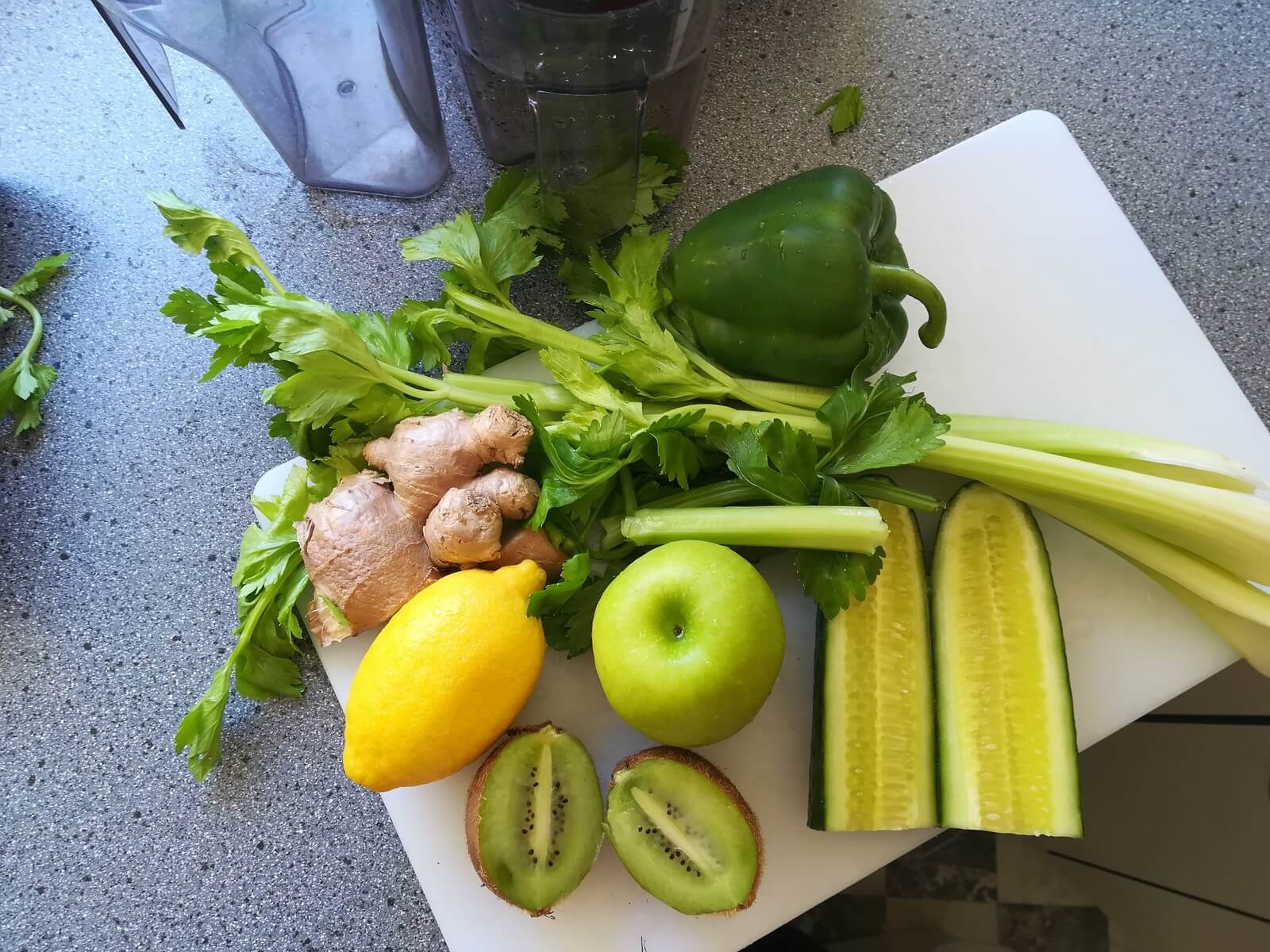
This one was lots of raw vege smoothies, lots of cooked vegetables – avocado, asparagus, broccoli, spinach, stuff like that. On top of that, lots of fresh herbs, like oregano and parsley, nuts and seeds, lots of daily probiotics and bone broth, and regular fresh chicken or fish.
Things I cut out were red meat, dairy, sugar and all processed foods, and all beverages except water and herbal tea. And no drinking, obviously.
Luckily Namibia has excellent first-world supermarkets with lots of good produce, so this diet wasn’t hard to do.
I also joined the local kickboxing gym and trained three times a week.
After those two months in Namibia I was possibly in the best shape of my life.
When the new year began, technically my “reboot” had finished, so I could drink again, eat steak again, etc. I tend to do strict diets in on-off cycles, otherwise you tend to lose your mind a little.
But I was feeling so good, and didn’t have many cravings, so I decided to push it further.
It’s about cleansing waste out of your system. All the old faeces, mucus, dead cells, old waste sitting in your body, a fast is a way to flush it all out.
I’ve been a regular juicer for many years now, but an extended juice fast isn’t something I’ve been able to successfully do. This felt like the perfect time to try again.
The ten day fast had some bumps but it wasn’t difficult and not once did I think about quitting.
At the end, I could already feel my body had shifted to a new level. It was so easy for me to feel – everything just functioned better. It’s like when you have a computer that’s all slow and shitty, the hard drive is old, there’s all these little lags and glitches that were annoying at first, but you’ve learned to deal with them.
Then you upgrade, replace all the old parts and everything just runs like a dream.
I also moved to daily intermittent fasting. This involves doing an extended fast every day, something I’d tried in the past.
In my case, it was a 16 hour fast from 10pm until 2pm.
This is an old body-building technique for shedding fat, and also something many martial artists do. More important than shedding fat, it reduces your digestion period into a small window each day, instead of your body constantly digesting food from morning until night.
First thing I remember after switching to this diet was my digestive system went into God mode. Poops became effortless. Like a soft serve machine, whooosh, as if I’d just installed a brand new set of intestines. Dairy, red meat and processed food are usually the culprits of clogged up colons, but replace all that with raw fibres and vegetables and it’s like having a high tech Japanese plumbing system inside your digestive tract.
The second thing I noticed was my cardio went through the sky. I used to gas out halfway through sparring class, now in the last rounds I was overwhelming people, walking forward with fresh legs while they huffed and puffed with their hands down. I would even go home and keep working out since I wasn’t tired.
After a few weeks, I went on a second fast. This time I did a water fast.
As fasting wasn’t so foreign to me anymore, I didn’t need to put a strict goal on it, I just planned to fast as long as my body was comfortable. I went seven days drinking only distilled water, maybe two litres a day.
To be honest, I didn’t feel any big benefits from doing this one, other than another good clean out of the colon. Water fasting is supposed to have slightly more healing effects than juice fasting, and is more taxing on the body, but the effects for me weren’t as drastic. Possibly because I’d just done a long fast a couple of months earlier. It was still a valuable experience.
By now it had been around six months since I had touched any alcohol. But the most important thing was, I wasn’t missing alcohol. I wasn’t even thinking about alcohol.
All my focus had been on doing more experimenting and levelling up my body to be fitter, stronger, faster, lighter, and each day I would read a new book or article about other ideas and experiments to try.
Instead of sitting around thinking I’m not allowed to drink alcohol, the mission had grown into something bigger, which was simply how much healthier can I get? What’s something new I can try? How can I get even fitter?
I mean getting drunk is cool and all, but have you ever had endless energy and landed a six punch combo on a dude who’s too tired to keep his hands up?
Then around June, I hit the road again.
This is when alcohol started to re-emerge in my life. In New Zealand life was simple – kitchen, laptop, gym, sleep – but once I was back in Tanzania I was being invited out to catch up by old friends and offered drinks by new ones.
A simple “I don’t drink” was enough and usually met with understanding. Some people asked why, and I explained my sober year. Most people thought it was pretty cool.
One night, I was somehow convinced to join my friends at a nightclub. It obviously felt weird not having anything to drink, but after a while I felt comfortable and didn’t mind being there sober. In that part of the world, it’s not actually rare for some people to go out and not drink alcohol, so that helped.
Waking up fresh the morning after a night out was obviously a great feeling.
Over the trips that followed to Kenya and Europe, I noticed how often you drink just because there’s nothing else to do. You might be wandering around a shopping street, you’ve seen everything, so your first inclination is to say “Let’s go get a drink” as if that’s how you make things interesting again. There were many times where, had I not been on a “no drinking mission”, I would have happily gone and had a cocktail, for no other reason than we had nothing else to do.
That showed me how often I would normally drink, even when I didn’t particularly want to. Those drinks are probably the ones that affect you more, because they seem harmless, and in many ways they are, but they also highlight a lack of intention in what you’re doing; I’m going to go drink because I have nothing better to do, versus I’m going to work on this thing because that’s what I want to do.
This brought me to around October.
For the final month of my sober year, I was backpacking through the Netherlands, Belgium and Luxembourg.
What’s it like being a non-drinking backpacker?
It’s definitely different. It’s a different crowd of people you meet. It’s a different type of experience. You do tend to spend more time alone, more time in periods of reflection. I can’t lie, getting drunk with new travel friends is fun, I did miss that.
However that doesn’t mean you’re excluded.
Whenever you feel like hanging out with someone, there are always lots of people to meet. People often think not drinking means they can’t be social, but that’s not true at all. I met a lot of great people this year.
I was in Luxembourg when my one year finally came to an end.
It felt good, of course, but it still just felt like an ordinary day. It didn’t feel like I deserved a life achievement award, so I didn’t feel the need to celebrate with anything, or anyone. I went and had noodles and dumplings for dinner, then spent the night doing my laundry at the hostel.
I think for challenges to affect you greatly, they need to be difficult, and this one didn’t affect my day-to-day life too much. Once you switch your mind over from drinker to non-drinker and make that initial adjustment, life just tends to roll on as normal.
So what changed?
Whenever I read about people giving up drinking, the results always seems drastic.
“I met so many like-minded people, I made so many new friends, I started making so much more money, I have so many new hobbies!”
It didn’t feel like that for me.
To be honest, I think I actually made less new friends. I didn’t find any new hobbies. Probably make the same amount of money.
The only big change was in my health.
But that’s also the only thing I was actually interested in, too.
When it comes to travel, we’re always trying to stay healthy on the road, but the regular nights out tend to keep resetting all your progress. You have three healthy days and then a big hangover erases it all.
This year staying healthy has been much more like a positive feedback loop, and I’ve gotten healthier as the year went on. Obviously removing the alcohol has been a big part of that.
As for drinking itself, I did learn a lot from those few moments that forced me to really resist drinking something. Times like when I was at a bar with friends, and everyone was sipping cocktails. When someone asks if you want one, it’s pretty hard to say no.
It helped me understand a lot about why we drink, and what it gives us. The answers to both those questions don’t really seem to be good ones.
If I could choose the drinks I actually enjoy drinking the most, I don’t think anything alcoholic is in the Top 5.
So why have I spent so much money on it?
That’s when you start to realise, it was never alcohol I was buying.
I was buying fun, I was buying approval, I was buying confidence.
Of course, you can still have fun and make friends and be confident without alcohol, but it’s much harder and doesn’t provide as many funny stories.
What it does provide though, is self awareness, self esteem, self confidence.
I think we like to get drunk, because we’re not confident with interfacing our sober selves with the world. Being funny is easier when you’re drunk. Being interesting is easier when you’re drunk. But staying sober forces you to develop a certain boldness, to speak and act what’s really in your mind, be unapologetic about it without hiding behind a cocktail. This is healthy. In fact, it’s necessary. I think everyone could do with more self awareness, more self honesty. All it does is bring you closer to understanding who you really are. And for the guys who like to drink for the liquid confidence to approach women, I can confirm the sober confidence gets much better results.
Looking back on the year, there are no drastic lessons that stand out. It’s more a collection of very small changes and realisations. But I think the one major lesson for me is the importance of intention.
We need to start doing things with purpose.
Don’t do things because you feel like it’s obligatory, or because it makes things easier, or because you can’t find anything better to do, or because it’s what you’ve always done. We should try to do things because you have a need or desire to, because it’s helping us work towards something, because it’s part of a greater goal we have. I think for most people there isn’t a genuine need or desire to drink. And it consumes too much of our time and money to do it “just because”.
Will I ever drink again?
I actually already have.
I had told myself that I might celebrate my sober year with a drink if the situation arose. It never arose in Europe, but I went to meet some new friends here in Abidjan a few weeks later and they have a lemonade beer here called Chill. I had a glass, it was delicious actually! Tasted like Sprite.
And in the future, I think I will approach it much the same way. I don’t think I was ever an alcoholic, I didn’t have a vendetta against alcohol and I don’t find it particularly harmful in the right situations. If my friend is getting married and there’s a toast I’ll have a champagne, for sure.
I suppose all I needed to prove to myself was that alcohol wasn’t an addiction; that I control it and not the other way around. I proved that to myself, and learned much more.
How to get started
There really is no secret.
Just start. Maybe you can start with a sober weekend, then a sober week, then a sober month and so on until you reach your sober year.
Discipline is beautiful thing to develop. Understand why you want to do this (save money, get healthier, improve your mental health) and just focus on the positives you start to see every day.
If you think you’d have more success with a support group, there are communities like One Year No Beer which are also extremely successful, and a worthwhile investment if you think it will help you stay on track.
Whatever you do, if you decide to take up the challenge, I’m sure it will be equally fruitful for you.
We each picked up another rock and stood laughing by the edge of the maize fields. The kids threw first, one after the other. We watched as the rocks sailed into the sky before falling somewhere in the distance among the stalks. Then they looked up at me, waiting for me to throw. I gave my shoulder a little rub, hesitant. It had been so long since I’d thrown something at full effort, scared I’d break something again; the last few rocks we’d thrown I’d just lobbed into the air lazily, like always. But for some reason I felt better today.
“What the hell,” I thought.
I gripped it loosely between my first two fingers, like a cricket ball, did a little hop step, and let it rip with everything I had.
Zoooom.
We all stood there in a line, eyes in the sky, watching it soar way into the distance, these little kids laughing wildly as they pointed to it, wondering how it was possible to throw something so far. Even I was surprised. As it landed I gave my shoulder another rub, just to check if it was still in one piece. It was fine. After five years, maybe my shoulder was finally back to normal.
A bad shoulder is born
It is hard for me to pinpoint the exact time my shoulder starting niggling. I’ve had niggling injuries all my life. Ankle, hamstring, wrist. I vaguely remember my shoulder pinching mildly around 2012, when I start hitting the weight room hard, like every other mid-twenties male. But injuries for me were always minor inconveniences. I would rest and stretch for a week, then it was right back into the action.
In 2013, I was throwing rocks out in Ethiopia somewhere and felt a sharp jolt in my right bicep. Normally I shrug things like that off, but this one was different. It was a piercing pain that made me really stop and think “ooh”. But even then, I just gave it a rub and thought it would sort itself out in a week or two.
A few weeks on and it was still uncomfortable for me to do basic things, like push ups or just lifting my arm above my head. Maybe it needed a couple more weeks to heal itself up.
Of course, that never happened.
What followed was three years of doctors visits, physios, scans and X-rays, frustration, fear, despair. None of them managed to fix it. It affected my sports, my workouts, even the way I did simple things, like reaching for the salt across the table. At one point, it almost felt like I was going to be “that guy with the bad shoulder” for the rest of his life.
Of course, I wasn’t able to let that happen – I’m too obsessive to let things go like that. Eventually, I realised the only person that was going to fix this problem was me. Googling, research, books, emails, experiments. Today, five years later, I’m 95% cured. I fixed my own permanent injury, and hopefully it’s a story that will help many of you out there do the same thing.
The physio and doctor world tour
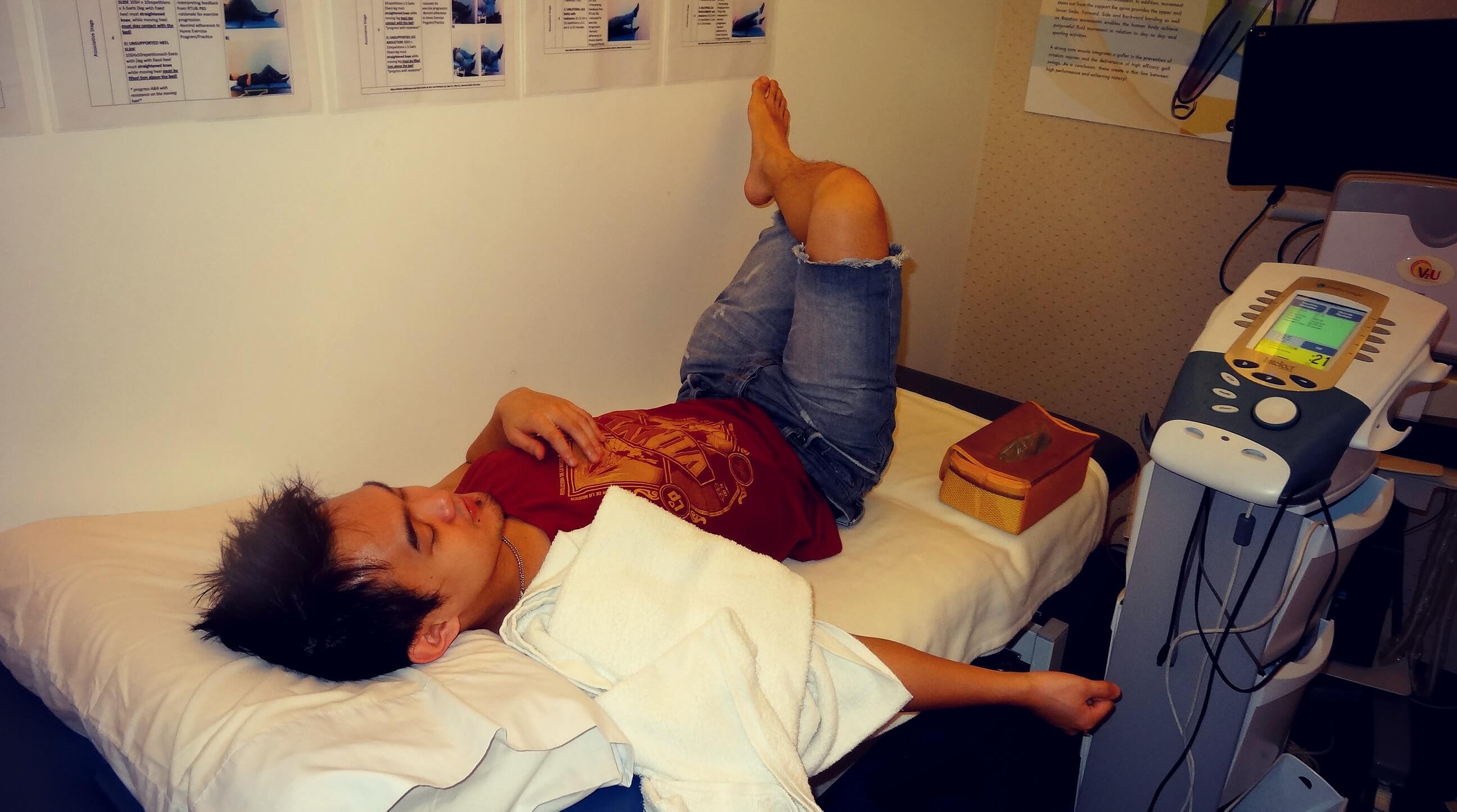
I saw my first physio about two months after feeling that first jolt in my shoulder. I was living in the Philippines at the time. This was the beginning of my little world tour of shoulder treatment. The physio didn’t give me any real diagnosis – she just did the standard assessment, gave me a few exercises with the stretchy bands, massaged it, hooked me up to some UV machine or something. Over the next few weeks of seeing her, things improved a bit, but only marginally.
By this stage I wasn’t doing any shoulder work in the gym anymore – I was too weak to lateral raise even a few kilos. I started to wake up with a sore shoulder in the middle of the night or in the morning, meaning I had to start sleeping on my left side only. It was starting to affect my day-to-day life.
I saw a new physio the following year back in Auckland, maybe six months later. Her diagnosis was a bad subscapularis and some bicep tendonitis. I must have visited her about ten times, and each time was the same thing. She’d do some assessments, I’d tell her it still hurts, and then it was just the same advice as last week. Do more exercises, strengthen it up. Every morning I was doing shoulder rehab exercises, dozens of them. The shoulder improved slightly (maybe, I don’t even know for sure) but nowhere near to 100%.
After no real results with the physio, I finally went to see my GP. His diagnosis was chronic inflammation of the bursa, or bursitis. The bursa is a little sack of fluid between your neck and shoulder. Since the problem had been going on for so long (around ten months now) my GP recommended a cortisone (steroid) injection, because he said no amount of physio would fix such heavy inflammation. A few days later I visited a clinic and they did the injection under ultrasound. I saw my big inflamed bursa on the screen.
“See your bursa, it’s normally as thin as paper,” the doc said.
Mine was all swollen up like a mushroom. I watched the needle jab right in on the screen and pump in a dose of steroid. It was done in two minutes.
Things improved a lot after that, maybe to 75%. I went to my physio again two days later and had big improvements on all her standard assessments. I felt like I’d finally found the answer. Steroids for life!
But gradually things got worse again. A few months on and I started to feel the sharp pinches again, and still couldn’t lift as heavy as before. Things slowly deteriorated. I figured I’d see someone new – give it one more shot. I was in Bangkok at the time, and made an appointment with a shoulder specialist at Bumrungrad, the renowned international hospital.
That hospital is like a space station. I signed in and registered as a patient, got an ID card, and then was escorted up to the specialist area by my own personal guide. I remember looking down on the hospital, from the window of the ten millionth storey. If they can’t fix my shoulder here, nobody can.
The doctor was Thai, but spoke perfect English, no doubt from his American education, which was evidenced by his row of degrees on the wall. We had a long conversation about the entire backstory. He said the obvious thing to rule out first was any structural damage. “Have you had an X-ray done?” he asked. I shook my head. “Well, that’s kind of an obvious place to start. Come with me.“
We walked down the hall to the X-ray room and did an X-ray on the spot, with some kind of new-age X-ray machine I’ve never seen before. Then we headed back to his office where he showed them to me.
“It looks normal. Since you’ve seen so many people already, I’d suggest we do an MRI. Rather than just poking it with my fingers and guessing, on an MRI we can see everything clearly. If anything is wrong, we’ll be able to see it right away.”
That made a lot of sense to me. This guy was making the most sense out of anyone I’d seen thus far. I returned the next morning and did an MRI. If there was once place where I could afford to do it, it was here.
Later that afternoon I returned to the doc and he gave me the news.
“Everything’s normal. You have a small, small tear on your labrum, nothing that won’t heal up by itself.”
He gave me a short lecture on different strengthening and postural exercises, and some pain meds just in case. That was it.
This was a huge letdown. The MRI had sounded so promising. I thought they were surely going to find something in there, maybe even a wild parasite eating away my shoulder muscles or something. But I was again left with no real answers.
It was at this time I learned the real meaning of health is wealth. Who cares if you have a billion dollars if you can’t even reach into the top cabinet? I was starting to get depressed about the thought of all the things I may never be able to do again. Was a little shoulder injury really going to stop me from doing so many things in life?
Luckily, just a few days later, I made a discovery that changed everything.
The blog post that changed my life
It was just happenstance that I found a blog post by Clayton at Spartan Traveler called How I Broke My Body And Then Fixed It (his blog is also amazing for anyone into productivity/long term travel/online business – he doesn’t post often but when he does it’s top notch – check it out here.)
As you can see, this post you’re reading right now is named in honour of Clayton’s. This was the turning point that finally led me in the right direction.
In that article, Clayton laid out a story almost identical to mine, but it was about his knee. As I read through it I found myself nodding, nodding, hoping there would be a magic answer at the end. And there was, kind of.
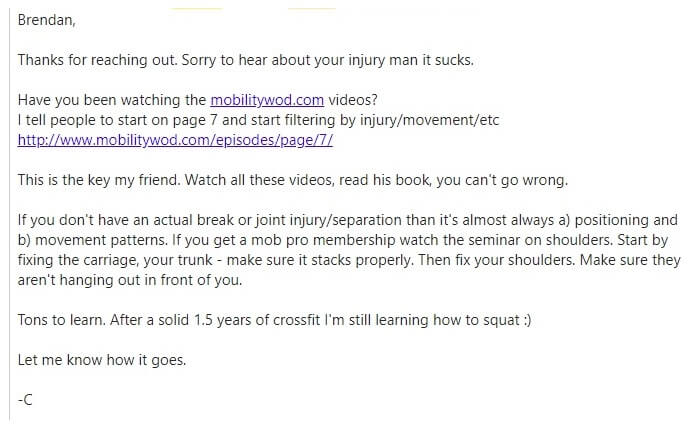
I also reached out and emailed him, telling him how awesome his post was and how much I had learned from it. Like every real blogger out there, he hit me back!
Building my own path to recovery
There is a lot of theory that relates to what I’m going to talk about below. Clayton explains it all in his blog post, I won’t repeat any of it here. If you’re dealing with long-term injuries I would highly recommend reading his post first.
The first thing I started doing was watching the videos by Mobility WOD (Workout Of The Day) like he recommended. These were short, daily videos by Kelly Starrett – the movement guru, author and doctor – giving you short ten minute exercises to do each day. The goal is to break down soft tissue that has knotted up, fused to bone, and re-open up movements, some of which might have been restricted for years or even decades. Think of it as giving yourself a Thai massage but 10x more painful. Obviously this takes some work, although the concept is reasonably simple.
I started with all the shoulder ones. I still remember the first one I did. I was in Quito at the time, in a little hotel using a broomstick and a ball from a toy store. The video below was the exercise I did and gave me almost instant relief:
Now imagine what I’m thinking at this moment. Four doctors in three different countries over three years couldn’t figure it out, painkillers and steroid injections couldn’t fix it, then this random guy on the internet makes magic happen in five minutes on Youtube. Over the following days I moved onto all his other shoulder videos, then moved on to back, neck, bicep, and everything else.
These MWod videos brought my shoulder to around 80% health in just a few days. I was in Quito learning salsa at the time, and was finally able to get back in the gym in the mornings, lifting weights and slowly building my strength up again. I started every day with MWods and gradually improved even more. It was hard work, but obviously worth every second. Soft tissue work and mobilisation on Youtube was more effective than all the physios I’d seen put together, and in a ridiculously short time. It was as close to a magic bullet as I could have gotten. Not to mention, not a single “professional” had even mentioned this kind of therapy, let alone recommend I actively include it in my daily rehab.
Getting to the next level
Of course, this was only the beginning. What I wanted to build was a shoulder that was even stronger than before, too strong to be injured again. That wasn’t the case yet. I was still having to lift easy in the gym, and still had pinches in the front delt and bicep every now and then.
There is so much information in this book. Even now several years later I still pick it up and flick through some chapters and find things I didn’t even notice the first time.
Maybe that’s why the first time I read it, it was a little bit heavy for me. Too much information and not enough personal context to relate it to.
However, about a year later I re-read the book and everything clicked.
There are two chapters in the book that are exceptional. The first is called Reversing Permanent Injuries.
Here are a few pages from that chapter:
My internal rotation was about as good as Tim’s in the photo. Maybeslightly worse. So, it was back to Mobility WOD to find exercises for improving internal and external rotation. I also saw an ART doctor in New Zealand for 2-3 sessions, who helped loosen things up nicely, but in the end I figured it was mostly stuff I could do at home.
Today, my internal rotation is excellent. No physio, no surgery. Just regular mobilisation work from Youtube. Just one example of the many improvements I’ve made from info in this chapter.
The second chapter that really changed the game for me was called Prehab. Prehab is about injury proofing the body, and is possibly the most interesting chapter of any book I’ve ever read in my life. If you’ve ever dealt with serious injury, it probably will be for you as well. Here’s the introduction:
One of the exercises described in the chapter to both test for and fix these imbalances are “the chop” and “the lift”.
These can be done on any standard pulley machine in the gym, or even with resistance bands. This video offers a good explanation of what they look like:
After self-testing myself, I found my right side was 4x stronger on the lift. It was a whopping 10x stronger on the chop.
If imbalance causes injury, I was a multi-muscle injury time bomb waiting to explode.
But this shouldn’t have been surprising. I use my right arm 10x more than my left arm, so why wouldn’t my right side by 10x stronger than my left? And over 30 years of life surely that imbalance would lead to some kind of problem. Maybe that’s why people get more injuries as they get older. This is the kind of thing that seems obvious when you think about it, the problem is, you never think about it.
Over the next 2-3 months I started my rebalancing program. I did the chop and lift every morning: 2-3 sets on my strong side, 5-7 sets on my weak side. In a pretty short time I made big progress, bringing the imbalance to about 2x, down from 10x and 4x. This is in fact how I do almost all my workouts now. I used to do equal sets on either arm/leg, but now I always do more on my weak side to close the imbalance.
There is another exercise outlined in the book called “The Turkish Get-up” or the TGU. Here’s an extract:
The last two sentences sums it up: Jon Torine, head strength coach of the Indianapolis Colts, is also referenced in the chapter:
“My job is injury prevention and performance enhancement. I start with the TGU. I finish with the TGU. I check progress with the TGU.” Since Torine joined the Colts, they’ve had the lowest injury rate of any team in the NFL. The TGU works!
Here’s a good tutorial on it:
I do the Turkish Get Up as often as I can, every day if possible. It’s a perfect exercise for stabilising, but is also a full body workout too. I do a weak/strong ratio with this too, so I usually do 2 with my right arm, 5 with my left arm. Even today, after doing this for a few years, my right side is much stronger than my left. A lifetime of imbalances takes years to fix.
All this information was instrumental in returning my shoulder to health. Because I finally had a “diagnosis”, I was able to go full steam into researching and understanding everything there was to know. And usually when that happens I go way into the rabbit hole and when I get to the end I start digging for even more. Steady progress over the next year brought my shoulder back to around 95%.
Relapse
During my Eurotrip of 2016 I started to slack off a bit – I was travelling with bands and a ball but just never really found time to do any body work. I was still doing pushups and other bodyweight exercises every day, but because I wasn’t dealing with any injuries anymore I started to lose interest in the mobility side of things. I was also country-hopping like a mad backpacker through Europe so it was just never on my mind. Unsurpsingly the shoulder pain started to emerge again. It even got so bad I remember hunting for a pharmacy in Copenhagen to buy some pain meds during the latter half of that trip.
But because I was already armed with the knowledge of how to fix it, I wasn’t too worried. When I finally settled in Berlin, I started getting back on my daily mobilisation work again. It ended up being another few months before I “fixed” my body again. But this time the doubt was never there. I knew what I needed to do, and I did it, and it worked.
Just by luck I also learned some new stuff during this time. Luckily, one day while lounging in the hostel, I came across this gem on Joe Rogan’s podcast, where a shoulder specialist came on the show and introduced me to brachial hanging also known as “relaxed hanging”. Check it out:
Can you imagine that? Simple hanging from a monkey bar each day has a higher success rate than shoulder surgery. It is information like this that is not widely available in the medical profession. They’re great at finding the right medications and surgeries, but stuff like this isn’t in their textbooks. You have to hunt for it on the internet. Interestingly the MWod guy posted a similar video recommending this same exercise about a year later.
As soon as I saw this video I started hanging every day. The results were awesome. Shoulder loosened up instantly and you can literally hear the fibres grinding away. Before I had been struggling to find a place where I could do a lot of my exercises, but hanging was something I could do anywhere. I was in Germany at the time, and started doing my daily hang from the rails of the top bunk bed. In the next hostel I was doing it under the staircase.
This period of time was a good lesson that nothing is ever truly “cured”. You need to look after your body constantly, or you simply fall into the same cycle that got you injured in the first place. And was also a good reminder that there’s always more to learn, even if you don’t think you need to.
Maintenance, maintenance, maintenance
Now that I’ve got a good understanding of shoulder mechanics and how my shoulders became broken, I’m always looking for new ways to keep the shoulder healthy.
The main lesson I’ve learned is to treat the body holistically (meaning treat the whole body, not just the problem area). If the shoulder is injured, you can’t just treat the shoulder. In fact, it might not even be the shoulder that’s broken. It might be your hip or back or chest that’s busted, and that’s what’s throwing your shoulder out of whack. I’ve read countless blog posts now about people who had a sore knee, but it was actually their ankle that ended up being the cause, or maybe they had a sore back, but it was their knees that needed fixing.
Treating your body holistically also means managing your diet, your stress levels, your sleep. An inflammatory diet makes your more prone to injury. High stress levels slow down your recovery. Lack of sleep cuts down on your healing time. If you have a bad shoulder, don’t just try to heal the shoulder, try to heal the whole body.
Other things that I do are I travel with a hockey ball and resistance bands so I can do all my Mobility WOD exercises on the road. Prehab is always better than rehab; just a few minutes a day and you can do a lot to prevent your body from breaking. The thing about serious injuries is they rarely happen out of the blue. They usually happen by wearing down a muscle for many years, until it finally hits the limit and poof. So doing maintenance work on your body isn’t just something you do when you’re “injured”. This has to become a part of your daily life.
How To Cure Your Own Permanent Injuries
If we go back to the beginning of this story, it started with a physio, then another physio, then a GP, then a steroid injection, then a specialist, then an X-ray and MRI, plus a bunch of pain meds and home exercises and every kind of diagnosis. Over three years I was treated for bicep tendonitis, inflamed subscap, chronic bursitis, three different countries, nobody could fix it.
I’m also near certain had I simply continued with the advice I was given (painkillers, physio, cortisone) I’d be having shoulder surgery in the near future, if not already. I would almost certainly be looking at an entire life with a bad shoulder.
That’s not necessarily what surprises me. What surprised me in the end was how simple the cure was – no surgeries, medications or expensive therapy. When I look back on it, here’s all that was required:
Doing shoulder soft tissue/mobility exercises every morning from Youtube (5-10 mins a day, free)
Turkish get ups (5-10 mins a day, need a kettlebell or something heavy)
Chop and lift (20 mins a day, need a basic gym or resistance bands)
Hanging from a bar (2-3 mins a day, free)
Obviously it took a lot of time to discover and experiment with all these, but those four exercises are what had about 90% of the effect. And all that information I got from a book on Amazon ($10) and the internet (free).
This is the power of research and reading. All the answers are out there if you’re willing to hunt long enough to find them. With the internet we are all connected and can share our experiences. If anyone you know has a “bad shoulder” or “bad knee” or “bad back”, please send them this post or Clayton’s post and give them an introduction to this. The amount of people I’ve read about who have turned their “injuries” around with such simple methods is astounding. Hopefully this post can help us add a couple more.
Resources
Here are a list of resources I highly recommend to anyone dealing with lingering injuries:
Mobility WOD Youtube channel – Literally hundreds of videos on restoring movement to every muscle in the body. Spent hours watching these.
Becoming a Supple Leopard by Kelly Starrett – Book by the Mobility WOD guy on all things movement and mobility. It’s huge like a bible, I have it sitting in my weight room at home. Covers everything!
Move U on Instagram – This is my favourite Instagram page, and the two guys who run it are really good at explaining things. They cover a new muscle group each day, and give you exercises to do.
vinnierehab, adam_rehab, drkev_hyrbid – Three guys on Instagram from a rehab company that all post really interesting info and exercises.
Pretty much everything I’ve written in this article I learned from the above resources. Almost all of them are free.
And remember, even if what I’ve listed above doesn’t have the answer to your specific problem, I’m sure someone out there does. So much of the advice is universal to a healthy body anyway. Keep searching, asking questions, trying new things. And don’t give up!
When I posted about my juice fast on Instagram this week, your questions came pouring in. You all wanted to know how I did it, what juices I drank, whether I was at a retreat, etc etc. I’ve written up this huge post for you all, which will detail everything you want to know, and more.
I’ve actually done a juice fast before.
It was when I first bought my juicer, a few years ago. I did a three day juice cleanse, and did a few more over the years, but never managed to get past 3-4 days.
This time I decided I’d finally push it harder.
My travels for the year finished around December 22, and I wanted to start immediately, but I decided to wait until after Christmas dinner with my family. Then I figured I’d help finish the leftovers on Boxing Day too. Then part of me wanted to wait until after New Years Eve, but I realised I was just being bitchy. Never leave to tomorrow what can be started today!
So December 27th I started my ten day juice fast. Before I tell you how it went, let me talk about what a juice fast is, and why you might want to do it.
Why Do A Juice Fast?
1. It “reboots” your digestive system
Did you know up to 30%-50% of your daily energy can be spent digesting food? That’s why your body shuts down after you eat a huge meal. It’s using all its energy to break everything down and send things to the right places. Your stomach, intestines, kidneys, liver, brain – it all needs to start working. If you’re constantly eating (and therefore, digesting) food, that leaves little energy for anything else, including healing, recovery, cleansing, brain function etc.
Stopping food intake allows your digestive system to switch off for an extended period of time, meaning your body can distribute it’s energy elsewhere. Most people report large increases in energy after the initial “torture” days of the fast, and even healing of old injuries.
2. It still gives you all your nutrients
When you juice vegetables, you extract the nutrients from the vegetable fibre. That means your body needs to digest almost nothing, but you still get (most) of the nutrients of the vegetable. On average days I juiced about 20 servings of fruits and vegetables – far more than what a regular human eats. Even if juicing only gives you half or a quarter of that, it’s still better than the diet of 90% of the people I know. Contrary to what most people think, juice fasting isn’t starving and does not leave you malnourished.
There are even people who go on permanent or long term juice diets (generally for weight loss reasons), up to six months, and are still fine and healthy. The juice diet is actually considered one of the best ways to elevate nutrition levels while cutting calories to lose weight.
3. It flushes your system
If you go on Youtube and see what a dirty colon looks like, it will make you wonder exactly what’s inside yours, too. The modern diet contains a lot of things we shouldn’t be eating/drinking. This results in mucus/faeces/plaque forming in our digestive organs. Some studies estimate you can have up to 2-3kg of old faeces stuck in your digestive tract, which can be from years ago. Fasting can help you flush this old matter out, either naturally or with the help of enemas/colonic irrigation. This is why a juice fast is often referred to as a juice cleanse, as one of the main benefits is the cleansing of your digestive tract.
4. It’s healthy!
I don’t need to tell you that a large intake of fruits and vegetables is healthy. A break from eating will also help you rethink how much food you need to eat, how often you eat it, and exactly what you should and shouldn’t be eating. One thing I’ve learned from travel is you only need very small experiences to fuel large changes in perspective – this fast was certainly another example of that.
5. It’s a challenge!
Let’s face it – life is easy. 99% of us have never been to war, never lived through a plague, never had to walk into a coal mine and drill into the darkness, waiting for a cave to collapse on top of us just to support our families. We’re already 99% wimp, so sometimes we need small challenges just to make sure we don’t turn 130% wimp. Most people who attempt a juice fast give up, even though on paper it’s not actually that difficult. Challenges are good for us.
The Rules Of A Juice Fast
So, what are the rules? It’s pretty simple:
Only freshly made juice is allowed – no store bought or long-life juices. You need to make them yourself with fresh produce and a juicer, or buy it from somewhere that does. Remember you want juice, not smoothies. Smoothies are just blended up solids, which aren’t allowed.
Avoid fruit juices due to the high sugar content. General rule is 80% vegetables to 20% juice.
No food (obviously), but if you are seriously about to die you can eat one or two grapes or berries.
Herbal tea is allowed (no milk, sugar, honey, or any additives).
Vegetable broth is allowed (not vegetable soup, big difference)
Go for at least 7 days. In this particular juice fast I actually aimed for 10 days and ended up going for 11, or just under 2 weeks. Some people try and aim for 2 weeks; I would suggest waiting until you’re more experienced at fasting before going that long.
Side note: Do you need to go organic? Of course an organic juice cleanse is better than a non-organic one, but it’s not essential. Non-organic produce is still nutritious – just make sure you wash it thoroughly, and you can peel you produce too if you wish.
My 10 Day Juice Fast Diary
To give you an idea of what it’s like, here’s a brief diary of my ten day fast:
Day 1
I’ve bought two litres of fresh juice from a juice bar (I’m still travelling). One is a red juice (carrots, beets, lime, ginger) and one is a green juice (kale, spinach, celery, apple). I finish both within a few hours, then just drink water. I’m hungry at night so I cheat and eat a small slice of papaya. Maybe better to ease myself in, I tell myself. So I’ve already cheated before the end of Day One. #fail
Day 2
I buy a litre of juice at the airport (kale, spinach, celery, apple). It’s from the same shop I bought from yesterday (Top Juice, in Australia). I have a four hour flight today so should be interesting. Day 2 is typically a difficult day; I feel very tired, also because I’m still a bit jetlagged. I fall asleep on the plane, when I wake up there’s a snack box in front of me with cake, yogurt and a sandwich. Get it away from me! The girl next to me looks backpackerish, so I ask her if she wants it. She’s so happy (all backpackers love free food). Finally, I get off the plane – in New Zealand now! I make around a litre of my standard green juice with my juicer at home (celery, cucumber, lemon, ginger, capsicum, apple).
No bowel movement today.
Day 3
HUNGRY. Drink three litres of juice today, two green, one red. Massive headache. I spend most of the day in bed. Still no bowel movement.
Day 4
Headache isn’t as bad as yesterday, but still quite light headed. I get out of bed and trip over my backpack, and I’m so dizzy that I stumble around like I’m drunk for a few seconds and collapse into my shelf. Am I dying? I make a red juice and my stomach sings when it hits. Yum. I drink some activated charcoal in the morning too, to try and encourage a bowel movement.
I also start making some vegetable broth (onions, celery, carrots, garlic, then pressure cook for a few hours). Of course you need to strain it and discard all the vegetables, you can only drink the broth, no solids allowed. The taste is mild, but after adding some sea salt it does wonders to satisfy the cravings for hot, cooked food. I freeze a few cups of it for the rest of the fast.
By the end of the day I finally have a bowel movement, thank god. It’s mostly solid.
I do 20 pushups just to make sure the body still works.
Day 5
Slept terribly. Weighed in at 56kg! (probably started around 61kg).
Have 2-3 liquid bowel movements over the day. Charcoal seems to be doing the trick. Most people say their bowel movements reek due to the heavy detox, but mine seem pretty healthy. Energy feeling a little higher now. Took a long afternoon nap.
I “eat” a mandarin after waking up. By that I mean I put the pieces in my mouth, chew them and get the juice, then spit out the solid. It’s a good trick to satisfy you mentally, and technically isn’t cheating.
It’s New Year’s Eve today, so I go to a barbecue with a litre of juice with me. I go late to avoid all the food. I do eat two blueberries though late at night (second cheat!).
However, I’m going home on New Years Eve healthy, not drunk, and mid-fast. What a good feeling.
Day 6
New Years Day. Weighed in at 55kg.
Almost no hunger pangs. I only get them two or three times during the day, where my stomach rumbles for one or two minutes. Other than that I don’t feel hungry at all. Body seems to be embracing the fast now. Had a solid bowel movement, no different to a regular one (haven’t eaten anything in 6 days and still passing solids? Where’s it coming from?)
Do 20 pushups and a few kettlebell swings just to keep the muscles working.
Drank about three litres of juice today – two green, one red.
Brain felt good, worked the whole day. Had a cup of vegetable broth at night.
Day 7
Today was the best day so far.
Woke up feeling good, not hungry at all. The last couple of mornings have been like this – haven’t felt the need to make any juice until at least 4-5 hours after waking. I just get out of bed and start working. Water keeps me happy until the late afternoon. Of course whenever I see food I want to eat, but it’s easy enough to just walk away.
By mid afternoon I still hadn’t had a juice, and felt enough energy to workout. I did a little yoga, planked, and did fifty pushups.
Then I took a salt bath to continue my sweat and get some toxins out. Filled the tub with Himalayan pink salt and tea tree oil and soaked for forty minutes – total sweat fest and felt amazing after. The idea of this is to open up your pores and absorb the minerals from the salt directly into the skin while sweating out the bad stuff. Bit of bro-science, but feels good.
As I’m typing this, it’s 11pm at night and I still haven’t had anything today except water and coconut water. Not hungry at all (I actually feel kind of full, stomach must be shrinking). Amazing.
Day 8
Woke up this morning feeling great, tons of energy, not even hungry! Again, didn’t feel the need to drink a juice at all.
I finally drank one late afternoon, since I thought two days without juice might be unhealthy. I actually started to feel a small headache after. However, by the late evening I was feeling nice and fresh again. Brain was super clear, did lots of work and reading.
Also knocked out 50 pushups again just to keep things moving…
Things are getting easier and easier now. Days are flying by!
Day 9
Things were feeling a little backed up, hadn’t passed a bowel movement in a couple of days, so I decided to finally bite the bullet and do a colonic treatment.
If you don’t know what this is, it’s when you flush water through your colon to clear out any faecal matter in your digestive passage. Here’s how it goes:
First, the guy sticks a nozzle a few inches up your bum (yes, it’s uncomfortable). It’s attached to a colonic machine, where one tube sends water in and another tube sucks it out. He turns on the flow to send water in – you tell him when your guts feel full, then he reverses the flow and sucks all the water out. Then he slowly increases the pressure and alternates between hot and cold water. For the first ten minutes the expelled water was clear, only a few small bits of debris. I figured because I was on a fast and I’m young and healthy, my colon was probably nice and clean. Woop!
Then after about 10 minutes I started feeling very light headed. I told the guy my stomach is cramping and I’m getting dizzy. He stopped the flow for a moment and told me to relax. Then I told him I’m really dizzy I think we should stop. Then a few seconds later, the expelling pipe filled with dark brown gritty water. “You see that, that’s a lot of toxins leaving your body. Your adrenaline is pumping, that’s why you’re dizzy.” He turned the flow back on and a large amount of dark toxic stuff came streaming out for about 30 seconds, then the water turned clear again. My head cleared and I came out of a huge cold sweat, feeling rejuvenated. It was pretty cool! That happened another two times during the session. Throughout there were also periods where I was flushing out lighter brown water and I could see all the mucus and old fecal matter getting flushed out. I guess this is the cleansing part of the juice cleanse!
After the session, you need to go sit on the toilet, because there is still quite a lot of water in you. As soon as my bum touched the seat it was a waterfall. Lots of solids came out. Imagine that – no food for 9 days and still had solids pouring out. They were different to normal bowel movements too – heavy, like little rocks.
Finally I headed downstairs for some water and a little debrief – he said I had a really good result and flushed a lot on my first session, not everyone does.
On the drive home I felt really light and free, and couldn’t stop laughing. Must have been a big endorphin release.
Rest of the day was business as usual – juice and rest. However I was expecting more bowel movements after doing the colonic, which didn’t happen. Maybe I’m totally emptied out? Hopefully.
Day 10
I woke up feeling a little light headed. Weighed in at 53.5kg.
Didn’t feel hungry or the urge to make a juice so just drank some water until the evening. Finally made a big green juice – kiwifruit, celery, apple, lemon, ginger, capsicum, cucumber.
I also made another vegetable broth, this time with lots of tomatoes and drank a large cup of that.
Still no bowel movement today!
Day 11
Woke up super early for my second colonic. I decided to do a another one as I was starting to feel heavy in the guts again.
This colonic was a lot less intense than the first one. We had a blockage halfway through, so we stopped and I went to the toilet and passed quite a lot of solids. Then I came back and we managed to clear quite a lot of green water and mucus, and by the end I was feeling really emptied out.
After we were done, I thought about whether to push the fast to 14 days. However because the colonic was mostly clean, I felt like the fast had run its course, and there wasn’t much more to gain from fasting any longer. My system was definitely empty, and it wasn’t even a challenge anymore to not eat – I wasn’t hungry during the days, and my energy was high.
So I called the fast on the 11th day. Time to eat!
This is me at 53kg, about 7-8kg lighter than I was on Day One:
Now, you’re supposed to ease yourself back into eating, so the plan was to be vegetarian/vegan for a few days, as fresh vegetables are the easiest thing for your body to digest.
First things I ate were some sauerkraut and coconut yogurt to introduce some probiotics. Then I had a big bowl of salad (courgettes, mushrooms, cucumber, tomatoes, garlic, parsley, olive oil) and a coconut. Later at night I ate some cooked veges and some fancy bread, also snuck a few bites of chicken (cheat #3!).
Here’s the interesting thing: I felt terrible after eating! After the yogurt and kraut I was fine, but after eating my salad I started to get sore guts and felt really tired. I had to go take a nap, and knocked out for about three hours. After that I felt a little better but still sluggish. Over the rest of the evening I came right, but it was the opposite of what I was expecting (I’ll explain why this happened in more detail below).
As I write this it’s now 2 a.m., my energy levels are okay, guts still a little sore, but I think I should be firing tomorrow.
Day 12
Today is my second day of eating. I fasted for the morning and started eating around 4pm. It’s past midnight now and I’ve had a juice with basically everything in it (green and red ingredients combined). I also had some coconut yogurt and paleo cereal, a coconut, some silverbeet, eggplant stew, lentil pasta, a piece of corn, plus some stir fried beans and carrots. Also I had a smoothie with blueberries, cacao, maca, pea protein and almond milk.
Tomorrow I think my stomach will have readjusted back to normal and I’ll start eating big calories. The goal now is to put my weight back on, with only the healthiest food.
Overall I’m feeling good, back to normal!
How To Do Your Own Juice Fast
So, now for the details. How do you actually do a juice fast? Below I’ve written up the protocol I followed, which I really just made up myself. It will be good to tailor it to your own lifestyle, everyone is different! As long as you follow the basic rules from the beginning, you should be fine.
A disclaimer – I am not a doctor or nutritionist or any kind of medical professional. Everything I know about juices and fasting is based on my own personal research from books, blogs, documentaries etc. I’ve been juicing regularly for around 4 years; all my evidence is anecdotal and from personal experimentation. Do your own research, please!
What Is The Best Juicer?
I highly recommend making your own juice. Juices oxidise quickly, and pre-packaged juices will be nowhere near as nutritious or pure as juice made in your own kitchen.
Obviously to do this you will need to buy a juicer.
Juicers are not expensive. In fact they are very affordable.
You might have seen some with hefty price tags, but the good news is you don’t need the best masticating juicer in the world and in fact, you don’t need a masticating juicer at all. If you’re on a budget, a cheaper centrifugal model is just as good and in fact exactly what I used for several years.
Where Can You Buy A Good Juicer?
Juicing is pretty popular now so you can find good juicers at most standard home and department stores, and can easily order one online at Amazon.
To simplify it for you below I’ve listed two juicers I can recommend you begin with. You can get them easily on Amazon or find a similar model at your local store.
However there are many to choose from so to simplify it for you I’ve listed two good options that I can recommend below:
I still have it and it works great. It doesn’t work very well with leafy vegetables, but it works really well with fibrous ones like carrots, celery, beets, apples etc.
This is a centrifugal juicer and waste is slightly higher with these types, but they’re still really good. When it comes to the best centrifugal juicers, I think Breville is definitely the best brand. They’re reliable and have been making them for years.
I’ve now upgraded to a masticating juicer because they put out less waste and you can juice more things with them.
However, they are usually more expensive. If you plan on making juicing a daily habit in your life, the improved efficiency will likely make it worth it.
What’s the best masticating juicer? Look for one of the quality slow masticating juicers that really take the time to squeeze as much juice as possible.
These models are great because you can just flick it on and pop vegetables in one by one and they’ll slowly grind away as you wash and chop more in the background. It’s the favourite part of my morning routine!
I’d say the best slow masticating juicer for newbies would be the Aicok. It’s reliable and sturdy, but without the $400 price tag that comes with the flashier models. You can grab one here on Amazon.
Best Juice Recipes For A Juice Fast?
Lots of you asked about this, so I’ll share my top secret juice recipes with you.
Keep in mind these recipes have been carefully formulated over a number of years using ancient kung fu principles. Please respect their power.
The Red Juice
I usually stick to two juice recipes – one red and one green.
I suppose since I invented these juices I had better name them.
I will call this juice The Red Dragon, named after that dodgy Vegas casino in Rush Hour 2.
The red juice recipe:
4 carrots
1 large beet
1 red apple
1 lemon
1 thumb of ginger
What the red juice is good for:
Carrots are the base of this juice and really nutrient rich (vitamin A, vitamin C, vitamin K and vitamin B8, potassium, copper, iron and manganese). They also contain beta-carotene, a strong antioxidant.
Beets contain betanin, a powerful antioxidant. They are also packed with minerals and are full of nitrates, which improve blood flow throughout the body. Weightlifters often drink beet juice for the nitric oxide, which opens up the blood vessels and gives them a greater pump. This is one of nature’s steroids!
Apples are one of the most nutrition-dense fruits we have. Rich in vitamins and polyphenols and packed with antioxidants. Red apples have slightly more sugar than green ones, but both are good. I use red apples for red juice and green apples for green juice, just to keep it simple.
Lemons are packed with vitamin C, beta carotene, vitamin A, folate, calcium, magnesium, phosphorus and potassium, not to mention one of the most alkalizing fruits we know of. I use a lemon in every juice I make, including the skin.
Ginger is another ingredient in all my juices. All around the world you will find people treating ailments with fresh ginger, whether it’s digestion, blood pressure, inflammation, nausea, or just common colds and flus. There is too much good stuff for me to write about it here, but it’s one of the most super superfoods we have. There’s no problem juicing ginger with the skin on, just make sure you wash it first.
Tips: Go easy on the ginger at the start; it’s strong if you’re not used to it. Use apples to control the sweetness – use less apple if it’s too sweet, add another apple if not sweet enough. Unpeeled lemons are best, but peeling them is fine if you can’t handle the flavour.
The Green Juice
What shall we call this juice? I think I’ll call it The Ninja Turtle, named after the best cartoon series in history.
This juice should be your main juice. As a general rule I like to stick to one red juice per day, and everything else I drink is green juice. Getting your greens is super important on the fast, so drink as much of this juice as you can.
The green juice recipe:
3 sticks of celery
1 small cucumber (or half a big one)
1 green bell pepper
1 green apple
1 lemon
1 kiwifruit
1 thumb of ginger
Any leafy greens you want
What the green juice is good for:
Celery is amazing. It’s packed with high amounts of vitamin K, vitamin A, vitamin C, folate, and potassium, plus many other micronutrients. Make sure you juice the leaves as well!
Cucumber is a favourite for skin fanatics, packed with vitamin A and C, plus a good supply of B vitamins and is highly alkalizing. Also has a high water content so is a great base for juicing. The great thing about cucumber is the mild flavour; it mixes well with anything – you can even add it to your red juice.
Green bell peppers are high in vitamin A, C and E and a large range of B vitamins. Also one of the best sources of carotenoids you can find (phytonutrients that prevent cancer and other diseases). One of the most nutrient-dense vegetables you can get.
Green apples have a slightly richer micronutrient profile than red apples and contain less sugar.
Kiwifruit contains more vitamin C than almost any other fruit, plus is a good source of vitamin K, vitamin E, potassium, folate and manganese. Juice it with the skin on!
Leafy greens are possibly the healthiest food on the planet. You can include any leafy greens you want, although try use cheaper ones, as you don’t get that much juice out of them. Save the expensive ones for when you can start eating again after your fast. Leafy greens should be a big part of your diet when you start eating solid food again.
Remember, these recipes are just guidelines and you can add all sorts of other things to your juice. Some good things to experiment with are grapefruits, oranges, rhubarb, chard, wheatgrass, limes, tomatoes, even pineapple and pears. Just stick to that 80/20 vegetable/fruit ratio to keep the sugar level down.
The vegetable broth
During the fast, you’re probably going to get some cravings for savoury, cooked food.
To satisfy this craving I started making vegetable broth as a “cheat drink” during my juice fast.
This was a lifesaver for me around Day 4-5 when I was dying to drink something other than juice.
The recipe:
1 onion
4 garlic cloves
1 celery stalk
1 carrot
1 tablespoon apple cider vinegar
sea salt and pepper to taste
Cover and boil for 1-2 hours, use a pressure cooker if you have one. Then strain the broth and drink! Remember – don’t eat the vegetables. This is nothing more than drinking vegetable flavoured water, it should be clear and light. It’s the perfect thing to drink before you go to sleep.
What To Expect On Your 10 Day Juice Fast
Day 1-2
You’re probably going to feel really hungry by the end of Day 1. This is normal since your body is used to eating 3-4 meals per day. Load up on juice and rest. Your body will adjust soon.
Day 3-4
This is the torture period and your body is going to start feeling as shitty as possible to try and get you to eat. During this period it’s common to experience a “die-off” or “Herxheimer reaction”. This is when a lot of toxins and yeast in the body start to die rapidly. Sounds good, right? Not really – when they die, they release all the noxious substances they contain, and if they die rapidly they usually release toxins in your body faster than your liver can expel them. That leads to you feeling really sick; headaches, nausea, brain fog, fatigue. Drink a lot of water and green juice and get a lot of sleep.
The majority of people quit during this time, but prematurely ending the fast during this deep cleanse is very bad for the body. Once you’re in the torture zone, do your best to power through and allow your body to finish cleansing. If you’re really struggling, don’t break the fast completely; try and ease your way through by eating some fresh fibrous fruits that digest easily, like mango, papaya and banana, or maybe even some lightly steamed vegetables. Remember this isn’t about ego! If a healthy “cheat” like this will allow you to continue your cleanse, it’s a good idea.
If you do this over a couple of days and still feel really ill, you might need to consider breaking your fast. Prolonged die-off is bad for you. Start eating three small, healthy meals a day of fruits and vegetables, like the things I suggested above. Let your body recover, and you can try starting your fast again in a few days. A good summary of die-off and why it happens can be found here.
Day 5-7
Your body will start to embrace the fast, your digestive system will switch off and your stomach will start to shrink. You should start feeling more and more energy each day. Hopefully you’ll have some healthy bowel movements around this time too. If you have diarrhea, don’t worry, your body is flushing out toxins. If it smells terrible, that’s also a good thing. Remember that stuff has been sitting in your body! And now it’s gone. Just stay hydrated and get a lot of rest. Make sure you’re getting 2-3 litres of fresh juice per day. By Day 6-7 you should start feeling pretty fresh.
Day 8-10
Your body should be well adjusted and you shouldn’t feel hungry at all. Hopefully your energy levels are high and your juices are keeping your nutrient intake intact. You can even get back in the gym and start returning to full workouts. You can decide whether to push your fast for a long period or break it here. Your body will tell you when it’s ready. Either way, it should be reasonably smooth sailing from this point. Congrats, you made it!
How To Break Your Juice Fast Properly
Whether you push your fast to 14 days, 21 days or even a month, eventually you’ll need to break the fast.
This was actually the big mistake I made. How you break your fast is as important as the fast itself! The first thing I tried to eat was that enormous bowl of salad in the photo above, which gave me a a lot of stomach pain and made me really nauseous.
Now I’ve learned that the correct way to break a fast is to start slow. Drip feed very easily digestible foods into the body.
The perfect thing to start with is very small servings of fruit. Maybe eat a small slice of watermelon, then an hour later have a few grapes, then an hour later eat a mango and so on.
Slowly build yourself up to small salads and finally cooked food.
Remember your digestive system is dormant after the fast. If you start eating steak and burgers and pasta straight away, your body won’t be digest it properly and it will clog up your system.
You’ve spent so much effort fasting and resetting your body, make sure you restart it in the right way when it’s finally time to start feeding again.
IMPORTANT: Take probiotics!
Another thing to remember – your system is empty so it is essential to rebuild the gut! Make sure you eat a lot of probiotic foods like kefir, sauerkraut, sugar-free yogurt (with live cultures), kombucha. This a super important step so let me take you through it piece by piece.
Probiotic supplements
The BEST thing you can do at this stage is take a probiotic supplement. This will flood your gut with beneficial bacteria after your fast has killed all the candida, harmful bacterias and parasites in your digestive system. Here’s a good article about the importance of a healthy gut, and how effective your gut flora can be at boosting your immune system and solving many serious health problems
For a probiotic supplement, my recommendation is the Renew Life 150 Billion. This has a much higher colony count than most off the shelf probiotics, which only give a measly 2 or 3 billion units.
After a fast, I’d recommend minimum 50 billion units per day, but ideally more.
Renew Life is my go-to because it’s not too expensive, and you get them easily on Amazon. Click here to grab some!
It’s almost impossible to overdose on probiotics, so load them up, I’d recommend taking a probiotic supplement 2-3 times a day or even more while you re-introduce food back into your body.
Fermented vegetables
Fermented vegetables are perfect because they have been broken down to the point that they’re basically pre-digested. This is the ideal food for after a fast!
Kimchi is one of my favourites. After a fast I eat a spoonful of kimchi alongside every meal. It’s perfect alongside a salad or soup, or even on the side of some scrambled eggs! A locally batch-made kimchi is what you want, and if made right it should be loaded with good probiotics. Something like this organic kimchi from Small Town Cultures is a great choice.
Sauerkraut is also great, which is fermented in the same way as kimchi but contains only simple cabbages, rather than a range of vegetables and spices. This organic sauerkraut from Whole Foods is exactly the kind of thing you’re looking for!
Kombucha
Kombucha is a fermented soda and is a good replacement for all your drinks post-fast. Instead of coffee in the morning, have a kombucha. Instead of Coke at lunch, kombucha! No wine during dinner, drink kombucha! It’s delicious and it’s good for you and is loaded with probiotics.
For a great sugar-free kombucha, I highly recommend Remedy Kombucha. All their flavours are great and it’s not expensive at all. You can grab a box here!
Yogurt
The last thing I like to eat is yogurt, usually for breakfast or in my smoothies or just for a snack on its own. I prefer to use coconut yogurt as I generally avoid dairy for a few weeks after my fast. Coconut yogurt gives you all the probiotic benefits of regular yogurt and is easy on the stomach too. It’s also vegan friendly if you’re strictly plant based. You can usually find these in your local supermarkets, but if you want to get some delivered a good example is this Whole Foods yogurt by Cocoyo.
As for food, get lots of leafy green vegetables and fresh fruits in, at least for the first few days.
Try and stay away from foods that make your digestive system work hard, such as gluten and lactose.
Let this be an opportunity to make some permanent healthy lifestyle changes too; more fruits, more vegetables, more sleep, less junk food. Your body should be strong and healthy post-fast; keep it that way!
What you need to get started on your first juice fast
A juicer!
Got your juicer yet? There are literally hundreds on Amazon. If you’re a newbie juicer or on a budget, go with the Breville Fountain. If you want to spend a bit more and go masticating, go for the Aicok.
Glass bottles
Glass is far preferable to plastic to store your juice and drink from. Even BPA-free plastic isn’t good for you.
I always drink straight from a glass and juice every glass fresh, but if you’re going to make a day’s juice in the morning and store it, I recommend using a set of glass bottles like these. Don’t store it longer than a day.
Cleared schedule for 3-4 days
The initial days of your fast are going to be taxing on your body. Try and set aside 4ish days where you don’t have any big commitments and can stay home and relax. Once you get through the initial few days, you should return to life as normal (you might even feel better than normal!)
Probiotics
Really important for when you end the fast. The best thing to take is a probiotic supplement at least twice daily to restore your microbiome. I use the Renew Life 150 billion.
That’s it! That’s everything I can tell you. I really hope this was helpful and you all take some time to rebuild your health, whether by fasting or diet changes or anything else.
Remember, the above is all based on my own personal experience – your experience may be different so listen to your body and do what’s best for you. If you have any questions, just leave them in the comments, I’ll be here.
Over the past few years I’ve seen the dividends of all my language study from my twenties. Often on the road I get the chance to chatter in a foreign language, which often leads to people asking me, “Bren you speak Spanish too? How many languages do you speak?”
The truth is I speak far fewer than I would like, and nowhere near as well as I would like. But even my scruffy résumé has served me really well on my travels. Just a few words in another language has opened doors to some incredible experiences.
Language has fascinated me ever since I started travelling – that we all say the same things in such different ways. This led to me spending much time and money during my travels to learn language and reduce my dependency on English. Funnily I always thought language was fun for everyone – like video games and eating ice cream. It didn’t occur to me that many people actually don’t like learning language. Which explains why so many never do.
What’s the fastest way to learn a language? It’s not complicated. Their a certain things that are better to learn before others, certain words you should learn and certain ones you shouldn’t bother learning at all. If you focus on the right areas, you can find yourself speaking rather quickly.
Language doesn’t need to be a mammoth task, and it doesn’t require months and months of studying to be able to say a few basic things. In this guide I’ll take you through a few tips and hacks that will have you holding your own in just a few days. Once you experience that and have your first conversation in another language, however broken it might be, I promise, travelling will never be the same again.
For me it’s mostly about respect. The world is a big place and England is only one country in the top left corner. Not everyone in the world speaks English or even cares to try. Yet every day I see travellers confused and frustrated that locals in other countries don’t understand English.
Would it not be weird if someone walked into your coffee shop and said “一杯咖啡和一碗沙拉“, and then got angry when you couldn’t understand them? Yet we English speakers seem to do that all the time.
It goes both ways. If you respect the locals by trying to communicate in their own language, they will respect you back for the gesture. You will make more friends, have more interesting conversations, be welcomed into more communities, and be given more opportunities to experience local life.
Even if you only learn to say “nice to meet you” and “thank you”, you will be surprised how far that will take you.
What’s the fastest way to learn a language?
Here is my basic breakdown, divided into difficulty:
Level 1:
Greetings
Numbers (1-100)
Basic nouns
Basic verbs
Level 2:
Numbers (100+)
Basic adjectives
Basic adverbs
Verbs in the present tense
Basic sentence structure (Noun + verb. e.g. “eat apples”)
Level 3:
Verbs in past and future
Fuller sentence structure (.e.g. “John likes to eat red apples”)
Level 4:
Everything else
If you are trying to learn the bare minimum before a trip, I recommend sticking with Level 1.
This will give you the best chance of communicating without learning anything complex, and sticking to those subjects is definitely the fastest way to learn a language if you just need very basic communication.
Level 1 only requires memory and no real understanding of the language structure, but will still give you the tools to say many everyday things. That’s perfect! And you can do it in a couple of days.
Level 2 will take you longer but is not difficult. Level 3 and above is where a little more “study time” is required.
A 7 day plan:
Let’s say it’s a week before your trip. Obviously I’m not going to teach you to become fluent in a new language in 7 days. That’s impossible. There are people who’ve spoken English their entire life and are still horrible at it.
But if we learn smart we can definitely learn to say a lot in a new language in that short time.
Here are a few interesting things to consider:
Even if you speak a new language broken, almost everyone will still understand you. For example, in a restaurant, you don’t need to say “May I please have a bowl of fruit?” You could just say, “Please, bowl, fruit” with a big smile, and you’ll get exactly what you want. I’m not saying you should aspire to speak broken, I’m saying you don’t need to be perfect to start.
If you like chicken, you’ll probably say that word quite often. And if you don’t like shrimp, you probably won’t say that word at all. So you need to personalise your learning, rather than just learning generic lists. This cuts your learning time exponentially.
Most words you learn in a typical language course are useless. For example you might learn the word “elephant”. How often do you say the word elephant? Maybe once or twice a month. Whereas you say the words “eat” and “toilet” probably every day, and the words “why” and “because” every second sentence. So in reality you only need to learn a few words, much less than you would expect. Just 100 words will get you much farther than you would imagine!
What I’m getting at is learning a language should be highly personalised, like going to the gym. A grandfather who is 100kg overweight and a 14 year old girl will have totally different training plans. It is the same with language. You can improve your progress exponentially this way.
Consider this as an example; my Swahili is slightly better than my Chinese. Why is this strange? Because I spent an entire year studying Chinese full time at a university in Shanghai, with professional teachers, exams, textbooks, countless hours of study, homework, class every day. With Swahili, I’ve only done around 50 hours of self-study while in Tanzania. How does 50 hours of self-study get better results than an entire year in a top university?
The answer; learn smarter. In my Chinese course we had to learn long lists of completely useless words, like mainframe and parliament. Not only that, I had to learn to write and read them in Chinese characters. That led to hundreds, maybe thousands, of hours spent learning words I might use once or twice a year. Imagine how silly it was that I could write the Chinese character for embassy, yet couldn’t order a simple cocktail at the bar.
When I started learning Swahili I wanted to be smarter. Because I didn’t have exams or teachers, I got to decide all my own material. I used my experience of studying Spanish and Chinese to help me strip the language down to the bare essentials, and create the most efficient language course, designed specifically for me. Not only did I learn faster and better, it was a lot more fun as well. Once I was able to converse about basic things, my vocabulary and understanding rocketed quickly just from everyday conversation.
The plan below will introduce you to this approach; how to get to a basic conversational level in a new language in just 7 days. I’m going to go through the steps using two languages; first, Spanish, as it’s a language familiar to many. But I’m also going to do this demonstration in Italian.
Why Italian? Because I’ve never learned a word of Italian in my life, I have no Italian friends and I’ve never even been to Italy. By laying out the steps to learn Italian in 7 days, this will be a perfect simulation of starting a language from absolute zero.
Note: This also that means some of my Italian below might (definitely) be wrong, so any Italians reading please chill. You can feel free to correct me in the comments too 🙂
Day 1: Numbers
Numbers are important because you use them for almost every activity (room numbers, bus fare, shopping, table for four, etc). Also it’s a nice, easy thing to start with when learning a new language.
We learn 1-10 to begin with. Anybody can do that in any language.
For most languages, 1-10 takes you a long way. For example, in Chinese if you can count to ten you can count to 99. And if you learn three more words (“hundred”, “thousand”, and “ten thousand”) you can count to a million.
If you’re learning French however, counting to 100 is like an epic academic quest for enlightenment.
So it all depends on the language. But we’re just worried about 1-10 for now.
So the first thing you will learn is:
English
Spanish
Italian
One
Uno
Uno
Two
Dos
Due
Three
Tres
Tre
Four
Cuatro
Quattro
Five
Cinco
Cinque
Six
Seis
Sei
Seven
Siete
Sette
Eight
Ocho
Otto
Nine
Nueve
Nove
Ten
Diez
Dieci
If you don’t know how to pronounce a word, Google Translate has an audio option, too:
Counting to ten is a cool first thing to learn because you can kind of sing it to yourself over and over, in the shower, in the car, wherever you want. It’s like your new ABC’s. It sticks with you too – I can do it in maybe ten to fifteen different languages now, just from memory.
In reality you should be able to learn to count to ten in any language within 15-20 minutes. A nice surprise for me here was that Italian numbers are so similar to Spanish, which I did not know before! That made it an easy start.
Leave it there for Day 1.
Day 2: Greetings and basic words
Greetings are probably the thing you will use the most so it’s good to learn the most common ones.
Whenever you walk into a restaurant, greeting your waiters at breakfast, the receptionist, even taxi drivers and strangers on the street. Also for Day 2 it’s a good idea to throw in some basic words that you will use all the time (please, thank you etc).
Here is a list of starting suggestions. I’d also encourage you to add your own!
English
Spanish
Italian
Hello
Hola
Ciao
How are you?
Como estas?
Come va?
I’m fine
Bien
Bene
Good morning
Buenos dias
Buon giorno
Good night
Buenas noches
Buonanotte
Please
Por favor
Per Favore
Thank you
Gracias
Grazie
Yes
Si
Sì
No
No
No
Excuse me
Disculpe
Scusami
Sorry
Lo siento
Scusa
Why?
Por que?
Perché
What?
Que?
Che cosa?
Who?
Quien?
Chi?
Which?
Cual?
Quale?
Where?
Donde?
Dove?
You may also be wondering where and how you find out all the translations for these lists. I’m just using Google Translate, but Google will give you all kinds of free online dictionaries etc. The resources online are endless – it shouldn’t be difficult.
I made a similar wordlist for Swahili recently and just asked a Tanzanian friend to sit down with me and translate everything – took maybe half an hour, so that’s another way to do it.
Day 3: Basic verbs
To populate this list, think of the verbs that you do every day. Don’t include verbs like “paint” and “sail” because you probably don’t do those things every day (unless you’re a painter or sailor).
Remember, we’re trying to narrow things down to the most usable words. Limit your list to 20. Here’s a good starting list:
English
Spanish
Italian
To eat
comer
mangiare
To drink
beber
bere
To sleep
dormir
dormire
To wake
despertarse
svegliarsi
To walk
caminar
camminare
To run
correr
correre
To wait
esperar
aspettare
To cook
cocinar
cucinare
To buy
comprar
comprare
To go
ir
andare
To come
venir
venire
To see
ver
vedere
To want
querer
volere
Bonus points: After you learn this list of verbs, you would get a lot more mileage out of them by learning how to conjugate. That just means instead of learning the verb in infinitive form (to eat) you could also learn how to say “I eat”, “You eat” etc.
For example in Spanish, the verb to eat is like so:
to eat
comer
I eat
como
you eat
comes
And a quick Google tells me that in Italian it is:
If this all sounds like gibberish to you then don’t worry, just learn the verbs as they are and speak broken to begin with. People will understand you. Also many of you would have studied conjugated languages in high school and already know how this works, so go ahead and spend a bit of time learning the basic forms (I, you, they). Of course this doesn’t apply to all languages.
Day 4: Basic nouns
Now it’s time to learn the objects we use every day. Food we eat, items we use, that kind of stuff. Here’s a good list to start:
English
Spanish
Italian
Food
la comida
il cibo
Drink
la bebida
la bevanda
Room
la habitación
la stanza
Car
el coche
l’auto
Restaurant
el restaurante
il ristorante
Bus
el autobús
il bus
Coffee
el café
il caffè
Tea
el té
il tè
Juice
el jugo
il succo
Beer
la cerveza
la birra
Supermarket
el supermercado
il supermercato
Brother
el hermano
il fratello
Sister
la hermana
la sorella
Taxi
el taxi
il taxi
This list is the most open to customising. It’s important to learn things common in your life that may come up in conversation. For example if your favourite sports are boxing and surfing, add those words in. Learn how to say the name of your home country. If your favourite food is chicken and chips, add those too. If you’re a lawyer or engineer, add those, and so on.
Likewise you need to account for where you’re travelling to. If you’re going somewhere to surf, learn the words for ocean, beach, surfboard. If you’re going hiking, learn the words for boots, mountain etc.
This is what effective language learning is about. Instead of memorising any old word list, create your own. If you’re not a pilot and none of your family or friends are pilots, don’t learn the word for pilot! Minimise your workload.
For this list I’d set a word limit of about 25-30 words. At this point would be a good time to go back and start revising all your words from Day 1-3. You can forget them quite quickly.
Day 5: Common words
This list is all about words that come up in general day-to-day conversation. Did you know just 100 words in the English language make up 50% of all written material? There are maybe 250,000 words in the dictionary, but a small collection of 100 words make up 50% of your average book.
Unfortunately that doesn’t help us with our cause much; most of them are words like “be” and “the” and “that”, and obviously going around saying “be that the” in another language won’t do much for us. But the concept is a good one to follow. What are the keywords we most commonly use in general conversation?
English
Spanish
Italian
Up
arriba
su
Down
abajo
giù
Left
izquierda
sinistra
Right
derecha
destra
Near
junto
vicino
Far
lejos
lontano
Man
hombre
uomo
Woman
mujer
donna
Fast
rápido
veloce
Slow
despacio
lento
Here
aquí
qui
There
ahí
là
This
esto
questo
That
eso
quella
Some
alguno
alcuni
All
todo
tutti
None
ninguno
nessuna
Inside
dentro
dentro
Outside
fuera
fuori
Hungry
hambre
affamato
Thirsty
sed
assetato
Sometimes
a veces
a volte
Always
siempre
sempre
This list is super important because many of these words will come up in day to day interactions. Asking for directions, asking questions, explaining things to people, pointing to things on a menu. You’ll be surprised how often you use the word “sometimes” or “there”. No matter which level of language you get to these words will always be useful – learn this list well!
Day 6: Basic phrases and replies
The interesting thing about languages is they are routine in many ways. For example, if someone asks “How are you?”, 90% of the time the reply will be “I’m good” or “I’m fine” (except in Australia, where they’ll say Yeeah yeah bloody good mate just watching the footy yew!)
Likewise in Swahili if you say “Mambo” to 100 people, 99 of them will reply “Poa”.
One thing new language speakers do is learn a bunch of words and phrases like “What’s the time?” and “How much is it?” but never prepare themselves for the answer! If you are anticipating an answer you will have a much higher chance of understanding it, even if they say it fast or mumble it. You will also be able to put together an answer if the same phrase is said to you.
Here are a few good examples to start with:
English
Spanish
Italian
How much is it?
Cuanto cuesta?
Quanto costa?
It’s twenty pesos/shillings
Veinte pesos
Venti euro
What is your name?
Cual es tu nombre?
Come ti chiami?
My name is Batman
Mi nombre es Batman
Mi chiamo Batman
How old are you?
Cuantos anos tienes?
Quanti anni hai?
I am 20 years old
Tengo veinte anos
Ho vent’anni
Where are you going?
A dónde vas?
Dove vai?
I’m going to…
Estoy llendo a….
Andrò a…
What are you doing?
Qué haces?
Cosa fai?
I am…(eating)
Estoy (comiendo)
Sto (mangiando)
Where is…(the dog)?
Dónde esta…(el perro?)
Dov’è… (il cane)?
It is…(inside the house)
Esta… (en casa)
È (in casa)
Do you like it?
Te gusta?
Ti piace?
Yes, I like it
Si, me gusta
Sì, mi piace
How is it?
Cómo es?
Come è?
Good
Bueno
Buono
What’s the time?
Qué hora es?
Che ora è?
It’s 2 o clock
Son las dos
Sono le due
Who is he/she?
Quien es el?
Chi è lui?
She is (my sister)
Ella es (mi hermana)
Lei è (mia sorella)
I would like…
Quisiera…(por favor)
Vorrei…(per favore)
Day 7: Practice!
And that’s it.
If you learn everything above, you would have actually learned a few hundred words, will be able to say many basic day-to-day words and phrases, and will probably understand quite a few things said to you.
Take notes, write down the parts that you struggle with, revise revise revise.
Remember language is largely a practice and usage skill, meaning the more you use it the better you will get. Your knowledge also compounds, so while it may seem highly difficult at the start it will get much easier as you learn more words and phrases.
We’re also skimming the fat on a lot of work that goes into language. Most language schools try to educate you on all four skills (reading, writing, listening, speaking), and we’re instead focusing 90% on speaking. That’s going to decrease your learning time a lot without much downside at all (unless you plan on reading the newspaper every day or writing an essay).
Also remember, the above lists are just examples. Remove or add words/phrases to make the lists most usable for you, so they represent the things you most use/say in your everyday life. These lists are not complete – they are there for you to build on.
How much time will you need? The above shouldn’t take you more than 1-2 hours per day. I translated all the lists above into Italian in less than 30 minutes. It helped that it was so similar to Spanish and French (I didn’t expect that) but most romanised languages you should be able to do in similar time. Non-romanised languages like Thai or Chinese will take longer but not painfully so.
After that it’s just about putting in time. Keep it in a doc on your phone or if you’re old school like me write it on a notepad. Everything above will fit on one page. You can read it on the train or while you’re lying in bed at night. Remember there’s no super IQ needed here – it’s mostly just memorisation so anybody can do it.
The last and most important tip of all is: Speak! As soon you touch down in the country, use it every opportunity you can. Learning everything is useless if you never use it. Don’t be afraid to make mistakes (nobody is expecting you to be perfect), make it fun and use a few more of your words each day. I’ll admit it’s intimidating at the start, but after a few days you won’t be able to shut up.
Just a handful of hours and I promise you, your next trip will be a completely different experience.
I recently watched a TED talk by a French neuroscientist about brain cells. She discussed the idea that even as adults, we can continue to grow new brain cells and expand our minds, if only we stimulate our brains in the right way. It’s actually being discussed in a lot of podcasts and articles these days – people who are in their seventies and eighties but have brains that function as if they’re 25. It’s a new field of research but the general theory is – people who keep their brains active and constantly “growing” are most likely to have perfectly working brains at 80.
Think about this. It makes sense. When you are young, you’re learning all the time. You’re learning to eat, smell, talk to people. You go to school. Your brain is stimulated in every way – socially, intellectually, emotionally, physically. Even if the stuff you’re learning isn’t always interesting, you’re still testing your brain to understand new concepts, new ways of thinking. One of my math teachers even admitted that the stuff we were learning was in fact useless – we would probably never need it. He said the real purpose of school was to test our learning capacity, our intelligence. Can you learn Year 10 maths? Okay great. Now try Year 11. You passed? Now try Year 12. That was the idea. As kids, we needed to push our brains to grow.
This stopped as I got older. Once I left university, it was rare for me to learn new things with any regularity. When I worked as an accountant, we did the same thing every day. First year on the job? Do taxes. Second year? Taxes. Third year? More taxes. Can you remember a time in school where you did the exact same thing three years in a row?
Never.
Coming to think of it now, I even ate the same breakfast and lunch every day, so I could go through the entire work day thinking about my life as little as possible.
This backs up early research with super aging brains – that if we don’t use them, they die. In fact, the best advice they have for us at the moment is, if you want your brain to keep ticking well into your eighties and nineties, use it (a lot). Work really hard at something. Test it every day, like you did back in school.
The beauty of it is, we live in an age of unlimited information. And not just unlimited information, but unlimited free information. If you have Google, you can learn literally anything. And it works, you can feel it. When you read, or spend a lot of time struggling with something, like a language, your brain actually hurts, like it’s been lifting weights. Now I’m reminded that’s actually a good thing. We need that.
The problem is, not all of us can just start doing crazy interesting challenging jobs. If I had asked my boss to give me something really interesting and challenging, she just would’ve made me do ten tax returns instead of five. So what else can we do to stimulate and super age our brains?
Learn a new language
I actually think is the best thing you can do for your brain, because it hits you from so many different angles. Learning vocabulary tests your memory. Learning grammar tests your logic and understanding. It tests your ability to connect many of your senses and actions (reading, writing, listening, speaking). Plus, it’s hugely practical. In fact, our ability to speak and read and write is probably one of the most defining characteristics of being a human being.
How to do it:
You can use sites like Babbel or Duolingo, which are both free, you can use any number of free apps for specific languages. Usually when I land in a new country I just search “Learn insert language” in the App store and download one of the top free apps. Youtube is also a great place for free lessons. Once you’ve picked up some basic words and phrases, start watching foreign movies in your new language, or listen to your favourite movies with voiceovers, to mimic an immersion environment.
If you’re into hacks, this blog post has some good concepts for learning languages quickly. I’d say it’s more suited to experienced language learners but newbies will find some good tips in there too.
Pro tip: If you’re a Netflix junkie, listen to your favourite shows in voice over and/or with subtitles. Makes watching TV semi-productive.
Sports are amazing because they test your brain not only physically but also emotionally and intellectually. Understanding new rules, tactics, strategies, hand eye coordination, and also things like motivation, perseverance, mental toughness. Competitive sport multiplies these effects. Things like running and lifting weights are good but are repetitive and don’t test things like quick-thinking, reflexes and analysing different situations, so it’s good to mix it up. If you have any sort of physical disability, ‘mental’ sports like chess and poker are good brain trainers too.
How to do it:
Just join a club and start! Even social sport is beneficial.
Bonus points: Take up a sport you’ve never tried before in your life. You’ll be surprised what you might learn.
Dancing is amazing because it’s social, fun, and it connects physical movement with music, which is great for brain stimulation. In fact, in Think & Grow Rich, Napoleon Hill identifies music as the fourth most potent stimuli to generate activity in the brain (in case you’re wondering, the first is sex, followed by love, followed by desire for fame and power).
Dancing is also great because it’s something you can learn either alone, with a partner, or with a group, making it possible for everyone, and you can literally learn how to do every single dance in the world on Youtube. It’s also really challenging, particularly if you’re not musically inclined, and to connect rhythm and music with steps, while coordinating with a partner or group, and also learning to improvise, is something that will certainly test you. The greatest dancers spend a lifetime mastering their craft.
How to do it:
I learn to dance at a proper studio, with a proper teacher – obviously this costs money. If that’s not an option but you still want to learn, you can learn choreography on Youtube, or many bars have free dancing nights with free classes where you can just show up and have a go – I sometimes do this while travelling.
Elon Musk, the super genius that is basically taking over the planet, was once asked how he learned to build rocket ships and his answer was simple:
“I read books.”
The beauty about reading as an adult is, you get to choose what you read. In high school, I hated reading because they kept giving me stuff I wasn’t interested in. And of course nobody likes reading textbooks either, yet during my school years I must have read hundreds of them. Slowly, after a 10 year reading hiatus, I’ve started to slowly enjoy books again.
When you read a book, you are literally stuffing knowledge into your brain. It’s as if the author is just sitting there talking to you, telling you everything he knows. The kicker is, there’s a good chance the author is one of the richest/smartest/most interesting people in the world. You can learn anything in the world, and often you can learn it from some of the greatest minds in history. Just read a book.
How to do it:
Download the Kindle app on your phone and you have almost every book in the world available to you within 10 seconds. If you’re a voracious reader you could get Kindle Unlimited, which lets you read unlimited books for ten bucks a month (get a free trial here!), or if you can’t afford to drop any cash at all, join your local library. In fact you don’t even have to join, you can just sit in there and read all day for free. Knowledge is unlimited and everywhere.
Upskilling is always important, but ask yourself, what do you really want to do? Because whatever it is, you can probably start learning it today, and you don’t need to go to a $20,000 per year college to do it. Like we said before, Elon Musk learned to build freaking rocket ships by reading books off Amazon (if you’re curious, the books were Rocket Propulsion Elements, Fundamentals of Astrodynamics, and International Guide To Space Launch Systems). Pretty gnarly huh.
So what do you want to learn? How to make video games? You can do a 70 hour course on Udemy for fifty bucks. In fact, you can learn pretty much anything on Udemy, like how to trade forex or how to take wedding photos. Or again, just find a book. My surfing teacher knows near damn everything about swell, wind patterns, moons and tides, wave dynamics, ocean currents, and I asked him if he studied all that somewhere. He nodded and when I asked him where, he said “the library”. I felt stupid. We often think that to learn something we need to get a certificate from some expensive school. We don’t. Free information is everywhere.
In a study at Northwestern, neuroscientists found that kids learning a musical instrument showed larger improvements in how their brains processed speech and had higher reading scores than their non-musical peers. Translation: Playing an instrument makes you smarter.
Remember how Napoleon Hill identified listening music as one of the strongest brain stimuli? When you’re the one actually creating the music, the effect multiplies. And not only does it test your brain to coordinate your ears, eyes and hands with rhythm and tune, it is also expressive, creative and recreational. Basically, instruments are awesome.
How to do it?
Udemy has classes, or you can learn to play guitar or piano for free on Yousician. There is also a ton of different teachers with free content on Youtube. Or do it the old fashioned way and just take classes. Or do it the really, really old fashioned way and just try and figure it out yourself.
Since the best way to test your brain is to do something really hard you could try and, you know, do something really hard. Run a half marathon. Run a full marathon. Do a triathlon. An ironman. Lose 30 kilos. Double your personal best in the gym. Climb a really big mountain. Kayak down a really long river. Hitch hike across the country. Build a motorcycle. Write a book. Translate a book. Publish a research paper. Start a clothing label. Sail to an island. Make a movie. Paint a self portrait.
How to do it
Decide what you want to do.
Google how to do it.
Prepare to do it.
Do it.
This blog post on creating a system to achieve big goals is a great place to start.
Seven ways to expand your brain. All of them free. All of them you can start today.
A few months ago I returned to Auckland from a five week stint in Bangkok. I decided to head to my beloved Thai capital after a few months in the European winter, which was driving me nuts. I finally understand why Southeast Asia is full of Europeans in December and why they’re all so happy.
Anyways. Whenever I tell people “I was in wherever for two months” they always ask me, “But…what do you do there?”
And then lots of other questions, like where do I live, and who do I eat lunch with, and all that other stuff.
These mini stints in different cities are akin to Mini Retirements – a concept I’ve written about before. I discussed most of the common questions in that guide, but I guess if you’re new to the road it can be hard to visualise how it all comes together. So let me show how it all worked in Bangkok.
Settling in
I’ve been to Bangkok four or five times now, so it’s not new to me. I generally know which areas I want to live in, where to go once I land at the airport, places I like to eat and so on. So things were smooth and I was settled in a week or so.
I stayed at the Cazz hostel for the first few days, which is reasonably far down the Sukhumvit line (Sukhumvit is kind of a snazzier central area of Bangkok, lots of malls and hotels and stuff). Since I was quite far down Sukhumvit, there weren’t too many tourists, maybe a few expats, it was pretty chilled out. It was 250 baht per night (about 7 bucks), so there wasn’t a rush to find an apartment or anything, I could’ve stayed there as long as I needed to without worrying about cash.
After a couple of days of chilling I started to send messages around looking for condos. Facebook was a pretty good resource for this. If you “Like” any apartment condo page you’ll get suggested other ones in the sidebar like this:
Or you can just search for Apartments in Bangkok and you’ll get a listing and a full map search too:
There’s a whole bunch of ways you can find apartments overseas, by using Google, Airbnb, tweet some people, ask the people at your hostel and others. I talk about this process at length in my guide Triple Your Travel.
After messaging with a dozen or so different condos I finally found one I liked. I viewed it in the morning and moved in the next day. When I think about it now, I actually made contact, arranged the viewing and stayed in touch with my landlord my whole time in Bangkok just using Facebook chat. So it was all really easy.
I stayed in the Thong Lor area, which is kind of a uppity expat area, and my condo was 16,000 baht for a month ($440). That’s actually pretty expensive for Bangkok. Because I was on a one-month rate, it had quite a bump to it. If I had signed a 3-6 month lease, it would’ve been closer to 10,000 baht ($275) per month. It was pretty basic, had a little kitchen with a small stove, microwave, fridge, hot water and wifi (no oven or dishwasher). It also had cable TV and a tiny gym, if that matters to you.
Another cool thing about Bangkok is it’s all really straightforward, I just showed up with a big roll of cash (16,000 baht rent, 16,000 baht deposit) and gave it to her and she gave me the keys. It was particularly funny for me because half my hostel mates in Berlin a week earlier were all looking for apartments, and the landlords were all requesting interviews and police records and stuff. Some of them had been looking for months and were interviewing with three different landlords a day. It was literally taking over their lives. I didn’t dare tell them I’d found myself a pad within seven days of landing in Thailand.
Once I’d found a place to stay it was time to get back to life. The typical day for me looked like this:
11:00 Wake up
11:30 Cook breakfast
12:00 Do some yoga, stretching, work out
1:00 Sit around, listen to music, procrastinate
2:00 Go eat some noodles (60 baht/$1.70). Read a little. Procrastinate.
3:00 Go to a coffee shop (usually Domus Bakery & Cafe) and work. Usually I’ll get a matcha (65 baht/$1.80) and sometimes I’ll eat dinner there too if I’m hungry (95 baht/$2.60).
7:00 Domus closes. Go to Dala Thonglor and get a massage (249 baht/$7). No website to show you, but it’s on Sukhumvit Soi 55 somewhere.
Sometimes I would go to the Couchsurfing meeting on Wednesdays, I met some other expats there and hung out with them quite a lot. They also knew about some other expat parties which we went to on the weekends. But quite often I would also eat alone or just walk around alone.
I spent a few nights down at Q23 Academy which is a martial arts gym in Nana. I didn’t really get to spend any significant time there but if I were staying in town longer I would’ve joined and been a regular there.
Grocery shopping is really easy and there are supermarkets everywhere. For things like fruit I would just buy it on the roadside, for things like milk and eggs I would get it from 7 Eleven, and anything western I would need I would buy from the Villa Market not far from my place. Unless you were buying something crazy like Angus beef, nothing was expensive.
To get around I either walked or used the Skytrain. The Skytrain costs around 15-45THB (45 cents to $1.50) one way. I also used Uber quite often at night, as Bangkok taxi drivers can be a pain to deal with sometimes.
For my cellphone, I just headed to an AIS store and got set up for the month with a sim card. Took around ten minutes and was really easy. From memory it cost around 400 THB ($11).
That’s pretty much all the housekeeping I can think of – if I’ve missed anything let me know in the comments!
What else can you do during a Mini Retirement in Bangkok?
Not all of you have blogs and freelance careers to work on during the day, and without something to do you’re going to get pretty bored pretty quick. Mini Retirements are all about challenges. Challenge yourself to try something new, to discover a new side of yourself, to push your comfort zones. But most importantly make sure you pursue something you enjoy. Here are a few ideas:
Study Thai
Why not learn another language? Thai is quite a unique language and not that difficult (not that I speak it well at all). Not to mention the schools will be super affordable compared to something like French or Italian. If you did an intensive course for a few months you’d be speaking and writing pretty well. I don’t have any schools to recommend, but I’m sure you’ll find one rather easily once you’re on the ground.
Learn Muay Thai/Thai Boxing
There are countless Muay Thai gyms in Thailand and they’re usually quite affordable – maybe 3,000-4,000THB per month ($85-$115) and you can train every day. I’ve done a one month intensive camp before in the Philippines and it was one of the best experiences of my life – got in shape, learned tons, met lots of cool people, got punched in the face, punched other people in the face, but most of all it took me out of my comfort zone and pushed my limits. I’ve also had a few readers head to the same gym to do the same thing and they all loved it. Martial arts is a great way to not only physically test yourself but also mentally and spiritually.
Learn To Dive
Spend a few weeks diving, get your certificate and then get a douchey GoPro and post lots of cool Instagram photos and make all your friends jealous. You can actually make a small career out of diving if you love it enough, and a lot of travellers choose Thailand as the place to get their stripes. Maybe you’ll leave Thailand a newly minted waterman? Of course you’ll need to head out of Bangkok for this.
If this does interest you, it’s important to understand all the angles of volunteering overseas. I was quite unaware of the ethical side of volunteering when I first did it and it was quite a reality check when I had conversations with people more familiar with the subject. Shannon from A Little Adrift is active in this community and has a great website called Grassroots Volunteering – committed to providing ethical volunteering opportunities. Check it out.
Teach
Add a new qualification to your name with a TEFL certificate, and then get some experience teaching English to young (or old) Thais. You can get a TEFL certificate on your own and then look for your own placement, or you can have it all organised through an agency like STA Travel. Adding a few new career options to your life is never a bad thing!
Start an online business
If you don’t have a business to work on, start one! Bangkok would be the ideal place to start a freelancing business or a blog. You could spend half your time reading books and learning the trade, the other half building your new empire. All you need is a laptop. There are also a lot of co-working spaces in Bangkok where you could network with other expats and creatives – 63 Bangkok is my favourite.
And f you’d like to become a Thai supermodel but don’t know where to start, I have a guide for that too right here…
Just kidding.
Something else?
These are all just ideas off the top of my head. You can spend your Mini Retirement doing whatever you want. Start a t-shirt company, become a yoga teacher, take cooking classes, learn how to do Thai massage (aka torture), record your first album, learn to dance. Your only limit is your imagination.
Go anywhere
While this post details my own experience in Bangkok, you can transfer the ideas and the concept to anywhere in the world. If Bangkok isn’t your kind of place, go to another city in Thailand, or go to Greece or Italy or Argentina. The same ideas apply.
For information on the practical side of things, check out my post How To Take Your First Mini Retirement. It discusses things like what to do with your career, how to finance your Mini Retirement, more ideas on things to do, and a more detailed explanation of the concept itself. If you’ve got questions, that post should answer them.
Books! This has been a big part of my life the last couple of years, especially because I suck at reading and used to take so much pride in never reading the book in school and still passing the exam. But this is no longer school, this is life, and reading is starting to feel kind of important now.
I have decided, however, that I’m not going to be intimidated by all these supernerds around me reading like 100 books a year and taking over the world. I’m eager to read more, but now I’m only competing with myself and my only goal is that I read more than I did the previous year. In 2015 I read 11 books, in 2016 I read 12.5! So I’m pretty much a genius now.
If you’re interested, here’s what I was reading this year:
“They were there looking for people who had the talent to think outside the box. It never occurred to them that, if everyone had to think outside the box, maybe it was the box that needed fixing.”
Malcolm Gladwell is one of my favourite authors and storytellers, and I generally have to be in a certain headspace to read his books as they’re so thought-provoking and involved. What The Dog Saw is a collection of short essays where he investigates questions such as “Why are there hundreds of mustards but ketchup has never changed?” or “Why do Japanese women have breast cancer rates six times lower than American women?” By looking at these questions from unique angles, or perhaps, just closer than anyone else has, he tends to uncover ideas about us and the world that you don’t see on the surface. It is definitely not his best book, not for me anyway, but if you enjoy innovative, Freakonomics-esque ways of looking at the world, you will love this one.
“The artist cannot look to others to validate his efforts or his calling. If you don’t believe me, ask Van Gogh, who produced masterpiece after masterpiece and never found a buyer in his whole life.”
What does it mean to be an artist? How, and why, do we create art? Why is it so difficult? And how do we overcome it? Steven Pressfield writes of the debilitating difficulty of simply sitting down to write, or paint, or compose, and how the evils of procrastiation and “Resistance” prevent us from creating great things and reaching our potential. It is war, he tells us. A war against ourselves. A war that any creative will understand intimately. And then he arms us with the mindset to win this war. If you are a creator in any discipline – painting, drawing, writing, singing – it may become one of your bibles. One of the most important books I’ve ever read.
“I was subject to fits of feeling myself unworthy, somehow deeply at fault. It didn’t take much to bring this sensation to life, along with the certainty that everybody but my mother saw through me and did not like what they saw. There was no reason for me to have this feeling. I thought I’d left it back in Florida, together with my fear of fighting and my shyness with girls, but here it was, come to meet me.”
My Kindle continued to recommend this book to me at every turn, so I gave it a go. You may remember the film adaptation, many years ago, which starred Leo DiCaprio as the author. It’s a memoir of a boy growing up with a darling mother and a wack stepfather. It’s set in small town America, between various places, and is mostly about a young boy getting up to mischief while trying to survive boyhood.
I read it back in January/February some time and honestly don’t remember much else from it, other than I read it quite quickly and enjoyed it. Not a fiery endorsement I know, but it’s really well written and if you enjoy memoirs you’ll probably like it. A classic, supposedly.
Lecia didn’t miss a beat, saying, “Mother, isn’t that where you shot at daddy?”
And Mother squinted up, slid her glasses down her patrician-looking nose and said, very blasé, “No that’s where I shot at Larry.” She wheeled to point at another wall, adding “Over there’s where I shot at your daddy.”
This was tipped as the memoir to rule all memoirs, winning prize after prize, so being a sucker for true stories of course I had to read it.
It’s a very candid story of a looney father, a mother who can’t stop getting married, sexual assault, family secrets, child abuse, guns, booze, and all sorts of other crazy shit set in small town Texas. I found it a little underwhelming. Mary Karr can write, no doubt, but she has a neurotic way of writing things that kind of loses me at times. But nonetheless a fascinating story, and not a bad pick if you’re a fan of memoir. Kind of dark, but funny. I feel like the ladies out there will vibe with it a lot more than I did.
“I’d read over and over about how one of the most important things a solo female traveller could do is listen to their instincts. How could I, though, when mine always told me I was going to die? Intuition was a thing for me to ignore. If I paid attention to it, I’d never leave the house.”
This is a memoir by my friend Lauren who blogs over at Never Ending Footsteps (I interviewed her a while ago here). It is a classic backpacking tale, through Europe and Southeast Asia, and Lauren talks openly about overcoming her anxiety through travel, finding love on the road with a Kiwi rascal, and dealing with all the shit that the road throws at her along the way. It started slow for me, but once the story picked up I zoomed through the book in a couple of days. Ultimately it’s about finding the courage to follow your dreams, and a real, honest look into the backpacking culture and what a single female traveller can expect when they go to the road.
On a semi-related note, I have spoken before about how there is too much “10 things to do” and not nearly enough storytelling in travel blogging today; most bloggers can’t even knock out 1,500 words of personal narrative, let alone a whole book. So to get this real, honest story from Lauren was super refreshing. Did us all proud with this one.
‘Would you tell me, please, which way I ought to go from here?’ ‘That depends a good deal on where you want to get to,’ said the Cat. ‘I don’t much care where -‘ said Alice. ‘Then it doesn’t matter which way you go,’ said the Cat. ‘- so long as I get SOMEWHERE,’ Alice added as an explanation. ‘Oh, you’re sure to do that,’ said the Cat, ‘if you only walk long enough.’
I have been meaning to read this one for a while. It was as great as I expected it to be. Of course the book needs no introduction but if you’re looking the wackiest, weirdest, most cryptic and imaginative story ever, open this one up. Everyone seems to have a favourite chapter – mine was Chapter 7: The Mad Tea Party.
“Charles Dickens began by pasting labels on blacking pots. The tragedy of his first love penetrated the depths of his soul, and converted him into one of the world’s truly great authors. That tragedy produced, first, David Copperfield, then a succession of other works that made this a richer and better world for all who read his books. Disappointment over love affairs, generally has the effect of driving men to drink, and women to ruin; and this, because most people never learn the art of transmuting their strongest emotions into dreams of a constructive nature.”
The premise of the book is this: Napoleon Hill spent decades studying the most successful people in history. The book was written in 1937, so his subjects were people like Henry Ford and Thomas Edison. His goal was to find out what the true drivers of success were. He found that it started in the mind. Everything that exists in the world started in the form of a thought. Someone thought it, then they did it. Not the other way around. So if you control your thoughts, you control your world. Hence the title, “Think and Grow Rich”. The other big theme is of energy. Where does our energy come from? And how do we use it? How do we harness it? Very interesting.
The content is heavy. I feel like you will need to read it three or four times before you can really understand it as a whole, but more importantly you need to be ready for it. If you’re looking for something in the motivational/self-help space, this isn’t a book I would start with. Had I read this when I was 21 I don’t think I would have got past the first 50 pages. But if you consider yourself open-minded and ready to create something meaningful for the world, it might be for you.
Note: Since the book is so old it’s been revised a few times and it is hard to find the original, uncut version. The one I’ve linked to is the one I bought which was supposedly the original but I still don’t really know. Try hunt for the paperback original if you want to be super sure.
“A well-known principle of human behavior says that when we ask someone to do us a favor we will be more successful if we provide a reason. People simply like to have reasons for what they do. Langer demonstrated this unsurprising fact by asking a small favor of people waiting in line to use a library copying machine: ‘Excuse me, I have five pages. May I use the Xerox machine because I’m in a rush?’ The effectiveness of this request-plus-reason was nearly total: Ninety-four percent of those asked let her skip ahead of them in line.
Compare this success rate to the results when she made the request only: ‘Excuse me, I have five pages. May I use the Xerox machine?’ Under those circumstances, only 60 percent of those asked complied.
At first glance, it appears that the crucial difference between the two requests was the additional information provided by the words “because I’m in a rush.” But a third type of request tried by Langer showed that this was not the case. It seems that it was not the whole series of words, but the first one, “because,” that made the difference. Instead of including a real reason for compliance, Langer’s third type of request used the word “because” and then, adding nothing new, merely restated the obvious: Excuse me, I have five pages. May I use the Xerox machine because I have to make some copies? The result was that once again nearly all (93 percent) agreed, even though no real reason, no new information, was added to justify their compliance.”
Funnily enough, while I was reading this book I experienced this exact scenario. I owed a guy 67 euros, and he asked, “Can we just make it 70, because it’s just easier if we round it up?” If he had asked, “Can we just make it 70?” I would’ve said no straight away, but with a (stupid) reason, I was a split second from just saying yes without even thinking. Then I remembered this chapter from the book and caught myself just in time. Interesting.
In this book Rob Cialdini breaks down persuasion into a science, giving real-life examples of when you get persuaded to buy or do things, and why it works on you. For example, when a used car salesman offers you a very low price, what is he actually doing? How does he end up convincing you to pay the higher price in the end anyway? How did a group of monks multiply the donations received simply by giving people cheap flowers on the street? These are all examples you or others will experience in their own lives, and this book explains how and why they work.
The second part of each chapter explains how to recognise these techniques being used on you, and how to resist or even flip the script on the “influencer”. It’s all very interesting. Perfect if you’re in the business of selling, or if you’re one of those hopeless people who can never resist buying stuff.
“So many people live within unhappy circumstances and yet will not take the initiative to change their situation because they are conditioned to a life of security, conformity, and conservatism, all of which may appear to give one peace of mind, but in reality nothing is more dangerous to the adventurous spirit within a man than a secure future. The very basic core of a man’s living spirit is his passion for adventure. The joy of life comes from our encounters with new experiences, and hence there is no greater joy than to have an endlessly changing horizon, for each day to have a new and different sun.”
I watched this movie for the first time six years ago, just after my quitting my job. I thought it was just kind of “cool”. This year I watched it again, after six years on the road, and I felt and lived and breathed every minute of it.
The story of Chris McCandless is a polarising one. A boy, wickedly smart, accepted into Harvard, suddenly drops off the grid one day. He donates his $20,000 savings (or thereabouts, I don’t remember) to Oxfam, burns all the cash in his pocket, adopts a new name, ditches his car by the side of the road, and walks out into the wilderness. His two year journey takes him up and down America, into Mexico, and later up to Alaska, where he planned to live off the land for an entire summer. He was found dead, of sickness and starvation, in the Alaskan wilderness in 1992. He was 24.
After his death, McCandless became somewhat of a hero amongst backpackers, nomads, hippies and other counterculture movements. After watching the movie again this year, I became semi-obsessed with the story and had to know everything about it. I whizzed through the book in about two days. What I found most interesting, and satisfying also, was how so many didn’t understand him and thought he was stupid. He was vilified in popular media after his death. Why would you not take a map? Why would you abandon such a nice life? Why didn’t he take a phone? Idiot! When it comes to life on the road you either get it or you don’t. To most it will probably just be an interesting story at best, but if you’re a traveller at heart I’m sure you will fall in love with it.
“In a few short years, JK Rowling, author and owner of the Harry Potter brand, went from being a 32 year old divorced English teacher to a media mogul worth over $400 million. The single mom has sold over 30 million copies of her books in 35 different languages. I guess she didn’t hear the excuse, “I’m a single mom and I don’t have time.” Ms. Rowling recalls the happiest point of her life – not the acquisition of millions, but the point at which she could write full time. Similarly, Dan Brown has sold over 80 million copies of the DaVinci Code in 51 languages. Let me be perfectly clear: If you sell 80 million of ANYTHING, you will be a very rich human being.”
Back when I was a teenager and obsessed with being rich I read quite a few books like this. The premise was always the same – create businesses, not jobs, create passive income, not active income, invest money, don’t spend money, and work really, really hard. So the first half of Millionaire Fastlane was like revision for me, and I actually skimmed most of it. I also studied and worked in finance, so most of the concepts around money and investment were already known to me.
The second half of the book is where he talks about the “Fastlane”; a process that supposedly anybody can use to become a millionaire within 5 years. Again the concepts are nothing new but he does manage to explain them in an easy-to-follow process that a layman can understand. He talks a lot about mindset and lifestyle changes, such as becoming a saver not a spender, a producer not a consumer, and building scaleable businesses through the “Law of Effection”, which states to earn millions of dollars you need to affect millions of people. A coffee shop or a bar does not have the potential to affect millions of people, therefore they are “Slowlane” businesses. To be in the Fastlane you would want to own the business supplying the coffee or beer, which will give you the potential to supply hundreds of other similar businesses as well. He also talks a lot about the potential of the internet, which essentially has given everybody in the world the potential to affect millions and join the Fastlane.
If you can handle his “I’m so much smarter than everyone” tone, it’s a pretty good read.
“Will having a newborn distract from the time we have together?” she asked. “Don’t you think saying goodbye to your child will make your death more painful?”
“Wouldn’t it be great if it did?” I said.
Lucy and I both felt that life wasn’t about avoiding suffering. Years ago, it had occurred to me that Darwin and Nietzsche agreed on one thing: the defining characteristic of the organism is striving. Describing life otherwise was like painting a tiger without stripes. After so many years of living with death, I’d come to understand that the easiest death wasn’t necessarily the best. We talked it over. Our families gave their blessing. We decided to have a child. We would carry on living, instead of dying.”
When Paul Kalanithi, a standout neurosurgeon from Stanford, is diagnosed with lung cancer, his world is turned upside down. After years as the doctor, who wrangled patients from the grip of death daily, he was now the patient, fighting the same fight himself. Paul eventually lost his battle with cancer, but not before becoming a father, making peace with his fate, and penning this poetic and heart wrenching memoir in the months before he died. He had dreamed of becoming writer after his surgical career, therefore in a way, this book was not only about his story, but also fulfilling a final milestone before passing to the other side.
The book will mean many different things to different people. There are so many life lessons tangled within each chapter, but ultimately it’s a reminder that we must all face death at some point, and therefore death is not the real challenge. The real challenge is, can we face it with integrity and acceptance? Can we meet death without bitterness and defeat? Can we die with gratitude for a life well lived, no matter how long or short we are given? It’s a difficult yet beautiful story, one we should all read.
“People just don’t understand how many men it takes to build one good man. Next time you’re in Manhattan and you see one of those mighty skyscrapers going up, pay attention to how many men are engaged in the enterprise. It takes just as many men to build a sturdy man, son, as it does to build a tower.”
Saving the best ’til last.
At the end of Andre Agassi’s book Open, he talked about reading a memoir, falling love with it, and later asking the author to help write his own autobiography. The memoir he was talking about was this one, The Tender Bar by J.R. Moehringer. I added the book to my wishlist and didn’t read it until a few months later. But it didn’t take long before I fell in love with it too.
This is a painfully beautiful story, beautifully written, beautifully honest, with beautiful characters you will come to adore. It is not a crazy story at all, in fact, it’s probably quite an ordinary American story, but the author paints such a vivid picture of his life that you can’t help but feel a part it, like it’s happening before your eyes. He takes you through his childhood growing up with an absentee father, his dream of going to Yale, his love for his trying mother, his rocky adolescence, his first love, and everything else that sent him into manhood. The backdrop of all this, though, is the local bar where his uncle tended each night, and where the characters he met on the stools as a toddler eventually became his father figures who guided him from boy to man. It is an impossibly charming story and easily an all time fave of mine.