Category: Quarantine Challenges

  • Write A Novel In 4 Weeks (Quarantine Challenge #3)

    Write A Novel In 4 Weeks (Quarantine Challenge #3)

    The idea of this challenge was to do something more substantial than just reading books or doing pull ups. I wanted to build something or produce an actual product.

    The goal was to find something that:

    • I’d never done before
    • Developed a useful skill
    • Produced something useful
    • Was really difficult

    I actually came up with the idea to write a novel during Quarantine Challenge #1, which was to read 7 books in 7 days. Most of those books ended up being novels and I wondered if writing fiction would be something I would enjoy.

    How long do you need to write a novel? I had no idea. I know generally novels take years to go from blank page to bookshop shelf, but I also remember when I read Jack Kerouac’s On The Road, it was mentioned he wrote the whole thing in three weeks.

    I know from experience that while starting to write a book is easy finishing it almost never happens. In fact, probably quite a few of you have started writing a book at one time, and 95% (or 99.99%) probably never got finished. So the key to finishing this challenge was setting a strict deadline and publishing no matter what.

    Have you heard of Parkinson’s Law? It’s a rule that says, however long you assign to a task, that’s how long the task will take. If you give yourself one month to make a movie, you’ll do it in one month. If you give yourself one year, it will take you a year. And we all know this rule is true! Cramming for exams is the perfect example. If you’re given three weeks to prepare for an exam, you’ll use all three weeks. But if you’re only given one week, you’ll cram and cram and cram, and you’ll probably be just as prepared as you would have been with three weeks. But this time you only needed one.

    Initially I thought about making it a 7 day challenge. That sounded attractive because it meant I would only need to work on it for a week. For a 60,000 word novel, that would mean ~8,500 words a day. Not impossible, but I know the finished product would’ve been garbage, with no time for proof reading or editing.

    Three to six months would have been ideal, but I wasn’t trying to start a career as a novelist. Dedicating that much time wasn’t possible. Four weeks was more reasonable – 15,000 words a week over four parts. Tough, but still gave me time to write and edit properly. Challenge accepted!

    Choosing a storyline

    Since all my stories on this blog are true and based on real-life experiences, creating a story line from scratch is new to me. While trying to develop a plot I took inspiration from Where The Forest Meets The Stars by Glendy Vanderah, which I read last year.

    I have no idea how Glendy came up with such a brilliant and captivating story, but something that stood out in her book was the detail she used around her main character. This character was a researcher for bird breeding or migrations (I don’t remember exactly), and she lived near some woods where she kept track of bird nests. I thought, “How does the author know all these weird things about birds!?” but at the end of the book her author profile came up, and the first sentence was “Glendy Vanderah worked as an endangered bird specialist before becoming a writer.”

    That seems obvious now but I knew I would need to do the same and write about something I knew intimately. I could have tried a surfing story or a boxing story or a running story, but I don’t know those things with extreme intimacy. The only things I know about better than anyone are the life of an accountant and the life of a traveller.

    Finding inspiration and writing productively

    I learned quickly in this process that inspiration is everything. There is no point sitting in front of a blank screen for hours with writer’s block and hoping something happens.

    You need be inspired by something and sit down for your writing session with an idea already brewing in your head. That way, the writing just flows out of you and it feels like you can barely type fast enough! Then these ideas lead to more ideas, and soon you have 5,000 words on the page.

    The best way to be inspired is to watch people who are doing your job better than you are. So the best way to be inspired to write something really good, is to read something really good.

    At the time, I was reading a book called Friday Night Lights. The book is a true story following a high school football team in Texas through a dramatic season, and it’s one of my new favourites. I still have bookmarks sitting throughout the book of pages that sparked my creativity, so much so that I would stop reading and run to my laptop and start writing out scenes.

    This is how much of Part 1 of my novel was written. In fact if you read Friday Night Lights, and then read Part 1 of my novel, you will likely see a lot of stylistic parallels. Whenever I finished a paragraph that really engrossed me, I would bookmark it, then go to my laptop and try to use similar prose and techniques in a scene of my own (I’ll share some examples below).

    There were many other books I took inspiration from too – The Tender Bar especially is another favourite of mine that I’ve read many times, and the style of dialogue in that book inspired a lot of the dialogue I wrote for this.

    That was actually advice I got from a great book called The War Of Art (I might be wrong, but I think it came from there, great book regardless), which said pretty much all great pieces of writing have just been ideas stolen from other people and changed up a bit with a new flair. I prefer to use the words “inspired by” but it’s the same thing 🙂

    For example, The Notebook, or Romeo and Juliet. The plot is basically the same as every other love story, just the names have been changed, the country has changed, the year has changed, but the story is the same – boy meets girl, boy is too poor (or naughty, or wrong religion, or wrong family, or wrong skin colour) for the girl, so they don’t end up together, but then they do end up together. That’s basically the premise of every famous love story and chick flick, and every year someone writes the story again and makes a million dollars.

    It’s the same with musicians, when they say who their inspirations were growing up, and if you’re a fan you already know because you’ve heard traces of those people in their songs.

    This meant I was never sitting in front of the screen for hours wondering what to write. If I had nothing to write, I would read until it sparked an idea for me and then I started writing.

    Writing Part 1

    The full storyline is explained/spoiled below. If you would like to read the novel first, it is available for free by clicking here.

    From here on I’m going to share some scenes in the story and where the ideas for these scenes came from, what inspired them and what I was trying to achieve with them. Obviously I can’t break down the whole book but hopefully this shows you some of the process I used to get this challenge finished.


    After deciding to go with the accountant story, I needed to think of ways to make it interesting. Obviously nobody wants to write a boring book.

    One thing I’ve liked to do in my travel stories is take trips where nothing crazy happened and still turn them into an interesting story on the page. A good English teacher of mine in high school taught me this idea, to never write crazy stories about “gangsters in Chicago” in creative writing; instead choose something very simple and make it interesting with language. I remember in that exam I wrote a story about me playing billiards with my friend and made the 8 ball scene very dramatic and he gave me close to a perfect score.

    How can you make accounting life interesting? Well you can’t, really. But you can try to make the human interactions interesting and the characters interesting.

    To make the characters interesting, I based them on real life characters. It’s difficult for me to create a character from scratch, because I tend to lose track of their overall personality and can’t decide how they should react in certain scenes. It’s much easier for me to think of a real person I know, and ask “what would he do in this situation”, and that gives me a direction I can take to keep everyone’s behaviour congruent (I’ve learned most novelists do this too).

    Another storytelling inspiration is from a TV show I really loved many years ago called October Road. The story is about a guy who leaves his small town and becomes a famous writer, writing stories about all his old friends and neighbours. He changed the names but used clever monikers, for example, one of his best friends was Owen Rowen, so in his book he names the character Kevin Levin.

    I loved that idea so I did the same thing, for example my boss’ surname was Newlove, so in the novel his name is Drewlove. The character Steven Black is based on my good friend Steven Brown, also an old colleague from my accounting job. I can’t give all the characters’ real names but if you were wondering where the character names came from – they’re all based on actual people from my old office and all rhyme or tribute their real life counterparts in some way.

    Another inspiration I took from Friday Night Lights was this idea of very long-winded and detailed character introductions. I loved the storytelling aspect of it and thought it would be perfect for this book, as I was relying so much on the depth of the characters.

    For example, here’s a sample from Friday Night Lights. This is only the beginning of a character introduction that’s almost a whole chapter long:
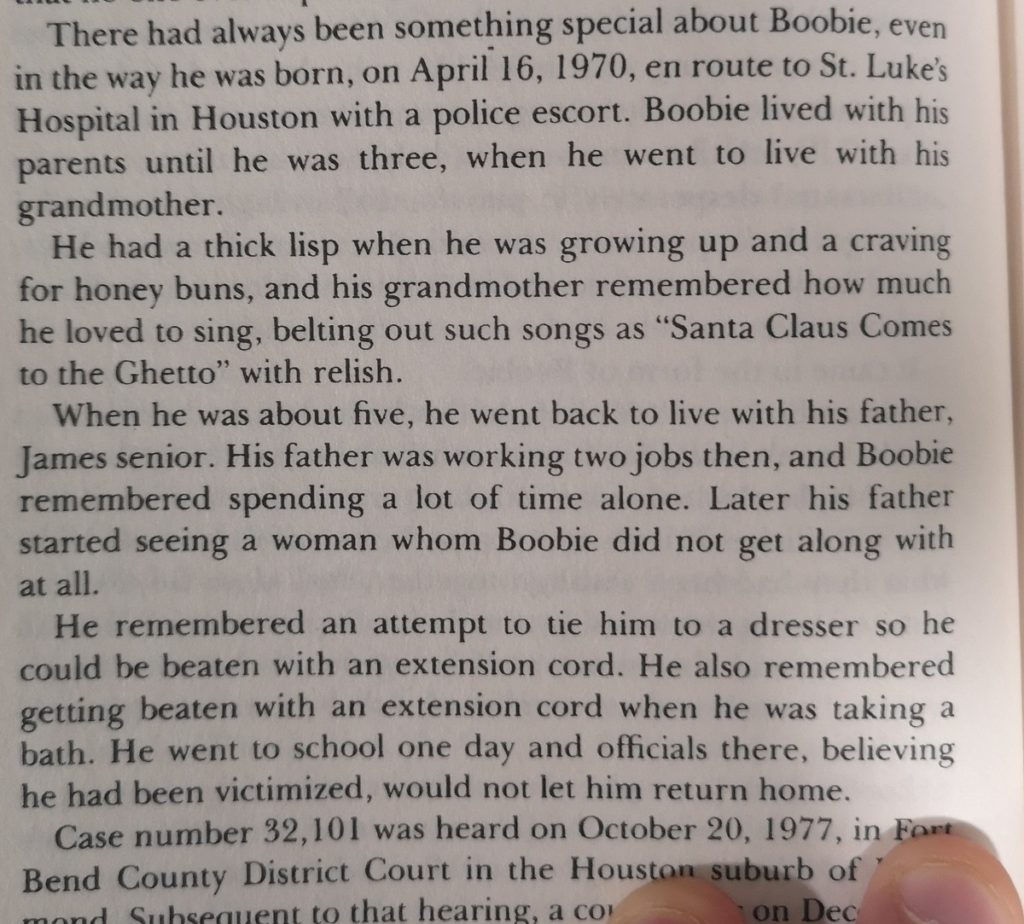
    And here’s a character introduction it inspired in my own story:

    “Of course the boss always called him by his real name, Gordon, but the rest of us called him Chocolate, to quote his oft-told stories, “all the girls in Thailand” used to call him that – so we all started calling him that too. One time, his sister came in to the office to meet him for lunch and we overheard her say as the elevator doors closed, “Did that guy just call you Chocolate?” It was apparent nobody outside the office called him Chocolate, only we did, and if they heard us say it, they didn’t know why. Some thought the nickname came from the daily Peanut Slabs he ate from office vending machine; a logical guess, but not close at all. We guessed those Thailand stories were just for us, and maybe they weren’t even true. Didn’t matter, we started calling him Chocolate and he never minded, and we never stopped.”

    This introduction also goes on for several more paragraphs. I’d never thought to write so much about a character so that he/she almost has their own sub story, but I can’t imagine writing the book any other way now.

    The one non-accountant character introduced in Part 1 is the “auburn haired girl”. The funny thing about this girl is she’s actually a real person. The entire story about her in Parts 1 and 2 are 100% true. Even that part in the book where I purposely didn’t smile and felt bad about it is also a true story. But in all those years we never once talked and I never found out a single thing about her, not even her name, which I always found odd. I hadn’t planned for her to come back into the story in Part 4 (that part isn’t true), but I knew I had to write her in as one of the quirks of young professional life.

    One final thing I did while writing Part 1 was make a scene list. This started as just a page of random notes but became more structured as the month went on. Each scene was listed in a specific order, with a specific goal:
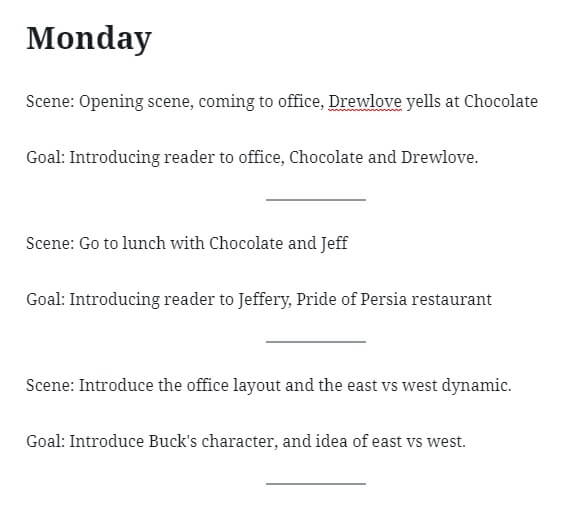
    With such a long story I found I would lose direction often, and go off on tangents that were irrelevant. With this list I could just focus on the goal, and once I’d written enough story to fulfill the goal, I moved to the next scene. Of course new ideas popped up all the time and I had to add and move scenes often, but having this list really helped me a lot.


    Writing Part 2

    While reading Friday Night Lights, I read through a few scenes of the author describing different parts of town. Here’s a short snippet from one of them:
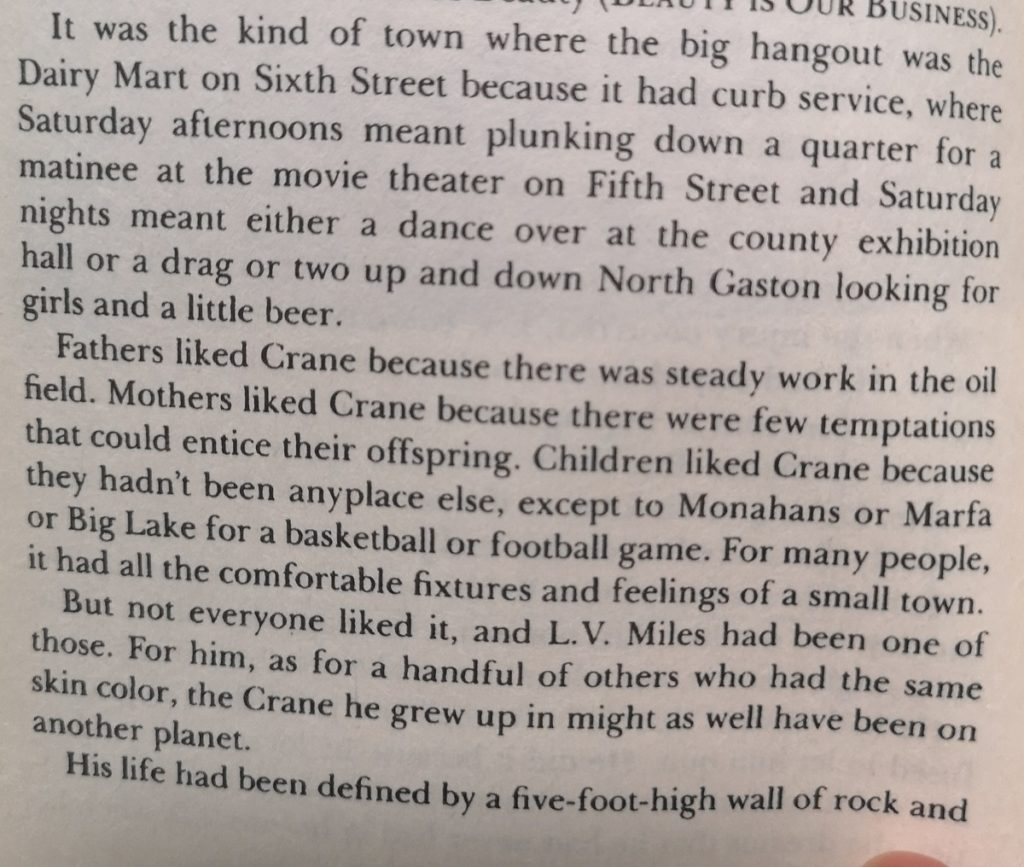
    It was while reading this I realised I hadn’t described Auckland city to my reader. I’d never thought to do it, because I know Auckland extremely well, but I realised most people don’t know it at all.

    That inspired the whole scene in Part 1 of walking through the city to dinner, because I needed an opportunity to show what Auckland city was like. It also inspired the opening paragraphs of Part 2, where I described the park across the road from the office and why it was there.

    “But even back then, Victoria Park was much more than just a large field lined with London plane trees. There was history in that park. Great Britain and the NZ Maori had played a rugby league match there once. During World War 2, US soldiers were housed there in temporary barracks. At the height of the 1918 flu, the fields were lined with bodies, a temporary morgue while the city figured out how to bury that many dead. Over the years wealthy businessmen had tried to close the park, more than twice, in an attempt to build a mall or a skyscraper, or something else that would surely be worth many slabs of gold today. “The city needs a new carpark, and there is no better place than here!” But they never could. Through one hundred years of wars and plagues and property sharks, the park survived.”

    Part 2 was less about characters and more about describing the quirks of office life. I wanted to show what it was really like to work in an accounting office – mostly the small things that entertained us each day – like taking a long lunch, or a special coffee recipe. Such insignificant things but we treasured them. The toilet scene is also a recounting of an actual experience I had.

    There’s also lots of dialogue, as I wanted to show the closeness between us – not just workmates but friends – because we needed to be united in that place. The internship scene is also semi-true, not the actual Milo making, but our firm really did hire interns one summer and they literally had nothing to do. I thought that was pretty funny and I should write it in.

    An important scene in Part 2 was the girlfriend scene. This was the scene where the narrator has his weekly date with his girlfriend, and I wanted to try and show how much an office job of that nature drains from the rest of your life, to the point that you don’t have energy for anything else, and nothing else is exciting anymore. The job is stale and that makes your whole life stale.

    “In our earlier years, things had been quite exciting. We talked about doing a gap year in Spain, where we’d learn to dance, and take weekend trips to Portugal. We said we’d save for a year, and then we’d go. But then her Mum had an operation, and she wanted to be around for that, and then she got promoted, and then my third year began, and our talks changed to how we were a little older now, and she wanted to think about buying a house. And you couldn’t spend a year in Spain when you had a mortgage, of course. A year in San Francisco would have been cool, we had talked one night about going there too, after Spain, riding those trams, watching the 49ers play, holidaying around California. We’d still be young, right? What’s an extra year abroad? But she seemed to laugh at them now. “Dreams we had when we were kids,” she called them one night. Yeah. I guess she was right.”

    I don’t know if you’ll notice this, but the narrator doesn’t have a name in the book. Most of you will probably assume the narrator was me, but I made sure that the narrator had no name, and no face. Any time the narrator has to say his name it says something like “I introduced myself”, and his face is never described either. He remains nameless and faceless the whole story. I wanted to show how that environment strips you of your identity, not just your dreams, but who you are. You wear the same clothes as everyone and do the same job as everyone and lose your individuality. I don’t know how well it came off but that’s the idea I was working towards with that. At one point I also tried to keep it so you couldn’t tell if he was male or female either, but that became too difficult.

    Part 2 is also where my favourite scene is. It’s the scene where the narrator is talking to Sienna the receptionist and finds out she’s in drama school.

    This scene was inspired by two things. The first was an actual guy at my office named Hector, who was the most stereotypical accountant ever. I didn’t know him that well, but I sat with him at lunch one day. He told me he was going to kickboxing training after work. I remember feeling so shocked when he said it, because seriously, nobody in that office had any outgoing hobbies like that. People went to the gym and played soccer and so on, but most people just went home after work and maybe at the most went jogging or something. Kickboxing was like, wow! (this was before UFC and “boxfit” type classes became really popular). So I asked him, if I could go with him one day to training. I ended up going with him the next week, to this super grungy gym hidden way up in the top floor of an old industrial building straight out of Rocky III. I ended up joining that gym for a while, and if I look back it’s actually the moment that sparked my journey into learning martial arts.

    So the scene was to introduce someone with a reasonably normal hobby or interest, but make it leave a really big impression on the narrator just because it’s so rare to meet someone adventurous in an office like that. As you can imagine, the arts scene never comes up in conversation in an accounting office (and I’m sure accounting rarely comes up in the arts scene).

    The second thing that inspired this scene was a conversation I had with a girl in a hostel in South Africa, who introduced me to the play A Streetcar Named Desire, and that’s where the drama school part came from. I’ll touch on this more when we get to Part 3.

    “Well, what are you studying?”

    “Drama.”

    “Drama? That’s a subject?”

    “Yes, dick. It’s a subject.”

    “At university?”

    “At university.”

    “So, what it’s…bachelor of drama?”

    “Bachelor of arts.”

    “Oh. And wait, let me guess…majoring in drama.”

    “Yes.”

    “See…I’m arty. So what does that mean…you going to be an actress or somethin’?”

    Another thing that made the book easier to write is – I didn’t write all the scenes in order.

    Often when I imagined a scene in my head, even if it was one of the later scenes, I wrote it and put it away for later. This scene above was actually one of the first scenes I wrote, at the beginning of Week 1. I knew I wanted an “outsider” type character, and I wanted it to be Sienna. Sienna’s character is also very closely based on the real receptionist from my old firm (though the art school stuff is made up).


    Writing Part 3

    Apparently the third quarter of a novel is the hardest part to write. It’s where all the characters are developed and the scene is set and now you have to create some big event to lead up to the climax of the book.

    I felt this and struggled to put together something I was happy with. I had lots of good scenes to write, but it was hard to bring them together into any meaningful storyline.

    (Lots of spoilers from this point on).

    The “big event” I came up with was some kind of hostage/shooting situation. The idea partly came from a shooting tragedy New Zealand experienced which really shocked the country, which I won’t say any more about. The second part of the idea was inspired by the movie The Breakfast Club! I liked the idea of having a bunch of people stuck in the office over a weekend, where they go through something traumatic together.

    One of the difficulties of this part was filling in all the plot holes and making sure everything was believable. I don’t know anything about hostage situations or SWAT teams or how police work, so I had to Google and make some guesses and just do the best I could (for example, who in the police handles a situation like this? Is it a detective, a sergeant, a superintendent?)

    The final scene in Part 3, of Sienna and the narrator sitting on the couch talking in the middle of the night – that’s the very first scene I wrote from the whole novel. I wanted a scene that had them reflecting on their lives, exploring how we might talk if we knew we were going to die soon. To be honest I didn’t want to end Part 3 on that scene, but had to cut it there as I ran out of time. A lot of Part 4 probably belongs in Part 3.

    You might also notice there’s a lot of drinking throughout the book. Lots of scenes with the boys drinking as much as possible, peer pressuring each other to drink, and talking about the girls in the office. The “fuck marry kill” scene is a good example. I had to have several scenes like this because this is exactly what that life was like. Friday night drinks was always the highlight of the week, and when the boys were alone they always talked about the girls in the office (and likewise the girls gossiped even more about the boys). The drinking culture is heavy in the New Zealand office scene, I wanted to capture that.


    Writing Part 4

    Early in Part 4 there’s a long scene where the narrator and Sienna sneak up to the rooftop. There’s a long conversation and Sienna tells him why she wanted to become a playwright. It’s not the play she was reading earlier, A Streetcar Named Desire, but a play she saw when she was younger, called A Raisin In The Sun.

    I just remember thinking, I want to do this. I’m not much of an actress, but I want to do this, I want to make something like this. I want to make something people love this much.”

    “A Raisin In the Stars?”

    “A Raisin In The Sun.”

    “What’s it about?”

    “Maybe you should read it.”

    I wrote it this way because when I first heard about the play A Streetcar Named Desire, it was in a hostel in South Africa. There’s a saying that goes, you should never meet your idols because they’ll always disappoint you. I was talking in the kitchen with a Korean American girl about that. She said it was true, because at her college they had wanted to perform this play, A Streetcar Named Desire, which she loved. But to do so they had to ask permission from the author Tennesee Williams. Apparently he refused, saying that “my play was not written for coloured people to perform”. So in the story I wanted A Streetcar Named Desire to be the play Sienna studied just because she had to for school, but the play that actually inspired her into playwriting was a famous African American play called A Raisin In The Sun. I didn’t have time to craft this message as explicitly as I wanted, but that was the intention.

    When it finally came to ending the story in the second half of Part 4, things got very difficult.

    I had decided early on that Sienna was going to die. I had guessed she would be the character readers would love most, which meant killing her would have the most impact.

    The bigger challenge was how to make that suspenseful and it was mostly just trial and error. I don’t read that much fiction and definitely not from authors who are renowned for twists and turns in their books. That meant I wasn’t really sure how to engineer a story this way. I guess this might be something you learn if you study literature, but I studied accounting 😀

    In fact the “twist” in my book was going to be Sienna’s death, but while finishing Part 1 I thought that’s not really a twist and the ending might be a bit boring.

    That’s when I got the idea to reveal in Part 4 that Jeffery the Scotsman was the shooter, and I added that last little paragraph at the end of Part 1 to set the story up for that.

    How did I bring all this together? Again just lots of trial and error and moving around paragraphs and trying to see which method flowed the best. I’m still not really happy with the Jeffery reveal and think I could do that much better, but I have no idea how right now.

    There’s a few other ideas in Part 4 that worked well in my head but I’m not sure they worked that well on paper. I wanted a collection of scenes that showed the “trauma” changed the way the narrator lives. The lesson was it takes a big traumatic event to wake you up enough before you start making changes in your life.

    The first change the narrator makes is he quits his job. The second is a scene of him meeting an old client in the carpark, and realising all the negative assumptions he made about that client from Part 1 are totally wrong. The third thing is him finally introducing himself to a restaurant owner he’s known for years but never took the time to learn his name. The fourth is him getting out of his relationship and meeting someone new. Nothing about it was cryptic but I think maybe it was a bit subtle to pick up on first reading. Since I wrote it, it’s impossible for me to say. Ideally that was the intended moral of the whole book though.


    Overall, great challenge, learned a lot, improved as a writer (I think). Can also say I’m now a novelist! 😉 Will probably do it again some time. And I would also encourage all of you writers out there to keep grinding away, set some tough deadlines and finish those books you’re working on! It’s a great feeling to write those final words.

    Big thank you to everyone who was reading and messaged me with encouragement. Means a lot.

    To read my novel The Accountants, click here.

    B
  • Complete the Ironman VR5 (Quarantine Challenge #5)

    Complete the Ironman VR5 (Quarantine Challenge #5)

    One thing I learned during my recent journey into endurance sports is that triathletes are an odd bunch. I don’t know if I’ve met a group of people more obsessed with their sport than the #swimbikerun crowd.

    So as you can imagine, with the triathlon season almost entirely cancelled worldwide, the triathlon community has been going a little crazy.

    As a solution Ironman started hosting virtual races (VR’s) through their newly launched Ironman Virtual Club. Even the pro season is now being run virtually for world ranking points. It’s pretty wild that technology now allows triathlon, one of the most outdoor sports ever, to be run remotely with athletes in quarantine!

    The way these races work is you register for the event, and then you connect your Garmin or Fitbit GPS to the Ironman Virtual Club while you complete your race (I use the Garmin Forerunner 935). You can also connect a treadmill or bike trainer with an approved distance meter. Your info feeds into the Ironman Virtual Club as you complete the event with your recorded time. Then once you’ve finished, you get ranked on the leaderboard and get a little virtual badge on your profile.

    VR1 to VR4 were shorter triathlons, but I got the email last Monday saying VR5 was happening that weekend and it was going to be a half Ironman. I hadn’t been in training since racing at Ironman NZ, which was nearly two months ago. This seemed like the perfect challenge to test if I still had any life in these legs!

    While a half Ironman usually involves a 1.9km swim, most people don’t have access to pools during Covid-19. To solve this they replaced with swim in the VR’s to short runs, so the course for Ironman VR5 was set as:

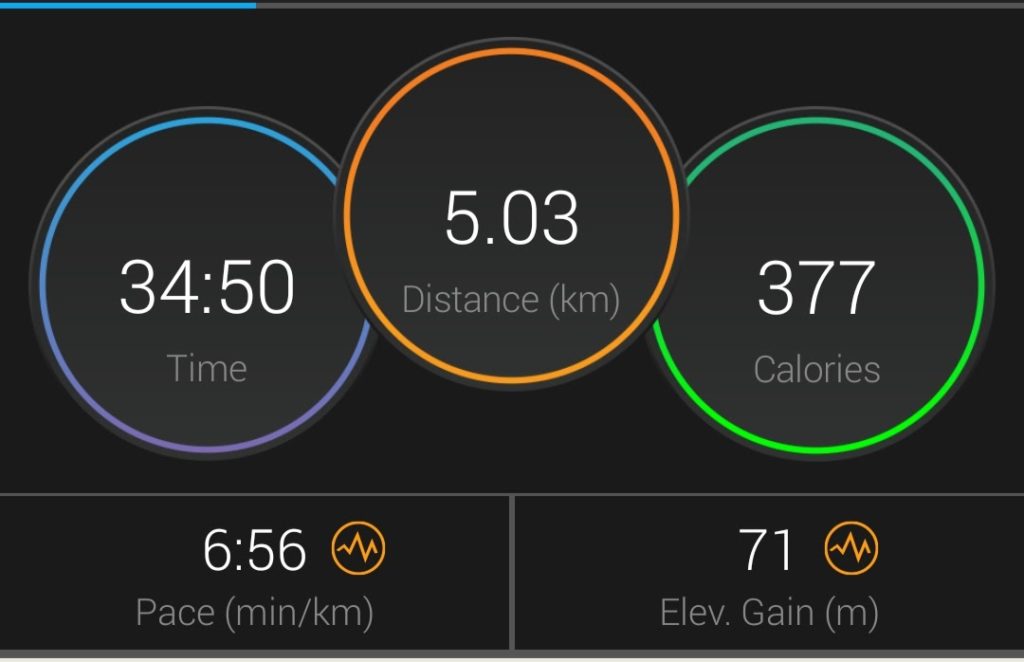
    • 5km run
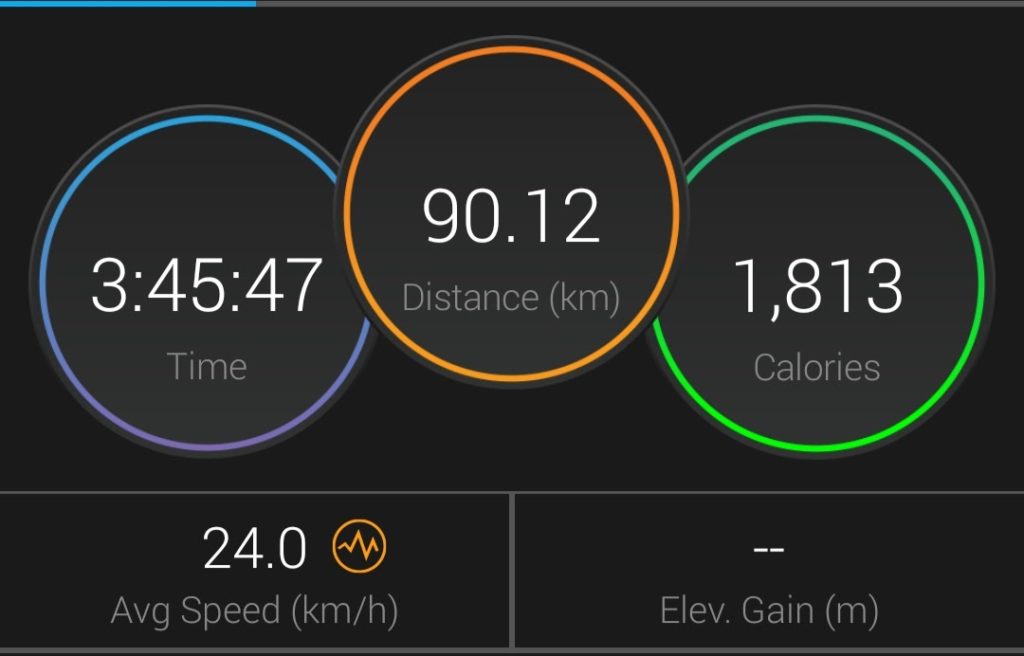
    • 90km bike
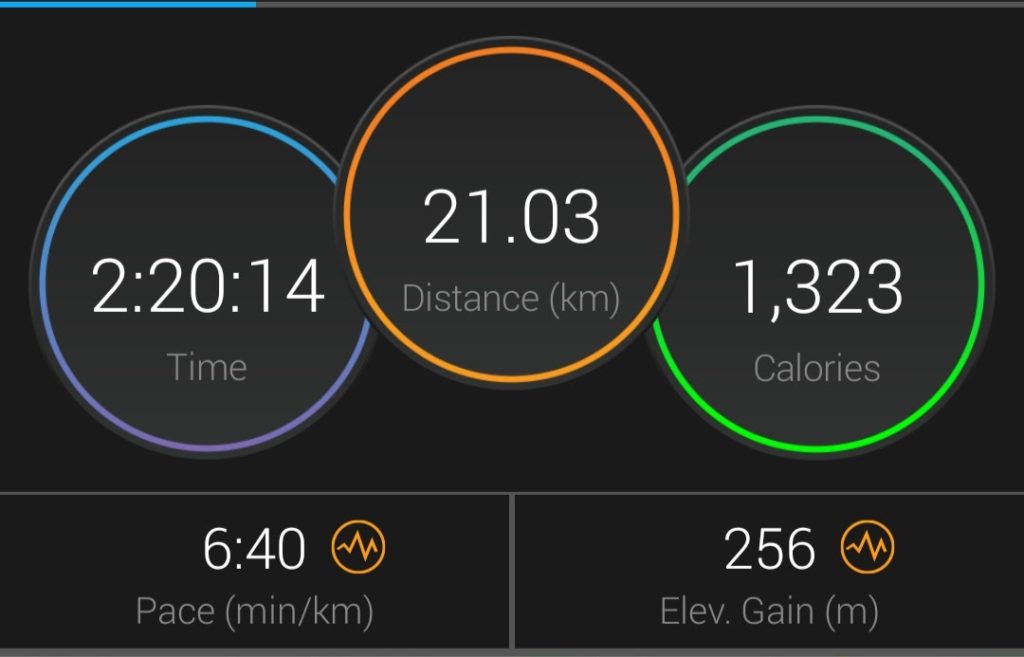
    • 21km run

    The other cool thing about the VR races is they’re hosted over an entire weekend. So you have almost three days to finish it, and can do the events in any order you want. You can do it all in one day, or spread it over the whole weekend. Not only does that make it easier, but also means there’s no excuses for scheduling etc! You can race in the middle of the night if you want.

    The race window is based on GMT, but the official window for New Zealand was Saturday 7:00 am until Monday 11:59 am.

    Training:

    Even though I only had four days to prepare, even a small amount of preparation was important. I knew jumping straight into half Ironman distances after two months off would be a shock to the legs that wouldn’t be fun or healthy.

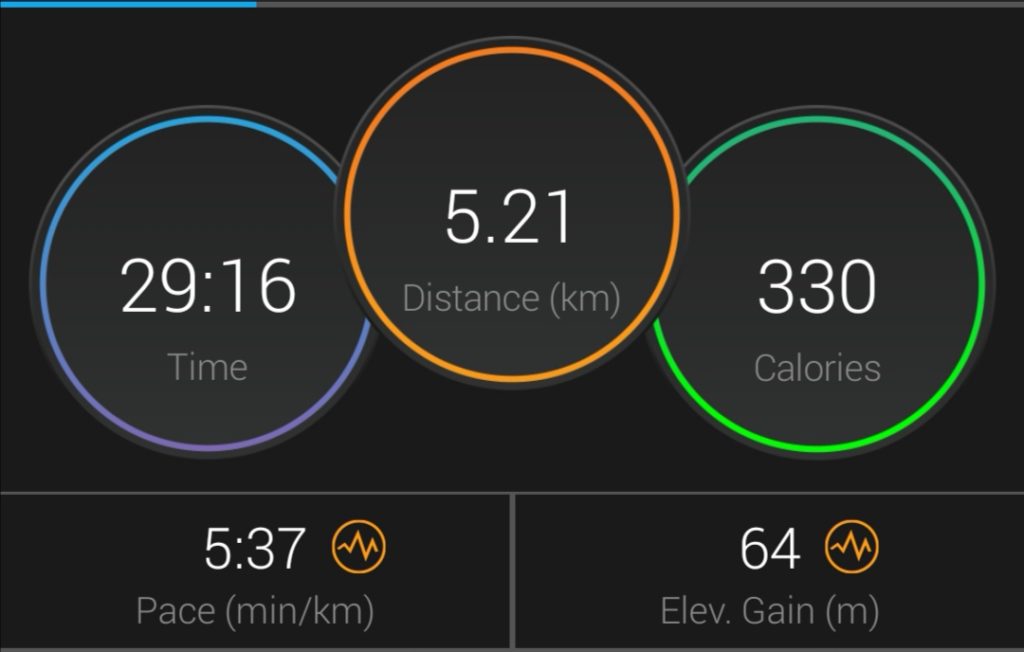
    On Tuesday, I laced up for a 5km run. It actually felt great and I finished comfortably with a comfortable pace. That was a confidence boost and I started worrying less about the half marathon, which I’d been having some doubts about.

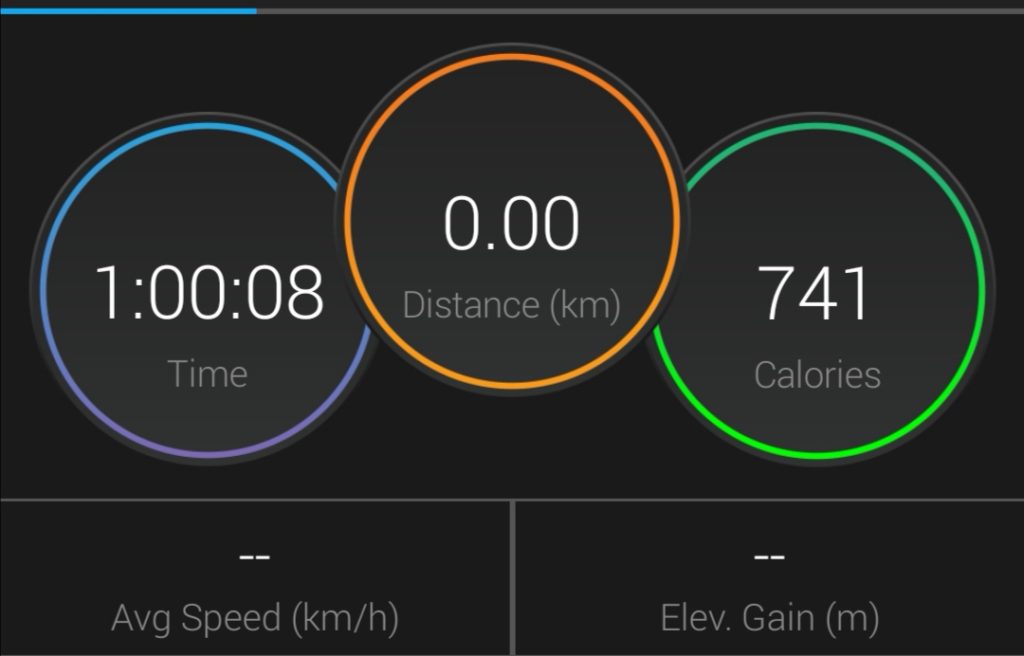
    On Wednesday, I got on my bike trainer for an indoor ride.

    At the time I didn’t know I could track distance on my trainer, so I just measured by time. I did an hour, which is usually around 25km for me on the road.

    My legs were quite achy after that, so I decided Thursday and Friday would be for resting and stretching before race weekend started on Saturday morning.

    Saturday:

    The weather forecast for the weekend was awful. Saturday was supposed to be cloudy (but dry) all day, but then Sunday and Monday were both stormy with heavy rain all day. That meant I needed to get everything done on Saturday, or at least the half marathon and the bike ride. Otherwise, I’d be spending many hours running and riding in the rain on Sunday and Monday.

    When I went to bed Friday night, my plan for the race was as follows:

    Saturday morning I would head to the velodrome and do the 90km ride, expecting it to take around ~3.5 hours.

    Then I would rest for an hour or two, have some food, and then do the 21km run in the evening. I expected that to take ~2 hours.

    Then on Sunday I would rest, and on Monday morning I would do the 5km run. Since that should only take ~30 minutes, doing it in the rain would be fine.

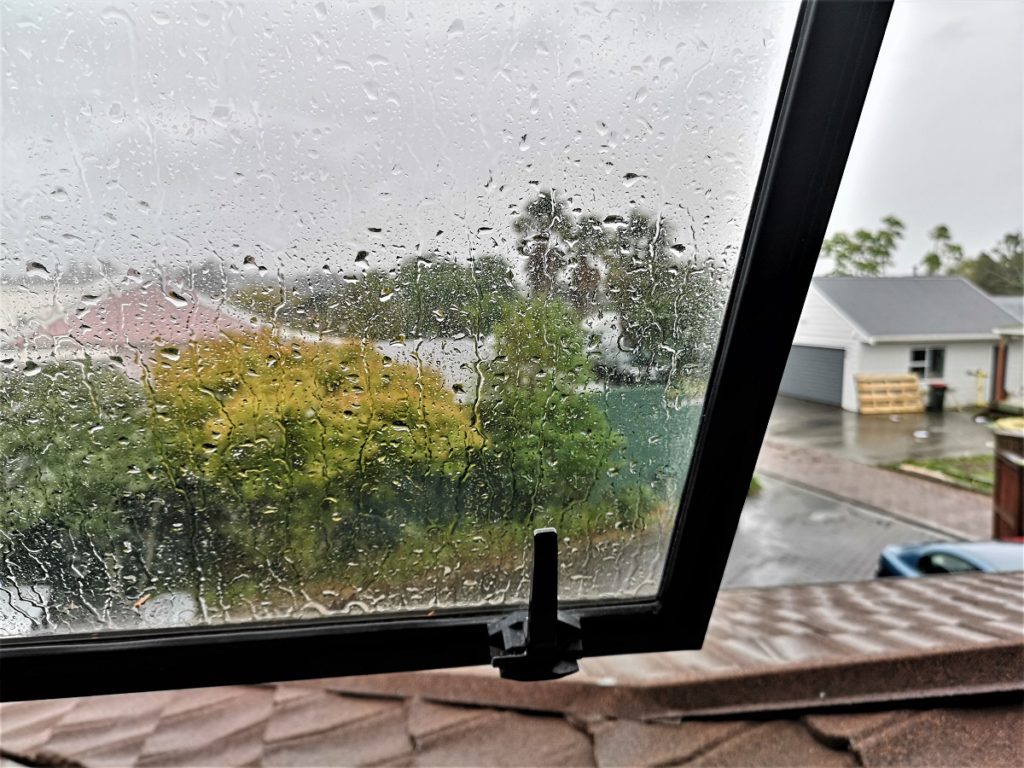
    Well, as usual the Auckland met service got the weather forecast COMPLETELY WRONG, and Saturday wasn’t clear at all. When I woke up at midday, it was already raining.

    By 2pm it hadn’t cleared up, it was raining even harder.

    By around 3pm it had slowed down to a drizzle, and I guessed that was probably the best it was going to get all weekend and I should get one of the long events out of the way.

    It still looked like it could start pouring again any second, and I generally don’t like cycling in the rain since it’s pretty dangerous. Especially since Auckland drivers seem to love driving as close as humanly possible to cyclists like they’re trying to smell us or something. So I decided to do the half marathon.

    It’s been a long time since I’ve run 20 km – in fact the last time I ran that far was during the Ironman back on March 7th, exactly 8 weeks ago. Since then I’ve only done a few runs, the longest being ~7km.

    The course I mapped out was simply four laps of a 5km loop near my house, with a few extra side streets to make up the additional 1km to get to 21km.

    Unfortunately, things were already feeling hairy at the 3km mark, and I was breathing heavy and feeling my knees start to soften. Luckily I’ve been there before, and just focused on finding a steady pace and knocking off that first lap. Once I settled into the run, the first two laps went by slowly but without too much suffering. I knew I wouldn’t be setting any PB’s that day so I just slowed it down and tried not to beat my legs up too much.

    Rain finally started coming down on the third lap, but it wasn’t too heavy and didn’t bother me. What did bother me was my feet, which always seem to get jacked up around the 12-15 km mark with sore bones and blisters. That worsened during my fourth lap, and I had flashbacks of those horrible times during the tail-end of my marathons, when your feet are crying for mercy and you don’t want to run another step. Of course this run wasn’t nearly as bad, and also those memories are a good reminder you’ve been through way worse and should be just fine if you keep your head right.

    I actually hit 21 km a few streets early and walked the rest of the way home. Rain was a little heavier by then, but I had a huge smile on my face, happy that I could still survive those long runs after a few months off.

    Sunday:

    I woke up around midday and already the rains and winds were raging. There was no way I could cycle 90km in that weather, partly because it’s pretty dangerous, but mostly because I just didn’t want to.

    At this stage I contemplated not completing the race. My only option was to do the ride indoors but my bike trainer couldn’t measure distance so wasn’t approved for the VR. At least that’s what I thought, since I didn’t fork out the big bucks for one of those really fancy trainers.

    Luckily I decided to double check the manual and found that my trainer could measure distance when I connected it to a Garmin device via something called ANT+ (never heard of it before). Just so happens my running watch is a Garmin with ANT+!

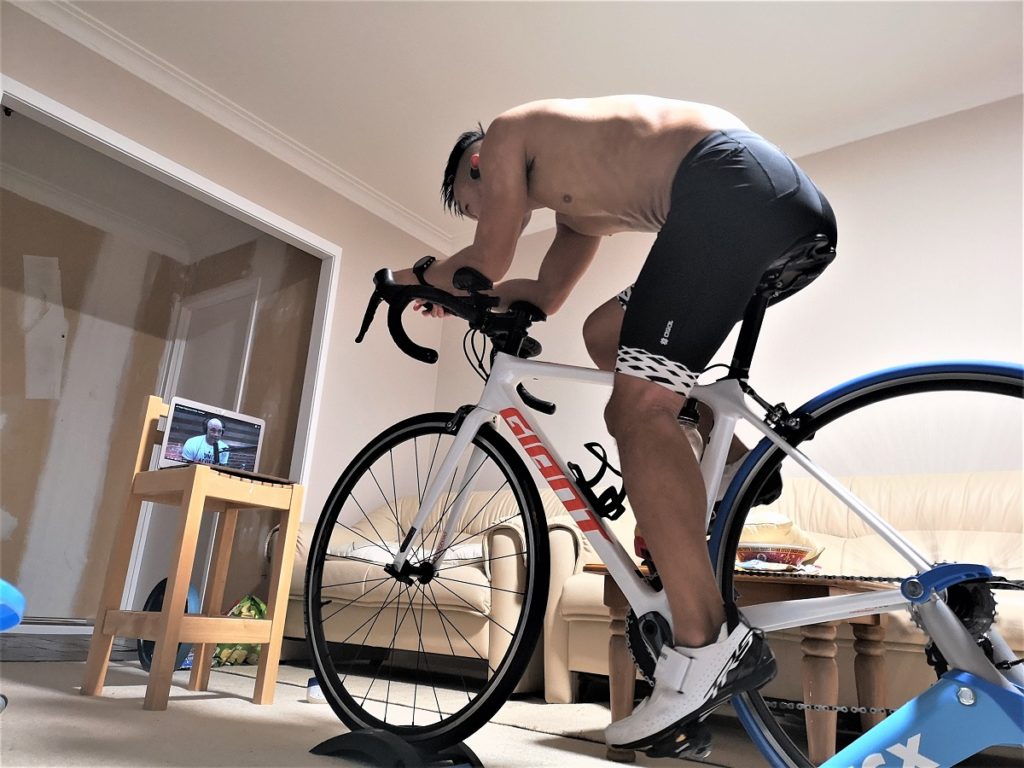
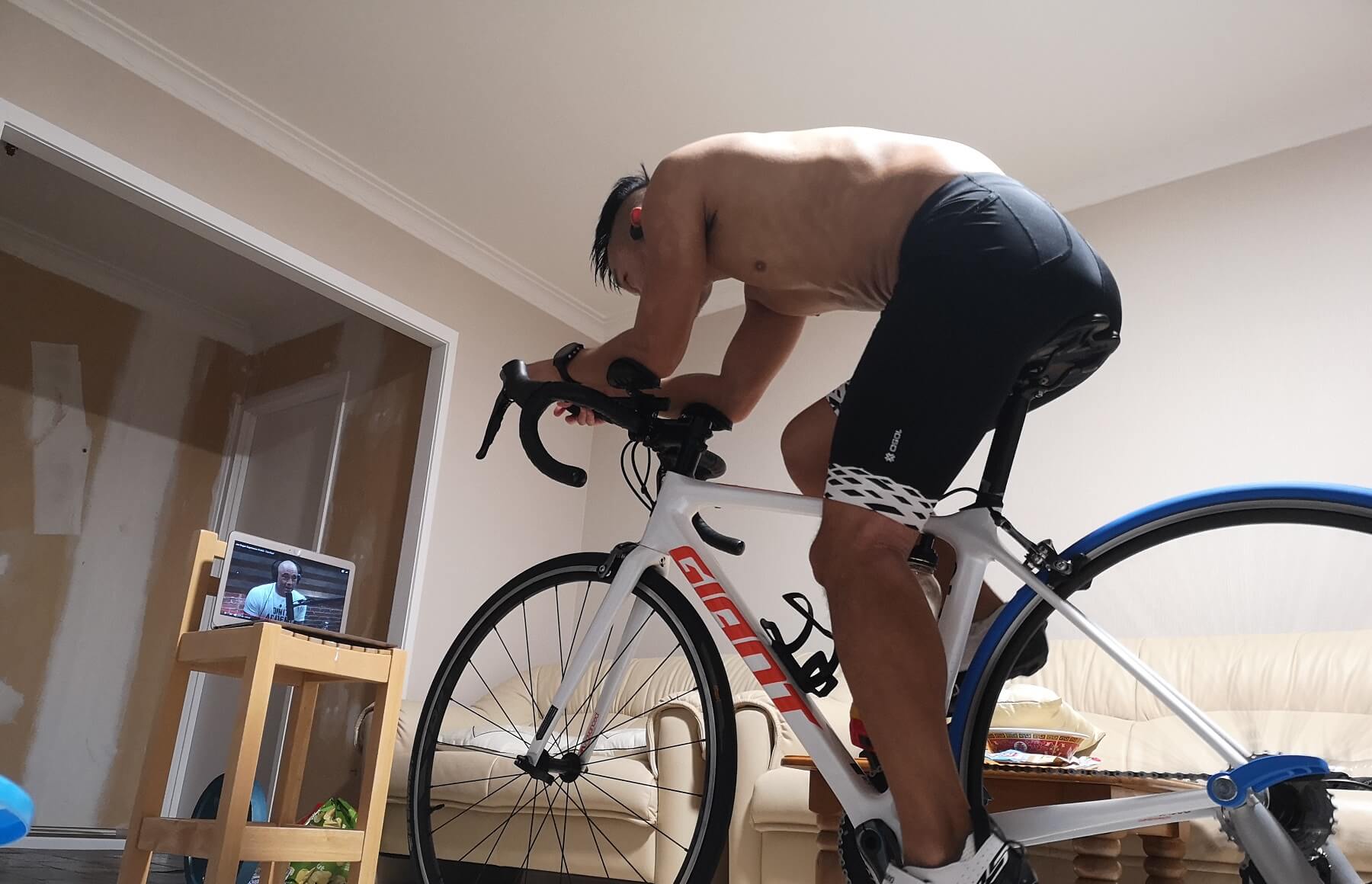
    Once I got it hooked up and working, I was pretty amped to be able to finish the race and got riding straight away. I usually ride around 25km/hr so I expected 90km to take me around 3:30 or a little more. I set my laptop up in my lounge with a podcast, stashed some cookies, fruit, gels and drinks on a refreshment table and away we went.

    For some reason, riding on a trainer is so much harder than riding on the road.

    I think partly because there are no downhills to coast on, but it also feels like it records less pace and distance than what it would be on an actual road ride. I did a lot of long rides for Ironman prep and usually anything under 100km wasn’t too painful. But this ride was a killer.

    By 20km I was already soaked in sweat and had finished most of my snacks, around 50km my legs were really giving out, I seriously considered stopping to rest for a few hours.

    Instead I just dropped down a few gears and did some granny peddling and it all blurred together after that into a slow and painful slog. The last 10km were particularly horrid.

    Part of it would’ve been because my endurance has waned over the last couple of months, and also the long run the day before left my legs a little woozy. Still I didn’t expect it to be that tough.

    When I finally finished and took some time to eat and rest, I noticed once again how amazing our weather service is. It was supposed to be heavy storms throughout the evening and night, but when I finished the ride at 8pm, the rain had gone completely and the skies were pretty clear.

    Since the VR5 deadline was at lunchtime the next day, I figured now was my chance to get the 5km run done and wrap the challenge up. Otherwise, I’d need to wake up early and do it the following morning, and the forecast was again for heavy storms (which meant it would probably be bright and sunny, but whatever).

    I laced up and headed out onto the streets.

    Sun had gone down long ago, but I was still warm after that killer ride. Streets were empty too which was nice. Since it was only 5km I just treated it like a warm down run and kept the pace extra slow. Still struggled a little on the last 2km, but once I got home it felt so good.

    It’s been a while since I’ve had to push myself that hard, and the sore knees and feet walking up the stairs afterwards was a nice reminder of what training camp used to be like.

    Can’t say I miss it, but I did miss that feeling of collapsing into bed at night and thinking yeah, I did that!

    Race results:

    These races have actually been a huge success and people have been discussing them non stop in the triathlon FB groups. If you’re planning on doing a triathlon, half Ironman, Ironman, these are the perfect races for training! You can sign up for free at Ironman Virtual Club.

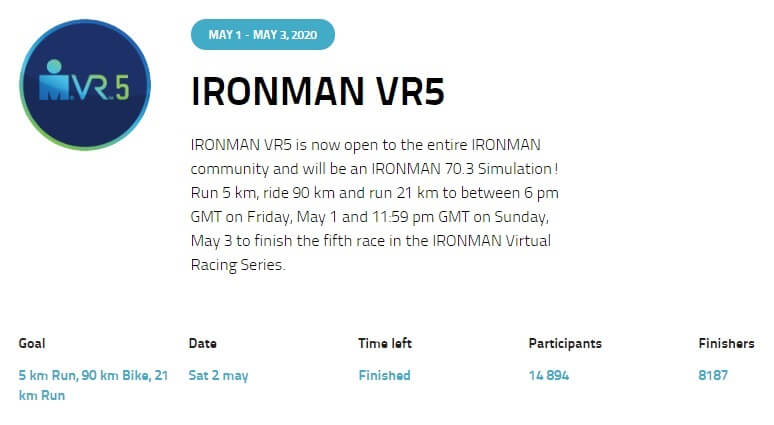
    For this particuar race, 14,894 athletes registered for the race, and 8,187 finished:

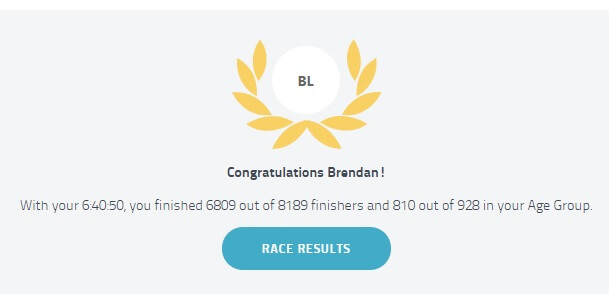
    My final time was 6:40:50, which placed me 6,809 out of 8,187:

    I don’t even want to think about how much harder it would’ve been to place in the top half, especially with some of the stuff I’ve seen on Facebook. Ironman is full of lunatics ?

    Also I’m going to say my real result was 6,809 out of 14,894 – and with that, I’m in the top half!

    No medals for this race either, but we do get a badge, and that’s good enough for me.

    Once again, will be taking a little break from biking and running for a while.

    What should Quarantine Challenge #6 be? Definitely something easier on the legs 😉

    B

  • Five Days Of Fasting (Quarantine Challenge #4)

    Five Days Of Fasting (Quarantine Challenge #4)

    Note: This post won’t go into the science or benefits of fasting, it is just a diary of this particular fast as one of my challenges during Covid 19. If you’re interested in more details on how to fast, I wrote a very extensive guide during a previous fast which you can find here.

    Prep day:

    Morning weight: 60kg

    The day before starting a fast is pretty important. Most people have never gone five days without food in their life, so simply jumping straight in will be definitely be a shock to your body and will make the fast especially hard (probably why almost everyone quits during their first one).

    Prep days are a way to reduce calories gradually and ease your body into the fast. It’s also a chance to remove the “heavy” foods from your diet so waste is easier to clear during the fasting days. That usually means high water and high fibre foods.

    As I’ve been fasting regularly for a few years now I no longer need really long prep periods, for this fast, I decided one day would be enough.

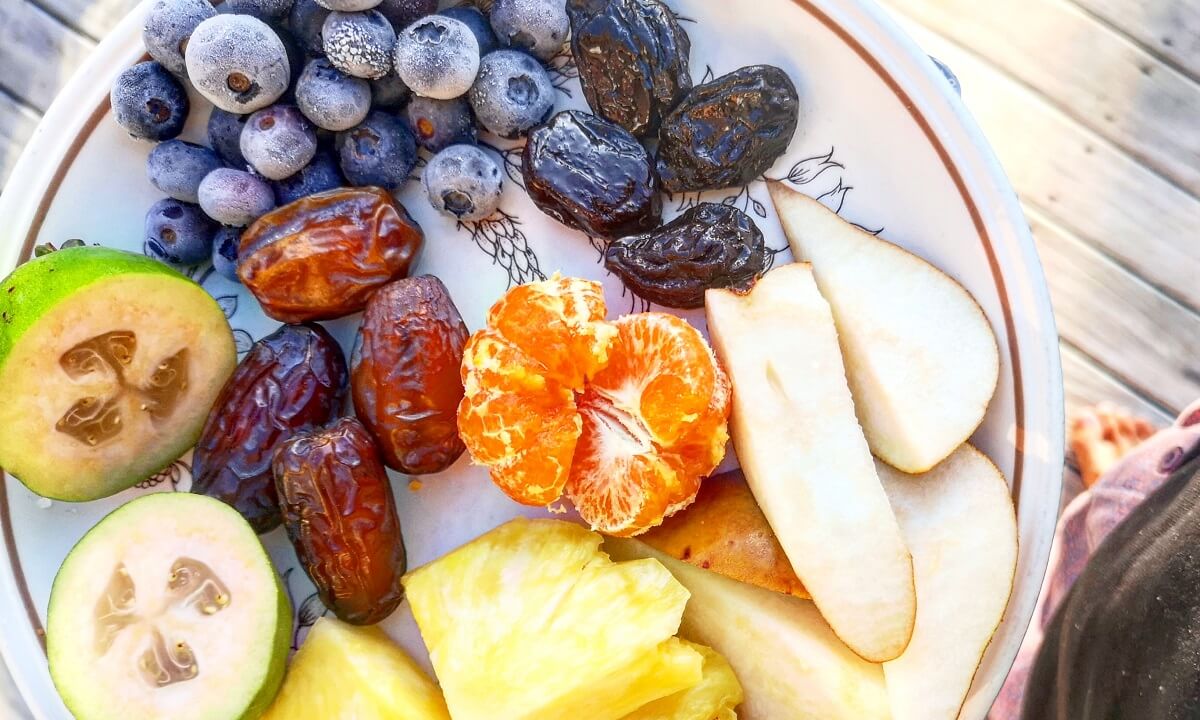
    The day consisted almost entirely of fruits, water and bone broth. Nothing much else to report, just an easy day really!

    Prep Day summary:

    Bone broth: 1 cup
    Fruits: Prunes, dates, feijoas, pineapple, mandarins, blueberries, pears.
    Water: Maybe a litre or so


    Day 1:

    Morning weight: 59kg

    Day 1 was actually tougher than it’s been in the pat. Usually I breeze through Day 1s.

    Hunger was not torturous but I could feel it pretty heavily. Tried to do some writing, didn’t really get any done though. Instead, I spent some time sitting in the sun and reading and that felt fine.

    During the day I also started on my fasting regime, which includes a few different products.

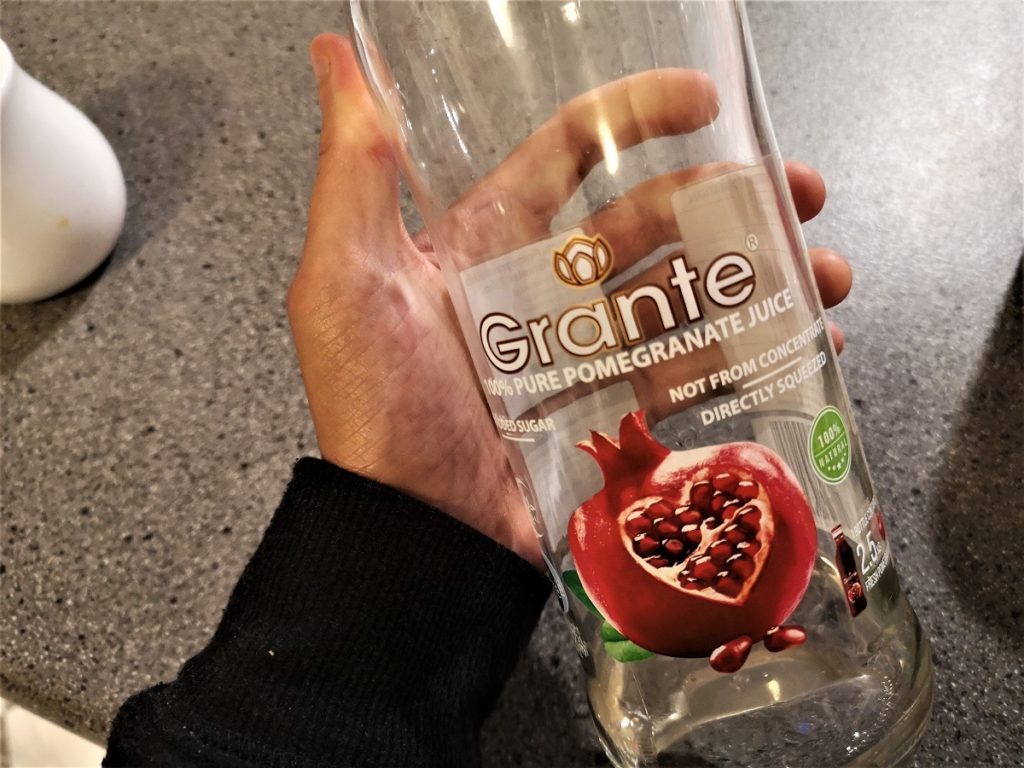
    The first one is pomegranate juice. I use pomegranate juice because it’s known to be a good against parasite cleanser. A fast is one of the best times to do a parasite cleanse, especially for someone like me who travels regularly. It also tastes pretty good!

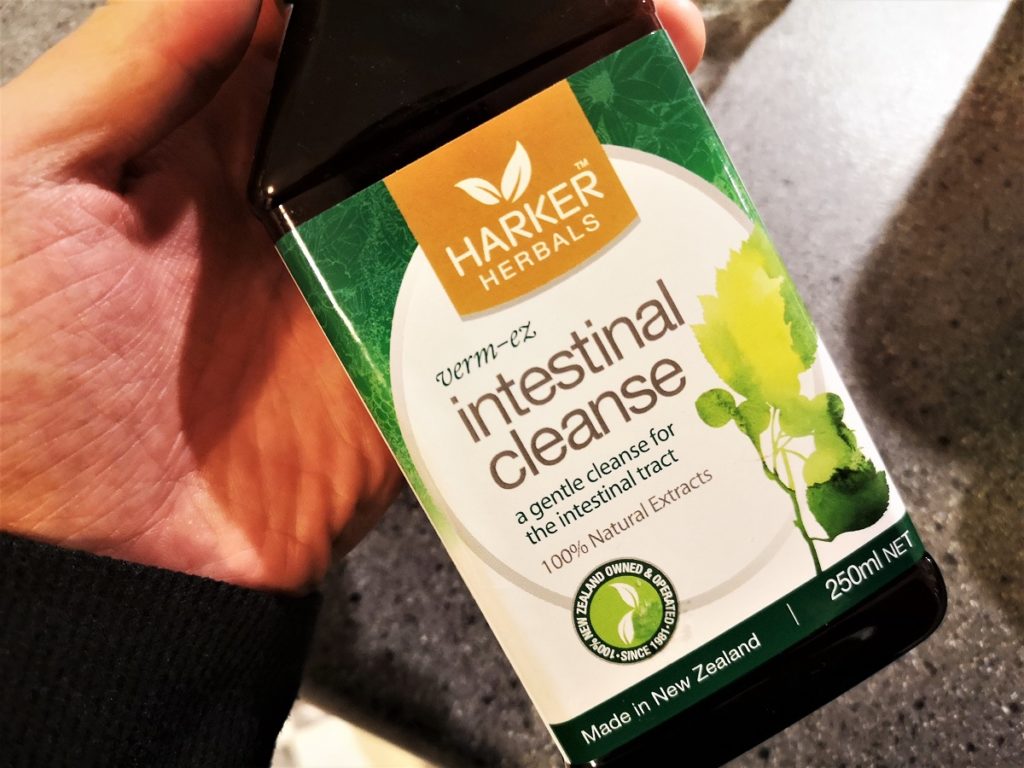
    The second product I use is a herbal intestinal cleanse. It contains standard anti-parasite herbs like wormwood, green walnut and clove.

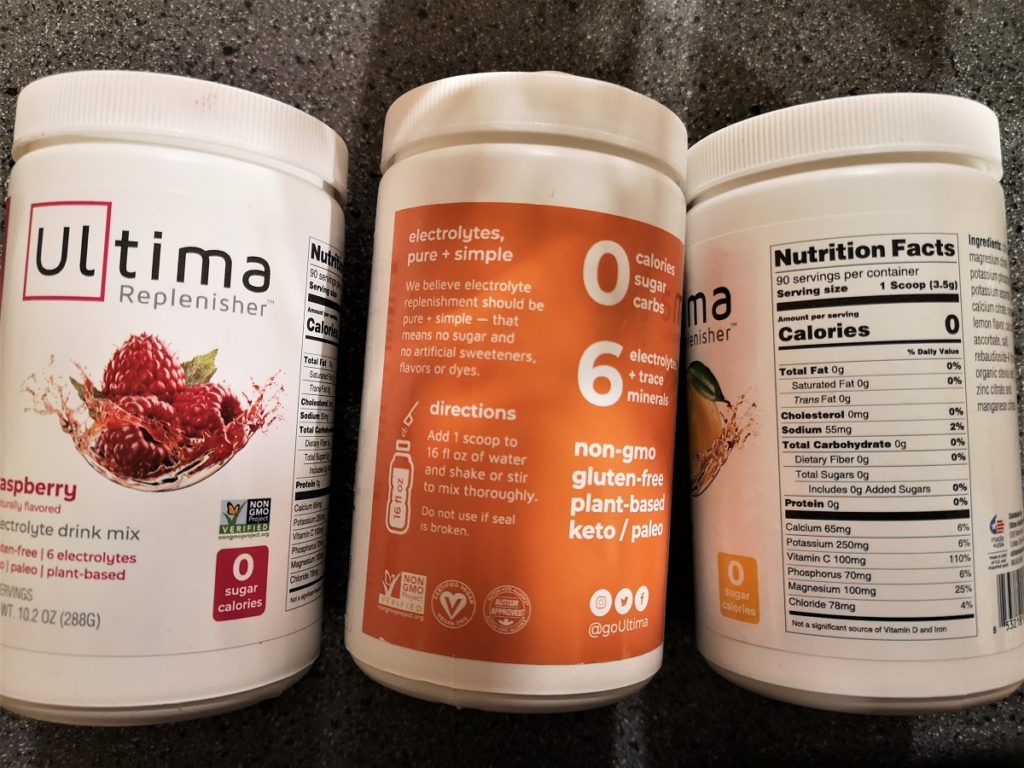
    The third product I use is an electrolyte mixture called Ultima Replenisher. It’s the sports drink I used during all my marathon and Ironman training. Amazing stuff and perfect for a fast as its sugar free and zero calorie. I recommend it to everyone (raspberry flavour is the best!).

    Late in the afternoon I fell asleep and slept a good four hours. Then did another eight hours at night. Lots of sleep is usually a good sign early in a fast. But other than just feeling hungry, pretty quiet day.

    Day 1 Summary:

    Bone broth: 1 cup
    Ultima replenisher: ~1L
    Pomegranate juice: ~400ml
    Intestinal cleanse: 3x10ml


    Day 2:

    Morning weight 58.8kg

    Woke up around 5am, then fell asleep again and woke up around 1pm. Woke up feeling pretty dizzy, but no headache. I few gulps of Ultima and I was feeling back to normal. Saw some fruit in the kitchen and was super close to cheating (“it’s only day two…I can just start again”) but resisted.

    Not really hungry during the day, just tired. I tried to drink more, but wasn’t that thirsty either. Just got a lot of rest.

    I also like to keep drinking a little bone broth during these first days. It has some calories but won’t break your fast, and it makes the transition into fasting mode just a tad easier.

    Day 2 Summary:

    Ultima Replenisher: ~1.2L
    Pomegranate Juice: 300ml
    Intestinal cleanse: 3x10ml
    Bone broth: 1 cup


    Day 3:

    Morning weight: 58.6kg

    On Day 3 I did my first salt water flush. This is a cleansing technique that was popularised by “The Master Cleanse” which is one of those fasting books/courses. This involves taking 2-3 teaspoons of sea salt, mixing it into a litre of warm water and then drinking it as fast as possible.

    The reason this works is because salt water is a laxative. If you ever do this, make sure you don’t go too far from the toilet, because when that water decides to come out it comes fast and heavy and without a lot of warning.

    Weirdly I got a huge headache while I was drinking it, which didn’t happen the last few times I’ve done it. I couldn’t even finish the full litre and only got to about 800ml because I knew if I took one more mouthful I would vomit. Still it worked a charm and I was on the toilet 30 minutes later giving my colon a good flush (and then again an hour later and again an hour after that). It’s not the most pleasant process, but it definitely works!

    Even on Day 3, I wasn’t have die-off symptoms which is usually when they show up (big headaches and fatigue from toxins starving in your gut). Even without that though, I was still was feeling kind of weak walking around, but not sick or sleepy.

    I did find myself craving lots of different foods during the day. Mostly bread, and steak, and a hot soup. Also had some trouble getting to sleep that night – was lying in bed at 2am wide awake. I’ve experienced that hyper-alertness anyway during previous fasts, so wasn’t concerned.

    Day 3 summary:

    Ultima Replenisher: 1.5L
    Pomegranate juice: 100ml
    Intestinal cleanse: 2x15ml
    Salt water flush: 800ml


    Day 4:

    Morning weight: 58.1kg

    Had some die-off symptoms finally in the morning, but mild ones. As soon as I got out of bed, dizziness kicked in and a slight headache and hunger pangs. Nothing major and went away pretty quickly by the afternoon.

    Wasn’t clear headed enough to do much work, just spent the day playing video games and watching TV. Pretty uneventful.

    Day 4 summary:

    Ultima: ~1.5L
    Intestinal cleanse: 3x15ml


    Day 5:

    Morning weight: 57.1kg

    Final day! Pretty easy day to be honest. Of course I was hungry but knowing that it’s just one day left made any cravings easy to dismiss. Technically I was allowed to eat at 10pm, but decided to give my system some extra rest and push until the next morning.

    Did a second salt water flush that day. Again I couldn’t finish the whole litre and only managed 800ml. Still worked a charm, though hardly any waste came out this time, just water.

    Got to sleep around 2am, but found it hard to fall asleep – my stomach was grumbling pretty hard and I was just thinking of all the food I wanted to eat the next day. Not a good sign to have such strong cravings on Day 5, but it wasn’t too bad. Still wasn’t asleep by 5am, just lying in bed wide awake and staring at the ceiling.

    This mega “awakeness” is explained by some people as a survival response. Since you haven’t eaten so long, your body thinks you can’t find any food and puts you into hyper-alert mode so you can go out and hunt/gather. It’s the reason so many people find themselves super productive during fasts. If it hadn’t been so cold, I probably would have gotten myself out of bed and worked too. But we’re getting onto autumn now in New Zealand, and the nights are a bit nippy 😀

    Day 5 Summary:

    Ultima: 1.5L
    Intestinal cleanse: 3x10ml
    Salt water flush: 800ml


    Day 6:

    Morning weight: 57.1kg

    Didn’t lose any weight overnight! Kind of odd.

    One reason might be because I didn’t sleep well. Only got about 2 hours at most. Still I was lying in bed for 8-10 hours awake, so felt rested enough to get up and eat.

    The day you break fast is the best feeling ever. I always like to lie in bed for a while, thinking about all the things I can eat, and just enjoying the last few moments of my system being empty.

    The first thing I ate was some fruit (a feijoa) and then I got working on a hot soup for the day – tomatoes with carrots, garlic and onions.

    Also the key ingredient of the day was prunes, as they are a mild laxative if you eat enough of them which helps to get your bowels moving again.

    Pretty relaxed day as you can imagine, just watching some TV and enjoying eating again.

    Things I ate during the day were a pot of soup, some bread (not really recommended, but I was craving it), a packet of prunes, a mandarin, a feijoa, some mandarins. Still no meat/eggs or heavier foods like rice or oats (usually those need to wait another 2 or 3 days).

    Day 6 summary:

    Pomegranate Juice: 100ml
    Pot of tomato soup
    Plate of steamed veges
    3 slices of bread
    ~15 prunes
    1 box blueberries
    1 mandarin
    1 feijoa


    Some final thoughts

    Pretty simple fast this year, not too long (in 2019 I did 11 days, in 2018 did 10 days). Very few die-off symptoms this time, which I could attribute to intermittent fasting for the last 6 months, and also another 5 day fast I did mid-last year, and also a really clean diet for marathon and Ironman prep. That required almost zero junk food and processed carbs, so my system was probably cleaner than usual this year.

    Still, 5 days kind of dragged on. Normally at the end of a fast I find myself extending it for one or two days because I’m feeling so pumped, but this time I didn’t even think about it! I was ready to end on Day 3 ?. It’s not really the new/exciting thing anymore, but of course it’s still very beneficial so I just tried to get through it quietly and painlessly. Wasn’t difficult, just a bit boring.

    Anyway, that’s another reasonably productive week down during this quarantine season. Haven’t decided what the next challenge will be, but will have something soon 🙂

    B

  • A Thousand Pull-Ups In 7 Days (Quarantine Challenge #2)

    A Thousand Pull-Ups In 7 Days (Quarantine Challenge #2)

    After finishing Quarantine Challenge #1 I wanted my next challenge to be something fitness related.

    The goal was also to find something short and low intensity, rather than running or biking tons of kilometres, which is really strenuous on the body and immune system which is not what we want right now, is it?

    My first thought was to do push-ups, but I do a lot of push-ups when I’m travelling to the point that they jack up my shoulder sometimes. Pull-ups is something I do rarely on the road, so I’m not that great at them, mostly because I never have a bar to do them on.

    I don’t have an actual pull-up bar here at home either, but I do have a high bar on an old home gym that can be used as one. Luckily I’m a small and light guy so I don’t need anything too sturdy! If you don’t have anything lying around your house to do this challenge like a balcony you can hang from or a home gym, you can still easily replicate it with an affordable home pull up bar like this one, or even portable hangboards like these that are popular with rock climbers.

    So the challenge was going to be pull-ups. I didn’t know exactly how many to aim for, but we would figure that all out on Day 1.

    Day 1:

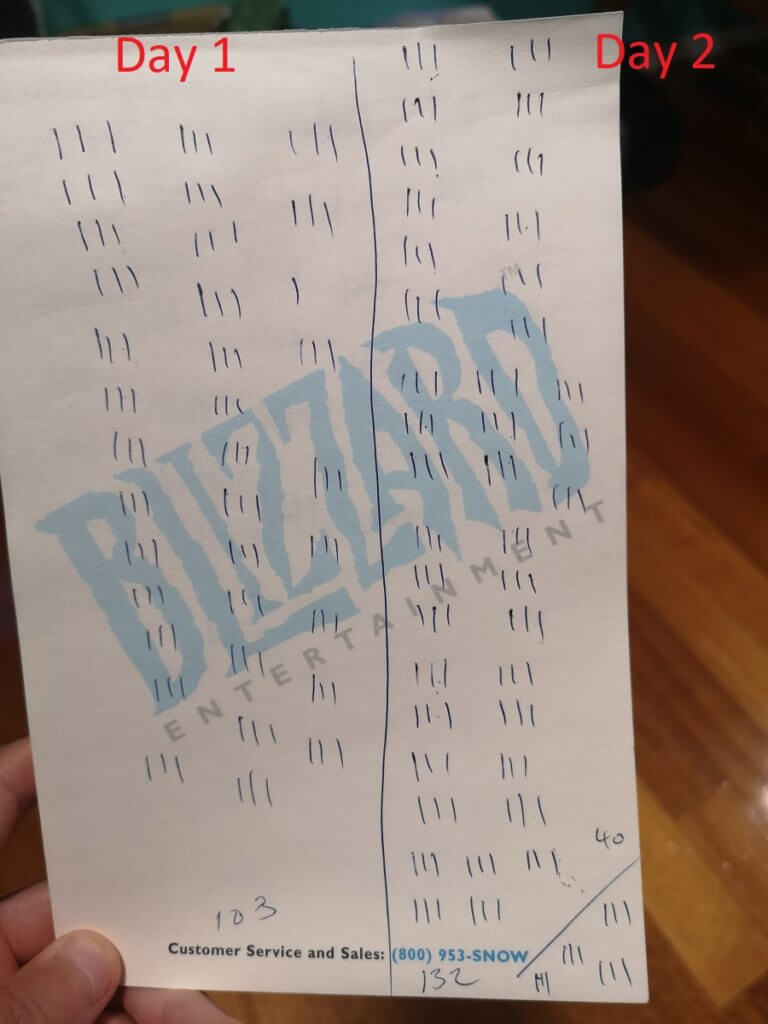
    Day 1 was a litmus test; since I don’t ever do massive amounts of pull-ups I wasn’t sure where to set my limits. So the goal for Day 1 was to aim for 100 and use that as a benchmark:

    • If 100 was really hard, the challenge would be 100 per day for 7 days.
    • If 100 was really easy, the challenge would be 100 on Day 1, 200 on Day 2, 300 on Day 3, until I got to 700 on Day 7.
    • If it was in the middle, the challenge would be to do 1,000 in 7 days.

    The game plan for Day 1 was to start with sets of 3.

    That might sound low, but I was thinking of the advice of Russian guru Pavel Tsatsouline, who I learned a ton from during his podcast with Joe Rogan (I actually just pulled it up now to get the link for it and have been sitting here watching it again for half an hour, couldn’t stop!)

    Specifically I’m talking about his idea of short sets and long rests – when most people lift weight they do a set, then rest for a minute or less, then go onto the next one, and often try and make the rests even shorter for bigger pumps. But Pavel’s advice was that really long rest periods is one of the best ways to build strength. Even 10 minutes between sets is good, or even longer.

    Of course that is not practical in the gym because you’ll be there for five hours trying to finish your workout, but for a home challenge like this it was perfect.

    So I set the timer on my phone to go off every 20 minutes, then I would go into the garage and do 3 pull-ups. Which meant super short sets (about 10 seconds) followed by a 20 minute rest! About as low intensity as you can get, and also meant it was easy to fit in during the day.

    Following that math it was supposed to work out to 9 pull-ups an hour, so I’d reach 100 after 11 hours.

    Of course it didn’t quite work out that way, sometimes I was in the middle of something so just offed the alarm, and then had to “catch up” some sets so I was doing 3 or 4 sets in a row. And it started getting annoying to interrupt what I was doing just for 3 pull-ups, so I preferred to stay in the garage and do at least a few sets each time.

    It started getting sore-ish around 50, but as long as the rest was long enough I could always manage to a set of 3 whenever I tried. I hit 99 (33 sets) some time before midnight, then did a few extra to finish the day with 103.

    Based on that day, I felt the 100-700 challenge would be possible but would literally take over my whole life for the week and probably end in an injury (or three or four). 100 per day would definitely be too easy.

    1,000 in 7 days was the wiser choice and would still be a challenge 🙂

    Day 1 total: 103
    Running total: 103

    Day 2:

    I divided up 1,000 over 7 days to get a gradually increasing target for each day; then I knew exactly what I needed to do once I woke up and could start chipping away at it.

    The game plan on Day 2 was no different to Day 1 – sets of 3, spread out over the day. The only difference was the daily target was a little higher at 125, which meant 42 sets instead of 33.

    Nothing interesting to share, just hammered them out like the day before. I always like to be ahead of target, so I did a few extra at the end for a buffer.

    Day 2 total: 132
    Running total: 235

    Day 3:

    The target for Day 3 was 150.

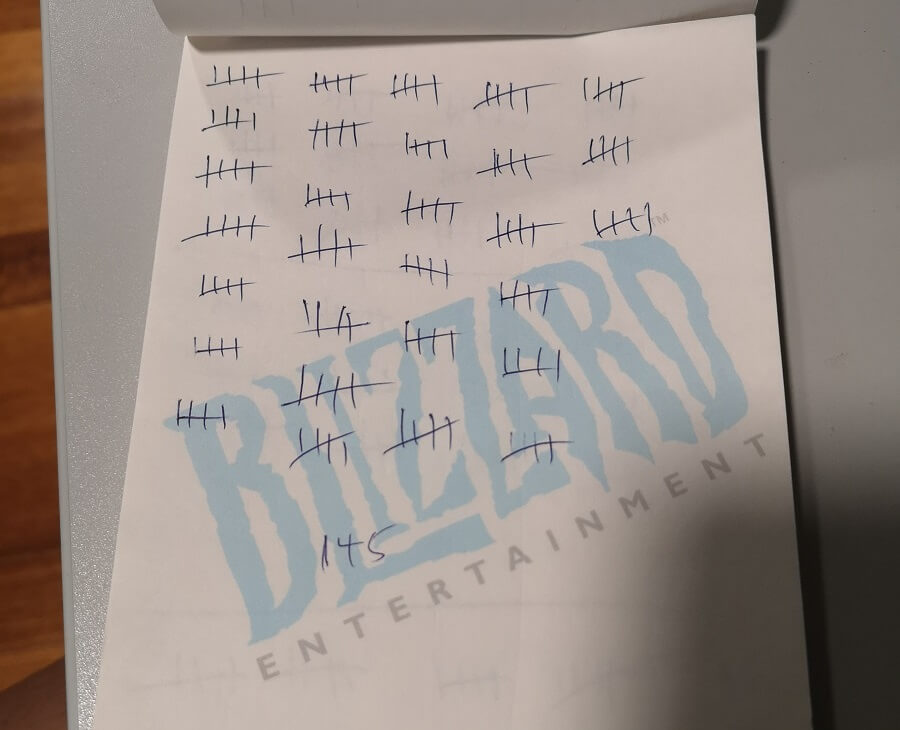
    I felt pretty good so I decided to increase it from sets of 3 to sets of 5.

    A few things went wrong on Day 3.

    First – sets of 5 is actually way harder than sets of 3 which I didn’t expect. Also when I say I’m doing “sets”, I’m actually still resting for a second between each pull-up. So I’ll do one, come down and put my feet on the ground for a second, then do the next one. Even with that little rest, my left delt started feeling beaten up halfway through the day. I had to give it a few good rubs and stretches and increase my rest times to make sure it stayed together.

    The second thing I did wrong was I slacked off during the day so by midnight I still had about 100 to do. I ended up missing the target because my shoulder was starting to feel fragile and it was getting late.

    I got to 145, by then it was 3am and my shoulder didn’t feel great so called it a day.

    Day 3 total: 145
    Running total: 380


    Day 4:

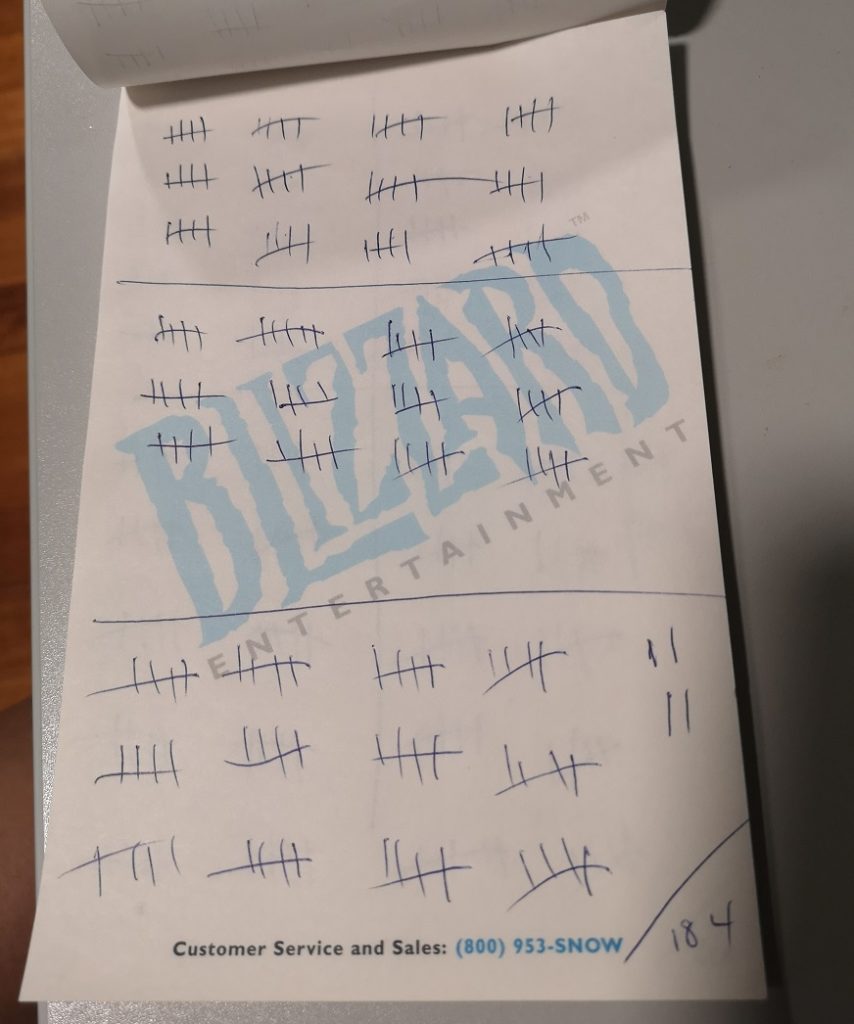
    Day 4 I tweaked the strategy a little bit. I did the usual marathon “mini-goals” mind trick and broke the whole day up into blocks.

    The target for the day was 175.

    So I split the page into 3 blocks, with 12 sets of 5 in each block.

    Then I just focused on the first block of 12, which totalled 60 pull-ups. Then onto the second and the third.

    This worked pretty well because it gave me visual targets to aim for, I told myself to finish one block early and fast, and make sure I only had one block left to do at night.

    I was still up pretty late doing the final block but manage to hit the daily target and add a few more to buffer the next day.

    Day 4 total: 184
    Running total: 564

    Day 5:

    Since mini goals worked pretty well I decided break things down into even further mini goals.

    Target for the day was 200.

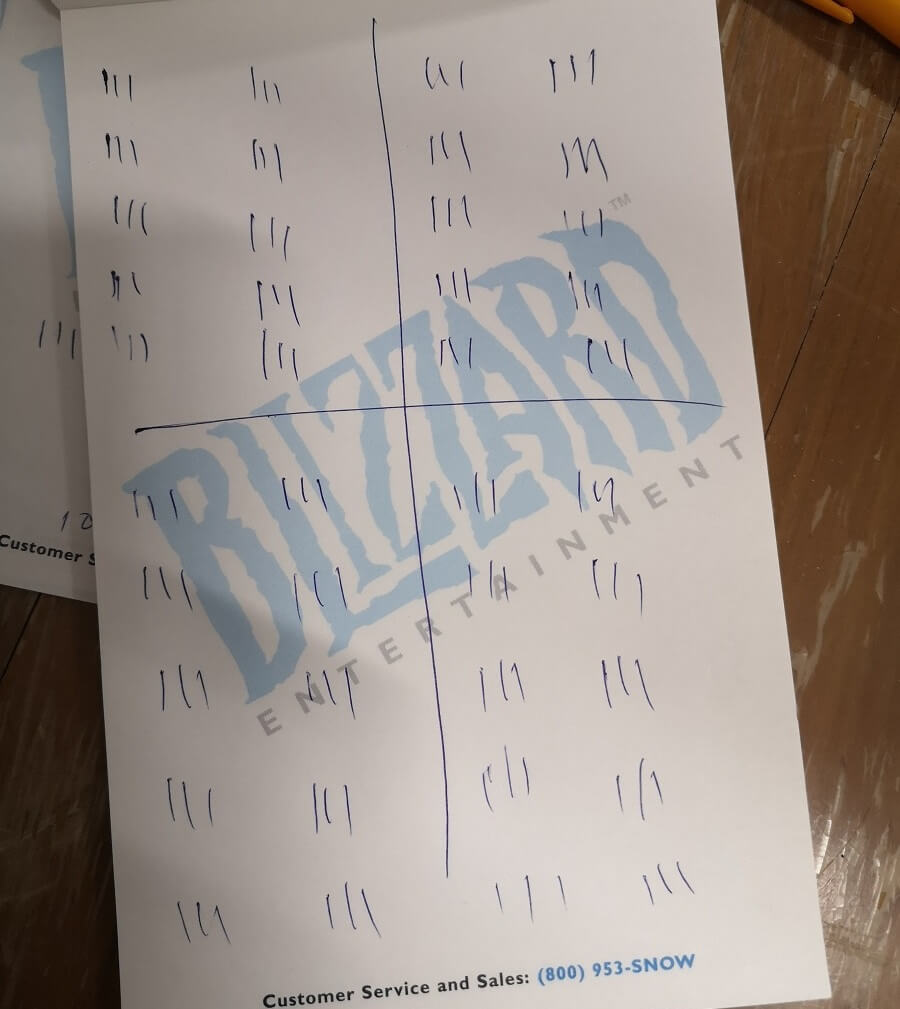
    This time I divided the paper into 4 blocks, with 10 sets of 5 in each block.

    But since I was finding sets of 5 a fraction too hard, I also broke each set of 5 into two parts as well – one set of 3 and one set of 2.

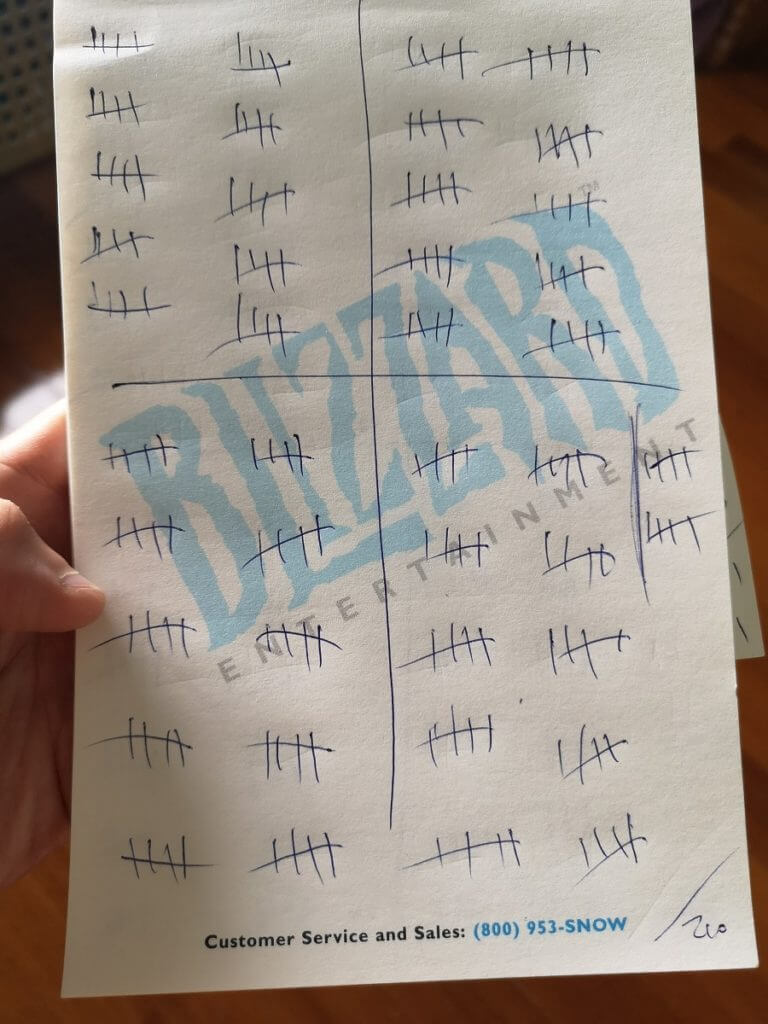
    How that worked is I started with 10 sets of 3 in each block, then when I had done all 4 blocks, I went back to the beginning and added 2 more to each set. Maybe that sounds kind of confusing, so on paper it looked like this:

    First round (4 blocks, 10 sets of 3):

    Second round (add another 2 to each set):

    This was mentally way easier because you get to “finish” the page twice. And the second round is easier than the first round, so you start finishing each block faster and faster.

    Each block worked out to 50 pull ups (10 sets of 5), over 4 blocks that was 200. Plus I did a few extra as a buffer. This tactic worked super well and even though I did more pullups than any other day it didn’t feel any harder, maybe even easier.

    Day 5 total: 210
    Running total: 774

    Day 6:

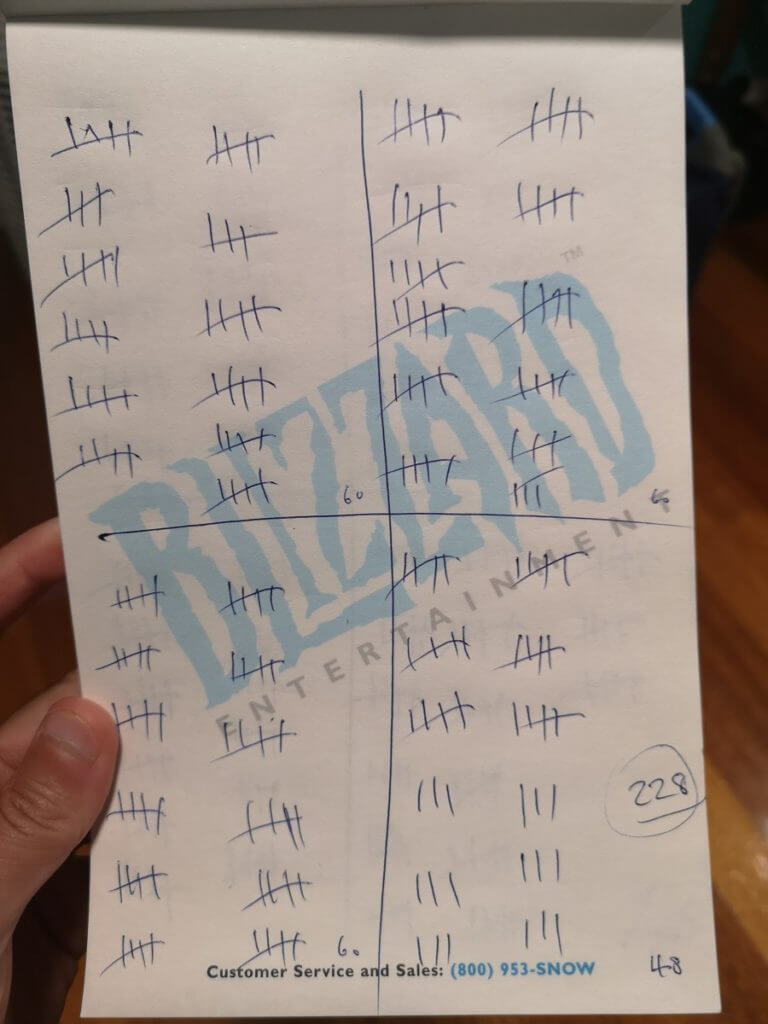
    Target for the day was 250.

    Now that I’d found my winning strategy I followed the same approach, but this time I did 12 sets in each block instead of 10.

    Once again my time management wasn’t great and I left a lot until late in the day. I was actually still sitting in the gym around 4am trying to knock off the final two blocks.

    While sitting there resting, I started flicking through the pad and adding up all the numbers and realised I’d worked out my targets all wrong – I’d divided it into 6 days instead of 7….

    That meant once I finished the final block I would already have passed 1,000. Even though the target for the day was 250, I had buffered myself on some of the previous days so I only needed 226 to get to 1,000.

    That meant all motivation to get to 250 went out the window; it was late and I was tired so I didn’t bother finishing up to 250, at halfway through the final block it was almost morning! So as soon as I hit 1,000 I gave up and went to bed.

    Day 6 total: 228
    Running total: 1,002

    Day 7:

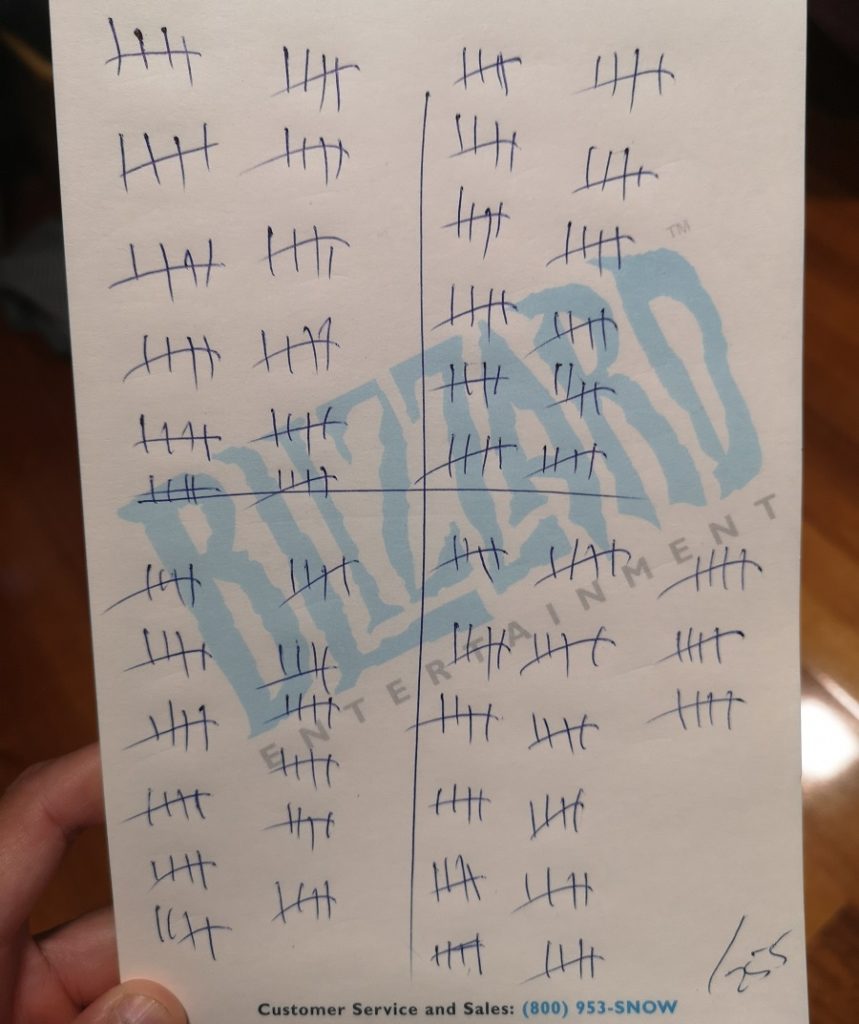
    Motivation was pretty low for Day 7, since I’d already hit 1,000 each pull-up felt like it was pointless, but it also didn’t feel right to stop a day early so I made a mini challenge.

    The goal for Day 7 was it had to be bigger than all the other days, so at least 229.

    I used the same strategy from the day before: 12 sets of 5 over four blocks. I didn’t even need to increase anything because I hadn’t finished all the blocks on Day 6. Just finishing it fully would make it the biggest day.

    Started the day well but again left a good chunk until late at night. Still knocked them out pretty comfortably and finished all 4 blocks, then added 3 more sets of 5 just to FLEX!

    Day 7 total: 255
    Final total: 1,257

    How’d I feel when it was over?

    This turned out to be a helpful challenge for me because I don’t spend much time doing pull-ups, usually just do 2 or 3 for fun when I walk past the bar at the gym. This was a good opportunity to experiment with different techniques and work some new muscles.

    I was actually sick of it by Day 3 but other than those few late nights in my garage, it didn’t take up that much time so I was able to stick with it.

    Also a good challenge for the current situation, it might sound like a lot of work but you’re only ever doing pull-ups for a few minutes at a time so you’re never short of breath or even breaking a sweat. Just sore arms and shoulders every night!

    This is a great challenge for anybody, and you can do it with any exercise you want – crunches, push-ups, squats, planks, star jumps, box jumps. And it doesn’t need to be 1,000, it can be any number you want, even 5 or 10 a day. Just make sure it’s challenging!

    Moving on, Quarantine Challenge #3 starts tomorrow. Haven’t actually decided what it is yet, but have a few ideas.

    Talk soon

    B

  • Read 1 Book A Day, For 7 Days (Quarantine Challenge #1)

    Read 1 Book A Day, For 7 Days (Quarantine Challenge #1)

    So whoever thought this would be our 2020? Everyone stuck inside their house with no toilet paper and a serial killing germ taking over the world. What a nice surprise (not).

    But: It could be worse.

    I’ve learned as well as anybody this past year the silver linings of struggles, and I know in this new coronavirus world we will find some blessings as well.

    With all this extra downtime (assuming you’re getting downtime!), it’s the perfect opportunity to do all those things you never had time to do. And it’s also really easy to get caught just sitting around doing nothing. If we’re going to be locked in our houses for a few months, it will be nice to have something to show for it. Time to set some challenges.

    Challenge #1: Read one whole book in a day

    Ever since the nightmare with my skin started last year, I’ve been trying to sit in the sun after I wake up and read. The sun is good for my skin, and the reading wakes up my brain.

    But I never manage more than 20-30 pages before my brain switches off and I’m just looking at the words.

    So I told my Mum the other morning, “Today I’m going to try and read one whole book in one day.”

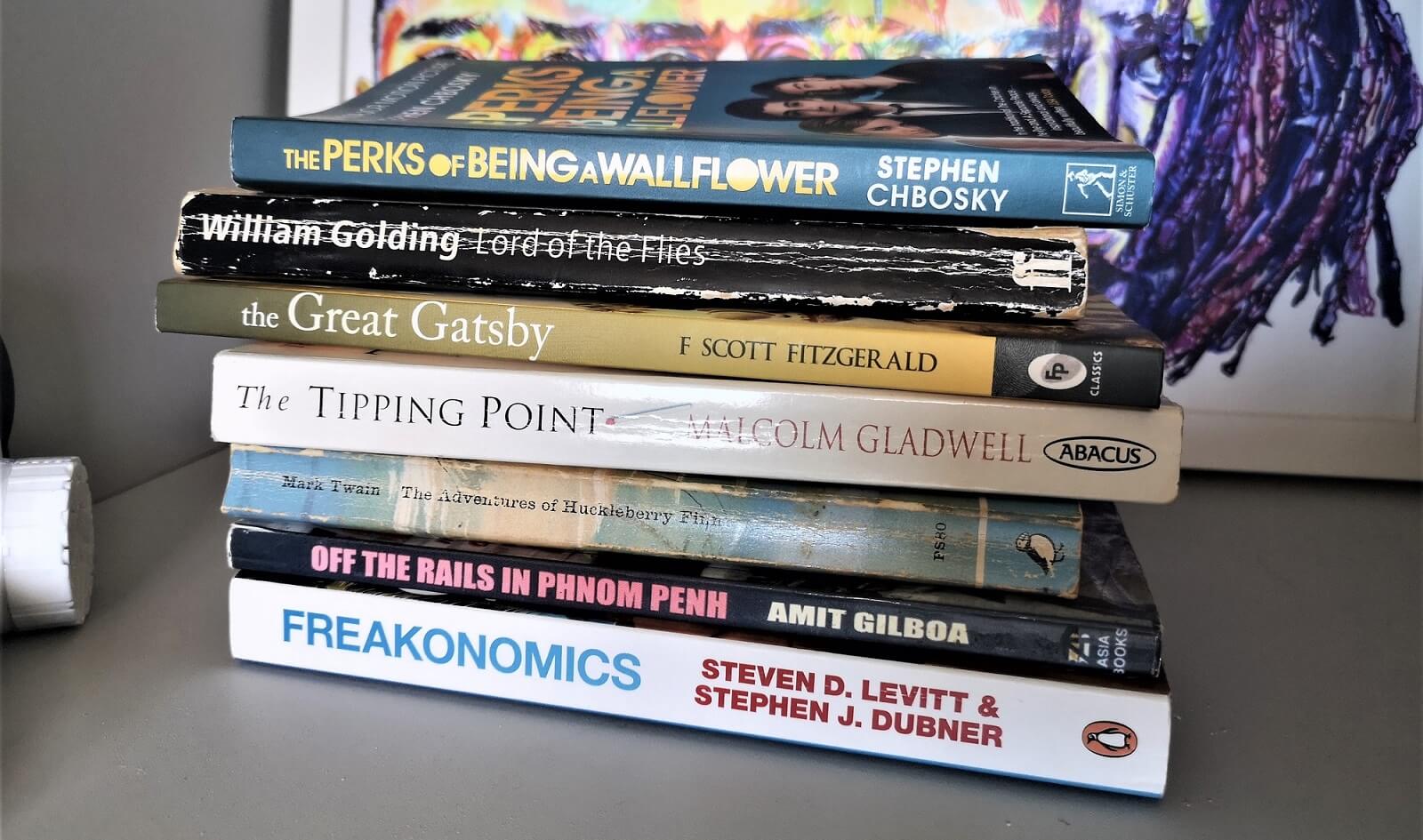
    I decided it would need to be a short book, and also a paper book. Normally I read on Kindle, but with a paper book you can visually see progress as the fat half gets thinner and thinner. That’s the kind of thing that gets me through something like this. Luckily I’ve got a decent stack of books at home that I haven’t touched.

    Book #1:

    The book I ended up choosing was The Perks Of Being A Wallflower. Not a clue what it was about, but it was short – around 200 pages. Plus the cover didn’t look terrible.

    So it’s around lunchtime and I start reading. I work out if I can read 20 pages, then I just need to do that 10 times to finish the book. So I sit in the sun and read 20 pages, and then actually manage to read another 20. How’s that for a head start.

    I’ve got some writing to do, so I go take care of that. Do some stretches. An hour later I come back, and read another 20.

    Then I get on my bike and do my workout for the day. Finally I eat. Then back in the sun for another 20. But I tell myself read a few more and just get to 100. Then you’re halfway. I realise these are all the same mind tricks I use during a marathon.

    Later in the evening I pick the book up again and pretty much read right through to the end, pausing now and then for food and sometimes fluffing around on my phone. The brain is a little tired, but I finish the book just before midnight.

    It’s the first time I’ve ever read a whole book in a day. Surprise, it wasn’t actually that hard!

    Mini review of Perks Of Being A Wallflower:

    The book revolves around the typical “secret life of a teen”, who befriends a couple of “cool” seniors at high school after his only friend dies. It illuminates many real life issues like drugs, sexuality, abuse, family dysfunction, high school anxiety etc. The writing is stylish and many scenes draw you in and bring smiles at the clever one liners. I actually loved it, it’s easily my favourite of the ones I read during this challenge.

    “I love my mom so much. I don’t care if that’s corny to say. I think on my next birthday, I’m going to buy her a present. I think that should be a tradition. The kid gets gifts from everybody, and he buys one present for his mom since she was there, too. I think that would be nice.”

    Book #2:

    After reading Perks, I found myself thinking #onedayonebook wasn’t actually that hard. And it felt so good to have ticked off another book on my list. I decided to do it again.

    For Book #2 I chose Off The Rails In Phnom Penh.

    I bought this book many years ago, when I kept hearing about it on the backpacker trail. I actually ordered it second hand from Amazon, because it was impossible to find anywhere. There is a lot of exposé in it about the UN, Cambodian and US governments, and some other high-up people, so that may have something to do with it. It’s been out of print for a while.

    The book is by a journalist living in Vietnam who takes a trip to Cambodia and decides Cambodia is much more interesting to write about. This was during the lawlessness of the nineties in Cambodia, which was renowned for political instability, widespread child prostitution and all the drugs you could think of. One of the oft-told stories about Cambodia in hostel lounges was of the “happy pizza”, where you could go into a regular-looking pizza joint in Phnom Penh, ask for your pizza to be made “happy” and they would sprinkle it generously with marijuana before popping it in the oven (indeed it is talked about in the book).

    This book is also 200 pages, and I tackled it in much the same way as Perks. However it was deceptively thin and I left a good chunk until quite late. I found myself reading this one well into the night, finishing at around 2am.

    I also skipped ten or so pages in the opening history chapter, because I was pretty well versed on the country’s history after reading When Broken Glass Floats during my visit in 2014. Plus he just kept talking about corrupt politician after corrupt politician and how many people they assassinated and it all just blended together after a while.

    Mini review of Off The Rails In Phnom Penh:

    I was initially disappointed as I thought it would be more immersive style journalism, when in fact it’s (mostly) the author just talking about other people he met in Phnom Penh and all their stories. It revolves around a guesthouse called The Majestic – which houses many foreign English teachers working in Phnom Penh. He soon finds out they really just use those jobs to fund their escapades in all the city’s brothels, drugs and other crime. If you’ve backpacked Southeast Asia you probably have heard these kinds of stories before and may even be sick of them, but for a non-traveller I suspect the book will blow some minds. There’s also a few stories that will surprise even hardened Asia backpackers. Plus a lot of hush hush political stuff that many certainly haven’t heard before, and highlights at a “daily life” level the amount of pain and abuse Cambodia has gone through. Disturbing for sure but page-turning stuff.

    “UNTAC personnel (UN taskforce overseeing Cambodia’s elections) were given $145 per day for living expenses, in a country where the average income is about $120 per year. The worst were the Bulgarians, or as they were known, the Vulgarians. Even with their huge allowances, they had a habit of bringing whores to the hotel and not paying them in the morning. The managers used to get really pissed off having to deal with these angry taxi-girls. It got so bad that headquarters issued a directive asking UNTAC personnel to stop parking the UN vehicles in front of brothels all the time. Even as peacekeepers, the UNTAC personnel couldn’t keep themselves under control. There were so many brawls at Champagne (an upmarket brothel) between the Americans and French, eventually the bar just banned all American servicemen.”

    Book #3: Challenge Updated! 1 Book A Day, Every Day, for 7 Days

    At book number three I decided I was going to push this challenge for 7 days. Two books hadn’t been that hard, so I knew 7 was doable.

    Book number three was a book I bought recently at a second hand bookshop in Chiang Mai.

    “One of the greatest American novels of the 20th century.”

    If you want to learn to be a novelist, what better book to read than that?

    To be fair it turned out to be the kind of book I would pick up off the shelf, read five pages and then put it back down again because it didn’t hook me at all. But in the spirit of completing the challenge, I kept going (also it’s not like I had that many books to choose from).

    Luckily the book is thin, but the English in these older books is hard to read with any kind of flow. I really need to stop and read paragraphs three or four times before I understand what the author is saying. Even then, there are times when I still have no idea.

    Ended up plodding through it over the day, chapter by chapter. But even though it was only Day 3, it started feeling normal to be reading so often. Any time I was waiting for bread to toast, or the pan to heat, I’d pick it up and knock off one or two pages. Often I time-out during the day and just lie in bed and scroll Instagram for a bit, but now it was normal to spend this time reading instead. The last thing I wanted was to be stuck with 100 pages left to read at 2 in the morning.

    There were sprinklings of exciting scenes which made things easier to finish chunks of it at a time, but overall I didn’t love it and was relieved when it was over.

    Mini review of The Great Gatsby:

    The book is from the point-of-view of a narrator who moves into a lakeside neighbourhood. Gatsby is a rich playboy character who lives in the mansion next door. The narrator has an (apparently very pretty) cousin who lives across the lake, with a lost connection to Gatsby, and is married to some rich guy. So all their paths eventually intertwine and drama ensues. Each character also has their own collection of secrets which are revealed as the story goes on.

    Supposedly a masterpiece, but in terms of raw entertainment value it was a bit laboursome to get through. I’m sure literature nerds see many things I don’t but not a book I’d ever think to read again. Story has some twists though so maybe one of the movies is good 🙂

    “I was thirty. Before me stretched the portentous menacing road of a new decade…Thirty – the promise of a decade of loneliness, a thinning list of single men to know, a thinning brief-case of enthusiasm, thinning hair. But there was Jordan beside me who, unlike Daisy, was too wise ever to carry well-forgotten dreams from age to age.”

    Book #4:

    Book number four was another classic, this time a British one: The Lord Of The Flies.

    This book is referenced so often in modern culture, I already knew the basics of the story before I opened the first page. It’s around 220 pages and with tiny writing, so I knew I had to start the day strong to get through this one.

    This one is kind of intense and every scene is full of action, so it was hard to read it for any extended time. It was mostly in sets of 20 or 30 pages, and many of them were hard to get through, not because it was boring but just because of the way it’s written.

    But by now spending most of the day reading was totally normal. I always had it in the back of my mind, that I should get to halfway before a certain time, that I should only have fifty pages left by a certain time. It’s quite surprising, that reading a whole book in a day went from being something super difficult to something normal in just four days.

    It was also more enjoyable than Gatsby, so I didn’t mind spending the whole day reading. I hadn’t really cared what was going to happen to Jay Gatsby, but I was interested in what would happen to Piggy and Ralph! Some super slow parts in the middle, and took a long time. But wasn’t difficult to get to the end.

    Mini review of Lord Of The Flies:

    The book is about a bunch of schoolkids whose plane crashes on a secluded island. The oldest is 14 and the youngest is 6. They are forced to survive on the island on their own and come up with a way to find rescue. It’s almost like an experiment of how kids respond to sudden lawlessness and what evil they are capable of. While doubly disturbing because they’re kids, there’s a good serving of murder, deceipt, betrayal, thievery, mob justice etc. Pretty cool book.

    “They were dirty, not with the spectacular dirt of boys who had fallen into mud or been brought down hard on a rainy day. Not one of them was an obvious subject for a shower, and yet – hair, much too long, tangled here and there, knotted round a dead leaf or a twig; faces cleaned fairly well by the process of eating and sweating but marked in less accessible angles with a kind of shadow; clothes, worn away, stiff like his own with sweat, put on, not for decorum or comfort but out of custom; the skin of the body, scurfy with brine – He discovered with a little fall of the heart that these were the conditions he took as normal now and that he did not mind.”

    Book #5:

    Book number five was a non-fiction book, finally! The Tipping Point by Malcolm Gladwell.

    I enjoy Gladwell’s books so doing this one in a single day wasn’t too intimidating. Books like this don’t require the same brainpower as something like Gatsby or Lord Of The Flies. Those books you need your imagination working and need to recreate a world in your head. Reading non fiction is more like someone just explaining something to you in everyday English.

    At 260 pages, this one was a little longer than the others. I started it strong and was able to do 50 or 60 pages at a time. The morning read was good and I figured I’d finish this one comfortably with plenty of time to spare.

    Then I slacked off and once again, found myself reading way into the early morning hours. Seemed that was becoming a tradition for the week.

    Also in terms of Gladwell books, this kind of fell flat through the middle and toward the end. I’ve read all of his books now except his newest one Talking To Strangers. Tipping point falls somewhere in the middle.

    Mini Review of The Tipping Point:

    The theory of The Tipping Point is that all big results start in tiny increments, until they reach a point where things “tip”, and suddenly there’s an avalanche. The opening example he uses is of the shoe brand Hush Puppies. They were initially a nothing brand, but then some retro kids in New York started wearing them since they were rare and hard to find (think hipsters of the 80s). Eventually a few people starting wearing them in New York clubs and parties, and they started getting more popular. Eventually so many people wanted them that they “tipped” and were selling 2 million pairs a season.

    What he tries to theorise in the book is what makes things “tip” and how we can intentionally make those tiny changes that will help us go from selling 20,000 pairs to 2 million pairs. I can’t summarise the whole theory but it comes down to the following parts: Connectors (people who know a lot of people), Mavens (people who know everything about a specific topic), Salesmen (self explanatory), Stickiness (message must be memorable) and Context (must happen in the right place and time). When some or all of those things come together, it’s likely that things will move far and quick enough to the point that they tip.

    “Horchow’s daughter, Sally, told me a story of how she once took her father to a new Japanese restaurant where a friend of hers was a chef. Horchow liked the food, and so when he went home he turned on his computer, pulled up the names of acquaintances who lived nearby, and faxed them notes telling them of a wonderful new restaurant he had discovered and that they should try it. This is, in a nutshell, what word of mouth is. It’s not me telling you about a new restaurant with great food, and you telling a friend and that friend telling a friend. Word of mouth begins when somewhere along that chain, someone tells a person like Roger Horchow.”

    Book #6:

    280 pages of the tiniest writing imaginable, I knew this one would be tough as soon as I started. The first 20 pages felt like forever. But, I had several laugh out loud moments in that first 20 pages, which books rarely do for me. So I figured it would be a long but fun day of reading.

    The Adventures Of HuckleBerry Finn is a slow read. The English is not even English, it’s littered with deliberate spelling ‘mistakes’ (I assume to illustrate accents and/or colloquialisms) and so each chapter requires a slow pace if you want to understand what’s actually going on.

    The slave character Jimmy also talks in broken and slurred English, so reading his words are near impossible to understand sometimes.

    At around page ~100 I was guessing I might not finish, because it was already dark outside, I felt like I’d been reading all day and wasn’t even half way. Luckily the story picked up around there and it was full on action until the final 50 pages or so.

    As an avid traveller himself, Mark Twain has been on my list for years. Was glad to finally experience some of his work. Still, I was up until about 4am trying to get this one done. Lots of laughs but a huge relief when I hit the final page and turned in to sleep. Phew!

    Mini Review of The Adventures Of Huckleberry Finn:

    The book starts with Huckleberry Finn describing his life with his abusive father. Then one day he finds an abandoned canoe, fakes his death and runs away down the river. Early in the journey he finds a runaway slave from his village who he befriends and they start travelling together. The book follows them through several towns and cities as they enjoy endless mischief and adventure.

    It is hilariously funny and imaginative, and I now have a thorough understanding of the American phrase “Mark Twain adventure”.

    “We catched fish, and talked, and we took a swim now and then to keep off sleepiness. It was kind of solemn, drifting down the big still river, laying on our backs looking up at the stars, and we didn’t ever feel like talking loud, and it warn’t often that we laughed, only a kind of low chuckle. We had mighty good weather, as a general thing, and nothing ever happened to us at all, that night, nor the next, nor the next.”

    Book #7:

    The final book! For this one I chose an old classic, Freakonomics. I’ve had this on my shelf a while and now seemed as good a time as any to get it done. Also I didn’t have the brainpower left to bring another novel to life.

    This one was close to 300 pages, but I was game. It was the last day; even if I had to stay up all night, I didn’t have to read tomorrow!

    Started the day strong and put away the first 50 pages comfortably, but for some reason I lulled in the middle of the day and didn’t read much. I can’t remember what I was doing, playing computer games or something.

    It got to about 8pm at night and I still hadn’t hit the halfway mark. Eventually last minute instinct kicked in and I thought what a shame it would be if I failed this challenge here on the final day. I went to lay in bed and started doing some serious reading time.

    At around 2am, just as I was about to take another break, I had a happy accident. The chapter I was reading sounded oddly like a conclusion, even though I still had half an inch of book left. Turns out that final chunk was just a bunch of “extras” like some newspaper columns and glossary etc. I’d been prepared to put in another 2 hours, but I was already done.

    Challenge complete!

    Mini review of Freakonomics:

    I’m sure you’ve guessed the title of the book is a play on the words “freaky” and “economics”. It is in fact written by an economist who makes it a point to approach the subject in unorthodox ways.

    The book aims to find causal links between societal changes and unexpected levers that cause them. Some of the interesting theories are whether parenting methods matter (they argue no, it only matters that the parents are “good” people), if drug dealers actually earn a lot of money (they don’t) and why, and if, given the incentive to, teachers cheat as much as students (they do).

    They dive a bit too deep at times – they literally published and picked apart upwards of 20 lists of the “richest and poorest” names over about 20 pages just for a minor segment of the parenting question, but it’s a cool read for anyone interested in sociological type questions.

    “As incentives go, commissions are tricky. First of all, a 6 percent real-estate commission is typically split between the seller’s agent and the buyer’s. Each agent then kicks back roughly half of her take to the agency. Which means that only 1.5 percent of the purchase price goes directly into your agent’s pocket. So on the sale of your $300,000 house, her personal take of the $18,000 commission is $4,500. Still not bad, you say. But what if the house was actually worth more than $300,000? What if, with a little more effort and patience and a few more newspaper ads, she could have sold it for $310,000? After the commission, that puts an additional $9,400 in your pocket. But the agent’s additional share—her personal 1.5 percent of the extra $10,000—is a mere $150. If you earn $9,400 while she earns only $150, maybe your incentives aren’t aligned after all….turns out that a real-estate agent keeps her own home on the market an average of ten days longer and sells it for an extra 3-plus percent, or $10,000 on a $300,000 house.”

    For someone who usually struggles to finish a book a month, when I finally closed Freakonomics I was a new man; 7 books in 7 days. It might not seem like a huge feat, but it’s significant for me. If there’s a book I really need to read, it doesn’t need to take me several weeks anymore. Now I know I can just set aside a day and nuke it in one hit.

    When I first started running last year, 10km seemed like the most impossible thing in the world. When I finally did run 10km some months later during marathon training, I took three cheat days in a row because I felt like I had just achieved the impossible. And then during Ironman training, I wasn’t even allowed 10km runs anymore. My shortest run day was 12km, and that day was my favourite because it’s the easy/recovery day!

    I guess that’s been the coolest thing about this challenge – it just reaffirmed what I’ve already learned; that your comfort zone can shift, and if you push hard enough, what once seemed impossible will become your new comfort zone. That’s the basic formula of how we get better at the things we do.

    All the mind tricks I used during run training worked just as well with reading too. When you head out for a 20km run, you’re not thinking about the full 20km in your head. You tell yourself, just run the first 2km, okay now do another 2km, okay now get to 10km, until you finally reach the last few kilometres up to 20. Reading was the same – 20 pages, another 20 pages, before you know it, you’re already past 100.

    Around Day 3/4, reading a whole book in a day didn’t seem hard anymore. It felt like my normal daily routine, and it’s not like I had to spend my entire day reading either. Huck Finn probably took me over 6 hours, but the rest were closer to 4 or 5. That’s still a lot of reading for a day, but I didn’t have to give up any of my usual daily schedule. That showed me that most days I probably spend 4 or 5 hours just doing nothing. The day after the challenge ended, I woke up and it felt weird not having anything to read! I felt like I had all the free time in the world.

    How much further could it go? 30 books in 30 days? 60 books in 60 days? 2 books in one day? 2 books a day for a week? Those aren’t challenges I’m going to pursue any time soon, but now I’m at least confident I could do them!

    But, it’s time for something new. Quarantine Challenge #2 is already underway. Will post about it in a few days 🙂

    B