Category: Minimalism

  • Eat Less Food, If You Want To Be A Millionaire

    Eat Less Food, If You Want To Be A Millionaire

    In the 1920’s, there lived a man named Edward Bernays.

    Edward was the nephew of psychologist Sigmund Freud, and became a marketing genius, before corporate marketing was really a thing.

    At the time, Bernays’ PR firm was working for a major pork and bacon manufacturer named Beech Nut Packaging.

    Bacon wasn’t really a thing back then. It was mostly a scrap meat for peasants. Bacon cheeseburgers didn’t exist, neither did BLT sandwiches, certainly not bacon and eggs. In fact, Beech Nut’s dilemma at the time was how to push bacon into the mainstream as an everyday product. Nobody was really eating it.

    Edward Bernays wasn’t new to these dilemmas. This was the same man who convinced the American public that glass cups were unsanitary and people should use paper cups instead. The company that paid him to do that was Dixie Cup, the country’s major paper cup manufacturer.

    So Bernays worked his magic. He asked his company’s internal doctor (who was on his payroll, so no conflict of interest, of course) if he would be willing to state publicly that a big breakfast was better than a small breakfast.

    At the time Americans often didn’t eat anything for breakfast, usually just coffee or orange juice, maybe a bread roll.

    The doctor said of course. Big breakfasts will be great for people.

    Bernays then asked if he would be willing to ask 5,000 of his “doctor friends” if they would co-sign his opinion that big breakfasts were better than small breakfasts.

    Most of them said yes.

    That was all Bernays needed. The advertisements were put together, and a marketing campaign went out in the country’s national newspapers.

    4,500 doctors agree that you should eat a big breakfast every morning!

    Right beside these words was a delicious looking picture of bacon and eggs.

    It was one of the best marketing campaigns of all time. Bacon sales for Beech Nut Packaging soared. Bacon became a household favourite. The classic American breakfast they called it. Suddenly everyone was eating bacon and eggs when they woke up, to be healthy, to get charged for the day.

    One hundred years later, every diner in America still serves bacon and eggs for breakfast.

    What’s the moral of this story?

    I’m sure you’ve figured it out already. But let me tell you another story.

    Last week, I started another fast. I haven’t eaten any food for nine days, and I feel fine.

    Actually, I worked 7-8 hours today, did 150 push ups, 100 squats, some kettlebell work, drank a litre of green juice. I don’t just feel fine, I feel awesome. I could do another nine days, no problem at all.

    Now, if you went and asked people on the street what would happen if they didn’t eat for nine days, they’d probably say they’d be in hospital, they’d have shrivelled up, some might even say they’d be dead.

    Yet, here I am. Definitely not dead. It’s 3:25 a.m. and I’m wide awake. Not hungry at all.

    How is it possible that I haven’t eaten any food for nine days and feel fine?

    Most of us know we need to eat three meals a day. That’s common knowledge. Our brains won’t work otherwise. The world is even designed around that. Lunch menu, dinner menu. Breakfast served until 10. Should be a big breakfast too. Bacon and eggs maybe.

    With us needing to eat so often, surely nobody could go a day without food, right?

    Nine days? Impossible.

    We should do a study.

    Well, I am the study. I’m doing it right now.

    Now we might think, okay fine, we got tricked into eating bacon and eggs. But it goes deeper. Most of us don’t realise how much influence people like Edward Bernays have on our lives. There are Edward Bernayses all around us. And every day they influence our decisions, they influence our bank accounts. Most importantly, they influence our happiness.

    About two years ago, I read a book.

    The title?

    Influence.

    It was a marketing bible by Mister Rob Cialdini. In it, he taught the psychology of selling. How to recognise when you were being sold to, how to recognise when somebody was trying to influence you.

    He explained why somebody could say something and you’d ignore them, but another person could add just three specific words and you would instantly take out your credit card. He talked about the one sentence a salesman could say to double your likelihood of buying a car. He examined how Buddhist monks at the airport were able to collect thousands in donations every day, just by using a flower.

    Most importantly, he explained how to overcome this, how we could turn these persuasion tactics around and make them work for us instead.

    After reading that book, I started to take notice of these things in my everyday life. I started to see that as soon as you step outside your door, you are being sold to, 24 hours a day. Everywhere you go, every interaction you have, somebody is influencing you to spend. Maybe you see a businessman wearing a watch, it sparkles. Suddenly you want one, because you grew up watching ads that made sparkly things look cool. You see a guy wearing sunglasses, he looks confident. A billboard you saw last year pops into your head. Confidence is everything. Suddenly you want those sunglasses too.

    It was eye opening.

    I started to enjoy getting sold to. I enjoyed deciphering it, watching what emotions people could pull out of me.

    One day, I went for a “free eye test”. As soon as I got in the room, I got sold a not-free eye test, twice.

    That machine will let me do a more complete test, she told me.

    So you’re saying this machine will do an incomplete test? I asked.

    Well, no. This test is still good. But that one’s…better…

    On my way out, the lady at the desk asked if I’d like to look at some sunglasses. We’ve got the new model of those ones, she said, pointing to the ones in my hand. Come take a look.

    These ones are still working fine, I said to her.

    Good time for an upgrade! These are actually on sale, they’ve been very popular. Try them on? No obligation of course…

    I started reading more books, like Made to Stick by the Heath brothers, which again taught how advertisements draw emotions out of you, stick to you, I read Blink by Malcolm Gladwell, to try and understand our instincts, why we make sudden decisions to like something or want something.

    Money wasn’t a mystery anymore. I could see why everyone was broke all the time. Because every moment of the day, someone is selling you something useless. Watches. Sunglasses. Bacon. And eventually, you buy it.

    They say every time you do a long fast, you learn something new. About yourself. About other people. That’s expected. We’re used to eating all the time. Don’t eat for five or ten or twelve days, and that’s a big change. Big changes always have lessons in them.

    This year, my mind drifted towards these ideas above. About how we arrive at the habits we follow and the beliefs we have. Last night, I had just finished a workout and was feeling so great. I thought to myself, how is it possible to not eat for nine days and feel so great? Logic would tell you it should be the opposite!

    But I’d mistaken logic for Edward Bernays.

    Three meals a day, every day. Edward had told me that since I was born, said it was healthy, gave you energy.

    Funnily, it’s actually the opposite. Eating too often saps our energy, and most food we eat is bad for us. 90% of the population would be far healthier if they skipped a meal every day. We’re supposed to eat for survival, and myself as a living example, you can see we don’t need to eat every day to survive, or even flourish. Mike Rashid eats once a day and can’t fit his muscles in his shirt. Coupe only eats a few times a week, and he’s stronger than all of us.

    But, Edward Bernays wouldn’t like you to know that. He needs you to eat three meals a day, that’s his job. Well, he needs you to buy three meals a day. He probably doesn’t care if you actually eat them.

    Can you imagine what would happen if the government recommended people fast two days a week? To only eat one big home-cooked meal per day? Do a ten day fast every year?

    Edward Bernays would lose his job. Bacon companies would lay-off half their staff. Restaurants, cafes, farms would lose 2/3 of their revenue overnight. Supermarkets too. The country’s economy would implode.

    Yet, that’s exactly what we should be doing. Obesity is off the charts, everybody’s on cholesterol meds, we all know someone who has diabetes. Maybe we should eat less, Edward?

    No way! Keep buying three meals a day. Please.

    Except nowadays, it’s not even just three meals anymore. It’s five meals, six meals.

    Try this! Perfect for a mid-afternoon snack! Treat yourself to one of these before bedtime!

    We’re sold things to eat while we’re watching television, while we’re in the car, before we go to the gym.

    Want some popcorn? You can’t watch a movie without popcorn!

    Suddenly we’re getting told to eat when we’re bored, when it’s a holiday, when someone gets married, when we’re celebrating, when we have an office meeting.

    In fact, Edward Bernays tells us, eating to survive is silly now. Instead, eat to have fun. Eat to show friends how much they mean to you. Eat because it will make the movie better. Eating this will make you happy.

    They never tell you the real reason:

    Eat because we want to sell you more food.

    So, what can we do about it? Well, the solution is kind of simple: Eat less food.

    But why stop there. Imagine if we didn’t just change our behaviour with food. Imagine if we decoded the influence in every area of our lives.

    Example: It’s Valentine’s Day. Of course, Edward Bernays is telling you to spend a shitload of money on meaningless things buy an expensive dinner for your girlfriend and maybe some flowers and chocolate. If he doesn’t do that, Edward says, he doesn’t love you.

    But what if you just, I don’t know, do things that actually show her you love her. Such as giving her a massage, holding her hand, baking her a cake in your kitchen, picking her a flower from the garden, taking a long walk with her and having a meaningful conversation. That would be crazy, right?

    Well, Edward definitely thinks it’s crazy, because none of those things require a credit card. He’d be having a seizure hearing people suggest that. If everyone did that, both him and the CEO of Hallmark would lose their jobs by the weekend.

    But, this is the world we designed. We need to spend. It’s what keeps this system turning. If every adult in the country buys a BMW, people will celebrate – GDP is going to grow 10%, the government will collect billions of tax, everyone’s going to look rich. The country will be booming.

    But, that also means for GDP to rise again the following year, every adult will need to spend even more. They can’t just buy another BMW, they need to buy a Ferrari. If not, GDP will go down. Suddenly people will be screaming recession, the president will be out of a job, it would be a disaster.

    So…they get Edward Bernays on the phone.

    Morning Edward, job for you. Need you to help us sell a few Ferraris.

    Now when you fast for nine days, and you live out of a backpack, and everything in your life is still fine, it tells you something. It tells you you can live outside that world. It tells you how much less you need to live a good life. It tells you how little food you need, how little money you need. It tells you how much time you can get back, just by rejecting everyone else’s influence. It tells you you can give up the bacon and the sunglasses and the eye test upgrade and the sparkly watch, and nothing will happen. Instead of buying all those things from Edward Bernays, you can keep that money in the bank. Which means instead of retiring after 40 years you can retire after 15. Because I’m sure you’ve realised by now, Edward Bernays is a millionaire. He’s a millionaire because of all the money you keep giving him.

    Now wouldn’t it be nice if you started keeping that money, and became a millionaire yourself?

    The funny thing about that is, it’s so simple to do. All you have to do is, nothing.

    Literally nothing.

    Don’t go to the mall, don’t look at the menu, don’t try on any sunglasses. Just stop doing it. Do nothing. Watch your bank account grow. What road to becoming a millionaire could be easier than that?

    Okay fine, we can’t spend our lives sitting around doing nothing. But you don’t need to give any money to Edward to live your best life. Read a book from the library (it’s free). Work out at the park (it’s free). Go for a run (it’s free). Do some yoga (it’s free). Meditate (it’s free). Have a conversation with a friend (it’s free). Go hiking (it’s free). Take a swim at the beach (it’s free). Write a story (it’s free). Eat less food. Do more exercise. Ride a bike to work. It’s free.

    Here’s the irony: After living this way for a while, you’ll start to notice something. You have way more money. Meaning you can start buying whatever you want. The difference is, you don’t want it anymore. So you just keep on living.

    I can tell you, for sure, it’s a far happier way to live.

    Happy Valentine’s Day, millionaire.

    B
  • A Day Thrift Shopping In Amsterdam

    A Day Thrift Shopping In Amsterdam

    So I needed a jacket.

    It was so cold in Amsterdam, and for some reason, I was without a jacket.

    Here’s the problem. In case you haven’t heard, I don’t buy clothes. Especially jackets.

    It’s because I have so many jackets at home in New Zealand, I’m quite sure I should never need to buy another jacket, ever. In this life and the next. And probably the one after that too.

    It’s this old minimalism thing, got me on a buying boycott.

    I did strongly resist this idea of a new purchase, for several days, honestly. I went out one night in three layers. Cold. Next day I had four layers. Still cold. So there was nothing to argue about after that, really. I needed a jacket.

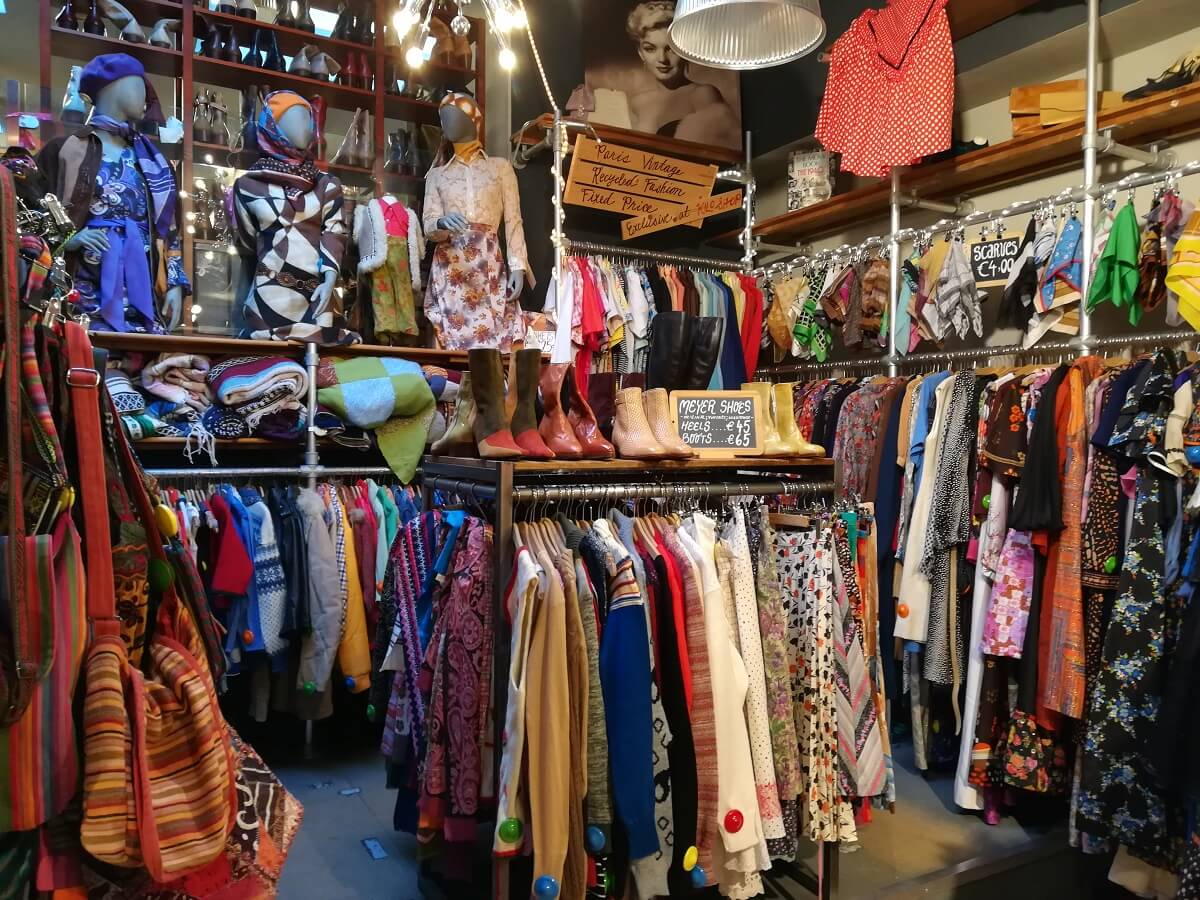
    Now Amsterdam is not a cheap city, so the obvious choice was: Thrift shop.

    I actually love thrift shops. The last thing I bought second-hand shopping was a jacket in Copenhagen (very similar situation) and it was five euros…or it might have been ten, I can’t remember. But it was so good I decided to keep it, after initially planning to give it away to someone at the end of my trip. I even took it with me on my trip to the UK this year. It’s basically a part of the family.

    But it was no good to me now, 10,000 miles away. I was either buying a jacket today or getting pneumonia.

    Easy choice. I choose pneumonia.

    Problem: That would be irresponsible, wouldn’t it? Sharing a dorm with so many other travellers and all, potentially infecting a hostel full of globetrotting young’uns for the sake of thriftiness. Some of them might even be travelling to remote destinations soon, where healthcare is sparse. Buying myself a jacket could literally save their lives. If you think about it, I’m almost obligated to do it. Just in the spirit of selflessness.

    Plus, it gave me something to do in Amsterdam for the day that didn’t involve smoking plants. Exactly what I needed.

    The cool thing about the thrift shops in Amsterdam is they’re everywhere, and often all clustered together in one neighbourhood. Second-hand shopping is also quite prevalent in the culture here.

    I decide to carry out this mission in Waterlooplein, which has quite a few options and is near the centre of the city.

    The first place on my list is the Kilo Store. It’s barely a minute’s walk from Waterlooplein station.

    This place is supposedly one of those “weighing” places, where you fill up a basket of clothes and they charge you by weight. I’ve seen a similar second-hand store in Bulgaria, where I bought a scarf, and it literally cost twenty cents or something. But in this store some stuff has price tags too. So I’ve no idea how it all works.

    The thing about thrift stores is, you really need to look. Every single item is different.

    I wander the entire store, trying to find a jacket that I’m gonna vibe with. You know, something that fits my aura, something a brooding writer would wear, one who never actually writes. Something that says, “I don’t care what I wear, but I secretly kinda do”. Something that says “I’m on a trip around the world trying to find myself”, crossed with “I actually already did that and now I’m lost again”, crossed with “I’m not a hipster but I do drink turmeric lattes sometimes.”

    I don’t really know what that looks like, but I’m sure I’ll know it when I see it.

    I walk around Kilo Store three times.

    I don’t see it.

    The next place I go to is called Episode, a short walk away.

    Episode is a little smaller, and a little more colourful. It actually has stores in a lot of places in Europe.

    This particular store has a large selection of second hand sneakers, which I never see much of in shops like these, but it’s a little thin on the jackets.

    I do see a bomber jacket that I could wear and not feel like a weirdo, but deep down I know it’s not the one. It’s something you wear when you’re just starting your backpacking career, not something you wear after being ranked #33 in The Expeditioner’s Top 50 Travel Blogs of October 2014.

    After a short browse of the weird and wonderful in here, I move on.

    The next place is about ten minutes walk away. It’s a place called BIS Army and Navy. Despite the obvious clue in the name, I didn’t actually realise it only sold army and navy clothes until I walked in the door.

    Of course to be polite, I walk around, pretending to look at stuff, and then I see a very cool jacket.

    Now this jacket, which I of course forget to take a photo of, really starts to smile at me. First thing I do after the obligatory glance-over is inspect the price.

    59 euros!

    But it’s brand new. Do I deserve a brand new jacket?

    I try it on.

    Fresh.

    It’s super thick, like a blanket, puffed, army green, lots of cool zips. It’s so warm, you could hike to the Arctic in this jacket. You could climb Everest in this jacket. You could sled with dogs in Siberia in this jacket, probably with just a tee shirt underneath. In fact, maybe (just maybe), you could go north of The Wall in this jacket.

    Only one problem. It’s big. Big like Adele. The old Adele, not the new Adele with the six pack.

    Why is this a problem? It’s not usually, I’ll date any version of Adele, especially the original one. She could sing while cooking breakfast, winters would be warm, it would be heaven. But this jacket can’t fit in my backpack. That’s how fat it is. That’s also probably why it looks cool. Fat jacket swag and all.

    I ponder this decision for a long time. To buy or not to buy.

    This wasn’t the mission. The mission was to buy a throwaway jacket, one that was the price of a kebab. And an exception could be made if the jacket was cool enough, but this jacket…it’s not that cool. And it’s fat. It simply will not fit inside the backpack. I would need to abandon it before my next flight, and this jacket is not in the abandon-able price range.

    Begrudgingly, I put it back on the rack. I walk out of the store. As I do, I get a confirmation email in my gut, telling me it was the right decision. I smile. We’ll set fire to the rain another day.

    The next stop is a place called Time Machine Vintage.

    Just from the outside, I can tell my chances of meeting my perfect jacket here are slim. It’s like when you go to that bar with a friend, and you know it’s going to be terrible, but you go inside and buy a drink anyway.

    I walk inside. I look around for four seconds. I walk out.

    I may be a little wonky, but I don’t think I’m Time Machine Vintage wonky.

    Just across the street from Time Machine Vintage is a place called Mood Indigo: Vintage Denim.

    I head over and immediately things look promising.

    Lots of cool jackets. Levi’s denim, Levi’s khaki, athletic jackets, tracksuits, leather.

    All second hand.

    This is the place.

    On the second rack I touch, I see something. It’s a Levi’s sherpa jacket.

    This is dangerous territory. I’ve always wanted a Levi’s sherpa jacket, the one with the wool inside, especially since the Friday Night Lights era (the show, not the mixtape). I spent my whole year studying in China trying to find a cool, affordable Levi’s sherpa jacket, and it never happened, they were always $300, $400. Ever since then, this jacket has been like my Eleanor (you know, that car that Nicholas Cage…never mind).

    I take it off the rack slowly, rubbing it between my fingers.

    First step in thrift shopping, check the condition. Otherwise you might get attached too early, and end up convincing yourself to buy a poop stained antique.

    I survey it closely for rips, stains, holes.

    Clear.

    Next, smell it. I give it a hearty sniff.

    Minty fresh.

    Actually it was more like a faded musk, but whatever.

    Finally, the fit.

    If you try something on at a thrift shop and it fits you perfectly, it’s usually a sign. The thrift shop gods put it there for you. If you put it back on the rack after that, you disrespect the shop, the moment, the previous owner whose old hopes and dreams live inside that garment. The experienced thrift shopper knows this.

    I put my right arm in. Then my left. I give my arms and shoulders the manly “jacket flick”. It falls on me perfectly. Sleeves perfect. Collar perfect.

    I look in the mirror.

    I don’t see a cold guy in Amsterdam anymore. I see a vagabond. A cowboy. A guy on a trip around the world would definitely wear this jacket. A brooding writer would devour this jacket. A guy who drinks turmeric lattes would be a legend in this jacket. You couldn’t just go north of the wall in this jacket, you could do it wearing flip flops and eat a white walker for breakfast in this jacket. You would climb Everest as a warm up in this jacket. Ryan Atwood would wear this jacket. Maybe even Tim Riggins would wear this jacket. On a good day, even Hank Moody would wear this jacket.

    Then I look at the price.

    69 euros.

    Brendan. My man. Think about this. That’s 69 bowls of roast duck dry noodles in Bangkok. 69 piles of mangoes from that fruit stall in Tanzania. It could even be 69 slices of margherita somewhere in New York. Maybe back in the day you were willing to pay hundreds of dollars for the perfect sherpa that you never found. But you’re older and wiser now. You’ve evolved, emotionally, spiritually. I mean, you’ve even learned to appreciate Adele’s grey-green eyes and artistic integrity and vulnerable sense of humour. You didn’t come all this way in life just to spend 69 euros on some jacket. Did you?

    I go to the Levi’s page on my phone, praying to see a ridiculous price.

    €130 brand new. This ain’t even half price.

    Suddenly feeling the pressure of this decision, I panic. I hastily return the jacket to the rack and step outside. I ask for a sign.

    A hipster cafe appears next door. I sigh with relief. Exactly what I need. As I panic about buying unnecessary material possessions, I decide to remedy the situation by buying unnecessarily overpriced food. I walk inside. The chicken and edamame bowl is €11.70. Sounds like a deal.

    A pleasant surprise: Chicken, edamame and pineapple is actually amazing together. Highly recommended.

    As I pick up every last grain of rice with my chopsticks, my mind turns back to the jacket.

    It’s final decision time.

    I go back to Mood Indigo.

    I walk to the rack.

    It’s still there.

    I put it on again. I walk around the shop three times. I look at myself in the mirror.

    This is it. You want to be a pneumonia-free sherpa-wearing trail blazer or not?

    I pull out the Mastercard, rub it between my fingers. I walk to the counter.

    Committing budget traveller sin right in broad daylight.

    “I’ll take this one.”

    The guy gets up off his stool.

    “Cool man.”

    He rings it up, I hold my N26 card against the machine.

    Blip blip.

    Accepted.

    As he starts to bag it, I hold up a palm and smile.

    “Don’t worry, I’m ‘a wear it right now.”

    As I walk out the door, I feed an arm through the sleeve, swing it around, let the jacket wrap me like a Levi cloud. As it falls upon my shoulders, luxury clothing pheremones emanate from my fingertips. I pull the cuff once, tug on the lapels twice. Fresh. Walking down the street, I stare at myself in the shop windows.

    That’s a Levi’s sherpa jacket, motherfu*ker.

    That’s right. It is. A second hand one. Maybe even third hand. Someone probably vomited on it once. Maybe it has pee on it. And tabasco sauce. Might have even been stolen from a homeless guy.

    But now it’s mine.

    B

    I know, I know, it’s amazing.

    Heading to Amsterdam?

    Check out some of these great day tours by my friends at GetYourGuide:

    Also be sure to check out my Amsterdam accommodation guide!

  • The Secret To Solving All Your Money Problems

    The Secret To Solving All Your Money Problems

    I bought a new juicer recently. Want to know how much it cost?

    $285.

    I agonised over it for days. My old juicer was working fine, but the new juicer was supposed to give me more juice, which meant more nutrients, and less waste, and hopefully that would make it worth it in the long run.

    But $285? For a juicer?

    When it arrived, I tested it against my old juicer. I weighed the carrots, and put them in the old juicer. Then I put the same amount in the new juicer. I weighed the juice. A 10% difference. So assuming each glass of juice has $4 worth of ingredients in it, and I save 10% each time using the new juicer, that’s 40 cents on each juice, meaning I need to make 712 juices before the juicer pays for itself, and since I’m only in New Zealand for 3 months per year, it would take me around eight years. Worth it? Probably not.

    I still had 28 days on the guarantee. I decided I would return it.

    A few days later I met up with a friend I hadn’t seen for a while. She’s a hard working girl, two young kids, has her own business. I pulled up to her house and saw a new car in the driveway. Audi. I grinned, and shook my head. I already knew what we would be talking about.

    She came out and got in the car. I hadn’t seen her in about a year. She looked…older.

    “Nice car,” I smiled.

    She smiled back knowingly.

    “Is it brand new?”

    “Yeah.”

    “How much was it?”

    “I’m not telling.”

    “C’mon tell me.”

    “$75,000.”

    I laughed, and then she laughed, and then I laughed some more, and then she punched me.

    Seventy five thousand dollars!!!! For a car.

    I decided right there and then – I was allowed to keep my $285 juicer.

    As we sat there chatting that afternoon, I was suddenly plunged back into the stress of everyday life in Auckland. We talked about her money problems, all the things she wanted, how she was struggling to stay on top of everything. It was a sudden dose of culture shock for me. Doubly so, because the culture I was being shocked into was a culture I was once a part of. One thing I take for granted is, the community on the road is mostly free of this talk. We never talk about mortgages, or car payments, because none of us have houses, or cars. We never talk about retirement funds, or renovations, or office politics. We mostly talk about how to find cheap flights, and good street stalls to eat at, the Airbnbs we’re staying in, which coffee shops have the best internet, the Australian girl in the hostel we try to avoid at breakfast, how the avocados at Ali’s Fruit Shop are fifty cents cheaper than the ones at Lidl. The energy in our conversations is usually calm and peaceful.

    This conversation was not calm or peaceful. She was stressed about her car payment. She was stressed about her business. She was stressed about her relationship. She was stressed about everything. She showed me a house she had wanted to buy on her phone. “Look at it, it’s perfect. I’m in love with it.”

    “How much is it?” I asked.

    “They asked for bids in the low 900’s, so I offered 920k. But then someone offered 960k! Do you think I should counter-offer? Look at the deck, oh my gosh. It’s so perfect.”

    As if she wasn’t juggling enough already, she was thinking of adding a million dollar house to her problems.

    Later in the car before I dropped her home, she showed me a voucher on Groupon. It was $240, for a fancy lunch buffet somewhere. I lost it.

    “There is never a time where it’s okay for anyone to pay $240 for lunch. Put that shit away right now!”

    “That’s cheap! It’s for four people. It’s usually $100 per person!”

    My friend is not poor. She has a business, works hard, makes a good living. As you can see, she drives a nice car and lives in a nice house. She’s the kind of person I would expect to be living a good, stable life. But she isn’t.

    Even though I was surprised at the situation, I shouldn’t have been. When I was an accountant, I saw this sort of thing all the time. It was my job to look through the client’s bank statements and sort through all the things they were buying. I had a front row seat to people’s financial disasters.

    One particular client I remember well. He earned over a million dollars a year and couldn’t pay his final $50,000 tax bill. All he (and his wife) had to do was keep their spending to $950,000 that year and they would’ve been okay. But no, they had to spend the full million. Where did it all go? Houses, holidays, expensive cars. The kind of cars that cost $75k. The kind of houses that cost a million dollars.

    I see this problem every day. Many of us struggle with money. We don’t have enough, we don’t earn enough, we can’t pay for the things we want. But if people earning a million dollars per year can’t even make ends meet, what does that tell you? It’s this:

    Your money problems will not be solved by earning more money.

    If you want to solve your money problems, the secret is a lot simpler:

    Change your relationship with money.

    You probably just rolled your eyes. You didn’t want to hear that. Because that’s not a convenient answer, is it? You wanted me to tell you some easy ways to get rich so you can go out and buy all those things you want.

    But even if I could tell you that, it would lead you nowhere anyway.

    You can see this all around you. Pro athletes going bankrupt. Multi-millionaire celebrities suffering from depression and anxiety.

    Even more telling, consider this: Every week someone in your city wins the lottery. Apparently if you win that, you’re living the dream. But statistics show that 70% of lottery millionaires will lose the entire fortune within a few years. Even more telling, 30% of big lottery winners will end up filing for bankruptcy. Big lottery winners are also more likely to become estranged from family and friends, and have higher incidences of suicide, depression and divorce than the average citizen. As the saying goes in the finance world – if you really, really hate someone, give them a winning lotto ticket.

    Everybody is adamant this will never happen to them.

    “Man, those people must be really dumb or something.”

    Ask those same people what they would do if they won $5 million tomorrow, and the answers will mostly be the same. They’d quit their job. Strike one. Then they’d buy a new house and a new car. Strike two. Then they’d go on holiday. Strike three. You lost your source of income, you bought expensive assets that create no income (and a lot of expenses), and now you’re spending your time on holiday splurging and doing nothing. You’ll be broke in five years. The perfect example of a toxic relationship with money.

    A healthier answer? Don’t quit your job. Don’t buy a new house. Put all the money in the bank. Go back to work tomorrow, and just keep living your life. You’ll never need to worry about money ever again.

    Not a sexy answer. That’s why nobody does it. It’s also why they all went bankrupt. What makes you think you will be any different?

    Here’s an inconvenient truth. You and I are average people. Your IQ isn’t 200, your dad isn’t a billionaire, and you’re not inventing the next Google. Neither am I. If we were, you wouldn’t be reading this blog and I wouldn’t be writing it. That means if we want to be at financial peace, we need to do it the ordinary way. But earning more money will do nothing. Winning lotto will do nothing.

    You will not solve your money problems until you change your relationship with money.

    Think back to when you were a kid. Your mother gave you $5 pocket money each week, and you’d buy a couple of chocolate bars, or a pack of basketball cards, maybe you’d save up for a few weeks and then buy a video game. Then one day you got a job at the corner store, and the owner started paying you $50 per week. $50 per week! You didn’t even know how you were going to spend $50 per week.

    And now think about today. Maybe you earn $50 per hour. It’s still not enough. When you break six figures, still not enough. Then you get your first million. Still not enough.

    Where do you stop? 

    This is the culture we live in. If your salary is not growing, you’re failing. If you haven’t upgraded your car in five years, you’re failing. If your company’s profits are not growing, it’s failing. If your country’s GDP isn’t rising, it’s failing. Nobody wants to be failing.

    This is the culture of more. We can’t complain, we created it. But the thing about a culture of more is, there is no finish line. You’ll be chasing it forever. Since none of us live forever, it’s a game that can’t be won. So why are we still playing?

    About four years ago, I wrote an article called The One Simple Lifestyle Change That Will Transform Your Life. It was an article that explored the idea of living simply, based on my experiences on the road. Silly me thought I was onto something new; showing people the cool mini sub-culture of my backpacking family, at the time completely unaware that “minimalism” was already a thing. After publishing it, I started getting hundreds of readers a day searching for “simple lifestyle” on Google, and soon discovered the already thriving minimalist movement that was tearing through Instagram, plus many others, including the very cool nomadic spinoff, #vanlife

    I started reading the stories of many people around the world who had left high-stress high-income careers to live freer, simpler lives. Small houses. No car. Tee shirts. Jeans. Picking fresh fruits and veges. Travel. Long lunches. Music. Reading. I thought to myself, is it actually happening? Is being rich actually going out of fashion? Sure enough, a movement was growing, the culture was changing. I realised I was actually a part of something – a worldwide community of people trying to live simpler, more purposeful lives. But more importantly this told me this wasn’t just a philosophy for the crazies. This was for everyone.

    There’s an old saying, which I’m certain you’ve never heard before, it goes something like, “Money Can’t Buy You Happiness”. The thing about cliches is, they’re usually right. That’s why they become cliches. A bunch of people spend their whole life trying to get rich, they get rich, they’re not happy. They tell their kids, “Money can’t buy you happiness.” The kids don’t believe them. They too spend their whole life getting rich. They’re not happy. They tell their kids, “Your granddaddy told me this, and he was right, money can’t buy you happiness.” Those grandkids don’t believe them, so they spend go and their whole life getting rich too, until it’s a story so well known that 200 years later people are blogging about it on the internet.

    But that is understandable. Because the thing about the simple life is, like most journeys, this can’t just be forced on you through a blog post, it can’t be preached. It can simply be shared, and either it resonates with you or it doesn’t. That’s because the “declutter” movement, as it is sometimes called, isn’t just about trying to “buy less stuff” or “save more money”. In fact, that’s only a very small part of the puzzle. 

    What it is actually about, I’ve learned, is teaching yourself to find joy outside of money.

    A Ferrari might bring you joy for a few months, and will cost you $300,000. A short backpacking trip where you meet some new interesting people might also bring you joy for a few months and cost you $800. One requires you to work at McDonald’s for a week, the other requires you to work in a high stress corporate job for 5 years. When you look at it like that, it’s easy to see where the merits are. But how would you ever know this unless you’ve been on the trip and you’ve had the Ferrari?

    That might be why many never wrap their heads around it. In fact, a lot of people I’ve talked to on this journey tell me it happened completely by accident. 

    I just went on this trip and suddenly everything changed.

    That’s how it was for me too.

    This is why we preach the merits of travel so much. So much of it has nothing to do with counting countries or seeing famous sights or lounging on beaches. The real epiphanies come from detaching from the life you’ve always been living, to see things with different eyes, to meet people who don’t have a fancy job or fancy house and are smiling and laughing every day, far more than you have in the last ten years. To be able to feel completely happy just reading a book or listening to some music or taking a walk. Things like that open your eyes. And of course experiences like this aren’t exclusive to travel, but it does seem to be a common place for them to happen. These experiences have the power to jolt you into change quicker than you thought. But you can’t experience them through a blog post. You need to feel them for yourself.

    So what is the secret to changing your relationship with money? Saving an extra $50 a week helps. Learning to cook helps. Downsizing your car and house helps. And you should absolutely start doing those things. But these are all mini moves; they won’t break the unwinnable cycle you’ve been in your whole life, of earning more and spending more and wanting more.

    What will do that is pushing yourself into new experiences. Opening your mind to new people and places. Finding joy in things that don’t cost an entire paycheck, and realising they brought you more joy than any new car or pair of shoes ever did. And if you are able to experience joy in the smaller, simple things, you won’t need to buy $75,000 cars or million dollar houses to fill those gaps. Your life will surely be plentiful already.

    How you take the first step on that journey, is up to you.

    Bren


    How did your journey into minimalism and simpler living start? Was it a book you read, a person you met, an experience you had? Share it below, I’d love to hear!

  • 7 Things You Can Do This Year To Be More Awesome

    7 Things You Can Do This Year To Be More Awesome

    I recently watched a TED talk by a French neuroscientist about brain cells. She discussed the idea that even as adults, we can continue to grow new brain cells and expand our minds, if only we stimulate our brains in the right way. It’s actually being discussed in a lot of podcasts and articles these days – people who are in their seventies and eighties but have brains that function as if they’re 25. It’s a new field of research but the general theory is – people who keep their brains active and constantly “growing” are most likely to have perfectly working brains at 80.

    Think about this. It makes sense. When you are young, you’re learning all the time. You’re learning to eat, smell, talk to people. You go to school. Your brain is stimulated in every way – socially, intellectually, emotionally, physically. Even if the stuff you’re learning isn’t always interesting, you’re still testing your brain to understand new concepts, new ways of thinking. One of my math teachers even admitted that the stuff we were learning was in fact useless – we would probably never need it. He said the real purpose of school was to test our learning capacity, our intelligence. Can you learn Year 10 maths? Okay great. Now try Year 11. You passed? Now try Year 12. That was the idea. As kids, we needed to push our brains to grow.

    This stopped as I got older. Once I left university, it was rare for me to learn new things with any regularity. When I worked as an accountant, we did the same thing every day. First year on the job? Do taxes. Second year? Taxes. Third year? More taxes. Can you remember a time in school where you did the exact same thing three years in a row?

    Never.

    Coming to think of it now, I even ate the same breakfast and lunch every day, so I could go through the entire work day thinking about my life as little as possible.

    This backs up early research with super aging brains – that if we don’t use them, they die. In fact, the best advice they have for us at the moment is, if you want your brain to keep ticking well into your eighties and nineties, use it (a lot). Work really hard at something. Test it every day, like you did back in school.

    The beauty of it is, we live in an age of unlimited information. And not just unlimited information, but unlimited free information. If you have Google, you can learn literally anything. And it works, you can feel it. When you read, or spend a lot of time struggling with something, like a language, your brain actually hurts, like it’s been lifting weights. Now I’m reminded that’s actually a good thing. We need that.

    The problem is, not all of us can just start doing crazy interesting challenging jobs. If I had asked my boss to give me something really interesting and challenging, she just would’ve made me do ten tax returns instead of five. So what else can we do to stimulate and super age our brains?

    Learn a new language

    I actually think is the best thing you can do for your brain, because it hits you from so many different angles. Learning vocabulary tests your memory. Learning grammar tests your logic and understanding. It tests your ability to connect many of your senses and actions (reading, writing, listening, speaking). Plus, it’s hugely practical. In fact, our ability to speak and read and write is probably one of the most defining characteristics of being a human being.

    How to do it:

    You can use sites like Babbel or Duolingo, which are both free, you can use any number of free apps for specific languages. Usually when I land in a new country I just search “Learn insert language” in the App store and download one of the top free apps. Youtube is also a great place for free lessons. Once you’ve picked up some basic words and phrases, start watching foreign movies in your new language, or listen to your favourite movies with voiceovers, to mimic an immersion environment.

    If you’re into hacks, this blog post has some good concepts for learning languages quickly. I’d say it’s more suited to experienced language learners but newbies will find some good tips in there too.

    Pro tip: If you’re a Netflix junkie, listen to your favourite shows in voice over and/or with subtitles. Makes watching TV semi-productive.


    Play a sport


    A post shared by Bren (@brenontheroad) on


    Sports are amazing because they test your brain not only physically but also emotionally and intellectually. Understanding new rules, tactics, strategies, hand eye coordination, and also things like motivation, perseverance, mental toughness. Competitive sport multiplies these effects. Things like running and lifting weights are good but are repetitive and don’t test things like quick-thinking, reflexes and analysing different situations, so it’s good to mix it up. If you have any sort of physical disability, ‘mental’ sports like chess and poker are good brain trainers too.

    How to do it:

    Just join a club and start! Even social sport is beneficial.

    Bonus points: Take up a sport you’ve never tried before in your life. You’ll be surprised what you might learn.


    Learn to dance


    A post shared by Bren (@brenontheroad) on


    Dancing is amazing because it’s social, fun, and it connects physical movement with music, which is great for brain stimulation. In fact, in Think & Grow Rich, Napoleon Hill identifies music as the fourth most potent stimuli to generate activity in the brain (in case you’re wondering, the first is sex, followed by love, followed by desire for fame and power).

    Dancing is also great because it’s something you can learn either alone, with a partner, or with a group, making it possible for everyone, and you can literally learn how to do every single dance in the world on Youtube. It’s also really challenging, particularly if you’re not musically inclined, and to connect rhythm and music with steps, while coordinating with a partner or group, and also learning to improvise, is something that will certainly test you. The greatest dancers spend a lifetime mastering their craft.

    How to do it:

    I learn to dance at a proper studio, with a proper teacher – obviously this costs money. If that’s not an option but you still want to learn, you can learn choreography on Youtube, or many bars have free dancing nights with free classes where you can just show up and have a go – I sometimes do this while travelling.


    Read books about whatever you want to learn


    A post shared by Bren (@brenontheroad) on


    Elon Musk, the super genius that is basically taking over the planet, was once asked how he learned to build rocket ships and his answer was simple:

    “I read books.”

    The beauty about reading as an adult is, you get to choose what you read. In high school, I hated reading because they kept giving me stuff I wasn’t interested in. And of course nobody likes reading textbooks either, yet during my school years I must have read hundreds of them. Slowly, after a 10 year reading hiatus, I’ve started to slowly enjoy books again.

    When you read a book, you are literally stuffing knowledge into your brain. It’s as if the author is just sitting there talking to you, telling you everything he knows. The kicker is, there’s a good chance the author is one of the richest/smartest/most interesting people in the world. You can learn anything in the world, and often you can learn it from some of the greatest minds in history. Just read a book.

    How to do it:

    Download the Kindle app on your phone and you have almost every book in the world available to you within 10 seconds. If you’re a voracious reader you could get Kindle Unlimited, which lets you read unlimited books for ten bucks a month (get a free trial here!), or if you can’t afford to drop any cash at all, join your local library. In fact you don’t even have to join, you can just sit in there and read all day for free. Knowledge is unlimited and everywhere.


    Study something new


    A post shared by Bren (@brenontheroad) on


    Upskilling is always important, but ask yourself, what do you really want to do? Because whatever it is, you can probably start learning it today, and you don’t need to go to a $20,000 per year college to do it. Like we said before, Elon Musk learned to build freaking rocket ships by reading books off Amazon (if you’re curious, the books were Rocket Propulsion Elements, Fundamentals of Astrodynamics, and International Guide To Space Launch Systems). Pretty gnarly huh.

    So what do you want to learn? How to make video games? You can do a 70 hour course on Udemy for fifty bucks. In fact, you can learn pretty much anything on Udemy, like how to trade forex or how to take wedding photos. Or again, just find a book. My surfing teacher knows near damn everything about swell, wind patterns, moons and tides, wave dynamics, ocean currents, and I asked him if he studied all that somewhere. He nodded and when I asked him where, he said “the library”. I felt stupid. We often think that to learn something we need to get a certificate from some expensive school. We don’t. Free information is everywhere.

    How to do it:

    Google it. Buy a book on Amazon. Do a course on Udemy. Sign up for night class. Ask a friend to teach you. Watch a tutorial on Youtube. Go to the library.


    Learn a musical instrument


    A post shared by Bren (@brenontheroad) on


    In a study at Northwestern, neuroscientists found that kids learning a musical instrument showed larger improvements in how their brains processed speech and had higher reading scores than their non-musical peers. Translation: Playing an instrument makes you smarter.

    Remember how Napoleon Hill identified listening music as one of the strongest brain stimuli? When you’re the one actually creating the music, the effect multiplies. And not only does it test your brain to coordinate your ears, eyes and hands with rhythm and tune, it is also expressive, creative and recreational. Basically, instruments are awesome.

    How to do it?

    Udemy has classes, or you can learn to play guitar or piano for free on Yousician. There is also a ton of different teachers with free content on Youtube. Or do it the old fashioned way and just take classes. Or do it the really, really old fashioned way and just try and figure it out yourself.


    Take on a super challenge


    A post shared by Bren (@brenontheroad) on


    Since the best way to test your brain is to do something really hard you could try and, you know, do something really hard. Run a half marathon. Run a full marathon. Do a triathlon. An ironman. Lose 30 kilos. Double your personal best in the gym. Climb a really big mountain. Kayak down a really long river. Hitch hike across the country. Build a motorcycle. Write a book. Translate a book. Publish a research paper. Start a clothing label. Sail to an island. Make a movie. Paint a self portrait.

    How to do it

    1. Decide what you want to do.
    2. Google how to do it.

    3. Prepare to do it.

    4. Do it.

    This blog post on creating a system to achieve big goals is a great place to start.


    Seven ways to expand your brain. All of them free. All of them you can start today.

    Bren

    Feeling uninspired? Check out this list of things you can do this year to learn new skills, challenge yourself, make new friends, and just feel and be more awesome in general.
  • The One Simple Lifestyle Change That Will Transform Your Life

    The One Simple Lifestyle Change That Will Transform Your Life

    Everybody wants more. Everybody wants to have the bigger house, the faster car, the nicer suit. When the new phone comes out, we want it. We need it. When we get to six figures, we want seven, and if we’re lucky enough to get to seven, we want eight. Everybody always wants more.

    But what would happen if everybody wanted less? What if you offered somebody a mansion and they simply said, “No thanks, my studio apartment is just fine.” What if you offered someone an Armani suit and they said, “That’s alright, I’ve already got all the clothes I need.” Because interestingly, that seems to bring people a lot closer to happiness than you’d think.

    When I was a kid, I didn’t know what I wanted to be when I grew up. My friends wanted to be firemen, or soldiers or race car drivers. But not me. None of that stuff really jumped out at me. The only thing I knew for sure was that I wanted to be rich.

    This dream carried through my teenage years and into adulthood. When I started work as an accountant, I would fawn over my clients’ bank statements, mad with envy.

    “Bro, come look at this one!” I’d say to my colleague, and we’d huddle around it, staring at the endless zeroes, in awe of these guys who were ordering European cars like Domino’s and living in million dollar houses. I would run through their entire statement, looking at the $2,000 dinners they would buy and the weekend shopping splurges they’d have on clothes and holidays.

    “That’ll be me one day,” I would smile to myself.

    I was going to upgrade from this shitty job, work at some big bank in London, get a gig on Wall Street. I was going to be that guy who drove around the corner in the $400,000 car and everyone would stop to watch me drive past. I’d be the guy that finally bought that $3,000 bottle of wine on the menu. I had a nice life, but I wanted more. I always wanted more.

    My first trip to Africa started to change that. I worked with many vulnerable children and families during my time there, and interestingly, began to admire them a lot more than I’d admired those millionaires in my client folder. It forced me to question the value of my dream and where it was taking me, and I began to wonder why I had been chasing a life of excess when in reality, I already had everything I could possibly need.

    I spent the next 3 years travelling the world, and with these thoughts in the back of my mind I started to embrace the simple life. I stopped buying new things, simply because I didn’t have any room to carry them. And as I stopped buying new things, I stopped wanting new things. And as I stopped wanting new things, I noticed that new things didn’t have any effect on my happiness at all.

    With only five t-shirts, my body felt the same as when I had twenty t-shirts.

    With one pair of shoes, my feet felt the same as when I had five pairs.

    Somehow, my shoulders didn’t seem to complain that I wore the same jacket each day.

    Instead of wanting more, I wanted less. And slowly, I realised I’d been chasing the wrong things all along. All those years I’d been working 40 hour weeks to buy more and have more, and now suddenly, there was nothing I wanted to buy. So what good was a job after that? What was I supposed to be working for?

    Nothing.

    I didn’t need to work for anything. I was free.

    And just like that my dream had come true. I was rich.

    rich

    Over the past year, I can count on one hand the physical things I’ve bought that cost more than $100.

    Two.

    A cellphone, and a juicer.

    I’ve largely managed to remove “stuff” from my life. And despite not earning a lot of money and not buying a lot of things, the year gone by has been one of the richest years of my life. Without the burden of a job, mortgage, car and house full of stuff, I’ve managed to spend my entire days on more fulfilling activities such as writing, reading, learning, meditating, exploring, exercising, cooking, relaxing, and interestingly, almost all of these things are free. Some would say I’m living like a retired millionaire, and maybe I am, but I don’t have much money at all.

    I’ve learned that when you stop buying things, you stop needing a lot of money, and when you stop needing money, you no longer need a regular job, and when you no longer have a regular job, you have time, and when you have time, you can literally do whatever you want. And isn’t that the meaning of happiness? To do whatever you want?

    In the west especially, we place a lot of value on material things. We often define people by what they have, rather than who they are. Just the other day I remember asking my friend about someone in her family.

    “What’s he like?” I asked, to which she responded, “He has a helicopter”. It puzzled me. A helicopter? Is that who he is? I guess a few years back, that would’ve impressed me, but the reality is things are just things. And they have nothing to do with who you are.

    Ask yourself, who are you as a person? Who do you want to be? What do you want to learn, to be good at, to experience, to see?

    Because what makes you rich and unique is not what you have, but how you have lived. It’s in the stories you’ve collected, the lives you have touched. It’s in the memories you have to take with you.

    blind

    Since I’ve been travelling, I’ve had a lot of plane rides and bus trips to sit and reflect, and the one thing I always tend to think about is happiness.

    What does it mean? And where does it come from?

    Many of you, like I did, might consider that getting your dream apartment, a European car, a walk in wardrobe with all your favourite clothes, and a million dollar lottery win will probably get you there. But imagine you had all that tomorrow. Picture yourself with all of that. What would you do next? I’d assume you would say you’re going to spend the rest of your life doing things you love, like travelling, or relaxing on the beach and surfing, or writing music, or spending time with your kids. But if you think about it, you can already do all these things. You do not need the house, or the car, or the million dollars for that fulfillment. And that should tell you that in reality, your happiness has nothing to do with those material things at all.

    becker

    If you find yourself unhappy, not having the time or money to live the life you desire, start asking yourself, why? What are you missing in your life? Chances are you’re spending too much time working, and not enough time on the things you love. But what are you working so hard for? What do you need to buy that you don’t already have?

    There is a Swedish proverb that goes something like, “He who buys what he does not need, steals from himself.” Take a moment to think about how much you’ve stolen from yourself. What did you spend your paychecks on last year? Were they essential to your survival? Will you remember those things ten years from now?

    You can buy a car for $10,000, or you can travel the world for a year. You can buy a $1,000 iPad, or you can buy 10 flights around Asia. You can buy an $800,000 penthouse apartment, or you can spend the rest of your life relaxing in beachfront huts for $20 a day.

    Think about the stuff you’re buying. Is it bringing your dream closer? Or pushing it further away?

    In The 4 Hour Work Week, the author talks a lot about lifestyle costing and design. The basic premise is, what is your ideal lifestyle, and how much does it cost to live it? I love Asia, so for me, I’d probably live there, at least for now. A decent bed is $12 a night, great food is $5 a day, a massage is $5 and other miscellaneous costs might run me $5 more. That works out to $27 a day to live a comfortable life at the beach (or in the city). So ideally, that is what I’d aim to earn, and the rest of my time would be spent living, i.e. doing what I love.

    What about you? How much money do you really need?

    The beauty of this equation is that it highlights the value of minimalism and living a simple life with less. If your lifestyle is too expensive, want less. Make do with less. Everyone has a choice between living with more and working more, or living with less and working less.

    Which will you choose?

    jackma

    People often ask me, what’s my secret? How do I do it? How do you spend the entire year travelling the world?

    I suppose there is a secret, and to live this lifestyle it’s mostly been about one thing – spending less money.

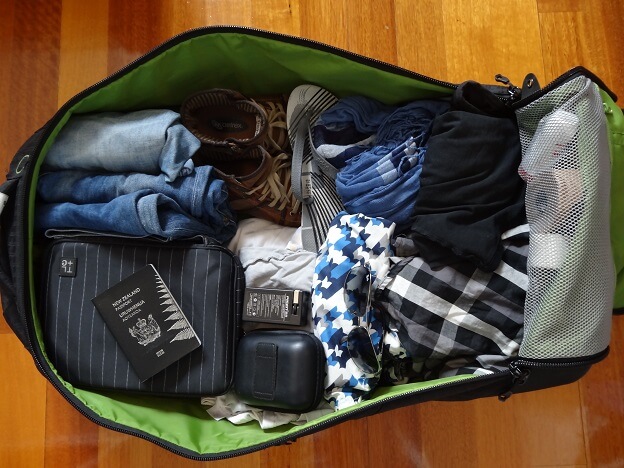
    Everything of importance to me I can fit into my 70 litre backpack. There’s a couple of pairs of shoes in there, my laptop, my camera, some clothes, some toiletries, and that’s it. I live with the contents of this bag year round, and need nothing more and nothing less. It almost feels like I own nothing. But I have more than I could possibly need.

    backpacking life
    My life squashed into one bag

    I can’t remember the last time I went “shopping”. I don’t remember the last time I bought a new shirt. I do not spend my day dreaming of things to buy, but rather reading about things I want to learn, writing about things that are on my mind, and seeing places that I’ve always wanted. I take photos, I sleep in, I walk, I exercise, I read and write, I explore and I relax. That is my day.

    In this age of hyper-consumerism and extravagant spending, I’ve been liberated by simply living a life of minimalism. I am no longer enticed by shiny things. I no longer believe in the lie that success consists of earning more and buying more. I buy only what I need, and I simply live.

    The one simple lifestyle change that will transform your life

    In the movie Fight Club, Tyler Durden famously said, “The things you own, end up owning you.” You buy a house, and it owns you. You cannot stop working because of it. You cannot travel because of it. You cannot spend more time with your family because of it. You cannot quit your job because of it. Your entire day, your entire life, becomes about earning more money to pay for your house.

    Ask yourself; do you own the house, or does the house own you?

    When you buy a car, you need to finance it. You need to service and clean it. You need to pay for petrol, insurance, warrants, parking. You worry about where to leave it, whether someone will dent it, whether it will be stolen, whether it’s been registered. The car you wanted so badly is now always on your mind, sucking in all your time, money and energy.

    Ask yourself, do you own the car, or does the car own you?

    When the weekend finally comes you have two precious days free, but you need to spend it cleaning the house, the car, the boat, the second house, the clothes, the garage, the garden.

    Let me ask you, what if you had nothing? How much simpler would life be? Instead of 5 rooms to clean, what if you only had three? Two? One?! How much more time would you have to read, surf, run, play the piano, go out for dinner, travel, stargaze, dance?

    Instead of wanting more, maybe it’s time we started thinking about less. Instead of filling up your shelves, empty them. Instead of buying something every weekend, sell something. Instead of wanting everything, want nothing at all.

    You might just find your dreams are a lot easier to get to, when there’s less stuff in the way.