Category: Stories

  • Inside Manila: A Walk Through The Slums Of The Philippine Capital

    Inside Manila: A Walk Through The Slums Of The Philippine Capital

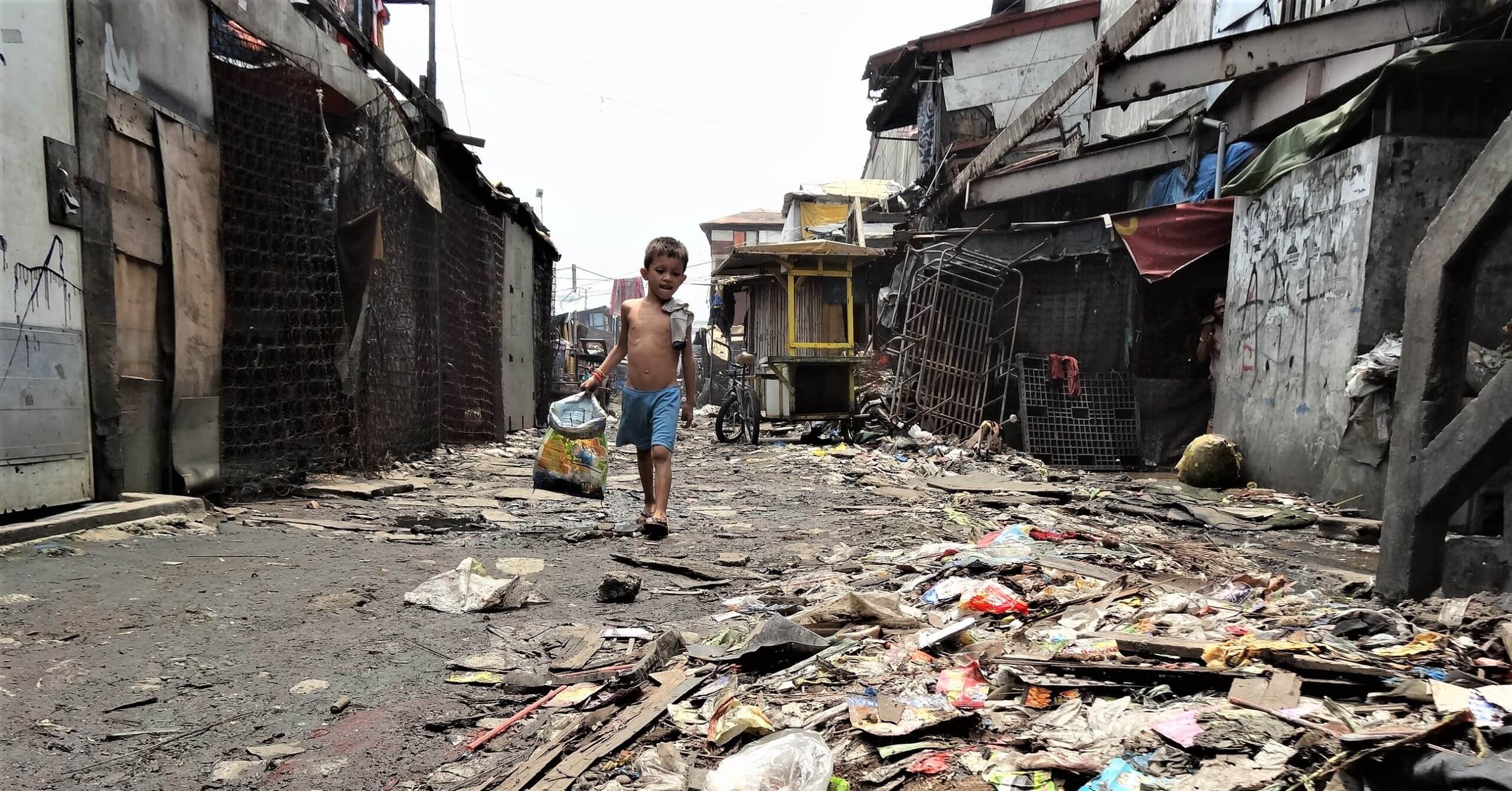
    The mud is black.

    There’s trash everywhere.

    And the smell is…well…the smell is like a mixture of wet clothes and rotten wood. It’s not necessarily unpleasant, but definitely distinct.

    I look around at the kids running through the alleys, the women selling ‘useful trash’ such as plastic bags and recycled paper, and the elderly lounging peacefully on their balconies, looking out over it all.

    These are Manila’s slums, where, without any provided housing, the homeless have been forced to squat. It’s a very different place to the Manila I’m used to.

    Smokey Tours

    My day in the slums starts early. I meet Remy, my guide from Smokey Tours, at 9am at Jollibee, and we jump on a jeepney out to the slums in Barangay 105.

    The first slum is actually tidier than I expect. They have rooms with beds and tables, some even televisions, the alleys are paved and running water is available. Life is not easy here by any means, but at least basic human needs of food, shelter and clothing seem to be met, if only barely.

    Smokey Tours

    In many people’s imagination, slums are lifeless places full of sick, starving people, fighting to survive, but surprisingly it’s quite the opposite here. People are up and about early, getting on with their day, cooking, washing, cleaning, working. It’s actually a rather lively place.

    As we walk through the alleys, we pass an old man cooking something on charcoal made from coconuts. I am not sure how he does it, but it works. Clearly, resourcefulness is key to survival here.

    Smokey Tours Slums

    Huddled in one of the corners, we come to a group of kids gambling for rubberbands. It’s obviously popular, as I’ve seen it getting played in a few different corners of the slum now. They laugh and scream wildly, having the time of their lives. It is always refreshing to see the innocence on a child’s face, happy and oblivious to the complicated world around them. I think about how, and why, I was given such luck in the ovarian lottery, born into a two-storey home in upper-middle class New Zealand. Compared to these kids, I grew up in a fairytale, yet their smiles are brighter than ever.

    Smokey Tours

    Eventually we get to the river Estero de Vitas, which lines the slum.

    By the riverside, I spot two ladies working on a few piles of fish. I walk over to take a closer look, and they glance up and smile at me. The fish they are processing is bangus, a Filipino food favourite, and they work through them at light speed; one does the cleaning and gutting, the other bones the fillets. Soon it becomes clear how they do it so fast – they’ve been doing it for 40 years.

    Smokey Tours

    It is jobs like these that keeps the households fed – most fish are sold, some are kept for food, and the income gives them a means to keep on surviving.

    As we come to the end of the river, Remy points out another type of slum-dweller underneath the main bridge. Here, homes hang over the water, made from tarpaulin and scrap wood, seemingly hanging in mid-air. I stare at them for several minutes, and still can’t figure out how they’ve managed to build them.

    Smokey Tours

    These homes are far more primitive than the ones I’ve just seen. The men who live here work mostly as scavengers, sorting through the river trash for useful bits of plastic, metal and other materials. This is then sold to junk or recycling shops, allowing these people to make a living.

    Smokey Tours

    As we cross over to get a closer look, a couple of girls living there come to show us around. We walk through the houses above the river, of which there are many, all made of recycled wood and other scrap materials. I feel like at any moment it’ll collapse and we’ll go plummeting into the water.

    I look inside some of the homes and see how tiny they are. Somehow, families of 7 or more manage to live together in a shack no bigger than a standard western bathroom.

    Smokey Tours

    At this point, I am not quite sure what to think. The conditions just seem so unlivable to a first-world child like myself, almost on par with some of the places in rural Africa. However, at least in those places there is land to farm and build proper housing. Inner city poverty is a different beast. There is no land, no toilets, no electricity, and to make things worse, typhoons destroy the slum each year, after which the dwellers are left to rebuild. With the comforts of the city so close by, it is hard to understand how so many people are left to live like this.

    Smokey tours

    Next, I’m taken over to the temporary housing slums over at Barangay 105. This houses the residents of the now closed Smokey Mountain slum, which sits just a few metres away.

    Smokey Tours Slums

    Again, the most common way of making a living here is by scavenging. Residents will spend the day looking through trash and collecting bottles, tyres, plastics, papers and metals.

    Smokey Tours

    Once collected, these items will be sold to junk shops who will sort and on-sell them to be processed. Most scavengers can earn around $3 a day doing this, which is usually enough to feed their families.

    Junk shop Smokey Tours
    As for the women, they are often employed as sorters rather than scavengers. Most can earn up to $3 a day, sorting trash so it can be packed up and sold.

    Smokey Tours

    Like everyone, people here need to eat, and again they depend heavily on the city trash for this. In a separate sorting area, people rummage through the trash from fast food restaurants, mostly from KFC and McDonald’s. Scavengers pick through the trash and collect leftover scraps of food to be cleaned and sold.

    Smokey Tours

    Each morning, residents of the slum come to purchase the bags of food, which have been sorted into small packages. One common item is the ‘pagpag’; leftover scraps of fried chicken, which are then re-fried and served with rice. Lots of different scraps are sold, but the pagpag is by far the most popular; usually sold out by 9am each day.

    Down the road I’m lucky enough to find a woman cooking up her pagpag for the day. As is, it hardly looks appetising.

    Pagpag

    Once it’s been washed, it’s thrown into the wok to be deep fried. It actually smells pretty good.

    Pagpag

    After a few minutes of sizzling, it’s time to eat:

    Pagpag

    Once it’s all been tipped onto the plate, she holds it up to me and gestures for me to take the first piece.

    How could I say no?

    Pagpag

    Funnily enough, it tastes just like KFC. Who would’ve thought?

    We spend the rest of the afternoon wandering through the slum in the midday heat.

    Smokey Tours

    People often stop to smile and say hi to me, or stand up and wave from a distance. Despite the warm welcome, I feel like an intruder. I feel many of them may be embarrassed at my presence, as if their home is so poor and desolate that it’s actually become a tourist attraction. If they only knew how much I admire their resilience, and it is I who feels small walking next to them.

    Smokey Tours

    Interestingly, despite the hardship, I come to the conclusion that the slum isn’t exactly a sad place. People are fed, they have water, they have shelter, and seem to go about their day with a smile on their face. It’s a hard life, definitely, but not a hopeless one. Families eat and play together, sing karaoke, and do their best to enjoy what’s been given to them. It’s a welcome lesson in gratitude that we could all use from time to time.

    Smokey Tours

    Smokey Tours runs this tour in partnership with an NGO called BYSMP (Bahay At Yaman Ni San Martin De Porres), which receives all of the tour profits (yes, all). After the tour, we go to check it out.

    smokey tours

    Here, children from the slum are provided with food, schooling, clothes and healthcare. The facility is excellent, with a fully equipped dining room, kitchen, classrooms, dentist and health clinic.

    Smokey Tours

    Smokey Tours

    Smokey Tours

    Smokey Tours

    Smokey Tours

    Smokey Tours

    It’s incredible how small NGOs like this can stay so under the radar yet make such enormous differences to people’s lives. With a little help, they’ll give many children from the slums a chance at a much brighter future than the generation before them.

    And, with the revenue from these tours, Smokey Tours is able to bring some level of awareness to Manila’s inner city poverty, while also contributing financially to the cause. It’s an excellent initiative; one that I am happy to lend my support to.

    Interested in a slum tour?

    If you’d like to get out of the Makati markets and shopping malls and get a look at the other side of Manila, I’d highly recommend a slum tour with Smokey Tours. Locals from the slums are employed as guides, and the profits from the tours all go towards providing food, schooling and healthcare for the children living there. I never recommend tours or attractions where people profit from poverty, and thankfully this is not one of them.

    To book a tour, simply head over to their website and get in touch!

    Heading to Manila?

    Disclosure: I was invited to write a piece on this tour by Smokey Tours. Smokey Tours covered the cost of my tour. Photos are not normally permitted on the tour, but I was given a pass for media purposes. All opinions are my own. You can read my Disclosure Policy here.

  • A Walk On Wall Street

    Isn’t it funny, how dreams can change.

    It was by complete accident that I ended up in New York City. In fact, I had never planned on entering the United States at all. But some horrendous travel planning and a few last minute changes was all it took to shake things up and land me in NYC for a week in transit.

    Of course, that didn’t bother me at all. It was a welcome detour actually, as I had dreamed of seeing the Big Apple for quite some time. And just like every New York first timer, I wasted no time in churning through the many glorified clichés the city had to offer. Central Park. Hot dogs. Pizza. Empire State Building. Chelsea. Yellow taxi rides. Battery Park. World Trade Center.

    And then, one lonesome afternoon, I chanced upon one of the most talked about New York icons of them all.

    Wall Street.

    Standing there on the intersection with Broadway, staring up at the street sign, it was a rather eerie feeling.

    You see, I had once dreamed of working here.

    I had dreamed of putting on the $5,000 power suit, heading up to my flashy office each morning, spending the day rubbing shoulders with high powered bankers and traders. I was obsessed with the markets and getting outrageously rich; of breaking into that inner circle of high flyers.

    I wanted to be a “Wall Street Guy”.

    And now, here I am, four years later, walking down the very street I once had idolised. But life has changed a little since then.

    After a short lived career in finance, I don’t think I ever want to wear a suit ever again. I’d probably cry if I ever needed to squeeze another meal into a ‘one-hour lunch break’. God save me if I’m ever forced to end another email with a robotic “Kind regards”.

    After wanting it for so long, I’m finally here; walking down Wall Street, but with little desire to stay. And it is this walk down Wall Street that has given me a sudden realisation of what a different and unexpected path my life has taken.

    Isn’t it funny, how dreams can change.

    Of course, in the back of my mind, I can still imagine myself in these offices, rocking the grey pinstripe suit, the skinny tie, the fancy business card and the hair slicked to one side. And part of me still whispers inside my head, “Yeah, that would be cool, right?”

    But that’s all it is now. Just another “wouldn’t that be cool”.

    My dreams have changed, grown. Standing here, it’s almost like looking back on a past life.

    A different me.

    Or as Gotye likes to say, ’Somebody that I used to know’.

    And as I continue walking, I try to ask myself, “What was it about this place that had me wanting it so bad?”

    I think, but I can’t pinpoint an answer. It wasn’t the money, obviously, because big money can be made anywhere. And by the same reasoning, it wasn’t the industry. So perhaps it was an ego thing; to be a Wall Street guy. Or maybe it was the crowd. Or maybe, I had just been enticed by the stories, the movies, by the shiny idea of it all. But whatever it was, it isn’t there anymore.

    As they say, everything comes full circle in the end. And a walk alone down Wall Street seemed to spur many emotions in me; a bit of sadness, a pinch of déjà vu, a smattering of nostalgia and, surprisingly, an odd sense of closure. Why? I’m not sure. Maybe it was just the final turn of the page. A way to finally close the chapter on one path and start moving full speed on another.

    All I know is, I probably won’t be back here for quite some time.

    Isn’t it funny, how dreams can change.


    What about your dreams? Did you chase something for a long a time, only to realise you didn’t want it in the end? Or do you still want those dreams as badly as ever? Tell me all about it in the comments below.

  • When Broken Glass Floats: A Chilling Look Into Cambodia’s Tragic Past

    When Broken Glass Floats: A Chilling Look Into Cambodia’s Tragic Past

    I put my Kindle down and close my eyes, grimacing. It is not the first time this story has overwhelmed me.

    I sit there rubbing my eyes, taking a moment to collect my thoughts. I’m only a quarter way through it, yet this book is consuming me. Time for a break, I decide. I look around.

    A lady sits a couple of tables away, sipping on an iced coffee while tinkering with her iPad. On the far end of the cafe sit two middle aged men, laughing cheerfully about something, their palms wrapped around mugs of Angkor beer. Beyond them, a small stretch of the Phnom Penh riverfront, and the faint sounds of traffic passing on the wet road before it.

    As my mind settles, I pick up the book to continue reading. As difficult and depressing as it is, the story has captivated me, and despite all the death and suffering I am desperate to know how it ends.

    The book is Chanrithy Him’s “When Broken Glass Floats”, a gripping memoir of her life growing up under the Khmer Rouge. I am only halfway through it, but it has brought to life a period of history that, until now, I have known very little about. A genocide. One quarter of the population dead. A brutal dictatorship, an entire country forced into slavery, and the mass execution of anyone educated enough to resist. In just 4 short years (1975-79), the Khmer Rouge managed to decimate Cambodia, crippling the country almost beyond repair. I am unsure why I never learned about this in school.

    I read and read, until my battery light flashes red and finally dies. I’m relieved in a way; I’ve been sitting here for hours, my eyes hurt, and it’s already dark outside. Enough for one day.

    I wake up late the following morning. Breakfast is served at the cafe outside my room, and I continue Chanrithy’s book while waiting for it to be cooked. I manage another 20 or so pages, eat quickly, and then head back to my room to wash up and get ready. Today I am visiting Tuol Sleng, the famous S-21 genocide museum near the centre of Phnom Penh. Here lies an abandoned high school, turned into a interrogation prison where tens of thousands of Cambodians were tortured and marked for death.

    After waiting for the rain to settle, I head out and arrive around mid afternoon. The moment I enter the gate, I feel the eerie vibe it is famous for.

    Tuol Sleng Genocidal Museum

    Despite the many visitors, the place is silent. It only adds to the creepiness. I walk sheepishly into the first room; a high school classroom turned into a torture chamber. From the doorway I see an iron bed, with a photo on the wall of the torture victim found chained to it. I am not quite sure what to think. I snap a photo, and exit quickly.

    Torture beds at Tuol Sleng

    Most rooms in the first building appear the same; an iron bed with ankle cuffs, where victims were bound and tortured into confessions. As I wander through each of them, I think back to Chanrithy’s book, to the stories of people being taken and never returning. Even standing here, seeing it with my own eyes, it is difficult to believe the stories of terror are real.

    Eventually I make my way to the second building. Here lies the photo room. The Khmer Rouge were meticulous in their record keeping, photographing and profiling all 20,000 prisoners before they were tortured into confession. Once “processed”, they were taken away to be executed.

    Tuol Sleng Genocidal Museum

    The photos represent many of the country’s most wealthy and educated at the time, mass murdered in an attempt to create a completely uneducated, communist society. The immense waste of life is impossible to comprehend or understand. One can only wonder how different Cambodia would be today if these great minds were still alive.

    Among the photos are faces of children, some who look as young as 8 or 9.

    Tuol Sleng Genocidal Museum

    I think back to when I was that age, innocently riding my bike and watching cartoons. The contrast is heartbreaking.

    I spend a long time in here, maybe an hour. One by one, I study the faces of all the prisoners. Each of their eyes are sad, defeated. Their fear is unmistakable. Most appear to have accepted their fate.

    Tuol Sleng Genocidal Museum

    Yet among them, some appear defiant, refusing to be broken. I admire them, and wonder if I’d have been strong enough to do the same.

    Tuol Sleng Genocidal Museum

    Of the 20,000 that passed through here only 12 made it out alive; their stories of survival displayed on one of the classroom walls. Before I start reading I observe the 5 or 6 other visitors, staring at the wall and reading silently. Each of them stand frozen, their lips slightly apart, eyes flashing back and forth across the page in disbelief. Soon I find out why. The stories are straight out of a horror film; tales of being electrocuted to unconsciousness, forced to eat their own excrement, fingers being broken and fingernails being ripped off and covered in salt. Prisoners were tortured into confessions of being spies or conspiring against the State, justifying their execution. Yet one confession was not enough. Torture continued until the victim admitted guilt of their entire family, their parents, brothers, sisters and children, justifiying the execution of all of them.

    I read each story, wondering to myself what I would’ve done. How strong would I have been? Would I have betrayed my Mum and Dad, my brothers, to end my own suffering? It is mind numbing; too much for me to try and imagine.

    Tuol Sleng

    That night I continue reading Chanrithy’s book. My visit to Tuol Sleng has added another dimension to her story. She describes her friends and family disappearing, or being taken away to be punished and executed. I wonder if any of them were taken there, and if I had seen their faces on the wall. It is a chilling thought to think that is possible.

    Two days later, I finish Chanrithy’s book. I have never read a book so fast in my life. As I flick through the final pages I am left speechless, happy that she survives, but heartbroken at the suffering she and so many had to endure. Immediately I go to her website and email her, thanking her for sharing the story and offering my condolences, as small a gesture as it may seem. It is hard to believe I have been walking along the streets where this evil happened, only 40 years ago.

    The next day I visit Choeung Ek, the famous Killing Fields in the south of Phnom Penh. Of the 3 million Cambodians that died during the regime, 20,000 were executed here, brought from Tuol Sleng by the truckload under the cover of darkness. In order to save bullets prisoners were beaten to death with spades and tools, while loud music played in the background to ensure their screams were left unheard. Bodies were left to rot in mass graves, some piled up to 400 high.

    Even today, bits of bone and clothing are still seen lying in the dirt.

    After an hour or so I come to the infamous killing tree, where I notice many other visitors standing and staring, deep in thought. It is the tree where babies were executed, taken from their mothers and then swung from their legs, their heads smashed against the trunk. The site seems to have a stronger effect on people than most. I stand there with them, and we all stare at it in silence.

    The Killing Tree

    It takes me around 3 hours to walk through the fields. It is a sobering place, but for some reason, doesn’t trouble me as much as I’d expected. While the photos in Tuol Sleng showed people in the midst of struggle and torture, the fields themselves seem to give an odd sense of peace. For many Cambodians, this is where the horror and torture ended, and despite how brutal it was I suppose there is an inkling of closure in that. It is comforting to know the place has been preserved with the respect it deserves, and that people continue to come and pay homage to those who were taken.

    The Killing Fields

    It’s about a 40 minute drive from the fields back to my hotel. I sit in the back of my tuk tuk, trying to process everything; Charithy’s story, the prison, the fields, the survivor stories. I find it strange this story is never talked about, unlike the Rwandan or Jewish genocides. I’m actually embarrassed that I knew nothing about it until now.

    Eventually we pull out to the main road. As we drive along I see two young girls playing in an empty dirt field; one throws a tin can, the other tries to hit it with a piece of broken wood. She misses, and they laugh loudly like kids and race to retrieve it. It all seems so normal, and for some reason that’s odd to me, for a country that was massacred not so long ago.

    When we finally arrive at the hotel the afternoon rain has set in. It is pouring down, and I’m reluctant to leave the shelter of my tuk tuk’s waterproof flaps. I ask the driver to join me in the back, and ask him how old he is.

    “Me 44,” he answers.

    I need about 2 minutes to do the maths in my head.

    “You were 5 during Pol Pot’s time?” I ask him.

    “Me 7 years old for Pol Pot,” he replies.

    I tell myself to show a shred of sensitivity, but I’m too curious. I bombard him with questions.

    He answers me the best he can in his broken English, telling me about his memories during the Khmer Rouge rule; eating only rice soup a couple of times a day, eating lizards and crickets, even killing and eating the stray dogs around the villages. I’m reminded of the time I saw fried crickets for sale on the streets of Siem Reap, which now makes a little more sense to me.

    My driver’s eyes open wide as he continues his story, retelling tales of his mother and father forced to work long hours in the rice fields, and teenage boys forced to stand out in the sun and mind the cattle. Then he laughs as he recalls the big trucks coming to take away all the rice and beef, leaving all the workers to starve at the end of the harvest.

    I ask him about school, and he shakes his head.

    “But no work for me too,” he recalls. “When you turn 15, you work. I only 7 years old. I just sit in the house. Run around in the field. Play with other kids.”

    I nod in slience. It is difficult to hear him through the pounding of rain on the roof, but I do my best to digest every word.

    Finally, I build up the nerve to ask him about Tuol Sleng, if any of his family is in the photos, and if any of his family was executed under the regime.

    “No, no, not my family,” he laughs. “But my friend, they see some family there, in the photos.”

    “But my uncle is gone,” he continues. “He disappear, we don’t know where. Maybe get bang bang by Pol Pot,” he says, mimicking the shooting of a rifle with his hands.

    I’m uneasy at how calmly he talks about it. Part of me wishes he was (a lot) more angry, but he seems to be at peace with it. Luckily his mother, father, and siblings all survived, and maybe that is the reason why.

    That night I sit on the riverfront until sunset. It is filled with elderly people out walking, usually in pairs, leisurely strolling along while enjoying the evening air. The street sellers are far more passive than in the neighbouring countries, and a simple shake of the head is enough to turn them away. I watch each person walk past, studying their faces, wondering what their story is and how they survived the genocide. It is frightening to think that Chanrithy’s story is only one of many, and that almost a whole population has a similar tale to tell. Visiting Cambodia has been a sobering reminder that we should never take our freedom for granted.

    Finally as the sun sets I see two boys pass by, maybe 10 years old, riding side by side on brand new bicycles. They ride slowly, one of them holding a pack of biscuits in one hand while he steers the bike with the other. They argue with each other intensely, shouting and shaking their heads, probably about something trivial like a video game or a TV show. Until now I’ve found Cambodians to be rather docile and reserved, and this kind of energy is a little out of the ordinary; they are by far the loudest people on the riverfront. Clearly their upbringing has been very different to the generation before them. Hopefully, a sign of new beginnings in Cambodia, and a future much brighter than its past.

    Photo & Video Sharing by SmugMugPhnom Penh riverfront today

    Visiting Phnom Penh?

    • I would highly recommend reading Chanrithy Him’s “When Broken Glass Floats” before you go. It is difficult to read, but will paint a vivid picture of the Khmer Rouge regime and bring to life the historical sites you will visit. It is superbly written, and is a powerful story of one family’s loyalty and perseverance. It’s around $10 on Kindle. Another similar book that was recommended to me was “First They Killed My Father” by Luong Ung, although I haven’t read it.
    • Assuming you are staying in the city or on the riverfront, a tuk-tuk will take you to Tuol Sleng museum and back to your hotel for around $5-$7 all up. He will wait for you outside until you’re ready to leave. I have been to many museums in my life, and this is one of the few (or maybe the only) that I will remember. Entrance is $2.
    • Choeung Ek is a bit further out of the city and will cost you around $10 to get there and back. Again, the tuk-tuk driver will wait for you. Entrance is $6. I would definitely do Tuol Sleng and Choeung Ek on different days – it is a bit much to digest both at once. Best to do Tuol Sleng first, and Choeung Ek second.

    Have you visited Choeung Ek and Tuol Sleng? What did you think? Let me know in the comments below.

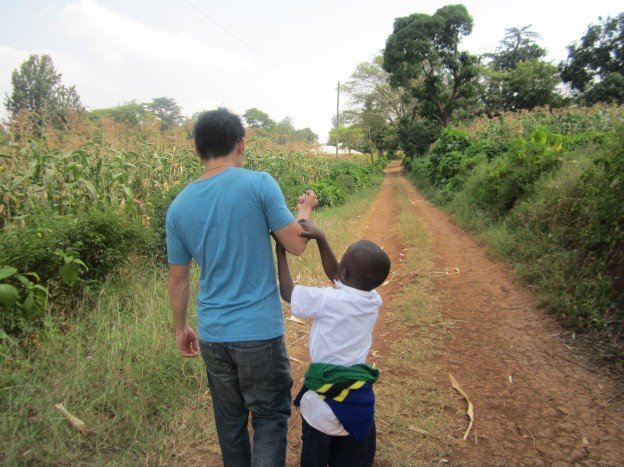
  • Volunteering in Tanzania: A flashback of my time teaching in Moshi, Kilimanjaro

    Volunteering in Tanzania: A flashback of my time teaching in Moshi, Kilimanjaro

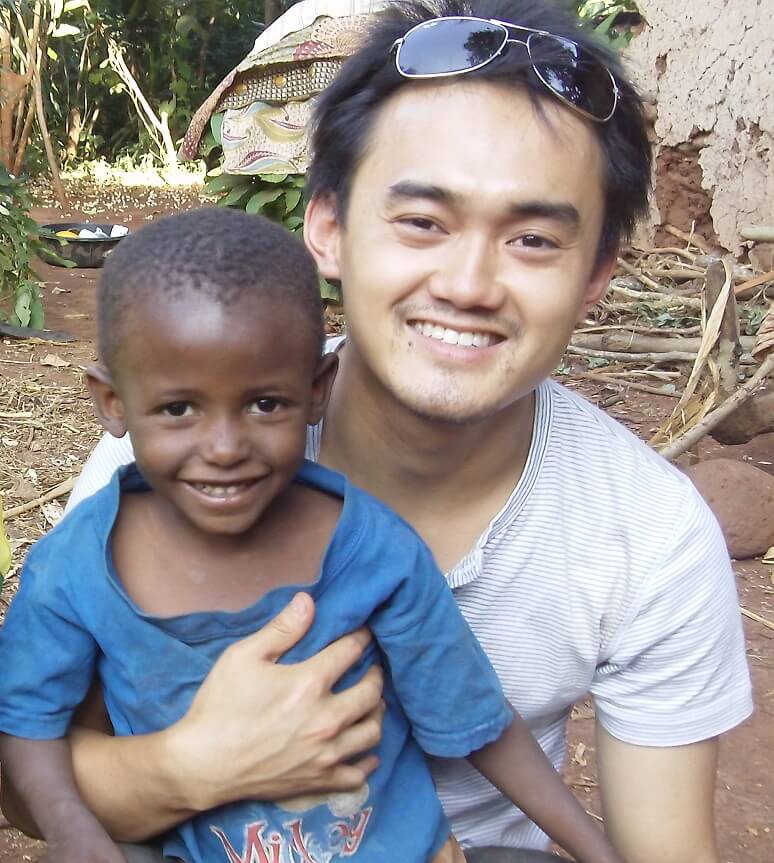
    He looked up at me like I was an alien. He’d probably never seen a pasty, shabby haired oriental specimen like me. If I were in his shoes, I’d probably have turned and run, but he just smiled up at me with a fearless curiosity. It’s funny how kids are like that.

    His name was Joseph, a tiny 4 year old with a smile that would melt even the mightiest of men. As we sat beside each other on the concrete floor I tapped my finger on the page in front of him; my way of telling him to look down and write. My job today was to teach this one child, out of a class of 20, to write the alphabet, and we were up to the letter…..A. I guess if I had a Chinese alien sitting next to me I probably wouldn’t get much work done either.

    Finally, he looked down and attempted to mimic the perfectly scuplted ‘A’ I had written for him. I watched, almost in slow motion, as he pressed the pencil to the page with his tiny fingers, eventually pushing so hard that the lead snapped off with a blunt crack.

    He froze for a moment and then looked up at me wide-eyed, and we both smiled at each other before laughing childishly at the now broken pencil lead rolling on the paper before us. His pencil was only about 5 centimetres long anyway, perhaps the length of a toothpick, and he was holding it like a spinning top rather a writing tool.

    I turned and shouted out to the teacher.

    “Where’s the pencils?”

    She looked at me blankly.

    “Only one each.”

    I hunted the room for one and to my surprise, found nothing. Not even a sharpener. So, we sat there; a 4 year old Tanzanian kid and a Chinese accountant, staring at our broken pencil wondering how we were going to write the alphabet.

    Eventually the teacher came over with a knife, smiling, and sharpened it for us MacGyver style while we both sat there and watched like hungry children. I’m sure she must have been thinking “Geez, does this guy need some kind of magic machine to sharpen his pencil for him?”

    How sad. I actually do.

    Finally she handed it back to us, and now instead of a 5 centimetre pencil we had a 3 centimetre pencil, which I was starting to look at very differently. This wasn’t just any old pencil anymore. If anything happened to it, well, class would be over for the day. You know that adrenaline spike when you’re on the last stage of Super Mario and you’ve only got one life left? Yeah, it was something like that. Seconds later, Joseph grabbed at it blindly, obviously unaware of the severity of the situation.

    “Woah!” I screamed, holding my hands out.

    He jumped with fright, and looked up at me, startled. This kid must think I’m crazy.

    I smiled as if to say “sorry, just kidding”, and then winced as I watched him etch multiple letter A’s into the page, his fingers wrapped awkwardly around the 3cm stub of lead. I was convinced he was going to break it, but he didn’t. Perhaps he was aware we were in the 4th quarter after all. I stared at him, amazed, admiring the intense concentration on his face as he tried tirelessly to sculpt each letter perfectly, one after the other. His fingers shifted continuously, trying to find some sort of grip on his tiny stump of lead, and as impossible as it was he soldiered on, completely zoned out without a care in the world.

    As you can see, it’s a moment I remember quite vividly. But it’s not just because it was funny, or different. It’s because it was the moment that it all hit me- a cold, sudden realisation that the problems here were so much deeper than I had imagined, and that I simply did not have the power to make any real difference to the lives of these kids.

    josephandme
    With Joseph after class

    That was my first day as a volunteer in Tanzania. I sat on the bus home and thoughts bounced through my head like a pinball. I had come here to escape the world of corporate indifference, to try and do something ‘meaningful’, to give my time to something that would actually make someone’s life better. But the reality, as I was discovering, was that the problems here were far bigger than anything I could hope to solve.

    But, first things first. As soon as I got back to the hostel I dropped off my stuff, grabbed some cash and headed to the store to buy a crapload of pencils.

    The first week was the hardest. I soon learned that the kids were not afraid of me. When I told them to shut up they’d laugh and hit me, when I told them to sit down they’d stand up and run around. I quickly learned that to have any influence on them I’d first need to earn their respect. In our status-obsessed world we often have titles and money to hide behind but in their world that was all meaningless. Kids are too smart to be influenced by labels. I knew that if I were to form some kind of bond with them, I had to earn a mutual respect and trust with them based on nothing but my character, and, as they say, kids can be great judges of character. It was a frightening and humbling lesson – I’d spent my whole life working towards corporate success, but behind all that, who was I? As a person, why would a kid trust or respect me? I was forced to really look at myself, reassess who I was and what made me a person of value on the inside. It was one of the most difficult things I’ve ever experienced, and who would’ve thought it’d be put upon me by a bunch of African preschoolers.

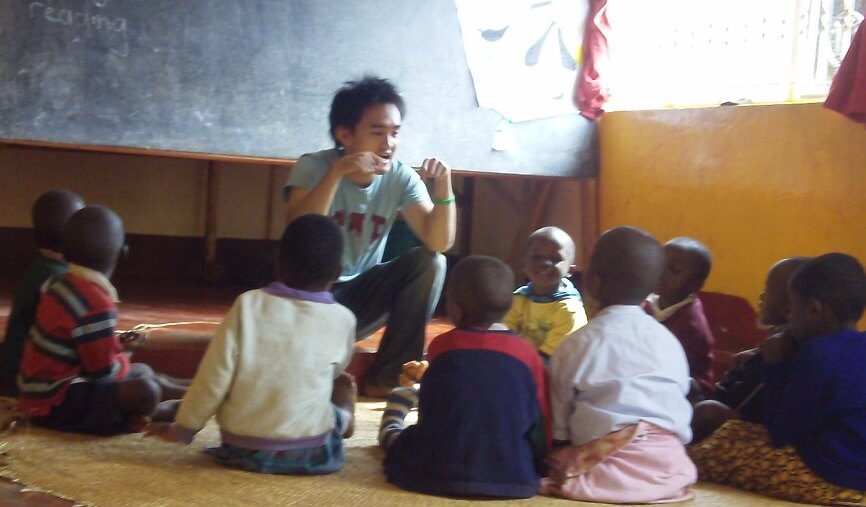
    Volunteering in Moshi, Tanzania

    Before long the second week rolled around, and the teacher decided it was time to put me on the spot – she simply called me to the front of the room and said, “Today, you teach English”. I stood there staring at her, like, what? Really? Normally I would take care of a select 4 or 5 students, either the youngest group or the oldest group, in a corner of the room, and even that felt impossible at times. Teaching a class of 20 just seemed like a joke. I shuffled to the front while giving her a dark smile, my heart thumping like a drum. And then, I thought to myself, what would I want my weird looking Asian substitute teacher to be like if I were 5 years old – a boring guy who stood at the front and talked, or a crazy looney who did a whole bunch of stupid stuff? So, as soon as I got to the front I just ran around the room, jumping up and down and high-fiving all of them. Of course, they went crazy.

    That day I taught them three phrases:

    “Hello”

    “My name is _____________”

    “Nice to meet you” (with a handshake)

    Then I got them to walk around the room introducing themselves to each other in English, and for one hour, that’s all we did (I didn’t have time to plan, ok?)

    Funnily enough, the kids loved it. From that day on, they would greet me every single day with a handshake and a “Hello, my name is ____________, nice to meet you!” I probably should’ve told them you only say it the first time you meet someone, but they were having so much fun that I just let them roll with it. But there was a greater lesson in all that, which was the fact that they really were learning things from me. And I realised that if I could teach them that, I could teach them anything. So I wondered – what should I be filling their young little minds with?

    Finally I understood the mighty Spiderman – with great power comes great responsibility.

    Over the next couple of months we slowly built that student-teacher bond. I taught them to make paper planes, to sing “We will rock you” by Queen, and to focus a camera before taking a photo. They taught me their favourite songs, showed me their favourite games and taught me how to eat the local food. I began walking students home after class, where I would see their homes and meet their families. It was an emotional rollercoaster and in all honesty, left me feeling completely powerless. Could I really help these people? They lived in homes with no running water, no electricity, no toilets, usually sharing a bed with 2 or 3 other people and being raised by grandparents or single mothers. Where would I even begin?

    Two months flew by, and before long it was time for me to leave. Surprisingly, the goodbyes were easier than I’d imagined. There were no tears, and no last minute phone calls to try and push my departure date (which I’d already done twice). I was at peace with the decision, and although I would’ve loved to stay it felt like the right choice to leave rather than continue getting more and more involved in their lives. Besides, deep down, I knew it was only a matter of time before I returned.

    Afterthoughts

    After my experience, my feelings on voluntourism are extremely mixed, particularly when it comes to working with children. All of a sudden I was a part of their lives, and then I was gone just as suddenly as I had arrived. I can’t help but wonder if I further contributed to the abandonment issues so many of these kids already have. It’s an issue I feel strongly about, as volunteering in Africa seems to be a popular holiday choice these days, but I suppose I’ll leave that discussion for a later post. For now I think the big question to ask myself is, did I really make a difference?

    To be honest, I have no idea.

    I don’t even know if those kids will remember me 10 years from now. What did I add to their lives, other than a few laughs and distant memories? In what way did I make their lives better?

    I really do struggle to find an answer.

    In fact, I think the person who benefited most from the whole experience was…me. As kids we’ve all been told to “finish your dinner, because children are starving in Africa”, and by the time we grow up I think most of us are completely desensitised to it. For that reason I wasn’t expecting to be too shocked by what I saw, but I was. Poverty has far deeper effects than I had imagined, and is a mixture of so many different causes and problems. Solving it will be a far more complicated affair than simply buying food and feeding everyone.

    That doesn’t mean the people are any less happy, though. In fact, it was quite the opposite. Their lives were full of laughter and joy and they were all incredibly rich in spirit. While many cultures today are all about material wealth, there’s were all about community and family, and when you think about it those values seem to make a lot more sense. That was a powerful lesson for me – I realised my whole life I’d been chasing the wrong things, and there was a lot of self-reflection going on after I returned home.

    Perhaps the best part about the whole experience though was that it’s motivated me more than ever to try and make that real difference I’d been searching for. I now have an ongoing project in Tanzania, which is quite a long story and will need to wait for a later date, but I’ve been lucky enough to return to Tanzania twice since my first trip and the first thing I do is head up to the preschool and visit my old kids. Many of them have since moved on to primary school, but I still see them around and they do remember me. In fact, the first thing one of them did was run over to me, hold out his hand and say “Nice to meet you!”

    I guess they did learn something after all.

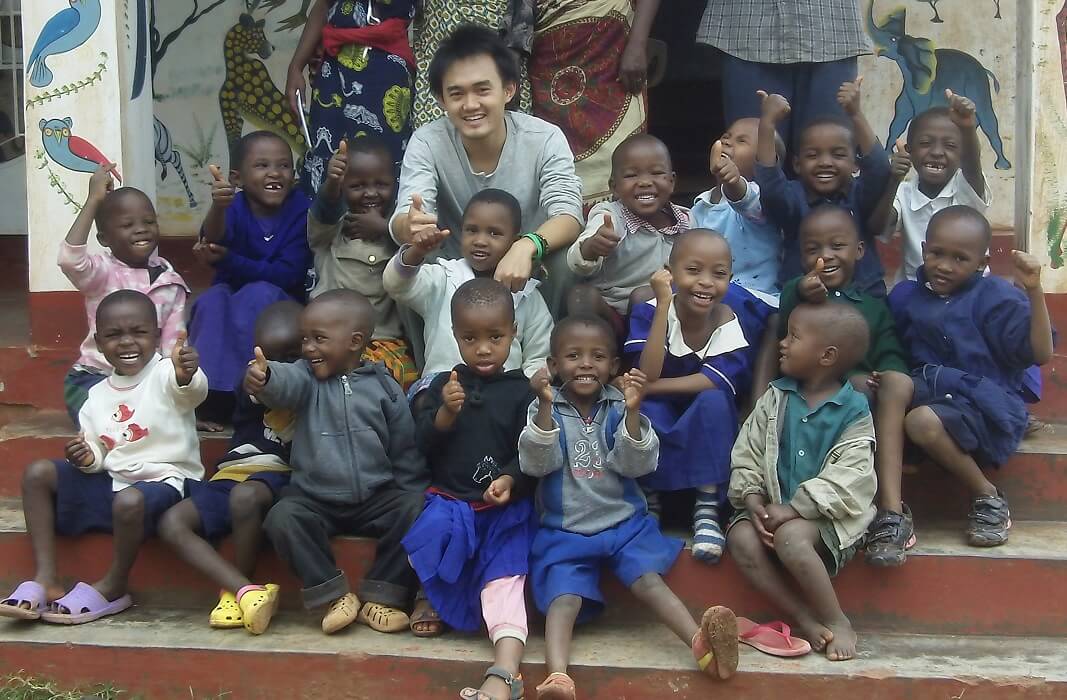
    Volunteering in Tanzania

    Have you volunteered before? What is your opinion on voluntourism? I’d love to hear your thoughts.

    There are many “pay-to-volunteer” services around that are quite expensive. My volunteering experience was free and I arranged it myself without the help of any agency. If you would like to learn more about how to do this, you are welcome to send me an email. You can also check out Grassroots Volunteering, a great online resource for ethical volunteer opportunities. My friend Dorota also has a great post on responsible volunteering here.

    Heading to Tanzania? My Dar city guide might come in helpful!